Archive | 2010

Opening for Birth

Some time ago, I bought several large binders of back issues of The International Journal of Childbirth Education (ICEA‘s publication). The December 2001 edition of the IJCE contains an article titled “The Pelvis Revisited” by Elizabeth Noble. An interesting article overall, I particularly enjoyed the language of the section titled Opening for Birth:

“Birth is what women do. Women are privileged to stand in such power! Birth stretches a woman’s limits in every sense. To allow such stretching of one’s limits is the challenge of pregnancy, birth, and parenting. The challenge is to be fully present and to allow the process because of inner trust. How can women find their power, claim it, and stand firm in it throughout? The vertical position comes again into prominence. Women must ‘stand up’ for what they want and ‘on their own two feet’ by refusing to take their birth ‘lying down’! Being upright is essential for pelvic power–psychological strength, pelvic mobility, gravity’s assistance, pelvic pump efficiency, and the hygienic downflow of bodily fluids.”

In the September 1999 issue, the article “Belly-Dancing Through Pregnancy: A Way to Give Birth and Not Be Delivered” by Gaby Mardshana Oeftering caught my eye. In it, she also addresses the needs to build inner trust and to open to birth through physical movement and an active approach to birthing:

“Women expecting their second or third child don’t necessarily need this [traditional prenatal classes]. They are looking for a way to relax, find their inner selves, and get better acquainted with their bodies, their babies, and the process of birthing. When allowed to move during childbirth, many women instinctively start moving their pelvis in hip circles which are typical of belly-dance…All soft and gentle belly-dance movements are beneficial to pregnant women; for example, hip circles, the various hip-eights, and hip rocking. The rule is: all horizontal movements relax the uterus; vertical movements excite it. Physically speaking, all these movements strengthen and mobilize the pelvis and the legs and train the pelvic floor. They also activate deep abdominal breathing…the hip movements demand a lot of attentiveness and body awareness. On a mental level, this leads to better consciousness of tension and relaxation—a body feeling that is needed during birthing.”

Recently, I feel myself intrigued by the possibilities of working with these women—those who are on their second or third pregnancies and who are seeking to “go beyond” traditional birth class information (that often assumes first baby status). I know that I, personally, have wanted new, fresh, inspirational birth information during each of my pregnancies—labor and birth 101, stages of fetal development, or even labor support and comfort measures isn’t “enough” for me anymore (and wasn’t after my first baby). The desire to honor the pregnancy experience, prepare for the birth experience, and to work with psychological and emotional elements of childbearing are still very much present though! I envision doing a series of “pregnancy retreat” type of things or other types of workshops that “go beyond” and help second, third, or fourth time mothers to spend some dedicated,special attention to each pregnancy and birth experience in a personally enriching and rewarding way 🙂

An Encouraging Thought…

Some time ago I read the book Teaching Natural Birth. In it, the author shares this thought about the importance of teaching families about birth:

“We are not ‘hobbying’ or ‘playing house.’ We do this not because we like people or like babies, but because there are earthshaking issues involved in the way our culture is giving birth and raising its children…We are playing for keeps and the stakes are high. We are professionals. We matter. Always and indescribably.”

I do not view my birthwork as a “hobby.” I view it as my career/profession. I have noticed a tendency of people outside the “birth world” to look upon it as a hobby however. Reading this quote was a nice reminder that this work is important!

The Womanly Art of Breastfeeding & Nursing Johnny Depp

I’ve already shared this all over Facebook, but wanted to mention it here too because I’m that excited 🙂 Quite some time ago the authors of the newest edition of the LLL classic, The Womanly Art of Breastfeeding, contacted me to see if they might include a partial version of my essay “Nursing Johnny Depp” (previously published in Literary Mama) in the book. Of course I said YES! The Womanly Art has been published since 1958 (that is more than 50 years) and it thrilled my little heart to be a tiny, tiny piece of that world-changing history. I have six copies of the WAB (different editions—including two of the old blue-covered editions) and so what a bonus to have another copy, but this time with my own voice within it. The book was released on July 13 and my copies have arrived in the mail. The excerpt of my essay was actually used as the introduction to the “Nursing Toddlers” chapter of the book and I feel proud to be part of it. (I was also humbled to see my name in the acknowledgments section, since, seriously, I really did hardly anything.)

I first read the WAB when I was pregnant with my first baby in 2003. This newest edition is updated with a very contemporary feel and an engaging style. One of the things I like about it is that it is so practical and a lot of the suggestions are very simple (yet, not necessarily obvious). It is written in the mother-to-mother support format that is the hallmark of LLL and the very core of the organization. I like that the book includes personal experiences from a variety of mothers as well as all kinds of suggestions based on what, “some mothers have found.” Those are the kind of suggestions a new breastfeeding mother needs—not advice or directions or orders or “prescriptions,” but information about what other mothers have found helpful—she can then take what works for her and her baby and leave the rest. Love it!

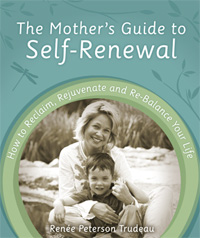
Giveaway! The Mother’s Guide to Self-Renewal

The giveaway is now closed! Elizabeth Baer was the winner. Congratulations!

In 2008, my mother-in-law bought me The Mother’s Guide to Self-Renewal for Christmas. When I got this book, I made a commitment to myself that I was really going to DO the book, instead of just reading it, tossing it aside, and gobbling down the next one on my stack. So, I did. It took me about 4 months or so to work through it in this way, though it is actually laid out in a 12-month format. The subtitle is “How to Reclaim, Rejuvenate, and Re-Balance Your Life,” which is just what I felt like I needed! I found it an inspirational, insight-provoking, and enriching journey. Since this time, I have re-read/re-worked through sections of the book many times, as well as recommended it to many other women as one of my favorite resources for balanced living.

As a funny little side note, when I first started reading the book, I had a lovely little leather bound fancy notebook to do the journaling/reflective exercises in. I discovered I was never doing them—it never felt like the right time. Then, I bought a Pirates of the Caribbean notebook at Wal-Mart featuring a large photo of Orlando Bloom on the cover and lo and behold, I started doing the journaling exercises in it and finished the book right up! I had to laugh at myself—Hark! I have found thee, my muse, and thy name is Orlando Bloom (especially in rakish, unbuttoned-pirate-shirt attire!)

The author of the book, Renée Trudeau, offers several other amazing resources that I regularly enjoy: I participate in a free monthly teleclass based on the book (I love these calls—sometimes I have to work really hard to carve out the life space to attend, but I’ve NEVER regretted making it happen), I subscribe to the e-newsletter, and read her thought-provoking blog. Associated with the teleclass and book, is a nurturing “Live Inside Out” Facebook page.

I’m absolutely delighted to host a giveaway for a copy of the book The Mother’s Guide to Self-Renewal. There are several ways to enter:

1. Leave a comment with your favorite tip for self-renewal.

2. Become new fan of Talk Birth on Facebook (and leave a comment here telling me you did so that I know to count your entry).

3. Become a new fan of Live Inside Out on Facebook (and leave a comment here reporting this).

4. Blog about this giveaway on your blog or post a link to your Facebook page (and let me know about it).

The winner of the giveaway will be drawn next Tuesday at noon via random number generator!

Birth & Control

Labor is a microcosm of life. It brings pain and pleasure, sadness and joy. Labor will put you in touch with both your strength and your dependency and offer you an opportunity to learn more about yourself. Sometimes we are happy with ourselves, other times we are not. Labor is not a time to judge ourselves but a period for reflecting on our movement through life at a given moment. It is not possible to control labor, it is only possible to follow the process and to meet whatever it may offer. Labor is also teamwork. It is a mother and baby learning together how to push and how to be born, how to yield and separate from the union of pregnancy. You are not in control nor are you out of control during labor. The best way to approach labor is with an attitude of learning rather than controlling –Gayle Peterson, An Easier Childbirth

One of the things I explore in birth classes is feelings about wanting to be “in control” or “staying in control” during birth. I ask couples to consider what “losing control” would mean to them and what the benefits of “losing control” might be.

I really enjoy this section from Childbirth with Insight by Elizabeth Noble about control and birth:

[with regard to prepared childbirth films and classes] …are instructive rather than enlightening. They confirm a particular teaching method by advocating roles and techniques. Such films obscure the fundamental holistic experience of birth. Couples are not aware that the power of giving birth involves individual surrender to its uncontrollable nature. It is understandable that expectant parents become anxious about their abilities to maintain the kind of control that is expected of them, given that no such control of natural forces is possible–or desirable.

The actual experience of contractions, like other intense bodily sensations, is extremely difficult to describe…The more completely an expectant mother can experience labor as a unit of body and mind, the more easily she can flow with the process of birth…the more a woman tries to be in control, the more she fears the inevitable loss of control…

Women will sometimes mention “fighting” the contractions or struggling with them. Or, sometimes trying to “escape” the contractions. Both of these approaches are efforts to stay “in control.” It is very difficult—if not impossible—to describe in birth classes what labor is “really like.” Birth is a lived experience, not a rehearsed one! (Though, I really believe that practicing different skills and doing some labor rehearsals in class are really valuable at building confidence, which in turn hopefully leads to a confident, adaptable birth experience.) I struggle with wanting to give people in my couples plenty of “tools” they can use in labor, while also communicating the vitalness of “surrendering” and “flowing” with birth. There is no “right way” to give birth and I find that couples sometimes want to learn definitives from me—right ways—while really the best advice I can give them is to go with the flow and respond to their instincts and inherent body wisdom. (Of course, for this, they need to be in a birth environment that is conducive to the freedom necessary to do so…)

Here is another quote I enjoy about the value of surrender in birth:

“I am starting to see that a woman’s strength in birth is also in the letting go and allowing herself to tumble fearlessly with the current, never losing sight of the belief that, when the energy of the tide is through, she will find herself upright again on the shore.” –Maria (at the blog A Mom is Born)

While I have never labored or birthed in water, or been a particular fan of swimming or being in water, water metaphors about birth always feel really right to me from my own lived experience.

And here is another post I wrote called “fears about birth and losing control

Balanced Living and Saying ‘No’

I fairly regularly experience what I term a “crisis of abundance.” There are SO many great things to do in the world: SO many great causes, so many wonderful organizations, so many beautiful books, and just so many good things to do with my time. I prefer this state to having a crisis of scarcity or lack, but abundance brings its own challenges and saying “no” or “enough” to the requests for my time is one of those. I feel fortunate that I am humming with life purpose (most of the time), but I also have to be mindful that this hum of energy does not lead me to overcommit and to stretch myself too thin.

This past week, I said “no” to two birthwork-related opportunities that were very appealing, but that I know in my heart that I don’t have the time, space, or energy for right now. It was very empowering and actually semi-thrilling to say,”no” and to mean it. I felt smart and that in these situations saying no was taking care of myself (saying no to someone else = saying “yes” to myself” sometimes!). Perhaps not coincidentally, after my “No” experiences, I received an article to share from life-balance expert Renée Trudeau. I really like her “Nine Creative Ways to Say No.” Enjoy!

Four Key Strategies for Balanced Living by Renée Peterson Trudeau, life balance expert/speaker

~Know your top priorities & effectively manage your energy: What in life is most important to you? How good are you at managing your energy? What is draining you? What is fueling you? Are you comfortable saying “no” and not over committing? “Things which matter most should never be at the mercy of things which matter least.” Goethe

~Make your self-renewal a priority: By filling your cup first, you’ll have more to give to clients/family/friends, you’re able to function at your optimum and you’ll be setting an example for healthy, balanced living for those around you. Self-care (on all levels physical/mental/emotional/spiritual) should be part of your every day life. “Self-care is not about self-indulgence, it is about self-preservation.” A. Lorde


~Build a personal support system: What type of and how much professional & personal support do you need to feel emotionally healthy and stress-free? Learn to ask for and receive help. Re-evaluate your support needs every three months; these change based on your current life stage.


~Be more present in all that you do: Stress and overwhelm are often brought on by dwelling on the past or living in the future. By spending more time living in the present and focusing on what is most important in the here and now, the calmer, more effective we become.

Nine Creative Ways to Say “No”

Below you’ll find specific language to support you in saying “no.” Most people find that the more they say “no,” the easier it becomes say “yes” to those things that really matter.

(1) Just No: “Thanks, I’ll have to pass on that.” (Say it, then shut up.)

(2) The Gracious No: “I really appreciate you asking me, but my time is already committed.”

(3) The “I’m Sorry” No: “I wish I could, but it’s just not going to work right now.”

(4) The “It’s Someone Else’s Decision” No: “I promised my coach (therapist, husband, etc.) I wouldn’t take on any more projects right now. I’m working on creating more balance in my life.”

(5) The “My Family is the Reason” No: “Thanks so much for the invite, that’s the day of my son’s soccer game, and I never miss those.”

(6) The “I Know Someone Else” No: “I just don’t have time right now. Let me recommend someone who may be able to help you.”

(7) The “I’m Already Booked” No: “I appreciate you thinking of me, but I’m afraid I’m already booked that day.”

(8) The “Setting Boundaries” No: “Let me tell you what I can do …” Then limit the commitment to what will be comfortable for you.

(9) The “Not No, But Not Yes” No: “Let me think about it, and I’ll get back to you.”

(This list is adapted in part from Work Less, Make More—Stop Working So Hard and Create the Life You Really Want, by Jennifer White.)

Trudeau is a nationally-recognized career/life balance coach, president of Austin-based Career Strategists and the author of The Mother’s Guide to Self-Renewal: How to Reclaim, Rejuvenate and Re-Balance Your Life. Sign up to receive monthly life balance tips, order the book, find out about upcoming retreats/events and  learn more about Trudeau’s coaching groups at www.ReneeTrudeau.com or www.CareerStrategists.net.

Poem: Thoughts on Risk

Two years ago, I read Sheila Kitzinger’s book Homebirth. In doing so, I was struck anew how much I love her writing (I quote her often!). It is so lyrical and vibrant and really gets to the heart. I also deeply identify with it. I want to share a poem (not by her) that was in the book in the section about assessing risk and statistics and homebirth and is it really safe, etc. I feel like sharing it today (something that is difficult for me about pregnancy after loss is feeling more “at risk” about pregnancy than I have ever felt before—you know the quote, “birth is as safe as life gets” often said so blithely, has a different impact when you’ve been part of the statistics instead of “escaping” them. I still think the quote is true, but it is NOT a “light” quote!) :

Thoughts on “risk”
by Judith Dickson Luce (in Homebirth by Sheila Kitzinger)

word so small
born a verb
an “action word”

as I learned in 4th grade
I risk
you risk
she risks
even a noun something
I take
you take
she takes

in philosophy a description of what life is
with its own rewards:
I love and risk loss and pain
I try and risk failure
I trust and risk betrayal
I live and risk death
but we’ve moved so far beyond philosophy
to insurance–for anything and everything
to machines
to technology and control
(no daring)

and computers spit out the risk we are “at”
before we breathe
before we take a first step
that might lead us to fall
and the computers and the statisticians tell us
it is healthier and safer
and wiser not to take risks
since we are “at risk”
and they can reduce risk
and with it our capacity
for living
and touching
and caring
it’s safer that way
neater and more efficient
and definitely more sterile
and what more can we ask of life?
—–
Commentary by Tom Luce: “It’s very risky to be born since very few people who are born avoid dying (though many avoid living). If you are born there is a high statistical risk you might die.” 😉

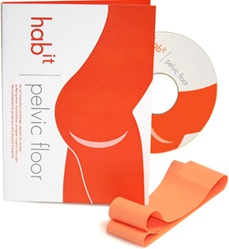
DVD Review: Hab It: Pelvic Floor

DVD Review: Hab It: Pelvic Floor

PT Partners, 2008
DVD, 1 hour 42 minutes, $29.95

www.hab-it.com

Reviewed by Molly Remer, MSW, CCCE

Most women, and certainly all birth professionals, are aware of the importance of the pelvic floor. Less well-known are methods and exercises beyond the basic “Kegel” to strengthen and rehabilitate weakened pelvic floor muscles. Hab It: Pelvic Floor is a physical therapy DVD specifically targeting the pelvic floor. It is designed for women who are experiencing incontinence, prolapse, or pelvic floor pain. It is also a preventative tool for women to avert the development of these distressing issues.

Hab It: Pelvic Floor begins with an anatomy overview and Kegel explanation/instruction and moves into correct postural positioning. The DVD contains four progressive workouts each more than 20 minutes long and also “time efficient” versions of each workout. Each workout is coached by physical therapist Tasha Mulligan while being demonstrated by another woman. All of the information is clearly presented and easy to follow and the instructor is pleasant and earnest. The DVD comes with an exercise band for use during some of the exercises and no other equipment or props are required.

A very thorough and complete resource for any woman of any age, Hab It: Pelvic Floor is a relevant, interesting, and worthwhile addition to the libraries of doulas, childbirth educators, and anyone who cares about women’s health.

Note: The DVD is not designed specifically for use by pregnant women and there are several exercises that are not compatible with pregnancy—it is ideal for pre or post-pregnancy however!

Disclosure: I received a complimentary copy of the DVD for review purposes.

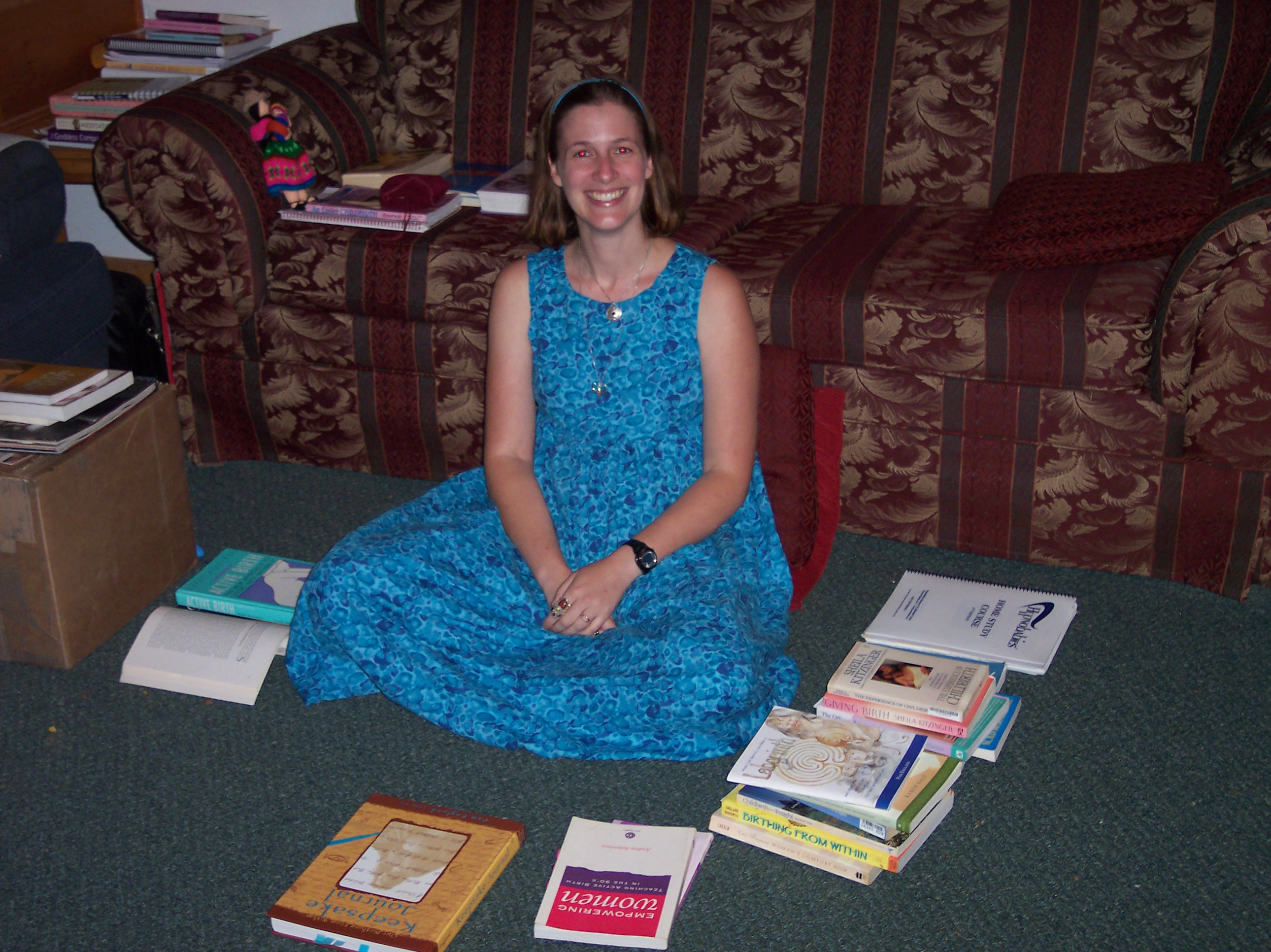
Wordless Wednesday: Wallowing in Books

Anyone who knows me in person knows how much I love books! I joke with my husband about feeling like I need some time just to “wallow” in all my books. This past weekend, I finally did exactly that—got out all the birth and childbirth education books that are my favorites or that I’ve been wanting to look through again, spread them all around me and just enjoyed 🙂 (while I love being a book reviewer, one drawback is that I spend so much time reading NEW good books that I don’t have a chance to re-read old favorites!) Notice there are also books on the couch behind me AND in a big stack on the end table next to the couch—these are not books I got out for wallowing purposes, but are currently in-process/being used books! And, yes, that large box next to me is full of books and also has books on top (these are kids’ books mailed to us recently though, not birth books). I also feel like pointing out that this is not a very figure-flattering dress I’m wearing and though, yes, I am pregnant, I am not really as big as I look in the picture.

So much for Wordless!