Archives

Tuesday Tidbits: Postpartum Mothering

Some honest, nitty-gritty, lovely, and poignant looks at motherhood today…

Beautiful print of a babyloss mandala by Amy Swagman. My mom surprised me with this for my birthday after thoughtfully contributing to our Amethyst Network fundraiser and receiving the print as a premium.

Beautiful print of a babyloss mandala by Amy Swagman. My mom surprised me with this for my birthday after thoughtfully contributing to our Amethyst Network fundraiser and receiving the print as a premium.

First, I very much enjoyed this article about the painfulness many women experience as they transition into motherhood. This may be re-experienced/re-visited with each baby, or perhaps the initial challenge fades into the background of memory, unless you actively acted to preserve it.

…For me, and for many other women, being a new mother is hard. It can be hard in a million different ways: painful physical recovery from a difficult birth, breast-feeding problems, colic, tensions with your partner, sleep problems. It’s also just hard on its own, on top of and in between all these other challenges. As a friend of mine said, “I knew it would be hard, but I didn’t know what ‘hard’ would feel like.” We thought it would be sitcom-style hard—not necessarily with a feel-good resolution at the end of every episode, but at least punctuated by those frequent moments of uplift indicating that, in spite of everything, life really is beautiful, isn’t it? I’m pretty sure it’s like that for some people, but for many of us, it’s not. For many of us, it’s not good hard, as in a “good hard workout”; it’s bad hard, as in, it sometimes feels like something bad is happening to you…

Before I Forget: What Nobody Remembers About New Motherhood – Jody Peltason – The Atlantic.

I recognize that many mothers do not have difficult transitions in postpartum, but I certainly did, and the period of time following the birth of my first baby remains fixed in my own memory one of the most pivotal, painful, challenging, and transformative times of my life as a woman. Perhaps it is more fixed, because I did write about it and the rawness and the struggle is preserved in those words from the past. This article reminds me of my own past thoughts:

When I had my first baby, I would see women who were pregnant and feel almost a sense of grief for them—like, just wait, you have NO idea what is coming. I also told my husband more than once: “this is both more wonderful and more HORRIBLE than I ever could have imagined.” The fear of being thought a “bad mom” is SO powerful that it keeps us quiet about many things. I’ve felt more than once that my kids were “torturing” or me or literally trying to crush my spirit/soul. It sounds horrible to type it out, but that is how I feel sometimes! I’ve also written about how it interesting to feel both captivated AND captive. Bonded and also bound. I discovered that there was a whole new section of women’s rights I hadn’t even been aware of prekids–mother’s rights. I do think many, many women have written about this, but when you start out you feel like you’re the only one whose “daring” to mention the ugly side [she’d also mentioned, “why doesn’t anyone write about this?” Um, they totally do. A lot]. Start reading “momoirs”—they’re a lifeline! So many good ones out there. I have a big collection of them. Oh, and start reading Brain, Child magazine. The best look at real mothering I’ve ever know.

via What to tell a mother-to-be about the realities of mothering…

See also:

Postpartum Survival Tips

Birthing the Mother-Writer (or: Playing My Music, or: Postpartum Feelings, Part 1)

Postpartum Thoughts/Feelings, Part 2

Postpartum Feelings, Part 3

The time of danger, what needs to be survived, comes at different times for mothers. For me, it came early — during my [child]‘s infancy.” ––From Sleeping Beauty & The Fairy Prince: A Modern Retelling By Cassie Premo Steele

Ever since my first child was born over nine years ago, I’ve been talking about writing an article about the tension between choices and that whatever it is you’re doing, you can be blamed for the outcome later—i.e. “you let me co-sleep, and now I have lifelong sleep problem” OR, “you didn’t co-sleep and now I have lifelong abandonment issues!”

So, I appreciated this humorous look at how you’re doing everything wrong:

Everybody’s always trying to figure out how to do it right.

What’s “best” for my children? What can I do to raise the healthiest, most well-adjusted kids possible?

How can I do it “right?”

Well I think we should reframe this whole discussion into a simple recognition that we’re doing it all wrong.

Everything we do, it’s wrong.

Every decision is the wrong decision. And I have proof. Check this out.

via So basically, you’re doing everything wrong always – renegade mothering.

In a happier tone, I very much enjoyed this sweet post about the end of the breastfeeding relationship:

I’m hoping that buried in the corners of my children’s minds, along with all the other lovely things, there are some memories of breastfeeding that will be there all their lives. As for me, it’s not so much a corner of my mind as an overflowing treasure chest.

via Lonely Scribe: Of milk and memories: how my breastfeeding story ends.

I was very grateful for my own breastfeeding relationship last week when we took Alaina in for her dental work under general anesthesia at an outpatient surgery clinic. After it was over, we nursed and nursed and nursed. It was healing and renewing for us both and it meant I didn’t have to worry about her getting enough to eat or drink after being groggy and having a sore mouth. Interestingly, while she was under, we went ahead and had her upper frenulum clipped (I’ve thought for a long time that she had a upper-lip tie) and it has made such a surprising difference in how comfortable it feels to nurse her. I think I had adapted to a low-level of irritation and discomfort throughout the entire two years that I’ve nursed her.

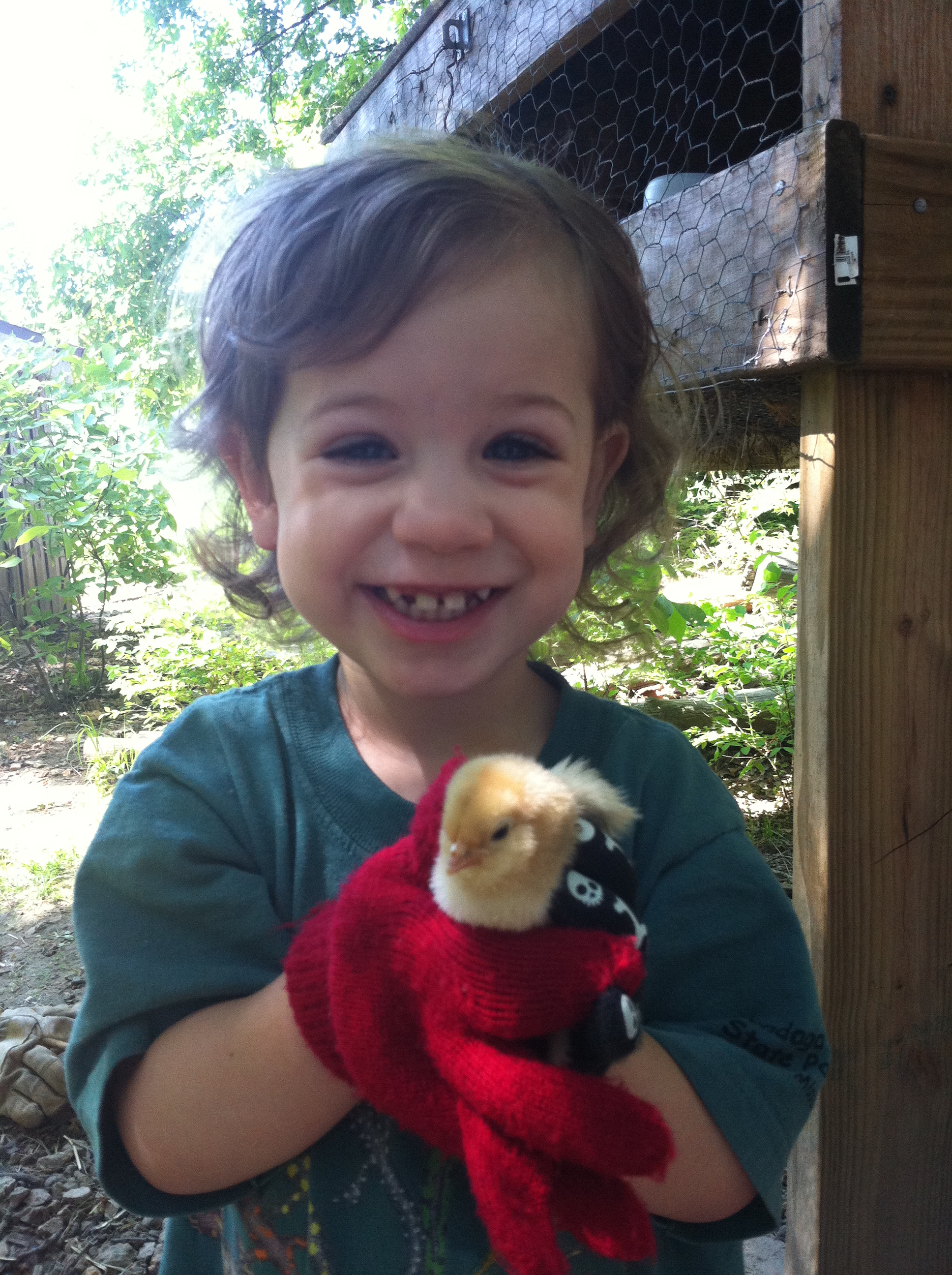
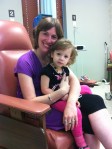
The day after surgery: showing off new teeth (the previously poorly repaired ones WERE able to be saved!) as well as a new baby chick!

The day after surgery: showing off new teeth (the previously poorly repaired ones WERE able to be repaired and saved! I went in thinking we’d be coming home with a [more] toothless girl) as well as a new baby chick!

Birthdays! (and lots of other stuff)

My birthday was at the beginning of this month. I uploaded some pictures and was going to just post a quick post, but then some days passed and then some more days. I added some more pictures and thought of more things to write and it has just been languishing in my drafts folder. Things keep happening and so I think I’ll add a couple more pictures before I post, blah, blah, blah. I almost deleted the whole thing since now May is practically over and my bday was weeks ago, but since I bothering uploading the pix, I’m just going to post it!

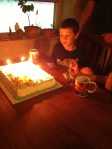
May is a busy month for us. It is my birthday and then Mother’s Day and then my mom’s birthday and my dad’s birthday and Zander’s birthday. We also have a whole group of our work party friends who have May birthdays (and playgroup friends too!). May 12th was the 18th anniversary of my first date with my husband. May 16th was the fifteenth anniversary of my college graduation. I feel like I’m getting old! And, it is weird to think about how close that college student girl feels and also how very far away she feels. My parents both turned 60—I had a surprise party/healing ritual for my mom as part of our spring women’s retreat as well as a ceremony for our 12-year-old work party friend whose birthday was the same day. On Mother’s Day, we had a family memorial ceremony for my grandma. In the middle of all these celebrations, I’ve been wrapping up the school session (including grading almost 100 papers…split up in two batches of almost 50), preparing for the summer school session, plotting with Mark about him quitting his job, trying to help motherbabies breastfeed happily, trying to stick with some kind of homeschool “schedule” for my kids (using the term extremely loosely). Oh yeah, and my tiny little sweet daughter also had major dental work under general anesthesia last Tuesday. One of my Facebook friends pointed out that no wonder I’ve been feeling taxed. Yeah, duh. I don’t know why I can’t extend myself that grace. Instead, I’ve been berating myself at various intervals about my “inability” to handle it all. I’ve also been planning our big trip to California. $2300 later and WAY too many hours thinking, checking, and strategizing, I ended up with five plane tickets and we’re going. We decided to to go ahead and make a full vacation out of it—Disneyland, tourmaline mining, Legoland, and Pismo Beach! My grandma’s committal service (which I am planning and facilitating) and her celebration of life luncheon is in Fresno in the middle of our trip.

This week as I tried to finish those last bleeping papers, I found out that I’d made a mistake with our plane tickets—having a p.m. flight from San Diego to Fresno rather than the a.m. flight I thought we had. I almost lost it. Flipped out. I’m serious. I felt like I had officially exceeded my actual ability to cope and that I may possibly break down in some way. More. Than. Humanly. Possible. To. Handle. As it was, we made the semi-bizarre choice to just buy some new tickets that restored the “rightful” a.m. flight schedule. These middle-of-the-journey tickets were only $68 each and we decided it was really a fairly trivial amount and we should just do it. We’re taking our family of five to CA with carry-on luggage only and we’re packing like a boss! Seriously, we’re rocking this thing.

Oh, and just this afternoon I also finished my twelfth class for my D.Min degree. I’ve got about 14 left, plus my dissertation. I have three in progress and signed up for two more to start during the summer session. How do I do it?!?!? Heck if I know. 😉 Maybe it is time to feel impressed at my own capacities again rather than mad at myself for not getting more done, for being “behind,” for staying up too late, for taking too long to return phone calls, for leaving some emails unanswered and books unreviewed, for being sometimes short-tempered, for screwing up a.m. and p.m., for not getting around to the blog posts I’d hoped to write, for not keeping up with requests for new sculptures, for not having a birthday surprise of some kind for my dad too, and for never feeling “finished” enough to rest.

Here is what I originally swiped from my Facebook to share about my birthday:

Uh oh. I spent the first 8 minutes of my 35th year still working on these dang bibliographies. This has been my worst/least productive grading stint yet (the CA trip planning/purchasing ate up my usual “free” day). I’m determined to have a FREE day tomorrow (okay, technically, today, but it doesn’t count until I go to bed!)–I’m going to wallow around in books and listen to guided meditations (you know, with the three kids climbing on me!) and plan rituals and celebrations and not do anything I don’t feel like doing 🙂

It is SO flipping hard to focus on grading these bibliographies when my brain is turning over Disneyland plans, hotel reservations, car rental, and also finding just the *right* stuff for my grandma’s memorial service. The good news is that I have some really rocking students this session and they make some of the grading easy!

Later update:

Thirty-four years ago I was born! As my birthday present to myself, I DID manage to finish grading the last bibliographies and I’m taking the day off to hang around and wallow in books. I think I might do a tech-off day (or, at least, a class-off day!) Oh, and I bought two tiny little Japanese dolls for myself at Goodwill too. I do birthdays right!

When I wake up and hear rainfall on my birthday I always feel like the planet is wishing me a happy birthday too (there was a heavy rainstorm the day I was born). Alaina told me I should have a cake with “nonnie babies” on it. On my actual birthday, my mom took me to a tea room in a neighboring town for a birthday lunch and then I came home with three kinds of tea and the kids and I had a tea party! (in many ways an excuse to eat sugar cubes and this involves sort of obsessive negotiation over them rather than just enjoying ourselves!) I asked the boys if they would play with Alaina so I could have an easier time getting ready to go. After about ten minutes, Lann said, “whew, she’s pretty much like an energy tick.” I rolled! I love having a nine-year-old and a toddler. So much different and easier than having a toddler and a preschooler was.

Okay, so here is a gallery of the pictures I meant to post on several occasions, plus some more I just added in today:

Talk Books: The Art of Family

(Amazon affiliate link included)

Last month I finished reading The Art of Family by Gina Bria. I’ve already quoted it here a couple of times and I’d like to offer another series of quotes and insights I enjoyed from this book.

We will have doubts about our depth of relationships with our children. Questions will haunt us. (If a baby-sitter picks them up at school today, will they be irrevocably damaged?) But to a parent, doubt is a way of asking all the right questions. What we so often experience as doubt is really the process of creating ongoing relationships. It is when we stop doubting, thinking, questioning, in relationships that they die.

Gina Bria (2011-11-28). The Art of Family : Rituals, Imagination, and Everyday Spirituality (p. 7). iUniverse. Kindle Edition.

I really loved this. It reminded me of another reassuring mothering moment that happened for me at the La Leche League International conference in 2007. Martha Sears was speaking and she said something to the effect of, “does anyone ever wonder if they are ‘attached enough’ to their kids?” She then said that the very fact that you think about those subjects and ask yourself those questions means you are. And, that you are a good motherShe said that only good mothers worry about being good mothers. I found that tremendously reinforcing and have drawn on it repeatedly over the years! I’ve heard other parents say that they feel confident they are making the “right choices” for their families, because if they weren’t right, they wouldn’t do them, but I often lack that sense of complete certainty. I see a lot of possible “right choices” as well as piles of “good enough choices” in the world and it is helpful to remember that turning these things over, asking hard questions about them, and having doubts about your own parenting is actually part of the process of a healthy, alive relationship with your children.

And, speaking of making mistakes and having doubts, I also enjoyed this reminder that children are watching how you handle mistakes and how your repair damage:

Perhaps it will come as no surprise to nonreligious parents that teaching children to resist the status quo is a spiritual gift; but observing what’s wrong about what surrounds us is the first necessary step leading away from the brokenness of a particular culture, setting, or time. Spiritual leadership at home earns a special place in children’s formation, especially in their imagination. Refining our children’s spiritual imagination is essential; it will become their storehouse, a granary, for making choices about the way they will face loss or triumph. Their imaginations will be shaped by the world we present them. Children need to hear not only what we believe in, but also what we long for, what we hope for—not just what we think the world should look like, but what it doesn’t look like, and why. And, yes, we want them to be like ourselves, but more. We want our children to admire us on the deepest level of our own spirituality. Not just our ethics, our morality with others, but also what is our being, our nature, what choices we make, who we are in front of the vastness of everyday life, and what we do when confronted with evil. These questions are alive for children from the very beginning of their lives. We cannot wait until we, as adults, as individuals, have finally answered, to our satisfaction, our own questions and doubts about God, the world, and human nature. We are meant to do it together. We are joined spiritually to our children, it cannot be otherwise. Our children want computer software, Matchbox cars, and iPhones. But what they want most from us is who we are. To them we are Adam and Eve, the first human specimens of their universe. They keep their eyes on us; they know that no other adult will matter quite so much to them while they grow. They want us to be good. And when we are not good, they watch carefully to see how we will handle it. Here is where most of us will have a chance to be heroic—exactly when we stumble.

And, with regard to parents as everyday heroes, Bria touches on something that I’ve tried to communicate in a past poem for mothers:

You may feel uncomfortable and puzzled about this or you may be the most agnostic person you know, and yet, in loving your children, you are practicing the profoundest spirituality. In this you are heroic, and there are days when you know it. You know you’ve been stretched to the limit, faced insanity, wept in the closet, physically found an entirely new level of exhaustion. It’s called sacrifice. No one else, except maybe, maybe, your partner, will ever know what you’ve done. No one else will ever guess how hard it has been. No one will thank you for it. Even when your children have their children, they will only vaguely realize what you’ve done—they will be too frantic caring for their own kids. Yet you do it. Now, that’s heroism.

Gina Bria (2011-11-28). The Art of Family : Rituals, Imagination, and Everyday Spirituality (p. 80). iUniverse. Kindle Edition.

YES! Though, I do actually feel like my children are really good about expressing thanks to me. Little Alaina has a somewhat new habit of saying “thank you” to me for almost everything. She asks me to pick her up and when I do, she throws her arms around my neck, pats my back, and says, “SANK you, mommy!” And, she almost always says, “thanks” for nursing too. She’ll talk to my “na nas,” saying, “thank you, nonnies. Love you, nonnies. Thank you, mommy. Love you, mommy.” No thanklessness there 😀 My boys too will often tell me I’m the “best mom in the world!” or that they would never want a different mom because I’m, “the greatest mom ever!” So, I do, in fact feel appreciated by my kids on a regular basis. However, I identify with the remarks about no one really know how hard its been and that you are heroic in continuing to meet the challenge! March 2013 057

And, as I prepare for a major trip to California later this month, I call to mind two particularly àpropos reminders about having so much to do all the time:

“Face it, now, you will never have enough time to do all the right things, the necessary, even important things you can eternally think up, but you will have enough love.”

“I want my sons, both of them to learn from me that they are free to be rooted in home and still be abroad in the world as men.’’ She also feels being a mother to her sons involves giving them pictures of her as a woman engaging her gifts. She is sharing her interests with him, preparing him to see women as partners, with many interests, giving him a model.

And, finally, a thought about making a home:

HOME IS THE FIRST PLACE we spend our love. It is the site, the space, the enclosure, where we love each other and spin ourselves into a family—mother, daughter, father, son, and over all, lovers. It is the place we disburse our energy, expend our life, and exercise our imagination. It holds all our little memory objects and, with them, the people we love—the ones we are willing to spend our lives on. The ones we most want to show and tell to. It’s never just four walls. Home can be thought of almost as a body to care for; a body that contains the spirit of the family. One can read the character of a family by the home they make. It is not the things they have, but the spirit of life that is manifest in their home, because home is the ultimate joint project families do together. It is imperative that home be made by all family members. It is not a woman’s private project, whereby she creates a space and everyone else just inhabits it. Home is a joint project—that means children must be fully engaged in “keeping’’ house in the same way the adults are. Most chores for children are assigned to build character—not really to attend the body of the home together. By giving children an explanation about why their contribution to the home is important and giving them an opportunity to contribute—a true sense of ownership—a discernible difference in the attitude takes place; it’s a community effort. Young children “play house’’ for real because they understand that you depend on them; and if they feel how vital they are to you, to this project, they respond. After all that is what children inherently want, to belong to someone, in some place, and to give their little selves too.

Gina Bria (2011-11-28). The Art of Family : Rituals, Imagination, and Everyday Spirituality (pp. 126-127). iUniverse. Kindle Edition.

And, one about goblets. Yes, goblets. I feel her!

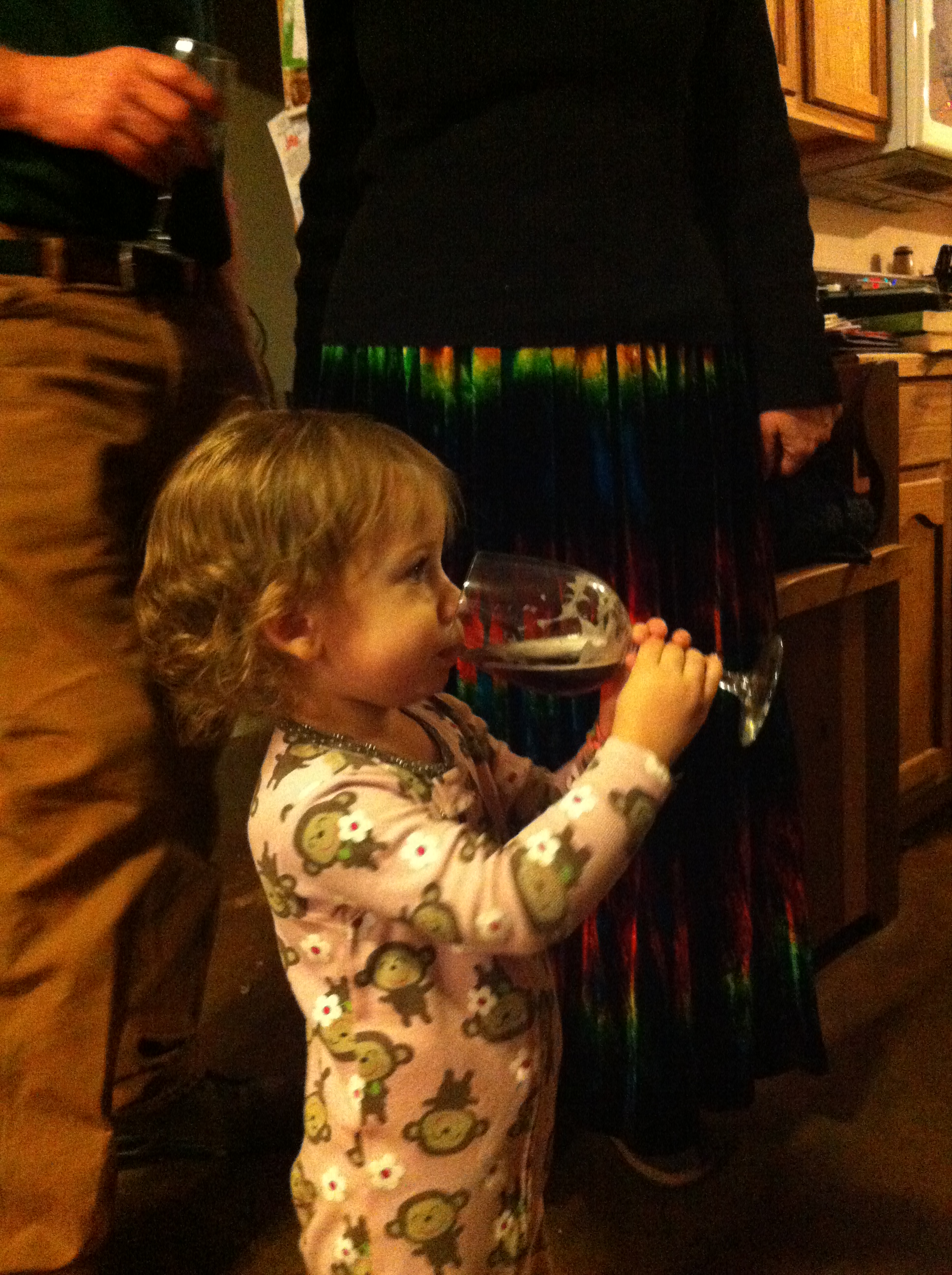
What is it about goblets that gives me a lump right in the throat? To see a little fist brandishing one about, drink half-sloshing, ought to fill me with terror. Instead I get the deeply satisfying affirmation that, for the moment, we are princes of our palaces, little or big as we are. Goblets ring royalty bells for me, aristocracy, or even only mere martiniesque sophistication, but they symbolize elevation, reminiscent of a chalice. A goblet lifts you up, even as it lifts up the body of liquid you are drinking. The imagery of a child sipping from a goblet is a glimpse of a lost land, some original garden, where animals talk, flowers sing, feasting abounds, and every servant is a noble in disguise. Maybe our little diner parties for children are a silly attempt to taste this vision, but I can’t give it up, even if we do, in the end, lose some goblets, in peril of a gash. When the other mothers come to collect their children, I know they contain their askance glances: I’ve let their children play with glass. I, too, wonder sometimes if I am a demented, too-casual mother. But I am not, I am crazy for the real. I so want to put the real into children’s hands, to promise them while they are still children, still believers, that it is beautiful, exciting, and dangerous to be at a table.

Gina Bria (2011-11-28). The Art of Family : Rituals, Imagination, and Everyday Spirituality (p. 138). iUniverse. Kindle Edition.

Alaina with sparkling cider on New Year's Eve.

Alaina with sparkling cider on New Year’s Eve. She’s got the real in her hands! 🙂


Motherhood and Embodiment

“Loving, knowing, and respecting our bodies is a powerful and invincible act of rebellion in this society.” –Inga Muscio

As I’ve written before, pregnancy, birth, and breastfeeding are incredibly embodied experiences—motherhood in general feels very much a molly37weeks 016physical commitment. Our relationship with our children begins in the body, it is through the maternal body that a baby learns to interpret and engage with the world, and to the maternal body a breastfeeding toddler returns for connection, sustenance, and renewal.

Why might birth be considered an ecofeminist issue though? Because mother’s body is our first habitat. We all entered the world through the body of a woman and that initial habitat has profound and long-lasting effects on us, whether we recognize them or not. Midwife Arisika Razak explains, “the maternal womb is their first environment. The cultural paradigm of birthing is the first institution that receives our children…Each of these elements—womb, birth culture, and family—has a profound effect upon the new human bring. Each deserves our best thinking and analysis. What would it be like if we envisioned a society in which positive, lifelong nurturing support—from old to young, and young to old—were the dominant theme of human interaction?” (p. 167).

What would it be like if we treated birthing women and their babies like they mattered?

Our first and deepest impulse is connection. Before Descartes could articulate his thoughts on philosophy, he reached out his hand for his mother. I have learned a lot about the fundamental truth of relatedness through my own experiences as a mother. Relationship is our first and deepest urge and is vital to survival. The infant’s first instinct is to connect with others. Before an infant can verbalize or mobilize, she reaches out to her mother. Mothering is a profoundly physical experience. The mother’s body is the baby’s “habitat” in pregnancy and for many months following birth. Through the mother’s body, the baby learns to interpret and to relate to the rest of the world and it is to the mother’s body that she returns for safety, nurturance, and peace. Birth and breastfeeding exist on a continuum, with mother’s chest becoming baby’s new “home” after having lived in her body for nine months. These thoroughly embodied experiences of the act of giving life and in creating someone else’s life and relationship to the world are profoundly meaningful experiences and the transition from internal connection to external connection, must be vigorously protected and deeply respected.

via Talk to Your Baby | Talk Birth and Breastfeeding as a Spiritual Practice

I have a particular interest in embodiment and my dissertation topic is related to a thealogy of embodiment (basically the Goddess and the body) and so my attention was caught by some great sections about birth, bodies, and family in the book The Art of Family:

AS WE MOVE THROUGH BODILY stages together, there are some special stages that are worth thinking of in advance. Pregnancy is one, of course, and babies. Nothing is more inescapably BODY than birth. For the mother, both through her pregnancy and the labor and delivery of the baby. In birth, the body gets to drive the soul for a change and one’s soul is on for the wild ride, whatever happens. What does she deliver, after all, but a body, this little lamblike creature packaged in a now wholly-other body? What does she deliver but a body—and what do she and Daddy count but a body’s toes, a body’s fingers? In these small ways we acknowledge our wholeness, our physical sacredness.

Gina Bria (2011-11-28). The Art of Family : Rituals, Imagination, and Everyday Spirituality (Kindle Locations 1693-1700). iUniverse. Kindle Edition.

(Amazon affiliate link included)

And, I appreciate that Bria then moves into a consideration of how men experience pregnancy and birth…

YES, BIRTH IS THE BODY, and for women it is manifestly given. But one should note that the world over, there is a complementary effort by men to try to counterbalance the impressive power of women who have even the potential of birth, whether it is actualized or not. Men, too, have moments of making special use of their bodies. Men make quests, and perform feats of extraordinary effort, to put their bodies on the line in some attempt to match birth.

…For modern men, pregnancy means two things, not one integral, unfolding experience, as for women. First, they must cope with a partner undergoing tremendous physical change. In essence, they are no longer dealing with the same body. It’s a stressful experience, and many men fear they will never see their old partner again, quite literally. They listen to their wives agonize about weight gain and swollen ankles, and secretly grieve the loss, all the while maintaining a show of faith, for their wives, for themselves, that it will come to a happy ending. And on top of that, they must then forge a new relationship with the party responsible for this, someone they can neither see, nor touch, indeed, can hardly believe exists! Women at least get touched by their in-utero babies, even if it’s a swift kick from the inside. “Hey, it’s Daddy,’’ my husband said rather sheepishly into my belly one night. This seemed to me quite amusing, as if the baby needed an introduction to one half of his own genetic material. Then suddenly it struck me that I had never considered introducing myself to the baby, announcer like over an intercom—“This is your mother speaking’’—because I felt the bodily connection so inexorably. I knew I was well known to the baby, but my husband had no such advantage. He had to make connections in other physical ways, in this case using his voice. Making a family where men touch, speak, and care for children is a vital way to connect them to their own progeny; one way that many cultures, including our own, can often deny men. Perhaps you have been stopped in your tracks, as I have, over the recent spate of advertisements of bare-chested men holding tiny babies. Do advertisers, more than Freud, know what women want? Yes! We want to see our handsome men holding babies, snoozing with them, schmoozing with them in chest-to-chest communion. As Jane Austen asks, “What attaches us to life?’’ Anyone who lays on hands gets attached to life.

These thoughts really struck me in a profound way. During each of my own pregnancies, I remember marveling and feeling impressed, as well as a little sad, that my husband had to somehow forge this bond with a newcomer without the same benefit of the embodied, constant experience of pregnancy—pregnancy from the inside is different than pregnancy from the outside. I shared the author’s amusement in picturing how it would have been to “announce” my own presence to my babies. I’ve tried, but cannot fully imagine the process and psychological task involved with the paternal experience, of in a sense, “suddenly” having a baby to hold and care for and “instantly” love, though I’m sure I have the capacity within me somewhere (and, yes, I know that not all mothers feel an instant love either and may have the same sense of suddenness in their own lives—it was certainly true for me that the inner experience of a womb-dwelling baby was pretty different from the external experience of having a physically visible baby to tote around). As a pregnant woman though, the baby is basically inescapably present and part of me in an interconnected, interwoven, symbiosis of being. There is the transition at birth to an “outer” relationship, but that intense embodied interconnection continues immediately with the breastfeeding relationship. It is somewhat impressive or staggering to me almost, that men have to form their own connection born out of different “stuff” that the biology of gestation and lactation that weaves the motherbaby together.

Bria also addresses the loving of a baby’s body that isn’t going to survive:

WE ARE NEVER MORE CRUSHED than when there is trouble at birth. No sadness holds for us the power of an incomplete body, a broken body. We grieve and turn heart stricken at this time like no other. In moments like these we can only comfort ourselves, with love, that love would allow us to care for this child when many would not be able to do so. We hope to find ourselves the kind of people who could, in such circumstances, make a life for a whole person, with an incomplete body. When our son was born with a leaking heart, an old-fashioned “blue baby,’’ and destined to die without surgical repair, we learned quickly that all we could give him, all he could receive as a newborn, was the small, inconsequential daily care of the body, gentle changing, warm nursings, our breath upon his face. Perhaps, we thought, it would be all he would ever get. In that season of attention, we really learned the significance of loving a body. A body, however small, records every trace of touch; it is never unconscious; unlike the mind, a body is never without sensing, even in sleep. A body will always remember.

I liked the description of a body always remembering. We do carry deep, physical memories of our pregnancies, births, and babies. I find the physicality actually comes back most clearly in dreams for me, when I can again feel with a sharp potency the sensation of a baby’s body slipping swiftly from my own body. I also like reading research that indicates that mother’s body carries fetal cells within her forever. I like thinking that physical evidence of the embodied, relational experience of pregnancy remains written into my very cellular structure (well, and on my bones and skin too, I suppose!). I found this a comfort after my little Noah’s birth, thinking that in a very real way, I would truly always remain a “little bit pregnant” with him and that perhaps some of his unique genetic material lives on in my body.

After birth, we continue to relate to our babies on a very physical, body-oriented level. There is nothing like a baby to bring things back to the body, to use your body and their own in a complete, intensive, totalness.

BABIES’ BODIES AND CHILDREN’S BODIES   LIKE PLAY, LOOKING AT THE body of an infant returns us to childhood. Babies’ bodies are a special form of being human, and they elicit in us essential, elemental emotions. They infect us with longing for the integration, the wholeness, they have. As new parents, we experience again all the helpless and exuberant feelings of children, the unfeigned marveling over everything manifested by a baby, a physical miracle. We cannot contain our awe, expressing it to everyone within earshot. New parents on the street can always be identified by their aura of vulnerability; they’ve shed the social cloth that keeps us all appropriately attired to go about our work. Instead, just like the baby, they are naked to everything good. They blink and look around, bemused, tired, and delighted. You will notice they always smile at you at the crosswalk—it is a secret, initiated smile. They assume you either know what they are smiling about or wish that you did. What is it they know? Their babies made them once again aware of the pleasures of physical delight. To care for an infant is a test of our humanness, a trial by fire and love.

What is good about caring for infants is that they never let us forget how essential the body is. They snuffle, bawl, and demand attendance. “Feed me, change me, hold me,’’ for an eternity of right-nows. And when they sleep, it’s as if they have cast themselves on a thin but safe shelf of floating wholeness, complete integration. They show us what we once were, without guile, delightedly in love with our own body. When infants turn into toddlers, the body is still in front, still demanding, but in a bigger world. Now protection from bodily harm becomes a concern of everyday physical life together. We aren’t as impressed by the bodily transmogrification that takes place in front of us, because we’ve learned to live with it happening every day, day to day. It’s impossible for the same miracle to impress us the same way over and over again. Thus begins the very fading away of the lesson we most need from our children—that there is intense pleasure in the active human body. Right under our noses they play. They play and play and we watch and nod as if this itself isn’t a further miracle. What do infants do when they get control of themselves, but move, explore, experience exhilarated delight in their bodies and what they can do. Their essence is to enjoy themselves as bodies, all over…Through physical life with our children, through care of them and play with them, the hands-on of it, we again acquire our innocent selves, a delight in each other and the world around us. We discover all over the potentialities of the senses. This is the heart of being with young children.

Gina Bria (2011-11-28). The Art of Family : Rituals, Imagination, and Everyday Spirituality (Kindle Locations 1729-1760). iUniverse. Kindle Edition.

As they age, this physical, body-based relationality and experiences may wane, and yet still holds important value:

As our children age we must struggle to keep this alive for ourselves, for them, in one form or another, as the world begins its intrusion into our family lives. This may be as simple as pointing out that a flower is beautiful, that rain smells divine, that a hand held feels warm and comfortingly sweet, that nothing satisfies like cool water. Once children hit the walking stage and beyond, we spend more time explaining compared with the time we spent holding. Yet there are still many miniature ways of communicating with one’s body. Its active use—a nod, a wink, a hug—are all fleeting acts of committing one’s body, however momentarily, to another. Looks, touches, squeezes, physical smiles, a physical vocabulary—aren’t they what children long for? Indeed, isn’t that exactly what we thrill to in a romance—those little signals that you belong to each other—and isn’t that what we end up complaining of missing when our marriages seem stale? It isn’t just for romance that these things work, though it is there that we most seem to notice them. All of family life can capitalize on a richer life with each other’s bodies.

And, bringing it back to birth and the care of birthing bodies, I really liked this image via Facebook:

treatment

Goodbye

My grandma, Lyla, was a beautifully active, vibrant woman and her quick devolution due to advanced and very aggressive pancreatic cancer was a 537883_10200265639095993_78320575_ntremendous shock to our family. I’ve always admired and respected her and been proud of her for all of her accomplishments and activities. She was not a particularly emotionally demonstrative woman, but it is amazing to think about all the ways her presence is woven through my days even though she lives 2000 miles away–the sweater I put on every morning is one she knit for me, her quilts are on my kids’ bedroom walls and on all our beds, magazine subscriptions she gifts us with are in the car and bathroom…we’re connected in many ways and I don’t know what life will look like without her in it. She died early this morning and I can’t quite believe it. I remember when my great-grandmother died (at 88) my grandma told my mom: “now, I’m an orphan.” It is a moment that always stuck with me because I realized that no matter how old you get, you still feel like someone’s daughter. When I started packing for our craft camp this afternoon, I packed quilts to take for our beds that she made for us, I looked at Christmas pillowcases she made for my kids, and I was so impressed with how she managed to be such a part of our lives from such a distance.

I’ve cried so much in the last week. I honestly didn’t know I would feel this loss so keenly–it is in the “right” order, she lived a full and beautiful life, and etc., etc. One of the things that will totally set me off is to look at my own little girl and think, “but Mamoo used to be someone’s little girl!” And, then I think, but isn’t this what I WANT for my own little children? To grow up and have grandchildren and great-grandchildren? Yes, duh. And, I got to be almost 34 still having her as a part of my life. The other thing that gets me going is the thought that my kids are the only kids in this side of the family who get to have a Mamoo, who get to have this amazing great-grandmother. When my brother and sister have kids, they won’t have a Mamoo. And, then I have to laugh a little at myself that one of the things that has made me cry the hardest during this whole experience is based on these imaginary future people who may never even exist. I told my dad about it this morning, laughing while crying and crying at the same time, and he said, “it is because you feel the break in the chain.” I do.

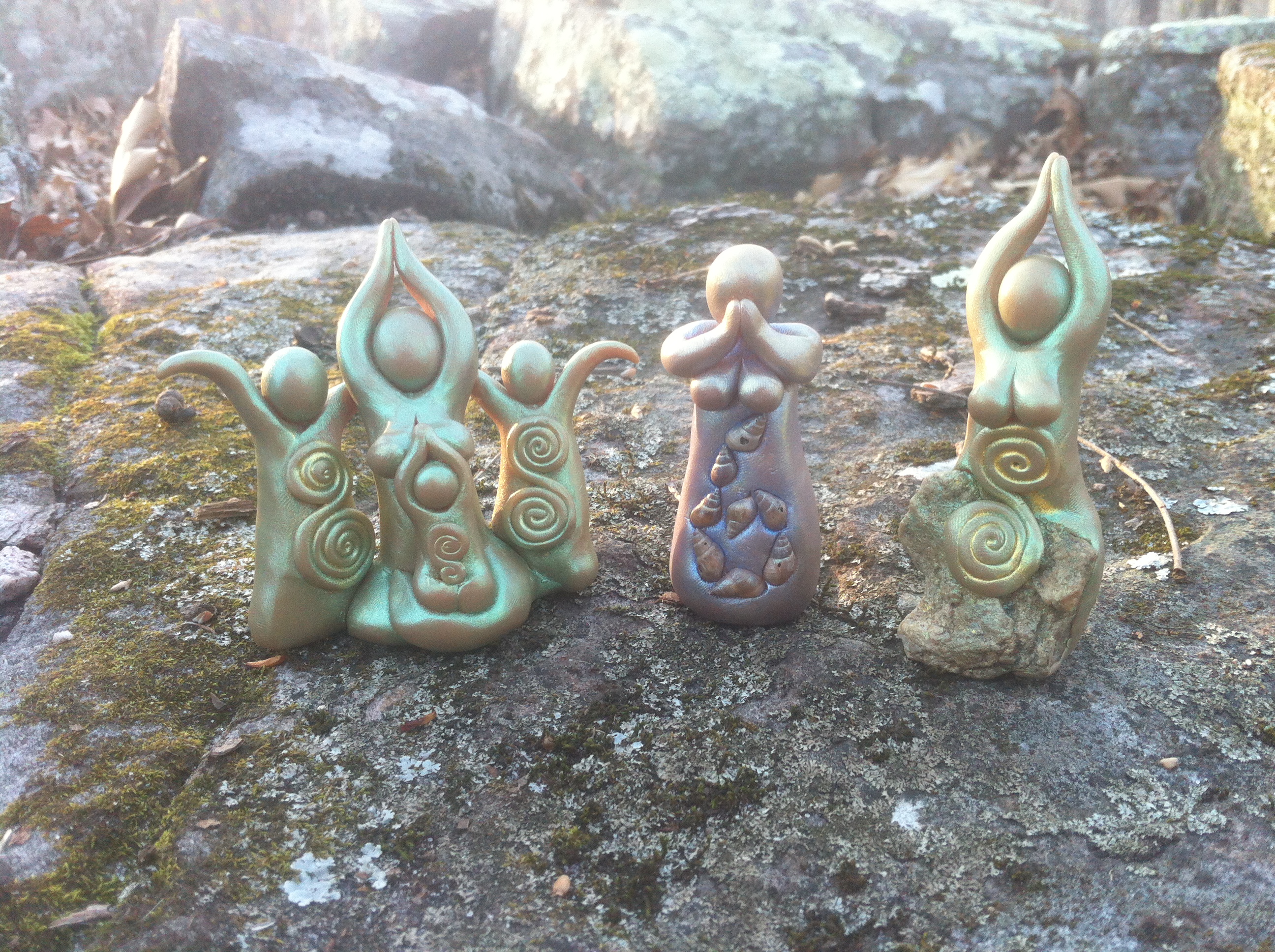
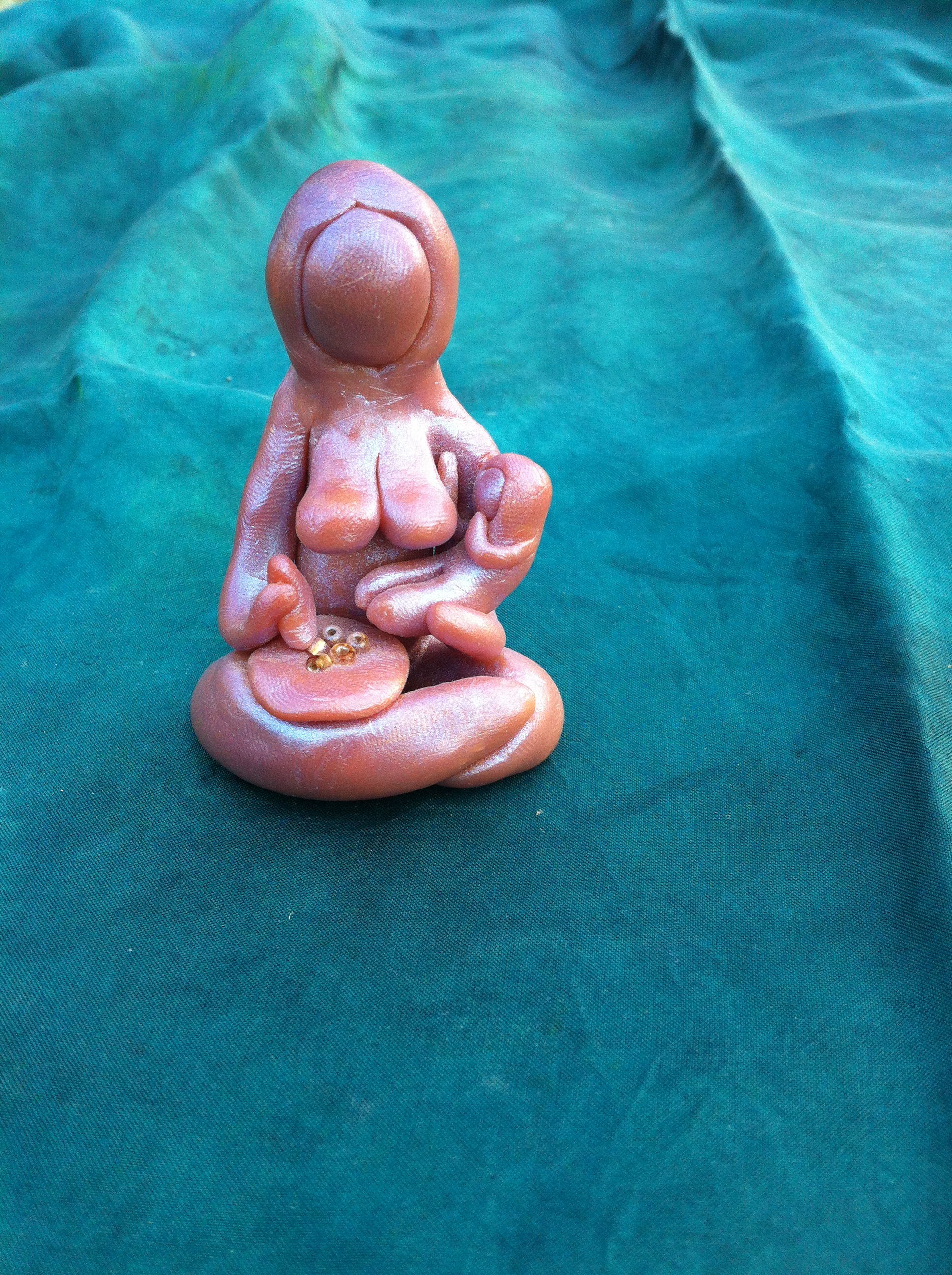
I’ve written more about this on my other blog, but on Sunday, we thought we’d reached my grandma’s final day on earth. I spent the day thinking about her, crying, talking to my husband, and fanatically checking my phone for texts from my mom (side note to those people who write critical blog posts about “distracted” people “glued” to their phones, you may do well to remember that some of those distracted-looking people might be looking for texts about dying grandmothers from their own distraught mothers and that this phone-based link in fact represents connection and not disconnection or distraction). I went to the woods and I sat on the rocks and sang Woman Am I. My mom told me she’d been singing it to my grandma as she listened to the erratic sounds of her breaths, thinking each was the last. My letter did make it in time to be read to my grandma while she was still conscious enough to indicate she heard it. And, on Friday I did a FaceTime call with my mom and she took it to my grandma’s bed so that I could talk to her. She didn’t open her eyes, but she murmured a greeting and she smiled when she heard little Alaina say, “hi, Mamoo!” So, we were able to say some final words and goodbye “in person,” which was really, really difficult, but also a gift. There is something I feel really poignantly in the mother to daughter to mother to daughter to mother to daughter connection in this life and loss experience. I know that little boys are part of the generations as well, but not in as direct a line as this particular chain of girls—I’m the oldest daughter of an oldest daughter of an oldest daughter (and my own daughter is an “only daughter,” so while she’s my youngest child she continues a line as the first daughter of a first daughter of a first daughter of a first daughter). So, I made a new sculpture trying to capture that feeling of the three generations of little girls who’ve sat on her lap:

April 2013 007

I also made one using a rock I found in the woods that day and another about grief:

April 2013 013April 2013 016I poked around on my computer and plucked out a semi-odd assortment of random pictures that capture my grandma’s spirit and relationships:

Ipad Pix 090

Four generations pic from my brother’s wedding in October.

478397_10200265613655357_366752492_oAnd on my other blog, I wrote a poem:

Go in peace
go in love
and go knowing that you have left behind
something beautiful
something marvelous
something that matters
The fabric of a life well-lived
the hearth of a family well-tended
the heart of a community strengthened
and a never-ending chain of women
unbroken.

You’re our Mamoo
You’re our grandmother
and we say goodbye
and thank you.

Sink deeply
and gently
into the arms and lap
of time
the great mother of us all

She holds you now.
We let go.

I have more things to say, more thoughts about connection, and more thoughts about having watched–from a distance–my mom so tenderly and compassionately holding the space for her mother. She worked so hard and went through a lot to be there for her mom and it was really heroic and loving. I also wish this post wasn’t so “me”-based and was more about my grandma herself, but it is what it is. I can write more later—I really, really want to get something posted before it hits midnight, so it is really published on the same day we lost her.

Kidbits

“They look so small and frail but they are so great and magnificent. They are born of the same womb that birthed the cosmos and knitted together the galaxies. If you could see them as they truly are, you would be astounded. You would see not little children, but dancing clouds of light, energy in motion, swimming in an ocean of love. They are so much more than what you see. As are you.”

-William Martin
The Parent’s Tao Te Ching

Some things I saved recently to remember about my funny little children:

  • Adorable toddler nursling moment: I was carrying Alaina in the kitchen and she patted my chest and said, “love you, nonnies.” Then, she said, “sank you, mommy.” 🙂 ♥
  • Another charming moment: Alaina standing before me and giving that cute toddler hands raised sort of shrug gesture and saying, “babies…grow…up!” She has also started doing a thing wherein she points at her own belly and says, “baby…belly…me…grow…up,” telling me that she will grow up to have a baby of her own and then points to herself and says “Mama…ME! Babies…grow UP! Mama…ME!”
  • Zander bought hair gel and spiked up his hair, put on a gold chain and sunglasses, took off his shirt and started doing some rocking dance moves and handstands in the living room. Lann said: “hey, we could start a band and call it the Wiggly Brothers.” Zander continued to groove with no response. Lann repeated himself about three times and then said kind of to himself, “I guess I’ll be the weird one…” ;-D
  • At the beginning of this month, Lann brought me an illustrated “breakfast menu” and said I could start ordering breakfast from him in the mornings. Each item is 50 cents or $1. SOLD! He has been making me a spinach and cheese omelet many mornings and I really appreciate it. The café is called Big Spoon. It is so fun to have a kid that is nine!
  • Alaina found some shiny tappy shoes at the thrift shop. The same day, we also bought the Gremlins movies (which I’d never seen) and she  energetically explained how she will use her new shoes to kick bad gremlins–she will “hug good Gizmo” and “kick bad Gizmos” (complete with demo-kick shiny shoe action). In case anyone cares, we didn’t let her keep watching it after they mutated and we muted the computer during the “Santa dad in the chimney” story, which Mark mercifully remembered (due to his own past childhood trauma) just in the nick of time.
  • Said tiny girl likes to push (literal) buttons and last week while still in bed in the morning I was surprised by the serenading CD from the living room where she must have programmed it to be on a timer (I don’t know how to do that myself!) She woke up and I said, “did you make the radio start playing?” And she said, “yes, mommy. Me do dat ting.”
  • Me last week: “Argh! I have SO much I want to do.” Lann: “Me too, Mom. It IS kind of the primary feature of our family.” ;-D

And, video special: Alaina dancing in the car while we waited to get Lann from gymnastics.
 

Talk Books: What Dying People Want

I’ve mentioned before that sometimes I use my blog as a way to store stuff that I want to remember or have easy access to later. I also use it as a means of collecting information all in one place, so that it is easy for me to search and reference again in the future, rather than having to flip through stacks of books. This leads me to a tendency to leave huge stacks of books piled by computer waiting for me to have time to transcribe all of the important stuff out of them. Often, I get fed up and re-shelve them, thinking why bother re-typing someone else’s ideas anyway, shouldn’t I just be having my own ideas?! Or, I think, guess what Molly, there is a way for this information to be stored…it is called a book and the information will still be there if you want to go back to it. But, today I thought that maybe there is a happy medium—maybe as soon as I finish a book, I should do a quick wrap-it-up blog post in which I do simply transcribe the things I want to remember, no pressure to add a bunch of new insights of my own, and if at such time I want to transform any of those quotes into a longer post in the future they’ll be tidily saved and waiting for me. AND, the book can then be re-shelved, or even given away, promptly after being “processed” in this manner, rather than waiting by my computer with a sort of guilt-provoking air of expectancy and rebuke.

(Amazon affiliate link included in image)


Unfortunately, the subject of my most recent read isn’t really a cheerful one to kick off this little experiment! However, I’m doing it anyway. The book is What Dying People Want by David Kuhl, MD. Many people have observed that end-of-life care bears similarities to birth-care (beginning-of-life care) and in fact the content of most the sections I marked to share could very readily have the word “birth” or “pregnant woman” substituted. Of course, with end-of-life care, there is not the happy anticipation of the joyful hope and promise of a new baby, but then, with birth-care there is not actually always a guarantee of that either and many women experience grief and loss from a variety of sources/experiences mingled throughout their childbearing years.

With regard to doctors communicating with patients in a dismissive, brusque, or too no-nonsense of a manner:

…he had no intention of hurting her and seemed not to realize that he could have spared her much suffering if only he had spoken with compassion.”

Seriously. How true is this. How basic. And, how often overlooked.

And then, when talking about the doctor-patient relationship:

It is my sense that people visit physicians expecting to be heard, taken seriously, and understood. Martin Buber speaking of the essence of relationship in his book I and Thou. He states that an I-Thou relationships is one in which both people meet and experience one another in the context of their wholeness, their personhood. Only then do the two become equals with regard to dignity, integrity, and power…

…When the doctor regards the patient only as a disease [or baby container]…the relationship is at risk of becoming the I-It variety. That is also true if the patient regards the doctor only as a body of knowledge, disregarding the impact the doctor-patient relationship might have on the doctor. Hence, the relationship may be reduced from I-Thou, to I-It, or perhaps even to It-It. The relationship is at risk of becoming ‘a disease speaking to a body of knowledge, a body of knowledge speaking to a disease…

I use this in my classes too, explaining that relationship is our medium and without it we can be technically correct, but therapeutically impotent. I caution against falling into a pattern of speaking of people as “cases” or even worse, “the food stamp case” or “the brain tumor in room three” (real-life example from my first MSW internship in an oncology clinic).

I also marked this Emily Dickinson poem, The Mystery of Pain:

Pain—has an Element of Blank—

It cannot recollect

When it began—or if there were

A time when it was not—

It has no Future—but itself—

Its Infinite realms contain

Its Past—enlightened to perceive

New Periods—of Pain.

Dr. Kuhl also writes about the important of touch, something that birthworkers also know well, explaining:

As Bill Moyers writes, “Touch is deeply reassuring and nurturing. It’s the first way a mother and child connect with each other…what a mother is saying to her child with that touch is ‘Live…your life matters to me.'” Remen also describes how people with cancer [or who are having babies] often feel when they’re touched by health care providers. They say they feel as though they are merely ‘a piece of meat.’ She reports that one woman said, ‘Sometimes when I go for my chemotherapy, they touch me as if they don’t know anybody’s inside the body.’

The first part of this made me think about what my mom is doing for my grandma right now, only in the reverse order. Once upon a time, her mother connected to her with that touch…Live…your life matters to me…and now my mom returns this original patient, loving, nurturing touch, only it is saying, I’m here…your life has mattered to me…go with peace.

I’d marked a couple of other things about family relationships and sharing stories, etc., but the last quote I actually want to type out does actually touch on birth:

There are two important things to remember with regard to your childhood and your family of origin. First, each pregnancy changes the family in that it will either result in a miscarriage, which is a death, or a birth, which marks the addition of a new family member…Second, your memory is your story and your truth. Your family members will have experienced the same events differently and will likely have different memories. Your experience and understanding of events is legitimate; the same holds true for other family members.

I wrote my grandma a letter and mailed it at the beginning of this week, but I don’t know that it is going to make it to her in time. So, a couple of days ago, I took this picture of the kids and texted it to my mom to give to her:

April 2013 005

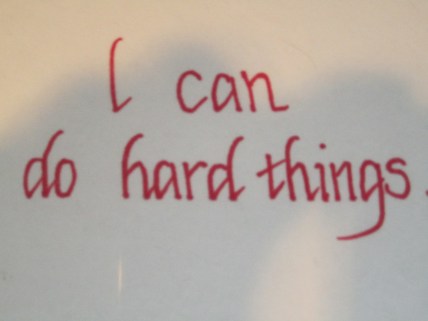
You can do hard things, I’ve told my mom. And, she is. Really hard, sad things. You feel like you can’t do it, but you’re doing it.

It applies to my grandma too.

hardthings

Blog Circle: Tender Mercies, Unexpected Gifts

The Amethyst Network blog circle for April is on the subject of Tender Mercies:

Blessings, Magic, Tender Mercies, Grace, whatever you call it, there are these moments, times and experience of light in the darkness. Sometimes they are very small. Just a moment where you see a little bit of magic, or a blessing wrapped in the grief. Sometimes it is significant, like close friendships made with people you may never have had the chance to meet otherwise.

For our Blog Circle this month (April) please share your own experiences of grace, tender mercies, magic, blessings, or gifts that your miscarriage has given you. If you have not experienced a miscarriage, please feel free to participate. We all know someone who has miscarried and therefore have been touched by miscarriage in some way.

via April Blog Circle ~ Blessings, Magic, Tender Mercies, Grace… » The Amethyst Network.

As soon as this theme was picked, I knew what I wanted to write about. It was the experience of an unexpected gift from my little baby Noah. It was one of the only moments of “communication” I ever felt from him after his death-birth. I sort of expected or hoped to have some dreams or some other sorts of “metaphysical” sorts of experiences with him, but I didn’t have that, he was simply gone. I did, however, have this one little gift (originally posted about on August 11, 2010)…

This past weekend [August, 2010]…We went to visit my friend M whose baby recently died and was born at a similar gestation point to Noah. While we were there, she showed us the memory box she’d put together for her baby and then she brought out the folder she’d received from Angel Whispers (source of the birth certificate that I got for Noah and that I like so much). She held it out to me silently, and printed on the front was, “this folder was made possible by a donation in memory of sweet baby Noah Remer, November 7, 2009.” Oh. My. Goodness. How could it be that I made a donation to Angel Whispers back in May ([2010] for my due date), the check traveling all the way to Canada, and yet, this folder somehow finding its way back into my life and into the hands of my dear, grieving friend? It was an amazing feeling.

I sent a donation to cover three folders. I wonder who has received the other two? We came up with all kinds of possible reasons for this “coincidence,” but none of them were very logical (she lives in IL, I live in MO-–it isn’t like they saw our addresses and though, “ah ha! We’ll send this one!”) and we were left with the only option to be just to marvel at this simple little gift. :)

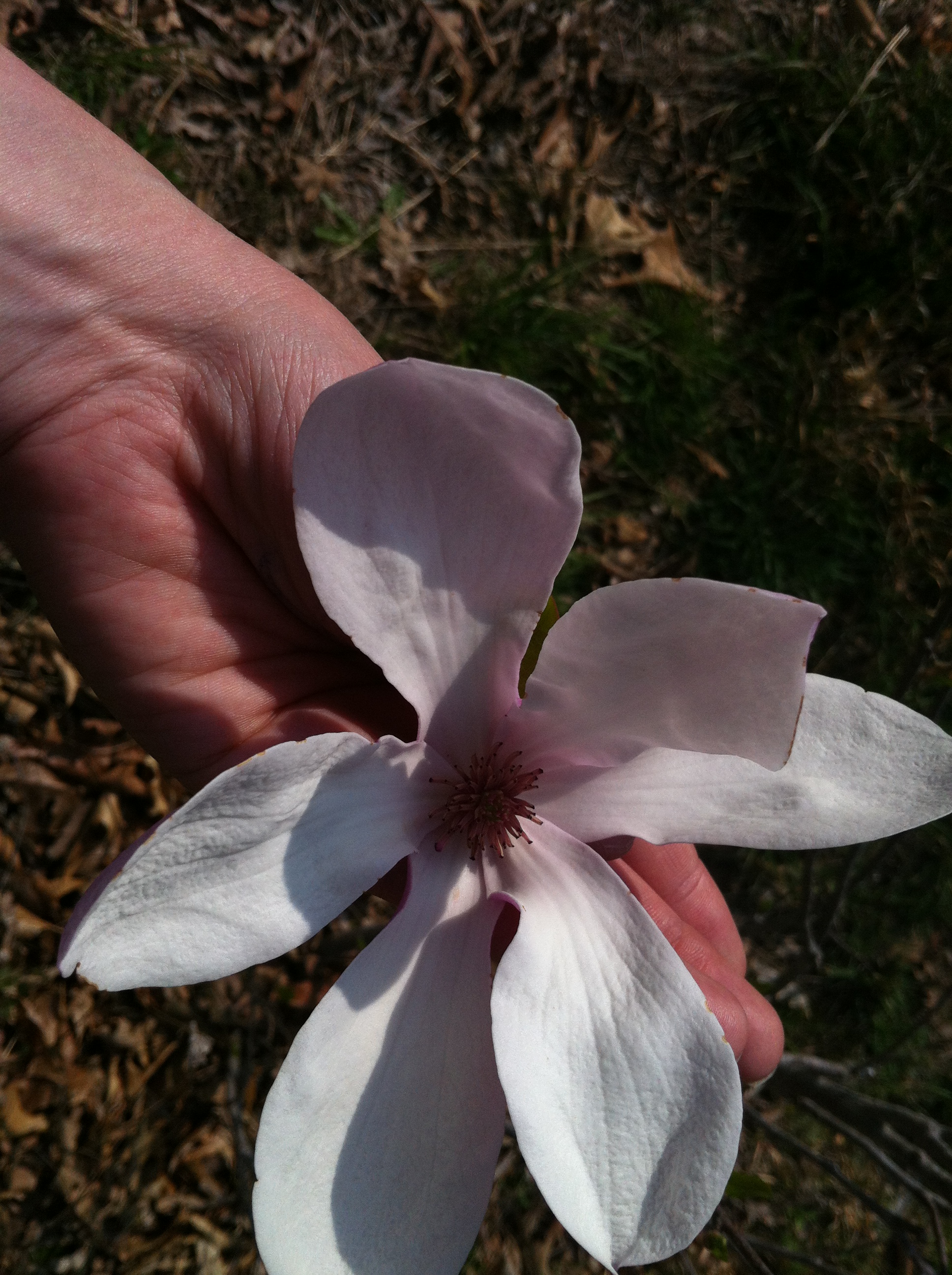
In more current tender mercies, Noah’s memorial tulip tree is about to bloom!

20130412-141712.jpgIt is in a shaded area behind the house and thus is a little off-schedule from the rest of the trees like this in the area. My parents have a matching tree and theirs is fully blooming now:

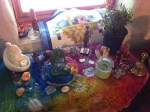
20130410-155034.jpgSeeing these flowers each year is really meaningful to me and that’s why I used a photo of the flowers as the cover image on my miscarriage memoir. new_coverThinking about this post made me dig around in my archived photos where I found some not-often-before-shared photos of the ritual my mom and friends had for me near my birthday (Noah’s due date), during which we planted said tulip tree. Under the tree I buried the embryo from my second miscarriage and also the hospital bracelet from my ER trip following Noah’s birth. At the time of these photos I was tentatively hoping I might possibly be pregnant again and, in fact, I was justatinybitpregnant with the future Alaina!

mizuko4

Placing the tree in a barely scratched out dip in the rocky soil!

mizuko5

My mom adds a scoop of dirt.

mizuko6

My doula!

mizuko12

I feel lucky to have a supportive mom who does things like this for me! 🙂

And, after I prepped and scheduled this post, I took this photo of the almost opening bloom…

20130415-191007.jpg

And then, the day before it was scheduled to post…YAY! A full flower!

April 2013 031

Not picked, just stabilized for photo op.

April 2013 034 April 2013 016

Tuesday Tidbits: Mothers and Work

MollyNov 085

One of the best pictures I have of the “mothering” while “personing” experience!

“I’m winging it every day, praying, surrendering, steeping myself in grace by any means necessary. I grapple with finding my own integrity, to trust the path that I have chosen, to believe that I am mothering well, that I can claim for myself a belief in my own goodness.” – Elizabeth at Mothering with Soul

“Giving birth to a new life is about so much more than just the moment itself. The power of finding your strength as a woman through birth resonates for the rest of your life. It shapes you as a person, and as a parent.” ~ Gina Sewell

I want to say first that I believe, as the organization Mothers and More does, that all work that women do, whether paid or unpaid has social,  political, and economic value. In my own life I don’t distinguish between what I do for money and what I do as a volunteer, but that is partially a function of privilege, because I love all of my work and choose freely to do it. I recently finished reading the book The Art of Family and in it the author makes a point that I’ve made in various posts as well, mothers have always “worked,” it does no good to try to distinguish between “working mothers” and “stay-at-home mothers,” because the difference is much more fluid and alive than a category can hold.

FOUNDATIONAL TO A LASTING FAMILY is acknowledging that we will be many things to each other for our whole lives, even past death. We can abandon the old fears that family life will smother us and instead go after fully practicing ourselves in the presence of partner and children. In short, making a family is the best way to present ourselves, to stake our claim to a spot on earth. But “practicing ourselves’’ in front of our family, what does that mean? To give the essence of ourselves to our children is not necessarily dependent on the amount of time you spend with your children. Here, we must recast the debate over moms who work and those who stay at home with children. This is one of those divisions that turn up damned if you do, damned if you don’t, because it is a false one from the start. First, mothers have always been “at work,’’ whether farming, spinning, pioneering, running cottage industries, or investment banking. In history, women have always, of necessity, worked for the welfare of their families, some even forced to leave their children behind to find ways to sustain them. Imagine that pain, next time you come home late from the office.

The real issue with at-home moms and working moms is the struggle for identity. Having children is the most identity-challenging and identity-changing thing women do—starting with pregnancy, when even your body gets an identity change. That should be our first big clue. But we are terrified to face it. Who wants to watch your identity evaporate, which is what having children often feels like? Identity isn’t about societal roles, either, though the ones we get stuck with can be more burden than help to us. In fact, if we allow societal roles to determine our identity, we are not really in control, we are accepting a series of masks. We have to ask ourselves the hard questions: Who would I be without this job, without this kid, without this income, without this education?—getting at the core of who we are. This is a work we must do solely on our own, and it is excruciating work. But no human gets out of it, not even mothers. Babies make you ask, “Well, who am I now?’’ Though it is currently hot in intellectual theory to say we are nothing but social and cultural constructions, this is not a spiritual truth. Identity is something you build relationship by relationship, not role by role. Families, especially at the young-children stage, are not the pause button pressed down on who you are and what you want to pursue. Yes, we may have to put off finishing that degree, taking the promotion that requires weekly travel, writing that screenplay, or finally learning French, but those things weren’t going to make you you anyway. Your relationships make you who you are, because they give you a chance to actually manifest yourself, which is what you really believe in. We fill up what we do with who we are. What we do can never fill us up.

Gina Bria (2011-11-28). The Art of Family : Rituals, Imagination, and Everyday Spirituality (pp. 8-9). iUniverse. Kindle Edition.

This notion is also explored in an article I enjoyed from Mothering:

“…Women a few hundred years ago worked their butts off every day helping their family survive. They planted and harvested, killed and prepared their own food. The children either watched younger children, played (often unsupervised) or worked right along side them. Women who had to work outside of their home had other people or family members care for their children while they cared for others. The wealthiest women probably had other paid servants care for their children much of the time. Children played with other children. Children worked. Children solved some of their own problems and they found things to do…”

The Benefits of Ignoring Children (Sometimes) – Mothering Community

Personally, I refer to this as “grinding my corn”:

Nov 2012 042

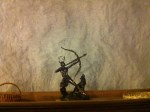
Grinding my corn sculpture from several years ago.

I want to be with my children, but I wish to be engaged in my own pursuits at the same time. When our lives feel happiest and most harmonious is when exactly this is occurring—when we are all together, but each working on our own projects and “doing our own thing.” I envision a life of seamless integration, where there need not even be a notion of “life/work” balance, because it is all just life and living. A life in which children are welcome in workplaces and in which work can be accomplished while in childspaces. A life in which I can grind my corn with my children nearby and not feel I need apologize for doing so or explain myself to anyone…

I just want to grind my corn!

Returning to the issues of identity raised in the quotes from The Art of Family, the question is explored beautifully in the article Beautiful Catastrophe: The Death and Rebirth of Becoming a Mother:

You were twenty, twenty-three, thirty, thirty-five. You were free and young and somebody else.

We were free and young and somebody else.

But now, we’re mothers.

At some point the reality will hit us: We are never alone again, no matter where we are, and we are the only ones in the world who have become this person toward this child.

I’ve been the same woman my whole life. What about her? Where is she? Is she just dead?

Yes, she is just dead.

Does that seem harsh? Well, it is. So is motherhood.

Perhaps we can soften this whole thing by saying our identities are “transformed,” or we are “forever changed,” but the fact of the matter is that the woman you once were is gone, and she will never come back.

Period.

I also recently finished reading the anthology The Maternal is Political and in it Jennifer Margulis (later birth writer of the new book Business of Baby) says:

Jame’s working full time and my staying home wasn’t working. My working full-time and James’s staying home hadn’t worked either. We both wanted to be with our children. And we both wanted to work (something I was only able to admit once I tried being a full-time mom). But neither of us wanted to do one or the other exclusively.

–Jennifer Margulis April 2013 002

This is what we are working towards for my husband and me, hopefully this year. I think we both deserve to be home with the kids, I think we both also have other work that is valuable to pursue. I envision a life of seamless integration of our various roles and passions–all of us. We have a family mantra: “our family works in harmony to meet each member’s needs.” 🙂

“Is there one single aspect of motherhood that isn’t political? From conception to graduation, from your kid’s first apartment until you die, it is basically one political decision after another…” –Rebecca Walker

Also in The Maternal is Political, Beth Osnes writes about Performing Mother Activism (she has a one woman show) and I love her analogy of care being like a loaf of bread…

I go on with scenes that tackle the onslaught of societal expectations and repressive forces that creep into a woman’s life once she becomes a mother: “it happens one day. You find a large parcel on your front porch. You open it to find the status quo being delivered to you…well, actually, the status quo manual…” I go on with scenes that lambaste the fearmongering that goes on in our government and media: “The status quo wants you to dumb down, mother. It will tell you who to trust and who to fear.” I remind mothers that we must think for ourselves: “I say rage, mother. Do not go gently into that good night. Rage, rage, against the dying of your light.”

I have also stopped expecting that caring needs to be a whole and perfect project, like an unsliced loaf of homemade bread. I am April 2013 009coming to accept that, at least for me, caring about the world is more fragmented, much more like a store-bought loaf that splays open as soon as you open the bag. Here’s a slice of caring about antipoverty legislation, here’s one of caring for my three-year-old with the flue, here’s a slice of caring for victims of our country’s warring and, whoops, here’s even a slice of caring about my curtains. I have stopped imagining that caring is pure and unselfish; many people, including me, fashion their identities out of caring, whether for kids or for the world. Still: Bread is bread, and caring is caring. Whole or broken. Homemade or purchased. Consumed or given away.

I’m also learning that social movements will go on, even if nursing mothers or parents of toddlers have to drop out for a while. We will be back,someday, maybe when the youngest turns two or whenever we can again afford to dream like activists, rather than work like dogs. We may be more distracted than before, less available…But when we return, we will give a break to someone else who needs it—like those erstwhile college students who may be finding that carting babies to marches is harder than they anticipated.

And when we do rejoin the movement, it is possible that we will agitate and march and advocate from a deeper place within ourselves than we had known existed. It is possible that we will act from that cavity our children have hollowed out of us, that place where breath begins.

–Valerie Weaver-Zercher

And, as a lovely closing tribute to all women and all their work, remember this…

Mothers — you are powerful. Stand tall. You are full of grace. Stand tall. Join together and stand tall. Be as a Redwood tree. Stand April 2013 028tall. If you have stood next to a Redwood tree or seen photos of one, you will notice that they do not grow alone. They grow in groves with all of the trees connected together, even if they appear to be separate. Their shallow roots form a web that holds these big trees up in the wind. Redwoods do not fall very often. We can emulate those trees, mothers. We can hold each other up.

We may feel alone at times, but believe me and remember: You are being supported underneath the surface of where you live. Right beside you there is somebody thinking about you and supporting you whether you know it or not. Think of all the mothering that goes on in life. I have found in my life that it comes sometimes when you do not expect it and from someone you do not realize has your back. Someone in your root system seems to know that you need something. Women have a natural mothering instinct if they just listen to it.

Stand Tall

Other past posts about mothering and working:

The tensions and triumphs of work at home mothering

Guest post: working/parenting interview

The Ragged Self

Surrender?

April 2013 020

Healing Presence

My extended family is in the middle of a stressful medical situation with my grandmother that is absorbing a lot of collective family energy lately. Such experiences always lend “perspective” to a variety of areas and I’ve felt a little blocked in the writing of blog posts because they feel frivolous or unnecessary or like they’re distracting me from where I could be spending my attention. I bought a short book for my Kindle yesterday called The Art of Being a Healing Presence, and finished reading it last night. I bought it specifically to help my mom who is going to visit my grandma and also hopefully to help me be there better for her (both my mom and grandma). It dovetails nicely with my current lesson at OSC, which is about speech and how we talk to others. So, for today’s post, I picked out some quotes from a book that I feel like fit well into any type of relationship requiring compassionate listening and attention, not solely end-of-life care, because these ideas could relate to listening to women talk about birth and motherhood as well.

Healing presence is everything life itself is: messy and mysterious, exasperating and exhilarating, wearying and wonderful. That’s what makes it so sacred.

(Kindle Locations 793-794)…

Yep. Sounds like giving birth and like birth listening too.

Healing presence is a spiritual practice or discipline as well…

(Amazon affiliate link included)

…Healing presence is essentially a spiritual discipline in itself. As you begin, you may think of healing presence primarily as something you do for someone else. Eventually, however, you’ll realize that healing presence has become an integral and significant part of your own spiritual development. As you choose to keep opening yourself to this discipline, even when it’s difficult, even when you feel yourself rebelling, you necessarily mature spiritually. As you repeatedly ask yourself, “How can I be a healing presence in this particular situation?”, you expand your horizons and you make new and fruitful connections with all dimensions of life, especially life’s sacred foundation. The more you are a healing presence in the midst of everyday events, the more you come to appreciate that the common ground on which you stand with another is pulsing with all that is divine. You realize that holiness is at work as you consciously and compassionately accompany others. Then sometimes when you least expect it, a sense of awe overwhelms you—awe, perhaps strong assurance, or waves of gratitude, or an immense sense of peace. You cannot make any of this happen. You can only welcome it as it unfolds, revealing itself and making its presence known. It is The Sacred. (Kindle Locations 821-830)

Also, from the very beginning of the book, I saved this little quote:

“In every person there is royalty. Address the royalty and royalty will respond.” –Scandinavian Proverb

The relates to the idea of seeing one another that I explored in a prior post:

I often remind students in my human services classes that all people have a basic need to be both seen and heard. This doesn’t mean agreeing with everything someone else says and does, it means being present and witnessing them as they follow their own paths.

In a newsletter recently, I read an article called “I See You” by Sue Scott, a communication skills instructor. She explains that in South Africa, native peoples greet each other with an expression that literally means, “I see you.” The response is then, “I am here.” She observes, “what a powerful and beautiful gift it is to recognize another individuals in this way: ‘I see you.’ Acknowledgement, recognition, and respect all require focus on the other person…the word respect comes from the Latin word ‘respecere’ meaning ‘to look at again and again…’I see you’…seems to me to be the ultimate in respect.” Sue goes on to explain that when we truly SEE another mother—”when we truly hear her concerns—then we affirm her ability to mother her baby in her own best way.”

A little more than two years ago, I received the precious gift of being seen when a mother that I had previously helped with many breastfeeding questions called to ask me another question. We had become friends over the course of time since she’d had her first baby and I was in the process of my second miscarriage when she called with a question about her own pregnancy. I told her about the miscarriage, but said I felt like I could still talk with her about her question. We ended up then talking for a time about miscarriage and about cesarean birth, because we discover numerous surprising connections between the feelings and experiences of an unexpected outcome to our dreams for our pregnancies. She then said, “You know in that movie Avatar how they say, ‘I see you’?” I said yes, and she said, “I just wanted to let you know that I see you, Molly.” These words were such a gift to me. It was beautiful to hear them and I cried. I felt so seen. It was just what I needed and I hadn’t even known it. I will never forget that simple and yet extremely potent gift of acknowledgement from another woman.

via I See You

In my classes, I always try to explain that not only do you see someone, but they see you seeing them, and if what you see is valuable and worthy, that is what they rise to. So, that is why I liked this “royalty” proverb from the book.

And, later in the book, this concept is addressed as well:

As people experience healing presence, they change. This shift may be subtle or dramatic. They’re likely to open more—to themselves, to others, to the world, to the amazing mystery of life itself. Sensing another’s belief in them, and seeing that belief reflect-ed in life around them, they can begin to develop in completely unexpected ways, and to move in directions they have not gone before. Or perhaps they will return to their original path, but with new spirit, new vision, new hope. As they encounter the inevitable pains and diminishments that life will present, they can begin to understand that such adversities can be experienced as more than adversities—they can be known as opportunities for growth, as avenues for moving toward wholeness. Your authenticity and the compassion in your presence will fan out generously around you, always returning to envelop you again and again. As you become less driven by your own concerns and less given to your own needs, and as you forsake your need to help, you’ll become a more mature and helpful companion. (Kindle Locations 841-849).

April 2013 036