Archives

Fatherbaby

“Nurturing is not a genetically feminine attribute. Tears and laughter are not the province of women only. The last time I looked, men had tear ducts. They had arms for holding babies. They cared about their children. And they cried at births…let the shared experience of childbirth reclaim the human soul.” –-Ariska Razak (midwife and healer)

Daddy and his two week old baby girl!

Yesterday, my husband went back to work for the first time since our new baby was born last month. He was off for slightly under 4 weeks. I strongly encourage all of the fathers who take my classes to take off as much time as possible after their babies are born. Many of them seem surprised by the suggestion, a few of them seem disinterested (like, “but isn’t that her job?”), but most of them express sadness and regret at their workplaces’ unsupportive attitude towards (or flat-out refusal to grant) paternity leave. Many of them are only able (or only feel able) to take the day of the birth off and perhaps one to two more days. I meet many who will only be able to be at home with their new families if the birth straddles a weekend. I could almost cry at the social attitudes this reflects—a complete devaluation of the father’s role, his birth as a father, and his baby and family’s need for his presence. Fathers as well as mothers absolutely need this time to “cocoon” with their new babies. To absorb the magnitude of the changes in their lives, to have time to consider the meaning of their new roles, and to re-integrate into the “normal” rhythms of home life after having experienced the rite of passage and labyrinth of birth.

When our first baby was born in 2003, my husband took one week off and then followed it with a week of half days. He was crushed to leave us—describing it as feeling like we were his “wolf pack” and he was having to leave his pack when he really belonged with us. When our second son was born in 2006, we’d wised up somewhat and he took off 4 weeks. It still didn’t feel like enough for any of us, but it seemed to be viewed by his workplace/co-workers as an unusually long length of time to take off. This time he again took 4 weeks and it hasn’t felt like enough for any of us. I’m interested by how his time off seems to be viewed by most as him needing to be home in order to “help” me, not as a time with inherent value to him. While I certainly do need his “help” while postpartum, I view our relationship as a partnership and our family as just that, our family, not as an exclusive maternal domain with occasional visits from the “daddysitter.” No thanks. Is spending time with his new baby, taking care of his other children, and taking care of household tasks in the home we share, “helping” me, or is it being a complete part of our real lives?! A part that is completely ignored/denied by the modern workplace culture and social attitudes. Spending time with Alaina is of value and importance to both of them, as people who will have a lifelong relationship with each other. Also, somewhat ironically, I am the one who took no time off this time around. I teach online and I had no leave from doing so—it was my own choice to sign a contract for this session and the online staff doesn’t even know I was pregnant or that I had a baby. I took 5 hours off and then posted in my class again. I obviously wouldn’t be doing it if it wasn’t compatible with having a newborn—it is excellently compatible—and I prepared those around me for weeks before her birth that the only things I planned to be responsible for for the first two months or so, were my baby and my class (and, obviously, taking care of my other kids too—but, not even them in the early days postpartum!).

We have discussed how each of our babies has been a catalyst for big changes in our home situation. Our first baby was the catalyst we needed to move away from our by-the-highway-no-yard townhouse in a city and onto our own land in the country near my parents. Our second baby was the catalyst we needed to finish building our real house and to move out of our temporary house and into our permanent home. So, we are now wondering what kind of catalyst our baby girl will be? We have spent our entire married life (13 years!) saying that we want to live a “home based life.” I truly do not think it is (biologically) normal, desirable, or healthy for anyone to spend 40+ hours a week out of their home, regardless of whether or not they have children or who the primary caregiver is. I don’t think fathers belong at work that much time, I don’t think mothers do either, and I don’t think children belong at school every day. The home-based life idea came to us long before we had kids and it came from all the reading and thinking I did about the simple living movement. So, I wonder—and hope—that maybe our new baby will be the catalyst we need to finally face the fear of possible failure (and/or no money!) that accompanies jettisoning his full-time job and building our other “multiple streams of income.” Maybe we will, maybe we’ll keep talking ourselves out of it, but that is what our baby girl makes us feel like doing!

So, here’s to Papatoto! May the fatherbaby unit be recognized as having inherent worth and value.

“When he becomes a father, a man leaves behind his life as a single individual and expands into a more inclusive role. He becomes a link in an unbroken chain. And in doing so, he himself undergoes a birth process–the birth of himself as a father.” –John Franklin (FatherBirth)

”The absolute miracle of a birth and the emergence of a new human being into the world catapults both mother and father into the realm of awe and wonder. They are flooded with non-ordinary feelings and energies that support a deep connection not only with the newborn and each other, but also with the mystery and power of life itself.” –John & Cher Franklin
 

My Baby Girl is Here!

“A baby, a baby, she will come to remind us of the sweetness in this world, what ripe, fragile, sturdy beauty exists when you allow yourself the air, the sunshine, the reverence for what nature provides…”

– Sarah Werthan Buttenwieser (in Literary Mama)

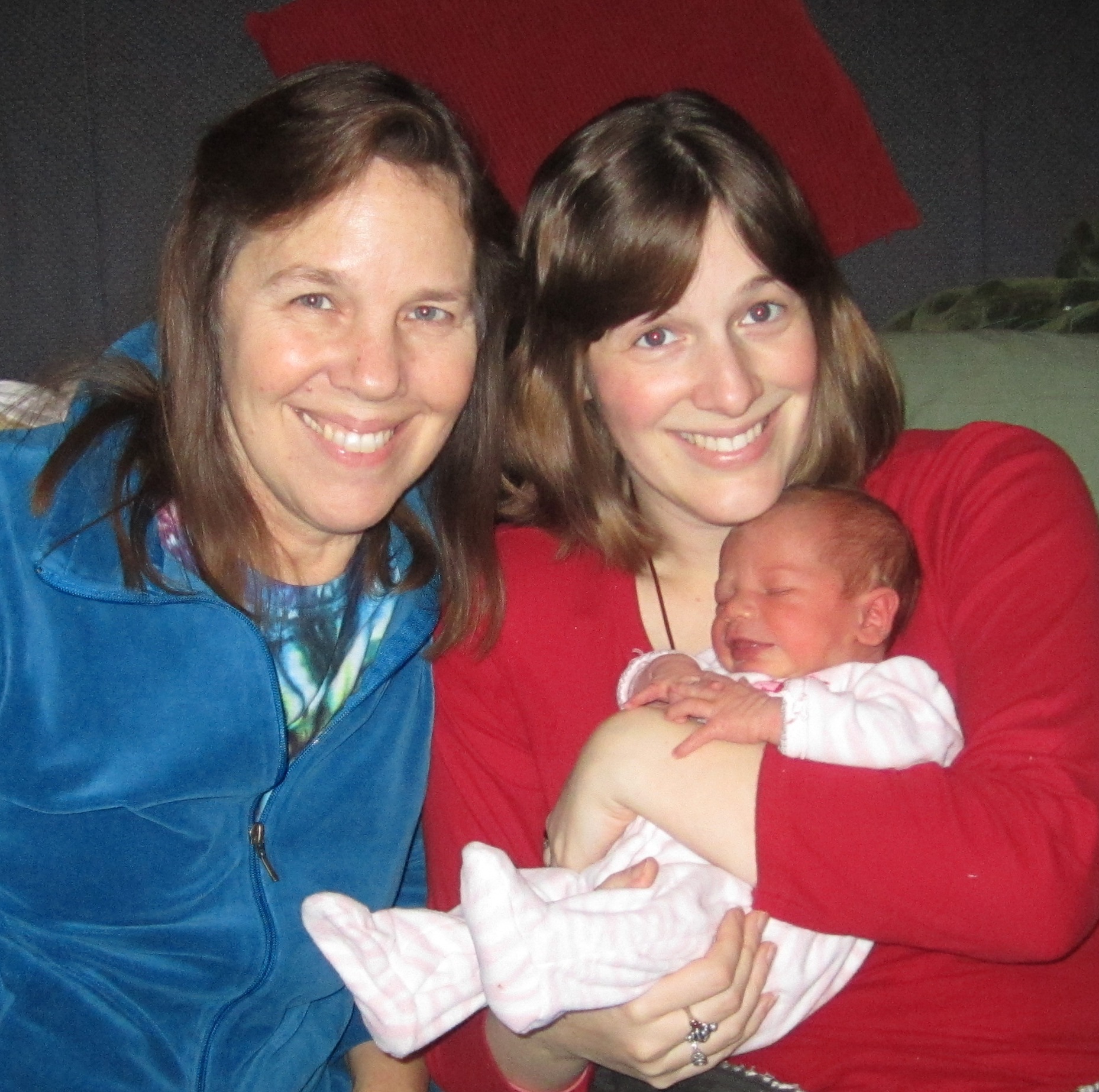
Three generations!

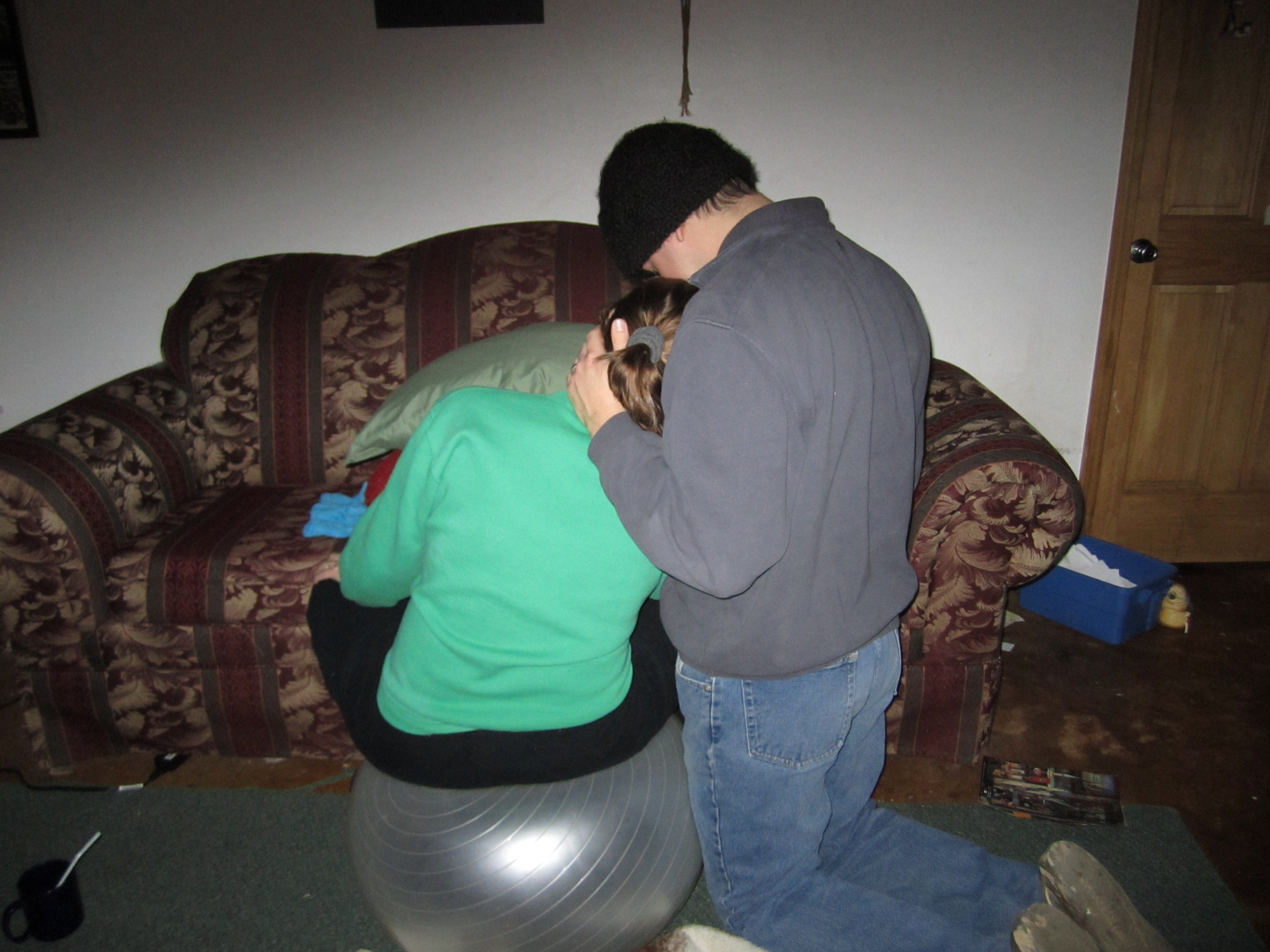
Alaina Diana was born at 11:15 a.m. on January 19th, 2011! She only weighed 7lbs, 8oz and was 20 inches. (My other babies were 8lbs4oz and 9lbs, 2oz.) I’ve sent a short-version birth story to a couple of friends over the last couple of days and decided I could work it up into a short blog post as well (of course, a full-length birth story will eventually follow). I actually had a little trouble getting started in writing about her birth—it was pretty uneventful until the end and I felt like the best description would be: walked around the kitchen, sat on the birth ball, walked around a little more, more time on the ball, hummed and ooohhhhhed, seemed as if  suddenly things changed and I felt big, big things happening and then baby was born all at once! And, I caught her! Emotionally more than temporally, it felt like a long labor and I felt like I experienced less mind-body integration than with previous labors (the actual moment of birth was much more instinctive and powerful than with the other babies though). In general, lots was unexpected about this labor—-it lasted longer than I expected (about 5 hours that were serious, but some warm-up time before that too) and was somewhat erratic and I had quite a bit of back pain. Right before pushing, contractions were still 4-8 minutes apart and it was hard for me to assess where I was/how “active” of labor it was—I was thinking I could either be at the 3cm point OR the transition point! My water didn’t break until seconds before she was born and I felt like it REALLY needed to break, but wasn’t. My kids weren’t here, because her birth was during the day (also unexpected, and a Wednesday, not a weekend!). It was just Mark, my Mom and me.

I spent a lot of time on the birth ball and Mark would stroke my back in just the right way

After criticizing myself at length for being “too analytical,” “thinking too much,” and not letting “my monkey do it,” I experienced a spontaneous birth reflex and pushed her out in a kneeling position and it only took one contraction—her whole head and body came out all at once, no moment of crowning or head birthed and then body following, just a bloosh of entire baby. I caught her myself. Mom and Mark both missed seeing her come out, because the phone rang at the same time. My mom went to stop it and Mark was moving around to the front of me, and when they looked again, I was holding her (Mark says it was about 12 seconds). So, no birth pix 😦

I did tear again, exact same extra-delicate and non-“traditional” place from what I can tell. Feels better than previous births already though–I know how to heal from this (even though I wish I didn’t have to).

My plan for immediate postpartum worked out perfectly and just like we planned. The midwife came about 40 minutes after the birth and checked blood loss. My doula was here about 20 minutes after and fed me a bite of placenta—and, I ate it! No gagging or anything!

I have very different post-birth feelings this time around—though I still had the “I did it!” moment, I felt less euphoric and triumphant and more relief and the feeling that, “we survived!” Blog posts about this will eventually follow…

And, did I mention that I caught her myself?! 🙂

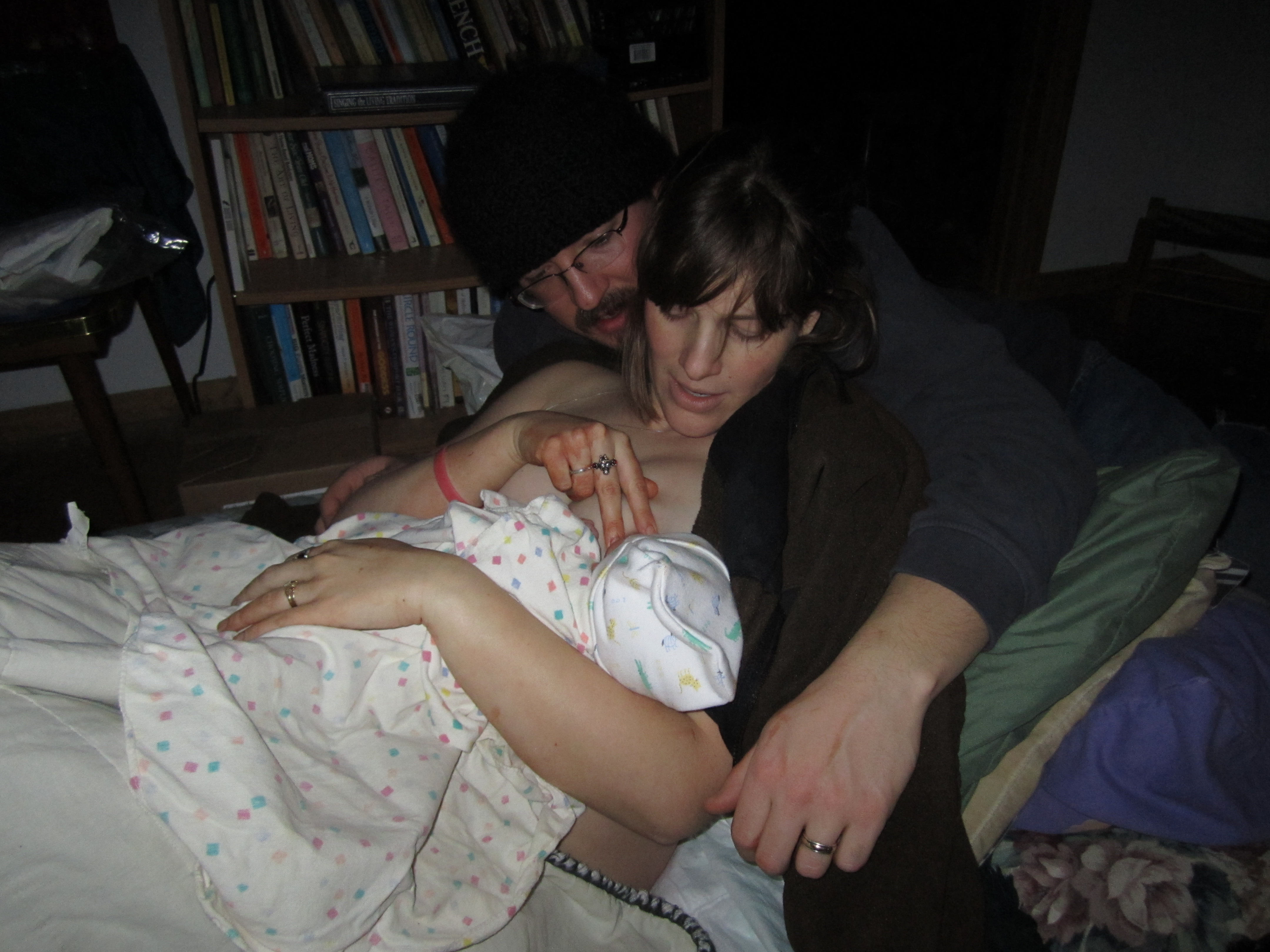
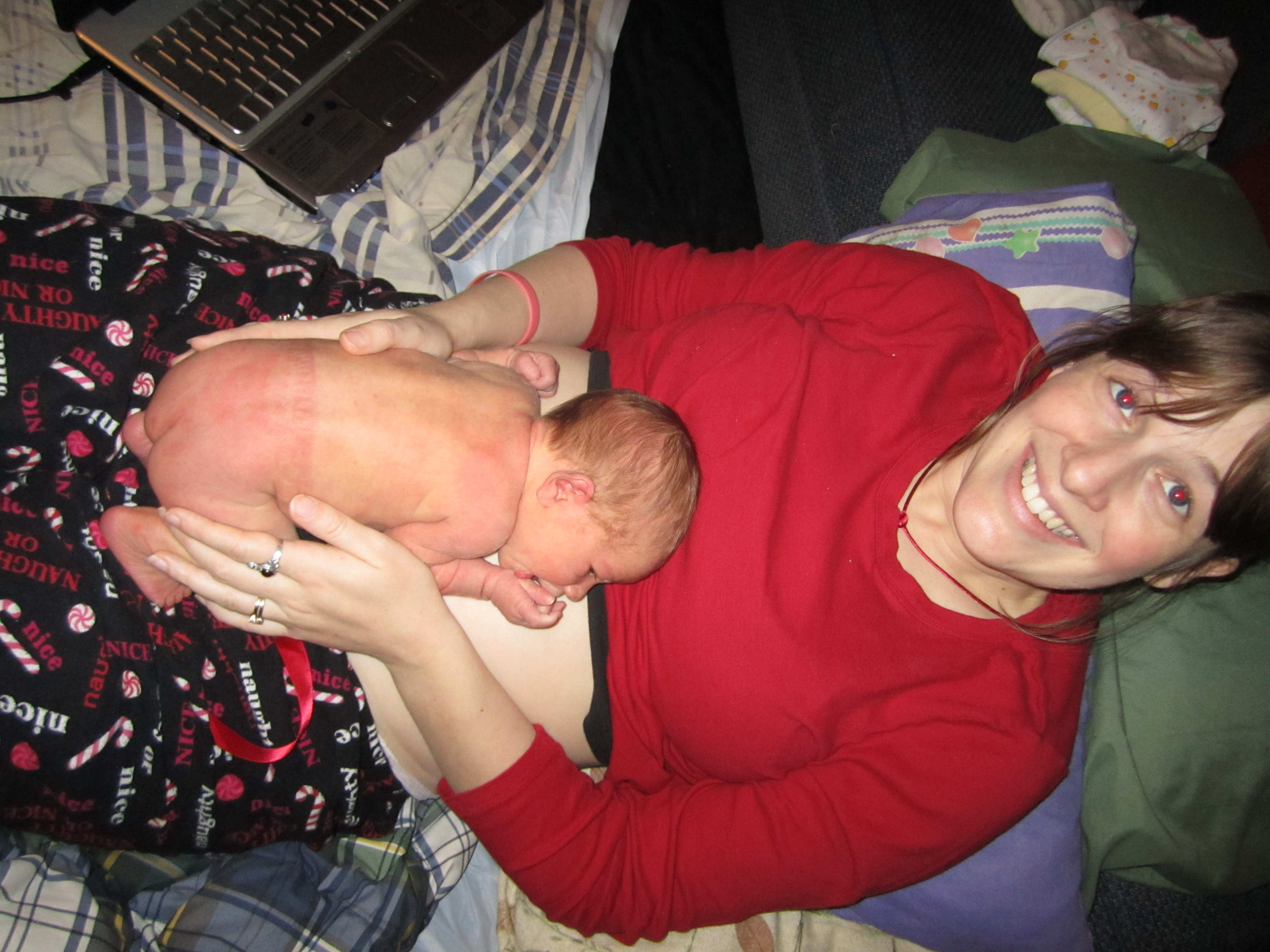
Shortly post-birth

  • My "40 weeks" picture--due date was Jan. 22nd, so took a picture on that day to show how she could (theoretically) still fit! (though she wasn't breech!)

  • Belly Cast

    I feel like I have about 15,000 blog posts that I want to write before my new baby is born! I’m also trying to add content from articles that I’ve had published over the years—some of my best stuff is in those articles and I feel like sharing the pre-print versions on my own website at last! Those things can obviously wait, but the posts that I have swirling around that have to do with pregnancy, I want to post NOW, while I’m still pregnant and while the feelings are fresh, not as retrospective posts later. It has been a different experience to blog while pregnant and it has definitely shifted the direction and tone of a lot of the posts I make to this blog—much more personal and less educational. I’ve also found that family and friends have begun reading my blog during my pregnancy, when they didn’t before, so I also like sharing things with them in this way.

    Since I only have about 20 minutes right now, I’ll go with the shortest subject first, not the one I most want to write about (which is my blessingway last week—however, I think I feel a little too filled with emotion over it to really write about it the way I’d like to do, but I do have plenty of pictures I want to share).

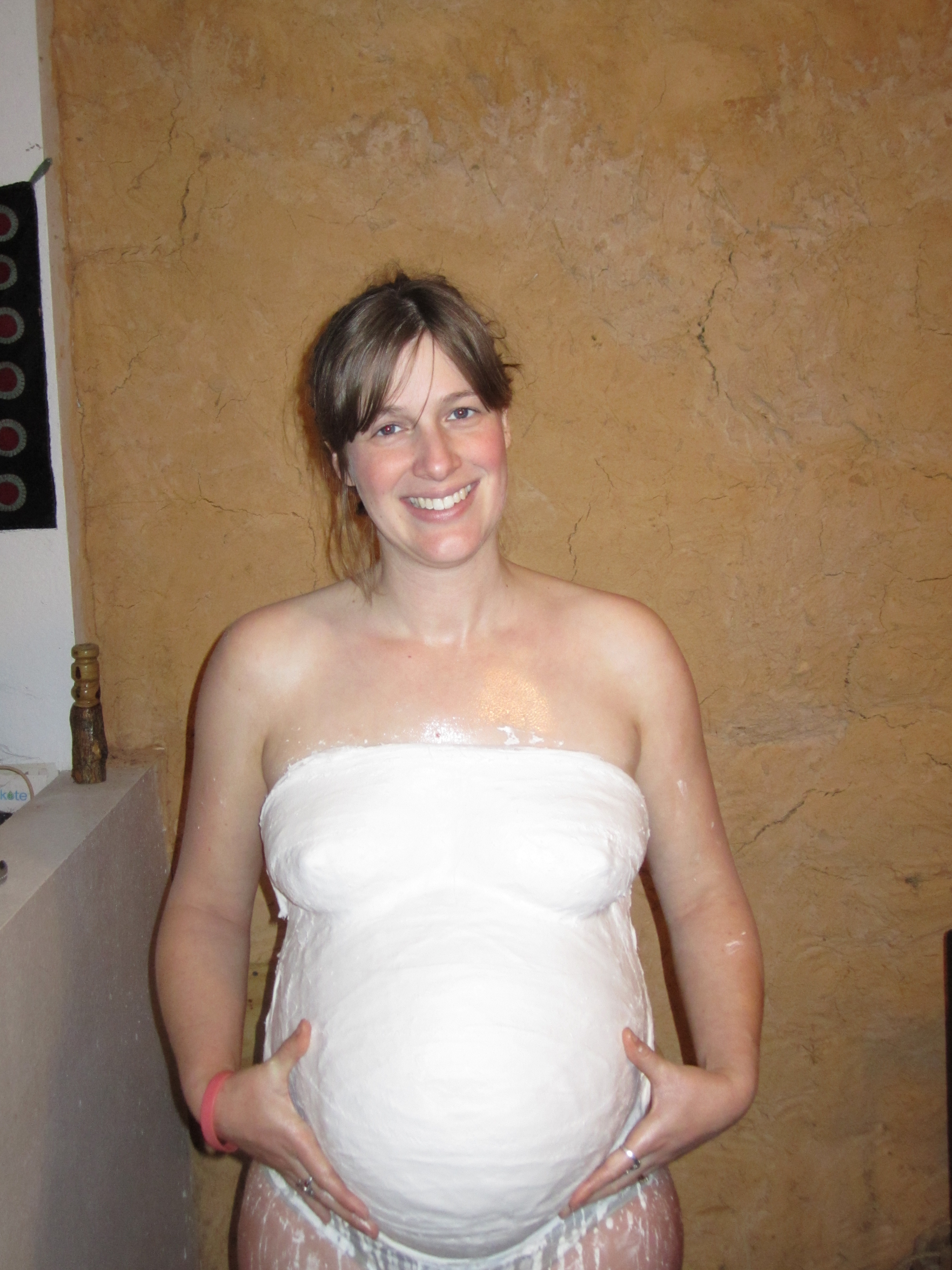
    On Sunday afternoon (38w1d), we made my belly cast! I seriously underestimated what a chilly experience it would be to make a

    Trying to look enthusiastic despite the trickling...

    belly cast in January! Yikes! My only other casting experience was in May (2006)—very different. For this one, we decided to make it with me standing up (for fullest shape) and so I stood in front of the furnace vent, but it didn’t help much. Even though the water was warm, it quickly chilled down as soon as the plaster was applied and ran in slow torturous trickles into my underwear and then

    down my legs and into my socks. My heels also started to feel stone bruised from standing on the hard floor without moving (I did stand on a towel, but it didn’t help much!). If I shifted

    them, Mark would complain that it was messing up his sculpting!


    I’m really glad we did it and I’m glad to have an accommodating husband who doesn’t think something like this is silly or weird. I do not plan to actually paint the cast until after she is born. I am thinking of doing a black and white design on it similar to the mandalas I’ve been drawing during this pregnancy.


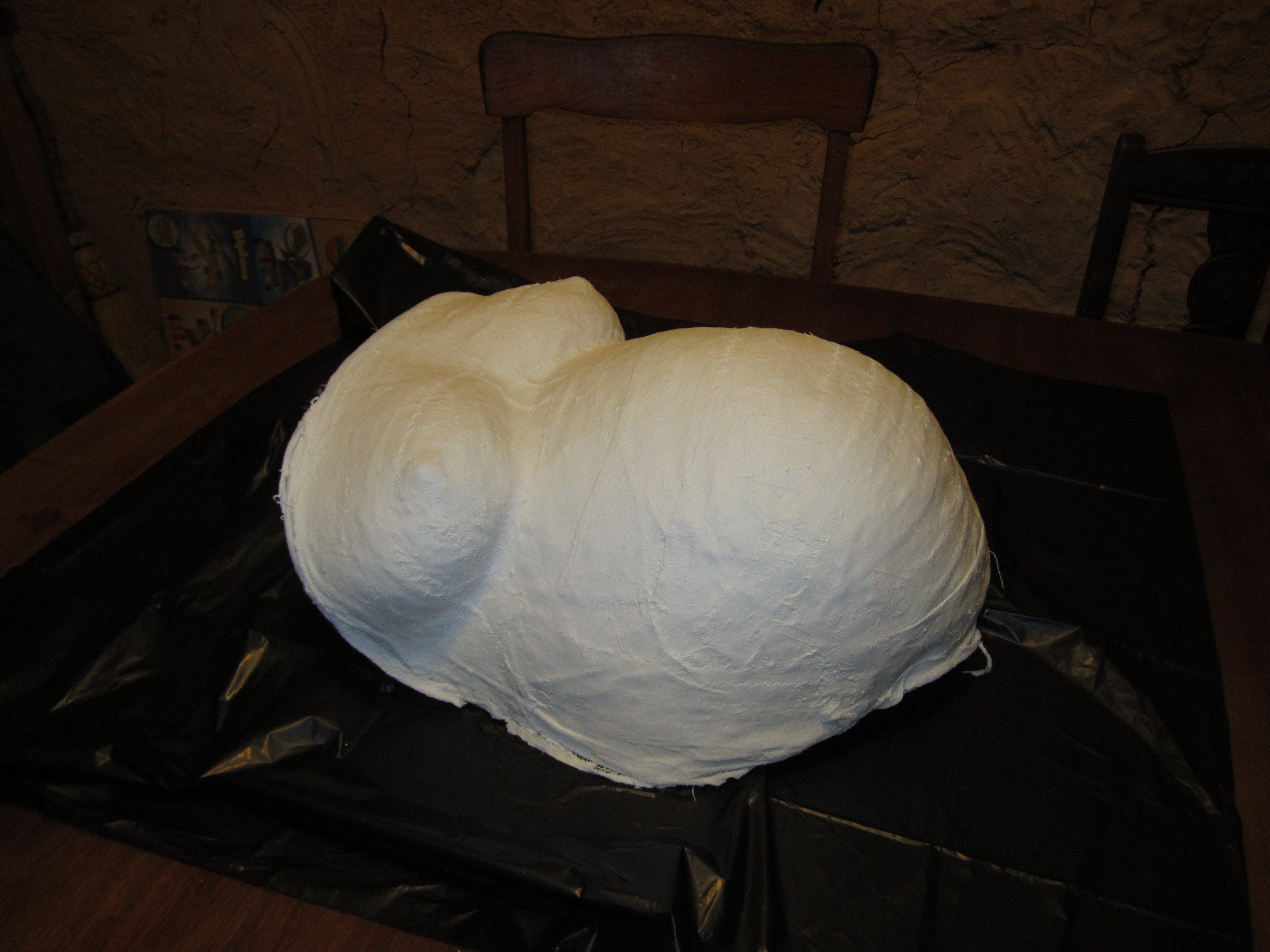
    Finished (still unpainted) cast


    Aside from “buying car seat” (which is winging its way here right now via site-to-store shipping), making the belly cast was my very last pre-baby “to-do.” Of course, I’ve now added, “finish blessingway and birth art blog posts…and a couple more…and maybe a couple more” to said list!

    Book Review: The Joy of Pregnancy

    Book Review: The Joy of Pregnancy: The Complete, Candid, and Reassuring Companion for Parents-to-Be
    By Tori Kropp, RN
    Harvard Common Press, 2008
    ISBN 978-155832306-3
    412 pages, paperback, $14.95
    http://www.thejoyofpregnancy.com/

    Reviewed by Molly Remer, MSW, ICCE, CCCE
    https://talkbirth.wordpress.com

    “One of the most important things I have learned about birthing babies is that the process is more of an unfolding marvel than a routine progression of events.” –Tori Kropp

    Written by a nurse in a refreshingly positive tone, The Joy of Pregnancy is a basic guide to pregnancy and birth, intended primarily for first time parents. Not only does it cover month-by-month fetal and maternal developments during pregnancy, it includes information about labor and birth, preparing for postpartum, breastfeeding, and the first days of parenting. There is a conventional emphasis on “asking your care provider” rather than a consumer-oriented approach to making your own best decisions. Something unique and valuable about the book is that each section contains information specifically for women expecting twins or other multiples. This content is inset into boxes, but it is the first pregnancy book I’ve read where information for mothers of multiples is integrated into the main body of the text, rather than being relegated to special section or chapter. Specific “Dad’s Corner” sections in most chapters are another nicely integrated feature of the book.

    Overall, the information contained in the Joy of Pregnancy is fairly conservative and standard, though as I noted, presented primarily in a positive and upbeat way rather than a fear or complication based way. Doulas, postpartum doulas, and midwives all receive casual mention and are presented as “normal,” rather than “fringe” options. Birth centers and homebirths are briefly included in the section on choosing a birth setting. Parents who are looking for a complete guide to pregnancy that reassures and comforts, rather than produces self-doubt, will find The Joy of Pregnancy a nice alternative. The book is also currently available as a free ebook via http://www.thejoyofpregnancy.com/free/, which is a great bonus!

    Disclosure: I received a complimentary copy of this book for review purposes.

    Fathers, Fear, and Birth

    “I told my dads that they were their partner’s lover and that their most important role at the birth was one they did everyday without classes, books or practice: Loving the mom. You could literally see the dads relax as this thought sunk in and took root.”

    ~ Lois Wilson, CPM

    My husband supports me during my birthing time with our second baby

    I don’t use these exact words, but I share something similar with the dads in my classes—your most important job is just to love her the way you love her, not to try to be anything different or more “special” than you already are…

    I recently shared my review of The Father’s Home Birth Handbook by Leah Hazard and also wanted to share this excerpt from an article in Midwifery Today:

    ~~~~~~~~~~~~~~~~~~~~~~~~~~~~~~~~~~

    Helping Men Enjoy the Birth Experience, by Leah Hazard

    ~~~~~~~~~~~~~~~~~~~~~~~~~~~~~~~~~~

    Nearly 70 years ago, Grantly Dick-Read wrote in Childbirth without Fear that laboring women often experience a cycle of: Fear > Tension > Pain. This is a cycle with which many of us are familiar, and we’ve developed a myriad of ways to break the cycle since Dick-Read first published his seminal work in 1942. However, less attention has been focused on the emotional roller-coaster fathers experience throughout pregnancy and birth, and it’s this area that I’d like to explore in greater depth.

    Although a man cannot feel the same pain as a laboring woman, I believe that many men experience a similar cycle of emotions in the birthing space to that which Dick-Read described, with a slightly different end product, namely: Fear > Tension > Panic. A man who is not confident in his partner’s birthing abilities, who is poorly informed, and/or who is poorly supported, becomes increasingly tense; and if this tension is not eased, then he spirals into an irreversible state of panic. This panic manifests differently in different men: some men become paralyzed by their fear (the familiar specter of the terrified dad sitting stock-still at the foot of the bed), while others spring into hyperactivity, bringing endless cups of water or becoming obsessively concerned with the temperature of the birth pool.

    The root of this panic is fear, and it’s a fear which often begins to grow long before the first contraction is felt. As such, we need to think about ways that we can address and minimize this fear in the days and months preceding birth…

    [Please read the rest of this article excerpt in the full online version of E-News: http://www.midwiferytoday.com/enews/enews1221.asp ]

    Excerpted from “Beyond Fear, Tension and Panic: Helping Men Enjoy the Birth Experience,” Midwifery Today, Issue 95 Author Leah Hazard is the author of The Father’s Home Birth Handbook. For more information, visit www.homebirthbook.com .

    ——

    I really think the fear-tension-panic cycle makes a great deal of sense and it brought me to this quote:

    “Fear is completely intertwined with what we experience as labor pain…And it is the fear in our physicians and nurses as much as the fear within ourselves.” –Suzanne Arms (Immaculate Deception II)

    I think sometimes women underestimate the power the attitudes of other people in the birthplace hold over outcome (the nocebo effect, possibly)—while being prepared, confident, fearless, etc. as a birthing woman is excellent and she can sometimes manage to triumph over the fear of the others around her, I more often see the fear of others overriding the preparation and confidence a mother has tried to develop in herself. I think it is important that we actively cultivate coping skills and resources within fathers-to-be as well, so that they are less likely to get into the fear-tension-panic cycle and are better able to be present for the birthing woman (fear-tension-panic within doctors and nurses is a subject for another post!). Here are some other posts I’ve written specifically for fathers:

    Ideas for supporting your partner in labor

    No Right Way

    Resources for Fathers to Be

    Birth Affirmations for Fathers

    For Labor Support Remember TLC or BLT

    Comfort Measures & Labor Support Strategies

    Helping yourself while helping your wife or partner in labor

    (P.S. Yesterday this was a much more developed post and WordPress erased it accidentally and to my great dismay 😦 )

    Book Review: The Father’s Home Birth Handbook

    I came to my attention today that I have never posted this book review! (also, as I prepared to “tag” this post, I realized that I don’t have a tag set up for “homebirth.” Can this really be true??!!)

    The Father’s Home Birth Handbook

    By Leah Hazard
    Victoria Park Press, 2008
    Softcover, 208 pages
    ISBN: 978-0-9560711-0-1
    www.homebirthbook.com

    Reviewed by Molly Remer, MSW, ICCE

    The Father’s Home Birth Handbook is a succinct and easy to read little guide for fathers and adds to the growing library of birth resources specifically geared towards fathers-to-be. The book is written by a woman, but contains ample quotes from fathers which lend a male perspective. It also includes a number of good birth stories interspersed throughout, which were all written by men.

    The target audience for the handbook is easily summed up in the prologue: “…I’ve met far more men who have responded to their partners’ home birth wishes with a mixture of shock, cynicism, and fear…Far from being domineering ogres who just want to see wifey tucked ‘safely’ away a hospital, these loving fathers have simply had very little access to accurate, impartial information about the safety and logistics of home births versus hospital births.”

    The first chapter addresses “Risk & Responsibility,” because that is one of the very first issues of concern for most people new to the idea of homebirth. It moves on to a chapter called “Think Positive,” followed by “Choosing the Guest List” and then one titled “Pleasure and Pain” This chapter covers comfort measures and what to do while the woman you love is giving birth: “…away from the intravenous drip and ticking clocks, you can support your partner in experiencing labour in all of its awesome, challenging power.”

    Chapter five—“Birth: Normal and Extraordinary” covers Labor 101 topics, including what to do with the placenta. This is followed by “Challenges & Complications” which covers some common issues of concern such as premature labor, being overdue, prolonged labor, distressed baby, cord around the neck, tearing, and blood loss. Each of these is followed by a “what can I do to help?” section.

    The final chapter—“Now What?”—concludes with a nice segment called “how can I carry the lessons I’ve learned from my homebirth with me into the rest of my life as a father?”

    Published in Scotland, the handbook has a UK perspective—it assumes participation in the NHS and a “booked” midwife and homebirth. There is no “how to choose a midwife” type of section (because there is no choice of midwives). For US readers, this leaves a set of issues unaddressed—such as varying legal statuses, etc. UK specific issues also arise based on the possibility of caregivers who are not thrilled about homebirth, but who have to come to the birth since it is a government supported option. It comes across that in Scotland homebirth may seem readily okay on paper, but in reality is more difficult to pull off.

    The book does briefly discuss the birth climate in the US and soundly critiques ACOG’s position on homebirth.

    The book has an index and a resources section.

    The Father’s Home Birth Handbook is a friendly, practical, matter-of-fact, helpful little guide that neatly addresses common questions and concerns many fathers-to-be have about planning a homebirth.

    ——————

    Disclosure: I received a complimentary copy of this book for review purposes.

    Associated amusing anecdote: my then three year old noticed me reading this book, looked at the cover and said, “The dad is trying to grab him, but that little baby is floating away!

    And What’s This? More Birth Quotes!

    I decided to split my most recent Facebook quote sharing into two posts, because it was becoming overwhelmingly long. These are the quotes I’ve shared on the Citizens for Midwifery Facebook page since April. While I realize that I don’t “own” these quotes—other people said them, not me!—I do have quite a bit of legwork invested in seeking and sharing these quotes (I mostly get them from my own reading) and if you re-post one or more of them on your own Facebook page, blog post, or book, I really appreciate acknowledgement and/or link back to this site or to my FB page, that this is where you originally got the quote!

    ‎”When a woman births without drugs…she learns that she is strong and powerful…She learns to trust herself, even in the face of powerful authority figures. Once she realizes her own strength and power, she will have a different attitude for the rest of her life, about pain, illness, disease, fatigue, and difficult situations.” –Polly Perez

    “It is a curious commentary on our society that we tolerate all degrees of explicitness in our literature and mass media as regards sex and violence, but the normal act of breastfeeding is taboo.” – American Academy of Pediatrics (via Baby Bloom Doula Service)

    “The way a society views a pregnant and birthing woman, reflects how that society views women as a whole. If women are considered weak in their most powerful moments, what does that mean?” –Marcie Macari

    “Attempting to fulfill an idea of the ‘perfect’ mother can only prove soul-destroying, as no such person exists.” –Adela Stockton

    “In the sheltered simplicity of the first days after a baby is born, one sees again the magical closed circle, the miraculous sense of two people existing only for each other.” –Anne Morrow Lindbergh

    Giving birth is an experience carried not only into the first days of motherhood but also throughout life, having far-reaching effects on the mother’s self-esteem and confidence.” –Gayle Peterson

    ‎”I think one of the best things we could do would be to help women/parents/families discover their own birth power, from within themselves. And to let them know it’s always been there, they just needed to tap into it.” –John H. Kennell, MD

    “As doulas, midwives, nurses, and doctors, it’s important to never underestimate how deeply entrusted we are with someone’s most vulnerable, raw, authentic self. We witness their heroic journeys, see them emerge with their babies, hearts wide open…” –Lesley Everest (MotherWit Doula)

    “…advocates of home birth have never suggested that *all* women should give birth at home, only that it is a reasonable choice for some women. Given that rather modest claim, the force and vehemence with which home birth is opposed by ACOG seems out of all proportion.” –Elizabeth Armstrong (Princeton University)

    “Few healthy, low-risk mothers require technology-intensive care…Yet…the typical childbirth experience has been transformed into a morass of wires, tubes, machines and medications that leave healthy women immobilized, vulnerable to high levels of surgery and burdened with physical and emotional health concerns…” –Maureen Corry (quoted in Lamaze International‘s journal)

    “At a time when Mother Nature prescribes awe and ecstasy, we have injections, examinations, and [cord] clamping… Instead of body heat and skin to skin contact, we have separation…Where time should stand still for those eternal moments of first contact as mother and baby fall deeply in love, we have haste to deliver  the placenta and clean up for the next ‘case.'” –Sarah Buckley

    “Who am I to be brilliant, gorgeous, talented, fabulous? Actually, who are you not to be?” – Marianne Williamson

    “…celebrate ourselves for our courage to birth. The real question becomes not, ‘Have you done your breathing exercises?’ but rather, ‘Can you love yourself no matter how you birth, where you birth, or what the outcome?'” –Claudia Panuthos

    “Whenever a woman has a problem, I believe that she herself can find the answer, provided she is given adequate information and support. I firmly believe in women’s strength and resourcefulness; I’ve witnessed these time and again. Women care about the continuation and continuity of life; they are intrigued by relationships, how things fit together.” –Elizabeth Davis

    “Deep relaxation, surrender, letting go: when midwives are asked to disclose the secret of giving birth with relative ease, these are the words we choose. More than metaphors for coping, these responses are based on physiological imperatives…” –Elizabeth Davis

    “The greatest joy is to become a mother; the second greatest is to be a midwife.” –Norwegian Proverb

    ‎”Brick walls eventually crumble precisely because people keep busting their heads against them.” –Barbara Wilson-Clay (IBCLC)

    “Some midwives pull women up the hill and say I will get you through this. Other midwives walk behind quietly and gently say, ‘I believe in you.'” -Patricia M. Couch (via Wellpregnancy Childbirth Educator Trainings and Childbirth Classes)

    ‎”In our own world today, motherhood is rarely sufficiently honored. One day each year, there are brunches and corsages and little gifts of love. But the rest of the time? As a culture, we do not respect the great gift of mothering. Women’s work in raising the next generation is taken for granted. Yet it is a vital service to humanity, one that deserves to be acknowledged continually.” –Patricia Monaghan

    ‎”Becoming a mother does not need to rob you of your selfhood. Stay away from martyrdom. Martyrs never make good mothers; what is gained in giving is taken away in guilt.” –Gayle Peterson

    “The midwife cannot be skilled without being caring. She cannot be truly caring without being skilled.” –Sheila Kitzinger

    “The two most beautiful sights I have witnessed in my life are a full blown ship at sail and the round-bellied pregnant female.” –Benjamin Franklin

    “When you have a baby, your own creative training begins. Because of your child, you are now finding new powers and performing amazing feats.” –Elaine Martin

    “…in a time lacking in truth and uncertainty and filled with anguish and despair, no woman should be shamefaced in attempting to give back to the world, through her work, a portion of its lost heart.” –Louise Bogan

    “If the baby’s body is a joy and a delight in the mother’s arms, that same body will become a joy and a delight to its owner later on.” –English & Pearson

    “Even if I am simply one more woman laying one more brick in the foundation of a new and more humane world, it is enough to make me rise eagerly from my bed each morning and face the challenge of breaking the historic silence that has held women captive for so long.” –Judy Chicago

    “Children are the power and the beauty of the future. Like tiny falcons we can release their hearts and minds, and send them soaring, gathering the air to their wings…” –Skip Berry

    “Mama exhorted her children at every opportunity to ‘jump at de sun.’ We might  not land on the sun, but at least we would get off the ground.”- Zora  Neale Hurston (via Literary Mama)

    “That they can strengthen through the empowerment of others is essential wisdom often gathered by women. “—Mary Field Belenky (via Applaud Women)

    “Since beliefs affect physiologic functions, how women and men discuss the process of pregnancy and birth can have a negative or positive effect on the women that are involved in the discussion. Our words are powerful and either reinforce or undermine the power of women and their bodies.” –Debra Bingham (I was inspired to share this quote today by a conversation with Kerry Tuschhoff 🙂

    “Learn to respect this sacred moment of birth, as fragile, as fleeting, as elusive as dawn.” ~ Frederick Leboyer (via From Womb to Cradle Doula Services)

    ‎”It takes force, mighty force, to restrain an instinctual animal in the moment of performing a bodily function, especially birth. Have we successfully used intellectual fear to overpower the instinctual fear of a birthing human, so she will now submit to actions that otherwise would make her bite and kick and run for the hills?” –Sister Morningstar (in Midwifery Today)

    “Birth is women’s business; it is the business of our bodies. And our bodies are indeed wondrous, from our monthly cycles to the awesome power inherent in the act of giving birth.” –Sarah Buckley

    “When a man is truly ‘present’ for the birth of his child and allows himself to be touched by the mystery unfolding before his eyes, he will have an unquestionable experience that can catapult him into the next phase of his development as a mature human being. His encounter with the power of birth…can connect him to his partner and his child in ways that sustain him for the rest of his life.” –John Franklin

    “When he becomes a father, a man leaves behind his life as a single individual and expands into a more inclusive role. He becomes a link in an unbroken chain. And in doing so, he himself undergoes a birth process–the birth of himself as a father.” –John Franklin (FatherBirth)

    ‎”We are volcanoes. When we women offer our experience as our truth, all the maps change. There are new mountains. That’s what I want to hear–to hear you erupting. You Mount St. Helenses who don’t know the power in you–I want to hear you…If we don’t tell our truth, who will?” –Ursula K. Le Guin

    “For most people, modern life meanders along a path of ups and downs, by and large devoid of high-voltage experiences that have the power to alter our lives in significant ways…The birth of a child is one of those significant experiences.” –John & Cher Franklin (FatherBirth)

    “Pregnancy and labor are periods of vulnerability. This vulnerability is not weakness, but softness, which later contributes to adjustment to motherhood. Feeling dependent may open you to your need for help, and the ability to accept help from others can increase your strength and endurance for labor. Each of us must come to terms with our own feminine strength and our need for protection.” –Gayle Peterson (An Easier Childbirth)

    “Labor is also teamwork. It is a mother and baby learning together how to push and how to be born, how to yield and separate from the union of pregnancy. You are not in control nor are you out of control during labor. The best way to approach labor is with an attitude of learning rather than controlling.” –Gayle Peterson (An Easier Childbirth)

    “Midwifery calls upon you to be the best you can be: the best advocate, guide, healer, counselor, mother, comrade, and confidant of the women seeking your care.”— Anne Frye

    “The birth of a baby is the birth of family. Myriad births take place at once: Women become mothers, husbands become fathers, daughters become sisters, and sons become brothers. One birth ripples through generations, creating subtle shifts and rearrangements in the family web.” –Gayle Peterson

    “The family’s trust in the midwife and the midwife’s trust in the competence of the family members are the basis of caring that has the power of magic.” ~ Mary C. Howell (from Midwifery Today e-news)

    “Birth is not a cerebral event; it is a visceral-holistic process which requires all of your self–body, heart, emotion, mind, spirit.” –Baraka Bethany Elihu (Birthing Ourselves into Being)

    “Fear is completely intertwined with what we experience as labor pain…And it is the fear in our physicians and nurses as much as the fear within ourselves.” –Suzanne Arms (Immaculate Deception II)

    “There is no place for ideology in birthing. Each birth has its own story and we must respond to what the baby tells us.” –Spinning Babies.com (via Kelly Caldwell)

    I do think there is a place for ideologies/philosophies about birth and as guides for humane care/practice and as guides for making prenatal care and birth care decisions (before the birth), but in the actual moment, release of attachment is often necessary.

    “To be pregnant is to be vitally alive, thoroughly woman, and undoubtedly inhabited.” ~Anne Buchanan (via CAPPA)

    “Your doc/friend/mother-in-law may be saying, ‘Don’t be a hero, get the epidural!’ But this isn’t about heroics, this is about protecting your body…” –Jennifer Block (via @Spirited Doula Services)

    “Giving birth in ecstasy: This is our birthright and our body’s intent. Mother Nature, in her wisdom, prescribes birthing hormones that take us outside (ec) our usual state (stasis), so that we can be transformed on every level as we enter motherhood.” –Sarah Buckley

    “The mystery of life and birth is a profound invitation to be authentic as you trust and tremble your way through labor’s Gates of doubt and fear. It is possible that you will become more intuitive during labor than at any other time…Allow your body to guide you in your breathing, in your unique movement, in knowing …what to do…even when you don’t know what to do.” –Pam England (The Labyrinth of Birth)

    “Every great dream begins with a dreamer. Always remember, you have within you the strength, the patience and the passion to reach for the stars to change the world.” ~ Harriet Tubman (via Midwifery Today e-news)

    “Midwives can create a spirit of beauty at a birth or they can desecrate it. They can create a sacred space around a birthing woman that drives out fear & inspires the mother’s belief in herself, which ultimately determines the outcome of the birth. Midwives can be a channel of Grace in ways they never imagined & in doing so they create a spirit of reverence. Reverence in these days and times is not a common thing.” Caroline Wise, Birthing with Reverence (Midwifery Today)

    Re: “advice” for someone who is pregnant: “…if you know that you are pregnant and if you know when you conceived your baby and you think that everything’s okay, doctors can probably do nothing for you. Women need to realize that the role of medicine in pregnancy is very limited…What’s important is for a mom-to-be to be happy, to eat well, to adapt her lifestyle to her pregnancy, to do whatever she likes to do…I think that’s what we have to explain to women. They have to realize that doctors have very limited power.” –Michel Odent (in Optimal Birth)

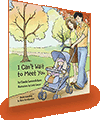
    Book Review: I Can’t Wait to Meet You

    Book Review: I Can’t Wait to Meet You: Understanding In Vitro Fertilization
    By Claudia Santorelli-Bates

    So No Wonder Publishing, 2010
    ISBN 978-061531935-3
    30 pages, hardcover, $15.99

    www.icantwaittomeetyou.com/

    Reviewed by Molly Remer, MSW, CCCE

    Written by a mother of three, I Can’t Wait to Meet You is a story book for children designed to explain in vitro fertilization (IVF) in simple terms. The American Society of Reproductive Medicine has an official position that children conceived via IVF have the right to “full disclosure” of their origins. I confess to wondering if by this logic all children have a right to “full disclosure” about their conception story (!), but, regardless, for children conceived via IVF, I Can’t Wait to Meet You makes the origin story easily accessible. (The author of the book has an article available explaining why disclosure is important available here.)

    Colorful cartoon illustrations and basic language tell the story of a couple who longs to have a baby and eventually goes to a doctor for help. Eggs are taken from the mother and sperm from the father in hopes that they “like one another and become an embryo.” The illustrations are friendly, appealing, and fanciful (for example, the embryos are shown resting in little beds before being put back into the mother’s tummy).

    The book ends with the couple pushing their toddler in a swing at the park and with the lovely affirmation, “you were so wanted and loved long before we met you.”

    I Can’t Wait to Meet You would be a nice addition to the personal libraries of families who have struggled with infertility and who would like to share a piece of their journey with their own “little miracles.”

    Disclosure: I received a complimentary copy of this book for review purposes.

    Book Review: Breastfeeding Facts for Fathers

    Book Review: Breastfeeding Facts for Fathers
    Platypus Media, 2009
    ISBN 978-1-930775-49-7
    40 pages, softcover, $7.95 (perfect bound); $5.95 (saddle-stitched)

    www.platypusmedia.com

    Reviewed by Molly Remer, MSW, CCCE

    Since partner support of a breastfeeding mother is one of the most important factors in breastfeeding success, the short book Breastfeeding Facts for Fathers is a valuable book indeed. Written in a clear, straightforward format, brief one-page sections address topics like, “why you want your baby breastfed,” “is formula really so bad,” “a happier, healthier mom,” “sex and the breastfeeding woman,” and “when breastfeeding is not advised.” There is also a brief segment about safe co-sleeping. These sections are followed by a brief FAQ addressing topics such as how often mom should breastfeed, how to know baby is getting enough milk, how long to breastfeed, nipple piercing, breast implants, alcohol, and breastfeeding in public.

    As a quote in the book states, “Having a father is critical to the healthy development of a child. Being a father is critical to the healthy development of a man.” Providing breastfeeding information specific to fathers, Breastfeeding Facts for Fathers supports this healthy development of father, mother, and baby.

    A Spanish edition, a low-literacy (abridged) version, an ebook edition, and a hospital edition (co-sleeping information omitted) of Breastfeeding Facts for Fathers are all available at various affordable prices from Platypus Media.

    Disclosure: I received a complimentary copy of this book for review purposes.