Archives

Benefits of Prenatal Massage

In the U.S. there are more the six million pregnancies each year, and a growing number of women are opting to use massage to deal with the aches, pains and stress that come along with pregnancy. Studies have shown that prenatal massage can reduce anxiety, joint pain and swelling caused by poor circulation, according to the American Pregnancy Association. Massage therapists who are trained in prenatal massage must take extra precautions when giving an expectant mother a massage, including avoiding specific pressure points and ensuring the client is in a position that will not cause added stress to their body.

I recently had the opportunity to interview Colleen Bryan of Hand & Stone Massage and Facial Spa. about the benefits of prenatal massage:

Q: How can the benefits of massage transfer into the delivery/birthing room?
A. Regular massage can assist the labor process by enabling each woman to begin labor with less tension in the back, pelvis and legs. It also provides flexibility, prepares muscles and reduces stress levels which can improve the outcome of labor. It has been noted that labor is shorter with fewer complications for women who receive regular massage.

Q:  Are there any special tricks and tips that can be used through massage to help a birthing woman?
A: It takes a lot of hard physical work to get a baby into the world but steps can be taken to make that process easier. Regular massage throughout the second and third trimester will allow the muscles to be more relaxed and flexible through the delivery process. Not only does massage help throughout pregnancy and delivery but once baby and Mom are home that’s when disrupted sleep patterns need rejuvenation. A one hour massage is equivalent to three hours of deep sleep….often needed not only for Moms but Dads as well.

Q: When are the best times to receive a massage for pregnant women?
A: Pregnancy is a wonderful experience, but it often comes with physical challenges from a changing body. The second trimester is the safest time to start receiving regular massage, once or twice a month. Weight gain in the front of the body can change the center of gravity placing more stress on joints, the spine and muscles. Massage can offer relief from muscle pain and joint stiffness on into the third trimester as the baby grows and changes the body even more. At this time it would be beneficial to receive a massage every week.
Receiving massage during pregnancy is an excellent way to care for both Mom & baby. It should be part of every pregnant woman’s self-care plan.

Q: What are some of the cautions about receiving massage during pregnancy?
A: Prenatal massage is effective and safe for women with uncomplicated, low risk pregnancies. High risk pregnancies with certain medical conditions should get consent from their doctor before receiving massage. Massage should be avoided during the first trimester and there are regions of the body and specific therapeutic techniques that are contraindicated for prenatal massage. A professional massage therapist trained in prenatal massage will know what precautions need to be taken.
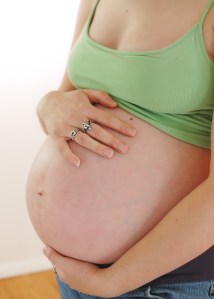
Omega 3 Fatty Acid Supplementation During Pregnancy

This week, I was contacted about some new research being presented at the The Era of Hope conference in Orlando, FL about omega 3 supplementation during pregnancy reducing the risk of breast cancer for the baby girl in the future. Era of Hope is a scientific meeting funded by the Department of Defense Breast Cancer Research Program (BCRP). I was offered the opportunity to do a short interview with the researcher, Dr. Georgel:

Q. What are some easy tips for pregnant mothers to increase their consumption of omega 3 fatty acids?

A. Select the right type of oil when you go shopping:

  • Avoid corn oil and chose canola oil instead. Price is similar and canola proper ratio of omega 3 to omega 6 fatty acids (i.e., 1-2).
  • Wild caught salmon is a viable option; avoid farm-raised
  • Walnuts and broccoli are also good foods to incorporate into your diet.

Q. Are supplements (i.e. fish oil or flaxseed oil  in capsule form) as effective as other foods?

A. Yes, if you select them properly. Read the label; for fish oil, you have to make sure that the amount of omega 3 fatty acid (combined EPA plus DHA) is around 1600 mg/day. If the label says, “essential fatty acids,” it usually contains and high level of omega 6 and low omega 3 (which is not optimal) so you want to avoid those.

Q. Is the effect dose dependent? (i.e. how much do women need?

A. Yes, 1600mg of combined (EPA plus DHA) omega 3 fatty acids per day.

Q. Since it is World Breastfeeding Week this week, I’d love to tie this research in to research we already know about the role of breastfeeding in reducing a woman chance of breast cancer. Any thoughts on that?

A. Our research indicates that the maternal diet (in utero and during breast feeding) containing omega 3 fatty acids has the potential to reduce the female off-spring’s incidence of breast cancer.

I also asked about the following: finally, there is some evidence that supplementation with EFAs postpartum has an effect on reducing the incidence of postpartum mood disorders. Any thoughts on how prenatal supplementation might have a similar impact? But, since Dr. Georgel’s research does not explore mood disorders, he was unable to comment on this question. Here are two great handouts from Kathleen Kendall-Tackett about EFA supplementation postpartum:

Can fats make you happy? Omega-3s and your mental health pregnancy, postpartum and beyond

Why Breastfeeding and Omega-3s Help Prevent Depression in Pregnant and Postpartum Women

Health Care or Medical Care?

For quite some time, breastfeeding advocates have been working to change the language of infant feeding to reflect that breastfeeding is the biological norm (and formula feeding is the replacement/substitute). This includes sharing about the “risks of formula feeding” rather than the “benefits of breastfeeding” as well as encouraging research that no longer uses formula-fed babies as the control group or considers formula to be a benign variable (i.e. the babies in the breastfed group of many research projects also received some formula, but since our culture views formula as the “norm,” this was not seen as a conflict). I love Diane Wiessinger‘s example—would we ever see a research project titled “Clear air and the incidence of lung cancer.” No! Problem behavior is linked to problem outcomes in other areas of research, so it would be “Smoking and the incidence of lung cancer.” However, we routinely see research titles like “Breastfeeding and the rate of diabetes” rather than linking problem to outcome–“Infant formula and the rate of diabetes.”

Similarly, “intactivists” (people who oppose circumcision) have pointed out that there should be no need to refer to some boys as “uncircumcised”—being uncircumcised is the biological norm, it is “circumcised” boys that should received the special word/label. (On a related side note, I have written about “pleonasms”–words that contain unnecessary repetition–and birth and breastfeeding in a previous post.)

So, this brings me to another need for a change in the common language–correctly identifying whether we are really talking about “Health Care” or “Medical Care.” This was originally brought to my attention by Jody McLaughlin the publisher of Compleat Mother magazine. We have a tendency to refer to “health care” and to “health care reform” and “health insurance” and and “health care providers” and “health care centers,” when it reality what we are truly referring to is “medical care”—medical care reform, medical insurance, medical care providers, and medical care centers. As Jody says (paraphrasing), “we do not have a HEALTH care system in this country, we have a MEDICAL care system.” She also makes an interesting point about a trend to re-name medical care systems with names that use the word “health” instead:

This is what I have observed: Our local facility was called Trinity HOSPITAL, later re-named Trinity MEDICAL CENTER, and now it is Trinity HEALTH.

In the late 70’s and early 80’s the discussions centered around the MEDICAL crisis, MEDICAL reform, MEDICAL insurance and MEDICAL care cost containment.

MEDICAL insurance morphed into HEALTH CARE insurance. MEDICAL reform morphed into HEALTHCARE reform.

This is a difference with a distinction.

Health care includes clean air and safe water, enough good food to eat, exercise, rest, shelter and a safe environment as well as healing arts and the availability of and appropriate utilization of medical care services.

Medical care is surgery, pharmaceuticals, invasive tests and procedures. Malpractice tort reform is on the agenda too but no one is talking about reducing the incidence of malpractice, or alleviating the malpractice crisis by improving outcomes.

Why does this discussion belong here? First, I wanted to address it because I have a special interest in our use of language surrounding birth and how that language can impact our birth experiences. Secondly, if we emphasize that birth is a normal bodily process, a normal life function, and not an illness, we need to make sure that we are focused on health care services for birth, rather than medical care services. Personally, I think the midwives model of care can truly be described as health care, whereas standard maternity care in the U.S. can much more aptly be described as medical care.

Maternal-Fetal Conflict?

You will have ideas, options and paths to ponder, but you will also have a sense of possible directions to take as you consider midwifery, childbirth education, or being a doula or an activist. Your path may be circular or straight, but meanwhile you can serve motherbaby while on the path, with a destination clearly in mind.” She also says, “I use the word midwife to refer to all birth practitioners. Whether you are a mother, doula, educator, or understanding doctor or nurse you are doing midwifery when you care for motherbaby.” —Midwifery Today editorial by Jan Tritten

Mamatoto is a Swahili word meaning “motherbaby”–reflecting the concept that mother and infant are not two separate people, but an interrelated dyad. What impacts one impacts the other and what is good for one is good for the other. The midwifery and birth communities have used this concept for quite some time and more recently some maternal health researchers have also referenced the idea of the “maternal nest”–that even following birth, the mother is the baby’s “habitat.”

Critiques of homebirth sometimes rest on a (flawed) assumption of maternal-fetal conflict (which is also invoked to describe situations with substance abuse or other risky behavior). In the Fall 2007 issue of CfM News, Willa Powell wrote about maternal-fetal conflict in response to an ABC segment on unassisted birth. She wrote:

[quoting the expert physician interviewed for the segment] “The few hours of labor are the most dangerous time during the entire lifetime of that soon to be born child. Because of this, I would argue, all soon to be born children have a right to access to immediate cesarean delivery, and women who insist on denying this right are irresponsible.”

This was the only professional opinion in the program on unassisted birth, and he set up a typical expression of an obstetric community belief: the “maternal-fetal conflict.” The notion is that there are two “patients”, where the mother’s desires are sometimes in conflict with the well-being of the baby, and that the obstetrician has a moral/professional obligation to abandon the mother in favor of the baby.

I have to remind myself that Dr. Chervenak is setting up a false choice. In fact, this scenario is a “doctor-patient conflict”. The mother wants what’s best for herself and her child, but she disagrees with her doctor about what is, in fact, best. Women are making choices they believe are best for themselves and best for their babies, but those choices are often at odds with what doctors consider best for both, and certainly at odds with what is best for the obstetrician!

In the book Birth Tides, the author discusses maternal-fetal conflict:

According to obstetricians, the infant’s need to be born in what they have defined as a safe environment, i.e. an obstetric unit, takes precedence over the mother’s desire to give birth in what doctors have described as the comfort of her own home. It is a perspective that pits the baby’s needs against those of the mother, setting ‘overriding’ physical needs against ‘mere’ psychological ones. It is rooted in the perception that the baby is a passenger in the carriage of its mother’s body–the ‘hard and soft passages,’ as they are called. It is also rooted in the notion of the mind-body split, in the idea that the two are separate and function, somehow, independently of each other, just like the passenger and the passages. While women may speak about ‘carrying’ babies, they do not see themselves as ‘carriers,’ any more than they regard their babies as ‘parasites’ in the ‘maternal environment.’ If you see your baby as a part of you, there can be no conflicts on interests between you.

I previously linked to a book review that explores this concept of the more aptly described “obstetric conflict” in even more depth.

I think it is fitting to remember that mother and baby dyads are NOT independent of each other. With a mamatoto—or, motherbaby—mother and baby are a single psychobiological organism whose needs are in harmony (what’s good for one is good for the other).

As Willa concluded in her CfM News article, “...we must reject the language that portrays a mother as hostile to her baby, just because she disagrees with her doctor.

An example of a mamatoto 🙂

Book Review: Healthy Eating During Pregnancy


Review: Healthy Eating During Pregnancy
By Erika Lenkert with Brooke Alpert
ISBN: 978-1-906868-41-3
Softcover, 144 pages, $16.95
http://www.healthywomen.org

Reviewed by Molly Remer

Co-written by a cookbook author/food writer and a nutritionist (both of whom are mothers), Healthy Eating During Pregnancy offers 100 recipes with the nutritional needs of pregnant women in mind. The first part of the book contains specific nutrition information for pregnant women, including a short section on coping with morning sickness, as well as good information about the micronutrients and macronutrients that are essential for growing a healthy baby. The remaining two thirds of the book is a collection of tasty recipes, organized into categories beginning with breakfast and concluding with desserts. The book is very colorful and contains many appetizing photos.

Though marketed specifically for pregnant women, the recipes have appeal to anyone. My family enjoyed the zucchini and parmesan frittata and the “totally tasty breakfast muffins” and we look forward to trying more of the recipes in the future.

This book would be well-placed in the lending libraries of midwives, doulas, or childbirth educators. Anyone in need of healthy recipe ideas during pregnancy will enjoy exploring the new book Healthy Eating During Pregnancy!

——-

Disclosure: I received a complimentary copy of this book for review purposes.

The Blessingway Connection

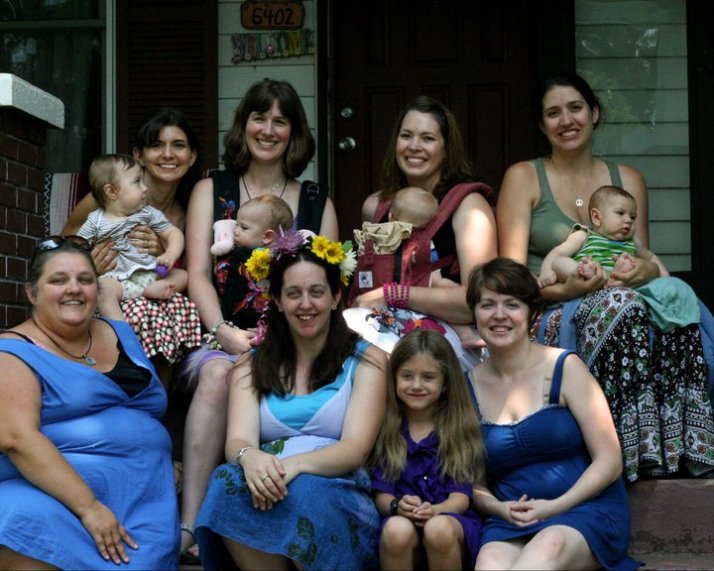
Last weekend, I attended a mother blessing/blessingway* ceremony for a dear friend. I have mentioned her here before, because she is on a pregnancy-after-loss (PAL) journey after having given birth to a tiny boy after 16 weeks of pregnancy last July (my own Noah was born at 15 weeks in Nov., 2009). My friend’s baby had been due in January, the same time my own “rainbow baby” was born. So, I’ve spent the last year being a couple of months “ahead” of her on the very complicated and emotional path of pregnancy after loss.  And, now she is preparing to give birth to her own new baby girl any day now. It felt very, very good to come together with friends to celebrate this strong mama, her journey, and her babies. I so clearly remember the feelings of “feeling the fear and doing it anyway” when it came to things like doing a belly cast, having pregnancy pictures taken, and, yes, having a blessingway—each of these commemorative events was tinged with a fear of possibly being a sad memory instead of a happy one. I remember worrying, “what if I look back at my blessingway and have to think, ‘but I was so happy.'” These thoughts aren’t necessarily rational or logical, but they featured prominently in my PAL experience. And, while I truly loved being pregnant and I was happy much of the time, I was so glad for it to be over and for PAL to be behind me. This is the feeling I had for my friend during her ceremony as well—pretty soon PAL will be over and you will be so glad to leave it behind and snuggle your new baby girl (I’m also very familiar with the companion fear of, “but what if my PAL journey ends with another loss? I’m not holding my new baby yet…”)

For many mother blessings, I pick out a quote or a poem or a reading to give to the mother.  Considering how much writing I do in my life, it is kind of surprising to me that I usually choose to give women other people’s words rather than creating something new for them (I do say original things aloud to them during the gifting time, in which we each take turns kneeling before the mother and telling her what she means to us). After some looking for perfect quotes, I knew that for this friend,  I needed to write something to her from my heart and not from someone else. So, on one of my womb labyrinth postcards, I wrote the following:

Nine months ago you entered into the long, challenging labyrinth of pregnancy after loss. You have walked with courage, strength, and grace. You have been SO BRAVE. And now you prepare to take the final step on the path—to greet the power and intensity of your birthing time. All of your love and hope and fear will become concentrated on the task of opening your body to welcome your precious new daughter into your arms and your life. She is coming. She is okay. And, sweet mama, so are you. This is a time of openness and surrender–in body, mind, heart, and soul. May you give birth with confidence, strength, bravery, vulnerability, and wild sweet joy and relief.

(c) Sincerely Yours Photography

One of the special things about blessingways is the sense of connection with other women. The ritual space creates an opportunity to speak and share with each other with a depth that is often not reached during day to day interactions (and definitely not usually at baby showers!). This winter, my friends and I started having quarterly women’s retreats. One of my reasons for wanting to do so was to bring some of that sense of celebration and power from our Mother Blessing ceremonies more fully into our lives and to celebrate the fullness and completeness of women-in-themselves, not just of value while pregnant. For these same reasons, I decided to pursue a doctoral degree in women’s spirituality—while birth work is still important to me, I feel very “called” to celebrate, work with, acknowledge, and respect the full cycle of a woman’s life.

“We are mothers, sisters, family wrapped in different cloth,
standing under the same wide sky
and we’ve come to the very end of our silence
together we’ve found our voice
and it is loud
and it is beautiful
and it sings a love song for our children”
Mothers Acting Up

(c) Sincerely Yours Photography

——-

*For a general description and explanation of mother blessings as well as musings on “connection,” see my friend Hope’s post.

*Out of respect for Native traditions, I continue to try to refer to these ceremonies as “mother blessings.” However, my local circle of women has been holding these ceremonies for each other for about 30 years and they have “historically” been referred to as “blessingways.” Blessingway remains the term that feels most right to me—most genuine, authentic, and, truly, is part of my own life’s “traditions,” so a lot of the time, I feel like it is okay for me to continue using the word, rather than trying to force myself to use mother blessing instead.

Guest Post: Overcoming Stigma: A Film Story of Stillbirth, Miscarriage

This post is republished from the blog of the Bill & Melinda Gates Foundation:

Overcoming Stigma: A Film Story of Stillbirth, Miscarriage

by Jhene Erwin

In 2007, with one two and half-year-old child, my husband and I decided it was time to have another baby. My first miscarriage occurred at six weeks. My second was at almost eleven weeks. The grief was alarming but I did what many women do – my best to quietly “carry on.”

Simple tasks became challenging. I’d stand in the cereal aisle frozen by the choice between honey-nut and plain. The question, “Paper or plastic?” should not make a person cry. Maintaining this external “everything-is-ok” façade was agonizing.

It was the tension – between façade and grief – which inspired my short film about miscarriage, stillbirth and early infant loss. “The House I Keep” is a story of transformation during one woman’s struggle to come to terms with the loss of her child.

My hope is that this film frees people to talk more openly about what remains stubbornly taboo. When people hear about my film total strangers let loose regardless of location: be it the gym or in a grocery store. Their stories are always deeply moving and I am honored by their candor.

What do they say?

They tell me there is no appropriate place to mourn this loss. While family and community are powerful sources of comfort, the silence on this subject prevents women from accessing that healing power. Consequently, the mental health of not only mothers but also their children suffers.

Consider this stigma magnified around the globe. In some developing countries, superstitious beliefs lead women to be blamed for a stillbirth or miscarriage. Some communities feel more people will die if the bereaved mother is in contact with other women and children. Subsequently, access to the healing power of family and community becomes greatly restricted. As we move forward with the important work of improving global maternal and newborn health, the long term effects of stigma on the mental health of women and their surviving children cannot be over looked or marginalized.

Talking heals. Women want to feel reassured that their child’s too-short life had a place in the world and that the world is different because of that child’s absence. You can help mark that life by just being willing to talk and listen. The landmark Lancet Stillbirth Series released in April is already impacting the worldwide perception of stillbirth.

In my own community of Seattle, Washington, in the United States, nonprofits that counsel women postpartum will be using my film as a starting place for open discussions. The ripple effect of community efforts, combined with the work of organizations including PATH, UNICEF, Save the Children, and the Bill & Melinda Gates Foundation, will undoubtedly lessen the stigma of a tragedy for which no woman should ever be held accountable.

By letting women talk openly, and by listening, our communities around the world can help women – including me – begin to heal.

More to Explore

Jhene Erwin is an actor and filmmaker. She lives in Seattle, Washington with her husband and six year old daughter.
—-
The Bill & Melinda Gates Foundation works to help all people lead healthy, productive lives. Safeguarding the health of mothers and young children is one of the world’s most urgent priorities and a core focus of the foundation’s work; especially in the developing world.

Remember those pink shoes?

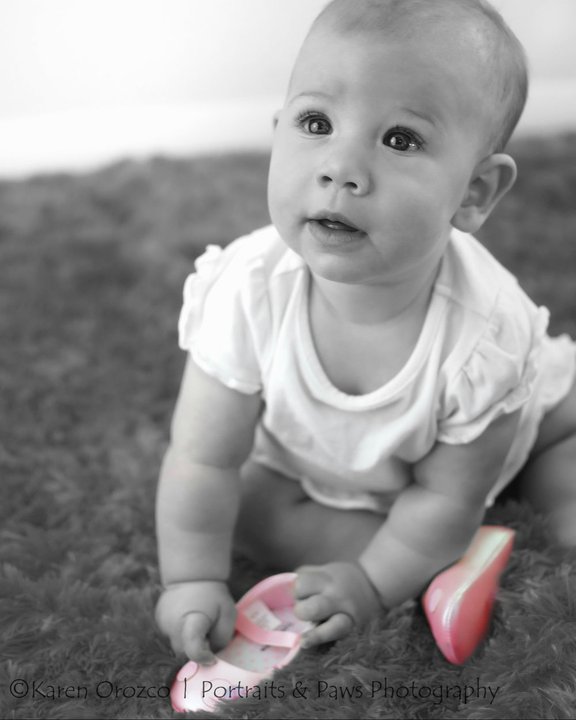
When I found out that Alaina was probably a girl, I went to the store and bought a pair of shiny pink shoes. (I wrote about this here.) When I got my first set of maternity pictures taken, we included those shoes in a couple of the pictures:

Last week, I took Alaina for a photo shoot with my same photographer friend and look at the shoes now!

One of my good friends is nearing the end of her own pregnancy after loss journey and she just had a maternity photo shoot with the fabulous Karen as well. She had a similar belly picture taken with a little pair of pink socks. When I looked at her photo, I remembered so vividly my own feelings while getting the one taken of me—that almost panicky combination of hope and fear and just trying to trust that I would NOT have to look back at that picture and be filled with grief that I had no one to fill the shoes after all. And, once again, I felt grateful and relieved to be on this other side of the PAL journey. It is a very, very good place to be. I look forward to my friend welcoming her own “rainbow baby” next month and getting to feel that sense of pure relief at putting those pink socks on her happy, beautiful, healthy new daughter!

Poem: Sons

Every so often I wake up in the morning with a fully-formed poem in my mind. In 2006, five days after composing the poem below, I gave birth to my second son, Zander (just as seven dreams told me prenatally). Fantastic two-hour homebirth of a 9lbs 2oz baby!

Sons

I sense a future for myself as a mother of sons.

Curious, vibrant, full of life energy.

Will I be able to nurture them into

Good men?

Warm hearts, strong hands.

Compassionate, responsive, confident.

Happy and balanced in their lives.

For now, one son.

Not yet three.

Bright eyes, big smile

Wonderful way with words.

Generous with hugs and kisses and

“I so love you mommy!”

Loves slides at parks

And painting

And dictating sculptures.

Bursting with life and

Shining with possibility.

Full of ideas, words, and vigor.

The prospect of another waits

Close beneath my skin.

Thirty-nine weeks of mystery.

My sense of the future unfolding.

 ~~~~~

Molly Remer

5/24/06

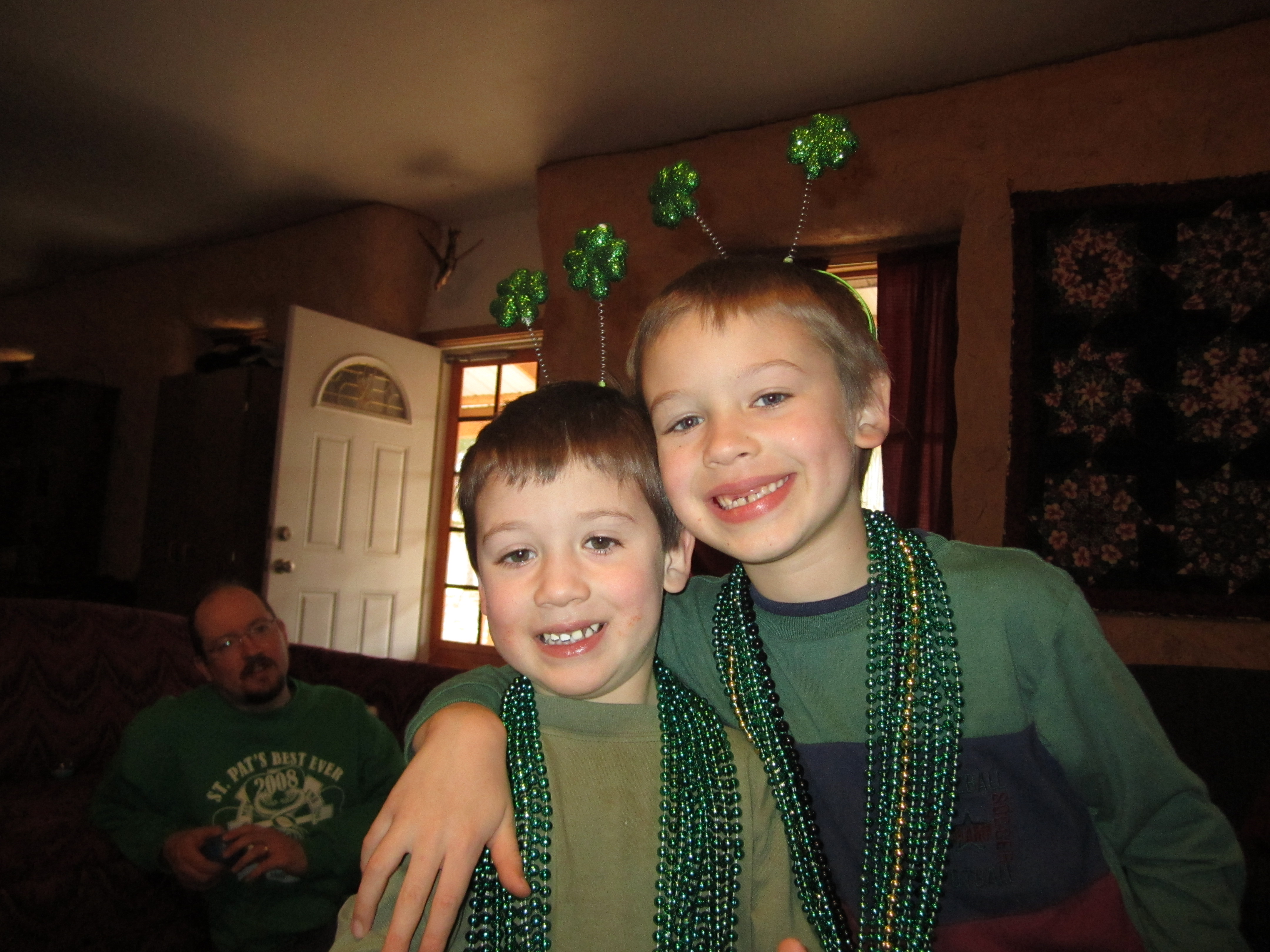
My sons: St. Pat's 2011

Finished Belly Cast!

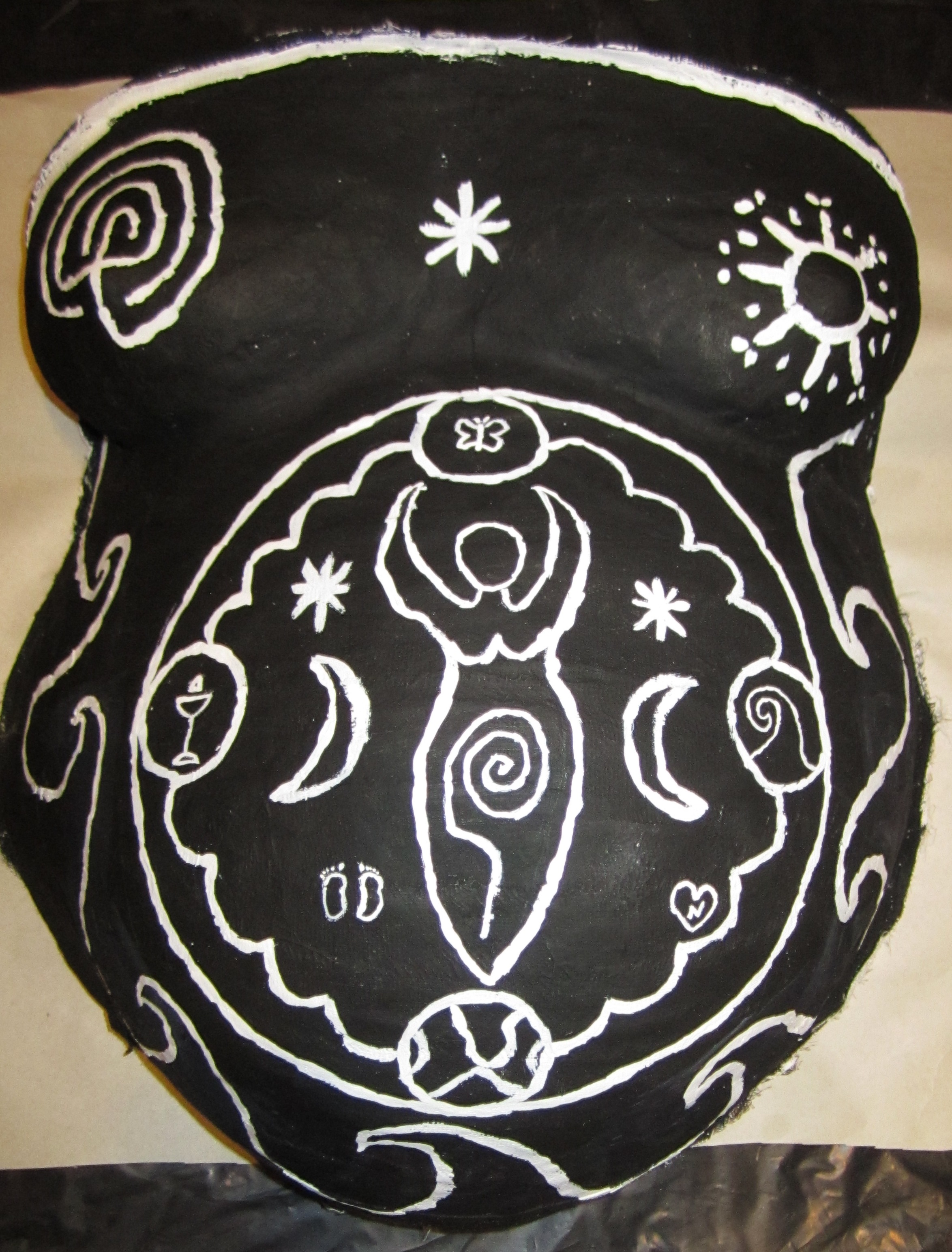
On Mother’s Day I wanted to finish painting the belly cast we made during my pregnancy with Alaina. During my pregnancy I made a series of black and white mandala-type drawings and I knew right away that I wanted to continue this theme on my belly cast. It felt somewhat odd to paint the cast black—like it was weird of me to do so, but it was the only “vision” I had for the cast!

I feel a little critical of it—it was very difficult to paint smoothly with the white on the uneven/porous surface—but, overall I feel very pleased with how it turned out.

Here is a different angle:

I did not do a belly cast with my first pregnancy. With my second, I did, and I painted it very simply: