Archives

Blog Circle: New Beginnings and Most Significant Events

The January Blog Circle at The Amethyst Network has the theme of New Beginnings. This is perfect for me, since my pregnancy-after-loss “rainbow baby” was born in January. The Amethyst Network was named for the infant sister of one of the founders. Her name was Amethyst. We use “Amethyst babies” as a way to identify and label loss stories on the TAN blog and we are using “Garnet babies” to refer to babies born following loss. Garnet is the January birthstone and several of the founders have January rainbow babies. Several of us also have February miscarriages (amethyst is the birthstone for February). While this obviously isn’t a universal experience, this is how we personally make the connection between our choice to use gemstone names and our own experiences. Here’s the info about this month’s blog circle:

The loss of a baby is the end of something but it is also the beginning of something new. It takes time to find that new, to navigate and find your way in this new world you have been thrust into and to navigate and find your way into this new normal.

The New Year is also an opportunity for New beginnings. Many people set Goals and New Years resolutions to focus on for the year. It may be a time of letting go of the old and focusing on the new.

We have chosen the theme “New Beginnings” for our January Blog circle. The decision was based both on the New Year as well as the new beginning for the Amethyst Network. We have been redoing our website, redefining our mission and creating a space of hope and healing and a place of information for those who in the miscarriage/babyloss community.

We would love to have you participate in our January Blog Circle. The theme is New Beginnings. Was your loss a new beginning for you? Your next baby? How do you feel about the New Year? Are you in a place of letting go? Or embracing?
676

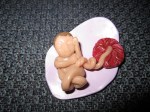
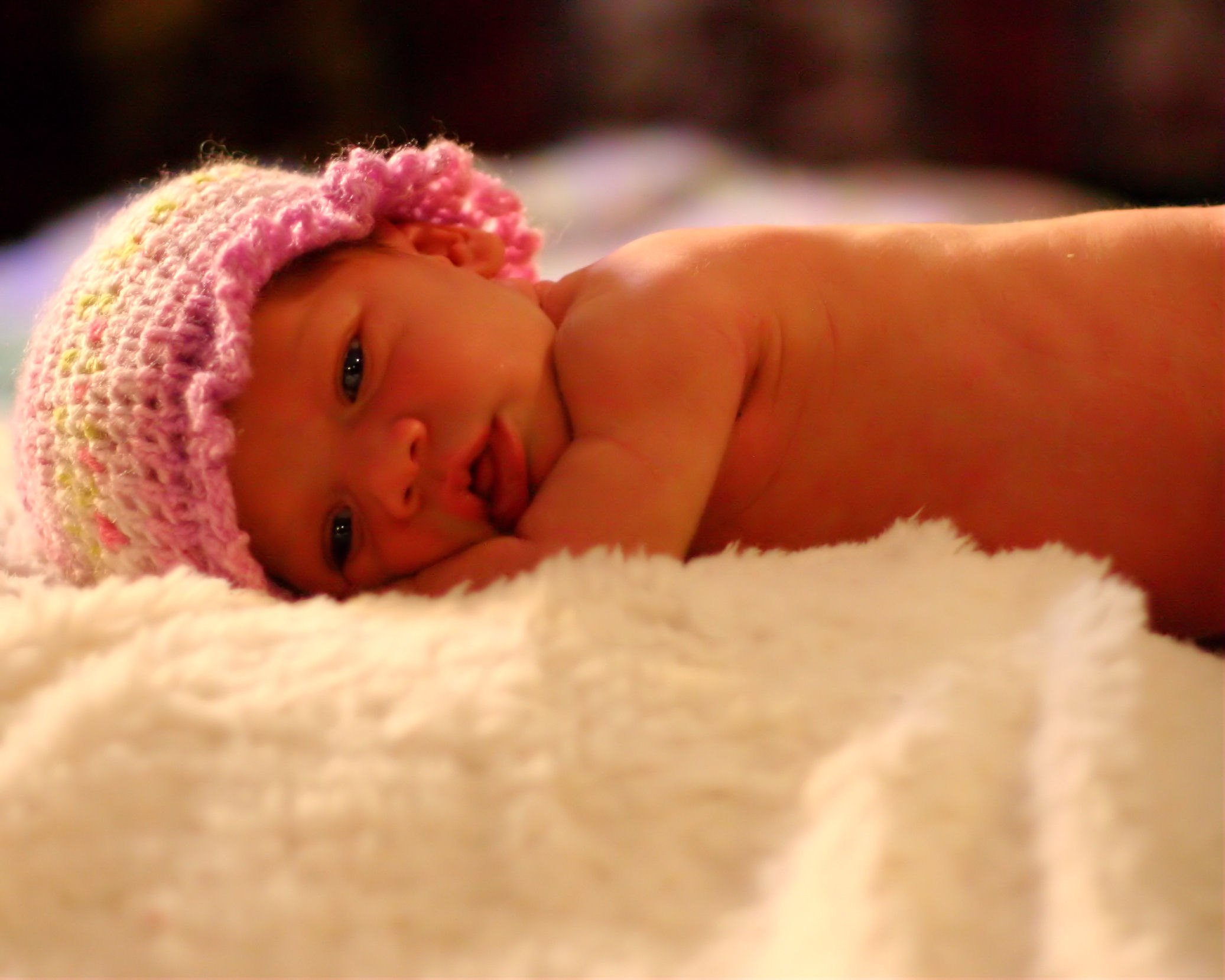
A lot of hopes and dreams rested on this little body!

My first loss was, in fact, a new beginning for me in many ways. That miscarriage-birth changed my life forever. It changed my worldview, it changed how I work with women, it changed my understanding of the world, it prompted a spiritual awakening, it changed the trajectory of my work and my focus, and it broadened and deepened the scope of what I’d like to offer in service to others. It was BIG. It was important. It was hard, it was scary, it was emotionally and physically painful, and it lasted a long, long time. It took the birth of my pregnancy-after-loss baby in January of 2011 to really feel “healed” from the scars of loss and so in this way, she was definitely a new beginning as well. I remember thinking during my pregnancy that there was so much riding on her—a lot for a little baby to shoulder—all of our hope, our fears, our very future of a family felt like it rested in her. And, I remember telling her, shortly before her first birthday—you, you healed me. In our conversations among The Amethyst Network board members, I’ve also shared that I didn’t feel completely healed until she reached her first birthday—until we taken one whole turn of the wheel together with her in my arms. And, in that way, I’m also not sure that we ever completely heal from loss—I know that one of the factors behind our decision not to have more children is a still, small, lurking fear of what if it started all over again? That would suggest that a scar on our lives remains (that isn’t necessarily a bad thing. Our scars are part of the landscape of being–of loving, living, risking, losing, learning, and changing).

Considering this topic also brought me an old question, previously posed in response to a midwife’s blog post, in which I ask the following:  What is the most significant event that shaped your life as a woman? As a mother? Are your answers to the two questions different?

My own answers have in fact been different. And, they have changed. Pre-loss, I described my postpartum journey following my first birth as the most significant event shaping my life as a mother. After the miscarriage-birth of my tiny son, the texture of my response and my definition of my life experiences shifted:

When originally writing this post, I was pregnant with my third son. That pregnancy ended very unexpectedly in November, rather than May, when my baby was born after almost 15 weeks of pregnancy. Interestingly, my experience of miscarriage has supplanted the birth of my other two sons as essentially the most powerful/significant and transformative event of my life. (My sense that his birth has “replaced” the birth of my other children as most significant makes sense to me, because though it is classed as miscarriage, it is still my most recent birth experience—all of their births stand out as special, important, and meaningful days and I will remember each with clarity for the rest of my life, but his birth is the freshest and most recent and came with the additional transformative journey of grief. And thus, when I think of giving birth or when I think back to birth memories or birth feelings, his birth is the first one that comes to mind.) Though I still “vote” for postpartum as the most significant event in my life as a mother, I now “vote” for my birth-miscarriage experience as the most significant event in my life as a woman.

Interestingly, my answer has evolved again since writing the post above and I would now include the entire pregnancy-after-loss journey as the most significant event in my life as a mother. It was hard, people. It was day in and day out and never-ending and so, so delicate. So tinged with hope and fear and so laden with meaning. As a woman, though, I’m not sure that my answer has changed. I need to think about it more deeply, but I think that miscarriage-birth is still it. Just as life divides cleaning between before kids and after kids, there is a dramatic, pivotal before miscarriage and after miscarriage that has shaped my female identity and understanding of myself.

567b

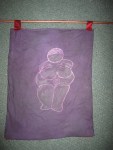
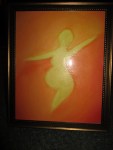
Celebrating Pregnancy & Birth Through Art

This article is adapted from my notes for past birth art workshop presentations. It is part of a story for the Winter 2013 edition of the Friends of Missouri Midwives newsletter.

Celebrating Pregnancy & Birth Through Art

by Molly Remer, MSW, ICCE, CCCE

http://talkbirth.me

See other posts and pictures about birth art here.

Birth art is one of my favorite birthy subtopics and I used art during my pregnancies, postpartum, and continuing in life today. I love exploring birth art with women and I’ve presented on the subject at multiple conferences, as well as hosted a “birth art booth” at our local MamaFest event this past fall. Art can play an important role in self-discovery and preparation for birth and parenting. Art used during pregnancy and following birth can be powerful tool of validation, celebration, exploration, and insight.

Why is art during pregnancy is useful?

Art during pregnancy is primarily as a tool to tap into “right brain” consciousness and express unexplored gifts, primal wisdom, or release hidden fears. Creating birth art can help both women and men explore your feelings, memories, beliefs, and perceptions surrounding birth outside of the confines of the spoken or written word. The purpose of birth art is to explore what you find within as you create your art and not the final product—as Pam England describes, birth art is as raw, honest, spontaneous, and personal as birth itself.

Art during pregnancy can be used for:

    • Birth preparation.
    • Exploration of fears.
    • Celebration of feelings & experiences.
    • Fun!
    • Visualization.
    • Focal point.
    • Exploration of the unknown.
    • Self-discovery & insight.
    • Healing.
    • Revealing unconscious patterns/ideas.
    • Celebration of the power of the female form.
    • Celebration of new life.
    • Representing hopes/dreams.
    • Communicating hard to verbalize ideas/feelings.
    • Exploring “right brain” methods of understanding the birth journey.
    • Explaining concepts in new ways.
    • Symbolic/spiritual insights.
    • Revealing hidden birth wisdom.
    • Expressing creative gifts.
    • Mementos

Types of art exploration in pregnancy:

    • Sculpture—variety of mediums (fiber, clay, pottery…)
    • Painting
    • Drawing
    • Photos
    • Jewelry
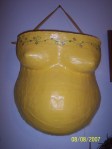
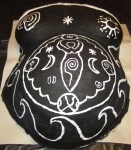
    • Belly casting
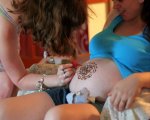
    • Body art (such as henna)
    • Collage
    • Mandalas
    • Decorating objects—prayer box, wreath
    • Quilting

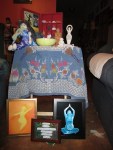
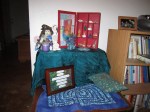
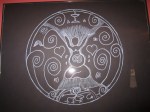
Birth Art Examples:


Two Suggested Exercises for Birth Professionals or Parents:

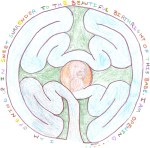
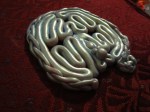
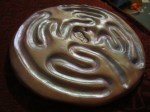
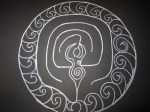
Based on Pam England’s LabOrinth article, I enjoy showing parents how to draw a birth labyrinth (several examples can be seen in the gallery above). Drawing a labyrinth with an explanation of how this type of image can be used to explain/explore the progress of labor as opposed to medical models such as cervical dilation charts or labor progress “bell curves,” can be a very eye-opening exercise for parents. The resulting image is a powerful visual of “normal birth,” instead of “clock watching” birth. I’ve made two posters than I use when I teach birth classes. The first shows a rough Friedman’s curve and a cervical dilation chart—these images are part of a deeply ingrained cultural view of birth and it is hard to shake these associations. This linear birth structure may be how we view labor from the outside, but it is not how we experience it from the inside, the labyrinth is a more appropriate birthing image as it feels from within and this is why…

      • No shortcuts—have to keep going til the end.
      • Speed varies.
      • Can’t get off the path (no falling off the curve).
      • Can get through blindfolded.
      • One step at a time will get you through—one foot in front of the other (one contraction at a time).
      • Can’t get lost. If you get out of the lines, you get lost—try to take shortcuts, get lost. Have to continue on your path.
      • Can crawl if you need to (or run!).
      • Circular (nonlinear)
      • No right way to finish.
      • Contemplative
      • Meditative
      • Journey
      • Everyone gets to the same place eventually—can go own speed, some fast, some slow
      • Do not need instruction to complete (no birth plan)
      • No timeline
      • No need to study.
      • Can rest if you need to.


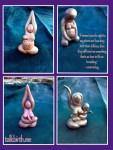
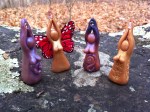
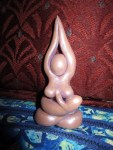
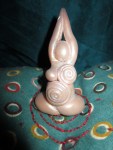
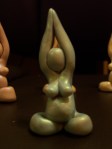
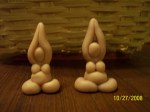
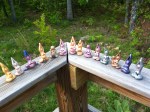
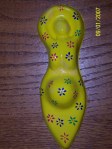
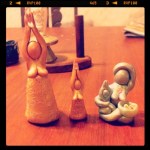
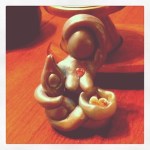
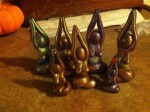
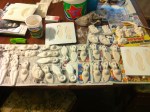
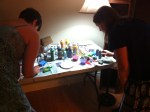
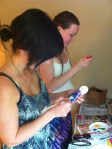
My other favorite group birth art project is to painting small pregnant goddess figurines (I make big batches of these in a mold using plaster). My most recent experience in doing so was at Rolla Birth Network’s MamaFest event:

This experience reaffirmed for me that birth art is about process not product. And, also that I don’t have to personally do anything to have the process be a meaningful one to participants. As an example of what I mean: at MamaFest, a very young mother came into the birth art sanctuary. I gave her my one minute spiel about the purpose of birth art and she painted her figures alone in the room for about 20 minutes. When she emerged, she showed her figures to me and explained what all the symbols and colors meant. Then, with tears in her eyes, she hugged me and said thank you and left. This was a mother I’d never met before and I’ve never seen again. And yet, we shared a special moment through birth art.

Molly Remer is the Friends of Missouri Midwives newsletter editor. She enjoys blogging about birth, motherhood, and women’s issues at http://talkbirth.me.

Guest Post: Mothers Matter–Creating a Postpartum Plan

I connected with today’s guest post author, Rachel Van Buren, via Facebook. Rachel has a passion for postpartum support and so do I. When she mentioned that she was teaching a postpartum planning workshop, I asked if she’d consider writing up her notes into a post to share and she did!

IMG_5598“Mothers matter” – Creating a postpartum birth plan
by Rachel Van Buren

The Neighborhood Doula

I feel compelled to state the obvious: Society fails to meet the needs of the laboring, birthing, postpartum woman. Because these women lack the support that seems obvious for those around them to give, they assume their feelings are not normal. I am here after having birthed 4 children over the last 13 years to reassure you that your needs are normal. So normal, that I can read ten thousand threads in one afternoon of women who are crying out for support during the postpartum months. Why is it that we dismiss our feelings, and label ourselves as “ungrateful, needy, or weak” because we read one perfect looking blog, or Facebook post? Don’t misunderstand…the 4th trimester is beautiful. It really truly is. But it’s also life changing. Have you ever experienced a life change without experiencing anxiety? Of course not.

My message here is this: Women need to plan for the postpartum time period. It is essential. We get so wrapped up with birth, we forget about what happens when we bring baby home.

There are 3 areas of importance to explore before you bring baby home: Dealing with friends and relatives, how to delegate without guilt, and the importance of self-care.

Let’s explore these topics together.

How to deal with relatives and visitors during those first few weeks:

  • Have a clear vision of what your postpartum time will look like. If you aren’t sure, have that discussion with your partner now. Do not wait.
  • Set clear boundaries: Everyone does better when they know what to expect.
  • Set phones to go directly to voicemail.
  • Change your outgoing voicemail greeting. For example: “You have reached the _______ family, we are sorry we can’t take your call right now, as we are busy enjoying some quiet time together as a family. We are all doing well, and really appreciate your thoughtfulness in calling. We will return your call when we have the opportunity to talk, or are ready to expect company. So good to hear from you, and have a great day!”
  • Stay in bed.
  • Stay in pajamas.
  • Do not offer beverages. Visitors will be less likely to overstay if you are not in the entertaining mode.
  • Have partner or Postpartum doula mediate and advocate to well-intentioned but pushy friends or family. A BFF, parent, or close relative shouldn’t serve in this capacity. Prepare with them an “elevator speech” regarding visitors “Their Doctor/Midwife has encouraged the family to take a postpartum “Baby Moon” and they are really taking that advice to heart.”
  • If mom is breastfeeding: A gentle reminders to others, that she is nursing the baby about every hour(maybe even more) and are spending lots of time skin to skin, so visitors are just not practical right now.
  • Use social media to the fullest…
092b3a174b95cf52f6cbca69837daa08

Update your Facebook status as a way of giving a “heads up“.

Delegating without the guilt: I find it interesting to meet a lot of women that perceive themselves as feminists; they have no problem advocating for a natural/intervention free birth, defending their right to an elective Ceserean, or advocating for their future right to nurse in public. However many of these women come home after birth, and suddenly find themselves struggling to find their inner voice. Suddenly things become sticky because we’re now dealing with people that we have relationships with on a personal level. Boundaries can be tough to establish and maintain because our desire is really to our loved ones. Here’s when guilt creeps in. Perhaps guilt over losing exclusive relationships (first child, partner, or even self). Guilt of not living up to our mother’s example, our friend’s example, or the “perfect” mother on Pinterest who is sewing her own postpartum maxi pads and cloth diapers.

I’m a believer in learning to delegate. It decreases levels of guilt from not being able to be Mrs Cleaver. It lightens our load. Whether it’s with our partner, or our children, we need to do it. The days are gone where we can “do it all”.

Here are some simple steps to practice in order to delegate without feeling guilty:

  • Set your ego aside: There is more than one right way of doing things. Yours is not the only way. Invite the possibility that they might even do the task better or faster than you.
  • Stop waiting for people to volunteer: It is your job to communicate your needs. Partners are not mind readers. Just because they don’t offer, does not mean your needs aren’t normal.
  • Ask and you shall receive: Get to the root as to why you struggle with asking for help (shame? guilt?). Learn a different way. Learn to ask for help.
  • Delegate the objective – NOT the procedure: Dignify the person helping you by allowing them to do it as they choose, but make clear what your desired end result is. This will stop you from being the ever annoying micro-manager. After all, you are not training a robot, but a human being who can adapt and improve.
  • Be patient: The person you delegate will make mistakes, it is part of the learning process. Work consciously to keep a positive and realistic attitude.
  • Recognize your helper: Make sure they hear you brag about them to your friends or family. Everyone loves praise, and when they are appreciated they will be more apt to tune into your needs and want to help. Say THANK YOU! Let partner know that it makes you feel so special that they are working so hard to meet your needs.
  • Avoid controlling partner’s feelings. It doesn’t build up the relationship, and only adds resentment. (“I won’t ask partner to load the dishwasher because I don’t want to hear complaints. I’ll just do it myself to avoid the argument”) Partner has feelings, and is entitled to them, whether you perceive them as “good or bad”. Feelings are not facts. They are interpretations of the facts.
  • It’s OK to feel guilty. NO ONE has ever died from guilt!! (excellent mantra during particular moments of delegating)
  • Avoid saying “yes” when you really mean “no”.
  • Change your “normal”. Embrace the fact that the next 3 months are truly a time to expect the unexpected.

Self care:

Postpartum self-care is an absolute necessity. Get in the habit now of taking care of yourself. I firmly believe that how we take care of ourselves is learned behavior. Surround yourself with women who value their physical and mental health. Watch them, and copy them.

Here is a list of self-care ideas for your physical postpartum recovery: Alaina064

  • Ice packs for perineum
  • Postpartum massage
  • Belly binding
  • C-scar massage
  • Herbal bath (with baby too!)
  • Lots of sleep
  • Ask for help
  • Eat nutritious living food
  • Stay hydrated
  • Listen to your favorite music.
  • Avoid any negative television.
  • If you are already caring for a child with special needs, make sure that support is already in place to continue caring for them during those first few months until you are back into somewhat of a routine.
  • Create a network. Women want intimacy. Do not isolate. Isolation breeds anxiety.
  • Stick to your spiritual routine (whatever that looks like) Feed your soul daily.
  • Avoid stress triggers (if overbearing mother in law is coming by, let partner and baby spend time with her. Go take a shower, or get some rest)
  • Hug your partner. A lot
  • Avoid alcohol and caffeine. These both will be very tempting, and can be OK depending on your circumstances. If you are feeling blue, or have a history of depression, I recommend avoiding during the 4th trimester.

And most of all, listen to your instincts. Don’t compare yourself to others. Believe in yourself. Postpartum is a special time in which we evolve, allow yourself to be transformed.

Be empowered: create a postpartum plan today!

Rachel Van Buren is a birth and postpartum doula living in Charlotte, NC with her husband and four children. Visit her online at The Neighborhood Doula.

Originally posted at The Neighborhood Doula,
Dec 6, 2012

You can read past Talk Birth posts about postpartum here:

Planning for Postpartum

Young Moms: Making Childbirth Education Relevant to Them

This guest post is part of my blog break festival. The festival continues throughout December, so please check it out and consider submitting a post! Also, don’t forget to enter my birth jewelry giveaway. This guest post is about making childbirth education relevant to young mothers. I have a previous post about the classes I taught for a local Young Parents program (some handouts are included): Young Parents Program Prenatal Classes. Another related post, though not specific to childbirth education, is this one about Rites of Passage Resources for Daughters & Sons. If you’re interested in providing birth education specifically for young parents, you might also enjoy checking out CAPPA’s Teen Educator certification program.

Young Moms: Making Childbirth Education Relevant to ThemLoriblessingway 117a

by Keri Samuelson

In this day and age, encountering young mothers is common. With so many of our daughters fitting into this category, updating the ways we educate these expectant mothers should be a top priority. Young people may think they can handle everything on their own, but the truth is that they may still need to learn the basics when it comes to childbirth. They need to know what to expect and how to react. Here’s my take on how to tackle the experience:

Update The Imagery
We have many tools at our fingertips, but some of them require a bit of updating. For instance, it’s imperative to revamp the video and online databases that we frequently employ in hospitals, high school classrooms and the like. Young people today simply do not relate to the characters depicted in movies from the 80s or 90s. They want to see people they can relate to experiencing what they themselves are about to. Do yourself a favor – avoid these outdated resources, and make suggestions to libraries or clinics that still use them.

The Whole Truth
Tell girls the truth – this will need to encompass more than just some action shots of women giving birth. If you are for instance sponsoring a program for expectant mothers, invite women who have recently given birth, and have them detail everything from the beginning to the end of the laboring process. This way, mothers-to-be will have fewer surprises in tow. Also, make sure there is time for questions, and be sure to allow questions to be asked confidentially (on slips of paper, for instance, that you collect and read without announcing the asker), so that the session is truly as relevant as possible.

Technology
Show them that birth is unlikely to be like the shows they watch on television or the movies that they have seen. It sometimes can take many, many hours. It can be exhausting and might be very painful, but it is also very normal and usually safe.

Celebrity Guest Spots
Information is a wonderful tool, but the presenter of this information is what can make or break its effectiveness. In this day and age, celebrities are given the floor more than medical professionals, and so it can be a wise decision to have celebrity mothers give their own testimonies of and their experience. Obviously, not everyone has access to a celebrity, so perform simple Google searches for celebrities you know of that your clients might identify with, and see what they have to say about motherhood on their website, or in interviews. If this still doesn’t work, look for local superstars whom you know have given birth – athletes, state officials, teachers, etc. that you know your young clients will look up to and listen to.

These are, of course, just a few ideas for making childbirth education a little more relatable to youth that are expecting a child. It begins with accurate information, presented by someone who they feel they can trust, and delivered in a manner that doesn’t sugar coat the process either.

Keri Samuelson writes about health promotion, motherhood and helping young people find the best accelerated nursing programs.

Book Review: Fathers-To-Be Handbook: A Road Map for the Transition to Fatherhood


Fathers-To-Be Handbook: A Road Map for the Transition to Fatherhood
By Patrick Houser
Creative Life Systems, 2007
Softcover, 160 pages, $16.95.
ISBN: 978-0-615-23338-3
www.fatherstobe.org

Reviewed by Molly Remer
http://talkbirth.me

I am delighted to see another contribution to a growing body of birth and fatherhood literature written for men. Unlike many fathering books I’ve reviewed, the Fathers-To-Be Handbook was actually written by a man! This man-to-man, father-to-father perspective is a valuable strength of the book.

Patrick Houser is the father of two boys, both born at home with a midwife. His second son, born in 1980 in Missouri, was the first documented water birth in the U.S. The author has been based in the U.K. for a number of years now and is the co-founder of a wonderful organization called Fathers-To-Be, offering resources and education for expectant fathers as well as to the childbirth professionals who work with them.

Fathers-To-Be Handbook is a quick read and is a small-size paperback; like a “pocket guide.” It is definitely meant to accompany other reading and classes. It does not have an index, but does have a helpful resources section.

The first several chapters of the book are about the experience of fathering—about becoming a father, your personal history with your own father (“fathering school”—what was your teacher like?), the importance of fathers, and the journey through pregnancy. The final four chapters address preparing for birth, giving good support, empowered birth, and fathering the newborn. The handbook is very supportive of midwifery, homebirth, and doulas. It also encourages fathers to have a male support person nearby the birthing room (or perhaps available for support by phone).

As the author states in an article included at the end of the handbook, “Humanity cannot invent a drug that can work better than a mother’s body can manufacture or a knife that is sharper than her instinctual nature.” I deeply enjoyed an addition to birth literature that both honors the father’s experience and is rooted in a positive, healthy, celebratory approach towards birth and the inherent capabilities of a woman’s body.

Disclosures: I received a complimentary copy of the book for review purposes.

Amazon affiliate link included in image and book title.

Review first published at Citizens for Midwifery.

Call for your experiences – the impact of birth trauma and beyond | Rebecca A. Wright

An online friend and sister birth professional, Rebecca Wright, emailed me recently to share some information about an important new project that she is launching:

I’m planning to write a book on birth trauma that will centre on women’s voices and experiences. It’s not going to be so much dwelling on birth trauma (though there will be an element of that as I want people to understand that whether an experience was ‘objectively’ traumatic or not, it can have an enormous impact – and I think a lot of women say to themselves, ‘my experience wasn’t as bad as some others I hear about’ and so don’t feel able to validate their own feelings and experience). What I really want to focus on is a) the impact of birth trauma (or of ‘difficult’ birth experiences) on mothers, babies, partners, families; b) the many individual paths to healing from birth trauma that people have walked; c) rediscovering your power in birth and motherhood following a difficult or traumatic experience.

She’d like to reach out to mothers, but also their partners, and doulas (midwives, nurses, doctors, etc.) and she’s also interested in hearing from practitioners of whatever sort who work with women and families around these issues.

Full details are available on her blog:

I want this book to be made of women’s voices (and men’s as well). I want it to be a place where the unspoken is spoken clearly and openly. I want it to be a book that honours the sacredness of each birth journey, and each path to healing. I want it to be a book that opens doorways for those who are feeling lost or alone so that they can find hope and a way forward that is suitable for them personally. Most of all, I want it to be a book that shows that it is possible to reclaim your personal power in birth and mothering following a difficult or traumatic experience in birth.

via Call for your experiences – the impact of birth trauma and beyond | Rebecca A. Wright.

Make sure to check out her project and see if you can lend your voice to what sounds like a beautifully healing book!

And, speaking of birth trauma, a while ago, I also received a question via Facebook asking for recommended resources for healing from traumatic birth. Check out the series on Giving Birth with Confidence about traumatic birth prevention and recovery. Or, look into Solace for Mothers.

Recipe: Cocoa Butter Belly Balm (and all-purpose stretch mark soother)

Flame detailing…
Racing stripes…
Tiger stripes…
Battle scars…
Striae

Stretch marks. By whatever name you call them, most pregnant women and many adolescents will experience the addition of at least a couple skin customizations before their developmental transition is complete. I felt lucky during my own pregnancies to experience very few of them and never any on my actual belly—with my first son I got two marks one on the underside of each breast, not during pregnancy, but nearly immediately postpartum. Hey! With my second son, I got a couple of light marks, again not on my belly, but on my rear end! Hey! And, with my daughter, I got a series on my left hip and some new ones on my bottom. Again with the HEY!!! During each of my pregnancies, I was diligent about applying cocoa butter belly balm every night. With my first, I used a purchased version, but with the others, I used my own homemade version. I had a nice little nighttime ritual where I would rub the balm into my belly while singing, “cocoa butter for my Lannbaby…” 🙂

Here is my super simple recipe:

Cocoa Butter Balm

20121109-152606.jpg
2 oz cocoa butter
10 large TB coconut oil
8 squares beeswax (approx. 1 large tsp each)

Melt together over low heat. Makes 12 ounces of balm. Excellent skin soother, scar softener, stretch mark nurturer, overall moisturizer.


Options
You can leave out the beeswax and it will still work. My experience is that it is of a “grainier” texture though then.

Feel free to experiment with proportions and amount of beeswax until you get your own perfect blend. You will often need less wax in the winter (particularly if you live in a cold house) and more in the summer.

You can substitute some safflower or sunflower oil for some of the coconut oil.

You can use more cocoa butter and less oil. I’m cheap and cocoa butter isn’t, so I skew my proportions to more coconut oil.

You can use cheap Louanna coconut oil from Wal-Mart (Thanksgiving is a great time of year to find this)

Hobby Lobby often has 1lbs blocks of beeswax. Melt it all and pour it out on a lined cookie sheet and then break it into nice, useable chunks.

Family Dollar sometimes has real, no additives cocoa butter available in the makeup section in handy two ounce tubes. This recipe was created based on their existence!

Once I starting making this to sell and also including it in a homemade body care products class, I started buying cocoa butter in a 5lbs bucket from The Chemistry Store online.

I like packaging the belly butter in brown glass jars from Specialty Bottle.

This balm is kind of greasy—I recommend applying at bedtime, or in clothes you don’t care about, or walking around with your belly exposed until it has been absorbed.

Don’t be fooled by commercial cocoa butter lotions. While they might look or smell nice or be named Pure Cocoa Butter!!!!(TM), most contain almost no actual cocoa butter, but instead an assortment of various ick, including known carcinogens and artificial scents. I like using only products on my skin that I could actually eat!

Personal tip–don’t only treat the baby to this balm application, remember your hips and buns too!

20121109-144728.jpg

I found this picture via google images when looking for a different one that I had in mind. If anyone knows who it belongs to, please tell me so I can ask appropriate permission! (or, take it down)

Miscarriage and Birth

Last month a fellow birth professional asked a question about whether it was possible to have postpartum depression after miscarriage. My response was as follows:

I think it is crucial to remember that miscarriage is a birth event—sometimes a very, very, very early birth event, but reproductively speaking that is what it is! Since we don’t have a better vocabulary for pregnancy loss in our culture, socioculturally speaking we tend to class it as “something else,” but in most ways it isn’t. A soul (or fertilized egg) touches down in a woman’s womb. Her hormones and all other physiological systems are impacted and feel its presence. The embryo/fetus/baby stays for a time and when it leaves her body, the uterus must contract and the cervix must open and the woman’s body must open to allow its passage. Her body, mind, emotions, and spirit are all affected (to varying degrees). In this way, miscarriage and full-term birth simply exist on a continuum of possible birth outcomes and are all birth events whether the pregnancy lasts five weeks or forty-two weeks.

Miscarriage as a birth event is one of my “pet” subtopics within the wide range of reading about miscarriage and quotes that respect the birth-miscarriage relationship always catch my attention. After the birth-miscarriage of my own third baby three years ago today, I found the following quote in a back issue of Midwifery Today:

“Miscarriages are labor, miscarriages are birth. To consider them less dishonors the woman whose womb has held life, however briefly.” –Kathryn Miller Ridiman

It meant so much to me and I returned to it again and again. I believe I was also responsible for introducing the quote to the internet, because since I first typed it up, I’ve now seen it floating around on many other websites and blog posts. And, in a full circle moment, my own miscarriage-birth story was published in Midwifery Today in 2011. I also latched on to a quote from the book Wild Feminine saying, “though it is not always recognized as such, miscarriage is a birth event.”

20121107-013453.jpgChristine Moulder in the book Miscarriage: Women’s Experiences and Needs quoted another mother: “Although I had a miscarriage technically, I don’t feel this. I went through labour. It was incredibly painful but my husband was with me and it was almost a happy occasion.” I agree, with my own birth experience feeling just as “legitimate” as either of my prior labors or my subsequent birth. I And, actually even more so in that Noah’s birth became possibly the most defining moment of my womanhood. I would also describe it as a spiritual experience or “awakening” of sorts in a way that has profoundly influenced me, shaping my future work with women and my life goals. I return to this experience again and again and continue to draw both strength and insight from it.

Returning to Moulder’s book, later in that section, the author says:

With the exception of women who have a late missed [miscarriage] there will be a baby that has to be born. The baby may or may not have died prior to the miscarriage. As with full-term birth, the waters must break, there will be pains and contractions and the cervix must dilate for the baby to leave the womb. Of course the baby will be smaller, in some cases much smaller, but it is essentially the same process and this comes as a great shock to many women.”

And this is absolutely true, but also not something that is mentioned in very many miscarriage books. This shock of experiencing miscarriage so clearly as a labor and birth rather than as “something else” is what led me to describe my wish for miscarriage doulas on my now-complete miscarriage blog:

On a pregnancy loss message board that I read, a mother posted asking if she was the only one who experience her miscarriage as painful (because no one mentioned it being painful in the stories she had read and she was very shocked by the pain involved). I had a couple of thoughts in response to this question. I also shared my “favorite” miscarriage-birth quote: “Miscarriages are labor, miscarriages are birth. To consider them less dishonors the woman whose womb has held life, however briefly.” (Kathryn Miller Ridiman).

I do think the amount of physical pain probably depends in part on where you are in the pregnancy. Since a lot of women experience very early miscarriages (less than 6 weeks), I think that is perhaps why you don’t hear them talk as much about pain because the baby is still so small. OR, because a lot of women end up having D & C’s and thus do not go through the “natural miscarriage” experience, perhaps that is why pain doesn’t figure heavily into narrative. Or, maybe because there is so much emotional pain involved as well, the physical pain gets overshadowed? That said, my 6-week miscarriage was not physically painful at all (not that it couldn’t be for some women, of course). However, my miscarriage at nearly 15 weeks was indistinguishable from a full-term labor. It was just the same, except with the addition of MASSIVE blood clots following the baby. I value his birth as another birth experience in my life, but at the same time I am SHOCKED that miscarriage is so often overlooked as a birth event that requires tenderness and support (where are the miscarriage doulas and midwives?! While in a way, I feel proud of myself for have an “unassisted” birth-miscarriage, I could have used the care of a knowledgeable, caring woman rather than to just be left on my own trying to gauge how much blood loss is normal, etc.)

So, what about “miscarriage doulas” as an idea? I have seriously thought about becoming one. I am trained as a birth doula, but have no interest in actually working as one, but being a m/c doula does interest me a lot. I feel like adding a section to my business website (I’m a childbirth educator) that says, “having a miscarriage? Call me and I’ll come over and rub your back and bring you things to drink…”

I decided two things shortly after my first miscarriage: one, that I was going to write a book specifically about how to deal (i.e. “what to expect when you’re having a miscarriage”), because I felt very betrayed by having this huge wealth of pregnancy, birth, and midwifery books all around me and NONE of them had the information I was looking; And, two, that if anyone was ever to tell me she was in the process of miscarrying I would go to her right away (unfortunately, it seems like people feel like they have to tough it out alone or don’t want to “bother” anyone and so only tell after the fact). Well, if she wanted me to go, obviously, not against her will. And, that would include going to the hospital with her if she needed a m/c doula there, not just for “home miscarriage.” –Originally posted as Miscarriage Doulas…on June 29, 2010

This interest and post led to the co-founding of the organization The Amethyst Network, originally intended to train the miscarriage doulas I’d longed for during my own experiences. TAN took some time getting off the ground and in the meantime the thoroughly amazing organization Stillbirthday independently arose in vibrant support of women and is now skillfully fulfilling the mission of training loss doulas.

Thankfully, I had already read a long message board thread about, “what exactly do you see with a miscarriage” long before I ever had a miscarriage experience of my own, so I did know to expect mine to be somewhat “like labor” and not to be a “heavy period” (OMG, I wanted to scream when I saw miscarriages described like that in books over, and over, and over again! Though, then when I had my second miscarriage and it WAS, in fact, like the mythical “heavy period,” and so then I understood a little better why that was a prevalent descriptor.)

On Pregnancy and Infant Loss Remembrance Day this October I was out-of-town, but I shared past blog musings on jagged peace, acknowledging that the legacy of miscarriage is profound. I also linked to a friend’s story: Mormon Monkey Mama: A Few Thoughts on Miscarriage and to my own birth-miscarriage story: Noah’s Birth Story (Warning: Miscarriage/Baby Loss).

And, I updated my Facebook status with the following:

Today is Pregnancy and Infant Loss Remembrance Day. Babyloss is part of the spectrum of the childbearing year, and miscarriage is one type of birth experience that a large number of women experience. I appreciate the opportunity to recognize this, rather than to keep a lid on our “negative” stories of grief, loss, and a multitude of complicated emotions. Today I think of my own lost baby N and also my lost babystart. I also think of all the women who do not conceive and birth the rainbow babies they so long for. I also think of a friend whose baby died last month. And, I think about and appreciate my friend/doula from Peaceful Beginnings Doula Services who helped me so much to heal from loss and who has her own babystart to remember today as well.

There are many helpful babyloss organizations and one that was particularly helpful to me was Angel Whispers in Canada. They mailed me a birth certificate for my baby (with an official looking gold seal). It meant a lot to me because it acknowledged that he had lived and was born. It hangs in our hallway and it is amazing to me how meaningful a simple, small act of kindness from strangers can be.

Today we recognize the third anniversary of the birth-miscarriage of our little son Noah. I post not for “sympathy” or condolences, but because memories are important, and because even though he only stayed with us for a couple of months, he shaped our lives and in a very real sense is responsible for the life of Alaina. 20121107-013748.jpgI share because his birth and the long, slow journey of grief was a pivotal, transformative point in my life as a mother/woman and because he helped change my destiny. And, I share because there are SO many loss mamas out there with stories of their own to tell and I hold them all in my heart and wish them all the love, caring, and wisdom that I was lucky enough to receive, both three years ago and ongoing today! ♥

There is a sacredness in tears. They are messengers of overwhelming grief…and unspeakable love.” –Washington Irving

“Remember our heritage is our power; we can know ourselves and our capacities by seeing that other women have been strong.” – Judy Chicago

“Change, when it comes, cracks everything open.” ~Dorothy Allison

“She’s turning her life into something sacred: Each breath a new birth. Each moment, a new chance. She bows her head, gathers her dreams from a pure, deep stream and stretches her arms toward the sky.” –from a journal cover

—-
Related posts:

My memories of this time in 2011: Sand Tray Therapy
From 2010: Pregnancy Update
And memories of the anniversary of the second worst day of my life
And, some past thoughts about Honoring Miscarriage

Invisible Nets

I have several friends and acquaintances preparing for the births of their babies at the end of this month and into November. This weekend, when I found out one of them was in labor, I peeked in at her Facebook page and saw her profile picture, so strong and beautiful and solitary and I remembered with such poignancy that liminal point between pregnant woman and mother of a newborn. The tenderness and triumph of standing up with your new baby for the first time. The marveling at the fact that, I did it. The sweet, fresh, beautiful irreplaceable sensations of your fresh new baby lying upon your chest. The worry of how to do this mothering thing “right.” All of those vibrant and deep first moments and trying to sink into them. The stark sensation of having crossed into completely new territory and having left your old self behind forever. The moments of marveling at your own strength and courage and reveling in your own power. The moments of feeling bitterly lost and confused.

I wrote this on my Facebook page as I thought of her and of the other Oct/Nov mothers about to step across the birth threshold:

Holding in my heart all the special mothers taking their birth journeys tonight–stepping across that pivotal threshold and into the unknown. May they discover they are stronger than they knew, may they marvel at their own courage, may they dig deep, and may they know joy beyond measure.

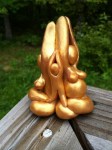
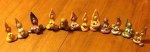
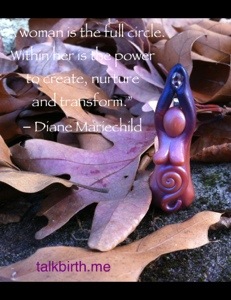
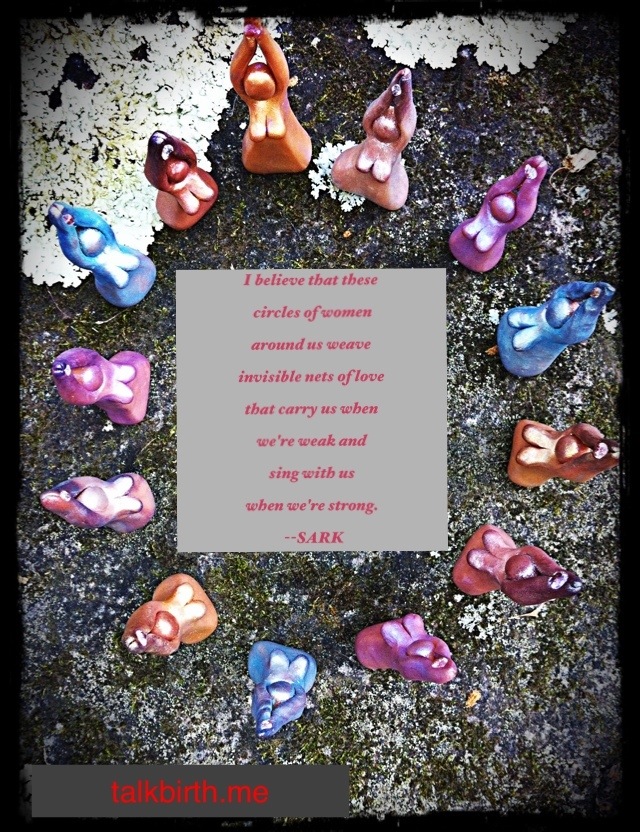
I also finally used one of my favorite quotes for women’s circles and a picture of a set of new sculptures that I made this weekend and turned it into a little shareable image. I’ve wanted to do this for a long time, but had trouble finding anything that would let me edit a picture on my phone to include words. It isn’t perfect, but it is my first attempt!
20121023-152429.jpg
And, I thought of my own past posts…

Thoughts about a birth blessing and more

“…May we see and hear women. May we witness them in the act of living, of birthing, of struggling, of triumphing. In surrender and in self-doubt. In exultation and joy. May we hold that space for her story. May we listen well and wisely.” (Molly Remer)

Thoughts about being a “birth warrior“…

“I was surprised to find myself connect with the birth warrior metaphor in labor. Shortly after my first baby was born, I turned to my dear friend who had been present and said, “I feel like I’ve been in a war…”

Thoughts about those sweet, delicate, precious moments of waiting to inhale

Thoughts of the sweet, sticky, beautiful, and simultaneously soul-crushing and soul-expanding experiences of early postpartum

I hope all of the women I know who are giving birth in the upcoming season discover that, as Sheila Kitzinger said, “Birth isn’t something we suffer, but something we actively do and exult in.” (from promo for One World Birth)

And, that while, “Women are as nervous and unsure of themselves as ever, and they need to learn to trust their bodies. Birthing is much more that eliminating pain. It is one of life’s peak experiences.” (Elisabeth Bing)

Happy Birthing Days, Mamas!

(P.S. This is an experiment with writing a short post! How’d I do?!)

What If…She’s Stronger than She Knows…

“When I dare to be powerful–to use my strength in the service of my vision–then it becomes less and less important whether I am afraid.”

Audre Lorde

As I was writing about shifting the “what if” dialogue of birth to “positive” anticipation rather than fear, another spin on the relationship between pregnancy, birth, womanhood, and what ifs began to emerge for me. I thought about the what ifs that crawl out of our dark places and lodge in our hearts. The what ifs that snake around the edges of our consciousness in the early hours of the morning. The what ifs we try to push down, down, down and away. The what ifs that stalk us. The what ifs so very awful that we fear in giving voice to them, we might give life to them as well.

We may feel guilty, ashamed, negative, and apologetic about our deepest “what ifs.” We worry that if we speak of them, they might come true. We worry that in voicing them, we might make homebirth or midwifery or whatever look bad. We don’t want to add any fuel to the fire of terror that already dominates the “mainstream” birth climate. And, we don’t want to lose “crunchy points.” We want to be blissfully empowered, confident, and courageous. And, guess what? We are. Sometimes that courage comes from looking the “what ifs” right in the eye. Sometimes it comes from living through them. My most powerful gift from my pregnancy with my daughter, my pregnancy-after-loss baby, was to watch myself feel the fear and do it anyway. I was brave. And, it changed me to learn that.

What if we can learn more from our shadows than we ever thought possible? There is power in thinking what if I can’t do this and then discovering that you CAN.

“It is so easy to close down to risk, to protect ourselves against change and growth. But no baby bird emerges without first destroying the perfect egg sheltering it. We must risk being raw and fresh and awkward. For without such openness, life will not penetrate us anew. Unless we are open, we will not be filled.”
–Patricia Monaghan

I also thought about an experience I had recently at a gathering of midwifery supporters. It was an interesting and insightful presentation about language and the impact on birth. The woman speaking urged us to talk in “positive” ways about birth, to use “positive” words and to avoid “negative” stories. As I listened to her, I thought of my own loss story and knew that my experience in giving birth to my little dead baby would likely have ranked way up there as a “negative” story. And, that bothered me. Giving birth via miscarriage to my third son was the most transformative, formative, and powerful experience of my life. He gave me many gifts, he taught me many lessons, and I am a better person than I was without that experience. So, what does it mean for women when we hide away the “negative” stories? What might we be missing by making sure we never hear about a bad outcome? I wondered what if by avoiding “negative stories,” we also miss out on powerful stories of courage, growth, and transformation…

What if she suffered and survived?
What if she danced with death and she’s still here?
What if she faced fear and held on?
What if she was scarred and broken, but she healed?
What if she hasn’t healed, but she’s working on it?
What if she grieved deeply and came out the other side?
What if she felt fear and did it anyway?
What if she was so scared and felt so weak and so helpless and yet she persevered?
What if she sacrificed her body for her baby?
What if she couldn’t keep going…and then she did?
What if she is stronger in her broken places?

In another woman’s strength, may we see our own. In another woman’s fear, our own becomes acceptable.

I have two personal experiences to share with the healing power of other women’s scars and fears. When I was in the middle of my first miscarriage and I was thinking, “how will I do this?!” the faces of other women I knew who had experienced babyloss came floating through my mind. I saw them all and I knew that if they could do it, so could I. After my own baby’s miscarriage-birth, I then made a list of these women. There were 27 names on the list. As I shared my experience and came to know other women’s stories and as multiple friends then experienced losses during that same year, the list grew to at least 40 names (personal connections, not “online only” friends).

The second story is an amalgamation of multiple encounters with in-person acquaintances. After I shared Alaina’s birth story online, in which, as part of the narrative, I mentioned various fears that went through my mind as I was in labor and then concluded with, I was still worried she was going to die until the moment I held her, I spoke with multiple women who thanked me deeply for having shared those “bad” thoughts.

When I read your story and I saw that Molly, Molly, who lives, breathes, and sleeps birth every day, still worried about those things, it healed something in me. I have been carrying around guilt about my own birth experiences. Feeling like I didn’t ‘trust birth’ enough, like I didn’t ‘believe’ strongly enough in homebirth. Reading your story helped me know that my thoughts and worries were okay after all and that I wasn’t a ‘bad mom’ for having fear…

What if I’d been careful to keep anything “negative” out of my story?

“When one woman puts her experiences into words, another woman who has kept silent, afraid of what others will think, can find validation. And when the second woman says aloud, ‘yes, that was my experience too,’ the first woman loses some of her fear.”

–Carol Christ

I first came across the phrase “worry is the work of pregnancy” in my most favorite of birthing books, Birthing from Within by Pam England. I’ve noticed that women often feel like they shouldn’t have worries during pregnancy and that talking about their fears is somehow “dangerous” (like it will make the fear come true). Bringing fear out into the open and “looking at it” instead of keeping it tucked away and bothering you is actually one of the best ways to work with it. Another common concern is that your worries are “silly” or unfounded. It is okay to have worries, even “silly” ones. The strategy Pam suggest for exploring your worries is as follows:

Explore each worry with questions:

° What would you do if this worry /fear actually came true?

° What do you imagine your partner and/or birth attendant would do/say?

° What would it mean about you as a mother if this happened?

° How have you faced crises in the past?

° What, if anything, can you do to prepare for, or even prevent, what you are worrying about? What is keeping you from doing it?

° If there is nothing you can do to prevent it, how would you like to handle the situation?

(For more see: Tracking your Tigers: Effects of Fear on Labor)

During my pregnancy with Alaina, I actually took some time one night to let myself mentally walk through the worst-possible-outcome scenario. I let myself see/feel it all. I’d become tired of stuffing it down and blocking it out and decided to get it out and look it right in the eye. It was amazing how letting the fear wash through me completely, lessened its power and influence.

As I’ve previously written, I’ve also come to realize that despite the many amazing and wonderful, profound and magical things about birth, the experience of giving birth is very likely to take some kind of toll on a woman—whether her body, mind, or emotions. There is usually some type of “price” to be paid for each and every birth and sometimes the price is very high. This is, I guess, what qualifies, birth as such an intense, initiatory rite for women. It is most definitely a transformative event and transformation does not usually come without some degree of challenge. Something to be triumphed over or overcome, but something that also leaves permanent marks. Sometimes those marks are literal and sometimes they are emotional and sometimes they are truly beautiful, but we all earn some of them, somewhere along the line. And, I also think that by glossing over the marks, the figurative or literal scars birth can leave on us, and talking about only the positive side we can deny or hide the full impact of our journeys. What if it was okay to share our scars with each other? Not in a fear-mongering or “horror story” manner, but in honesty, depth, and truth—what if we let other women see the full range of our courage?

And, also as previously shared, during Pam England’s presentation about birth stories at the ICAN conference, she said that the place “where you were the most wounded—the place where the meat was chewed off your bones, becomes the seat of your most powerful medicine and the place where you can reach someone where no one else can.”

What if we withhold our most powerful medicine?

“The purpose of life is not to maintain personal comfort; it’s to grow the soul.”

–Christina Baldwin

“The emerging woman..will be strong-minded, strong-hearted, strong-souled, and strong-bodied…strength and beauty must go together.”

~Louisa May Alcott

What if…she’s stronger than she knows?