Archives

Book Review: The Power of Women

Tonight I realized I apparently never posted my review of The Power of Women to this blog, but instead had it only on the CfM blog. Since I love the book, I decided to remedy the situation immediately!

The Power of Women
By Sister MorningStar
Motherbaby Press, 2009
ISBN 978-1-890446-43-7
201 pages, paperback, $29.95
http://motherbabypress.com/

Reviewed by Molly Remer, MSW, ICCE
https://talkbirth.wordpress.com

Occasionally, a book comes into my life that touches me so deeply that I am at a loss for words. The new book, The Power of Women, by Sister MorningStar, is one of those rare books. A treasure. A gem. A rare jewel. A delight. These are the words that do come to mind. However, superlatives—though true—do little justice to describing the actual book.

The Power of Women is a book of “instinctual” birth stories told through the eyes of a gifted and sensitive midwife. The stories are from her perspective, not the mother’s. Each story has either a lesson to share or is a glimpse into that deep inner wisdom and strength found in birthing women that is so easily ignored or dismissed in our modern birth culture. This book is good “word medicine” and the empowering stories within it shine a light to help other women trust their instincts. This light also helps other birth professionals rediscover the magic and mystery and wonder of birth and women.

The Power of Women also touched me in a special way because the author divides her time between my own native Missouri and a birth center in Mexico. Some of the stories shared take place in each location (more from Mexico). I found it delightful to discover the power of my own Missouri midwifery activist friends represented throughout the book. Familiar names and faces graced the pages for me and it was a treat to experience that connection.

The book consists of twelve chapters, each containing 5-9 different stories each. The stories themselves are not long, narrative birth accounts, but are moments captured brilliantly for the glimpse of powerful truth they share. Some are only 1/2 page in length–but the depth in each is great. The chapters are titled things like “Stories of Power” or “Stories of Courage” or “Stories of Community and the tales shared therein are loosely bound together with that common thread.

To be clear, not all of the stories are “happy” or are necessarily “good” birth stories, some are even fairly scary and even depressing. All are powerful.

My only critique of the book, which I hesitate to share because it seems petty in light of such a beautiful and wise book, is that the formatting of the text is odd. The font size is small and the text tightly spaced with very small indents.

If you find yourself in a place where you feel trapped alone in a world where the birth you love so much is becoming a “mythological story,” read this book. If you are an aspiring or current midwife, doula, or childbirth educator and wish to deepen your understanding of birth, read this book. If you are a pregnant woman hungering to dig deeply into instinctual birth and the wisdom and power of story, read this book. The Power of Women is a powerful, touching, and magical journey.


Disclosure: I received a complimentary copy of this book for review purposes.
Midwife means “loves women”…

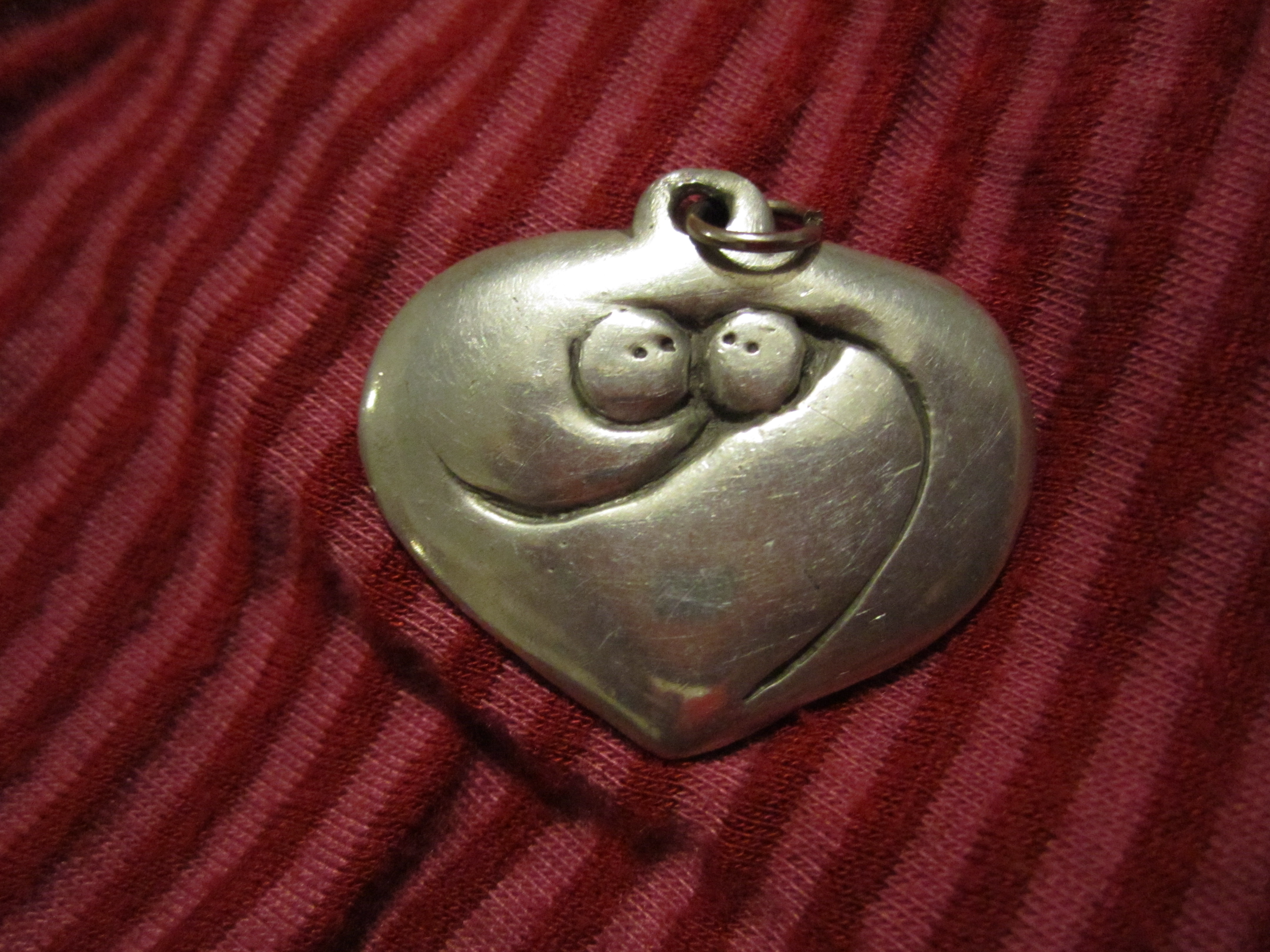
Blessingway gift from my first midwife

I know the traditional root of the word midwife is “with woman” (some sources say “wise woman”), but I’d like to offer another. When I was pregnant with my second son, I had a wonderful midwife and we spent many hours together talking about birth and midwifery. During one conversation she said to me, “you can’t be a midwife unless you love women.” This struck me profoundly—a midwife must love women. This phrase has come back up for me several times in the last couple of months as I reflect on my relationship with my current midwife and give thought to midwifery care and birth care in general. I actually believe that not all midwives do, in fact, love women and indeed, my observation is that midwives from specific religious traditions, may actually hold a perspective of women that is almost the opposite of loving them 😩

In any subset of birth work—including breastfeeding consultation—I’ve noticed there are two primary motivators for the women doing this work. For some, it is about the babies and for others, it is about the women. I have noticed this as a volunteer breastfeeding counselor also—women who do this work will say, “I just love babies…” or, they will say, “I love helping mothers.” Please note that I’m not actually saying that one motivation is “better” than another (though, I personally prefer one), just that I’ve noticed this trend. And, obviously, the two are also inextricably intertwined. But, some women do come into birth work primarily to improve the world for babies and some come into it to change the world for mothers (which, I believe, changes the world for babies!). Obviously, you’ve guessed that I’m in the latter category. I believe that we cannot help babies without helping mothers first and that by helping mothers, we cannot help but also be helping babies—but, for me, the mother comes first. And, from the perspective of both a pregnant woman and a birth activist, I think we need midwives whose definition of midwifery is loves women.

In  the Autumn 2010 issue of Midwifery Today, I read an interview with a midwife named Gigliola from Paupa New Guinea and in the article I marked this quote:

“Gigliola has a strong reverence for the power of mothers, for women who are willing to give up their lives for their children, willing to work hard through long labors, feeding their babies from their bodies, staying up nights with them, loving and loving for long years. Then as graciously as they can, watch their ‘successes’ walk off to lead their own lives. The path of motherhood is as rigorous a spiritual path as any on our planet. Gigliola holds motherhood as a sacred calling, deserving of great respect…’Tell them it is about the mothers,’ she said. ‘The mothers are amazing.’” [emphasis mine]

I agree.

Birth Quotes of the Week

Trying a new, manageable plan in which I collect my birth quotes from CfM and Talk Birth on Facebook and share them on a weekly basis, rather than trying to copy and paste months worth into a giant post the way I usually do! As always, I do appreciate a linkback if you re-share 🙂

“Childbirth calls into question our very existence, requiring an expectant couple to confront not only new life but death, pain, fear and, most of all, change.”~ Elizabeth Noble, quoting a new mother (via Midwifery Today e-news)

“I love and respect birth. The body is a temple, it creates its own rites, its own prayers
all we must do is listen. With the labor and birth of my daughter I went so deep down, so far into the underworld that I had to crawl my way out. I did this only by surrendering. I did this by trusting the goddess in my bones. She moved through me and has left her power in me.” ~Lea B., Fairfax, CA via Mama Birth)

This one is so powerful that it gives me chills to read it!

“Birth completely transforms a woman whether she considers her birth ecstatic or traumatic. Let us do everything in our power to help her make it ecstatic…” ~ Jan Tritten

“We women are the fact and flesh of connectedness.” –Grace Pauley & Ynestra King

“Whatever way birth happens, it is your rite of passage into motherhood, and that passage is to be celebrated. Natural childbirth is a passage, cesarean birth is a passage, and birth with an epidural is a passage to be celebrated. That passage cannot be taken away from you. Every mother’s birth experience is valid, and an act of courage.” –Ananda Lowe (The Doula Guide to Birth)

(Shared in honor of a special friend 🙂

“It is not only that we want to bring about an easy labor, without risking injury to the mother or the child; we must go further. We must understand that childbirth is fundamentally a spiritual, as well as a physical, achievement. The birth of a child is the ultimate perfection of human love.” ~Dr. Grantly Dick-Read, 1953

“We can make a woman have contractions, but we don’t always succeed in forcing her body to release the baby and give birth. If we start a labor with chemicals, we may very well have to finish it with a surgeon’s scalpel.” – Gail Hart, Midwife (via Dalai Mama Professional Placenta Escapsulation)

“When you change the way you view birth, the way you birth will change.” ~Marie Mongan, Hypnobirthing

Giveaway: Great Gals Book/Journal

This giveaway is now closed. The winners were Jodi and enjoybirth!

GREAT GALS: Inspired Ideas for Living a Kick-Ass Life by cartoonist Summer Pierre is a creative and fun combination of journal prompts, journal pages, quick quizzes, inspirational quotes, black and white art, and mini-bios of dozens of amazing women, both past and present. You can use the book for journaling, doodling, exploring your creativity and your thoughts, but you can also use it for a quick dose of women’s wisdom and inspiration. The women profiled range from Cyndi Lauper to Lucille Ball to Emily Dickinson to Ani DiFranco to Julia Child making this book just plain awesome. As the press info notes, this is NOT “your typical inspirational women’s journal”—the goal is empowerment and honest, assertive self-exploration. It would make a fun holiday gift for any woman, young or old, who is interested in living a powerful life.

Luckily for you, I am able to offer TWO copies of Great Gals as a giveaway this month! To enter, just leave a comment telling me which woman in the world—past or present—you find the most inspirational. I will draw winners via random number generator next Wednesday at 9:00. For an extra entry, you can share this giveaway via Facebook and then post a separate comment letting me know you did so.

You can watch a trailer for Great Gals here and you can check in with the author/illustrator via her website.

More About Self-Care

I recently shared a little about my desire to step up my self-care/self-nurturing at this point in my life and some time ago I shared a guest post from RenĂ©e Trudeau about balanced living and saying no (I need to re-read this!). I greatly enjoy RenĂ©e’s free monthly self-care teleclasses based on her book, The Mother’s Guide to Self-Renewal–-somehow, they always contain exactly what it is I need to hear at that moment. Anyway, I’m pleased to have another guest post to share from RenĂ©e today.

——————–

Self-Care: My Best Friend

by Renée Trudeau

Recently, I spoke to a wonderful group of about fifty women in their 30s-50s from the National Charity League about the Power of Self-Care. It’s a really cool group of mothers and daughters who work together to support their communities through various social service projects.

When I asked how many women in the room were familiar with the concept of self-care (read more from my newsletter on this topic), only one woman raised her hand.

As much as I want to believe that this concept—which has been popularized by self-care advocates Jennifer Louden, and Cheryl Richardson in the 80s and 90s—has become mainstream, I was reminded that we still have a long way to go before people believe that it’s not only our birthright to nurture and nourish ourselves, it’s our responsibility to do so.

When I was first introduced to the concept of self-care: taking time to fill my cup first, before helping others, it seemed strange and foreign. Almost like something else to put on my “to do” list. But as I started to slow down and practice more self-acceptance, release a lot of my controlling behavior and perfectionism, begin to really listen to my body and spirit and enjoy spending time with my sweet self, my life began to change radically.

I felt like I had come home. Like this was *really* the way we are supposed to live.

I now realize that being open to and ultimately, embracing self-care was the single biggest thing I have ever done to positively and profoundly change my life.

And the journey keeps shifting and changing. You don’t “get it” and you’re done. It keeps evolving and unfolding. And the more you love and accept yourself, the more in touch with your physical/emotional/spiritual needs you become.

I often have moments in my life when I pause and realize how drastically different my days are now than they were ten years ago (before self-care).

I used to push myself really hard. I used to barrel through to-do lists (I was a master at efficiency and took pride at how much I used to be able to get done—anyone relate?). I was way too focused on “doing” and not very focused on “being.”

The other day, I had a challenging day emotionally and a lot on my plate. Realizing this, I went to a noon yoga class instead of an intense early morning weights class. I made sure I ate foods that made me feel great. I let some things go, so I could take a short rest before my speaking engagement last night. And, since I didn’t have much time to prepare before this event, I allowed myself to deliver a ‘good is good enough” speech, knowing that there wouldn’t be much time to prepare for the talk (which by the way, received rave reviews).

During stressful times—like the current economic crisis our nation is experiencing—it’s more important than ever to take time to nurture ourselves. (Read my latest Career Management Newsletter on tips on navigating your career/life during uncertain times.)

I received two calls from national companies recently to speak to their employees about balance/self-renewal.
I think we’re all starting to get that when our environment and things around us get really crazy, we have nowhere else to go, but within.

Baby steps. I’ve been working on my self-care practice for 9 years. And, I still have a long way to go.

BIO:
RenĂ©e Peterson Trudeau is a nationally-recognized life balance expert/coach. Trudeau’s work has been featured in US News and World Report, Working Mother, American Way, Family Circle, Good Housekeeping and numerous business publications and consumer media. Trudeau is the author of the award-winning The Mother’s Guide to Self-Renewal: How to Reclaim, Rejuvenate and Re-Balance Your Life. Thousands of women around the U.S./Canada are starting and joining Personal Renewal Groups based on the Guide, as a way to enhance balance and well-being in their lives.  Learn about her next free Live Inside Out teleclass or her upcoming self-renewal retreats at www.ReneeTrudeau.com/calendar.

Why, indeed?

On the ICEA Facebook page today, the question was posed, “why did you become a childbirth educator?” I responded with the following: because I care deeply about women’s issues, social justice and social change and I feel like women’s choices in childbirth are intimately entwined with this. Because I believe peace on earth begins with birth. Because the births of my own sons were the most powerful and transformative events of my life. And, because I believe every woman should have the opportunity to feel and know her own power and to blossom into motherhood with strength, confidence, and joy. ♄

Some time ago, I wrote a short essay on why I became a childbirth educator that was one of the winners in a contest held by Passion for Birth. I realized as I was thinking about the ICEA question that I’ve never shared that post on this blog! (where it quite naturally belongs!) Here it is:

On a discussion board once, someone asked the question “what’s at the root of your love of birth?” I was still for a moment and let my intuitive, heart-felt, gut level response come to me and it was this:

Women.
Women’s health, women’s issues, women’s empowerment, women’s rights.

Social justice.

And, that feeling. The “birth power” feeling–-that laughing/crying, euphoric, climbed-the-mountain, glowing, rapture
feeling. The transformative, empowering, triumphant, powerful, I DID IT, feeling.

I want each woman to have the chance to experience that transforming power, that sense of personal accomplishment, the increased self-esteem, and the euphoria of knowing “I did it!” I climbed my mountain, I ran my marathon
I gave birth to MY BABY! I want all women to have the chance to experience that and this is why I became a childbirth educator.

I have a long time interest in women’s health and women’s issues. In 2001, two years before the birth of my first baby, I started reading avidly about pregnancy and birth and became instantly captivated by natural childbirth as powerful experience for women and also fascinated by the erosion of women’s rights in the birthplace. I first sent for information

My oldest son at 2.5 and my 37-weeks-pregnant-with-second-baby belly 🙂

about becoming a childbirth educator that year, but decided that I should wait to become one until I had a baby of my own (seemed like the most important first “credential” to me). My son’s birth is 2003 was a triumphant and empowering experience for me and lit my fire to become certified—I wanted to share the transformative potential of birth with other women. I became provisionally certified in 2005 and fully certified in 2006. The birth of my second son at home in 2006 further solidified my commitment to healthy birth education. I continue to teach because of the root reasons cited above as well as for the tremendous satisfaction I feel when a mother tells me that her confidence in giving birth has dramatically improved and that “I’m actually looking forward to it now—like an adventure!” I believe that a confident, normal birth sets the stage for confident, empowered parenting. The sense of accomplishment and satisfaction women experience in birth starts them out on the “right foot” on the lifelong journey of motherhood.

I view my birthwork almost like a tree, with women as the roots, pregnancy as the trunk, (the journey) and then blossoming beautifully in that birth-power feeling.

Prior why I care post and a why I do what I do post.

Call for contributions: personal birth stories for new booklet on birthing positions

I received an email this weekend from a woman who is writing a booklet about birthing positions (non-profit and free for distributing when finished!). She is seeking contributions of birth stories to use in the book. Below is her message:

———————-

My name is Megan Layton. I have a strong interest in Women’s Health, current issues in obstetrics, as well as the cultural perceptions towards childbirth in general.

As well as being a Missouri native, a supporter of midwives and a woman’s right to an active role in childbirth, I am also a graduate student at the School of the Art Institute of Chicago. Currently I am working on a small, illustrated publication that focuses on birthing positions. The small book will be informative, fun, attractive, and free for distribution and copying. It is my intent to emphasize a woman’s choice during labor and childbirth, and not advocate for any particular position, provider, or setting, but merely convey the options available as well as the potential for birth to be a profound, empowering experience.

Part of the booklet will be first hand accounts of birth—oral histories from women who have had many different birthing experiences.

This is the reason I write to you: to ask that you share this with women who would be willing to share their personal stories, as well as any advice they could give to a woman who is about to experience childbirth for the first time.

Long or short, joyous or rational, funny or sad–any and all stories are welcome, and will be greatly appreciated. At the end of reviewing the narratives, I will ask those women whose stories best suit the publication for permission to use them. As well, I will send copies to all those who graciously allow me to reproduce their words.

All stories, narratives, and questions can be emailed via this link.

—————————

It sounds like a wonderful project to me!

It also reminded me of my previous postings about how to use a hospital bed without lying down. I tell all my clients if they remember only ONE thing from my classes, it is see the hospital bed as a “platform” and a tool in their toolbox—NOT as a place to lie down!

And, here are links to my own birth stories (each which involved freedom of movement during labor as an integral piece!)

First son’s birth (at freestanding birth center): https://talkbirth.wordpress.com/2009/02/25/my-first-birth/

Second son’s birth (at home): https://talkbirth.wordpress.com/2009/02/25/my-second-birth/

Third son’s birth (miscarriage at home at 15 weeks): https://talkbirth.wordpress.com/2010/05/03/noahs-birth-story-warning-miscarriagebaby-loss/


Book Review: Living without Reservations

Book Review: Living without Reservations

By Barbara Singer
Hear Me Roar Press, 2020
ISBN 978-098-432540-5
softcover, $18.95

http://www.barbaraelainesinger.com

Reviewed by Molly Remer, MSW, CCCE

A spirited tale of personal adventure, Living without Reservations is a travel memoir written by a woman who at age 44, “quits” her life and sees the world. Marketed as The Secret meets Eat, Pray, Love, Living without Reservations explores Barbara Singer’s journey of self-discovery.

Left adrift after a series of life changes (daughter to college, divorce, death of fiancĂ©), Barbara decides to start, “collecting experiences rather than things” and that she never wants to be someone who dreams of “someday,” but never actually follows her dreams. Her first trek is a cross country drive to Alaska with her father in a small RV. After Alaska, she lives and works for a time on a small island and then sets off by sea as first mate on a private sailboat. She and her traveling companion spend over 3 months sailing from port to port in the many small islands of the Bahamas, British Virgin Islands, and the Dominican Republic. After the sailing expedition, she travels to her beloved Italy. Living in a small village in Tuscany (and later in Florence), she studies Italian, enjoys a slow-paced life, and meets a handsome Italian winery owner. A somewhat strained relationship with her daughter is a substory that lends a humbling element to the exhilaration and excitement of Barbara’s travels,

Though a postscript minimally address her financial situation (not a “trust fund baby”), it remains unclear how her trips are financed or how realistic the suggestion to “just do it” is for the average person. However, there is a helpful section available on her website with ideas and tips on how you, too, can “quit your life.”

While on ongoing refrain of, “I’m the luckiest girl in the world,” started to get on my nerves a little by the end of the book (you’re not a “girl,” you’re a woman!), Living without Reservations is an engaging and inspiring memoir with heart, courage, honesty, and passion.

Disclosure: I received a complimentary copy of this book for review purposes.

Like one full moon…

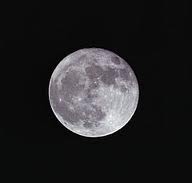
Last week, I hosted a blessingway/mother blessing ceremony for a friend who is preparing for her second baby. This was the first time we’ve ever had a ceremony at night and something new that we did that turned out nicely was to go outside in the dark and plant our “wish seeds” for our friend, her baby, and her birth (we used the wish seeds—one word wishes—first to sing our Call Down a Blessing blessingway song). I had chosen a reading to read during this time and in a stroke of wonderful coincidence, the moon out that night was nearly full. It was a perfect, unplanned accompaniment to the reading. The reading comes from the book Wild Girls by Patricia Monaghan and was originally written by a nine year old girl. I modified it slightly for this occasion:

We are all Feminine, together.

We may be full of anger,

We may be full of joy,

We may be full of secrets,

We may feel fresh as fruit,

We may feel a sense of new life,

We may feel peaceful,

We may all feel different from one another,

But we are all here together

Like one full moon.

Book Review: Survivor Moms


Book Review: Survivor Moms: Women’s Stories of Birthing, Mothering and Healing after Sexual Abuse

By Mickey Sperlich & Julia Seng
Motherbaby Press, 2008
ISBN 978-1-89-044641-3
245 pages, softcover
http://www.midwiferytoday.com

Reviewed by Molly Remer, MSW, CCCE

Past sexual abuse is an unfortunately common experience for women. Anyone who works with women of childbearing age should be mindful and informed of the effects of an abuse history on the woman’s experience of pregnancy, birthing, and mothering. Indeed, I consider this awareness to be a fundamental professional responsibility. Enter Survivor Moms, published by Motherbaby Press. This book is an incredibly in-depth look at the experiences and need of survivors of sexual abuse during the childbearing year.

One of the best and most unique features of the book is the “tab” format used for much of the clinical, research-based, or fact-based content in the book. Rather than lengthy chapters reviewing research and analyzing the phenomenon, textboxes containing quick facts and reference material are printed in the margins of many of the pages. The bulk of the narrative information in the main body of the text is then in the voices of mothers themselves, interspersed with commentary by the authors linking concepts, explaining ideas, and clarifying essentials. This is a powerful format that makes information readily and quickly available for reference as well as making the overall book very readable and approachable.

As someone with no personal abuse history who is currently pregnant, I did find the book to be a very emotionally difficult, intense, and almost overwhelming read at times. This is not a criticism in any way—sexual abuse is not a light or cheerful topic and it can be one that many people prefer to avoid. This is all the more reason for birth professionals to make a specific effort to be educated and informed.

Written both for mothers themselves and for the professionals who work with them, Survivor Moms is an essential part of any birth professional’s library. As noted in the book’s introduction, “We need to understand the impact of childhood abuse on birthing and mothering deeply, from hearing women’s stories. We also need to understand it broadly—from looking at the impact on samples and populations, on the body and on the culture.” Survivor Moms offers an accessible way of hearing those critically important stories and developing the necessary understanding to care compassionately for birthing women.


Disclosure: I received a complimentary copy of this book for review purposes.