Helping a Woman Give Birth?

“One cannot actively help a woman give birth. The goal is to avoid disturbing her unnecessarily.”

– Michel Odent

I shared this quote on my Facebook page and it generated enough comments that I feel it is worthy of a blog post of its own! My original thought upon sharing the quote was this:

I’m not actually sure what I think of this quote–-isn’t it possible to actively help a woman to give birth?! I’m thinking of doulas, whose active support and hands-on loving care sometimes makes the difference between having a labor that “progresses” and one that results in a cesarean (because mother has been lying in bed hooked up to monitors—though, that would invalidate the second part about not disturbing her…)

It is true that no one can physically do it for her, but the “active” word confuses me, because I believe one can take an “active” role in a birth and that it is possible for that to NOT be a bad/disturbing role, but to be a sustaining role…

A commenter on the CfM page shared her excellent  interpretation: “I believe what Michel may be saying here is that no one can do the work of a woman’s body. We can support her emotionally/physically but we need try to avoid other disturbances such as medical interventions, speaking during contractions, a disruptive atmosphere, etc.” Perhaps I personally became too hung up on the word “active” and did not pay enough attention to the words “avoid disturbing,” which is really the crux of the matter. And another commenter added this: “No one can do the miraculous job of a woman’s body in labor when left to do what it’s going to do. That being said, I birthed with my midwife and my sister as my doula. No one touched me and I needed nothing other than an occasional, ‘you’re doing great.’ had I had anymore of a difficult labor I’m sure the supporters I had in place would’ve been as hands on as I needed them to be!

And, I really agreed with this point from another person who said: “Although this may be true about one woman or even most women, it shouldn’t be stated as such a generalization, because some women really DO need active help, whether it be emotional, spiritual, or physical.” This comment echoed my own thoughts. I do not actually have the context for his quote, so I’m not sure what he may have gone on to say after it, but I think it is awfully “rigid” in its own way (it is just the reverse of the type of rigidity that we so often see from medical providers!)

Personally, I’m a hands-off birther and have no interest in people “supporting” me actively (other than my husband) as well as wanting no one to talk to me during birth, but having heard some challenging birth stories lately where it really seemed like the women were being “undisturbed” when they really could have benefited from some hands on/active help, I am pondering lately the role of “help” in birth and when not-disturbing can become neglecting. I think it is possible to be so invested in one’s own dogma and philosophy about natural birth that we can continue sitting on our hands when more active assistance is useful. I’m not talking about emergency situations here—I have yet to meet a midwife who didn’t respond quickly and appropriately in an emergency—I’m talking about the “variations of normal.” The really long labors, the slightly malpositioned babies, the mothers who experience an extra level of pain above the seeming “norm,” the women who become exhausted and just need something else—it doesn’t necessarily need to be a medical intervention or something drastic, but it does need to be something from outside herself, because her own resources are tapped. I have heard two beautiful, strong, wonderful women’s stories of cesareans recently that have prompted these thoughts—the stories were eerily similar even though the women do not know each other, gave birth in different towns, and had different midwives. In both the stories the element that seemed like it was missing to me—and, yes, I know deeply and truly that “a million factors, seen and unseen” [Pam England] go into a woman’s unfolding experience of birth and that it is almost impossible to “deconstruct” the event with full accuracy postpartum—but what was missing to my ears, was that element of hands-on, semi-directive active support and suggestion making. There are a wide variety of “tricks” that can be tried rather than waiting until a mother is completely depleted and then moving to a transfer and a cesarean.

Maybe some of these tricks might seem too “hands on” for some and, yes, they are mildly, or even significantly interventive (I’m thinking here of all the little methods of turning a malpositioned baby, up to and including, manual rotation of the baby’s head—yes, this may be more hands-on and disturbing than we would like in an ideal world, but—duh—isn’t a cesarean even more so?!). Can a midwife be so attached to a specific mode of hands-off, knitting-in-the-corner-care that she neglects to step it up a notch and try some of those model-bridging techniques? While I deeply believe in the knitting-in-the-corner approach and that is all I feel I need with my own births and that is also what many women need, I also know from the power of story that some women do need an additional level of care—a “bridging” level. Something not as dramatic as a hospital intervention, but something more than, “some labors are long, keep going.” My thoughts about a bridge reminds me of a friend of mine who was able to be helped immediately postpartum with a pitocin injection rather than having to transfer to the hospital, while another friend—lacking anyone appropriately trained to call in—had to transfer. It also reminds me of my own experience being helped by a midwife six days following my third birth (second trimester miscarriage), after I discovered the placenta was still being held in my body via some membrane through my cervix. The only option the medical model was able to offer to me was to go to the ER for a D & C. However, a midwife (with whom I had no prior relationship, but who was called in by a midwife I do know) was able to gently twist it loose and remove it—yes, this was indeed “hands on” and a small intervention (as well as uncomfortable), but it was just the “bridge” between types of care that I desperately needed and for which I remain intensely grateful!

There can be a specific element of “smugness” within the natural birth community that has been gnawing at me for quite some time. A self-satisfied assumption that if you make all the “right choices” everything will go the “right way” and women who have disappointing or traumatic births must have somehow contributed to those outcomes. For example, I’m just now reading a book about natural mothering in which the author states regarding birth: “Just remember that you will never be given more than you can handle.” Oh, really? Perhaps this is an excellent reminder for some women, and indeed, at its very core it is the truth—basically coming out alive from any situation technically means you “handled it,” I suppose. But, the implicit or felt meaning of a statement like this is: have the right attitude and be confident and everything will work out dandily. Subtext: if you don’t get what you want/don’t feel like you “handled it” the way you could or “should” have, it is your own damn fault. How does a phrase like that feel to a woman who has made all the “right choices” and tried valiantly to “handle” what was being thrown at her by a challenging birth and still ended up crushed and scarred? Yes, she’s still here. She “handled it.” But, remarks like that seem hopelessly naive and even insulting to a woman whose spirit, or heart, has been broken. By birth. Not by some evil, medical patriarchy holding her down, but by her own body and her own lived experience of trying to give birth vaginally to her child.

Of course, even as I’m having all these thoughts, I read a very disturbing story about a “power birth” experience in which the mother experienced very violating hands-on care involving an intense and violent amount of manual cervical dilation from a homebirth midwife. Maybe the midwife’s perspective was that she was providing the bridge I speak of, but that was NOT what the mother experienced.

And, then this afternoon I read a very thought-provoking post about birth rights, in which the author makes the point that, “Actually the natural birth paradigm, and its paraprofessions, are patriarchal. ‘Empowering women’ is by definition patriarchal because there is an assumption she isn’t already empowered.” There is a reason I chose “Celebrating Women” as my tagline/motto rather than “Empowering Women” and that is because I share the sentiment—I believe birth is an empowering event in women’s lives, but that outside people can’t do the “empowering” for her. I believe education and information are empowering also—when the woman seeks it out and integrates the information into her own being and her own “right way.” However, what I want to do is celebrate women—because they are already super awesome cool and worthy of celebration just as they are 🙂 The blog author also points out something interesting: “A childbearing woman’s locus of control firmly placed, by mommy-businesses, outside of the woman herself, and into the hands of western medicine model, or the natural birth model. There is a paradox in both paradigms. And our women suffer. And our girls need a future.”

When we replace medical experts with “natural” experts, the result is the same—the woman herself is not the power source and she tends to credit other people (or methods) with her own “success” (or with her own feelings, period).

However, the blog post also states: “I can say this: if I am lucky enough to be alive when my daughter, Miles, pees on the stick, I will go with her to the abortion clinic, to the elective c-section, to the pump-station, to the OB, to the midwife, to the hospital, to the shrink for meds, to the ends of the earth without judging her, without comment, without interference, but with witnessing energy of my ancestors, of all the women who faced the dilemma of life and death the moment they realize the full scope of reproductivity. That, is her birth right.” I do not actually agree that without comment is the best approach, because women are very powerfully influenced by a variety of forces around them. If natural birth proponents keep their mouths shut or act like all choices are “equal” choices, then that is actually withholding information from women and denying her the opportunity for fully realized decision making based on her own heart and her own needs. (I wrote some more about this theme—why birth activists should not stop sharing their stories—in a post a couple of months ago: Conclusions About Listening.)

I know I’ve meandered through several ideas in this post and maybe I’ve come around to a different point or subject than I initially began with, but these are the kinds of things that are on my mind during my “free time” this holiday season! I want to close tonight with a relevant, integrating quote from Elizabeth Noble in her Childbirth with Insight book:

“Birth is always the same, yet it is always different. Like a sunset, the mystery is also the appeal to those who get up in the middle of the night to attend laboring women. While the sequence of birth is simple, the nature of the experience is complex and unique to each individual. No matter how much any of us may know about birth, we know nothing about a particular labor and birth until it occurs.” (emphasis mine)

And, I would add, even after the birth maybe we don’t know as much about it as we think we do. Truly, in the end, each birth remains a unique mystery. A journey of its own. And, women have the right to define their own experiences in their own ways.

Story Power

“The universe is made of stories, not of atoms.” –Muriel Rukeyser

I have written before about the role and power of story and birth and I have an article pending publication on the same subject. In a not-about-birth anthology I finished recently (The Politics of Women’s Spirituality), I read the following from Carol Christ:

Women’s stories have not been told. And without stories there is no articulation of experience. Without stories a woman is lost when she comes to make the important decisions of her life. She does not learn to value her struggles, to celebrate her strengths, to comprehend her pain. Without stories she cannot understand herself. Without stories she is alienated from those deeper experiences of self and world that have been called spiritual or religious. She is closed in silence. The expression of women’s spiritual quest is integrally related to the telling of women’s stories. If women’s stories are not told, the depth of women’s souls will not be known.

While she is writing about women’s spirituality, I think what she says is very true of birth as well—if women’s birth stories are not heard, the depth of women’s experiences will not be known (and the birth machine will keep on rolling). I also hear women apologize for telling their birth stories “over and over” or, “for continuing to talk about this.” BUT, I believe that telling the story over and over is how we process and integrate the story into our lives. It is how we make it our story and integrate the lessons from it as well as making it make sense within in the context of the rest of our lives as women. Without telling the story in this manner, there is a gap left behind (or, sometimes a wound). Telling the story multiple times does not indicate “stuckness”—on the contrary, not telling the story leads us to a “stuck” place (I think I get this idea from Pam England, but I’m not completely sure).

So, as long as we’re talking story, my favorite books of birth stories are:

The Power of Women by Sister Morningstar

Simply Give Birth by Heather Cushman-Dowdee

Journey into Motherhood by Sheri Menelli

Adventures in Natural Childbirth Janet Schwegel

And, my own birth stories are available too:

My first son’s birth story is available here.

My second son’s birth story is available here.

My third son’s birth story is available here (warning: miscarriage/baby loss).

—–

On a somewhat related note—this time not about sharing stories, but of hearing too many other voices—I did just enjoy reading a blog post from Jennifer Louden called “static free authenticity” that describes something I complain of feeling:

Humble suggestion number one: Turn off Everyone Else’s Broadcast
When it feels too hard to hear you among all the other yous out there, you aren’t suffering from multiple personality disorder, but you may need an Internet fish bowl break.

I say “fish bowl” because everyone’s voices and big plans and ideas can create a sort of invisible fish bowl that hems you in – without you necessarily noticing it.

I describe it as being so filled with the voices of others that it is difficult (or impossible) to hear the still, small voice without. Or, alternatively (when thinking of my own written contributions to the world) as contributing to the neverending cacophony of voices clamoring to be heard.

Speaking of Jen Louden, in another post (this one about depletion), she quotes a woman as saying: “Women get into a cycle of depletion and they’re afraid to step out of it, because then they would be freed up to actually take action on what they really want. They are positive they won’t be able to create their heart’s desire. So they stay busy or scattered or overcommitted so they never have to try.

I see a lot of truth in this also.

Book Review: The Power of Women

Tonight I realized I apparently never posted my review of The Power of Women to this blog, but instead had it only on the CfM blog. Since I love the book, I decided to remedy the situation immediately!

The Power of Women
By Sister MorningStar
Motherbaby Press, 2009
ISBN 978-1-890446-43-7
201 pages, paperback, $29.95
http://motherbabypress.com/

Reviewed by Molly Remer, MSW, ICCE
https://talkbirth.wordpress.com

Occasionally, a book comes into my life that touches me so deeply that I am at a loss for words. The new book, The Power of Women, by Sister MorningStar, is one of those rare books. A treasure. A gem. A rare jewel. A delight. These are the words that do come to mind. However, superlatives—though true—do little justice to describing the actual book.

The Power of Women is a book of “instinctual” birth stories told through the eyes of a gifted and sensitive midwife. The stories are from her perspective, not the mother’s. Each story has either a lesson to share or is a glimpse into that deep inner wisdom and strength found in birthing women that is so easily ignored or dismissed in our modern birth culture. This book is good “word medicine” and the empowering stories within it shine a light to help other women trust their instincts. This light also helps other birth professionals rediscover the magic and mystery and wonder of birth and women.

The Power of Women also touched me in a special way because the author divides her time between my own native Missouri and a birth center in Mexico. Some of the stories shared take place in each location (more from Mexico). I found it delightful to discover the power of my own Missouri midwifery activist friends represented throughout the book. Familiar names and faces graced the pages for me and it was a treat to experience that connection.

The book consists of twelve chapters, each containing 5-9 different stories each. The stories themselves are not long, narrative birth accounts, but are moments captured brilliantly for the glimpse of powerful truth they share. Some are only 1/2 page in length–but the depth in each is great. The chapters are titled things like “Stories of Power” or “Stories of Courage” or “Stories of Community and the tales shared therein are loosely bound together with that common thread.

To be clear, not all of the stories are “happy” or are necessarily “good” birth stories, some are even fairly scary and even depressing. All are powerful.

My only critique of the book, which I hesitate to share because it seems petty in light of such a beautiful and wise book, is that the formatting of the text is odd. The font size is small and the text tightly spaced with very small indents.

If you find yourself in a place where you feel trapped alone in a world where the birth you love so much is becoming a “mythological story,” read this book. If you are an aspiring or current midwife, doula, or childbirth educator and wish to deepen your understanding of birth, read this book. If you are a pregnant woman hungering to dig deeply into instinctual birth and the wisdom and power of story, read this book. The Power of Women is a powerful, touching, and magical journey.


Disclosure: I received a complimentary copy of this book for review purposes.

I AM doing this!

When my doula came for a visit a couple of weeks ago and we were talking about birth plans and also about fears, we addressed that some women who have experienced pregnancy losses have difficulty “letting go” of the baby and actually pushing the baby out—feeling like they want to keep the baby safe with them. I told her that I envision this baby being born very quickly—partially because I have a history of fast births, but partially because I have feared throughout my pregnancy that she is not safe inside and I want to get her out into the world where I can hold her and see her. I felt very emotional saying this out loud, because before my losses I felt absolutely certain that my body was doing a good job keeping my babies safe and I trusted its wisdom in doing so.  However, during this conversation then I also realized, “but, we’re doing it, the fact that we’re here right now shows that I am keeping her safe.”

Early in November I posted a 28 week pregnancy update and in that post I talked a little bit about this same body-trust fear (the lingering what ifs about the cause of my losses) and Molly from the the blog First the Egg commented on my post saying something that touched me deeply and that has lingered with me ever since then as a very, very, very important reminder. She drew a parallel between the classic doula response to the birthing woman’s “can’t do it” comment—“You ARE doing it”—and my own current experience. I am doing it. Regardless of how I might feel, fears, etc., the proof is right there every day—I AM doing this. She is growing and kicking and breathing and hiccuping and I’m living and loving along with her. I have brought this phrase to mind many times since Molly commented on my post and I really thank her for the simple reminder 🙂

Speaking of birthing plans, I’ve officially started working through the Hypnobabies home study program. I have to confess that it feels very strange to be “taking” a childbirth class after all this time of teaching childbirth classes, especially because I feel philosophically certain that there IS no “right way” to give birth and that women do not need “methods” to give birth, they need to trust their inner resources and give birth in an environment  of freedom that lets those inner resources bloom. However, I’ve been curious about Hypnobabies for a long time and now is my final chance to try it out! The scripts are very potent and I’m surprised by how very, completely, totally relaxing it is to listen to them—I look forward to listening as a “break” in the day and in my thoughts, etc. It is remarkable how relaxed I become in listening to them. And, when I “come back” I feel amazingly refreshed and rested. It is pretty cool. I also really like the Joyful Pregnancy Affirmations CD and have listened to that periodically for several months now (it was the weekly class work and script practice that I just started last week at 34 weeks).

I do have two “issues” with the program and we’ll see how they play out as I continue. The emphasis on “calm, peaceful” birth is challenging to reconcile with what I actually believe, experience, and truly enjoy about birth—I feel like birth is a very active process. It isn’t something to be taken “lying down.” It is a rite of passage and transformative event and not something I want to appear to “sleep” through because I’m so relaxed—-birth is something I do, not something that happens to me as I quietly relax in my “special place.” I feel like some of the information from Hypnobabies contributes to a “dissociated” or blocked out participation in birth, rather than a fully engaged, active participation. I do not mind the “out of control,” laborland, altered-state-of-consciousness, wild reality of birth—in fact, I value and cherish that and I would hate to miss the glorious intensity by being overly “calm” and peaceful! There is also an ongoing emphasis in the program on creating your own mental “anesthesia” during your birthing time—I find this incongruous with the rest of the Hypnobabies model/message which really is very contrary to the medical perspective of birth. I feel the “anesthesia” language directly conjures up medical imagery and the medical model. In all other ways and words, Hypnobabies reframes birth and the birth experience in such a positive, peaceful, loving way, I find it disappointing that there is a persistent use of a very medically-associated, “numb,” feelingless term. I also know and value birth as a very embodied process. A physical process. A felt, lived experience. “Anesthesia” communicates a detachment from and a numbing of physical sensation, which is not actually what I want from my birthing time. So, that is where I am right now. I haven’t fully worked through the whole program and we’ll see how my perspective might evolve—there is also an emphasis that you will experience the sensations exactly as you need to/your inner mind will work in exactly the right way for you—but right now, I’m very much enjoying the deep relaxation benefits 🙂

Birth Quotes of Week

“In discussions of reproduction, women do not centralize themselves in the creative act, other than in the rare circumstances of unmedicated home-births. The idea of women as goddess or creative force is disparaged by doctors, by Western society, and even by childbearing women themselves; contemporary Western women often credit their doctor with producing the child.” –Elly Teman

From the book Birthing a Mother: The Surrogate Body & The Pregnant Self.

I recognize that not all women connect with the “birth goddess” image, but I think most women who give birth under their own power can identify with the “creative force” moving through them. Guiditta Tornetta describes it as the “might of creation moving through you,” which I think is absolutely beautiful.

“The preference for unnatural childbirth practices, which seems to be spreading across the world, despite countermovements to tune into the natural process, has led birth, in many places, to be a major psychological disaster zone, in which almost everything is done the exact opposite from how it would happen if allowed to.” –R. D. Laing (quoted in Childbirth with Insight by Elizabeth Noble)

“Because parents are transients in the maternity care system, there is little cumulative birth experience over successive generations of mothers. Women giving birth don’t make the same mistakes as their mothers or grandmothers–-they make new ones.” –Elizabeth Noble (Childbirth with Insight)

“Many women have described their experiences of childbirth as being associated with a spiritual uplifting, the power of which they have never previously been aware. To such a woman, childbirth is a monument of joy within her memory. She turns to it in thought to seek again an ecstasy which passed too soon.” ~Grantly Dick Read, Childbirth Without Fear

‎”Birth goes best if it is not intruded upon by strange people and strange events. It goes best when a woman feels safe enough and free enough to abandon herself to the process.” – Penny Armstrong and Sheryl Feldman, A Midwife’s Story

“Women have millions of years of genetically-encoded intelligences, intuitions, capacities, knowledges, powers, and cellular knowings of exactly what to do with the infant.” –Joseph Chilton Pearce

“It may be that the first stage in an effective global revolution for peace will be when male doctors accept progressively to retire from obstetrics and return childbirth to women.” –Michel Odent, MD

Another Michel quote that generated some more debate on my FB page. Several people made the point that sex of the medical provider doesn’t mean much and that many, many female OBs treat women poorly as well (or, likewise, there are male OBs who treat them well). I get the feeling he means return childbirth to *birthing women* (and midwives), rather than to any OBs, regardless of gender. A reader made the point that female care providers are perhaps no better because they are fully socialized into a male, medical model and I agree—the system needs to be returned to the midwives model of care (with occasional OBs available as specialists, not standard).

“Birth is not painless, whether it is a physical birth, an emotional one, or a spiritual one. But it is not exactly painful either. Any creative process takes intense concentration and furious labor. It strains us to our very core. But is that pain? Many birthing mothers experience something like ecstasy when they give birth…” –Patricia Monaghan

(more thoughts about this one to follow)

Midwife means “loves women”…

Blessingway gift from my first midwife

I know the traditional root of the word midwife is “with woman” (some sources say “wise woman”), but I’d like to offer another. When I was pregnant with my second son, I had a wonderful midwife and we spent many hours together talking about birth and midwifery. During one conversation she said to me, “you can’t be a midwife unless you love women.” This struck me profoundly—a midwife must love women. This phrase has come back up for me several times in the last couple of months as I reflect on my relationship with my current midwife and give thought to midwifery care and birth care in general. I actually believe that not all midwives do, in fact, love women and indeed, my observation is that midwives from specific religious traditions, may actually hold a perspective of women that is almost the opposite of loving them 😦

In any subset of birth work—including breastfeeding consultation—I’ve noticed there are two primary motivators for the women doing this work. For some, it is about the babies and for others, it is about the women. I have noticed this as a volunteer breastfeeding counselor also—women who do this work will say, “I just love babies…” or, they will say, “I love helping mothers.” Please note that I’m not actually saying that one motivation is “better” than another (though, I personally prefer one), just that I’ve noticed this trend. And, obviously, the two are also inextricably intertwined. But, some women do come into birth work primarily to improve the world for babies and some come into it to change the world for mothers (which, I believe, changes the world for babies!). Obviously, you’ve guessed that I’m in the latter category. I believe that we cannot help babies without helping mothers first and that by helping mothers, we cannot help but also be helping babies—but, for me, the mother comes first. And, from the perspective of both a pregnant woman and a birth activist, I think we need midwives whose definition of midwifery is loves women.

In  the Autumn 2010 issue of Midwifery Today, I read an interview with a midwife named Gigliola from Paupa New Guinea and in the article I marked this quote:

“Gigliola has a strong reverence for the power of mothers, for women who are willing to give up their lives for their children, willing to work hard through long labors, feeding their babies from their bodies, staying up nights with them, loving and loving for long years. Then as graciously as they can, watch their ‘successes’ walk off to lead their own lives. The path of motherhood is as rigorous a spiritual path as any on our planet. Gigliola holds motherhood as a sacred calling, deserving of great respect…’Tell them it is about the mothers,’ she said. ‘The mothers are amazing.’” [emphasis mine]

I agree.

Product Review: Intelligender Gender Prediction Kit

Product Review: Intelligender

Available at large retailers including Walgreens, Target, CVS/Pharmacy, and Rite-Aid, and online at www.intelligender.com
$34.95

Reviewed by Summer Thorp-Lancaster

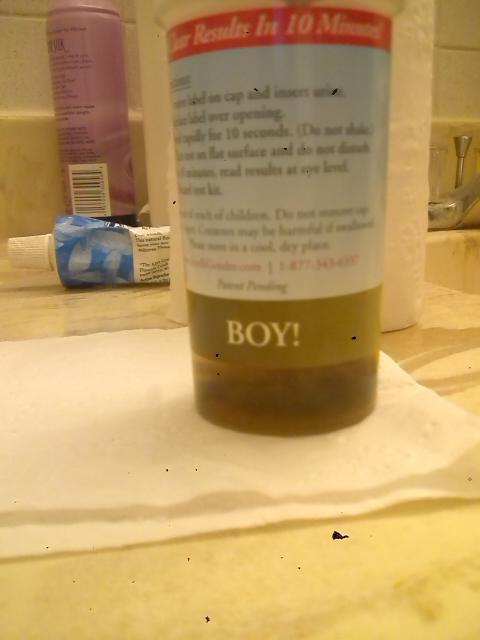
I was excited to get home and test out the Intelligender Gender Prediction Test.  My husband and I are not having an ultrasound to find out the sex of our baby, so when asked if I wanted to test/review, I said “Sure!”

I very carefully opened the package and was shocked to see what appeared, at first glance, to be a huge list of very detailed instructions.  Upon further inspection, though, I realized the instructions were actually very simple and well laid out.  Of important note are the several warnings that women who are dealing with Polycystic Ovarian Syndrome or those who have used Progesterone in the last ten days should NOT use this test, as they will most certainly receive a BOY result.  Also of note is the recommendation to avoid intercourse for 48 hours prior to taking the test or else a BOY result will most likely occur (thanks to husband for being such a good sport).

All in all, I found the directions laid out clearly and easily followed them to an easy to read result.  According to the company, laboratory trials averaged a 90% accuracy rate.  The website includes a Sample Results page, where you can compare your results with others to verify.  I do suggest that mothers with toddlers lock the bathroom door, as my two year old found the canister fascinating and had to be held back from touching.

Unfortunately, we’ll all have to wait until March or April to find out the accuracy of my BOY result.  🙂

Giveaway: Chime Along Friends

This giveaway is now closed. TZel was the winner!

I think this is my first giveaway of something specifically for babies! And, it is at just the perfect time of year for people who are looking for stocking stuffers—this little cutie would fit nicely! This week’s giveaway is for the little giraffe on the lefthand side of the picture. I received the little elephant to review and it is very cute (plus, I have an affinity for elephants because my mom has collected them for years. Now, this can be “baby’s first elephant” :)). Created by Bright Starts, according to the press release, “these bright animal friends swing and chime with a shake. Colorful fringes add texture and are fun to touch. Take the fun anywhere! Easy-grip clip attaches to almost anything.” Designed to stimulate multiple senses, the little elephant has crackly ears and the little giraffe has silky ribbons on its tail and mane. I appreciate that the chime in each toy has a nice, melodious sound of fairly deep pitch rather than sounding clinky, clanky, or fake.

I’m looking forward to sharing this toy with my new baby! If you’d like a chance to win the giraffe for your own baby, please leave a comment below and you’ll be entered into the giveaway! (closing Friday, Dec. 17th)

Twelve Days of Birth Activist Christmas

12 Days of Birth Activist Christmas

by Molly Remer

On the first day of Christmas, a birth activist gave to me
one woman wanting to birth free…

On the second day of Christmas, a birth activist gave to me
two comfy birth balls
and a woman wanting to birth free…

On the third day of Christmas, a birth activist gave to me
three empowering birth books…

On the fourth day of Christmas, a birth activist gave to me
four independent birth classes...

On the fifth day of Christmas, a birth activist gave to me
five midwife cell phone riiiiiiings…

On the sixth day of Christmas, a birth activist gave to me
six healthy birth practices

On the seventh day of Christmas, a birth activist gave to me
seven supportive partners

On the eighth day of Christmas, a birth activist gave to me
eight helpful doulas…

On the ninth day of Christmas, a birth activist gave to me
nine spontaneous labors…

On the tenth day of Christmas, a birth activist gave to me
ten pregnant women dancing…

On the eleventh day of Christmas, a birth activist gave to me
eleven upright second stages…

On the twelfth day of Christmas, a birth activist gave to me
twelve happy motherbabies!

Seated Mountain Pose

I have a special affinity for pregnant seated mountain pose images. My logo and the polymer birth goddess sculptures I make are both in that yoga pose. So, during my recent maternity photo session, I wanted to include seated mountain pose as one of the pictures 🙂


Speaking of yoga poses, one of my favorite pictures from the session is of my friend/doula/colleague and I in a Two Moons partner yoga pose. Our alignment isn’t the best of the best (primarily because we had to both fit in the picture!)