Archive | 2010

You Can’t Be Everything to Everyone…

I got the following article in an e-newsletter and though it isn’t birth business specific, I think it has a lot of valuable food for thought in it for childbirth educators/birth professionals. I am going to answer the questions in it and post again with my thoughts!

You Can’t Serve Everyone: Clarifying Your Niche for Better Marketing Results

Before you even start implementing any marketing strategies, it’s important to be crystal clear about whom it is you are trying to reach. Some of the questions you should be able to answer around this include: What is your niche?  Who is your target market and what is it that they want?  What is your message to them?

Often, small business owners are afraid to narrow down their target market for fear that this will limit them. Countless times I have heard people say “my target market is small business owners” or “my niche is really anyone who needs what I offer.”

The truth is, you can’t be everything to everyone, and it is actually easier to market and attract prospects when you focus on a particular group of people.  It is also easier for others to refer people to you when they see you as someone who works with a specific group.  To further illustrate, here is a simple example: Instead of “I’m a financial planner,” you could clarify it to say “I’m a financial planner who specializes in families with special needs children.”

Or, instead of “I’m a marketing consultant,” a more descriptive way to say it would be “I’m an online marketing consultant who specializes in social media strategies for coaches.”

Online, a good way to create the type of presence that draws people to you is to clearly communicate who you are, what you are about, and why people should take notice. In order to figure this out, some of the questions you could ask yourself might be:

*How would you describe the essence of who you are in a single word?
*What are your top three passions related to your work or three unrelated to your work?
*What would be three adjectives used to describe your business?
*Who your best clients or the people who are most likely to benefit from your work?

Those are just some of the questions you can ask to really get clear on who you are professionally, as well as who you are personally.

Clarifying your niche is a point of “stuckness” for many business owners and it does take a bit work to discover if you aren’t clear on it yet.  But once you have that specific niche narrowed down, reaching them with your marketing becomes a whole lot easier.

© 2010 Communicate Value. All Rights Reserved.

Want to use this article on your website or your own e-zine? You can, as long as you include the following:

Christine Gallagher, The Online Marketing and Social Media Success Coach, is founder of Communicate Value, where she is dedicated to teaching small business owners and professionals how to conquer the overwhelming aspects of online and social media marketing to increase business and maximize profits. To get your F.R.E.E. 5-Part E-Course and receive her weekly marketing & success articles on leveraging technology, building relationships and boosting your profits, visit http://communicatevalue.com.

Racktrap Giveaway!

Giveaway closed! The  four winners for this giveaway were Rini, inoakpark, Summer, and Rixa!

Time for another giveaway! This is not really birth related, but it is breast-related and since breasts are part of being female and nurturing children, etc., etc. I decided it was related enough to go ahead and share here! The Racktrap is a little tiny purse/pouch that you tuck inside your bra (credit card, ID, cash, etc.) to leave yourself hands-free and unencumbered. I was amused the the first step in the instructions included is to, “Locate your breasts.” ;-D You can use the Racktrap while exercising OR while going out somewhere in a fancy dress! They have lots of different colors (though presumably no one will see it!). I wasn’t sure how it would work exactly because I wear simple “sleep bra” type bras that pull over my head like a sports bra, but I tried it and it works really well even in that kind of bra (don’t worry, I didn’t try the ones I’m giving away, I tried out the cute Valentine print one they sent and I’m keeping that one!)

Something that surprised me about it is that the open edge doesn’t have a closure, so I thought things might fall out of it, but once it is tucked away, nothing falls out (somehow in the context of talking about bras, this sounds like there are secret meanings here…). It is very trim and, I have to say, MUCH classier than just sticking money directly into your bra (which I’ve never done, but still, if that is something you do, perhaps you’d like to win one of these instead!).

Okay, so I have FOUR cute little Racktraps to give away. They came in a little pouch together, but I’m giving them away one at a time because that way more people get to win. I will close the giveaway this Friday. To enter, you can simply leave a comment here (make sure I can figure out your email address from your comment so I can get in touch with you if  you win). You can get additional contest entries by becoming a fan of the Racktrap on Facebook (first time fans only) and leave a comment here telling me you did so, and/or becoming a fan of Talk Birth on Facebook (first time fans only) and leaving a comment here telling me you did so. It is that simple 🙂

Disclosure: I was provided with complimentary samples of this product. I have no other financial or commercial relationship to the company.

Birth & Culture & Pregnant Feelings

“Giving birth is not an isolated event in a person’s life. A woman births with both her mind and her body and participates in the attitudes toward childbearing of her culture and her family.”

This quote from the book Pregnant Feelings by Rahima Baldwin reminds me of two other relevant quotes about culture, birth, and women’s choices:

“Although pregnancy and birth is a richly intuitive and instinctive process, a woman will prepare her ‘nest’ and birth according to the style of her culture, in the same way that a particular species of bird will build its nest with whatever is available.” –Pam England

“One does not give birth in a void, but rather in a cultural and political context. Laws, professional codes, religious sanctions, and ethnic traditions all affect women’s choices concerning childbirth.” –Adrienne Rich

I think we get onto slippery ground when we start talking about how women just need to “educate themselves” and then they will make different (i.e. “enlightened like ours”) choices. If education was all that was needed, we would see much different things in our present birth culture (more on this later!). As Pam England would also say (paraphrased), thousands of factors seen and unseen go into the resulting birth experience, it is hard to point to one, two, or three factors and say “that was it! I have it all figured out.” (Reminds me of another quote that women birth as they live.) With regard to the second quote, I have to ask myself whether couples truly have a free choice of where to give birth? Ultimately speaking, yes they do, but according to my clients’ perspectives insurance companies and the political climate surrounding midwifery in our state dictate their birth location, as well as opinions of family, friends, books, and so forth. I do a “pain pie” exercise during my classes and after I do it, I always talk about how sometimes choices are actively stripped away from women and we need to keep that in mind when we hear “bad” birth stories—not, “she ‘failed’ or made the ‘wrong’ choices” but that her pieces of the pie were taken away from her (sometimes forcibly!).

The reason I initially marked Rahima Baldwin’s quote is because I am fascinated by how my birth experiences continue to inform the rest of my life–while not the defining moment of motherhood for me, I continue to draw upon the lessons of birth throughout the rest of  my life, as well as retaining a total fascination with the subject. I wonder why I’m so “stuck” on birth? Why fixate on this one element of a lifespan? Does it mean I’m not “moving on” somehow—like a high school football player still reliving the glory of that touchdown from 10 years ago? I think it is because birth touches something else. Something deep and raw and true and we glimpse something that we rarely glimpse in everyday life. A touch of the sacred perhaps. Magic. Mystery. Or is it a sense of personal power and satisfaction in being a woman? I know that the “birth power” experience is a rare one for me—I have never felt so powerful and capable and amazing as I did giving birth. I like to think about how this “birth power” sense could be drawn into the rest of my life—how can I live a powerful and affirming and amazing life, not just as a birth giver, but as a woman? Lately, I am finding some answers in feminine spirituality, but it is a question I love to consider and hope to write more about in the future.

Okay, moving back to Rahima and the quotes from Pregnant Feelings:

Anthropologists’ reports of women working the fields, going to a sheltered spot to drop their babies without any ‘preparation’ and then returning to work describe a kind of mythical natural childbirth that is nearly impossible for Western women. We are far too cerebral, and our twentieth-century consciousness intrudes between us and our instinctual selves. The fact that we question both how to birth and how to parent shows how awake our consciousness is. We must of necessity involve our minds in understanding what we do and create, for it is impossible to turn them off. Nor can we simply erase, or afford to ignore, our culture’s view that giving birth is a dangerous and painful event requiring intervention and technology. Rather, we must consciously replace that view with new knowledge and new images if we are going to be able to reclaim our ability to birth with harmony of mind and body.

Loved this. The mythical woman giving birth by the side of the road and popping back into the field to work is strongly ingrained amongst “natural birth” advocates. Some women draw strength from the image—“if she could just squat in the field, so can I!” Others make a joke of it—“are you one of those nuts who encourages women to just squat in the field?!” And others are doubtful that it has any basis in reality. I also suspect that if said women did ever exist they did not return quickly to the fields because they wanted to do so, but because of the framework of their culture and those seen and unseen factors that shape our lives—perhaps their other children would starve if they didn’t run back to the field, perhaps the overseer would beat them, etc., etc. It doesn’t mean those women were stronger or more capable, but perhaps less valued and less cared for than they should have been.

Okay, back to Rahima again:

Our task is to integrate our minds and bodies, so we can give birth in a way that feels whole and nurturing—to ourselves as parents and to our babies…We cannot go back to ‘natural childbirth’ in which we just let it happen. There must be knowledge of birth and an assumption of responsibility for our own health care and for decisions affecting ourselves and our children. There exists for us the exciting possibility of giving birth with full awareness, participating in the joy and exhilaration of working in harmony with the tremendous energy of creation. But it does not occur automatically or unconsciously…

The potential for conscious birthing can exist independently of the place of birth, although some places require more watchfulness than others….Let us just say that it is actively giving birth in an environment which is woman-centered and child-centered, in which the cues are taken from the birthing woman while she experiences fully the sensations and emotions of new life coming into the world through her. She is not medically managed or manipulated, but is supported with the knowledge, love and experience of her attendants (doctors, midwives, husband, other support people) to birth in a way which is safe, yet does not deny the intense physical, emotional, and spiritual aspects of giving birth.

Birthing in this way is rare in today’s culture…less than 5 percent of women in this country today experience ‘purebirth’ [positive birthing/conscious birthing]…

Given the wealth of images of birth that surround us, our task is to recognize that none of them adequately denies or exhausts the potential of birth. Perhaps their infinite variety can help to free us from any one fixed idea of giving birth and help us to realize our freedom to birth in the way that is right for us. We cannot control the energy of birth, but we can control our response to it by deciding to be open, relaxed positive, noisy, grouchy, whatever. We don’t need to behave in a certain way and we can accept ourselves and our births without self-judgment.

What caught me about this section was the mention of not being able to go back to a time when we could just “let it happen.” Though I feel like getting out of my own way and “letting it happen,” was a personal key to my own births—that the surrender is what gets the job done—I agree with her point that there is no letting it happen in today’s culture. A long time ago someone mentioned in an online forum that they were not planning to take birth classes or read any birth books because they felt like they should just let it happen and not have any preconceived notions; that cluttering up their heads with this other information would cloud their ability to do so. While I hear the motive and feeling behind this sentiment and believe there is some (perhaps idealized) truth to it, I simultaneously feel like it is impossible to do this, because women do not give birth in a void or outside of their culture. Women give birth in a context, usually involving other people (even with unassisted births, there is usually someone else there). If you enter the birth room (the aforementioned woman was planning to give birth in a hospital, not unassisted) without any ideas or pre-knowledge about what to expect or what you want, the stories and dramas and ideas and myths and preconceived notions and reading and media-exposure of all the other people present DO enter the room and impact your birth. You cannot just “let it happen,” because they will not just let it happen. Right or wrong, this is the environment in which many of us our building our birth nests.

I’d like to close my thoughts with another quote. This one is from one of my favorite birth books, Transformation Through Birth by Claudia Panuthos. In giving birth, regardless of our nest and our choices and all the seen and unseen elements shaping our lives, perhaps we can simply, “…celebrate ourselves for our courage to birth. The real question becomes not, ‘Have you done your breathing exercises?’ but rather, ‘Can you love yourself no matter how your birth, where you birth, or what the outcome?'”

Book Review: 25 Ways to Awaken Your Birth Power

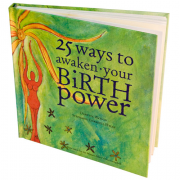
In September, I wrote a post about Awakening Your Birth Power based on  the book 25 Ways to Awaken Your Birth Power. I figured it was about time I actually posted my whole review of the book! I also subscribe to the Awaken Your Birth Power e-newsletter and find it very enjoyable.

25 Ways to Awaken Your Birth Power
By Danette Watson and Stephanie Corkhill Hyles
Watson & Corkhill Hyles, 2004
Hardcover, Book & CD Set, $24.95.
ISBN: 0-646-44337-2
www.awakenyourbirthpower.com

“If you have heard enough birth ‘war stories,’ advice, and medical information… If you are beginning to doubt yourself and to feel confused and worried about giving birth… It is time to focus on something simple, positive and inspirational. It is time to come back to center and listen to your own inner wisdom. It is time to Awaken your Birth Power.”

I was experiencing my third pregnancy when I received the book and CD set 25 Ways to Awaken Your Birth Power and was able to read and listen as both a consumer and a reviewer. I found both the book and CD very nurturing, enriching, and affirming. The book is a collection of 25 short breathing meditations each accompanied by a beautiful (and whimsical) drawing. The final section of the book contains brief sections exploring the body-mind connection, “what actually happens when you awaken your birth power,” a chart of characteristics awakening power and those that block power, and specific suggestions for how to use each of the 25 meditations in the book.

The enclosed CD has 3 tracks–the first is called “awaken your birth power for pregnancy” and consists of the relevant meditations from the book read aloud. The woman reading has a pleasant, soothing voice with a slight Australian accent. The second track on the CD is “awaken your birth power for labour and birth” and consists of 48 minutes of the relevant meditations from the book read aloud. The third track is an abbreviated almost 8-minute guided meditation. The CD would be perfect to listen to while in labor.

With its gentle illustrations and relaxing words, 25 Ways to Awaken Your Birth Power is a nurturing, confidence-inspiring, birth-power-enhancing, reflective, time-out for use during pregnancy or birth.


Disclosure: I received a complimentary copy of this book for review purposes.

Euthagenesis

I just finished reading another book about the history of childbirth. This one was called Get Me Out: A History of Childbirth. I half expected it to be a repeat of Birth Day, which I finished reading earlier this month, or at least similar to Birth: A Surprising History of How We are Born (the covers are even similar). I was pleased to discover that this book stood on its own as an interesting and absorbing tale—the emphasis was really on the recent history of childbirth, up to and including sperm banking and cryo-preserving eggs. I will share a full review soon, but I first wanted to share one of the new things I learned from the book. In the chapter on Freebirthing, the author shares the story of Pat Carter, a woman in the 1950’s who had seven unassisted births and wrote a “manifesto” about unassisted birth called Come Gently, Sweet Lucina (the book I had heard of, the rest of the historical information, I had not). She called her theory of birth euthagenesis (“good origin”). It didn’t really catch on and the author of Get Me Out states that euthagenesis is one of the “few un-Google-able terms.” So, I instantly wanted to write a post and make it googleable 😉 Of course, I did google it prior to posting and lo and behold I did get a single result, Rixa Freeze’s dissertation Born Free: Unassisted Childbirth in North America. So, darn, I didn’t get to put it on the map first after all! Rixa is so awesome that I can forgive her for that though 😉

Pathways Article

I was happy to have an article and an accompanying sidebar in the winter issue of Pathways to Family Wellness (the magazine of ICPA). This was one of my most exciting publications to date as Pathways is a lovely, full color magazine and they laid my article out so nicely and professionally. I’m posting about it here, because the articles were based on two posts originally written here:

What to Expect When You Go to the Hospital for a Natural Birth (re-named in Pathways as “The Hospital ‘Birth Plan'” and available in an online version here)

and

Can I Really Expect to Have a Great Birth? (included as the sidebar in Pathways)

As long as I’m writing about writing, I wanted to share links to some of my recent books/film reviews also:

Multimedia Review: Baby’s First Gift

Book Review: Labor of Love

DVD Review: It’s My Body, My Baby, My Birth: A film About Natural Childbirth

Book Review: The Power of Women

Book Review: Fathers-To-Be Handbook

Book Review: Permission to Mother

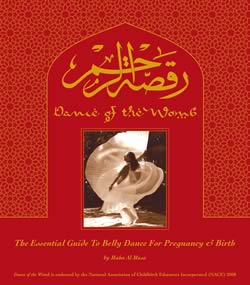
Book Review: Dance of the Womb

Dance of the Womb book cover

Book Review: Dance of the Womb: The Essential Guide to Belly Dance for Pregnancy and Birth
By Maha Al Musa, 2008
ISBN 978-0-646-48705-2
260 page hardcover book, $49.95 (AUS)
http://www.bellydanceforbirth.com

Reviewed by Molly Remer, MSW, ICCE

Some books simply feel good to hold in your hands. Dance of the Womb is one such book: it is beautiful, both in content and appearance. While priced a little higher than some birth books, I cannot emphasize enough what a high quality book it is—-it is not a traditional trade paperback, it is of textbook quality and size. Hardbound with a lovely cover and endpapers, Dance of the Womb is packed with full color, detailed, step-by-step instructional photographs leading the reader through a “belly dance for birth” journey.

Dance of the Womb is divided into several segments. The first section summarizes the benefits of belly dance and explores the physiology of birth. The next section walks the reader through a series of gentle warm-up exercises while the following sections progress through a variety of different specific belly dance movements. Nearing the conclusion of the text is a segment about labor movements with positions. Each section of the book is lavishly illustrated with very clear, easy to follow, step-by-step photographs.

The author’s own journey through pregnancy, birth, and mothering is skillfully interwoven throughout the text as well as her own feminine passage into understanding herself as a complete woman. Interspersed with the photographs and belly dance instructions, is the exploration of the author’s pregnancy and birth experiences, her relationship with her own mother and her parents’ culture. The book contains her personal birth stories as well as perspectives on belly dance for birth from three midwives.

The author, Maha Al Musa lives in Australia. Her interest in Middle Eastern Dance was sparked by her Palestinian/Lebanese roots and birthplace as well as her pilgrimage to explore her heritage and reconnect with her long-separated mother. Maha has also developed a Dance of the Womb step-by-step instructional belly dancing DVD (sold separately, review to follow) that includes a video of her own homebirth journey with her third child. She is also developing a one day foundation course in “bellydancebirth” for birth professionals with a plan to go international in 2011.

Dance of the Womb is a great introduction to not just the basic physical elements of prenatal belly dance, but also to the spiritual aspects of giving birth and life as a woman. It is written with an intimate tone that makes the reader feel as if the author has reached out across the miles to form a direct, personal connection. This book feels like a rich treasure to hold and is a gentle, nurturing, encouraging, and enriching voyage for pregnant women or the people who serve them.

—-

Disclosure: I received a complimentary copy of this book for review purposes.

Tips for Emotional Well-Being During Pregnancy

I got a lot of wonderful responses to my question about emotional well-being during pregnancy (associated with my giveaway of the book Birth Space, Safe Place). So, courtesy of a lot of wise women, here are some top tips for supporting your emotional well-being during pregnancy and birth:

  • Peaceful Beginnings doula services shared “I think my best tip for emotional well-being during pregnancy (and life in general) is to let go of guilt. We can only do the best we can with the information we have at the time, no more, no less.”
  • Yasmel shared that her most helpful tip, “would be to find whatever gives you positive thoughts and use it, a lot. I loved the book Ina May’s Guide to Childbirth and whenever I started second guessing my homebirth decision, I would open it up and just read the birth stories in it.”
  • Heather appreciated a helpful tip from her sister: “I was having alot of people question my birthing choices and telling me that my baby and I were going to die. None of which happened. She told me that ‘you can’t expect people to agree with your choices or behave respectfully about them. All you can do is know that you are doing what’s right for you and your child and that is all the matters. Don’t let them change your mind with fear. It has no place in childbirth.’”
  • And I especially enjoyed Ahmie’s advice: “remember that cats purr while giving birth. Figure out what makes you ‘purr’ while you’re pregnant and find ways to do more of that as well as to bring those tools to the birth-space with you.”
  • One of the most simple and yet important tips was shared by bubbledumpster, “Trust yourself,” and echoed in several other comments, such as earthmothergypsy who said, “I think one of the best helps emotionally is to encourage mamas to trust in themselves, their bodies and their babies. By giving them support in a way that they don’t feel undermined they can build the above trust in themselves.” And inoakpark who said, ” learning to trust your body (and trusting the people who will be with you at your birth to hold that space), is vital for an emotionally secure pregnancy and birth.”
  • bee in the balm offered another elegantly simple tip “to breathe, just take the time to come back to center and be and breathe.”
  • Nicole d shared that her best tip is “meditation on good/safe birth… the normalcy and miraculous nature of it. So much of pregnancy stress is uncertainty and fear of the birth process. The more you can trust in the process of pregnancy and birth, the more joyful and peaceful pregnancy can be.”
  • For Lee-Ann, “emotional wellbeing came with knowledge, the more I read and the more I normalized the birth process in my mind, the more research I did, the more confident and at peace I became.”
  • Rebekah made an excellent point about honest during pregnancy: “I think being open and honest with yourself and talking to your baby openly helps. It benefits no one to ‘pretend’ like everything is perfect and is okay to have trials, doubts, and fears.”
  • Jessica benefited from midwifery care: “One of the things that helped me a lot was having a midwife that I knew and trusted implicitly. I knew that my body and my baby would know what to do, and that I had a wonderful woman who would let it all unfold!”
  • And whoz_your_doula pointed out the benefit of taking time for yourself: “For me that took the form of meditation and prayer. The early morning is my time for deep reflection before the house begins to stir.”
  • A similar tip was shared by Gentle Beginnings: “I feel it is very important for a woman’s emotional well being to take a few minutes each day to spend time alone. To sit quietly and think about the precious child growing inside them, to disconnect from the world, to envision how peaceful they want their birth to be, to take a stroll in nature and to connect with their inner self. I think we can all benefit from these simple suggestions, but feel it is especially important during pregnancy and childbirth.”
  • Helpful for birth educators as well as couples, Janet shared that her favorite tip is “teaching the mom and her partner to work together towards open and honest communication before hand. I find a lot of the mothers I teach think, ‘Oh, well we talked about it once and I think we are on the same page,’ only to be completely blind-sided afterwards. Keeping these lines of communication open before, during and after pregnancy makes for a much better emotional state for all.”
  • Jamie moved us back to the trust theme: “Trust yourself. Trust that your body knows how to be pregnant and how to give birth. Be positive in the changes your body is going through and how you are being prepared for motherhood in all facets of your being. Know that you can do this—you are doing it!”
  • And another excellent and simple tip was shared by Heather Richins: “My tip is to make sure you stay well fed and hydrated. It is hard to feel good emotionally if you don’t feel good physically.”
  • Deborah had more than one to share: “1) Eat well: increase protein and raw fruits & veggies, and drink lots of water. Decrease refined foods, white flour products and sugars. 2) Exercise: walk, swim, yoga, etc. 3) Talk: find someone you trust and be honest about how you are feeling.”
  • And finally, Kathy offered a comprehensive collection of tips: “to be conscious of their needs each day. This includes physical,emotional, and spiritual. For the physical; Eat well. Whole foods, including whole grains, fruits, vegetables. Protein intakes needs to be adequate for a pregnant woman on a daily basis. Eating often to keep your blood sugars level is especially important for warding off mood swings. For the emotional; Trust yourself and others who care about you. Surround yourself with positive people who support you in what your doing. Communicate your needs and wants. Be willing to be honest and vulnerable. Pregnancy can often ‘stir the pot.’ Being willing to work out your feeling and talk to someone you trust and bring about personal growth and sometimes, bring about healing the past. For the spiritual; It is just as important for the spirit to be fed, as it for the body. Fellowshipping with others of the same faith is uplifting to the spirit. Take time for reflections and meditations each day. Keep a journal.”

I appreciated all the responses and think that emotional well-being is such an important subject. I feel like, especially with a first baby, it is an often overlooked element of birth preparation—a lot of time and energy is spent on the physical health of the pregnant woman, but the emotions are assumed to kind of take care of themselves, to perhaps be no one’s business, or to be dismissed summarily as “crazy pregnancy hormones” and “mood swings of pregnancy!”

Cesarean Trivia

Anyone who is even slightly familiar with the history of childbirth in the modern world has probably heard the legendary story of the pig-gelder Jacob Nufer and the first successful cesarean section (performed on his wife in 1500). Successful because both mother and child lived, which had never before been documented to happen with a cesarean—and took quite some time to happen again. For example, there was a 100% mortality rate for cesareans performed in Paris for 89 YEARS (1787–1876). I’ve read several excellent books about the history of birth and feel fairly well-versed in the associated facts. However, this month I finished reading a new book by pediatrician Mark Sloan and was surprised to learn something completely new about the history of the cesarean section. This was that, the well-known legacy of Jacob Nufer notwithstanding, the first well-documented successful cesarean section performed in the English-speaking world was performed by Dr. James Barry in Cape Town South Africa in 1826. James Barry was quite the character, small of stature and very big of opinion and personality. He was a British Army officer who clashed frequently with everyone over everything (including even fighting duels!). He even had public arguments with none other than Florence Nightingale! And…then…the conclusion to this already interesting tale is that after Dr. James Barry died—after his forty year medical and military career—it was discovered that he was actually a woman!

I found this extremely fascinating. (I also imagined Jill at Unnecesarean using her Photoshop talents to make some kind of image about this…) So, despite the dominance of males in the medical profession, the first successful cesarean in the English-speaking world was actually performed by a woman! A point the author brings out in this discussion is that, “Here in the early years of the twenty-first century we have reached a point of high medical irony that would not be lost on James Barry: it now can take more courage—or foolhardiness—not to do a cesarean than it takes to do one.” How true.

Some other non-related quotes from Birth Day that I shared via the CfM Facebook page are as follows:

“Birth is about radical, creative, life-affirming change. It is about adaptation on a nearly unbelievable scale.” –Mark Sloan, MD

The quote above is in regard to the physical adaptations required by the baby immediately after birth—I see it as about both mother and baby though and I enjoy that it comes from a man and a doctor no less!

“Rigid plans work best if you’re building a skyscraper; with something as mysteriously human as giving birth, it’s best, both literally and figuratively, to keep your knees bent.” –Mark Sloan, MD

The above quote is from the segment about what he would want to tell his daughter about giving birth. Though the book wasn’t as “alternative” as many of the birth books I enjoy, I found Birth Day to be a very engaging and entertaining read!

Birth Space, Safe Place Book Giveaway!

This giveaway is now closed! The winner was drawn and was Jessica (of Jess Loves Being a Mommy)—please email me with your mailing address! 🙂

I am fortunate to have an extra copy of the new book Birth Space, Safe Place: Emotional Well-Being through Pregnancy and Birth. to give away to one lucky reader! 🙂 You can read my review of the book in the post below. There are three ways to enter to win the book and you will receive an entry for each method you employ (please make a separate comment for each of your entries):

1. Leave a comment on this post sharing your most helpful tip for emotional well-being during pregnancy and birth. I would like to compile these tips into a new blog post in the future (so if you don’t want me to include yours in that, please let me know!)

2. Become a fan of Talk Birth on Facebook (and post a comment here letting me know you are a fan).

3. Post about the giveaway on your blog and post a link back to it as well as a comment letting me know you did so.

Have fun! This is an interesting and useful little book and I know many people would enjoy having a copy. I will draw for the winner on Friday, January 22 at noon, so make sure to enter before that date!