Archive | January 2011

Birth Art: Final Chapter

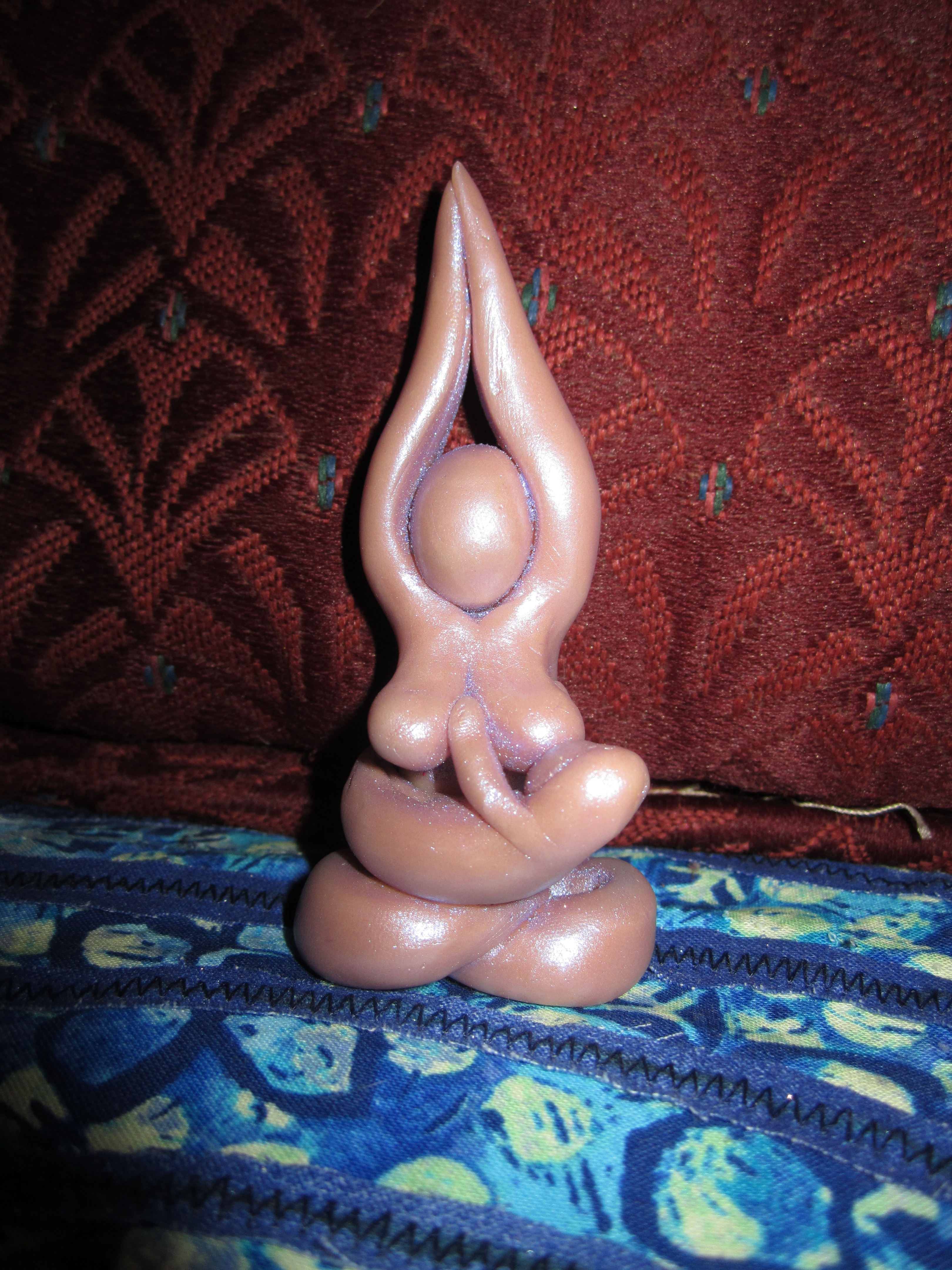
As I have noted before, this was my most art-making pregnancy. Rather than make birth art just because I like it (I do!), during my most recent pregnancy I used it as a way to work on—or through—various things. I wrote more about this in this post. So, now that my pregnancy has been completed with the powerful birth of my magical tiny daughter, I felt an intense urge to make two final pieces of birth art (that are directly related to my own current experiences, rather than just birth art for birth art’s sake!). Since I pushed her out on my knees and caught her myself and had worked on my pushing fears with birth art previously, I felt like making a new type of crowning mama sculpture. (Yes, her arms are raised and not doing the catching—because it just works better for me to make them with raised arms!)  I have also written previously about the labyrinth metaphor for pregnancy and birth and so it seemed fitting to put this mama in the center of the finger labyrinth that my friend made for me as a blessingway gift 🙂 She’s taken her journey and she is birthing her baby!

Crowning mama in the center of the fabric labyrinth that my friend Denise made me for a blessingway gift

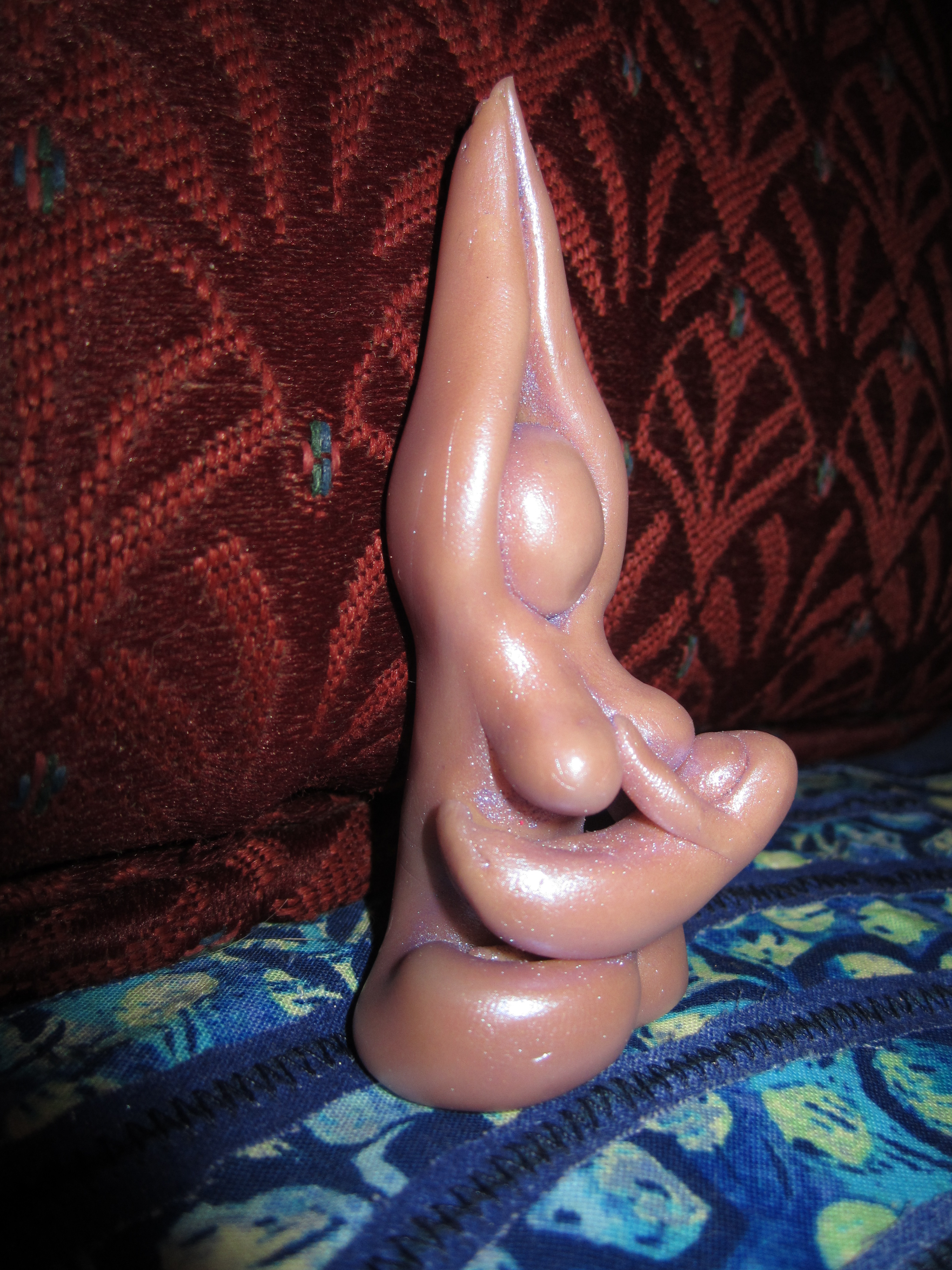
And, the logical final sculpture in my “series” is a mama WITH her baby!

This mama is happy to finally have her baby to hold and nurse!

I wish I had put the baby in a sling, so it doesn’t look so much like it is desperately clinging on with no support! I didn’t think of it until today though (I made these last night).

Side view

I actually made this one while nursing my own baby 🙂

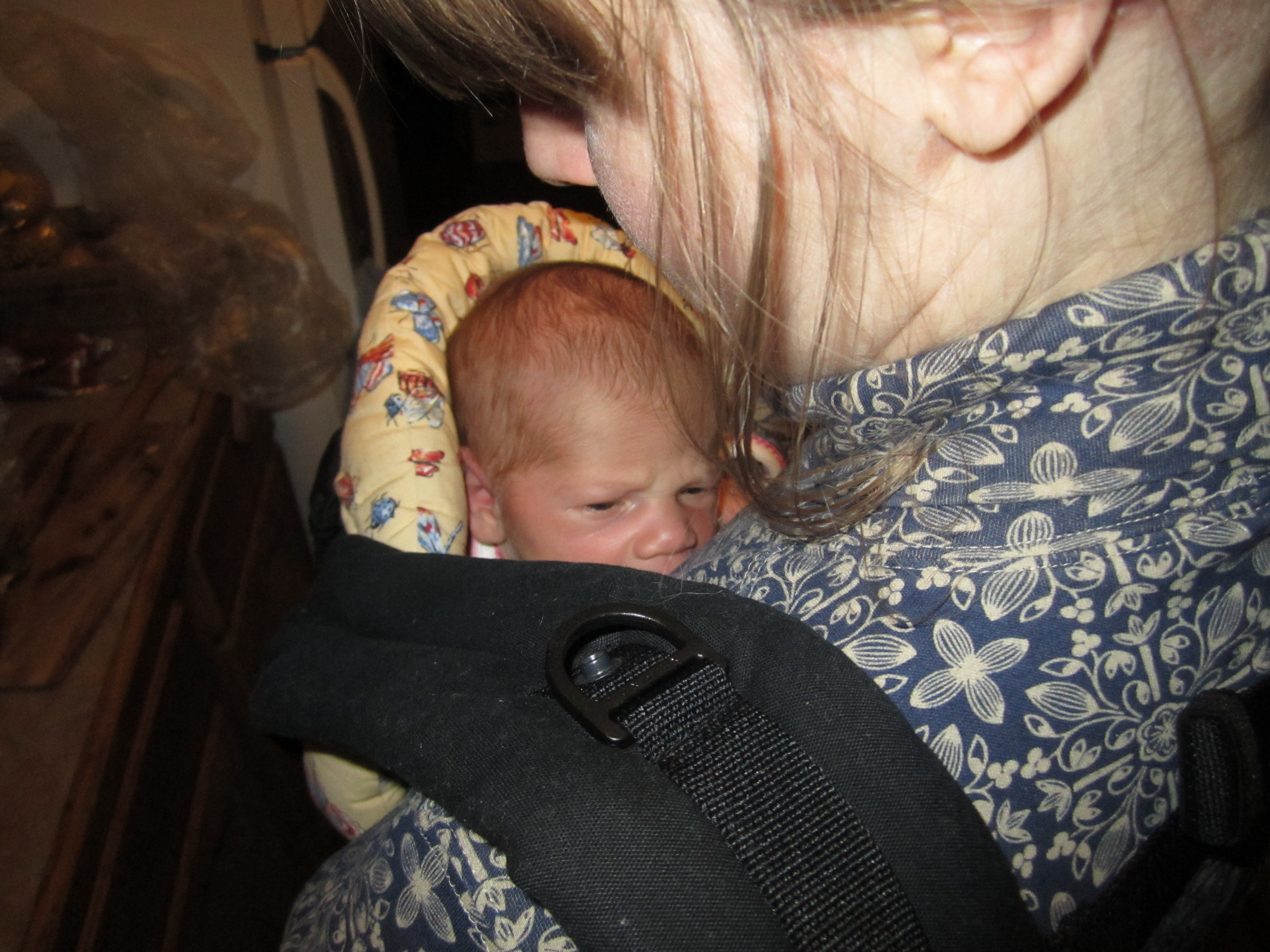
And finally, here is a picture of my little treasure trying out the Ergo for the second time today. She looks a little skeptical!

Close enough to kiss!

Birth Quotes of the Week

“I believe that natural childbirth is a right and a privilege…Our country needs to step up to the plate in educating women about the benefits of natural birth, and we need to help women actually do it – not just hear about it.” –Mayim Bialik (via ToLabor Doulas Dallas)

“In the moments of labor and birth, all the forces of the universe are flowing through a woman’s body.” – Sister MorningStar (The Power of Women)

“These hands are big enough to save the world, and small enough to rock a child to sleep.” –Zelda Brown

“Birth is as vast and voluminous, as unfathomable and inevitable as the rising and setting of the sun. And true to the inexorable power and rhythm of their life-giving bodies, women will continue to birth with dignity, grace and courage.” —Mandala Mom

“In the sheltered simplicity of the first days after a baby is born, one sees again the magical closed circle, the miraculous sense of two people existing only for each other.” –Anne Morrow Lindbergh

‎”I feel the most important thing the birthing woman does is to listen to her own body and find out what her body is telling her she needs to do. And that neither the partner, nor the midwife, nor the doula, or whomever, should be giving orders, ‘Now do this’ or ‘Now do that’ because that interferes with what she is really trying to get from her body…” ~Marsden Wagner, M.D. (via Birth Without Fear)

‎”All labor that uplifts humanity has dignity and importance and should be undertaken with painstaking excellence.” – Martin Luther King, Jr. (via Literary Mama)

“A baby, a baby, she will come to remind us of the sweetness in this world, what ripe, fragile, sturdy beauty exists when you allow yourself the air, the sunshine, the reverence for what nature provides…” – Sarah Werthan Buttenwieser (in Literary Mama)


My Baby Girl is Here!

“A baby, a baby, she will come to remind us of the sweetness in this world, what ripe, fragile, sturdy beauty exists when you allow yourself the air, the sunshine, the reverence for what nature provides…”

– Sarah Werthan Buttenwieser (in Literary Mama)

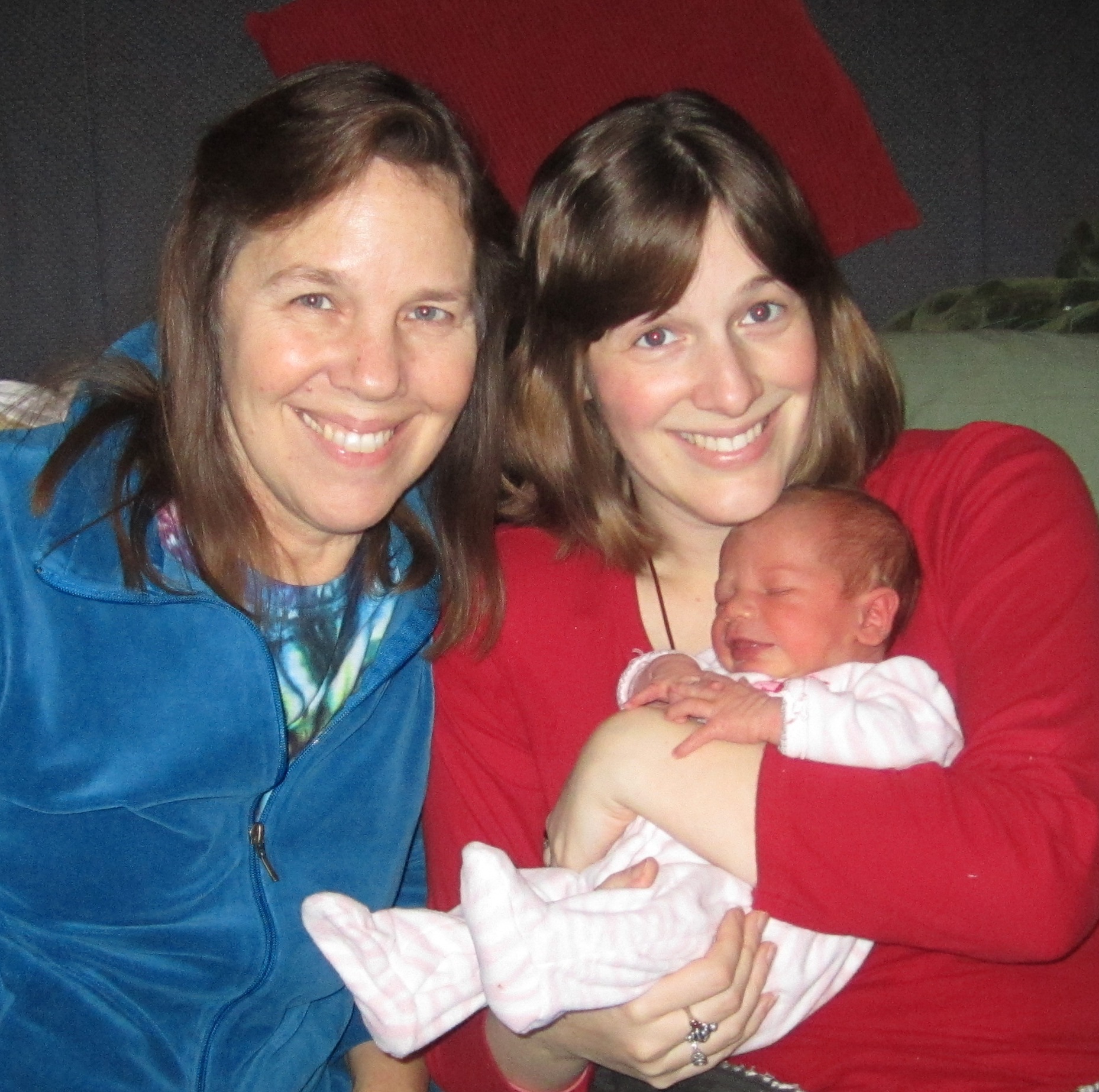
Three generations!

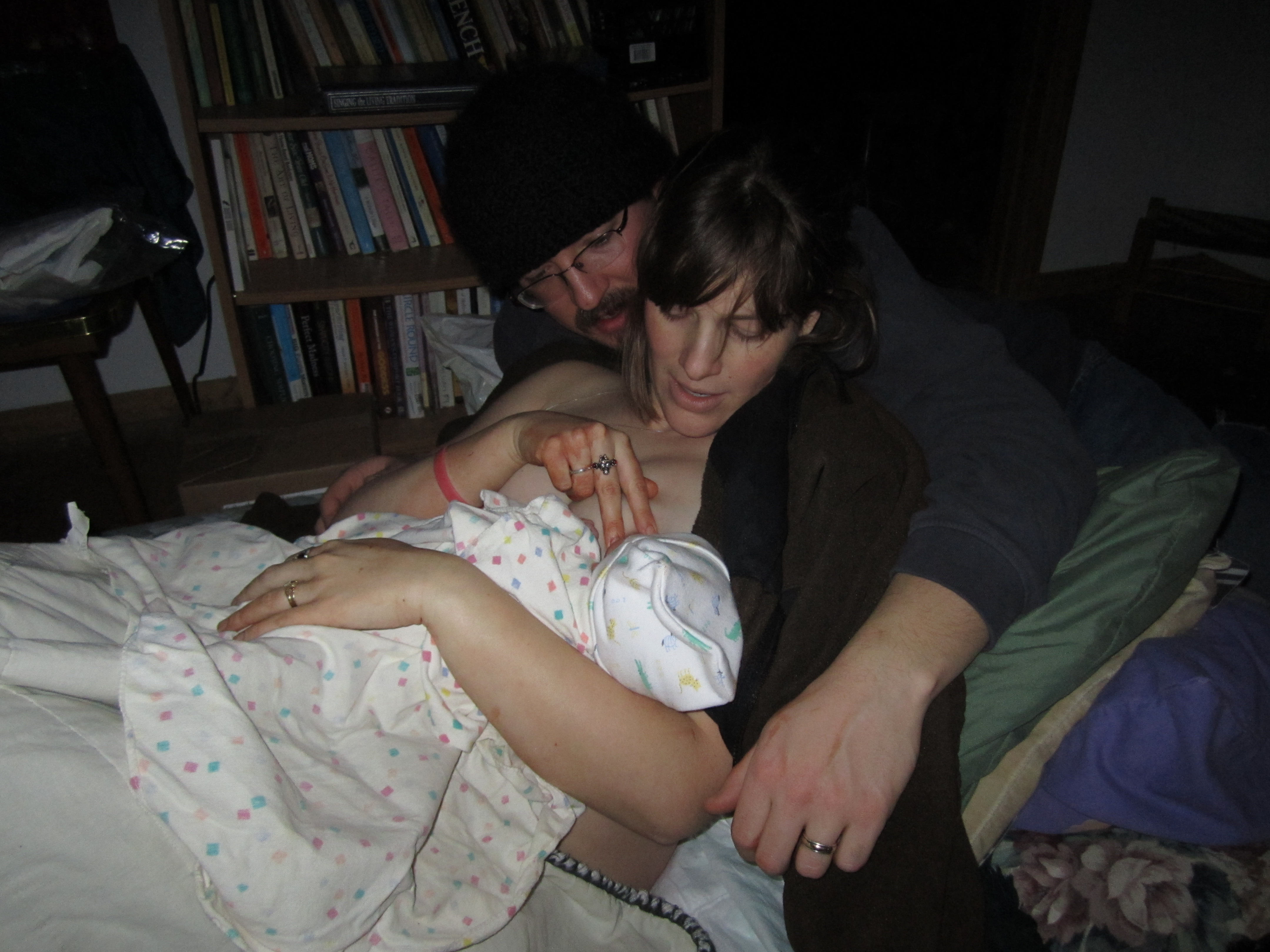
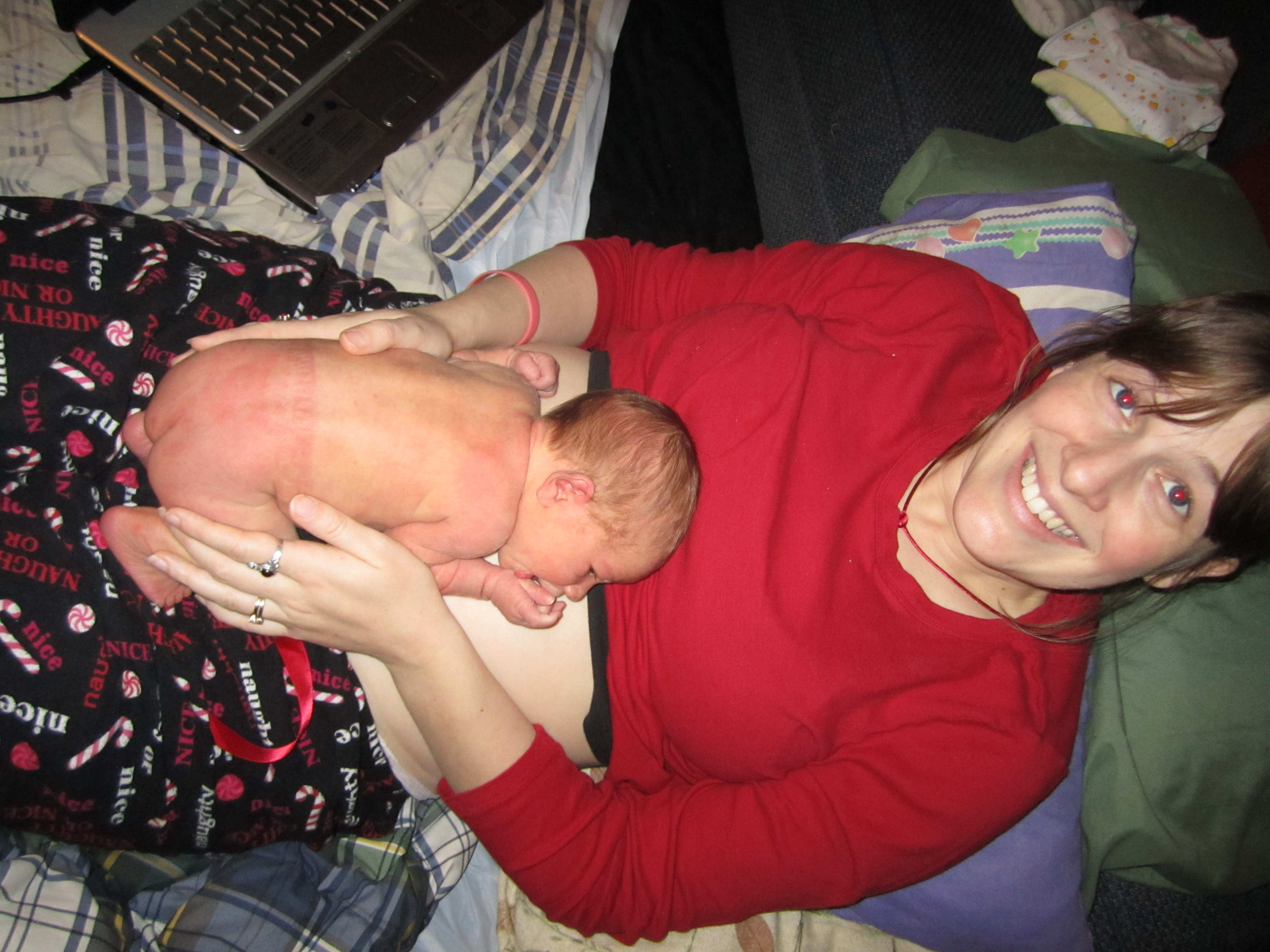
Alaina Diana was born at 11:15 a.m. on January 19th, 2011! She only weighed 7lbs, 8oz and was 20 inches. (My other babies were 8lbs4oz and 9lbs, 2oz.) I’ve sent a short-version birth story to a couple of friends over the last couple of days and decided I could work it up into a short blog post as well (of course, a full-length birth story will eventually follow). I actually had a little trouble getting started in writing about her birth—it was pretty uneventful until the end and I felt like the best description would be: walked around the kitchen, sat on the birth ball, walked around a little more, more time on the ball, hummed and ooohhhhhed, seemed as if  suddenly things changed and I felt big, big things happening and then baby was born all at once! And, I caught her! Emotionally more than temporally, it felt like a long labor and I felt like I experienced less mind-body integration than with previous labors (the actual moment of birth was much more instinctive and powerful than with the other babies though). In general, lots was unexpected about this labor—-it lasted longer than I expected (about 5 hours that were serious, but some warm-up time before that too) and was somewhat erratic and I had quite a bit of back pain. Right before pushing, contractions were still 4-8 minutes apart and it was hard for me to assess where I was/how “active” of labor it was—I was thinking I could either be at the 3cm point OR the transition point! My water didn’t break until seconds before she was born and I felt like it REALLY needed to break, but wasn’t. My kids weren’t here, because her birth was during the day (also unexpected, and a Wednesday, not a weekend!). It was just Mark, my Mom and me.

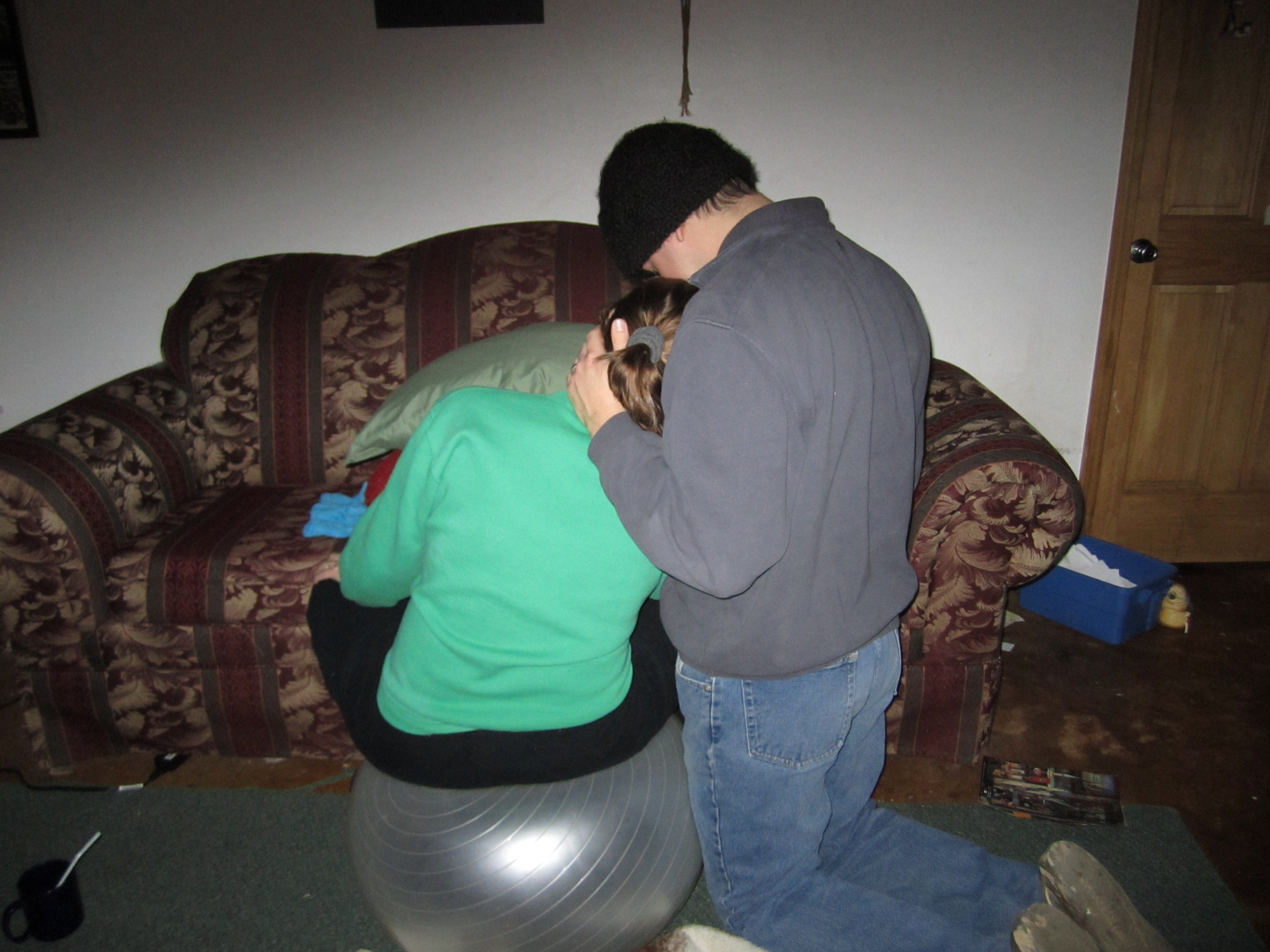
I spent a lot of time on the birth ball and Mark would stroke my back in just the right way

After criticizing myself at length for being “too analytical,” “thinking too much,” and not letting “my monkey do it,” I experienced a spontaneous birth reflex and pushed her out in a kneeling position and it only took one contraction—her whole head and body came out all at once, no moment of crowning or head birthed and then body following, just a bloosh of entire baby. I caught her myself. Mom and Mark both missed seeing her come out, because the phone rang at the same time. My mom went to stop it and Mark was moving around to the front of me, and when they looked again, I was holding her (Mark says it was about 12 seconds). So, no birth pix 😦

I did tear again, exact same extra-delicate and non-“traditional” place from what I can tell. Feels better than previous births already though–I know how to heal from this (even though I wish I didn’t have to).

My plan for immediate postpartum worked out perfectly and just like we planned. The midwife came about 40 minutes after the birth and checked blood loss. My doula was here about 20 minutes after and fed me a bite of placenta—and, I ate it! No gagging or anything!

I have very different post-birth feelings this time around—though I still had the “I did it!” moment, I felt less euphoric and triumphant and more relief and the feeling that, “we survived!” Blog posts about this will eventually follow…

And, did I mention that I caught her myself?! 🙂

Shortly post-birth

  • My "40 weeks" picture--due date was Jan. 22nd, so took a picture on that day to show how she could (theoretically) still fit! (though she wasn't breech!)

  • Planning for Postpartum

    I have been meaning to share this article on my blog for a long time. Now that I’m rapidly approaching another “babymoon,” it feels like a most excellent time to review my own reminders about planning for postpartum!

    —-

    Planning for Postpartum

    By Molly Remer, MSW, ICCE, CCCE

    Originally published in The Journal of Attachment Parenting, 2008.

    When my first baby was born in 2003, I had a made a classic new mother error—I spent a lot of time preparing for the birth, but not much time truly preparing for life with a new baby.

    I had regularly attended La Leche League (LLL) meetings since halfway through my pregnancy and thought I was prepared for “nursing all the time” and having my life focus around my baby’s needs. However, the actual experience of postpartum slapped me in the face and brought me to my knees.

    My son’s birth was a joyous, empowering, triumphant experience, but postpartum was one of the most challenging and painful times in my life. I had not given myself permission to rest, heal, and discover. Instead, I felt intense internal pressure to “perform.” I wondered where my old life had gone and I no longer felt like a “real person.” A painful postpartum infection and a difficult healing process with a tear in an unusual location, left me feeling like an invalid—I had imagined caring for my new baby with my normal (high) energy level, not feeling wounded, weak, and depleted. And yet, at five days postpartum I was at the grocery store, at seven days at the post office resuming shipments for my small online business, at two weeks attending meetings and fulfilling responsibilities with an organization (though I still had difficulty walking normally due to pain), at six weeks hostessing at a fundraising ball, and at eight weeks teaching a volunteer training workshop. In retrospect, I have no regrets about how I cared for my baby. He was always with me and I was sensitive to and responsive to his needs. What I regret is how I cared for myself, what I expected from myself, the demands I placed upon myself, and how I treated myself.

    I actually slightly delayed having a second child, not for fear of mothering two, but for fear of experiencing the overwhelm of postpartum again.

    In 2006, I gave birth to my second son at home. This time I had planned realistically and specifically for a “babymoon.” My husband took four weeks off of work and I stayed at home for the majority of the first month of life with my new baby. Though I again experienced an unfortunate tear and a painful recovery from it (which was still much quicker and less traumatic than the first time) and also some rapidly shifting mood changes along with some tears and anxiety, I look back on this time with my second son with fondness instead of regret. Instead of rushing to rejoin the world, I allowed myself the time, space, and permission to rest and cocoon, knowing that I would be “real” again soon enough.

    Reflecting on my two postpartum experiences leads me to offer the following suggestions for postpartum planning:

    • Try to minimize your out of home commitments in advance. Put a hold on projects and “retire” from committees and responsibilities. I joke that with my first baby I thought I needed to get my responsibilities squared away for six weeks and with my second I realized I needed to try to get them squared away for two years.
    • Have a good book on hand about postpartum. When my first baby was born, I was well stocked with baby care and breastfeeding books, but none about the transition into motherhood. My favorite postpartum book is After the Baby’s Birth by Robin Lim. It offers such gems as, “you’re postpartum for the rest of your life” and “when the tears flow, the milk will flow” (with regard to the third day postpartum). Other good postpartum readings are The Post Pregnancy Handbook by Sylvia Brown and The Year After Childbirth by Sheila Kitzinger. A classic for support people is Mothering the New Mother by Sally Placksin.
    • Prepare and freeze a lot of food in advance. Batches of nutritious muffins are a favorite of mine—freeze them and the reheat one as needed for a quick breakfast or snack. These are great for nursing mothers!
    • Plans to spend three to seven days just in bed with your baby. Skin-to-skin is even better.
    • Everyone is familiar with the “sleep when the baby sleeps” advice, but even if you don’t feel the need to sleep, stay in bed and use the quiet time for reflection or to read or write in your journal. Rest is definitely essential every day, but it doesn’t have to be actual sleep to be restorative.
    • If you have other children, arrange for plenty of help caring for them. Do not feel like you “should” be able to handle them all right away. Of course, you could do it if you had to, but you and your new baby will benefit from an extended period of cocooning together. Plan quiet projects that you can do in bed with your older child while the new baby sleeps (a favorite with my older son was making puppets and masks out of felt. I cut them out while still lying down. He actually started calling our bed the “party deck” because we did lots of fun projects there while I was resting with the new baby. I have no idea where he got the phrase!).
    • Give yourself permission to rest and be off duty.
    • When people ask what they can do to help, give them a specific task (go grocery shopping, pick up pictures, bring me dinner, etc.).
    • Ease back into “real life.” Resist the temptation to catch up with email and so forth. Respond to email or phone requests for time or help with a firm, “I just had a baby and I’m not available right now.”
    • Become comfortable asking for help (I vastly prefer being the helper to being the helped and this is particularly hard for me).
    • Similar to a birth plan, make a written postpartum plan that includes a list of the people in your support network, arrangements for help with household duties (or a plan for what can be left undone), people to call for meals, and so forth. List what each person is willing to do—laundry, grocery shopping, cleaning, childcare, meal preparation (notice that “holding the baby so you can work” isn’t on the list!). An example postpartum plan is available on DONA International’s website.
    • If you have relatives coming to help after the baby is born, make sure they know that their job is to take care of you and the house while you take care of the baby. It is not acceptable for you to be fixing meals and sweeping floors while grandma “helpfully” rocks the baby—it needs to be vice versa!
    • Prepare your partner and anyone else in your support network that you will be Queen for a Month and let them know what you will need from them (also, get it fixed in your mind that being Queen is okay!).
    • Expect to be “nursing all day long.” It is okay and good for you both (10-14 nursings in 24 hours is perfectly normal and acceptable!).
    • Encourage your partner to take as much time off as possible—either saved up vacation time or unpaid FMLA time. He can benefit from an extended period of cocooning with his newborn too!
    • Explore the idea that postpartum can be a time of postpartum expression rather than postpartum depression—letting all of your emotions flow, expressing your needs clearly and assertively, and being aware of and accepting of your continuum of feelings are ways to be expressive. (This concept comes from the excellent, but little known book Transformation Through Birth by Claudia Panuthos.)
    • Plan a few special things for yourself—have a little present for yourself to enjoy during postpartum (a new book, good magazine, postnatal massage, whatever is self-nurturing and brings you pleasure. Personally, I do not encourage TV or movie watching because it can become a passive time filler that distracts you from enjoying your babymoon. Some people may include favorite films as their enjoyable postpartum activities though).
    • As postpartum stretches on, if you experience decreased libido, it is okay to honor and accept that.

    Planning for a restful, nurturing, “time out” with your new baby is way to honor this new stage in your family’s life cycle and a way to honor yourself as a woman and mother. I hope you will create space in your life for a time in which vulnerability is accepted. Postpartum is a time of openness—heart, body, and mind. I hope your experience is one of tenderness and joy.

    Molly Remer, MSW, ICCE, CCCE is a certified birth educator and activist. She is editor of the Friends of Missouri Midwives newsletter, a breastfeeding counselor, and the mother of two young sons and a baby girl on the way. She loves to write and blogs about birth at http://talkbirth.me, midwifery at http://cfmidwifery.blogspot.com, and miscarriage at http://tinyfootprintsonmyheart.wordpress.com.

    This is a preprint of Planning for the Postpartum Period an article published in The Journal of Attachment Parenting Volume 11, Issue 1, pp 28-29. Copyright © 2008 Attachment Parenting International. API’s website is located at: http://www.attachmentparenting.org.

    Birth Quotes of the Week!

    Fabulous crocheted goddess from my mom as a blessingway gift 🙂

    “One thing you can depend upon is that your birthing with be powerful! Powerful pressure, powerful stretching, powerful pushing sensations and intense joy. Expect these powerful sensations and emotions, appreciate them for what they are; they bring your baby to you.” —Hypnobabies (Official)

    ‎”Birth is one of the most profound teaching experiences life offers. It touches us in the depths of our souls, the most private recesses of who we are. It requires that we respond with more creative energy, more conviction, more trust, than almost anything else we do. Birth requires an intensity that is rarely demanded by other experiences…And through it, we can learn more about ourselves, our strengths, our weaknesses, our relationship patterns, and our needs than through almost any other experience we will face in our life.” ~Nancy Wainer Cohen (Via: Peaceful Birth Project)

    “We need to take care with every message we deliver to women about birth, and ensure that each message honors the fact that every woman at every moment is making the best decisions she can for herself and her child, with the information she has. And the truth is…that can take a mountain of strength.” – Melissa Bruijn and Debby Gould (in Pathways to Family Wellness Magazine via Birth True Childbirth Education)

    “…if every midwife was able to work in the way that midwifery was originally intended, the modern doula’s role might be very different–with an increased focus on practical and physical measures perhaps, and much less requirement for advocacy and counseling.” –Adela Stockton (New – Gentle Birth Companions: doulas serving humanity )

    “…I have noticed that the subgroup of women who tend to choose [homebirth] often exhibit certain characteristics, such as comfort within their own bodies, a desire to have a birth experience that is more poetic than clinical, as well as a desire to return what we all feel is some seriously missing humanity to the experience of having a baby…” –Cara Muhlhahn

    ‎”It seems as if the birth is a story waiting to be played out, and the midwife is but one character in the play…There are many lessons that we all learn from birth…Not only do the woman and her family learn from the experience, but the midwife learns and understands, with more depth and clarity, the mysteries of life from each birth.” –Janice Marsh-Prelesnik (The Roots of Natural Mothering)

    “Birth is a mystery, and you never know what’s really going to happen – but if you don’t reach for the stars and plan to have the very best, you’re unlikely to get it. It’s important to have a vision for your birth and to work toward that vision.” ~ Suzanne Arms (via ICAN of Nashville)

    Mother Blessing Ceremony

    Lots of good friend energy!

    I keep wanting to post about my mother blessing/blessingway ceremony last week and I can’t quite manage to find the right words. So, I decided to share some pictures mainly and wait to see if more words will come…My mom hosted it at my home and 19 women attended (so, with me, a nice even 20). I don’t think there have ever been so many people in my living room! Early in this pregnancy I said I wanted to have the “biggest blessingway ever!” and it was a big one. A lot of my friends tend towards “small and intimate” for their mother blessings and while I definitely see the value to that too, it was really important to me to see and feel and know how many people in my life care about me and my baby and who have hoped with me and waited with me while I cautiously made my way to this time and this place. My mom said something about there being a lot of people here and I said, “yep, and I like them all!” My life has been touched/enriched by every woman in the room and it was very moving to look around the room and see them all here together. It was a very crying blessingway—they each stated their name and said, “I am here for you, Molly” and I was a wreck! I really felt like it was one of the best days of my life and was just what I needed. I felt so well-cared for and loved and full of emotion. I thank each one of them for being here for me and for loving my baby with me.

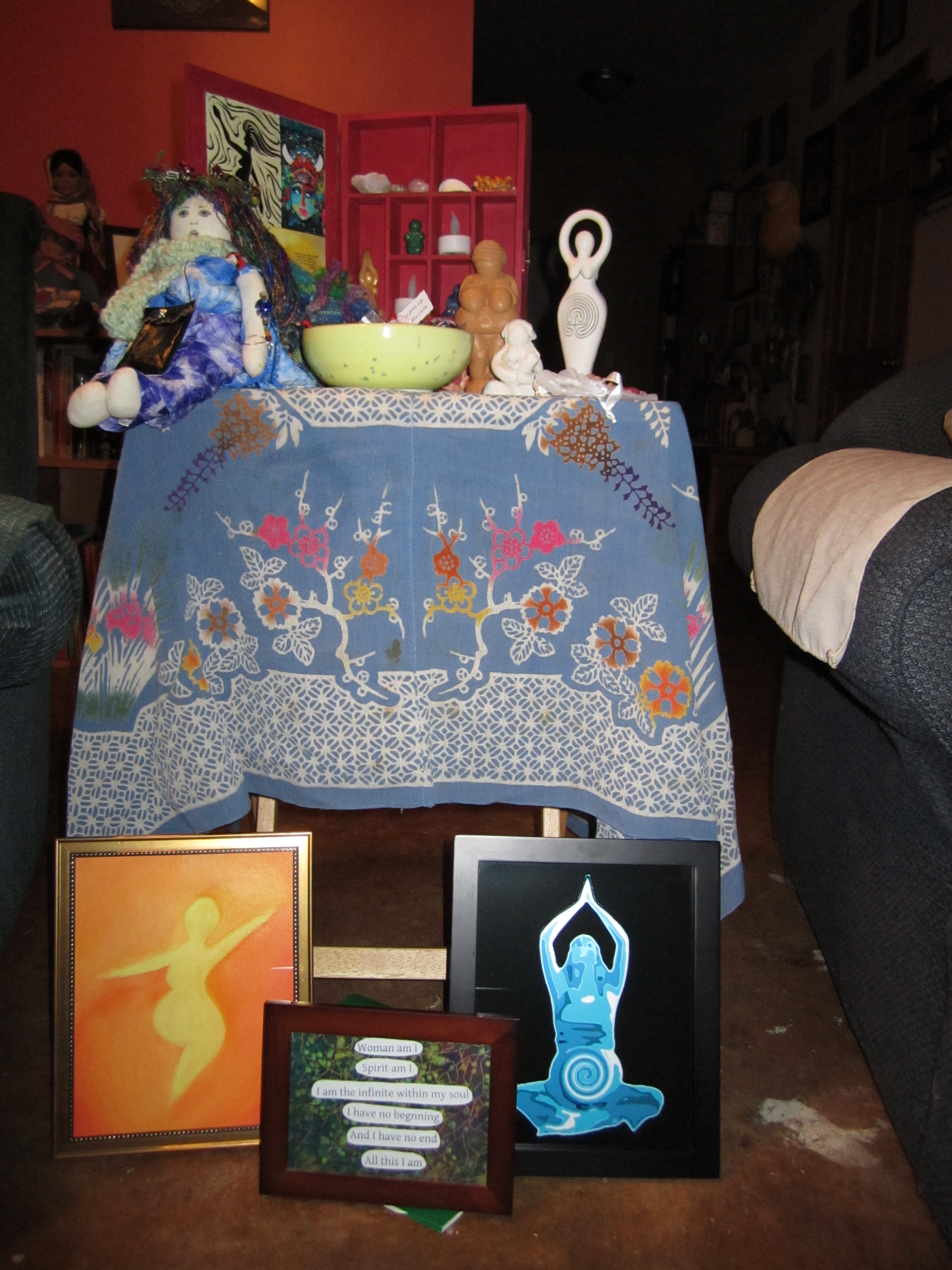
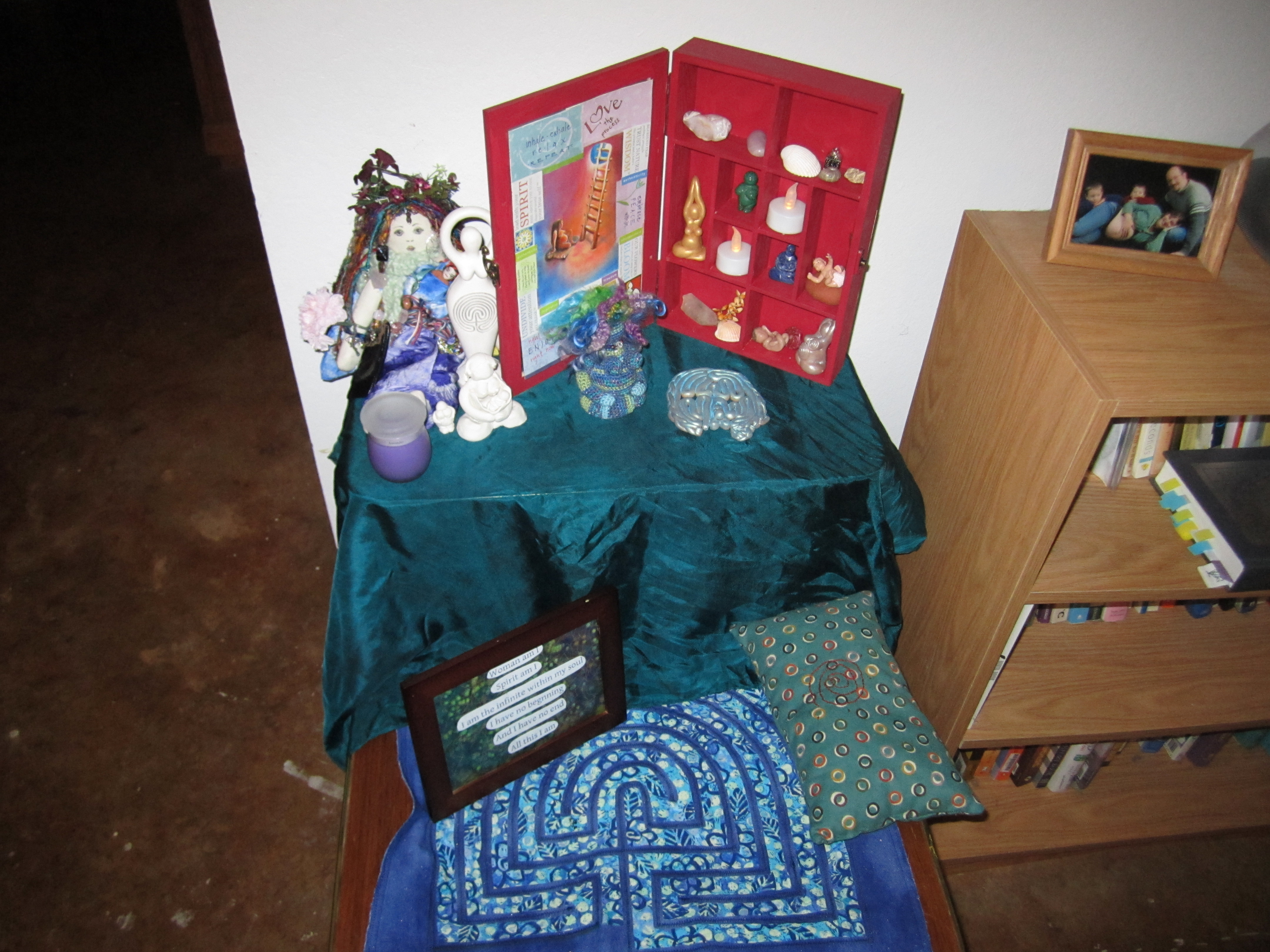
    Birth altar table with many lovely new additions!

    Birth doll adorned with small items from all the guests.

    After the ceremony, I set up a different table close to my "birth nest" spot.

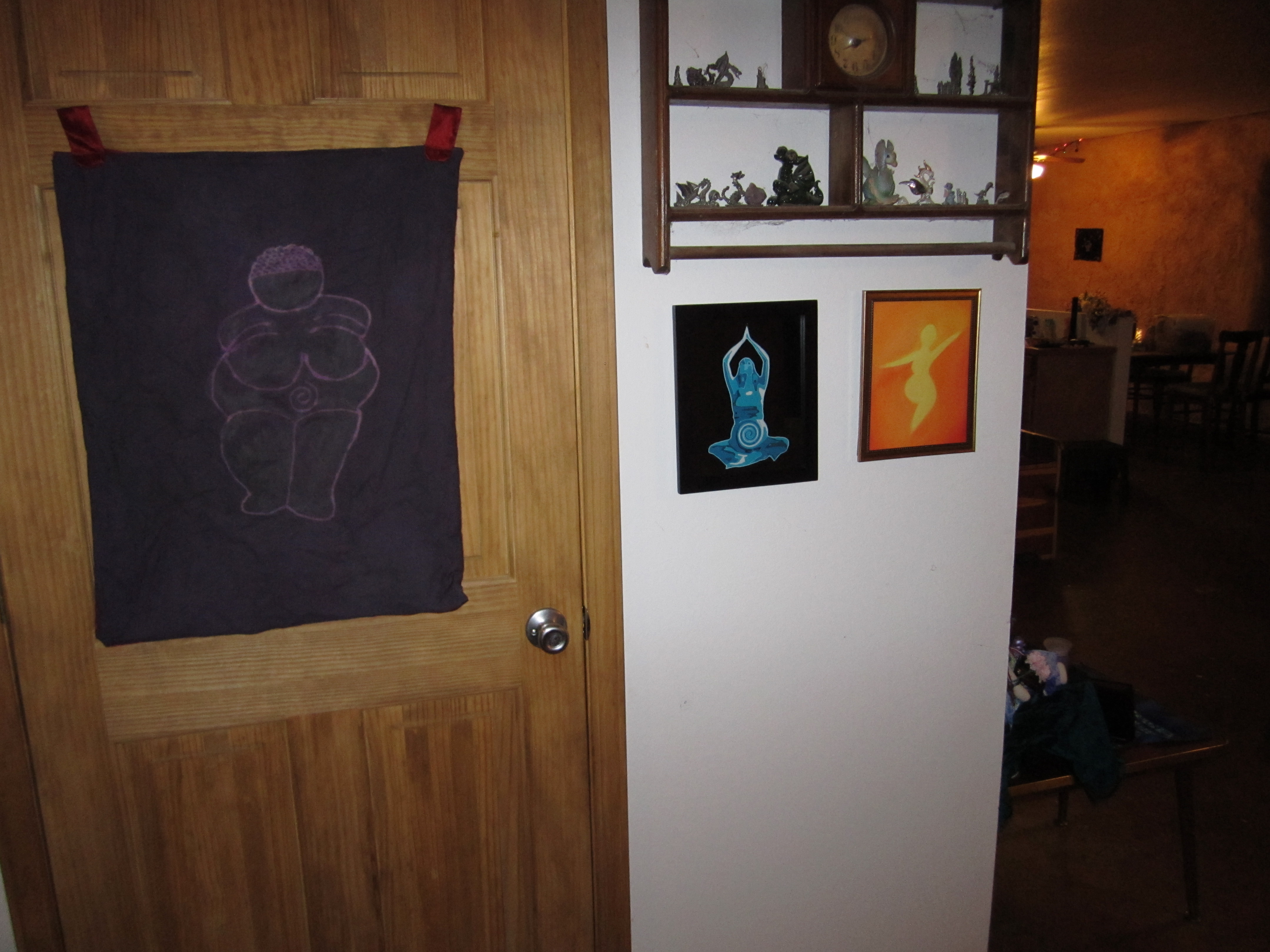
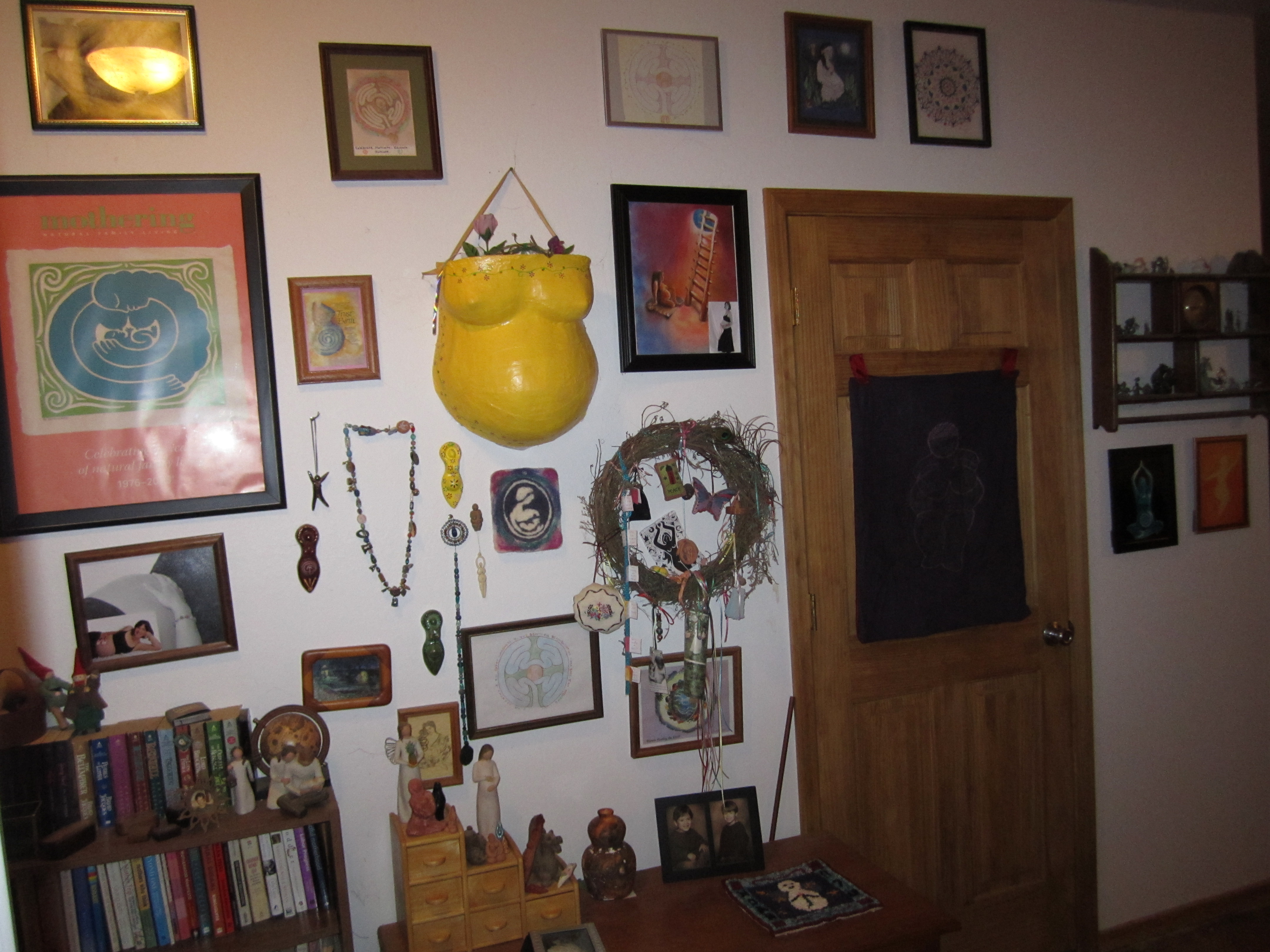
    I hung these three lovely birth art pieces on the wall right around the corner from my little table. The Willendorf wallhanging is from my friend Trisha, the super cool photo from my friend Karen, and the firey pregnant woman painting from my lovely future sister-in-law, Jenny.

    My whole birth art wall/gallery.

    I wish I would have taken a picture of all the lovely and tasty food that was there for our feast as well! It was a beautiful, special day and felt like an amazing launching point on my upcoming birthing journey 🙂

    Adventures in Birth Art…

    Celebrating pregnancy mandala

    This has been my most art-full pregnancy and that has been so much fun! I’ve made polymer clay birth goddess sculptures galore, some womby finger labyrinths, drawn a number of black and white mandalas (see example to right!), made a specially decorated birth altar, and also made a belly cast. Each one of these projects has been meaningful to me in a special way. At my blessingway/mother blessing ceremony this past weekend, I was touched to be gifted with many birth art projects made for me by my friends. Really wonderful (more on this later, I promise!).

    A little while ago, I wanted to incorporate the labyrinth metaphor into one of my sculptures, but was unable to make a tiny enough labyrinth to stick on her belly the way I envisioned, so she ended up with a double-spiral instead:

    Spiral belly figure sitting on spiral birth symbol aromatherapy pillow gifted to me by my friend at my blessingway ceremony.

    My current “issue” that I decided to work on through art is with pushing the baby out. I have never found pushing an enjoyable part of labor and the feeling of the baby’s head crowning to me is intense and scary and has—in the past—resulted in injury to my body that takes a long and challenging time to recover from. This is not a part of my birthing time that I am looking forward to. During my birth with Noah, since he was so small (15 weeks) there was no physical harm resulting from pushing him out, but there was the new association formed with having to “let go” of my baby this time in a very emotionally painful way.

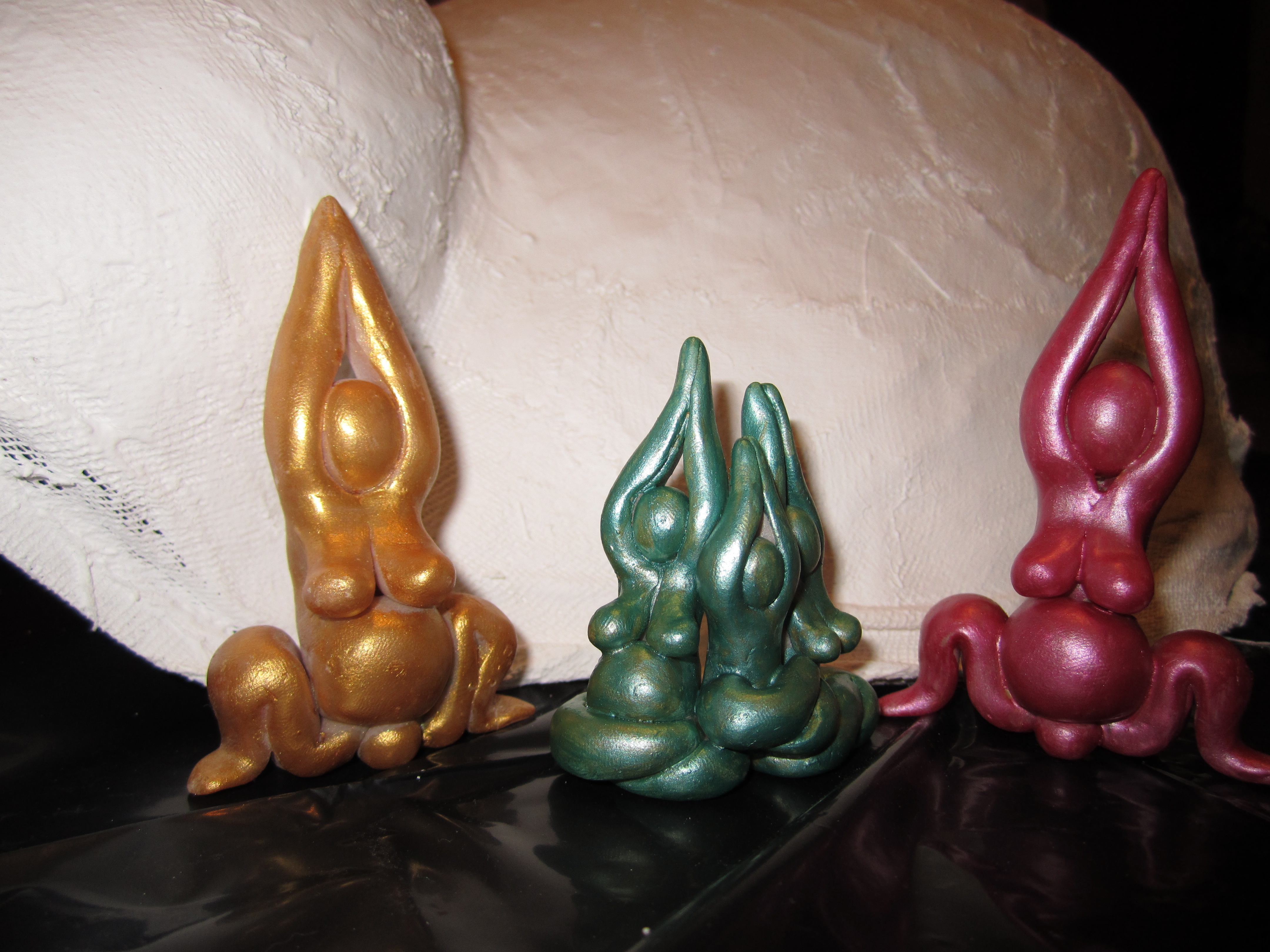
    So, I’ve been doing some mental work with myself about pushing, as well has having listened to my Hypnobabies CD about pushing the baby out. This baby is doing a very extreme cervical pressure thing every night and when I experience that, I consciously relax and release rather than hold tension in my pelvic floor. I’ve also been doing a birth visualization in which I envision the baby gently gliding out 🙂 So, I decided it was time for some Crowning Mother birth art. I made two sculptures, intending one as a doula gift and one for myself. I loved them while they were uncooked, but alas, I tried a new method—I mixed the polymer clay pigment with glaze and then I boiled them. Now, boiling has worked well previously, but I’d never done it with glaze before. They came out looking like they had peeling skin and were all mottled and discolored looking and very ruined to my eyes. I ended up deciding the one with gold pigment was still okay as she was (she has a peeling place on her back, etc. and you can see in the picture how her pigmentation is messed up/uneven):

    First attempt at a Crowning Mama...

    The second one was so discolored and bad looking, that I used acrylic paint to paint her pink:

    Pink mama

    She looks all right, but I still remember how she was supposed to look! (hmm. Do I sense a message here about how I might feel about my own unrepaired past tears? I remember how I’m supposed to look…)

    I know they look like they’re sitting on their babies’ heads, but that was the best way I could do it to make them be able to be stable and freestanding.

    I also made a three generations sculpture that was supposed to be a gift for my mom, but again had with the bad glaze/pigment issue. I ended up painting it green and don’t know if I will end up giving it to her or not (she saw it by mistake, because I had it sitting on the counter still when she came over):

    Triple figure

    Here all of them all together with my belly cast as backdrop 🙂

    While I was at the painting, I also painted a mother-baby figure that my friend Summer made for me as a blessingway gift (don’t I have nice friends?! This was one of her first attempts at creating birth art and I was touched that she gave it to me! She left it white, saying that I could paint it if I wanted to. So, I painted it sparkly purple :))

    I decided to redeem myself artistically by making a new Crowning Mama figure the following day. This one I applied pigment to in my usual way and decided to bake. Interestingly, I accidentally set the oven for 350 degrees, rather than the normal setting for polymer clay! Yikes! When I got her out, the tips of her hands were smoking! (I’m reaching now, but perhaps some kind of subtle “ring of fire” issue being manifested here…;))And, the pigment turned from purple to blue in some places, which actually isn’t a bad effect, but is also not normal! And, I am critical of the shape of her arms—too fat, long, and no graceful taper like some of my others.

    Now, I have to decide whether I’m going for round three or not! (Perhaps there is a lesson to be found here in that birth isn’t supposed to be perfect and neither is birth art.) I feel like accomplished my original goal, which was to make a positive crowning/pushing image for myself—I thought all kinds of helpful, “open” thoughts while creating this last one especially and imagined welcoming the feeling of the baby’s head, rather than feeling fearful of it! So, she reminds me of that feeling. And, maybe she—and thus, myself–are actually good enough after all.

    Belly Cast

    I feel like I have about 15,000 blog posts that I want to write before my new baby is born! I’m also trying to add content from articles that I’ve had published over the years—some of my best stuff is in those articles and I feel like sharing the pre-print versions on my own website at last! Those things can obviously wait, but the posts that I have swirling around that have to do with pregnancy, I want to post NOW, while I’m still pregnant and while the feelings are fresh, not as retrospective posts later. It has been a different experience to blog while pregnant and it has definitely shifted the direction and tone of a lot of the posts I make to this blog—much more personal and less educational. I’ve also found that family and friends have begun reading my blog during my pregnancy, when they didn’t before, so I also like sharing things with them in this way.

    Since I only have about 20 minutes right now, I’ll go with the shortest subject first, not the one I most want to write about (which is my blessingway last week—however, I think I feel a little too filled with emotion over it to really write about it the way I’d like to do, but I do have plenty of pictures I want to share).

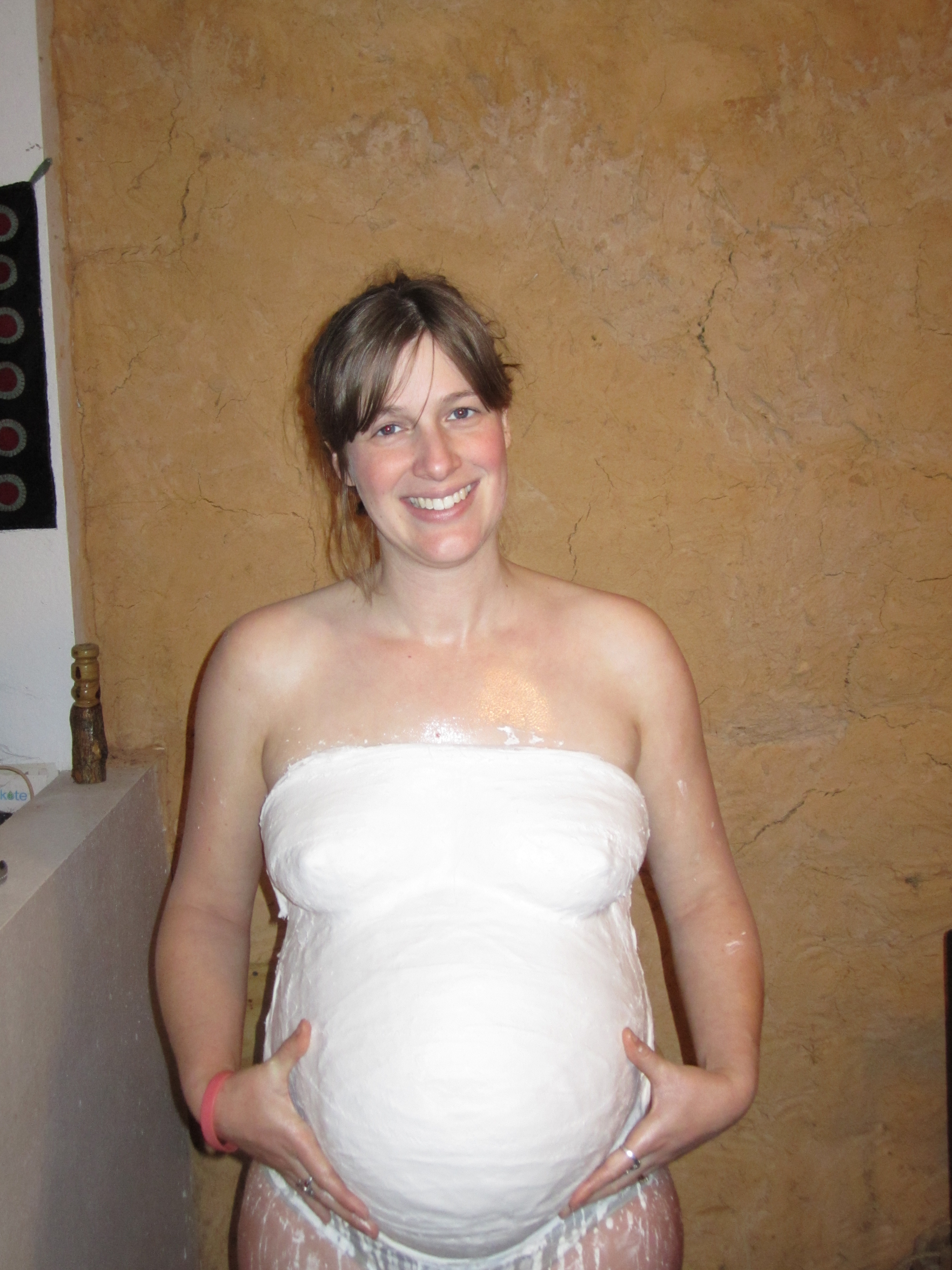
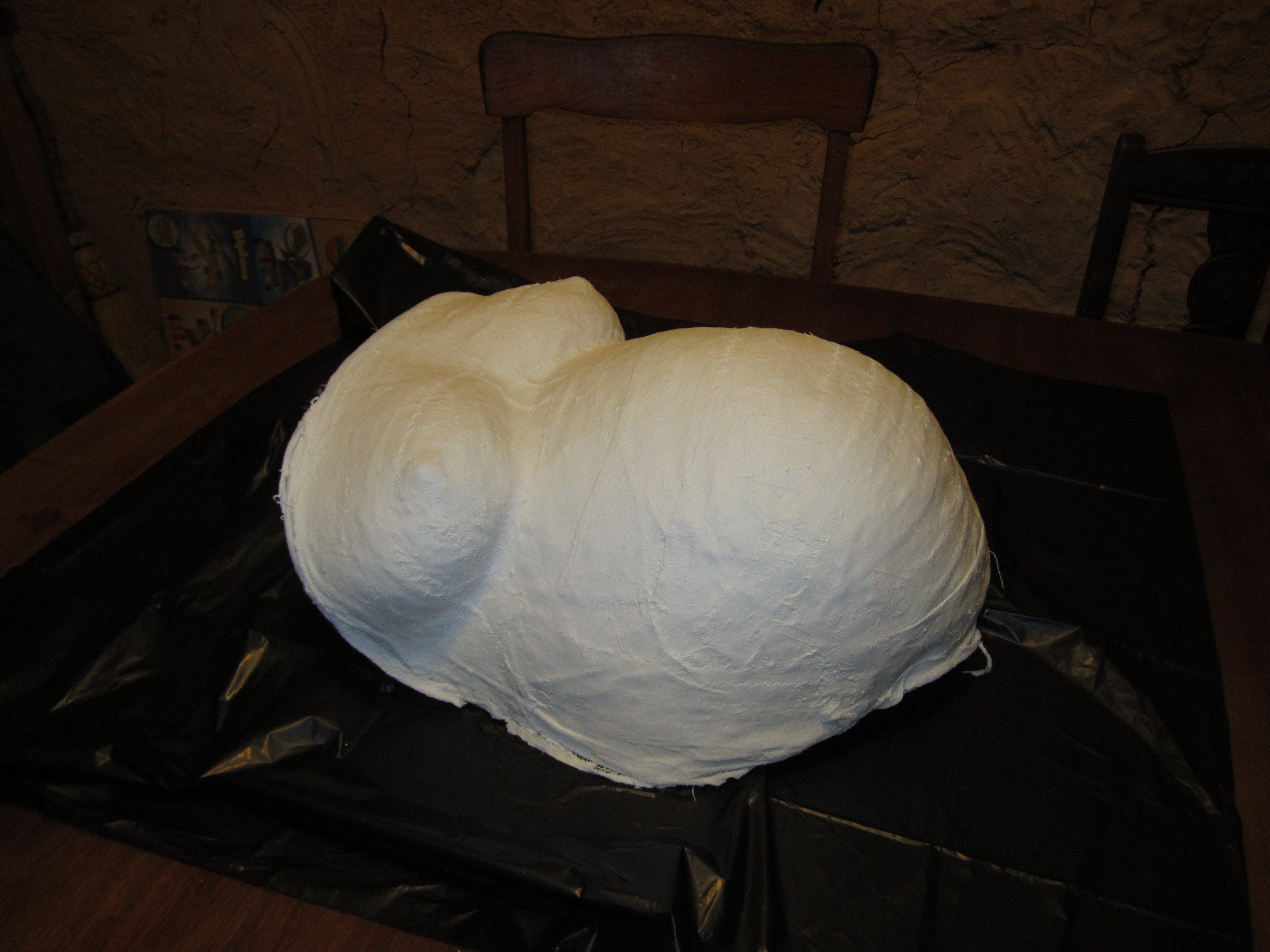
    On Sunday afternoon (38w1d), we made my belly cast! I seriously underestimated what a chilly experience it would be to make a

    Trying to look enthusiastic despite the trickling...

    belly cast in January! Yikes! My only other casting experience was in May (2006)—very different. For this one, we decided to make it with me standing up (for fullest shape) and so I stood in front of the furnace vent, but it didn’t help much. Even though the water was warm, it quickly chilled down as soon as the plaster was applied and ran in slow torturous trickles into my underwear and then

    down my legs and into my socks. My heels also started to feel stone bruised from standing on the hard floor without moving (I did stand on a towel, but it didn’t help much!). If I shifted

    them, Mark would complain that it was messing up his sculpting!


    I’m really glad we did it and I’m glad to have an accommodating husband who doesn’t think something like this is silly or weird. I do not plan to actually paint the cast until after she is born. I am thinking of doing a black and white design on it similar to the mandalas I’ve been drawing during this pregnancy.


    Finished (still unpainted) cast


    Aside from “buying car seat” (which is winging its way here right now via site-to-store shipping), making the belly cast was my very last pre-baby “to-do.” Of course, I’ve now added, “finish blessingway and birth art blog posts…and a couple more…and maybe a couple more” to said list!

    Birth Lessons from a Chicken

    Birth Lessons from a Chicken

    by Molly Remer, MSW, ICCE, CCCE

    Originally published in Midwifery Today, 2009 Spring;(89):49

    “Should we just let her sit on them?” my husband asked. He had been struggling to keep a broody hen off her nest for almost two weeks.

    “I always vote in favor of the mother,” I told him. So, we stopped trying to oust her. My husband gathered up six random eggs from the coop and put them under her and we let her sit.

    We consulted our book on raising chickens. The chicken book had very little encouraging advice about “natural incubation.” After reading it, we learned that she was likely to let the eggs get too cold causing them to die, or perhaps just chill a part of them causing the chicks to have deformed feet. If she did manage to hatch them, they will probably get bacteria in them from the “unsanitary” nest site and get “mushy chick disease.” This is, of course, if the eggs happen to be viable at all, which is improbable. It is recommended not to let her sit and if she persists to either cull her (kill her), or to just let her sit there until she dies of starvation trying to hatch infertile eggs (and therefore culls herself). The book also informed us that if she has feathery feet (she does), she will probably knock the eggs out of the nest by accident and break them. Also, she should definitely be sitting in the spring and not the dead of winter. After studying the book, we are left with a clear sense that incubating eggs artificially is the preferred way to go and that “natural incubation” is fraught with difficulty and dangers.

    However, there our chicken sat in the unheated, but well built and insulated chicken coop as the January temperatures outdoors reached -2F. We concluded that she probably had a 5% chance of actually hatching anything and I felt sad for her.

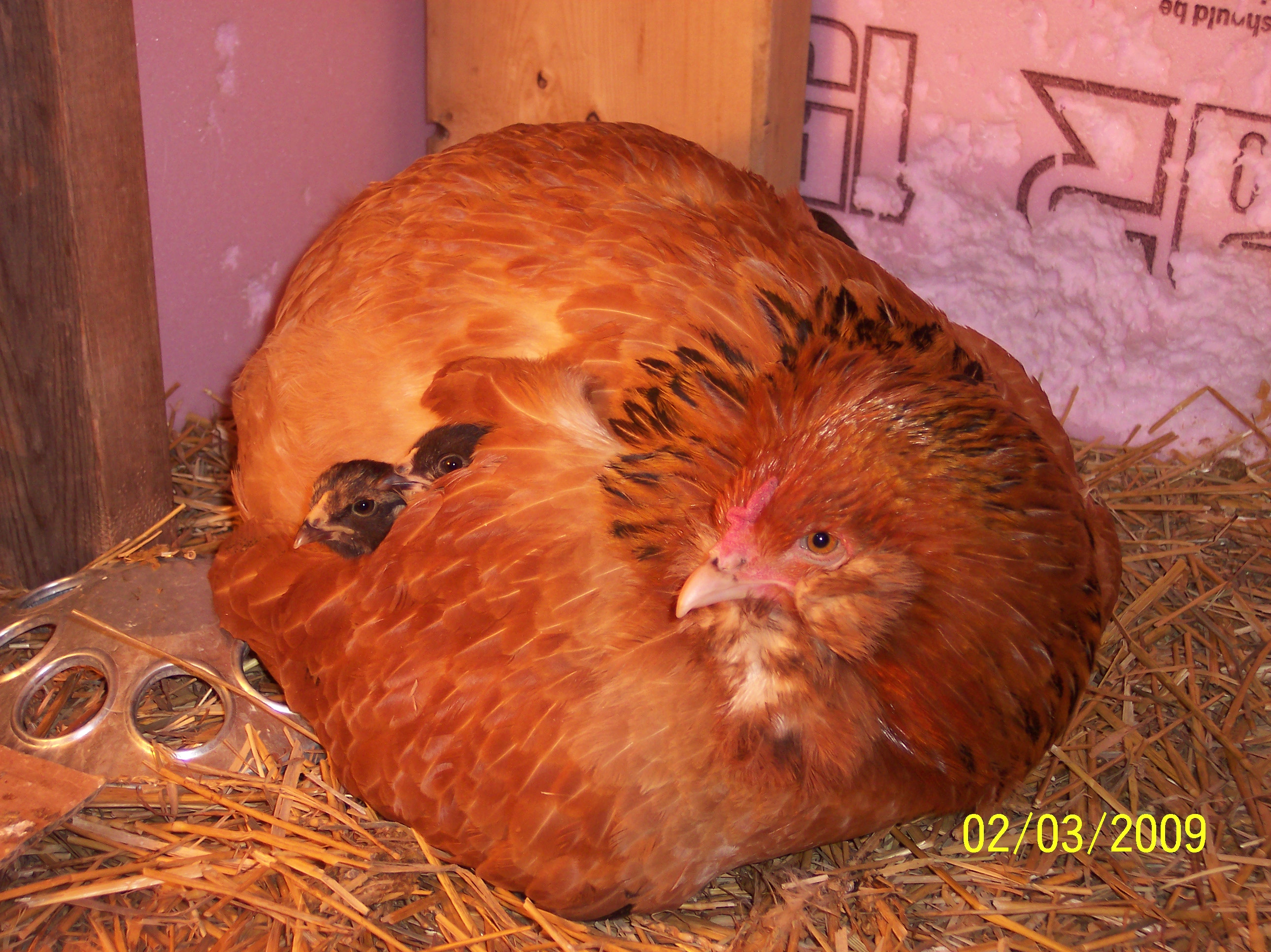
    Then, one morning when my husband went to feed the chickens, he heard a funny noise. He looked at the broody hen and from beneath her, a fuzzy head appeared. Then two. Eventually, four. In this cold, cold weather at the wrong time of year with the wrong

    The mama hen and two of her chicks

    kind of feet and the wrong kind of eggs, she did it! We didn’t trust her, or believe in her. Our book and the experts didn’t either. However, her inherent mothering wisdom won out—it trumped us. At the risk of excessive personification, it truly seemed that she had believed in herself and trusted her instincts (or perhaps, that Nature believed in itself).

    Perhaps we could have had the same result with an artificial incubator—a tray that rotates the eggs, instead of “clumsy” feathered feet; a properly temperature controlled unit instead of the heat of her own breast; a sterilized box instead of a wooden coop with an unscientific amount of possibly “germy” feathers plucked from her own body.

    My husband ran to get the rest of the family and as we watched that first small fuzzy baby with its eyes bright with life, I was awash with the parallels—the book tells her that her pelvis will be too small, labor will be too painful, her skin won’t stretch, she might have GD, there might be any manner of complications, maybe she should elect to have the baby surgically. Why all the fuss about doing it “naturally” anyway?

    Then, as we continued to stare in amazement, the mama hen clucked to her baby softly and fluffed her wings around it until it disappeared beneath her with the others. Isn’t this the birthright of every new baby of any species? To be snuggled immediately after birth into the warm embrace and near the breast of the female body that has given it life? The body that has cared for and nurtured it so lovingly so that its head may finally peek out into the world?

    If our chicken were to write a book about hatching babies—or about giving birth—perhaps her section about natural incubation would read:

    Maybe she knows what she’s doing.

    Maybe you should trust her.

    Maybe she can do a better job with her own body and her own babies than you can.

    Maybe she can do this all by herself.

    Molly Remer, MSW, ICCE, CCCE is a certified birth educator and activist. She is editor of the Friends of Missouri Midwives newsletter, a breastfeeding counselor, and the mother of two young sons and a baby girl on the way. She loves to write and blogs about birth at https://talkbirth.wordpress.com, midwifery at http://cfmidwifery.blogspot.com, and miscarriage at http://tinyfootprintsonmyheart.wordpress.com.

    This is a preprint of Birth Lessons from a Chicken, an article published in Midwifery Today, 2009 Spring;(89):49. Copyright © 2009 Midwifery Today. Midwifery Today’s website is located at: http://www.midwiferytoday.com

    Book Review: Gentle Birth Companions

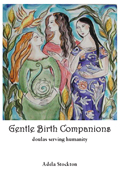
    Book Review: Gentle Birth Companions: doulas serving humanity
    By Adela Stockton
    McCubbington Press, 2010
    ISBN 978-1-907931-00-0
    104 pages, paperback, £13.00 (worldwide)
    http://www.adelastockton.co.uk

    Reviewed by Molly Remer, MSW, ICCE, CCCE
    https://talkbirth.wordpress.com

    Gentle Birth Companions is the first book “written about the doula movement beyond the US” and as such it was a fascinating read. I hadn’t realized how ethnocentric my own perceptions were about the role and history of doulas and I previously assumed that the “doula movement” was essentially synonymous with the “doula profession in the US.” Not so! Indeed, Stockton discusses the way in which in the US, doula professional organizations strive mainly to be acceptable to the medical community, whereas in the UK the doula operates outside of (or parallel to) the medical system. And, she provides an interesting analysis as to whether doulas should be referred to as “professionals” in the first place (this is also due to a difference in what the word means in the UK compared to the US). She expresses several criticisms of certification or even of specialized training programs, feeling that professionalization builds additional, unnecessary layers of bureaucracy into the maternity care system and that the role of a doula should be the role of a lay woman. She also posits that the role of doula actually represents a return to the role of traditional midwifery—what midwifery was supposed to be and has now become removed from politically, socially, and culturally.

    Gentle Birth Companions is divided into three sections. In the first, Grassroots, it explores the origins of the doula, the 21st century doula (including doula preparation and training), the UK “brand” of doula, and the wider doula community (thoughts about a global movement and also about doulas in the developing world as well as the industrialized world). The second section, Guardians of Gentle Birth?, explores the doula’s role both antenatally and postpartum and the return to “traditional midwifery” represented by the role. In the third section, Doula Tales, some UK doulas share birth stories , experiences, and thoughts in their own words.

    Gentle Birth Companions is an excellent look at the “politics” of the doula movement and the professionalization and motivations of such, as well as at the role and purpose of the doula in women’s lives.

    Disclosure: I received a complimentary copy of this book for review purposes.