Archive | February 2012

All That Matters is a Healthy Husband (or: why giving birth matters)

It is your wedding day. You have been planning this day since you got engaged nine months ago. You are happy, excited, and a little nervous. When you get to the church, you are told that it is necessary to switch your wedding to the courthouse instead—it is disappointing, but the minister’s assistant reminds you that the courthouse is probably a safer location for your wedding because there are more people on staff there to handle any problems that might arise. When you arrive, you are told that your minister isn’t going to be there for the ceremony after all, but there is a perfectly good justice of the peace available instead.

You ask when the ceremony can begin and the clerk tells you not until your fiancé’s heart rate has been monitored for twenty minutes—“We need a baseline strip on him, hon. After all, you do want a healthy husband out of all this, don’t you?!” she says.

You are asked to change out of your wedding gown and into a blue robe. When you express your dismay, you are reminded that your dress could get messy during the wedding and also, “Why does it really matter what you’re wearing? In the end you’ll have your husband and you’ll be married and that’s really what counts.”

Next, the clerk starts an IV in your hand because, as she explains, you might get dehydrated while you wait for your fiancé.

I have my favorite juice here, I’ll drink that instead,” you reply.

No, no dear. No juice. You could aspirate it and die if you end up needing surgery.”

SURGERY!” you exclaim, “Why would I need surgery? I’m just getting married!

The clerk gives you a knowing glance, “Honey, about forty percent of women who get married here need surgery before their marriages are finalized. This is an excellent courthouse! We do everything possible to make sure you have a healthy husband when you leave here. Isn’t that what you want?

Yes,” you reply weakly.

Finally, the other clerk signals that your fiancé is ready. You turn to look at him and see that he has a monitor strapped to his chest to monitor his heart rate and that he has an electrode on his scalp. You smile at him and prepare to say your vows—you’ve waited for this moment for so long! But, as you begin to speak, the clerk tells you to stop making so much noise. You start to cry in confusion and embarrassment and she tells you that you really need to get control over yourself.

She calls over several other clerks who stand near you and they all begin chanting loudly, “Say I DO! Say I DO!

Wait,” you protest, “What about our vows?”

No time for that—you’ve got to get married as quickly as possible. Husbands can only bear to stand at the altar for a short time before they start showing signs of distress—you wouldn’t want anything to happen to your husband would you? Now, say ‘I DO,’ say ‘I DO’!!

So, you say the words, feeling a sense of dismay at it not being like you had planned, but excited to finally be married to your beloved. You turn to your new husband and reach out for him eager for your first married kiss, but the clerk grabs his arm and tugs him away after her.

Wait!” you call, “I want to see my husband!”

Sorry,” is the reply, “He needs to be taken to the new husbands’ lounge for observation.”

Observation of what?”

Weddings are stressful for husbands; we need to make sure he is all right. Now wait here, while the other clerk brings you a wheelchair to take you to your waiting room.”

Instead of leaving for your honeymoon, you end up staying at the courthouse for three days. You keep asking to see your husband, but the clerk tells you he needs to gain some weight before he can leave and that he also needs some more blood drawn. She also lets you know that he has finally stopped complaining about his spinal tap.

Spinal tap?! Your dismay shows on your face and she tells you, “Come on! You’ll be married for the rest of your life! A few hours of separation isn’t going to hurt either one of you. You’ll have plenty of time with him after you get home and will probably just get fed up with him then! What really matters now is that your husband is healthy.”

Yes, of course…

Finally, you get to go home, but you feel distant and sad. Your wedding was nothing like you’d dreamed of and you feel disappointed and betrayed. You enjoy being married and snuggling with your new husband, but you keep thinking about your wedding day and all of your ruined plans to make it special. When you try to tell your mother how you feel, she tells you that you should be grateful, at least your husband is nice and healthy.

When you tell your best friend about your disappointment, she tells you it is time to get over it—“Your wedding is just one day of your entire life. It is the marriage that really matters in the end. You only get married once, but in the end, you’re married and you’ve got a healthy husband and that’s really what counts, not how you get there!

You tell another friend about your ruined plans and she reminds you that you are lucky your husband is healthy and that it is selfish of you to keep thinking about your wedding. It is over and you’ve got your nice healthy husband to keep you busy now.

Yes, but I feel like I missed out,” you venture.

On what? Weddings are SO overrated. It isn’t like you get a medal for having a beautiful wedding or anything. People have weddings every day.”

You stop sharing your feelings, but you can’t shake the memories. What you expected to be a beautiful day filled with love and celebration was not and you feel a real sense of grief at the loss of your dreams. You know you shouldn’t feel this way. You know that what really matters is your healthy, happy husband, but you keep wondering if your wedding really had to be that way. Yes, you love your husband and you are so happy that he is healthy, but you also wonder if that really is all that matters. Don’t you matter too? Doesn’t your relationship matter? What about respect, dignity, love, and self worth? Don’t those matter too? Wasn’t this a special life transition for your family? Wasn’t it the beginning of a special relationship together and couldn’t that relationship have been celebrated, honored, and treated as worthy of care and respect?

————————————————————————————————————

Notes: I originally wrote this essay in 2007. It was retained for publication by Mothering magazine, but did not end up making it in before the print publication ceased. It was then retained for publication by Midwifery Today, but has not yet appeared. I decided it is FINALLY time for it to see the light of day!

I was inspired to write this essay after reflecting upon the similarities between weddings and births—both mark the beginning of a new form of relationship and a change to the family structure and to individual roles in society. Yet, in our culture, one of these transitions is celebrated as a milestone of adult life and the value of honoring the first steps in life as new partners in a relationship is a given. The other is institutionalized and mechanized and the partners’ individuality is minimized or ignored. Much preparation, energy, time, and finances are invested in planning a lavish wedding and you are expected to expect things to go beautifully, perfectly, and as planned. If they didn’t and your wedding was ruined, most people would say, “It is awful that your wedding was ruined! Wow!” and not call into question your love of your husband or your commitment to your new role as his wife. The wedding ceremony is respected as having value in its own right. This is not true of birth, which is widely viewed as unimportant in terms of how it happens, as long as the result is a “healthy baby.”

Molly Remer, MSW, ICCE is a certified birth educator, writer, and activist. She is a breastfeeding counselor, editor of the Friends of Missouri Midwives newsletter, and a professor of Human Services. Molly has two wonderful sons and one delightful daughter and lives in central Missouri. She blogs about birth, motherhood, and women’s issues at http://talkbirth.me and is the author of the miscarriage memoir Footprints on My Heart.
Toddler Birth Art

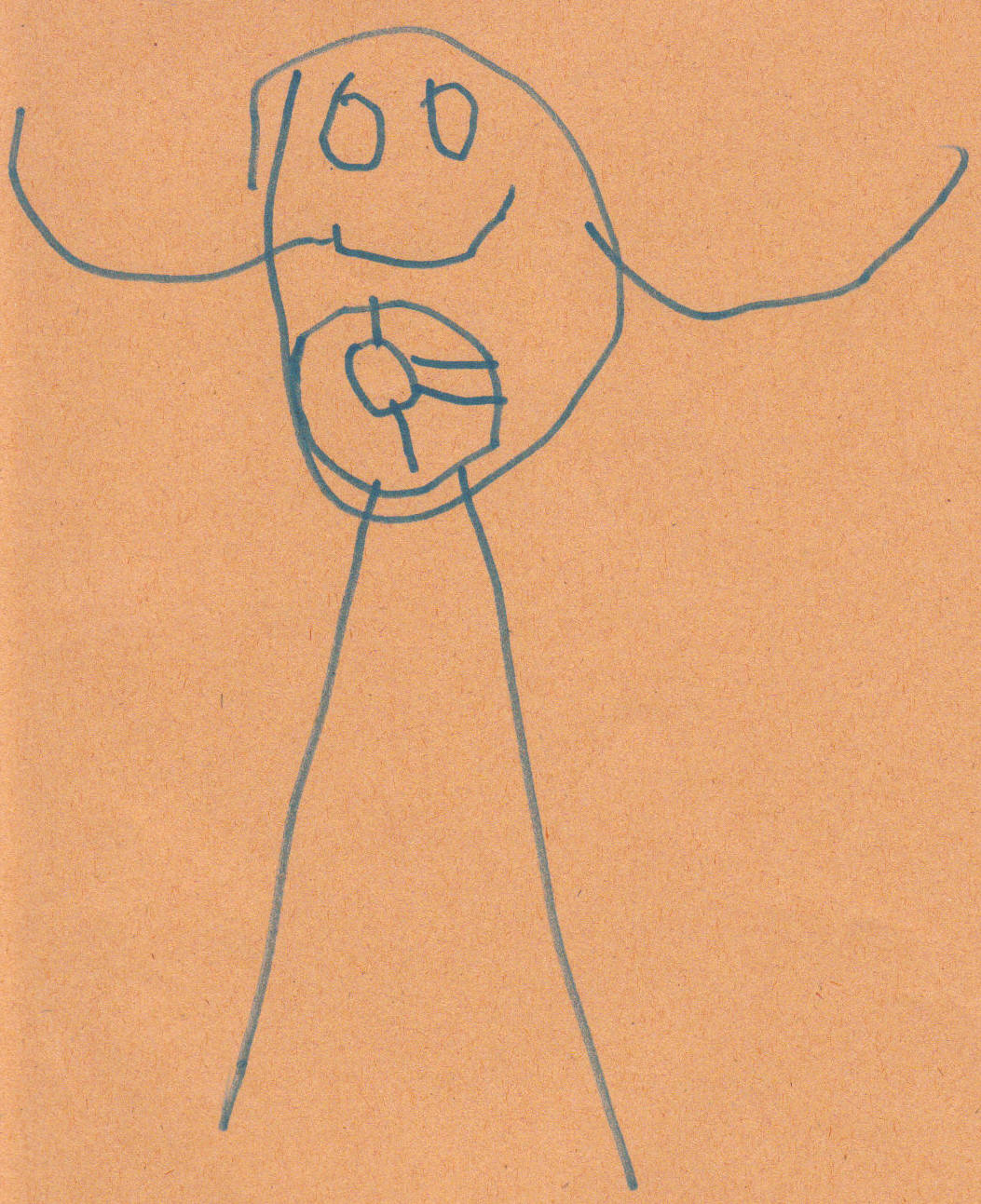
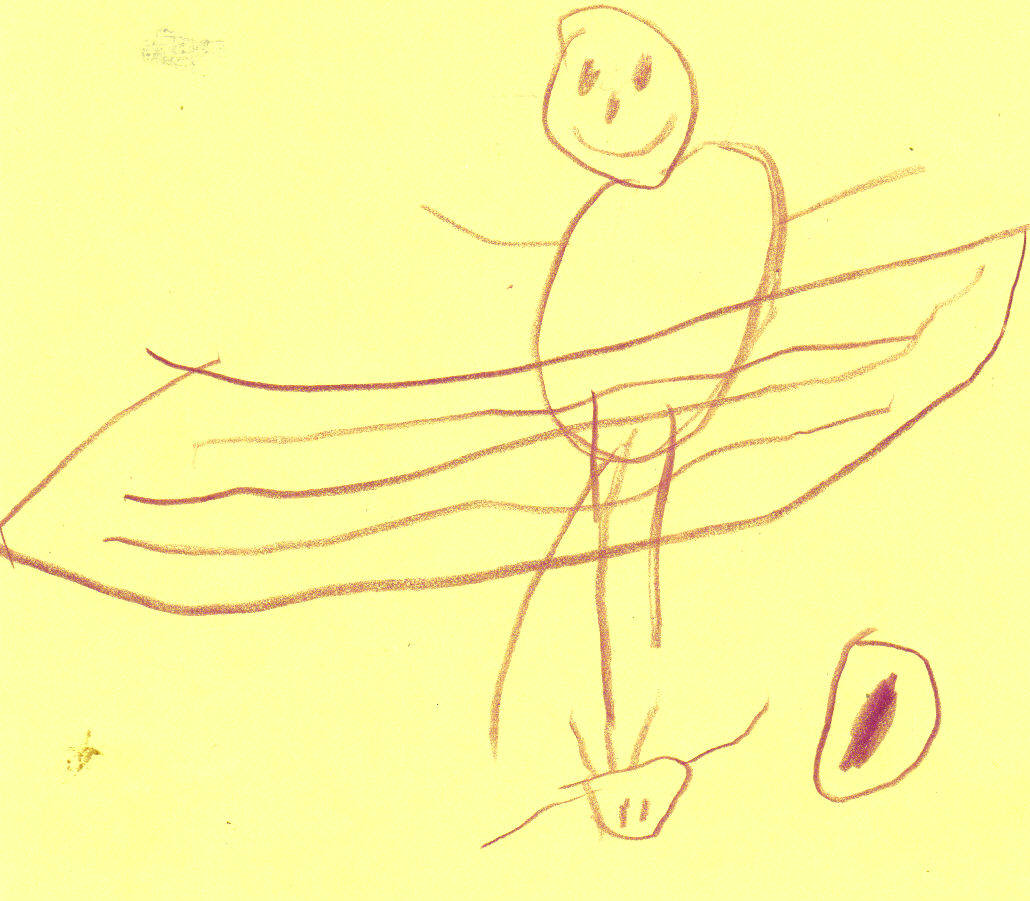
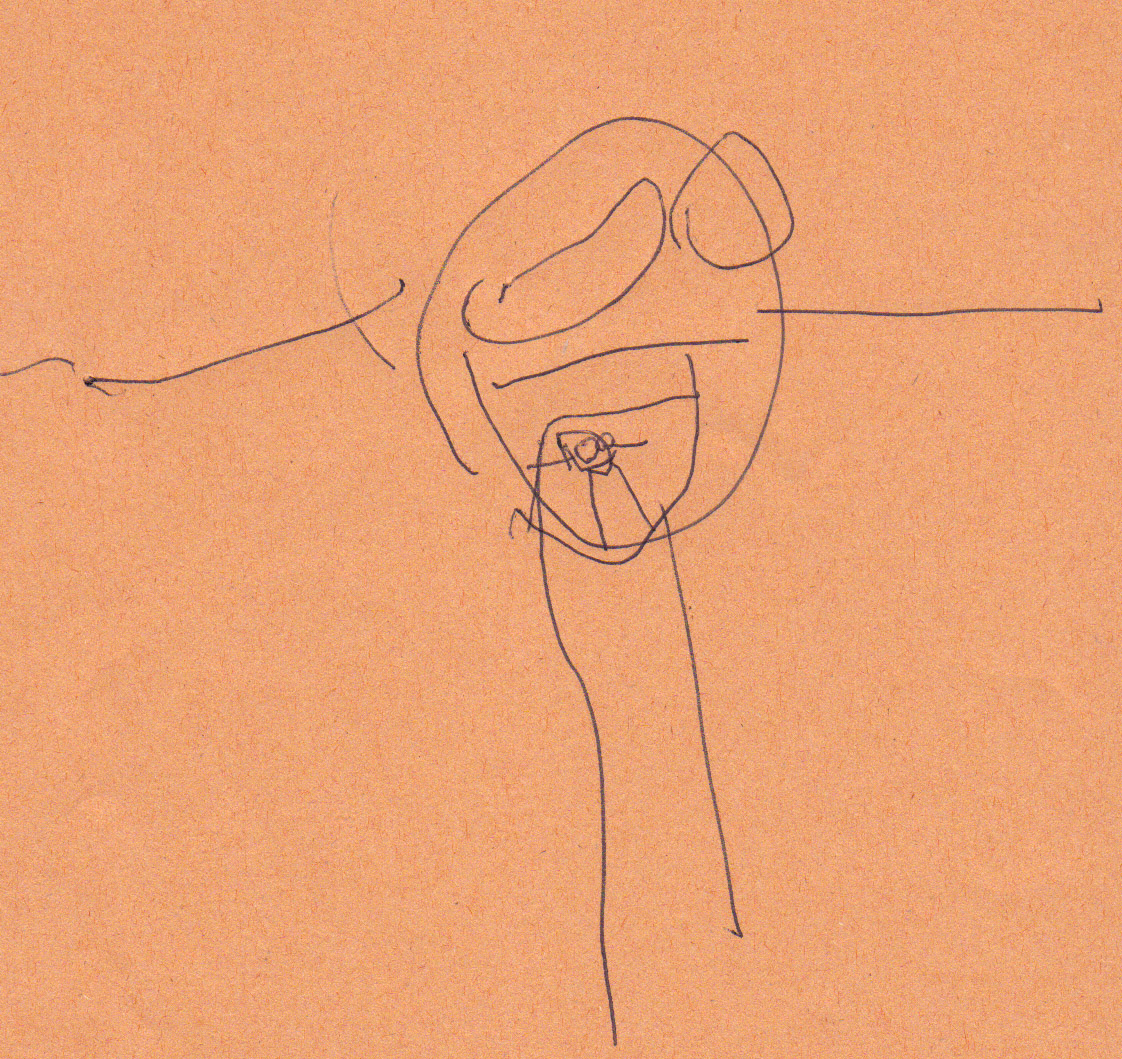
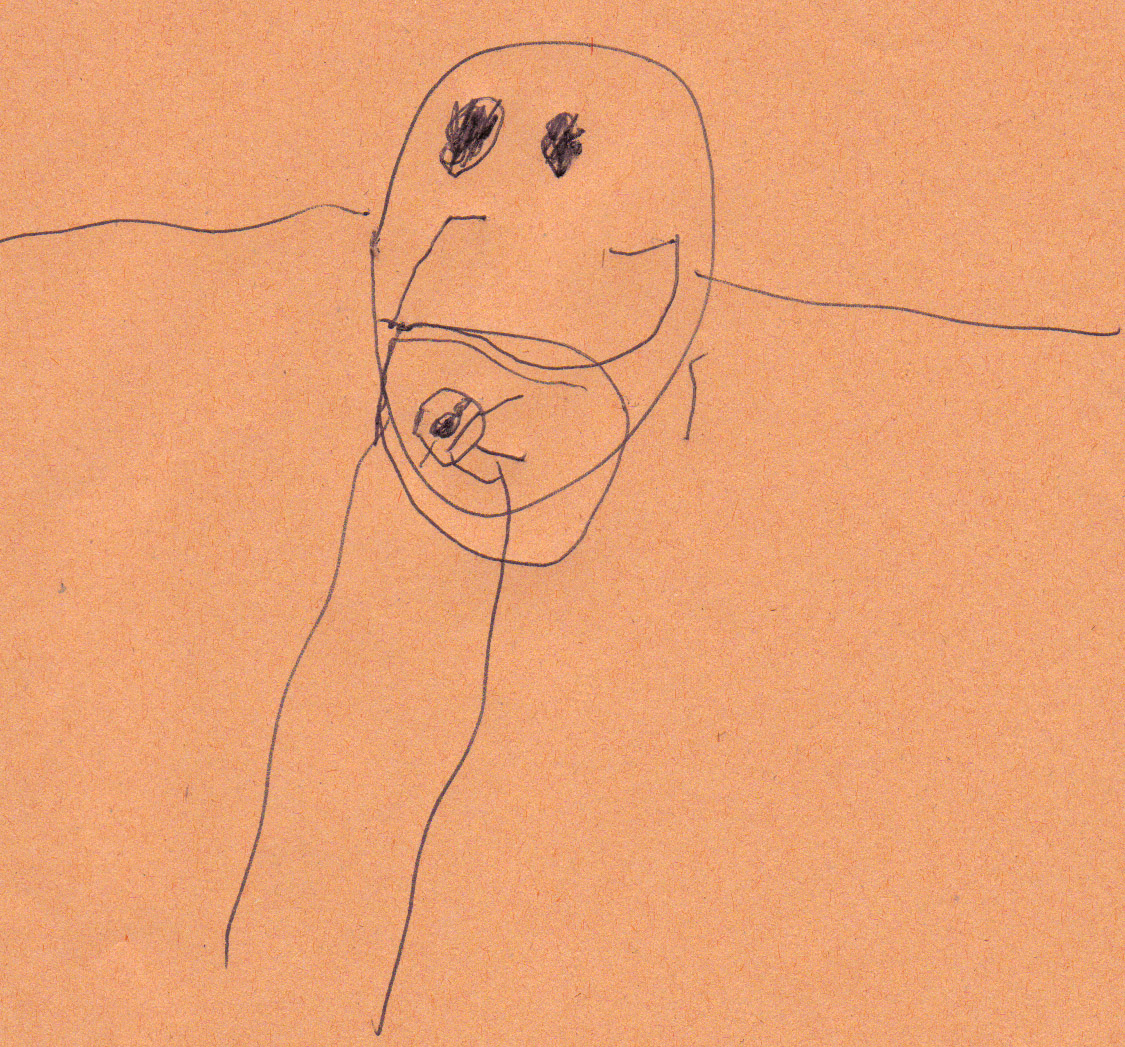
As I look at these drawings by my older son at ages 2.5 and 3.5, I feel quite a pang. This time has passed. He is eight now. He hasn’t drawn a picture like this in years. I didn’t fully realize at the time that he was drawing them that it was a one shot deal—looking at them gives me that familiar feeling of, but that was SO REAL. That was my life and my toddler and now our life landscape is a totally different one. Obviously, I guess I did have some recognition of the one shot nature, because I did save the drawings and have them to share this much later. In the first two pictures, which he drew before I gave birth to his brother, I love how the baby’s eyes match the mother’s.

I love how the baby looks like it is "floating" in this one.

After Zander was born, Lann got a little older and a little more skillful at drawing. I forget exactly when he drew this one, it was sometime during Z’s first year I think, and is obviously based on Lann’s own observations of the birth, rather than just the idea of “mama’s got a baby in there.”

Love the placenta in a bowl and the baby attached to the mama with cord (yes, I know the two are mutually exclusive, but I love these details anyway!)

I forget if I’ve ever shared Lann’s version of his own birth story here. I asked him about it when he was about two (so, before he’d ever seen a birth). Do you remember being born? He immediately said yes and I asked him what it was like. He said:

Swimming.
Swimming down out of mama.
Crying.
Nursies.
Happy now!

This was a surprisingly accurate thumbnail snapshot of his birth. He cried when only his head was born. I brought him to my chest and said, totally instinctively with no pre-planning of the name, “do you want some nursies, baby?” and he immediately latched on and nursed. 🙂

These pictures and these thoughts are exactly why I write so much and why I have a semi-obsession with storing papers, drawings, writings, the printed word (I joke about being a personal archivist), it is because seeing them or reading what I’ve written later, brings that so real feeling back to me and that life that I lived, those babies that I raised, are vivid again, rather than faded, fuzzy, or forgotten.

Guardian of the Womb

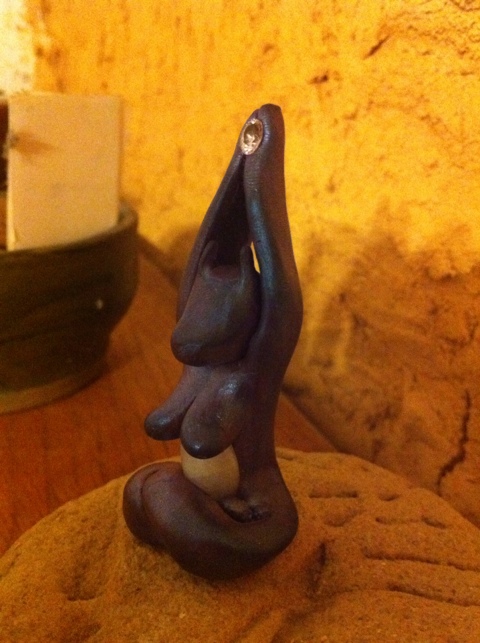
While I experienced my first miscarriage-birth as a powerfully transformative experience, my second miscarriage in 2010 was a terrible blow that brought me into a very dark and distressed place. I still have never managed to write much about this, even in my miscarriage blog/book. Following the second loss, I started reading a really wonderful book called Wild Feminine by Tami Lynn Kent. It contains many visualization exercises centered around healing our “pelvic wounds” and connecting with our “pelvic bowl.” One exercise was about visualizing the “guardian of the womb.” As I read the phrase that night in bed, I immediately experienced a strong, clear image of a black, stone goddess figure with upraised arms and a stylized jackal head. At first, I was saddened by the image, feeling that my subconscious had identified my uterus with Anubis, the God of Death, rather than a place of life and birth. I felt shaken by this spontaneous “vision” and felt like my body was perhaps telling me I would never have another living baby. However, I also intuitively felt like the figure I had seen was not, itself, threatening, but was actually serene and beautiful. After thinking about it for several days, I did a little internet research, wondering if there was a female Anubis or Goddess Anubis, since the “womb guardian” with the jackal head that I had seen was distinctly a female figure. I then discovered that apparently Anubis had a wife, not well known or much explored, named Anput. As I read about her, my heart eased and the message from my body about my womb’s guardian became a deeply meaningful message of comfort rather than despair—Anput was referred to as, “Guide and Guardian. A Bringer of Life and Order.”

I felt like maybe I should put a caution on this post–Warning: approaching woo-tastic territory–but then I decided that there was no need to denigrate or joke about something that was profoundly meaningful to me, even if it doesn’t involve language or imagery that speaks to everyone. Because it feels so personal and private, for a long time I kept the experience to myself. Then, I ended up writing about it for a class and found that I did feel ready to share the experience with others. It is interesting to me how there are some topics that require a significant amount of distance before I feel brave enough to write about them “out loud.” (I still haven’t managed to publish my part two article in my series on postpartum experiences/feelings and the things I wrote about in that post happened over four years ago! I also feel an urge recently to try to write about my experiences with tearing during my births–another one of those topics that is emotionally complicated and makes me scared almost to explore in writing.)

So, why did I bother writing about this womb guardian experience now? Well, because this weekend I felt moved to add to my birth art sculpture collection again, that’s why. I am extremely pleased with my new figure and I wanted to share her via my blog, but didn’t feel like she would make any sense without some explanation 🙂

20120207-154303.jpg

20120207-154314.jpg

Be the change

Spirit of my longing heart, help me to become a force of history. Like a drop of water let me merge and mingle in the currents of my particular time and situation and not hold back, but join what nurtures the earth and soaks the seeds of justice and peace. Let me be the flash point where the light begins to travel at great speed, igniting compassion, that others might see the power of goodness. Let me rush with the winds of change across the desolate plains of greed and selfish desire. Grant me the wisdom to know that the winds of eternal hope blow through my words and deeds. Let me join the sky with its watchful eye and be a witness to life affirmations wherever I see them. Give me the strength to say yes to even the smallest act of mercy. With these powers of earth, of light, of wind, of sky, I will change myself and become a gift of love and power to the story of humankind.
–Stephen Shick in Be the Change: Poems, Prayers, and Meditations for Peacemakers and Justice Seekers

As I clean out my desktop, files, and binders during my Facebook-off retreat, I’m uncovering many gems that I’ve saved to remember. This prayer above is one that I’m “saving” via this blog, rather than continue to store the paper on which it was written. I love prayers like this–written in broad, sweeping language that encompasses any manner of belief systems and that calls upon the natural world and our inherent sense of the mystery and magic of being alive with a sense of reverence and the sacred.

Right after typing this up, I came across a quote by Rachel Carson in Alexandra Stoddard’s Gracious Living in a New World: “What is the value of preserving and strengthening this sense of awe and wonder, this recognition of something beyond the boundaries of human existence? …Those who contemplate the beauty of the earth find reserves of strength that will endure as long as life lasts.”

20120205-141547.jpg

Motherful

“…browsing through a dictionary one evening, I came across a medieval word that has fallen out of usage. It is ‘motherful.’ It would be good to have this word back. We could use it as we use ‘wonderful’ or ‘beautiful,’ to describe something that startles us with its wonder or beauty. A mother might look impressively efficient as she turns up for her work. But when she is together with her child again, we may marvel at the change in her as she relaxes into being motherful.

It may be a challenge to struggle through transitional discomforts as we ripen into mothers. But the better we can understand ourselves, the more we shall be able to support one another–in being motherful to our children.” –Naomi Stadlen (“Learning to be Motherful,” in New Beginnings magazine, issue 2, 2009)

Stadlen’s book, What Mothers Do, is one of my top recommendations for new mothers. One of my favorite things about it is how she explores how culturally we lack an appropriate vocabulary of motherhood and ascribe more value to the other tasks of “getting things done” while simultaneously taking care of children than the multitude of subtle behaviors and actions that make up the nearly invisible act of mothering. She uses an example of a mother trying to brush her teeth and being interrupted by the baby–we see the toothbrush left behind and think that the mother is getting “nothing done,” while in reality, she is mothering at that moment.

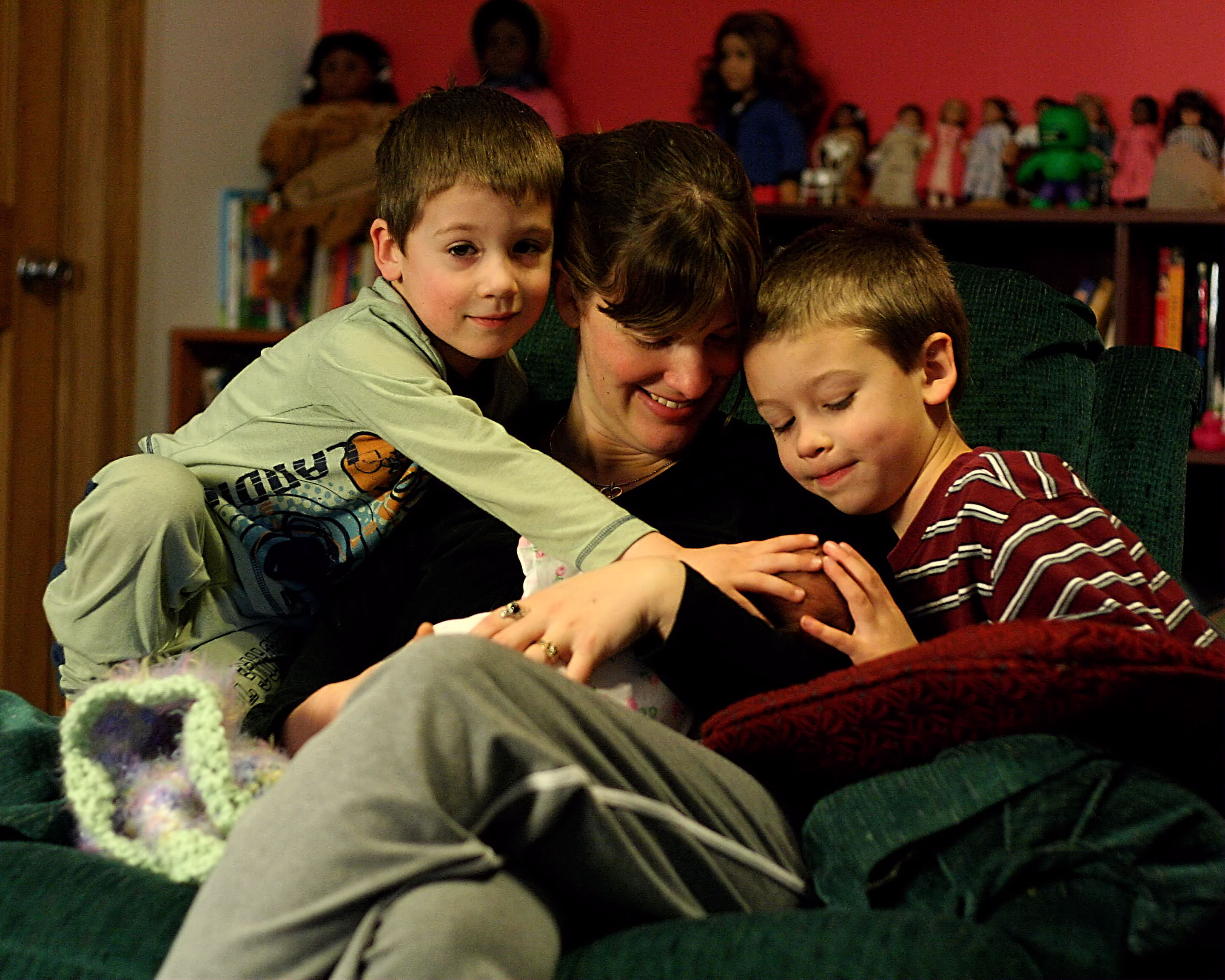
Look at that motherful sight! 🙂

I’ve found it helpful to re-read this book with each baby, because I am so likely to fall into the “getting nothing done” mental trap. Stadlen does an amazing job making the point that when we have to stop “getting things done” to look after our babies we ARE still doing something, we are MOTHERING and that truly still is getting “something done.” While I still thing things like that, the reframing really, really helped me. We do lack a vocabulary in our culture to describe what mothering is–we see someone shopping with two kids in the store and we only count the shopping as “getting something done,” the mothering acts the mother performs as she navigates the store while caring for her children are invisible (both to the observer and often to the mother herself).

The word motherful reminds me of Dr. Bradley’s great word, “motherlike”–as in, giving birth may not be ladylike, but it sure is motherlike. I’d like to see both words in common usage.

I think I’ve found my topic for my next LLL meeting!

Child’s birth art

As I continue to embark on decluttering projects during my Facebook retreat, I found this awesome little drawing saved in one of my notebooks. I think it was drawn by my older son when he was about three:

20120204-214308.jpg
I love her smiling face and that birth was/is such a normal thing to him.

I have some others from this same time period that I should share soon too. One touch that I love in several is the placenta in a bowl next to mom 🙂

What a nice day!

Perhaps it is just a coincidence or simply due to the fact that Alaina took a lovely nap, but this no-Facebook retreat certainly seemed productive today! I decluttered/re-organized the hall closet, wrote two essays for one of my doctoral classes (the last two in this class as I already turned in my final paper earlier in the week), wrote a new blog post (and now this one), caught up on posts with my online classes, graded ALL my midterms (extra thanks to my parents for letting the kids visit for an extra 30 minutes so I could finish the last three), and made homemade spinach and mozzarella focaccia for dinner. Oh, and I did three loads of laundry too and made Nutella cocoa and later “Christmas crunch” candy. The boys worked on their movie, set up a Lord of the Rings scene with little toys, cleaned the living room, played with playdough, drew pictures, planned their party, and danced with Alaina while listening the radio. They also ate large quantities of mini pancakes. Alaina mashed playdough all over floor, human can-openered the lid off the vinegar, tried to get in the fridge, begged to go outside in the rain, gleefully watched small stray puppy eat some table scraps outside, tried to catch kitties, helped me poke the fire, nursed to sleep in Ergo, took nice nap, put playmobil into a houseplant, showed how big she was by picking up the footstool, sneaked into brothers’ room and collected small objects, had a bath, and whacked self in face with a toy horse making a bloody scratch/hole in eyebrow.

20120203-221512.jpg Showing eyebrow scratch.

20120203-221458.jpg

Taking a nursing break in the closet I was cleaning.

Still haven’t done any work on the crocheted Yodas…

Some reminders for postpartum mamas & those who love them

Postpartum with Alaina, February 2011

I recently finished a series of classes with some truly beautiful, anticipatory, and excited pregnant women and their partners. I cover postpartum planning during the final class and I always feel a tension between accurately addressing the emotional upheavals of welcoming a baby into your life and marriage and “protecting,” in a sense, their innocent, hopeful, eager, and joyful awaiting of their newborns.

This time, I started with a new quote that I think is beautifully true as well as appropriately cautionary: “The first few months after a baby comes can be a lot like floating in a jar of honey—very sweet and golden, but very sticky too.” –American College of Nurse-Midwives

Matrescence

In Uganda there is a special word that means “mother of a newborn”–-nakawere. According to the book Mothering the New Mother, “this word and the special treatment that goes with it apply to a woman following every birth, not only the first one. The massages, the foods, the care, ‘they have to take care of you in a special way for about a month.'”

There is a special word in Korea as well. Referring to the “mother of a newborn child,” san mo describes “a woman every time she has had a baby. Extended family and neighbors who act as family care for older children and for the new mother. ‘This lasts about twenty-one days…they take special care of you.'”

These concepts—and the lack of a similar one in American culture—reminds me of a quote from Sheila Kitzinger that I use when talking about postpartum: “In any society, the way a woman gives birth and the kind of care given to her and the baby points as sharply as an arrowhead to the key values of the culture.” Another quote I use is an Asian proverb paraphrased in the book Fathers at Birth: “There is a proverbial saying in the East: The way a woman takes care of herself after a baby is born determines how long she will live.” While this quote usually gets some nervous laughter, I think it is impresses upon people how vital it is to plan for specific nurturing and care during this vulnerable time.

Dana Raphael, the author of Breastfeeding: The Tender Gift, who is best known for coining the word “doula” as it is presently used, also coined another valuable term: matrescense. “Nothing changes life as dramatically as having a child. And there was no word to describe that. So we invented the word—matrescence—becoming a mother.”

The postpartum law of threes

I also share the “law of threes” with my clients which I learned from an article titled “Baby Moon Bliss” by Beth Leianne Curtis in Natural Life, Fall 2008:

A helpful tool I share with students and clients of mine is what I describe as the ‘law of threes’ when beginning the postpartum period. The first three days after your baby is born, try to stay in bed or at least in your bedroom. Many other cultures worldwide have much longer ‘lying in’ periods for mother and baby. If you can give yourself the much-deserved rest of focusing on breastfeeding, sleeping, eating, and recovering from the work of labor, your body and your baby will thank you for it. While birth is a healthy, normal event, honor the recovery process that your hard working body needs and deserves. The less you physically do in the initial few days following childbirth, the better and stronger you will feel in the weeks ahead. …Next, prepare to have three weeks of meals readily available for breakfast, lunch, and dinner….” (don’t forget plenty of snacks at easy reach for breastfeeding!)

Finally, understand that those first three months after birth are truly a time to embrace the unexpected…for some mothers, after three months is when breastfeeding really begins to be fun and easy. Many parents find that at the end of this [fourth trimester] transitional time, baby has moved through any colicky phases and that suddenly baby looks and acts more like a ‘real person.’…Physically, this is when your body begins to return to its pre-pregnancy state.

When I present about this topic to groups, sometimes I hear the following types of remarks: “Getting back out made me feel better, I would be miserable lying around in bed all day”—at the time when my own first baby was born, I would have said this was true for me as well, but looking below the surface shows me something else. Someone who hadn’t planned for a nurturing, comforting, supportive postpartum cocoon and who hadn’t given herself permission to rest, relax, and restore. The same high-achieving style that served me well in the workplace did not nourish me physically or emotionally as a tender new mother. I firmly believe that a nurturing postpartum downtime lays foundation for continued “mother care” self-nurturing for the rest of your life.

Then, in my notebook, I found the following relevant quotes that I had saved from the book Natural Health After Birth by Aviva Jill Romm:

“Too often women develop the mindset that a good mother gives all and takes nothing for herself. Remember, this is a great cultural fallacy. A good mother gives of herself to her children, but she has to have a self to give. A good mother nurtures herself, develops her own interests, even if in small ways, and grows as a person along with her children. Children don’t need us to be martyrs; they need us to be their mothers. A self-actualized mother sets an example for her own daughters that becoming a mother expands identity, not limits it.”

–Aviva Jill Romm, Natural Heath After Birth

“To put a child on Earth, an immense amount of creative intelligence flowed from the Great Spirit, through nature itself into your body, heart, and mind–remaining now, as an integral part of your own spirit. This energy is yours forever. Like a pocket, deep and filled with magic seeds of creativity and healing, this is the source of unconditional loving from which every wise woman since the beginning of time has drawn her strength.”

–Robin Lim

“Motherhood is raw and pure. It is fierce and gentle. It is up and down. It is magic and madness. Single days last forever and years fly by…Be gentle with yourself as you travel, dear mother. Don’t miss the scenery. Don’t miss conversation with your traveling companions. Laugh at the bumps and say ‘ooh, aah!’ on the hairpin turns. Buckle your seat belt. You’re a mom!”

–Aviva Jill Romm

Helpful articles

Planning for Postpartum—this is one of my past articles that I remain proud of

How other cultures prevent PPD—helpful article by Kathleen Kendall–Tackett

DONA’s handout for making a postpartum plan—I think couples should spend at least as much time to developing a postpartum plan as they do to making their birth plans.

Support & Sanity Savers handout for class from Great Expectations—this is one of my very favorite postpartum handouts to use for birth classes, particularly the last page which is a “request for help after the baby is born” letter to prospective helpers that includes a “coupon” for people to fill out with what they’re willing to do for the new parents.

Ode to my nursling

“Every single human being was drummed into this world by a woman, having listened to the heart rhythms of their mother.”

-Connie Sauer

We nestle together, lives and hearts entwined. Bodies imprinted at a cellular level.

Greeting 2012 at midnight on January 1.

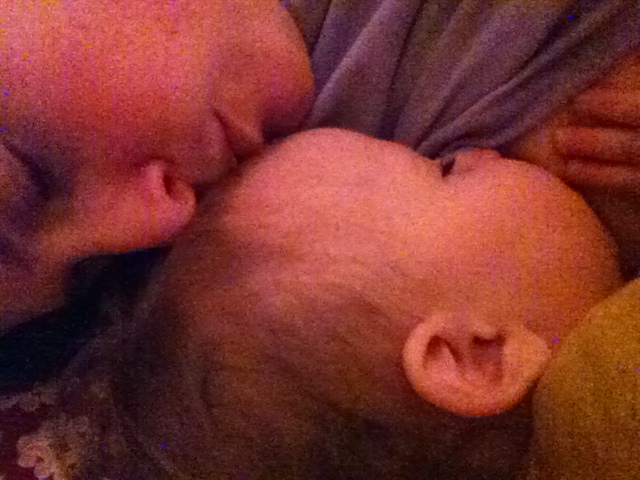
This is a fully embodied and multisensory experience. My lips on the top of her head, my nose in her hair. Breathing in her smell, feeling her fuzzy hair. Feeling her steady, vulnerable pulse in her skull against my lips. Sometimes I murmur or hum, mmm, so that my lips vibrate at the top of her head, and she answers me, “mmm, mmm, mmm.”

One hand cups the underside of my breast, the other sometimes holds my hand or grips my shirt or necklace, or randomly roams, patting my chest, stroking my belly, or pinching or scratching my skin. It often finds a place of rest near my heart.

I kiss her head. Nuzzle her with my nose and lips. Breathe her in. Breastfeeding is the real deal. The day in and day out fluid of connection and physical relationship. Body based. First habitat. First environment. First relationship—this is how she learns about relating to another, through my body. Through warm connection and synchronized rhythms.

Her head near my shoulder, on my upper arm. Her body in full contact with mine. Legs curl into me, resting on my thighs, or with a foot poked between my legs near my knees, keeping warm. Sometimes I pet her hair or smooth her eyebrows. I touch her cheek, hold her hand or foot or ankle.

We nurse.

Explanatory note: last month when I was nursing Alaina to sleep at bedtime, I was thinking about how I never wanted to forget what it felt like to have this breastfeeding relationship with a baby. So, I paid close attention to our physical alignment, etc. and when I got up, I jotted down what my heart had memorized during that time.

Time for a retreat!

It is only when we silence the blaring sounds of our daily existence that we can finally hear the whispers of the truth that life reveals to us, as it stands knocking on the doorsteps of our hearts.

~ K.T. Jong (via Kingfish Komment)

Some time around November each year for the last three years, I’ve had a feeling of being “sped up” in my life and a desperate craving of stillness and rest. I begin to feel like pulling inward, “calling my spirit back” and re-integrating fragmented parts. Aside from my family members, I stop feeling like being “of service” to others and their interruptions of my space or requests for my time or attention begin to feel like impositions. I begin to hear the distant call to “retreat.” I crave stillness, rest, and being alone. I fantasize about broad expanses of silent time in which to think and plan and ponder. It then takes me until February to actually act on this urge. So, as of today, I now begin my annual week of retreat. In the past, I’ve done a computer-off retreat. This year, it is a Facebook-off retreat. I keep returning to the persistent feeling of having my life/brain full of digital noise/clutter and envision taking a sabbatical from the constant, hyperactive flow. My good friend wrote a blog post about her decision to take a FB break and that was the last little nudge I needed to take a break myself. The night before reading her post, I’d gone to bed thinking, “any day in which I think, ‘I didn’t have time to XYZ,’ but I DID check FB, is a day that I lied to myself.” I have a somewhat conflictual relationship with Facebook—in most ways I love it and in some ways I feel like it fosters a false sense of connection with others. I do love that it helps me keep up with and maintain real connections with real friends and with long distance family. I also appreciate the way it “smallens” the gap between people and I appreciate the opportunities it offers me to network. And, I appreciate how I am able to use it to support, encourage, and connect with other women I may never meet—it broadens my reach and impact. Finally, I most definitely appreciate it when someone shares one of my blog posts via Facebook! A good deal of my site’s traffic over the last year has come from Facebook.

Digital noise

What I wish to disconnect from it is ALL the digital “noise” in general—FB, email, e-newsletters, free Kindle books, etc.—all the requests for my time and attention. A lot of it originates from Facebook. I’ve mentioned before how if I wasn’t there, I wouldn’t even know about all the stuff I wasn’t doing–instead, it contributes to this false sense of urgency and immediacy about staying “caught up” with everything and everyone.

I still have to teach and parent, so this isn’t a full retreat, but I am taking this FB break. Yesterday, I deleted my FB apps and prepared to take a rest to focus on CREATING rather than consuming. Upon reflection, I realized it sounds like I mean I want to create digital noise, which isn’t what I mean. Though, I do want to spend more time writing blog posts and articles, so I guess that is kind of ironic. Also, I recognize that it is kind of annoying when people make big announcements/declarations about how they are QUITTING FACEBOOK, but I still feel compelled to explain it… ;-D I didn’t delete my account, just the iPhone/iPad apps that make it so easy to check in often. I’ll reinstall them when I’ve had at least a week of mental space. I value the connections I have via FB and don’t want to lose that, but I need some time away to re-clarify my boundaries. I also need to go on a fan page deleting spree as I am a fan of more than 500 pages. ;-D I need QUIET! Space in my head to hear myself think.

Past retreats

On February 1, 2010, the first year I took a personal retreat (this one was a computer-off retreat), I also started to miscarry for the second time. In my journal, I wrote:

At 4:00 this morning, I began to bleed red. I had allowed myself to become hopeful yesterday since there was no spotting increase (until evening)…Today, I am certain that is not the case and I feel dissolved. I am disconnected from this experience and feel unreal and unmoored…I feel SO foolish–WHY did I think I could do this again? Why did I open myself up to this again so soon?

…I cannot believe Zander was the last–last to nurse, to sleep in our bed, to be carried in the Ergo, to watch crawl and learn to walk, to hold in scrunchy newborness. I’m NOT DONE YET. Or, am I?

…I just want to say two things again:

1. I do NOT want people to feel sorry for me again so soon.

2. I feel DUMB.

I do not feel like I am handling this well or with strength. I just feel numb and dumb and done and done for. I am bottoming out right now. Bottom. Pit. Despair.

20120201-141452.jpg

My nature-loving retreat buddy!

That retreat ended up being a meaningful and spiritually enriching time for me, but it was also full of a lot of darkness and tears.

On February 1, 2011, I had a 13 day old daughter and was enjoying my babymoon with a deeply thankful heart.

And, now on February 1, 2012, I have a robust one year old, whose boundless energy and drive also stimulate my interest in the stillness of retreat!

Why retreat?

Some time ago, I saved this list of why women need retreats (via Jennifer Louden):

I need retreats to remind me who I am.

I need retreats to come home to myself.

I need retreats to connect with the divine feminine.

I need retreats to renew myself.

I need retreats to connect with myself.

I need retreats to connect with others.

I need retreats to rest.

I need retreats to be alone.

I need retreats to find myself.

I need retreats to honor myself.

I need retreats to learn.

I need retreats to dance.

I need retreats to play.

I need retreats to sing.

I need retreats to laugh.

I need retreats to cry.

I need retreats to be myself.

I need retreats to Be.

Yeah. That pretty much sums it up! Though, actually, these are some of the things I wrote down when considering this year’s call to be on retreat:

  • Drum
  • Crochet Yoda for boys
  • Make craft projects with boys
  • Make doll for Alaina
  • Go outside
  • Snuggle!
  • Make more sculptures
  • Draw
  • Journal
  • Read
  • WRITE! Tons! Posts, articles, essays for classes.
  • Be still
  • Rest
  • Play!
  • Plan/brainstorm pregnancy retreats/birth art sessions/prenatal fitness classes—re-vision my plans for birth education
  • Clean out inbox
  • Clean up computer room and go through binders/filing cabinets/bookshelves
  • Declutter in general
  • Clean out closet and spare room
  • Review books (hmm. This is a “should do” rather than a want to. I’ve got about 6 that are staring at me and waiting their turn)

I’m no longer foolish enough to think that I’ll ever be able to get “everything done” (because I’m a fascinating, amazing person after all!), but I do feel confident that I can take some steps to gather the whole, improve my focus, and re-commit to my life’s priorities, as well as consider how to best prioritize my time and energy in order to fully “savor and serve” my family and the world.

20120201-141513.jpg

A nice place to retreat--priestess rocks in the woods behind my house.

20120201-141523.jpg

I love to sit in this stone "chair" to journal and think and feel. I sat here after my miscarriages. I sat here during my pregnancy. I took newborn Alaina here last February to "introduce" her to the earth. I bring the boys out here to play. I sat here today and thought about the ever-turning wheel of life.

20120201-141530.jpg