Archive | July 2014

Tuesday Tidbits: New Babies

“Breastmilk is the bio-available, species-specific food which is perfectly crafted for human babies. It is delivered by the elegant and nurturing act of breastfeeding. Literally organic, it is made by the mother’s body, and delivered to her baby via her breasts. In contrast to artificial baby milk, human milk is a raw food that does not require processing and distribution. It does not use valuable resources nor does it pollute the environment.”—Máire Clements RN IBCLC (via http://bit.ly/1hc8Jsw)

“Breastfeeding is a mother’s gift to herself, her baby, and the earth.” —Pamela K. Wiggins

via Breastfeeding USA.
July 2014 120

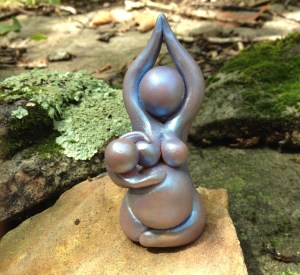
New pregnant + nursing mama goddess for a friend.

New babies are on my mind as I prepare to attend the birth of my nephew and as I continue to tie up loose ends in preparation for my own new baby in a couple of months. I know I’m only 24 weeks pregnant, but I feel a powerful and almost obsessive drive to get organized/squared away in order to make the space for him that he’ll need from me and that I’ll need for myself. I’m in serious “planning mode” right now and I’m pretty sure I can be exhausting/frustrating for people around me when I do that, but I have to do it. I know what I’m like, I know what postpartum can be like for me, I know what having three kids is like, I know that the new school session starts on my due date (and I’m still planning to teach my online class like usual. Not in-seat. I’m not that crazy!), I know that I push and push and rev and rev and speed myself up to get it all done. So, Planning Mode On. I WILL be resting in November, no matter what, but for me that means making smart, mindful choices now. I’ve retired from a couple of writing commitments, finished several projects and followed through on some obligations that have been on my mind. Mark and I are working hard on preparing and building our business to carry us through the reduced income we’ll have when I’m not teaching.

So, anyway, I read this article and it touched my heart with its sweet, bittersweetness! I look forward to being a temporarily perfect mother one more time…

I was looking at you today and thinking about how right now, today, the day you turn 3 weeks old, I’m a damn near perfect mother to you. I think this is why I love, crave, the newborn stage. Maybe it’s just biology, evolution. But for me, I think it’s more, because for me, it’s the only time I truly feel like a 100% capable mama. Like I’ve got this shit IN THE BAG. I’m a knock-it-out-of-the-damn-park newborn mama.

My job is defined. My role, clear. I nurse, clothe, bathe and hold you. I give you the breast to comfort you, whenever you want. I don’t have to think about it. I don’t have to wonder. I don’t believe it can be done “too much.” In fact I think that’s the biggest crock ever. I wrap you up and carry you against my chest. For hours. Sometimes I lay you on your back so you can kick and look around and I can watch you and coo at you and smell your head. This is what we do, round and round, I know it and love it and own it completely because you’re my 4th!. I’m tired, oh, so tired, but I know how to mother you now.

I know just what you need. I know what to try.

And this, I know, will fade…

via A letter to my newborn, while I’m still a damn near perfect mom – renegade mothering.

Reading this also reminded of why parenting the first baby can be so particularly hard—because with that one, you don’t necessarily know what they need or what to try. The learning curve is steep and you’re a one day old mother with a one day old baby. For me, I put a lot of pressure on myself with the first to love and cherish the newborn experience all the time because I knew how important and precious and brief the newborn time is. But, I severely underestimated the “trauma” involved with becoming a parent for the first time:

…Several weeks ago my husband was bouncing our screaming daughter in his arms as we half smiled to each other about how it is almost endearing that infants get so worked up for seemingly no reason. Over her screams we reminisced about what was hard with each of our children when they were this age–our firstborn not latching; our second with an undiagnosed dairy allergy.

This playful, patient banter was so different than the days and weeks after our first son was born. I remember sobbing tears of inadequacy as my husband looked at me through bleary eyes and said, “Why didn’t anyone warn us about THIS PART?”

The part where you think you are supposed to have all of the answers. The part where you take home a helpless human with no instruction booklet. The part where you have to go back to work after six weeks and restaurant owners ask you to feed your baby in a bathroom. The part where you forget how connected you and your husband once were as you fight over bath temperatures and take turns waking each other up with irrational nightmares that your baby is buried amongst the pillows in your bed…

via The Trauma of First-Time Parenthood | Raising Kvell.

The post above is a response to one on the New York Times:

Given the ideology of parenting, it’s not surprising that we typically blame biology for the experience of postpartum depression. But the circumstances parents face are often demonstrably miserable. The fact that postpartum depression rates are much higher among the poor than among the wealthy, who can purchase peace of mind through hired child care, supports the idea that the phenomenon is, in most cases, more circumstantial than biological.

As a recent parent myself, I urge you to consider this the next time someone you know greets the transition to parenthood with hopelessness or even despair. Pursue kindness over ideology. For a person whose suffering has been met with judgment, a sympathetic ear can make all the difference…

via The Trauma of Parenthood – NYTimes.com.

I also thought about the information feeding frenzy of pregnancy and early parenthood when I read this article from Lamaze:

There comes a point when a trickle of helpful information becomes a flood. The process of teasing the facts from the fiction can you leave you feeling overwhelmed, confused, and frustrated. So what’s an information-hungry pregnant person to do?

Find a tour guide. Would you travel to the Amazon without a guide? And yes, I AM comparing pregnancy information with the rain forest — it’s dense, sometimes scary, and incredibly difficult at times to see the forest for the trees. A “tour guide” in pregnancy comes in the form of a childbirth educator, doula, and respectful care provider. These trained professionals can help you make sense of the information and opinions you uncover, and while their job is not to make decisions for you, they can provide evidence based information to help you determine the best path for your pregnancy and birth…

via Lamaze for Parents : Blogs : Birth in the Media – How Much is Too Much When You’re Pregnant?

Which then reminded me of my favorite article on the subject from Pam England:

However, a pregnant woman, with only months or weeks before giving birth, does not have time to gather, learn, and assimilate all the information out there. Many women are conditioned to believe that if they have lots of information, then they will “pass the test” or be able to control their birth outcome. Gathering birth information sometimes becomes a kind of addiction; parents can feel the adrenalin and endorphin surges as they learn, learn, learn by surfing the net and reading. There is often an extra surge when their eyes are glued to the medicalized birth shows on TV.

via Birthing From Within – Information Frenzy.

I was contacted today by a jewelry artist in Australia wanting to pair some of our goddess pendants with her own work making breastmilk and placenta jewelry. I’m so incredibly excited about this idea and can’t wait to have a co-created piece once my new baby is born!

June 2014 014

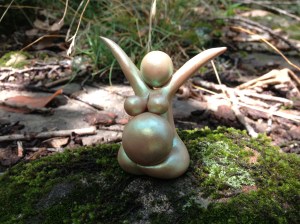
This is one of ours with a red jasper stone, but OOH, I can just SEE the placental possibilities now… 🙂

I had my placenta encapsulated with my last baby and I’ll be having the placenta encapsulated with my new baby as well. I wrote about my past experience here: Placenta Encapsulation—Three Days Postpartum Comparison…

You can read a recent e-newsletter from Midwifery Today about placentophagy here: E-News 16:13 – Placentophagy.
July 2014 105

Tuesday Tidbits: Story Power (again!)

“One of the most important things I have learned about birthing babies is that the process is more of an unfolding marvel than a routine progression of events.” –Tori Kropp

May 2014 031Lots and lots of tidbits on my mind this week! It has been a while since I’ve done a proper Tuesday Tidbits post and it has caught up with me. To avoid making this too loooong, I’ve split it up into a series of loosely connected thematic posts to release over the next couple of days/weeks.

First, a beautifully touching story about a family’s decision to have another child after parenting a child with very serious special needs (for which they have no diagnosis).

“…I, alone, would have to make the decision whether or not to have another baby. If we did, I would be like any pregnant woman–following doctor’s orders, cutting out questionable foods and praying for a healthy baby; everything I had done with Joy. This this time, though, I would have an intimate knowledge of what most moms-to-be only fear in the ‘what-if’ scenarios they play out in their heads. Eric had made his decision. Was I willing to jump into the darkness with him? Would my marriage survive if I didn’t? Would it survive if I did?…”

The Family Bed | Brain, Child Magazine.

Then, some thoughts about birth and pain and sensation:

“You may be able to feel baby pressing on your cervix. You have never felt anything like this. You may be able to feel your pelvis flexing and be acutely aware of where your thighs join your hips. You may be able to feel your uterus flex in a way that feels exactly like a really tough workout. But the bottom line:

You have never felt anything like this…”

Meditation for Birth | Mothering.

While there is a simplistic understanding reflected in this post that doesn’t seem to accurately embrace or even grasp the wide, staggering array of women’s experiences during the childbearing year, I do totally agree with this premise: labor is like nothing you’ve ever felt before (or will since). That is why people use the frustrating term, “birth mystery” to describe it, because it is full, total, complex, complete, and all-encompassing, and you may never, ever be so fully present in your body during the rest of your life. And, it is different every time (though more “familiar” the more babies you have, there are always surprises in birth).

Some past posts from me about birth and pain:

Tuesday Tidbits: Pain, Birth, and Fear

Tuesday Tidbits: Pain, Power, and Lasting Memory

Pain with a Purpose?

Perceptions of Pain

And a gritty, real (and painful) postpartum story from a real-life friend:

My vagina winced. She had been through so much. Held together by medical stitches, she felt so fragile, vulnerable, broken. Like Humpty Dumpty post-fall. (How embarrassing. Could she go lower? She had been so glorious). The king’s horses and men failed to reconstruct Humpty, and I wondered, despite my OB’s expertise, if I too would never be put back together again. Humpty Dumpty was just an egg. Who gives a rip about an egg? My lady parts were much more important…

via Milk, Pain, & Fear | Peace, Love, & Spit Up.

A short, funny story from the news about a student getting trapped in giant vagina, “Gateway to the World” sculpture.

“…Police confirmed that the firefighters turned midwives delivered the student ‘by hand and without the application of tools’…”

US student is rescued from giant vagina sculpture in Germany | World news | The Guardian.

There is a neat article about Mother Blessing ceremonies in Breastfeeding Today magazine (LLLI’s publication).

And, speaking of honoring mothers, my sweet sister-in-law has a blog post up about her belly cast experience following the mother blessing we had for her in June: The Mossy Stone: My Belly Cast.

Returning to difficult stories though, here is one with a  **trigger warning for child loss**. This is a beautiful, touching story about the death of a son and the decision to have a second child.

I know lots of women avoid loss stories while pregnant. I can’t avoid them, even though I think about it and maybe it is mentally better for me not to read them. I have to hold/honor/hear these stories too—they don’t need to be hidden away.

“The pregnancy progressed smoothly, as my first pregnancy had. When I began to show and people began asking me if I was pregnant with my first child, I was determined to remember Ronan in my response, no matter how uncomfortable it made the asker. “No,” I replied. “I had a son and he died.” The conversation often stopped here, the narrative halted. When the questions first began I scrambled to make the awkward exchange a bit easier for the other person. “Sorry to throw that on you,” I’d say, smiling. But now I don’t. My new policy is: asked and answered. Or, as a relative of mine used to say, if you don’t want the answer, don’t ask the question. I don’t elaborate on how or why my first child died when some people go on to ask those questions (and they occasionally do); at that point I tell them that I prefer not to say any more. I don’t want to offer up the details of Ronan’s illness like the pieces of a tragic tale. But I want it to be known—to strangers, to everyone—that he was in the world, that he was fully loved, and that he was my first baby…”

What The Living Do | Brain, Child Magazine.

Why is this? Because stories hold power! I saw this quote this week on The Mother-Daughter Nest:

Telling our stories- while being witnessed with loving attention by others who care- may be the most powerful medicine on earth.

Some of the stories that want to be told are joyful.
Some are sad.
Some are painful and make us feel vulnerable and afraid.
Some are full of hope and inspiration.
Some of our “story doors” take courage to open.
Some we may not be ready to open and that is okay.

But the telling? The telling brings healing, understanding, and connection.

(This is also why Red Tents are powerful)

May 2014 085

Guest Post: Pelvic Exams Need Rethinking

June 2014 045I almost never reprint any of the random articles, press releases, and news tidbits that find their way to my email address. However, this one was too interested to skim past. Conclusion: The pelvic exam has been a standard part of a woman’s annual checkup for decades — yet it serves no clear purpose and may do more harm than good.

Considering that I’ve written about Pelvic Exams I Have Known (watch for my eventual stand-up routine, 😉 ), I found this very interesting…

UC SAN FRANCISCO
Jennifer O’Brien, Assistant Vice Chancellor/Public Affairs
Source: Elizabeth Fernandez (415) 502-6397 (NEWS)
Web: www.ucsf.edu
Twitter: @EFernandezUCSF

TO COINCIDE WITH PUBLICATION IN ANNALS OF INTERNAL MEDICINE

UCSF Commentary: Pelvic Exams Need Rethinking

The pelvic exam has been a standard part of a woman’s annual checkup for decades — yet it serves no clear purpose and may do more harm than good.

That’s the conclusion of a new guideline by the American College of Physicians (ACP) based on a review of scientific literature spanning more than 60 years. In an article to be published July 1, 2014 in the ACP’s flagship journal, Annals of Internal Medicine, the national organization of internists strongly recommends against pelvic examinations for adult women who are not pregnant and show no signs of disease.

In issuing the new guideline, the nation’s largest medical-specialty organization contends that pelvic exams rarely detect “important disease” or reduce mortality. Under the new guideline, the ACP advises that pelvic exams are appropriate for women with symptoms such as vaginal discharge, abnormal bleeding, pain, urinary problems, or sexual dysfunction.

The recommendation is expected to be controversial, according to an accompanying editorial by George F. Sawaya, MD, a UC San Francisco professor of obstetrics, gynecology and reproductive sciences, and epidemiology and biostatistics; and Vanessa Jacoby, MD, a UCSF assistant professor of obstetrics, gynecology and reproductive sciences.

“The recommendation is based on a systematic review that found no data in support of the examination but did find evidence of harms ranging from distress to unnecessary surgery,” they wrote in the commentary.

Sawaya and Jacoby point out that tens of millions of pelvic exams are performed annually at well-woman checkups in the United States but whether the exams actually benefit asymptomatic women has largely been unstudied. To help fill the void, surveys recently have sought to establish the goal of clinicians in performing the exams: some physicians contend the exams help detect benign uterine and ovarian lesions while others mistakenly say they effectively screen for ovarian cancer, noted Sawaya and Jacoby.

The editorial called into question the nature of the medical literature review by the ACP because some of the research analyzed focused on older women and failed to evaluate “the most important goal of the pelvic examination cited by obstetrician-gynecologists – detecting noncancerous masses.”

“Thus, it is reasonable to disagree with using these findings to recommend a major change in clinical practice for women of all ages attending well-woman visits,” Sawaya and Jacoby wrote in their editorial. “Many will ask ‘Have all of the pertinent clinical questions been addressed?’”

“Deciding when evidence is sufficient to conclude that an intervention should be promoted, discontinued, or submitted to further study is challenging,” they continued. “The determination relies largely on judgment about evidence quality and the likelihood that more evidence will tip the balance in making either a favorable or an unfavorable recommendation.”

Numerous routine screenings, including mammograms and prostate tests, are being reevaluated for their medical and financial value.

In their commentary, the UCSF authors stress that whether or not the new guideline actually changes current practice, it could lead to a better evaluation of the benefits and harms of pelvic exams.

“The pelvic examination has held a prominent place in women’s health for many decades and has become more of a ritual than an evidence-based practice,” said the authors.  “With the current state of evidence, clinicians who continue to offer the examination should at least be cognizant of the uncertainty of benefit and the potential to cause harm through a positive test result and the cascade of events that follow.”

UCSF is the nation’s leading university exclusively focused on health. Now celebrating the 150th anniversary of its founding as a medical college, UCSF is dedicated to transforming health worldwide through advanced biomedical research, graduate-level education in the life sciences and health professions, and excellence in patient care. It includes top-ranked graduate schools of dentistry, medicine, nursing and pharmacy; a graduate division with world-renowned programs in the biological sciences, a preeminent biomedical research enterprise and two top-tier hospitals, UCSF Medical Center and UCSF Benioff Children’s Hospital San Francisco. Please visit www.ucsf.edu.

###

Follow UCSF

ucsf.edu | Facebook.com/ucsf | Twitter.com/ucsf | YouTube.com/ucsf