Archives

Helping a Woman Give Birth?

“One cannot actively help a woman give birth. The goal is to avoid disturbing her unnecessarily.”

– Michel Odent

I shared this quote on my Facebook page and it generated enough comments that I feel it is worthy of a blog post of its own! My original thought upon sharing the quote was this:

I’m not actually sure what I think of this quote–-isn’t it possible to actively help a woman to give birth?! I’m thinking of doulas, whose active support and hands-on loving care sometimes makes the difference between having a labor that “progresses” and one that results in a cesarean (because mother has been lying in bed hooked up to monitors—though, that would invalidate the second part about not disturbing her…)

It is true that no one can physically do it for her, but the “active” word confuses me, because I believe one can take an “active” role in a birth and that it is possible for that to NOT be a bad/disturbing role, but to be a sustaining role…

A commenter on the CfM page shared her excellent  interpretation: “I believe what Michel may be saying here is that no one can do the work of a woman’s body. We can support her emotionally/physically but we need try to avoid other disturbances such as medical interventions, speaking during contractions, a disruptive atmosphere, etc.” Perhaps I personally became too hung up on the word “active” and did not pay enough attention to the words “avoid disturbing,” which is really the crux of the matter. And another commenter added this: “No one can do the miraculous job of a woman’s body in labor when left to do what it’s going to do. That being said, I birthed with my midwife and my sister as my doula. No one touched me and I needed nothing other than an occasional, ‘you’re doing great.’ had I had anymore of a difficult labor I’m sure the supporters I had in place would’ve been as hands on as I needed them to be!

And, I really agreed with this point from another person who said: “Although this may be true about one woman or even most women, it shouldn’t be stated as such a generalization, because some women really DO need active help, whether it be emotional, spiritual, or physical.” This comment echoed my own thoughts. I do not actually have the context for his quote, so I’m not sure what he may have gone on to say after it, but I think it is awfully “rigid” in its own way (it is just the reverse of the type of rigidity that we so often see from medical providers!)

Personally, I’m a hands-off birther and have no interest in people “supporting” me actively (other than my husband) as well as wanting no one to talk to me during birth, but having heard some challenging birth stories lately where it really seemed like the women were being “undisturbed” when they really could have benefited from some hands on/active help, I am pondering lately the role of “help” in birth and when not-disturbing can become neglecting. I think it is possible to be so invested in one’s own dogma and philosophy about natural birth that we can continue sitting on our hands when more active assistance is useful. I’m not talking about emergency situations here—I have yet to meet a midwife who didn’t respond quickly and appropriately in an emergency—I’m talking about the “variations of normal.” The really long labors, the slightly malpositioned babies, the mothers who experience an extra level of pain above the seeming “norm,” the women who become exhausted and just need something else—it doesn’t necessarily need to be a medical intervention or something drastic, but it does need to be something from outside herself, because her own resources are tapped. I have heard two beautiful, strong, wonderful women’s stories of cesareans recently that have prompted these thoughts—the stories were eerily similar even though the women do not know each other, gave birth in different towns, and had different midwives. In both the stories the element that seemed like it was missing to me—and, yes, I know deeply and truly that “a million factors, seen and unseen” [Pam England] go into a woman’s unfolding experience of birth and that it is almost impossible to “deconstruct” the event with full accuracy postpartum—but what was missing to my ears, was that element of hands-on, semi-directive active support and suggestion making. There are a wide variety of “tricks” that can be tried rather than waiting until a mother is completely depleted and then moving to a transfer and a cesarean.

Maybe some of these tricks might seem too “hands on” for some and, yes, they are mildly, or even significantly interventive (I’m thinking here of all the little methods of turning a malpositioned baby, up to and including, manual rotation of the baby’s head—yes, this may be more hands-on and disturbing than we would like in an ideal world, but—duh—isn’t a cesarean even more so?!). Can a midwife be so attached to a specific mode of hands-off, knitting-in-the-corner-care that she neglects to step it up a notch and try some of those model-bridging techniques? While I deeply believe in the knitting-in-the-corner approach and that is all I feel I need with my own births and that is also what many women need, I also know from the power of story that some women do need an additional level of care—a “bridging” level. Something not as dramatic as a hospital intervention, but something more than, “some labors are long, keep going.” My thoughts about a bridge reminds me of a friend of mine who was able to be helped immediately postpartum with a pitocin injection rather than having to transfer to the hospital, while another friend—lacking anyone appropriately trained to call in—had to transfer. It also reminds me of my own experience being helped by a midwife six days following my third birth (second trimester miscarriage), after I discovered the placenta was still being held in my body via some membrane through my cervix. The only option the medical model was able to offer to me was to go to the ER for a D & C. However, a midwife (with whom I had no prior relationship, but who was called in by a midwife I do know) was able to gently twist it loose and remove it—yes, this was indeed “hands on” and a small intervention (as well as uncomfortable), but it was just the “bridge” between types of care that I desperately needed and for which I remain intensely grateful!

There can be a specific element of “smugness” within the natural birth community that has been gnawing at me for quite some time. A self-satisfied assumption that if you make all the “right choices” everything will go the “right way” and women who have disappointing or traumatic births must have somehow contributed to those outcomes. For example, I’m just now reading a book about natural mothering in which the author states regarding birth: “Just remember that you will never be given more than you can handle.” Oh, really? Perhaps this is an excellent reminder for some women, and indeed, at its very core it is the truth—basically coming out alive from any situation technically means you “handled it,” I suppose. But, the implicit or felt meaning of a statement like this is: have the right attitude and be confident and everything will work out dandily. Subtext: if you don’t get what you want/don’t feel like you “handled it” the way you could or “should” have, it is your own damn fault. How does a phrase like that feel to a woman who has made all the “right choices” and tried valiantly to “handle” what was being thrown at her by a challenging birth and still ended up crushed and scarred? Yes, she’s still here. She “handled it.” But, remarks like that seem hopelessly naive and even insulting to a woman whose spirit, or heart, has been broken. By birth. Not by some evil, medical patriarchy holding her down, but by her own body and her own lived experience of trying to give birth vaginally to her child.

Of course, even as I’m having all these thoughts, I read a very disturbing story about a “power birth” experience in which the mother experienced very violating hands-on care involving an intense and violent amount of manual cervical dilation from a homebirth midwife. Maybe the midwife’s perspective was that she was providing the bridge I speak of, but that was NOT what the mother experienced.

And, then this afternoon I read a very thought-provoking post about birth rights, in which the author makes the point that, “Actually the natural birth paradigm, and its paraprofessions, are patriarchal. ‘Empowering women’ is by definition patriarchal because there is an assumption she isn’t already empowered.” There is a reason I chose “Celebrating Women” as my tagline/motto rather than “Empowering Women” and that is because I share the sentiment—I believe birth is an empowering event in women’s lives, but that outside people can’t do the “empowering” for her. I believe education and information are empowering also—when the woman seeks it out and integrates the information into her own being and her own “right way.” However, what I want to do is celebrate women—because they are already super awesome cool and worthy of celebration just as they are 🙂 The blog author also points out something interesting: “A childbearing woman’s locus of control firmly placed, by mommy-businesses, outside of the woman herself, and into the hands of western medicine model, or the natural birth model. There is a paradox in both paradigms. And our women suffer. And our girls need a future.”

When we replace medical experts with “natural” experts, the result is the same—the woman herself is not the power source and she tends to credit other people (or methods) with her own “success” (or with her own feelings, period).

However, the blog post also states: “I can say this: if I am lucky enough to be alive when my daughter, Miles, pees on the stick, I will go with her to the abortion clinic, to the elective c-section, to the pump-station, to the OB, to the midwife, to the hospital, to the shrink for meds, to the ends of the earth without judging her, without comment, without interference, but with witnessing energy of my ancestors, of all the women who faced the dilemma of life and death the moment they realize the full scope of reproductivity. That, is her birth right.” I do not actually agree that without comment is the best approach, because women are very powerfully influenced by a variety of forces around them. If natural birth proponents keep their mouths shut or act like all choices are “equal” choices, then that is actually withholding information from women and denying her the opportunity for fully realized decision making based on her own heart and her own needs. (I wrote some more about this theme—why birth activists should not stop sharing their stories—in a post a couple of months ago: Conclusions About Listening.)

I know I’ve meandered through several ideas in this post and maybe I’ve come around to a different point or subject than I initially began with, but these are the kinds of things that are on my mind during my “free time” this holiday season! I want to close tonight with a relevant, integrating quote from Elizabeth Noble in her Childbirth with Insight book:

“Birth is always the same, yet it is always different. Like a sunset, the mystery is also the appeal to those who get up in the middle of the night to attend laboring women. While the sequence of birth is simple, the nature of the experience is complex and unique to each individual. No matter how much any of us may know about birth, we know nothing about a particular labor and birth until it occurs.” (emphasis mine)

And, I would add, even after the birth maybe we don’t know as much about it as we think we do. Truly, in the end, each birth remains a unique mystery. A journey of its own. And, women have the right to define their own experiences in their own ways.

I AM doing this!

When my doula came for a visit a couple of weeks ago and we were talking about birth plans and also about fears, we addressed that some women who have experienced pregnancy losses have difficulty “letting go” of the baby and actually pushing the baby out—feeling like they want to keep the baby safe with them. I told her that I envision this baby being born very quickly—partially because I have a history of fast births, but partially because I have feared throughout my pregnancy that she is not safe inside and I want to get her out into the world where I can hold her and see her. I felt very emotional saying this out loud, because before my losses I felt absolutely certain that my body was doing a good job keeping my babies safe and I trusted its wisdom in doing so.  However, during this conversation then I also realized, “but, we’re doing it, the fact that we’re here right now shows that I am keeping her safe.”

Early in November I posted a 28 week pregnancy update and in that post I talked a little bit about this same body-trust fear (the lingering what ifs about the cause of my losses) and Molly from the the blog First the Egg commented on my post saying something that touched me deeply and that has lingered with me ever since then as a very, very, very important reminder. She drew a parallel between the classic doula response to the birthing woman’s “can’t do it” comment—“You ARE doing it”—and my own current experience. I am doing it. Regardless of how I might feel, fears, etc., the proof is right there every day—I AM doing this. She is growing and kicking and breathing and hiccuping and I’m living and loving along with her. I have brought this phrase to mind many times since Molly commented on my post and I really thank her for the simple reminder 🙂

Speaking of birthing plans, I’ve officially started working through the Hypnobabies home study program. I have to confess that it feels very strange to be “taking” a childbirth class after all this time of teaching childbirth classes, especially because I feel philosophically certain that there IS no “right way” to give birth and that women do not need “methods” to give birth, they need to trust their inner resources and give birth in an environment  of freedom that lets those inner resources bloom. However, I’ve been curious about Hypnobabies for a long time and now is my final chance to try it out! The scripts are very potent and I’m surprised by how very, completely, totally relaxing it is to listen to them—I look forward to listening as a “break” in the day and in my thoughts, etc. It is remarkable how relaxed I become in listening to them. And, when I “come back” I feel amazingly refreshed and rested. It is pretty cool. I also really like the Joyful Pregnancy Affirmations CD and have listened to that periodically for several months now (it was the weekly class work and script practice that I just started last week at 34 weeks).

I do have two “issues” with the program and we’ll see how they play out as I continue. The emphasis on “calm, peaceful” birth is challenging to reconcile with what I actually believe, experience, and truly enjoy about birth—I feel like birth is a very active process. It isn’t something to be taken “lying down.” It is a rite of passage and transformative event and not something I want to appear to “sleep” through because I’m so relaxed—-birth is something I do, not something that happens to me as I quietly relax in my “special place.” I feel like some of the information from Hypnobabies contributes to a “dissociated” or blocked out participation in birth, rather than a fully engaged, active participation. I do not mind the “out of control,” laborland, altered-state-of-consciousness, wild reality of birth—in fact, I value and cherish that and I would hate to miss the glorious intensity by being overly “calm” and peaceful! There is also an ongoing emphasis in the program on creating your own mental “anesthesia” during your birthing time—I find this incongruous with the rest of the Hypnobabies model/message which really is very contrary to the medical perspective of birth. I feel the “anesthesia” language directly conjures up medical imagery and the medical model. In all other ways and words, Hypnobabies reframes birth and the birth experience in such a positive, peaceful, loving way, I find it disappointing that there is a persistent use of a very medically-associated, “numb,” feelingless term. I also know and value birth as a very embodied process. A physical process. A felt, lived experience. “Anesthesia” communicates a detachment from and a numbing of physical sensation, which is not actually what I want from my birthing time. So, that is where I am right now. I haven’t fully worked through the whole program and we’ll see how my perspective might evolve—there is also an emphasis that you will experience the sensations exactly as you need to/your inner mind will work in exactly the right way for you—but right now, I’m very much enjoying the deep relaxation benefits 🙂

Twelve Days of Birth Activist Christmas

12 Days of Birth Activist Christmas

by Molly Remer

On the first day of Christmas, a birth activist gave to me
one woman wanting to birth free…

On the second day of Christmas, a birth activist gave to me
two comfy birth balls
and a woman wanting to birth free…

On the third day of Christmas, a birth activist gave to me
three empowering birth books…

On the fourth day of Christmas, a birth activist gave to me
four independent birth classes...

On the fifth day of Christmas, a birth activist gave to me
five midwife cell phone riiiiiiings…

On the sixth day of Christmas, a birth activist gave to me
six healthy birth practices

On the seventh day of Christmas, a birth activist gave to me
seven supportive partners

On the eighth day of Christmas, a birth activist gave to me
eight helpful doulas…

On the ninth day of Christmas, a birth activist gave to me
nine spontaneous labors…

On the tenth day of Christmas, a birth activist gave to me
ten pregnant women dancing…

On the eleventh day of Christmas, a birth activist gave to me
eleven upright second stages…

On the twelfth day of Christmas, a birth activist gave to me
twelve happy motherbabies!

Book Review: Memoirs of a Singing Birth

Book Review: Memoirs of a Singing Birth
By Elena Skoko
Smashwords, 2010
94 pages, ebook, $9.99
http://www.sugarbabe.org

Reviewed by Molly Remer, MSW, ICCE, CCCE
https://talkbirth.wordpress.com

Spanning the author’s experiences in several countries, Memoirs of a Singing Birth is an international tale of one woman’s journey through gentle pregnancy and birth. Elena Skoko was born in Croatia and lived in Italy before settling down in Bali (Indonesia) to give birth to her first daughter. There, Elena connects with Ibu Robin Lim, the well-known midwife who wrote After the Baby’s Birth and who manages the Bumi Sehat birth center in Bali. Elena and her partner are blues singers and they sing a special song to their baby prior to and during her birth.

Primarily a personal account with occasional observations about the larger maternity care system and its drawbacks, Memoirs of a Singing Birth is a gentle read that anyone interested in holistic pregnancy and birth care will find enjoyable.

English is not the author’s first language and this contributes to some odd or awkwardly phrased segments. In general, the book’s format, style, presentation, and writing is a little rough around the edges, but the author’s graceful story carries a melodious strain of beauty, empowerment, and wonder throughout.

Disclosure: I received a complimentary copy of this book for review purposes.

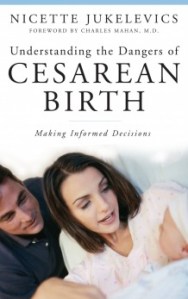
Book Review: Understanding the Dangers of Cesarean Birth

Book Review: Understanding the Dangers of Cesarean Birth: Making Informed Decisions
By Nicette Jukelevics
Praeger Publishers, 2008
ISBN 978-0-275-99906-3
264 pages, hardback, $49.95 (or $40.96 via http://www.icea.org)
http://www.dangersofcesareanbirth.com

Reviewed by Molly Remer, MSW, ICCE, CCCE
https://talkbirth.wordpress.com

Intended to be a comprehensive resource for both consumers and birth professionals, Understanding the Dangers of Cesarean Birth is an in-depth look at the incidence and impact of cesarean birth on mothers, babies, families, and society as well as an overview of prevention strategies. The final section of the book is about “why normal birth matters” and addresses changing the status quo. The Midwives Model of Care is reflected and promoted during the book and doulas also receive strong support.

I have two primary opinions of the book: The first is that I truly believe that Understanding the Dangers of Cesarean Birth should become the “go to” book for current, evidence-based, thorough information about cesarean birth in the U.S. It is a treasure trove of information and any birth professional would be well advised to have a copy on their bookshelf. The second opinion is that the “heavy” subject, extremely in-depth information, academic writing style, and relatively high price, will likely keep this book out of the hands out of its primary intended audience—the consumer. The person who most needs to read this book is the first-time pregnant woman. However, the entire time I was reading it, I kept thinking that there was only a slim likelihood of the average first-time mother being attracted to, or actually picking up this book, to read.

Mothers planning VBACs or seeking to understand their own cesarean birth experiences will probably find Understanding the Dangers of Cesarean Birth to be a valuable resource. Birth activists will find clearly articulated and important information that they will wish to shout to the rooftops and I think that this is how the content in Understanding the Dangers of Cesarean Birth has the best chance of truly reaching the women who need to hear its message.

Disclosure: I received a complimentary copy of this book for review purposes.

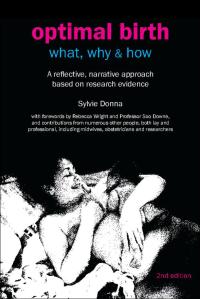
Book Review: Optimal Birth: What, Why & How

Book Review: Optimal Birth: What, Why & How
By Sylvie Donna
Fresh Heart, 2010
ISBN 9781906619138
670 pages, paperback, £24.99
http://www.freshheartpublishing.com

Reviewed by Molly Remer, MSW, ICCE, CCCE
https://talkbirth.wordpress.com

Written in an energetic and confident tone, Optimal Birth is written for midwives and other birth care providers and emphasizes undisturbed, natural birth. Throughout the text, a unique “birthframe” format is used to share birth wisdom in women’s own words. Donna is heavily influenced by the work of Michel Odent (he attended several of her births) and references him frequently. The author writes in a very straightforward manner and has extremely strong opinions as to what constitutes “undisturbed birth,” but these opinions are backed up with ample evidence-based information. The exquisite sensitivity of a birthing woman to her environment is of primary importance in the book and caregivers are strongly urged to take an extremely hands-off approach to care.

A lengthy volume, Optimal Birth is difficult to describe adequately in summary form—it contains extensive sections about physiological birth, birth interventions, the emotional impact of women’s experiences, prenatal care, and postpartum care. It also includes a week-by-week guide to pregnancy. There are a large number of black and white pictures and each section of the book contains a series of insightful questions designed to provoke self-discovery about physiological birth and the appropriate care of birthing women.

Readers unaccustomed to the midwives model of care or to the principles of undisturbed, physiological birth may find the book’s emphasis on non-intervention heavy-handed or one-sided. Considering that many manuals for care providers focus extensively on labor and birth “management,” personally I find the non-disturbance approach advised by Optimal Birth to be inspirational and encouraging as well as appropriate. As the author notes, “the processes of birth are so delicate that many things can disturb a laboring woman and consequently make her labor slower and more dangerous.”

An encouraging and informative companion book containing much of the same information but from a consumer perspective titled Preparing for a Healthy Birth is also available.

Disclosure: I received a complimentary copy of this book for review purposes.

Book Review: Secrets of Confident Childbirth

Book Review: Secrets of Confident Childbirth
By Vanessa Turner, Jackie Fletcher, Janay Alexander
HotHive Books, 2009
ISBN 978-1-906316-34-1
160 pages, paperback, £24.99
http://www.thebirthspecialists.com/book.html

Reviewed by Molly Remer, MSW, ICCE, CCCE
https://talkbirth.wordpress.com

“Your body is a complex work of art that functions perfectly” –The Birth Specialists

In an era when much pregnancy and birth literature seems to written in a “climate of doubt,” books like Secrets of Confident Childbirth offer a welcome and affirming alternate perspective—that of celebration and anticipation.

Accented with many beautiful, artistic photos of pregnant women, babies, and couples, Secrets of Confident Childbirth was written by a team of childbirth educators–“The Birth Specialists”–in the UK.  The book emphasizes mind-body preparation for birth, with a special emphasis on hypnosis for childbirth as well as other methods of using the mind in a positive way to achieve healthy birth outcomes. The book includes information about the benefits of natural childbirth, prenatal bonding with your baby, the powerful impact of words and language on the birth experience, the role of hormones and the impact of fear, visualization, relaxation, pain management, labor positions, massage, and more. It also includes a brief section on birth planning and evidence-based care.

I do have a slight concern that the emphasis on “focus on what you want and you will achieve it” can possibly lead to self-blame or to “blaming the victim” if a woman’s birth does not work out the way she hopes and dreams.  My observation about approaching birth with only “positive thinking” is that it can discount or undervalue the very critical role that the birth environment and the attitudes and fears of the others within that environment can have on the birthing woman’s experience and outcome. That said,  I truly love the confident approach, affirming language, and positive attitude towards pregnancy and birth expressed in Secrets of Confident Childbirth. This book is a tremendous gift to the birth world!

Disclosure: I received a complimentary copy of this book for review purposes.

Fathers, Fear, and Birth

“I told my dads that they were their partner’s lover and that their most important role at the birth was one they did everyday without classes, books or practice: Loving the mom. You could literally see the dads relax as this thought sunk in and took root.”

~ Lois Wilson, CPM

My husband supports me during my birthing time with our second baby

I don’t use these exact words, but I share something similar with the dads in my classes—your most important job is just to love her the way you love her, not to try to be anything different or more “special” than you already are…

I recently shared my review of The Father’s Home Birth Handbook by Leah Hazard and also wanted to share this excerpt from an article in Midwifery Today:

~~~~~~~~~~~~~~~~~~~~~~~~~~~~~~~~~~

Helping Men Enjoy the Birth Experience, by Leah Hazard

~~~~~~~~~~~~~~~~~~~~~~~~~~~~~~~~~~

Nearly 70 years ago, Grantly Dick-Read wrote in Childbirth without Fear that laboring women often experience a cycle of: Fear > Tension > Pain. This is a cycle with which many of us are familiar, and we’ve developed a myriad of ways to break the cycle since Dick-Read first published his seminal work in 1942. However, less attention has been focused on the emotional roller-coaster fathers experience throughout pregnancy and birth, and it’s this area that I’d like to explore in greater depth.

Although a man cannot feel the same pain as a laboring woman, I believe that many men experience a similar cycle of emotions in the birthing space to that which Dick-Read described, with a slightly different end product, namely: Fear > Tension > Panic. A man who is not confident in his partner’s birthing abilities, who is poorly informed, and/or who is poorly supported, becomes increasingly tense; and if this tension is not eased, then he spirals into an irreversible state of panic. This panic manifests differently in different men: some men become paralyzed by their fear (the familiar specter of the terrified dad sitting stock-still at the foot of the bed), while others spring into hyperactivity, bringing endless cups of water or becoming obsessively concerned with the temperature of the birth pool.

The root of this panic is fear, and it’s a fear which often begins to grow long before the first contraction is felt. As such, we need to think about ways that we can address and minimize this fear in the days and months preceding birth…

[Please read the rest of this article excerpt in the full online version of E-News: http://www.midwiferytoday.com/enews/enews1221.asp ]

Excerpted from “Beyond Fear, Tension and Panic: Helping Men Enjoy the Birth Experience,” Midwifery Today, Issue 95 Author Leah Hazard is the author of The Father’s Home Birth Handbook. For more information, visit www.homebirthbook.com .

——

I really think the fear-tension-panic cycle makes a great deal of sense and it brought me to this quote:

“Fear is completely intertwined with what we experience as labor pain…And it is the fear in our physicians and nurses as much as the fear within ourselves.” –Suzanne Arms (Immaculate Deception II)

I think sometimes women underestimate the power the attitudes of other people in the birthplace hold over outcome (the nocebo effect, possibly)—while being prepared, confident, fearless, etc. as a birthing woman is excellent and she can sometimes manage to triumph over the fear of the others around her, I more often see the fear of others overriding the preparation and confidence a mother has tried to develop in herself. I think it is important that we actively cultivate coping skills and resources within fathers-to-be as well, so that they are less likely to get into the fear-tension-panic cycle and are better able to be present for the birthing woman (fear-tension-panic within doctors and nurses is a subject for another post!). Here are some other posts I’ve written specifically for fathers:

Ideas for supporting your partner in labor

No Right Way

Resources for Fathers to Be

Birth Affirmations for Fathers

For Labor Support Remember TLC or BLT

Comfort Measures & Labor Support Strategies

Helping yourself while helping your wife or partner in labor

(P.S. Yesterday this was a much more developed post and WordPress erased it accidentally and to my great dismay 😦 )

Book Review: The Father’s Home Birth Handbook

I came to my attention today that I have never posted this book review! (also, as I prepared to “tag” this post, I realized that I don’t have a tag set up for “homebirth.” Can this really be true??!!)

The Father’s Home Birth Handbook

By Leah Hazard
Victoria Park Press, 2008
Softcover, 208 pages
ISBN: 978-0-9560711-0-1
www.homebirthbook.com

Reviewed by Molly Remer, MSW, ICCE

The Father’s Home Birth Handbook is a succinct and easy to read little guide for fathers and adds to the growing library of birth resources specifically geared towards fathers-to-be. The book is written by a woman, but contains ample quotes from fathers which lend a male perspective. It also includes a number of good birth stories interspersed throughout, which were all written by men.

The target audience for the handbook is easily summed up in the prologue: “…I’ve met far more men who have responded to their partners’ home birth wishes with a mixture of shock, cynicism, and fear…Far from being domineering ogres who just want to see wifey tucked ‘safely’ away a hospital, these loving fathers have simply had very little access to accurate, impartial information about the safety and logistics of home births versus hospital births.”

The first chapter addresses “Risk & Responsibility,” because that is one of the very first issues of concern for most people new to the idea of homebirth. It moves on to a chapter called “Think Positive,” followed by “Choosing the Guest List” and then one titled “Pleasure and Pain” This chapter covers comfort measures and what to do while the woman you love is giving birth: “…away from the intravenous drip and ticking clocks, you can support your partner in experiencing labour in all of its awesome, challenging power.”

Chapter five—“Birth: Normal and Extraordinary” covers Labor 101 topics, including what to do with the placenta. This is followed by “Challenges & Complications” which covers some common issues of concern such as premature labor, being overdue, prolonged labor, distressed baby, cord around the neck, tearing, and blood loss. Each of these is followed by a “what can I do to help?” section.

The final chapter—“Now What?”—concludes with a nice segment called “how can I carry the lessons I’ve learned from my homebirth with me into the rest of my life as a father?”

Published in Scotland, the handbook has a UK perspective—it assumes participation in the NHS and a “booked” midwife and homebirth. There is no “how to choose a midwife” type of section (because there is no choice of midwives). For US readers, this leaves a set of issues unaddressed—such as varying legal statuses, etc. UK specific issues also arise based on the possibility of caregivers who are not thrilled about homebirth, but who have to come to the birth since it is a government supported option. It comes across that in Scotland homebirth may seem readily okay on paper, but in reality is more difficult to pull off.

The book does briefly discuss the birth climate in the US and soundly critiques ACOG’s position on homebirth.

The book has an index and a resources section.

The Father’s Home Birth Handbook is a friendly, practical, matter-of-fact, helpful little guide that neatly addresses common questions and concerns many fathers-to-be have about planning a homebirth.

——————

Disclosure: I received a complimentary copy of this book for review purposes.

Associated amusing anecdote: my then three year old noticed me reading this book, looked at the cover and said, “The dad is trying to grab him, but that little baby is floating away!

Centering for Birth

I have a strong commitment to active birth—the use of movements, position changes, and most of all laboring out of bed. As a result, in my classes I tend to emphasize movement-based coping strategies for labor. However, I have also come to realize that coping measures employing relaxation and breath awareness are extremely valuable. These tools cannot be stripped away from the birthing woman. Whatever happens during birth, whatever unforeseen circumstances that arise, or if her need for activity runs smack into the hospital’s need for passivity, the breath—and breath based tools—cannot be taken from her. I do not teach patterned breathing techniques in my classes, but I do teach various breath awareness skills.

Centering is a breath awareness strategy that I’ve adapted for use in birth classes based on the ten second centering process described in the short book Ten Zen Seconds. Using the breath as a “container” for a thought or affirmation is the basis of centering. A meditative technique, the purpose is to “center” and to become mindful of the present moment. The container is a 10 second long breath—a five second in-breath and a five second out-breath—that holds a thought. You think the first half of the phrase on the in breath and the second half on the out breath (Maisel, 2007). Use this technique once or twice to “greet” the contraction and then continue breathing with awareness throughout the remainder of the contraction.

Some suggestions of centering thoughts to use during birthing include:

(I am open) (to birth)

(I am ready) (for my baby)

(I welcome) (my labor)

(I am confident) (and strong)

(Right here) (right now)

(I am equal) (to this challenge)

(I embrace) (this moment)

A pdf handout describing this technique (for use in birth classes), is now available here: Centering.

Another phrase I find useful in daily life, as well as applicable to birth is (I expect) (nothing). While this may initially appear pessimistic, it is a very useful reminder of the idea that most emotional suffering in life is a result of attachment to how something “should” be (i.e. “labor should only be taking 12 hours) (Dyer, 2002).

I frequently remind my birth class participants that coping techniques work best when they are incorporated into daily life rather than “dusted off” for use only during labor. Centering is a skill that is readily incorporated into real life. Indeed, when I first learned the technique, I quickly realized that it was a skill that I will use for the rest of my life. I let my class participants know that I regard this as a life skill, that happens to also be useful for birthing. It is essentially a tiny meditation technique that can be more readily incorporated into one’s daily life (especially a life that includes small children) than traditional, dedicated, more elaborate meditation techniques.

—–

Molly Remer, MSW, CCCE is a certified birth educator, writer, activist, and mother of two young sons. She is an LLL Leader and editor of the Friends of Missouri Midwives newsletter. She blogs about birth at http://talkbirth.me, midwifery at http://cfmidwifery.blogspot.com, and miscarriage at http://tinyfootprintsonmyheart.wordpress.com

References:

Dyer, Wayne. Ten Secrets for Success and Inner Peace, Hay House. March 2002.

Maisel, Eric. Ten Zen Seconds, Sourcebooks, Inc. March 2007.

—-

This article is modified from one that originally appeared in The International Journal of Childbirth Education, July 2009 (page 20)