Archives

ICAN Conference Thoughts

This past weekend, I attended the ICAN conference in St. Louis. I was really excited that the conference was in my own back yard (well, two hours from my back yard). I enjoyed seeing lots of people that I know from Friends of Missouri Midwives as well as other friends and contacts from other organizations. And, I got to meet some people in real life (like Jill from the Unnecesarean), who I previously only “knew” online. I also bought myself a pretty awesome new ring from the MANA booth (and a t-shirt and a bumper sticker!).

In addition to these things, highlights of the conference for me were:

  • Hearing Pam England speak and getting to meet her after so many years of being a fan of Birthing from Within. I will write another post soon about her “9 Birth Story Gates” presentation. It was very good.
  • Taking Amy Swagman’s birth art workshop (Amy is the Mandala Journey artist and was someone else that I enjoyed meeting in person after only “knowing” online). I will write about this soon as well.
  • Seeing the amazing breech birth videos shared by Gail Tully of Spinning Babies in her presentation about breech birth.
  • Connecting with another mother during the sand tray art therapy workshop presented by Maria Carella. Though our birth experiences were different, our “processing” of them during the workshop was amazingly similar. More about this later too.

The main reason I wanted to post tonight though was to share my experience in visiting the “Our Voices” room at the conference. This room is a safe, quiet place—a place of silence—in which women can go to to contribute their feelings about their cesareans to the wall displays. They can take their contributions home with them when they leave, or leave them up to be re-installed in the next Our Voices room at the next conference. Every wall in the room, plus the doors and several tables, was covered with women’s words and feelings about their cesarean experiences, subsequent births, VBAC, etc. It is difficult to put into words how potent of an experience visiting this room was. I was not expecting to be moved to tears by it, but I was. It was extraordinary. And, painful. There were other women in the room crying and crying as they composed their additions to the wall, as well as other women walking quietly through and looking and reading. I originally intended to add to the wall—I was told that it was not necessary to have had a cesarean myself in order to add something—but after seeing the room and the women in it, I did not feel “worthy” (so to speak!) of adding to it. It wasn’t my space. It was something I was privileged to witness, but I did not feel it was appropriate to add my own words to these women’s pain and expressive space. I felt like anything I could say would be trite somehow, almost insulting, to the depth of feeling expressed on the walls. Sometimes you really do have to have “been there” in order to fully recognize the experience of another. And, while I can certainly empathize and feel deep compassion, cesarean birth has not been my own personal journey and it just felt like it would be rude almost, to claim enough understanding of it to write on this wall.

This experience also taught me that I am not meant to start an ICAN chapter. I really think our area could use one and I love the work that ICAN does and I had signed up to start a chapter (before coming to my senses and realizing that I am overcommitted to too many projects/organizations right now as it is), but after visiting the Our Voices room, I realized that I am not the appropriate person to lead one. I just can’t really get it even though I can “see” other women and honor their experiences.

I’ve noted before that I feel like my experiences with pregnancy loss opened my heart more fully to the full range of birth loss (which  includes many women’s feelings about their cesareans) and birth/pregnancy trauma. Before loss, I only saw the “pretty” side of birth. Well, not pretty, exactly, but the empowering and triumphant and exciting side. After my birth-miscarriage, my world was opened to the wider world of birth experiences and feelings. I feel like there are—somewhat surprising—parallels between pregnancy loss and  the loss of a vaginal birth women experience with cesarean, but it is also different and the Our Voices room at the conference was a sacred space for those with cesarean experiences. It was both humbling and moving to hear their voices in this way.

There are pictures of the room and the contributions at the ICAN Conference Facebook page.
Handouts for Birth Booths

A frequent topic on email lists for birth professionals is good handouts/resources for booths at maternity or baby fairs. Rather  than making copies of materials or creating my own handouts (reinventing the wheel in a less-professional looking way!),  I am a fan of using glossy, professionally printed, but still very low cost stuff for tables and also a fan of materials that address good maternity care in general. My top faves for having on a booth or as handouts are:

International Women’s Day, Birth Activism, and Feminism

“The minute my child was born, I was reborn as a feminist. It’s so incredible what women can do…Birthing naturally, as most women do around the globe, is a superhuman act. You leave behind the comforts of being human and plunge back into being an animal. My friend’s partner said, ‘Birth is like going for a swim in the ocean. Will there be a riptide? A big storm? Or will it just be a beautiful, sunny little dip?’ Its indeterminate length, the mystery of its process, is so much a part of the nature of birth. The regimentation of a hospital birth that wants to make it happen and use their gizmos to maximum effect is counter to birth in general.” –Ani DiFranco interviewed in Mothering magazine, May/June 2008

“We were all held, touched, interrelated, in an invisible net of incarnation. I would scarcely think of it ordinarily; yet for each creature I saw, someone, a mother, had given birth….Motherhood was the gate. It was something that had always been invisible to me before, or so unvalued as to be beneath noticing: the motheredness of the world.” –Naomi Wolf, Misconceptions

Since tomorrow is International Women’s Day, I felt moved to share the above quotes. I also wanted to touch briefly on birth as a feminist issue, spurred by this thought-provoking post by my friend Summer (I have TONS more ideas about this topic, but limited time in which to share them!). Personally, I’ve identified as a feminist since I was a child—long before I became a birth activist. Identifying in this way was my first taste of the activist spirit that has fueled me for the rest of my life. For me, my birth activism is intimately and inextricably entwined with my larger interest in women’s rights. I have always been somewhat confused to hear any woman say she is not a feminist, it grieves me because when you dig a little deeper, it is usually because they are defining feminism according to a very skewed, simplified, inaccurate, media misportrayal of feminism (i.e. a man-hating caricature). I also like the term “womanist.” To me, being a feminist most simply means believing and acting as if women have value. All too often, those who mischaracterize feminism in the above ways believe EXACTLY the opposite.

In one of my many books about women’s issues, I found these awesome explanations of what feminism is—the source being of some surprise to me, the Roman Catholic Order of Sisters of Loretto:

Feminism: a world-wide social change movement which critically but lovingly rejects relationships and structures based on stereotyped roles of dominance (male) and submission (female).

Feminism: a life-affirming movement reorganizing institutions and relationships, so that women will have equal access to society’s goods, services, status, and power.

Feminism: the bonding of women discovering the joy of woman-identity.

Feminism: a process freeing women to work toward liberation for themselves and other oppressed persons.

And here is another definition: “Feminism is a conscious and continuous effort to improve the lives of all women, an effort which requires changing the system that defines success as making a lot of money.” –Jane O’Reilly

To me it also means defining all women’s work, paid or unpaid, as having real value (this includes the “invisible” work of mothering reflected in the second quote I chose to open this post).

I think all of these definitions can be well applied to our work with birth!

I  also think some women who do not self-identify as feminist do not because they feel like, “feminists want women to be like men.” So, here is a feminist quote about that too 🙂 “A woman should not be a mirror image of man’s universe. A woman should not try to emulate men, thus taking on masculine traits, she should develop herself, realize herself, gain direct vision into her own being.” —Anais Nin

I love the final point especially—gain direct vision into her own being. I think empowered birth often triggers this for women.

Net of love in action!

And, then finally, bringing us back to International Women’s Day I have a final quote:

“I believe that these circles of women around us weave invisible nets of love that carry us when we’re weak and sing with us when we’re strong.” –SARK, Succulent Wild Woman

As I noted in my post for CfM this week, in honor of International Women’s Day—and every day—let us celebrate our bodies, honor our mothers, and trust in the nets of love woven around us by a multitude of remarkable, powerful, everyday women.

Pushed Thoughts

If you are looking to get fired up about about birth activism, I recommend reading the book Pushed by Jennifer Block. This book is seriously GOOD! Lots of weighty, meaty information, scathing critiques, astute observations, and clever commentary. She has plenty of scientific backup for her claims and the book is written in an engaging, fast paced style that skillfully weaves facts into descriptive commentary and personal, illuminating interviews. I originally checked this book out of the library, but after seeing all of the data contained within—she pulls together vast quantities of data about effectiveness of “routine” practices, etc. and makes it accessible to the average reader—I quickly ended up acquiring two copies (one hardback and one soft cover, both autographed from when Jennifer was our featured speaker at FoMM‘s annual Cookie Day event!).

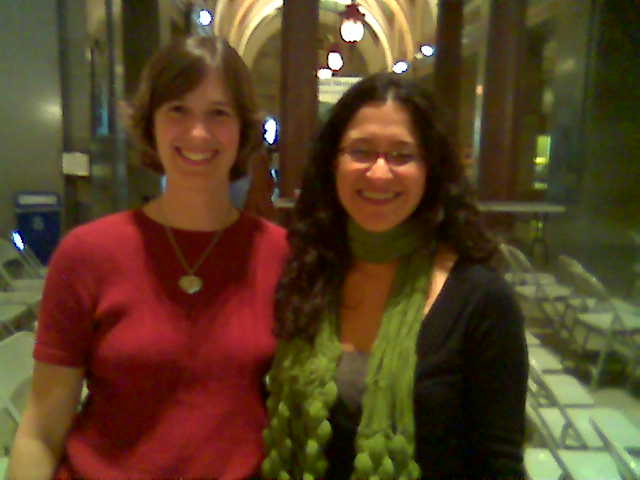
Yes, I was a geeky fangirl in the Capitol rotunda in 2009 when Jennifer Block spoke at the annual Friends of Missouri Midwives Cookie Day event.

Pushed is a thorough critique of obstetrics as an industry and how women and babies are being HURT by the systems ostensibly in place to “protect” them. Especially thought provoking is Block’s descriptive exploration of the cesarean epidemic. She points out on one occasion when discussing the whole uterine rupture straw man used to deny women VBACs, that people must prefer “controlled uterine rupture” (i.e. cesarean) than the small chance of natural uterine rupture. Later, in a separate section regarding blood loss during birth, she mentions that average loss is 300-500 mil and over 500 is considered a hemorrhage. She then notes that during a cesarean the average loss is 1000 mil. Reading that, I thought so essentially with a cesarean you have a 100% chance of a uterine rupture AND a 100% chance of a hemorrhage.  ::sob:: 😦

The information about blood loss wasn’t new to me, but I did learn something I hadn’t known at the time–300-500 mil of blood is approximately 8-9 menstrual periods worth. Isn’t the female body thoroughly awesome?!

Some assorted random thoughts and quotes from Pushed:

Re: EFM (external fetal monitoring): “For the natural childbirth movement, the emergence of the monitor was unfortunate timing. Just as activists were urging women to get up and birth, hospitals reined them back down in bed and strapped them, both physically & psychologically, to a machine that falsely promised a safe birth.”

While my feelings about unassisted birth have been “refined” and tempered somewhat since first reading Pushed in 2008, I did find the sections about UC to be frustrating and annoying. Quoting a midwife re: unassisted birth: “‘That’s not why you’re hiring a midwife. You’re hiring a midwife because you want her there for complications’ Some of Linda’s clients are such believers in birth that they toy with the idea of going unassisted. To this, Linda is fond of telling the story of a birth she attended where the baby had its umbilical cord wrapped around its neck three times and need resuscitation. ‘You never know when you’re going to have a problem,’ she says. ‘It’s like playing Russian roulette.'”

This makes me frustrated because those kinds of scare-tactic comments and implied “you must not really love your baby” subtext is EXACTLY the same as the conventional medical system’s attitude toward homebirth. The midwife quoted seemed totally oblivious that her remarks are virtually identical to the things OBs say say about homebirth and, regardless of any other personal opinions, I think they are just as demeaning and restrictive to women as the anti-homebirth sentiments are.

Okay, brief rant aside for another quote, this one while the author was observing a home water birth:

“It is at this point that I begin to fathom what supporting normal birth really entails. Linda is on her knees, sleeves pushed up, gloved hand in a soiled kiddy pool up to her bare elbow, gleaning diarrhea wisps with a spaghetti strainer by flashlight. I try to imagine a doctor doing this work and have great difficulty. This is not medicine. This is birth. It is messy, backbreaking, humble work.” [emphasis mine]

During the conclusion of the book after a discussion about the NAPW and whether childbirth is a reproductive right or not:

To her [a doctor who thinks it is not], it is a medical issue, one that may need reform, but one that belongs under the purview of physicians. ‘To my mind, I’m all for people having a pleasant and safe birth experience,’ she says. ‘But my highest priority would be for them to have a safe birth experience.’ But what’s considered safe is political. What’s safe changes. Thirty years ago obstetricians said VBAC was dangerous. Then they said it was safe. Now they’ve gone back to saying it’s dangerous. ACOG says out-of-hospital birth isn’t safe, but the research has consistently suggested that for women with normal, uncomplicated pregnancies it is not just safe, but safer, because those women are far more likely to have a normal, spontaneous vaginal birth and far less likely to experience harmful, unnecessary interventions….”

“…The goal is to have a healthy baby. ‘This phrase is used over and over and over to shut down women’s requests,’ she [Erica Lyon] says. ‘The context needs to be that the goal is a healthy mom. Because mothers never make decisions without thinking about that healthy baby. And to suggest otherwise is insulting and degrading and disrespectful’…What’s best for women is best for babies. and what’s best for women and babies is minimally invasive births that are physically, emotionally, and socially supported. This is not the kind of experience that most women have. In the age of evidence based medicine, women need to know that standard American maternity care is not primarily driven by their health and well-being or by the health and well-being of their babies. Care is constrained and determined by liability and financial considerations, by a provider’s licensing regulations and malpractice insurer. The evidence often has nothing to do with it.

This the TRUTH and I hope women hear it.

The only critique I have of this book is one I echo from several other reviews. The book fires you up and has a lot of passion and energy, but provides no outlet or ideas for where to channel that energy. There is no “resources” section, no suggestion to join Citizens for Midwifery or your state midwifery advocates, no list of birth-positive organizations who are working diligently for birth change in our culture, etc.

For some ideas that address the above, read my small-stone birth activism article 🙂

Birth Quotes Update

“Remember that most of the people who really need your work are not hanging out in the oversaturated twitterverse, but in places where what you do isn’t common. Get out of the crowded room and go where there’s a dearth of and a thirst for what you do. Don’t try to shout over lots of shouting.” –Tara Sophia Mohr

(Not specifically birth-related, but an excellent reminder from this post. I’ve often felt with blogging and writing for birth publications that maybe I’m just clamoring to …be heard in a cacophony of other voices (that also have good things to say–am I contributing anything unique?!)

“When my kids become wild and unruly, I use a nice, safe playpen. When they’re finished, I climb out.” ~Erma Bombeck (via Moby® Wrap)

“The miraculous nature inherent in the unfolding of a flower is the very same that moves through a woman as she gives life to the world. We can neither control nor improve upon it, only trust it.” -Robin Sale

…the stories I see of birth in the media don’t reflect the intense emotions, the physical power, or the immense impact of the experience itself. Women screaming, fathers fumbling about, doctors doing most of the heroic work–these images don’t do justice to my experience. I felt empowered, strong, heroic in my efforts to bring my daughter into the world yet, I am painfully aware how little others see the heroism in my birth experience.”  –Amy Hudock (essay in Literary Mama)

“It’s not only children who grow. Parents do too. As much as we watch to see what our children do with their lives, they are watching us to see what we do with ours. I can’t tell my children to reach for the sun. All I can do is reach for it, myself.” – Joyce Maynard (via Literary Mama)

Giving birth, certainly, should rank among the pivotal heroic adventures celebrated in our culture. Certainly it is more heroic than catching a football or acting in front of a camera, and perhaps even more heroic than going off to war. Men return from the battlefield with victory, but women return from the birthing room with life…” –Amy Hudock (in Literary Mama)

“...if you want to know where a woman’s true power lies, look to those primal experiences we’ve been taught to fear…the very same experiences the culture has taught us to distance ourselves from as much as possible, often by medicalizing them so that we are barely conscious of them anymore. Labor and birth rank right up there as experiences that put women in touch with their feminine power…” –Christiane Northrup

The intrinsic intelligence of women’s bodies can be sabotaged when they’re put into clinical settings, surrounded by strangers, and attached to machines that limit their freedom to move. They then risk falling victim to the powerful forces of fear, loneliness, doubt , and distrust, all of which increase pain. Their hopes for a normal birth disappear as quickly as the fluid in an IV bottle.” ~Peggy Vincent

So many words commonly used to describe childbirth–support, patient, management, delivered by, coached, helped, guided–suggest that a woman does not have the power to give birth without being dependent on somebody else. This isn’t the case at all.” –Michel Odent

(This reminds me of that Odent quote about not actively supporting a woman in birth that stirred me up a couple of months ago. That one I had some objections to, the one above, I can definitely get behind, even though I think he is actually …saying the same thing in both quotes!)

I believe that natural childbirth is a right and a privilege…Our country needs to step up to the plate in educating women about the benefits of natural birth, and we need to help women actually do it – not just hear about it.” –Mayim Bialik (via ToLabor Doulas Dallas)

In the moments of labor and birth, all the forces of the universe are flowing through a woman’s body.” – Sister MorningStar (The Power of Women)

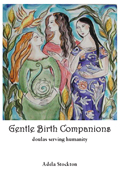
Book Review: Gentle Birth Companions

Book Review: Gentle Birth Companions: doulas serving humanity
By Adela Stockton
McCubbington Press, 2010
ISBN 978-1-907931-00-0
104 pages, paperback, £13.00 (worldwide)
http://www.adelastockton.co.uk

Reviewed by Molly Remer, MSW, ICCE, CCCE
https://talkbirth.wordpress.com

Gentle Birth Companions is the first book “written about the doula movement beyond the US” and as such it was a fascinating read. I hadn’t realized how ethnocentric my own perceptions were about the role and history of doulas and I previously assumed that the “doula movement” was essentially synonymous with the “doula profession in the US.” Not so! Indeed, Stockton discusses the way in which in the US, doula professional organizations strive mainly to be acceptable to the medical community, whereas in the UK the doula operates outside of (or parallel to) the medical system. And, she provides an interesting analysis as to whether doulas should be referred to as “professionals” in the first place (this is also due to a difference in what the word means in the UK compared to the US). She expresses several criticisms of certification or even of specialized training programs, feeling that professionalization builds additional, unnecessary layers of bureaucracy into the maternity care system and that the role of a doula should be the role of a lay woman. She also posits that the role of doula actually represents a return to the role of traditional midwifery—what midwifery was supposed to be and has now become removed from politically, socially, and culturally.

Gentle Birth Companions is divided into three sections. In the first, Grassroots, it explores the origins of the doula, the 21st century doula (including doula preparation and training), the UK “brand” of doula, and the wider doula community (thoughts about a global movement and also about doulas in the developing world as well as the industrialized world). The second section, Guardians of Gentle Birth?, explores the doula’s role both antenatally and postpartum and the return to “traditional midwifery” represented by the role. In the third section, Doula Tales, some UK doulas share birth stories , experiences, and thoughts in their own words.

Gentle Birth Companions is an excellent look at the “politics” of the doula movement and the professionalization and motivations of such, as well as at the role and purpose of the doula in women’s lives.

Disclosure: I received a complimentary copy of this book for review purposes.


Birth Quotes of the Week

“In the midst of a world
…marked by tragedy and beauty
there must be those
who bear witness
against unnecessary destruction
and who, with faith,
stand and lead
in freedom,
with grace and power.

There must be those who
speak honestly
and do not avoid seeing
what must be seen
of sorrow and outrage,
or tenderness,
and wonder.”

–via Unitarian Universalist Association

“One of the most important things I have learned about birthing babies is that the process is more of an unfolding marvel than a routine progression of events.” –Tori Kropp

‎”We are part of generations of women, one to the next. Teaching, mentoring, supporting, assisting, befriending, and so much more. Let us not lose those connections in our lives, in our births…” —Preparing For Birth

‎”There is no other organ quite like the uterus. If men had such an organ they would brag about it. So should we” ~Ina May Gaskin

(this quote got the most “likes” of almost all the quotes I’ve ever posted on the CfM FB page!)

“A woman’s confidence and ability to give birth and to care for her baby are enhanced or diminished by every person who gives her care, and by the environment in which she gives birth…Every women should have the opportunity to give birth as she wishes in an environment in which she feels nurtured and secure, and her emotional well-being, privacy, and personal preferences are respected.” —Coalition for Improving Maternity Services (CIMS)

“Birth wisdom…comes most completely not from the outside but from deep within the woman’s physiology.” –Robbie Davis-Floyd (in intro to Gentle Birth Choices)

“Hospital-based childbirth classes usually do not teach women about the wonder and mystery and sweaty, intense power of birth, but rather prepare them for each and every hospital procedure by educating their intellects instead of honoring their bodies.” –Robbie Davis-Floyd (in intro to Gentle Birth Choices book)

(Let it be known before anyone gets their feelings hurt that I do understand that there are very good, complete, helpful, awesome hospital birth classes and hospital birth educators out there! This quote is a generality, but one that seems quite true in a number of cases [but not all, of course]).

“…I have noticed that the subgroup of women who tend to choose [homebirth] often exhibit certain characteristics, such as comfort within their own bodies, a desire to have a birth experience that is more poetic than clinical, as well as a desire to return what we all feel is some seriously missing humanity to the experience of having a baby…” –Cara Muhlhahn

“We can no longer sit back and debate whether maternity care is evidence-based. We have seen that over and over again, in most cases, it is not…” –Connie Livingstone


Book Review: The Power of Women

Tonight I realized I apparently never posted my review of The Power of Women to this blog, but instead had it only on the CfM blog. Since I love the book, I decided to remedy the situation immediately!

The Power of Women
By Sister MorningStar
Motherbaby Press, 2009
ISBN 978-1-890446-43-7
201 pages, paperback, $29.95
http://motherbabypress.com/

Reviewed by Molly Remer, MSW, ICCE
https://talkbirth.wordpress.com

Occasionally, a book comes into my life that touches me so deeply that I am at a loss for words. The new book, The Power of Women, by Sister MorningStar, is one of those rare books. A treasure. A gem. A rare jewel. A delight. These are the words that do come to mind. However, superlatives—though true—do little justice to describing the actual book.

The Power of Women is a book of “instinctual” birth stories told through the eyes of a gifted and sensitive midwife. The stories are from her perspective, not the mother’s. Each story has either a lesson to share or is a glimpse into that deep inner wisdom and strength found in birthing women that is so easily ignored or dismissed in our modern birth culture. This book is good “word medicine” and the empowering stories within it shine a light to help other women trust their instincts. This light also helps other birth professionals rediscover the magic and mystery and wonder of birth and women.

The Power of Women also touched me in a special way because the author divides her time between my own native Missouri and a birth center in Mexico. Some of the stories shared take place in each location (more from Mexico). I found it delightful to discover the power of my own Missouri midwifery activist friends represented throughout the book. Familiar names and faces graced the pages for me and it was a treat to experience that connection.

The book consists of twelve chapters, each containing 5-9 different stories each. The stories themselves are not long, narrative birth accounts, but are moments captured brilliantly for the glimpse of powerful truth they share. Some are only 1/2 page in length–but the depth in each is great. The chapters are titled things like “Stories of Power” or “Stories of Courage” or “Stories of Community and the tales shared therein are loosely bound together with that common thread.

To be clear, not all of the stories are “happy” or are necessarily “good” birth stories, some are even fairly scary and even depressing. All are powerful.

My only critique of the book, which I hesitate to share because it seems petty in light of such a beautiful and wise book, is that the formatting of the text is odd. The font size is small and the text tightly spaced with very small indents.

If you find yourself in a place where you feel trapped alone in a world where the birth you love so much is becoming a “mythological story,” read this book. If you are an aspiring or current midwife, doula, or childbirth educator and wish to deepen your understanding of birth, read this book. If you are a pregnant woman hungering to dig deeply into instinctual birth and the wisdom and power of story, read this book. The Power of Women is a powerful, touching, and magical journey.


Disclosure: I received a complimentary copy of this book for review purposes.

Midwife means “loves women”…

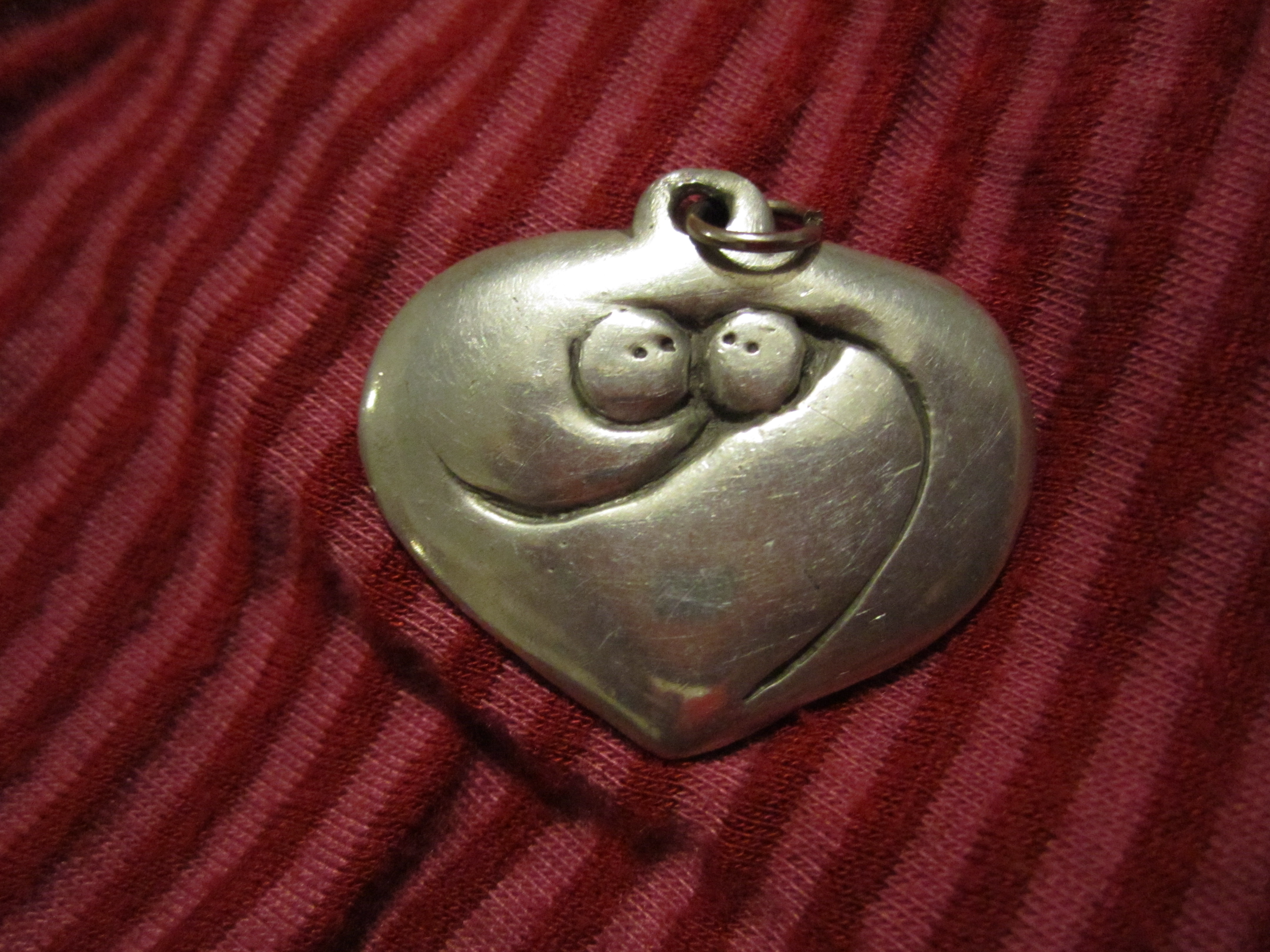
Blessingway gift from my first midwife

I know the traditional root of the word midwife is “with woman” (some sources say “wise woman”), but I’d like to offer another. When I was pregnant with my second son, I had a wonderful midwife and we spent many hours together talking about birth and midwifery. During one conversation she said to me, “you can’t be a midwife unless you love women.” This struck me profoundly—a midwife must love women. This phrase has come back up for me several times in the last couple of months as I reflect on my relationship with my current midwife and give thought to midwifery care and birth care in general. I actually believe that not all midwives do, in fact, love women and indeed, my observation is that midwives from specific religious traditions, may actually hold a perspective of women that is almost the opposite of loving them 😦

In any subset of birth work—including breastfeeding consultation—I’ve noticed there are two primary motivators for the women doing this work. For some, it is about the babies and for others, it is about the women. I have noticed this as a volunteer breastfeeding counselor also—women who do this work will say, “I just love babies…” or, they will say, “I love helping mothers.” Please note that I’m not actually saying that one motivation is “better” than another (though, I personally prefer one), just that I’ve noticed this trend. And, obviously, the two are also inextricably intertwined. But, some women do come into birth work primarily to improve the world for babies and some come into it to change the world for mothers (which, I believe, changes the world for babies!). Obviously, you’ve guessed that I’m in the latter category. I believe that we cannot help babies without helping mothers first and that by helping mothers, we cannot help but also be helping babies—but, for me, the mother comes first. And, from the perspective of both a pregnant woman and a birth activist, I think we need midwives whose definition of midwifery is loves women.

In  the Autumn 2010 issue of Midwifery Today, I read an interview with a midwife named Gigliola from Paupa New Guinea and in the article I marked this quote:

“Gigliola has a strong reverence for the power of mothers, for women who are willing to give up their lives for their children, willing to work hard through long labors, feeding their babies from their bodies, staying up nights with them, loving and loving for long years. Then as graciously as they can, watch their ‘successes’ walk off to lead their own lives. The path of motherhood is as rigorous a spiritual path as any on our planet. Gigliola holds motherhood as a sacred calling, deserving of great respect…’Tell them it is about the mothers,’ she said. ‘The mothers are amazing.’” [emphasis mine]

I agree.

Twelve Days of Birth Activist Christmas

12 Days of Birth Activist Christmas

by Molly Remer

On the first day of Christmas, a birth activist gave to me
one woman wanting to birth free…

On the second day of Christmas, a birth activist gave to me
two comfy birth balls
and a woman wanting to birth free…

On the third day of Christmas, a birth activist gave to me
three empowering birth books…

On the fourth day of Christmas, a birth activist gave to me
four independent birth classes...

On the fifth day of Christmas, a birth activist gave to me
five midwife cell phone riiiiiiings…

On the sixth day of Christmas, a birth activist gave to me
six healthy birth practices

On the seventh day of Christmas, a birth activist gave to me
seven supportive partners

On the eighth day of Christmas, a birth activist gave to me
eight helpful doulas…

On the ninth day of Christmas, a birth activist gave to me
nine spontaneous labors…

On the tenth day of Christmas, a birth activist gave to me
ten pregnant women dancing…

On the eleventh day of Christmas, a birth activist gave to me
eleven upright second stages…

On the twelfth day of Christmas, a birth activist gave to me
twelve happy motherbabies!