Archives

Small Stone Birth Activism

As someone who feels deeply, passionately, and intensely about the need to transform the birth culture in the US, I have often experienced an immobilizing feeling of not doing enough. Of not helping enough. Of not being enough to affect the kind of social change I want to see happen in the world. As a mother of small children, I often feel limited with regard to the kind of large-scale changes I’d like to make in the birth world. I have been a childbirth educator since 2005 and I’m also trained as a birth doula, a postpartum doula, a prenatal fitness education, a prenatal yoga teacher, a birth art facilitator, and a breastfeeding educator. I’ve accepted that birth doula work doesn’t fit into my life right now (and even without young children, I do not know that I actually possess the strength to lend witness to the hospital birth machine). I’ve happily taught independent birth classes, usually privately in homes one-on-one, for quite a few years which feels like smaller scale change than I envision. It is also becoming less easy to integrate into the rest of my life’s responsibilities. Rather than relying only on teaching independent classes as my primary outlet for change, I enjoy discovering alternate ways of educating others about birth.

While reading the book The Mother Trip by Ariel Gore, I came across this quote from civil rights activist Alice Walker: “It has become a common feeling, I believe, as we have watched our heroes failing over the years, that our own small stone of activism, which might not seem to measure up to the rugged boulders of heroism we have so admired, is a paltry offering toward the building of an edifice of hope. Many who believe this choose to withhold their offerings out of shame. This is the tragedy of our world.” Ariel adds her own thoughts to this: “Remember: as women, as mothers, we cannot not work. Put aside your ideas that your work should be something different or grander than it is. In each area of your life—in work, art, child-rearing, gardening, friendships, politics, love, and spirituality—do what you can do. That’s enough. Your small stone is enough.”

These quotes caused me to reflect on the myriad methods of “small stone” birth activism that can be engaged in as a passionate birth activist mother embroiled in a season of her life in which the needs of her own young family take precedence over “changing the world.” We can offer the small stones of:

  • Speaking positively about normal, natural birth, to whomever we are speaking with whenever the topic arises.
  • Birth advocacy bumper stickers.
  • Sharing our birth stories.
  • Creating little informational cards (inspired by Carla Hartley’s Trust Birth Initiative cards) to seed around our communities in creative locations. I am fond of using Vistaprint and ordering their horizontal premium cards for just the cost of shipping.
  • Creating bookmarks with inspiring information about birth and giving them to pregnant women, handing them out at health fairs, etc.
  • Buying subscriptions to enlightening magazines for doctors’ offices.
  • Buying gift subscriptions to enlightening magazines for our public libraries.
  • Talking to pregnant women—my most recent approach is simply to say, “I wish you a wonderful birth!”
  • Responding to “action alerts” from the organizations in our states promoting healthy, normal birth and midwifery.
  • Supporting healthy birth related organizations with your membership. I am a member of 11 birth-related organizations. I also maintain subscriptions to a variety of magazines and journals.
  • Volunteering—either for advocacy organizations or directly with pregnant women.
  • Showing up at events, fundraisers, and rallies. Maybe we are not able to plan these events by ourselves at this point in our lives (or maybe we can!), but we can certainly show up and be counted!
  • Talking to non-pregnant women and girls about birth.
  • Giving empowering books to pregnant friends (or to not pregnant friends!).
  • Buying memberships to supportive organizations for friends and family members.
  • Give back issues of inspiring, positive magazines to people as part of your baby shower gifts.
  • Making donations as you are able to local chapters, statewide organizations, or national organizations promoting birth, breastfeeding, doulas, midwives, etc.
  • Making your birth stories available online.
  • Blogging about birth and about issues in the birth world (in addition to writing my Talk Birth blog since 2007, I’ve also blogged for ICEA and maintained the CfM blog).
  • Being an online childbirth educator—visit message boards (especially “mainstream” message boards) and give accurate, evidence based information. This has the potential to reach many people, but also can be very time-consuming (and addictive in a way) and can replace the face- to-face good you could do, so be careful with this one.
  • Participating in online research (such as the Birth Survey transparency in maternity care project).
  • Writing letters to the editor of your local newspaper educating the public about birth options and midwifery care.

Despite my persistent feelings of wishing to do more, when I examine each of my offerings, I begin to acknowledge that maybe my own small stones of effort are enough after all…

What stones do you add to the pile?

—-

Molly Remer, MSW, ICCE, CCCE is a certified birth educator, writer, and activist who lives with her husband and children in central Missouri. She is the editor of the Friends of Missouri Midwives newsletter, a breastfeeding counselor, a professor of human services, and doctoral student in women’s spirituality. She blogs about birth, motherhood, and women’s issues at http://talkbirth.me.posts.

The first version of this article was published in Citizens for Midwifery News, March 2008. Revised version published in the Fall 2009 edition of the International Journal of Childbirth Education (ICEA’s publication).

Affordable Fetal Model

Two things to know about me:

1. I love dolls.

2. I love bargains.

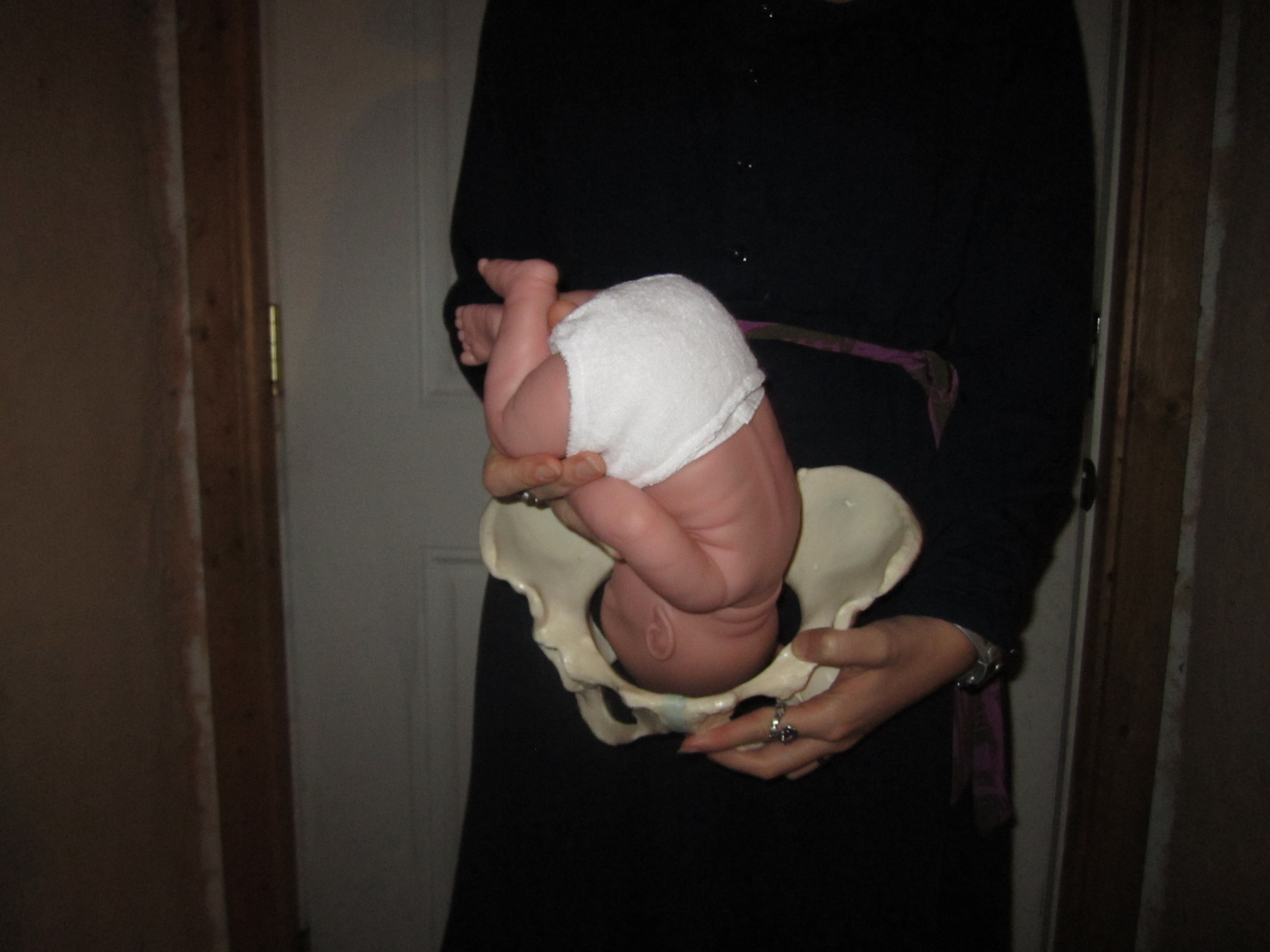
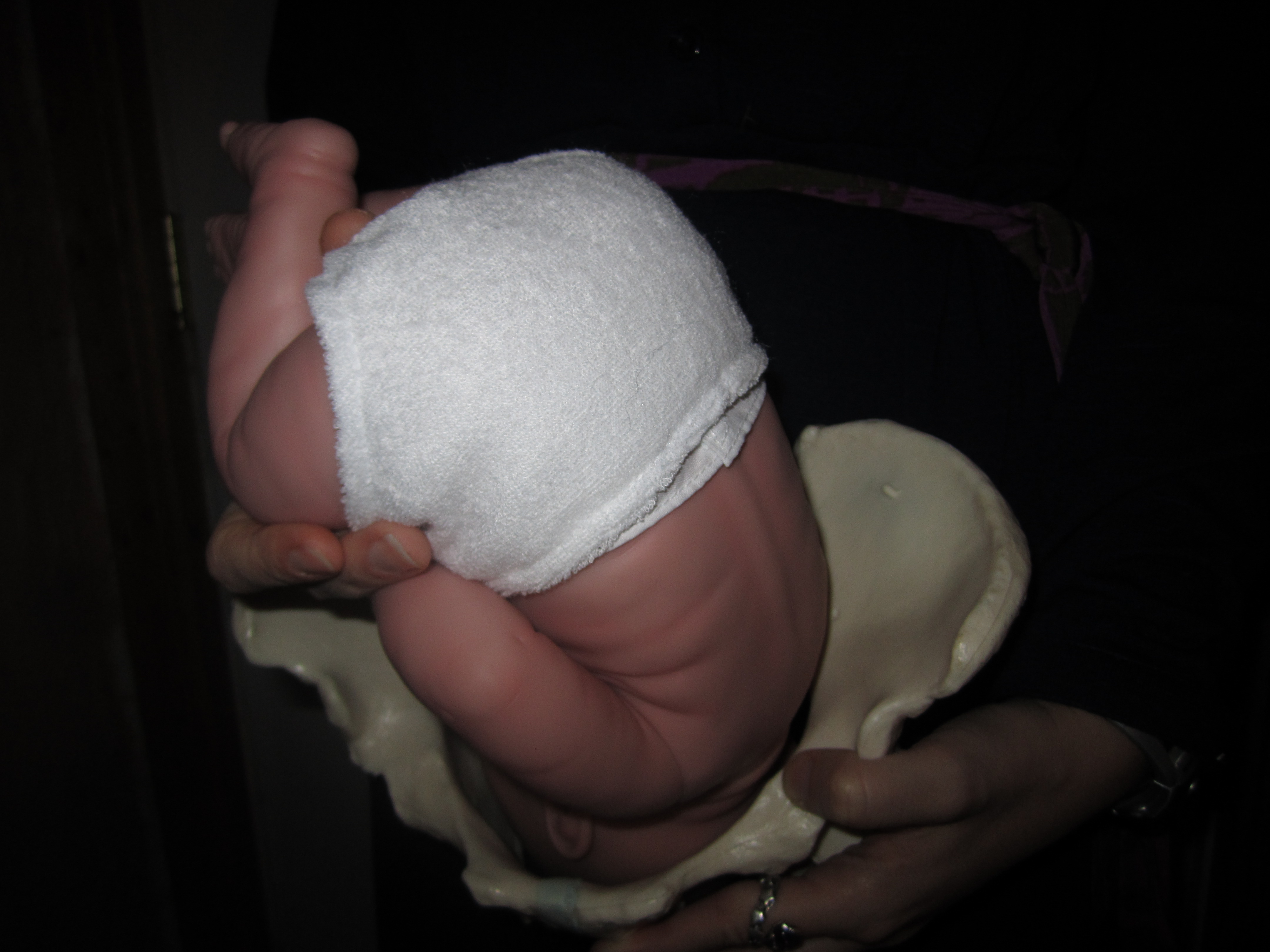
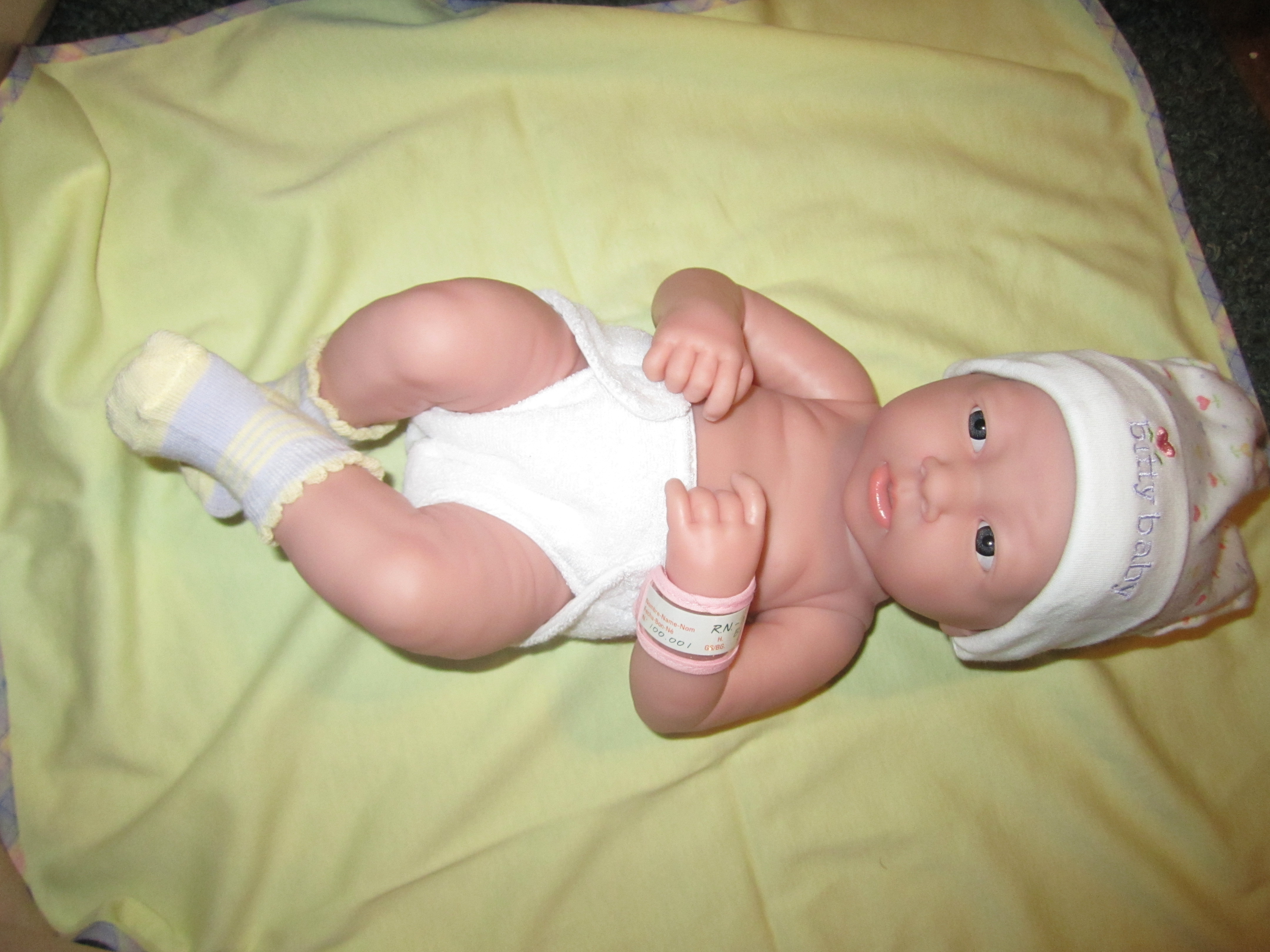
For quite a while, I’ve wanted a realistic baby model to use in my birth classes. My ideal model could be used both for demonstrations of fetal positioning in the pelvis and also for demo’ing newborn care and possibly breastfeeding. Most fetal models sold by CBE supply companies range from $60-150. I usually use a Bitty Baby doll to demo newborn care and breastfeeding (a third thing to know about me is that my love of bargains makes an exception when it comes to American Girl dolls. I have an embarrassing number of AG dolls and vast quantities of accessories. I’ve had this Bitty Baby for over 10 years, I didn’t buy her to use in class). In my knitted uterus, resides a cute little baby doll I bought at Target for $5. Neither of these dolls works at all for fetal positioning or with my demonstration pelvis.

Look at this cute baby!

So, imagine my delight when I found a nearly perfect model newborn at Kmart yesterday while my son was picking out his birthday presents. I named her Sasha AND, get this, she was $20. In a bonus twist, unlike 99.9% of the dolls in the store, she did not come with a bottle! (There is a bottle pictured with a different doll on the back of the box.) She did come with a little cloth diaper, a onesie, a band to cover her cord stump (yes, she seems to have one, but it could just be a dramatic “outie”!), a little outfit, a hat, and socks. Called La Newborn (nursery doll), she is made by Berenguer.

Legs and arms straightened out a little

The only drawback is she is not very flexible and so would be hard to use comfortably for things like practicing putting on diapers. Her fairly flexed permanent body position does make her absolutely ideal for use for fetal positioning and even for swaddling or babywearing practice. I originally planned to take her arms and legs off to fill with plastic pellets to add weight, but I’d don’t think I’m going to bother. While nothing near the weight of a real baby, she is made from good quality vinyl.

After looking these dolls up various places online, I’m now thinking I should have bought the remaining one or two that they had at K-Mart. They don’t seem to be widely available for the $20 price.

This morning, my older son helped me take all kinds of pictures of my new toy—I mean, teaching aid!—today (yet another of the many benefits of having an 8 year old in the house!). So, this is a photo-heavy post!

See what I mean about well flexed for fetal positioning information?!

And now my Christmas pelvis gets in on the demo…

If the demo pelvis had a coccyx joint, the baby would fit perfect through. As it is, her head does get stuck on it (good teaching moment about the importance of active positions for birthing!)

Bitty Baby Noelle and Target Baby are less than impressed with this interloper…

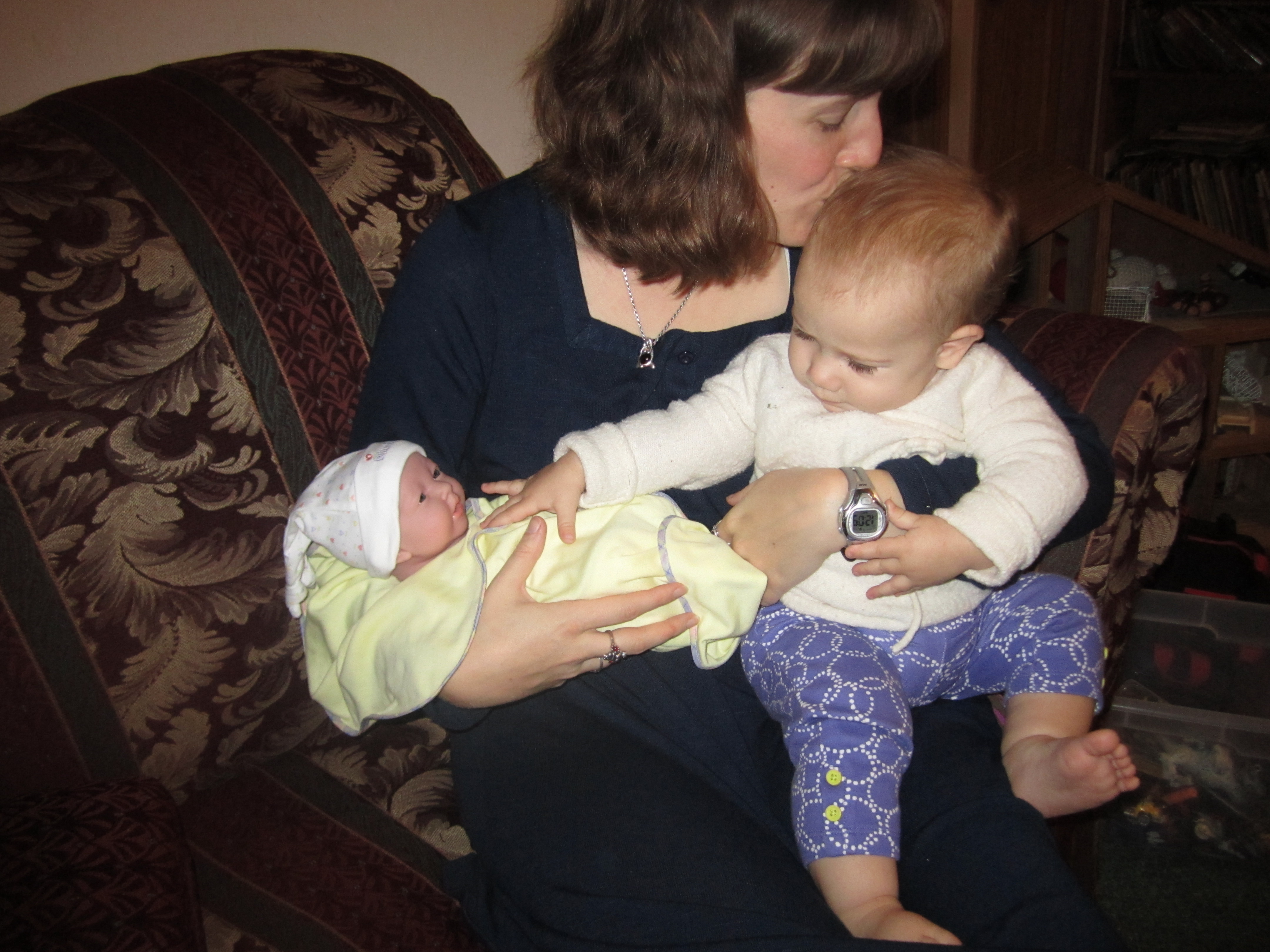
Alaina helps take care of baby Sasha…

For sizing purposes—while I think she appears to be the perfect, realistic size when held up to my belly as a fetal model for positioning, when held in arms, she is more the size of a preemie baby (maybe a 31 weeker or so). She is about 15 inches.

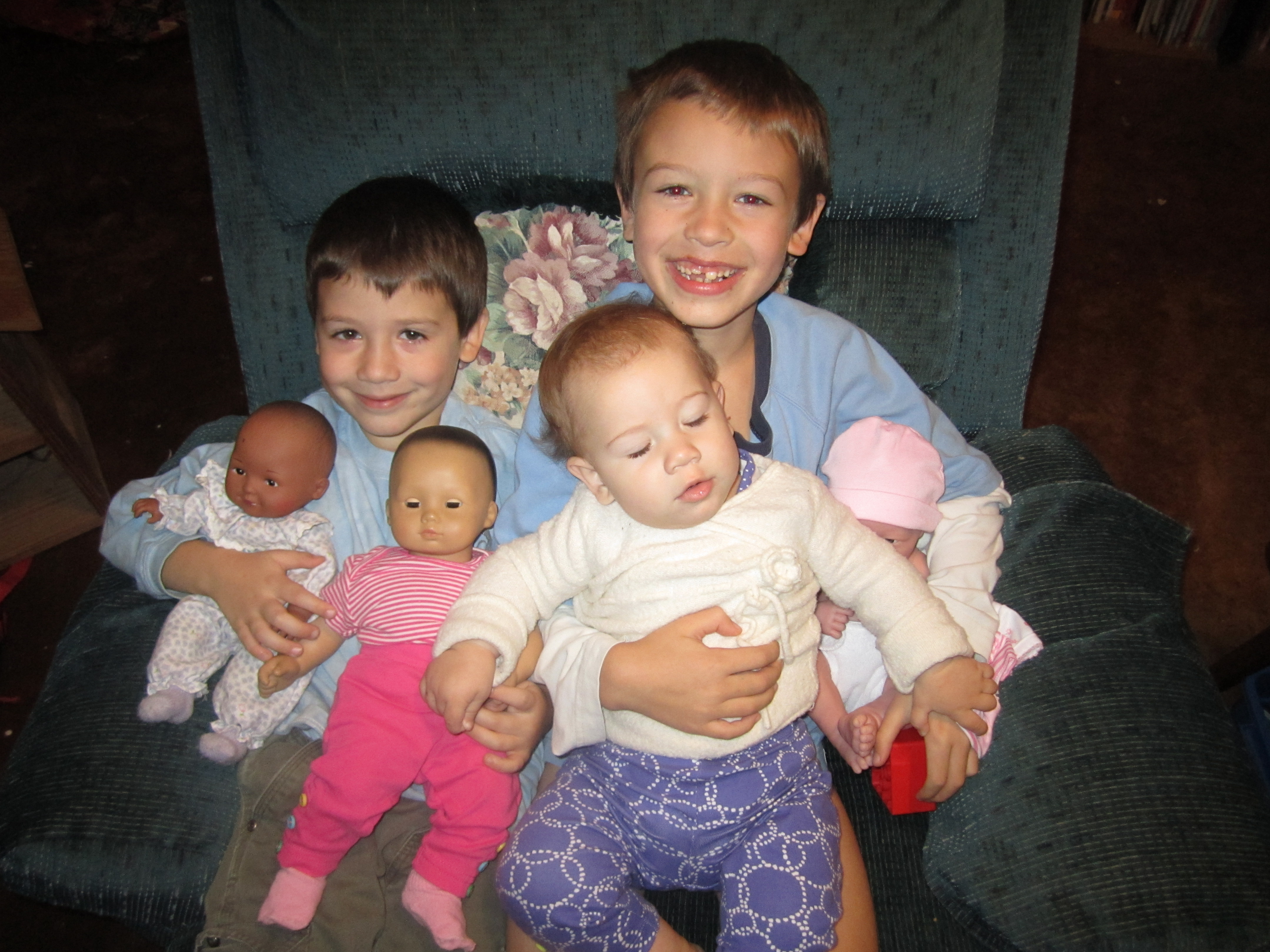
Lann wanted me to take this one—“make them guess who’s the real baby!!!”—conveniently, Alaina closed her eyes for this picture, making identification of the real baby even trickier…


Edited to add, Baby Sasha later experienced an unfortunate accident and had to be replaced. See Fetal Model Update post for pictures.

Active Birth in the Hospital

One of the inspiring images in ICAN of Atlanta's "Laboring on the Monitors" slideshow.

The vast majority of my birth class clients are women desiring a natural birth in a hospital setting. My classes are based on active birth and include a lot of resources for using your body during labor and working with gravity to help birth your baby. Sometimes I feel like active birth and hospital birth are incompatible—i.e. the woman’s need for activity runs smack dab into the hospital’s need for passivity (i.e. “lie still and be monitored”). So, I was delighted to discover this awesome series of photos from ICAN of Atlanta of VBAC mothers laboring on the monitors. It IS possible to remain active and upright, even while experiencing continuous fetal monitoring.

In my own classes, we talk about how to use a hospital bed without lying down—the idea that a hospital bed can become a tool you can use while actively birthing your baby. Here is a pdf handout on the subject:How to Use a Hospital Bed without Lying Down. In this handout, I offer these tips for using the bed as an active assistant, rather than a place to be “tied down”:

While being monitored and/or receiving IV fluids that limit mobility, try:

  • Sitting on a birth ball and leaning on bed
  • Sitting on bed
  • Sitting on bed and lean over ball (also on bed)
  • Kneeling on bed
  • Hands and knees on bed
  • Standing up and leaning on bed
  • Leaning back of bed up and resting against it on your knees
  • Bringing a beanbag chair, putting it on the bed and draping over it (can also make “nest” with pillows)
  • Partner sitting on bed and woman leaning on him/supported squats with him
  • Partner sitting behind woman on bed (with back leaned up as far as it will go)

While giving birth, try:

  • Hands and knees on bed
  • Kneeling with one leg up (on bed like a platform or “stage”)
  • Holding onto raised back of bed and squatting or kneeling
  • Squatting using squat bar

While most of the above tips can be used during monitoring, additional ideas for coping with a simultaneous need for monitoring AND activity include:

  • Kneel on bed and rotate hips
  • Sit on edge of bed and rock or rotate hips
  • Sit on ball or chair right next to bed (partner can hold monitor in place if need be)

If something truly requires being motionless, it can be helpful to have some breath awareness techniques available in your “bag of tricks.” One of my favorites is: Centering for Birth

Some time ago, a blog reader posed the question, can I really expect to have a great birth in a hospital setting? I definitely think it is possible! I also think there is a lot you can do in preparation for that great hospital birth! When planning a natural birth in the hospital, it is important to consider becoming an informed birth consumer. I always tell my clients that an excellent foundation for a simple, effective, evidence-based birth plan is to base it on Lamaze’s Six Healthy Birth Practices. My own pdf handout summarizing the practices is also available: Six Healthy Birth Practices. Don’t forget there is also a great video series of the birth practices in action! You might also want to get a copy of the book Homebirth in the Hospital. And, check out this post from Giving Birth with Confidence: Six Tips for Gentle but Effective Hospital Negotiations.

Before you go in to the hospital to birth your baby, make sure you have some ideas about this very popular question, how do I know if I’m really in labor?

And, finally, be prepared for the hospital routines you may encounter by reading my post: What to Expect When You Go to the Hospital for a Natural Childbirth.

For some other general ideas about active birth, read my post about Moving During Labor (written for a blog carnival in 2009).

Best wishes for a beautiful, healthy, active hospital birth! You can do it!

Celebrating 100,000 Hits! Mother Rising Book Giveaway

Giveaway is now closed. Shawna was the winner!

Talk Birth has reached 100,000 hits and I’m having a giveaway to celebrate this milestone! When I initially began this website in 2007, it was exclusively for the purpose of providing information about my birth classes to the local community. I never intended for anyone other than local, potential clients to read the information here, I was just using WordPress as a platform to host what I assumed would be a fairly static site—possibly just being updated with new class information and dates. Then, I decided I’d like to add a couple of posts/articles for my prospective clients to read. Before I knew it, the few posts I had made were receiving hits from locations other than my local area and so I started writing posts with a wider/more general audience in mind. Eventually, the class information portion of my site became very secondary to the birth-blog portion of my site. And, I find it somewhat amusing, that now I primarily reach women through my writing rather than through my classes. I have a new class beginning in June, but otherwise, I have been on leave from teaching any classes since my new baby was born and due to my other commitments, I have only had limited availability for classes for the past year or so.

When I first began my journey as a childbirth educator, some part of me envisioned reaching hundreds of couples through my classes. I quickly realized that I wasn’t going to be able to fill group classes in my small hometown and felt like I had an excess of birth-change energy that was being blocked/frustrated by only working with one couple every so often. I used to complain to my husband, “I just want to transform the birth culture in the U.S. Is that too much to ask?” I felt like my drive to change the birth world was just hitting up against a wall and I felt frustrated by living in an area that could not support that packed-to-the-brim, life-transforming classes I’d envisioned offering. Writing blog posts became my way of “discharging” this energy as well as being a birth educator to a wider audience—i.e., whomever stumbled across my blog! This has been a fulfilling way for me to use some of that activist energy and to feel like I have the ability to make some type of change within a large circle. As my classes became more well known, I did build enough of a practice to be working with new clients each and every month of the year and I felt personally satisfied with that—I need direct contact as well as virtual contact to feel like I am making a difference. I love that this website/blog helps me with each of those avenues for change.

In honor of 100,000 hits, I am giving away a copy of the book Mother Rising: The Blessingway Journey into Motherhood. Since my tagline is, “Celebrating Women, Transforming Birth,” I wanted to give away a book that exemplifies the idea. Mother Rising is perfect, because it is literally about celebrating women through blessingways. My friends and I have a long-standing tradition of hosting mother blessing ceremonies for each other during our pregnancies and Mother Rising is a helpful resource for planning them. It even includes recipes for snacks!

To enter the giveaway, just leave a comment letting me know your favorite way to celebrate women.

You can earn bonus entries by doing any of the following and letting me know via another comment that you’ve done so:

  • Tell me what post/idea you’ve read here on Talk Birth is your favorite!
  • Become a fan of Talk Birth on Facebook
  • Subscribe to this blog via email (link this way —>)
  • Share the giveaway link on your own Facebook page or blog

Giveaway ends next Thursday at noon!

Six Healthy Birth Practices Handout

Lamaze’s Six Healthy Birth Practices are one of my favorites resources when discussing birth plans in my classes. I find that some materials about birth planning on the internet are unnecessarily cumbersome (while simultaneously being very “cookie cutter”). As I tell my clients, the Six Healthy Birth Practices provide an absolutely phenomenal “basic” birth plan and concisely cover each element of a healthy birth. I suggest using them as a foundation for any birth plan the client plans to write. For use in my own classes, I created a one page handout briefly summarizing the practices: Six Healthy Birth Practices. At the bottom of the handout, I also include my own even simpler summary of the information. I just love them and think they should be the core of any class that serves women planning hospital births. Seriously, what women deserve in a birth environment can be summed up in six, clear sentences! How practical.

I also absolutely LOVE the video based on the practices that is available from Injoy. It is extremely affordable (I actually own three copies of it!). It is very concise and clear (just like the practices themselves) and I love how it shows women in a hospital environment, getting their needs met and having satisfying births. While I personally choose homebirth for myself and am a big advocate of homebirth, at least 90% of my clients are planning hospital births and deserve information and resources that support healthy, satisfying births in the environment they have chosen. I have a variety of great videos in my library, but many of them focus on homebirth and I think the message this sends to clients is—“good birth = homebirth.” While that feels personally true for me, it isn’t actually the message I want to share with my clients—I want to share my enthusiasm for birth, period, and to help them discover resources and plans for having a beautiful birth in any setting. I want to communicate to them that they deserve access to these healthy birth practices in the hospital and I hope we can create a birthing world in which all women can expect to have access to these practices in any setting. So, I like how this video shows women getting their needs met within in a hospital setting.

Additionally, the videos are available for free, practice by practice, on the Mother’s Advocate site, which also includes a variety of accompanying handouts to print.

And, again, here is my own handout for use during birth classes: Six Healthy Birth Practices.

I know I sound like a “commercial” for Lamaze’s Birth Practices and though I am a Lamaze member, I am actually certified with other organizations (ICEA and CAPPA). I think it is important that childbirth educators not limit themselves only to the materials and information provided by their own certifying organization and instead seek out excellent materials from a variety of the wonderful organizations that exist to support birthing women!

Transformation Through Birth

One of my favorite birth books is Transformation Through Birth. Written in 1984 by Claudia Panuthos, who also wrote the excellent book Ended Beginnings (about miscarriage, stillbirth, neonatal death, and healing all sorts of childbearing losses), it is one of the books I recommend as “going beyond” typical pregnancy/birth book material. I enjoy books that are designed to help women with the emotional work of pregnancy instead of just the physical work, with a quick dabble into the psyche. I find they are few and far between.

Some quotes and ideas from this book that I particular like:

“In some sense, childbirth is much like a marathon. Once given some general guidelines, marathon runners know how to breathe, to run, and to complete their race according to their own body signals. Similarly, women know how to breathe, to birth, and to complete the delivery according to their own body signals. Marathon runners who are true champions are free to stop the fast pace, and even quit the race without loss of integrity.”

She then makes the point that birth is really more like a “Zen marathon” in that “the focus is to become centered and one with the body, to remain on purpose and directed toward a single goal and to act from the witness or higher mind within” and goes on to say, “Because we view marathon running as an expression of ultimate physical health, a similar attitude toward childbearing may greatly aid in the altering of present attitudes that respond to childbearing as an abnormal condition requiring medical treatment.”

I use the marathon example in my birth classes usually—particularly when talking about “pain” and what birth feels like. I use the marathon analogy to illustrate how the sensations of birth are not like the sensations of accident, illness, or injury, which send us pain signals indicating something is wrong. There is nothing wrong with birth! (well, usually) The sensations of birthing are more similar to the feeling of healthy muscles working hard and working for a long time, but doing something of which they are fully capable.

I’ve posted about this before, but the marathon talk reminds me of something one of the doctors in the Business of Being Born film said that made me really outraged. He said something to the effect of: “in three months you’re just going to be pushing a baby in a stroller, so what difference does it make how you gave birth?” What difference does it make?! Would anyone even THINK to say something like that to a marathon runner or Olympian—“in three months, you’ll just be pushing a baby in a stroller, who cares that you won a gold medal?” (analogy side note, feeling good that you won a gold medal [gave birth in a triumphant and empowering way] does not invalidate or cause guilt in those who did not run the marathon, or had to quit early, or needed help finishing. There is no shame in not running, but there is also rightful PRIDE and “glory” in finishing the “race” you set out on.

Okay, back to the actual book! Another good quote, but one I have a mixed reaction to:

“Women who birth joyfully do so because of who they are, what they believe, and how they live.”

While I like the sentiment, there is an unintended subtext of—if you did NOT birth joyfully, it must be because you have a sucky life in general and does not take into consideration the millions of factors that go into any one birth (it isn’t JUST about what the individual believes and how she lives, it is also about what those around her believe and how they live, and also what our culture believes about birth).

That said, the book is very compassionate with regard to cesarean birth experiences, stating:

“For the woman who delivered surgically, her task is to see that she was attempting to save her baby’s life through an act of personal courage.”

I love this re-framing—it isn’t a failure to have a cesarean birth, it is often an act of personal courage.

The final element I love from Transformation Through Birth is the author’s concept of encouraging and preparing for postpartum EXPRESSION instead of postpartum depression (the theory being that stuffed down, unexpressed feelings, moods, conflicts, emotions contribute to depression by repression of expression. That’s my own bit of alliteration there–I’m so catchy! 😉

Fathers, Fear, and Birth

“I told my dads that they were their partner’s lover and that their most important role at the birth was one they did everyday without classes, books or practice: Loving the mom. You could literally see the dads relax as this thought sunk in and took root.”

~ Lois Wilson, CPM

My husband supports me during my birthing time with our second baby

I don’t use these exact words, but I share something similar with the dads in my classes—your most important job is just to love her the way you love her, not to try to be anything different or more “special” than you already are…

I recently shared my review of The Father’s Home Birth Handbook by Leah Hazard and also wanted to share this excerpt from an article in Midwifery Today:

~~~~~~~~~~~~~~~~~~~~~~~~~~~~~~~~~~

Helping Men Enjoy the Birth Experience, by Leah Hazard

~~~~~~~~~~~~~~~~~~~~~~~~~~~~~~~~~~

Nearly 70 years ago, Grantly Dick-Read wrote in Childbirth without Fear that laboring women often experience a cycle of: Fear > Tension > Pain. This is a cycle with which many of us are familiar, and we’ve developed a myriad of ways to break the cycle since Dick-Read first published his seminal work in 1942. However, less attention has been focused on the emotional roller-coaster fathers experience throughout pregnancy and birth, and it’s this area that I’d like to explore in greater depth.

Although a man cannot feel the same pain as a laboring woman, I believe that many men experience a similar cycle of emotions in the birthing space to that which Dick-Read described, with a slightly different end product, namely: Fear > Tension > Panic. A man who is not confident in his partner’s birthing abilities, who is poorly informed, and/or who is poorly supported, becomes increasingly tense; and if this tension is not eased, then he spirals into an irreversible state of panic. This panic manifests differently in different men: some men become paralyzed by their fear (the familiar specter of the terrified dad sitting stock-still at the foot of the bed), while others spring into hyperactivity, bringing endless cups of water or becoming obsessively concerned with the temperature of the birth pool.

The root of this panic is fear, and it’s a fear which often begins to grow long before the first contraction is felt. As such, we need to think about ways that we can address and minimize this fear in the days and months preceding birth…

[Please read the rest of this article excerpt in the full online version of E-News: http://www.midwiferytoday.com/enews/enews1221.asp ]

Excerpted from “Beyond Fear, Tension and Panic: Helping Men Enjoy the Birth Experience,” Midwifery Today, Issue 95 Author Leah Hazard is the author of The Father’s Home Birth Handbook. For more information, visit www.homebirthbook.com .

——

I really think the fear-tension-panic cycle makes a great deal of sense and it brought me to this quote:

“Fear is completely intertwined with what we experience as labor pain…And it is the fear in our physicians and nurses as much as the fear within ourselves.” –Suzanne Arms (Immaculate Deception II)

I think sometimes women underestimate the power the attitudes of other people in the birthplace hold over outcome (the nocebo effect, possibly)—while being prepared, confident, fearless, etc. as a birthing woman is excellent and she can sometimes manage to triumph over the fear of the others around her, I more often see the fear of others overriding the preparation and confidence a mother has tried to develop in herself. I think it is important that we actively cultivate coping skills and resources within fathers-to-be as well, so that they are less likely to get into the fear-tension-panic cycle and are better able to be present for the birthing woman (fear-tension-panic within doctors and nurses is a subject for another post!). Here are some other posts I’ve written specifically for fathers:

Ideas for supporting your partner in labor

No Right Way

Resources for Fathers to Be

Birth Affirmations for Fathers

For Labor Support Remember TLC or BLT

Comfort Measures & Labor Support Strategies

Helping yourself while helping your wife or partner in labor

(P.S. Yesterday this was a much more developed post and WordPress erased it accidentally and to my great dismay 😦 )

Centering for Birth

I have a strong commitment to active birth—the use of movements, position changes, and most of all laboring out of bed. As a result, in my classes I tend to emphasize movement-based coping strategies for labor. However, I have also come to realize that coping measures employing relaxation and breath awareness are extremely valuable. These tools cannot be stripped away from the birthing woman. Whatever happens during birth, whatever unforeseen circumstances that arise, or if her need for activity runs smack into the hospital’s need for passivity, the breath—and breath based tools—cannot be taken from her. I do not teach patterned breathing techniques in my classes, but I do teach various breath awareness skills.

Centering is a breath awareness strategy that I’ve adapted for use in birth classes based on the ten second centering process described in the short book Ten Zen Seconds. Using the breath as a “container” for a thought or affirmation is the basis of centering. A meditative technique, the purpose is to “center” and to become mindful of the present moment. The container is a 10 second long breath—a five second in-breath and a five second out-breath—that holds a thought. You think the first half of the phrase on the in breath and the second half on the out breath (Maisel, 2007). Use this technique once or twice to “greet” the contraction and then continue breathing with awareness throughout the remainder of the contraction.

Some suggestions of centering thoughts to use during birthing include:

(I am open) (to birth)

(I am ready) (for my baby)

(I welcome) (my labor)

(I am confident) (and strong)

(Right here) (right now)

(I am equal) (to this challenge)

(I embrace) (this moment)

A pdf handout describing this technique (for use in birth classes), is now available here: Centering.

Another phrase I find useful in daily life, as well as applicable to birth is (I expect) (nothing). While this may initially appear pessimistic, it is a very useful reminder of the idea that most emotional suffering in life is a result of attachment to how something “should” be (i.e. “labor should only be taking 12 hours) (Dyer, 2002).

I frequently remind my birth class participants that coping techniques work best when they are incorporated into daily life rather than “dusted off” for use only during labor. Centering is a skill that is readily incorporated into real life. Indeed, when I first learned the technique, I quickly realized that it was a skill that I will use for the rest of my life. I let my class participants know that I regard this as a life skill, that happens to also be useful for birthing. It is essentially a tiny meditation technique that can be more readily incorporated into one’s daily life (especially a life that includes small children) than traditional, dedicated, more elaborate meditation techniques.

—–

Molly Remer, MSW, CCCE is a certified birth educator, writer, activist, and mother of two young sons. She is an LLL Leader and editor of the Friends of Missouri Midwives newsletter. She blogs about birth at http://talkbirth.me, midwifery at http://cfmidwifery.blogspot.com, and miscarriage at http://tinyfootprintsonmyheart.wordpress.com

References:

Dyer, Wayne. Ten Secrets for Success and Inner Peace, Hay House. March 2002.

Maisel, Eric. Ten Zen Seconds, Sourcebooks, Inc. March 2007.

—-

This article is modified from one that originally appeared in The International Journal of Childbirth Education, July 2009 (page 20)

Pain with a Purpose?

“The desire to help is so great, even from well-meaning, beautiful midwives, that they use intervention. We want to help. But what’s missing in our culture is that there is pain with a purpose, and that helping is sometimes interfering.” –Augustine Colebrook, CPM (quoted in “Do-it-Yourself Birth” article in Mothering mag)

When I shared this quote on the CfM Facebook page, a reader added: “Dr. Bradley wrote about ‘pain with a purpose’…Problem is, in our society, we don’t value the process of childbirth. Therefore, whatever it is you have to do to get thru it… Hence epidurals & nubain, and on and on. Please know I’m not dismissing your experiences if you went that route. But that phrase alone resonated with me when I was giving birth and helped me. I wish it would do so with more women.”

I’ve written a lot about birth having inherent value in its own right. Process AND “product” (i.e. healthy mom, healthy baby) are both important. A de-emphasis on the birth process and its significance in a woman’s life only serves to disempower, silence, invalidate, and violate women.

That said, I do also value the work of organizations like Hypnobabies that questions the very notion of pain as being an inherent part of birth.

So, what about pain?

I find that couples who come to my classes often have pain and managing pain (or witnessing pain) as their top issue of concern. For this reason, I spend time addressing the subject straight out and yes, I have been known to use the dreaded “pain with a purpose” phrase. Some would say that the word “pain” has no place in birth classes—that it sets women up for just that experience—however, as I noted, my clients come with “pain” on their minds and I find I need to use the p-word and sort of clear the air/get past that hurdle, before we do the rest of our work together. Also, as one of my clients once noted, “it wasn’t you who planted that seed [of pain being possible]. It was planted deeply a long time ago!”

And, what would be the purpose of pain in labor?

It is actually part of a beautiful hormonal symphony of labor—the sensations of labor signal our brains to release more endorphins, more endorphins leads to more oxytocin, and more oxytocin leads to increased intensity, which leads to more endorphins, etc., etc. When the pain to brain feedback loop is interrupted with medications, so too, are the oxytocin and endorphin messages that we need to get our babies born—and more interventions to “augment” labor are then likely to follow. As Preparing For Birth notes: “It is true that naturally occurring labor can feel larger and greater than the woman birthing. This is not so as she creates from within the very hormones that increase the strength, power, and frequency of her work of labor. That is the good news, it is from her, for her, by her.”

But, all these things said, I simply think the word “pain” is woefully inadequate to describe the feelings of labor. I like this description from Stephanie Soderblom better:

“VITA MUTARI – the literal translation from Latin to English is ‘Life Transformation.’ That is the closest thing I could think of the feeling of labor/birth…what you are feeling isn’t pain, it’s life transformation. Is it dramatic? You bet! I think it should be!”

I also love the description from Painless Childbirth:

“When I say painless, please understand, I don’t mean you will not feel anything. What you will feel is a lot of pressure; you will feel the might of creation move through you. Pain, however, is associated with something gone wrong. Childbirth is a lot of hard work, and the sensations that accompany it are very strong, but there is nothing wrong with labor.”

Now that’s what I’m talking about, might of creation moving through you. The word “pain” is way too puny to hold that!

I always explain to my clients that the sensations of labor are more similar to the exertion of intense physical effort more than the pain associated with accident, illness, or injury—both the effort AND the exhilaration are similar to doing good, hard, challenging, limit-testing, but doable work (though even bigger and more important). We need a bigger and broader vocabulary for completely describing the breadth, range, intensity, and beauty of birth experiences! What if we had more choices other than “painful” and “painless” to describe the experiences of birthing our babies? Though I wouldn’t say my births were “painless,” when I describe my own birth experiences, “pain” is simply not the word that rises to the top as the most appropriate descriptor.

“So the question remains. Is childbirth painful? Yes. It can be, along with a thousand amazing sensations for which we have yet to find adequate language. Every Birth is different, and every woman’s experience and telling of her story will be unique.” –Marcie Macari

We end up limited when we use only “pain” based language that fails to embrace the broadness and complexity and enormity of the experience.

Newborn Alaina, January 2011

Effectiveness of Childbirth Education?

Some time ago a study was picked up by the media as proving that childbirth education “doesn’t work”. This BJOG study compared two groups of women—one group had 8 hours of childbirth classes that also included information about natural childbirth. The other group had classes that did not include natural childbirth information. The epidural rates for the two groups were the same and the couples’ satisfaction levels with their births was also the same. After this media attention, several birth bloggers addressed the study in-depth. The Science and Sensibility blog in a post titled Do Breathing Exercises Work? and The Family Way Publications in Natural Childbirth Class Not Useful?

What stood out to me in the article was the emphasis on breathing techniques. There is a lot more to childbirth education than “the breathing” and if that is all the “natural birth” classes had to offer, no wonder the results were what they were! As was noted in one of the blogs cited above, it is also significant that the women were randomly assigned to either group, indicating that they did not have a strong interest in natural birth (if they did, why risk being assigned to the non-natural birth classes!), so that perhaps the personal investment element was missing. A woman has to want to experience natural childbirth in order to do so!

Another birth educator commenting on The Family Way’s blog post, made an excellent observation that I think really got to the true heart of the issue. She said, ” Until childbirth educators emphasize this key component of CONGRUENCY in their classes women will continue to seek ‘care’ from professionals and institutions incompatible with their professed desire for natural birth. (emphasis mine) All this study proved to my mind it that both types of classes offered were ineffectual in promoting the with-women model of care in labor and birth… Both types of classes failed to address the real crux of the matter…are you receiving care from a provider/institution compatible with the kind of birth you want?” I explain to people in my classes that in the hospital women’s coping mechanisms are often stripped away from them-–sometimes by force, sometimes by misinformation, sometimes by excuses. I tell them over and over again to “ask questions before their chile is roasted” (Pam England). People tell me they can fight for what they want or that their husbands are good at “standing up for me” and I remind them that birth is not a time in a woman’s life when she should have to fight for anything! The time to get good care is NOW, not while “fighting” during labor and not during the “next birth” either (see more thoughts about “the next birth” here).

So, does childbirth education matter or not? Is the birthing woman’s environment of greater influence? I don’t think we have a full answer to this question. I do feel in my heart that childbirth education has important things to offer (otherwise, I wouldn’t be in the field!), but I also know in my heart that an unsupportive birth environment can steamroller right over most of the benefits. Birth is a lived experience and as such is greatly impacted by going on in the “here and now,” rather than past learning or ideas. Recently, I shared this quote from Suzanne Arms on my Talk Birth Facebook page:

“The knowledge of how to give birth without outside interventions lies deep within each woman. Successful childbirth depends on the acceptance of the process.”

In the comments, I noted: also helpful is to birth in an environment that shares that acceptance!

In July, I attended the annual CAPPA conference and enjoyed hearing Polly Perez speak about the benefits of childbirth education. She shared the following evidence-based benefits:

  • Knowledge
  • Less fear
  • Student more able to take responsibility for their own health care
  • Less need for medications/anesthesia
  • More satisfaction with birth experience
  • Life skills!

I definitely have been witness to the reduced fear as well as to the development of life skills that will continue to serve parents on the parenting journey. My own personal observations of additional benefits would be:

  • Increased confidence in their bodies, the birth process, and their own capacities
  • Enhanced father participation
  • Increased prenatal bonding/connection with baby and positive feelings towards baby
  • Reframing of birth from something to fear/greet with anxiety to something to embrace and greet with anticipation and enthusiasm.

It is hard for me to identify if these benefits carry over from my actual classes into the birth room, however, and this is an issue and question that I continue to ponder.

On a related note, here is a handout from Mother’s Advocate on choosing a childbirth class.