Archives

Book Review: Sacred Pregnancy

Sacred Pregnancy
by Anni Daulter, MSW
Paperback: 360 pages
Publisher: North Atlantic Books; 1 edition (May 1, 2012)
ISBN-13: 978-1583944448

http://www.sacredpregnancy.com/

Reviewed by Molly Remer, Talk Birth

Sacred Pregnancy is absolutely gorgeous! Seriously, it is one of the most appealing books I’ve encountered in a long time. The photography is breathtaking, the layout is lovely, and the colors are beautiful. It is a very visually nourishing book to hold and encounter. A combination week-by-week guide to pregnancy and personal journal, Sacred Pregnancy covers a lot of ground from basic pregnancy information and fetal development to making a special birth necklace. There are sections on exercise, nutrition, blessingways, forgiveness, nesting, sisterhood, naming ceremonies, and much, much more.

Two of my favorite points from the book, the first from Ina May’s foreword:

“In discussions in which the sacred nature of pregnancy and birth is brought up, the answer often presumes that anything that would revalue the sanctity of birth would automatically put babies in danger. Nothing could actually be farther from the truth.”

And the second from the author, Anni Daulter:

“Women are born gifted! They can birth babies for heaven’s sake. This is a magical and joyous event and something that, even though the medical community can tell us how it works, is incredible in so many ways. The fact that you can create a human life, carry it in your body, and birth it into existence is just so unbelievably miraculous that there are hardly words for it” (p. 129).

Sacred Pregnancy would make a delicious, nurturing gift for any pregnant woman wishing to dive deep into the experience of her pregnancy and into conscious birth preparation. Just beautiful!

Disclosure: I received a complimentary copy of this book for review purposes.

Strong Mothers (& Birth Network Resources)

“Birth is not only about making babies. Birth is about making mothers – strong, competent, capable mothers who trust themselves and know their inner strength.” –Barbara Katz Rothman

This classic quote from Barbara Katz Rothman sums up the potent impact of the birth experience on women’s lives and it seemed like  perfect quote to kick off the website of the Rolla Birth Network that I founded with my birth advocate friends and colleagues. We believe that strong, healthy babies, vibrant families and resourceful communities begin with strong mothers. We chose Strong Mothers, Strong Babies, and Strong Community as our tagline because we believe that when women dig deep into their inner strength, everything else follows. We also chose this as our tagline because it reflects the conviction that women have already got it. They have the inner wisdom and the strength they need. While outside professionals and resources can be tremendously helpful, she’s already got what it takes within her, we may just be a part of helping her to access the strength she already possesses.

We agree with doula and birth educator Heather McCue who said: “The whole point of woman-centered birth is the knowledge that a woman is the birth power source. She may need, and deserve, help, but in essence, she always had, currently has, and will have the power.”

On a related note, Holly Kennedy raises this question in her guest editorial in the spring 2011 issue of The Journal of Perinatal Education:

What “matters” in birth is complex, extremely hard to quantify, and will vary from one person to the next…I found myself contemplating what matted most in my ability to support women in birth so they could emerge from the process as strong, healthy mothers. I believe we have collectively lost our way over time about this outcome—the strong mother. The mother’s experience of childbearing, which will affect her forever, can directly influence her future as a mother. How do we address this as a discipline?

Yes, the strong mother. This is what is about. The strong mother who feels capable and competent in the mothering of her newborn and of her infant as it grows.

Another favorite quote about the strength of women:

“Women are strong, strong, terribly strong. We don’t know how strong until we are pushing out our babies. We are too often treated like babies having babies when we should be in training, like acolytes, novices to high priestesshood, like serious applicants for the space program.”

Louise Erdrich, The Blue Jay’s Dance

It is also important to note that we believe that strength is found in all kinds of birth experiences from the triumphantly empowered to the extraordinarily taxing and even traumatic. (Previous post about Birth Strength and the quote above.)

So, speaking of birth networks. One of the things that I’ve been excited about working on now that I am not actively teaching birth classes is on projects for our local Birth Network. I’ve wanted to do something like this for ages, feeling excited about the potential and momentum created by bringing multiple people together to collaborate on projects that make a difference in our community. We have some great ideas planned and I feel rejuvenated and enthusiastic after every meeting.

Here are some resources on forming a birth network in your own community:

Tools, Tips and Resources for Birth Networks

Birth Network National Resources

Programs from Athens Birth Circle

Some time ago a follower of this page, Nora from Happy Within, posted to let me know that she hosts a virtual birth circle for mothers. She describes it thusly: “the birthcircle is a virtual community which is a sacred women´s circle about conscious pregnancy and birth and its free. You can get details here: http://happywithin.wordpress.com/your-birthcircle/.” You can also keep up with her work on Facebook.

I am a Midwife Campaign

MANA has a great educational campaign going on right now called I am a Midwife. The campaign involves a series of short videos released once a week about a variety of topics. More than just a general education campaign, each video includes a variety of different women–midwives, mothers, public health activists, maternity care activists, authors—speaking out on important topics in maternity care. Each woman also identifies, “I am a Midwife.” This week’s video is about health disparities in maternity care, which is a very important and too-often ignored topic. It raises the concern that African American women and their babies are more likely to die than their Caucasian counterparts even when other variables are equalized (i.e. same socioeconomic status, same education, etc.) and moves into wider discussions about racism and the treatment of minority group members. It then focuses on the value and role of midwifery care in addressing these concerns.

As MANA states in relationship to this campaign: “For midwives, sharing is daring. We dare to challenge the status quo. We dare to speak up for women’s innate wisdom in pregnancy and birth. We dare to assert that there is a better way for our babies to be born. And we dare to insist that birth belongs to families.

Absolutely! The I am a Midwife public education campaign is extremely powerful. I have to confess that when it originally launched, I didn’t personally make time to watch the videos right away, somehow assuming that they were “generic” videos with a “rah, midwives!” type of message. Don’t make the same mistake I did. These are quality videos with important messages, powerful voices, and essential education and information. You will definitely learn something from watching them!

The videos aren’t only of use to birth professionals, when I teach community organizing at the college level I show videos like this as examples of activism strategies. In fact, for the final exam in that course I show the Crisis in the Crib video about infant mortality and disparities from the Office of Minority Health’s A Healthy Baby Begins With You campaign. This MANA video could be an interesting follow-up addition to the video I already use. As a related side note, during this class I also show footage from The Doula Story, a project by the Georgia Campaign for Adolescent Teen Pregnancy Prevention (whose program director I heard speak at the CAPPA conference in NC in 2010—she was amazing!). So, people do not leave my class without having heard of doulas and midwives and their relationship to community health. Go me and my mad birth activist skills! ;-D

Virtual Mother Blessing, Part 2

Last week I posted about a virtual mother blessing for Molly Westerman of the blog First the Egg. Tuesday, I emailed her a “blessingway in your inbox” containing the words of birth energy, thoughts, and encouragement emailed by her friends and family as well as a recording of the blessingway chant, “Woman Am I,” that my friends and I sing at all of our ceremonies. This inbox version was also accompanied by some mailed items (a blessingway in a regular box).

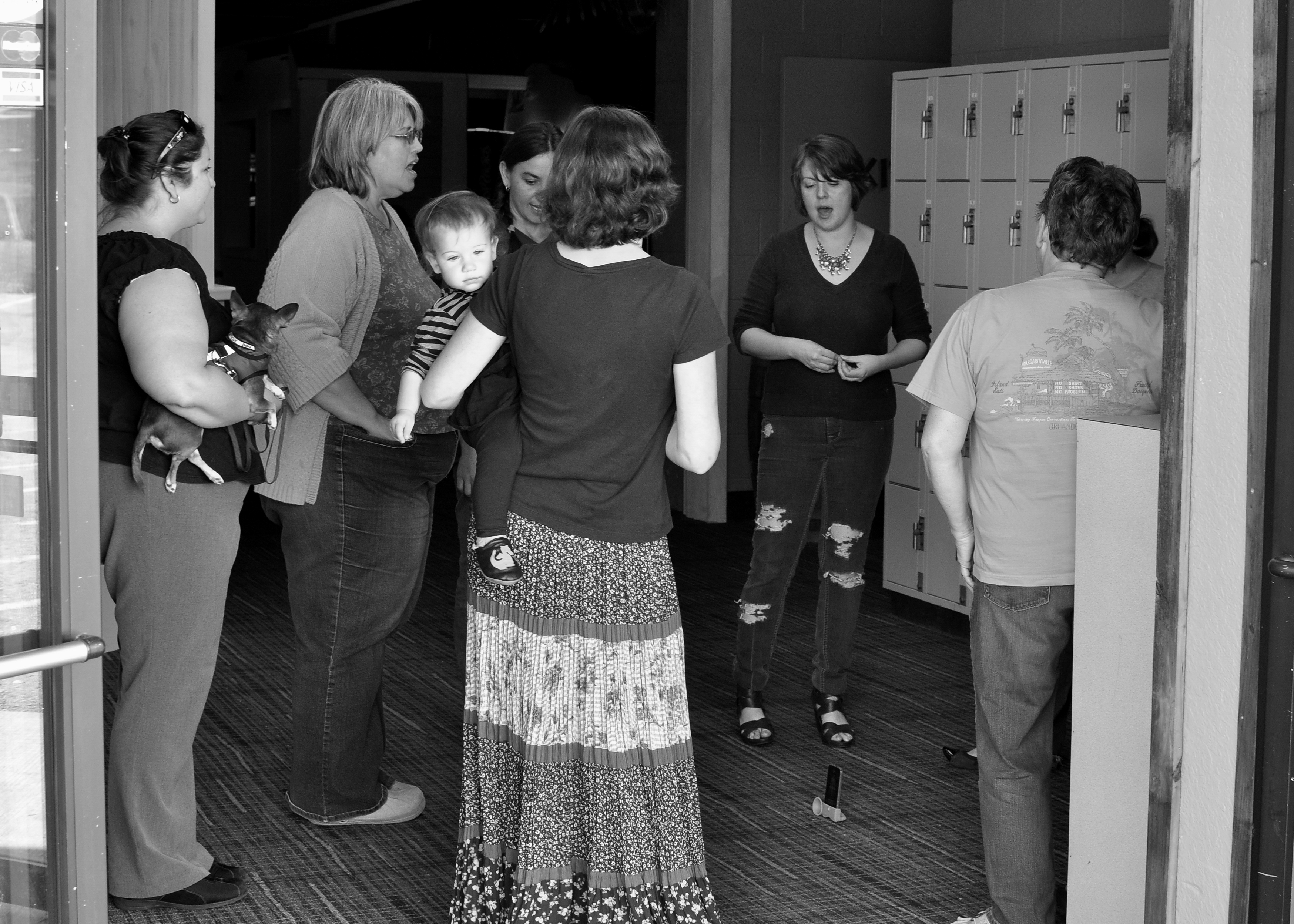
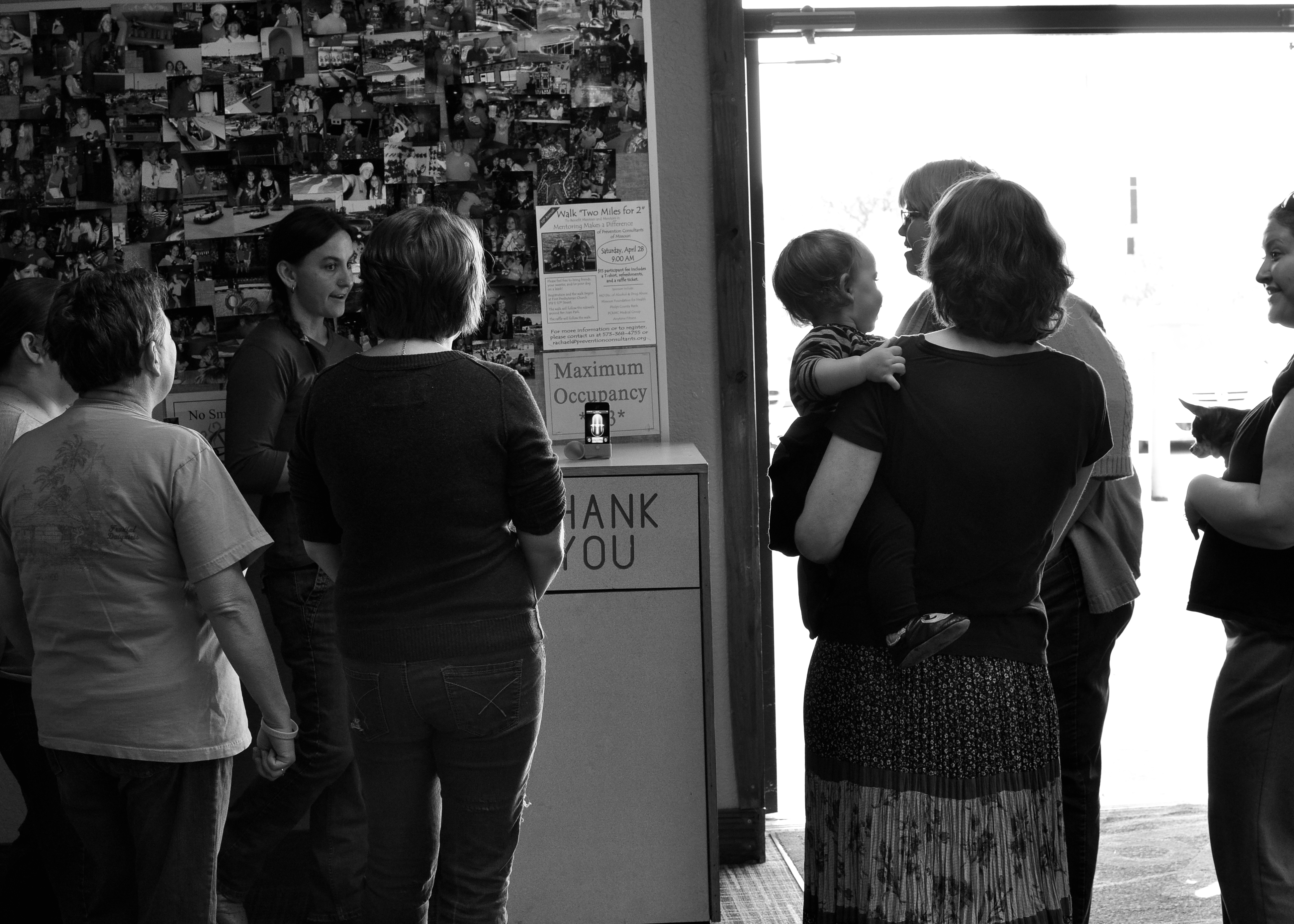
I enlisted the aid of my friends last week at playgroup at the skating rink to sing a rendition of “Woman Am I” using the voice memo feature on my iPhone. I feel really lucky to have a group of friends who will stand in the skating rink lobby with me and sing heartily for a woman they’ve never met. Seriously, not everyone is this lucky. My friends rock! The recording is available via soundcloud here for anyone else’s benefit. 🙂

Take 1. iPhone on floor of skating rink lobby.

Take 2. Phone on top of trash can in skating rink lobby.

Woman am I, Spirit am I, I am the Infinite within my soul...

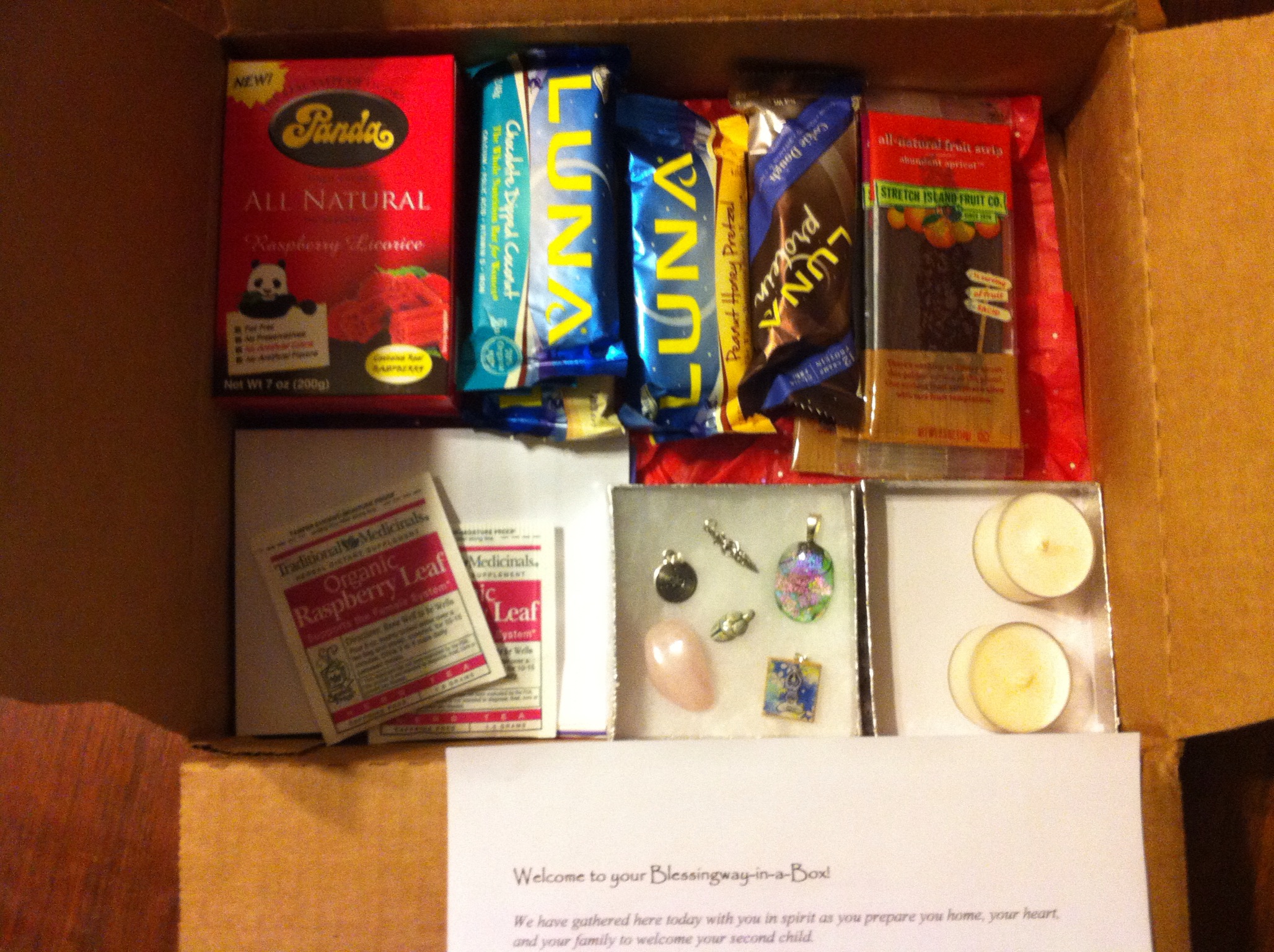
Blessingway in a box!

Some goodies for a blessing bracelet/necklace.

You can read about the mother blessing from Molly’s perspective in her post here.

Is there really even such a thing as second stage?

Is there a second stage in labor? Who says so? Who thought it up and why? How did they decide what it would be and when it would start? How it would be measured? When it would end? Is there really even such a thing as second stage? If there isn’t, might it not be important for midwives to know that? Is the Earth really flat? Well, it is in some places. Mothers that lie, sit, walk, stand, crawl, glide, stride, squat, climb stairs or hills, dance, sway, cry, throw up, chant or create positions and sounds never heard or seen before are moving their baby from the inside of them to the outside of them. That’s labor. It doesn’t have stages. One thing melts and overlaps another. It starts slowly and gets bigger. It changes a mother’s breathing from light to deep. Her sounds change as her body and baby mould and mimic each other on the journey from inside to outside. By the time the baby is low so is the mother, her breathing and her sounds and her body. –Sister MorningStar in “Midwifing Second Stage” in Midwifery Today, 98, Summer 2011

After having written recently about the rest and be thankful stage and the spontaneous birth reflex and then finally about the
birth pause, the above quote caught my eye in an issue of Midwifery Today from last year (I’m trying to catch up with my stack of magazines/journals). I explain to my birth class clients that birth looks different from the outside than it feels on the inside. Perhaps from the outside we can identify stages and phases of labor. From the inside, we are just doing it and the stages and phases meld into one continuous experiencing.

I love the final comment in this quote especially–we don’t really need tips, tricks, and vaginal checks to tell us where baby is positioned. When mother gets “low” baby likely is too! This reminds me of another article I read in MT recently. (I didn’t save the actual quote, just going from memory.) It was about a traditional midwife who was asked, “aren’t you going to check her?” when a mother felt like pushing. The midwife put the tip of a finger in and the other people laughed at her—“that isn’t checking her!” She said that all you needed to do was feel for the baby’s head—it the finger only goes in a tip, that means baby is close, if it goes in up to the knuckle, baby is pretty close, if you can’t reach the head, baby will be a while. Why would you need to try to reach the cervix or know what it is doing?

I love Sister MorningStar’s writing. It is so beautiful and expressive. Some time ago, I reviewed her book The Power of Women and I highly recommend it.

A Virtual Mother Blessing for Molly Westerman!

20120410-102111.jpg

I spy...a pregnant woman ready for some honor and celebration!

In 2007, I started blogging for Citizens for Midwifery and one of my favorite blogs was a little gem then called Feminist Childbirth Studies. The blog’s author, Molly Westerman, later became more public with her blogging identity and began writing her current blog, First the Egg, a feminist resource on pregnancy, birth, and parenting. I enjoy her thought-provoking writing, her insight into birth culture and politics, and the glimpses of her family’s life in a nonsexist home. She’s smart, funny, interesting, and she’s also pregnant with her second baby and due any time now! I think every mother deserves a blessingway or mother blessing ceremony and I’m pleased to hostess a virtual blessingway for Molly. There is a tight turnaround since her anticipated birth time is so close, so if you read this and think, “I’d like to do something…” immediately stop thinking and just DO IT!

During my last pregnancy, Molly offered multiple supportive comments in response to my various musings, anxieties and fears as a pregnancy-after-loss mama (even though she didn’t have personal experience with PAL, she did know the right things to say!) Her comments, particularly one about the fact that I was doing this, meant a lot to me. I’ve now followed her current very physically challenging pregnancy with interest and long-distance support/rooting her on as she prepares for the homebirth of her new baby this month. I’m happy to have the chance to offer her a little more encouragement and love through this virtual mother blessing.

Here’s how you can participate:

Email me with your…

  • Words of support, affirmation, encouragement for Molly–either written or recorded (think about what you’d say face-to-face at a ceremony and then, if you have a smartphone, use the handy dandy microphone tool and talk into as if you were speaking directly to Molly in a mother blessing circle. After your voice memo is recorded, choose “share” and send it to me!)
  • Favorite birthy readings/poems/etc. (again could be written or recorded)
  • Birth art (i.e. a picture of something you drew, or you can mail Molly an actual drawing–see below).
  • Beads or charms for a birth bracelet/necklace–if you’d like to do this, email me for Molly’s address and then mail it now, so there is a chance she will receive it before the birth. I figure that all postpartum mamas can use ongoing doses of birth power energy anyway, so even if it gets to her post-birth, that’s cool too!

As I mentioned, there is tight turnaround on this, so on Tuesday of next week, I will gather everything that has been emailed to me and send it to Molly as a “blessingway in your inbox.” 🙂

20120410-102118.jpg

Getting closer and closer to birthing day...

If you are curious to learn more about mother blessings, click here to read other posts I’ve written about them.

If birth were a temple

20120408-133552.jpg

If birth were a temple


If birth were a temple
my body is religion, and this small form
twisting out of me,
is
prayer
my cries
reach birth’s vaulted
ceilings,
arching like my back over holy
waters,
crystal clear salt of amniotic
my womb–a blessing bowl
releases
her treasure.

–Nane Ariadne Jordan

I came across this beautiful poem in an anthology of prayers and readings called Talking to Goddess, edited by D’vorah Grenn.

Doulas at Homebirths?

What is a doula?

A doula provides non-medical labor support—all the good stuff like back rubs and encouraging words and suggestions for different positions to help with labor. She does not replace the father’s role, but “holds the space” for both mother and father as they take their own journeys/come into their new roles as parents. In my birth classes, I explain that I think one of the benefits of a doula is that it frees the dad up to JUST be the dad and to live his own experience/journey and not have the pressure of trying to remember all the birth “tricks” and book information.

But, why have a doula at a homebirth?

A lot of women planning homebirths do not feel as much of a need for a doula as do women in the hospital. The midwife is capable of providing many of the same functions as a doula, but she also has the monitoring tasks and baby tasks to take care of, while a doula is just there for YOU. Other things to consider when thinking about a doula for a homebirth are whether or not the midwife will be bringing an assistant and what her role will be if there is one–sometimes the assistant is available to fulfill some aspects of the doula role, other times she is observing or otherwise in training for other tasks. And, also consider how many people who want present at the birth–if you’re already having a midwife, an assistant, and say a mother or sister or friend there, adding a doula too may mean too much crowding.

A couple of months ago, I solicited feedback about doulas and homebirth for an article I was compiling for the Friends of Missouri Midwives newsletter. The full article is available here: Doulas and Homebirth. I had anticipated receiving a number of responses suggesting that doulas at homebirth are unnecessary, or redundant. After all, an emotional connection and secure trust is often the hallmark of what differentiates the midwifery model from the medical model. However, the responses I received were overwhelmingly in favor of hiring a doula for a homebirth. Personally, I very much valued the specific and customized postpartum care my doula provided to me after my last homebirth and I’ve concluded that a doula has the potential to offer something unique and precious to families, in whatever setting the birth takes place. I also think that the doula is the most likely member of the birth team to remain in contact with the family in the future. Perhaps it is because, even given the friendliness of the midwifery model, there is less of a “power differential” between mother and doula.

Personal experiences

The decision to hire a doula is a personal one, regardless of in which setting you give birth. My first baby was born at a birth center with the presence of a midwife, a doctor, my doula, a friend, my mother, and my husband. In hindsight, I felt like it had been too many people and that the doula hadn’t really been needed. For my second birth, at home, it was extremely important to me to have as few people present as possible. My husband, my mom, and my son greeted the arrival of my second son. My midwife arrived five minutes before his birth—just in time to catch! My midwife for his birth was so amazing, that I didn’t feel the need for any other professional care. I still miss her! My third baby was a second trimester miscarriage and he was born at home unassisted and just my husband present. Later, a friend who is a doula was very, very helpful to me with postpartum care/doula stuff. I really wished I had a doula there during his birth for emotional support and supportive physical care tasks (not medical support, but tea bringing and towel washing).

It is the little things that matter--here my doula puts warm socks on me following my baby's January birth (baby and I had special matching birth socks knitted by my mom)

And, finally, with my last baby, while I liked and respected my midwife I didn’t have the same warm bond with her and really wanted to hire a doula again, precisely because I was missing some of the emotional component I value so highly in midwifery care. It is really the little things that make doula care so special (see included photo!). When planning my last birth, I chose to hire the same doula as with my third birth, with the primary purpose being immediate postpartum help (“washing the bloody towels and bringing me tea” is how I define it).

Talk Birth in Labor…

And, speaking of my doula, I’ve been meaning to share this photo for a long time. When my doula had her own baby last April, amongst the wonderful photos that our mutual friend took at the birth, I was tickled to see this picture of my doula looking at my website while in labor:
I think this could be an advertisement for my blog 😉

You can read Summer’s intense birth story here and also be moved to tears by the stunning birth awesomeness of her video slideshow here:

The Midwife’s Role

From midwife Elizabeth Davis’ non-midwifery-oriented book, The 20120404-223722.jpgWomen’s Wheel of Life she explores the archetype of the Midwife and shares this story:

I recently prepared a panel presentation on the topic of “Keeping Birth Normal” for a midwifery convention, and it dawned on me how insidiously the quest for standardization has permeated this sacred blood rite. Gearing midwifery practice to a reductionist, generic view of birth is but a travesty of our time-honored proficiencies, our ancient arts. There is no “normal” birth–each is individual and nonconforming. Childbirth opens an extraordinary spectrum of physical, emotional, and spiritual growth opportunities that is  nothing less than extraordinary, which women should be supported in freely exploring. The Midwife must guard parameters of safety, yes, but she should also encourage women to play their edges, experience deep currents of emotion, discover their own ways of transformation, and chart new creative territory. This is “taming” based not on repression or control but on integration, being in synch and in surrender to one’s true self. Midwives must find ways to make the unseen visible and comprehensible, they must learn to recognize and validate gut instincts, heart feelings, or any other messages coming from the body, and they must translate these perceptions into tangible action and/or words.

I recently reviewed the book More Than a Midwife and the author, Mary Sommers, has a beautiful way of describing the role of a midwife:

Midwifery is about guiding women through the internal and external journeys of their everyday lives. The birth of our children may be without regard to a fixed date and time; the experience of birth is the expression of eternity. Women in labor have the ability to transcend time and space, to regain a deep appreciation of the nature of their internal selves…She…is immersed in a journey of recognizing a part of her that had remained a mystery until this moment…

We long to have our internal and external dimensions integrated. In birth, this naturally unfolds. You do not need to be a spiritual scholar or have a daily practice to gain spiritual growth. A woman only needs to go into the experience and the spiritual journey unfolds. Nevertheless, I have also found that women who live in harmony with nature in their daily existence can access the journey more readily.

Midwifery asks us to truly become at home with ourselves, with nature, and with women. Birth takes us out of our external experiences, our linear timing of progress, and our everyday rituals. In contrast, birth time is measured in a circular movement like the seasons. There are rhythms and patterns. If we let birth unfold with spontaneity and attuned to nature, we will end up appreciating the nature of our souls as well. For women in birth, there exists a duality of time and space. They are present in both the physical and the internal dimensions. Midwives are called to not only be medical providers, but emotional guides, allowing women to get in touch with their innermost selves, the place where the soul dwells.

Both of these passages are beautiful explorations of the multifaceted and relational role of a midwife. I keep thinking I’ll have more time to explore these quotes in a more fully developed post, but I just don’t have room to do it today after all. The piece I particularly like from Davis was about there being no normal birth. I feel the same about the birth profession’s obsession with, “evidence-based care.” I’ve often asked myself, is evidence-based care enough? Do we really need to quantify everything? I think it should be a given that women receive evidence-based care. It is a travesty that it is often, apparently, too much to expect or hope for. I think women deserve loving care, respectful care, humane care, personalized care, beautiful, life-celebrating care. I think evidence-based care sets the standard too low…at obvious rather than profound.

In the second passage, my eye was caught by the phrase, “I have also found that women who live in harmony with nature in their daily existence can access the journey more readily.” Is this true in your experience? I have conflicted feelings about it. Do I live in harmony with my daily existence? My birth experiences certainly reflected a “harmony” with body, instinct, mind, and surrender. But, in daily life, while I certainly live close to nature and view it as sacred and while I choose many practices of “natural parenting” my head is often in conflict with what really is. I often find myself arguing with reality and in a mental state that feels more scattered than harmonious–and, angry with myself for not being more skilled at “surrender.” Luckily, that part neatly shuts off during labor, freeing my body to do the work of birthing with relatively little interference or struggle.

A Blessing…and more…

20120330-222120.jpg

Rue anemone
(next to the house)

A Blessing…

May Women all be treated

as rare and holy flowers

Petals strong and fragile

rise up sacred powers

Giving

Giving

Life its very breath.

–Sarah Blogg

I read this poem in an anthology of women’s prayers, blessings, and readings and it spoke to my heart and to the heart of birthwork, of women’s work, of why I do what I do, and care about what I care about. This is what I wish for women, not just in birth, but in life. I wish for baby girls around the world to be greeted with love and joy, “oh, good! It’s a girl! Another girl! We’re so blessed!” rather than viewed as second class citizens or as property or as burdens or as objects. I wish for the lives and bodies of women to be honored and respected and for their wisdom to be cultivated.

I’m happy to be reviewing a really great book right now called Into These Hands, Wisdom from Midwives. In the introduction is a great quote that makes me think of the above sentiments as well: “Every new member of the human family arrives on Earth through the body of a woman. Each day on our planet, the majority of babies emerge into the hands of a midwife. Since the dawn of time, midwives have been receiving the generations into their hands.” –Geraldine Simkins

Birth culture

For a dozen years now, birth and breastfeeding advocacy have been areas of intense and sustained interest to me. I feel like these are core, basic women’s issues and that women in our present day U.S. birth culture, as well as women around the world, experience significant amounts of devaluation, disempowerment, and even abuse in the medical birthplace. I agree with anthropologist Sheila Kitzinger who said that, “In any society, the way a woman gives birth and the kind of care given to her and the baby points as sharply as an arrowhead to the key values of the culture.” Our current birth culture does not value women and children. Though my focus is usually on the women, it also doesn’t much value men or fathers either. I also agree with Kitzinger’s assessment that, “Woman-to-woman help through the rites of passage that are important in every birth has significance not only for the individuals directly involved, but for the whole community. The task in which the women are engaged is political. It forms the warp and weft of society.”

A popular saying in the birth activist community is “peace on earth begins with birth.” Perhaps it really means, “respecting the birth-givers, eradicates patriarchy.”

Women’s voices & social discourse

In an article by Grassley and Eschiti in summer 2011 Journal of Perinatal Education, they state, “Women’s health research is grounded in women’s voices and experience…’What matters to people keeps getting told in their stories of their life.'” I’ve written before about the value of stories and story power. I would love for us to reach a cultural point in which the most common element found in most women’s birth stories is about their own power, rather than about times in which they experienced distress and victimization. How we talk about birth and about women matters. It matters a lot. Some time ago I read an interesting article by Debra Bingham about Taking Birth Back. It it she asks you to consider–when talking about birth–how your basic assumptions affect your discourse (the way you talk about birth):

1. Does your discourse include stories about the power of women?
2. Or do the stories shift the locus of control away from women and their bodies to other authority figures such as nurses, physicians, or machines?
3. Does your discourse assume that women are physiologically capable of giving birth and nourishing their own children?
4. Or does your discourse assume that women’s bodies are fundamentally flawed and in need of medical attention and intervention?

I frequently attempt to shift the locus of control from “authority” figures back to women–it is shocking to me how ingrained the terminology is about medical care providers (even midwives!), “letting” someone do something, etc.

As I’ve previously written, the prevailing social discourse about birth assumes a locus of control external to the woman and you rarely hear stories about the “power of women” amongst the general public or mainstream media. Ditto for the assumption of women’s bodies as fundamentally flawed, except replace “rarely” with “frequently.” These messages are so dominating that I think it is hard for women to really “hear” positive birth talk–it seems like a “joyful birth” must be a myth or impossible. Likewise, when a woman is striving to keep the birth talk around her positive, it can be very difficult to override the predominately negative messages coming at her from every side. I see this in my classes, “I believe birth is a natural event, etc., etc. BUT….” (followed by a “I trust my doctor’s judgment and if he wants me to have this GTT test or this extra ultrasound to check my fluid level, etc. I guess I will do it…” comment that contributes to the “climate of doubt” in her life). There are also the woman’s own “inner voices” to contend with—I hypothesize that the loudly-shouted cultural voices about birth contribute a good deal to the “negative voice” in her inner dialog.

Women’s stories have not been told. And without stories there is no articulation of experience. Without stories a woman is lost when she comes to make the important decisions of her life. She does not learn to value her struggles, to celebrate her strengths, to comprehend her pain. Without stories she cannot understand herself. Without stories she is alienated from those deeper experiences of self and world that have been called spiritual or religious. She is closed in silence. The expression of women’s spiritual quest is integrally related to the telling of women’s stories. If women’s stories are not told, the depth of women’s souls will not be known. (Carol Christ, p. 341, emphasis mine)

Yes. May we see and hear women. May we witness them in the act of living, of birthing, of struggling, of triumphing. In surrender and in self-doubt. In exultation and joy. May we hold that space for her story. May we listen well and wisely.