Archives

Birth Plan Item #1: Leave My Cervix Inside My Body!

Some time ago I read several articles in Midwifery Today about birth in the Ukraine. Apparently, it is a routine practice immediately postpartum to use two “shoe horn” shaped devices to pull the cervix out of the woman’s body to examine. Yes, I think that warrants repeating–manually pulling out the cervix to look at! (no pain medications). This is so patently horrible and unnecessary that I had a visceral response to reading about it–my uterus hurt.

U.S. maternity care routines

However, as I reflected on my reaction, I began to wonder if the practice is any more strange or disturbing that some U.S. maternity care routines? I still feel like cervix-pulling-out ranks pretty high on the horrible factor, but I also recognize that it is filtered through my cultural lens of what I’m used to—“normal” (i.e. culturally acceptable) birth practices in the U.S. (such as Pitocin injection immediately following most normal births regardless of indication and so on and so forth). We have any number of questionable medical care practices in this country too, but because I’m used to them they register as “normal.” Of course, this doesn’t mean I approve of them or fail to notice that they are not evidence-based, but I accept them as possible occurrences and I’m certainly not surprised to read about them over and over again, or shocked when my clients experience them during their births.

One of the articles was about birth in a Ukrainian “birth house” and the other was a composite of observations about birth in the Ukraine in general. Sometimes there is a tendency amongst midwifery supporters to romanticize birth and midwifery care in other countries and to vilify the U.S.—if you are a Ukrainian woman, this is clearly misplaced!

My first thought when reading the essays was, “Wow! The U.S. system isn’t so terrible after all!” But then, I tried to imagine the U.S. birth culture seen through completely fresh eyes, as I had just viewed the cervix-pulling technique. How would facets of hospital birth care in the U.S. appear to me if I was just hearing about them for the first time? As gross human rights violations?

Though I cannot make it have the same raw emotional and physical shock to me as cervix-pulling-out, I can only imagine how an episiotomy might sound to my imaginary fresh eyes: “then the doctor took some scissors and cut through the skin and muscles at the base of the woman’s vagina.” Or, the same with the not uncommon addition of, “as she begged ‘please don’t cut me! No!'”

I also read with sadness and dismay about the emotional maltreatment of Ukrainian women in labor and how (in hospitals) they are frequently denied the companionship of their husbands. Is this really more awful than women being coerced into unnecessary cesareans or even more basic, being denied food and drink throughout their labors? No, not really, just less familiar.

What do all women deserve?

While it is nice to recognize that there are things that women birthing in U.S. hospitals can be very grateful for, there is not an official continuum or hierarchy of “better” bad things to happen to birthing women regardless of country of residence. Humanized care is humanized care. Women worldwide deserve a safe environment, a respectful caregiver, continuous emotional support, physically responsive care, evidence-based medicine, and to have their cervixes and uteruses left inside their bodies.

(P.S. In case anyone is interested, “cervices” or “cervixes” and “uteri” or “uteruses” are both acceptable plurals)

All That Matters is a Healthy Husband (or: why giving birth matters)

It is your wedding day. You have been planning this day since you got engaged nine months ago. You are happy, excited, and a little nervous. When you get to the church, you are told that it is necessary to switch your wedding to the courthouse instead—it is disappointing, but the minister’s assistant reminds you that the courthouse is probably a safer location for your wedding because there are more people on staff there to handle any problems that might arise. When you arrive, you are told that your minister isn’t going to be there for the ceremony after all, but there is a perfectly good justice of the peace available instead.

You ask when the ceremony can begin and the clerk tells you not until your fiancé’s heart rate has been monitored for twenty minutes—“We need a baseline strip on him, hon. After all, you do want a healthy husband out of all this, don’t you?!” she says.

You are asked to change out of your wedding gown and into a blue robe. When you express your dismay, you are reminded that your dress could get messy during the wedding and also, “Why does it really matter what you’re wearing? In the end you’ll have your husband and you’ll be married and that’s really what counts.”

Next, the clerk starts an IV in your hand because, as she explains, you might get dehydrated while you wait for your fiancé.

I have my favorite juice here, I’ll drink that instead,” you reply.

No, no dear. No juice. You could aspirate it and die if you end up needing surgery.”

SURGERY!” you exclaim, “Why would I need surgery? I’m just getting married!

The clerk gives you a knowing glance, “Honey, about forty percent of women who get married here need surgery before their marriages are finalized. This is an excellent courthouse! We do everything possible to make sure you have a healthy husband when you leave here. Isn’t that what you want?

Yes,” you reply weakly.

Finally, the other clerk signals that your fiancé is ready. You turn to look at him and see that he has a monitor strapped to his chest to monitor his heart rate and that he has an electrode on his scalp. You smile at him and prepare to say your vows—you’ve waited for this moment for so long! But, as you begin to speak, the clerk tells you to stop making so much noise. You start to cry in confusion and embarrassment and she tells you that you really need to get control over yourself.

She calls over several other clerks who stand near you and they all begin chanting loudly, “Say I DO! Say I DO!

Wait,” you protest, “What about our vows?”

No time for that—you’ve got to get married as quickly as possible. Husbands can only bear to stand at the altar for a short time before they start showing signs of distress—you wouldn’t want anything to happen to your husband would you? Now, say ‘I DO,’ say ‘I DO’!!

So, you say the words, feeling a sense of dismay at it not being like you had planned, but excited to finally be married to your beloved. You turn to your new husband and reach out for him eager for your first married kiss, but the clerk grabs his arm and tugs him away after her.

Wait!” you call, “I want to see my husband!”

Sorry,” is the reply, “He needs to be taken to the new husbands’ lounge for observation.”

Observation of what?”

Weddings are stressful for husbands; we need to make sure he is all right. Now wait here, while the other clerk brings you a wheelchair to take you to your waiting room.”

Instead of leaving for your honeymoon, you end up staying at the courthouse for three days. You keep asking to see your husband, but the clerk tells you he needs to gain some weight before he can leave and that he also needs some more blood drawn. She also lets you know that he has finally stopped complaining about his spinal tap.

Spinal tap?! Your dismay shows on your face and she tells you, “Come on! You’ll be married for the rest of your life! A few hours of separation isn’t going to hurt either one of you. You’ll have plenty of time with him after you get home and will probably just get fed up with him then! What really matters now is that your husband is healthy.”

Yes, of course…

Finally, you get to go home, but you feel distant and sad. Your wedding was nothing like you’d dreamed of and you feel disappointed and betrayed. You enjoy being married and snuggling with your new husband, but you keep thinking about your wedding day and all of your ruined plans to make it special. When you try to tell your mother how you feel, she tells you that you should be grateful, at least your husband is nice and healthy.

When you tell your best friend about your disappointment, she tells you it is time to get over it—“Your wedding is just one day of your entire life. It is the marriage that really matters in the end. You only get married once, but in the end, you’re married and you’ve got a healthy husband and that’s really what counts, not how you get there!

You tell another friend about your ruined plans and she reminds you that you are lucky your husband is healthy and that it is selfish of you to keep thinking about your wedding. It is over and you’ve got your nice healthy husband to keep you busy now.

Yes, but I feel like I missed out,” you venture.

On what? Weddings are SO overrated. It isn’t like you get a medal for having a beautiful wedding or anything. People have weddings every day.”

You stop sharing your feelings, but you can’t shake the memories. What you expected to be a beautiful day filled with love and celebration was not and you feel a real sense of grief at the loss of your dreams. You know you shouldn’t feel this way. You know that what really matters is your healthy, happy husband, but you keep wondering if your wedding really had to be that way. Yes, you love your husband and you are so happy that he is healthy, but you also wonder if that really is all that matters. Don’t you matter too? Doesn’t your relationship matter? What about respect, dignity, love, and self worth? Don’t those matter too? Wasn’t this a special life transition for your family? Wasn’t it the beginning of a special relationship together and couldn’t that relationship have been celebrated, honored, and treated as worthy of care and respect?

————————————————————————————————————

Notes: I originally wrote this essay in 2007. It was retained for publication by Mothering magazine, but did not end up making it in before the print publication ceased. It was then retained for publication by Midwifery Today, but has not yet appeared. I decided it is FINALLY time for it to see the light of day!

I was inspired to write this essay after reflecting upon the similarities between weddings and births—both mark the beginning of a new form of relationship and a change to the family structure and to individual roles in society. Yet, in our culture, one of these transitions is celebrated as a milestone of adult life and the value of honoring the first steps in life as new partners in a relationship is a given. The other is institutionalized and mechanized and the partners’ individuality is minimized or ignored. Much preparation, energy, time, and finances are invested in planning a lavish wedding and you are expected to expect things to go beautifully, perfectly, and as planned. If they didn’t and your wedding was ruined, most people would say, “It is awful that your wedding was ruined! Wow!” and not call into question your love of your husband or your commitment to your new role as his wife. The wedding ceremony is respected as having value in its own right. This is not true of birth, which is widely viewed as unimportant in terms of how it happens, as long as the result is a “healthy baby.”

Molly Remer, MSW, ICCE is a certified birth educator, writer, and activist. She is a breastfeeding counselor, editor of the Friends of Missouri Midwives newsletter, and a professor of Human Services. Molly has two wonderful sons and one delightful daughter and lives in central Missouri. She blogs about birth, motherhood, and women’s issues at http://talkbirth.me and is the author of the miscarriage memoir Footprints on My Heart.

Toddler Birth Art

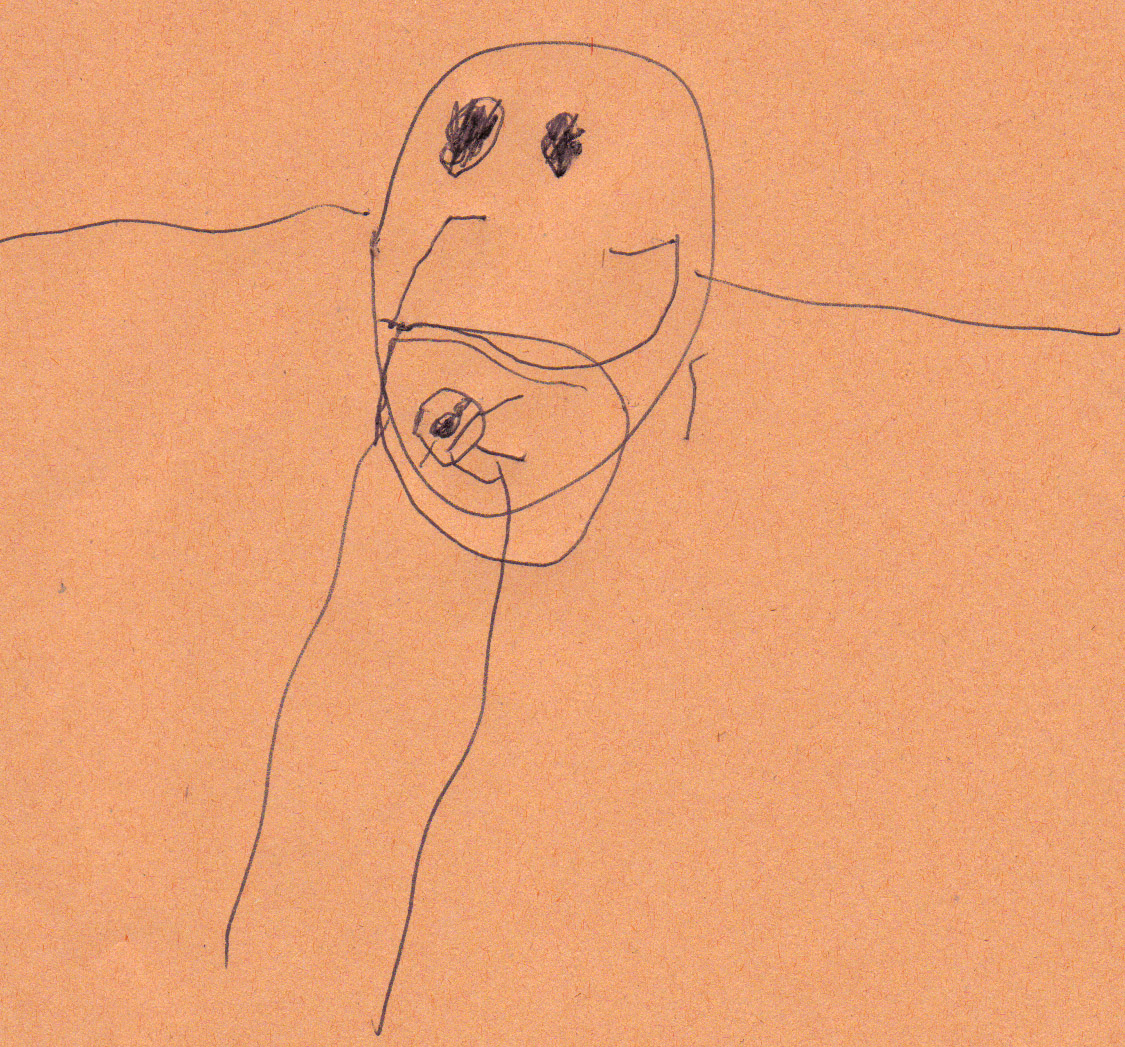
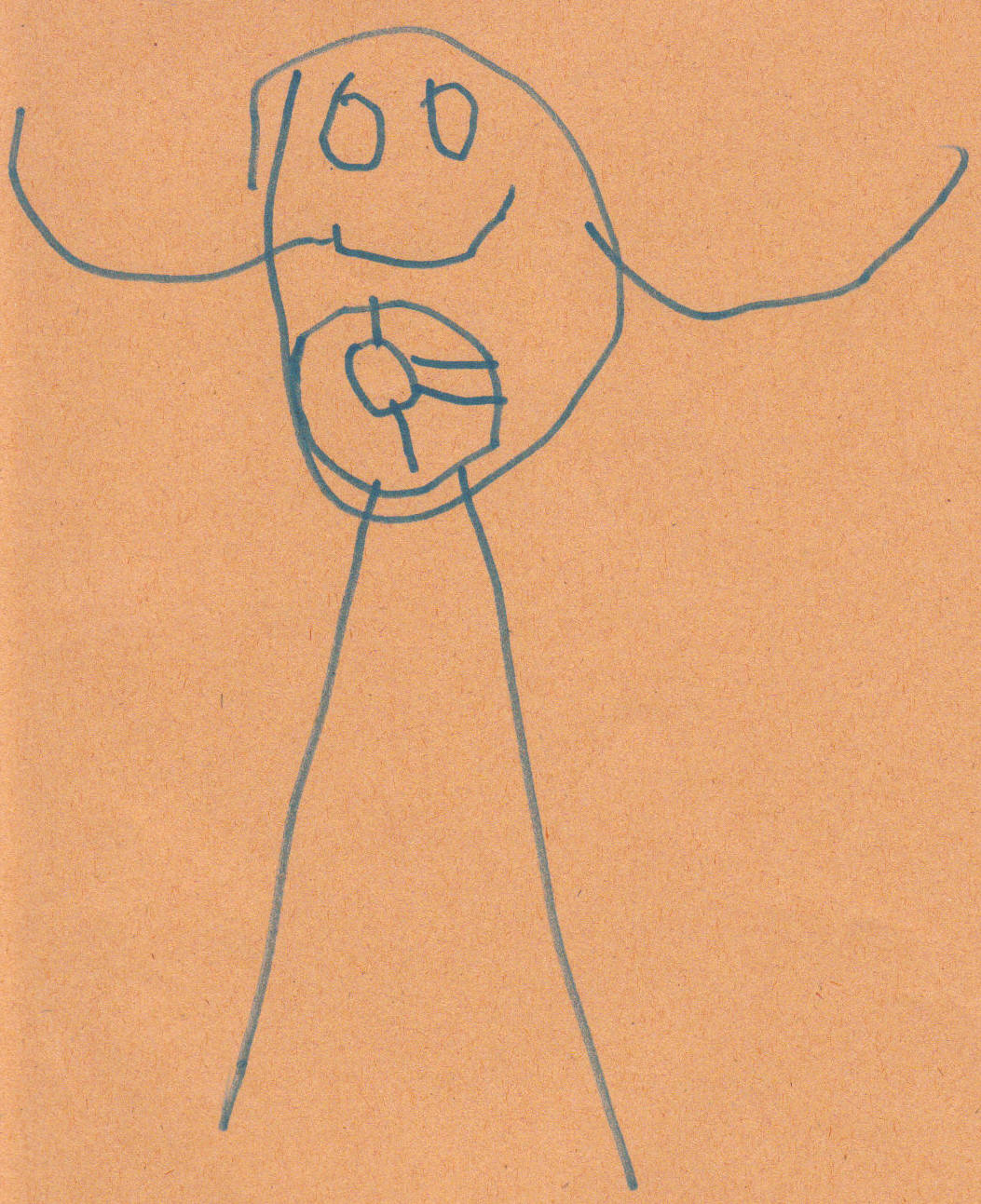
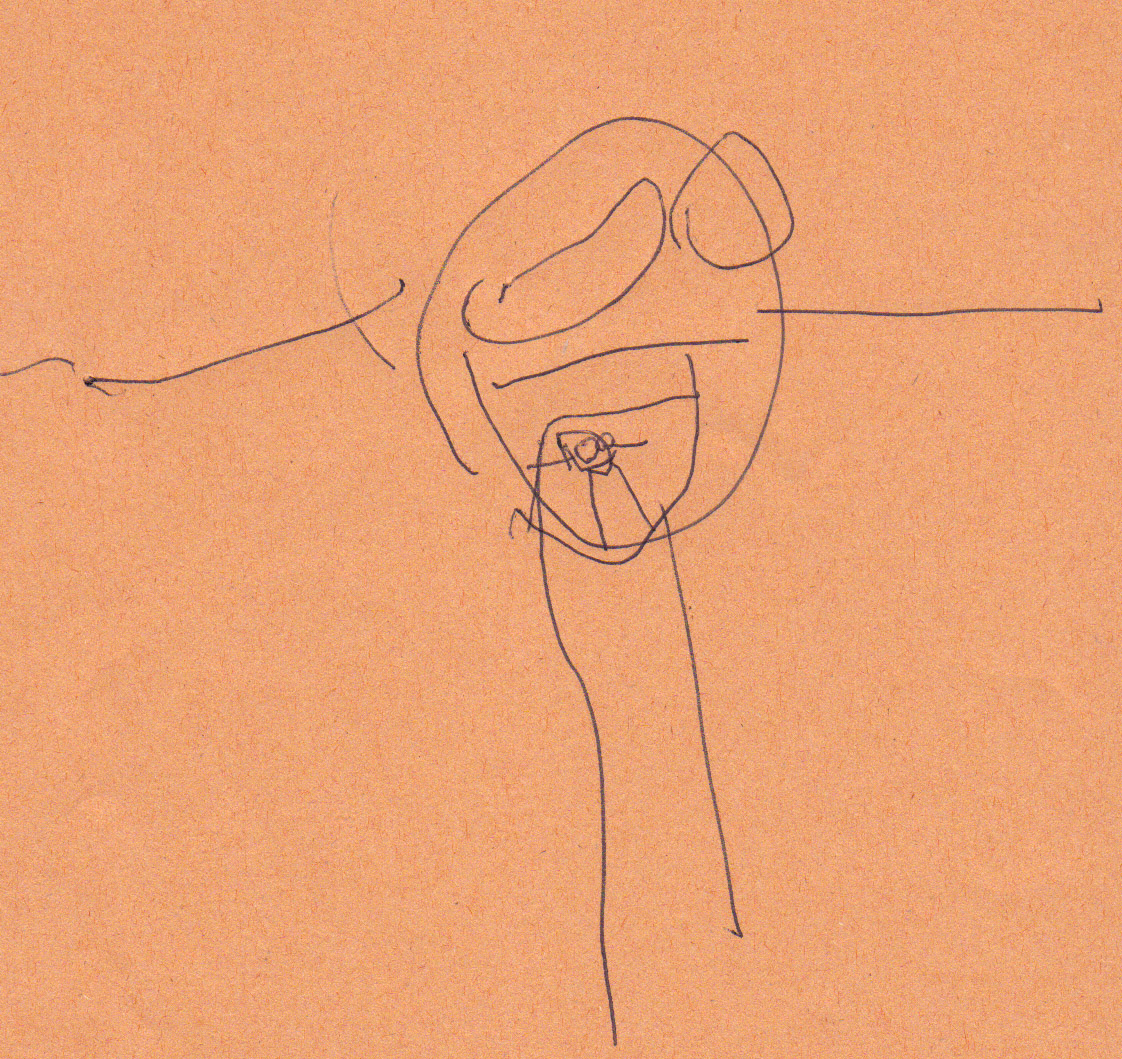
As I look at these drawings by my older son at ages 2.5 and 3.5, I feel quite a pang. This time has passed. He is eight now. He hasn’t drawn a picture like this in years. I didn’t fully realize at the time that he was drawing them that it was a one shot deal—looking at them gives me that familiar feeling of, but that was SO REAL. That was my life and my toddler and now our life landscape is a totally different one. Obviously, I guess I did have some recognition of the one shot nature, because I did save the drawings and have them to share this much later. In the first two pictures, which he drew before I gave birth to his brother, I love how the baby’s eyes match the mother’s.

I love how the baby looks like it is "floating" in this one.

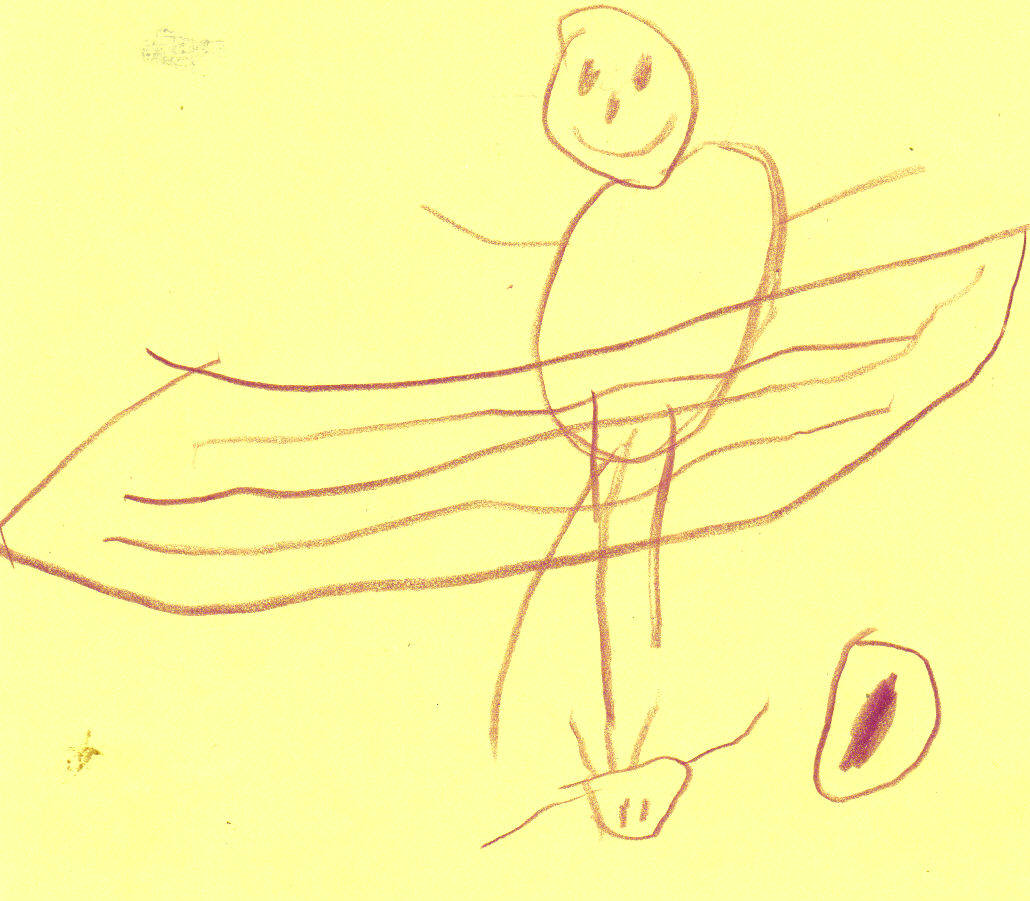
After Zander was born, Lann got a little older and a little more skillful at drawing. I forget exactly when he drew this one, it was sometime during Z’s first year I think, and is obviously based on Lann’s own observations of the birth, rather than just the idea of “mama’s got a baby in there.”

Love the placenta in a bowl and the baby attached to the mama with cord (yes, I know the two are mutually exclusive, but I love these details anyway!)

I forget if I’ve ever shared Lann’s version of his own birth story here. I asked him about it when he was about two (so, before he’d ever seen a birth). Do you remember being born? He immediately said yes and I asked him what it was like. He said:

Swimming.
Swimming down out of mama.
Crying.
Nursies.
Happy now!

This was a surprisingly accurate thumbnail snapshot of his birth. He cried when only his head was born. I brought him to my chest and said, totally instinctively with no pre-planning of the name, “do you want some nursies, baby?” and he immediately latched on and nursed. 🙂

These pictures and these thoughts are exactly why I write so much and why I have a semi-obsession with storing papers, drawings, writings, the printed word (I joke about being a personal archivist), it is because seeing them or reading what I’ve written later, brings that so real feeling back to me and that life that I lived, those babies that I raised, are vivid again, rather than faded, fuzzy, or forgotten.

Some reminders for postpartum mamas & those who love them

Postpartum with Alaina, February 2011

I recently finished a series of classes with some truly beautiful, anticipatory, and excited pregnant women and their partners. I cover postpartum planning during the final class and I always feel a tension between accurately addressing the emotional upheavals of welcoming a baby into your life and marriage and “protecting,” in a sense, their innocent, hopeful, eager, and joyful awaiting of their newborns.

This time, I started with a new quote that I think is beautifully true as well as appropriately cautionary: “The first few months after a baby comes can be a lot like floating in a jar of honey—very sweet and golden, but very sticky too.” –American College of Nurse-Midwives

Matrescence

In Uganda there is a special word that means “mother of a newborn”–-nakawere. According to the book Mothering the New Mother, “this word and the special treatment that goes with it apply to a woman following every birth, not only the first one. The massages, the foods, the care, ‘they have to take care of you in a special way for about a month.'”

There is a special word in Korea as well. Referring to the “mother of a newborn child,” san mo describes “a woman every time she has had a baby. Extended family and neighbors who act as family care for older children and for the new mother. ‘This lasts about twenty-one days…they take special care of you.'”

These concepts—and the lack of a similar one in American culture—reminds me of a quote from Sheila Kitzinger that I use when talking about postpartum: “In any society, the way a woman gives birth and the kind of care given to her and the baby points as sharply as an arrowhead to the key values of the culture.” Another quote I use is an Asian proverb paraphrased in the book Fathers at Birth: “There is a proverbial saying in the East: The way a woman takes care of herself after a baby is born determines how long she will live.” While this quote usually gets some nervous laughter, I think it is impresses upon people how vital it is to plan for specific nurturing and care during this vulnerable time.

Dana Raphael, the author of Breastfeeding: The Tender Gift, who is best known for coining the word “doula” as it is presently used, also coined another valuable term: matrescense. “Nothing changes life as dramatically as having a child. And there was no word to describe that. So we invented the word—matrescence—becoming a mother.”

The postpartum law of threes

I also share the “law of threes” with my clients which I learned from an article titled “Baby Moon Bliss” by Beth Leianne Curtis in Natural Life, Fall 2008:

A helpful tool I share with students and clients of mine is what I describe as the ‘law of threes’ when beginning the postpartum period. The first three days after your baby is born, try to stay in bed or at least in your bedroom. Many other cultures worldwide have much longer ‘lying in’ periods for mother and baby. If you can give yourself the much-deserved rest of focusing on breastfeeding, sleeping, eating, and recovering from the work of labor, your body and your baby will thank you for it. While birth is a healthy, normal event, honor the recovery process that your hard working body needs and deserves. The less you physically do in the initial few days following childbirth, the better and stronger you will feel in the weeks ahead. …Next, prepare to have three weeks of meals readily available for breakfast, lunch, and dinner….” (don’t forget plenty of snacks at easy reach for breastfeeding!)

Finally, understand that those first three months after birth are truly a time to embrace the unexpected…for some mothers, after three months is when breastfeeding really begins to be fun and easy. Many parents find that at the end of this [fourth trimester] transitional time, baby has moved through any colicky phases and that suddenly baby looks and acts more like a ‘real person.’…Physically, this is when your body begins to return to its pre-pregnancy state.

When I present about this topic to groups, sometimes I hear the following types of remarks: “Getting back out made me feel better, I would be miserable lying around in bed all day”—at the time when my own first baby was born, I would have said this was true for me as well, but looking below the surface shows me something else. Someone who hadn’t planned for a nurturing, comforting, supportive postpartum cocoon and who hadn’t given herself permission to rest, relax, and restore. The same high-achieving style that served me well in the workplace did not nourish me physically or emotionally as a tender new mother. I firmly believe that a nurturing postpartum downtime lays foundation for continued “mother care” self-nurturing for the rest of your life.

Then, in my notebook, I found the following relevant quotes that I had saved from the book Natural Health After Birth by Aviva Jill Romm:

“Too often women develop the mindset that a good mother gives all and takes nothing for herself. Remember, this is a great cultural fallacy. A good mother gives of herself to her children, but she has to have a self to give. A good mother nurtures herself, develops her own interests, even if in small ways, and grows as a person along with her children. Children don’t need us to be martyrs; they need us to be their mothers. A self-actualized mother sets an example for her own daughters that becoming a mother expands identity, not limits it.”

–Aviva Jill Romm, Natural Heath After Birth

“To put a child on Earth, an immense amount of creative intelligence flowed from the Great Spirit, through nature itself into your body, heart, and mind–remaining now, as an integral part of your own spirit. This energy is yours forever. Like a pocket, deep and filled with magic seeds of creativity and healing, this is the source of unconditional loving from which every wise woman since the beginning of time has drawn her strength.”

–Robin Lim

“Motherhood is raw and pure. It is fierce and gentle. It is up and down. It is magic and madness. Single days last forever and years fly by…Be gentle with yourself as you travel, dear mother. Don’t miss the scenery. Don’t miss conversation with your traveling companions. Laugh at the bumps and say ‘ooh, aah!’ on the hairpin turns. Buckle your seat belt. You’re a mom!”

–Aviva Jill Romm

Helpful articles

Planning for Postpartum—this is one of my past articles that I remain proud of

How other cultures prevent PPD—helpful article by Kathleen Kendall–Tackett

DONA’s handout for making a postpartum plan—I think couples should spend at least as much time to developing a postpartum plan as they do to making their birth plans.

Support & Sanity Savers handout for class from Great Expectations—this is one of my very favorite postpartum handouts to use for birth classes, particularly the last page which is a “request for help after the baby is born” letter to prospective helpers that includes a “coupon” for people to fill out with what they’re willing to do for the new parents.

Alaina’s Birth Story–Baba Style!

On Alaina’s birthday I received a special treat—her birth story written by my mom (called Baba in our family). I asked her if I could post it here and here it is!

Alaina’s Birth Story

Baba’s version

Waiting for a baby to be born can be exciting and stressful at the same time – but waiting for baby Alaina was especially poignant because of Molly’s previous loss of little Noah. I was worried. I knew she had a specific vision of how this – her last – birth would be, and I was concerned that my presence would somehow ruin things for her, or not live up to her expectations. I was also actually afraid. I was afraid something would go wrong, either with the birth process or with the baby herself.  I was afraid I’d have to be the one who was called upon to act in some heroic manner and would fail. I was afraid I wouldn’t measure up to Molly’s birth expectations. I wanted to do it all right, perfectly, and was afraid I couldn’t. I felt that voicing these fears would somehow manifest them, and I didn’t want to carry the fear into the sacred birth space. I felt prepared – I had been trained in neonatal resuscitation, knew where all the tinctures, supplements, and supplies were located, had a little bag packed for myself – but I was still emotionally and mentally concerned.

However, a few days before the birth, Molly and I had a talk, and it really cleared the air! When the “stand by” call came from Mark, I knew I was ready to be of service to my daughter and arriving granddaughter. The first request was for us to collect the big brothers, who had awakened early and were impacting Molly’s birth environment. I picked them up and brought them to home with me. At that time, Molly was very clear and focused, doing her work on the birth ball. When Mark called me to come back to the house at about 9:00, I scrambled into the car and tore over there, as if there might not be enough time! Molly has a history of precipitous births…….

There was definitely some birthy energy going on! Molly was on the ball with Mark rubbing her back. I knew she wanted to be left alone and have a peaceful environment, so I spoke as little as possible. At some point, I slipped over to her futon nest and tucked my little cheat sheet list underneath. I didn’t want to forget any of the resuscitation steps or what supplements to give her.  I tried to remind her to eat, drink and use the bathroom, without being obtrusive about it. She was obviously making progress, and I could hear in her voice that the contractions were growing in intensity. She worried about being too much “in her head” and analyzing things. I tried to reassure her that this is always how she approaches the world, and that it was fine to be that way. She was up and moving around, talking and considering, and also worried that she might not be progressing. This made me think transition might be near, but I didn’t say that to her. She felt some rectal pressure and decided to sit on the toilet for a while. It seemed to me that things were progressing apace, when she reached down and felt something squishy. She said she thought she was pushing, and I decided it was time to abandon my “silence” (really hard for me, by the way!) and comment that she should probably get to her nest if she wanted to avoid having the baby on the toilet.  She agreed, but didn’t really seem to want to move. No wonder. She barely made it! Meanwhile, I had called Summer, the doula, and midwife E.

Baba meets Alaina!

Molly dropped to her knees on her futon nest, and had an obviously intense contraction. We helped her get her clothes off. She was upright on her knees, intent upon finding heart tones, when the phone started ringing incessantly. It was SO annoying that I ran over to, picked it up and slammed it down to make it stop. That’s when I heard some garbled crying and Molly had baby Alaina in her arms! In my mad dash to the phone, I had missed the actual moment of birth :(. We all burst into tears and Molly was repeating, “You’re alive! You’re alive! I did it! There’s nothing wrong with me!” The baby was crying lustily, so we got Molly into a prone position (she was still kneeling) with the baby on her chest and covered up. My job was to pop things into Molly’s mouth – supplements, vitamins, chlorophyll, etc., so I got ready to do that. Summer arrived, midwife E arrived, and all was right with the world. Baby Alaina was safe and in her mother’s arms! And in mine, as soon as I could get my hands on her…..

—-

Molly’s version of Alaina’s full birth story.

Footprints on My Heart: A Memoir of Miscarriage & Pregnancy After Loss

As of this week, my miscarriage memoir, Footprints on My Heart, has finally been published and is now available in eBook format via Kindle and Lulu, Inc. (epub format compatible with Nook and iBooks). There are a few formatting errors and some other general problems (like with the sample/preview–it is totally wonky–and with the lettering on the cover), but guess what, it is DONE, it available, and it is out there. I’m really, really excited about it and I feel this huge sense of relief. I still want to write my Empowered Miscarriage book someday, but for now, this memoir is what I had in me and it will have to do for the time being. I realized after Alaina was born and was, in a sense, the happy “ending” to my Noah story, that in writing my miscarriage blog I had actually ended up writing most of a book. So, the bulk of the book is drawn from my miscarriage blog and from this blog as well (for the pregnancy after loss content). I also included an appendix of resource information/additional thoughts that is fresh.

I’ve felt haunted by the desire to publish this for the entire last year. It took a surprising amount of work, as well as emotional energy, to prepare for publication, even though I actually did most of the actual writing via blog in 2010. Now that it is ready, I just feel lighter somehow and have this really potent sense of relief and ease, as if this was my final task. My final act of tribute. My remaining “to do” in the grief process.

If anyone really, really, really wants it and cannot afford the $3.99 for which I priced it, I do have it available as a pdf file, a mobi file, and an epub file and I will be happy to email it to you in one of those formats.

<deep breath> Aaaaaahhhhhh….

Thoughts on epidurals, risk, and decision making

In the Winter 2012 issue of The Journal of Perinatal Education I read several interesting tidbits related to women’s experiences of medication during labor, expectations for birth, and thoughts on risk and choice. In an article by Hidaka and Callister titled, “Giving Birth with Epidural Analgesia: The Experience of First-Time Mothers,” I was struck by one mother’s explanation of why she “chose” an epidural: “‘I was nervous about lying down and being confined to the bed again.'” As the researchers explain, “She wanted to stand or sit to cope with labor pain; however, many times she had to lie down for monitoring, and that position made her pain worse, so she was inclined to opt for an epidural” (p. 29).

Some questions immediately arise here. Did this mother actually want an epidural? Do women really need to lie down to be monitored? Was normal labor unbearable without medication? Did she make a free choice? The answer to all is, no. In this case and in so many others around the nation every day, the physiologically normal and fully appropriate need for freedom of movement during labor ran smack into the hospital’s expectation of stillness. And, medication was a consequence of that stillness, not an inability to cope with normal labor–it was an inability to cope with enforced passivity that was directly counter to the natural urges of her birthing body. Where is the “opting” here? When birthing women are literally backed into corners, no wonder epidural analgesia becomes the nationally popular “choice.”

Risk and birth

In another article titled “Risk, Safety, and Choice in Childbirth,” Judith Lothian explores our risk-driven obstetrical model, drawing on material from Raymond De Vries who, “describes that the common strategy of professional groups gaining control is to create risk or exaggerate risk. One ways groups gain power is by reducing risk and uncertainty. Where there is limited risk, it can be ‘created’ by redefining ordinary life events as risky and emphasizing whatever risk exists. The medical model encourages women to see birth as inherently risky for mother and baby…The obstetrician is then in the powerful position of reducing the risk and uncertainty. During pregnancy, women are advised and cautioned about every conceivable, however small, risk; but interestingly, when it comes time for the birth there is little, if any, discussion about the risks of routine interventions, such as continuous electronic fetal monitoring, elective induction, and epidurals…” (p. 45-46).

What are the implications for childbirth educators and doulas? We need to be cautious of perpetuating a medically oriented model that implies that women are responsible for minimizing all possible risks during pregnancy and yet then accepting a climate for giving birth that actually increases risks for both mother and baby. Lothian notes that educators must make it clear “that the current maternity care system increases risk and makes birth less safe for mothers and babies. Women need to know the care practices that make birth safer for mothers and babies and the practices that do not.” She goes on to address a key point, stating that “Childbirth educators need to take a strong stand in support of changing the system to increase safety for mothers and babies…safety is not about frantically trying to minimize small or exaggerated risks during pregnancy and then giving birth in hospitals that protect obstetricians’ interests while increasing risk for mothers and babies” (p. 47). [emphasis mine]

Storytelling and birth

In a later article by Barbara Hotelling about styles of teaching about medications in birthing classes, she references Lothian who suggests, “childbirth educators replace in-depth discussions of stages and phases of labor, medical interventions, hospital policies, and complications…’Let go of trying to fit everything in. Women don’t need to know everything about labor and birth.'” What to do instead? She suggests replacing traditional forms of education with storytelling and other strategies that recall how women through the ages have traditionally come to know and understand birth, stating that, “‘Storytelling is a powerful way to convey basic information about physiology, coping strategies, and confidence'” (p. 51). I’ve written before that what women need isn’t actually just more information and to get educated and these experienced educators agree, “Now there are many books, videos, YouTube videos, and magazines that give expectant parents the information. In their classes, childbirth educators can add storytelling from friends and family about their experiences with pain medication during labor and birth, allowing educators and their class participants to learn from the wise women who went before them” (p. 51).

I’ve long sought ways to help parents cultivate their inner knowing and body wisdom and to focus classes around the development and enhancement of personal resources, rather than on simple information sharing. I would like to re-vision my own approach to childbirth education into a cooperative, woman-to-woman, birth circle type of environment. Michel Odent describes this in his book Birth and Breastfeeding as “new style” childbirth education: “for the most part, these are mothers who have no special qualification but, having given birth to their own children, feel the need to help other women who could benefit from their personal experience. They organize meetings, often at their own homes. They do not usually encumber themselves with any particular theoretical basis for their teaching, but may find it useful to give this or that school of thought as a reference. Their aim could most accurately be described as being to provide information and education, rather than specific preparation.”

Addressing the subject of pain…

Returning to the first article quoted above, in their discussion, Hidaka and Callister state, “Our findings confirm those of a recent systematic review of women’s expectations and experience of pain relief in labor. Across studies, women underestimated the pain of childbirth, we’re not prepared for the intensity of the experience, and often had unrealistic expectations” (p. 29). I’d like to address the other points in a future post, because I think they are very significant, but for now they offer several good tips for childbirth educators to address the topic of labor pain during birth classes:

  • Teach that some pain/sensation has a purpose to alert the laboring woman to the need for movement, doing something different to encourage rotation and descent, or to push
  • Teach that the sense of empowerment for accomplished tasks and goals cannot be replaced only with pain relief
  • Teach that perception of pain is different for every woman
  • teach that every situation is unique so that no single pain management strategy works
  • Teach that the word labor means “hard work” and not “big pain”
  • teach that labor contractions intensify until about 5 cm, and that other sensations (e.g. “downward pressure”) may seem scary or painful
  • Teach that the sensations of labor are not all unique to labor (e.g. bad menstrual cramps, back pain, nausea, pressure)–they have lived through these experiences before

Related posts:

The Illusion of Choice

The Value of Sharing Story

Practical Ways to Enhance Knowledge for Birth

Information ≠ Knowledge

Women and Knowing

Asking the right questions…

The Grassroots of Safer Birth: Get Karen There

Midwives speak the same lan­guage, regardless of politics: women come first.

–Palestinian Midwife (quoted by COHI)

I have found that it is easy to get so caught up in local or national birth activism that I forget to even consider the birth climate and concerns of other regions of the planet.

Why should we care?

Most simply, because lack of access to good maternity care is a huge issue around the world, with a profound impact on women, mothers, babies, families, and communities. Some selected facts (via COHI):

  • Nearly 400,000 women will die each year from pregnancy-related causes and 99% of these deaths will occur in de­veloping countries, according to the World Health Organization (WHO).
  • For each woman who dies, 20 others will suffer from serious complications.
  • The five leading causes of pregnancy-related deaths are bleeding, infec­tion, high blood pressure, prolonged labor and abortion complications. In poor countries, a mother’s death leaves her new­born at risk of dying as well.
  • The majority of pregnant women die because of the three major delays that have been identified as:
  1. Delay in the woman, her family or community members’ recognition of a life-threatening problem and the decision to seek care.
  2. Delay in a woman’s access to trans­portation to a health facility, espe­cially at night.
  3. Delay in the woman’s access to quali­fied health workers with access to es­sential equipment and supplies.
  • Women and children constitute as 80% of the world’s refugees and displaced people.
  • In areas where conflict and turmoil is rampant, nurses and midwives are the primary reproductive health care providers. They provide up to 80% of direct patient care around the world every day.

Recently, I was asked to participate in a fundraising effort to get midwife Karen Feltham to Haiti. Spearheaded by BirthSwell in connection with the amazing organization Circle of Health International, the fundraiser already reached its goal before my post was scheduled to run! That’s what I call some effective grassroots organizing! The fundraiser is still open for contributions however, and now any additional funds raised will be used to sponsor other midwifery volunteers to disaster areas in need of support. COHI knows that the majority of pregnant and birthing women worldwide are cared for and by midwives and believes that, “midwives should be involved in the effort to foster change by bringing about increased access to services, support and care for women everywhere.”

What can you do?

  • Make a contribution!
  • Get connected! Visit the fundraiser’s indiegogo site and be sure to share it on Twitter, Facebook, and your listserves.  (The indiegogo site has great tools and widgets for sharing – try them out!)
  • Tweet about the fundraiser using hashtag #getkarenthere
  • Make sure to follow COHI on Facebook!

I have a personal tradition of getting a new We’Moon datebook every year and I was pleased to notice that part of the proceeds from the 2012 edition goes to support Circle of Health International also. COHI focuses on: “Working with women and their communities in times of crisis and disaster to ensure access to quality reproductive, maternal, and newborn care.”
COHI lists the following as their core values:

  • Grassroots social change by creating local, community driven collaborations in order to foster social change from the top down, as well as from the bottom up.
  • Nonviolence in terms of active resistance requiring one to act when faced with injustice. Leadership at COHI is supporting women to lead, to be forces for change in communities healing from conflict and disaster, and in organizational movements to support women in leadership roles.
  • Volunteerism through the giving of time, money, knowledge, and general support with the goal of easing the suffering of others.
  • Activism in individual responses to inequity and injustice.
  • Supporting women and their families in their right to make their own decisions in all aspects of birth spacing and family size, while protecting access to the resources required to honor their choices.

I value all of the above as well, which is why I’m pleased to be involved with the effort to Get Karen There!

http://www.indiegogo.com/project/badge/45681?a=

Book Review: Passionate Journey: My Unexpected Life

Passionate Journey: My Unexpected LifePassionate Journey: My Unexpected Life
By Marian Leonard Tompson, Melissa Clark Vickers
Paperback, 176 pages
Published June 19th 2011 by Hale Publishing

Reviewed by Molly Remer

Passionate Journey by La Leche League International co-founder Marian Tompson is the story of a young mother who became known worldwide and was even referred to as “The High Priestess of Breastfeeding Mothers.” Written in a light and casual tone, many of Marian’s stories are familiar if you’ve read The LLL Love Story, Seven Voices, One Dream, or The Revolutionaries Wore Pearls. While theoretically a personal memoir from one Founder, rather than a history of LLL, because Marian’s personal history is intimately entwined with the organization’s history, the end result is very similar to existing books about LLLI.

The writing style is simplistic and ironically often fairly dispassionate in tone, perhaps due to having a co-writer for a first person memoir. Chronology jumps are occasionally confusing.

Several anecdotes made me laugh aloud and read them to my husband–such as a medical intern rushing to the physician after witnessing one of Marian’s three natural hospital births and exclaiming, “oh, doctor! How did you do it?” As a birth activist and feminist, I’m fascinated by the radical courage required at the time to support and promote home birth and breastfeeding. While LLLI has always been a “single purpose” organization, it has also always recognized something that seems to escape the notice of many professionals and consumers: that normal, undisturbed breastfeeding begins with normal, undisturbed birth. Tompson notes: “…having a baby at home is at least as safe as a hospital birth, and in most situations home birth is safer. New sciences and new research are helping us understand why giving birth in your own bed, surrounded by people who care for you, where you feel supported and can celebrate the birth, rather than just endure it, changes both the experience and the outcome.” Tompson had her first home birth in 1955 and went on to have three more children at home. Her daughters carried on her legacy, one of them returning to the family home to give birth to her own daughter. The Tompson family home was also the site of multiple family weddings as well as the almost unheard of home funeral for husband Tom in 1981. In a nice touch, reflective paragraphs from each of Marian’s seven children close the book.

An inspirational story of the twists and turns of an ordinary life with an extraordinary global impact, Passionate Journey reminded me of the deep importance and transformative influence of providing support and encouragement to women who wish to breastfeed.

via Goodreads | Passionate Journey: My Unexpected Life by Marian Leonard Tompson – Reviews, Discussion, Bookclubs, Lists.

Circles Writing

each time we pose pen or pencil to paper

we connect with who we are         who we were       who we want to be

we are circles of women

writing together     apart    in dialogue     alone

we write: wherever we are     when we’re overwhelmed

to clear our minds

to express our anger, to clarify our thoughts

when we’re too tired to talk, to capture that exact feeling

to release our pain, to honour our truths

we write

to connect ourselves

to this circle

these circles

of women writing

each time we pose

pen or pencil

to paper.

–Wendy Judith Cutler, 1992 (in We’Moon datebook, 2011)

This time last year, I was writing about the circle of women that gathered in my living room for my blessingway. This photo was a beautiful gift from my friend Karen.

I am so amazed and pleased and surprised and blessed by the connections that have come into my life (or that have been made stronger) due to women writing. I love how the perfect “message” springs off the page (or computer screen) at me from another woman’s life, musings, words, and experiences. It is incredible.

I’ve been working on a happy birthday post about my baby girl (who is sick and crabby right now—and, now I’m sick and crabby too, which makes it hard to find the glowing words I want to share). One of the things I wish to express is about having come full circle—we’ve made our first trip around the sun together. I feel like I’ve closed out something by having made this journey with her in my arms. In the book Sisters Singing, I read this quote this morning:

There is an open, flexible, compassionate way of relating to everything we experience, including natural disasters and sudden death. It is not so much a process of learning how to ‘get over’ a profound loss, but rather how to allow it to be there, lightly, gently, like a fine thread woven forever into the tapestry of who we are.” –Nancy J. Rigg

And, then, on FB, I spied this beautiful quote as well: “Rejoicing in ordinary things is not sentimental or trite. It actually takes guts. Each time we drop our complaints and allow everyday good fortune to inspire us, we enter the warrior’s world.”
― Pema Chödrön, The Places That Scare You: A Guide to Fearlessness in Difficult Times