Archives

Book Review: Homebirth in the Hospital

Homebirth in the Hospital
by Stacey Marie Kerr, MD
Sentient Publications, 2008
Softcover, 212 pages
ISBN: 978-1-59181-077-3
www.homebirthinthehospital.com

Reviewed by Molly Remer, MSW, ICCE, https://talkbirth.wordpress.com

I would venture to say that most midwifery activists and birth professionals have said at some point, “what she wants is a homebirth in the hospital…” This comment is accompanied with a knowing look, a bit of head shaking, and an unspoken continuation of the thought, “…and we all know that’s not going to happen.”

Well, what if it is possible? A new book by Dr. Stacey Kerr, Homebirth in the Hospital, asserts that it is. She was originally trained at The Farm in TN (home of legendary midwife Ina May Gaskin) and after going to medical school realized that she, “…needed to balance my new knowledge with my old priorities. I missed the feeling of normal birth, the trust that the birthing process would occur without technology, and the time-tested techniques that help women birth naturally. And so it was that I went back to midwives to find the balance.”
If you are a dedicated homebirth advocate, I recommend reading Homebirth in the Hospital with an open mind—clear out any cobwebs and assumptions about doctors, hospitals, and birth and read the book for what it is: an attempt to create a new model of hospital birth. What Dr. Kerr proposes in her book is a model of “integrative childbirth”—the emotional care and support of home, while nestled into the technology of a hospital.

The opening chapter explores the concept of integrative childbirth and “the 5 C’s” of a successful integrative birth: choices, communication, continuity of care, confidence, and control of protocols (“protocols are the most disempowering aspect of modern maternity care…”).

This section is followed by fifteen different birth stories, beginning with the author’s own (at a Missouri birthing center—my own first baby was born in a birth center in Missouri, so I felt a kinship there).

The births are not all happy and “perfect,” not all intervention-free, and most are quite a bit more “managed” and interfered with than a lot of homebirthers prefer (one is a cesarean, several involve epidurals or medications). I, personally, would never freely choose a “homebirth in a hospital” (I also confess to retaining a deep-seated opinion that this phrase is an oxymoron!). However, that is not the point. Over 90% of women do give birth in a hospital attended by a physician and I appreciate the exploration of a new model within the constraints and philosophy of the hospital.

The book closes with a chapter called “how to be an integrative childbirth provider.” The book has no resources section and no index.

I certainly hope that doctors read this book. I am also glad it is available for women who feel like homebirth is not an option or not available and would like to explore an integrative approach. Even though my opinion is that none of the births are really “homebirths in the hospital” as most bear little resemblance to the homebirths I know and love, unlike the content of the standard hospital birth story, they are deeply respectful births in the hospital and that’s the issue truly at the heart of this book.

—-

Disclosure: I received a complimentary copy of this book for review purposes.

Book Review: In Search of the Perfect Birth

Book Review: In Search of the Perfect Birth
By Elizabeth McKeown, 2011
186 pages,  paperback.
ISBN-13: 978-0615481708
http://www.theperfectbirth.com/

Reviewed by Molly Remer

Written by a mother of three, In Search of the Perfect Birth is an unassisted childbirth manifesto. It chronicles the author’s journey through the births of her children—the first born in the hospital, the second a planned homebirth ending in hospital transport, and the third an unassisted birth. Elizabeth is strongly convicted that unassisted birth is the right choice for most women, though I feel she is also fairly respectful that other women’s experiences may or may not lead them to the same conclusion. This book is not a do-it-yourself guide to UC, but is an exploration of one woman’s experiences in healing from birth trauma and taking full responsibility for the birth of her next child. I was fascinated by her conclusions that her own birth trauma wasn’t healed through unassisted birth itself, but through the decision to take charge of her own birth care.

The book is pretty rough around the edges and could use some more editing and polishing. There is a stream-of-consciousness feel to the writing style that can be a little confusing and disjointed.

The author makes some excellent points with regard to the restrictions that can be placed on women’s birth freedoms by midwives also, noting wryly that if you choose the “middle ground” you may well end up with all the downsides of being told what to do with your own body, but “without the opiates that make it bearable!” Elizabeth’s homebirth turned hospital transport experience was pretty horrific and it was difficult to read about. She also writes with candor about the degree and intensity of pain she experienced during all of her births (including the UC).

In Search of the Perfect Birth will be of particular interest to women who already support unassisted birth and to women who have experienced birth trauma and are seeking resolution in future natural childbirths. It is an honest and heartfelt story.

Disclosure: I received a complimentary copy of this book for review purposes.

Book Review: Doulas’ Guide to Birthing Your Way

Book Review: Doulas’ Guide to Birthing Your Way
Authors: Jan Mallak & Teresa Bailey, 2010.
ISBN: 978-0-9823379-7-4
$15.37 – $21.95, 188 pages, softcover
Hale Publishing: http://www.ibreastfeeding.com/

Reviewed by Molly Remer

Geared towards pregnant women, Doulas’ Guide to Birthing Your Way is written in a simplistic manner using short, direct sentences. While in some ways this approach makes the information readily accessible, it can also feel unsophisticated in places. However, while the writing style is basic, the content is not. The Doulas’ Guide is a book that really “goes beyond” the information traditionally offered in birth preparation books, covering topics many parents typically may not have considered prenatally such as natural birth vs. birthing naturally, physical comfort preference styles, visualization, being a savvy consumer, blessingways, and taking pictures of the placenta. The information is refreshingly practical and hands-on. Chapters cover the critical importance of the human environment, “five arms of doula support,” birth preparation, one chapter for each stage of labor including separate chapter for immediate postpartum, a section about cesarean birth and VBAC, and a breastfeeding chapter.  There is an excellent section on postpartum care including a PPD symptoms chart. I was a little taken aback by a blithe comment, “Just think of it as an alternate birth route!” regarding cesareans.

Doulas’ Guide contains good, helpful snapshots throughout the text. Dads will like the plethora of labor support skills and ideas and the accompanying photographs. The book advocates preparation of a “birth vision” and includes examples at the end of the book (including cesarean birth options).

The variety of checklists, key questions, tables with reference information, bullet points, and pictures keep the pace of Doulas’ Guide to Birthing Your Way snappy and digestible. This book covers lots of ground and packs a lot of information into under 200 pages!

—–

Disclosure: I received a complimentary copy of this book for review purposes.

Women and Knowing

I read an interesting article by anthropologist and birth activist, Robbie Davis-Floyd, in the summer issue of Pathways Magazine. It was an excerpt from a longer article that appeared in Anthropology News, titled “Anthropology and Birth Activism: What Do We Know?” In the conclusion, Davis-Floyd states the following:

“Doctors ‘know’ they are giving women ‘the best care,’ and ‘what they really want.’ Birth activists…know that this ‘best care’ is too often a travesty of what birth can be. And yet on that existential brink, I tremble at the birth activist’s coding of women as ‘not knowing.’ So, here’s to women educating themselves on healthy, safe birth practices–to women knowing what is best for themselves and their babies, and to women rising above everything else.” –Robbie Davis-Floyd

I believe that every woman who has given birth knows something about birth that other people don’t know. I also believe that women know what is right for their bodies and that mothers know what is right for their babies. I’m also pretty certain that these “knowings” are often crowded out or obliterated or rendered useless by the large sociocultural context in which women live their lives, birth their babies, and mother their young. So, how do we celebrate and honor the knowings and help women tease out and identify what they know compared to what they may believe or accept to be true while still respecting their autonomy and not denigrating them by characterizing them as “not knowing” or as needing to “be educated”?

Additionally, with regard to education as a strategy for change, I’m brought back to a point I raise in my community organizing class: People often suggest “education” as a change strategy with the assumption that education is all that is needed. But, truly, do we want people to know more or do we want them to act differently? There is a LOT of education available to women about birth choices and healthy birth options. What we really want is not actually more education, we want them to act, or to choose, differently. Education in and of itself is not sufficient, it must be complemented by other methods that motivate people to act. As the textbook I use in class states, “a simple lack of information is rarely the major stumbling block.” You have to show them why it matters and the steps they can take to get there…

She knows

The Blessingway Connection

Last weekend, I attended a mother blessing/blessingway* ceremony for a dear friend. I have mentioned her here before, because she is on a pregnancy-after-loss (PAL) journey after having given birth to a tiny boy after 16 weeks of pregnancy last July (my own Noah was born at 15 weeks in Nov., 2009). My friend’s baby had been due in January, the same time my own “rainbow baby” was born. So, I’ve spent the last year being a couple of months “ahead” of her on the very complicated and emotional path of pregnancy after loss.  And, now she is preparing to give birth to her own new baby girl any day now. It felt very, very good to come together with friends to celebrate this strong mama, her journey, and her babies. I so clearly remember the feelings of “feeling the fear and doing it anyway” when it came to things like doing a belly cast, having pregnancy pictures taken, and, yes, having a blessingway—each of these commemorative events was tinged with a fear of possibly being a sad memory instead of a happy one. I remember worrying, “what if I look back at my blessingway and have to think, ‘but I was so happy.'” These thoughts aren’t necessarily rational or logical, but they featured prominently in my PAL experience. And, while I truly loved being pregnant and I was happy much of the time, I was so glad for it to be over and for PAL to be behind me. This is the feeling I had for my friend during her ceremony as well—pretty soon PAL will be over and you will be so glad to leave it behind and snuggle your new baby girl (I’m also very familiar with the companion fear of, “but what if my PAL journey ends with another loss? I’m not holding my new baby yet…”)

For many mother blessings, I pick out a quote or a poem or a reading to give to the mother.  Considering how much writing I do in my life, it is kind of surprising to me that I usually choose to give women other people’s words rather than creating something new for them (I do say original things aloud to them during the gifting time, in which we each take turns kneeling before the mother and telling her what she means to us). After some looking for perfect quotes, I knew that for this friend,  I needed to write something to her from my heart and not from someone else. So, on one of my womb labyrinth postcards, I wrote the following:

Nine months ago you entered into the long, challenging labyrinth of pregnancy after loss. You have walked with courage, strength, and grace. You have been SO BRAVE. And now you prepare to take the final step on the path—to greet the power and intensity of your birthing time. All of your love and hope and fear will become concentrated on the task of opening your body to welcome your precious new daughter into your arms and your life. She is coming. She is okay. And, sweet mama, so are you. This is a time of openness and surrender–in body, mind, heart, and soul. May you give birth with confidence, strength, bravery, vulnerability, and wild sweet joy and relief.

(c) Sincerely Yours Photography

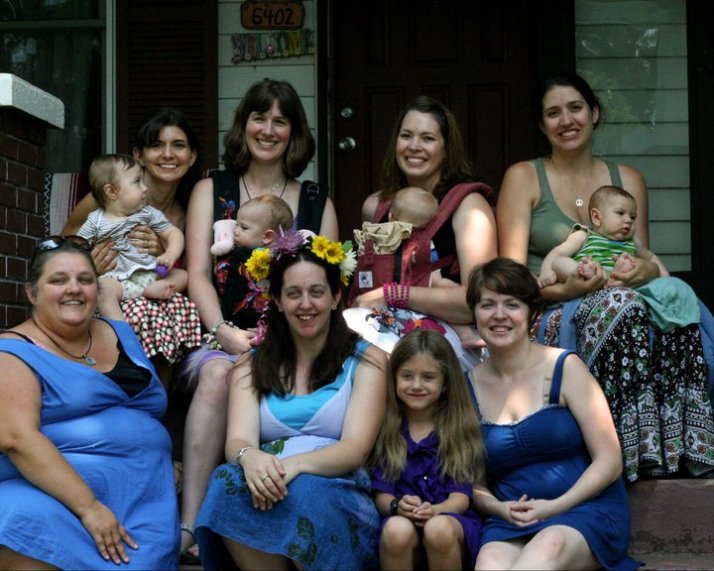
One of the special things about blessingways is the sense of connection with other women. The ritual space creates an opportunity to speak and share with each other with a depth that is often not reached during day to day interactions (and definitely not usually at baby showers!). This winter, my friends and I started having quarterly women’s retreats. One of my reasons for wanting to do so was to bring some of that sense of celebration and power from our Mother Blessing ceremonies more fully into our lives and to celebrate the fullness and completeness of women-in-themselves, not just of value while pregnant. For these same reasons, I decided to pursue a doctoral degree in women’s spirituality—while birth work is still important to me, I feel very “called” to celebrate, work with, acknowledge, and respect the full cycle of a woman’s life.

“We are mothers, sisters, family wrapped in different cloth,
standing under the same wide sky
and we’ve come to the very end of our silence
together we’ve found our voice
and it is loud
and it is beautiful
and it sings a love song for our children”
Mothers Acting Up

(c) Sincerely Yours Photography

——-

*For a general description and explanation of mother blessings as well as musings on “connection,” see my friend Hope’s post.

*Out of respect for Native traditions, I continue to try to refer to these ceremonies as “mother blessings.” However, my local circle of women has been holding these ceremonies for each other for about 30 years and they have “historically” been referred to as “blessingways.” Blessingway remains the term that feels most right to me—most genuine, authentic, and, truly, is part of my own life’s “traditions,” so a lot of the time, I feel like it is okay for me to continue using the word, rather than trying to force myself to use mother blessing instead.

Haumea: The Divine Midwife


“Haumea, a Polynesian Goddess, was credited with teaching women how to give birth by pushing their babies out from between their legs. Before this, folklore claims that children were cut from their wombs, extracted by knife like a pit from ripe fruit. Thanks to Haumea, women were able to forgo this dangerous passage.” –Kris Waldherr, Goddess Inspiration Cards

Reading this, I felt like women need to “meet” Haumea again. Perhaps modern midwives, doulas, and birth educators are Haumeas on earth, reminding women that they have the inherent power and capacity to push their own babies out from between their legs, rather than having major surgery.

After reading about Haumea and thinking about my own births, I felt inspired to make yet another figure in my birth art series. I’m experimenting with new types of figures lately and made this catching-your-own image:


You will safely give birth to something powerful.

Softening for Birth…

I’ve mentioned a couple of time before how much I enjoy The Pink Kit as a resource for birthing couples. This resource has been available for a number of years, but I only bought a copy two years ago. It rapidly became one of my favorite resources! I continue to find new and useful information within the Kit and I really recommend it. It covers very basic, “common knowledge” information and brings it all together in a useful way. There is a heavy emphasis on knowing your body and how it moves and works and on pelvic bodywork. The Pink Kit consists of a DVD, a book, and three more pdf companion books.

An example from the book: “Modern culture often teaches us to be ‘tight’…trim, taut, and terrific! But there is a difference between being fit and well-exercised and having a ‘tight’ body. We understand the need to stay ‘fit’ at this time, but we would also like to encourage you to soften yourself, in preparation for mothering and nurturing your baby. Soften your viewpoint, soften your body, surrender to this awe-inspiring event. We can assure you that in this way, you will be preparing yourself not only for labour, but for the days and years afterward…”

(c) Sincerely Yours Photography

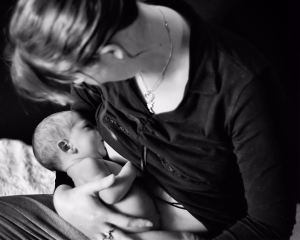
Nursing my baby!

I love this idea of becoming softer in preparation for baby! I also think breastfeeding keeps you “soft”—I know that as I spend time being on many tasks during the day, when I sit down to nurse Alaina I can physically feel my muscles (and mind) loosening and becoming softer. This is one of the gifts that breastfeeding brings.

Alaina’s Complete Birth Story

It has taken me a long time to finish typing up Alaina’s birth story. I wrote it in my journal at 3 days postpartum and the following is almost verbatim. I’ve gone back and forth about what to include and decided to just include everything, as originally written. I feel critical of the story somehow, like it is “choppy.” I used interestingly short, jumpy sentences and while part of me want to smooth it out, another part of me feels like it is more authentic in this format. I also feel like I “should” be posting it on a more significant date—i.e. her six month birthday, or something. But, it is finished now, so I feel like sharing now! Additionally, I thought about taking the self-analysis section about the use of a hypnosis for birth program out of the story, but, indeed, this was the FIRST thing I wrote in my journal, so it seems like it “deserves” to be included as well. It obviously was one of the most important details for me to write about. However, for the purposes of clarity, I moved it to the end of the story in this version. Likewise, I thought about making the section about my newborn- love into a separate post, but because those feelings are so intimately entwined with her birth and because, in my journal, that is exactly the chronology I used—first hypnosis criticism, second birth chronology, third baby love–it feels like it all belongs together in one story. It is funny how that first story has such value to me and that it feels almost wrong to edit, change, or add anything to it. It feels most honest this way.

The Birth of Alaina Diana Remer
January 19, 2011
11:15 a.m.
7lbs, 8oz; 20 inches.
Short version of her story is here and labor pictures are here.

I had a restless, up and down night, getting up at 3:00 a.m. and even checked in with my online class. Mark got up with me and we talked and speculated. Waves were four minutes apart and then kind of dissipated unenthusiastically away. He went back to bed at 4:00 and I listened to Hypnobabies. At 6:00, I was feeling trapped lying down and got up. Mark got up then too and worked in the kitchen on the dishes and things like that, while I walked around and leaned on the half wall during contractions (a lot. It was the perfect height). Sitting down in a chair caused horribleness, leaning forward on the ½ wall was good. Called Mom and told her to be on standby and to notify my blessingway crew. Also, called Summer (doula/friend) to be on alert. Felt serious, but not totally. Also was having back involvement which each wave. I felt like I would have a real contraction and then a closely following, but milder, back-only contraction (no tightness in uterus really during these, but definitely a wave-like progression and then ease of sensation).

I was very quiet during most waves until the end. I think because I was doing the Hypnobabies and was concentrating on that. Then, I would talk and analyze and be very normal in between. This pattern seemed to lead to a decreased perception of seriousness from others of my need for attention—Mark washed dishes, went outside to take care of chickens, work on fire, feed cats and so forth. The boys woke up at 7:00 a.m. and as soon as they came out and started talking to me (Mark was outside), I knew they needed to go elsewhere. We called my mom at 7:30ish and she came to get them. I did not want to feel watched or observed at all, so asked her to wait to come back.

I kept waiting for the “action” to increase and feeling distressed that it was taking such a “long” time. I suggested to the baby that she come out by 10:00. I continued to stand in the kitchen and lean on the ½ wall, sometimes the table or the bathroom counter. Dismayed to see no blood/mucous, nothing indicating any “progress.” Significant feelings of pressure and pain in lower back continued and at the time felt normal to me, but looking back seems like an extra dose of back involvement. In another intensity-increasing experience, the baby moved during contractions for the entire labor until the contraction before I pushed her out. She moved, wiggled and pushed out with her bottom and body during each contraction, which really added a new layer of intensity that was difficult. I was, however, glad she was moving because then I knew she was okay, without doing any heart checks.

I went into the living room, very tired from bad sleep during the night. We set up the birth ball in the living room so I could sit on it and drape over pillows piled onto the couch. I spent a long time like this. Mark sat close and would lightly and perfectly stroke my back. Continued to use Hypnobabies—finger-drop, peace and release, with most waves.

Mark fixed me chlorophyll to drink and I barfed it up immediately and horribly. Called Mom to come back and 9:00 or so, at which point I finally had a little blood in my underwear. Kept up my ball by the couch routine and moved into humming with each wave. Also did some contractions on the floor leaning over the ball. Also good.

On the ball, I began to feel some rectal pressure with each wave. However, I felt like the waves were erratic still, with some very long and intense and then smaller ones. Hums began to become oooohs and aaaaahs and I began to feel like there was a bit of an umph at the end of the oooooh. Went back to the bathroom and there was quite a bit more blood (plus mucous string) and I started to fret about placental abruptions and so forth. Left the bathroom analyzing how much blood is too much blood and began to critique myself for being too “in my head” and analytical and not letting my “monkey do it.” Said I still didn’t feel like I was in “birth brain” and wondered if that meant I still had a long time to go. Started to feel concerned that I was still early on. This is a common feature of all of my births and is how the self-doubt signpost manifests for me. Rather than thinking I can’t do it, I start thinking I’m two centimeters dilated.

I almost immediately returned to the bathroom feeling like I needed to poop. Serious contractions on toilet produced more pressure with associated umphs at the end. At some point in the bathroom, I said, “I think this is pushing.” I was feeling desperate for my water to break. It felt like it was in the way and holding things up. I reached my hand down and thought I felt squooshy sac-ish feeling, but Mom and Mark looked and could not see anything. And, it still didn’t break. Mom mentioned that I should probably go to my birth nest in order to avoid having the baby on the toilet. My birth nest was a futon stack near the bathroom door. I got down on hands and knees after feeling like I might not make it all the way to the futons. Felt like I wanted to kneel on hard floor before reaching the nest.

Suddenly became obsessed with checking her heartbeat. I knew you’re supposed to do so during pushing and I had stopped feeling her moving painfully with each contraction. I couldn’t find her heartbeat and started to feel a little panicky about that as well as really uncomfortable and then threw the Doppler to the side saying, “forget it!” because big pushing was coming. I was down on hands and knees and then moved partially up on one hand in order to put my other hand down to feel what was happening. Could feel squishiness and water finally broke (not much, just a small trickle before her head). I could feel her head with my fingers and began to feel familiar sensation of front-burning. I said, “stretchy, stretchy, stretchy, stretchy,” the phone rang, her head pushed and pushed itself down as I continued to support myself with my hand and I moved up onto my knees, with them spread apart so I was almost sitting on my heels and her whole body and a whole bunch of fluid blooshed out into my hands. She was pink and warm and slippery and crying instantly—quite a lot of crying, actually. I said, “you’re alive, you’re alive! I did it! There’s nothing wrong with me!” and I kissed her and cried and laughed and was amazed. I felt an intense feeling of relief. Of survival. I didn’t realize until some moments later than both Mark and Mom missed the actual moment of her birth. Mark because he was coming around from behind me to the front of me when I moved up to kneeling. My mom because she went to stop the phone from ringing. I had felt like the pushing went on for a “long” time, but Mark said that from hands and knees to kneeling with baby in my hands was about 12 seconds. I don’t know. Inner experience is different than outer observation. What I do know is that the moment of catching my own daughter in my hands and bringing her warm, fresh body up into my arms was the most powerful and potent moment of my life.

I was covered in blood again. Caked in my fingernails and toenails and on the bottoms of my feet again. And, I did tear again, same places.

I feel the moment of her birth was an authentic “fetal ejection reflex” including the forward movement of my hips. The immediate postpartum went exactly as I had planned. Summer arrived approximately 20 minutes after Alaina was born. She brought me snacks, wiped blood off of me, and served me a tiny bit of placenta (which I swallowed with no problem!). My midwife arrived approximately 40 minutes post-birth and assessed blood loss and helped with placenta. She said I lost about 3 cups of blood, but I think all of the fluid that came out with the baby, plus the blood from the tears, may have bumped the estimate up too high. I did not feel weak or tired like I’d lost too much blood, I felt energetic and really good, actually. I didn’t get faint in the bathroom either and my color stayed good throughout. “Don’t look down” (while using the bathroom) is an excellent plan for me!

My post-birth feelings were different this time. I feel more baby-centered in my feelings about it rather than self-empowerment centered. I also feel more critical in my own self assessment this time—like I didn’t “perform” well or handle myself well. I hypothesize that this may be related to using a hypnosis for birth program, because I didn’t feel “calm and comfortable” on the inside. On the outside I think I looked it, but my internal experience involved more “should” than I like. The hypnosis philosophy wasn’t really a match with my own lived experience of birth. Birth isn’t calm, quiet, and comfortable and I don’t actually think it should be or that I want it to be. However, I was trying to make it so and thus not using some of my own internal resources. I felt more mind/body disconnect than I have before also, perhaps because I was trying to use a mind (“control”) based method on such an embodied process. Anyway, it was good for relaxing during pregnancy, personally not so good for behaving instinctually in labor. I did use it though and technically I guess it “worked” because Mom and Mark couldn’t read where I was in birthing and though I was very calm. It didn’t feel calm inside though, it felt HARD. I also was very stuck—almost in a competitive-feeling way—on thinking it was going to be fast and feeling stressed/concerned that it wasn’t.

I also want to include this segment from my journal, written when she was three days old:

She is so wonderful and amazing and beautiful and perfect and I just want to etch these days into my mind forever and never forget a single, precious, beautiful, irreplaceable moment. I want to write everything down to try to preserve each second of these first few days with baby Alaina—my treasure, my BABY! The one I hoped for and feared for and worked SO HARD to bring to this world (in pregnancy more so than in birth). I can’t really though—I am here, now. Living this, feeling this, knowing this. The newborn haze is my reality in these moments, but it will pass away and the best thing to do is to fully live it. To feel it and to be here—without struggling to preserve it all. It is here in my heart and soul and preserved in the eddies and ripples of time. The unfolding, continuous ribbon of life and experiences. I have a weird, petrified feeling of forgetting—i.e. when I’m 89 will I still remember how this FELT?!

What do I want to remember?
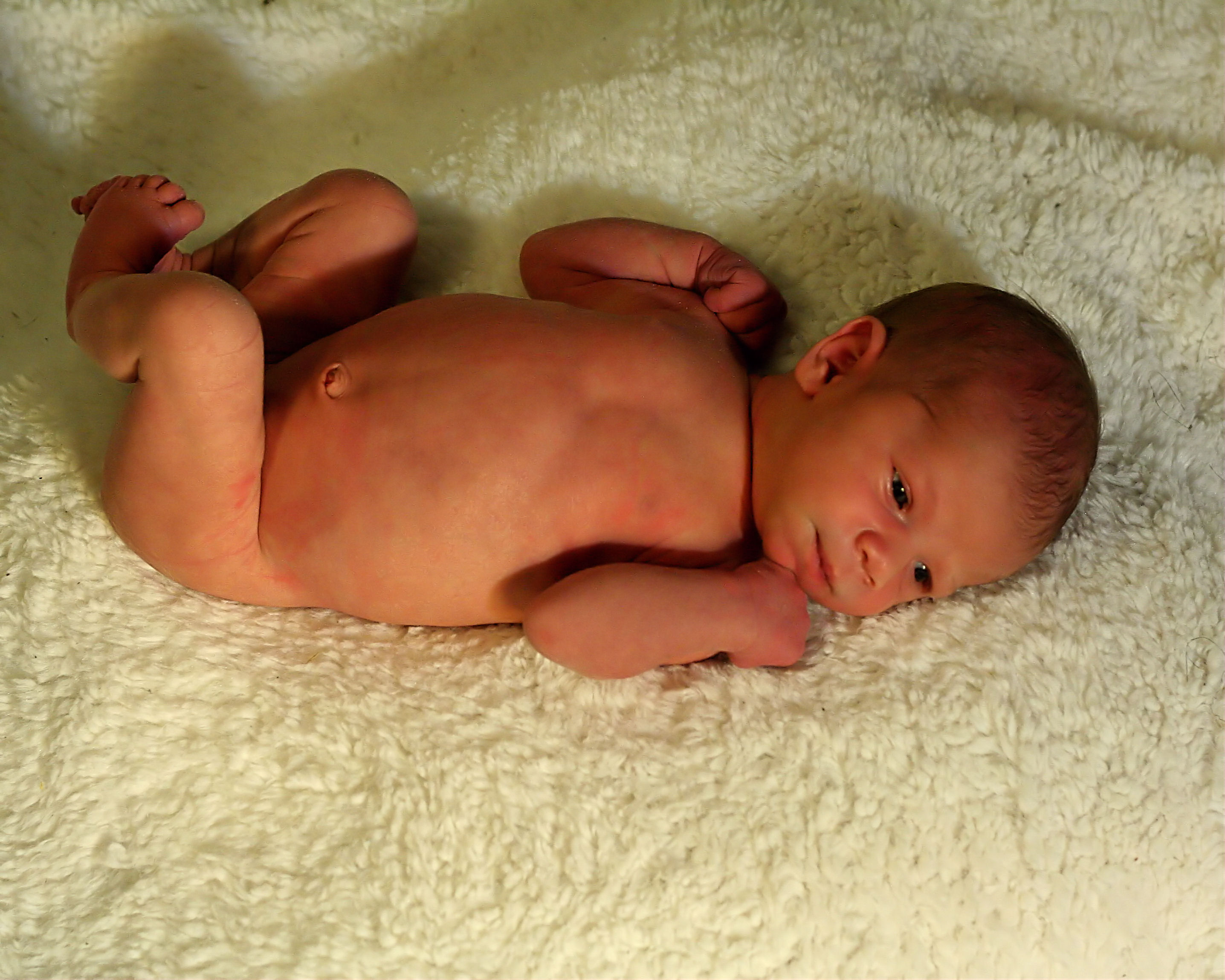
Newborn photo (c) Sincerely Yours Photography

Alaina newborn photo (c) Sincerely Yours Photography

    • The scrunchy feel of a newborn’s body.
    • The little mewing squeaks and sighs
    • How she is comforted by my voice and turns to me with a smacky, nursie face…
    • The soft, soft skin
    • The soft, soft hair
    • The fuzzy ears and arms
    • The little legs that pull up into reflexive, fetal position.
    • The utter, utter, MARVEL that I grew her and that she’s here. That she came from me. That sense of magic and wonder and disbelief when I look over and see her lying next to me—how did YOU get here?!
    • The miraculous transition from belly to baby. From pregnant woman to motherbaby unit? How does it happen? It is indescribably awesome.
  • The sleeping profile
  • The scrunchy face
  • The “wheeling” half coordinated movements of arms and legs—sort of “swimming” in air.
  • The peace of snuggling her against my chest and neck.
  • The tiny, skinny feet.
  • Putting my hand on her back and feeling her breathe, just like in utero

I was still scared she was going to die until the moment I held her.
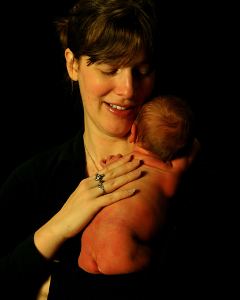
Molly & Alaina newborn photo (c) Sincerely Yours Photography


Help Choices in Childbirth Win a Grant!

I’ve posted several times before about one of my top favorite handouts for birth classes and birth education booths—Choices in Childbirth’s booklet, Guide to a Healthy BirthNow, Choices in Childbirth is trying to win a $5000 grant through FAM (the Foundation for the Advancement of Midwifery) and would really appreciate your vote. Here is the information:

Help Choices in Childbirth win $5k! Vote Today! Tell your friends!

 Vote for CIC to win the $5,000 Floradix Fan Favorite Award from FAM, and you can help to expand our educational programs that have a direct, and positive impact on women’s pregnancy and birth experiences.

In her words…

Thank you from the bottom of my heart for your work and the ongoing work of Choices in Childbirth. Your Guide has singularly been the best and most comprehensive resource I have been given to date. Two months ago I decided to switch my care over to “Mother-Friendly” facilities and practitioners. Finding alternatives to traditional practices proved to be one of the most difficult and stressful projects in my pregnancy. I was give your Guide last week and within 2 days I had set up meetings with a pre-natal chiropractor, birth center, pediatrician, and midwife!

– Joey Anna Young

. . . . . . . . . . . . . . . . . . . . . . . . . . . . . . . . . . . . . . . . . . . . . . . . . . . . . . . . . 

The Details:

As one of the finalists for a grant proposal we submitted to FAM (the Foundation for the Advancement of Midwifery), CIC is eligible to compete for an additional $5,000 Fan Favorite Award furnished by Floradix. Your vote will help us to win crucial dollars that support our educational resources for women: the online Mother-Friendly Provider Network and the printed Guide to a Healthy Birth!

Here’s how you can help:

1. VOTE for us! Use this link (www.choicesinchildbirth.org/vote) to complete the survey and choose CHOICES IN CHILDBIRTH when you get to the selection page! (you have to click through a few pages first with a few words from the generous sponsors of this award, but hang in there – we appreciate your vote!)

2. SHARE your status! Copy this text, and set it as your status on Facebook, G-chat and Instant Messenger:

Please vote for an organization I support, Choices in Childbirth, to help them win a $5k award to fund their work to educate and support women in their maternity care options:  www.choicesinchildbirth.org/vote 

3. FORWARD this email!

4. TELL US YOUR STORY! We would love to hear your story of what CIC means to you.

Please tell us more! We’d love to be able to show what our work means to our supporters.

Email info@choicesinchildbirth.org with your story!

. . . . . . . . . . . . . . . . . . . . . . . . . . . . . . . . . . . . . . . . . . . . . . . . . . . . . . . . .

Our Proposal

CIC is eligible for this fan favorite award because the project we submitted to the Foundation for the Advancement of Midwifery has made it to the final round of the 2011 grant cycle! Below is a synopsis of our proposal:

Choices in Childbirth’s education and outreach programs are creating a national movement to change the way women and families think about birth. We are not satisfied with speaking to the choir – we want everyone to know their rights and options in birth! CIC has created two educational programs, the Guide to a Healthy Birth and the online Mother-Friendly Provider Network, that will significantly impact maternity care in this country by bringing the conversation about birth into mainstream dialogue in an accessible, evidence based way. The Sponsor a Midwife campaign is a creative marketing and outreach plan that will showcase midwifery within these programs by providing 100 free memberships to Mother-Friendly midwives in the Provider Network and distributing at least 5,000 copies of the Guide in each of 5 pilot cities. Together, these educational programs and the outreach campaign will provide more families with information about their options in maternity care, promote access to midwifery care, provide valuable advertising opportunities for midwives, and help us to create a sustainable model for providing these resources in additional communities across the country.

Book Review: Arms Wide Open: A Midwife’s Journey

Book Review: Arms Wide Open: A Midwife’s Journey
By Patricia Harman
Beacon Press, 2011
ISBN: 978-0807001387
324 pages, paperback, $16.47 (Amazon)
http://www.beacon.org

Reviewed by Molly Remer, MSW, ICCE, CCCE
https://talkbirth.wordpress.com

I very much enjoyed Patricia Harman’s first book, The Blue Cotton Gown, and was delighted to learn about her new memoir, Arms Wide Open which is, in a sense, both a prequel and sequel to her first memoir.  The first half of Arms Wide Open chronicles Patsy’s experiences with homesteading and communal living as a young hippie mother in the 1970’s. It also explores her thoughts and experiences with peace activism and her passion for an eco-friendly life. During this time, she attends her first birth and dives into her midwifery journey and eventually becomes a CNM practicing with her hippie-farmer-turned-OB/GYN husband in West Virginia. Her experiences with their years in a joint women’s health practice are described in The Blue Cotton Gown. Readers who, like me, wondered what happened where The Blue Cotton Gown left off, can find out in the second half of Arms Wide Open, which is a narrative of Patsy’s ongoing work with women through 2009 and includes her emotional painful moments in her marriage, as her husband struggles with fears of another lawsuit as well as with chronic pelvic pain patients who abuse his trust (chronic pelvic pain is a specialty of their practice).

I did feel as if there was a large chunk of story missing as the book somewhat abruptly skips from 1978 to 2008. We miss learning about any of Patsy’s experiences in nurse-midwifery school, nor do we learn much about her practice when she was a CNM attending births. The book transitions from her years as a self-taught midwife considering going to school to become a CNM, straight to her present-day years as a CNM in a private women’s health practice.

Harman’s writing style is lyrical and engaging as well as candid. The book is based on personal journals and reading it feels like eavesdropping on someone’s very private thoughts and feelings. The book is much more of a look at a woman’s feelings about her life, than it is a “manifesto” about birth or about the practice of midwifery. In this manner, I feel like you receive a much more complete picture of a midwife’s life and journey, rather than reading a sequence of birth stories. Patsy has a lot of life in addition to birth. While definitely not a “feel good” book, Arms Wide Open is a deeply touching and very honest exploration of one woman’s personal journey in life, love, motherhood, and midwifery.

Disclosure: I received a complimentary copy of this book for review purposes.