Archives

Nursing Mama, Magic Mama

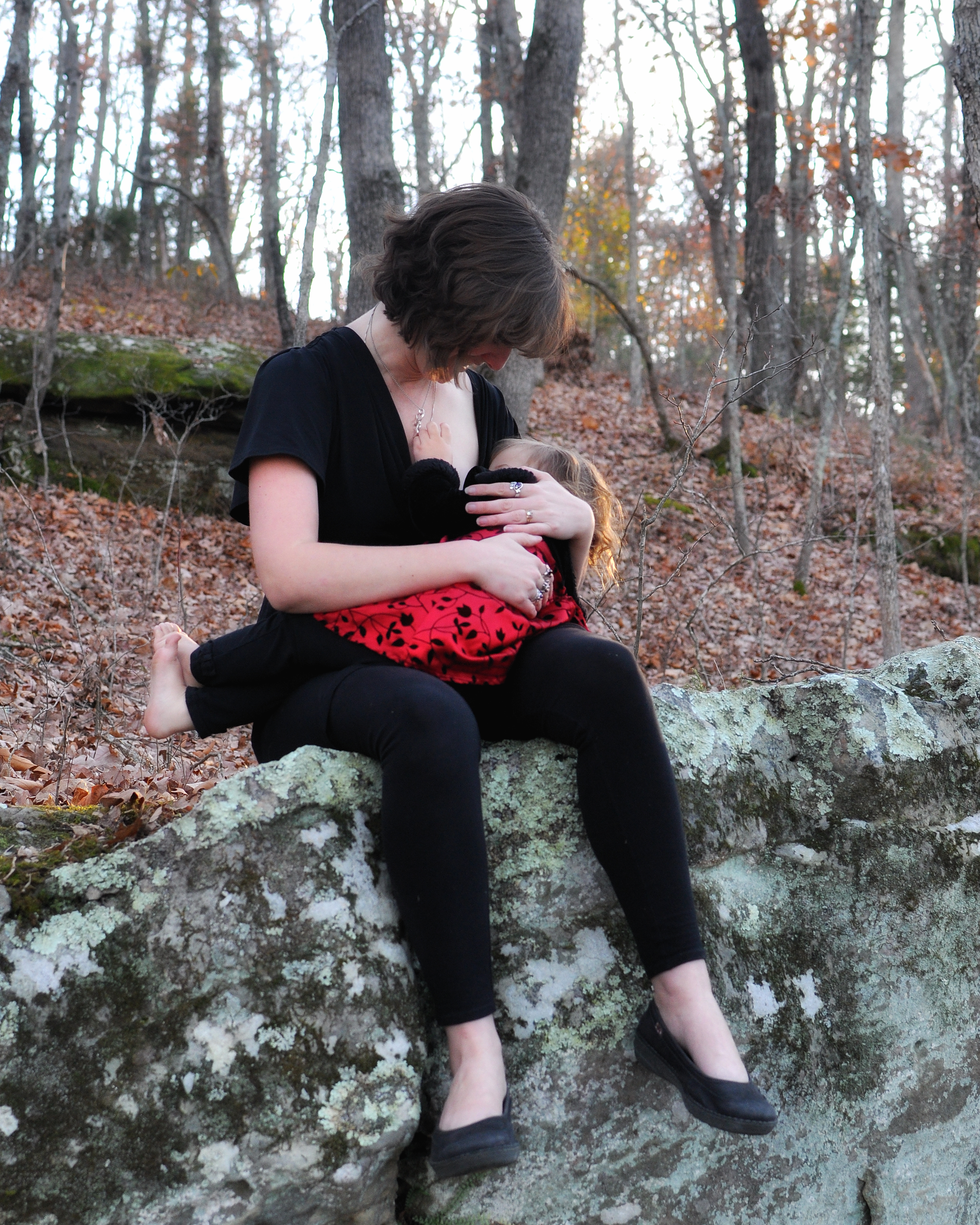
January 2014 041Magic mama. She who transforms body and blood into milk. Into life. Into the heartsong of another. Maternal sacrament. Shared freely. Flowing sweetly. Uniting. This thoroughly embodied stuff of motherhood. This physical commitment. This body-based vow to our young. She holds her baby. And she holds the world.

Mammal mama. Liquid love. Cellular vow. Unbreakable, biological web of life and loving.

She’s just feeding her baby. Is she? Or is she healing the planet at the very same time?

Milky smile, fluttering eyes, smooth cheeks, soft hair. Snuggle up, dear one. Draw close. Nestle feet to thighs, head to elbow. And know that you are encircled by something so powerful that it has carried the entire human race across continents and through time for thousands upon thousands of years on its river of milky, white devotion.

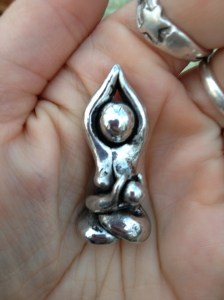
This new pendant is one of the designs released for the launch of Brigid’s Grove, my collaborative project with my husband. We’re hosting giveaways on our website throughout the month of February to correspond with our launch and one of these pendants is currently being offered as a giveaway! We’ve also got a discount code, a free digital Ritual Recipe Kit, and more to check out on the Brigid’s Grove website and Facebook page.

book

Tuesday Tidbits: Breastfeeding and Ecofeminism

“Women united in close circles can awaken the wisdom in each other’s hearts.” ~The 13 Indigenous Grandmothers (via The Girl God)

I agreed to serve as a faculty mentor for a Breastfeeding and Ecofeminism independent study class that started yesterday. Since my husband and I also recently finished our Breastfeeding Mama in pewter, I felt inspired to create this little message…

b3wkwFor the class, my student is reading three books and working on several projects (one of which will be a series of blog posts, so watch for those!). We chose these books:

The Politics of Breastfeeding: When Breasts are Bad for Business by Gabrielle Palmer

Milk, Money, and Madness: The Culture and Politics of Breastfeeding by Naomi Baumslag M.D. and Dia Michels

Reweaving the World: The Emergence of Ecofeminism by Irene Diamond

This is going to be so much fun! How lucky I am to get to do stuff like this! This is the course description we worked on together:

This course explores the cultural, social, and political environment surrounding breastfeeding in the United States through the lens of eco-feminism. We will examine global cultural attitudes compared to the United States, scientific research of the benefits of breast milk, marketing and advertising of artificial milk, and the sociocultural context surrounding infant feeding as a public health issue. This course emphasizes critical and varied perspectives on breast and bottle feeding; as well as the ways in which gender, race, and socioeconomic class affect women’s choices in breastfeeding. The birth-breastfeeding continuum will also be explored. We will study the aspects of ecology, spirituality, and feminism as well as many other perspectives supporting this holistic human experience for the well-being of the planet.

I wrote up some nifty course objectives as well:

  1. Contextualize breastfeeding as a public health issue both within the sociocultural environment in the United States and cross-culturally.
  2. Describe why breastfeeding is an ecofeminist issue—make connections between human treatment of the “world body” and the female body.
  3. Articulate the systemic and structural context in which breastfeeding takes place in the US. (Describe the political and economic influences on infant feeding in the US and frame the issue within a broad cultural context extending beyond the concept of personal choice.)
  4. Address the charge of “essentialism” with regard to breastfeeding in the context of feminist theory.

The student found me because of my past article on this subject…

Breastfeeding is a feminist issue and a fundamental women’s issue. And, it is an issue deeply embedded in a sociocultural context. Attitudes towards breastfeeding are intimately entwined with attitudes toward women, women’s bodies, and who has “ownership” of them. Patriarchy chafes at a woman having the audacity to feed her child with her own body, under her own authority, and without the need for any other. Feminism sometimes chafes at the “control” over the woman’s body exerted by the breastfeeding infant.

Part of the root core of patriarchy is a rejection of the female and of women’s bodies as abnormal OR as enticing or sinful or messy, hormonal, complicated, confusing…. Authentic feminism need not be about denying biological differences between women and men, but instead about defining both as profoundly worthy and capable and of never denying an opportunity to anyone for a sex-based reason. Feminism can be about creating a culture that values what is female as well as what is male, not a culture that tries to erase or hide “messy” evidence of femaleness.

However, precisely because of the patriarchal association of the female with the earthy and the physical, feminists have perhaps wanted to distance themselves from breastfeeding. This intensely embodied biologically mandated physical experience so clearly represents a fundamental difference between men and women that it appears to bolster biological reductionism. Yet in so doing feminism then colludes with patriarchy and itself becomes a tool of the patriarchy in the repression and silencing of women and their leaky ever-changing, endlessly cycling bodies: these bodies that change blood into food and bleed without dying and provide safe passage for new souls upon the earth. Sometimes the issue of a woman’s right not to breastfeed is framed as a feminist “choice.” This is a myth, made in the context of a society that places little value on women, children, and caregiving. It is society that needs to change. Not women and not babies.

via Breastfeeding as an Ecofeminist Issue | Talk Birth.

Last week I read a relevant article from Amy Glenn…

For the first time in human history, the female breast is nearly completely separated from its primary mammalian function. Rather than supporting the healthy development of our limbic lives, breasts are pornographically used to market a multitude of products. Why is the breast’s primary lactating function deemed strangely controversial today?

Despite the efforts of breastfeeding advocates, consider that mainstream news publications and talk shows feature mothers who nurse toddlers as cultural oddities…Our own society’s rupture from the wisdom of ancient ways is the true cultural oddity.

I applaud the efforts of public health advocates seeking to reconnect to the ancient wisdom of our female ancestors. Friends and family need to draw a fierce circle of protection and non-interference around the nursing mother-child dyad…

If it were up to breastfeeding advocates, federal legislation mandating paid maternity leave would exist everywhere. For nothing pressures a new mother to give up nursing more than struggling to meet the financial needs of her family. While teaching in Colombia, my employer was obligated legally to give me three months of paid maternity leave. Yet, if I had been working in the US at the time, it would have been up to my employer to determine the status of my maternity leave. The US stands alone as the only developed country without legally mandated paid maternity leave. This directly connects to our woeful breastfeeding rates…

Glenn read Palmer’s Politics book and it changed her perspectives on the systemic influences surrounding breastfeeding women:

In particular, Palmer’s connections between poverty and breastfeeding moved me. Over the last century, the purposefully deceptive marketing ploys of infant-formula makers have left tragedy in their destructive wake. For example, when promoting artificial milk in the developing world, companies dressed their representatives as medical professionals who claimed that their products were better than breast milk. Poverty stricken and largely uneducated mothers were persuaded to spend a large percentage of their household’s monthly income on the artificial milk powder that was considered best. To prolong its use, they often diluted the powder further reducing any nutritional value. In addition, these mothers lived in areas with poor sanitation and unsafe drinking water. Palmer describes how hundreds of thousands of babies died. At times, I had to put the book down as angry tears washed through me.

Choosing to move beyond the painful disconnections of our culture, I do my best to support the breastfeeding mothers I meet. Our world must move beyond separating baby from mother, self from breath, and bodies from hearts.

via In praise of breast milk.

I also read with interest an interview between Jeanette McCulloch of BirthSwell and Paige Hall Smith, a speaker at the 2013 Breastfeeding and Feminism conference, which makes some additional points about the relationship between income and breastfeeding rates:

PHS: The connection between women’s status and breastfeeding leads to a number of interesting ideas. We know from other research that both education and income are positively associated with breastfeeding outcomes. More research on why this is the case would be useful, particularly given that higher income is also associated with women’s employment. We also learn in this study that in those states where women have greater control of reproductive choices, and those where they are more likely to vote, also have higher breastfeeding rates. Since none of these are indicators that are directly implicated in breastfeeding success, we have to conclude that something interesting is going on in the climate of these states that makes a difference for women.

It makes sense that women who have higher status have more ability to manage their own time and resources (such as adjusting break times at work, taking additional maternity leave, determining the flow and location of their work) which may lead to higher breastfeeding rates. They may also have more authority at home and at work, which translates into greater ability to actualize their own decisions. Breastfeeding, like the ability to control one’s fertility, can be seen as a form of reproductive autonomy.

The relationship between women’s status and breastfeeding remained even when we controlled for available state-level breastfeeding support, such as access to IBCLCs, peer support like La Leche League, and baby friendly hospitals. One possible interpretation for this is that the breastfeeding support measures we have in place are ones that provide more assistance to higher status women than they do to lower status women. We need to think critically how our measures are affecting different populations. In general we found that clinical indicators of breastfeeding support had more impact on breastfeeding than did policy measures. This could have been because currently there insufficient “trickle down” from policy to women’s lives.

via Does Breastfeeding Hold Women Back? | Breastfeeding and Feminism International Conference

On a related-to-breastfeeding note, but moving off the topic of breastfeeding and ecofeminism, Mark and I also have a brand new nursing mama pendant that will be unveiled at the launch of our new collaborative business on February 1st! We’ll have a series of product giveaways, a free digital kit, and a new discount coupon as well. I’m so excited!

Other related posts:

The ‘Of Course’ Response

World Breastfeeding Week post roundup

Taking it to the Body


Thesis Tidbits: Mary Christmas

Mary Goddess with child Paola Suarez sm

Mary and Child painting by blogging friend Paola Suarez

“…When I say painless, please understand, I don’t mean you will not feel anything. What you will feel is a lot of pressure; you will feel the might of creation move through you…”

– Giuditta Tornetta in Painless Childbirth

I am outsider to Catholicism and other branches of Christianity, but I see Mary as an aspect of the sacred feminine that weaves its way through a variety of religious traditions and practices. As a Unitarian Universalist myself, I believe there are many ways to touch the “chord of the sacred” within each of us and that we can find threads of commonality and expression in most religions. Since it is Christmas today, I wanted to share some intriguing excerpts from several different Mary-themed blog posts that touched me this week and that also relate to my dissertation topic of birth as a spiritual experience…

The first is from a birth blogging friend Kelli, who writes with love and tenderness about what the Christmas story can teach us about giving birth:

Another thing that Mary surely understood was that she was specially chosen to bring this new life into the world through the capabilities of her own body alongside that unconstrained power that placed him there in the first place. For birth is about releasing expectations and trusting that you are supported. It is knowing that just by the way your body was designed and grew this life, you are capable of bringing this life forward. In our modern world, what birth is all about hasn’t changed. It isn’t about dreading pain. It isn’t about wondering if “they” will let you do this or that. It isn’t about enduring it until it is over. It isn’t about being afraid and resigning to hope simply for a healthy baby. The child you carry is destined to impact the world. We may not know how, but we can know it is for certain. As the mother of this child, you matter. Mary is revered as holy by many of varying faiths. If giving birth is not sacred work, then what is? Birth, mamas, is about knowing. How this special and amazing child you carry comes into the world matters a great deal. How this child’s mother is revered before, during, and after the process of birth matters a great deal…

via How Can the Christmas Story Teach Us About Birth? – Confluence Mama.

Then, from a pagan blogger from whom I borrowed my post title today, this post about being pregnant with divine potential:

What could be more magical than conceiving, gestating, and giving birth to the embodiment of Christ consciousness?

What could be more magical than birthing the return of light into a darkened world?

What could be more magical than dissolving shame and restoring the brilliant shine to a woman’s life?

For all its shrillness and glitter, the Christmas season offers us images of Mary, big-bellied, pregnant with the Power of Being, however you might name it.

Allowing ourselves to deepen into those images might well dissolve the shame that so often obscures the light imbuing our bodies. Allowing ourselves to resonate with Mary might well unleash the life-celebrating energy already radiating from our bellies, our body’s core…

via Mary Christmas! Being Pregnant with God – PaganSquare.

And, of course, the breastfeeding activist in me thrilled to read this article about Pope Francis supporting public breastfeeding and this juicy, relevant snippet caught my eye about the image of the nursing mother—Mary—as historically symbolic of God’s love:

The cultural shift was so great that even Catholics soon came to regard the breast as an “inappropriate” image for churches. Instead, the sacrifice of the cross – the suffering Jesus – became the dominant motif of Christianity while the Nativity was sanitized into a Hallmark card.

“Ask anybody in the street what’s the primary Christian symbol and they would say the crucifixion,” said Margaret Miles, author of “A Complex Delight: The Secularization of the Breast, 1350-1750,” a book that traces the disappearance of the image of the breast-feeding Mary after the Renaissance.

“It was the takeover of the crucifixion as the major symbol of God’s love for humanity” that supplanted the breast-feeding icon, she said. And that was a decisive shift from the earliest days of Christianity when “the virgin’s nursing breast, the lactating virgin, was the primary symbol of God’s love for humanity…”

via Pope Francis backs public breastfeeding! And that makes him traditional… | Sacred and Profane.

On a related note, I also recently enjoyed seeing a picture on my Facebook feed of one of my birth goddess sculptures standing on shelf next to a Lego Pope and a lovely nativity set.  🙂

Merry (or Mary!) Christmas to you and may we all celebrate the birth of divine potential as we greet the dawning of a new year.

November 2013 041

Talk Books: Laughter & Tears: The Emotional Life of New Mothers

Laughter and Tears: The Emotional Life of New MothersBecause books are my first and longest-lasting love, I began my blogging career with a book blog. I eventually gave it up when I felt I no longer had time for it and turned my attention of other blog work. However, I occasionally mine the old blog for content here and I’ve realized that rather than doing traditional reviews, I really, really like doing my somewhat-new “talk books” posts on this blog. I’ve mentioned before that one of my reasons for blogging is simply to store information in one place that I want to remember or come back to later. If I’ve typed up everything I like from a book, I don’t really need to hang onto the book and the “essence” of many books (or at least what I got from them) is all compiled in one place. So, what follows is one of those mined posts (though at the end, I got caught up in the topic and went off into some related thoughts).

Laughter and Tears: The Emotional Life of New Mothers was written in 1997 by Lamaze co-founder Elisabeth Bing. I found myself with a dearth of postpartum resource books after giving birth to my first child and desperately hungered for them. I went on a dogged mission to locate them, finding them somewhat difficult to unearth, and eventually I think I read basically every book ever written on the postpartum period.  I started out enjoying Laughter and Tears, but found it less and less engaging as it went on. I think there is such a great need for books about postpartum out there—ideally, for women to read before their babies are born. I wish I would have had one already on my shelf when my first baby was born, instead of having to discover the niche later. However, part of why the book was not engaging by the time I actually read it was simply because it is geared toward women in the immediate postpartum (and also first time mothers primarily)—when I read it, I was no longer there and so my interest in the book waned fairly quickly. I also found a the heavy emphasis on “reclaiming your body” off-putting—there was even a comment like, “now that your baby is a robust two month old, you can begin to reclaim your body by reducing or eliminating feedings at night.” Excuse me? “Robust” TWO MONTH OLD? That is practically still a fetus as far as I’m concerned!

Several quotes I marked to share:

“Our society is profoundly ambivalent about children. On one hand, we praise family values, but on the other, we emphasize individual liberty and the rights of women to have as many freedoms as men. We encourage mothers to desire to have it all, but do not guarantee maternity leave, health insurance, or day care. We use babies to sell products, from laundry detergent to automobile tires, but we don’t want a mother with a toddler in the seat next to us on an airplane. We question the legality of abortion but threaten to withdraw welfare benefits from disadvantaged children. We celebrate children and praise parents for having them, but we do not provide structures or systems to help nurture them.”

And, one I still find extremely relevant:

“The degree of pleasure you take in your mothering is not the same thing as loving the baby or being an effective parent. Keep in mind there is a distinction between mother love and maternal satisfaction. You may love your baby very much but be dissatisfied with your life circumstances.”

There was also a quote that I find a new relevance in today now that our household structure has changed to both parents being home nearly full-time. I’ve been confronted over and over again in the last several months with how many “keys” to the household and family life that I’ve held over my ten years as the primary parent in the home and that, at some level, there is a power in being the one who knows (even if it just where the mustard is, for example) and that switching over to sharing those household details doesn’t actually come easily for either parent, no matter how we’ve said we wish to share them. I’m also noticing how very, very many details of the somewhat invisible work of parenting are still very much my responsibility—such as planning birthday parties or taking kids to playgroup or making dentist appointments or making sure Christmas presents are purchased and equal—and apparently, I do not know how to let those go or start transferring some of the responsibility without feeling put-upon, annoyed, demanding or like, I’ll just do it myself, since I’m the expert anyway. And, as this quote below references, I also have enjoyed being the primary emotional parent as well and still hold on to that terrain—essentially, what I want to share is the cooking and towel-folding responsibilities, while still getting to be the one run to for security and snuggles.

“Men are challenged by their attempts to be more involved and more nuturant than the ‘traditional’ father. Women are challenged not only by developing an identity in the world outside the home, but also by opening up and truly incorporating men into the intimate life of the family. You may have a concept of what a more involved father should be like, but if you are honest with yourself, is your image truly about sharing the love and nurturance? Or is it actually about wanting your partner to help with domestic chores? Are you really imagining a co-parent, or are you thinking of something more like a regular baby-sitter and handyman?”

Whatever it’s shortcomings, this book again reminded me of how vital postpartum support is for families in our society and reminded me of why I originally wanted to be a postpartum doula and how called I felt to that work. In 2004, I trained with DONA as a postpartum doula and felt 100% certain that I had found where I belonged (indeed, I still get Christmas cards and updates from one of my first postpartum doula clients—I was good at the work and they liked me a lot!). I stopped working as a postpartum doula in 2006 though. My biggest reason for discontinuing postpartum work was because at this point in my life I couldn’t reconcile taking care of someone else’s family while my own needed me so much. There I would be washing my client’s dishes and thinking that I have a huge pile unwashed at my own house (that my husband then did at night when he got home) and/or folding their laundry and thinking of the two full baskets at my own house in my own living room as yet not put away. Also, I recognized that I felt more comfortable with and am temperamentally more suited for educational/”academic” types of support  rather than the “intimate” hands-on support that postpartum or labor support requires. For a time after quitting, I really felt embarrassed about it because I was SO sure it was my “calling” and because I spent so much money on training, books, supplies, certification packet, etc. (Luckily, I totaled it up when I was preparing to quit and I made enough money from my clients to at least more than pay myself back for the training!)

I feel fervently that women/families need postpartum doula support (sometimes desperately) and I felt depressed to realize that I wasn’t the person for the role after all. I didn’t understand at the time, but I quickly figured out why the majority of the women in the postpartum doula training with me were middle-aged. They had the energy to “mother-the-mother” and “nurture the family” at that season in their lives, whereas I am still in a season in which I need to nurture my own family before I have the energy to spare to nurture someone else’s. There were also a handful of women in the training, like me, who had very young children. There were no in-betweeners, like where I am right now. I’ve begun to notice this in birth activism work (and to a lesser, but still noticeable extent, in breastfeeding support work) as well—passionate mothers-of-infants or toddlers and gray-haired sage-women are the ones who come together for the bulk of the birth activist workload in various organizations.

I’m also reminded again, however, of why breastfeeding support holds such a lasting pull for me and that is because postpartum is where it is at, that is where we are so very, very deeply needed as support people. Birth is amazing and exhilarating and women most definitely need us there too, but in the nitty-gritty, day-to-day, unglamorous, nipples and breast infections, teething, crying, dirty-haired, exhausted, wrung-out maternal web of daily being is a very tender and delicate beauty that becomes visible only when we’re willing to spend months and months, or even years, serving as a listening ear, a medication lookup, and someone to trust with both her laughter and her tears.

December 2013 018Additional resource: Non-Advice Books for Mothers

Tuesday Tidbits: Breastfeeding Research

August 2013 050

Some new (but non-breastfeeding) sculptures this week! 🙂

Before I begin today’s post, I feel like acknowledging that I find it puzzling that we even need to do research on breastfeeding or that it is considered “news” OR that it is something for which the advantages need to be “debunked” OR “proven.” It feels similar to me to seeing journal articles “revealing” that your own blood has special nutrients in it that help your body to function or announcing that having your own blood in your body helps you be healthier and live longer. Or, likewise, if we were to see articles “proving” that it is good for your cells if you drink water or that a special component has been added to a new soda to make it as “close to water as possible.” Some things just don’t really need to be news. And, I’ve observed for over eight years that new, often negative research about breastfeeding often “coincidentally” surfaces right around World Breastfeeding Week, and usually some new campaign also surfaces with a feel-good, but toothless message about “supporting all mothers,” and perhaps some “shocking” reveal article about celebrity breastfeeding will also pop up.

That said, unsurprisingly, some breastfeeding research and general breastfeeding articles have caught my eye recently. The first with regard to weaning and depression:

But the frequency with which women experience depressive episodes when weaning their babies is far less understood. Researchers “The intersection between lactation and mood is important, and it is extremely understudied,” said Dr. Samantha Meltzer-Brody, director of the perinatal psychiatry program at the UNC Center for Women’s Mood Disorders. “There are definitely people who report mood symptoms associated with lactation.”

via Weaning And Depression Linked In Many Women.

The second is one that will actually affect the way I practice when helping breastfeeding women and it is about the relationship that may exist between mothers having trouble breastfeeding and early signs of diabetes.

New research has revealed the hormone insulin plays an important part in the production of breast milk – and mothers who are struggling with feeding may have low levels of insulin.

For a long time, insulin was not thought to play a direct role in regulating the milk-making cells of the human breast.

But scientists now know that the mammary gland in breast becomes sensitive to insulin during lactation.

via Why mothers struggling to breastfeed could be showing early signs of diabetes | Mail Online.

And, not new or surprising or current, but unfortunately of continued relevance is the fact that IV fluids during labor artificially inflate baby’s birthweight:

But when babies lose more than 7% of birth weight during these early days, does this automatically mean they are not getting enough milk? No, according to a recent study.

A greater weight loss may be completely unrelated to breastfeeding and due instead to excess IV fluids mothers receive within the final 2 hours before delivery. According to this study, these excess IV fluids inflate babies’ birth weight in utero and act as a diuretic after birth. Babies whose mothers received more IV fluids before birth urinated more during their first 24 hours and as a result lost more weight. Number of wet diapers during the first 24 hours predicted infant weight loss. This was true whether the babies were born vaginally or by c-section. Another study published earlier this year had similar findings.

This weight loss has nothing whatsoever to do with breastfeeding and milk intake. In fact, the authors suggest that if clinicians want to use weight loss as a gauge of milk intake, they calculate baby’s weight loss not from birth weight, but from their weight at 24 hours. According to their findings, this could neutralize the effect of the mother’s IV fluids on newborn weight loss.

via Breastfeeding Answers Made Simple – Breastfeeding Reporter – Newborn Weight Loss and IV Fluids in Labor.

They way we treat women during birth matters for her breastfeeding relationship and the health of her baby! Birth interventions are not benign.

Also, not benign is the way this article from MSNBC chose to describe some research about breastfeeding women having a lower risk of Alzheimer’s disease (if researchers were more careful to watch their language, ala Diane Wiessinger, and remember that breastfeeding is the biologic norm, the article would actually be titled, “formula feeding increases risk of Alzheimer’s”):

Amazing news for moms who breast-fed: All that hassle was worth it — not just for your baby (who will likely have a higher IQ), but for you as well. A new Cambridge University study suggests that women who breast-feed can cut their risk of Alzheimer’s disease by up to two-thirds and calls the link “highly significant.” Those overly precious attachment parents might have the last laugh yet, as the benefits seemed to increase with longer periods of breast-feeding: Women who breast-fed for a year were found to have about a 20 percent lower risk of developing the disease as someone who had breast-fed for only four months. [Source]

via Breastfeeding cuts Alzheimer’s risk by two-thirds, study says.

Note that this “article” was published during World Breastfeeding Week and inserts little digs about being “overly precious” and a “hassle.” Words matter. They seep into our consciousness and affect our realities and our understandings of ourselves and our babies.

Not coincidentally, we also have to keep “proving” over and over again what many parents often feel in their hearts: that babies need to be with their parents, that they need to be held, and that breastfeeding is good for them.

“Ill-advised practices and beliefs have become commonplace in our culture, such as the use of infant formula, the isolation of infants in their own rooms or the belief that responding too quickly to a fussing baby will ‘spoil’ it,” Narvaez says.

This new research links certain early, nurturing parenting practices — the kind common in foraging hunter-gatherer societies — to specific, healthy emotional outcomes in adulthood, and has many experts rethinking some of our modern, cultural child-rearing “norms.”

“Breast-feeding infants, responsiveness to crying, almost constant touch and having multiple adult caregivers are some of the nurturing ancestral parenting practices that are shown to positively impact the developing brain, which not only shapes personality, but also helps physical health and moral development,” says Narvaez.

Studies show that responding to a baby’s needs (not letting a baby “cry it out”) has been shown to influence the development of conscience; positive touch affects stress reactivity, impulse control and empathy; free play in nature influences social capacities and aggression; and a set of supportive caregivers (beyond the mother alone) predicts IQ and ego resilience as well as empathy.

via Modern parenting may hinder brain development, research shows // News // Research at Notre Dame // University of Notre Dame.

Is anyone else getting tired of these kind of impressive “reveals”? I find it discouraging and frustrating, but maybe I’m just in a bad mood today!

I was less crabby to read this pleasant little story about Selma Blair and her breastfeeding toddler:

Arthur, who just celebrated his second birthday on July 25, seemed to enjoy the tasty snack, smiling and chatting gleefully with his mother and passers-by before the two headed off the train.

Even in more progressive parts of America breastfeeding is still seen as taboo, despite countless studies affirming the list of health benefits for both mothers and their children…

via Selma Blair breastfeeds her son Arthur, 2, during afternoon shopping trip | Mail Online.

And, from the same publication (not always widely renowned as a respectable source!), we see this interesting article about portraits of breastfeeding mothers from the 1800’s along with a little social commentary:

The seemingly normal image of the nursing mother in mid-1800s America poses a stark contrast against the media storm surrounding California mother-of-two Jamie Lynne Grumet last year, who posed on the cover of TIME breastfeeding her three-and-half-year-old son.

via Bizarre pictures reveal the unlikely trend for photographs of breastfeeding mothers in Victorian-era America | Mail Online.

And, interestingly, something else women also feel, but don’t necessarily have “back up” for, is the understanding that it isn’t breastmilk alone that has these effects for women, it is the act of breastfeeding itself, something that is not always differentiated in breastmilk research:

1) Find out what they mean when they say “breastfeeding.” This question by itself can often clear up misperceptions. In many cases, when critics say “breastfeeding,” what they really mean is “breast milk” independent of its delivery method; they do not mean the entire package that is breastfeeding. Breast milk obviously shines when compared to any of its substitutes. But when the independent effects of the milk are teased away from the act of breastfeeding, the differences seem smaller. And that is precisely the point—it’s the milk and the method of delivery that make the difference for both mother and baby.

via Answering the Critics: Breastmilk Separate of Breastfeeding Does Not Produce the Same Results | Kindred Community.

Along these same lines, but from a personal perspective instead, I was pleased, but not particularly surprised to read this mother’s story about breastfeeding her adopted son:

I am surprised by how not different breastfeeding our son feels compared to breastfeeding our older, biological children.

But because he’s adopted, breastfeeding felt even more important. I wanted him to feel that bond — that closeness and skin-to-skin, to help him feel comforted. Not being pregnant, and not knowing what he felt like in the womb beforehand … I wanted that physical connection with him afterward. And it’s just been really easy so far, although I don’t love the supplemental nursing system [laughs]. There have been moments of trying to get him to latch where, I’m just like, ‘Ok! I’m done!’

But I feel so bonded and attached to him, and I think a huge part of that has been the breastfeeding.

via The Breastfeeding Chronicles: Nursing My Adopted Child.

We also see questionable research results that seem to completely overlook the systemic context in which women make their feeding “choices”:

Brown found extraverted, conscientious and emotionally stable mothers were more likely to try breast-feeding. But being agreeable or open to new experiences made no difference, according to the findings published Tuesday (Aug. 6) in the Journal of Advanced Nursing.

Many try, but many quit

More than 80 percent of the women in the study tried to breast-feed, but less than half who tried were still breast-feeding six months later. And women who switched from breast to bottle tended to switch quickly. About 73 percent of the women who stopped breast-feeding did so within two weeks after giving birth.

Women who were conscientious — for example, detailed-oriented and punctual — were likely to start, but also likely to stop breast-feeding.

Mothers who kept breast-feeding during the first six months were more extroverted and less anxious than mothers who always bottle-fed or switched to the bottle. The effect was particularly strong within the first six weeks after birth. [Blossoming Body: 8 Odd Changes That Happen During Pregnancy]

via Mom’s Personality Key to Whether Baby Get the Breast or Bottle | LiveScience.

It is a huge mistake to reduce breastfeeding decisions to a “personal choice,” when it is a public health issue made in the context of a society that treats formula like the norm (as with the breastfeeding reduces risk, rather than formula increases risk research, as referenced above), pays excessive attention to celebrity breastfeeding experiences or public breastfeeding encounters, makes snide remarks under the guise of presenting new, duh-based research, that tolerates disparities in survival rates of black babies, and interferes with the birth process to the extent that we do not even have an accurate starting birth weight to gauge the “success” of breastfeeding by.

August 2013 017

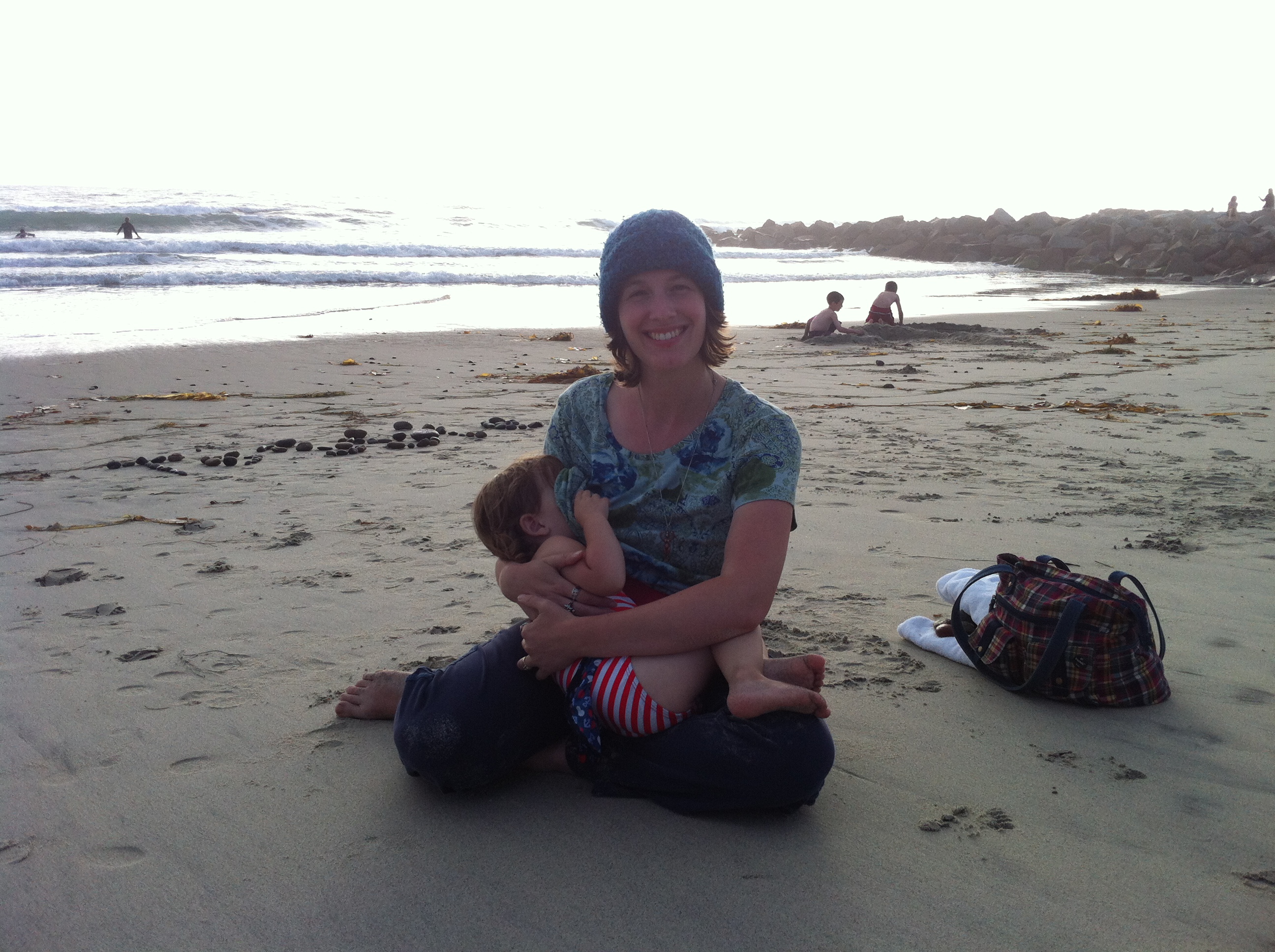
Nursing toddlers at the creek last week. We’re talking about something else, but our faces look like we could be saying: “OMG! Can you *believe* that these things are even issues?!”
Totally.

Wednesday Tidbits: World Breastfeeding Week!

wbw2

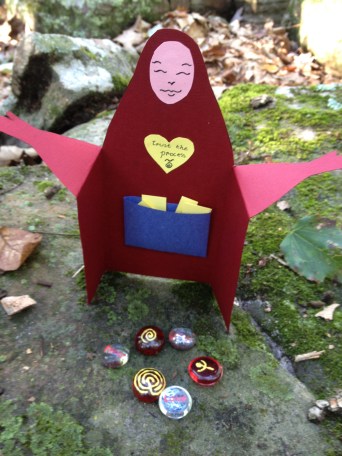
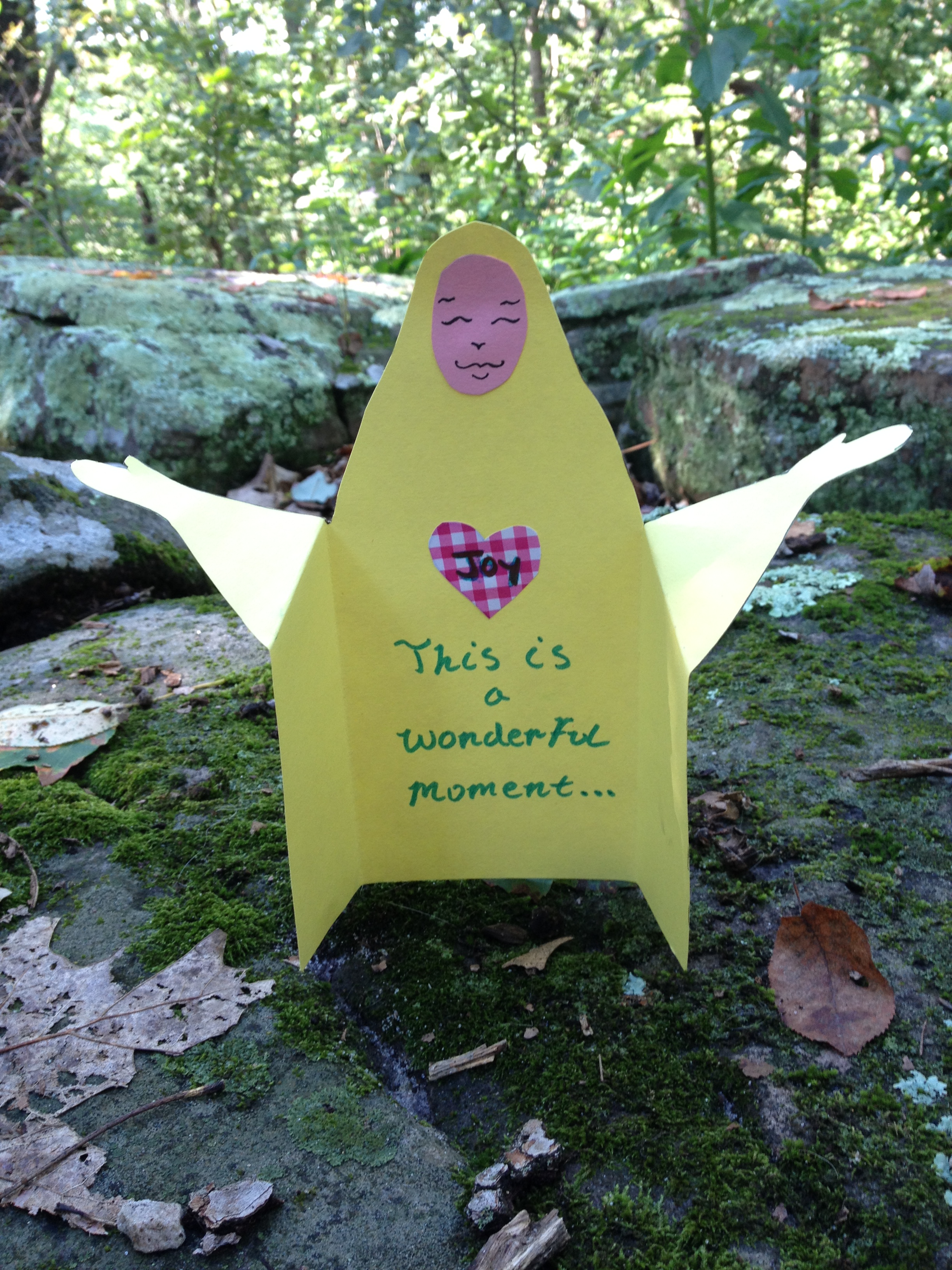
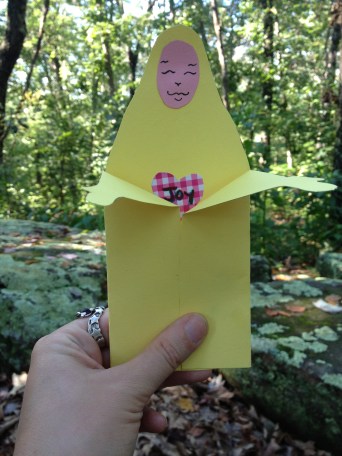
Today is the last day of World Breastfeeding Week and I fully intended to create a link-full Tuesday Tidbits post about this yesterday. However, I was busy helping actual breastfeeding mothers at my monthly LLL meeting and then came home and worked on my handout and project preparations for our second annual MamaFest event this Saturday. I then had a faculty meeting while Mark took Lann to tae kwon do and went grocery shopping with the other kids and by the time I had a few minutes to spare again, it was 11:00 at night and I figured I might as well forgo Tuesday Tidbitting and just watch Teen Wolf instead! 😉 For MamaFest, I’ve been getting together handouts, a trivia game, and pins for prizes for my La Leche League booth, birth art supplies and display items and birth education handouts for the Rolla Birth Network/Talk Birth/birth art booth, and miscarriage/stillbirth handouts for the Rainbow Group loss support table. I’ve toyed with various projects for my birth art booth and finally came up with something that feels perfect—birth or motherhood affirmation/blessing cards!

August 2013 042August 2013 046

August 2013 052

I got better at them the more I made. This one has a pocket with other little affirmation cards in it. I also started to experiment with painting on little glass “stones” to go in the pocket too. I need glass paint markers really though and I quickly ordered some, but they won’t make it in time for MamaFest.

For ideas for affirmations for them, I’m bringing along several books, including:

25 Ways to Joy & Inner Peace for Mothers

25 Ways to Awaken Your Birth Power

World Breastfeeding Week often seems like an occasion during which the media perceives non-breastfeeding mothers as being “discriminated” against somehow, and some women seem to take the occasion personally—like its very existence is a personal criticism. This article about the “I Support You” initiative is good in theory, but I sense in it the suggestion that WBW is specifically trying to make non-breastfeeding mothers “feel bad” and I did not appreciate the loads and loads of comments on the article that reference “La Leche Nazis”—particularly because said “Nazis” apparently visit mothers in the hospital to critique their mothering and I seriously doubt that any of the experiences shared in the comments were actually with LLL Leaders (who I have never been known to go to a hospital room uninvited and try to make mothers breastfeed. That isn’t part of our job at all. The commenters were probably dealing with whichever nurse is assigned to lactation, trained or otherwise).

I plan for my message to say: “To all those mothers who’ve learned the difference between the mother you think you will be and the one you actually are — I Support You.”

via I Support You: The Conversation We Should Be Having About Breastfeeding And Formula.

A related article that also has some great insights and thoughtful content (but for which, again, I feel breastfeeding advocacy is misconstrued):

Three billion things can go wrong when you breastfeed. But even with a bad latch, tongue tie, thrush, a clogged duct, and a crazy oversupply, I still think that nursing this little boy is the most amazing magic that I’ve ever felt in my life. I am the only thing that is keeping my child alive right now. You’re damn right that’s a superpower. When my breasts are engorged and I’m in pain, or when I swoop in to a room and soothe my screaming baby with my body, I want to shout it from the rafters, just like all of you did. This time, my breasts make milk. That is my superpower. And yet I have seen that breastfeeding moms get tested too: the nasty stares, the mean comments, the endless questioning that makes you doubt yourself: “Are you sure he’s getting enough? He’d sleep longer if he took a bottle. He’ll never be independent if he’s attached to you all the time.” The Mommy Wars have fueled the embers of fear and failure on both ends of the feeding spectrum. The simple act of feeding your child now comes with having to defend your choices.

via Milk Drunk | Kim Simon.

The underlying message of these articles, however, as well as that of World Breastfeeding Week itself, is really about the value of community support for mothers. The whole “village” and “tribe” concept. When I hear mothers describing attempts to breastfeed, I hear mothers with broken hearts as well as many stories involving broken circles of support:

I am a systems thinker and always hold in mind that breastfeeding, like all aspects of women’s lives, occurs in a context, a context that involves a variety of “circles of support” or lack thereof. Women don’t “fail” at breastfeeding because of personal flaws, society fails breastfeeding women and their babies every day through things like minimal maternity leave, no pumping rooms in workplaces, formula advertising and “gifts” in hospitals, formula company sponsorship of research and materials for doctors, the sexualization of breasts and objectification of women’s bodies, and so on and so forth. According to Milk, Money, and Madness (1995), “…infant formula sales comprise up to 50% of the total profits of Abbott Labs, an enormous pharmaceutical concern.” (p. 164) And the US government is the largest buyer of formula, paying for approximately 50% of all formula sold in the nation…

via Breastfeeding as an Ecofeminist Issue | Talk Birth.

Giving Birth with Confidence also wrote about the role of the breastfeeding village:

You’ve probably heard “it takes a village” when it comes to parenting and raising children. And it’s true — surrounding yourself with supportive family, friends, and professional and online resources goes a long way in making your parenting experience a better one. But what about a “village” for breastfeeding? Breastfeeding can be (and often is) a wonderful experience. It also can be trying, challenging, and hard work. Creating access to a network of people and resources who support breastfeeding will help you in times of need, provide a sounding board for your thoughts, and celebrate with your triumphs.

via World Breastfeeding Week: Creating Your Village — Giving Birth with Confidence.

And, so did Brain, Child magazine:

For breastfeeding advocates, then, your best shot at influencing other mothers to breastfeed is when you’re nursing yourself—and talking it up to your pals, especially if you’re central in your network, which gives you what social scientists call high “transitivity.” And, it stands to reason, that even if you’re not a breastfeeding advocate—even if you don’t even know what colostrum is—you can still be affected by the changing norms. Once your friends breastfeed in front of you, chances are excellent that witnessing a two-year-old lift up her mother’s shirt to nurse at a park just isn’t worthy of a second thought, much less a flinch. Like in the obesity study where friends of friends were shown to convey habits, you’ve become “tolerant.”

via The Village | Brain, Child Magazine.

Reading these articles made me think of the classic article by Teresa Pitman, originally in Mothering magazine (I think). I think this article is responsible for the introduction of the word “tribe” into the natural mothering lexicon as it is currently used (but, maybe it was The Continuum Concept, which is what Pitman references in her article. I know for me, it was Pitman’s article that first introduced me to the notion of a “tribe” and the fact that I needed one!). I was excited to hear her speak on the subject in person at the La Leche League International conference in Chicago in 2007.

I realized that we had formed our own, very small tribe. Spending our days together satisfied our need for adult companionship without separation from our babies, and working together made all the chores — even cleaning disgusting stuff out of the bottom of the fridge — more fun.

Eventually our husbands both found work in other communities, and our daily time together came to an end. But I had seen how important this kind of relationship is for me, and I deliberately tried to recreate it with other friends.

Not long after Vicki and her family moved, I was at a church picnic when I saw Lorna for the first time. She and her family had just arrived in our community. Something about the way she held her baby was familiar to me, and I went up and introduced myself.

She, too, was looking for a tribe, as she had recently moved away from her family. Soon my new friend Lorna and I got together every Thursday to bake bread (and sometimes other foods) for our families for the week. She had a bigger house and roomier kitchen, so we generally went there. We split the cost of the ingredients, and as our children played together (by then, I had three children and Lorna had six), we kneaded and shaped the dough. While the bread was rising, we talked and tended to other tasks. I often brought a basket of things that needed mending, so we could work together while we were waiting.

We were there when she miscarried her seventh baby, and she tended to my older children while I was giving birth to my fourth. I still think of Thursday as baking day, even though Lorna now lives hundreds of miles away.

My children are almost grown, but I still work with parents. The theme of loneliness is as strong and prevalent as it was when I sat crying on my bed with my new baby, wondering how I’d cope with no one to talk to. Certainly the desire to overcome isolation is one of the reasons why women return to work; it’s a need easily understood by those of us who opt to stay home with our children.

We truly are social animals; we need to be with other people to feel good, whole, and happy. It’s worth the effort to create tribes, however small and imperfect they may be.

via Finding Your Tribe – by Teresa Pitman.

I was also reminded of my own past thoughts about surviving postpartum:

“In western society, the baby gets attention while the mother is given lectures. Pregnancy is considered an illness; once the ‘illness’ is over, interest in her wanes. Mothers in ‘civilized’ countries often have no or very little help with a new baby. Women tend to be home alone to fend for themselves and the children. They are typically isolated socially & expected to complete their usual chores…while being the sole person to care for the infant…” –Milk, Money, & Madness

via Postpartum Survival Tips | Talk Birth.

And, I thought about the role that a tribe—or lack of one—plays in “lactation failure,” that may be falsely attributed to biology OR to evil “La Leche Nazis” assaulting unsuspecting women in hospital rooms with steaming piles of dogma doo.

I’ve remained firmly convinced for, like, ever, that it is culture that fails mothers and babies and not women’s bodies that fail. And, I truly wonder if it is ever possible (except for in cases of insufficient glandular tissue, metabolic disorders, breast surgery/removal, and clear physical malformations) to really tease apart whether a mother is actually experiencing lactation failure or sociocultural failure. I remain fairly convinced that in many cases it is impossible to know—but, that a mother (or physician) may certainly experience it as “lactation failure” and thus add that data point to the 1%. I have long maintained that a lot of people forget that breastfeeding occurs in a context and that context doesn’t necessarily support breastfeeding. However, I do also know from years of experience that motherbaby physiology can lead to problems too and we often overlook that in assertions about breastfeeding.

via Preventing Culturally Induced Lactation Failure | Talk Birth.

The idea of the “I Support You” campaign, with its “unbiased” subtext, also caused me to take another look at some past thoughts about “bias” and breastfeeding:

While I very much appreciate this observation and reminder, we also absolutely need to remember that biased means to exhibit “unfair prejudice”–it simply IS NOT “biased” to support breastfeeding as the biological norm and most appropriate food for babies. I was very concerned to read the comments on the post from other educators talking about their own “biases” toward physiologic birth or breastfeeding and how carefully they guard against exhibiting any such bias in their classes. Hold on! Remember that the burden of proof rests on those who promote an intervention—birth educators and breastfeeding educators should not be in a position of having to “prove” or “justify” the biological norm of unmedicated births or breastfed babies. I hate to see birth instructors being cautioned to avoid being “biased” in teaching about breastfeeding or birth, because in avoiding the appearance of bias they’d be lying to mothers. You can’t “balance” two things that are NOT equal and it is irresponsible to try out of a misplaced intention not to appeared biased. So, while I appreciate some of this educator’s points, I do think she’s off the mark in her fear/guilt and her acceptance of the word “bias.” The very fact that making a statement that someone has a bias toward breastfeeding can be accepted as a reasonable critique is indicative of how very deeply the problem goes and how systemic of an issue it is. If I say that drinking plenty of water is a good idea and is healthier for your body than drinking other liquids, no one ever accuses me of having a “bias towards water.” Breastfeeding should be no different. But, as we all know, breastfeeding occurs in a social, cultural, political, and economic context, one that all too often does not value, support, or understand the process…

via A Bias Toward Breastfeeding? | Talk Birth.

And, along these same lines, I saw a great quote from one of my midwife Facebook friends:

“Being an advocate for breastfeeding as the biological norm, healthiest and safest mode of feeding for most mothers and children is just that. It is meant to inform, enthuse, support, save lives, normalize the act. It is not meant as a slight or condemnation of non-breastfeeding mothers. Individually women breastfeed or not for a whole host of reasons. That is reality. That fact is respected and in no way is judgmental. Acknowledging the individual diversity does not change what breastfeeding is and why we need to continue to advocate for it around the world.” Desirre Andrews, CPM, RM

Exactly!

Speaking of my smart Facebook friends, I enjoyed reading a personal post from an IBCLC friend about why she didn’t celebrate WBW this month:

I think I’ve closed the “breastfeeding mother” chapter of my life, content instead to serve other breastfeeding mothers the best I know how. This is a big shift for me, since I’ve never approached breastfeeding support other than from the perspective of a mother who is also “walking the walk.” Am I “over” breastfeeding? The truth is, today, I’m ambivalent about it. My celebration of World Breastfeeding Week will always be welcome—I will never not be a supporter or an advocate, but a decade is a long time to do something, to do anything. A decade is a long time to be a breastfeeding mother; to not be one anymore, without ceremony or the closure that a more formal ending might offer, leaves me a bit unsettled.

via Why I didn’t celebrate World Breastfeeding Week this year | normal, like breathing.

IMG_7716

This small but mighty little girl still really, really, really likes to “nonny.”

Reading this made me reflect on my own breastfeeding journey and the toddler point at which I am with my own (likely) final nursling. I’ve wondered a lot if and when this chapter of my life will close in terms of working with other breastfeeding mothers. It is still very much my current reality, so it is hard to assess. What I do know is that when I go to LLL conferences and I see women who have been Leaders for 30 years, I think…that is my future. And, I leave with the distinct impression that I’m a lifer. However, a couple of years ago I might have said the same about birth work and now when I see pictures from my pregnancies, read some of my own writing, or look at some of the childbirth education supplies I’ve amassed over the years it all feels very far away now.

But, returning to the idea of support and tribes and breastfeeding women and I Support You to mothers of all kinds in their mothering journeys (which I DO absolutely believe in!), I also thought again of this:

This month as I sat in the circle at our mother-to-mother breastfeeding support group meeting, I looked around at all the beautiful mothers in that room. I reflected on each of their journeys and how much each one has been through in her life, to come to this time and this place, and tears filled my eyes. They are all so amazing. And, my simple, fervent prayer for them in that moment was that they could know that. Know that on a deep, incontrovertible level. I tried to tell them then, in that moment. How much they mean to me, how incredible they are, how I see them. How I hope they will celebrate their own capacities and marvel at their own skills. How I see their countless, beautiful, unrecognized, invisible motherful actions. How when I see them struggling in the door with toddlers and diaper bags and organic produce that they’re sharing with each other, I see heroines. They may look and feel “mundane” from the outside, but from where I’m sitting, they shine with a power and potency that takes my breath away. Moderating toddler disputes over swordplay, wiping noses, changing diapers, soothing tears, murmuring words, moving baby from breast to shoulder to floor and back to breast without even seeming consciously aware of how gorgeously they are both parenting and personing in that very moment, speaking their truths, offering what they have to give, reaching out to one another, and nursing, nursing, nursing. Giving their bodies over to their babies again and again in a tender, invisible majesty. In this room is a symphony of sustenance. An embodied maternal dance of being.

via International Women’s Day: Prayer for Mothers | Talk Birth.

August 2013 045

Stopped for some sandy nonnies.

Last year’s World Breastfeeding Week Post Round Up | Talk Birth.

Tuesday Tidbits: Breastfeeding

“Rules and breastfeeding do not go together well.” –Dr. Jack Newman (LLL of Missouri conference)

Today was our monthly La Leche League meeting and so it feels appropriate to share some of the breastfeeding tidbits I’ve collected recently (or in the past!).   Molly 100I heard Dr. Jack Newman speak at the LLL of Missouri conference and once again enjoyed his refreshingly straightforward and honest style (i.e. “don’t listen to what the health department says, go ahead and let your baby sleep with you!”). I previously heard him speak about Controversies in Breastfeeding at the CAPPA conference in Kansas City:

Colostrum and formula are the same in the following ways: both are liquid.

Breastmilk does not need to supply vitamin D (makes no sense to describe breastmilk as “deficient in” or “lacking” vitamin D).

With regard to the high incidence of reflux being diagnosed in babies—his response to why so high is, “because [most] doctors don’t know anything about breastfeeding.”

We learn one thing when we hear that the mother has been told to feed her baby X number of minutes per side—>the person telling her this does not understand breastfeeding.

There are no such thing as “flat nipples”–women have normal nipples. We live in a bottle feeding culture that makes us assume that if a mother does not have nipples that stick out like a bottle nipple, the nipples are flat (**Molly’s own note–we also live in a culture where 75-90% of women have epidurals during labor which can contribute to edema in the breast and the accompanying appearance of flat nipples).

via Controversies in Breastfeeding | Talk Birth.

And:

Dr. Newman also emphasized the important point that the burden of proof rests upon those who promote an intervention! He was speaking with regard to recommending formula supplementation, but I strongly believe it applies to any birth practice. So simple and yet so profound. One example that he shared that is familiar to birth advocates is that lying down for electronic fetal monitoring is a position of comfort for the care provider, NOT for the mother.

And, he made this excellent point: “All medical interventions, even when necessary, decrease the mother’s sense of control, and increase her sense of her ‘body not being up to the task.” Again, the burden of proof rests on those who promote the intervention, not vice versa.

via The Impact of Birth on Breastfeeding | Talk Birth.

At the recent conference, during his presentation about when babies refuse to latch, Dr. Newman said this:

“Even if a baby doesn’t take to the breast right away, even by 2-3 weeks, almost ALL babies will latch by 4-8 weeks if the mother has an abundant milk production.”

He also reminded us that one cause of latch difficulties is because of the expectation that babies latch on immediately after birth. Many of us are familiar with this and expect all babies to nurse within 20-30 minutes of being born. Dr. Newman says that for some babies, it is normal not to nurse right away and that trying to make them nurse before they are ready is actually a way of creating a real problem with latch. He says that most babies will latch on within 24 hours and that it isn’t necessary to worry about that.

However, speaking of the impact of birth practices on breastfeeding and the potential for babies not to latch immediately after birth:

How could that be, I wondered? If so many mothers have their milk come in after 72 hours, doesn’t it make that pretty normal? Doesn’t this undermine the definition of late onset of mature milk (post 72 hours)?

But then I remembered that many obstetrical practices are associated with late onset of mature milk…

via Booby Traps Series: Obstetrical practices are making late milk-coming-in the new normal. | Best for BabesBest for Babes.

Exactly! This conclusion is supported by data from the recently released Listening to Mothers III Survey, with the following factors known to cause a delay in milk coming in:

Cesarean birth.  The CDC reports that 33% of births in 2010 were by cesarean.

Labor induction and augmentation.  The Listening to Mothers III Survey found that 41% of mothers said that their providers tried to induce their labor, (63% of those inductions involved pitocin), and 31% had their labor augmented with pitocin.

IV fluids.  The Listening to Mothers III Survey found that 61% of women had received fluids by IV (55% of women who birthed vaginally and 77% of women who birthed by cesarean).

Labor pain medication83% of mothers in the Listening to Mothers Survey reported having had labor pain medication.

I’ve also recently complained about my toddler’s relentless night-nursing ways and so I enjoyed this article about the benefits of night-nursing:

…Did anyone ever tell you that… in lactating women, prolactin production (prolactin is the milk-making hormone) follows a circadian rhythm? Studies have shown that breastfeeding women’s prolactin levels are significantly higher at night, particularly in the wee hours of the morning. Babies often want to nurse at night because quite simply, there’s more milk at night! (Source) Aren’t our babies smart??

via 5 Cool Things No One Ever Told You About Nighttime Breastfeeding | Breastfeed Chicago.

And, the notion of specific “maternal fat stores” has reassured many a mother in my LLL group:

…First of all, don’t worry – losing your butt does not mean you are losing your ability to breastfeed. In fact, it means that breastfeeding is working as intended!

The fat around your hips and thighs is called your gluteofemoral fat. This is a very special kind of fat, as it is largely made up of Omega 3 fatty acids.

Omega 3 Fatty Acids breaks down into;

DHA, EPA and ALA…

via Breastfeeding Shrank My Butt! – Rachel Sketch.

Returned to birth-related stuff, the summer edition of the Friends of Missouri Midwives newsletter is finally ready! Check it out and enjoy. The theme for this issue was Movement. The issue also includes a funny, gritty, and inspiring birth story from Halley, who blogs at Peace, Love, and Spit Up.

“It’s not just the making of babies, but the making of mothers that midwives see as the miracle of birth.”

-Barbara Katz Rothman

In other news, my husband had his 36th birthday and I made him a fabulous German chocolate birthday cake with homemade icing (half with fresh coconut and half without coconut, so we were both happy). The recipe uses three sticks of butter and seven eggs!

July 2013 006Last week, my photographer friend Karen did a photo shoot for my other friend of Goddess Garb and I helped her model her gorgeous robes!

Goddessgarb 130

Book Review: Thea Gallas Always Gets Her Man

TheaGallasFrontCover1-196x300

Thea Gallas Always Gets Her Man (Affiliate link included in title and image)

Thea Gallas Always Gets Her Man
Author: Kristen Panzer
Paperback, 308 pages (also available on Kindle)
ISBN-13: 978-0988566316

When neighbor Roy Groody disappears, lactation consultant wannabe Thea Gallas is hot on the trail. Roy’s wife Dolores says they argued and Roy left her, which satisfies the authorities. Case closed. But why is Dolores digging in her back yard? And why has a crew shown up to pour a concrete slab out back? Thea Gallas might not be fiction’s last word on lactation consulting but she’s the first. And hottest.Thea Gallas Always Gets Her Man is a sexy, dark cozy mystery that will keep you up all night turning pages! —

I really loved this novel about an aspiring IBCLC who solves both breastfeeding problems and an intriguing murder mystery. Thea Gallas is a pregnant mother of three young children and a concerned neighbor who won’t let the strange disappearance of man next door rest.

Even though everyone around her tries to dissuade her suspicions, Thea continues to investigate the suspected murder of her next door neighbor in between making house visits to solve breastfeeding problems as well as taking care of her three small children (she’s also planning a homebirth!). I got a kick out of seeing her use her midwife’s suggestion to “take it one breath at a time” to cope with the other challenges in her life and her mention of reading Spiritual Midwifery. Thea Gallas is clever, fast-paced, and funny too:

“Demonize her? Is that what I was doing? That had never occurred to me and I didn’t think so, but if that was the case, it would be super un-feminist and un-cool of me…”

Lest it sound too lightweight, the book has some very dark themes including abuse and infant loss. The issues the book explores are complex ones without simple interpretations and this is definitely more than just a comedic mystery romp. There is also a smoky subplot involving a youthful “bad boy” of a neighbor who is nearly successful in tempting Thea to stray from her husband!

The author is an IBCLC and the breastfeeding information in this novel is solid and informative. In between talking to the police and being threatened by creeps, Thea helps diagnose a cleft palate, gets babies to latch on by suggesting “laid back breastfeeding” and makes amusing cracks about attempting to read very dense issues of The Journal of Human Lactation. A delightful read!

theagallas

Disclosure: I received a complimentary copy of this book for review purposes.

Tuesday Tidbits: Postpartum Mothering

Some honest, nitty-gritty, lovely, and poignant looks at motherhood today…

Beautiful print of a babyloss mandala by Amy Swagman. My mom surprised me with this for my birthday after thoughtfully contributing to our Amethyst Network fundraiser and receiving the print as a premium.

Beautiful print of a babyloss mandala by Amy Swagman. My mom surprised me with this for my birthday after thoughtfully contributing to our Amethyst Network fundraiser and receiving the print as a premium.

First, I very much enjoyed this article about the painfulness many women experience as they transition into motherhood. This may be re-experienced/re-visited with each baby, or perhaps the initial challenge fades into the background of memory, unless you actively acted to preserve it.

…For me, and for many other women, being a new mother is hard. It can be hard in a million different ways: painful physical recovery from a difficult birth, breast-feeding problems, colic, tensions with your partner, sleep problems. It’s also just hard on its own, on top of and in between all these other challenges. As a friend of mine said, “I knew it would be hard, but I didn’t know what ‘hard’ would feel like.” We thought it would be sitcom-style hard—not necessarily with a feel-good resolution at the end of every episode, but at least punctuated by those frequent moments of uplift indicating that, in spite of everything, life really is beautiful, isn’t it? I’m pretty sure it’s like that for some people, but for many of us, it’s not. For many of us, it’s not good hard, as in a “good hard workout”; it’s bad hard, as in, it sometimes feels like something bad is happening to you…

Before I Forget: What Nobody Remembers About New Motherhood – Jody Peltason – The Atlantic.

I recognize that many mothers do not have difficult transitions in postpartum, but I certainly did, and the period of time following the birth of my first baby remains fixed in my own memory one of the most pivotal, painful, challenging, and transformative times of my life as a woman. Perhaps it is more fixed, because I did write about it and the rawness and the struggle is preserved in those words from the past. This article reminds me of my own past thoughts:

When I had my first baby, I would see women who were pregnant and feel almost a sense of grief for them—like, just wait, you have NO idea what is coming. I also told my husband more than once: “this is both more wonderful and more HORRIBLE than I ever could have imagined.” The fear of being thought a “bad mom” is SO powerful that it keeps us quiet about many things. I’ve felt more than once that my kids were “torturing” or me or literally trying to crush my spirit/soul. It sounds horrible to type it out, but that is how I feel sometimes! I’ve also written about how it interesting to feel both captivated AND captive. Bonded and also bound. I discovered that there was a whole new section of women’s rights I hadn’t even been aware of prekids–mother’s rights. I do think many, many women have written about this, but when you start out you feel like you’re the only one whose “daring” to mention the ugly side [she’d also mentioned, “why doesn’t anyone write about this?” Um, they totally do. A lot]. Start reading “momoirs”—they’re a lifeline! So many good ones out there. I have a big collection of them. Oh, and start reading Brain, Child magazine. The best look at real mothering I’ve ever know.

via What to tell a mother-to-be about the realities of mothering…

See also:

Postpartum Survival Tips

Birthing the Mother-Writer (or: Playing My Music, or: Postpartum Feelings, Part 1)

Postpartum Thoughts/Feelings, Part 2

Postpartum Feelings, Part 3

The time of danger, what needs to be survived, comes at different times for mothers. For me, it came early — during my [child]‘s infancy.” ––From Sleeping Beauty & The Fairy Prince: A Modern Retelling By Cassie Premo Steele

Ever since my first child was born over nine years ago, I’ve been talking about writing an article about the tension between choices and that whatever it is you’re doing, you can be blamed for the outcome later—i.e. “you let me co-sleep, and now I have lifelong sleep problem” OR, “you didn’t co-sleep and now I have lifelong abandonment issues!”

So, I appreciated this humorous look at how you’re doing everything wrong:

Everybody’s always trying to figure out how to do it right.

What’s “best” for my children? What can I do to raise the healthiest, most well-adjusted kids possible?

How can I do it “right?”

Well I think we should reframe this whole discussion into a simple recognition that we’re doing it all wrong.

Everything we do, it’s wrong.

Every decision is the wrong decision. And I have proof. Check this out.

via So basically, you’re doing everything wrong always – renegade mothering.

In a happier tone, I very much enjoyed this sweet post about the end of the breastfeeding relationship:

I’m hoping that buried in the corners of my children’s minds, along with all the other lovely things, there are some memories of breastfeeding that will be there all their lives. As for me, it’s not so much a corner of my mind as an overflowing treasure chest.

via Lonely Scribe: Of milk and memories: how my breastfeeding story ends.

I was very grateful for my own breastfeeding relationship last week when we took Alaina in for her dental work under general anesthesia at an outpatient surgery clinic. After it was over, we nursed and nursed and nursed. It was healing and renewing for us both and it meant I didn’t have to worry about her getting enough to eat or drink after being groggy and having a sore mouth. Interestingly, while she was under, we went ahead and had her upper frenulum clipped (I’ve thought for a long time that she had a upper-lip tie) and it has made such a surprising difference in how comfortable it feels to nurse her. I think I had adapted to a low-level of irritation and discomfort throughout the entire two years that I’ve nursed her.

The day after surgery: showing off new teeth (the previously poorly repaired ones WERE able to be saved!) as well as a new baby chick!

The day after surgery: showing off new teeth (the previously poorly repaired ones WERE able to be repaired and saved! I went in thinking we’d be coming home with a [more] toothless girl) as well as a new baby chick!

Tuesday Tidbits: Breastfeeding

It is almost too late to call today Tuesday, but I’m squeaking this post in anyway! Breastfeeding articles have been catching my eye this week, MollyNov 109specifically this one about the life-saving benefits of human milk for the critically injured:

But one exciting question is still unanswered: can breast milk be used medicinally as treatment in babies –and even older children and adults– who may not have been breastfed? There is a growing body of evidence suggesting all sorts of uses for breastmilk as treatment of adult disease.   Ads may say, “Milk: Does a Body Good” but in all likelihood, human milk can do a body, any body, better.  

Baby Charlotte Rose wasn’t breastfed. Until the age of 11 months, she was a happy, healthy little girl.  All that changed radically when she suffered a traumatic brain injury…

via Miracle Milk® Helps Heal Brain Injured, Formula-Fed Baby | Best for Babes.

And, since the politics of breastfeeding are endlessly fascinating to me, I was curious to read this article by the mother who caused an unanticipated media stir last year with her breastfeeding-in-uniform pictures:

Whoever said a picture can speak a thousand words was right, even when I could speak none. A group of breastfeeding women, including myself, all took part in a photo shoot with the intentions of  letting others know breastfeeding is possible regardless of your situation. My main contribution, or so I thought, was that I happened to have twins. Boy was I wrong. Another woman and I, who both served in the Air National Guard, also took pictures in our uniform to show that even those serving could also breastfeed. We were both prior active duty so we knew the struggles of both being full-time and part-time military. Contrary to popular belief, we did get permission to take the pictures. After the pictures were taken, we were going to consult the law office on base and get permission for the photos and positive quotes to go along with them with the goal of having them put into women’s exam rooms…

via Terran McCabe: The Air Force Breastfeeding Mom Finally Speaks Out – I Am Not the Babysitter.

While some recent breastfeeding research with a very limited sample is making headlines under the misleading title that “supplementing newborns with small quantities of formula may improve long-term breastfeeding rates,” The Academy of Breastfeeding Medicine published a helpful post breaking down the research and drawing more accurate conclusions:

A small study published in Pediatrics suggests that supplementing newborns with small quantities of formula may improve long-term breastfeeding rates. The results challenge both dogma and data linking supplementation with early weaning, call into question the Joint Commission’s exclusive breastfeeding quality metric, and will no doubt inspire intimations of a formula-industry conspiracy. Before we use this study to transform clinical practice, I think it’s worth taking a careful look at what the authors actually found.

First, I think it’s very important to be clear about what the authors meant by “early limited formula.” The authors used 2 teaspoons of hypo-allergenic formula, given via a syringe, as a bridge for mothers whose infants had lost > 5% of their birthweight and mom’s milk had not yet come in. At UNC, we use donor milk in a similar way, offering supplemental breast milk via a syringe as a bridge until mom’s milk production increases.

This is very different from the way that formula supplementation is handled in many US hospitals. We know that in the US overall, 1/4 of breastfed infants are given formula by day 2 of life, and that number reaches as high as 40% in some areas. Typically, when a family member expresses interest in giving the baby some formula, a hospital staff member plunks a 6-pack of 2-oz bottles of ready-to-feed formula in the baby’s bassinet with no instruction about how much to feed. A neonate whose stomach holds one to two teaspoons gets 2 ounces (12 teaspoons) of milk poured into him. The baby then sleeps for the next four to six hours, like someone who’s just over-indulged at a Thanksgiving buffet. In this scenario. Mom doesn’t get any breast stimulation, and family members all express relief that “finally the baby is happy.” When baby finally wants to eat again, there are five more convenient, ready-to-feed, six-hour-nap-inducing bottles sitting in the bassinet. This does not tend to help mothers breastfeed successfully. I worry that the headlines from this study — such as “How Formula Could Increase Breastfeeding Rates (TIME)”  and  ”How Formula Can Complement Breastfeeding (NYT)” —  will translate into “a six pack of formula back in every bassinet!”

via Early, limited data for early, limited formula use | Breastfeeding Medicine.

Note that the benefit of this very specific type of early supplementation can also be achieved via donor milk. The research does not actually “prove” that formula is helpful for breastfeeding, but that for certain mother-baby dyads, supplementation of some kind via syringe is helpful. This is NOT the same thing at all as supplementing with a two ounce bottle of formula!

I was glad to see Dr. Newman chiming in on the comments with his no-nonsense opinion: “I also love it how they say their results may not be applicable elsewhere because they live in a community where women are eager to breastfeed and 98% initiate breastfeeding. So surely they must find ways to give these babies formula…”

Speaking of Dr. Newman, the conference registration form and website are finally available for the upcoming LLL of Missouri conference in June. I learn so much at LLL conferences and I’m very much looking forward to this one as well. Dr. Newman is the special speaker. I heard him speak at the CAPPA conference last year and he is not to be missed! I’m also speaking twice at this conference, but Dr. Newman is much more exciting than me! 😉