Archives

Motherhood and Embodiment

“Loving, knowing, and respecting our bodies is a powerful and invincible act of rebellion in this society.” –Inga Muscio

As I’ve written before, pregnancy, birth, and breastfeeding are incredibly embodied experiences—motherhood in general feels very much a molly37weeks 016physical commitment. Our relationship with our children begins in the body, it is through the maternal body that a baby learns to interpret and engage with the world, and to the maternal body a breastfeeding toddler returns for connection, sustenance, and renewal.
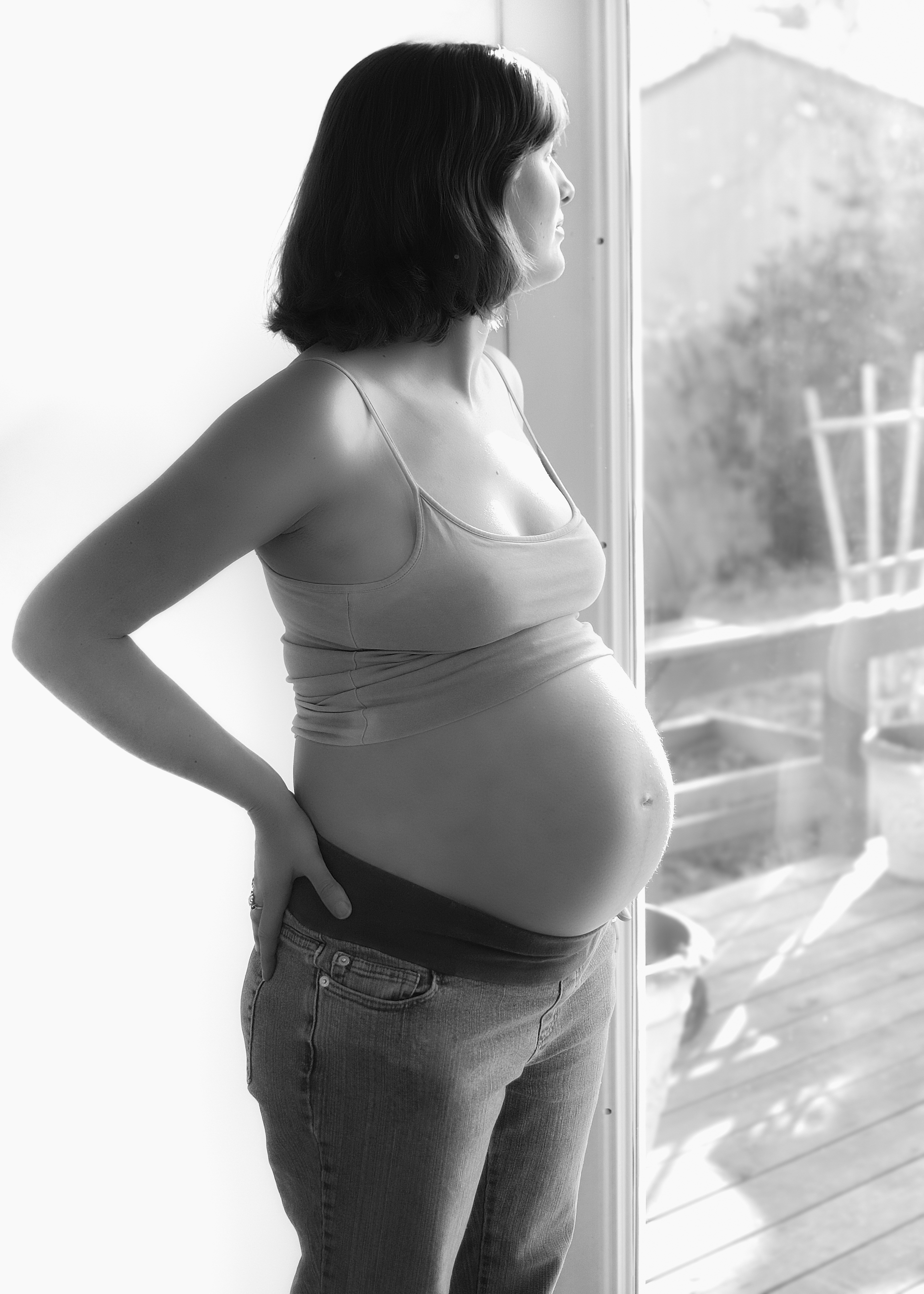
Why might birth be considered an ecofeminist issue though? Because mother’s body is our first habitat. We all entered the world through the body of a woman and that initial habitat has profound and long-lasting effects on us, whether we recognize them or not. Midwife Arisika Razak explains, “the maternal womb is their first environment. The cultural paradigm of birthing is the first institution that receives our children…Each of these elements—womb, birth culture, and family—has a profound effect upon the new human bring. Each deserves our best thinking and analysis. What would it be like if we envisioned a society in which positive, lifelong nurturing support—from old to young, and young to old—were the dominant theme of human interaction?” (p. 167).

What would it be like if we treated birthing women and their babies like they mattered?

Our first and deepest impulse is connection. Before Descartes could articulate his thoughts on philosophy, he reached out his hand for his mother. I have learned a lot about the fundamental truth of relatedness through my own experiences as a mother. Relationship is our first and deepest urge and is vital to survival. The infant’s first instinct is to connect with others. Before an infant can verbalize or mobilize, she reaches out to her mother. Mothering is a profoundly physical experience. The mother’s body is the baby’s “habitat” in pregnancy and for many months following birth. Through the mother’s body, the baby learns to interpret and to relate to the rest of the world and it is to the mother’s body that she returns for safety, nurturance, and peace. Birth and breastfeeding exist on a continuum, with mother’s chest becoming baby’s new “home” after having lived in her body for nine months. These thoroughly embodied experiences of the act of giving life and in creating someone else’s life and relationship to the world are profoundly meaningful experiences and the transition from internal connection to external connection, must be vigorously protected and deeply respected.

via Talk to Your Baby | Talk Birth and Breastfeeding as a Spiritual Practice

I have a particular interest in embodiment and my dissertation topic is related to a thealogy of embodiment (basically the Goddess and the body) and so my attention was caught by some great sections about birth, bodies, and family in the book The Art of Family:

AS WE MOVE THROUGH BODILY stages together, there are some special stages that are worth thinking of in advance. Pregnancy is one, of course, and babies. Nothing is more inescapably BODY than birth. For the mother, both through her pregnancy and the labor and delivery of the baby. In birth, the body gets to drive the soul for a change and one’s soul is on for the wild ride, whatever happens. What does she deliver, after all, but a body, this little lamblike creature packaged in a now wholly-other body? What does she deliver but a body—and what do she and Daddy count but a body’s toes, a body’s fingers? In these small ways we acknowledge our wholeness, our physical sacredness.

Gina Bria (2011-11-28). The Art of Family : Rituals, Imagination, and Everyday Spirituality (Kindle Locations 1693-1700). iUniverse. Kindle Edition.

(Amazon affiliate link included)

And, I appreciate that Bria then moves into a consideration of how men experience pregnancy and birth…

YES, BIRTH IS THE BODY, and for women it is manifestly given. But one should note that the world over, there is a complementary effort by men to try to counterbalance the impressive power of women who have even the potential of birth, whether it is actualized or not. Men, too, have moments of making special use of their bodies. Men make quests, and perform feats of extraordinary effort, to put their bodies on the line in some attempt to match birth.

…For modern men, pregnancy means two things, not one integral, unfolding experience, as for women. First, they must cope with a partner undergoing tremendous physical change. In essence, they are no longer dealing with the same body. It’s a stressful experience, and many men fear they will never see their old partner again, quite literally. They listen to their wives agonize about weight gain and swollen ankles, and secretly grieve the loss, all the while maintaining a show of faith, for their wives, for themselves, that it will come to a happy ending. And on top of that, they must then forge a new relationship with the party responsible for this, someone they can neither see, nor touch, indeed, can hardly believe exists! Women at least get touched by their in-utero babies, even if it’s a swift kick from the inside. “Hey, it’s Daddy,’’ my husband said rather sheepishly into my belly one night. This seemed to me quite amusing, as if the baby needed an introduction to one half of his own genetic material. Then suddenly it struck me that I had never considered introducing myself to the baby, announcer like over an intercom—“This is your mother speaking’’—because I felt the bodily connection so inexorably. I knew I was well known to the baby, but my husband had no such advantage. He had to make connections in other physical ways, in this case using his voice. Making a family where men touch, speak, and care for children is a vital way to connect them to their own progeny; one way that many cultures, including our own, can often deny men. Perhaps you have been stopped in your tracks, as I have, over the recent spate of advertisements of bare-chested men holding tiny babies. Do advertisers, more than Freud, know what women want? Yes! We want to see our handsome men holding babies, snoozing with them, schmoozing with them in chest-to-chest communion. As Jane Austen asks, “What attaches us to life?’’ Anyone who lays on hands gets attached to life.

These thoughts really struck me in a profound way. During each of my own pregnancies, I remember marveling and feeling impressed, as well as a little sad, that my husband had to somehow forge this bond with a newcomer without the same benefit of the embodied, constant experience of pregnancy—pregnancy from the inside is different than pregnancy from the outside. I shared the author’s amusement in picturing how it would have been to “announce” my own presence to my babies. I’ve tried, but cannot fully imagine the process and psychological task involved with the paternal experience, of in a sense, “suddenly” having a baby to hold and care for and “instantly” love, though I’m sure I have the capacity within me somewhere (and, yes, I know that not all mothers feel an instant love either and may have the same sense of suddenness in their own lives—it was certainly true for me that the inner experience of a womb-dwelling baby was pretty different from the external experience of having a physically visible baby to tote around). As a pregnant woman though, the baby is basically inescapably present and part of me in an interconnected, interwoven, symbiosis of being. There is the transition at birth to an “outer” relationship, but that intense embodied interconnection continues immediately with the breastfeeding relationship. It is somewhat impressive or staggering to me almost, that men have to form their own connection born out of different “stuff” that the biology of gestation and lactation that weaves the motherbaby together.

Bria also addresses the loving of a baby’s body that isn’t going to survive:

WE ARE NEVER MORE CRUSHED than when there is trouble at birth. No sadness holds for us the power of an incomplete body, a broken body. We grieve and turn heart stricken at this time like no other. In moments like these we can only comfort ourselves, with love, that love would allow us to care for this child when many would not be able to do so. We hope to find ourselves the kind of people who could, in such circumstances, make a life for a whole person, with an incomplete body. When our son was born with a leaking heart, an old-fashioned “blue baby,’’ and destined to die without surgical repair, we learned quickly that all we could give him, all he could receive as a newborn, was the small, inconsequential daily care of the body, gentle changing, warm nursings, our breath upon his face. Perhaps, we thought, it would be all he would ever get. In that season of attention, we really learned the significance of loving a body. A body, however small, records every trace of touch; it is never unconscious; unlike the mind, a body is never without sensing, even in sleep. A body will always remember.

I liked the description of a body always remembering. We do carry deep, physical memories of our pregnancies, births, and babies. I find the physicality actually comes back most clearly in dreams for me, when I can again feel with a sharp potency the sensation of a baby’s body slipping swiftly from my own body. I also like reading research that indicates that mother’s body carries fetal cells within her forever. I like thinking that physical evidence of the embodied, relational experience of pregnancy remains written into my very cellular structure (well, and on my bones and skin too, I suppose!). I found this a comfort after my little Noah’s birth, thinking that in a very real way, I would truly always remain a “little bit pregnant” with him and that perhaps some of his unique genetic material lives on in my body.

After birth, we continue to relate to our babies on a very physical, body-oriented level. There is nothing like a baby to bring things back to the body, to use your body and their own in a complete, intensive, totalness.

BABIES’ BODIES AND CHILDREN’S BODIES   LIKE PLAY, LOOKING AT THE body of an infant returns us to childhood. Babies’ bodies are a special form of being human, and they elicit in us essential, elemental emotions. They infect us with longing for the integration, the wholeness, they have. As new parents, we experience again all the helpless and exuberant feelings of children, the unfeigned marveling over everything manifested by a baby, a physical miracle. We cannot contain our awe, expressing it to everyone within earshot. New parents on the street can always be identified by their aura of vulnerability; they’ve shed the social cloth that keeps us all appropriately attired to go about our work. Instead, just like the baby, they are naked to everything good. They blink and look around, bemused, tired, and delighted. You will notice they always smile at you at the crosswalk—it is a secret, initiated smile. They assume you either know what they are smiling about or wish that you did. What is it they know? Their babies made them once again aware of the pleasures of physical delight. To care for an infant is a test of our humanness, a trial by fire and love.

What is good about caring for infants is that they never let us forget how essential the body is. They snuffle, bawl, and demand attendance. “Feed me, change me, hold me,’’ for an eternity of right-nows. And when they sleep, it’s as if they have cast themselves on a thin but safe shelf of floating wholeness, complete integration. They show us what we once were, without guile, delightedly in love with our own body. When infants turn into toddlers, the body is still in front, still demanding, but in a bigger world. Now protection from bodily harm becomes a concern of everyday physical life together. We aren’t as impressed by the bodily transmogrification that takes place in front of us, because we’ve learned to live with it happening every day, day to day. It’s impossible for the same miracle to impress us the same way over and over again. Thus begins the very fading away of the lesson we most need from our children—that there is intense pleasure in the active human body. Right under our noses they play. They play and play and we watch and nod as if this itself isn’t a further miracle. What do infants do when they get control of themselves, but move, explore, experience exhilarated delight in their bodies and what they can do. Their essence is to enjoy themselves as bodies, all over…Through physical life with our children, through care of them and play with them, the hands-on of it, we again acquire our innocent selves, a delight in each other and the world around us. We discover all over the potentialities of the senses. This is the heart of being with young children.

Gina Bria (2011-11-28). The Art of Family : Rituals, Imagination, and Everyday Spirituality (Kindle Locations 1729-1760). iUniverse. Kindle Edition.

As they age, this physical, body-based relationality and experiences may wane, and yet still holds important value:

As our children age we must struggle to keep this alive for ourselves, for them, in one form or another, as the world begins its intrusion into our family lives. This may be as simple as pointing out that a flower is beautiful, that rain smells divine, that a hand held feels warm and comfortingly sweet, that nothing satisfies like cool water. Once children hit the walking stage and beyond, we spend more time explaining compared with the time we spent holding. Yet there are still many miniature ways of communicating with one’s body. Its active use—a nod, a wink, a hug—are all fleeting acts of committing one’s body, however momentarily, to another. Looks, touches, squeezes, physical smiles, a physical vocabulary—aren’t they what children long for? Indeed, isn’t that exactly what we thrill to in a romance—those little signals that you belong to each other—and isn’t that what we end up complaining of missing when our marriages seem stale? It isn’t just for romance that these things work, though it is there that we most seem to notice them. All of family life can capitalize on a richer life with each other’s bodies.

And, bringing it back to birth and the care of birthing bodies, I really liked this image via Facebook:

treatment

International Women’s Day: Prayer for Mothers

nursingmamas

This week marked my eighth anniversary as a breastfeeding counselor.  When I began, I didn’t how long I’d keep doing it and I’ve had a lot of discouraging rough patches with dwindling group membership in which I felt like giving up, but now I suspect I might end up as a “lifer.” When I started this work I had one little 18 month old boy. Now, that little boy is closing in on TEN this year! I’ve logged over 1200 contacts since my accreditation. I’ve learned so much from the mothers I’ve worked with and I continue learning new things all the time.

This month as I sat in the circle at our mother-to-mother breastfeeding support group meeting, I looked around at all the beautiful mothers in that room. I reflected on each of their journeys and how much each one has been through in her life, to come to this time and this place, and tears filled my eyes. They are all so amazing. And, my simple, fervent prayer for them in that moment was that they could know that. Know that on a deep, incontrovertible level. I tried to tell them then, in that moment. How much they mean to me, how incredible they are, how I see them. How I hope they will celebrate their own capacities and marvel at their own skills. How I see their countless, beautiful, unrecognized, invisible motherful actions. How when I see them struggling in the door with toddlers and diaper bags and organic produce that they’re sharing with each other, I see heroines. They may look and feel “mundane” from the outside, but from where I’m sitting, they shine with a power and potency that takes my breath away. Moderating toddler disputes over swordplay, wiping noses, changing diapers, soothing tears, murmuring words, moving baby from breast to shoulder to floor and back to breast without even seeming consciously aware of how gorgeously they are both parenting and personing in that very moment, speaking their truths, offering what they have to give, reaching out to one another, and nursing, nursing, nursing. Giving their bodies over to their babies again and again in a tender, invisible majesty. In this room is a symphony of sustenance. An embodied maternal dance of being.

So, today on International Women’s Day, when I visited the woods behind my house, I offered up this…

Prayer for Mothers: March 2013 057

I offer a prayer for all mothers
may you breathe deep down into your belly
may you tip your face to the sky
let your shoulders soften
your forehead smooth
your eyes close gently
your lips part

And may you take a deep cleansing breath
from your feet on the earth
all the way up through your legs
hips
belly
chest
shoulders
and throat

And with this breath
honor your own capacities
marvel at your own resources
notice your strengths
celebrate your successes
listen to your own wisdom
recognize your own heart.

Take a moment to see
really see
how often you act with great courage
how often you act with deep love
and how much of your life’s energy
spirals and spins around your children.

See your worth
hear your value
sing your body’s power
and potency
dance your dreams
recognize within yourself
that which you do so well
so invisibly
and with such love.

Fill your body with this breath
expand your heart with this message
you are such a good mother.

Tuesday Tidbits: Birthing Bodies

These Tuesday Tidbits all come from the Fall 2012 Pathways magazine. Pathways is a fabulous publication and the best replacement for Mothering magazine that I’ve found!
BirthontheLabyrinthPath_300x250-ad_2

…I get that some women want a particular experience of birth—I mean, I really get it now that I have had a birth that left me feeling more powerful, more humble, more focused, and more devoted to my lover than I ever thought I could feel.

But I wish American women were told the truth about birth—the truth about their bodies, their abilities, and the dangers of technology. Mostly I wish all pregnant women could hear what Libby Bogdan-Lovis, my doula, told me: ‘Birthing a baby requires the same relinquishing of control as does sex–abandoning oneself to the overwhelming sensation and doing so in a protective and supportive environment’…

–Alice Dreger in The Hard Science Supporting Low-Tech Birth

Next, in connection to my own series of posts on taking it to the body, I enjoyed Karen Brody’s article, My Body Rocks, in which she describes her experiences in a yoga nidra class, noting that when asked in class to let her intention come from her body, her reaction was:

My body? I was ashamed to admit that, after two powerful homebirth experiences, I no longer felt intimately connected to my body. Pregnancy and giving birth were all about every little feeling in my body; mothering felt like a marathon of meeting everyone else’s needs and rarely my own…Most days, the question I asked was, ‘How are their bodies?’ My body was in the back seat, unattended, without a seatbelt.”

With regard to my own body, I’m re-introducing my daily yoga practice, maintained since 2001 even through the births of my other two children and playing a significant role in my birth experiences, and yet released with reluctance during Alaina’s infancy. It is time to bring it back! On a related note, I have a neat prenatal yoga book/DVD to review and I watched it this week with Alaina practicing with me—when it instructed you to, “put your hands on your baby,” I put my hands on her! 😉

Speaking of toddlers, I’m wearing a little thin with toddler breastfeeding. I’ve commented to friends that some of the issues and annoyances and difficulties that I’ve previously associated with nursing during pregnancy are actually simply issues of nursing two-year-olds. She is rough, wild, pinchy, scratchy, and practically abusive. She’s nursing way too much at night and I’m tired! In the Pathways article A Natural Age of Weaning by Katherine Dettwyler (who rocks), she makes a point that I’ve always felt intuitively and yet haven’t really articulated in writing:
398124_10152413274040442_130771351_n

Another important consideration for the older child is that they are able to maintain their emotional attachment to a person, rather than being forced to switch to an inanimate object, such as a teddy bear or blanket. I think this sets the stage for a life of people-orientation, rather than materialism, and I think that is a good thing.

As I’ve said before, pregnancy, birth, and breastfeeding are all such embodied experiences—motherhood in general feels very much a physical commitment. Our relationship with our children begins in the body, it is through the maternal body that a baby learns to interpret and engage with the world, and to the maternal body a breastfeeding toddler returns for connection, sustenance, and renewal.

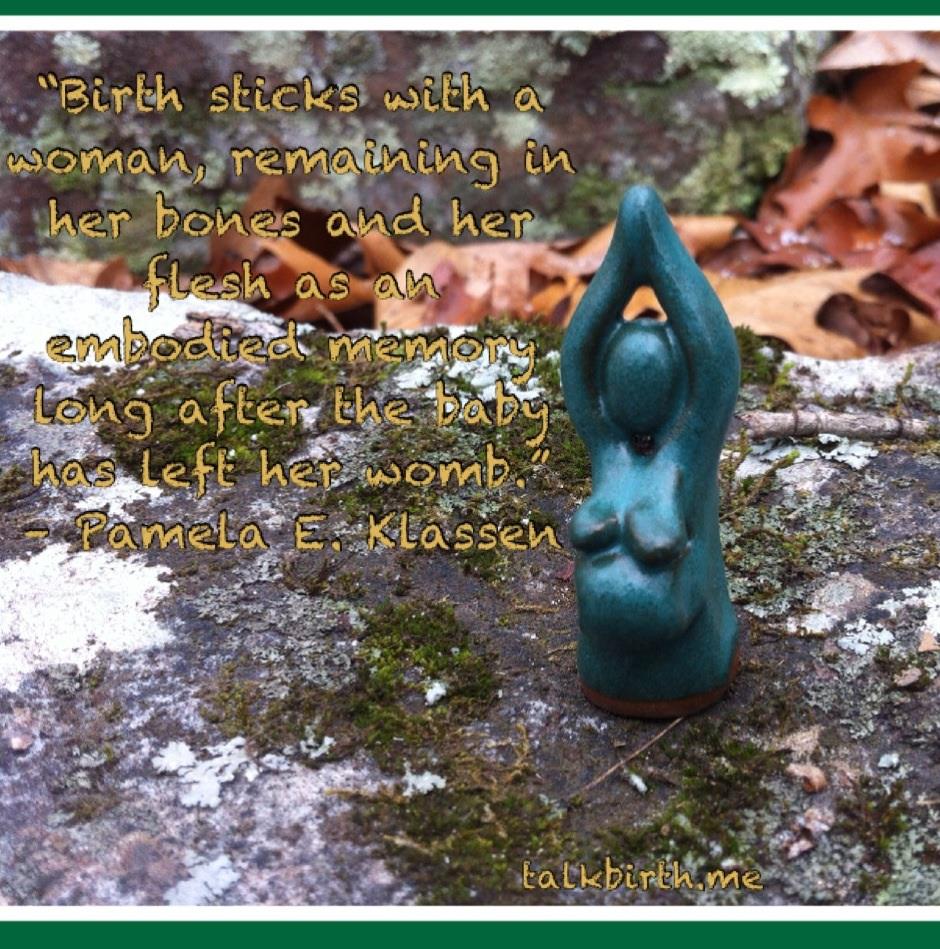
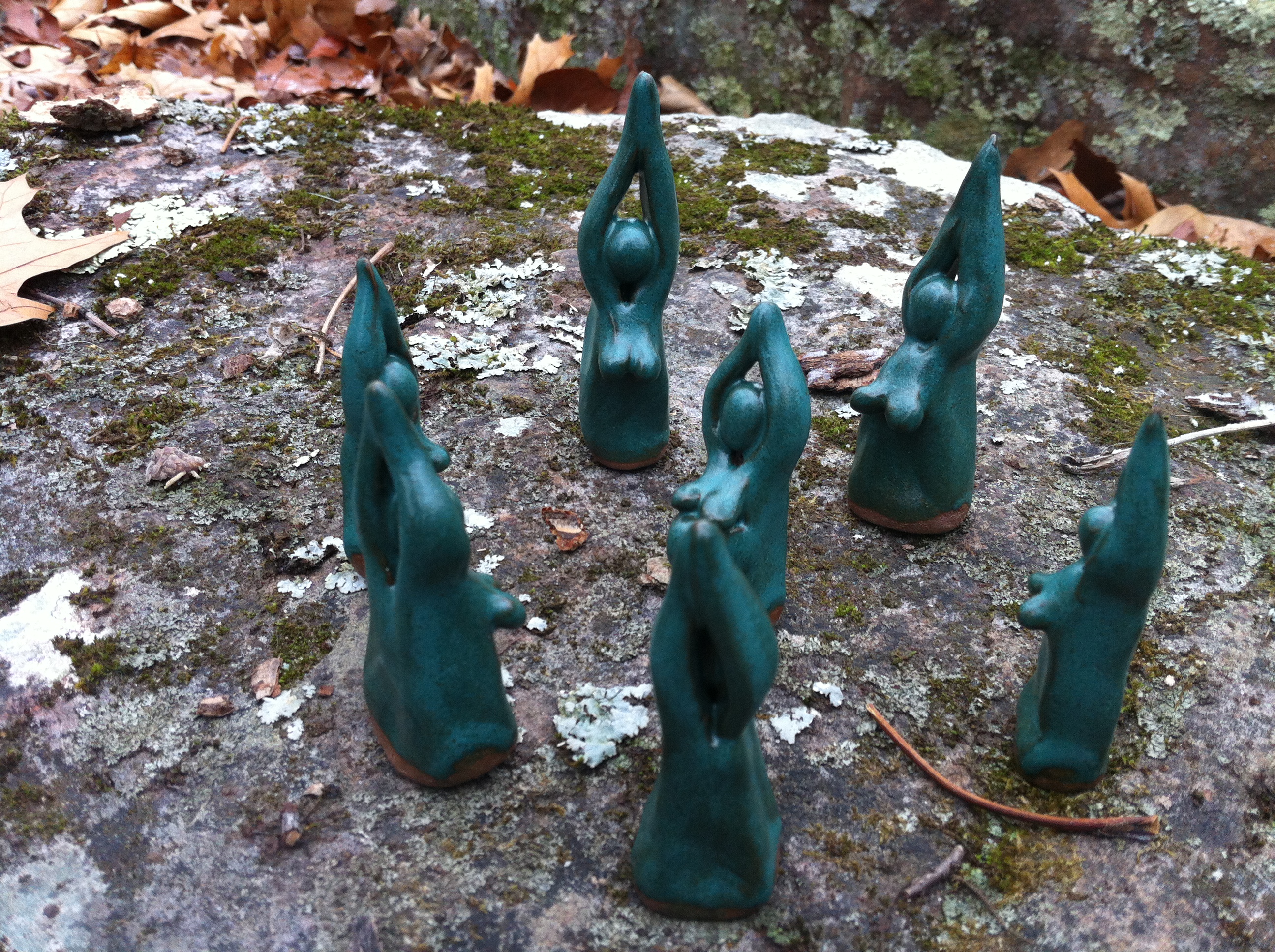
It is this embodied spirit of creation and connection I feel I draw upon and represent when I create my little birth art figures, a spirit that caught the attention of many on Facebook this week when I shared a photo of a series of four figures that I’d made as a custom order:

20130210-155705.jpg

I will write more about these in an upcoming post and I am now accepting custom requests, though there is already a waiting list! I did update my Shop page briefly with some already made figures that I have available though.

Postpartum Survival Tips

“In western society, the baby gets attention while the mother is given lectures. Pregnancy is considered an illness; once the ‘illness’ is over, interest in her wanes. Mothers in ‘civilized’ countries often have no or very little help with a new baby. Women tend to be home alone to fend for themselves and the children. They are typically isolated socially & expected to complete their usual chores…while being the sole person to care for the infant…” –Milk, Money, & Madness

324I recently shared this quote on my Facebook page and a reader responded expressing her fear at preparing to face this exact situation. I responded that it is an unfortunately realistic fear and suggested she check out some resources for postpartum planning that might help work through the fear as well as plan for a nurturing postpartum instead of a stressful one. She then responded that she has a very minimal local support system and that got me thinking about postpartum survival tips for when one’s local support system is limited…

My ideas:

  •  Suggest to your out-of-town friends and family that they contribute to a “babymoon” for you and all pitch in to hire a postpartum doula.
  • Tactfully remind people that even if they’re too far away to bring you a meal, they can certainly call up a local restaurant and order a delivery for you! I think a lot of us forget that is an option for a long distance family member (that we would bring food to if they were local). In my experience, getting enough food is a huge issue postpartum! I remember long distance friends having babies a variety of times and wishing I was close enough to bring them dinner. Duh. Many restaurants do, in fact, deliver food!
  • Be your own “best friend” by preparing and freezing meals and snacks now. I know I sound obsessed with food, but it is totally one the hardest things to take care of postpartum, but so important!
  • Put together a mama survival kit for yourself that you can then open up when you need it. Some ideas here and more ideas of variable quality here.
  • If you don’t have a sense of community work, actively work on building one—go to La Leche League meetings, Holistic Moms Network, Mothers of Preschoolers, Attachment Parenting International, or other mothers’ groups. Go BEFORE you have your baby if you can.

Other ideas for helpers:

  • In addition to my idea of ordering delivery for a postpartum family as a way of bringing them dinner long distance, is to order a dinner through the mail via the business Spoonful of Comfort. They will send fresh chicken soup, rolls, cookies, and a baby present via Priority Mail (packed with freezer packs). I send it with a note saying, “this is me, bringing you dinner!” Friendly tip from unfortunate personal experience: if you are doing this for a friend make SURE you enter THEIR address as the shipping address and not your OWN address, or you will then be forced to enjoy their postpartum meal and feel like a total idiot at the same time.
  • Don’t forget about other meals—breakfast = awesome. Muffins = awesome.
  • Pay it forward–I think sometimes people feel like they don’t know someone well enough to bring them food, or maybe they even do a mental “tally” and think, “well, she won’t be bringing me food ever, so why should I take time to bring it to her” or, “she didn’t make anything for me when I had my last baby, so I’m off the hook on this one.” When I had Alaina, a mother who had literally JUST moved to town and that I had not yet met, sent a hot breakfast casserole to me (that my lovely doula delivered to my lovely mother at the snowy end of my gravel road).  I think of that generosity when I bring a postpartum meal to a mama from whom I will never end up getting a reciprocal meal. Who cares. She needs it. You can do it!
  • Another doula commented on my post: “Do you know a mom that is about to have a baby? Or maybe a momma who just gave birth recently? Don’t even ‘offer’ just show up with a bucket of cleaning supplies, a bag of healthy food, and maybe something nice for her. Go tuck her in bed with baby, and get to work on her home.. When she wakes, she has nothing to do but nurse that baby. (If she has other kids, delegate chores with them, if to young, call mutual friends to sit for them! Our Mom’s need this, up through 6-9weeks pp, Mom’s need help, even longer for some. There is a reason the US has the highest postpartum depression issues in the developed world… Create your community! DO IT!” I would add that if you do not know mom well, do not plan to engage in a deep cleaning project and stay for a long time doing such project.

I also posted to the Citizens for Midwifery Facebook page asking for contributions for postpartum survival tips when your local support system is limited. What beautiful, helpful women we have on that page! While I didn’t get many suggestions specifically for minimal local support systems, I did get a nice collection of survival tip ideas:

  • Trust your own instincts. Many women have great advice but if your heart is telling you something else, go with it.
  • Craniosacral therapy… one session for you and one for the baby.
  • In addition to lots of suggestions to hire a postpartum doula, there were lots and lots and lots of shout-outs for placenta encapsulation. I echo it myself.
  • Get out of the house alone! For me, it’s been crucial to my sanity to leave my home, by myself, even if only for an hour or two between nursings. Just a Target run was therapeutic!
  • Kangaroo care for high needs babies.
  • Lots of mentions of it being okay to accept help and okay to ask for help.
  • A lot of new moms get really overwhelmed by family and friends coming by to see baby, and it’s important for them to remember that they can always put out a sign that says “mom and baby sleeping!” (even if they aren’t) anytime they need a break.
  • Watch only positive stuff without violence on TV (cooking shows, home improvement) as regular TV is really violent for new mamas and she may be watching more with all the nursing/healing.
  • Have homemade high protein frozen meals (and snacks) in the freezer before birth so anyone can warm them up for the household after birth. If breastfeeding, get much more rest than you think you need from day one to ensure an abundant milk supply (*note from Molly: it is true that prolactin receptors are “laid down” during the first days of breastfeeding. Breastfeeding “early and often” makes sure that there are an ample supply of receptors in your brain.)
  • Have a sign up sheet for family and friends to choose which chores to help with, gift certificates to a cleaning service, stocking up on disposable plates and dinnerware…
  • A new mommy group can be a life saver. Just knowing that other mommies are going through the same thing help
  • Food registries such as mealtrain and mealbaby. Not enough families know about these amazing and free services. (*note from Molly: we often use Care Calendar locally.)
  • Plan ahead and freeze several of your favorite freeze-able meals. Let the clothes be a little wrinkled. Use paper and plastic ware instead of worrying over dishes. Stay laying down first 3 days postpartum (preferably naked: it gives a certain message and is better for baby anyway) and the first week stay in pajamas. Enjoy frequent rest times, even if you can’t sleep.
  • Baby wearing….lots of time in bed, sleeping cuddling and feeding babe skin to skin…brest friend nursing pillow
  • Send a subliminal message to the limited visitors you’ll have (set limits early with partner) by wearing your robe for several weeks
  • Eat well, accept all offers of help and food, get out of the house alone!
  • I loved getting meals brought by friends, but I didn’t always want to socialize. So, someone to run interference, or maybe a drop-off location for leaving food. (*note from Molly: my doula was the perfect person for this job.)
  • Ask for help! No one will know what you need if you don’t speak up.
  • Don’t go without showering for more than four or five days. Brush your teeth once a day no matter what, even if it ends up being at a weird time. Take your vitamins/ herbal supplements/tea. HYDRATE! Nap with baby if you need to, arrange childcare for older siblings sometimes, but also listen to your instincts—one of my worst baby blues moments was with my third when my older two were gone and I wanted them home!
  • LOVE yourself, nap when you can , Yes you are doing it right, No it’s no ones business (breastfeeding/cosleeping/pumping etc.) allow opinions and advice to slide off, drink lots of water , eat small snacks/meals, love your baby look into their beautiful eyes and connect, skin to skin whenever even with dad or siblings (safely) cherish these moments they don’t last forever, the laundry will get done, the dishes will be get cleaned …
  • Take a “babymoon”. Put on a robe when someone comes to the door–even if you have real clothes underneath. Sleep when the baby sleeps. Don’t answer the phone. Remember, self-care is essential for you to be able to care for your baby.
  • I loved having herbal soaked pad (frozen) to wear afterwards, felt soooo good. Have easy one-handed snacks available and a BIG water bottle.
  • In those last few months of pregnancy I prepare meals to freeze (I start about month 5 or 6). I make up 6 weeks worth of dinners (they always last longer since we have a great church family and friends that bring us meals). After baby is born I can put 2-3 dinners in the refrigerator (to thaw) a few days before I need them. Then all I have to do is pop one in the oven and BAM….dinner’s ready. I love “Don’t Panic, Dinner’s In The Freezer” I & II. The recipes are amazing and all freeze well. Hope that helps!
  • Skin-to-skin in bed for as long as possible; 40 days of rest, recuperation, establishing breastfeeding, bonding, limited visitors, and limited activity; drink when the baby nurses; sleep when the baby sleeps; nurse on demand; learn to wear your baby; and use a peri bottle when peeing! A postpartum herb bath and massage are nice, too.
  • Hot water bottle for afterpains
  • Placenta encapsulation and WishGarden Herbs ReBalance tincture!
  • Chiropractic adjustments, ASAP
  • Call in your mom. My mom’s job after my second was born was to keep me fed and to spend some quality time with my older child.
  • Drag oneself outside and BREATHE! 🙂
  • Water…..hot tub, shower, steam, pool, raindrops, snow, sauna, bath, river, stream, ocean, lake! If you can, immerse yourself, if you cannot, imagine yourself floating 🙂
  • Lots of water, lots of protein and healthy fats, placenta encapsulation and low expectations of anything other than bonding time with baby.
  • Don’t try to impress others with how quickly you can get up and going, even if you can, just take it easy!!!!
  • It’s not in the asking for help; its in the accepting…
Surround her with support!

Surround her with support!

Check out these previous posts:

Mothers Matter–Creating a Postpartum Plan

Planning for Postpartum

Some reminders for postpartum mamas & those who love them

and a great one for helpers written by my own doula:

The Incredible Importance of Postpartum Support

And, remember…

“The first few months after a baby comes can be a lot like floating in a jar of honey—very sweet and golden, but very sticky too.”

–American College of Nurse-Midwives

This article is crossposted at Citizens for Midwifery.

Plucking out the heart of mystery

Birth is a great mystery. Yet, we live in a rational, scientific world that doesn’t allow for mystery. ‘In this day and age, there must be a better way to have a baby,’ implies that if you are informed enough, strong enough, you can control it. Any woman who has given birth, who can be honest, will tell you otherwise. There are no guarantees. It is an uncontrollable experience. Taking care of yourself and being informed and empowered are crucial, but so is surrender. Forget about trying to birth perfectly. Forget about trying to please anyone, least of all your doctor or midwife…” –Jennifer Louden (The Pregnant Woman’s Comfort Book)

Twelve Steps to a Compassionate Life Amazon affiliate link included in text/image.
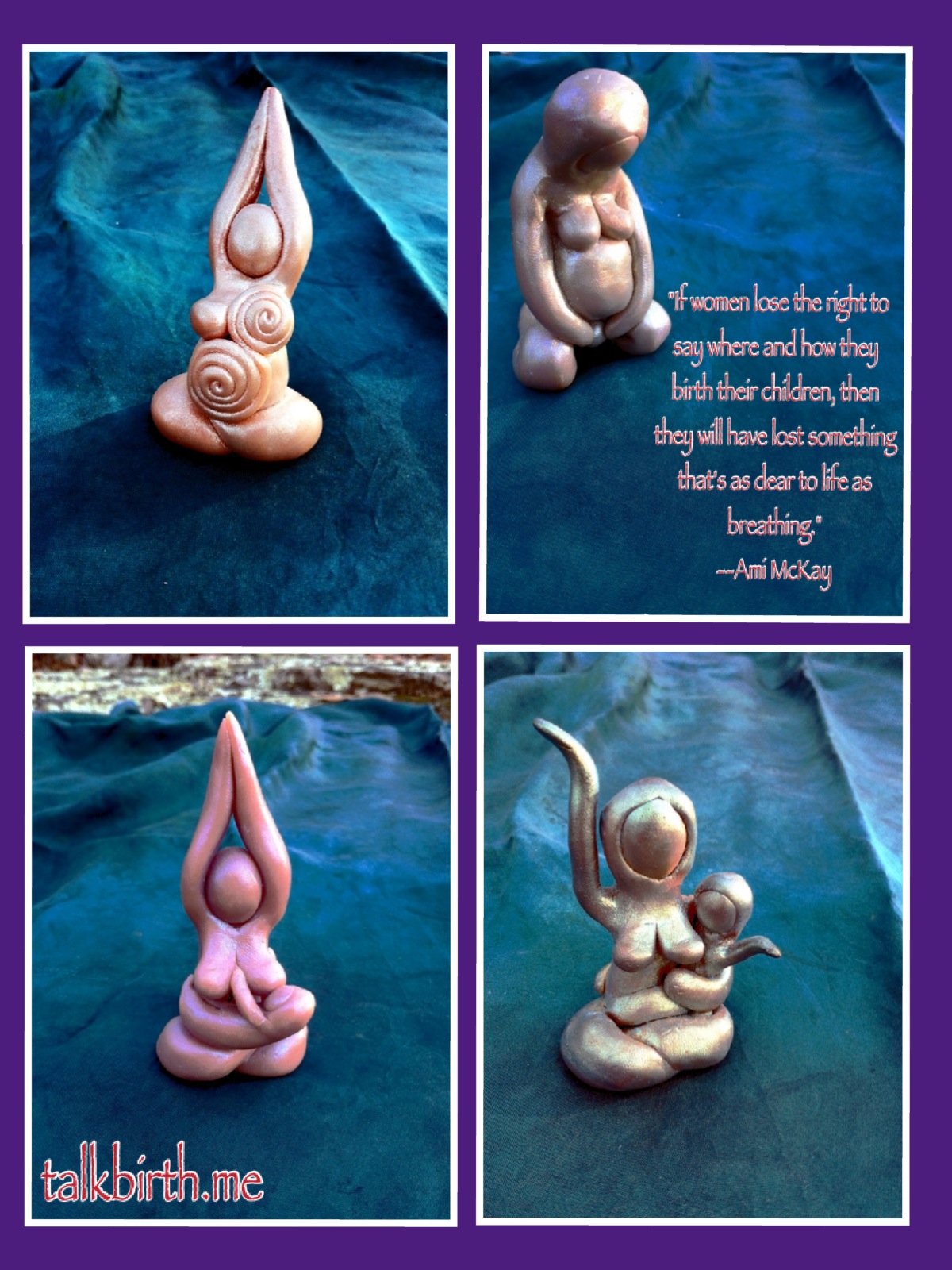
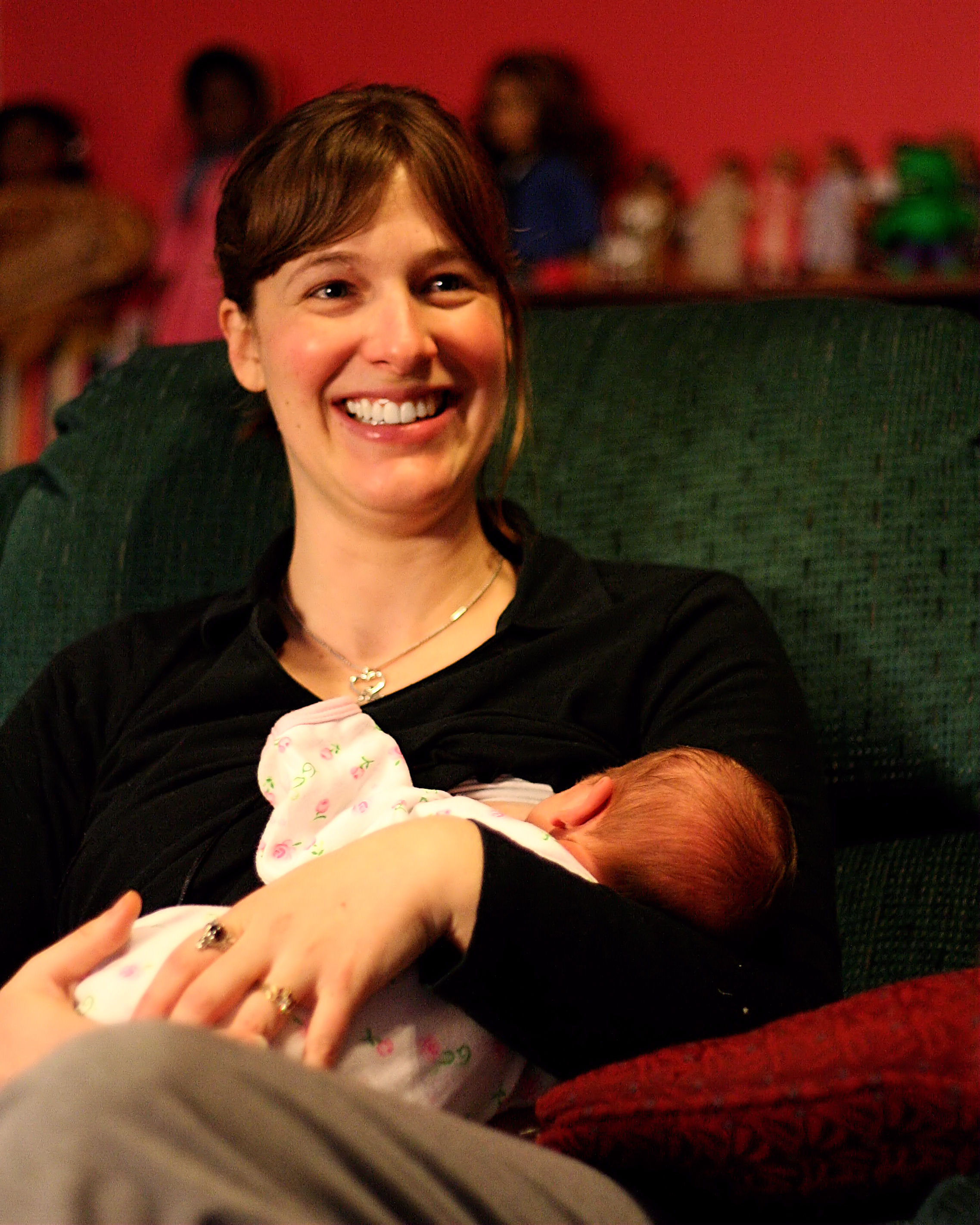
I’m halfway through a year-long class based on the book Twelve Steps to a Compassionate Life. We’re examining and practicing compassion to ourselves and in personal relationships, community relationships, and to non-humans. The subject of our current month is, “making a place for others.” What does this mean? The author explains…

I began to notice how seldom we “make place for the other” in social interaction. All too often people impose their own experience and beliefs on acquaintances and events, making hurtful, inaccurate, and dismissive snap judgments, not only about individuals but about whole cultures. It often becomes clear, when questioned more closely, that their actual knowledge of the topic under discussion could comfortably be contained on a small postcard. Western society is highly opinionated. Our airwaves are clogged with talk shows, phone-ins, and debates in which people are encouraged to express their views on a wide variety of subjects. This freedom of speech is precious, of course, but do we always know what we are talking about?

Armstrong, Karen (2010-12-28). Twelve Steps to a Compassionate Life (Kindle Locations 1476-1481). Random House, Inc.. Kindle Edition.

I wonder about this sometimes in my own compulsion to blog—am I just adding to the digital cacophony out there, etc. and then that reminded me of a previously shared quote:

“A person who believes too earnestly in [her] own convictions can be dangerous to others, for absence of humor signals a failure in basic humanity.” –Thomas Moore (Original Self)

 Armstrong also makes this important observation:

Hindus acknowledge this when they greet each other by bowing with joined hands to honor the sacred mystery they are encountering. Yet most of us fail to express this reverence for others in our daily lives. All too often we claim omniscience about other people, other nations, other cultures, and even those we claim to love, and our views about them are frequently colored by our own needs, fears, ambitions, and desires.

Armstrong, Karen (2010-12-28). Twelve Steps to a Compassionate Life (Kindle Locations 1596-1599). Random House, Inc.. Kindle Edition.

We all do this so often. I find myself very annoyed when other people play “armchair psychologist” and yet still catch myself doing it as well. I also think about “gossip” and its role in human society. I think curiosity about the lives of others is normal and talking about other people’s behavior and experiences with them is also normal. I am most disturbed when those around me claim seemingly infallible understandings of the motives, characters, and psychology of others (in my classes, I remind students to “separate person from problem” and to “describe behavior rather than character”). It is very common for us not to even understand ourselves, so I find it interesting, frustrating, and surprising that we then seem to think we can have direct understanding of the inner workings and thought-processes of another person. “Instead of discoursing confidently on other people’s motives, intentions, and desires, we should recall the essential ‘mystery’ and realize that there is a certain sacrilege in attempting to ‘pluck out’ its heart to serve an agenda of our own.

What does this have to do with birth?

“Birth is life’s central mystery. No one can predict how a birth may manifest…Our dominant culture is anything but ‘natural’ so it is no surprise that childbirth, even with the most natural lifestyle lived by an individual family, sometimes needs intervention and medical assistance. This is not to say that any one mother’s efforts to have a natural childbirth are futile. Just that birth is bigger than one’s personal desires.” –Jeannine Parvati Baker (in The Goddess Celebrates: An Anthology of Women’s Rituals, p. 215)

When women’s choices are restricted in the birthroom or in access to compatible care providers, we’re plucking out the heart of mystery. When December 2012 073doctors or nurses “let” or “don’t let” a birthing woman do something, they’re plucking out the heart of mystery. When birth activists analyze a woman’s birth story for evidence of why things went “wrong,” we’re plucking out the heart of her rite of passage, of her story. When we fail to acknowledge the sociocultural context of breastfeeding OR when we cannot accept that a mother “couldn’t breastfeed,” we’ve plucked the heart of her mystery. When we need to have or know the “right answer,” chances are, we’re plucking the heart. And, we need to remember that…”Women’s surveillance of other women’s childbirth experiences–in this case, natural childbirth–can shape and constrain the individual choices women make in childbirth in much the same way medicalized assumptions about childbirth can.” (Christa Craven, Pushing for Midwives)

Armstrong goes on to explain…

Third, spend some time trying to define exactly what distinguishes you from everybody else. Delve beneath your everyday consciousness: Do you find your true self—what the Upanishads called the atman? Or does this self constantly elude you? Then ask yourself how you think you can possibly talk so knowingly about the self of other people. As part of your practice of mindfulness, notice how often you contradict yourself and act or speak in a manner that surprises you so that you say, “Now why did I do that?” Try to describe the essence of your personality to somebody else. Write down a list of your qualities, good and bad. And then ask yourself whether it really sums you up. Make a serious attempt to pin down precisely what it is that you love about your partner or a close friend. List that person’s qualities: Is that why you love him? Or is there something about her that you cannot describe? During your mindfulness practice, look around your immediate circle: your family, colleagues, and friends. What do you really know about each and every one of them? What are their deepest fears and hopes? What are their most intimate dreams and fantasies? And how well do you think they really know you?…How many people could say to you that you “pluck out the heart of my mystery”? In your mindfulness practice, notice how often, without thinking, you try to manipulate, control, or exploit others—sometimes in tiny and apparently unimportant ways. How often do you belittle other people in your mind to make them fit your worldview? Notice how upsetting it is when you become aware that somebody is trying to manipulate or control you, or when somebody officiously explains your thoughts and actions to you, plucking out the heart of your mystery…

Armstrong, Karen (2010-12-28). Twelve Steps to a Compassionate Life (Kindle Locations 1644-1658). Random House, Inc.. Kindle Edition.

The irony of the fact that I’ve just filled up a bunch of digital air space with my own opinions, instead of practicing this principle, isn’t lost on me. As I move through this month, in all contexts not just in birthwork, I would like to open more to this “heart of mystery” and to not knowing as well as to avoid the tendency to analyze and “understand” other people. I also wish to be mindful of plucking the heart out of anyone’s mystery—may I be a witness to their mystery and may they feel both seen and heard by me…

“Birth is always the same, yet it is always different. Like a sunset, the mystery is also the appeal to those who get up in the middle of the night to attend laboring women. While the sequence of birth is simple, the nature of the experience is complex and unique to each individual. No matter how much any of us may know about birth, we know nothing about a particular labor and birth until it occurs.” (emphasis mine) –Elizabeth Noble in Childbirth with Insight (previously shared here)

Preventing Culturally Induced Lactation Failure

281How often does it happen that women truly are physically unable to breastfeed?

No one actually has a solid answer to this question. The common estimate is a very hazy, “less than 1%.” I’ve said it, very hazily, plenty of times myself. But, what does that really mean? I’ve certainly talked with a lot of struggling mothers over the years—many of whom go on to continue to breastfeed successfully, but who might very well not have done so without encouragement, reinforcement, and practical suggestions. If they never reached out for help, might they have ended up as part of that semi-mythical 1%? How about those mothers that absolutely stagger me with their ability to keep going and keep trying when I would understand completely if they decided to quit and in fact question that I, personally, would have been able to continue if faced with the same obstacles—where do they fit in? Maybe just in the category box labeled amazing.

Yesterday, I read an article on the Breastfeeding Medicine blog that really shook my personal framework up a bit:

…I would argue that there’s a very fine line between “sensationalizing” and “truth in advertising.” Reproductive biology is imperfect — some couples can’t conceive, and some pregnancies end in miscarriage or stillbirth. The silence around these losses and the isolation that women have historically experienced has probably worsened the suffering for many women. On the other hand, emphasizing these risks and creating a culture of fear harms the majority of mothers who will have successful pregnancies and births.

Lactation is probably a few decades behind infertility and pregnancy loss in coming “out into the open” as a generally robust, but not invincible, part of reproductive biology.

via Establishing the Fourth Trimester « Breastfeeding Medicine.

Wow! Brain boggled in reading this. Heart clenched at thinking that I may have treated someone as casually in breastfeeding loss as other mothers have been treated over and over again in pregnancy loss. The author goes on to explain that women used to be blamed for having miscarriages and we just might be doing the same thing to women who physically can’t breastfeed. I have never in my wildest dreams considered adding “lactation failure” to my understandings of the things that can truly go wrong during the childbearing year. I usually consider, “some mothers are physically unable to breastfeed” to essentially be in the same territory as dragons and unicorns. I’ve remained firmly convinced for, like, ever, that it is culture that fails mothers and babies and not women’s bodies that fail. And, I truly wonder if it is ever possible (except for in cases of insufficient glandular tissue, metabolic disorders, breast surgery/removal, and clear physical malformations) to really tease apart whether a mother is actually experiencing lactation failure or sociocultural failure. I remain fairly convinced that in many cases it is impossible to know—but, that a mother (or physician) may certainly experience it as “lactation failure” and thus add that data point to the 1%. I have long maintained that a lot of people forget that breastfeeding occurs in a context and that context doesn’t necessarily support breastfeeding. However, I do also know from years of experience that motherbaby physiology can lead to problems too and we often overlook that in assertions about breastfeeding.

How do we get breastfeeding off to a good start?

At our 2011 Big Latch On event.

At our 2011 Big Latch On event.

How do we make sure that mothers do not experience sociocultural breastfeeding failure? It begins with the birth. Birth and breastfeeding are not discreet events—they exist on a biological continuum. When I attended the La Leche League International conference in 2007, there was an exciting emphasis on “the motherbaby” as a single psychobiological organism. The womb is the baby’s first habitat and following birth the baby’s “habitat” becomes the mother’s chest—otherwise referred to as “the maternal nest.” In short, a normal, healthy, undisturbed birth leads naturally into a normal, healthy, undisturbed breastfeeding relationship. Disturbed birth contributes to disrupted breastfeeding. In a previous article on this topic I wrote:

New mothers, and those who help them, are often left wondering, “Where did breastfeeding go wrong?” All too often the answer is, “during labor and birth.” Interventions during the birthing process are an often overlooked answer to the mystery of how breastfeeding becomes derailed. An example is a mother who has an epidural, which leads to excess fluid retention in her breasts (a common side effect of the IV “bolus” of fluid administered in preparation for an epidural). After birth, the baby can’t latch well to the flattened nipple of the overfull breast, leading to frustration for both mother and baby. This frustration can quickly cascade into formula supplementation and before she knows it, the mother is left saying, “something was wrong with my nipples and the baby just couldn’t breastfeed. I tried really hard, but it just didn’t work out.” Nothing is truly wrong with her nipples or with her baby,

I know that my birth experiences significantly impacted my breastfeeding experiences in that my babies were never separated from me after my peaceful, undisturbed births (one birth center, two homebirth). They went directly from being born to my breast, keeping the physicality and continuity of our relationship unbroken and undisturbed. That is not to say that we never experienced any challenges, I struggled with oversupply with all of them—which reminds me of attending another LLL conference presentation by Diana West in which she stated that she is seeing much fewer “normal course of breastfeeding” issues in her practice and instead of noticing an “epidemic of both low milk supply and oversupply.” She asked the room if we were noticing the same thing and many of us raised our hands. One possible theory is the amount of endocrine disruptors in our food supply. Again, is that actual lactation failure or is that ecological failure?!

Some time ago I wrote an article for the Friends of Missouri Midwives newsletter in which I asked for submissions regarding the topic of how birth experiences impact breastfeeding. A doula wrote to share her experiences:

My births definitely affected my breastfeeding experiences. I prepared extensively for my first child’s birth. I felt fully educated about birth and also breastfeeding. I planned and had a natural birth. Being empowered by that helped me know I could handle and be successful at breastfeeding too. My two unassisted births were “all me”. There was no one telling me what to do. I was confident in that and that also helped build my confidence one again in breastfeeding. I will also go on to say that not only did my natural hospital birth and subsequent home births help in breastfeeding, but also generally as a mother. They empowered me to know that I was capable of a lot more than I could ever imagine! (Which is great on a day with three little ones screaming around the house!)

 And, a local physician also had input about the question:

Gosh, my own experience–how can I know how my birthing influenced my breastfeeding?  Since the nursing part was so easy, and I birthed at home (thank heavens), well, how would I know if it would have been different if we had done it differently?  But I know this:  it is SO much easier being a breastfeeding supportive physician to home born babies than it was trying to support breastfeeding when the birth was distorted.  In my experience, the only other thing that makes that much difference is La Leche League attendance.  I think mothers and babies are designed to experience labor and birth and then breastfeed.  When things go differently–like when labor is started early for some reason, or when mothers don’t get to experience their labors and births because of epidurals or other drugs or cesarean  sections, then the breastfeeding is more likely to be challenged.

Babies are programmed to learn to nurse in that first hour after birth.  They need to be in contact with their mothers for that time to do that.  It doesn’t take much intervention to undermine that.  Our babies are working so hard, learning to live on the outside of the womb–changing everything, including their breathing, their circulation, their digestion, elimination, integrating new and overwhelming sensations–and also learning the complex skill of finding the nipple, grasping the nipple, holding the nipple, milking the nipple (and don’t forget to swallow and breathe!).  We should leave them alone and not ask them to do one more thing–like meet Grandma, or deal with the nurse, or warm back up from a bath.

So here’s my advice:  If you want to breastfeed and do it effortlessly:

1.  Get great prenatal care from the best midwife you can find

2.   Plan and achieve a home birth

3. Go to La Leche League regularly during pregnancy and nursing.

This doctor then wrote back to me again with some additional comments about breastfeeding and La Leche League:

La Leche League makes a BIG difference.  In my experience, mothers who are members have far fewer reasons to call me for advice (of any kind, really).  And when they do, they tend to be focused, easy-to-answer questions or requests.  So, instead of “my nipples hurt,” it is, “I’ve been reading/talking to/consulting with various sources and I think that I have nipple thrush.  The things I have tried haven’t worked and I am not ready to try Nystatin.  Can you prescribe this for me?”  LLL ladies ROCK!

I am convinced that a thousand little adjustments get made in the wise nursing circles–a comment made, a slight modification of a nursing  position, an encouraging word, a question asked, a behavior modeled.  With these gentle, under-the-radar moves, nursing just gets easier or stays easy.  The woman and her circle never consider that a “nursing problem” existed.  No big intervention needs to happen.

Without these “interventions” nursing problems DO develop, and then the rescue team gets called in–people have big feelings, do big or little interventions, they help or they don’t and people feel like heroes or failures and “breastfeeding problems” get into the story-telling.  But what gets lost is how easily these things are “prevented”.

Midwifery is like this.  Parenting is like this.  Life is like this.

I really appreciate her closing observations here about wise nursing circles. I believe it can be in these circles that we find the women who know and we can certainly give each woman who we come into contact with the best chance at preventing or overcoming culturally induced lactation failure.

Talk to Your Baby

I already know that you can learn a lot from chickens about giving birth. This summer, I had another profound birth-mothering experience with one of our chickens after she hatched her first baby. During the last several days of incubation, mothers hens “talk” to their babies a lot through the eggshells and the babies respond. It is part of how they get to know each other and imprint before hatching. Then, after baby hatches, the mother hen continues to talk and cluck to the baby in a reassuring manner—she calls to the babies when separated and she calls a special call when there is something good to eat and she clucks softly and reassuringly at bedtime as she snuggles them all beneath her. There is a specific type of “soothing” noise they make to stressed or lost babies and a specific sort of excited sound they make to let the babies know something good is happening. There are also distressed sound that means, “run to me now, there might be danger!”

537

The baby chick who tried desperately to get to a mama who would talk to it (this mama, interestingly, is the same one I wrote about in the Birth Lessons from a Chicken essay several years prior).

We had three broody chickens at the time, each in their own little separate nest box in the broody coop. One of the hens had hatched a baby already and was in the neighboring box. The inexperienced mama hen hatched her baby and she would not talk to it. The baby freaked out. It flailed, it freaked, it stumbled all around. It dragged its tiny little wet, not-even-able-to-walk body to the very corner of the nest box as far away from the mother as possible. It flung itself into the wall where it could hear the neighboring mother clucking to her baby. The baby peeped more frantically and loudly than I’ve ever heard a chick cry out before, it sounded like it was in grave distress and danger. We moved it back to its mother and she fluffed out her wings around it just like she was supposed to do and I thought all would be all right, but…silence. The mother did not talk. Her baby desperately struggled out from under her, still not able to walk, still wet, and flung itself back into the corner, sinking down under the straw, crying piteously. Silence from the mother.

Talk to your baby, we pleaded. Your baby needs to hear you. Please talk to your baby. Silence. The baby squished down on the wire slats, pressed into the corner of the box, screaming at the top of its chick-lungs. The mother in the next box became distressed as well, calling back to the baby more and more loudly. The chick became more frenzied and flopping. The baby in the next box picked up on the fear and began peeping loudly as well. Still, the new mother sat silently and unresponsive. Talk to your baby. We left her alone, thinking her instincts would kick in, but as time passed and we could hear the chick screaming from all the way across the yard, we went back to interfere. We tried twice more to put it back under her and again the same routine repeated. We became concerned the baby would die if its level of distress continued, particularly with forcing itself down and under the straw and into the wire, so we made the decision to remove it and put it in “foster care” with the other, responsive mother. We thought she might attack it, since it wasn’t her own hatchling and because it was several days behind her own baby, but she snuggled it right up, clucking in reassurance, and it went to sleep, the next morning it was fluffy and quiet and perfectly happy with its new mother. The red hen continued to sit, silent, and unresponsive, and of course I felt horrible for stealing her baby and giving it to someone else after she’d worked so hard to hatch it. Luckily for the mental health of all involved, she successfully hatched one more baby and did take care of it, albeit still quite silently compared to all other mama hens we’ve experienced.

What does this have to do with birth?

Babies are primed to hear their mothers’ voices after birth. They expect to be snuggled into the maternal nest. Mammal babies expect to receive a warm breast and to hear comforting words in their own language. I feel fortunate that my own birth pause was respected after all my children’s births and that each baby felt only my hands and heard my voice for their first minutes of life. I talked to all my babies, soothingly and lovingly, and then brought them to my breast. My midwife and the other people around me did not interfere with these sacred, timeless moments of introduction.

It has been several years now, but I’ve worked with a couple of mothers for breastfeeding help postpartum who were unwilling or unable to talk to their babies, even with direct encouragement to do so. Baby was expecting mother’s voice and mother was unable to give it. Not surprisingly to me, these mothers experienced significant difficulty in getting baby to breast. I believe baby is expecting mother’s voice as a guide to the breast as much as it is expecting the smell of her and the sound of her heartbeat. Baby is not expecting multiple, strange voices from nurses (or even helpful breastfeeding helpers like me!). Baby is not expecting gloved hands. Baby is not expecting bright lights or loud noises. Baby is most definitely not expecting to be “helped” to the breast and “shoved” on as many mothers describe experiencing after their births. In Breastfeeding Answers Made Simplethe author emphasizes that what motherbaby pairs need most to successfully breastfeed is time alone to get to know each other. Mother and baby need to explore each other’s bodies and to listen to each other. She points out that with many people in the room, even well-meaning people, mothers have trouble getting to know their babies and getting babies to breastfeed. She says the most helpful strategy to supporting early breastfeeding is to get out of the way and let mother talk to her baby, smell her baby, touch her baby, meet her baby, and learn about her baby.

536

The non-communicative mother and her second baby, who was okay without much talking.

What are we really imprinting upon many newborns at birth in our culture?

As Sister MorningStar writes in her article The Newborn Imprint in Midwifery Today issue 104, Winter 2012…

If you have had the misfortune, as nearly all of us who can read and write have had, to see a baby born, perhaps pulled out, under bright lights with glaring eyes and loud noises of all sorts, in a setting that smells like nothing human, with a mother shocked and teary and scared; if you have witnessed or performed touch that can only be described as brutal and cruel in any other setting…

Every baby born deserves uninterrupted, undisturbed contact with her mother in the environment the mother has nested by her own instinctual nature to create. Any movement we make to enter that inner and external womb must be acknowledged as disturbing and violating to what nature is protecting. We do not know the long-term effects of such disturbance. We cannot consider too seriously a decision to disturb a newborn by touch, sound, light, smell and taste that is different and beyond what the mother is naturally and instinctually providing. Even facilitating is often unnecessary if the motherbaby are given space and time to explore and relate to one another and the life-altering experience they just survived. They both have been turned inside out, one from the other, and the moment to face that seemingly impossible feat cannot be rushed without compromise. We have no right to compromise either a mother or a baby.

I am deliberately leaving out the issue of life-saving because it has become the license for full-scale abuse to every baby born… [emphasis mine]

If mother has been taken to an operating room to give birth, or if mother is for any reason overwhelmed, exhausted, scared, vulnerable, hurt, and traumatized, she may have great difficulty in talking to her baby. If the room is full of people, baby may have difficult hearing her mother’s voice and feeling her welcoming touch. If baby is greeted by a bright light and masked face instead of her mother’s voice, baby may cry loudly in distress and eventually “shut down” into sleep rather than immediately to breastfeeding.

What can we do?

Beyond the obvious answers in carefully choosing place of birth and birth attendant, we can talk to the babies. If birth has been long, scary, or otherwise difficult, talk to the baby. If baby needs immediate care after birth, try as hard as humanly possible to have that care take place on mother’s chest and in reach of mother’s voice. If baby has to be separated from mother, talk to the baby. Call out to him. If mother can’t call out to the baby, father can talk to the baby. If father is unable, doula or midwife or nurse can talk to the baby. Welcome her to the world, reassure her that she is safe and all will be well. Speak gently and soothingly and kindly, never forgetting that this is a new person’s introduction to the world and to life. Our first and deepest impulse is connection. Before Descartes could articulate his thoughts on philosophy, he reached out his hand for his mother. I have learned a lot about the fundamental truth of relatedness through my own experiences as a mother. Relationship is our first and deepest urge and is vital to survival. The infant’s first instinct is to connect with others. Before an infant can verbalize or mobilize, she reaches out to her mother. Mothering is a profoundly physical experience. The mother’s body is the baby’s “habitat” in pregnancy and for many months following birth. Through the mother’s body, the baby learns to interpret and to relate to the rest of the world and it is to the mother’s body that she returns for safety, nurturance, and peace. Birth and breastfeeding exist on a continuum, with mother’s chest becoming baby’s new “home” after having lived in her body for nine months. These thoroughly embodied experiences of the act of giving life and in creating someone else’s life and relationship to the world are profoundly meaningful experiences and the transition from internal connection to external connection, must be vigorously protected and deeply respected.

“Birth should not be a celebration of separation, but rather a reuniting of mother and baby, who joins her for an external connection.” –Barbara Latterner, in New Lives

“No mammal on this planet separates the newborn from its mother at birth except the human animal. No mammal on this planet denies the breast of the newborn except the human.” –James Prescott (neuropsychologist quoted in The Art of Conscious Parenting)

 “A woman’s confidence and ability to give birth and to care for her baby are enhanced or diminished by every person who gives her care, and by the environment in which she gives birth…Every women should have the opportunity to give birth as she wishes in an environment in which she feels nurtured and secure, and her emotional well-being, privacy, and personal preferences are respected.” –Coalition for Improving Maternity Services (CIMS)”


361

A Bias Toward Breastfeeding?

During World Breastfeeding Week, Lamaze’s Science and Sensibility blog published an interesting and thought-provoking guest post called “Instructor Has A Clear Bias Toward Breastfeeding!” The post explores a birth educator’s experience with teaching breastfeeding classes and receiving the title phrase on one of her evaluations. She is very disturbed by the evaluation and offers this profound and potent reminder: “We must not leave mothers less than whole.”

While I very much appreciate this observation and reminder, we also absolutely need to remember that biased means to exhibit “unfair prejudice”–it simply IS NOT “biased” to support breastfeeding as the biological norm and most appropriate food for babies. I was very concerned to read the comments on the post from other educators talking about their own “biases” toward physiologic birth or breastfeeding and how carefully they guard against exhibiting any such bias in their classes. Hold on! Remember that the burden of proof rests on those who promote an intervention—birth educators and breastfeeding educators should not be in a position of having to “prove” or “justify” the biological norm of unmedicated births or breastfed babies. I hate to see birth instructors being cautioned to avoid being “biased” in teaching about breastfeeding or birth, because in avoiding the appearance of bias they’d be lying to mothers. You can’t “balance” two things that are NOT equal and it is irresponsible to try out of a misplaced intention not to appeared biased. So, while I appreciate some of this educator’s points, I do think she’s off the mark in her fear/guilt and her acceptance of the word “bias.” The very fact that making a statement that someone has a bias toward breastfeeding can be accepted as a reasonable critique is indicative of how very deeply the problem goes and how systemic of an issue it is. If I say that drinking plenty of water is a good idea and is healthier for your body than drinking other liquids, no one ever accuses me of having a “bias towards water.” Breastfeeding should be no different. But, as we all know, breastfeeding occurs in a social, cultural, political, and economic context, one that all too often does not value, support, or understand the process.

This reminds me of an excellent section in the book Mother’s Intention: How Belief Shapes Birth about judgment and bias. The author also address how the word “balanced” is misused in childbirth education–as in, “I’m taking a class at the hospital because it will be more balanced.” Balance means “to make two parts equal”–-what if the two parts aren’t equal though? What is the value of information that appears balanced, but is not factually accurate? Pointing out inequalities and giving evidence-based information does not make an educator “biased” or judgmental-–it makes her honest! (though honesty can be “heard” as judgment when it does not reflect one’s own opinions or experiences).  (formerly quoted in this post. And, see this post for some thoughts about pleonasms.)

I do value the reminder that pregnant and postpartum mothers are vulnerable and how we speak to them really matters. I know that. I also worry that too much “tender” speech regarding breastfeeding as a “choice,” a “personal decision” and “we support you no matter what”—leaves the door wide open for continued systemic support of a bottle feeding culture that treats formula feeding and breastfeeding as similar or interchangeable. I’m not sure what the answer is. Maternal wholeness matters, so does breastfeeding!

World Breastfeeding Week Post Round Up

I ended up writing a lot of breastfeeding posts during WBW this year and decided to gather them all together in one post, plus extras, so that no one manages to miss out!

Other favorite posts about breastfeeding:

  • Breastfeeding as a Spiritual Practice: Reflections on the intimate, spiritual connection and meditative quality of being a breastfeeding mother as well as thoughts about parenting as a (rigorous) spiritual practice of its own.
  • Breastfeeding as an Ecofeminist Issue: Why does breastfeeding threaten both feminists and the patriarchy? Why is breastfeeding a core women’s issue? And, why aren’t we more concerned about systemic barriers?
  • The Birth-Breastfeeding Continuum: From a biological perspective birth and breastfeeding are not discreet events, but are inextricably linked. Healthy breastfeeding begins with healthy birth!
  • Ode to my nursling: What it is like to nurse my baby.
  • Nursing Johnny Depp: My “classic” essay on what it is like to nurse things other than my baby…
  • Listening Well Enough: What I learned from a dream about listening to breastfeeding mothers.
  • Listening to my baby…even when we disagreed! Personal story about how I learned to listen to my baby about what he needed with regard to breastfeeding even when I didn’t like what he was telling me.
  • Inseparable: Personal thoughts about being “in dependence” with our babies.

Other great resources:

Infographic for parents (and heck, providers too!) about the first few days of breastfeeding–newborn stomach sizes, number of diapers, etc.

Ban the Bags toolkit: Great rebuttals to common arguments about the assumed neutrality of distributing formula marketing materials via medical care settings/providers as well as evidence about the link between “free” formula distribution and reduced rates of successful breastfeeding.

Resources from the Breastfeeding Taskforce of Greater Los Angeles including:

Also, you can check Baby Friendly USA to see if your birthing facility is Baby Friendly.

CIMS sent out some good WBW information about how Birth Practices Affect Breastfeeding:

CIMS is proud that the WHO/UNICEF included recommendations in the Ten Steps of the Mother-Friendly Childbirth Initiative in the WHO/UNICEF’s Infant and young child feeding: A tool for assessing national practices, policies and programmes (2003).

The WHO and UNICEF recommend that to maximize the establishment of successful breastfeeding women in labor, regardless of birth setting, should have access to the following practices recommended in the MFCI:

  • Care that is sensitive and responsive to the specific beliefs, values, and customs of the mother’s culture, ethnicity and religion;
  • Birth companions of her choice who provide emotional and physical support throughout labor and delivery;
  • The freedom to walk, move about, and assume the positions of her choice during labor;
  • Care by staff trained in non-drug methods of pain relief and who do not promote the use of analgesic or anesthetic drugs unless required by a medical condition;
  • Care that minimizes routine practices and procedures that are not supported by scientific evidence including withholding nourishment, early rupture of  membranes, use of IVs,  routine electronic fetal monitoring, episiotomy and instrumental delivery;
  • Care that minimizes invasive procedures such as unnecessary acceleration or induction of labor and medically unnecessary cesarean sections.

And, so did Lamaze:

Valuable resources and information for expecting parents, like Lamaze’s Push for Your Baby, are aimed at giving expecting parents the tools to push for the best care practices for moms and babies, including those that support breastfeeding education and awareness.

Lamaze calls out the following top five breastfeeding barriers within the first 24 hours of birth to help expecting moms prepare for the best breastfeeding experience:

  1. Unnecessary birth interventions
  2. Separating mom and baby
  3. Use of pacifiers or other artificial nipples before breastfeeding is well established
  4. Supplementing breastmilk with formula
  5. Lack of postpartum breastfeeding support

Note: on August 15, Lamaze is hosting a free webinar called Moms, Babies, Milk and the Law: Legal and Ethical Issues When Teaching Breastfeeding

And, some other interesting posts not by me:

World Breastfeeding Week Sucks According to this Lactation Consultant

While I don’t really care for the title because I think it may cause people to not even read the article, I really appreciated this IBCLC’s thoughts about the correlation between the occurrence of WBW each year and the strategic release “breaking” news about some kind of breastfeeding related controversy. Call me a conspiracy theorist, but this does in fact happen every. single. year. During World Breastfeeding Week, something comes out that causes doubt about breastfeeding or breastfeeding advocates. Maybe it is about vitamin D and how “deficient” breastmilk is, or maybe it is a trumped up “mommy wars” tale or hyperbolic call to action about not letting those mean “breastfeeding Nazis” try to tell us how to raise our babies, or, like this year, a bizarre spin on the idea that formula should not be readily distributed in large “gift packs” via our medical care system, but should instead be reserved for cases in which it is actually needed (see above mentioned notion of those mythical, control-freak breastfeeding Nazis who are out to get us all). Anyway, the LC points out this:

I really hate World Breastfeeding Week because much of the media takes it as an opportunity to attack those who wish to support mothers who breastfeed rather than celebrate their efforts to improve infant feeding. Every year I hope I will not have to read more faux feminist manifestos that denigrate the value of women who enjoy their care-giving roles. I hope I won’t have to read more junk science fishing expeditions by journalists who deliberately exclude the wide body of solid research that does show that what infants are fed does matter. This year sets a new low with the addition of outrageously false claims that New York’s City’s Mayor has imposed a ban on formula that is going to deprive mothers of their rights. –Susan Burger

And, speaking of the bizarre spin of this year’s anti-WBW backlash conspiracy, Moxie wrote a great post exploring this issue: The illusion of choice, the free market, and your boobs

If you truly care about a woman’s right to choose what’s best for her and her baby, you will take the financial pressure out of the equation, and eliminate any actions that impede free choice. Putting formula samples right next to the baby’s head impedes free choice. Having to ask for formula (just like you have to ask for tylenol, or an extra chucks pad, or another container of orange juice) doesn’t impede free choice. It doesn’t change anything for women who cannot breastfeed–they can still get those formula samples easily by asking. It doesn’t change anything for women who don’t want to breastfeed–they can still get those formula samples easily by asking. It could change everything for women who want to breasfeed but don’t have correct information or are experiencing problems they can overcome if they’re given help, because they will be given EQUAL ACCESS to information that can help them breastfeed and formula samples. They ask for help or they ask for formula. Equal access. No privilege for formula.

I don’t want the decisions I make about how to parent my children made by the highest bidder. Especially since the highest bidder doesn’t care about me and only wants my money. (Let’s not forget that those formula samples are worth about $1.50. A woman who chooses to feed formula based on those samples has just been signed on to spend hundreds or thousands of dollars on formula once she leaves the hospital. She is never informed of that. Is THAT free choice?)

I don’t care how you feed your baby. But I want you to make a decision about it with all the information, all the support, and all the help you can get. Free choice. I do not want your choices narrowed by the huge financial incentives formula manufacturers pour into hospitals. [emphasis mine]

And, as I’ve already referenced in some of the posts linked to above, Dr. Newman has a helpful article about How to Know a Health Professional is not Supportive of Breastfeeding that directly connects to the issue of formula distribution by medical care professionals. One way to know right away is if the provider distributes material provided by a formula company—even if that material is labeled “breastfeeding information.”

The lifelong impact of breastfeeding support

I’m on a roll with breastfeeding-related posts during World Breastfeeding Week. Why stop now? This essay is an older story that was previously published in Leaven, LLL’s publication for Leaders.

Nursing Zander at our 2006 WBW picnic.

In 2006 I was in the post office — 24 weeks pregnant and holding my sleepy two-year-old, three packages, and my purse. An older woman in front of me offered to hold my packages so that I could hold Lann better. We chatted for a minute about how crowded the post office was. She glanced at my necklace then and said, “I like your necklace. Is that La Leche League?” (I was wearing my logo pendant.) I told her it was, and she said, “LLL saved me about 32 years ago.” She proceeded to tell me her story.

Her baby had weighed seven pounds, 13 ounces at birth. At his two-week checkup, he weighed seven pounds, three ounces. The doctor watched her nurse, weighed the baby, and then decreed that she wasn’t making enough milk for him. He “ordered” her to give the baby formula. She said she is someone who always follows orders. He had previously ordered that she feed the baby only every four hours and never wake him when he was sleeping. Wanting to nurse before it was “time,” her baby had been crying himself to sleep; she wouldn’t wake him to nurse when the prescribed four hours had passed because she had been ordered not to wake him. So, he was “starving to death.” She went to the store, got all she needed for formula feeding, and went home crying.

When her husband came home, the woman was still crying. He had seen a poster for La Leche League and told her, “Before you give him that stuff, call that La Leche person.” She called, and the Leader encouraged her to nurse the baby as often and long as he wanted; so she did. The baby started to perk up and gain weight, and they had no more problems. When she went back to the doctor, he said it looked like his plan was working. She said, “No, I know what really works!” and told him that she was nursing the baby anytime he wanted and that everything was going great. (The doctor then told her that his office could no longer help her and she would need to find a new doctor.) “He never did have a drop of formula!” she reported with obvious happiness. Then she told me that her daughter-in-law is expecting a baby and is going to breastfeed and that she had told her about LLL.

One of the things that stood out to me about this story is that the woman had never gone to any LLL meetings, met the Leader she talked to, nor had any further contact with LLL…and yet she still recognized the logo and felt so positively about her experience that she wanted to tell me about it 32 years later. These seemingly little contacts we make with mothers matter. They have a lifelong impact. As birth advocates and breastfeeding helpers, we may never know the potent impact of our words on a woman’s life, but someday, perhaps 32 years in the future, someone may be sharing the legacy of our own words to another stranger in the post office. Choose carefully, choose consciously, and make a difference!