Archives

Picking Stuff

This is purely a personal post to share pictures of my babies picking stuff 🙂 We have a tradition of taking a picture of each sitting in the grass picking grass, leaves, and flowers. When writing about Lann’s birthday and choosing pictures to use, I came across his “picking stuff” pictures and I wanted to share the series!

Lann picking stuff

Zander picking stuff

Alaina picking stuff

Can you tell they’re related? I think they all have nice-shaped little heads. Different hair configurations, but same color. I love how Alaina’s hands were capturing in enthusiastic picking motion 🙂 Putting these pictures together gives me a weird, nostalgic sense of collapsed time.

Eightmonthababy!

I don’t know if it simply because we’ve said she is the last baby, or, because she is such an awesome baby, or what, but Alaina makes me want to never not have a baby. Maybe I have a different perspective this time around because my oldest is now 8, so I can see right in front of me every day how quickly it goes by—or, maybe I am literally able to enjoy her more completely than I was with the older two. The adjustment to motherhood with the first was emotionally complicated. The adjustment to having two was easier, but the juggling of the needs of an infant and an almost-three year old, made some of the days very difficult to cope with. Life isn’t perfect now and I do get maxed out feeling (talk to me on a day when she doesn’t nap as I’ve come to expect!), but I just really, really, really like life with this baby in it! I was trying to explain it to Mark this week, saying that this is the last time anyone is ever going to love me like this. I know that might sound weird and that we think of parents as the ones having unconditional love for their babies, not vice versa, but the depth of the mother-baby attachment is extremely profound and incomparable. It is also simple and uncomplicated. I had the same depth of attachment with my other children, but I also felt more “oppressed” at times by the level of dependence and attachment. Now, I feel more aware of how short-lasting this period of intensity is and I just love how much she loves me. While we’ll always love each other deeply, right now we are a motherbaby—a single psychobiological organism and there just isn’t anything else like it.

Alaina has experienced lots of changes since my 6 month update post. She has four teeth now! (Brushes them herself before naps and at bedtime.) She crawls all over the place, mainly as a means to get to the next place where she can pull to stand. She pulls to stand on just about anything, sometimes letting go and just holding on with one hand. She can transfer between two surfaces, but does not yet “cruise.” We experiment with solid foods—she’s interested in everything, but doesn’t like many of the things she tries. I forgot what it was like to be in this stage of motherhood where I perpetually have weird substances stuck to my clothes and can never stay “clean” (or, keep her clean). Just this month she seems to have figured out how to move food around in her mouth and swallow it, vs. just tasting it and then letting it ooooze back out. She like broccoli (defrosted florets, not mushed up) and those little, too-expensive Gerber baby puffs. Still weighs about 20 pounds and fits most comfortably into size 18m clothes. She is just starting to wave and will—sometimes—say “hi” or “bye” accompanying the wave. She says “mama,” seemingly purposely and has also seemed to say, “brother” and “Baba” purposely as well. She will give high fives. She is working on clapping and on raising her arms in response to, “how big is Alaina?!”

She still does an adorable face-stroking gesture and has also added back/chest patting into her repertoire. When I pick her up or take her from someone, she gives an extra launch kick with her legs that is really cute. She will then pat me on the chest (like I pat her back). Really cute!

I really think she is my most mouthy baby. Everything goes into the mouth. She is always after my computer mouse and my phone, trying to eat them all up. I also feel like she is my quietest baby, spending more time looking and watching than talking about it. She loves to ride along checking out the world from my hip, sometimes with a solemn and contemplative expression, sometimes with leg-kicking enthusiasm. She is still a really happy and content baby—I frequently get comments about her being the, “happiest baby I’ve ever seen,” or, “she just seems to have a really pleasant temperament.” She does get bumped/bonked more often than she used to, primarily by crawling around and getting stuck under tables and things like that, and so she will cry about that. I always find myself a little startled when she cries and not so sure what to do about it (nursing usually works). She remains a night owl—preferring to stay up until around 11:30 and then waking up for the morning at around 11:00. Her hair is looking a little less thin and occasionally I think I catch a hint of curl in it, but that might just be my imagination! It still looks red outside, but then sandy inside (just like the boys). Recently she has started to “dance” when music comes on and sometimes will actually tap her foot in time with music. I think the origin of the tendency to say, “mmm” about tasty food as a lifelong habit that originates in nursing babyhood, as she usually says, “Mmmm! Mmmm! Mmmm!” when she starts nursing 🙂

She is very mama-centric recently, wanting to spend most waking time with me or held by me. I’ve been teaching three college classes this session (two in-seat) and I was offered the opportunity to do so again next session. I opted to turn down the second in-seat class and just teach one. While part of me feels like I’m turning down something that would be good for our future, after a lot of thinking and back-and-forthing, I decided it is too much to expect of Alaina, of my mom (who comes with me to watch Alaina so that she doesn’t have to be separated from me on teaching nights), and of myself. I’m handling it this session, but it has been a challenge and I’ve had several freak out moments about the demands (mainly during grading times—another of which is rapidly approaching). She is becoming more hesitant about the separation—reaching after me, that sort of thing, and above all else, I want to honor her need for me. Regarding the overall workload, I explained to my husband that most of the time everything is going great, but that the balance and my personal emotional equilibrium is very fragile. I rely on everything unfolding “perfectly” in order for me to fit everything into a day that needs to happen. If something disrupts my anticipated schedule (like early naptime wake up, or nap refusal), I go into a tailspin and feel like my life is in a terrible state, etc., etc. I’m looking forward to a break and then to only teaching one in-seat class in the fall. While I feel like I’ve been doing a great job taking care of Alaina and also doing a pretty good job as a professor, I feel like I’m not doing as good of a job as I could be with my boys or with my husband or with my friends.

Now, for a whole row of update pictures! (I do posts like this primarily for my own “memoirs,” rather than to be particularly exciting for anyone else to read!)

She spends a LOT of time in this pouch!

On the go!

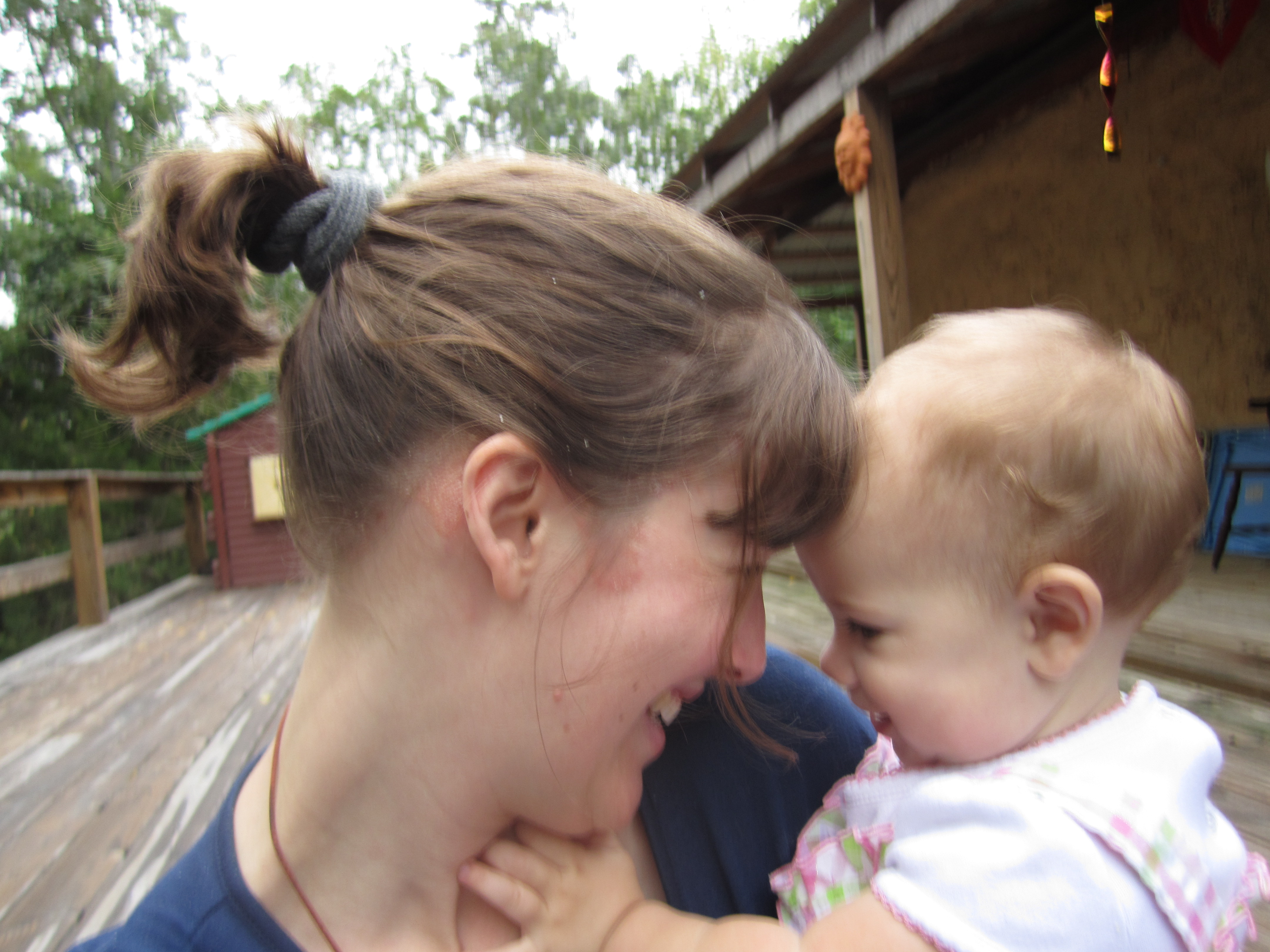
Pulling up on mama!

Standing baby!

Showing toofs! (that is my hair behind her, not hers!)

Pensive pondering

My baby companion!

Look at those eyes!

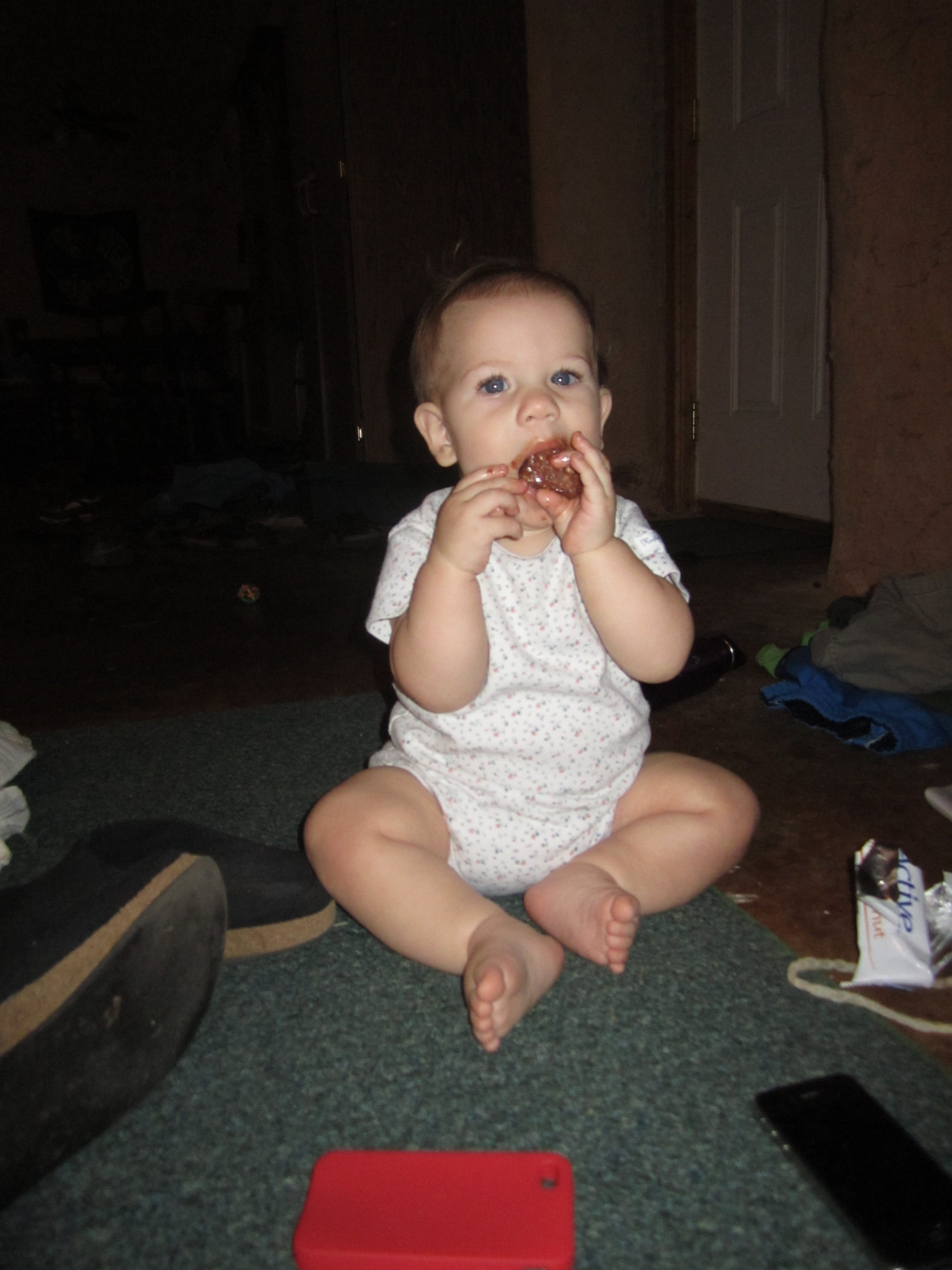
Uh oh! Located a remainder of mama's protein bar and is sucking off the chocolate part...

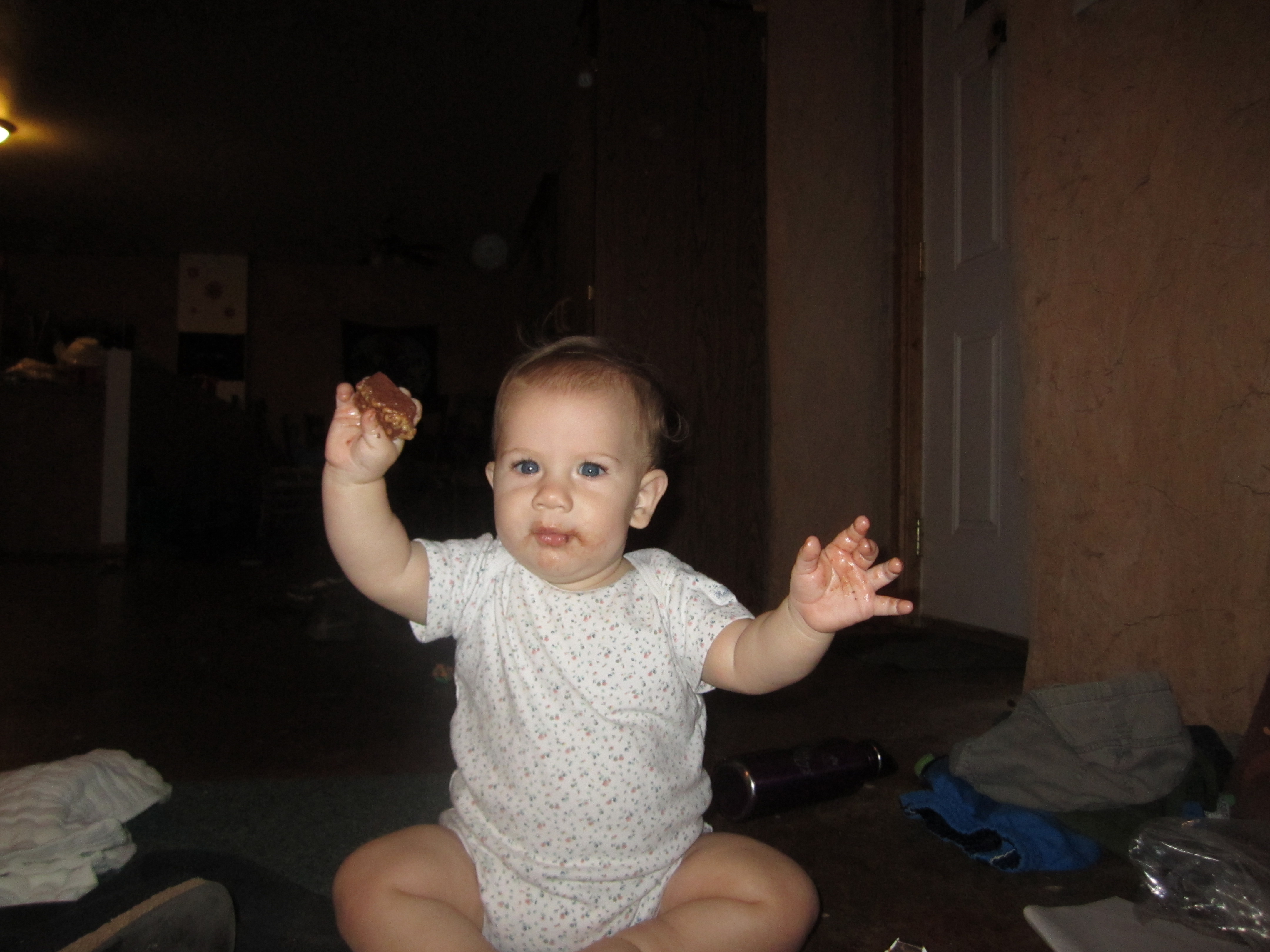
Showing her findings!

Mama is funny!

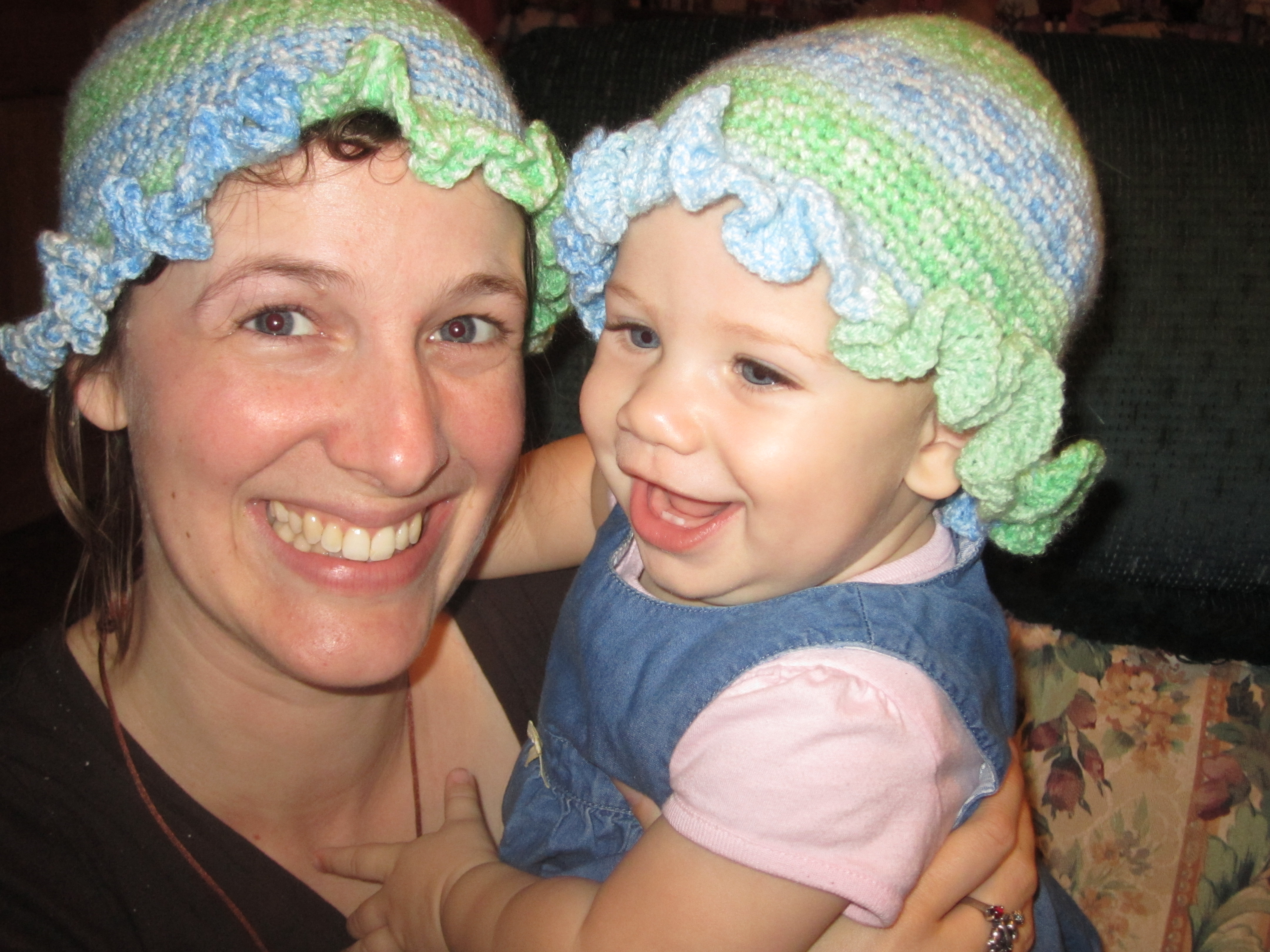
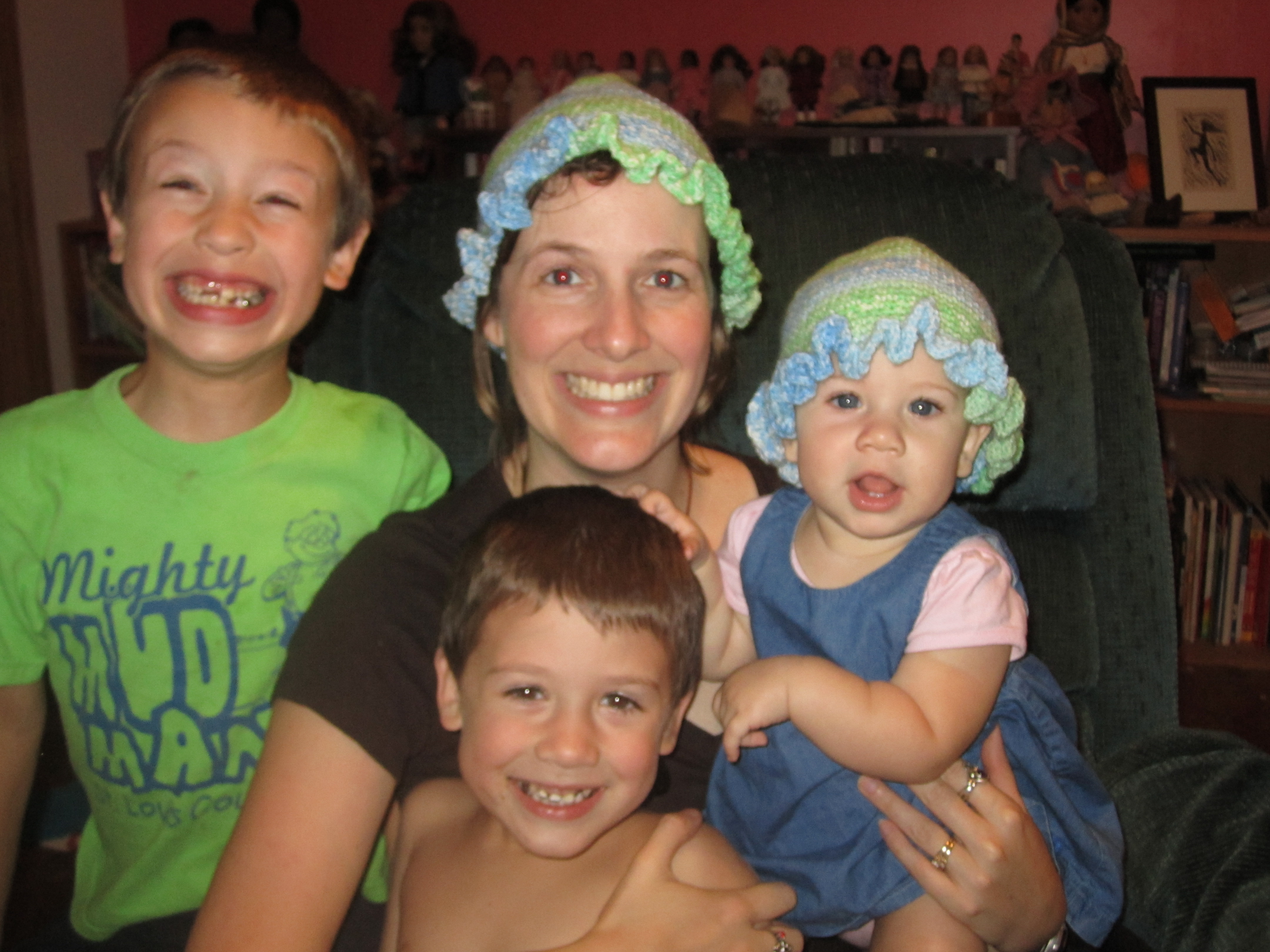
Matching hats!

On Lann's birthday, ready for fall!

Eight is Great!

Eight years ago today, I became a mother for the first time when I gave birth to a magical baby boy. Born at sunrise on a Saturday morning, he surprised us all by weighing over 8 pounds and by crying when only his head was born! He had lots of dark hair and a tan complexion and he took to “nursies” like he was born to breastfeed. He was my highest need baby and in some ways remains the most complicated one to parent—perhaps because he is the first and so always more of an “experiment.” Now, at 8, he is getting tall and is super skinny. He is still tan, but his hair is light brown now—and out of control wild if it gets more than an inch long (and even then it is crazy—he has a double crown and a super weird, uneven hairline in front! No matter how his hair is cut, it looks like we went crazy and hacked it all off). He is losing teeth like crazy and finally has learned how to read—and, more importantly, to have a thrill of discovery about it, rather than acting like it is a chore. He has been cautious and careful since birth—at 10 months old, he would babysign the word “nervous” when scared about something and he is still likely to hang back in new situations.

Pre-pregnancy, I always envisioned myself having girls, but my Lannbaby quickly showed me that being a boymom is a great thing to be and I felt content to remain exclusively a boymom if that was my destiny.

He is amazingly creative and is constantly bubbling with ideas and projects. He draws all the time and does things like make books titled, “Impossible Things to Do in Your Own Back Yard.” He is highly verbal—always has been—and is maturing in his outlook/grasp on the world. For example, just last night Mark was telling me about wanting to buy some new exercise equipment (as I told him, there are some things in life I don’t believe in, and buying exercise equipment is one of them!). I said to Mark, “sure, fine. Go ahead and buy it. It’s totally okay with me for you to spend all our money on something that will just sit in the corner. I’m fine with it, really!” Lann was lying on the bed watching us and he said, “Gee, Mom, you are really bad at guilt tripping, aren’t you?” It cracked us up!

I’m amazed at how awesome it is to have an 8 year old and a baby at the same time. He is so much help and is a great big brother to both of his siblings. It is excellent to have someone who can stand by the cart while I use the bathroom at the store, or who can play with the baby while I take a shower, or who can carry the baby out to the carseat for me so I don’t have to make two trips. I find myself feeling completely weirded out by the fact that as his baby teeth are steadily falling out, hers are coming in. Where does the time go? It spins so fast and life just keeps rolling along, each stage so vibrant, real, all-encompassing, and normal, and yet *blink* there I am with my newborn son in my arms, feeling my heart crack wide open and my boundaries becoming stretched beyond all imagining. Feeling my way along as we are birthed into our new roles together, triumphant and tender all at the same time. Challenged beyond belief in the adjustments required to my sense of self, awed by my own ability to give and to adapt, shocked by the magnitude of the changes wrought in my life by one tiny soul. I’ve said it before and I’ve said it again, in the words of Naomi Wolf,  A mother is not born when a baby is born; a mother is forged, made. Lann was the first babysmith of my life and the forging of my new self in the flames of motherhood was, and is, a potent, powerful, intense, transformative, and irreplaceable rite of passage—body, mind, heart, and soul. Thanks, baby!

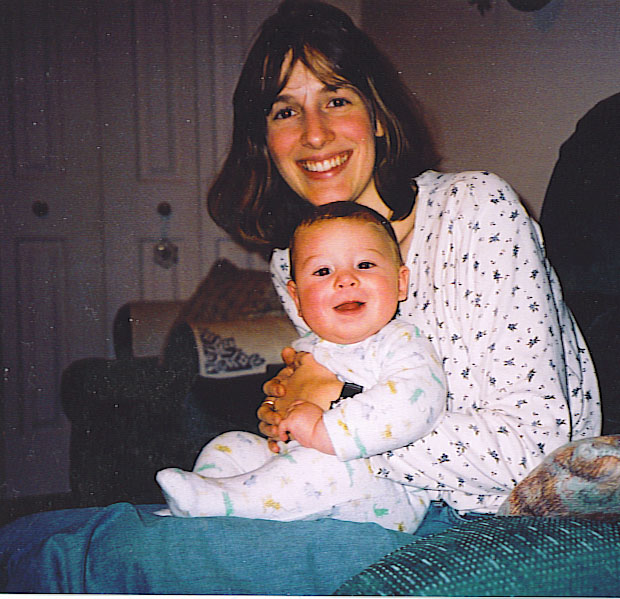
Here we are, tender and new:

Listening to a harmonica being played

Family hug

Crawling

Mohawk boy...

Peeking out!

First birthday cake!

**Blink!**

Missing teeth!

Getting ready to play laser tag for family birthday party fun!

Birthday cash this morning!

With brother and sister (here, she's trying to escape)

And, yes, I cried while I was doing this…

Perfection

Some quotes about perfection and perfectionism from the (extremely) short book Being Perfect by Anna Quindlen:

“Perhaps someday we will be able to read something over which a real person has not sweated and sworn; perhaps we will find out precisely what the thing lacks that only effort can confer. Is it soul? Passion? Vivid reality? If I had to guess, I would say it would be all three.”

About young people thinking about parenthood (reminds me of my Getting a C-Minus quote):

“You will convince yourself that you will be a better parent than your parents and their parents have been. But being a good parent is not generational, it is deeply personal, and it comes down to this: If you can bring to your children the self that you truly are as opposed to some amalgam…you will be able to teach them by example not to be terrorized by the narrow and parsimonious expectations of the world, a world that often likes to color within the lines when a spray of paint, a scribble of crayon, would be much more satisfying.”

And finally, after something bad has happened or some failure:

“Sitting there, you will fall into the center of yourself. you will look for some core to sustain you. And if you have been perfect all your life and managed to meet all the expectations of your family, your friends, your community, your society, chances are excellent that there will be a black hole where that core ought to be.”

Writing and Nursing

Today, I came across an old quote I had saved from the book The Writer’s Life. Essentially a collection of quotes from the diaries of famous writers like John Steinbeck, Elizabeth Barrett Browning, George Eliot, Mark Twain, etc., the compilers of the book went through authors’ diaries and put together a new book—it is organized in to chronological sections starting with excerpts written in youth and then thoughts about the writing process, fame, ambition, and so forth, and then concludes with thoughts about death, life’s work, and immortality.

From Rosellen Brown, this quote felt particularly relevant to me:

“I know that for me, writing has something in common with nursing the baby. I can’t do it if I don’t do it all the time. Put it aside to build up strength, the flow will dwindle and finally disappear. When the baby was at my breast ten times a day, I had a rare secret feeling that we were violating a law of nature, defying a form of entropy…One cannot hoard some things. The more I gave the baby, the more I had to give her, and had I tried to conserve myself, I would have found that I conserved nothing.”

I once read somewhere else that after you have been writing a blog for some time, you will discover that you have generated a significant body of work. I love that. I can think about blogging as “wasting time” or as something to do only when I have a few extra minutes, or, I can look at it as an opportunity to contribute to my body of work in the world. This is my 469th blog post here! Anyway, this is why I decided not to completely quit blogging, but instead to set aside some dedicated time on Wednesdays to write a post (even if it is a short one). I do find that I need the “proper” time to write, or the flow just isn’t there and can’t be forced. That isn’t true of nursing—I can do that anywhere, anytime! (Well, though it, too, can’t be forced!).

I’ve had emails from several readers wanting to read more about homeschooling and how I “structure my day.” I told my husband that and he asked, “did you say, ‘I’d like to know that too?'” ;-D I’ve also had a request to write about elimination communication. I plan to write about both these topics soon. My nursling will be 8 months tomorrow and my biggest boy will turn eight years old on the 21st, so I’d like to write about both of those occasions before tackling homeschooling and ECing.

This SO isn’t an exciting or earth-shaking post, but here it is anyway…!

Success, Parenting, and Having Each Other’s Backs

Sometimes my day is made by receiving an email thanking me for putting into words what the reader has felt, but has not been able to express. These emails/comments make my writing worth it to me—to know that I’ve made a connection across the distance and touched someone else’s life. Likewise, sometimes I can best express what I’ve felt or thought by using the words of another’s writing, that’s why I’m a quotaholic. After a long conversation with good friends on a local homeschool list about peaceful parenting, which sort of evolved into a general discussion of parenting and parenting books and whether there is a right way and whether we really have that much influence over how our kids eventually turn out, I feel drawn to share some quotes from the book Inconsolable by Marrit Ingman. I previously wrote a short post about this book and made a (funny) quiz to go with it: What Kind of Mother Are You Quiz

Inconsolable  is a memoir of postpartum depression consisting mostly of semi-humorous vignettes excerpted from the author’s life with her young son (a colicky baby who has severe eczema and food allergies), mixed in with own wry observations about life. In the context of the conversation referenced above, I feel like sharing some quotes from her about parenthood/parenting styles in general and her comments about judging other people for making different parenting choices. As I’ve noted several times before, I struggle with an ongoing sense that I can somehow figure this out once and for all and be PERFECT at last. While I’m improving (! 😉 ), I think my parenting still tends to operate from the assumption that it is possible to be perfect and do everything right.

Here’s a quote I really identified with (minus the Guinness):

There’s a certain type of parent I see often–sometimes see it in myself–who is a success-oriented person from a middle-class background, well-taught (traditionally or through self-education) and accustomed to high praise. We’re used to getting a report card or a performance review every six weeks, we’re current with Big Ideas and prone to Big Discussions over pints of Guinness, and we throw ourselves into parenting with the same right-minded stamina with which we might compare graduate programs and scholarships. We educate ourselves about various theoretical orientations on the topic, read the works of champion scholars…memorize acronyms and slogans, and align ourselves with a ‘good match.’ We study rigorously, and our parenting is like a practicum. We analyze situations and apply theories; we fasten Snappis and gently redirect toddlers with great self-satisfaction, as if we are strutting for a review committee. We meet over coffee with study groups.

This is not necessarily lamentable. It’s good to be well read, to be prepared, to invest oneself in the new role of parent. It’s just not really about the kids is it? It’s about more than just wanting to be good at what you do; it’s about wanting to be the best. We’re parenting careerists. We want to be superstars. We want other people to praise us. We want props for holding off on the antibiotics for that ear infection, delaying solids just a little longer, for buying the organic crib sheets and the shampoo that’s made with kukui nuts harvested by the indigenous people of Brazil and imported by a woman-owned business. We go that one extra mile. We exceed expectations…Is this wrong? Again, not necessarily. It’s not wrong to have ambitions, to dream of home-sewn Halloween costumes (or ones we just “whipped up” because we’re so crafty) and slow food and perfect portraits and cooperative preschool.

But we have to remember that our standards of success, of happiness, of demonstrating our love for our children are inflated. We’ll never meet them. Our reach will always exceed our grasp.

An essay I wrote pondering some similar topics was published in the summer issue of Natural Life magazine. I’ve had a lot of articles published in a lot of different places and this is only the second time that I’ve received several emails from strangers thanking me for the article. I’ve received five emails like this during September, which has really touched my heart! I look forward to taking a look at the issue myself.

Back to Inconsolable regarding her unexpected cesarean:

So that was it. I’d failed. Well, close the book on this one. Nurse Rachet was probably stuffing a Nuk into the kid’s mouth or giving him a Happy Meal. Hooking him up to an IV of Kool-Aid. He’d have to grow up in an iron lung. Maybe the other kids would use him as third base. He’d call me ‘Mother,’ and I’d sign his college tuition checks while he snuggled with a rhesus monkey made of sheepskin.

I literally laughed out loud while reading that one 🙂

And then, finally:

Mothers of the world, we’ve got to have each other’s backs. Without working together, we literally cannot survive. Because we are divided—into ‘working’ and ‘stay-at-home’ parents, into ‘natural’ or ‘attachment parents’ and ‘mainstream’ parents–we remain marginalized as a group. We just haven’t noticed, because we’re too busy shooting each other down, trying to glean little nuggets of self-satisfaction from an enterprise that is still considered less significant than paid work…

Much as I strive to be accepting of everyone and to honor the dignity and worth of each human being (like a good human services pro!) I do see this tendency toward division sometimes sneaking out in myself—either in thought, or conversation, even though my heart truly lies in helping other women. In helping other mothers. This can’t be done through judgement or secret convictions of superiority!

At the end of my own Mindful Mama essay in Natural Life, I write:

Perhaps parenting authentically, from the heart, can’t be learned in a book or through application of a theory, but only
through being there and being aware – of both the beauty and the messiness. Perhaps it means a loosening of attachment to attachment parenting as a prescribed set of practices and beliefs. Perhaps it means being a more loving friend to my own imperfect self.

Sometimes I have more “figured out” than I give myself credit for…

Being Succulent

From the The Bodacious Book of Succulence by SARK:

We are succulent with our shredded fantasies, our unread books, our misguided perfectionism, our hiding in bed eating rows of cookies, or neurotically running to and away from things. We are succulent just like this. Just the way we are NOW!….

I like the way this book emphasizes that you are succulent right NOW—you don’t have to do anything special to be it (of course, I still get the “do something and you’ll finally be wonderful” message anyway!).

I had a rough weekend in which I felt overwhelmed by to-dos and “shoulds” and was crabby and snappy at my family and then extremely hard on myself about being crabby and snappy and so on and so forth in an endless spiral of ick. I have known for a long time that I honestly think that if I just read the right book and did the RIGHT thing, I would finally be PERFECT!!!! And, it just sucks when I remember…again!…that I’m not and that it isn’t possible and that the pursuit of doing it all “right,” really ends up making me less than in many respects in the end. I also feel like all the reading I do can mute my own intuition—how can I know what I truly feel and believe, if the words of 5 dozen self-help authors are chasing around inside my brain and each making the “most sense”? (I feel similarly about parenting books—I try so hard to parent the “right” way and wonder if I’ve lost touch with my own sense of what the right way is, by always reading and trying to incorporate other people’s right ways…?) Seriously, there was so much messy should in my brain this weekend I honestly could not distinguish what I really wanted to do from the shoulds—right down to, “I should be having more fun and being a more delightful person.”

P.S. The spellcheck attempted to change, “neurotically” in the quote above to “erotically.” ;-D

Tried to get a family picture of all our succulence—and, fittingly, it turned out kind of blurry ;-D


Simple Pleasures

Saved quote from 2007 (in book Simple Pleasures):

When we lack proper time for the simple pleasures of life, for the enjoyment of eating, drinking, playing, creating, visiting friends, and watching children at play, then we have missed the purpose of life. Not on bread alone do we live, but on all these human and heart-hungry luxuries.” –Ed Hayes

I need to stick this to my forehead!

And, a favorite quote that I used to have on my FB page:

A simplified home feels friendlier. A simplified life seems easier. And remarkable joy comes from simple things–like having work to do that matters, and having people to love who matter a lot.” –Victoria Moran (Shelter for the Spirit)

Milk, Money, & Madness

In early August, I received a press email from Evenflo about their “in-law feeding frenzy” video. While I recognized they were attempting to be playful and funny, I chose not to share the video with my readers because I found several elements of it problematic. Rather than recognize the opportunity to create an internet stir over the video, I just wrote back to the company and told them, “I try not to encourage the notion of other people having a chance to feed the baby, so I do not plan to use the video myself—I would have been more pleased with it if somehow mom stood her ground and helped in-laws see that there are other ways to be involved with the baby other than by feeding it expressed milk. I don’t promote the idea that mothers need to pump, ‘just because.’” Considering what a controversy has now boiled up this week over Evenflo’s “funny” breastfeeding video, I confess I sort of feel like I missed my opportunity for a major wave of blog traffic by exposing the ad and expositing on the problems therein when I received it in August! 😉  However, when considering the controversy, I thought of some wonderful quotes I’d saved to share from the book Milk, Money, & Madness and so I’m sharing them instead.

Dia Michels is one of the co-authors of Milk, Money, and Madness and I’ve actually heard her speak twice—once in 2003 when I was pregnant with L and then in 2007 at the LLL of MO conference. I’m surprised at how thoroughly riveting a book about the “culture and politics of breastfeeding” can be and I highly recommend it to breastfeeding and women’s health activists.

In perfect response to the Evenflo video, we have this quote:

“Babies need holding, stroking, dressing, bathing, comforting, burping, and, within a short time, feeding solids. Dad can do every one of these. The desire to participate should not be confused with the need to give the baby the best of what each partner has to offer.”

I hear from people SO often that they want Daddy to be able to participate in baby care by giving the baby a bottle. There are LOTS of things that fathers can do for their babies, other than feeding—bathing, snuggling skin-to-skin, diaper changes, playing, babywearing, and just plain walking around holding the baby while mom takes care of her own needs.

And, here is an excellent quote with regard to public breastfeeding/breasts as sexual objects:

“When the attitude is taken that a woman’s breasts belong to her and no job is more important than caring for one’s young, the confusion between breastfeeding and obscenity goes away.”

And, then considering the argument that bottle feeding “liberates” women from the tyranny/restrictiveness of breastfeeding:

The liberation women need is to breastfeed free of social, medical, and employer constraints. Instead, they have been presented with the notion that liberation comes with being able to abandon breastfeeding without guilt. This ‘liberation,’ though, is an illusion representing a distorted view of what breastfeeding is, what breastfeeding does, and what both mothers and babies need after birth. [emphasis mine]

I’ve noted before that I am a systems thinker and I think this way about breastfeeding as well as many other experiences—breastfeeding occurs in a context, a context that involves a variety of “circles of support” or lack thereof. Women don’t “fail” at breastfeeding because of personal flaws, society fails breastfeeding women and their babies every day through things like minimal maternity leave, no pumping rooms in workplaces, formula advertising and “gifts” in hospitals, formula company sponsorship of research and materials for doctors, the sexualization of breasts and objectification of women’s bodies, and so on and so forth. According to the book, “…infant formula sales comprise up to 50% of the total profits of Abbott Labs, an enormous pharmaceutical concern.” And the U.S. government is the largest buyer of formula, providing it for something like 37% of babies. (I should have written that quote down too!)

I have a special interest in how women are treated postpartum and Milk, Money, and Madness has some gems to share about postpartum care as well:

An entirely different situation exists in societies where technology is emphasized. The birth process is seen from a clinical viewpoint, with obstetricians emphasizing technology. A battery of defensive practices are employed, some of which are totally irrelevant to the health of either mother or infant. Skilled technicians spend their time and the family’s money on identifying the baby’s gender and performing various stress tests. All the focus is geared toward the actual birth. After the birth, mother and baby become medically separated. The infant is relegated to the care of the pediatrician, the uterus to the obstetrician, the breast abscess to the surgeon. While the various anatomical parts are given the required care, the person who is the new mother is often left to fend for herself…All the tender loving care goes flows to the infant; the mother becomes an unpaid nursemaid. [emphasis mine]

When I do breastfeeding help with mothers, I always make sure I address the whole woman and do not  focus only on the mechanics of breastfeeding. Recently a mother told me, “I don’t know if it was your breastfeeding advice or just the encouragement that helped most, probably both.” Women need both—“technical assistance” and emotional support. Sometimes, all they need is the emotional support and they can figure out the rest with some undisturbed time with their babies. The pendulum in breastfeeding support is shifting from active, “education” based strategies, to the recognition that often the best we can do for mothers is give them time to get to know their babies. Rather than offering positioning “advice” and “breastfeeding management suggestions,” we need to give her space, stand aside, and offer encouragement as she discovers her baby and the biological dance they are hardwired to engage in. The Milk quote continues with:

This may appear to be a harsh evaluation, but it is realistic. In western society, the baby gets attention while the mother is given lectures. Pregnancy is considered an illness; once the ‘illness’ is over, interest in her wanes. Mothers in ‘civilized’ countries often have no or very little help with a new baby. Women tend to be home alone to fend for themselves and the children. They are typically isolated socially and expected to complete their usual chores, including keeping the house clean and doing the cooking and shopping, while being the sole person to care for the infant… (emphasis mine)

According to the U.S. rules and regulations governing the federal worker, the pregnancy and postdelivery period is referred to as ‘the period of incapacitation.’ This reflects the reality of the a situation that should be called ‘the period of joy.’ Historically, mothering was a group process shared by the available adults. This provided not only needed relief but also readily available advice and experience. Of the ‘traditional’ and ‘modern’ child-rearing situations, it is the modern isolated western mom who is much more likely to find herself experiencing lactation failure.

I think these quotes are important because I think there is a tendency for women to look inward and blame themselves for “failing” at breastfeeding. There is also an unfortunate tendency for other mothers to also blame the mother for “failing”—she was “too lazy” or “just made an excuse,” etc. We live in a bottle feeding culture; the cards are stacked against breastfeeding from many angles–economically, socially, medically. When I hear women discussing why they couldn’t breastfeed, I don’t hear “excuses,” I hear “broken systems of support” (whether it be the epidural in the hospital that caused fluid retention and the accompanying flat nipples, the employer who won’t provide a pumping location, the husband who doesn’t want to share “his breasts,” the mother-in-law who thinks breastfeeding is perverted, or the video that promotes expressing milk so other people can feed the baby). Of course, there can actually be true “excuses” and “bad reasons” and women theoretically always have the power to choose for themselves rather than be swayed by those around them, but there is a whole lot that goes into not-breastfeeding, besides the quickest answer or what is initially apparent on the surface. As I said above, breastfeeding occurs in a context and that context is often one that DOES NOT reinforce a breastfeeding relationship. In my six years in breastfeeding support, with well over 600 helping contacts, I’ve more often thought it is a miracle that a mother manages to breastfeed, than I have wondered why she doesn’t.

For more about the relationship between birth and breastfeeding, check out my previous post: The Birth-Breastfeeding Continuum.
Check out those exclusively breastfed thighs!
Book Review: Homebirth in the Hospital

Homebirth in the Hospital
by Stacey Marie Kerr, MD
Sentient Publications, 2008
Softcover, 212 pages
ISBN: 978-1-59181-077-3
www.homebirthinthehospital.com

Reviewed by Molly Remer, MSW, ICCE, https://talkbirth.wordpress.com

I would venture to say that most midwifery activists and birth professionals have said at some point, “what she wants is a homebirth in the hospital…” This comment is accompanied with a knowing look, a bit of head shaking, and an unspoken continuation of the thought, “…and we all know that’s not going to happen.”

Well, what if it is possible? A new book by Dr. Stacey Kerr, Homebirth in the Hospital, asserts that it is. She was originally trained at The Farm in TN (home of legendary midwife Ina May Gaskin) and after going to medical school realized that she, “…needed to balance my new knowledge with my old priorities. I missed the feeling of normal birth, the trust that the birthing process would occur without technology, and the time-tested techniques that help women birth naturally. And so it was that I went back to midwives to find the balance.”
If you are a dedicated homebirth advocate, I recommend reading Homebirth in the Hospital with an open mind—clear out any cobwebs and assumptions about doctors, hospitals, and birth and read the book for what it is: an attempt to create a new model of hospital birth. What Dr. Kerr proposes in her book is a model of “integrative childbirth”—the emotional care and support of home, while nestled into the technology of a hospital.

The opening chapter explores the concept of integrative childbirth and “the 5 C’s” of a successful integrative birth: choices, communication, continuity of care, confidence, and control of protocols (“protocols are the most disempowering aspect of modern maternity care…”).

This section is followed by fifteen different birth stories, beginning with the author’s own (at a Missouri birthing center—my own first baby was born in a birth center in Missouri, so I felt a kinship there).

The births are not all happy and “perfect,” not all intervention-free, and most are quite a bit more “managed” and interfered with than a lot of homebirthers prefer (one is a cesarean, several involve epidurals or medications). I, personally, would never freely choose a “homebirth in a hospital” (I also confess to retaining a deep-seated opinion that this phrase is an oxymoron!). However, that is not the point. Over 90% of women do give birth in a hospital attended by a physician and I appreciate the exploration of a new model within the constraints and philosophy of the hospital.

The book closes with a chapter called “how to be an integrative childbirth provider.” The book has no resources section and no index.

I certainly hope that doctors read this book. I am also glad it is available for women who feel like homebirth is not an option or not available and would like to explore an integrative approach. Even though my opinion is that none of the births are really “homebirths in the hospital” as most bear little resemblance to the homebirths I know and love, unlike the content of the standard hospital birth story, they are deeply respectful births in the hospital and that’s the issue truly at the heart of this book.

—-

Disclosure: I received a complimentary copy of this book for review purposes.