Archives

Spontaneous Birth Reflex

Why do we, then, continue to treat women as if their emotions and comfort, and the postures they might want to assume while in labor, are against the rules?

– Ina May Gaskin (via Birth Smart)

I’ve  been intrigued for some time by Michel Odent’s description of what he calls the “fetal ejection reflex.” Personally, I would like to rename it the “spontaneous birth reflex.” Essentially, this reflex involves the spontaneous birth of the baby without coaching or conscious effort on the part of the mother. It is most likely to occur when the mother feels very safe and very private, which may be why we do not read descriptions of it occurring during many births. In an article about the fetal ejection reflex Odent writes: “During the powerful last contractions the mother-to-be seems to be suddenly full of energy, with the need to grasp something. The maternal body has a sudden tendency to be upright. For example, if the woman was previously on hands and knees, her chest tends to be vertical. Other women stand up to give birth, more often than not leaning on the edge of a piece of furniture. A fetus ejection reflex is usually associated with a bending forward posture.

Flicked forward hips?

In the book Optimal Birth: What, Why & How, which was heavily influenced by the work of Odent, the author frequently describes spontaneous birth reflex occurring with a swift “flicked forward” motion of the mother’s hips. I found the description curious at the time that I read the book, not really conceptualizing how one would flick one’s hips forward when pushing out a baby. However, following the birth of my daughter last year, I was completely amazed to hear my husband describe the pushing stage in these words, “…you were down on your hands and knees, but then you pushed up and moved your hips forward and suddenly you were holding her.” I would describe her birth as involving an authentic spontaneous birth reflex much like Odent and Sylvie Donna (the author of Optimal Birth) describe. This is what I wrote three days after her birth:

Shortly following a spontaneous birth reflex!

I was down on hands and knees and then moved partially up on one hand in order to put my other hand down to feel what was happening…her head pushed and pushed itself down as I continued to support myself with my hand and I moved up onto my knees, with them spread apart so I was almost sitting on my heels and her whole body and a whole bunch of fluid blooshed out into my hands… I didn’t realize until some moments later than both Mark and Mom missed the actual moment of her birth. Mark because he was coming around from behind me to the front of me when I moved up to kneeling…I had felt like the pushing went on for a “long” time, but Mark said that from hands and knees to kneeling with baby in my hands was about 12 seconds.

via Alaina’s Complete Birth Story « Talk Birth.

Birth without pushing?

I’ve been meaning to write about the experience for some time and then I received a comment on an older post I wrote titled Pushing the issue of pushing in labor… which addresses physiological pushing vs. coached/directed pushing. The mother wrote: “I would so love to give birth without pushing..I hope I can do this without pushing but is it really possible?? If it’s possible, why isn’t it practiced more widely?”

While I did not experience such a dramatic spontaneous birth reflex with any of my other births, Yes! It IS possible. There are a variety of reasons why it is not practiced more widely, two common ones being that many mothers do not give birth in the atmosphere of privacy that facilitates the reflex and secondly because many birth attendants ascribe to the notion that 10 centimeters of dilation = time to push, regardless of what mother’s body is telling her to do. With my own first baby, I was checked at 10 centimeters and told I could push whenever I felt the urge. While no one coached or directed me to begin pushing, I felt like I “should” be doing so and so start to experiment with actively pushing a little with contractions. It took a little over an hour before my son was finally born. I never felt an intense or irresistible or spontaneous urge to push. With my second baby, I felt literally driven to my knees by the force of the birthing energy. I did not consciously push him out, but it definitely took several pushes and maybe about 15 minutes to push him out. There was a process of pushing involved with his birth. With my daughter, as I describe above, it was like an irresistible force gripped my body and she just came flying out with no directed physical or mental involvement from me.

Trusting the urge

I shared the mother’s question with the CfM Facebook page in order to get some other perspectives on births with “no pushing.” I received several comments to share with the questioning mother-to-be. Most mothers referenced the idea of pushing when their bodies told them to. It is difficult to communicate this with someone who has not yet experienced it—how to recognize the “urge” and what it really means to “push when your body tells you to.” I also suspect it is frustrating for women who are honestly and courageously seeking “answers” in order to best prepare their bodies, minds, and hearts for birth, to receive responses like, “just trust your body,” which can feel trite or dismissive to the pregnant woman who hungers to know. However, then once on the other side of the birthing bridge, we discover there are really few better answers to give. I believe the capacity to trust that her body will communicate the unmistakable urge to push comes with an environment where the mother is treated with dignity and respect. She has her need for privacy honored and that she is mentally able to surrender to the birthing process and let her body take over—no attempting to wrestle with or control the birth, but to dig deep and then to let go.

Personal experiences in birthing without pushing:

ARA shared: “I will say that with my last birth I started out with having coached pushing. Then I felt my body take over. The nurse told me to stop pushing and I told her I can’t my body is doing it on it’s own. It was the most awesome feeling in the world.”

And AK shared: “I pushed when my body said to do so. It was relieving!! lol

EW wrote that she, “highly recommend physiological pushing over directed pushing. listen to your body. Consider hypnobirthing if you are wanting to birth without pushing, it encourages laboring down.

DF had this experience to share: “I don’t know if this is the same thing but with my first child, the nurse didn’t listen to me when I said I thought it was time and when my midwife came to check I was crowning, I had ‘labored down’ as she called it by my body doing the work. So I only actually pushed once on her cue and my baby was here. The second child the same happened automatically I wasn’t even aware it was happening…..maybe subconsciously?

NB shared that, “Because of my uterine prolapse issues, I do not push until the baby is essentially crowning on his own. I also don’t have anyone check to see how far dilated I am (since baby #1, that is) so when that burning feeling starts to get really strong I try a gentle little push to see what happens, and that usually initiates complete crowning… at which time, despite my best efforts, I CANNOT control the pushing urge any longer because I need to get that baby out!! 😉 I think it does make ‘transition’ longer in the sense that perhaps birth would have happened earlier if I’d begun pushing before the baby slid down that far on his/her own, but it makes the pushing stage much shorter and is certainly better for the baby – and me, too, since I’m not putting that strain on my uterine ligaments until the very last seconds.”

JD shared her different experiences: “With my first baby, I felt the need to push waaaay too early. (Baby turned posterior; I had back labor contractions less than a minute apart for several hours.) I spent over an hour pushing, but I can’t blame the wonderful midwives who attended my homebirth. They told me several times that it wasn’t time to push yet. But I was in so much pain, and had exhausted all my coping strategies, and just had to get that baby OUT! Then we had a dystocia, and everybody ended up yelling at me to push even though I wasn’t having a contraction, and my very calm, collected midwife sounded worried, so I pushed some more. Lots of pushing, lots of pain, lots of tearing. My second baby was smaller and lined herself up better. I didn’t push until the very end, and she came in a big hurry and surprised everybody. Nobody told me to push, and I barely needed to. So, yes, it can be done, but there are more factors at play than your doctor/midwife. I had two very different pushing experiences, both at home with the same midwife.

G wrote: “Unmedicated, midwife-assisted home birth, pushed for 3 hours, never really got the hang of it. Baby was not quite lined up right and was stuck, crowned, for an hour. I was exhausted and basically checked out. Eventually it was gravity that got him out – they hauled me upright and he basically fell out of me. I look back and wonder if maybe I should have taken more of a break after dilation – I FELT like I was ready to push, but who knows if I actually was. Maybe he would have labored down on his own if I’d just zonked out.

Why isn’t it encouraged?

I’ve already addressed several reasons why and then LDM shared these important points: “It’s not widely practiced because the obstetric timetable doesn’t allow for it. The physiological urge to push will be there, for some women sooner than others. Most care providers are taught to coach pushing (after all we all know women just can’t do the job they were designed to do) and to have that coached pushing happen under certain conditions (wait for the dr! Ok, doc is here!) Some women say they never felt any urge- they may have had normal physiological signals quelled from drugs or other common labor practices and/or they were not given time to rest and sleep after fully dilating. There is such urgency to force a baby out once she reaches 10, but if she is tired and cannot feel her body pushing, then mom probably needs a nap & maybe a snack. Letting a woman take that break is unheard of in hospitals.

And additionally, Mommy Baby Spot offered this tip: “Stay away from “helping” drugs so that your body knows what to do and learn different positions so that your body puts itself in the prime position to get the baby out with the minimum of hassle (which is different for everyone).

I thank the women who shared their experiences for their thoughts and I wish the mother who posed the question the very, very best with her upcoming birth. May you birth smoothly, peacefully, and spontaneously in harmony with your body’s wisdom, cues, and urging!

(Note: personal experiences are reprinted directly as shared on the CfM FB page, but have had some spelling corrected for readability.)

Sign up for my Brigid’s Grove Newsletter for resources, monthly freebies, and art announcements.

Birth Plan Item #1: Leave My Cervix Inside My Body!

Some time ago I read several articles in Midwifery Today about birth in the Ukraine. Apparently, it is a routine practice immediately postpartum to use two “shoe horn” shaped devices to pull the cervix out of the woman’s body to examine. Yes, I think that warrants repeating–manually pulling out the cervix to look at! (no pain medications). This is so patently horrible and unnecessary that I had a visceral response to reading about it–my uterus hurt.

U.S. maternity care routines

However, as I reflected on my reaction, I began to wonder if the practice is any more strange or disturbing that some U.S. maternity care routines? I still feel like cervix-pulling-out ranks pretty high on the horrible factor, but I also recognize that it is filtered through my cultural lens of what I’m used to—“normal” (i.e. culturally acceptable) birth practices in the U.S. (such as Pitocin injection immediately following most normal births regardless of indication and so on and so forth). We have any number of questionable medical care practices in this country too, but because I’m used to them they register as “normal.” Of course, this doesn’t mean I approve of them or fail to notice that they are not evidence-based, but I accept them as possible occurrences and I’m certainly not surprised to read about them over and over again, or shocked when my clients experience them during their births.

One of the articles was about birth in a Ukrainian “birth house” and the other was a composite of observations about birth in the Ukraine in general. Sometimes there is a tendency amongst midwifery supporters to romanticize birth and midwifery care in other countries and to vilify the U.S.—if you are a Ukrainian woman, this is clearly misplaced!

My first thought when reading the essays was, “Wow! The U.S. system isn’t so terrible after all!” But then, I tried to imagine the U.S. birth culture seen through completely fresh eyes, as I had just viewed the cervix-pulling technique. How would facets of hospital birth care in the U.S. appear to me if I was just hearing about them for the first time? As gross human rights violations?

Though I cannot make it have the same raw emotional and physical shock to me as cervix-pulling-out, I can only imagine how an episiotomy might sound to my imaginary fresh eyes: “then the doctor took some scissors and cut through the skin and muscles at the base of the woman’s vagina.” Or, the same with the not uncommon addition of, “as she begged ‘please don’t cut me! No!'”

I also read with sadness and dismay about the emotional maltreatment of Ukrainian women in labor and how (in hospitals) they are frequently denied the companionship of their husbands. Is this really more awful than women being coerced into unnecessary cesareans or even more basic, being denied food and drink throughout their labors? No, not really, just less familiar.

What do all women deserve?

While it is nice to recognize that there are things that women birthing in U.S. hospitals can be very grateful for, there is not an official continuum or hierarchy of “better” bad things to happen to birthing women regardless of country of residence. Humanized care is humanized care. Women worldwide deserve a safe environment, a respectful caregiver, continuous emotional support, physically responsive care, evidence-based medicine, and to have their cervixes and uteruses left inside their bodies.

(P.S. In case anyone is interested, “cervices” or “cervixes” and “uteri” or “uteruses” are both acceptable plurals)

All That Matters is a Healthy Husband (or: why giving birth matters)

It is your wedding day. You have been planning this day since you got engaged nine months ago. You are happy, excited, and a little nervous. When you get to the church, you are told that it is necessary to switch your wedding to the courthouse instead—it is disappointing, but the minister’s assistant reminds you that the courthouse is probably a safer location for your wedding because there are more people on staff there to handle any problems that might arise. When you arrive, you are told that your minister isn’t going to be there for the ceremony after all, but there is a perfectly good justice of the peace available instead.

You ask when the ceremony can begin and the clerk tells you not until your fiancé’s heart rate has been monitored for twenty minutes—“We need a baseline strip on him, hon. After all, you do want a healthy husband out of all this, don’t you?!” she says.

You are asked to change out of your wedding gown and into a blue robe. When you express your dismay, you are reminded that your dress could get messy during the wedding and also, “Why does it really matter what you’re wearing? In the end you’ll have your husband and you’ll be married and that’s really what counts.”

Next, the clerk starts an IV in your hand because, as she explains, you might get dehydrated while you wait for your fiancé.

I have my favorite juice here, I’ll drink that instead,” you reply.

No, no dear. No juice. You could aspirate it and die if you end up needing surgery.”

SURGERY!” you exclaim, “Why would I need surgery? I’m just getting married!

The clerk gives you a knowing glance, “Honey, about forty percent of women who get married here need surgery before their marriages are finalized. This is an excellent courthouse! We do everything possible to make sure you have a healthy husband when you leave here. Isn’t that what you want?

Yes,” you reply weakly.

Finally, the other clerk signals that your fiancé is ready. You turn to look at him and see that he has a monitor strapped to his chest to monitor his heart rate and that he has an electrode on his scalp. You smile at him and prepare to say your vows—you’ve waited for this moment for so long! But, as you begin to speak, the clerk tells you to stop making so much noise. You start to cry in confusion and embarrassment and she tells you that you really need to get control over yourself.

She calls over several other clerks who stand near you and they all begin chanting loudly, “Say I DO! Say I DO!

Wait,” you protest, “What about our vows?”

No time for that—you’ve got to get married as quickly as possible. Husbands can only bear to stand at the altar for a short time before they start showing signs of distress—you wouldn’t want anything to happen to your husband would you? Now, say ‘I DO,’ say ‘I DO’!!

So, you say the words, feeling a sense of dismay at it not being like you had planned, but excited to finally be married to your beloved. You turn to your new husband and reach out for him eager for your first married kiss, but the clerk grabs his arm and tugs him away after her.

Wait!” you call, “I want to see my husband!”

Sorry,” is the reply, “He needs to be taken to the new husbands’ lounge for observation.”

Observation of what?”

Weddings are stressful for husbands; we need to make sure he is all right. Now wait here, while the other clerk brings you a wheelchair to take you to your waiting room.”

Instead of leaving for your honeymoon, you end up staying at the courthouse for three days. You keep asking to see your husband, but the clerk tells you he needs to gain some weight before he can leave and that he also needs some more blood drawn. She also lets you know that he has finally stopped complaining about his spinal tap.

Spinal tap?! Your dismay shows on your face and she tells you, “Come on! You’ll be married for the rest of your life! A few hours of separation isn’t going to hurt either one of you. You’ll have plenty of time with him after you get home and will probably just get fed up with him then! What really matters now is that your husband is healthy.”

Yes, of course…

Finally, you get to go home, but you feel distant and sad. Your wedding was nothing like you’d dreamed of and you feel disappointed and betrayed. You enjoy being married and snuggling with your new husband, but you keep thinking about your wedding day and all of your ruined plans to make it special. When you try to tell your mother how you feel, she tells you that you should be grateful, at least your husband is nice and healthy.

When you tell your best friend about your disappointment, she tells you it is time to get over it—“Your wedding is just one day of your entire life. It is the marriage that really matters in the end. You only get married once, but in the end, you’re married and you’ve got a healthy husband and that’s really what counts, not how you get there!

You tell another friend about your ruined plans and she reminds you that you are lucky your husband is healthy and that it is selfish of you to keep thinking about your wedding. It is over and you’ve got your nice healthy husband to keep you busy now.

Yes, but I feel like I missed out,” you venture.

On what? Weddings are SO overrated. It isn’t like you get a medal for having a beautiful wedding or anything. People have weddings every day.”

You stop sharing your feelings, but you can’t shake the memories. What you expected to be a beautiful day filled with love and celebration was not and you feel a real sense of grief at the loss of your dreams. You know you shouldn’t feel this way. You know that what really matters is your healthy, happy husband, but you keep wondering if your wedding really had to be that way. Yes, you love your husband and you are so happy that he is healthy, but you also wonder if that really is all that matters. Don’t you matter too? Doesn’t your relationship matter? What about respect, dignity, love, and self worth? Don’t those matter too? Wasn’t this a special life transition for your family? Wasn’t it the beginning of a special relationship together and couldn’t that relationship have been celebrated, honored, and treated as worthy of care and respect?

————————————————————————————————————

Notes: I originally wrote this essay in 2007. It was retained for publication by Mothering magazine, but did not end up making it in before the print publication ceased. It was then retained for publication by Midwifery Today, but has not yet appeared. I decided it is FINALLY time for it to see the light of day!

I was inspired to write this essay after reflecting upon the similarities between weddings and births—both mark the beginning of a new form of relationship and a change to the family structure and to individual roles in society. Yet, in our culture, one of these transitions is celebrated as a milestone of adult life and the value of honoring the first steps in life as new partners in a relationship is a given. The other is institutionalized and mechanized and the partners’ individuality is minimized or ignored. Much preparation, energy, time, and finances are invested in planning a lavish wedding and you are expected to expect things to go beautifully, perfectly, and as planned. If they didn’t and your wedding was ruined, most people would say, “It is awful that your wedding was ruined! Wow!” and not call into question your love of your husband or your commitment to your new role as his wife. The wedding ceremony is respected as having value in its own right. This is not true of birth, which is widely viewed as unimportant in terms of how it happens, as long as the result is a “healthy baby.”

Molly Remer, MSW, ICCE is a certified birth educator, writer, and activist. She is a breastfeeding counselor, editor of the Friends of Missouri Midwives newsletter, and a professor of Human Services. Molly has two wonderful sons and one delightful daughter and lives in central Missouri. She blogs about birth, motherhood, and women’s issues at http://talkbirth.me and is the author of the miscarriage memoir Footprints on My Heart.

Some reminders for postpartum mamas & those who love them

Postpartum with Alaina, February 2011

I recently finished a series of classes with some truly beautiful, anticipatory, and excited pregnant women and their partners. I cover postpartum planning during the final class and I always feel a tension between accurately addressing the emotional upheavals of welcoming a baby into your life and marriage and “protecting,” in a sense, their innocent, hopeful, eager, and joyful awaiting of their newborns.

This time, I started with a new quote that I think is beautifully true as well as appropriately cautionary: “The first few months after a baby comes can be a lot like floating in a jar of honey—very sweet and golden, but very sticky too.” –American College of Nurse-Midwives

Matrescence

In Uganda there is a special word that means “mother of a newborn”–-nakawere. According to the book Mothering the New Mother, “this word and the special treatment that goes with it apply to a woman following every birth, not only the first one. The massages, the foods, the care, ‘they have to take care of you in a special way for about a month.'”

There is a special word in Korea as well. Referring to the “mother of a newborn child,” san mo describes “a woman every time she has had a baby. Extended family and neighbors who act as family care for older children and for the new mother. ‘This lasts about twenty-one days…they take special care of you.'”

These concepts—and the lack of a similar one in American culture—reminds me of a quote from Sheila Kitzinger that I use when talking about postpartum: “In any society, the way a woman gives birth and the kind of care given to her and the baby points as sharply as an arrowhead to the key values of the culture.” Another quote I use is an Asian proverb paraphrased in the book Fathers at Birth: “There is a proverbial saying in the East: The way a woman takes care of herself after a baby is born determines how long she will live.” While this quote usually gets some nervous laughter, I think it is impresses upon people how vital it is to plan for specific nurturing and care during this vulnerable time.

Dana Raphael, the author of Breastfeeding: The Tender Gift, who is best known for coining the word “doula” as it is presently used, also coined another valuable term: matrescense. “Nothing changes life as dramatically as having a child. And there was no word to describe that. So we invented the word—matrescence—becoming a mother.”

The postpartum law of threes

I also share the “law of threes” with my clients which I learned from an article titled “Baby Moon Bliss” by Beth Leianne Curtis in Natural Life, Fall 2008:

A helpful tool I share with students and clients of mine is what I describe as the ‘law of threes’ when beginning the postpartum period. The first three days after your baby is born, try to stay in bed or at least in your bedroom. Many other cultures worldwide have much longer ‘lying in’ periods for mother and baby. If you can give yourself the much-deserved rest of focusing on breastfeeding, sleeping, eating, and recovering from the work of labor, your body and your baby will thank you for it. While birth is a healthy, normal event, honor the recovery process that your hard working body needs and deserves. The less you physically do in the initial few days following childbirth, the better and stronger you will feel in the weeks ahead. …Next, prepare to have three weeks of meals readily available for breakfast, lunch, and dinner….” (don’t forget plenty of snacks at easy reach for breastfeeding!)

Finally, understand that those first three months after birth are truly a time to embrace the unexpected…for some mothers, after three months is when breastfeeding really begins to be fun and easy. Many parents find that at the end of this [fourth trimester] transitional time, baby has moved through any colicky phases and that suddenly baby looks and acts more like a ‘real person.’…Physically, this is when your body begins to return to its pre-pregnancy state.

When I present about this topic to groups, sometimes I hear the following types of remarks: “Getting back out made me feel better, I would be miserable lying around in bed all day”—at the time when my own first baby was born, I would have said this was true for me as well, but looking below the surface shows me something else. Someone who hadn’t planned for a nurturing, comforting, supportive postpartum cocoon and who hadn’t given herself permission to rest, relax, and restore. The same high-achieving style that served me well in the workplace did not nourish me physically or emotionally as a tender new mother. I firmly believe that a nurturing postpartum downtime lays foundation for continued “mother care” self-nurturing for the rest of your life.

Then, in my notebook, I found the following relevant quotes that I had saved from the book Natural Health After Birth by Aviva Jill Romm:

“Too often women develop the mindset that a good mother gives all and takes nothing for herself. Remember, this is a great cultural fallacy. A good mother gives of herself to her children, but she has to have a self to give. A good mother nurtures herself, develops her own interests, even if in small ways, and grows as a person along with her children. Children don’t need us to be martyrs; they need us to be their mothers. A self-actualized mother sets an example for her own daughters that becoming a mother expands identity, not limits it.”

–Aviva Jill Romm, Natural Heath After Birth

“To put a child on Earth, an immense amount of creative intelligence flowed from the Great Spirit, through nature itself into your body, heart, and mind–remaining now, as an integral part of your own spirit. This energy is yours forever. Like a pocket, deep and filled with magic seeds of creativity and healing, this is the source of unconditional loving from which every wise woman since the beginning of time has drawn her strength.”

–Robin Lim

“Motherhood is raw and pure. It is fierce and gentle. It is up and down. It is magic and madness. Single days last forever and years fly by…Be gentle with yourself as you travel, dear mother. Don’t miss the scenery. Don’t miss conversation with your traveling companions. Laugh at the bumps and say ‘ooh, aah!’ on the hairpin turns. Buckle your seat belt. You’re a mom!”

–Aviva Jill Romm

Helpful articles

Planning for Postpartum—this is one of my past articles that I remain proud of

How other cultures prevent PPD—helpful article by Kathleen Kendall–Tackett

DONA’s handout for making a postpartum plan—I think couples should spend at least as much time to developing a postpartum plan as they do to making their birth plans.

Support & Sanity Savers handout for class from Great Expectations—this is one of my very favorite postpartum handouts to use for birth classes, particularly the last page which is a “request for help after the baby is born” letter to prospective helpers that includes a “coupon” for people to fill out with what they’re willing to do for the new parents.

Midwifery & Feminism

“Midwifery work is feminist work. That is to say, midwives recognize that women’s health care has been subordinated to men’s care by a historically male, physician-dominated medical industry. Midwifery values woman-centered care and puts mothers’ needs first. Though not all midwives embrace the word feminism (the term admittedly carries some baggage), I maintain that providing midwifery care is an expression of feminism’s core values (that women are people who have intrinsic rights).
–Jon Lasser, in Diversity & Social Justice in Maternity Care as an Ethical Concern, Midwifery Today, issue 100, Winter 2011/2012

I tend to define feminism as believing in the inherent worth and value of women and acting on that belief. I see birth care as a crucial, basic feminist issue and midwifery and most types of birth activism as feminist work. While, as Lasser notes above, not all midwives embrace the term, in my personal experience some of the most beautiful, loving words and actions about the value and worth of women are exhibited by midwives.

The Grassroots of Safer Birth: Get Karen There

Midwives speak the same lan­guage, regardless of politics: women come first.

–Palestinian Midwife (quoted by COHI)

I have found that it is easy to get so caught up in local or national birth activism that I forget to even consider the birth climate and concerns of other regions of the planet.

Why should we care?

Most simply, because lack of access to good maternity care is a huge issue around the world, with a profound impact on women, mothers, babies, families, and communities. Some selected facts (via COHI):

  • Nearly 400,000 women will die each year from pregnancy-related causes and 99% of these deaths will occur in de­veloping countries, according to the World Health Organization (WHO).
  • For each woman who dies, 20 others will suffer from serious complications.
  • The five leading causes of pregnancy-related deaths are bleeding, infec­tion, high blood pressure, prolonged labor and abortion complications. In poor countries, a mother’s death leaves her new­born at risk of dying as well.
  • The majority of pregnant women die because of the three major delays that have been identified as:
  1. Delay in the woman, her family or community members’ recognition of a life-threatening problem and the decision to seek care.
  2. Delay in a woman’s access to trans­portation to a health facility, espe­cially at night.
  3. Delay in the woman’s access to quali­fied health workers with access to es­sential equipment and supplies.
  • Women and children constitute as 80% of the world’s refugees and displaced people.
  • In areas where conflict and turmoil is rampant, nurses and midwives are the primary reproductive health care providers. They provide up to 80% of direct patient care around the world every day.

Recently, I was asked to participate in a fundraising effort to get midwife Karen Feltham to Haiti. Spearheaded by BirthSwell in connection with the amazing organization Circle of Health International, the fundraiser already reached its goal before my post was scheduled to run! That’s what I call some effective grassroots organizing! The fundraiser is still open for contributions however, and now any additional funds raised will be used to sponsor other midwifery volunteers to disaster areas in need of support. COHI knows that the majority of pregnant and birthing women worldwide are cared for and by midwives and believes that, “midwives should be involved in the effort to foster change by bringing about increased access to services, support and care for women everywhere.”

What can you do?

  • Make a contribution!
  • Get connected! Visit the fundraiser’s indiegogo site and be sure to share it on Twitter, Facebook, and your listserves.  (The indiegogo site has great tools and widgets for sharing – try them out!)
  • Tweet about the fundraiser using hashtag #getkarenthere
  • Make sure to follow COHI on Facebook!

I have a personal tradition of getting a new We’Moon datebook every year and I was pleased to notice that part of the proceeds from the 2012 edition goes to support Circle of Health International also. COHI focuses on: “Working with women and their communities in times of crisis and disaster to ensure access to quality reproductive, maternal, and newborn care.”
COHI lists the following as their core values:

  • Grassroots social change by creating local, community driven collaborations in order to foster social change from the top down, as well as from the bottom up.
  • Nonviolence in terms of active resistance requiring one to act when faced with injustice. Leadership at COHI is supporting women to lead, to be forces for change in communities healing from conflict and disaster, and in organizational movements to support women in leadership roles.
  • Volunteerism through the giving of time, money, knowledge, and general support with the goal of easing the suffering of others.
  • Activism in individual responses to inequity and injustice.
  • Supporting women and their families in their right to make their own decisions in all aspects of birth spacing and family size, while protecting access to the resources required to honor their choices.

I value all of the above as well, which is why I’m pleased to be involved with the effort to Get Karen There!

http://www.indiegogo.com/project/badge/45681?a=

Health Clubs, Heart Health, & Birth

One of the things I enjoy about the book Mother’s Intention: How Belief Shapes Birth, by Kim Wildner is how straightforward, matter-of-fact and unapologetic the author is when exploring concepts, realities, facts, and beliefs about birth. In a section addressing perceived risk and birth, she shares an effective analogy about health clubs and heart disease paralleling the accident-waiting-to-happen mentality of modern obstetrics:

A multitude of things CAN go wrong with any system in the body, but seldom DO. Take the heart/circulatory system for example. Heart disease is the leading cause of death in the US. 873 per 100,000 die of heart disease (CDC). (Remember, natural birth is between 6 and 14 per 100,000 in the US, depending on the population.) Some have arteries on the verge of clogging. Some have heart defects they are unaware of. Some have damage they don’t know about. Something could go wrong at any minute and immediately available surgery can undoubtedly save lives.

Using the logic of obstetrics, all health clubs should be in hospitals and all fitness trainers should be cardiac surgeons. Any independent health club with ‘lay’ trainers would be ‘practicing medicine without a license,’ subject to prosecution. It’s for your own good.

In fact, in order to know if a problem is developing, close monitoring and ‘management’ is required. We will need to place straps on the muscles to measure the intensity of the workout. of course, it will be restrictive, but we need to know how hard the muscles are working to know if the heart can take it. We’ll need to monitor heart rate, blood pressure, fluid output. We’ll need to give an IV because with sweat excreted, you could dehydrate, and of course, we simply can’t take the risk of letting you drink anything lest you need emergency surgery….

Later in the book, the author employs another helpful analogy, again using cardiology as an example to make a point about inappropriately applied maternity care interventions:

What if…

You went to the doctor complaining of chest pain…not bad pain, but bothersome. To rule out a heart problem, the caregiver listens to your heart. He scowls, then excuses himself to make a phone call. He comes back in and tells you that you need to be admitted to the hospital for a test that requires the use of a drug. The drug has a low risk of serious complications, which is why you must be in the hospital, but he feels confident in taking that risk.

You go, and within minutes of having the drug administered, you have a heart attack. You are rushed into emergency open-heart surgery. Complications arise, but they are dealt with. You nearly bleed to death, but with a blood replacement you recover.

The repair doesn’t go well, which may mean you will need further surgery later…maybe even a heart transplant. You definitely will need to change your previously active lifestyle.

Later, you discover the call your care provider places wasn’t to a specialist, but an HMO lawyer who advised him not to let you walk out the door, just in case the routine examination missed a serious problem. You also learn there were less dangerous ways to determine if there could be a minor problem.

It turns out, you really did have a minor case of heartburn. All you have been through was avoidable, but “As long as everyone’s ok now…that’s all that matters”…right?

A comment like that, to a mother who has suffered unnecessarily, when she would have–or could have had–the result of a live, healthy baby without such sacrifice, disregards her feelings of loss.

Parents should be expecting more!

In Open Season, by Nancy Wainer, she refers to OBGYN care is referred to as “gynogadgetry.”

In The Doula Guide to Birth, I marked another quote that feels very relevant to the others above: [a March 2006 study in the American Journal of Obstetrics & Gynecology] “reviewed all fifty-five of ACOG’s current practice bulletins, calling these articles ‘perhaps the most influential publications for clinicians involved with obstetric and gynecological care.’ The study concluded that ‘among the 438 recommendations made by ACOG, less than one third [23 percent] are based on good and consistent scientific evidence.'”

Enough said.

The Illusion of Choice

A choice is not a choice if it is made in the context of fear.

Informed choice is a popular phrase with birth professionals and healthy birth activists. I’ve read impassioned blog posts from doulas and birth activists claiming that if we support women’s right to homebirth, we must also support her “choice” to have an elective cesarean. But, I believe we have constructed a collaborative mythos within the birth activist community that an informed choice is possible for most women. The statistics tell us a different story. I do not believe that women with full ability to exercise their choices would choose many of the things that are typically on the “menu” for birth in mainstream culture.

What’s on the menu?

Women give their blanket “informed consent” to all manner of hospital procedures without the corollary of informed refusal–is a choice a choice when you don’t have the option of saying no?

In many hospitals, women are STILL not allowed to eat during labor despite ample evidence that this practice is harmful–is a choice a real choice if made in the context of hospital “policies” that are not evidence-based?

Women are told that their babies are “too big” and then “choose” a cesarean. Is a choice a choice when it is made in the context of coercion and deception?

Women choose hospitals and obstetricians that are covered by their insurance companies. Is a choice a real choice when it is made by your HMO?

Women choose hospital birth because they cannot find a local midwife. Is a choice a real choice when it is made in the context of restrictive laws and hostile political climates?

Women often state they are seeking “balanced” birth classes that aren’t “biased” towards natural birth (or towards hospital birth), but is a choice a choice when it is made in the context of misrepresented information? Because, as Kim Wildner notes, balance means “to make two parts equal”–what if the two parts aren’t equal? What is the value of information that appears balanced, but is not factually accurate? Pointing out inequalities and giving evidence-based information does not make an educator “biased” or judgmental–it makes her honest! (though honesty can be “heard” as judgment when it does not reflect one’s own opinions or experiences).

On a somewhat related note, recently, the subject of “quiverfull” families came up amongst my friends and comments were made about feminists needing to support those women’s “choice” to have so many children. However, I worry about women who are making reproductive “choices” in the context of what can be a very repressive religious tradition. Women’s choices about their lives are not always made with free agency. And, that is where some feminist critiques of other women’s choices come from–a critique of the larger context (patriarchy) rather than the woman herself. Is a choice a choice when it is made in the context of oppression?

Where do women get information to make their choices?

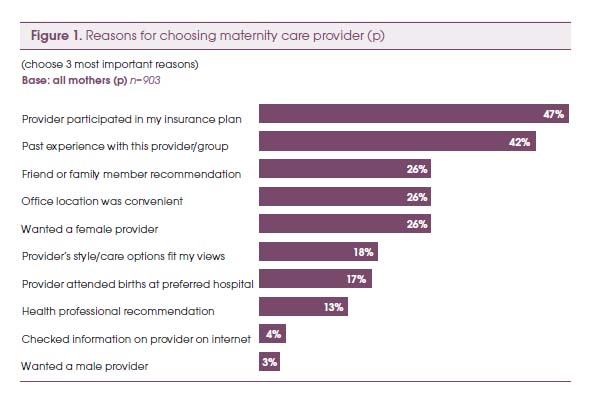
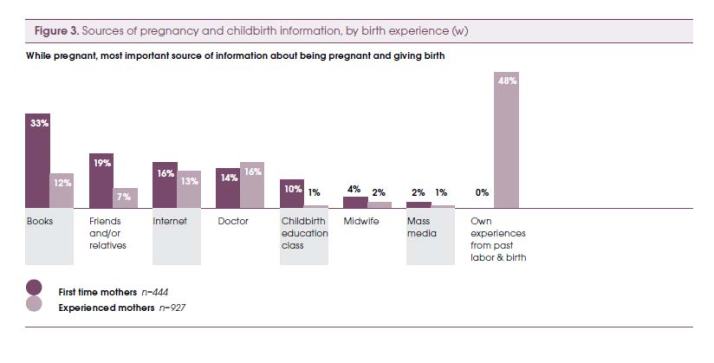
In his 2010 presentation, Birthing Ethics: What You Should Know About the Ethics of Childbirth, Raymond DeVries uses data from the Listening to Mother’s studies to help us understand where women are getting their information about birth—this is the context in which their “informed choices” are being made and this is the context we need to consider.

Our choices in birth and life are profoundly influenced by the systems in which we participate…

Some choices shaped by the system


Women learn from books and experiences of others (and self):

The number one book women learn from is What to Expect When You’re Expecting, which has been number four on NY Times Bestsellers list for over 500 weeks and counting.

According to De Vries, via the Listening to Mothers data, this is what women tell us about how they learn, what they learn, and upon what their choices are based:

Television explains birth
Pain is not your friend
But technology is
Mothers are listening to doctors (and nurses)
Medicalized birth allows mothers to feel capable and confident
Interfering with birth is mostly okay
Our health system works (mostly)
We like choice
We want to be “informed”

He also explains polarization: “We seek information to confirm our opinion. Contrary information does not convince, it polarizes.” How do we share information so that women can make truly informed choices without polarizing?

As advocates, I think we sometimes fall back on the phrase “informed choice” as an excuse not to be outraged, not to despair, and not to give up, because it promises that change is possible if only women change and most of us have access to change at that level.

Birthing room ethics

In another presentation, U.S. Maternity Care: Understanding the Exception That Proves the Rule, DeVries explores the ethical issues surrounding choices in birth, noting that “choice is central at all levels – but can choice do all the moral work?” We wish to respect parental choice, but information does not equal knowledge and we often err on the side of treating them as one and the same. In maternity care, often there is no choice. Tests become routine or practices become policy, and “information [is] given with no effort to understand parental values (the ritual of informed consent).”

Is choice possible while in active labor?
De Vries also raises a really critical question with no clear answers—is choice really possible during active labor? He also asks, “should a healthy pregnant woman be allowed to choose a surgical birth? But is it safe? The problem with data…Interestingly, those who think it should be allowed find it safe, and those who oppose it, find it to be unsafe.” When considering where this “choice” of surgical birth comes from, he identifies the following factors:

The desires of women
• Preserve sexual function
• Preserve ideal body
• The need to fit birth into employment
• Options offered by health care system

The desires of physicians
• Manage an unpredictable process
• The limits of obstetric education

Why should we care, anyway?

Another popular phrase is, “it’s not my birth.” I agree with the opinion of Desirre Andrews on this one:

“I do not believe in the saying ‘Not my birth.’ Women are connected together through the fabric of daily life including birth. What occurs in birth influences local culture, reshapes beliefs, weaves into how we see ourselves as wives, mothers, sisters, & women in our community. Your birth is my birth. My birth is your birth. This is why no matter my age or the age of my children it matters to me.”

Victims of circumstance?

While it may sound as if I am saying women are powerlessly buffeted about by circumstance and environment, I’m not. Theoretically, we always have the power to choose for ourselves, but by ignoring, denying, or minimizing the multiplicity of contexts in which women make “informed choices” about their births and their lives, we oversimplify the issue and turn it into a hollow catchphrase rather than a meaningful concept.

Women’s lives and their choices are deeply embedded in a complex, multifaceted, practically infinite web of social, political, cultural, socioeconomic, religious, historical, and environmental relationships.

And, I maintain that a choice is not a choice if it is made in a context of fear.

But, what do we know?

I read an interesting article by anthropologist and birth activist, Robbie Davis-Floyd, in the summer issue of Pathways Magazine. It was an excerpt from a longer article that appeared in Anthropology News, titled “Anthropology and Birth Activism: What Do We Know?” In the conclusion, Davis-Floyd states the following:

“Doctors ‘know’ they are giving women ‘the best care,’ and ‘what they really want.’ Birth activists…know that this ‘best care’ is too often a travesty of what birth can be. And yet on that existential brink, I tremble at the birth activist’s coding of women as ‘not knowing.’ So, here’s to women educating themselves on healthy, safe birth practices–to women knowing what is best for themselves and their babies, and to women rising above everything else.”

I believe that every woman who has given birth knows something about birth that other people don’t know. I also believe that women know what is right for their bodies and that mothers know what is right for their babies. I’m also pretty certain that these “knowings” are often crowded out or obliterated or rendered useless by the large sociocultural context in which women live their lives, birth their babies, and mother their young. So, how do we celebrate and honor the knowings and help women tease out and identify what they know compared to what they may believe or accept to be true while still respecting their autonomy and not denigrating them by characterizing them as “not knowing” or as needing to “be educated”? As I’ve written previously, with regard to education as a strategy for change: People often suggest “education” as a change strategy with the assumption that education is all that is needed. But, truly, do we want people to know more or do we want them to act differently? There is a LOT of information available to women about birth choices and healthy birth options. What we really want is not actually more education, we want them to act, or to choose, differently. Education in and of itself is not sufficient, it must be complemented by other methods that motivate people to act. As the textbook I use in class states, “a simple lack of information is rarely the major stumbling block.” You have to show them why it matters and the steps they can take to get there…

And, as the wise Pam England points out: “A knowledgeable childbirth teacher can inform mothers about birth, physiology, hospital policies and technology. But that kind of information doesn’t touch what a mother actually experiences IN labor, or what she needs to know as a mother (not a patient) in this rite of passage.”

The systemic context…

We MUST look at the larger system when we ask our questions and when we consider women’s choices. The fact that we even have to teach birth classes and to help women learn how to navigate the hospital system and to assert their rights to evidence-based care, indicates serious issues that go way beyond the individual. When we talk about women making informed choices or make statements like, “well, it’s her birth” or “it’s not my birth, it’s not my birth,” or wonder why she went to “that doctor” or “that hospital,” we are becoming blind to the sociocultural context in which those birth “choices” are embedded. When we teach women to ask their doctors about maintaining freedom of movement in labor or when we tell them to stay home as long as possible, we are, in a very real sense, endorsing, or at least acquiescing to these conditions in the first place. This isn’t changing the world for women, it is only softening the impact of a broken and oftentimes abusive system.

And, then I read an amazing story like this grandmother’s story of supporting her non-breastfeeding daughter-in-law and I don’t know WHAT to do in the end. Can we just trust that women will find their own right ways, define their own experiences, and access their own knowings in the context of all the impediments to free choice that I’ve already explored? What if she says, “why didn’t you TELL me?” But, if we share our information we risk polarization. If we keep silent and just offer neutral “support,” regardless of the choice made, then doesn’t it eventually become that the only voice available for her as she strives to make her own best choices is the voice of What to Expect and of hospital policy?

“Our lives are lived in story. When the stories offered us are limited, our lives are limited as well. Few have the courage, drive and imagination to invent life-narratives drastically different from those they’ve been told are possible. And unfortunately, some self-invented narratives are really just reversals of the limiting stereotype…” –Patricia Monaghan (New Book of Goddesses and Heroines, p. xii)

—-
Related posts:

What to Expect When You Go to the Hospital for a Natural Childbirth
Birth & Culture & Pregnant Feelings
Asking the right questions…
Active Birth in the Hospital
Why do I care?

References:

De Vries, Raymond. May 20, 2010. Birthing Ethics: What You Should Know About the Ethics of Childbirth, Webinar presented by Lamaze International.

De Vries, Raymond. Feb. 26-27. U.S. Maternity Care: Understanding the Exception That Proves the Rule. Coalition for Improving Maternity Services (CIMS). 2010 Mother-Friendly Childbirth Forum

Magic of Mothering

Nursing baby A at two weeks old


(The first part of this post is an excerpt from an assignment in one of the classes I’m taking)

“Remember, when Keplet postulated that the moon effected the tides on earth, Galileo dismissed the hypothesis as ‘occult fancy.’ It involved action at a distance, and, therefore, violated the ‘solid laws of nature’ of that time. Now these laws of nature (as they were understood by classical physics only a century ago) have already been transcended; this progression should gently hint to us that many of the solid laws of our day are beliefs that obscure the otherwise obvious” (Passmore, 168).

I have long been wary of the phrase, “we used to think, but now we know…” usually stated with great conviction and little room for debate.

Body Wisdom

As Passmore goes on to note, “It is important to make a distinction between ‘progress in science’ and its explanatory power. This power for explanation depends upon the kind of question being asked. History shows that the questions change with changing beliefs/values in both time and space, periods and cultures.” It is exciting to me to consider how much we just don’t know and yet, the world keeps on spinning along, with or without our “knowing” all the facts. I think about this with regard to birth and breastfeeding. How many generations of women have pushed out their babies and fed them at the breast without knowing the exact mechanics of reproduction even, let alone milk production. There are all kinds of historical myths and “rules” about breastmilk and breastfeeding and even ten years ago we used to think the inner structure of the breast was completely different than what we think it is like now. Guess what? Our breasts still made milk and we still fed our babies, whether or not we knew exactly how the milk was being produced and delivered. Body knowledge, in this case, definitely still trumped scientific knowledge. I love that feeling when I snuggle down to nurse my own baby—my body is producing milk for her regardless of my conscious knowledge of the patterns or processes. And, guess what, humans cannot improve upon it. The body continues to do what the human mind and hand cannot replicate in a lab. And, has done so for millennia. I couldn’t make this milk myself using my brain and hands and yet day in and day out I do make it for her, using the literal blood and breath of my body, approximately 32 ounces of milk every single day for the last eleven months. That is beautiful.

The protective impact of a mama

And, on a somewhat related note, several years ago when I read Birth Book, I marked a section about “imprinting” in it (I think it has been fairly well established that there isn’t really human “imprinting” after birth, but when this book was written it was still one of the ideas). Anyway, there was a section about research done with baby goats done to look at the ability of a mother to protect her offspring from environmental stress. They separated twin goats and put some in rooms alone and the others in rooms with their mothers. The only difference in the room was the presence of the mother. An artificial stress environment was created involving turning off the lights every two minutes and shocking the baby goats on the legs. After the babies were conditioned like this, they were tested again two years later. This time all the babies (now adult goats) were in rooms alone and were again “treated” to the lights off and shock routine. The goats who had been with their mothers during the early experience showed no evidence of abnormal behavior in the stressful environment. The ones who had not been with their mothers did show “definite neurotic behavior.” Somehow, the presence of the mother alone served to protect the baby goats from the traumatic influences and keep them from being “psychologically” disturbed in adulthood.

Except for feeling sorry for the baby goats, I thought this information was SO COOL. How magic are mothers that just by being there we can help our babies–even if there is still something stressful going on, our simple presence helps our babies not be stressed by it and continue to feel safe. Magic!

Birth stress?

The goat research was included in the book because of the idea that birth may be a stressful environment for a baby and if the continuity of motherbaby is maintained after birth (immediate skin-to-skin contact and opportunity for breastfeeding), the baby does not become stressed or “neurotic.” But…if the continuity for mother and baby is broken by separation (baby whisked away for weighing or whatever), both mother and baby are stressed by this and it may have an impact on their future relationship and behavior. The book also talks about how the sound of the baby’s first cry has a sort of “imprinting” effect on the mother in that her uterus immediately begins to contract and involute after hearing her baby’s first cry, whereas mothers who are immediately separated from their babies and do not make contact with them have a higher likelihood of postpartum hemorrhage (I have no idea if this has been debunked or not since the book was written in 1972, but it was an interesting idea to read about).

Mothering is magic. Seriously.

Last Minute Gift Idea: Rescue Gifts

I received a press release recently with a neat last-minute gift idea that has relevance to birth activism—a symbolic gift of a safe birth kit for a mother in the developing world (I investigated a little and the organization is a legitimate humanitarian organization.) Here is the information:

Rescue Gifts help refugees and others who have been impacted by war and natural disaster. Holiday shoppers can choose a gift that inspires them and dedicate it in honor of a special person in their lives. The International Rescue Committee will send gift recipients a beautiful acknowledgement card with the gift giver’s personalized message.

There’s a perfect gift for everyone:

  • For a mom: A Safe Delivery ($24) can ensure critical supplies for the safe birth of a child in a crisis zone.
  • For a spouse: Emergency Food ($68) can deliver a month’s supply of vitamin-rich therapeutic food for at least 50 malnourished children in places wracked by food shortages or famine.
  • For the foodie or friend with a green thumb: A Community Garden ($60) can provide tools and seeds to refugees who have been resettled in the United States, so that they can grow their own fresh, healthy food in an IRC community garden.
  • For a teacher:  A Year of School ($52) can supply the tuition, books and other materials for one year of a child’s schooling in a country recovering from war.

Shoppers who spend $75 or more will receive a fashionable organic cotton “Rescue” T-shirt designed and donated by Threads for Thought, or they can opt to have it sent as a gift.

Rashida Jones, IRC Voice and star of NBC’s “Parks and Recreation,” is promoting the Clean Water Rescue Gift and giving it to her friends this year. She says, “At an IRC refugee camp in Thailand, I saw that the ready availability of water transforms lives. I am buying this gift for my friends this holiday season.”

Parks & Recreation is one of my favorites TV shows, so it is fun to have that connection too. Of course, I inquired as to what exactly a “safe delivery kit” entails, because I do not want to inadvertently be promoting non-evidence based Western medical care practices in countries relying heavily on traditional midwives. I was told that, “as such, the Safe Delivery Rescue Gift represents the typical amount of money needed for the IRC to provide supplies and assistance necessary for a safe delivery. However, Safe Delivery Rescue Gift donations will be used where and when most needed in our wide-ranging humanitarian work in more than 40 countries and 22 U.S. cities. The IRC does provide and support pre and post natal care for new and expectant mothers and their babies. This includes training and equipping midwives like the ones in Tham Hin refugee camp in Thailand, although midwifery is not the only childbirth model that the IRC supports.”

If you’re looking for a last-minute stocking stuffer for a humanitarian minded friend or family member, or for a birth activist buddy, you might find the right gift at Rescue Gifts!