Archives

Birth Matters!

“A well taken care of and rested mama almost always translates into a well taken care of and rested baby. Respecting mothers is an act of social change.” —Mother Health International

“The way a society views a pregnant and birthing woman, reflects how that society views women as a whole. If women are considered weak in their most powerful moments, what does that mean?” –Marcie Macari (She Births)

“…it is not easy for women to lay claim to our life-giving power. How are we to reclaim that which has been declared fearful, polluting and yet unimportant? How are women to name as sacred the actual physical birth, which comes with no sacred ritual…?” –Elizabeth Dodson Gray

Birth matters. It truly does. The impact is often ignored or minimized, but giving birth remains one of life’s most profound, pivotal, liminal, and initiatory events. Bizarrely, this is overlooked by much of modern culture. We spent many thousands of dollars on weddings each year as well as months of planning and preparation for “just one day,” and yet in pregnancy and birth are willing to let insurance companies dictate access to care providers and let care providers dictate access to evidence-based care. Some time ago I expanded the wedding analogy into a satirical look at why birth matters:

You stop sharing your feelings, but you can’t shake the memories. What you expected to be a beautiful day filled with love and celebration was not and you feel a real sense of grief at the loss of your dreams. You know you shouldn’t feel this way. You know that what really matters is your healthy, happy husband, but you keep wondering if your wedding really had to be that way. Yes, you love your husband and you are so happy that he is healthy, but you also wonder if that really is all that matters. Don’t you matter too? Doesn’t your relationship matter? What about respect, dignity, love, and self-worth? Don’t those matter too? Wasn’t this a special life transition for your family? Wasn’t it the beginning of a special relationship together and couldn’t that relationship have been celebrated, honored, and treated as worthy of care and respect?

via All That Matters is a Healthy Husband (or: why giving birth matters)

And, in a different post I made a list of why I care about birth, concluding with the following:

Because I know in my heart that birth matters for women, for babies, for families, for culture, for society, and for the world.

via Why Do I Care About Birth?

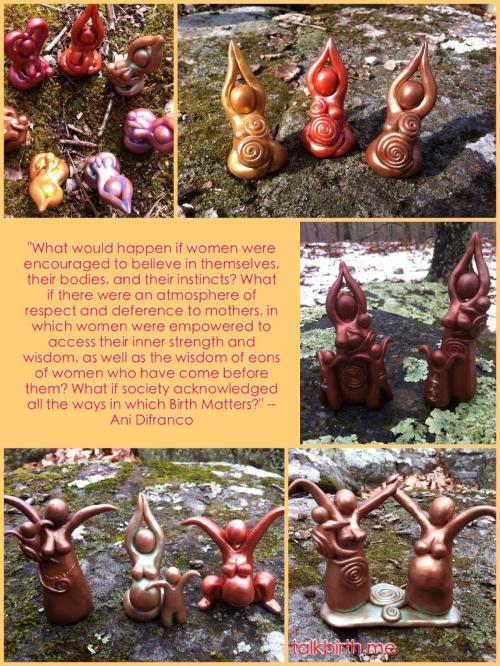
So, I particularly loved this quote from Ani DiFranco and I had to turn it into a picture! 🙂

902248_10152670748305442_735801331_o

Women of Color Can Push for Better Outcomes: What Every Mother-to-Be Should Know About Birth

Guest post by Tara Owens-ShulerImage

As an African American Lamaze Certified Childbirth Educator, I have observed over my 18 years of teaching that childbirth education class participants are less likely to be women of color. My desire for more women of color to attend childbirth education classes is rooted deeper than just their presence in a classroom – it is rooted in my desire for more women of color to understand the disparities that exist in maternal and birth outcomes.

In a recent Science and Sensibility blog post by Christine Morton on maternal health disparities, she reviewed the work of several well-known public health researchers – Dr. Eugene Declercq, Dr. Mary Barger and Dr. Judith Weiss. Their findings point to the fact that African American women have higher rates of cesarean births at nearly every age group and across every level of education.

In addition, the U.S. Department of Health and Human Services reports that one of every five non-Hispanic,black births are pre-term, African American mothers experience an infant mortality rate twice that of non-Hispanic, white mothers, and breastfeeding rates among African American mothers are 16 percent lower than white mothers.

Given the disparities that exist in maternal and birth outcomes for women of color, I think April as Minority Health Awareness Month is a great opportunity to talk about a few other factors that minority moms or mothers-to-be can control or influence. It’s a hard reality that mothers face real challenges in getting the childbirth care they want and deserve. Even though medical evidence may tell us certain practices are good for mothers and babies, the “system” is not always geared to deliver that care. Health care providers are rushed, spread thin, or incentivized for practices that are not most beneficial to the mother.

Let’s go back to the fact that African American women have higher rates of cesarean births than non-Hispanic,white women. Is it because African American women are sicker and need to have a cesarean birth? Researchers report that this is untrue. They conclude that higher rates of cesarean births among African American women are a result of a shift in obstetric practices to focus more heavily on use of childbirth interventions. And, when we bring in an induction to the equation, there is a correlation between the increased rates of induction to the increased rates of cesarean births!

Research shows that babies pay a steep price for these early births caused by inductions or a failed induction, which led to a cesarean. Babies have greater difficulties breathing, breastfeeding, and maintaining their temperature, which usually means being separated from moms and spending time in the Intensive Care Unit. While an increasing number of hospitals and health care professionals are shying away from unnecessary cesarean birth and induction, it’s one of many care practices that just aren’t supported by good medical evidence.

So how can women of color push for better care?

  • Become an active partner with your care provider. While doctors or midwives have professional knowledge and skills, they may not know everything about your personal background and preferences. Finding a provider who will also act as your partner can help you push for the care that’s best for you and your baby.
  • Ask questions – lots of them! Labor and birth in particular can be unpredictable. That’s why it’s a smart idea to prepare a list of rolling questions throughout your pregnancy to help you determine if the right care is being recommended during labor, birth and after birth.
  • Do your research. Understand your available care options before, during and after labor at the hospital or birth center. If you know that during labor you’d like the ability to walk around, eat and drink – choose a birth facility that will be more aligned with your birth preferences or wishes.
  • Participate in a childbirth education class. Taking a Lamaze class will help you understand maternity care best practices and be better prepared to navigate your labor and birth. A childbirth educator will help you identify the right questions to ask when making decisions about your care.

I encourage all women – particularly African American women – to learn more about getting the right care in pregnancy and childbirth by attending a childbirth education class. Skipping out on childbirth education is a lost opportunity to stack the deck in your favor and become a well-informed consumer of evidence-based practices! As a consumer, it is your right to be a partner in your health care decisions.

Tara Owens Shuler, MEd, LCCE, FACCE is the president of Lamaze International. She has practiced as a childbirth educator since 1995. In 2005, she became the Director of the Duke AHEC Lamaze Childbirth Educator Program. In addition to training individuals to become childbirth educators and preparing expectant women and their partners for a safe and healthy birth experience, Tara provides labor support services. Along with coordinating the Lamaze program in the Duke AHEC office, Tara works with her statewide AHEC partners in developing continuing education programs and/or resources for healthcare providers in North Carolina and assists with the Duke AHEC PATHWAYS Health Careers program for K-12 students. When not working, Tara and her husband enjoy playing with their dog, Gramps, and traveling.

Visit Lamaze International for great resources to help mothers and mothers-to-be learn their options.

Tuesday Tidbits: Hemorrhage & Postpartum Care

March 2013 068“A bright red ribbon of blood weaves women together. We are blood sisters. We bleed and bleed, and we do not die. Usually.” –Susun Weed

These Tuesday Tidbits all come from the current issue of Midwifery Today. It is an excellent issue with tons of great information. As I referenced before, however, it is literally making my uterus ache and contract to read it since the theme is Hemorrhage. I’ve had to read it in small doses—5-10 pages at a time—and then come back to it later because the contractions/crampiness in my uterus and lower back get too intense for me to continue. I’ve always known that I have an intense response to blood, but this is the first time that I’ve really tuned in to the body memory my pelvic bowl still holds with regard to excessive postpartum blood loss. That blood loss is one of the things I don’t blog about, but today I’m writing about hemorrhage anyway (even though my back/uterus is starting up again as I type this). I guess you could call it “psychosomatic,” but I call it uterine memory.

Robin Lim’s article about postpartum hemorrhage in Bali includes a nice list of preventing and managing hemorrhage, one of the most significant being to minimize prenatal “scare” as much as possible. She writes about good prenatal nutrition and nurturing prenatal care and she also recommends this essential:

Build layers of support and trust for the mother in pregnancy and labor to help her cope with any social, psychological or spiritual challenges that she might be carrying…

Lim also says that laboring women use “qi” while laboring and birthing, which is our life force, our energy. She says that if women run out of “qi,” they have to dip into their “jin,” which is, “one’s God-given lifespan”:

“If a mother uses all of her qi to bring her baby out, then she has none left to bring her baby out and to close her uterus properly…As birth-keepers it is our job to maintain the qi of pregnant, laboring, birthing and breastfeeding mothers. The mother who maintains her qi and does not use up her jin can still be glowing and full of energy after having five children…the mother who has dipped too deeply into her jin, due to having depleted her qi, can be dangerously run down after having just one baby…”

While one might interpret this as being a little too esoteric for the practical mind and perhaps a tad too close to the victim-blaming “you create your own reality” thought processes that grate on my nerves, I really appreciated the idea of the responsibility of birth-keepers to guard mothers’ life-force energy and to act to preserve mother’s natural resources and reserves of strength.

On a midwifery education note, I love the writing of Sister MorningStar and I loved reading her thoughts on midwifery education, especially her observation that

…I’m dreaming of a way and time when women are as healthy as deer and mothers birth in the night before professionals arrive. Don’t misunderstand, I want and am willing to talk at any roundtable about midwifery education. We need everyone who cares about birth at such a table, including mothers. We need a global table with a global voice, passion and wisdom. I am not saying that birth and midwives are not made better with midwifery education, but I am saying that I have many questions about modern midwifery education and its effect on the experience of birth.

And, moving on to postpartum care, loved this quote from Darla Burns in an article by Allie Chee:

As Americans, we are under the impression that new moms are ‘Superwomen’ & can return to life as it was before baby. We must remember to celebrate this new mother and emulate the other cultures that honor new mothers by caring for them, supporting them, & placing value on the magnificent transformation she is going through. This is the greatest gift we can give to new mothers & newborns…

I appreciated that Chee included information about postpartum recovery from miscarriage and stillbirth as well, rather than assuming that postpartum care is a need only following a live birth. Consistent with my own experiences and observations she notes that, “in the case of miscarriage and stillbirth, a woman is usually sent home with no postpartum care instructions other than perhaps a list of negative signs to watch for that may indicate further complications with her health. In these instances, many friends and family members, often not knowing how to respond, leave the mother to grieve alone and to recover physically by herself.” Other interesting notes with regard to postpartum recovery after miscarriage or stillbirth include these two:

  • The depression and anxiety experienced by many women after a miscarriage can continue for years, even after the birth of a healthy child….
  • [with regard to postpartum recovery/”lying in” time in other cultures]…Amy Wong, an internationally acclaimed author and expert on postpartum writes, “Natural delivery requires at least 30 days of rest, while cesarean delivery, miscarriage and abortion require at least 40 days…”

Of course, this made me reflect on my own experiences. I feel fortunate that I was cared for with a lot of love and tenderness in my own miscarriage postpartum, with my mom bringing us food and providing child care and support, and my doula organizing and delivering meals from friends as well as offering a loving and supportive listening ear. That said, I was back in front of the classroom two weeks postpartum and felt like perhaps I was taking “too long” to get back to “normal.”

Definitely make sure to check out the complete issue! Midwifery Today is my favorite birth publication and is a treasure trove of information as well as personal experiences and reflection.

March 2013 040

Timeless Days: More Postpartum Planning

“Understand that the tremendous energy going through you during birth is the same sort of power as the force of ocean waves moving towards shore. Know that just as a bird knows how to build its nest, and when to lay its eggs, you too will build your birthing nest…” –Janice Marsh-Prelesnik (The Roots of Natural Mothering)

So, after writing about postpartum survival tips and about what to share with mothers-to-be about the realities of motherhood, I found some more postpartum notes saved in my always overflowing drafts folder from the sidebar to Time in a Bottle by Beth Bailey Barbeau in Spring 2011 issue of Midwifery Today (p. 44).

  • Encourage realistic contact between mothers-to-be and new mothers to help them shape more realistic expectations of postpartum life.” Yes! This is why I strongly encourage mothers to come to LLL meetings before they have their babies.
  • “Use language that shares your expectations and gives parents a vocabulary to articulate the demanding needs of their new infant.” Like Barbeau, I find it helpful to bring in the concept of the fourth trimester. The first three months are the “fourth trimester” during which baby pretty much wants to live on mom’s chest and replicate the womb (i.e. almost constant feeding–like the umbilical cord–constant holding and lots of motion, like being in the uterus, as well as being able to hear your heartbeat). After the fourth trimester passes, babies “wake up” even more and start really interacting with the world. I explain in a light-hearted way that even if you hold your baby for 12 solid hours a day following birth, that is a 50% reduction in what she is used to. And, I let them know that while the adult’s brain thinks, “how can this baby be hungry, I just fed him 30 minutes ago?!” The baby’s brain thinks, “it is has been 30 minutes since I’ve EATEN ANYTHING!!!!!” I also reinforce the idea that a baby that wants to be held and snuggled and nursed is a smart baby, not a manipulative one. And, of course, I also describe mother’s body as baby’s natural habitat after birth.
My husband and first baby during the first tender postpartum days.

My husband and first baby during the first tender postpartum days.

  • Remind new parents that most cultures around the world have some sort of ‘lying in’ period, typically lasting 30-60 days or more.” Truly the things that support both a healthy birth and healthy postpartum are contrary to the expectations and habits of mainstream society. See Kathleen Kendall-Tackett’s handout on how other cultures prevent postpartum depression.
  • “Matter-of-factly inform the family, especially the extended family (if you have your client’s permission), that mama is going to be encouraged to stay in bed for a while after the birth and that she’s not ‘being lazy.'” Mothers can have a lot of difficulty giving themselves this permission and it can help to have the acknowledgement and encouragement to family members coming from an outside source.
  • “Remind them that a true six-week postpartum window allows for the placenta site to fully heal and supports minimized bleeding and stronger recovery.” An excellent tip for educators and doulas from Barbeau is to illustrate size of placental site healing area with hands like small dinner plate—if this was outside the body, how would you care for yourself
  • “Encourage preparation for postpartum success!” I write about the idea of postpartum expression instead of postpartum depression. See ample past articles about postpartum planning and a nice specific story about creating a nest here.

“Although pregnancy and birth is a richly intuitive and instinctive process, a woman will prepare her ‘nest’ and birth according to the style of her culture, in the same way that a particular species of bird will build its nest with whatever is available.”

–Pam England

Let’s help make sure her nest is rich, resourceful, blessed, and beautiful!

Postpartum Survival Tips

“In western society, the baby gets attention while the mother is given lectures. Pregnancy is considered an illness; once the ‘illness’ is over, interest in her wanes. Mothers in ‘civilized’ countries often have no or very little help with a new baby. Women tend to be home alone to fend for themselves and the children. They are typically isolated socially & expected to complete their usual chores…while being the sole person to care for the infant…” –Milk, Money, & Madness

324I recently shared this quote on my Facebook page and a reader responded expressing her fear at preparing to face this exact situation. I responded that it is an unfortunately realistic fear and suggested she check out some resources for postpartum planning that might help work through the fear as well as plan for a nurturing postpartum instead of a stressful one. She then responded that she has a very minimal local support system and that got me thinking about postpartum survival tips for when one’s local support system is limited…

My ideas:

  •  Suggest to your out-of-town friends and family that they contribute to a “babymoon” for you and all pitch in to hire a postpartum doula.
  • Tactfully remind people that even if they’re too far away to bring you a meal, they can certainly call up a local restaurant and order a delivery for you! I think a lot of us forget that is an option for a long distance family member (that we would bring food to if they were local). In my experience, getting enough food is a huge issue postpartum! I remember long distance friends having babies a variety of times and wishing I was close enough to bring them dinner. Duh. Many restaurants do, in fact, deliver food!
  • Be your own “best friend” by preparing and freezing meals and snacks now. I know I sound obsessed with food, but it is totally one the hardest things to take care of postpartum, but so important!
  • Put together a mama survival kit for yourself that you can then open up when you need it. Some ideas here and more ideas of variable quality here.
  • If you don’t have a sense of community work, actively work on building one—go to La Leche League meetings, Holistic Moms Network, Mothers of Preschoolers, Attachment Parenting International, or other mothers’ groups. Go BEFORE you have your baby if you can.

Other ideas for helpers:

  • In addition to my idea of ordering delivery for a postpartum family as a way of bringing them dinner long distance, is to order a dinner through the mail via the business Spoonful of Comfort. They will send fresh chicken soup, rolls, cookies, and a baby present via Priority Mail (packed with freezer packs). I send it with a note saying, “this is me, bringing you dinner!” Friendly tip from unfortunate personal experience: if you are doing this for a friend make SURE you enter THEIR address as the shipping address and not your OWN address, or you will then be forced to enjoy their postpartum meal and feel like a total idiot at the same time.
  • Don’t forget about other meals—breakfast = awesome. Muffins = awesome.
  • Pay it forward–I think sometimes people feel like they don’t know someone well enough to bring them food, or maybe they even do a mental “tally” and think, “well, she won’t be bringing me food ever, so why should I take time to bring it to her” or, “she didn’t make anything for me when I had my last baby, so I’m off the hook on this one.” When I had Alaina, a mother who had literally JUST moved to town and that I had not yet met, sent a hot breakfast casserole to me (that my lovely doula delivered to my lovely mother at the snowy end of my gravel road).  I think of that generosity when I bring a postpartum meal to a mama from whom I will never end up getting a reciprocal meal. Who cares. She needs it. You can do it!
  • Another doula commented on my post: “Do you know a mom that is about to have a baby? Or maybe a momma who just gave birth recently? Don’t even ‘offer’ just show up with a bucket of cleaning supplies, a bag of healthy food, and maybe something nice for her. Go tuck her in bed with baby, and get to work on her home.. When she wakes, she has nothing to do but nurse that baby. (If she has other kids, delegate chores with them, if to young, call mutual friends to sit for them! Our Mom’s need this, up through 6-9weeks pp, Mom’s need help, even longer for some. There is a reason the US has the highest postpartum depression issues in the developed world… Create your community! DO IT!” I would add that if you do not know mom well, do not plan to engage in a deep cleaning project and stay for a long time doing such project.

I also posted to the Citizens for Midwifery Facebook page asking for contributions for postpartum survival tips when your local support system is limited. What beautiful, helpful women we have on that page! While I didn’t get many suggestions specifically for minimal local support systems, I did get a nice collection of survival tip ideas:

  • Trust your own instincts. Many women have great advice but if your heart is telling you something else, go with it.
  • Craniosacral therapy… one session for you and one for the baby.
  • In addition to lots of suggestions to hire a postpartum doula, there were lots and lots and lots of shout-outs for placenta encapsulation. I echo it myself.
  • Get out of the house alone! For me, it’s been crucial to my sanity to leave my home, by myself, even if only for an hour or two between nursings. Just a Target run was therapeutic!
  • Kangaroo care for high needs babies.
  • Lots of mentions of it being okay to accept help and okay to ask for help.
  • A lot of new moms get really overwhelmed by family and friends coming by to see baby, and it’s important for them to remember that they can always put out a sign that says “mom and baby sleeping!” (even if they aren’t) anytime they need a break.
  • Watch only positive stuff without violence on TV (cooking shows, home improvement) as regular TV is really violent for new mamas and she may be watching more with all the nursing/healing.
  • Have homemade high protein frozen meals (and snacks) in the freezer before birth so anyone can warm them up for the household after birth. If breastfeeding, get much more rest than you think you need from day one to ensure an abundant milk supply (*note from Molly: it is true that prolactin receptors are “laid down” during the first days of breastfeeding. Breastfeeding “early and often” makes sure that there are an ample supply of receptors in your brain.)
  • Have a sign up sheet for family and friends to choose which chores to help with, gift certificates to a cleaning service, stocking up on disposable plates and dinnerware…
  • A new mommy group can be a life saver. Just knowing that other mommies are going through the same thing help
  • Food registries such as mealtrain and mealbaby. Not enough families know about these amazing and free services. (*note from Molly: we often use Care Calendar locally.)
  • Plan ahead and freeze several of your favorite freeze-able meals. Let the clothes be a little wrinkled. Use paper and plastic ware instead of worrying over dishes. Stay laying down first 3 days postpartum (preferably naked: it gives a certain message and is better for baby anyway) and the first week stay in pajamas. Enjoy frequent rest times, even if you can’t sleep.
  • Baby wearing….lots of time in bed, sleeping cuddling and feeding babe skin to skin…brest friend nursing pillow
  • Send a subliminal message to the limited visitors you’ll have (set limits early with partner) by wearing your robe for several weeks
  • Eat well, accept all offers of help and food, get out of the house alone!
  • I loved getting meals brought by friends, but I didn’t always want to socialize. So, someone to run interference, or maybe a drop-off location for leaving food. (*note from Molly: my doula was the perfect person for this job.)
  • Ask for help! No one will know what you need if you don’t speak up.
  • Don’t go without showering for more than four or five days. Brush your teeth once a day no matter what, even if it ends up being at a weird time. Take your vitamins/ herbal supplements/tea. HYDRATE! Nap with baby if you need to, arrange childcare for older siblings sometimes, but also listen to your instincts—one of my worst baby blues moments was with my third when my older two were gone and I wanted them home!
  • LOVE yourself, nap when you can , Yes you are doing it right, No it’s no ones business (breastfeeding/cosleeping/pumping etc.) allow opinions and advice to slide off, drink lots of water , eat small snacks/meals, love your baby look into their beautiful eyes and connect, skin to skin whenever even with dad or siblings (safely) cherish these moments they don’t last forever, the laundry will get done, the dishes will be get cleaned …
  • Take a “babymoon”. Put on a robe when someone comes to the door–even if you have real clothes underneath. Sleep when the baby sleeps. Don’t answer the phone. Remember, self-care is essential for you to be able to care for your baby.
  • I loved having herbal soaked pad (frozen) to wear afterwards, felt soooo good. Have easy one-handed snacks available and a BIG water bottle.
  • In those last few months of pregnancy I prepare meals to freeze (I start about month 5 or 6). I make up 6 weeks worth of dinners (they always last longer since we have a great church family and friends that bring us meals). After baby is born I can put 2-3 dinners in the refrigerator (to thaw) a few days before I need them. Then all I have to do is pop one in the oven and BAM….dinner’s ready. I love “Don’t Panic, Dinner’s In The Freezer” I & II. The recipes are amazing and all freeze well. Hope that helps!
  • Skin-to-skin in bed for as long as possible; 40 days of rest, recuperation, establishing breastfeeding, bonding, limited visitors, and limited activity; drink when the baby nurses; sleep when the baby sleeps; nurse on demand; learn to wear your baby; and use a peri bottle when peeing! A postpartum herb bath and massage are nice, too.
  • Hot water bottle for afterpains
  • Placenta encapsulation and WishGarden Herbs ReBalance tincture!
  • Chiropractic adjustments, ASAP
  • Call in your mom. My mom’s job after my second was born was to keep me fed and to spend some quality time with my older child.
  • Drag oneself outside and BREATHE! 🙂
  • Water…..hot tub, shower, steam, pool, raindrops, snow, sauna, bath, river, stream, ocean, lake! If you can, immerse yourself, if you cannot, imagine yourself floating 🙂
  • Lots of water, lots of protein and healthy fats, placenta encapsulation and low expectations of anything other than bonding time with baby.
  • Don’t try to impress others with how quickly you can get up and going, even if you can, just take it easy!!!!
  • It’s not in the asking for help; its in the accepting…
Surround her with support!

Surround her with support!

Check out these previous posts:

Mothers Matter–Creating a Postpartum Plan

Planning for Postpartum

Some reminders for postpartum mamas & those who love them

and a great one for helpers written by my own doula:

The Incredible Importance of Postpartum Support

And, remember…

“The first few months after a baby comes can be a lot like floating in a jar of honey—very sweet and golden, but very sticky too.”

–American College of Nurse-Midwives

This article is crossposted at Citizens for Midwifery.

Plucking out the heart of mystery

Birth is a great mystery. Yet, we live in a rational, scientific world that doesn’t allow for mystery. ‘In this day and age, there must be a better way to have a baby,’ implies that if you are informed enough, strong enough, you can control it. Any woman who has given birth, who can be honest, will tell you otherwise. There are no guarantees. It is an uncontrollable experience. Taking care of yourself and being informed and empowered are crucial, but so is surrender. Forget about trying to birth perfectly. Forget about trying to please anyone, least of all your doctor or midwife…” –Jennifer Louden (The Pregnant Woman’s Comfort Book)

Twelve Steps to a Compassionate Life Amazon affiliate link included in text/image.

I’m halfway through a year-long class based on the book Twelve Steps to a Compassionate Life. We’re examining and practicing compassion to ourselves and in personal relationships, community relationships, and to non-humans. The subject of our current month is, “making a place for others.” What does this mean? The author explains…

I began to notice how seldom we “make place for the other” in social interaction. All too often people impose their own experience and beliefs on acquaintances and events, making hurtful, inaccurate, and dismissive snap judgments, not only about individuals but about whole cultures. It often becomes clear, when questioned more closely, that their actual knowledge of the topic under discussion could comfortably be contained on a small postcard. Western society is highly opinionated. Our airwaves are clogged with talk shows, phone-ins, and debates in which people are encouraged to express their views on a wide variety of subjects. This freedom of speech is precious, of course, but do we always know what we are talking about?

Armstrong, Karen (2010-12-28). Twelve Steps to a Compassionate Life (Kindle Locations 1476-1481). Random House, Inc.. Kindle Edition.

I wonder about this sometimes in my own compulsion to blog—am I just adding to the digital cacophony out there, etc. and then that reminded me of a previously shared quote:

“A person who believes too earnestly in [her] own convictions can be dangerous to others, for absence of humor signals a failure in basic humanity.” –Thomas Moore (Original Self)

 Armstrong also makes this important observation:

Hindus acknowledge this when they greet each other by bowing with joined hands to honor the sacred mystery they are encountering. Yet most of us fail to express this reverence for others in our daily lives. All too often we claim omniscience about other people, other nations, other cultures, and even those we claim to love, and our views about them are frequently colored by our own needs, fears, ambitions, and desires.

Armstrong, Karen (2010-12-28). Twelve Steps to a Compassionate Life (Kindle Locations 1596-1599). Random House, Inc.. Kindle Edition.

We all do this so often. I find myself very annoyed when other people play “armchair psychologist” and yet still catch myself doing it as well. I also think about “gossip” and its role in human society. I think curiosity about the lives of others is normal and talking about other people’s behavior and experiences with them is also normal. I am most disturbed when those around me claim seemingly infallible understandings of the motives, characters, and psychology of others (in my classes, I remind students to “separate person from problem” and to “describe behavior rather than character”). It is very common for us not to even understand ourselves, so I find it interesting, frustrating, and surprising that we then seem to think we can have direct understanding of the inner workings and thought-processes of another person. “Instead of discoursing confidently on other people’s motives, intentions, and desires, we should recall the essential ‘mystery’ and realize that there is a certain sacrilege in attempting to ‘pluck out’ its heart to serve an agenda of our own.

What does this have to do with birth?

“Birth is life’s central mystery. No one can predict how a birth may manifest…Our dominant culture is anything but ‘natural’ so it is no surprise that childbirth, even with the most natural lifestyle lived by an individual family, sometimes needs intervention and medical assistance. This is not to say that any one mother’s efforts to have a natural childbirth are futile. Just that birth is bigger than one’s personal desires.” –Jeannine Parvati Baker (in The Goddess Celebrates: An Anthology of Women’s Rituals, p. 215)

When women’s choices are restricted in the birthroom or in access to compatible care providers, we’re plucking out the heart of mystery. When December 2012 073doctors or nurses “let” or “don’t let” a birthing woman do something, they’re plucking out the heart of mystery. When birth activists analyze a woman’s birth story for evidence of why things went “wrong,” we’re plucking out the heart of her rite of passage, of her story. When we fail to acknowledge the sociocultural context of breastfeeding OR when we cannot accept that a mother “couldn’t breastfeed,” we’ve plucked the heart of her mystery. When we need to have or know the “right answer,” chances are, we’re plucking the heart. And, we need to remember that…”Women’s surveillance of other women’s childbirth experiences–in this case, natural childbirth–can shape and constrain the individual choices women make in childbirth in much the same way medicalized assumptions about childbirth can.” (Christa Craven, Pushing for Midwives)

Armstrong goes on to explain…

Third, spend some time trying to define exactly what distinguishes you from everybody else. Delve beneath your everyday consciousness: Do you find your true self—what the Upanishads called the atman? Or does this self constantly elude you? Then ask yourself how you think you can possibly talk so knowingly about the self of other people. As part of your practice of mindfulness, notice how often you contradict yourself and act or speak in a manner that surprises you so that you say, “Now why did I do that?” Try to describe the essence of your personality to somebody else. Write down a list of your qualities, good and bad. And then ask yourself whether it really sums you up. Make a serious attempt to pin down precisely what it is that you love about your partner or a close friend. List that person’s qualities: Is that why you love him? Or is there something about her that you cannot describe? During your mindfulness practice, look around your immediate circle: your family, colleagues, and friends. What do you really know about each and every one of them? What are their deepest fears and hopes? What are their most intimate dreams and fantasies? And how well do you think they really know you?…How many people could say to you that you “pluck out the heart of my mystery”? In your mindfulness practice, notice how often, without thinking, you try to manipulate, control, or exploit others—sometimes in tiny and apparently unimportant ways. How often do you belittle other people in your mind to make them fit your worldview? Notice how upsetting it is when you become aware that somebody is trying to manipulate or control you, or when somebody officiously explains your thoughts and actions to you, plucking out the heart of your mystery…

Armstrong, Karen (2010-12-28). Twelve Steps to a Compassionate Life (Kindle Locations 1644-1658). Random House, Inc.. Kindle Edition.

The irony of the fact that I’ve just filled up a bunch of digital air space with my own opinions, instead of practicing this principle, isn’t lost on me. As I move through this month, in all contexts not just in birthwork, I would like to open more to this “heart of mystery” and to not knowing as well as to avoid the tendency to analyze and “understand” other people. I also wish to be mindful of plucking the heart out of anyone’s mystery—may I be a witness to their mystery and may they feel both seen and heard by me…

“Birth is always the same, yet it is always different. Like a sunset, the mystery is also the appeal to those who get up in the middle of the night to attend laboring women. While the sequence of birth is simple, the nature of the experience is complex and unique to each individual. No matter how much any of us may know about birth, we know nothing about a particular labor and birth until it occurs.” (emphasis mine) –Elizabeth Noble in Childbirth with Insight (previously shared here)

Preventing Culturally Induced Lactation Failure

281How often does it happen that women truly are physically unable to breastfeed?

No one actually has a solid answer to this question. The common estimate is a very hazy, “less than 1%.” I’ve said it, very hazily, plenty of times myself. But, what does that really mean? I’ve certainly talked with a lot of struggling mothers over the years—many of whom go on to continue to breastfeed successfully, but who might very well not have done so without encouragement, reinforcement, and practical suggestions. If they never reached out for help, might they have ended up as part of that semi-mythical 1%? How about those mothers that absolutely stagger me with their ability to keep going and keep trying when I would understand completely if they decided to quit and in fact question that I, personally, would have been able to continue if faced with the same obstacles—where do they fit in? Maybe just in the category box labeled amazing.

Yesterday, I read an article on the Breastfeeding Medicine blog that really shook my personal framework up a bit:

…I would argue that there’s a very fine line between “sensationalizing” and “truth in advertising.” Reproductive biology is imperfect — some couples can’t conceive, and some pregnancies end in miscarriage or stillbirth. The silence around these losses and the isolation that women have historically experienced has probably worsened the suffering for many women. On the other hand, emphasizing these risks and creating a culture of fear harms the majority of mothers who will have successful pregnancies and births.

Lactation is probably a few decades behind infertility and pregnancy loss in coming “out into the open” as a generally robust, but not invincible, part of reproductive biology.

via Establishing the Fourth Trimester « Breastfeeding Medicine.

Wow! Brain boggled in reading this. Heart clenched at thinking that I may have treated someone as casually in breastfeeding loss as other mothers have been treated over and over again in pregnancy loss. The author goes on to explain that women used to be blamed for having miscarriages and we just might be doing the same thing to women who physically can’t breastfeed. I have never in my wildest dreams considered adding “lactation failure” to my understandings of the things that can truly go wrong during the childbearing year. I usually consider, “some mothers are physically unable to breastfeed” to essentially be in the same territory as dragons and unicorns. I’ve remained firmly convinced for, like, ever, that it is culture that fails mothers and babies and not women’s bodies that fail. And, I truly wonder if it is ever possible (except for in cases of insufficient glandular tissue, metabolic disorders, breast surgery/removal, and clear physical malformations) to really tease apart whether a mother is actually experiencing lactation failure or sociocultural failure. I remain fairly convinced that in many cases it is impossible to know—but, that a mother (or physician) may certainly experience it as “lactation failure” and thus add that data point to the 1%. I have long maintained that a lot of people forget that breastfeeding occurs in a context and that context doesn’t necessarily support breastfeeding. However, I do also know from years of experience that motherbaby physiology can lead to problems too and we often overlook that in assertions about breastfeeding.

How do we get breastfeeding off to a good start?

At our 2011 Big Latch On event.

At our 2011 Big Latch On event.

How do we make sure that mothers do not experience sociocultural breastfeeding failure? It begins with the birth. Birth and breastfeeding are not discreet events—they exist on a biological continuum. When I attended the La Leche League International conference in 2007, there was an exciting emphasis on “the motherbaby” as a single psychobiological organism. The womb is the baby’s first habitat and following birth the baby’s “habitat” becomes the mother’s chest—otherwise referred to as “the maternal nest.” In short, a normal, healthy, undisturbed birth leads naturally into a normal, healthy, undisturbed breastfeeding relationship. Disturbed birth contributes to disrupted breastfeeding. In a previous article on this topic I wrote:

New mothers, and those who help them, are often left wondering, “Where did breastfeeding go wrong?” All too often the answer is, “during labor and birth.” Interventions during the birthing process are an often overlooked answer to the mystery of how breastfeeding becomes derailed. An example is a mother who has an epidural, which leads to excess fluid retention in her breasts (a common side effect of the IV “bolus” of fluid administered in preparation for an epidural). After birth, the baby can’t latch well to the flattened nipple of the overfull breast, leading to frustration for both mother and baby. This frustration can quickly cascade into formula supplementation and before she knows it, the mother is left saying, “something was wrong with my nipples and the baby just couldn’t breastfeed. I tried really hard, but it just didn’t work out.” Nothing is truly wrong with her nipples or with her baby,

I know that my birth experiences significantly impacted my breastfeeding experiences in that my babies were never separated from me after my peaceful, undisturbed births (one birth center, two homebirth). They went directly from being born to my breast, keeping the physicality and continuity of our relationship unbroken and undisturbed. That is not to say that we never experienced any challenges, I struggled with oversupply with all of them—which reminds me of attending another LLL conference presentation by Diana West in which she stated that she is seeing much fewer “normal course of breastfeeding” issues in her practice and instead of noticing an “epidemic of both low milk supply and oversupply.” She asked the room if we were noticing the same thing and many of us raised our hands. One possible theory is the amount of endocrine disruptors in our food supply. Again, is that actual lactation failure or is that ecological failure?!

Some time ago I wrote an article for the Friends of Missouri Midwives newsletter in which I asked for submissions regarding the topic of how birth experiences impact breastfeeding. A doula wrote to share her experiences:

My births definitely affected my breastfeeding experiences. I prepared extensively for my first child’s birth. I felt fully educated about birth and also breastfeeding. I planned and had a natural birth. Being empowered by that helped me know I could handle and be successful at breastfeeding too. My two unassisted births were “all me”. There was no one telling me what to do. I was confident in that and that also helped build my confidence one again in breastfeeding. I will also go on to say that not only did my natural hospital birth and subsequent home births help in breastfeeding, but also generally as a mother. They empowered me to know that I was capable of a lot more than I could ever imagine! (Which is great on a day with three little ones screaming around the house!)

 And, a local physician also had input about the question:

Gosh, my own experience–how can I know how my birthing influenced my breastfeeding?  Since the nursing part was so easy, and I birthed at home (thank heavens), well, how would I know if it would have been different if we had done it differently?  But I know this:  it is SO much easier being a breastfeeding supportive physician to home born babies than it was trying to support breastfeeding when the birth was distorted.  In my experience, the only other thing that makes that much difference is La Leche League attendance.  I think mothers and babies are designed to experience labor and birth and then breastfeed.  When things go differently–like when labor is started early for some reason, or when mothers don’t get to experience their labors and births because of epidurals or other drugs or cesarean  sections, then the breastfeeding is more likely to be challenged.

Babies are programmed to learn to nurse in that first hour after birth.  They need to be in contact with their mothers for that time to do that.  It doesn’t take much intervention to undermine that.  Our babies are working so hard, learning to live on the outside of the womb–changing everything, including their breathing, their circulation, their digestion, elimination, integrating new and overwhelming sensations–and also learning the complex skill of finding the nipple, grasping the nipple, holding the nipple, milking the nipple (and don’t forget to swallow and breathe!).  We should leave them alone and not ask them to do one more thing–like meet Grandma, or deal with the nurse, or warm back up from a bath.

So here’s my advice:  If you want to breastfeed and do it effortlessly:

1.  Get great prenatal care from the best midwife you can find

2.   Plan and achieve a home birth

3. Go to La Leche League regularly during pregnancy and nursing.

This doctor then wrote back to me again with some additional comments about breastfeeding and La Leche League:

La Leche League makes a BIG difference.  In my experience, mothers who are members have far fewer reasons to call me for advice (of any kind, really).  And when they do, they tend to be focused, easy-to-answer questions or requests.  So, instead of “my nipples hurt,” it is, “I’ve been reading/talking to/consulting with various sources and I think that I have nipple thrush.  The things I have tried haven’t worked and I am not ready to try Nystatin.  Can you prescribe this for me?”  LLL ladies ROCK!

I am convinced that a thousand little adjustments get made in the wise nursing circles–a comment made, a slight modification of a nursing  position, an encouraging word, a question asked, a behavior modeled.  With these gentle, under-the-radar moves, nursing just gets easier or stays easy.  The woman and her circle never consider that a “nursing problem” existed.  No big intervention needs to happen.

Without these “interventions” nursing problems DO develop, and then the rescue team gets called in–people have big feelings, do big or little interventions, they help or they don’t and people feel like heroes or failures and “breastfeeding problems” get into the story-telling.  But what gets lost is how easily these things are “prevented”.

Midwifery is like this.  Parenting is like this.  Life is like this.

I really appreciate her closing observations here about wise nursing circles. I believe it can be in these circles that we find the women who know and we can certainly give each woman who we come into contact with the best chance at preventing or overcoming culturally induced lactation failure.

Birth Activism Opportunities!

Recently I got an email letting me know that I’ve been nominated for the Health Activist Hero Award in this year’s WEGO Health Activist Awards! Nominations are open through December 31st, 2012, after which judging will begin. You can “endorse” my nomination by clicking on the badge. You can also follow the happenings on WEGO’s Pinterest board. You can also nominate someone!  There are 16 award categories and there’s no limit to the number of people you can nominate with this quick form.

Second, Freedom for Birth just released a free 15 minute version of their documentary online. Check it out!

Talk to Your Baby

I already know that you can learn a lot from chickens about giving birth. This summer, I had another profound birth-mothering experience with one of our chickens after she hatched her first baby. During the last several days of incubation, mothers hens “talk” to their babies a lot through the eggshells and the babies respond. It is part of how they get to know each other and imprint before hatching. Then, after baby hatches, the mother hen continues to talk and cluck to the baby in a reassuring manner—she calls to the babies when separated and she calls a special call when there is something good to eat and she clucks softly and reassuringly at bedtime as she snuggles them all beneath her. There is a specific type of “soothing” noise they make to stressed or lost babies and a specific sort of excited sound they make to let the babies know something good is happening. There are also distressed sound that means, “run to me now, there might be danger!”

537

The baby chick who tried desperately to get to a mama who would talk to it (this mama, interestingly, is the same one I wrote about in the Birth Lessons from a Chicken essay several years prior).

We had three broody chickens at the time, each in their own little separate nest box in the broody coop. One of the hens had hatched a baby already and was in the neighboring box. The inexperienced mama hen hatched her baby and she would not talk to it. The baby freaked out. It flailed, it freaked, it stumbled all around. It dragged its tiny little wet, not-even-able-to-walk body to the very corner of the nest box as far away from the mother as possible. It flung itself into the wall where it could hear the neighboring mother clucking to her baby. The baby peeped more frantically and loudly than I’ve ever heard a chick cry out before, it sounded like it was in grave distress and danger. We moved it back to its mother and she fluffed out her wings around it just like she was supposed to do and I thought all would be all right, but…silence. The mother did not talk. Her baby desperately struggled out from under her, still not able to walk, still wet, and flung itself back into the corner, sinking down under the straw, crying piteously. Silence from the mother.

Talk to your baby, we pleaded. Your baby needs to hear you. Please talk to your baby. Silence. The baby squished down on the wire slats, pressed into the corner of the box, screaming at the top of its chick-lungs. The mother in the next box became distressed as well, calling back to the baby more and more loudly. The chick became more frenzied and flopping. The baby in the next box picked up on the fear and began peeping loudly as well. Still, the new mother sat silently and unresponsive. Talk to your baby. We left her alone, thinking her instincts would kick in, but as time passed and we could hear the chick screaming from all the way across the yard, we went back to interfere. We tried twice more to put it back under her and again the same routine repeated. We became concerned the baby would die if its level of distress continued, particularly with forcing itself down and under the straw and into the wire, so we made the decision to remove it and put it in “foster care” with the other, responsive mother. We thought she might attack it, since it wasn’t her own hatchling and because it was several days behind her own baby, but she snuggled it right up, clucking in reassurance, and it went to sleep, the next morning it was fluffy and quiet and perfectly happy with its new mother. The red hen continued to sit, silent, and unresponsive, and of course I felt horrible for stealing her baby and giving it to someone else after she’d worked so hard to hatch it. Luckily for the mental health of all involved, she successfully hatched one more baby and did take care of it, albeit still quite silently compared to all other mama hens we’ve experienced.

What does this have to do with birth?

Babies are primed to hear their mothers’ voices after birth. They expect to be snuggled into the maternal nest. Mammal babies expect to receive a warm breast and to hear comforting words in their own language. I feel fortunate that my own birth pause was respected after all my children’s births and that each baby felt only my hands and heard my voice for their first minutes of life. I talked to all my babies, soothingly and lovingly, and then brought them to my breast. My midwife and the other people around me did not interfere with these sacred, timeless moments of introduction.

It has been several years now, but I’ve worked with a couple of mothers for breastfeeding help postpartum who were unwilling or unable to talk to their babies, even with direct encouragement to do so. Baby was expecting mother’s voice and mother was unable to give it. Not surprisingly to me, these mothers experienced significant difficulty in getting baby to breast. I believe baby is expecting mother’s voice as a guide to the breast as much as it is expecting the smell of her and the sound of her heartbeat. Baby is not expecting multiple, strange voices from nurses (or even helpful breastfeeding helpers like me!). Baby is not expecting gloved hands. Baby is not expecting bright lights or loud noises. Baby is most definitely not expecting to be “helped” to the breast and “shoved” on as many mothers describe experiencing after their births. In Breastfeeding Answers Made Simplethe author emphasizes that what motherbaby pairs need most to successfully breastfeed is time alone to get to know each other. Mother and baby need to explore each other’s bodies and to listen to each other. She points out that with many people in the room, even well-meaning people, mothers have trouble getting to know their babies and getting babies to breastfeed. She says the most helpful strategy to supporting early breastfeeding is to get out of the way and let mother talk to her baby, smell her baby, touch her baby, meet her baby, and learn about her baby.

536

The non-communicative mother and her second baby, who was okay without much talking.

What are we really imprinting upon many newborns at birth in our culture?

As Sister MorningStar writes in her article The Newborn Imprint in Midwifery Today issue 104, Winter 2012…

If you have had the misfortune, as nearly all of us who can read and write have had, to see a baby born, perhaps pulled out, under bright lights with glaring eyes and loud noises of all sorts, in a setting that smells like nothing human, with a mother shocked and teary and scared; if you have witnessed or performed touch that can only be described as brutal and cruel in any other setting…

Every baby born deserves uninterrupted, undisturbed contact with her mother in the environment the mother has nested by her own instinctual nature to create. Any movement we make to enter that inner and external womb must be acknowledged as disturbing and violating to what nature is protecting. We do not know the long-term effects of such disturbance. We cannot consider too seriously a decision to disturb a newborn by touch, sound, light, smell and taste that is different and beyond what the mother is naturally and instinctually providing. Even facilitating is often unnecessary if the motherbaby are given space and time to explore and relate to one another and the life-altering experience they just survived. They both have been turned inside out, one from the other, and the moment to face that seemingly impossible feat cannot be rushed without compromise. We have no right to compromise either a mother or a baby.

I am deliberately leaving out the issue of life-saving because it has become the license for full-scale abuse to every baby born… [emphasis mine]

If mother has been taken to an operating room to give birth, or if mother is for any reason overwhelmed, exhausted, scared, vulnerable, hurt, and traumatized, she may have great difficulty in talking to her baby. If the room is full of people, baby may have difficult hearing her mother’s voice and feeling her welcoming touch. If baby is greeted by a bright light and masked face instead of her mother’s voice, baby may cry loudly in distress and eventually “shut down” into sleep rather than immediately to breastfeeding.

What can we do?

Beyond the obvious answers in carefully choosing place of birth and birth attendant, we can talk to the babies. If birth has been long, scary, or otherwise difficult, talk to the baby. If baby needs immediate care after birth, try as hard as humanly possible to have that care take place on mother’s chest and in reach of mother’s voice. If baby has to be separated from mother, talk to the baby. Call out to him. If mother can’t call out to the baby, father can talk to the baby. If father is unable, doula or midwife or nurse can talk to the baby. Welcome her to the world, reassure her that she is safe and all will be well. Speak gently and soothingly and kindly, never forgetting that this is a new person’s introduction to the world and to life. Our first and deepest impulse is connection. Before Descartes could articulate his thoughts on philosophy, he reached out his hand for his mother. I have learned a lot about the fundamental truth of relatedness through my own experiences as a mother. Relationship is our first and deepest urge and is vital to survival. The infant’s first instinct is to connect with others. Before an infant can verbalize or mobilize, she reaches out to her mother. Mothering is a profoundly physical experience. The mother’s body is the baby’s “habitat” in pregnancy and for many months following birth. Through the mother’s body, the baby learns to interpret and to relate to the rest of the world and it is to the mother’s body that she returns for safety, nurturance, and peace. Birth and breastfeeding exist on a continuum, with mother’s chest becoming baby’s new “home” after having lived in her body for nine months. These thoroughly embodied experiences of the act of giving life and in creating someone else’s life and relationship to the world are profoundly meaningful experiences and the transition from internal connection to external connection, must be vigorously protected and deeply respected.

“Birth should not be a celebration of separation, but rather a reuniting of mother and baby, who joins her for an external connection.” –Barbara Latterner, in New Lives

“No mammal on this planet separates the newborn from its mother at birth except the human animal. No mammal on this planet denies the breast of the newborn except the human.” –James Prescott (neuropsychologist quoted in The Art of Conscious Parenting)

 “A woman’s confidence and ability to give birth and to care for her baby are enhanced or diminished by every person who gives her care, and by the environment in which she gives birth…Every women should have the opportunity to give birth as she wishes in an environment in which she feels nurtured and secure, and her emotional well-being, privacy, and personal preferences are respected.” –Coalition for Improving Maternity Services (CIMS)”

 

361

As dear as breathing…

20121126-151448.jpg

“If women lose the right to say where and how they birth their children, then they will have lost something that is as dear to life as breathing.” –Ami McKay

“Mothers need to know that their care and their choices won’t be compromised by birth politics.” – Jennifer Rosenberg

Birth politics have been on my mind this week as I’ve come across various debates from within the birth profession about the regulation of midwives and the question of licensure, and then also the seemingly ever-present critiques of homebirth from outside the homebirth community. I don’t feel as if I have time lately to fully follow all the issues, but Citizens for Midwifery’s recent response to ACOG’s newest homebirth and maternal rights smackdown contains some important thoughts:

AJOG editorial rejects the ethic that autonomy is a fundamental human right

This article represents a serious attack on home birth and on patient centered care in the United States. The attack is based on poor research and runs roughshod over established rights to bodily integrity…

…not only does the article attack home birth, it also represents an attempt to “export” to the rest of the world a position that the obstetric profession, not mothers, should have the final decision on birth, at a time when that isn’t even legally defensible here in the United States…

…One contradiction stands out as the authors call for “safe, respectful, and compassionate” hospital delivery. No hospital birth can be truly respectful if the birth is happening in the hospital because the physician disrespects the woman’s right to an alternative and has rigged the system to eliminate access to all legal alternatives…

via Citizens for Midwifery

Related thoughts:

Maternal-Fetal Conflict?

The Illusion of Choice

“Woman-to-woman help through the rites of passage that are important in every birth has significance not only for the individuals directly involved, but for the whole community. The task in which the women are engaged is political. It forms the warp and weft of society.” –Sheila Kitzinger