Archives

Planning for Postpartum

I have been meaning to share this article on my blog for a long time. Now that I’m rapidly approaching another “babymoon,” it feels like a most excellent time to review my own reminders about planning for postpartum!

—-

Planning for Postpartum

By Molly Remer, MSW, ICCE, CCCE

Originally published in The Journal of Attachment Parenting, 2008.

When my first baby was born in 2003, I had a made a classic new mother error—I spent a lot of time preparing for the birth, but not much time truly preparing for life with a new baby.

I had regularly attended La Leche League (LLL) meetings since halfway through my pregnancy and thought I was prepared for “nursing all the time” and having my life focus around my baby’s needs. However, the actual experience of postpartum slapped me in the face and brought me to my knees.

My son’s birth was a joyous, empowering, triumphant experience, but postpartum was one of the most challenging and painful times in my life. I had not given myself permission to rest, heal, and discover. Instead, I felt intense internal pressure to “perform.” I wondered where my old life had gone and I no longer felt like a “real person.” A painful postpartum infection and a difficult healing process with a tear in an unusual location, left me feeling like an invalid—I had imagined caring for my new baby with my normal (high) energy level, not feeling wounded, weak, and depleted. And yet, at five days postpartum I was at the grocery store, at seven days at the post office resuming shipments for my small online business, at two weeks attending meetings and fulfilling responsibilities with an organization (though I still had difficulty walking normally due to pain), at six weeks hostessing at a fundraising ball, and at eight weeks teaching a volunteer training workshop. In retrospect, I have no regrets about how I cared for my baby. He was always with me and I was sensitive to and responsive to his needs. What I regret is how I cared for myself, what I expected from myself, the demands I placed upon myself, and how I treated myself.

I actually slightly delayed having a second child, not for fear of mothering two, but for fear of experiencing the overwhelm of postpartum again.

In 2006, I gave birth to my second son at home. This time I had planned realistically and specifically for a “babymoon.” My husband took four weeks off of work and I stayed at home for the majority of the first month of life with my new baby. Though I again experienced an unfortunate tear and a painful recovery from it (which was still much quicker and less traumatic than the first time) and also some rapidly shifting mood changes along with some tears and anxiety, I look back on this time with my second son with fondness instead of regret. Instead of rushing to rejoin the world, I allowed myself the time, space, and permission to rest and cocoon, knowing that I would be “real” again soon enough.

Reflecting on my two postpartum experiences leads me to offer the following suggestions for postpartum planning:

  • Try to minimize your out of home commitments in advance. Put a hold on projects and “retire” from committees and responsibilities. I joke that with my first baby I thought I needed to get my responsibilities squared away for six weeks and with my second I realized I needed to try to get them squared away for two years.
  • Have a good book on hand about postpartum. When my first baby was born, I was well stocked with baby care and breastfeeding books, but none about the transition into motherhood. My favorite postpartum book is After the Baby’s Birth by Robin Lim. It offers such gems as, “you’re postpartum for the rest of your life” and “when the tears flow, the milk will flow” (with regard to the third day postpartum). Other good postpartum readings are The Post Pregnancy Handbook by Sylvia Brown and The Year After Childbirth by Sheila Kitzinger. A classic for support people is Mothering the New Mother by Sally Placksin.
  • Prepare and freeze a lot of food in advance. Batches of nutritious muffins are a favorite of mine—freeze them and the reheat one as needed for a quick breakfast or snack. These are great for nursing mothers!
  • Plans to spend three to seven days just in bed with your baby. Skin-to-skin is even better.
  • Everyone is familiar with the “sleep when the baby sleeps” advice, but even if you don’t feel the need to sleep, stay in bed and use the quiet time for reflection or to read or write in your journal. Rest is definitely essential every day, but it doesn’t have to be actual sleep to be restorative.
  • If you have other children, arrange for plenty of help caring for them. Do not feel like you “should” be able to handle them all right away. Of course, you could do it if you had to, but you and your new baby will benefit from an extended period of cocooning together. Plan quiet projects that you can do in bed with your older child while the new baby sleeps (a favorite with my older son was making puppets and masks out of felt. I cut them out while still lying down. He actually started calling our bed the “party deck” because we did lots of fun projects there while I was resting with the new baby. I have no idea where he got the phrase!).
  • Give yourself permission to rest and be off duty.
  • When people ask what they can do to help, give them a specific task (go grocery shopping, pick up pictures, bring me dinner, etc.).
  • Ease back into “real life.” Resist the temptation to catch up with email and so forth. Respond to email or phone requests for time or help with a firm, “I just had a baby and I’m not available right now.”
  • Become comfortable asking for help (I vastly prefer being the helper to being the helped and this is particularly hard for me).
  • Similar to a birth plan, make a written postpartum plan that includes a list of the people in your support network, arrangements for help with household duties (or a plan for what can be left undone), people to call for meals, and so forth. List what each person is willing to do—laundry, grocery shopping, cleaning, childcare, meal preparation (notice that “holding the baby so you can work” isn’t on the list!). An example postpartum plan is available on DONA International’s website.
  • If you have relatives coming to help after the baby is born, make sure they know that their job is to take care of you and the house while you take care of the baby. It is not acceptable for you to be fixing meals and sweeping floors while grandma “helpfully” rocks the baby—it needs to be vice versa!
  • Prepare your partner and anyone else in your support network that you will be Queen for a Month and let them know what you will need from them (also, get it fixed in your mind that being Queen is okay!).
  • Expect to be “nursing all day long.” It is okay and good for you both (10-14 nursings in 24 hours is perfectly normal and acceptable!).
  • Encourage your partner to take as much time off as possible—either saved up vacation time or unpaid FMLA time. He can benefit from an extended period of cocooning with his newborn too!
  • Explore the idea that postpartum can be a time of postpartum expression rather than postpartum depression—letting all of your emotions flow, expressing your needs clearly and assertively, and being aware of and accepting of your continuum of feelings are ways to be expressive. (This concept comes from the excellent, but little known book Transformation Through Birth by Claudia Panuthos.)
  • Plan a few special things for yourself—have a little present for yourself to enjoy during postpartum (a new book, good magazine, postnatal massage, whatever is self-nurturing and brings you pleasure. Personally, I do not encourage TV or movie watching because it can become a passive time filler that distracts you from enjoying your babymoon. Some people may include favorite films as their enjoyable postpartum activities though).
  • As postpartum stretches on, if you experience decreased libido, it is okay to honor and accept that.

Planning for a restful, nurturing, “time out” with your new baby is way to honor this new stage in your family’s life cycle and a way to honor yourself as a woman and mother. I hope you will create space in your life for a time in which vulnerability is accepted. Postpartum is a time of openness—heart, body, and mind. I hope your experience is one of tenderness and joy.

Molly Remer, MSW, ICCE, CCCE is a certified birth educator and activist. She is editor of the Friends of Missouri Midwives newsletter, a breastfeeding counselor, and the mother of two young sons and a baby girl on the way. She loves to write and blogs about birth at http://talkbirth.me, midwifery at http://cfmidwifery.blogspot.com, and miscarriage at http://tinyfootprintsonmyheart.wordpress.com.

This is a preprint of Planning for the Postpartum Period an article published in The Journal of Attachment Parenting Volume 11, Issue 1, pp 28-29. Copyright © 2008 Attachment Parenting International. API’s website is located at: http://www.attachmentparenting.org.

Mother Blessing Ceremony

Lots of good friend energy!

I keep wanting to post about my mother blessing/blessingway ceremony last week and I can’t quite manage to find the right words. So, I decided to share some pictures mainly and wait to see if more words will come…My mom hosted it at my home and 19 women attended (so, with me, a nice even 20). I don’t think there have ever been so many people in my living room! Early in this pregnancy I said I wanted to have the “biggest blessingway ever!” and it was a big one. A lot of my friends tend towards “small and intimate” for their mother blessings and while I definitely see the value to that too, it was really important to me to see and feel and know how many people in my life care about me and my baby and who have hoped with me and waited with me while I cautiously made my way to this time and this place. My mom said something about there being a lot of people here and I said, “yep, and I like them all!” My life has been touched/enriched by every woman in the room and it was very moving to look around the room and see them all here together. It was a very crying blessingway—they each stated their name and said, “I am here for you, Molly” and I was a wreck! I really felt like it was one of the best days of my life and was just what I needed. I felt so well-cared for and loved and full of emotion. I thank each one of them for being here for me and for loving my baby with me.

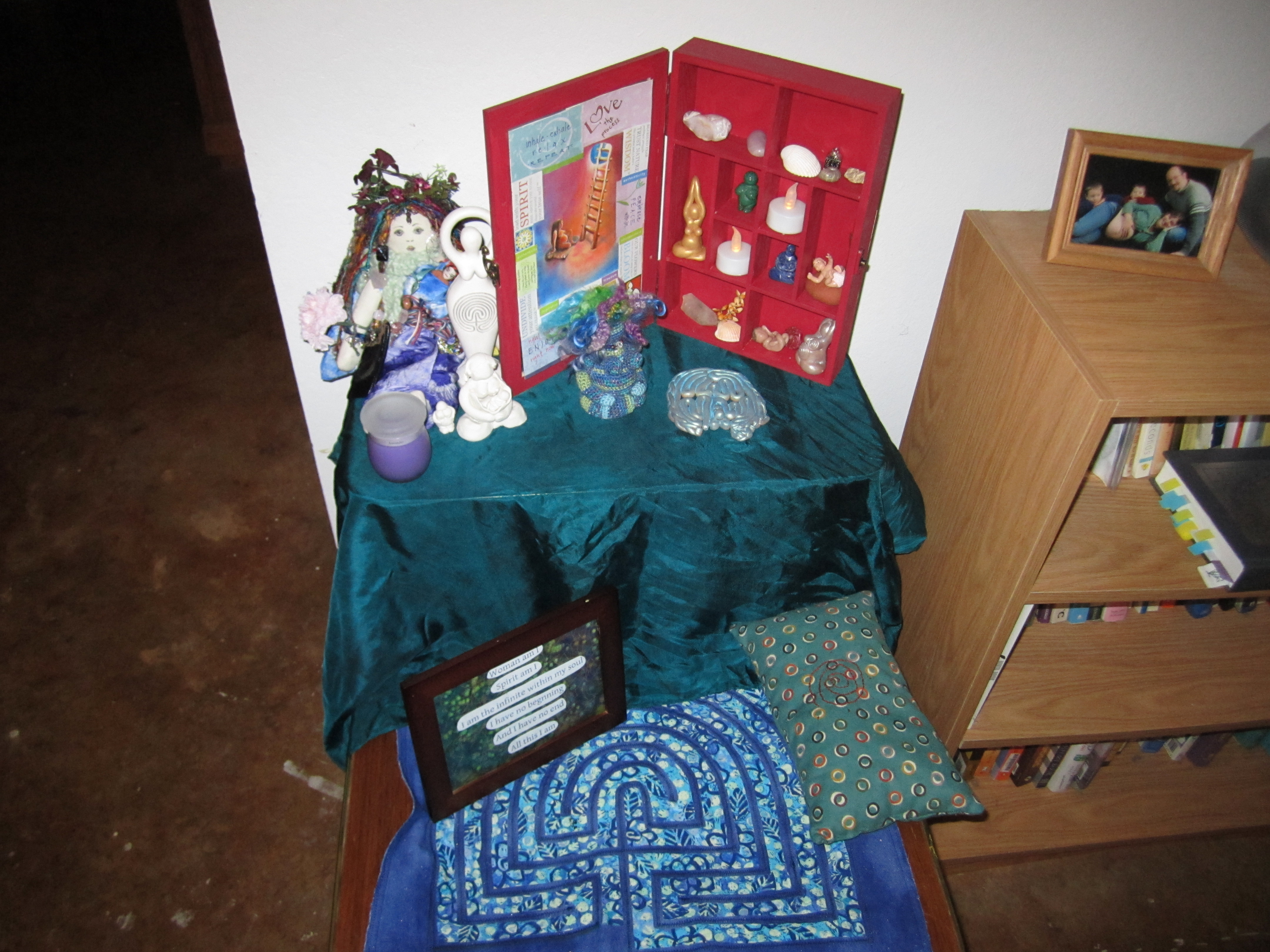
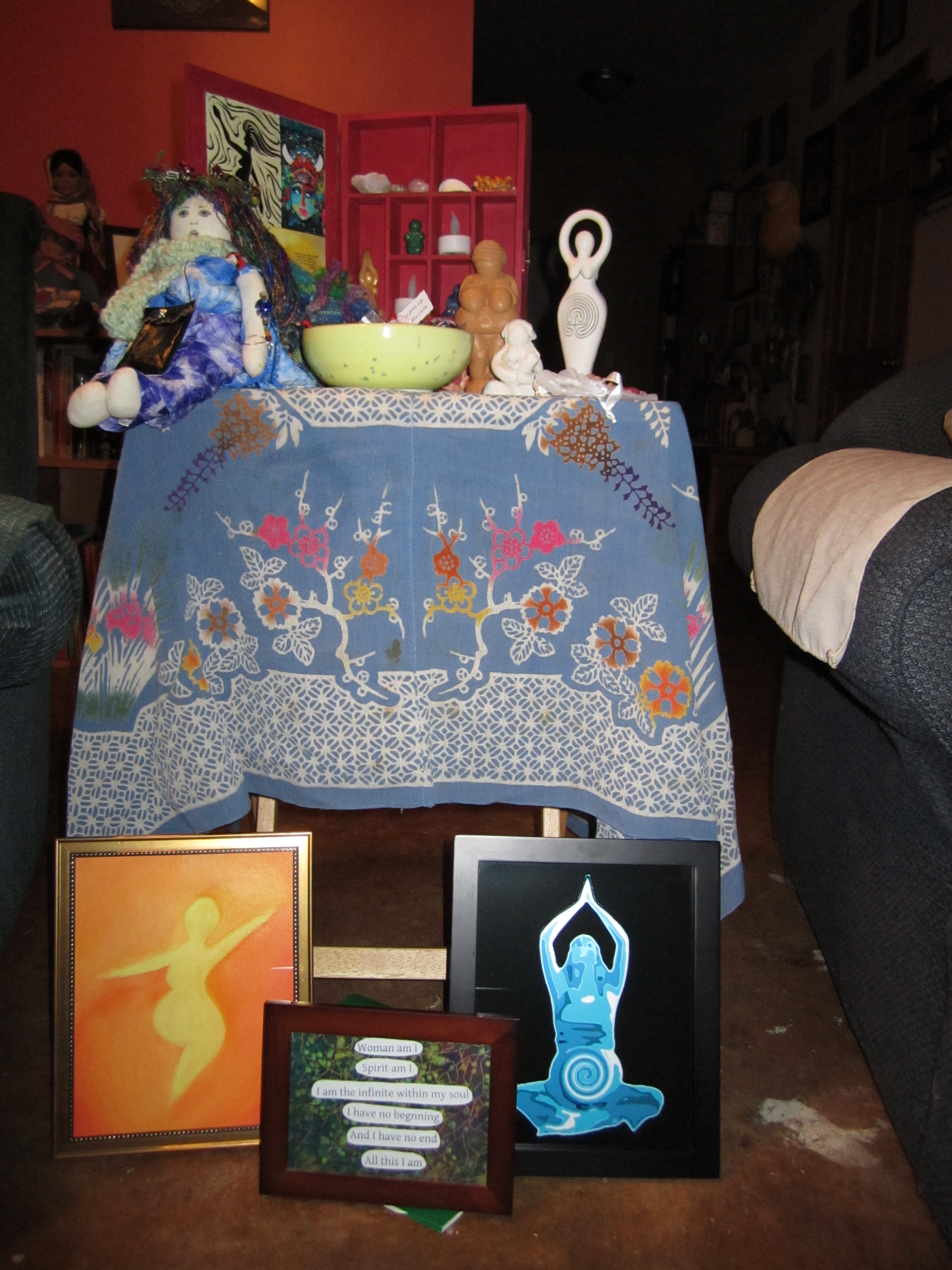
Birth altar table with many lovely new additions!

Birth doll adorned with small items from all the guests.

After the ceremony, I set up a different table close to my "birth nest" spot.

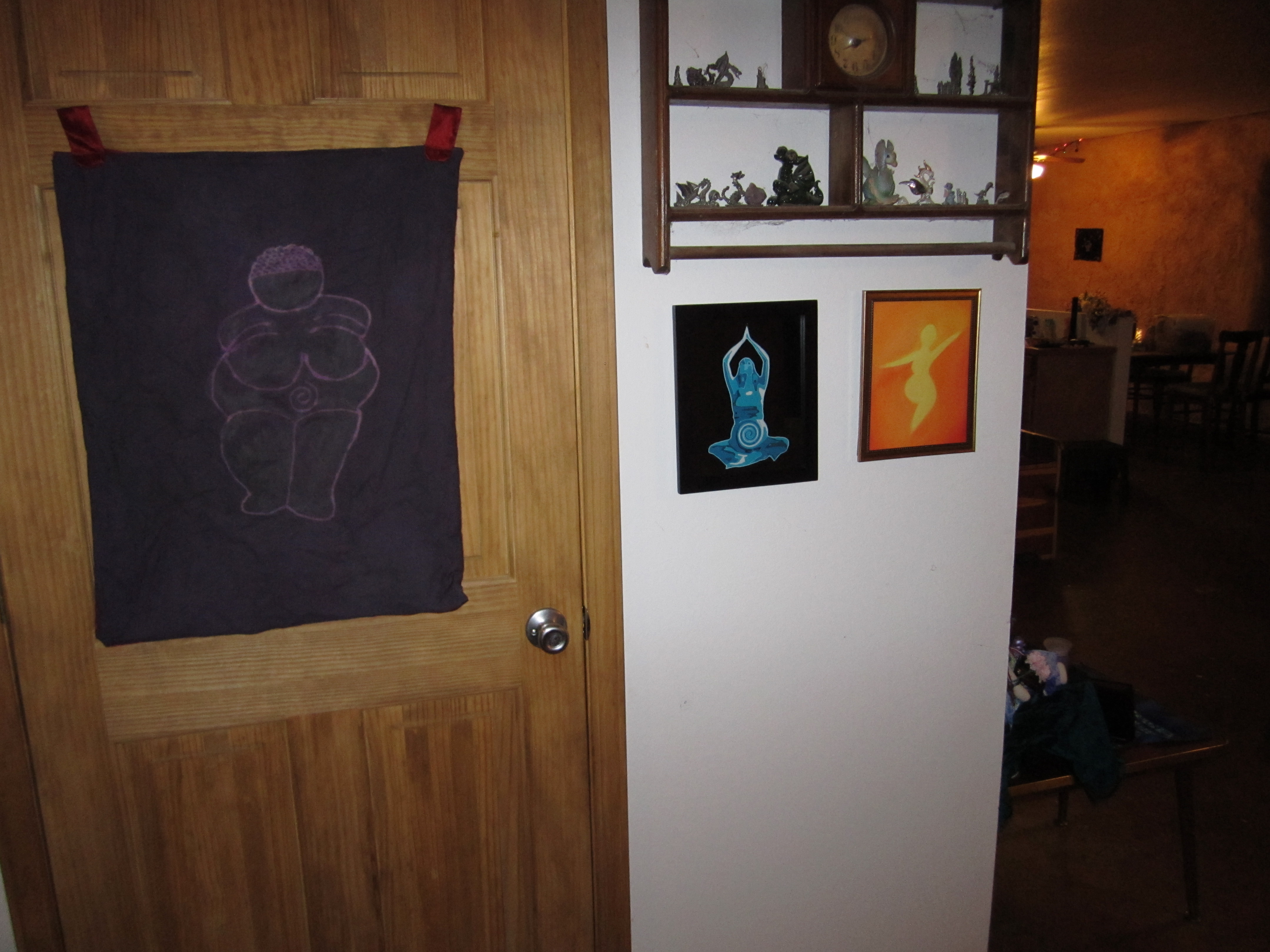
I hung these three lovely birth art pieces on the wall right around the corner from my little table. The Willendorf wallhanging is from my friend Trisha, the super cool photo from my friend Karen, and the firey pregnant woman painting from my lovely future sister-in-law, Jenny.

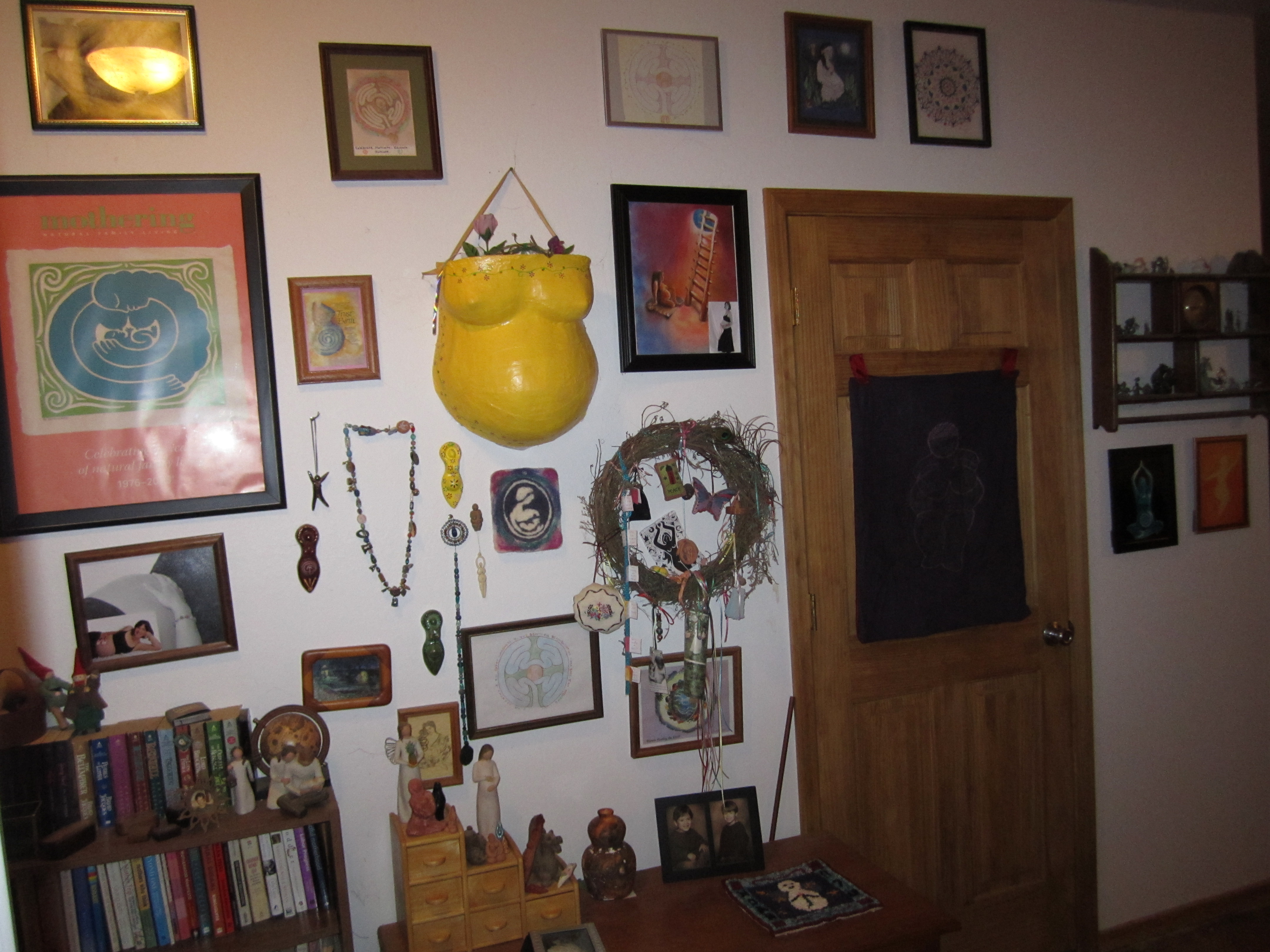
My whole birth art wall/gallery.

I wish I would have taken a picture of all the lovely and tasty food that was there for our feast as well! It was a beautiful, special day and felt like an amazing launching point on my upcoming birthing journey 🙂

Adventures in Birth Art…

Celebrating pregnancy mandala

This has been my most art-full pregnancy and that has been so much fun! I’ve made polymer clay birth goddess sculptures galore, some womby finger labyrinths, drawn a number of black and white mandalas (see example to right!), made a specially decorated birth altar, and also made a belly cast. Each one of these projects has been meaningful to me in a special way. At my blessingway/mother blessing ceremony this past weekend, I was touched to be gifted with many birth art projects made for me by my friends. Really wonderful (more on this later, I promise!).

A little while ago, I wanted to incorporate the labyrinth metaphor into one of my sculptures, but was unable to make a tiny enough labyrinth to stick on her belly the way I envisioned, so she ended up with a double-spiral instead:

Spiral belly figure sitting on spiral birth symbol aromatherapy pillow gifted to me by my friend at my blessingway ceremony.

My current “issue” that I decided to work on through art is with pushing the baby out. I have never found pushing an enjoyable part of labor and the feeling of the baby’s head crowning to me is intense and scary and has—in the past—resulted in injury to my body that takes a long and challenging time to recover from. This is not a part of my birthing time that I am looking forward to. During my birth with Noah, since he was so small (15 weeks) there was no physical harm resulting from pushing him out, but there was the new association formed with having to “let go” of my baby this time in a very emotionally painful way.

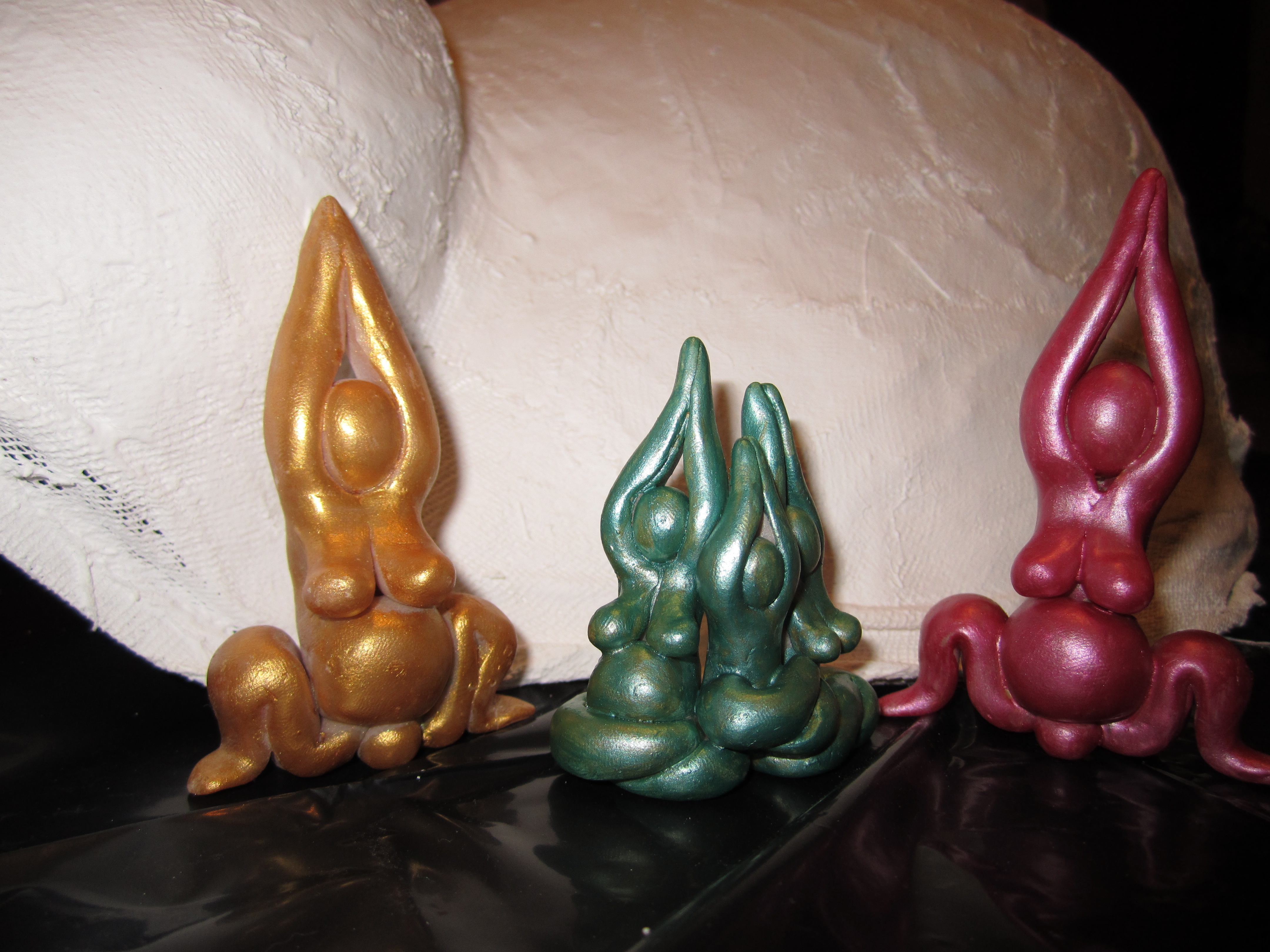
So, I’ve been doing some mental work with myself about pushing, as well has having listened to my Hypnobabies CD about pushing the baby out. This baby is doing a very extreme cervical pressure thing every night and when I experience that, I consciously relax and release rather than hold tension in my pelvic floor. I’ve also been doing a birth visualization in which I envision the baby gently gliding out 🙂 So, I decided it was time for some Crowning Mother birth art. I made two sculptures, intending one as a doula gift and one for myself. I loved them while they were uncooked, but alas, I tried a new method—I mixed the polymer clay pigment with glaze and then I boiled them. Now, boiling has worked well previously, but I’d never done it with glaze before. They came out looking like they had peeling skin and were all mottled and discolored looking and very ruined to my eyes. I ended up deciding the one with gold pigment was still okay as she was (she has a peeling place on her back, etc. and you can see in the picture how her pigmentation is messed up/uneven):

First attempt at a Crowning Mama...

The second one was so discolored and bad looking, that I used acrylic paint to paint her pink:

Pink mama

She looks all right, but I still remember how she was supposed to look! (hmm. Do I sense a message here about how I might feel about my own unrepaired past tears? I remember how I’m supposed to look…)

I know they look like they’re sitting on their babies’ heads, but that was the best way I could do it to make them be able to be stable and freestanding.

I also made a three generations sculpture that was supposed to be a gift for my mom, but again had with the bad glaze/pigment issue. I ended up painting it green and don’t know if I will end up giving it to her or not (she saw it by mistake, because I had it sitting on the counter still when she came over):

Triple figure

Here all of them all together with my belly cast as backdrop 🙂

While I was at the painting, I also painted a mother-baby figure that my friend Summer made for me as a blessingway gift (don’t I have nice friends?! This was one of her first attempts at creating birth art and I was touched that she gave it to me! She left it white, saying that I could paint it if I wanted to. So, I painted it sparkly purple :))

I decided to redeem myself artistically by making a new Crowning Mama figure the following day. This one I applied pigment to in my usual way and decided to bake. Interestingly, I accidentally set the oven for 350 degrees, rather than the normal setting for polymer clay! Yikes! When I got her out, the tips of her hands were smoking! (I’m reaching now, but perhaps some kind of subtle “ring of fire” issue being manifested here…;))And, the pigment turned from purple to blue in some places, which actually isn’t a bad effect, but is also not normal! And, I am critical of the shape of her arms—too fat, long, and no graceful taper like some of my others.

Now, I have to decide whether I’m going for round three or not! (Perhaps there is a lesson to be found here in that birth isn’t supposed to be perfect and neither is birth art.) I feel like accomplished my original goal, which was to make a positive crowning/pushing image for myself—I thought all kinds of helpful, “open” thoughts while creating this last one especially and imagined welcoming the feeling of the baby’s head, rather than feeling fearful of it! So, she reminds me of that feeling. And, maybe she—and thus, myself–are actually good enough after all.

Birth Lessons from a Chicken

Birth Lessons from a Chicken

by Molly Remer, MSW, ICCE, CCCE

Originally published in Midwifery Today, 2009 Spring;(89):49

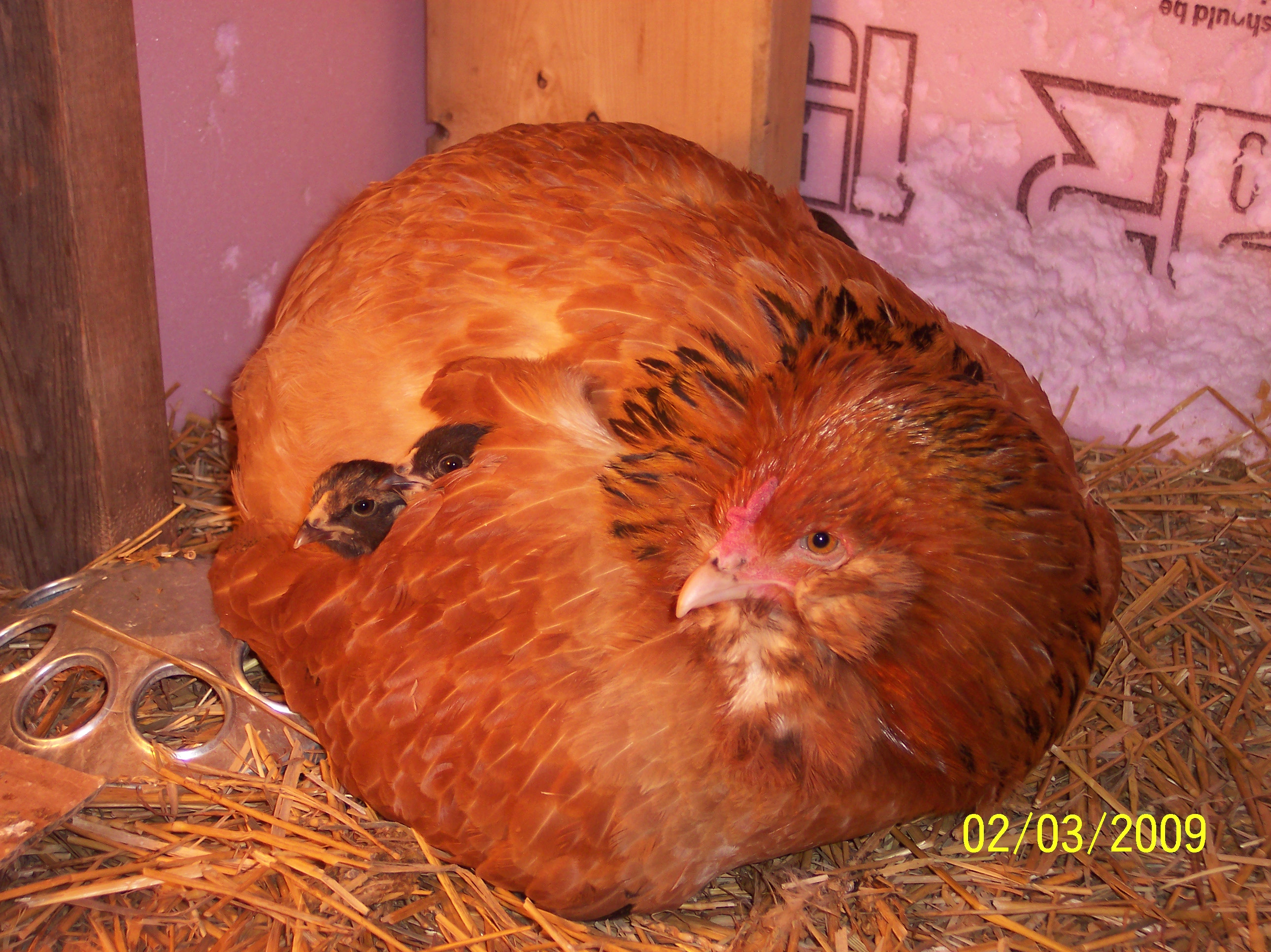
“Should we just let her sit on them?” my husband asked. He had been struggling to keep a broody hen off her nest for almost two weeks.

“I always vote in favor of the mother,” I told him. So, we stopped trying to oust her. My husband gathered up six random eggs from the coop and put them under her and we let her sit.

We consulted our book on raising chickens. The chicken book had very little encouraging advice about “natural incubation.” After reading it, we learned that she was likely to let the eggs get too cold causing them to die, or perhaps just chill a part of them causing the chicks to have deformed feet. If she did manage to hatch them, they will probably get bacteria in them from the “unsanitary” nest site and get “mushy chick disease.” This is, of course, if the eggs happen to be viable at all, which is improbable. It is recommended not to let her sit and if she persists to either cull her (kill her), or to just let her sit there until she dies of starvation trying to hatch infertile eggs (and therefore culls herself). The book also informed us that if she has feathery feet (she does), she will probably knock the eggs out of the nest by accident and break them. Also, she should definitely be sitting in the spring and not the dead of winter. After studying the book, we are left with a clear sense that incubating eggs artificially is the preferred way to go and that “natural incubation” is fraught with difficulty and dangers.

However, there our chicken sat in the unheated, but well built and insulated chicken coop as the January temperatures outdoors reached -2F. We concluded that she probably had a 5% chance of actually hatching anything and I felt sad for her.

Then, one morning when my husband went to feed the chickens, he heard a funny noise. He looked at the broody hen and from beneath her, a fuzzy head appeared. Then two. Eventually, four. In this cold, cold weather at the wrong time of year with the wrong

The mama hen and two of her chicks

kind of feet and the wrong kind of eggs, she did it! We didn’t trust her, or believe in her. Our book and the experts didn’t either. However, her inherent mothering wisdom won out—it trumped us. At the risk of excessive personification, it truly seemed that she had believed in herself and trusted her instincts (or perhaps, that Nature believed in itself).

Perhaps we could have had the same result with an artificial incubator—a tray that rotates the eggs, instead of “clumsy” feathered feet; a properly temperature controlled unit instead of the heat of her own breast; a sterilized box instead of a wooden coop with an unscientific amount of possibly “germy” feathers plucked from her own body.

My husband ran to get the rest of the family and as we watched that first small fuzzy baby with its eyes bright with life, I was awash with the parallels—the book tells her that her pelvis will be too small, labor will be too painful, her skin won’t stretch, she might have GD, there might be any manner of complications, maybe she should elect to have the baby surgically. Why all the fuss about doing it “naturally” anyway?

Then, as we continued to stare in amazement, the mama hen clucked to her baby softly and fluffed her wings around it until it disappeared beneath her with the others. Isn’t this the birthright of every new baby of any species? To be snuggled immediately after birth into the warm embrace and near the breast of the female body that has given it life? The body that has cared for and nurtured it so lovingly so that its head may finally peek out into the world?

If our chicken were to write a book about hatching babies—or about giving birth—perhaps her section about natural incubation would read:

Maybe she knows what she’s doing.

Maybe you should trust her.

Maybe she can do a better job with her own body and her own babies than you can.

Maybe she can do this all by herself.

Molly Remer, MSW, ICCE, CCCE is a certified birth educator and activist. She is editor of the Friends of Missouri Midwives newsletter, a breastfeeding counselor, and the mother of two young sons and a baby girl on the way. She loves to write and blogs about birth at https://talkbirth.wordpress.com, midwifery at http://cfmidwifery.blogspot.com, and miscarriage at http://tinyfootprintsonmyheart.wordpress.com.

This is a preprint of Birth Lessons from a Chicken, an article published in Midwifery Today, 2009 Spring;(89):49. Copyright © 2009 Midwifery Today. Midwifery Today’s website is located at: http://www.midwiferytoday.com

Finishing Up!

I have had a crabby and annoying day for much of the day, which is not the frame of mind I envisioned being in when writing this post! I originally set out to write about what a nice time I’ve been having the last couple of days, sooooo….going to just write and perhaps I’ll recapture some of the peace and sense of harmony that was prompting me to write in the first place!

On Sunday, I had a very delightful time spontaneously working on the birth altar I planned to make. When I say spontaneous, it doesn’t mean that I didn’t know I was going to do it—I knew I was, someday—just that I suddenly started working on it and basically didn’t quit until I was finished and it came together in a perfect way for me. I felt so good and content after making it. Inspired by that experience, I then wrote down a list of my fears about the birth (this was also on my to-do-before-actual-birthing-day list) and then did a Hypnobabies “fear release” session after that. And, then I burned them all up in the kitchen sink. More good feelings!

Also on Sunday, while the kids were at my parents’ house, I worked in the bedroom getting all of the baby’s clothes sorted and into the right boxes as well as assembling my special tub of birth supplies so that everything is easily available in one place and no one has to ask me for anything—I even put a box of raspberry leaf tea in, which could also easily just stay in the cupboard where it usually lives, but it is right there with everything else now. While I was doing this, Mark worked on sorting out his own clothes and decluttering the closet. We also decluttered some of the “hot spots” on our kitchen counters that attract random piles of nothing important. So, more good feelings about that!

The next morning, I woke up before the kids and did the Hypnobabies “visualize your perfect birth” exercise (not a CD, my imagination). It suggested spending about 5 minutes and I spent almost 20 minutes—since I am having some strange “death” fears about this birth, I went ahead and carried the visualization through to my being 89 and then to the baby being 89 ;-D Maybe this was excessive, but I felt good about it—ending the visualization with just the initial “hi, baby!” moment didn’t feel like enough to me! So, then I felt really positive and complete about that 🙂 I also finished my birth altar that morning—I put a glaze over the images, took pictures, etc. I also listened to the pregnancy and birth affirmations from Hypnobabies while I did some of my other work. Later, we went on a nature exploration walk in the woods to enjoy the nice weather and when we came back, I read some of my kids’ homebirth books to them—Welcome with Love, Runa’s Birth, and We’re Having a Homebirth. They are excited and want to be there when the baby is born, but I’m strongly leaning toward only having them present if they happen to wake up. I don’t know that I want them woken up if they’re not ready (I realized this for sure after Z mentioned how he is going to be “screaming” when the baby is born. Um. No, thanks on that).

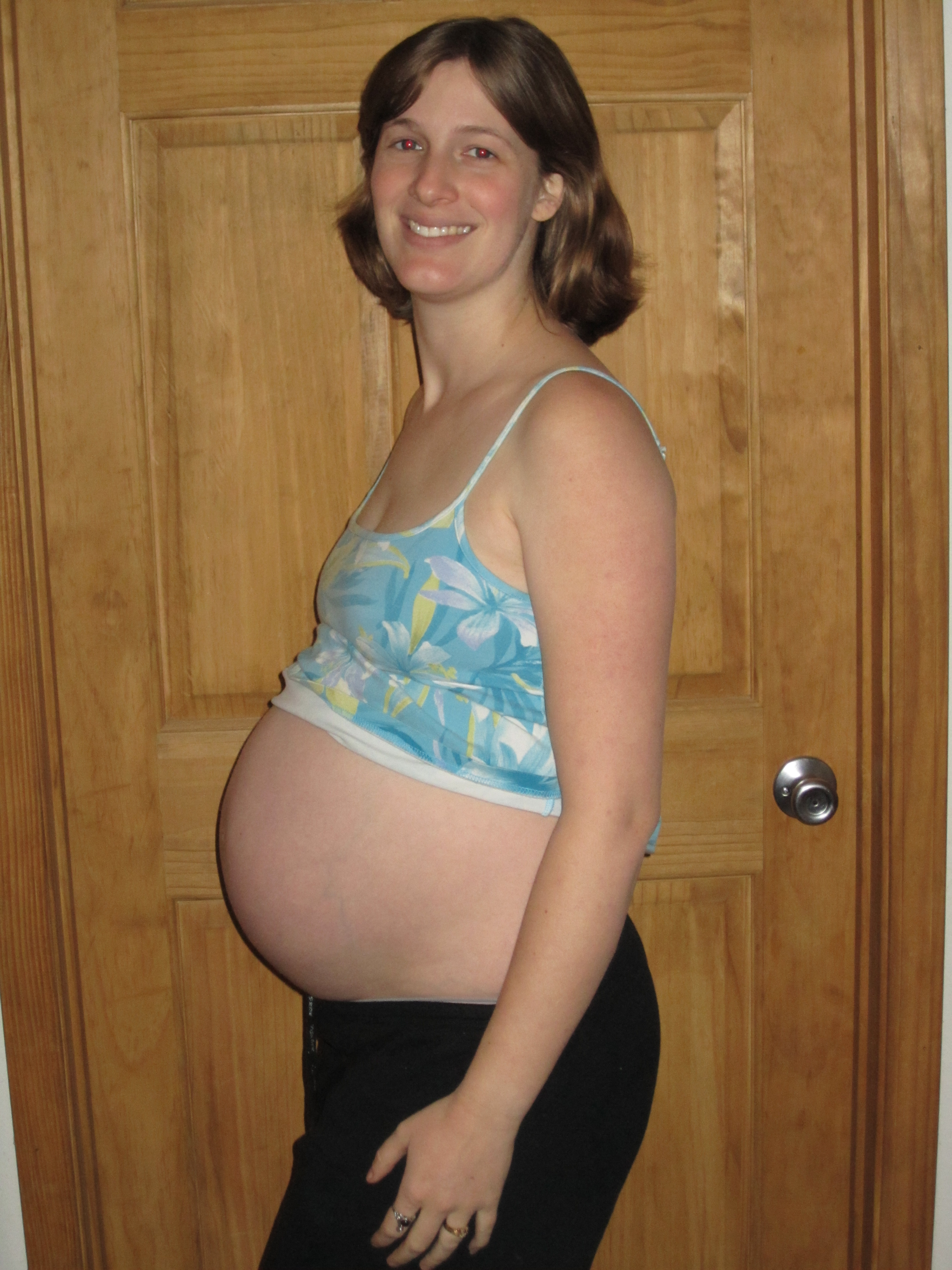
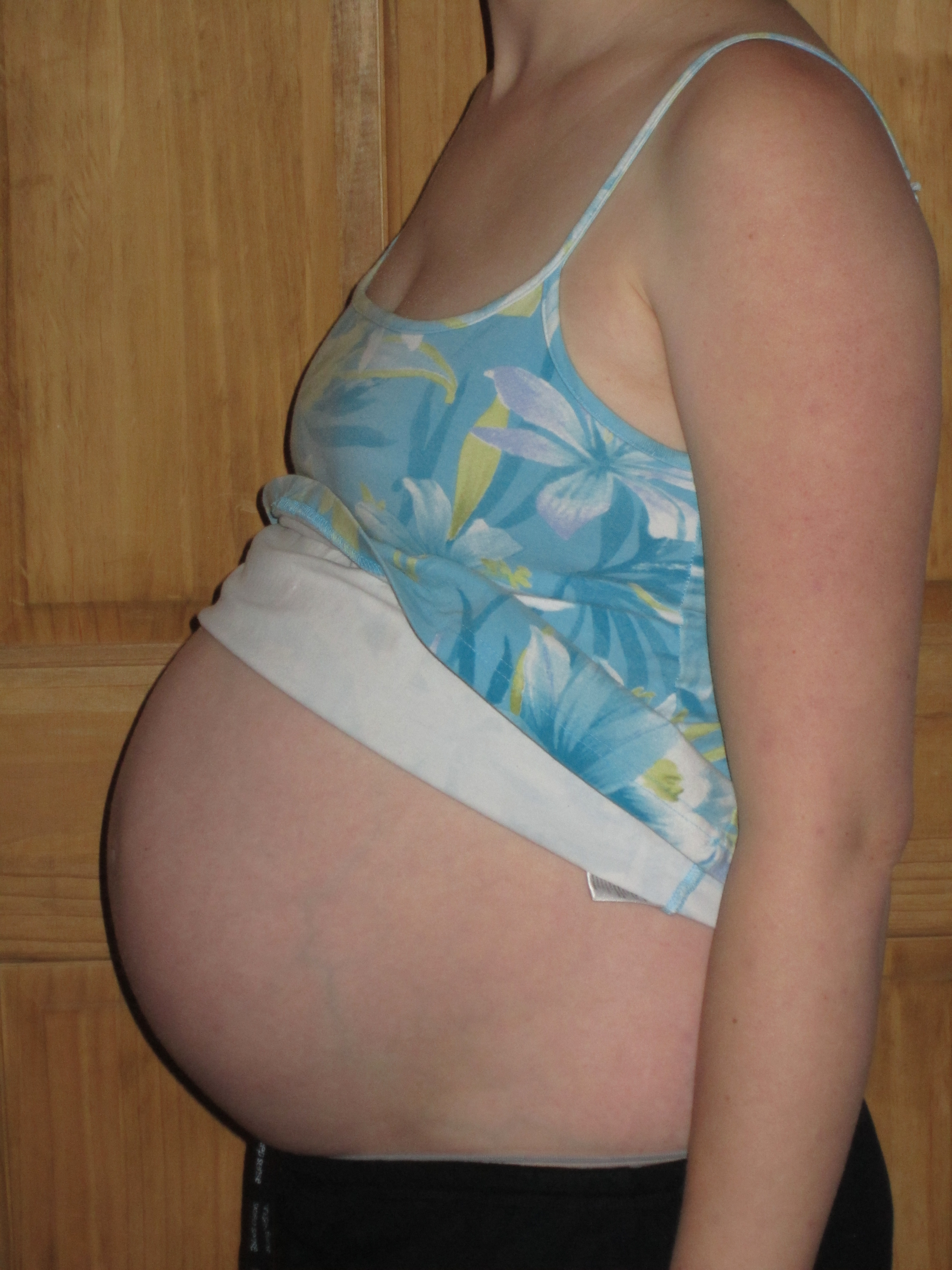
Then, on Tuesday, I had some more belly pictures taken. It is fun to be “special” and get my pictures taken 🙂 I love all of the ones I’ve seen so far from this shoot, but these two are really good!

Today, I had my first prenatal appointment with my midwife at our own house. I’ve spent the entire pregnancy not being able to picture her in our home and so, now, I can—because she’s actually been here. I hadn’t really realized before that she hasn’t really ever met Mark or my mom, other than very short introductions about 6 years ago! She seems to think I will have the baby early—baby’s head is very low (which I can feel, for sure!) and she said my amniotic fluid has decreased. She also thinks baby is on the small side, but I think I will fool people once again. I only measure 33 weeks, which is kind of funny, because I wonder what I would look like measuring 40 weeks—I guess pretty extreme! I have been having a lot of pre-birthing waves (trying out my Hypnobabies words!). I always do, but they’ve definitely increased in frequency to about every 15-20 minutes throughout the day. I also reminded her that I don’t expect to call her until near the end, because what I want from her is immediate postpartum help—I like being almost alone during my birthing time (more Hypnobabies words. I like this one especially—it isn’t “labor” it is my “birthing time.” :))

After the midwife left, my mom stayed and we went through my box of birth supplies so she knows what is where. I also made sure she knows how to use my camera because she is on picture-duty. I also showed Mark and my mom the things I learned about neonatal resuscitation at the training I attended last month and we practiced with my resuscitation bag so that we all know how to do “positive pressure ventilation” and chest compressions on a newborn now. I know this might seem kind of over the top, but I find it very empowering to know how to do these things now—they always seemed “mysterious” and specialized before—and it doesn’t make me feel like I’m planning for a “worst case,” but that I’ve completely resolved any fear I had about things I wouldn’t know how to do for my own baby if I was giving birth alone! We’ve been talking about needing to do this since the end of Dec., so it felt very good to get everything all squared away in this manner.

Really the only things left I’d like to get done now before she is born are the belly cast and my blessingway and to crochet one more hat for her! (Of course, I have non-birth/non-baby things in abundance that I’d also like to get done—double checking the exam questions for my online class, finalizing the FoMM newsletter, submitting two articles, finalizing some the blog posts in my drafts folder, etc., etc., etc. , <sob>), but right now my mind is on the specifically getting-ready-for-baby to-dos and I’ve done ’em! Go, me!

Birth Altar

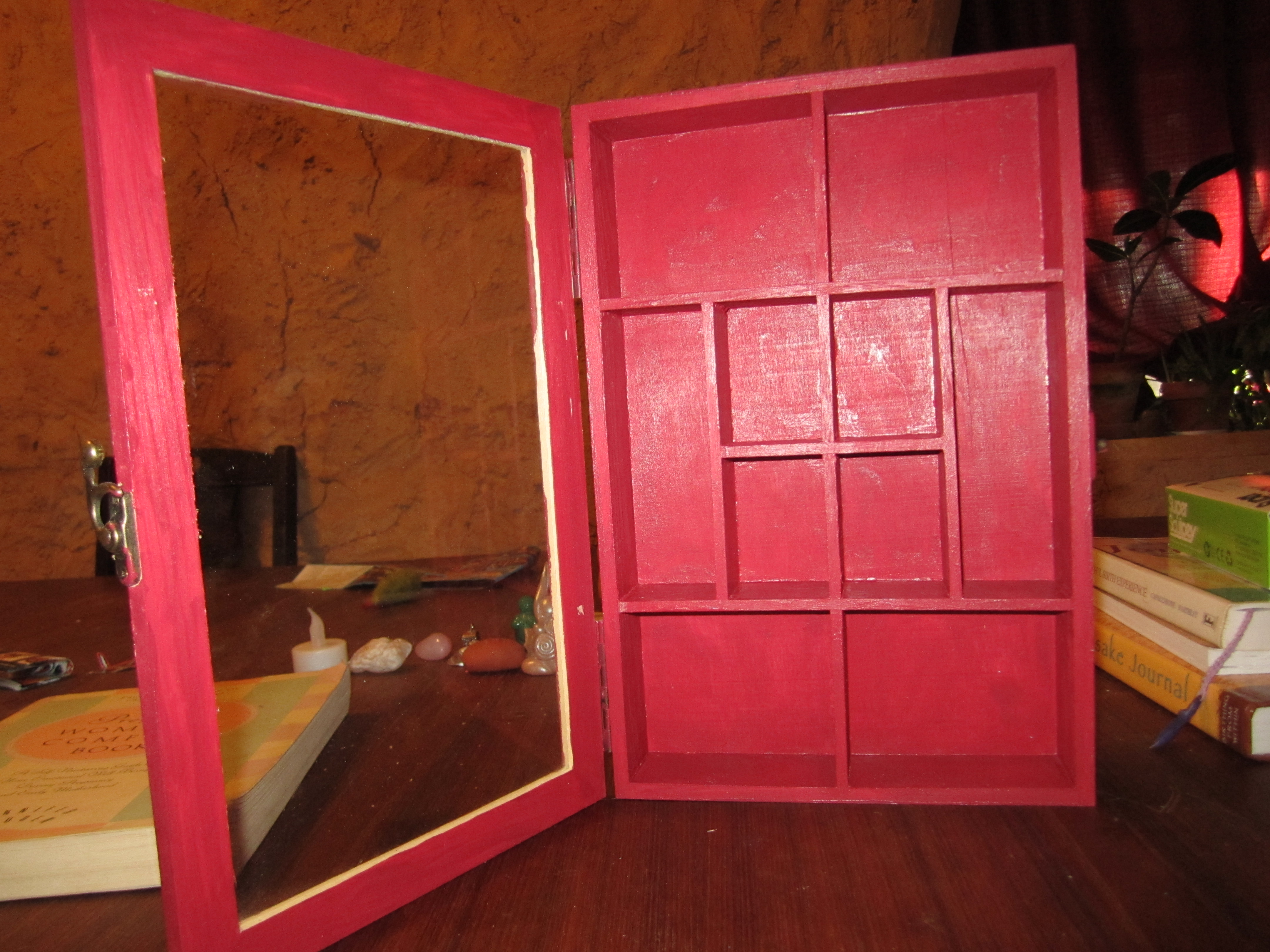
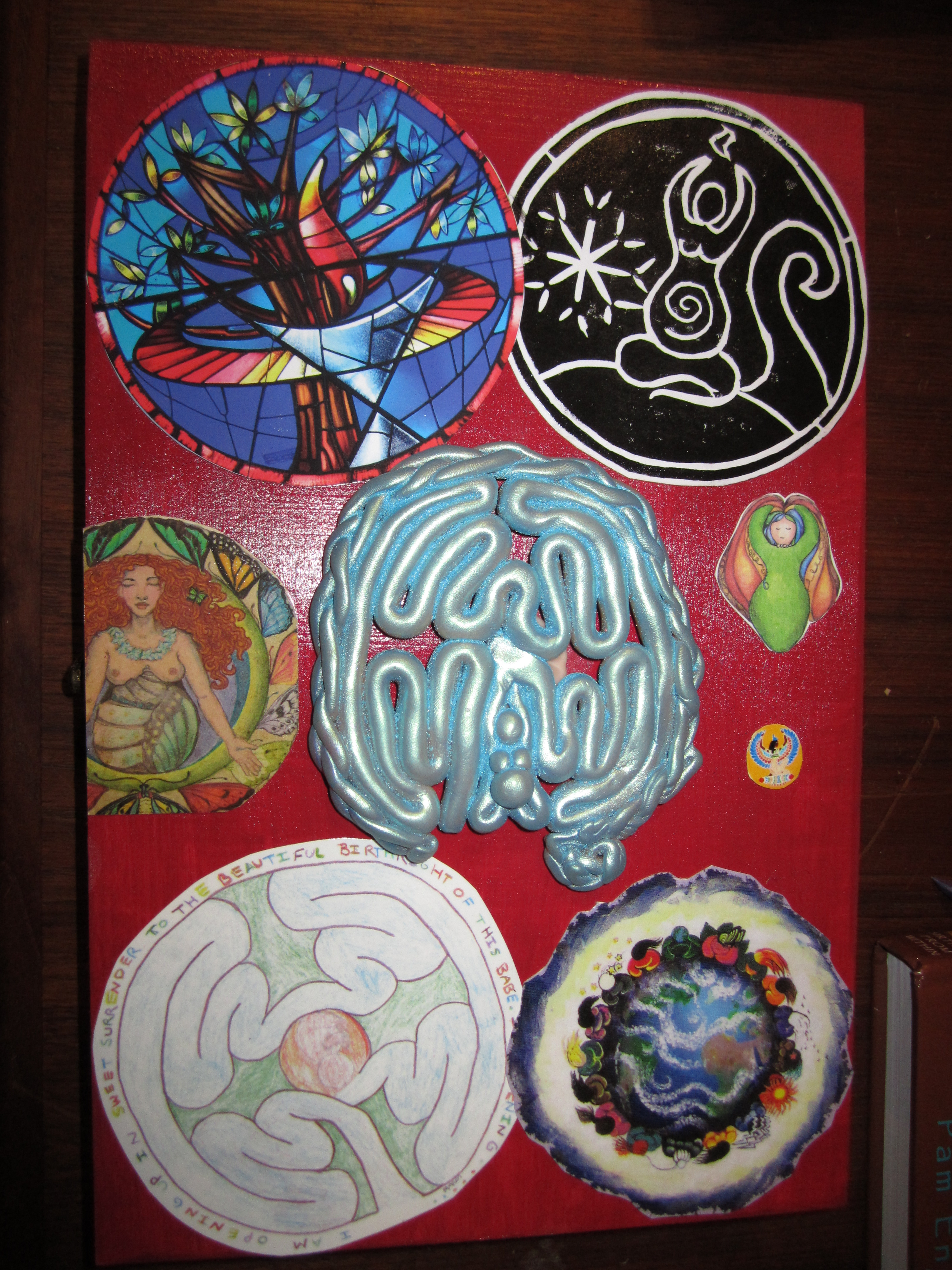
Inspired by the birth altars by artist Amy Swagman of The Mandala Journey, I decided I wanted to make a special birth altar for this upcoming birth. My mom bought me a small, unfinished curio cabinet/shadow box from Hobby Lobby to use for this purpose (thanks, Mom!). The first thing I did was to paint it “placenta red” using a blend of red and purple paints to get the shade I wanted. This is my favorite “power” color:

Door open (door is glass, but it doesn't show up in the pictures and looks like an empty frame).

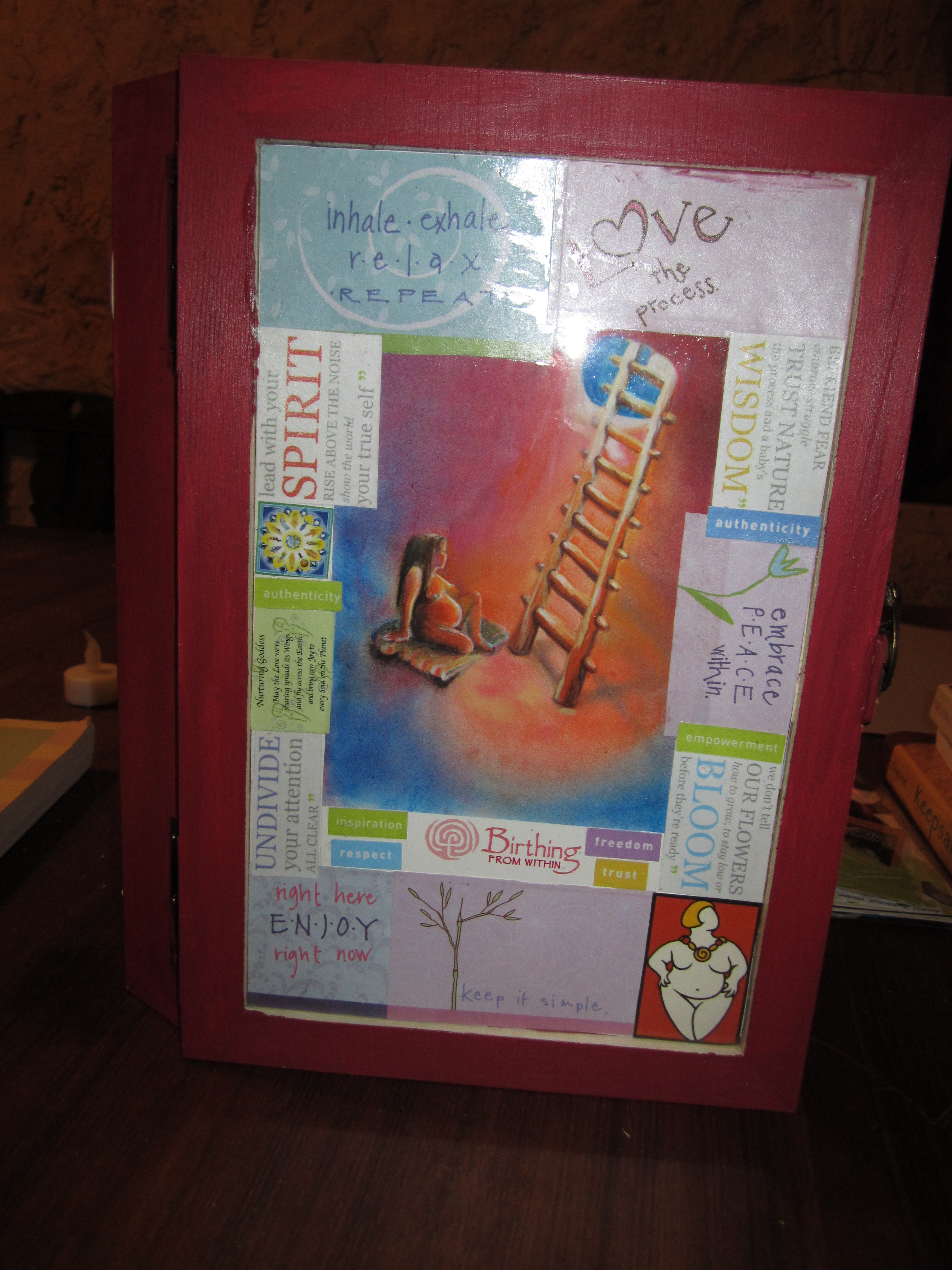
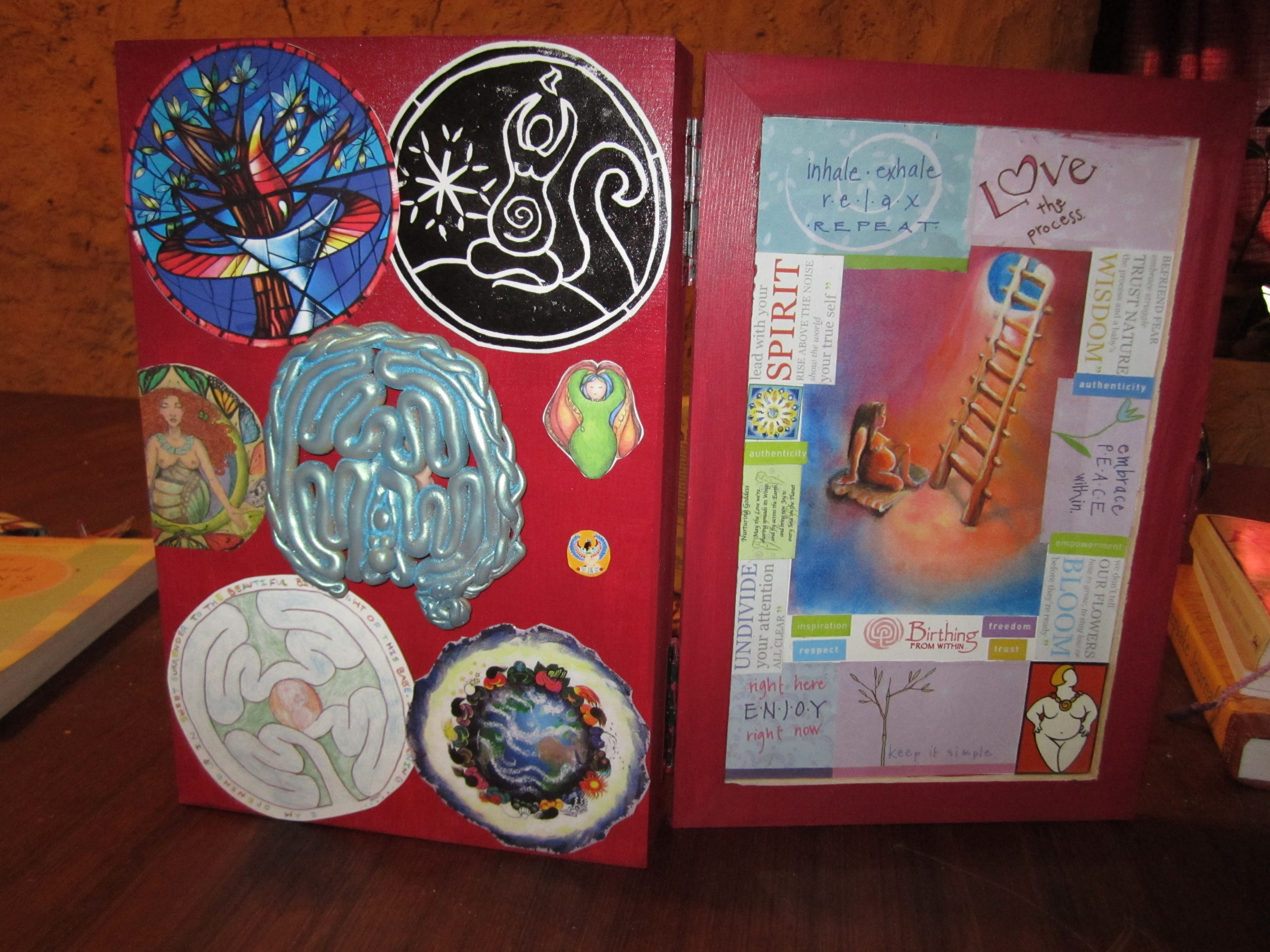
I had a variety of postcards, tags, and inspirational words saved and some of them posted on the wall by my computer. I decided it was time to do something with all these accumulated goodies. I made a reversible, removable card to insert into the front door of the box. For the front panel, I used a card that I bought from Birthing from Within with the “kiva woman” painting that I really love and connect with. I didn’t like cutting it up, but it was worth it! Around the edges I picked words from the tag that came with a shirt I purchased from WYSH (though the quotes are intended to be about the parenting journey, they are amazingly apropos for birth—which, of course, is part of the parenting journey too). I also used some of the tear off pages from a little “happy thoughts” sort of page-a-day calendar that I had a couple of years ago from the $1 Shop (again, totally appropriate for birth, even though it wasn’t the original purpose). Finally, my paper-hoarding tendencies have come in handy, because these little words of wisdom were perfect! Part of me felt like I “shouldn’t” have so many words as part of my birth altar—birth brain doesn’t really “speak” in words, but words are my thing and my “medium,” so to speak, so I followed my intuition and I loved how it turned out. It is perfect 🙂

First side of reversible card

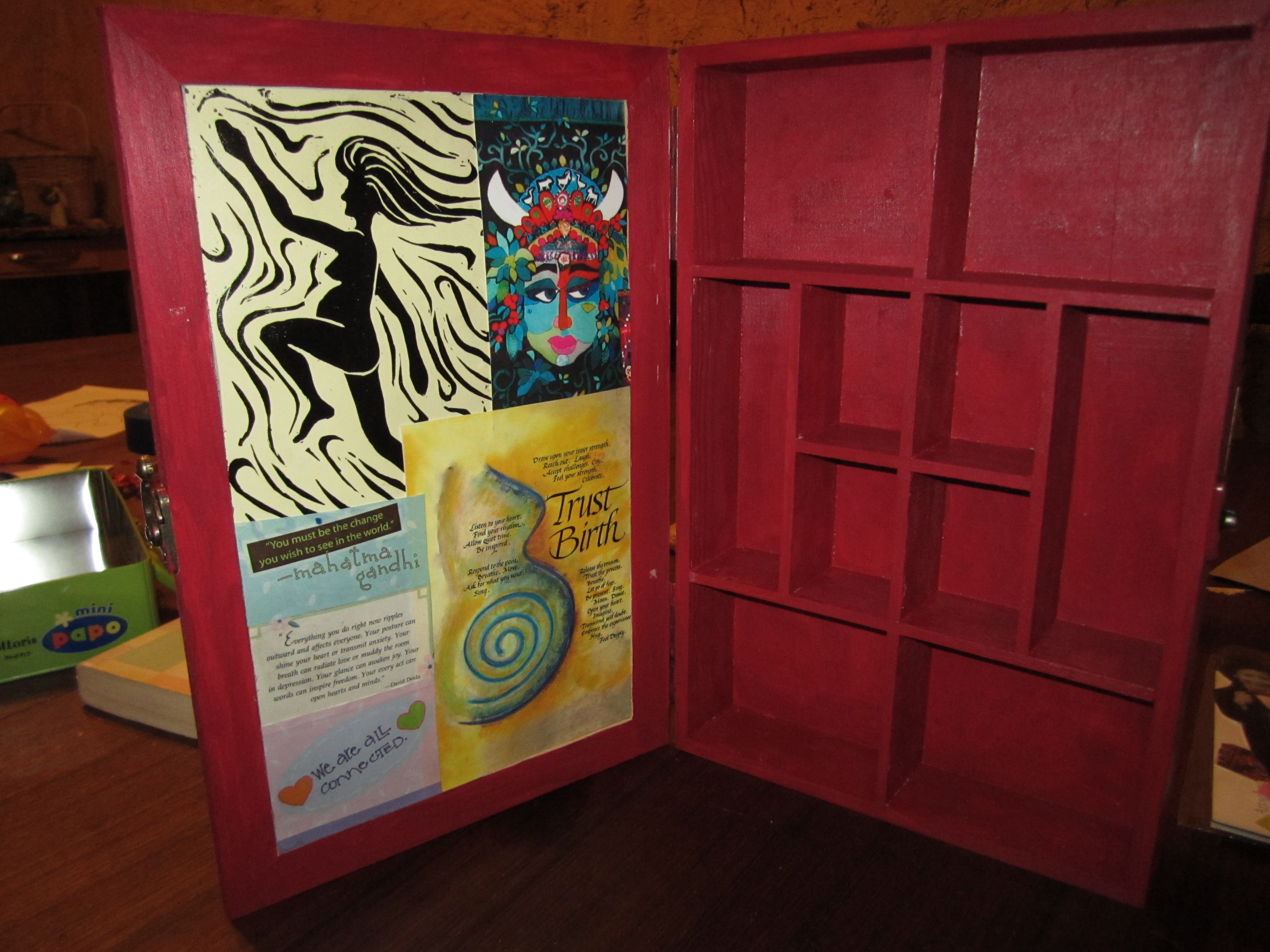
I am less happy with the second side—I was going for less wordy on it and maybe I should have worded it up too! The upper left hand corner is a linoleum block print carved by my husband 🙂

Second side of reversible card

Front of the altar with card inside:

Inside of door with card inside:

For the back, I had a small collection of items that are round and so I thought they seemed to go together. In the center, I attached the womb labyrinth I made a couple of weeks ago. In the upper right hand corner is one of the black and white drawings that I’ve been doing that my mom modified and cut into a linoleum block print as well. The lower left hand corner is a postcard version of a womb labyrinth that I drew in 2007.

Then, I filled it up with some things that hold meaning to me that usually are around my house in various places including two of my polymer clay birth goddess sculptures. I included two little LED tea lights, which look really cool in there in real life, but are less cool in the pictures. I also put in a little plastic baby, which might be kind of weird—I can’t decide…

Remember the reversible card? Now the front is also the inside panel! 🙂

With card removed and door closed.

Opened all the way with front and back both visible.

This was officially the most fun and rewarding birth project I’ve worked on 🙂

Happy New Year!

I’m 37 weeks today and it feels exciting to now be in the baby’s birth month and birth year at last! I recognize this feeling of ”

37 weeks!

any time now” from other pregnancies—when you hit the official “full-term” mark, it makes you feel like the baby is seconds away, even though I truly expect her to be born right around (if not actually on) her due date three weeks from now. But, the sense of being full-term heightens a sense of awareness and expectation around, “could it be today? Or, today? How about today…” As I said, I do not expect to have her early, my past experiences don’t indicate such—my due dates are usually very spot-on. I am having a LOT of contractions lately. During the last three days or so they’ve picked up in both frequency and intensity. I also have a LOT of cervical twinges (the “baby-biting-my-cervix” feeling). This has been going on since about 31 weeks or so, which is much earlier than I remember from other pregnancies (seems like a 37 week+ feeling). This feeling is very strong at night and almost hurts—like she is twisting her head around/burrowing down. I weigh 168 pounds now—most ever! I’d kind of like to not pass 170…

No swelling anywhere. Pretty good energy level. BP decent (slightly high at midwife’s, normal if I take it at Wal-Mart of my dad takes it). No more leukocytes in urine. Went to chiropractor last week because I have a persistent intuitive feeling of needing to get my pelvis aligned. So, that was good to check off my list. Midwife says baby is lined up in ideal position in utero/pelvis and estimates her to weigh about 5 pounds (which I think is wrong. I always surprise my care providers with the actual size of my babies. I think she’s pushing 7lbs right now, probably–6.5 or so).

Feeling nesty and have been assembling box of birth supplies, sorting through baby clothes, and collecting expendable towels and receiving blankets. Feel like cleaning up and decluttering big time—in with new, out with old time of year! Finished crocheting an afghan for her and want to make a matching hat. Haven’t done belly cast yet—want to soon—and feeling the pressure to get it done! I also need to review the neonatal resuscitation stuff I learned at the training last month with my mom and with Mark, so that the only person at the birth who knows how to resuscitate a baby is not also the only person who is birthing the baby….!

I also have collected materials to make a “birth altar” for this birth. It is a shadow box/shelf that I’m going to collage all over inside and out and then be able to set things inside on the little shelves 🙂 Going to have some additional pro pregnancy pictures taken on Tuesday! Haven’t really had any birth dreams. I am expecting her to be born at night (well, wee hours of morning) on a weekend within two days on either side of her due date. I’m also expecting her to be born very quickly. If I’m in labor for longer than four hours I don’t know that I’ll know what to think about that! I keep imagining a sort of “sudden” birth—like one of those 45 minute ones! I started reading Simply Give Birth again to get me in the birthy frame of mind. My mom is reading The Power of Women for the same reason. I am into week 4 with my Hypnobabies home study. Still having “issues” with the persistent and frequent use of the word “anesthesia,” but finding that the finger drop technique works amazingly well. I want to do a fear release exercise with myself soon—I’d like to write up my various birth/baby/postpartum fears and work them through on paper, maybe doing a drawing or art exploration, and then do a Hypnobabies fear clearing session.

Looking forward to my blessingway next weekend! If she does for some reason end up being early, that could put a crimp in my party plans! I actually have a lot of plans for next week. I have this urge to “wrap things up,” which is making me run kind of high/frantic, rather than rest and relax and rejuvenate in anticipation of a nice, peaceful babymoon. My next online class starts on Jan. 10th and I’ve got some remaining prep work to do for it too!

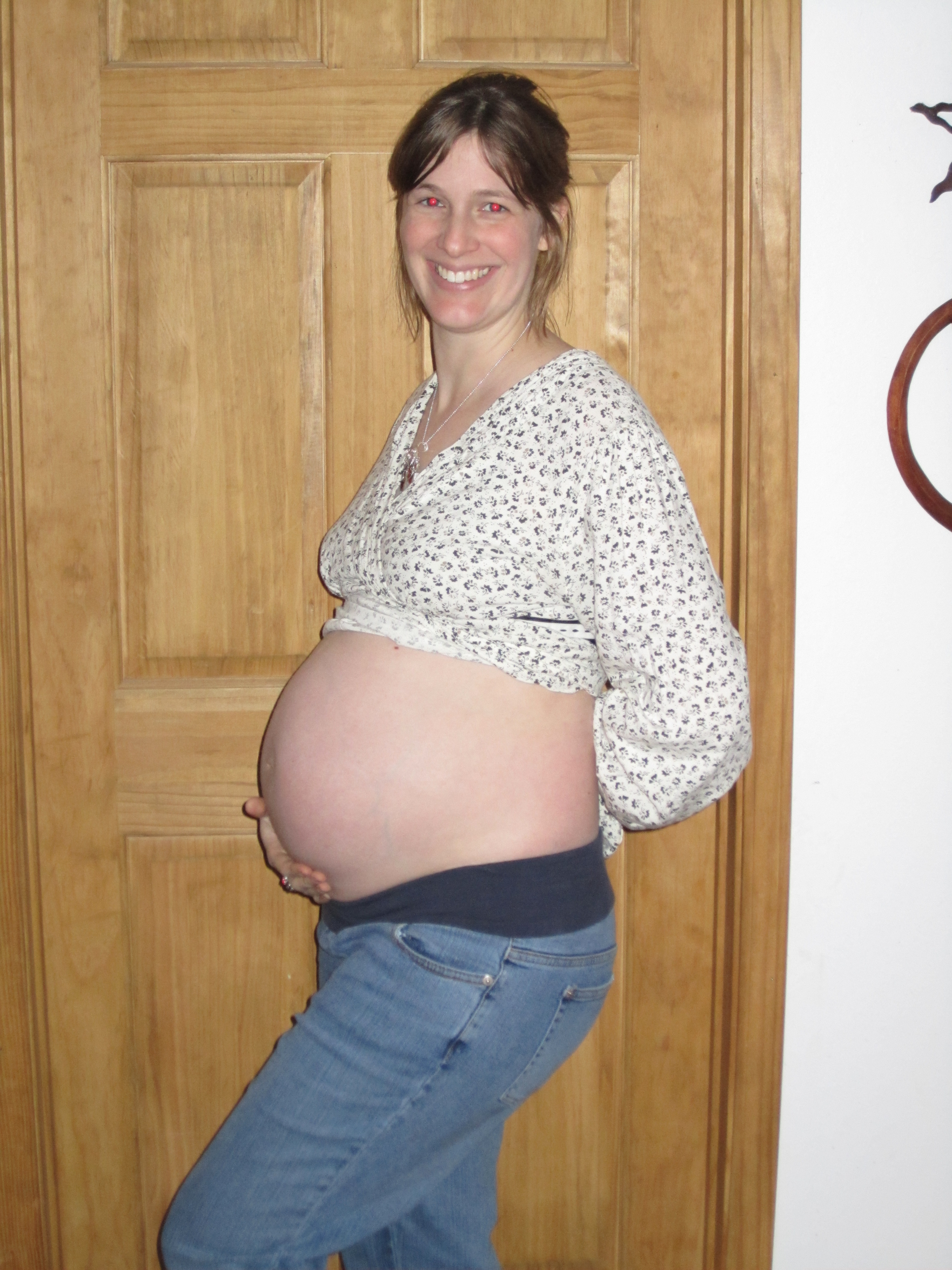
Didn’t update with a 36 week picture, so here it is too:

36 weeks

Birth Witnesses

Birth Witnesses

Guest post by Bonnie Padgett

In this so-called Age of Information, we have iPads and smart phones, mega computers and micro chips, and a world of knowledge at our fingertips.  We are not limited by the resources in our community when we can reach out to virtual communities that span the globe with the touch of a button – forums full of ideas, innumerable news sources, websites for all schools of thought and up-to-the-minute research from leading experts in every field.

So why, then, are new and prospective mothers still so naive when it comes to the act of childbirth?  Why, despite our best efforts to educate ourselves, are we still in the dark about the whole process until those contractions hit and we begin the journey through labor ourselves?  I, myself, was included in this group, although I did everything I could think of to educate myself prior to my daughter’s birth.  I read books on what to expect, took classes hosted by my hospital, toured the birthing facility, joined an online forum of moms, and Googled everything I could think of related to pregnancy and birth.  I spent months practicing Hypnobabies for a natural birth, discussed my wishes in detail with my doctor, and, after studying ample examples and recommendations, formed a ‘birth preferences’ list for the doctor and hospital.  I knew what I wanted and what I didn’t want when it came to birth.  At the same time, I knew my “plans” would likely not go as expected, but was prepared to make informed choices along the way.  I had ideals and contingencies, preferences and plan Bs.

However, when all was said and done, I found myself totally unprepared for the experience of labor itself.  I had read about contractions, witnessed videos of women in labor, seen and practiced techniques for comfort and relaxation.  None of that prepared me for the anxiety and unknowns that flooded my mind as my body began its natural next steps.  I realized just how little I knew about the hours ahead.  How uncomfortable I would feel with nurses and midwives going about the “day to day” routines of their jobs, and by doing so how secondary I would feel to the process.  How defenseless I would feel to contradict or decline an expected treatment, especially under the medical staff’s disapproving glares, and with no one to support clueless me and my equally unknowing husband.    While a doula certainly would have helped in easing my fears and strengthening my resolve, I think my inability to grasp what I was a part of, indeed, the central part of, would have still left me bewildered and terrified in those hours.

After my daughter’s birth, I found myself struggling to comprehend what had just happened to me.  Although everyone assured me this was a fairly ‘normal’ labor, I had no point of reference on which to base that comment.  I realized the short video clips online and in class captured only key moments in a much longer, more complex and nuanced process.  Those huge gaps left in my knowledge of labor are what left me so unprepared to defend myself and my baby against treatments I didn’t want, didn’t need, and had previously decided against but found myself, in the moment, succumbing to.    I tried discussing it with my mom, who explained that she’d felt the same way when she had me (her first child).  She concluded the only way to truly understand birth was to experience it yourself.

The only way to understand birth is to experience it yourself.  The ONLY way?  That comment stayed with me, haunted me.  I became a doula after my daughter’s birth because I wanted to be able to provide women with support and knowledge that could give them a different experience, a better memory than what I had.  I just couldn’t believe that there wasn’t a way to understand birth at all except to experience it firsthand.  Certainly there wasn’t always this fear and unknown around birth that we each face today.  Not always.  I began studying that idea.  What about other cultures?  What about our culture, historically?  What about The Farm?  There wasn’t always this myth and mystery about birth!  I realized there was a time (and in places, there still is) when women banded together for births.  Mothers, sisters, cousins, daughters, aunts, friends.  They came together and comforted, guided, soothed, coached, and held the space for one another during birth.  These women didn’t go in it alone – they were surrounded by women who had birthed before them.  Women who knew what looked and felt right, and what didn’t.  Women who could empathize with them and empower them.   In addition to that, girls and women were raised in a culture of attending births.  Daughters watched mothers, sisters and aunts labor their babies into this world.  They saw, heard, and supported these women for the long hours of labor, so when they became mothers themselves, the experience was a new, but very familiar one for them.  Birth wasn’t a secretive ritual practiced behind the cold, business-like doors of a hospital.  It was a time for bonding, learning, sharing and sisterhood.  Girls learned how women become mothers, and mothers helped their sisters bring forth life.  It was a sacred and special part of the birthing process that has become lost in our institutionalized, over-medicalized, isolating and impersonalized system today.

While I certainly don’t expect us to throw our entire system out the window in favor of simpler times, I think the rush to technology and medical advances certainly left some essential elements of birth in its wake.  Elements such as women supporting women.  Listening to one’s body.   Intervening only when necessary instead of as a matter of protocol.  And perhaps, most importantly for us all, the community aspect of birth.   This has lead me to believe that in order to truly educate ourselves about birth, to improve the way we birth, and the way we prepare for birth and prepare our sisters and daughters for birth is that we need to provide the women we love (especially those of childbearing years) the opportunity to witness and participate in our births, because only when you are present for a labor and birth can you begin to fathom the process, the emotions, the physiological changes that one goes through. If we can allow women the chance to witness and share in our births – the way it was done historically – and how it is done now at sacred places such as The Farm – we can give them a chance to prepare for birth in a way we were never able to. They can see firsthand the role of a midwife or doctor (and the roles those care providers don’t play). They can observe the benefits of a doula, they can have the opportunity to doula themselves – caring for and soothing a woman in labor.  They can observe the power of changing positions, the instinctual side of birth that leads each woman to listen to her inner voice to bring forth her child.  They can witness the time, energy and atmosphere it takes to birth a baby. I truly wish that more women were invited into the birthing setting by close family or friends so they could witness normal birth and understand it as best they could before they do it themselves. This is one of the keys, to me, to normalizing birth for every woman.

As a ‘birth survivor’ myself, I understand the trepidation some women feel at including more people in this personal and – unfortunately for some – traumatizing event, and I respect that, but I would like to offer a few thoughts about opening your birth to ‘birth witnesses’.  First of all, my initial reaction to the way my daughter was birthed was “that was not how it was supposed to be!” followed shortly by “I don’t want anyone I know to have to suffer through that humiliation, degradation and pain!”  Those sentiments led me down the path of trying to discover a way to share with the women I love what childbirth could be, and what it should not be.  My best answer is to let them witness a birth experience and let them form their own opinions about what works for them and what won’t, so that they can be better equipped going into the experience themselves – empowerment!

My second thought for you is to think of those women you would want to share this experience with – do you have a younger sister? A daughter, niece, or friend who may one day become a mother?  Don’t you want to offer them the best opportunity for a great birthing experience?  Think of the presence they will bring to your birth, in turn.  These are women whom you love the most in the world.  They are going to be calming, happy, supportive presences in your birthing place (and if they’re not, I recommend they not attend).  These women want to see you succeed. They want what is best for you and your baby.  They are going to know you better than any doctor or midwife or doula, making them naturally better able to comfort you and support you.  Their love and warmth will be a welcome and helpful addition to your birth, as well as an educational experience for them.  And, if you, like me, were scarred or traumatized by your first birth, that type of love and unconditional support might be just what the doctor ordered, so to speak.

Like all things in this life, I don’t believe there is a universal approach to anything.  I don’t think that inviting birth witnesses into one’s labor is right or necessary for everyone, nor do I think that every woman must witness a birth to be adequately prepared.  For most women in our country today, though, I think there are many benefits – to the laboring mom and to her support team.    If you do want to invite birth witnesses into your experience, I recommend you consider the following as you prepare for your birth:

  • Think about where you are birthing and how many people are able to attend.  Many hospitals have limits on the number of people who can join a woman in a delivery room, but you may be able to rotate some of them in and out, giving a few women a chance to participate. Some birthing centers are more flexible, especially if you explain your intents, and your home of course is the an ideal option for including birth witnesses.
  • Think about who will best help you as well as who most will benefit from the experience.  This is YOUR birth after all.  Your needs must still come first.  If there is someone whose presence may cause friction or tension, you may not want to include them.   Birthing mothers need calm and relaxation.
  • Consider inviting witnesses no matter if you’re planning on a natural birth, an epidural, induction, or other intervention.  There is something to be learned from every birth experience, so don’t discount your ability to help because of the way you choose to birth. It is the physical presence at a birth that offers more to women than the type of birth.  They will form their own opinions about what they are comfortable with while watching and learning from you.
  • Talk to your witnesses beforehand.  Let them know you’d like them at your birth and why.  The idea of being present with birthing women has become a strange one for many people since it has fallen out of vogue, and explaining that they can help you by being present, and that you’d love for them to be there to witness your birth may warm them up to the idea.
  • Consider hiring a doula.  The doula can become a support for you, your partner and your other attendants, offering explanations and information, ideas for support, and helping to control the atmosphere and activity in the room so that it is ideal for your birth.

In the end, do what is best for you and your family.  Remember, the point of including birthing witnesses in the experience is to help you and to help someone else.  Even if you invite just one friend, a sister, or a niece to join you, you are helping to transform that woman’s view of childbirth and offer her an experience and education that she will carry with her for the rest of her life.  If we all became birth mentors for just one woman, think of the tremendous change we could affect for the next generation of birthing women.

Bonnie Padgett is a proud mother and wife, and an active member of the birthing community in Atlanta.  Bonnie is the owner of La Bonne Mama, which offers labor doula services, childbirth and newborn care education, birth art and placenta encapsulation services.  For her next birth she is planning a homebirth and her sister, sister-in-law, and niece will be invited to share in the experience. You can visit her online at www.labonnemama.com, or www.facebook.com/labonnemama.

Birth Quotes of the Week

“…a tenderness for the past, courage for the present, hope for the future….a fervent wish that every cup may overflow with blessings rich and eternal, and that every path may lead to peace.” (adapted from a quote by Agnes M. Pharo)

Happy New Year!

“Understand that the tremendous energy going through you during birth is the same sort of power as the force of ocean waves moving towards shore. Know that just as a bird knows how to build its nest, and when to lay its eggs, you too will build your birthing nest…” –Janice Marsh-Prelesnik (The Roots of Natural Mothering)

“Open hearts, strong hands. Be present, listen, feel her, trust your instincts. And remember–I have birthed my children…she will birth this child her way, with her power, be with her and let her feel your faith in her.” –Jennifer Walker (quoted in Adela Stockton’s new book, Gentle Birth Companions)

“We are living in a time where many birth peeps start out in passionate service to birth work, inspired by a Calling. But without elders to harness that passion and slowly cultivate it to grow a strong inner container so the new birth peep can learn to hold the psychic power of birth, the hard work and… unrealized dream of making a difference gradually morphs that passion into keeping a job or career…” (from Pam England’s blog post about Where are the Birth Grandmothers…)

‎”Doulas are just women who really, truly care about other women, on a major level.” –Linda Quinn (quoted in Adela Stockton’s new book, Gentle Birth Companions)

“Childbearing integrates a woman’s mind and body in the most intense way and brings on an existential crisis. However, this crisis is instructive rather than destructive. It forces a woman to rethink the meaning of her life, and to deal with the imminent, inevitable changes of lifestyle and family roles.” –Elizabeth Noble (Childbirth with Insight)

“Do not force nature, do not insult it, for it is as if you were to open the ears of corn to make the stalks grow.” –Chinese Medical Review (1852) (via Lamaze International e-newsletter)

‎”Every pregnancy and birth has something to teach us. Every one is important. Every mother and baby deserve whatever is truly best for them with respect and dignity.” —Preparing For Birth

“The more pregnancy is lived like an illness, the more it becomes in itself a cause of illness.” -Michel Odent, MD, Birth Reborn (via Mothering Magazine e-news)

“I used to have fantasies…about women in a state of revolution. I saw them getting up out of their beds and refusing the knife, refusing to be tied down, refusing to submit…Women’s health care will not improve until women reject the present system and begin instead to develop less destructive means of creating and maintaining a state of wellness.” ~A Woman in Residence, Dr. Michelle Harrison (Delightful Pregnancy & Birth)

“It is necessary for some women to risk total reclamation, to risk the direct and intentional use of power, in bold, even outrageous ways. It takes only a minority of women to alter present reality, to create new reality, because our efforts are more completely focused, more total.” –Barbara Starrett

‎”Please, choose your birth attendant and place of birth carefully. Search hard for the attendant that you connect well with. You and your baby deserve to be treated with utmost respect and dignity. There are attendants who believe in the sacredness and sanctity of birth. You may, however, need to act as a detective to find them.” –Janice Marsh-Prelesnik (The Roots of Natural Mothering)

“I know myself linked by chains of fires,
to every woman who has kept a hearth.
In the resinous smoke
I smell hut, castle, cave,
mansion and hovel,
See in the shifting flame
my mother and grandmothers
out over the world.”
–Elsa Gidlow (quoted in The Politics of Women’s Spirituality)

Posted in honor of the Winter Solstice.

Helping a Woman Give Birth?

“One cannot actively help a woman give birth. The goal is to avoid disturbing her unnecessarily.”

– Michel Odent

I shared this quote on my Facebook page and it generated enough comments that I feel it is worthy of a blog post of its own! My original thought upon sharing the quote was this:

I’m not actually sure what I think of this quote–-isn’t it possible to actively help a woman to give birth?! I’m thinking of doulas, whose active support and hands-on loving care sometimes makes the difference between having a labor that “progresses” and one that results in a cesarean (because mother has been lying in bed hooked up to monitors—though, that would invalidate the second part about not disturbing her…)

It is true that no one can physically do it for her, but the “active” word confuses me, because I believe one can take an “active” role in a birth and that it is possible for that to NOT be a bad/disturbing role, but to be a sustaining role…

A commenter on the CfM page shared her excellent  interpretation: “I believe what Michel may be saying here is that no one can do the work of a woman’s body. We can support her emotionally/physically but we need try to avoid other disturbances such as medical interventions, speaking during contractions, a disruptive atmosphere, etc.” Perhaps I personally became too hung up on the word “active” and did not pay enough attention to the words “avoid disturbing,” which is really the crux of the matter. And another commenter added this: “No one can do the miraculous job of a woman’s body in labor when left to do what it’s going to do. That being said, I birthed with my midwife and my sister as my doula. No one touched me and I needed nothing other than an occasional, ‘you’re doing great.’ had I had anymore of a difficult labor I’m sure the supporters I had in place would’ve been as hands on as I needed them to be!

And, I really agreed with this point from another person who said: “Although this may be true about one woman or even most women, it shouldn’t be stated as such a generalization, because some women really DO need active help, whether it be emotional, spiritual, or physical.” This comment echoed my own thoughts. I do not actually have the context for his quote, so I’m not sure what he may have gone on to say after it, but I think it is awfully “rigid” in its own way (it is just the reverse of the type of rigidity that we so often see from medical providers!)

Personally, I’m a hands-off birther and have no interest in people “supporting” me actively (other than my husband) as well as wanting no one to talk to me during birth, but having heard some challenging birth stories lately where it really seemed like the women were being “undisturbed” when they really could have benefited from some hands on/active help, I am pondering lately the role of “help” in birth and when not-disturbing can become neglecting. I think it is possible to be so invested in one’s own dogma and philosophy about natural birth that we can continue sitting on our hands when more active assistance is useful. I’m not talking about emergency situations here—I have yet to meet a midwife who didn’t respond quickly and appropriately in an emergency—I’m talking about the “variations of normal.” The really long labors, the slightly malpositioned babies, the mothers who experience an extra level of pain above the seeming “norm,” the women who become exhausted and just need something else—it doesn’t necessarily need to be a medical intervention or something drastic, but it does need to be something from outside herself, because her own resources are tapped. I have heard two beautiful, strong, wonderful women’s stories of cesareans recently that have prompted these thoughts—the stories were eerily similar even though the women do not know each other, gave birth in different towns, and had different midwives. In both the stories the element that seemed like it was missing to me—and, yes, I know deeply and truly that “a million factors, seen and unseen” [Pam England] go into a woman’s unfolding experience of birth and that it is almost impossible to “deconstruct” the event with full accuracy postpartum—but what was missing to my ears, was that element of hands-on, semi-directive active support and suggestion making. There are a wide variety of “tricks” that can be tried rather than waiting until a mother is completely depleted and then moving to a transfer and a cesarean.

Maybe some of these tricks might seem too “hands on” for some and, yes, they are mildly, or even significantly interventive (I’m thinking here of all the little methods of turning a malpositioned baby, up to and including, manual rotation of the baby’s head—yes, this may be more hands-on and disturbing than we would like in an ideal world, but—duh—isn’t a cesarean even more so?!). Can a midwife be so attached to a specific mode of hands-off, knitting-in-the-corner-care that she neglects to step it up a notch and try some of those model-bridging techniques? While I deeply believe in the knitting-in-the-corner approach and that is all I feel I need with my own births and that is also what many women need, I also know from the power of story that some women do need an additional level of care—a “bridging” level. Something not as dramatic as a hospital intervention, but something more than, “some labors are long, keep going.” My thoughts about a bridge reminds me of a friend of mine who was able to be helped immediately postpartum with a pitocin injection rather than having to transfer to the hospital, while another friend—lacking anyone appropriately trained to call in—had to transfer. It also reminds me of my own experience being helped by a midwife six days following my third birth (second trimester miscarriage), after I discovered the placenta was still being held in my body via some membrane through my cervix. The only option the medical model was able to offer to me was to go to the ER for a D & C. However, a midwife (with whom I had no prior relationship, but who was called in by a midwife I do know) was able to gently twist it loose and remove it—yes, this was indeed “hands on” and a small intervention (as well as uncomfortable), but it was just the “bridge” between types of care that I desperately needed and for which I remain intensely grateful!

There can be a specific element of “smugness” within the natural birth community that has been gnawing at me for quite some time. A self-satisfied assumption that if you make all the “right choices” everything will go the “right way” and women who have disappointing or traumatic births must have somehow contributed to those outcomes. For example, I’m just now reading a book about natural mothering in which the author states regarding birth: “Just remember that you will never be given more than you can handle.” Oh, really? Perhaps this is an excellent reminder for some women, and indeed, at its very core it is the truth—basically coming out alive from any situation technically means you “handled it,” I suppose. But, the implicit or felt meaning of a statement like this is: have the right attitude and be confident and everything will work out dandily. Subtext: if you don’t get what you want/don’t feel like you “handled it” the way you could or “should” have, it is your own damn fault. How does a phrase like that feel to a woman who has made all the “right choices” and tried valiantly to “handle” what was being thrown at her by a challenging birth and still ended up crushed and scarred? Yes, she’s still here. She “handled it.” But, remarks like that seem hopelessly naive and even insulting to a woman whose spirit, or heart, has been broken. By birth. Not by some evil, medical patriarchy holding her down, but by her own body and her own lived experience of trying to give birth vaginally to her child.

Of course, even as I’m having all these thoughts, I read a very disturbing story about a “power birth” experience in which the mother experienced very violating hands-on care involving an intense and violent amount of manual cervical dilation from a homebirth midwife. Maybe the midwife’s perspective was that she was providing the bridge I speak of, but that was NOT what the mother experienced.

And, then this afternoon I read a very thought-provoking post about birth rights, in which the author makes the point that, “Actually the natural birth paradigm, and its paraprofessions, are patriarchal. ‘Empowering women’ is by definition patriarchal because there is an assumption she isn’t already empowered.” There is a reason I chose “Celebrating Women” as my tagline/motto rather than “Empowering Women” and that is because I share the sentiment—I believe birth is an empowering event in women’s lives, but that outside people can’t do the “empowering” for her. I believe education and information are empowering also—when the woman seeks it out and integrates the information into her own being and her own “right way.” However, what I want to do is celebrate women—because they are already super awesome cool and worthy of celebration just as they are 🙂 The blog author also points out something interesting: “A childbearing woman’s locus of control firmly placed, by mommy-businesses, outside of the woman herself, and into the hands of western medicine model, or the natural birth model. There is a paradox in both paradigms. And our women suffer. And our girls need a future.”

When we replace medical experts with “natural” experts, the result is the same—the woman herself is not the power source and she tends to credit other people (or methods) with her own “success” (or with her own feelings, period).

However, the blog post also states: “I can say this: if I am lucky enough to be alive when my daughter, Miles, pees on the stick, I will go with her to the abortion clinic, to the elective c-section, to the pump-station, to the OB, to the midwife, to the hospital, to the shrink for meds, to the ends of the earth without judging her, without comment, without interference, but with witnessing energy of my ancestors, of all the women who faced the dilemma of life and death the moment they realize the full scope of reproductivity. That, is her birth right.” I do not actually agree that without comment is the best approach, because women are very powerfully influenced by a variety of forces around them. If natural birth proponents keep their mouths shut or act like all choices are “equal” choices, then that is actually withholding information from women and denying her the opportunity for fully realized decision making based on her own heart and her own needs. (I wrote some more about this theme—why birth activists should not stop sharing their stories—in a post a couple of months ago: Conclusions About Listening.)

I know I’ve meandered through several ideas in this post and maybe I’ve come around to a different point or subject than I initially began with, but these are the kinds of things that are on my mind during my “free time” this holiday season! I want to close tonight with a relevant, integrating quote from Elizabeth Noble in her Childbirth with Insight book:

“Birth is always the same, yet it is always different. Like a sunset, the mystery is also the appeal to those who get up in the middle of the night to attend laboring women. While the sequence of birth is simple, the nature of the experience is complex and unique to each individual. No matter how much any of us may know about birth, we know nothing about a particular labor and birth until it occurs.” (emphasis mine)

And, I would add, even after the birth maybe we don’t know as much about it as we think we do. Truly, in the end, each birth remains a unique mystery. A journey of its own. And, women have the right to define their own experiences in their own ways.