Archives

Book Review: In Search of the Perfect Birth

Book Review: In Search of the Perfect Birth
By Elizabeth McKeown, 2011
186 pages,  paperback.
ISBN-13: 978-0615481708
http://www.theperfectbirth.com/

Reviewed by Molly Remer

Written by a mother of three, In Search of the Perfect Birth is an unassisted childbirth manifesto. It chronicles the author’s journey through the births of her children—the first born in the hospital, the second a planned homebirth ending in hospital transport, and the third an unassisted birth. Elizabeth is strongly convicted that unassisted birth is the right choice for most women, though I feel she is also fairly respectful that other women’s experiences may or may not lead them to the same conclusion. This book is not a do-it-yourself guide to UC, but is an exploration of one woman’s experiences in healing from birth trauma and taking full responsibility for the birth of her next child. I was fascinated by her conclusions that her own birth trauma wasn’t healed through unassisted birth itself, but through the decision to take charge of her own birth care.

The book is pretty rough around the edges and could use some more editing and polishing. There is a stream-of-consciousness feel to the writing style that can be a little confusing and disjointed.

The author makes some excellent points with regard to the restrictions that can be placed on women’s birth freedoms by midwives also, noting wryly that if you choose the “middle ground” you may well end up with all the downsides of being told what to do with your own body, but “without the opiates that make it bearable!” Elizabeth’s homebirth turned hospital transport experience was pretty horrific and it was difficult to read about. She also writes with candor about the degree and intensity of pain she experienced during all of her births (including the UC).

In Search of the Perfect Birth will be of particular interest to women who already support unassisted birth and to women who have experienced birth trauma and are seeking resolution in future natural childbirths. It is an honest and heartfelt story.

Disclosure: I received a complimentary copy of this book for review purposes.

Book Review: Doulas’ Guide to Birthing Your Way

Book Review: Doulas’ Guide to Birthing Your Way
Authors: Jan Mallak & Teresa Bailey, 2010.
ISBN: 978-0-9823379-7-4
$15.37 – $21.95, 188 pages, softcover
Hale Publishing: http://www.ibreastfeeding.com/

Reviewed by Molly Remer

Geared towards pregnant women, Doulas’ Guide to Birthing Your Way is written in a simplistic manner using short, direct sentences. While in some ways this approach makes the information readily accessible, it can also feel unsophisticated in places. However, while the writing style is basic, the content is not. The Doulas’ Guide is a book that really “goes beyond” the information traditionally offered in birth preparation books, covering topics many parents typically may not have considered prenatally such as natural birth vs. birthing naturally, physical comfort preference styles, visualization, being a savvy consumer, blessingways, and taking pictures of the placenta. The information is refreshingly practical and hands-on. Chapters cover the critical importance of the human environment, “five arms of doula support,” birth preparation, one chapter for each stage of labor including separate chapter for immediate postpartum, a section about cesarean birth and VBAC, and a breastfeeding chapter.  There is an excellent section on postpartum care including a PPD symptoms chart. I was a little taken aback by a blithe comment, “Just think of it as an alternate birth route!” regarding cesareans.

Doulas’ Guide contains good, helpful snapshots throughout the text. Dads will like the plethora of labor support skills and ideas and the accompanying photographs. The book advocates preparation of a “birth vision” and includes examples at the end of the book (including cesarean birth options).

The variety of checklists, key questions, tables with reference information, bullet points, and pictures keep the pace of Doulas’ Guide to Birthing Your Way snappy and digestible. This book covers lots of ground and packs a lot of information into under 200 pages!

—–

Disclosure: I received a complimentary copy of this book for review purposes.

Haumea: The Divine Midwife


“Haumea, a Polynesian Goddess, was credited with teaching women how to give birth by pushing their babies out from between their legs. Before this, folklore claims that children were cut from their wombs, extracted by knife like a pit from ripe fruit. Thanks to Haumea, women were able to forgo this dangerous passage.” –Kris Waldherr, Goddess Inspiration Cards

Reading this, I felt like women need to “meet” Haumea again. Perhaps modern midwives, doulas, and birth educators are Haumeas on earth, reminding women that they have the inherent power and capacity to push their own babies out from between their legs, rather than having major surgery.

After reading about Haumea and thinking about my own births, I felt inspired to make yet another figure in my birth art series. I’m experimenting with new types of figures lately and made this catching-your-own image:


You will safely give birth to something powerful.

Alaina’s Complete Birth Story

It has taken me a long time to finish typing up Alaina’s birth story. I wrote it in my journal at 3 days postpartum and the following is almost verbatim. I’ve gone back and forth about what to include and decided to just include everything, as originally written. I feel critical of the story somehow, like it is “choppy.” I used interestingly short, jumpy sentences and while part of me want to smooth it out, another part of me feels like it is more authentic in this format. I also feel like I “should” be posting it on a more significant date—i.e. her six month birthday, or something. But, it is finished now, so I feel like sharing now! Additionally, I thought about taking the self-analysis section about the use of a hypnosis for birth program out of the story, but, indeed, this was the FIRST thing I wrote in my journal, so it seems like it “deserves” to be included as well. It obviously was one of the most important details for me to write about. However, for the purposes of clarity, I moved it to the end of the story in this version. Likewise, I thought about making the section about my newborn- love into a separate post, but because those feelings are so intimately entwined with her birth and because, in my journal, that is exactly the chronology I used—first hypnosis criticism, second birth chronology, third baby love–it feels like it all belongs together in one story. It is funny how that first story has such value to me and that it feels almost wrong to edit, change, or add anything to it. It feels most honest this way.

The Birth of Alaina Diana Remer
January 19, 2011
11:15 a.m.
7lbs, 8oz; 20 inches.
Short version of her story is here and labor pictures are here.

I had a restless, up and down night, getting up at 3:00 a.m. and even checked in with my online class. Mark got up with me and we talked and speculated. Waves were four minutes apart and then kind of dissipated unenthusiastically away. He went back to bed at 4:00 and I listened to Hypnobabies. At 6:00, I was feeling trapped lying down and got up. Mark got up then too and worked in the kitchen on the dishes and things like that, while I walked around and leaned on the half wall during contractions (a lot. It was the perfect height). Sitting down in a chair caused horribleness, leaning forward on the ½ wall was good. Called Mom and told her to be on standby and to notify my blessingway crew. Also, called Summer (doula/friend) to be on alert. Felt serious, but not totally. Also was having back involvement which each wave. I felt like I would have a real contraction and then a closely following, but milder, back-only contraction (no tightness in uterus really during these, but definitely a wave-like progression and then ease of sensation).

I was very quiet during most waves until the end. I think because I was doing the Hypnobabies and was concentrating on that. Then, I would talk and analyze and be very normal in between. This pattern seemed to lead to a decreased perception of seriousness from others of my need for attention—Mark washed dishes, went outside to take care of chickens, work on fire, feed cats and so forth. The boys woke up at 7:00 a.m. and as soon as they came out and started talking to me (Mark was outside), I knew they needed to go elsewhere. We called my mom at 7:30ish and she came to get them. I did not want to feel watched or observed at all, so asked her to wait to come back.

I kept waiting for the “action” to increase and feeling distressed that it was taking such a “long” time. I suggested to the baby that she come out by 10:00. I continued to stand in the kitchen and lean on the ½ wall, sometimes the table or the bathroom counter. Dismayed to see no blood/mucous, nothing indicating any “progress.” Significant feelings of pressure and pain in lower back continued and at the time felt normal to me, but looking back seems like an extra dose of back involvement. In another intensity-increasing experience, the baby moved during contractions for the entire labor until the contraction before I pushed her out. She moved, wiggled and pushed out with her bottom and body during each contraction, which really added a new layer of intensity that was difficult. I was, however, glad she was moving because then I knew she was okay, without doing any heart checks.

I went into the living room, very tired from bad sleep during the night. We set up the birth ball in the living room so I could sit on it and drape over pillows piled onto the couch. I spent a long time like this. Mark sat close and would lightly and perfectly stroke my back. Continued to use Hypnobabies—finger-drop, peace and release, with most waves.

Mark fixed me chlorophyll to drink and I barfed it up immediately and horribly. Called Mom to come back and 9:00 or so, at which point I finally had a little blood in my underwear. Kept up my ball by the couch routine and moved into humming with each wave. Also did some contractions on the floor leaning over the ball. Also good.

On the ball, I began to feel some rectal pressure with each wave. However, I felt like the waves were erratic still, with some very long and intense and then smaller ones. Hums began to become oooohs and aaaaahs and I began to feel like there was a bit of an umph at the end of the oooooh. Went back to the bathroom and there was quite a bit more blood (plus mucous string) and I started to fret about placental abruptions and so forth. Left the bathroom analyzing how much blood is too much blood and began to critique myself for being too “in my head” and analytical and not letting my “monkey do it.” Said I still didn’t feel like I was in “birth brain” and wondered if that meant I still had a long time to go. Started to feel concerned that I was still early on. This is a common feature of all of my births and is how the self-doubt signpost manifests for me. Rather than thinking I can’t do it, I start thinking I’m two centimeters dilated.

I almost immediately returned to the bathroom feeling like I needed to poop. Serious contractions on toilet produced more pressure with associated umphs at the end. At some point in the bathroom, I said, “I think this is pushing.” I was feeling desperate for my water to break. It felt like it was in the way and holding things up. I reached my hand down and thought I felt squooshy sac-ish feeling, but Mom and Mark looked and could not see anything. And, it still didn’t break. Mom mentioned that I should probably go to my birth nest in order to avoid having the baby on the toilet. My birth nest was a futon stack near the bathroom door. I got down on hands and knees after feeling like I might not make it all the way to the futons. Felt like I wanted to kneel on hard floor before reaching the nest.

Suddenly became obsessed with checking her heartbeat. I knew you’re supposed to do so during pushing and I had stopped feeling her moving painfully with each contraction. I couldn’t find her heartbeat and started to feel a little panicky about that as well as really uncomfortable and then threw the Doppler to the side saying, “forget it!” because big pushing was coming. I was down on hands and knees and then moved partially up on one hand in order to put my other hand down to feel what was happening. Could feel squishiness and water finally broke (not much, just a small trickle before her head). I could feel her head with my fingers and began to feel familiar sensation of front-burning. I said, “stretchy, stretchy, stretchy, stretchy,” the phone rang, her head pushed and pushed itself down as I continued to support myself with my hand and I moved up onto my knees, with them spread apart so I was almost sitting on my heels and her whole body and a whole bunch of fluid blooshed out into my hands. She was pink and warm and slippery and crying instantly—quite a lot of crying, actually. I said, “you’re alive, you’re alive! I did it! There’s nothing wrong with me!” and I kissed her and cried and laughed and was amazed. I felt an intense feeling of relief. Of survival. I didn’t realize until some moments later than both Mark and Mom missed the actual moment of her birth. Mark because he was coming around from behind me to the front of me when I moved up to kneeling. My mom because she went to stop the phone from ringing. I had felt like the pushing went on for a “long” time, but Mark said that from hands and knees to kneeling with baby in my hands was about 12 seconds. I don’t know. Inner experience is different than outer observation. What I do know is that the moment of catching my own daughter in my hands and bringing her warm, fresh body up into my arms was the most powerful and potent moment of my life.

I was covered in blood again. Caked in my fingernails and toenails and on the bottoms of my feet again. And, I did tear again, same places.

I feel the moment of her birth was an authentic “fetal ejection reflex” including the forward movement of my hips. The immediate postpartum went exactly as I had planned. Summer arrived approximately 20 minutes after Alaina was born. She brought me snacks, wiped blood off of me, and served me a tiny bit of placenta (which I swallowed with no problem!). My midwife arrived approximately 40 minutes post-birth and assessed blood loss and helped with placenta. She said I lost about 3 cups of blood, but I think all of the fluid that came out with the baby, plus the blood from the tears, may have bumped the estimate up too high. I did not feel weak or tired like I’d lost too much blood, I felt energetic and really good, actually. I didn’t get faint in the bathroom either and my color stayed good throughout. “Don’t look down” (while using the bathroom) is an excellent plan for me!

My post-birth feelings were different this time. I feel more baby-centered in my feelings about it rather than self-empowerment centered. I also feel more critical in my own self assessment this time—like I didn’t “perform” well or handle myself well. I hypothesize that this may be related to using a hypnosis for birth program, because I didn’t feel “calm and comfortable” on the inside. On the outside I think I looked it, but my internal experience involved more “should” than I like. The hypnosis philosophy wasn’t really a match with my own lived experience of birth. Birth isn’t calm, quiet, and comfortable and I don’t actually think it should be or that I want it to be. However, I was trying to make it so and thus not using some of my own internal resources. I felt more mind/body disconnect than I have before also, perhaps because I was trying to use a mind (“control”) based method on such an embodied process. Anyway, it was good for relaxing during pregnancy, personally not so good for behaving instinctually in labor. I did use it though and technically I guess it “worked” because Mom and Mark couldn’t read where I was in birthing and though I was very calm. It didn’t feel calm inside though, it felt HARD. I also was very stuck—almost in a competitive-feeling way—on thinking it was going to be fast and feeling stressed/concerned that it wasn’t.

I also want to include this segment from my journal, written when she was three days old:

She is so wonderful and amazing and beautiful and perfect and I just want to etch these days into my mind forever and never forget a single, precious, beautiful, irreplaceable moment. I want to write everything down to try to preserve each second of these first few days with baby Alaina—my treasure, my BABY! The one I hoped for and feared for and worked SO HARD to bring to this world (in pregnancy more so than in birth). I can’t really though—I am here, now. Living this, feeling this, knowing this. The newborn haze is my reality in these moments, but it will pass away and the best thing to do is to fully live it. To feel it and to be here—without struggling to preserve it all. It is here in my heart and soul and preserved in the eddies and ripples of time. The unfolding, continuous ribbon of life and experiences. I have a weird, petrified feeling of forgetting—i.e. when I’m 89 will I still remember how this FELT?!

What do I want to remember?

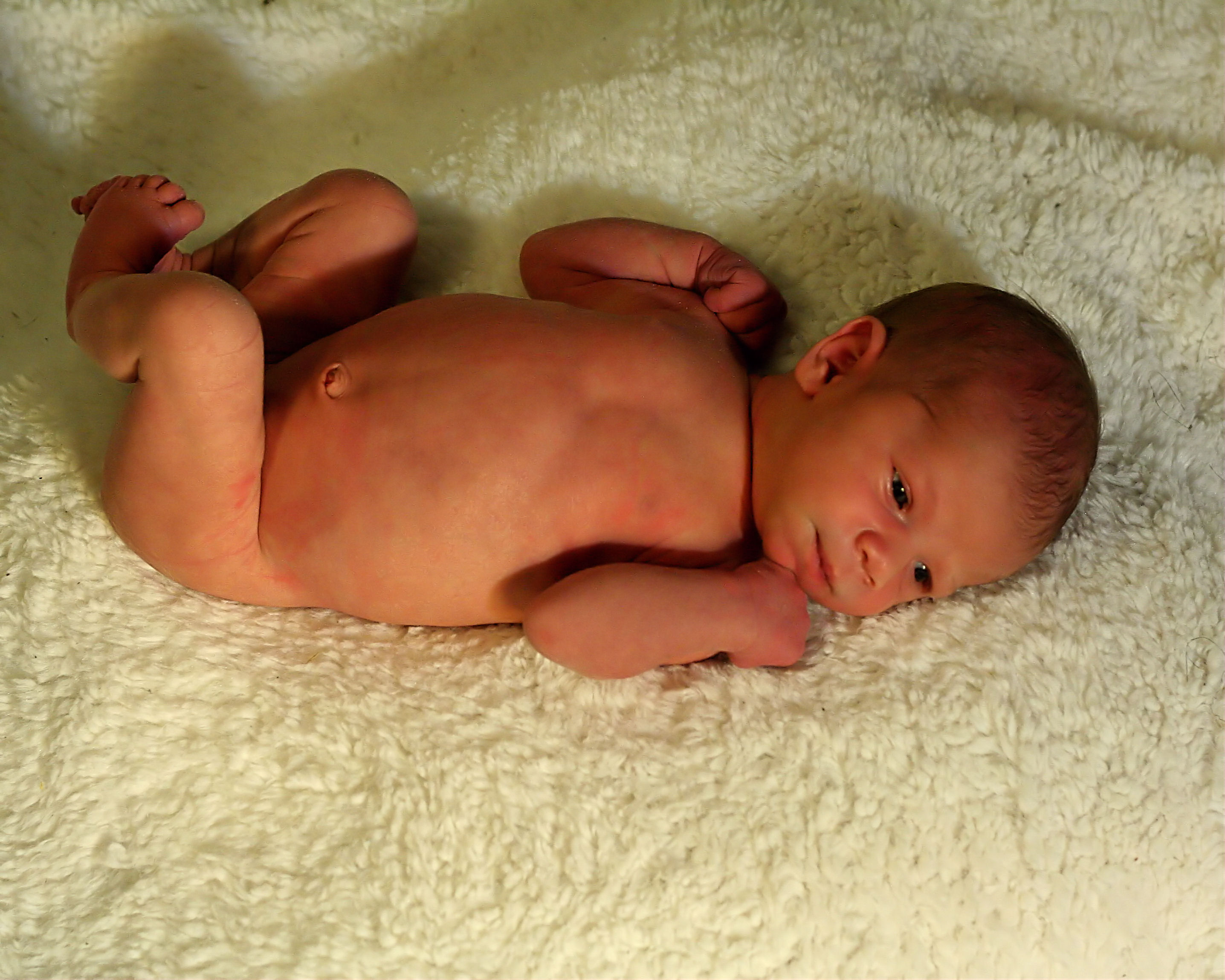
Newborn photo (c) Sincerely Yours Photography

Alaina newborn photo (c) Sincerely Yours Photography

    • The scrunchy feel of a newborn’s body.
    • The little mewing squeaks and sighs
    • How she is comforted by my voice and turns to me with a smacky, nursie face…
    • The soft, soft skin
    • The soft, soft hair
    • The fuzzy ears and arms
    • The little legs that pull up into reflexive, fetal position.
    • The utter, utter, MARVEL that I grew her and that she’s here. That she came from me. That sense of magic and wonder and disbelief when I look over and see her lying next to me—how did YOU get here?!
    • The miraculous transition from belly to baby. From pregnant woman to motherbaby unit? How does it happen? It is indescribably awesome.
  • The sleeping profile
  • The scrunchy face
  • The “wheeling” half coordinated movements of arms and legs—sort of “swimming” in air.
  • The peace of snuggling her against my chest and neck.
  • The tiny, skinny feet.
  • Putting my hand on her back and feeling her breathe, just like in utero

I was still scared she was going to die until the moment I held her.

Molly & Alaina newborn photo (c) Sincerely Yours Photography

Updating My Birth Quotes!

(c) K Orozco

Baby Alaina, 3.5 months, taken at the park by my friend Karen 🙂

“Blessed be all the mothers of mothers.
Blessed be all the daughters of daughters.
Blessed be all the daughters of mothers.
Blessed be all the mothers of daughters.
Now and forever, wherever we are.” –Diann L. Neu

“I have almost given up on the government and the country but I have not given up on birth. I believe rabidly. It is not enough to hold the space for one woman at a time. Peace on earth begins with birth.” –Arielle Greenberg/Rachel Zucker (in Home/Birth: A Poemic)

“In giving birth my attention was pulled inside forcibly by something naturally wild, hot, raw and primitive—something so powerful that my only choice was to surrender.” –Kristin Luce

“Now I see the secret of making the best person: it is to grow in the open air and to eat and sleep with the earth.” ~ Walt Whitman

“A new baby is like the beginning of all things–wonder, hope, a dream of possibilities.” ~ Eda J. Le Shan

“Birth isn’t something we suffer, but something we actively do and exult in.” –Sheila Kitzinger (from promo for new One World Birth film)

“Many women have described their experiences of childbirth as being associated with a spiritual uplifting, the power of which they have never previously been aware … To such a woman childbirth is a monument of joy within her memory. She turns to it in thought to seek again an ecstasy which passed too soon.” ~ Grantly Dick-Read (Childbirth Without Fear)

“Childbirth isn’t something that is done to you, or for you; it is something you do yourself. Women give birth. Doctors, hospitals and nurses don’t.” ~ Lester Dessez Hazell

“Whether she chooses to birth at home, a hospital or a birth center, it is the right–in fact, the responsibility–of every woman to plan her own baby’s birth with the information, honor and freedom to which she is entitled.” –Cynthia Overgard (in Pathways to Family Wellness Magazine)

Life, love, and laughter – what priceless gifts to give our children. — Phylis Campbell Dryden

“A mother’s joy begins when new life is stirring inside… when a tiny heartbeat is heard for the very first time, and a playful kick reminds her that she is never alone.” ~Author Unknown

“Growing, bearing, mothering, or fathering, supporting, and at last letting go…are powerful and mundane creative acts that rapturously suck up whole chunks of life.” –Louise Erdrich

“Perhaps we owe some of our most moving literature to men who didn’t understand that they wanted to be women nursing babies.” –Louise Erdrich

“Labor is about finding your threshold and learning you can go beyond it.” –Rose St. John

“…the labor with which we give birth is simply a rehearsal for something we mothers must do over and over: turn ourselves inside out, and then let go.” –Susan Piver (Joyful Birth)

“The minute my child was born, I was reborn as a feminist. It’s so incredible what women can do…Birthing naturally, as most women do around the globe, is a superhuman act. You leave behind the comforts of being human and plunge back into being an animal…” –Ani DiFranco

“The health of mothers, infants, and children is of critical importance, both as a reflection of the current health status of a large segment of the U.S. population and as a predictor of the health of the next generation.” –Healthy People, 2010

“The miraculous nature inherent in the unfolding of a flower is the very same that moves through a woman as she gives life to the world. We can neither control nor improve upon it, only trust it.” -Robin Sale

“Loving, knowing, and respecting our bodies is a powerful and invincible act of rebellion in this society.” –Inga Muscio

“A new baby’s fresh milk smell causes the mother’s heart to spill over.” -Melanie Lofland Gendron

“…childbirth is much like a marathon…marathon runners know how to breathe, to run, and to complete their race according to their own body signals. Similarly, women know how to breathe, to birth, and to complete the [birth] according to their own body signals. Marathon runners who are true champions are free to stop the fast pace, and even quit the race without loss of integrity.” –Claudia Panuthos

“Birth, like love, is an energy and a process, happening within a relationship. Both unfold with their own timing, with a uniqueness that can never be anticipated, with a power that can never be controlled, but with an exquisite mystery to be appreciated.” –Elizabeth Noble

“…all those tasks and interactions of motherhood, a day full of which might make you feel you’ve ‘gotten nothing done’ because you’ve been in the cycle of care, are the heart and soul of the best brain building possible.” –Lauren Lindsey Porter (Attachment Theory in Everyday Life, in Mothering magazine, 2009)

“The lure of the distant and the difficult is deceptive. The great opportunity is where you are. Do not despise your own place and hour. Every place is under the stars, every place is the center of the world.” –John Burroughs

“Motherhood has a very humanizing effect. Everything gets reduced to essentials.” ~ Meryl Streep (via Midwifery Today)

“It is not ‘ladylike’ to give birth. The strength and power of labor is not demure.” –Rhonda (midwife quoted in Gayle Peterson’s An Easier Childbirth Book)

What we have once enjoyed we can never lose. All that we love deeply becomes a part of us.” —Helen Keller

“The greatest teachers we have are the women we serve.” –Jan Tritten

“…undisturbed (not neglected or abandoned) birth is a powerful initiation into motherhood, not only in a physical and physiological sense, but also in an emotional and spiritual sense.” –Christina Hurst-Prager (in (ICEA) International Childbirth Education Association‘s journal)

“Never hire a midwife who is afraid your birth will go wrong.” –Arielle Greenberg/Rachel Zucker, Home/Birth: A Poemic

“It is dangerous to be right on a subject on which the established authorities are wrong.” –Bumper sticker quoted in the book Home/Birth: A Poemic

“Women today not only possess genetic memory of birth from a thousand generations of women, but they are also assailed from every direction by information and misinformation about birth.” ~ Valerie El Halta

“I see generations of women bearing a flame. It has been hidden, buried deep within, yet they hand it down from generation to generation still burning. It is a gift of fire, transported from a remote and distant world, yet never extinguished.” –Kim Chernin

“Birth is as vast and voluminous, as unfathomable and inevitable as the rising and setting of the sun. And true to the inexorable power and rhythm of their life-giving bodies, women will continue to birth with dignity, grace and courage.” –Mandala Mom

“I pity the folks at ACOG who think they can make protocols, rules and guidelines that will cover all births in all situations. A better goal would be to have clinicians who can think for themselves, distinguish complications from normal birth, relax when things are taking a while, and marvel over the consistently fascinating process of human birth” -Gloria Lemay in Pathways to Family Wellness Magazine

“A pair of substantial mammary glands have the advantage over the two hemispheres of the most learned professor’s brain in the art of compounding a nutritive fluid for infants.” ~Chief Justice Oliver Wendell Holmes (1809-1894)

“The energy that can rise in real connection is the stuff of revolution.” –Carol Lee Flinders

“A woman meets herself in childbirth” –Cynthia Caillagh

“I believe that these circles of women around us weave invisible nets of love that carry us when we’re weak and sing with us when we’re strong.” –SARK, Succulent Wild Woman

“Don’t ask what the world needs. Ask what makes you come alive, and go do it. Because what the world needs is people who have come alive.” –Howard Thurman

“If ever the world sees a time when women shall come together purely and simply for the benefit of humanity it will be a power such as the world has never known.” –Matthew Arnold

“Authority without wisdom is like a heavy ax without an edge: fitter to bruise than polish.” ~ Anne Bradstreet (Feeling frustrated with anti-midwifery legislators in Missouri and then this quote came along from Midwifery Today’s e-news and I thought it was quite fitting)

The midwife teacher’s first concern is to preserve the students fragile unborn thoughts, to see that they are born with their truths intact, that these truths do not turn into acceptable lies” — from the book Women’s Ways of Knowing (shared by a participant in the Birth Workers and Beyond group)

“…we do not have humanized birth in many places today…Why? Because fish can’t see the water they swim in. Birth attendants, be they doctors, midwives or nurses, who have experienced only hospital based…medicalised birth cannot see the profound effect their interventions are having on the birth. [They] have no idea what a birth looks like without all the interventions, a birth which is not dehumanized.” –Marsden Wagner

Childbirth is a rite of passage so intense physically, psychologically, emotionally, spiritually, that most other events in a woman’s life pale next to it. In our modern lives, there are few remaining rituals of initiation, few events that challenge a person’s mettle down to the very core. Childbirth remains a primary initiatory rite for a woman.” –from the book MotherMysteries

“The holistic model holds that birth is a normal, woman-centered process in which mind and body are one and that, in the vast majority of cases, nature is sufficient to create a healthy pregnancy and birth. The midwife is seen as a nurturer.” –Penfield Chester (midwife)

“Birth, like love, is an energy and a process, happening within a relationship. Both unfold with their own timing, with a uniqueness that can never be anticipated, with a power that can never be controlled, but with an exquisite mystery to be appreciated.” –Elizabeth Noble

“If there is ever a part of human anatomy that resembles the image of God it is the uterus.” –Reverend Darren Cushman-Wood

(I hesitated to share this quote because I thought it could be viewed as disrespectful [or even sacrilegious!] by some. But, it caught my eye in an article called Pharaohs and Kentuckians in a 1997 issue of Mothering magazine. Written by a pastor of a Methodist church about homebirth and spirituality 🙂

Modern culture often teaches us to be ‘tight’…trim, taut, & terrific…We understand the need to stay ‘fit’…but we would also like to encourage you to soften yourself, in preparation for mothering & nurturing your baby. Soften your viewpoint, soften your body, surrender to this awe-inspiring event…in this way, you will be preparing yourself not only for labour, but for the days & years afterward…” -The Pink Kit Method For Birthing Better®

“Love is such a powerful force. It’s there for everyone to embrace—that kind of unconditional love for all of humankind. That is the kind of love that impels people to go into the community and try to change conditions for others, to take risks for what they believe in.” —Coretta Scott King

Nurturing is not a genetically feminine attribute. Tears and laughter are not the province of women only. The last time I looked, men had tear ducts. They had arms for holding babies. They cared about their children. And they cried at births…let the shared experience of childbirth reclaim the human soul.” –Ariska Razak (midwife and healer)

“When my kids become wild and unruly, I use a nice, safe playpen. When they’re finished, I climb out.” ~Erma Bombeck (via Moby® Wrap)

The Spot

“Can I ask you a personal question?” asks the woman on the phone. She is calling to inquire about my birth classes and the subject of homebirth has come up.

“Sure!”

“What about the mess?”

At first I give the standard answer. That birth isn’t so terribly messy, that you can put down towels and chux pads, that the midwife often does the cleanup. I pause a moment. This prospective client and I have an instant connection and excellent rapport. I add, “Actually, I left a huge blood spot on our living room carpet.” I add that the spot came out almost completely with peroxide, but can’t stop myself from also remarking, “I actually feel kind of proud of it—it felt like a symbol to me.” I find myself laughing a little and there is an unmistakable note of triumph in my voice.

“Of what?”

“That I did it. Gave birth in my own home, in my own living room, on my own terms, under my own power, in my own way. In the way that felt best and right and safest to me. On my own. Me. I did it.”

What I did not add—what would have been pushing it just a little too far—is that when we moved the peroxide-cleaned carpet square into our new home a large, round, rusty-red stain was revealed on the concrete floor beneath. And, that I take secret delight in its presence. I am proud that I left my mark on the floor that bore witness to my labor. I delight and actually revel in the reminder of my power that the stain represents. Is this total weirdness? Or freakishness? A type of maternal masochism or even a perversion? No, I decide. It is really not so different from keeping a football trophy from high school or an award for volunteerism in human services from college. Maybe there is a medal for natural childbirth after all—arriving in different surprising guises, one kind a blotchy reddish stain on a concrete floor.

Despite our easy camaraderie, I never hear from that prospective client again.

Those who critique the zealousness of birth activists sometimes accuse us of supporting an insidious “Cult of Natural Childbirth” and assert that we undermine women and their unique and often traumatic experiences by “insisting” that birth be an empowering and triumphant event for women.

Maybe there actually is a Cult of Natural Childbirth and I am an acolyte of Birth cackling with wild glee as I caper around my bloodstained floor….

Nursing my brand new baby boy! (2006)

———

In the original article, I included a post-birth picture from my second son’s birth that showed one completely exposed breast. I must have still been hopped up on the post-birth euphoria when I sent it, because after it was actually published I felt slightly horrified to have my boob in print and didn’t feel like I could show the article to my dad (or, really, to many other people!) If you look closely at the picture I substituted in this blog post, you can see there is blood streaked all over my chest, arms, and hands. It was a very bloody birth!

—————————————————————————————————————–

This is a preprint of The Spot, an essay by Molly Remer, MSW, ICCE, published in Midwifery Today, Issue 86, Summer 2008. Copyright © 2008 Midwifery Today. Midwifery Today’s website is located at: http://www.midwiferytoday.com/

Book Review: Home/Birth: a poemic

Book Review: Home/Birth: a poemic
By Arielle Greenberg and Rachel Zucker
1913 Press, 2011
ISBN 978-0-9779351-7-8
208 pages, softcover, $11

http://www.1913press.org

http://www.facebook.com/pages/HomeBirth-A-Poemic/

Reviewed by Molly Remer, MSW, ICCE, CCCE
https://talkbirth.wordpress.com

Co-authored by a pair of long-time friends, the “poemic” book Home/Birth reads as if you are eavesdropping on a lengthy, juicy, engaging, thought-provoking conversation about homebirth, birth in America, maternity care, and feminism. The book has a lyric, narrative, stream of consciousness format linked together with segments of poetry.

The text does not differentiate between the two speakers/writers, though through the “call and response,” back-and-forth exchange between the two authors, you quickly begin to recognize two distinct voices (as well as other fragments from birth books, bumper stickers, midwives, etc.).

The book was written during Arielle’s second pregnancy, which ends in the stillbirth of her baby boy. Arielle had one prior homebirth and one subsequent homebirth. Rachel had two hospital births and a homebirth prior to the writing of the book.

While the style in which it is written takes some time to get used to, once you tune in to its rhythm, Home/Birth is a unique and fascinating journey. Because it is so distinctive, I find it difficult to describe in writing—you need to make sure to read it for yourself!

Disclosure: I received a complimentary copy of this book for review purposes.

Labor Pictures

I’ve mentioned before that I was disappointed not to have any birth pictures from my last baby. What I do have is quite a few labor pictures and I want to share them in a post since labor pictures don’t often get as much “glory” as birth pictures 🙂 I didn’t have any birth pictures with my first son either, though we have several immediately after as was my preference at the time. I have two labor pictures with him, this one, taken in fairly early labor:

Trying to decide whether or not this is it!

Then, my mom took this one of me after I got out of the shower. I was going to try to go to bed, because the birth center staff seemed pretty sure I wasn’t really in labor and should just get some rest. This picture was taken about 5-6 hours before he was born:

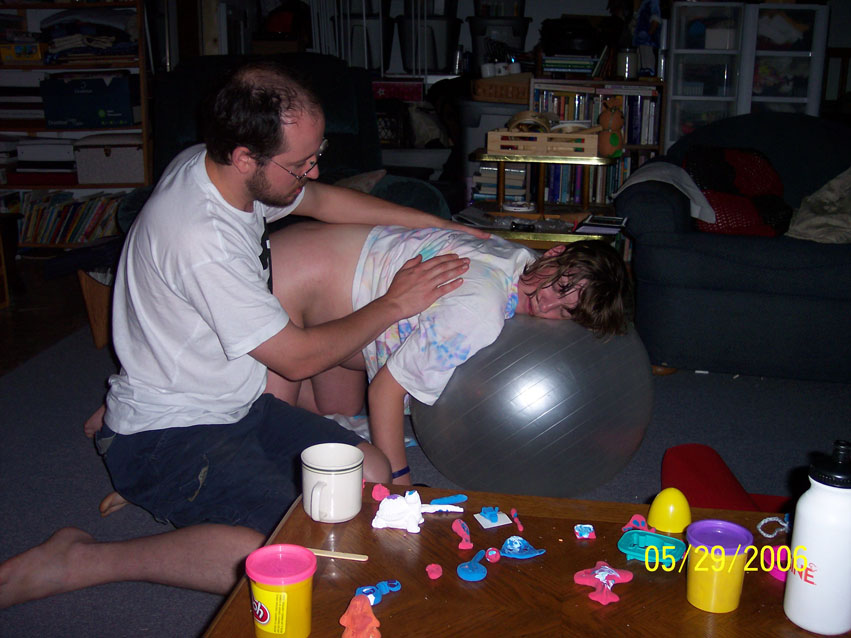
With my second son, my mom took a great series of birth pictures as he was emerging. They’re really good and step by step as he comes out—however, the angle is a very direct “rear view” that I don’t feel comfortable putting on the internet! With that birth, there is only one picture from the actual labor (and, it is a nice active labor picture that isn’t too graphic and it has actually been printed in several publications):

About 30 minutes before giving birth to second baby

I like how you can see all of my older son’s playdoh creations in the foreground. That’s homebirth for you!

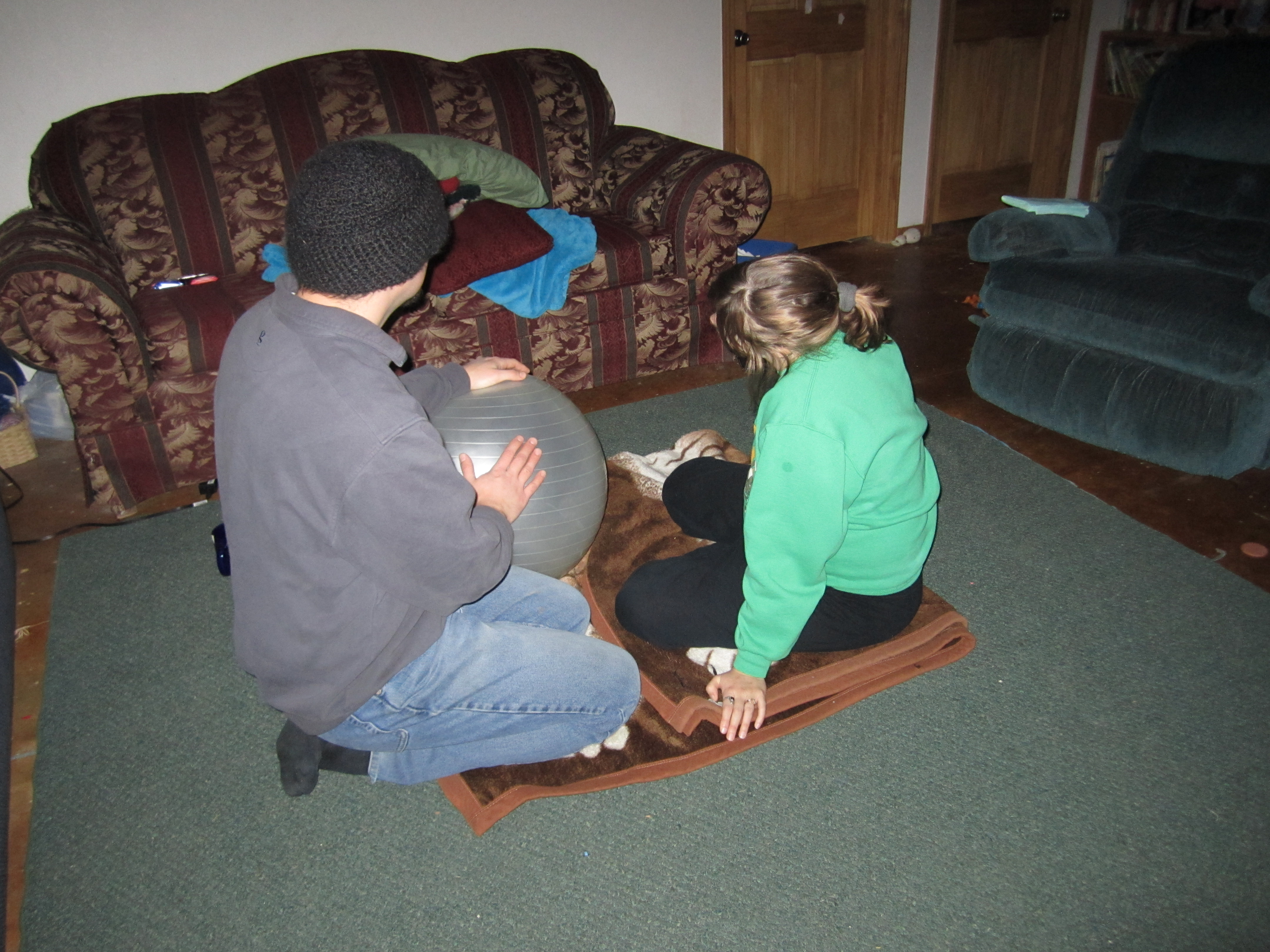
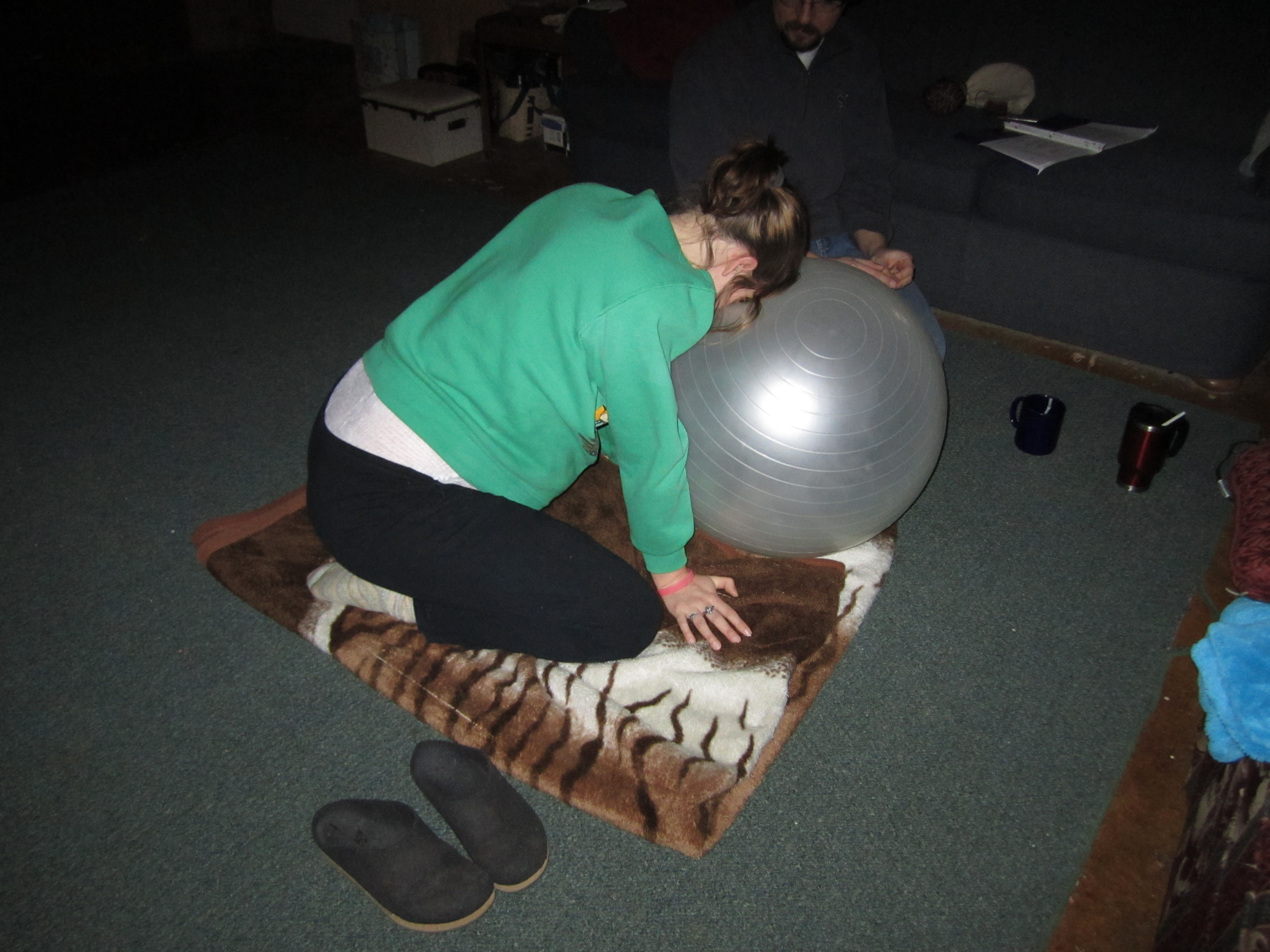
With my daughter, my mom took a series of labor pictures and while I’m sad not to have birth pictures too, I like the story that these pictures tell:

Taken during the morning of birthing day–wanted one last “belly picture” of pregnancy.

Spent a lot of time on the ball with Mark at my side

My birth nest is all ready! (on floor outside bathroom) Notice that my birth altar is set up nearby.

More time on the ball…

Proving I can still smile one hour before she is born! (+ advertising my alma mater)

Accidentally got trapped on floor in horrible and painful position.

The closer I get to having a baby, the nearer to the floor I get (hands and knees is right for me)

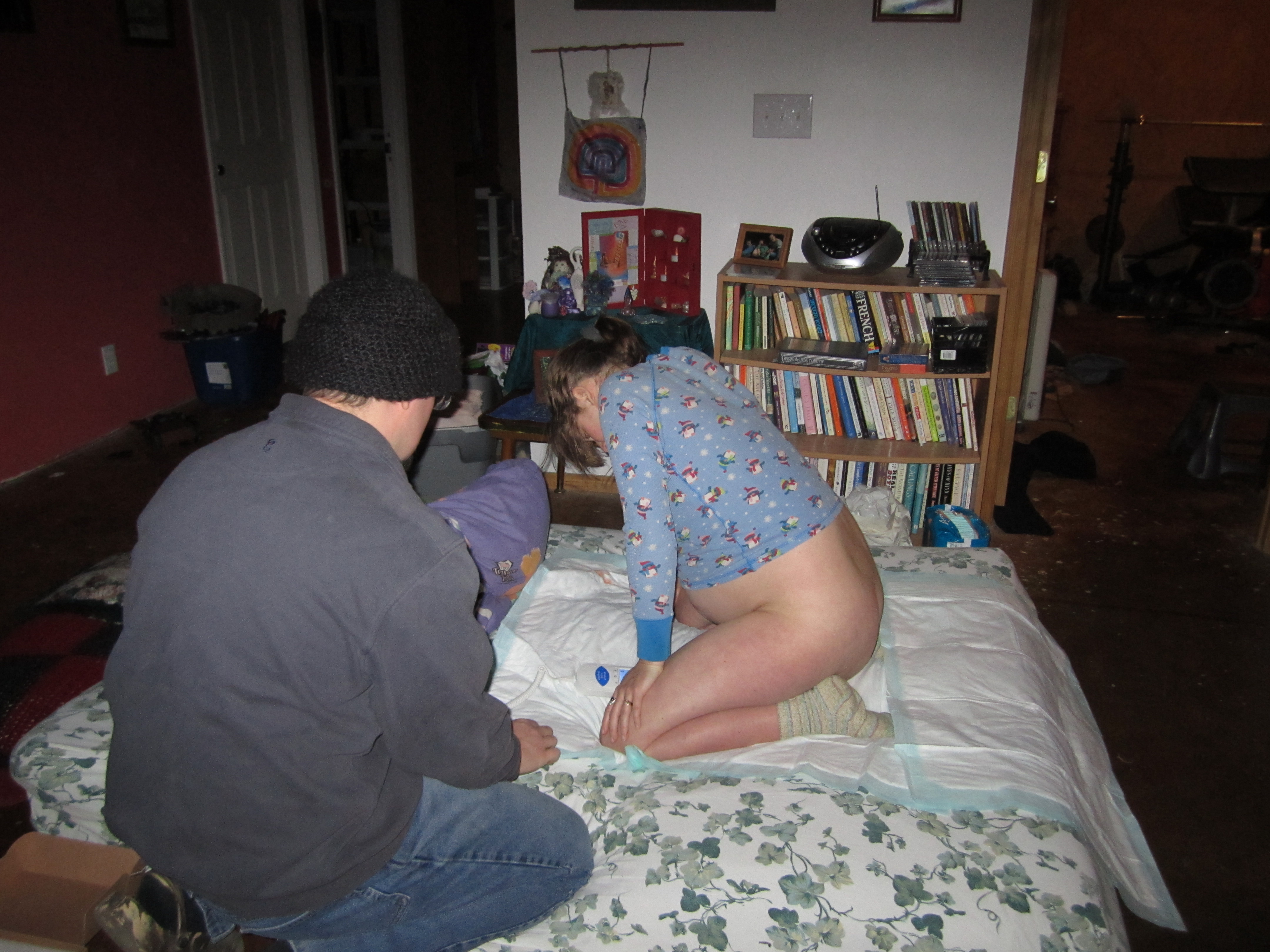
Switched into ridiculous too-small PJ shirt right before pushing.

She’s here! Closest thing to a birth picture that we got.

First nursing

The Waters are Breaking…

I recently bought a very discounted copy of Penny Simkin’s Comfort Measures for Childbirth video. In the explanatory booklet that comes with it, she mentions the following: “You may also notice the woman’s bag of waters break during a bearing-down effort. This is normal, though quite rare, as the bag of waters is usually broken before this time…” She doesn’t specify whether it is quite rare because the bag of waters is artificially broken before that time for many women, or whether it is just quite rare, period. Regardless, I found it an interesting comment because my personal experiences have all been of this same “rare” type—my water breaks right as I’m pushing out my babies. With my first son, I arrived at the birth center ten centimeters dilated and was told I could push whenever I felt the urge. After about 30 minutes or so, I began pushing sort of experimentally. My water exploded across the room after a few of these mini-pushes. He was then born about an hour after that. With my second son, I was on my hands and knees on the floor feeling the first intense pushes and on the second push, my water broke with a soft, warm gush and ran down my leg. He was born about 5 minutes after that. After these two experiences, my conclusion was that it was kind of a nice benefit to have my water intact until pushing—it created sort of cushion for the baby’s head and (I felt) perhaps lessened the intensity of contractions (I have yet to experience a “freaking out,” identifiable transition stage in any of my births).

Waves breaking at Montana De Oro on CA trip, July 2009.

When my daughter was born last month, it was a slightly different story. As usual, the water stayed intact, but as I began to feel the pressure of her approaching head, I felt like my water really needed to break and wasn’t. It felt distinctly in the way and it was really bothering me. I felt like I could feel it in my “birth path” and it felt like an obstruction rather than a cushion and I was completely annoyed by it. I got on hands and knees on the futon and could feel her head moving down and almost crowning, when the water finally broke and a small trickle of it came out before she did (approximately 12 seconds before!). As I’ve written before, I moved up into a kneeling position then and my entire baby was born all at once along with…a big sploosh of water. Most of it came out after the baby—she was particularly nice and clean after birth too. My sons were very bloody. My daughter had a couple of tiny spots of blood on her head, but the rest of her was pink and vernixy.

I titled my post as I did because during this last pregnancy, I often listened to a CD of chants. One of the songs on the CD has sort of a wailing refrain of, “the waters are breaaaaaaking…all over the world….the waters are breaking!” and I could NOT listen to that song while pregnant (even though it has nothing to do with pregnancy—I’m not sure exactly what it is supposed to mean, but I surmise it is about change in the world). I always ran to skip over it, feeling like to listen to it would be to send some kind of message to my body/baby that I wanted my water to break, when really, I definitely didn’t want it to break early! I wish I would have thought to turn the song on during labor though 😉

Birth Quotes Update

“Remember that most of the people who really need your work are not hanging out in the oversaturated twitterverse, but in places where what you do isn’t common. Get out of the crowded room and go where there’s a dearth of and a thirst for what you do. Don’t try to shout over lots of shouting.” –Tara Sophia Mohr

(Not specifically birth-related, but an excellent reminder from this post. I’ve often felt with blogging and writing for birth publications that maybe I’m just clamoring to …be heard in a cacophony of other voices (that also have good things to say–am I contributing anything unique?!)

“When my kids become wild and unruly, I use a nice, safe playpen. When they’re finished, I climb out.” ~Erma Bombeck (via Moby® Wrap)

“The miraculous nature inherent in the unfolding of a flower is the very same that moves through a woman as she gives life to the world. We can neither control nor improve upon it, only trust it.” -Robin Sale

…the stories I see of birth in the media don’t reflect the intense emotions, the physical power, or the immense impact of the experience itself. Women screaming, fathers fumbling about, doctors doing most of the heroic work–these images don’t do justice to my experience. I felt empowered, strong, heroic in my efforts to bring my daughter into the world yet, I am painfully aware how little others see the heroism in my birth experience.”  –Amy Hudock (essay in Literary Mama)

“It’s not only children who grow. Parents do too. As much as we watch to see what our children do with their lives, they are watching us to see what we do with ours. I can’t tell my children to reach for the sun. All I can do is reach for it, myself.” – Joyce Maynard (via Literary Mama)

Giving birth, certainly, should rank among the pivotal heroic adventures celebrated in our culture. Certainly it is more heroic than catching a football or acting in front of a camera, and perhaps even more heroic than going off to war. Men return from the battlefield with victory, but women return from the birthing room with life…” –Amy Hudock (in Literary Mama)

“...if you want to know where a woman’s true power lies, look to those primal experiences we’ve been taught to fear…the very same experiences the culture has taught us to distance ourselves from as much as possible, often by medicalizing them so that we are barely conscious of them anymore. Labor and birth rank right up there as experiences that put women in touch with their feminine power…” –Christiane Northrup

The intrinsic intelligence of women’s bodies can be sabotaged when they’re put into clinical settings, surrounded by strangers, and attached to machines that limit their freedom to move. They then risk falling victim to the powerful forces of fear, loneliness, doubt , and distrust, all of which increase pain. Their hopes for a normal birth disappear as quickly as the fluid in an IV bottle.” ~Peggy Vincent

So many words commonly used to describe childbirth–support, patient, management, delivered by, coached, helped, guided–suggest that a woman does not have the power to give birth without being dependent on somebody else. This isn’t the case at all.” –Michel Odent

(This reminds me of that Odent quote about not actively supporting a woman in birth that stirred me up a couple of months ago. That one I had some objections to, the one above, I can definitely get behind, even though I think he is actually …saying the same thing in both quotes!)

I believe that natural childbirth is a right and a privilege…Our country needs to step up to the plate in educating women about the benefits of natural birth, and we need to help women actually do it – not just hear about it.” –Mayim Bialik (via ToLabor Doulas Dallas)

In the moments of labor and birth, all the forces of the universe are flowing through a woman’s body.” – Sister MorningStar (The Power of Women)