Archives

Birth & Breastfeeding in Unexpected Places

No, I’m not talking about giving birth in the car, or breastfeeding in the rotunda at the Capitol, I’m talking about birth and breastfeeding showing up in unexpectedly positive ways in books and movies. I had two such occasions last week.

In the animated children’s movie Ponyo, which we watched on Netflix, the two main character children encounter a father, mother, and baby floating in a small boat in the flooded town. Ponyo attempts to give the baby a drink from her thermos and the mother says, “no, he gets his milk from me. I can drink it and make milk for the baby and he can get it that way.” The little boy then says, “when I was little my mom made milk for me too.” Ponyo then tries to give the mother big stacks of sandwiches saying, “for milk! For milk! Here, you can have this for milk!” It was really cute 🙂

Then, I finished reading a novel called Medicus on my Kindle. It was a “novel of the Roman Empire” about a military doctor in Britannia during the Roman occupation. It was a mystery book, but definitely not a traditional sort of mystery. The doctor ends up buying an enslaved girl to stop her from being abused and investigates the suspicious deaths of several prostitutes/slaves. It is noted several times that the girl has “some skill in midwifery” and that she used to attend births with her mother. Towards the very end of the book, the doctor is called to attend a complicated birth in which the baby is transverse and everyone is pretty sure both mother and baby will die. She has been pushing for a long time and is all worn out. The doctor enters the room and has no idea what to do. He says, “I’m only a medic. A surgeon. Where’s a midwife?” And, with a few dramatic twists, the slave girl with some midwifery knowledge is convinced to come help, turns the transverse baby, and saves the lives of both mother and baby who are later described as nursing happily (the mother “pale, but alive”). Birth often makes a dramatic appearance in books and films, but the drama usually involves the baby, mother, or both then dying. So, this was a refreshing change as well as a nice plug for midwifery 🙂

I’m a Birth Warrior!

Earlier this week, I was surprised and pleased to get a small package in the mail from my Birthing from Within mentor friend. In it was a sweet little “My Mama is a Birth Warrior” t-shirt. The words surround a labyrinth image, which of course, I love.

Modeling new t-shirt 🙂

In the enclosed card was the following:

Imagine a tribe in which a woman is prepared for childbirth in the same way warriors are prepared for battle. Imagine a Ceremony for this woman before she gives birth, a grand send-off with holy songs and fire. Imagine a feast, prepared just for her.

Her tribe tells her, they say to her “Go to your journey,  you have prepared. We have prepared you. If you fall from your horse once or a hundred times, it does not matter. All that matters is that you come back to us, that you come home.

Throughout your journey–your labyrinth of Great Love, Great Determination, Great Faith and Great Doubt—you rode on!

The Great Tribe of Mothers welcomes you back from your birth journey with honor.

Imagine, indeed. I have a partially prepared blog post about my own labyrinth of pregnancy and birth. I hope to eventually publish it, but for now, just know that I do feel I embarked on a mighty journey during this last pregnancy, I did pass through those Gates, and I did ride on. I AM a birth warrior! 🙂

Standing up so big!

Mother Blessing Ceremony

Lots of good friend energy!

I keep wanting to post about my mother blessing/blessingway ceremony last week and I can’t quite manage to find the right words. So, I decided to share some pictures mainly and wait to see if more words will come…My mom hosted it at my home and 19 women attended (so, with me, a nice even 20). I don’t think there have ever been so many people in my living room! Early in this pregnancy I said I wanted to have the “biggest blessingway ever!” and it was a big one. A lot of my friends tend towards “small and intimate” for their mother blessings and while I definitely see the value to that too, it was really important to me to see and feel and know how many people in my life care about me and my baby and who have hoped with me and waited with me while I cautiously made my way to this time and this place. My mom said something about there being a lot of people here and I said, “yep, and I like them all!” My life has been touched/enriched by every woman in the room and it was very moving to look around the room and see them all here together. It was a very crying blessingway—they each stated their name and said, “I am here for you, Molly” and I was a wreck! I really felt like it was one of the best days of my life and was just what I needed. I felt so well-cared for and loved and full of emotion. I thank each one of them for being here for me and for loving my baby with me.

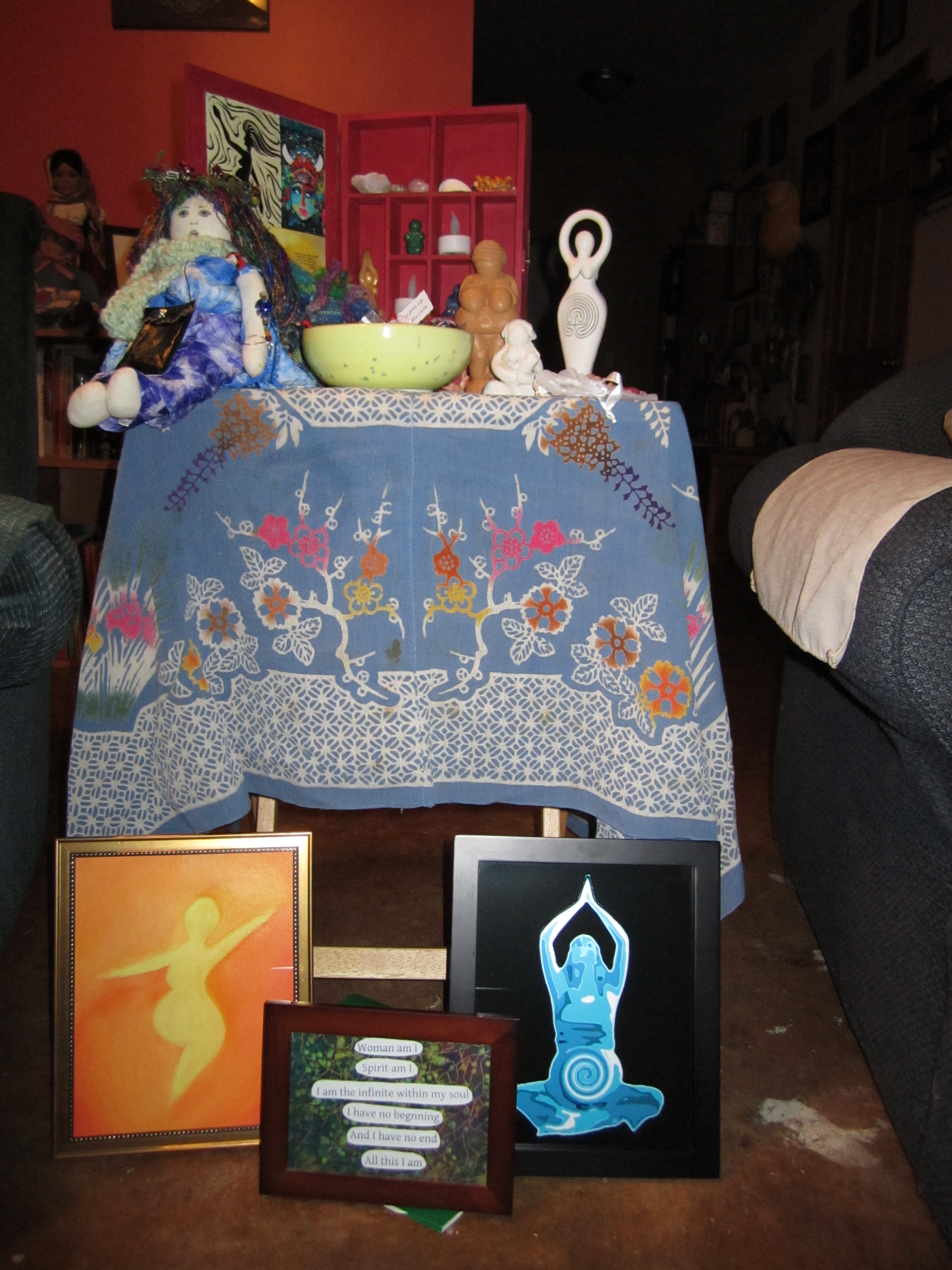
Birth altar table with many lovely new additions!

Birth doll adorned with small items from all the guests.

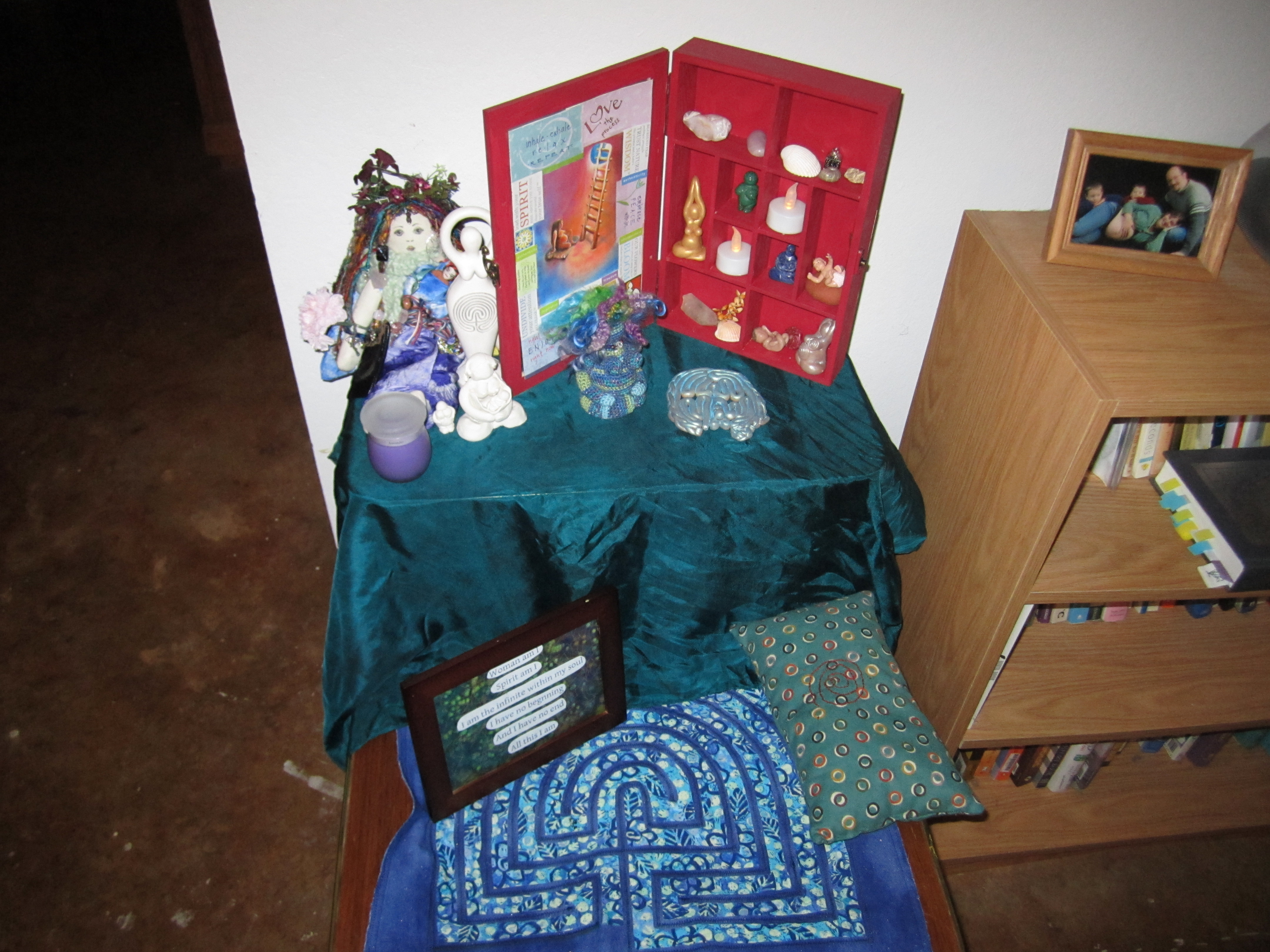
After the ceremony, I set up a different table close to my "birth nest" spot.

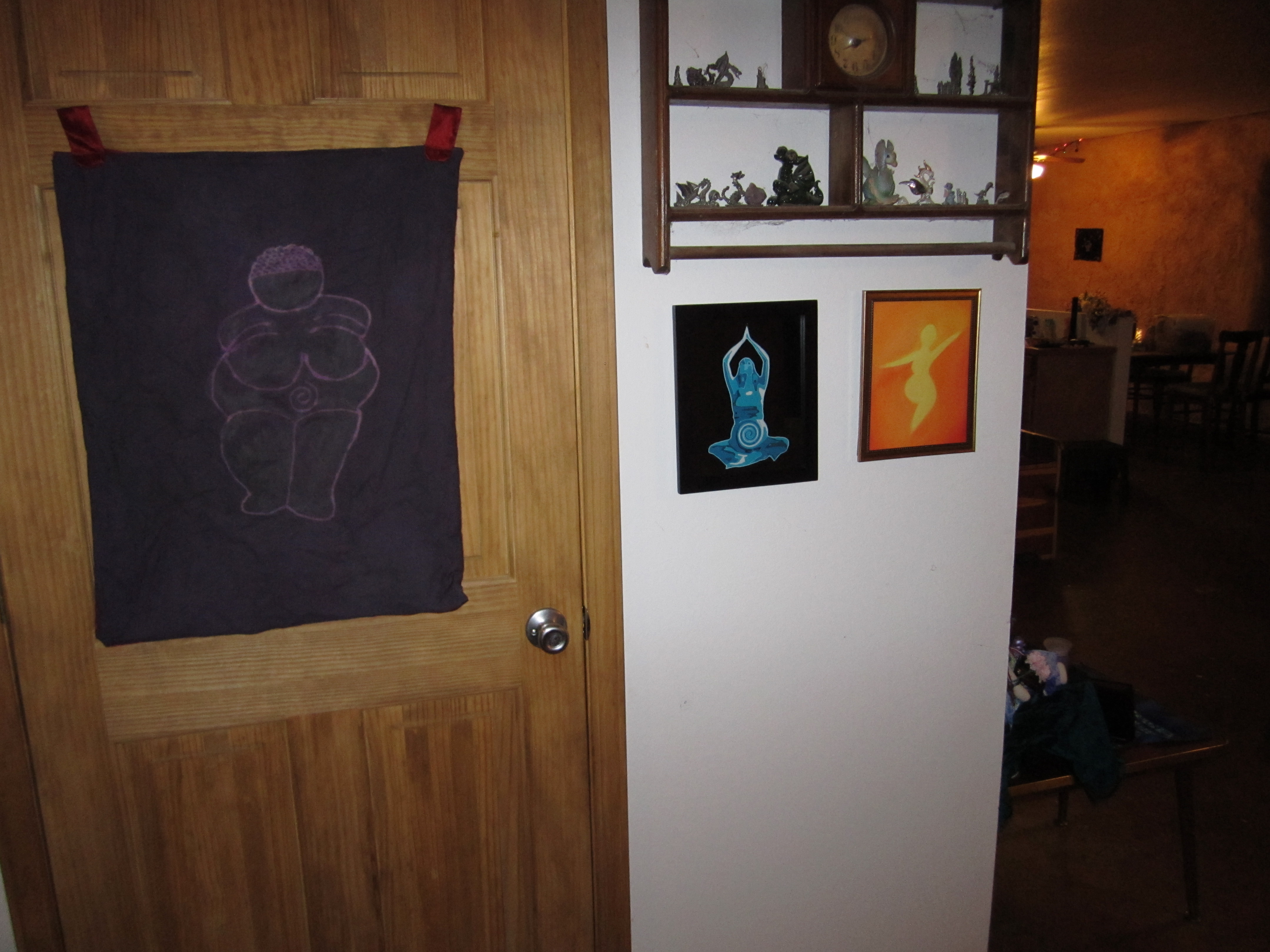
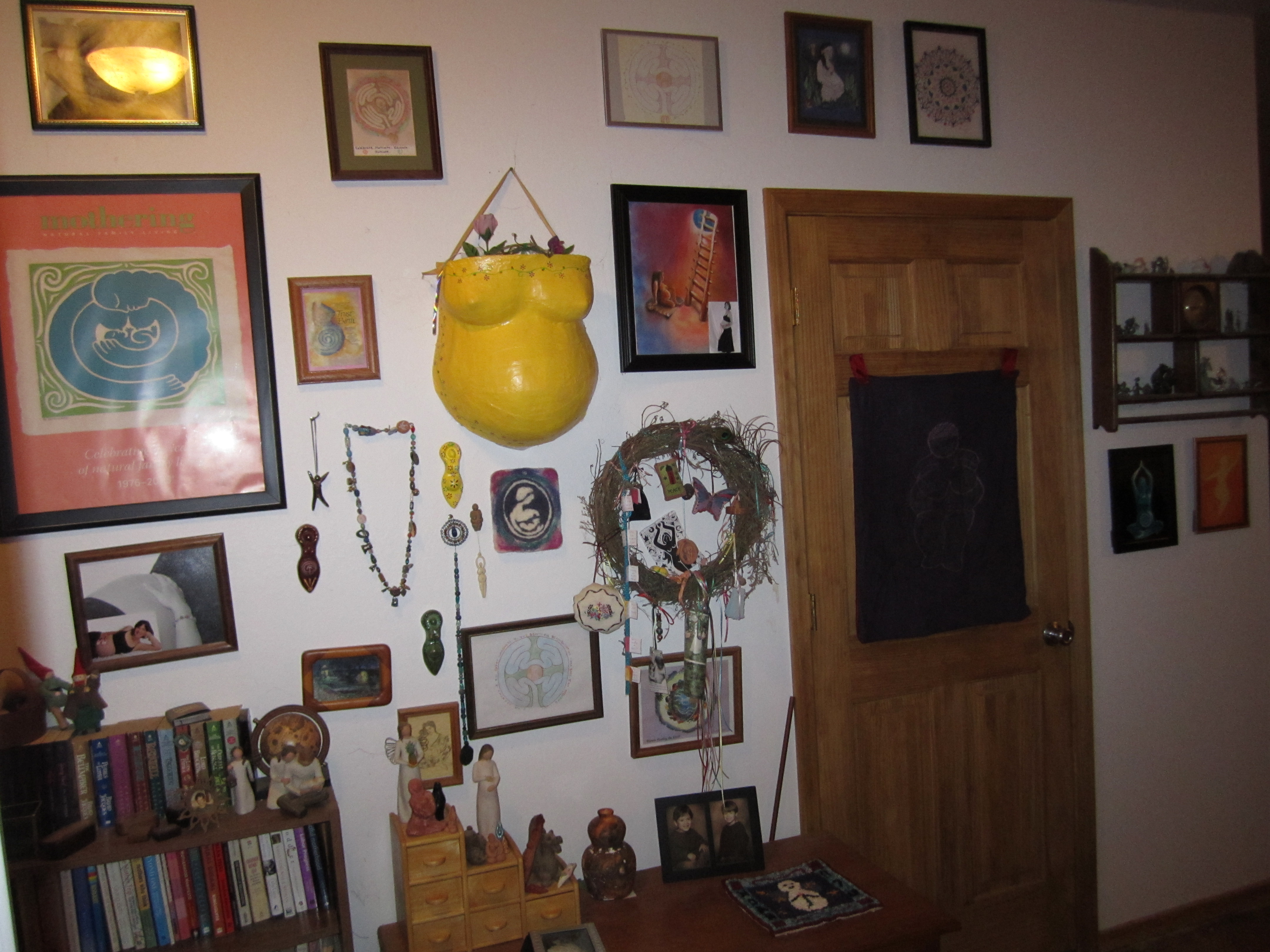
I hung these three lovely birth art pieces on the wall right around the corner from my little table. The Willendorf wallhanging is from my friend Trisha, the super cool photo from my friend Karen, and the firey pregnant woman painting from my lovely future sister-in-law, Jenny.

My whole birth art wall/gallery.

I wish I would have taken a picture of all the lovely and tasty food that was there for our feast as well! It was a beautiful, special day and felt like an amazing launching point on my upcoming birthing journey 🙂

Adventures in Birth Art…

Celebrating pregnancy mandala

This has been my most art-full pregnancy and that has been so much fun! I’ve made polymer clay birth goddess sculptures galore, some womby finger labyrinths, drawn a number of black and white mandalas (see example to right!), made a specially decorated birth altar, and also made a belly cast. Each one of these projects has been meaningful to me in a special way. At my blessingway/mother blessing ceremony this past weekend, I was touched to be gifted with many birth art projects made for me by my friends. Really wonderful (more on this later, I promise!).

A little while ago, I wanted to incorporate the labyrinth metaphor into one of my sculptures, but was unable to make a tiny enough labyrinth to stick on her belly the way I envisioned, so she ended up with a double-spiral instead:

Spiral belly figure sitting on spiral birth symbol aromatherapy pillow gifted to me by my friend at my blessingway ceremony.

My current “issue” that I decided to work on through art is with pushing the baby out. I have never found pushing an enjoyable part of labor and the feeling of the baby’s head crowning to me is intense and scary and has—in the past—resulted in injury to my body that takes a long and challenging time to recover from. This is not a part of my birthing time that I am looking forward to. During my birth with Noah, since he was so small (15 weeks) there was no physical harm resulting from pushing him out, but there was the new association formed with having to “let go” of my baby this time in a very emotionally painful way.

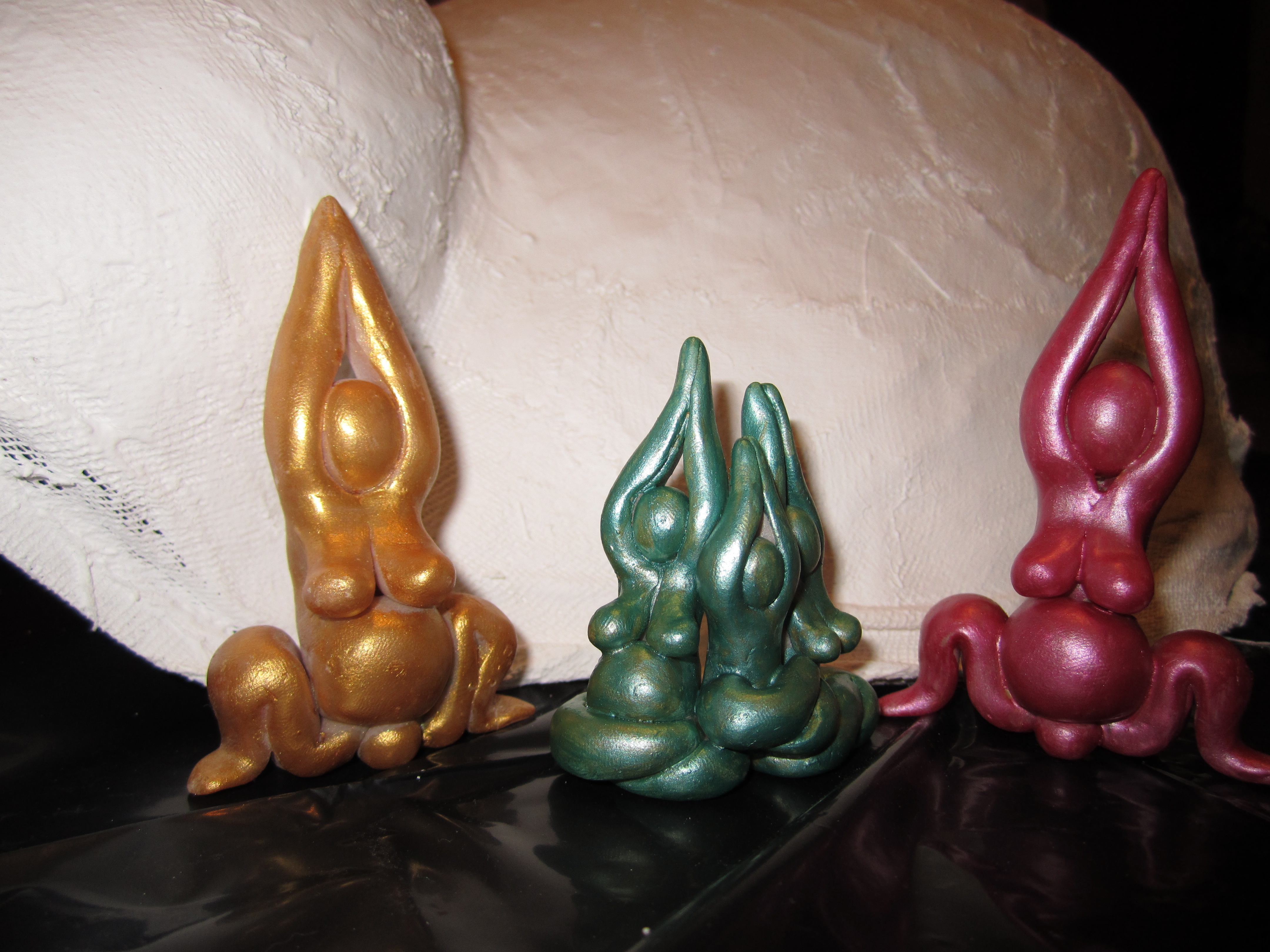
So, I’ve been doing some mental work with myself about pushing, as well has having listened to my Hypnobabies CD about pushing the baby out. This baby is doing a very extreme cervical pressure thing every night and when I experience that, I consciously relax and release rather than hold tension in my pelvic floor. I’ve also been doing a birth visualization in which I envision the baby gently gliding out 🙂 So, I decided it was time for some Crowning Mother birth art. I made two sculptures, intending one as a doula gift and one for myself. I loved them while they were uncooked, but alas, I tried a new method—I mixed the polymer clay pigment with glaze and then I boiled them. Now, boiling has worked well previously, but I’d never done it with glaze before. They came out looking like they had peeling skin and were all mottled and discolored looking and very ruined to my eyes. I ended up deciding the one with gold pigment was still okay as she was (she has a peeling place on her back, etc. and you can see in the picture how her pigmentation is messed up/uneven):

First attempt at a Crowning Mama...

The second one was so discolored and bad looking, that I used acrylic paint to paint her pink:

Pink mama

She looks all right, but I still remember how she was supposed to look! (hmm. Do I sense a message here about how I might feel about my own unrepaired past tears? I remember how I’m supposed to look…)

I know they look like they’re sitting on their babies’ heads, but that was the best way I could do it to make them be able to be stable and freestanding.

I also made a three generations sculpture that was supposed to be a gift for my mom, but again had with the bad glaze/pigment issue. I ended up painting it green and don’t know if I will end up giving it to her or not (she saw it by mistake, because I had it sitting on the counter still when she came over):

Triple figure

Here all of them all together with my belly cast as backdrop 🙂

While I was at the painting, I also painted a mother-baby figure that my friend Summer made for me as a blessingway gift (don’t I have nice friends?! This was one of her first attempts at creating birth art and I was touched that she gave it to me! She left it white, saying that I could paint it if I wanted to. So, I painted it sparkly purple :))

I decided to redeem myself artistically by making a new Crowning Mama figure the following day. This one I applied pigment to in my usual way and decided to bake. Interestingly, I accidentally set the oven for 350 degrees, rather than the normal setting for polymer clay! Yikes! When I got her out, the tips of her hands were smoking! (I’m reaching now, but perhaps some kind of subtle “ring of fire” issue being manifested here…;))And, the pigment turned from purple to blue in some places, which actually isn’t a bad effect, but is also not normal! And, I am critical of the shape of her arms—too fat, long, and no graceful taper like some of my others.

Now, I have to decide whether I’m going for round three or not! (Perhaps there is a lesson to be found here in that birth isn’t supposed to be perfect and neither is birth art.) I feel like accomplished my original goal, which was to make a positive crowning/pushing image for myself—I thought all kinds of helpful, “open” thoughts while creating this last one especially and imagined welcoming the feeling of the baby’s head, rather than feeling fearful of it! So, she reminds me of that feeling. And, maybe she—and thus, myself–are actually good enough after all.

Belly Cast

I feel like I have about 15,000 blog posts that I want to write before my new baby is born! I’m also trying to add content from articles that I’ve had published over the years—some of my best stuff is in those articles and I feel like sharing the pre-print versions on my own website at last! Those things can obviously wait, but the posts that I have swirling around that have to do with pregnancy, I want to post NOW, while I’m still pregnant and while the feelings are fresh, not as retrospective posts later. It has been a different experience to blog while pregnant and it has definitely shifted the direction and tone of a lot of the posts I make to this blog—much more personal and less educational. I’ve also found that family and friends have begun reading my blog during my pregnancy, when they didn’t before, so I also like sharing things with them in this way.

Since I only have about 20 minutes right now, I’ll go with the shortest subject first, not the one I most want to write about (which is my blessingway last week—however, I think I feel a little too filled with emotion over it to really write about it the way I’d like to do, but I do have plenty of pictures I want to share).

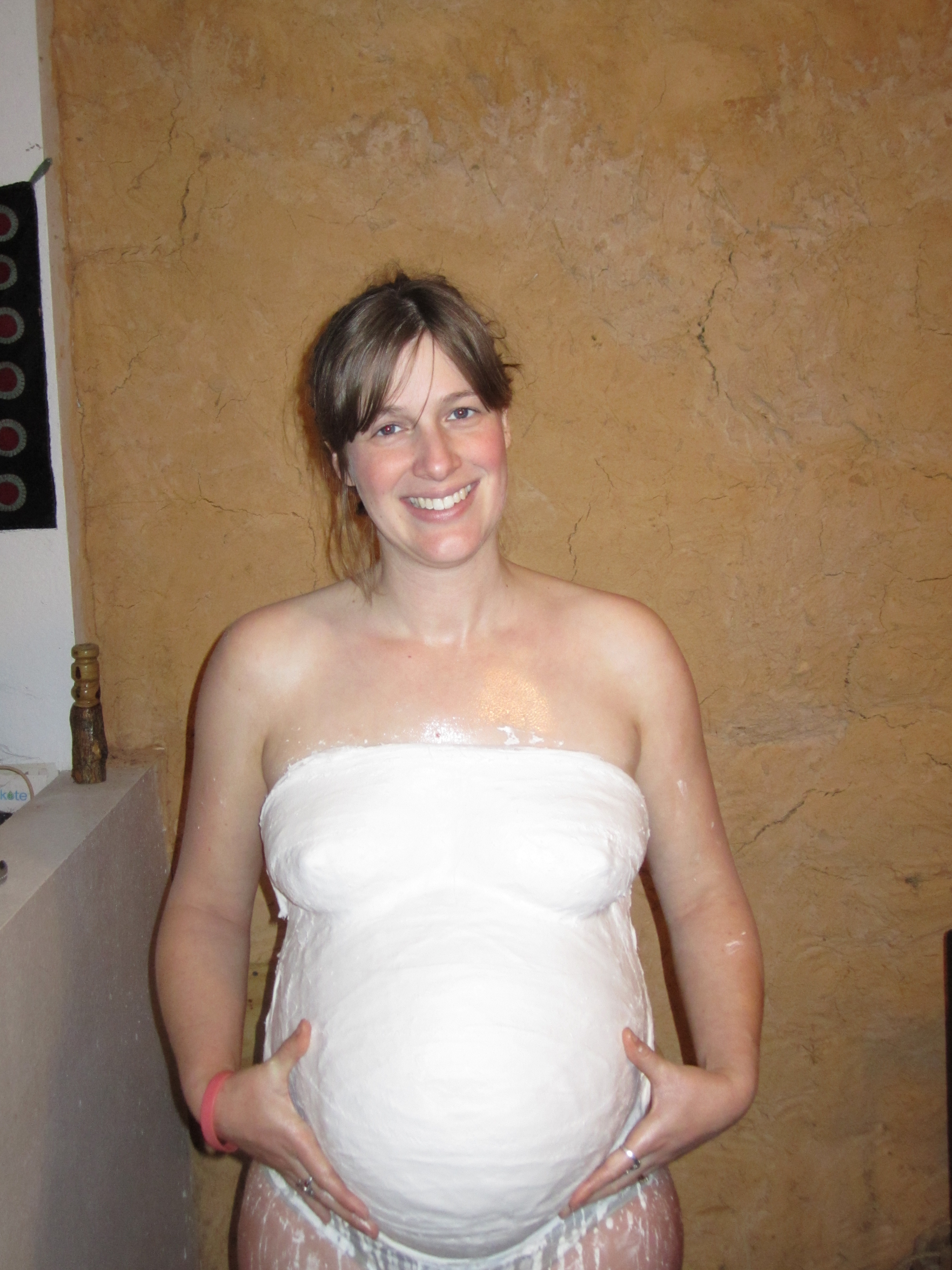
On Sunday afternoon (38w1d), we made my belly cast! I seriously underestimated what a chilly experience it would be to make a

Trying to look enthusiastic despite the trickling...

belly cast in January! Yikes! My only other casting experience was in May (2006)—very different. For this one, we decided to make it with me standing up (for fullest shape) and so I stood in front of the furnace vent, but it didn’t help much. Even though the water was warm, it quickly chilled down as soon as the plaster was applied and ran in slow torturous trickles into my underwear and then

down my legs and into my socks. My heels also started to feel stone bruised from standing on the hard floor without moving (I did stand on a towel, but it didn’t help much!). If I shifted

them, Mark would complain that it was messing up his sculpting!


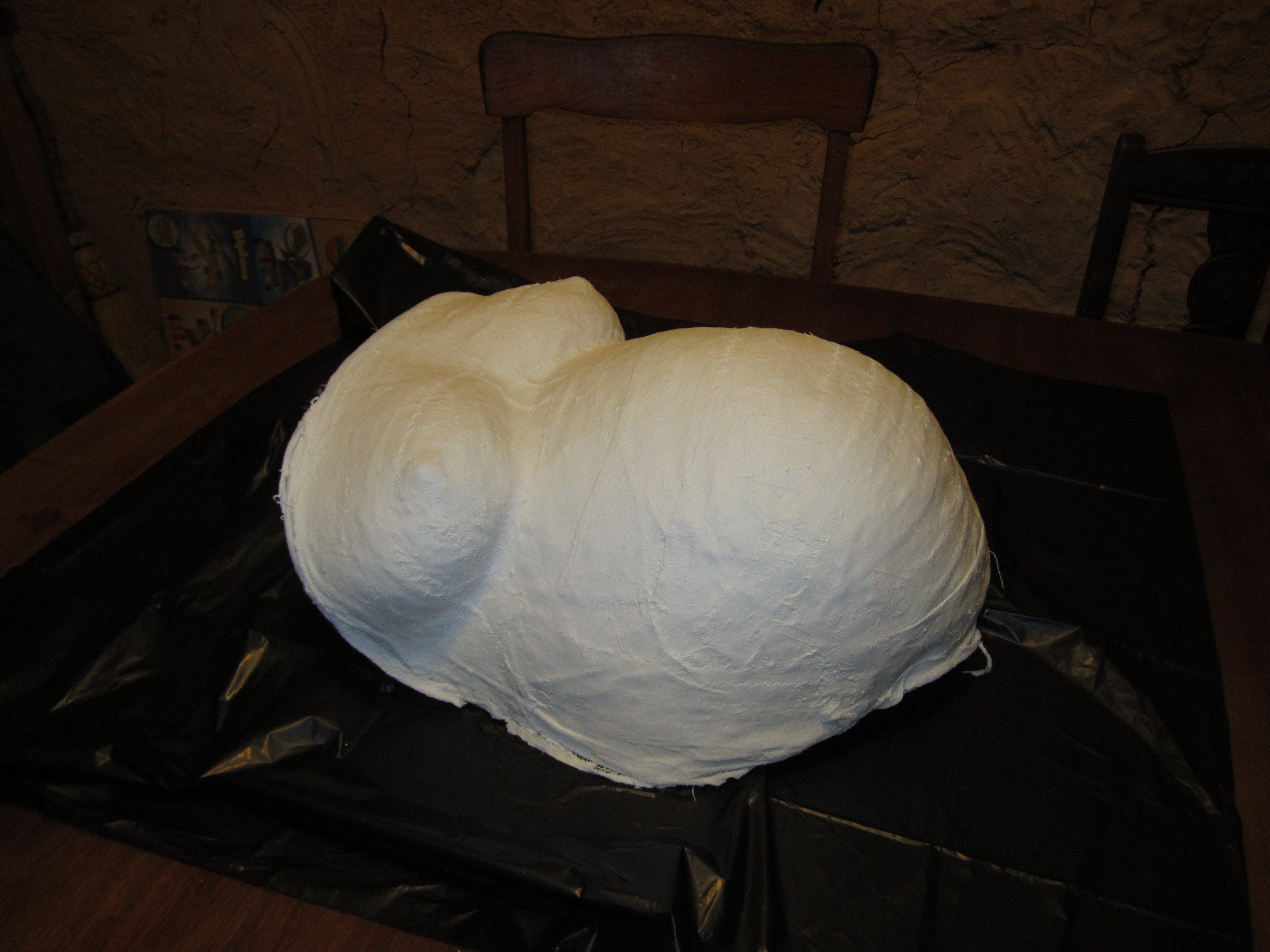
I’m really glad we did it and I’m glad to have an accommodating husband who doesn’t think something like this is silly or weird. I do not plan to actually paint the cast until after she is born. I am thinking of doing a black and white design on it similar to the mandalas I’ve been drawing during this pregnancy.


Finished (still unpainted) cast


Aside from “buying car seat” (which is winging its way here right now via site-to-store shipping), making the belly cast was my very last pre-baby “to-do.” Of course, I’ve now added, “finish blessingway and birth art blog posts…and a couple more…and maybe a couple more” to said list!

Birth Lessons from a Chicken

Birth Lessons from a Chicken

by Molly Remer, MSW, ICCE, CCCE

Originally published in Midwifery Today, 2009 Spring;(89):49

“Should we just let her sit on them?” my husband asked. He had been struggling to keep a broody hen off her nest for almost two weeks.

“I always vote in favor of the mother,” I told him. So, we stopped trying to oust her. My husband gathered up six random eggs from the coop and put them under her and we let her sit.

We consulted our book on raising chickens. The chicken book had very little encouraging advice about “natural incubation.” After reading it, we learned that she was likely to let the eggs get too cold causing them to die, or perhaps just chill a part of them causing the chicks to have deformed feet. If she did manage to hatch them, they will probably get bacteria in them from the “unsanitary” nest site and get “mushy chick disease.” This is, of course, if the eggs happen to be viable at all, which is improbable. It is recommended not to let her sit and if she persists to either cull her (kill her), or to just let her sit there until she dies of starvation trying to hatch infertile eggs (and therefore culls herself). The book also informed us that if she has feathery feet (she does), she will probably knock the eggs out of the nest by accident and break them. Also, she should definitely be sitting in the spring and not the dead of winter. After studying the book, we are left with a clear sense that incubating eggs artificially is the preferred way to go and that “natural incubation” is fraught with difficulty and dangers.

However, there our chicken sat in the unheated, but well built and insulated chicken coop as the January temperatures outdoors reached -2F. We concluded that she probably had a 5% chance of actually hatching anything and I felt sad for her.

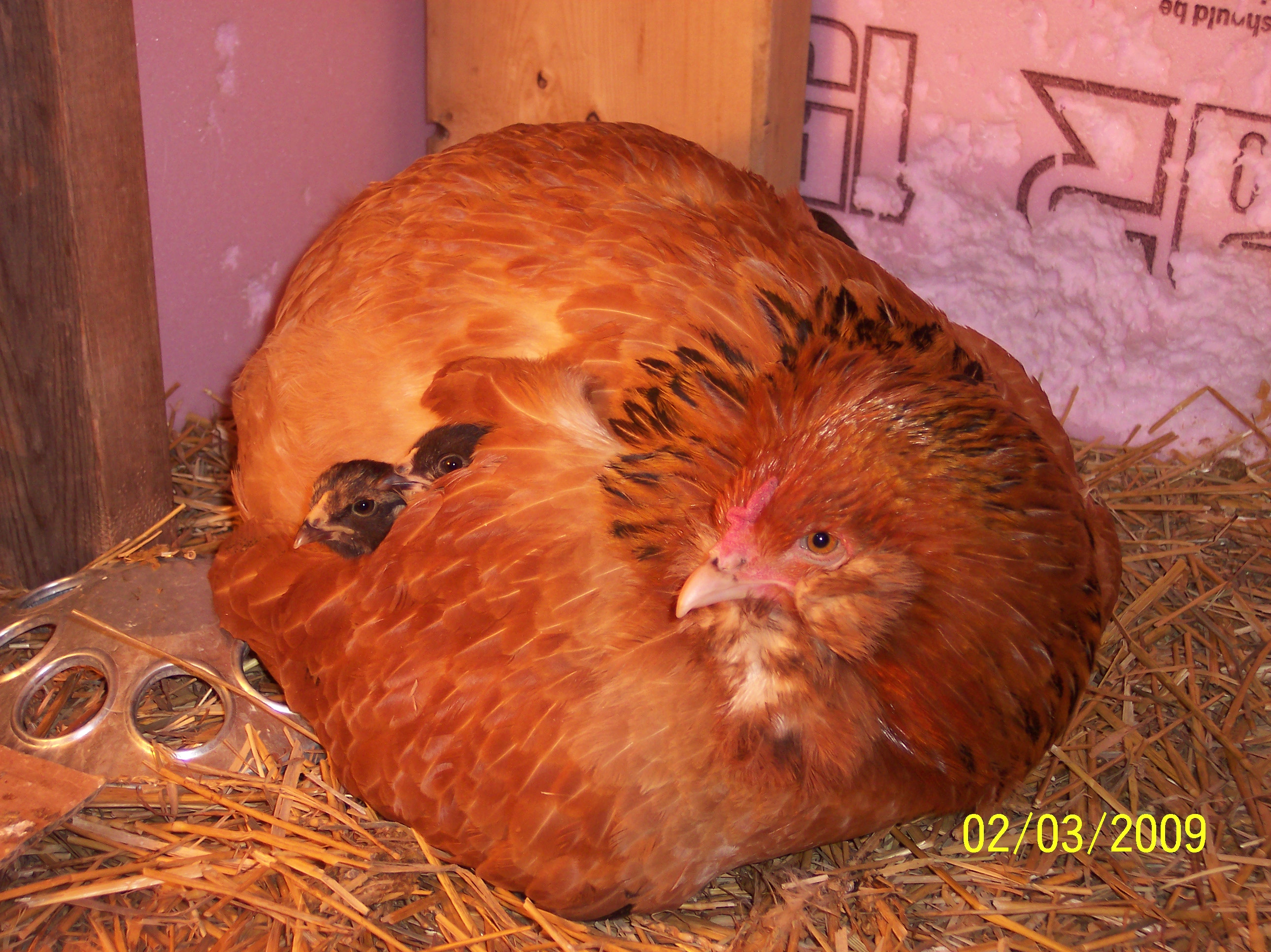
Then, one morning when my husband went to feed the chickens, he heard a funny noise. He looked at the broody hen and from beneath her, a fuzzy head appeared. Then two. Eventually, four. In this cold, cold weather at the wrong time of year with the wrong

The mama hen and two of her chicks

kind of feet and the wrong kind of eggs, she did it! We didn’t trust her, or believe in her. Our book and the experts didn’t either. However, her inherent mothering wisdom won out—it trumped us. At the risk of excessive personification, it truly seemed that she had believed in herself and trusted her instincts (or perhaps, that Nature believed in itself).

Perhaps we could have had the same result with an artificial incubator—a tray that rotates the eggs, instead of “clumsy” feathered feet; a properly temperature controlled unit instead of the heat of her own breast; a sterilized box instead of a wooden coop with an unscientific amount of possibly “germy” feathers plucked from her own body.

My husband ran to get the rest of the family and as we watched that first small fuzzy baby with its eyes bright with life, I was awash with the parallels—the book tells her that her pelvis will be too small, labor will be too painful, her skin won’t stretch, she might have GD, there might be any manner of complications, maybe she should elect to have the baby surgically. Why all the fuss about doing it “naturally” anyway?

Then, as we continued to stare in amazement, the mama hen clucked to her baby softly and fluffed her wings around it until it disappeared beneath her with the others. Isn’t this the birthright of every new baby of any species? To be snuggled immediately after birth into the warm embrace and near the breast of the female body that has given it life? The body that has cared for and nurtured it so lovingly so that its head may finally peek out into the world?

If our chicken were to write a book about hatching babies—or about giving birth—perhaps her section about natural incubation would read:

Maybe she knows what she’s doing.

Maybe you should trust her.

Maybe she can do a better job with her own body and her own babies than you can.

Maybe she can do this all by herself.

Molly Remer, MSW, ICCE, CCCE is a certified birth educator and activist. She is editor of the Friends of Missouri Midwives newsletter, a breastfeeding counselor, and the mother of two young sons and a baby girl on the way. She loves to write and blogs about birth at https://talkbirth.wordpress.com, midwifery at http://cfmidwifery.blogspot.com, and miscarriage at http://tinyfootprintsonmyheart.wordpress.com.

This is a preprint of Birth Lessons from a Chicken, an article published in Midwifery Today, 2009 Spring;(89):49. Copyright © 2009 Midwifery Today. Midwifery Today’s website is located at: http://www.midwiferytoday.com

Book Review: Gentle Birth Companions

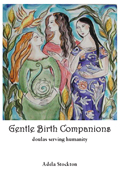
Book Review: Gentle Birth Companions: doulas serving humanity
By Adela Stockton
McCubbington Press, 2010
ISBN 978-1-907931-00-0
104 pages, paperback, £13.00 (worldwide)
http://www.adelastockton.co.uk

Reviewed by Molly Remer, MSW, ICCE, CCCE
https://talkbirth.wordpress.com

Gentle Birth Companions is the first book “written about the doula movement beyond the US” and as such it was a fascinating read. I hadn’t realized how ethnocentric my own perceptions were about the role and history of doulas and I previously assumed that the “doula movement” was essentially synonymous with the “doula profession in the US.” Not so! Indeed, Stockton discusses the way in which in the US, doula professional organizations strive mainly to be acceptable to the medical community, whereas in the UK the doula operates outside of (or parallel to) the medical system. And, she provides an interesting analysis as to whether doulas should be referred to as “professionals” in the first place (this is also due to a difference in what the word means in the UK compared to the US). She expresses several criticisms of certification or even of specialized training programs, feeling that professionalization builds additional, unnecessary layers of bureaucracy into the maternity care system and that the role of a doula should be the role of a lay woman. She also posits that the role of doula actually represents a return to the role of traditional midwifery—what midwifery was supposed to be and has now become removed from politically, socially, and culturally.

Gentle Birth Companions is divided into three sections. In the first, Grassroots, it explores the origins of the doula, the 21st century doula (including doula preparation and training), the UK “brand” of doula, and the wider doula community (thoughts about a global movement and also about doulas in the developing world as well as the industrialized world). The second section, Guardians of Gentle Birth?, explores the doula’s role both antenatally and postpartum and the return to “traditional midwifery” represented by the role. In the third section, Doula Tales, some UK doulas share birth stories , experiences, and thoughts in their own words.

Gentle Birth Companions is an excellent look at the “politics” of the doula movement and the professionalization and motivations of such, as well as at the role and purpose of the doula in women’s lives.

Disclosure: I received a complimentary copy of this book for review purposes.


Birth Altar

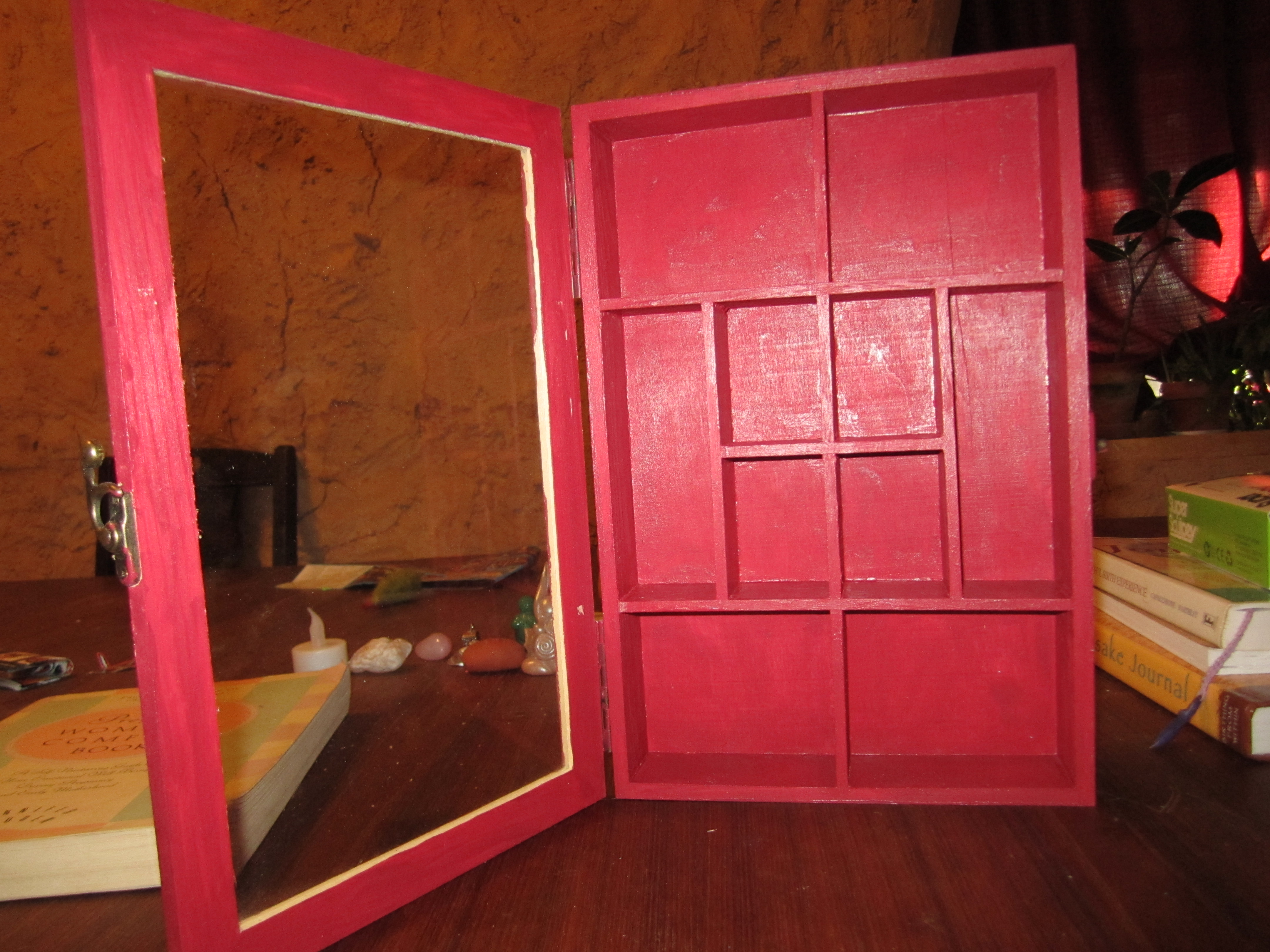
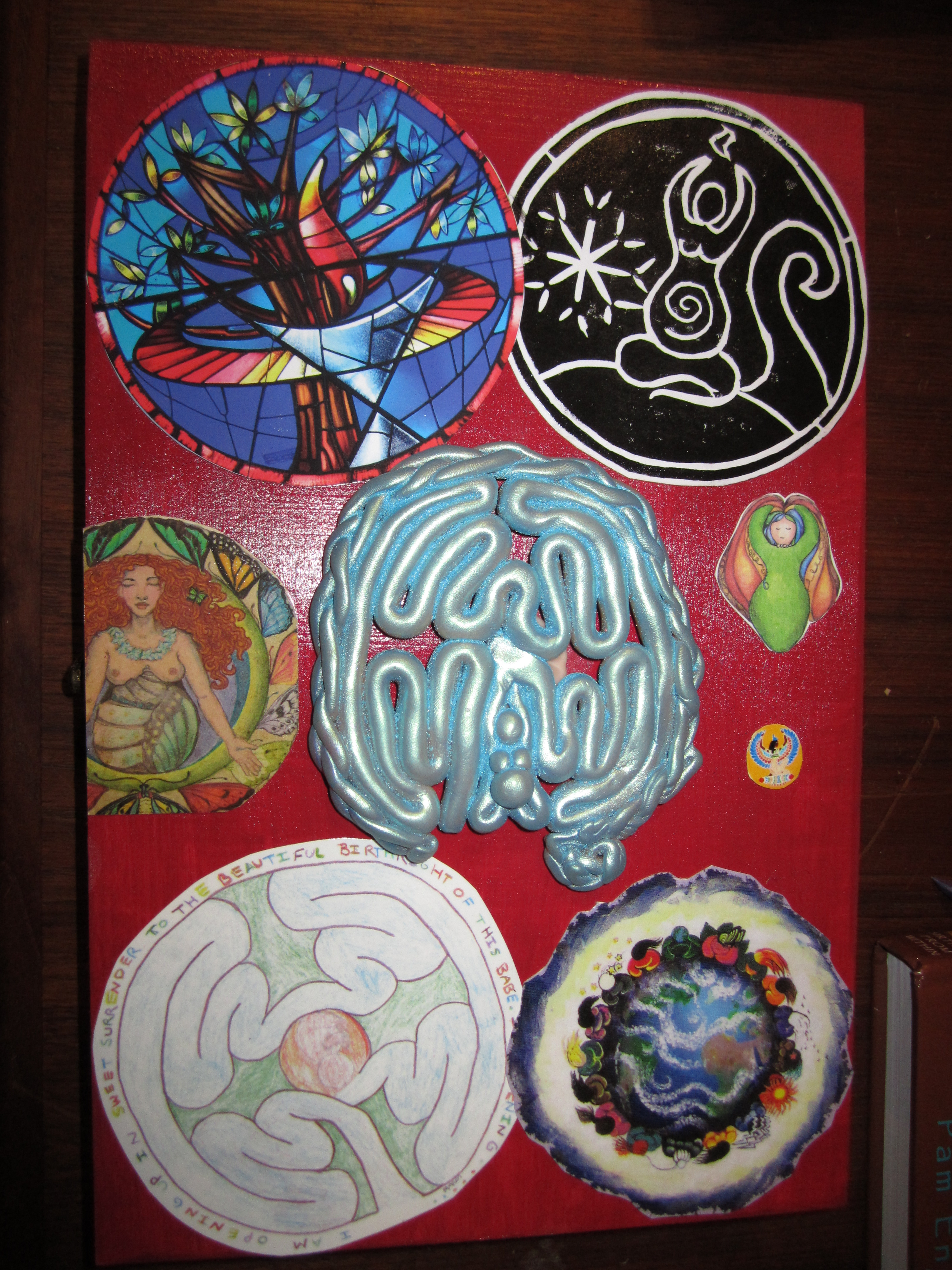
Inspired by the birth altars by artist Amy Swagman of The Mandala Journey, I decided I wanted to make a special birth altar for this upcoming birth. My mom bought me a small, unfinished curio cabinet/shadow box from Hobby Lobby to use for this purpose (thanks, Mom!). The first thing I did was to paint it “placenta red” using a blend of red and purple paints to get the shade I wanted. This is my favorite “power” color:

Door open (door is glass, but it doesn't show up in the pictures and looks like an empty frame).

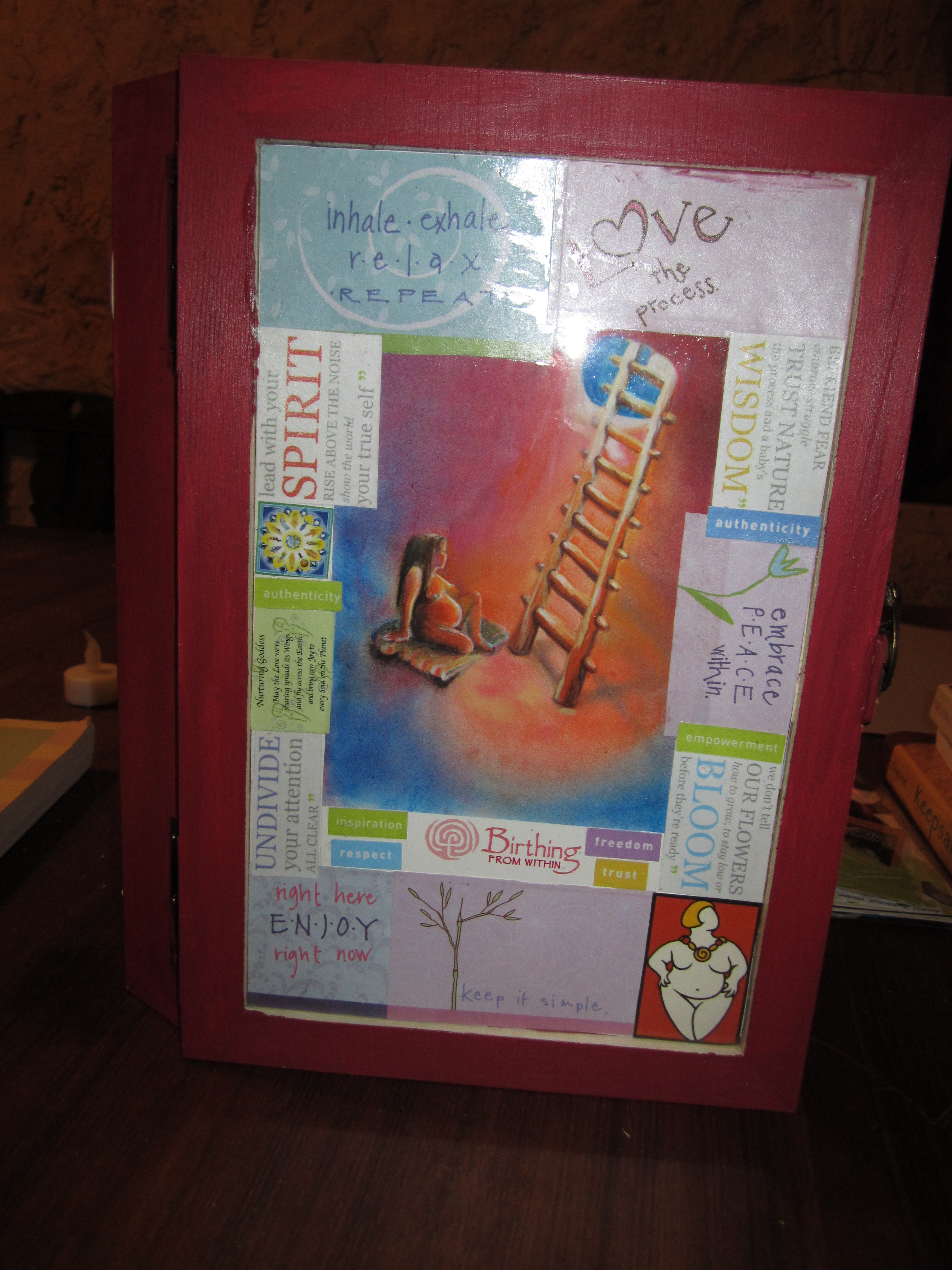
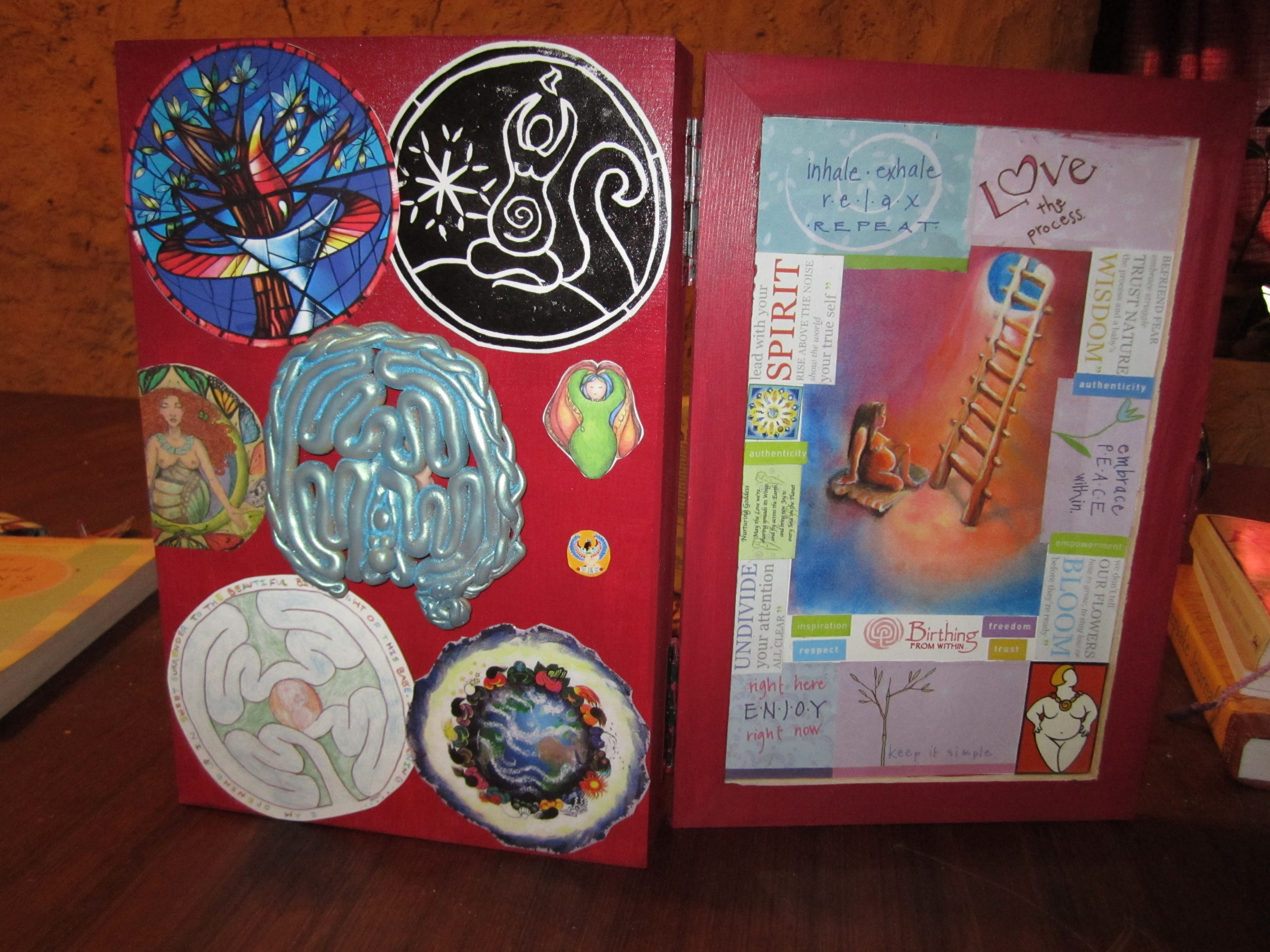
I had a variety of postcards, tags, and inspirational words saved and some of them posted on the wall by my computer. I decided it was time to do something with all these accumulated goodies. I made a reversible, removable card to insert into the front door of the box. For the front panel, I used a card that I bought from Birthing from Within with the “kiva woman” painting that I really love and connect with. I didn’t like cutting it up, but it was worth it! Around the edges I picked words from the tag that came with a shirt I purchased from WYSH (though the quotes are intended to be about the parenting journey, they are amazingly apropos for birth—which, of course, is part of the parenting journey too). I also used some of the tear off pages from a little “happy thoughts” sort of page-a-day calendar that I had a couple of years ago from the $1 Shop (again, totally appropriate for birth, even though it wasn’t the original purpose). Finally, my paper-hoarding tendencies have come in handy, because these little words of wisdom were perfect! Part of me felt like I “shouldn’t” have so many words as part of my birth altar—birth brain doesn’t really “speak” in words, but words are my thing and my “medium,” so to speak, so I followed my intuition and I loved how it turned out. It is perfect 🙂

First side of reversible card

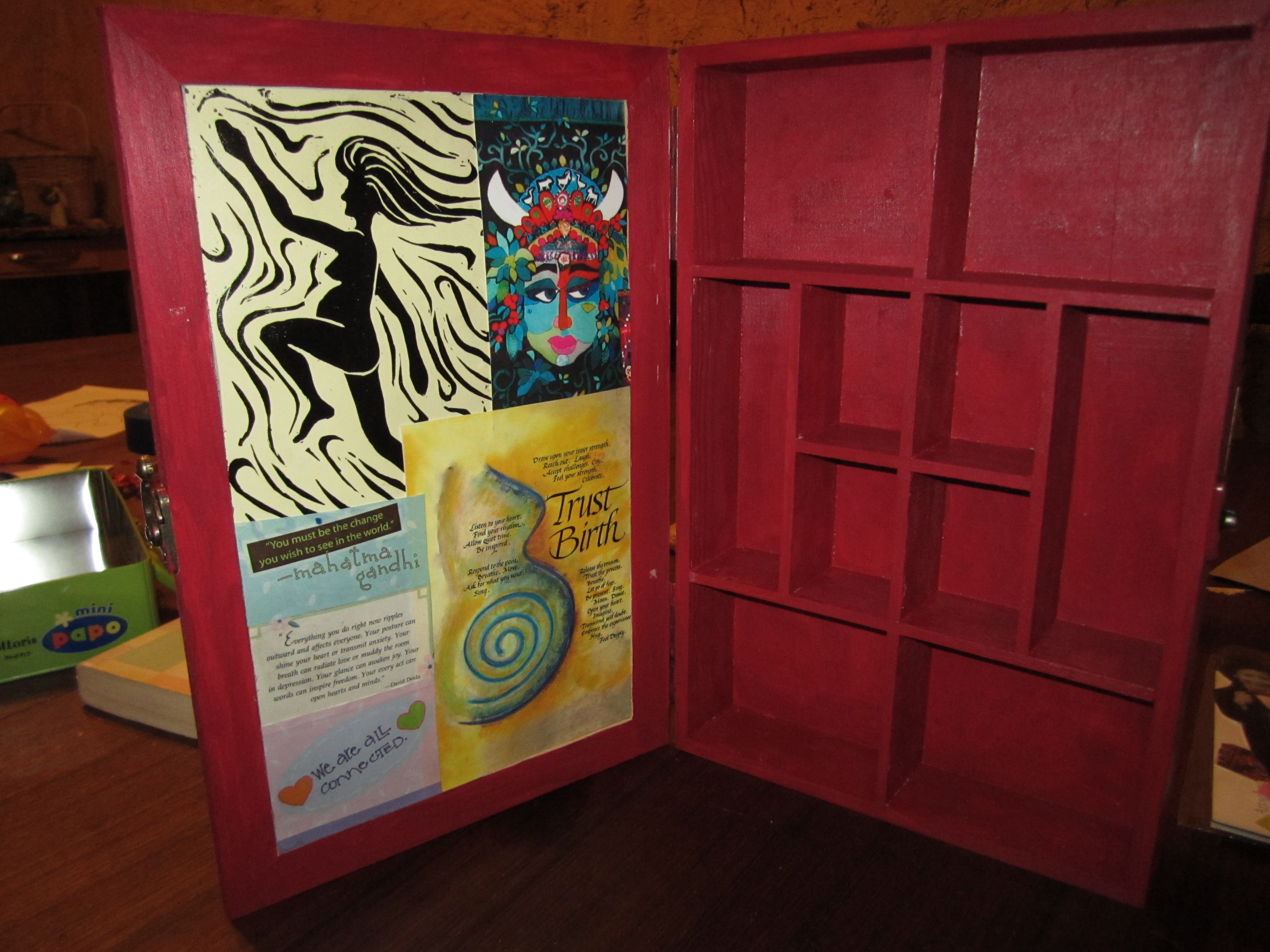
I am less happy with the second side—I was going for less wordy on it and maybe I should have worded it up too! The upper left hand corner is a linoleum block print carved by my husband 🙂

Second side of reversible card

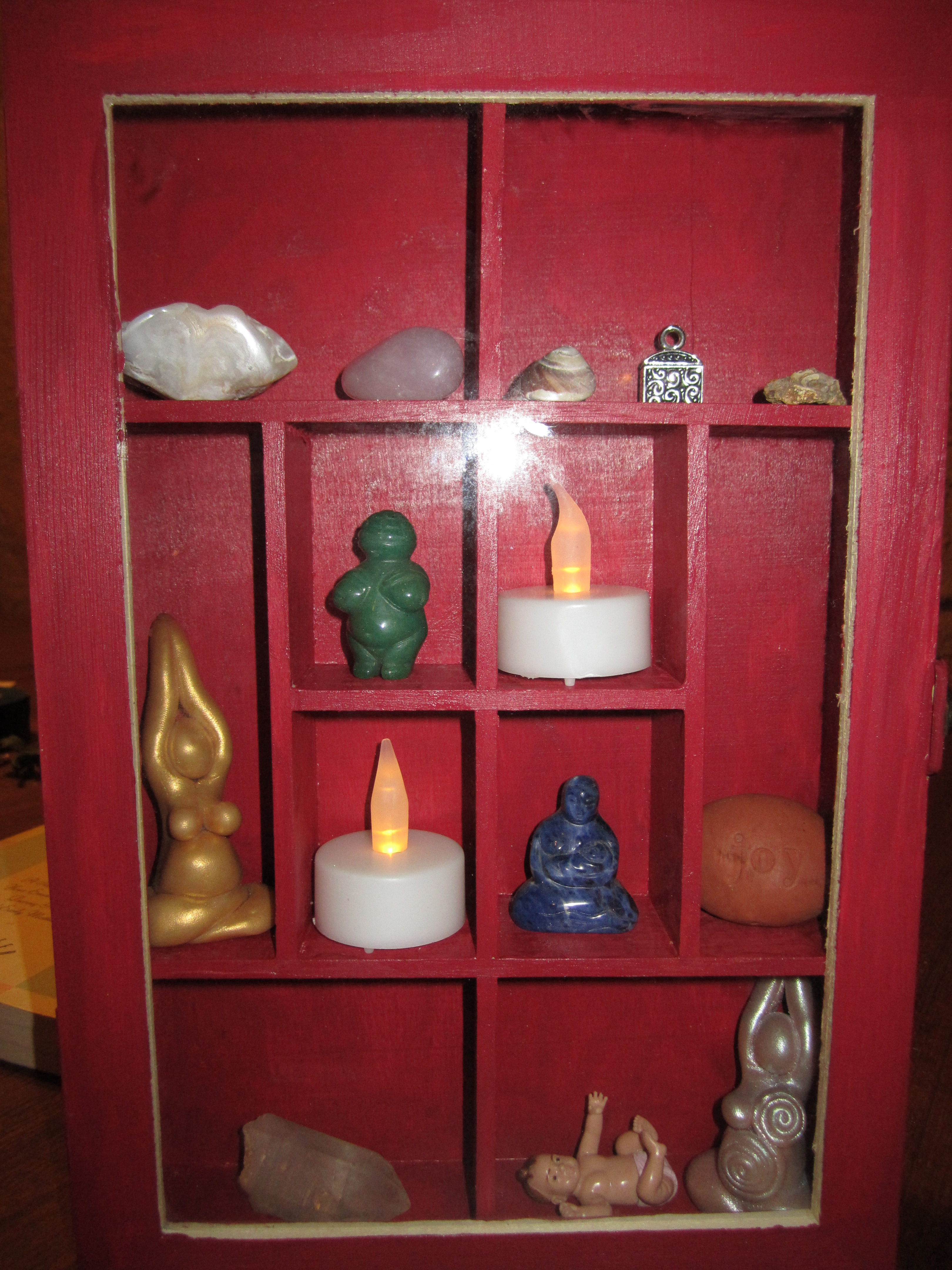
Front of the altar with card inside:

Inside of door with card inside:

For the back, I had a small collection of items that are round and so I thought they seemed to go together. In the center, I attached the womb labyrinth I made a couple of weeks ago. In the upper right hand corner is one of the black and white drawings that I’ve been doing that my mom modified and cut into a linoleum block print as well. The lower left hand corner is a postcard version of a womb labyrinth that I drew in 2007.

Then, I filled it up with some things that hold meaning to me that usually are around my house in various places including two of my polymer clay birth goddess sculptures. I included two little LED tea lights, which look really cool in there in real life, but are less cool in the pictures. I also put in a little plastic baby, which might be kind of weird—I can’t decide…

Remember the reversible card? Now the front is also the inside panel! 🙂

With card removed and door closed.

Opened all the way with front and back both visible.

This was officially the most fun and rewarding birth project I’ve worked on 🙂

Book Review: The Power of Women

Tonight I realized I apparently never posted my review of The Power of Women to this blog, but instead had it only on the CfM blog. Since I love the book, I decided to remedy the situation immediately!

The Power of Women
By Sister MorningStar
Motherbaby Press, 2009
ISBN 978-1-890446-43-7
201 pages, paperback, $29.95
http://motherbabypress.com/

Reviewed by Molly Remer, MSW, ICCE
https://talkbirth.wordpress.com

Occasionally, a book comes into my life that touches me so deeply that I am at a loss for words. The new book, The Power of Women, by Sister MorningStar, is one of those rare books. A treasure. A gem. A rare jewel. A delight. These are the words that do come to mind. However, superlatives—though true—do little justice to describing the actual book.

The Power of Women is a book of “instinctual” birth stories told through the eyes of a gifted and sensitive midwife. The stories are from her perspective, not the mother’s. Each story has either a lesson to share or is a glimpse into that deep inner wisdom and strength found in birthing women that is so easily ignored or dismissed in our modern birth culture. This book is good “word medicine” and the empowering stories within it shine a light to help other women trust their instincts. This light also helps other birth professionals rediscover the magic and mystery and wonder of birth and women.

The Power of Women also touched me in a special way because the author divides her time between my own native Missouri and a birth center in Mexico. Some of the stories shared take place in each location (more from Mexico). I found it delightful to discover the power of my own Missouri midwifery activist friends represented throughout the book. Familiar names and faces graced the pages for me and it was a treat to experience that connection.

The book consists of twelve chapters, each containing 5-9 different stories each. The stories themselves are not long, narrative birth accounts, but are moments captured brilliantly for the glimpse of powerful truth they share. Some are only 1/2 page in length–but the depth in each is great. The chapters are titled things like “Stories of Power” or “Stories of Courage” or “Stories of Community and the tales shared therein are loosely bound together with that common thread.

To be clear, not all of the stories are “happy” or are necessarily “good” birth stories, some are even fairly scary and even depressing. All are powerful.

My only critique of the book, which I hesitate to share because it seems petty in light of such a beautiful and wise book, is that the formatting of the text is odd. The font size is small and the text tightly spaced with very small indents.

If you find yourself in a place where you feel trapped alone in a world where the birth you love so much is becoming a “mythological story,” read this book. If you are an aspiring or current midwife, doula, or childbirth educator and wish to deepen your understanding of birth, read this book. If you are a pregnant woman hungering to dig deeply into instinctual birth and the wisdom and power of story, read this book. The Power of Women is a powerful, touching, and magical journey.


Disclosure: I received a complimentary copy of this book for review purposes.

Product Review: Intelligender Gender Prediction Kit

Product Review: Intelligender

Available at large retailers including Walgreens, Target, CVS/Pharmacy, and Rite-Aid, and online at www.intelligender.com
$34.95

Reviewed by Summer Thorp-Lancaster

I was excited to get home and test out the Intelligender Gender Prediction Test.  My husband and I are not having an ultrasound to find out the sex of our baby, so when asked if I wanted to test/review, I said “Sure!”

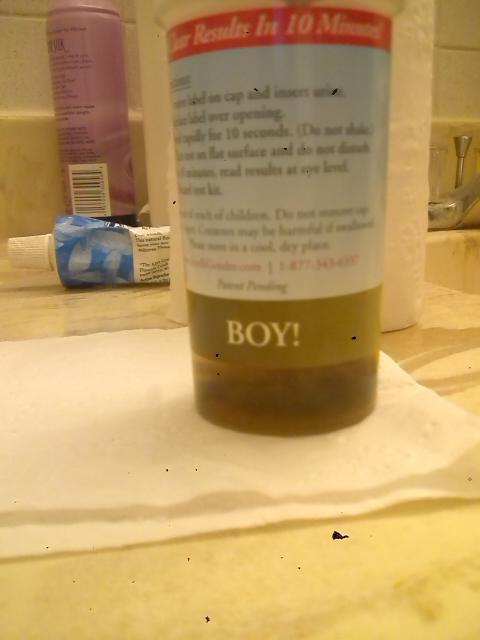
I very carefully opened the package and was shocked to see what appeared, at first glance, to be a huge list of very detailed instructions.  Upon further inspection, though, I realized the instructions were actually very simple and well laid out.  Of important note are the several warnings that women who are dealing with Polycystic Ovarian Syndrome or those who have used Progesterone in the last ten days should NOT use this test, as they will most certainly receive a BOY result.  Also of note is the recommendation to avoid intercourse for 48 hours prior to taking the test or else a BOY result will most likely occur (thanks to husband for being such a good sport).

All in all, I found the directions laid out clearly and easily followed them to an easy to read result.  According to the company, laboratory trials averaged a 90% accuracy rate.  The website includes a Sample Results page, where you can compare your results with others to verify.  I do suggest that mothers with toddlers lock the bathroom door, as my two year old found the canister fascinating and had to be held back from touching.

Unfortunately, we’ll all have to wait until March or April to find out the accuracy of my BOY result.  🙂