Archives

Giveaway! The Mother’s Guide to Self-Renewal

The giveaway is now closed! Elizabeth Baer was the winner. Congratulations!

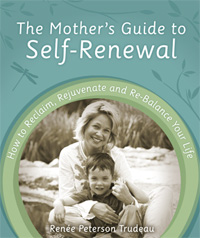
In 2008, my mother-in-law bought me The Mother’s Guide to Self-Renewal for Christmas. When I got this book, I made a commitment to myself that I was really going to DO the book, instead of just reading it, tossing it aside, and gobbling down the next one on my stack. So, I did. It took me about 4 months or so to work through it in this way, though it is actually laid out in a 12-month format. The subtitle is “How to Reclaim, Rejuvenate, and Re-Balance Your Life,” which is just what I felt like I needed! I found it an inspirational, insight-provoking, and enriching journey. Since this time, I have re-read/re-worked through sections of the book many times, as well as recommended it to many other women as one of my favorite resources for balanced living.

As a funny little side note, when I first started reading the book, I had a lovely little leather bound fancy notebook to do the journaling/reflective exercises in. I discovered I was never doing them—it never felt like the right time. Then, I bought a Pirates of the Caribbean notebook at Wal-Mart featuring a large photo of Orlando Bloom on the cover and lo and behold, I started doing the journaling exercises in it and finished the book right up! I had to laugh at myself—Hark! I have found thee, my muse, and thy name is Orlando Bloom (especially in rakish, unbuttoned-pirate-shirt attire!)

The author of the book, Renée Trudeau, offers several other amazing resources that I regularly enjoy: I participate in a free monthly teleclass based on the book (I love these calls—sometimes I have to work really hard to carve out the life space to attend, but I’ve NEVER regretted making it happen), I subscribe to the e-newsletter, and read her thought-provoking blog. Associated with the teleclass and book, is a nurturing “Live Inside Out” Facebook page.

I’m absolutely delighted to host a giveaway for a copy of the book The Mother’s Guide to Self-Renewal. There are several ways to enter:

1. Leave a comment with your favorite tip for self-renewal.

2. Become new fan of Talk Birth on Facebook (and leave a comment here telling me you did so that I know to count your entry).

3. Become a new fan of Live Inside Out on Facebook (and leave a comment here reporting this).

4. Blog about this giveaway on your blog or post a link to your Facebook page (and let me know about it).

The winner of the giveaway will be drawn next Tuesday at noon via random number generator!

DVD Review: Hab It: Pelvic Floor

DVD Review: Hab It: Pelvic Floor

PT Partners, 2008
DVD, 1 hour 42 minutes, $29.95

www.hab-it.com

Reviewed by Molly Remer, MSW, CCCE

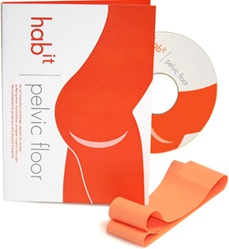
Most women, and certainly all birth professionals, are aware of the importance of the pelvic floor. Less well-known are methods and exercises beyond the basic “Kegel” to strengthen and rehabilitate weakened pelvic floor muscles. Hab It: Pelvic Floor is a physical therapy DVD specifically targeting the pelvic floor. It is designed for women who are experiencing incontinence, prolapse, or pelvic floor pain. It is also a preventative tool for women to avert the development of these distressing issues.

Hab It: Pelvic Floor begins with an anatomy overview and Kegel explanation/instruction and moves into correct postural positioning. The DVD contains four progressive workouts each more than 20 minutes long and also “time efficient” versions of each workout. Each workout is coached by physical therapist Tasha Mulligan while being demonstrated by another woman. All of the information is clearly presented and easy to follow and the instructor is pleasant and earnest. The DVD comes with an exercise band for use during some of the exercises and no other equipment or props are required.

A very thorough and complete resource for any woman of any age, Hab It: Pelvic Floor is a relevant, interesting, and worthwhile addition to the libraries of doulas, childbirth educators, and anyone who cares about women’s health.

Note: The DVD is not designed specifically for use by pregnant women and there are several exercises that are not compatible with pregnancy—it is ideal for pre or post-pregnancy however!

Disclosure: I received a complimentary copy of the DVD for review purposes.

A Fantasy

Several years ago, I requested permission to reprint an essay from La Leche League International’s book Learning a Loving Way of Life. The essay is a birth/breastfeeding parody and I realized I’d never shared it here (please do not reprint without permission!).

A Fantasy

By Melanie Axel-Lute

Time: The not-too-distant future.

Scene: A Doctor’s office.

Doctor: Yes, Judy, the test is positive—you are going to have a baby. Now I’ll just give your instructions for the artificial womb.

Judy: Well, doctor, I have been planning to be pregnant.

Doctor: (surprised) Oh! I do have a few patients who say they’d like to try that. It’s very difficult nowadays, though, so many pressures on the modern woman. Of course, I’m all for it. It is the best thing for the fetus, though the new artificial wombs are very good. Now—have you done any preparatory exercises?

Judy: I didn’t think about that.

Doctor: You’ll find it very hard then, especially at first. I usually have my patients do several months of sit-ups and leg-lifts.

Many women say they’d like to try being pregnant, but they have to give it up in a few weeks. They have morning sickness and are very tired. I always recommend that anyone with nausea switch to the artificial womb.

Being pregnant takes a lot out of a woman. You’ll need your strength for the baby. And you don’t seem very big through the pelvis. You may not be big enough to be pregnant. I’ll have to test your amniotic fluid to see if it’s adequate.

It’s very hard to judge the weight of the fetus when it’s in a human womb, too. Some women worry whether it’s gaining enough weight. I always like to start intrauterine feedings at about two months.

Now, how long had you planned to be pregnant?

Judy: I planned on letting the baby be born naturally.

Doctor: (shocked) Oh, my! That’s really not necessary, you know. Most of my patients go for about three months—that’s the critical period—although a few stick it out for six. More than that is definitely unnecessary.

Have you thought about what people will say? Most people don’t mind seeing a woman pregnant with a tiny fetus, but when it gets to be more than six months—well! It’s just very unusual.

Besides, have you thought about how tied down you’ll be? You’ll have to take that fetus everywhere. Women really need to get out alone once in a while, you know. I feel that most women who prolong pregnancy like that do so for very selfish reasons.

Judy: I want to go ahead with it anyway.

Doctor: (patronizing) Well, I guess I just have to let you try it for a while and see how it goes…

This essay was reprinted with permission from the book Learning a Loving Way of Life, published by La Leche League in 1987. The essay reprinted was originally written in 1978. LLLI is the world’s foremost authority on breastfeeding. For a wealth of breastfeeding information, support, resources, or to purchase a copy of the book referenced, visit: www.llli.org.

Wordless Wednesday: Playmobil Babies

Playmobil Mamas & Babies

(I know this is supposed to be Wordless, but yes, this is my personal collection of Playmobil mothers and babies. And, yes, I do actually have several others that are not pictured, such as a baby Jesus from the Playmobil nativity scene. And, no, I do not usually let my kids play with them—these are MY toy babies!)

Birth Dreams

I’ve always been interested in the birth dreams that women have. During my first pregnancy, I only had a couple of birth/baby dreams and they were very odd/unrealistic (because I didn’t know physically what giving birth was actually like). I did have one very vivid and scary miscarriage dream. Between that birth and my pregnancy with my second son, I had TONS of birth dreams. A common theme was that I gave birth to a baby boy and would say to my husband “now we have three sons!” (even though we only had one son at the time and I wasn’t even pregnant). I also dreamed I had twins, dreamed I had a very premature baby at about 20 weeks who then died, and several others. These dreams were very vivid and real-seeming and have stuck with me as meaningful for a long time.

Then, during my second pregnancy, I had seven dreams in which I gave birth to a boy and thus I was convinced I was having a boy (I did). Some of these dreams were exceedingly realistic, down to length of labor and time of birth. Seven of them revealed/confirmed that he was a boy (in the only girl dream I had during that pregnancy, my husband was the one giving birth to the baby, so both genders were “switched”). One of them was extremely vivid and was that he was born on a specific date and time. I was in the living room on my hands and knees. The birth took four hours and when he was born I said, “I KNEW he was a boy, I KNEW it would be a fast labor, and I KNEW he would be born on a weekend.” As it was, he was not born on that day (two weeks later) and he was born at a different time (within a few hours of the dream time). He was a boy and it was a fast labor (two hours, not four). He was born at 2:45 a.m. on Memorial Day morning, so it was actually a Monday, but it WAS a holiday weekend. He was born in the living room by the green chair on my hands and knees, just like in the dream.

During my third pregnancy, I didn’t really have any birth dreams, and then had one vivid miscarriage dream the night we found out the baby had died. I did have one ultrasound dream in which he was a girl (he wasn’t). After he was born, I had a vivid placenta dream and then I only have had one other dream about him since he was born—I halfway expected to have several birth dreams or “still pregnant” dreams as a way to kind of “psychically” close out his pregnancy, but I didn’t (which in a way was comforting—like my subconscious has “processed” the loss completely). That single dream I did have post-loss was kind of a miscarriage re-do dream in which the birth proceeded exactly as it really had, but instead of all the blood following the baby, I was able to spend a LONG time looking at him and making hand and footprints.

As I mentioned, one of my vivid birth dreams after my first pregnancy, but before any others, was about giving birth to a premature baby (one of the aforementioned “third sons”) and trying to nurse him at least once before he died as well as remembering to smell his head so I would never forget his own unique baby smell. In that dream, I named the baby Noah, which is what in fact we did name our third son when he died early in my second trimester.

After my second baby was born, but before I was pregnant with my third, I had many, many vivid birth dreams about a specific birth position to give birth (half kneel/half squat) in to avoid tearing as well as the idea of making a “birth nest” for myself to have the baby in, rather than having it in the living room and then having to get up to go lie down somewhere else. I feel like the position dream is a strong message from my subconscious about how I should plan to give birth—something I’ve been working over in my unconscious or something and I’m giving myself a “tip.” As it turned out, that baby was born much earlier than expected and I ended up giving birth standing. I did, in fact, make myself a “birth nest” as my dreams had suggested and would do the same again.

During my fourth pregnancy I had two brief miscarriage dreams and since the pregnancy ended quickly, there was no time really to have any other dreams. However, the whole reason I knew I was pregnant in the first place was because I dreamed that I took a pregnancy test and it was positive. When I woke up from that dream, I took one and it was positive. During my fifth pregnancy (so far), I’ve had quite a few “bleeding” dreams and one miscarriage dream.

Then, this week, I had the first birth dream that I’ve had in AGES!

I was in a birth pool in our the living room and the baby was born in the water. The focus of the dream was on the placenta really, not the baby—though I think it was a boy. Placenta was perfectly heart shaped (and small) and had strange “bands” of tissue on it, which I decided meant it was a “circumvallate placenta” (a term I had just heard referenced for the first time the day before in a blog post). The experience of pushing the placenta out was VIVID. It is weird how the body remembers the feeling so clearly and can reproduce it in a dream, when my brain cannot conjure up a daytime memory of how exactly it feels to have the placenta bloop out—and then there was quite a bit of blood with the placenta that diffused/clouded through the water, just like it really would. It was very clear.

So, do birth dreams predict anything? Basically, I feel like my dreams, while not exactly “predictive,” do have some signs/intuitive information within them. I also think dreams often have symbolic (rather than literal) meaning. And, obviously some dreams are simply related to day-to-day happenings (or fears, like with the bleeding dreams) and do not have “deep” meaning at all. With that second baby, I really felt strongly that he was “telling” me he was a boy. My first child was a boy and I felt like the second baby wanted me to never even entertain the notion of “wanting a girl.” I knew I was having a boy and so THAT was the baby I wanted 🙂

When I say vivid, I mean really vivid—the feeling of pushing the baby out is JUST what it really feels like, the sensation of holding the new, slippery baby, etc. I think it is a “body memory” thing and the whole feeling of giving birth comes back vividly during dreams in a way that it doesn’t in just plain memory. While, the memories of my actual sons’ births ARE extremely vivid and I DO feel like I remember what it feels like to birth (I know some people say “you forget how it feels, that is why you can do it again,” but I do not feel like that is true for me), that visceral body-feeling isn’t really there in memory (for me), the way it is in dreams.

Another logical reason for all my birth dreams is that I’m a childbirth educator and writer and read/write about birth constantly. Makes sense that that is what I dream about! 😉
Recommendation: Luna Protein Bar

So, I’m a big one for recommending books, but not usually so big on recommending other products. I am also very careful about what samples/product information I give out during my classes. There are ethical issues with distributing just any old sample that someone sends you because you are a childbirth educator. However, I do have a snack recommendation for today! I regularly get samples of mini Luna bars to give away during my classes. I like putting them into my client packets—they make them look exciting and “goody”-ish :)—and, I also like putting a little pile of them on the table for people to snack on during class. (I also bring them to my various mother’s group meetings for the same purpose.) Some time ago, Luna Bar sent me a single full-size sample of their new Luna Protein bar. It was really quite good and since then I have bought them at the store when I’m grocery shopping and start casting my eye towards the candy bar aisle. The Luna Protein bar actually has a candy-bar-ish appeal (kind of “nougat” in the center and chocolate on the outside), but is made from mostly organic ingredients and things with actual nutritional value and is good for you as well as pretty tasty. So, I was VERY excited today to see UPS arrive with my regular shipment of mini Luna Bars AND, surprise!, a big box of full-size Luna Protein bars for my classes! They included three different varieties (cookie dough, chocolate peanut butter, and chocolate cherry). <happy dance> 🙂

Baby In Utero Pendant

For quite some time, I’ve wanted a really cool silver “baby in the womb” pendant that is available online, but is out of my price range (I do have a smaller, less detailed version). Two years ago, I found a different version made by a company called Sacred Body Designs (they make various types of “anatomical jewelry” meant for healing purposes—so, a pendant of a heart for someone who has heart problems to wear). This one was a more affordable $30 (also sterling silver and with really great detail—LOVE the visible placenta and cord and the hair on baby’s head) and my husband got it for me for Christmas that year.

Now, two years later, I have been suddenly prompted to post about it, because it occurred to me that there may be other birthworkers like me out there who wish for the more expensive pendant and would delight to find a very cool alternative version that is less pricey! Of course, I can’t tell from looking at the website if they are still in business (looks like it hasn’t been updated for a long time), so I may just be teasing you—“look what I got! Don’t you wish you had one too?!” 😉

A Weaning Ritual

The suggestion is often made to have a “weaning party” when a toddler is ready to be weaned. Recently I have been reading the book Seven Times the Sun and she mentions a lovely, simple  little weaning ritual that she did with one of her daughters (18 months). I wanted to share it, because I think a lot of people think about doing something to commemorate weaning, but that it can be hard to find ideas of what exactly to do. Both of my weaning experiences occurred during subsequent pregnancies and I was never quite sure when that “last nursing” would be. Both kids (during the different experiences—I never ended up tandem nursing) gradually cut down on their nursings per day until they were only nursing once a day. I was eager to leave this final nursing behind, because I am someone who finds nursing during pregnancy to be very unpleasant. However, I didn’t want to miss the “last time” and spent weeks remembering to cherish each nursing and fix its every detail in my mind so I would remember it if it turned out to truly be the last—I wanted the last to be emblazoned in my memory. I did successfully manage to note the last nursing for each of them in my journal (and fix some of the details in memory—though not as detailed as I had hoped, because there were so many potentially last nursings!), but we did not have any other sort of weaning party or commemoration.

Okay, on to the ritual idea:

The child is invited to nurse for the final time. Then, offer the child a small round object (like a pebble) and say, “From the time you were a tiny seed inside me, you were fed from my body.” Next, give the child a small baby doll or figure and say, “When you were born into this world as a baby, you were fed from my breasts.” And finally, give the child a silver cup (engraved with their name) and say, “Now I give you this cup, so you may feed yourself.” Then sing a song or blessing and close. The author of the book said their ritual took about 7 minutes, but was a profound memory for the family. I thought it was a delightful idea.

Pain Pie Exercise for Birth Classes

I address the issue of pain in several ways during my classes. I have struggled with doing this—by mentioning pain do I plant the seed that their births will be painful? etc. I’ve eventually come to a place where I feel like it is important to mention pain directly and to look at it head-on. Many people have the perception that birth is THE most painful thing ever and essentially the most painful thing anyone could ever imagine. So, I feel like by not talking about pain in class, I would be ignoring the elephant in the room of THE (cultural) pinnacle of pain. While I have no doubt that birth can be very painful for some women, I deeply feel that our current birth culture and manner of treating birthing women makes birth painful for more of them.

A very useful tool in exploring sources of pain is the “Pain Pie” idea from Teaching Pregnancy & Birth: A Childbirth Educator’s Perspective by Marcy White (published by ICEA).  With this tool, you create a red circle with the word pain on it and a separate set of white wedges (pie pieces) each containing a supportive element, such as “movement” or “relaxation techniques.” Each piece of pie covers up a portion of the red “pain”—as elements of the pie are removed, the pain piece gets bigger and bigger (an alternative presentation is to add pieces, so that the pain gets smaller).

I mention that too often women in our society are left feeling as if they “couldn’t do it” or that their bodies failed them, but in reality their coping pieces of the pie were stripped away from them (sometimes forcibly). I also talk about how sources of distress to the mother during labor: lack of emotional support, disrespect, ignoring of needs, repeatedly offering medications when none are desired, and restriction of movement, often have little to nothing to do with pain, but instead to what is happening around her (environment and caregivers).

Book Review: Mindful Motherhood: Practical Tools for Staying Sane During Pregnancy and Your Child’s First Year

Book Review: Mindful Motherhood: Practical Tools for Staying Sane During Pregnancy and Your Child’s First Year
By Cassandra Vieten, Ph.D.
New Harbinger, 2009
ISBN 978-061531935-3
200 pages, softcover, $16.95
www.mindfulmotherhood.org

Reviewed by Molly Remer, MSW, CCCE

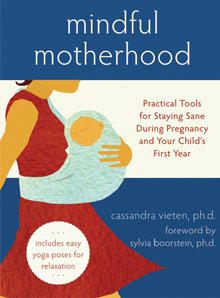
Written for pregnant women and for mothers embroiled in the intense rite of passage that is baby’s first year, Mindful Motherhood is a practical and simple guide to the practice of mindfulness during everyday life. “Mindfulness is moment-to-moment, nonjudgmental awareness of your present-moment experience…so that you can be connected to your baby even in times of distress, be less overwhelmed by distressing emotions and less caught up in negative thought patterns, and enjoy the simple pleasures that suffuse each day of being a mom.”

The book is composed of many small chapters each containing a 5-10 minute exercise readily incorporated into daily life with a baby. It also includes a line-drawing illustrated “mindful motherhood yoga series” of gentle, basic poses, which are an excellent prelude to meditation.

Mindful Motherhood is rooted in attentiveness to needs of the child, present moment awareness—whether comfortable or uncomfortable—and radical self-compassion. “Mindful motherhood, above all, is a way of approaching your experiences during pregnancy and early motherhood with gentleness and friendliness.” The author models this gentle and friendly approach throughout the accessible, supportive, and important guide. What a lovely gift for a woman approaching new motherhood, or for any mother seeking to explore present-moment awareness in everyday life!


Disclosure: I received a complimentary copy of this book for review purposes.