Archives

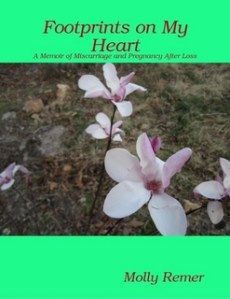
Footprints on My Heart: A Memoir of Miscarriage & Pregnancy After Loss

As of this week, my miscarriage memoir, Footprints on My Heart, has finally been published and is now available in eBook format via Kindle and Lulu, Inc. (epub format compatible with Nook and iBooks). There are a few formatting errors and some other general problems (like with the sample/preview–it is totally wonky–and with the lettering on the cover), but guess what, it is DONE, it available, and it is out there. I’m really, really excited about it and I feel this huge sense of relief. I still want to write my Empowered Miscarriage book someday, but for now, this memoir is what I had in me and it will have to do for the time being. I realized after Alaina was born and was, in a sense, the happy “ending” to my Noah story, that in writing my miscarriage blog I had actually ended up writing most of a book. So, the bulk of the book is drawn from my miscarriage blog and from this blog as well (for the pregnancy after loss content). I also included an appendix of resource information/additional thoughts that is fresh.

I’ve felt haunted by the desire to publish this for the entire last year. It took a surprising amount of work, as well as emotional energy, to prepare for publication, even though I actually did most of the actual writing via blog in 2010. Now that it is ready, I just feel lighter somehow and have this really potent sense of relief and ease, as if this was my final task. My final act of tribute. My remaining “to do” in the grief process.

If anyone really, really, really wants it and cannot afford the $3.99 for which I priced it, I do have it available as a pdf file, a mobi file, and an epub file and I will be happy to email it to you in one of those formats.

<deep breath> Aaaaaahhhhhh….

Imaginary Future Children

My brother graduated from college earlier this year and recently got his ultimate dream job in a nearby state. This is the realization of a plan and vision he’s held for himself since he was a very small child. It is pretty exciting for the whole family! Anyway, a couple of weeks ago I was talking to my husband about it and we were reminiscing about when we were young and launching our lives. Thinking about my brother, I was feeling a little wistful and a little tied down, thinking about how we’re never planning to move anywhere else and so forth and musing about whether we’ve made a mistake by settling so permanently in one home and location, are we missing out on “adventure,” etc. I also said, “remember what it was like to make decisions without having to think about our kids?” After a pause, we realized that we did not remember and that was because, while our children at one point didn’t physically exist, making decisions about our lives as adults has still always included them. And, then I was struck with a wave of memories of how the choices we made as a very young couple were based on the then-hypothetical nature of our future children and what we wanted for them. When I was finishing my BA in psychology, one of the top issues on my mind was where to go to graduate school. I felt a pull towards PhD programs in psychology and I felt like that is what many people were expecting of me, but I also knew in my heart that there was no way I could manage a practice as a psychologist while also having children. I didn’t want to spend that much time in school and then feel torn being pursuing my career and taking care of my children. So, I decided to work on my MSW, theorizing that the more flexible nature of the work and the less expensive nature of the degree would be more compatible with family life. (I was 18 while making this decision.)

Then, when I was getting ready to graduate from graduate school and Mark was finishing his bachelor’s degree we had a conversation about how it was “now or never” in terms of what we were going to do—I told him that now was the time when we had the MOST freedom and flexibility with our choices and if we felt like we wanted to live in a different part of the country, etc., NOW was the time to do it, before we had a family to uproot. We talked at length and looked for jobs and apartments in a variety of different states. Finally, we concluded that we wanted our children to be raised near their grandparents and not in a different state where they would see them once or twice a year. (I was now 21 and would not actually have any children for three more years.)
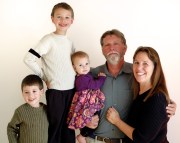
No way could I keep these people apart!

We realized that many towns and places are much the same as any other and why not settle where we were certain the grandparents would remain. I also knew that I wanted to be close to my own mom so she could help me with my babies! So, we bought land one mile from where my parents live before I even got pregnant with our first baby. Post-graduate school I was offered a full-time job at an organization that I adored the year before I planned to get pregnant and I turned it down, knowing that I wouldn’t want to be working full-time while having a baby.
Any more future babies out there?

Yesterday, I was sitting in the living room playing with Alaina and waxing eloquent about her fundamental awesomeness. The boys were playing in the living room too and I said, “I think I HAVE to have one more baby so Alaina has someone to play with! She’s going to really want me to have a friend for her.” Lann said, “But mom, what if you have a…” and I said, “it won’t matter if the baby is a boy. Boys and girls can play together just fine! It is great to have two boys and it would be fun to have two girls, but the other baby doesn’t have to be a girl. Alaina will be happy to have a boy to play with too.” He started to say something again and I went on and on about why do people think children have to be segregated by gender, blah, blah and then he said, “MOM! I’m not talking about what if the baby is a BOY, I was trying to say, what if it is a MISCARRIAGE!” And, I was quiet for a moment before saying, “I know. I worry about that too.” It was a sobering moment. I’ve talked and thought at length about how I’d like to end my childbearing years on this high, happy note, rather than possibly begin a new loss journey. (I do recognize that it is bizarre to make decisions about our family’s future based on fear, rather than love.) Just as when I was a teenager and twenty-something, today I continue to make decisions based on my present-day children and my hypothetical future children, including the possibility of experiencing further pregnancy losses.

Today as I was snuggling Alaina in the morning—she was popping up and staring at me and then flopping on top of me and snuggling her head into my shoulder over and over—and I was smelling her and feeling her strong, wiggly, vibrant little form and I thought, “you healed me.” If I hadn’t had her, I know I would have carried a permanent wound and a permanent place of sadness in my soul surrounding my childbearing years. She fixed it.

Thankful for place

Returning to my notion of being “permanent, this is an excerpt from one of my essays for my Ecology and the Sacred course.

I was interested by the explanation [in our class text] about how we typically, “tell the story of our cultural lives and our interactions with other people…” While I definitely share this tendency, I do also feel deeply rooted to my natural place—the land on which I live and on which I grew up. My parents homesteaded their property in the 1970’s and I was born at home and spent my entire childhood on the same piece of land on which I was born, playing in the woods. They are very connected to their land and literally their blood, sweat, and tears have gone into their “place” in the natural world.

Eight years ago, my husband and I bought a parcel of my parents’ property and built our own home there. We live on a different road than my parents, but are still only one mile from where I was born, and our property is bordered by theirs on two sides. My husband and I have now invested a lot of time and energy into this piece of land, now our blood, and sweat, and tears are part of this piece of land and we feel permanent in this location. We do not—indeed, cannot—envision ever moving and living anywhere else. Sometimes my husband and I talk about whether this sense of permanence is binding or restrictive—i.e. what about the sense of possibility, about being able to “start over” anywhere—but we’ve concluded that rootedness has a great deal of personal value to us and we wouldn’t want to trade our roots for “wings.” While this isn’t quite the same as a natural history of place, I do feel that my own identity and social story includes an interwoven, personally important element of natural place. This part of the country is where I belong and I am invested in it…

While some people lament the “foolishness” of their youth, looking back at my own young adult years, I’m surprised at my own youthful perceptiveness and foresight about what choices would best suit the needs of my then-imaginary children and family. I’m curious to know what life choices did you make as an inexperienced young adult that have continued to serve you well?

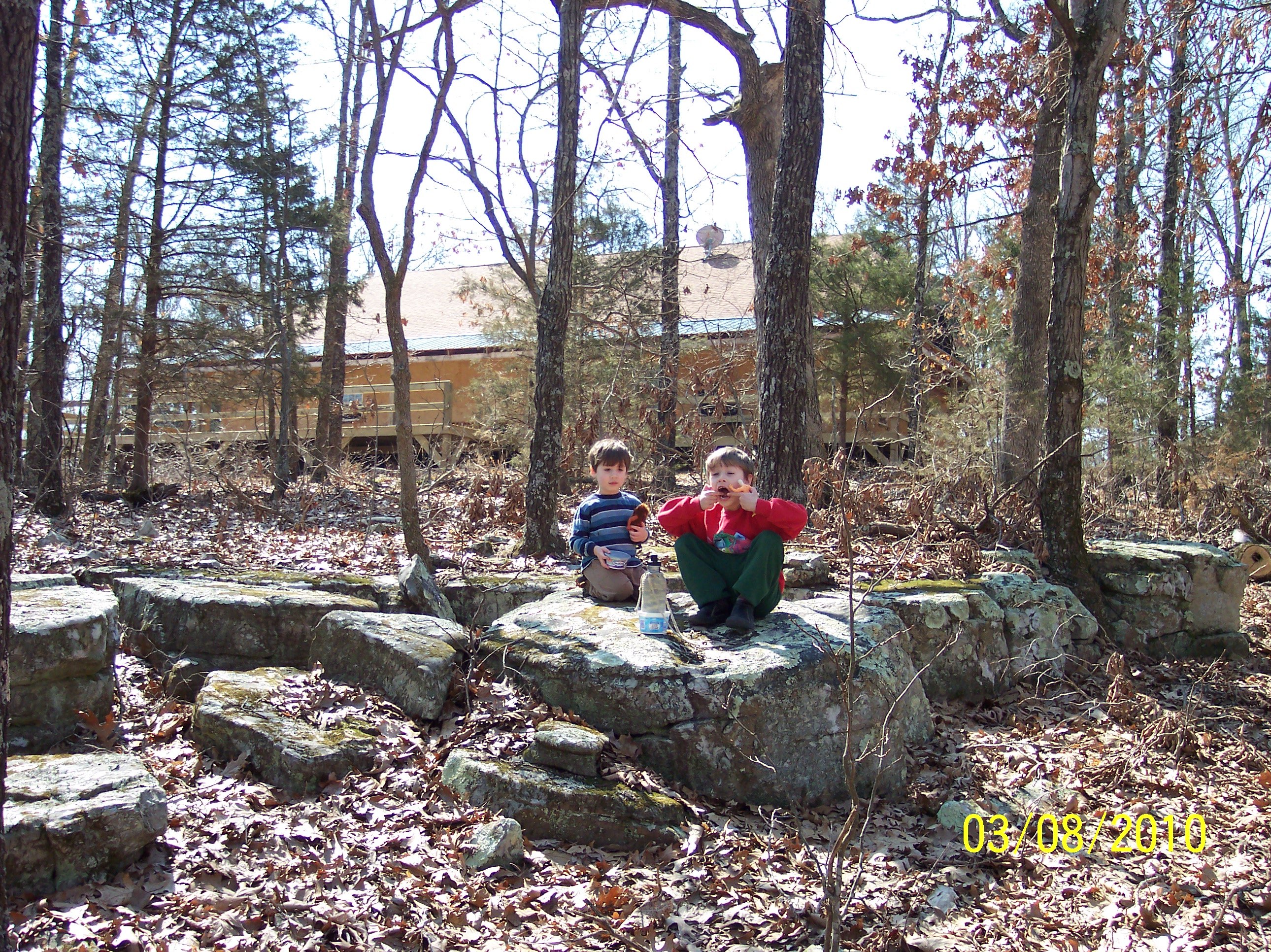
The boys playing in our place last year–not hypothetical children anymore!

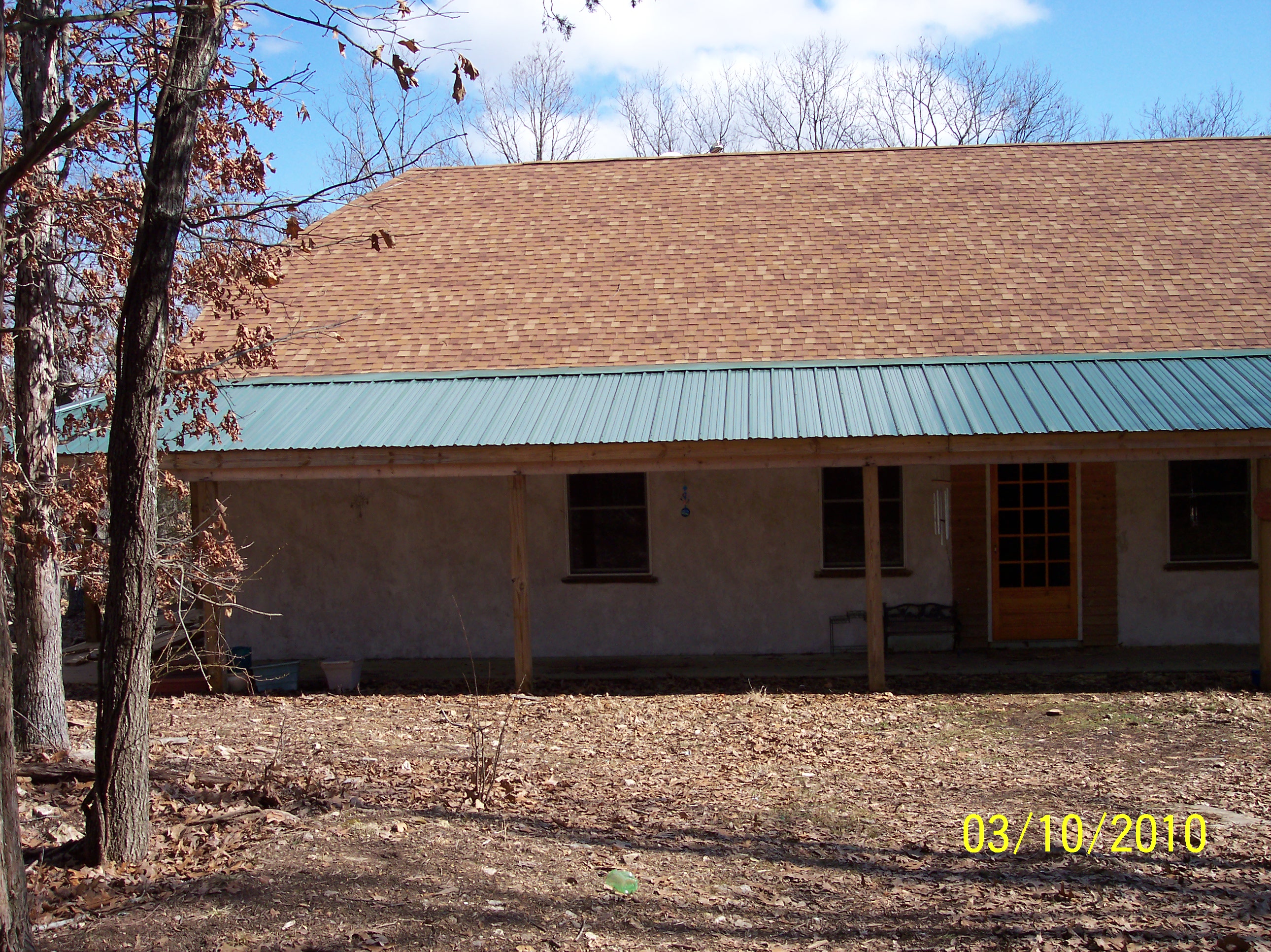
Front of house

Back deck. See why I love it here?
Top Ten Things I Love About Having a Baby

The winter holiday season remains linked with pregnancy loss for me. This time last year, I was entering the final stretch of my pregnancy-after-loss journey and feeling so hopeful that I would have a happy ending to my loss story. This time two years ago, I was reeling from Noah’s birth and it was so very difficult to experience the holidays without being pregnant after all. I feel like this whole first year with Alaina has represented another “circuit” in the labyrinth of pregnancy loss, pregnancy-after-loss, and then new baby. I feel like I have to make another complete “round” of the year, passing through all of those significant dates and milestones that I experienced first as a post-loss mama and as a PAL mama, but getting to take another lap, this time holding my new baby. Each time I pass another date, I feel almost like waving—here we gotogether!

So, in this time of thanksgiving, I want to share the

Top Ten Things I Love About Having a Baby

20111122-164224.jpg

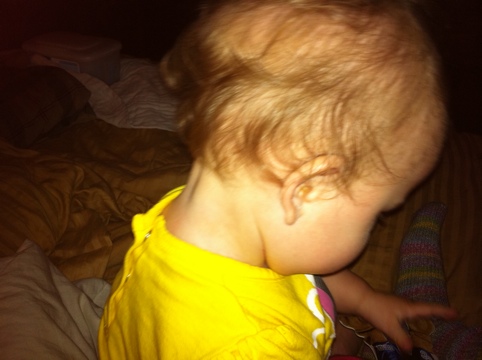
Should have had Karen take a picture of the back of A's neck for me--as it is, this is the best I could do!

  1. Morning lounge-nursing
  2. The bent back of her neck as she seriously examines something.
  3. The way she rides on my hip and snuggles her head in on my shoulder.
  4. Being a little person’s one and only–the most loved and most desired companion. (To be fair, this is one of the hard parts too. It can be exhausting to be needed most of the day and night.)
  5. How curious she is and how quickly she notices something new–and how closely and seriously she studies and examines and explores it.
  6. Babywearing.
  7. Her fuzzy hair. Smelling her head.
  8. How she meets my eyes across the room, or while nursing, or in any instance when she is surprised or startled, or even just noticing something—she checks it out with her home base. It is an honor to be so trusted.
  9. Experiencing the thrill of discovery through her eyes.
  10. Having a baby! Being one of the babymamas. Being a mamatoto. It just feels really right to have a baby on my hip and at my breast.

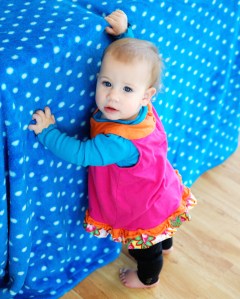
Trusting gaze

Big girl! (but checking in to see if all is well--she's looking at me in this picture).

Happy Thanksgiving!

Sand Tray Therapy

I hoped to finish Noah’s book before his birthday today, but I didn’t quite make it. I’m still editing the last half, adding resources to the appendix, and waiting for my husband to design the cover for me. Hopefully I will publish it by the end of the year! Instead, I wanted to share some pictures and thoughts from a sand tray therapy exercise that I did during a session at the ICAN conference in St. Louis in April. I’ve been meaning to post about it since then and haven’t found the opportunity, so in honor of his birthday seems very fitting and appropriate. The session was intentionally kept small for personal sharing and when we walked in the therapist, Maria Carella, asked if we were there to celebrate a birth or to grieve one. I said I was there for both (I had Alaina with me and she slept in the Ergo during the session). Each of us had a tray of sand and there were long tables at the front of the room full of objects and materials (like shells, feathers, and so forth). We were paired up and after arranging our items on our sand, we were asked to share our tray with the person next to us as well as the message, lesson, reflection, or insight we received from the process of making the tray. While some people used the sand in various creative ways—mounding it up, etc.—I just smoothed mine out and put stuff on top of it. The experience of sharing with my tablemate was very moving and profound. We had a lot of surprising similarities in our feelings about our births, though our stories were very different. And, our closing thoughts or insights about our trays were almost identical.

While it might be hard to see everything, I chose the bridge to symbolize my feeling of having crossed the bridge to the “other side”—meaning first the fact that after Noah and my second miscarriage, I felt separated from women who had not experienced loss by a bridge and as if I’d crossed over into new territory and left my old, happy, naive pregnant self behind (along with the other non-loss mamas. A little more about this bridge here). AND, that I also felt like with Alaina’s birth that I crossed a bridge into the  unknown and to the end of the pregnancy-after-loss journey. Her birth represented the “other side” of PAL. So, at the end of the bridge I drew a question mark in the sand, representing all the questions I had to get past and over in order to get to my new baby. The little baby on the side of the bridge represents how I still had Noah with me. He didn’t get “left behind” on the other side of the bridge, but was next to me on my journey. The spiral on the other side represents the continuous, unfolding spiral of life. Sitting by the question mark is a sort of Kachina-type figure holding many babies. To me she represents all of the babyloss mamas and also reminds me of the jizos who protect lost babies. There is also a coffin on the other side of the question mark, summing up how the fear of the death was everpresent for me and I had to pass over that fear as well to get to my new baby—my light, the candle on the other side of death. The little sparkling gems also represent my joy at her birth and what a treasure she is to me. The bone on the side of the candle represents the places where the “meat was chewed off my bones” by all my births, including Noah’s (I had just attended Pam England’s birth story sharing session prior to this sand tray session). I placed the Goddess of Willendorf figure, that I had immediately snatched off the table as soon as I spotted her, at the top to represent how my sense of spirituality had surrounded and enfolded both my experiences—She is “holding” it all. And, I explained to my tablemate how the roundness of the tray to me also represented the full circle—how Alaina’s story and Noah’s are entwined and how her birth was the “end” (of sorts) of his story, but that they are part of one whole.

View from the top

Happy birthday, tiny third son. We remember you. Thank you for opening my heart and my life for your sister to enter.

Rebirth: What We Don’t Say

A new self did emerge. This is what women do not tell each other. I want to say it here: You will die when you become a mother and it will hurt and it will be confusing and you will be someone you never imagined and then, you will be reborn. Truthfully, I have never wanted to be the woman I was before I had children. I loved that woman and I loved that life but I don’t want it again. My daughters have made me more daring, more human, more compassionate. Their births have brought me closer to the earth and they have helped me pare my life down to its essentials. Writing, quick prayers, good food, a few close friends, many deep breaths, love, plants, dancing, music, teaching-these are the ingredients of my/this new self. I waited for this new self in the dark, in the bittersweet water of letting go, in the heavy heartbeat of learning to be a mother, against the isolation, I grew and emerged laughing and crying and here I am, sisters and brothers. Rebirth: What We Don’t Say | The Sage Mama.

One of my favorite songs to listen to after my miscarriage experiences had a refrain of, “it is dark, dark, dark inside.” While previously not connecting to “darkness” as a place of growth or healing, during these experiences I learned that it is in the darkness that new things take root and grow.

As I’ve shared before, one of my favorite quotes about postpartum comes from Naomi Wolf, A mother is not born when a baby is born; a mother is forged, made. The quote I shared above from this “Rebirth” article touches that place in me—that motherhood results in a total life overhaul and a new, enriched identity. (This article also made me think of first postpartum journey which I wrote about here.)

In a previous post, I wrote the following about the idea that giving birth and mothering leaves permanent marks:

I’ve also come to realize that despite the many amazing and wonderful, profound and magical things about birth, the experience of giving birth is very likely to take some kind of toll on a woman—whether her body, mind, or emotions. There is usually some type of “price” to be paid for each and every birth and sometimes the price is very high. This is, I guess, what qualifies, birth as such an intense, initiatory rite for women. It is most definitely a transformative event and transformation does not usually come without some degree of challenge. Sometimes to be triumphed over or overcome, but something that also leaves permanent marks. Sometimes those marks are literal and sometimes they are emotional and sometimes they are truly beautiful, but we all earn some of them, somewhere along the line. And, I also think that by glossing over the marks, the figurative or literal scars birth can leave on us, and talking about only the “sunny side” we can deny or hide the full impact of our journeys.

During Pam England’s presentation about birth stories at the ICAN conference, she said that the place “where you were the most wounded—the place where the meat was chewed off your bones, becomes the seat of your most powerful medicine and the place where you can reach someone where no one else can.

(I’m experimenting with PressThis for this short post)

The Blessingway Connection

Last weekend, I attended a mother blessing/blessingway* ceremony for a dear friend. I have mentioned her here before, because she is on a pregnancy-after-loss (PAL) journey after having given birth to a tiny boy after 16 weeks of pregnancy last July (my own Noah was born at 15 weeks in Nov., 2009). My friend’s baby had been due in January, the same time my own “rainbow baby” was born. So, I’ve spent the last year being a couple of months “ahead” of her on the very complicated and emotional path of pregnancy after loss.  And, now she is preparing to give birth to her own new baby girl any day now. It felt very, very good to come together with friends to celebrate this strong mama, her journey, and her babies. I so clearly remember the feelings of “feeling the fear and doing it anyway” when it came to things like doing a belly cast, having pregnancy pictures taken, and, yes, having a blessingway—each of these commemorative events was tinged with a fear of possibly being a sad memory instead of a happy one. I remember worrying, “what if I look back at my blessingway and have to think, ‘but I was so happy.'” These thoughts aren’t necessarily rational or logical, but they featured prominently in my PAL experience. And, while I truly loved being pregnant and I was happy much of the time, I was so glad for it to be over and for PAL to be behind me. This is the feeling I had for my friend during her ceremony as well—pretty soon PAL will be over and you will be so glad to leave it behind and snuggle your new baby girl (I’m also very familiar with the companion fear of, “but what if my PAL journey ends with another loss? I’m not holding my new baby yet…”)

For many mother blessings, I pick out a quote or a poem or a reading to give to the mother.  Considering how much writing I do in my life, it is kind of surprising to me that I usually choose to give women other people’s words rather than creating something new for them (I do say original things aloud to them during the gifting time, in which we each take turns kneeling before the mother and telling her what she means to us). After some looking for perfect quotes, I knew that for this friend,  I needed to write something to her from my heart and not from someone else. So, on one of my womb labyrinth postcards, I wrote the following:

Nine months ago you entered into the long, challenging labyrinth of pregnancy after loss. You have walked with courage, strength, and grace. You have been SO BRAVE. And now you prepare to take the final step on the path—to greet the power and intensity of your birthing time. All of your love and hope and fear will become concentrated on the task of opening your body to welcome your precious new daughter into your arms and your life. She is coming. She is okay. And, sweet mama, so are you. This is a time of openness and surrender–in body, mind, heart, and soul. May you give birth with confidence, strength, bravery, vulnerability, and wild sweet joy and relief.

(c) Sincerely Yours Photography

One of the special things about blessingways is the sense of connection with other women. The ritual space creates an opportunity to speak and share with each other with a depth that is often not reached during day to day interactions (and definitely not usually at baby showers!). This winter, my friends and I started having quarterly women’s retreats. One of my reasons for wanting to do so was to bring some of that sense of celebration and power from our Mother Blessing ceremonies more fully into our lives and to celebrate the fullness and completeness of women-in-themselves, not just of value while pregnant. For these same reasons, I decided to pursue a doctoral degree in women’s spirituality—while birth work is still important to me, I feel very “called” to celebrate, work with, acknowledge, and respect the full cycle of a woman’s life.

“We are mothers, sisters, family wrapped in different cloth,
standing under the same wide sky
and we’ve come to the very end of our silence
together we’ve found our voice
and it is loud
and it is beautiful
and it sings a love song for our children”
Mothers Acting Up

(c) Sincerely Yours Photography

——-

*For a general description and explanation of mother blessings as well as musings on “connection,” see my friend Hope’s post.

*Out of respect for Native traditions, I continue to try to refer to these ceremonies as “mother blessings.” However, my local circle of women has been holding these ceremonies for each other for about 30 years and they have “historically” been referred to as “blessingways.” Blessingway remains the term that feels most right to me—most genuine, authentic, and, truly, is part of my own life’s “traditions,” so a lot of the time, I feel like it is okay for me to continue using the word, rather than trying to force myself to use mother blessing instead.

Guest Post: Overcoming Stigma: A Film Story of Stillbirth, Miscarriage

This post is republished from the blog of the Bill & Melinda Gates Foundation:

Overcoming Stigma: A Film Story of Stillbirth, Miscarriage

by Jhene Erwin

In 2007, with one two and half-year-old child, my husband and I decided it was time to have another baby. My first miscarriage occurred at six weeks. My second was at almost eleven weeks. The grief was alarming but I did what many women do – my best to quietly “carry on.”

Simple tasks became challenging. I’d stand in the cereal aisle frozen by the choice between honey-nut and plain. The question, “Paper or plastic?” should not make a person cry. Maintaining this external “everything-is-ok” façade was agonizing.

It was the tension – between façade and grief – which inspired my short film about miscarriage, stillbirth and early infant loss. “The House I Keep” is a story of transformation during one woman’s struggle to come to terms with the loss of her child.

My hope is that this film frees people to talk more openly about what remains stubbornly taboo. When people hear about my film total strangers let loose regardless of location: be it the gym or in a grocery store. Their stories are always deeply moving and I am honored by their candor.

What do they say?

They tell me there is no appropriate place to mourn this loss. While family and community are powerful sources of comfort, the silence on this subject prevents women from accessing that healing power. Consequently, the mental health of not only mothers but also their children suffers.

Consider this stigma magnified around the globe. In some developing countries, superstitious beliefs lead women to be blamed for a stillbirth or miscarriage. Some communities feel more people will die if the bereaved mother is in contact with other women and children. Subsequently, access to the healing power of family and community becomes greatly restricted. As we move forward with the important work of improving global maternal and newborn health, the long term effects of stigma on the mental health of women and their surviving children cannot be over looked or marginalized.

Talking heals. Women want to feel reassured that their child’s too-short life had a place in the world and that the world is different because of that child’s absence. You can help mark that life by just being willing to talk and listen. The landmark Lancet Stillbirth Series released in April is already impacting the worldwide perception of stillbirth.

In my own community of Seattle, Washington, in the United States, nonprofits that counsel women postpartum will be using my film as a starting place for open discussions. The ripple effect of community efforts, combined with the work of organizations including PATH, UNICEF, Save the Children, and the Bill & Melinda Gates Foundation, will undoubtedly lessen the stigma of a tragedy for which no woman should ever be held accountable.

By letting women talk openly, and by listening, our communities around the world can help women – including me – begin to heal.

More to Explore

Jhene Erwin is an actor and filmmaker. She lives in Seattle, Washington with her husband and six year old daughter.
—-
The Bill & Melinda Gates Foundation works to help all people lead healthy, productive lives. Safeguarding the health of mothers and young children is one of the world’s most urgent priorities and a core focus of the foundation’s work; especially in the developing world.

Remember those pink shoes?

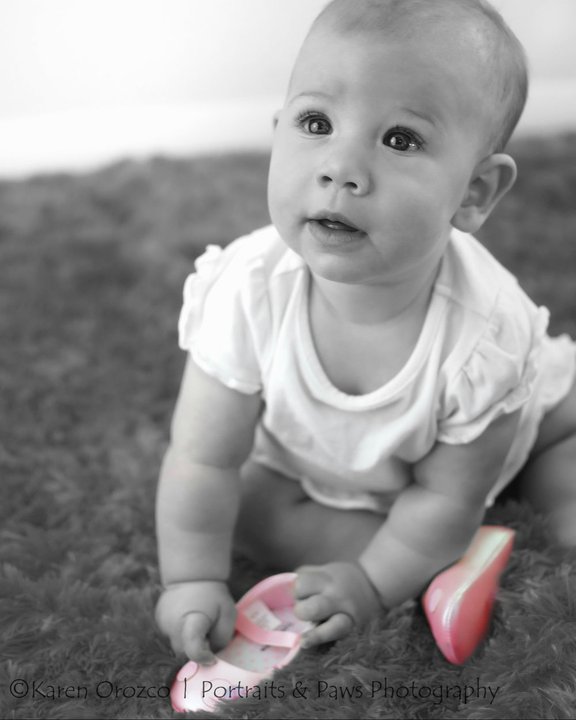
When I found out that Alaina was probably a girl, I went to the store and bought a pair of shiny pink shoes. (I wrote about this here.) When I got my first set of maternity pictures taken, we included those shoes in a couple of the pictures:

Last week, I took Alaina for a photo shoot with my same photographer friend and look at the shoes now!

One of my good friends is nearing the end of her own pregnancy after loss journey and she just had a maternity photo shoot with the fabulous Karen as well. She had a similar belly picture taken with a little pair of pink socks. When I looked at her photo, I remembered so vividly my own feelings while getting the one taken of me—that almost panicky combination of hope and fear and just trying to trust that I would NOT have to look back at that picture and be filled with grief that I had no one to fill the shoes after all. And, once again, I felt grateful and relieved to be on this other side of the PAL journey. It is a very, very good place to be. I look forward to my friend welcoming her own “rainbow baby” next month and getting to feel that sense of pure relief at putting those pink socks on her happy, beautiful, healthy new daughter!

Happy Mother’s Day!

Birthday present from my mom (mother candle-lamp)

In thinking about Mother’s Day this year, I keep thinking of Dr. Bradley’s use of the word “motherlike” in his classic book, Husband-Coached Childbirth. While I’m not a huge fan of the book, I am a fan of this word. To use it in a sentence…giving birth may not be “ladylike,” but it IS motherlike.

This time last year, I was on pins and needles waiting to find out if I was pregnant again (I was!). I attended a friend’s blessingway ceremony on that Mother’s Day and while I was there another friend announced her new pregnancy. And, I’d found out that same week about another friend’s pregnancy as well. These were bittersweet announcements for me as I was happy for my friends, but also felt a pang that it wasn’t me and that I “should” have been full-term myself at that point. Another friend made a very casual, offhand joke about miscarriage shortly after these announcements and I almost lost it completely, feeling at the edge of tears throughout the rest of the event. I was pretty sure that I, too, was also pregnant, but I felt almost paralyzed with fear of being “left behind” again. I imagined all of my friends going on into January and having their babies without me. As it was, the dear friend who had announced her pregnancy that day ended up losing her own sweet baby at a gestation very similar to my own loss of Noah (side note: the 18 month anniversary of his birth is today). My heart ached deeply for her, knowing that now she would have to be the one watching me go on without her and I felt acutely aware of that each time I shared a new pregnancy picture throughout my pregnancy with Alaina—my own sense of “arrested pregnancy” was one of the many difficult post-miscarriage feelings for me (it simply felt wrong to not be pregnant—like pregnancy was my “rightful state” and had been prematurely interrupted).

Anyway, that isn’t really what I planned to write about today, it just came to mind as I began to type. I really planned to just share a couple of new photos! So, here’s one…

All the reasons I'm a mother!

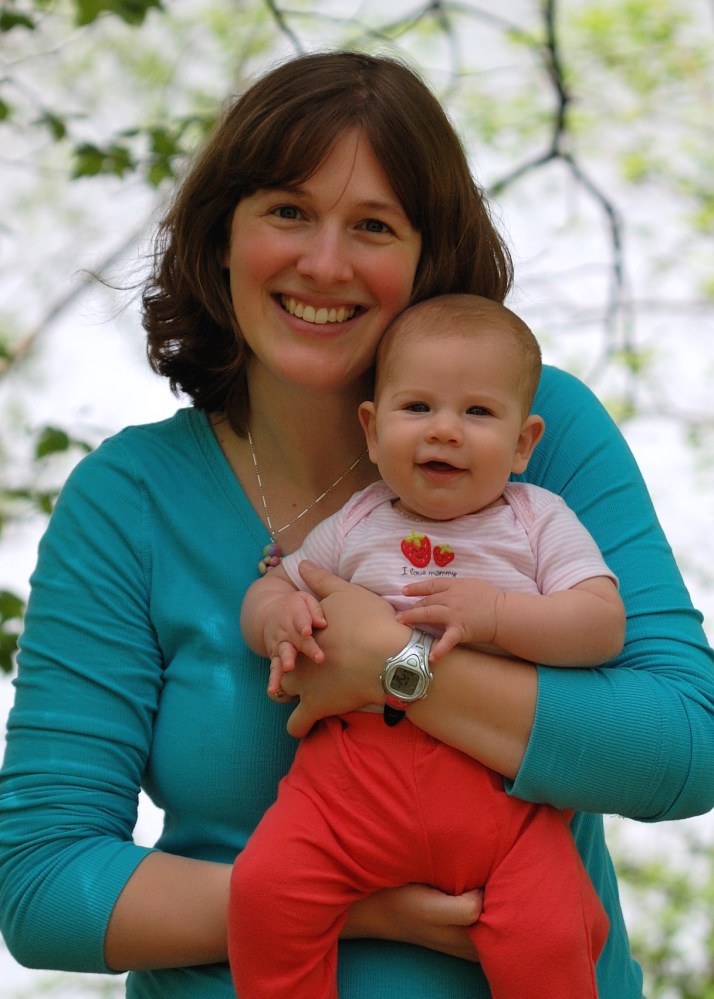
At playgroup this week, I asked my friend to take a new profile picture for me and so she took this one:

(c) K Orozco, Portraits and Paws Photography

I love it! She is the same friend who took all of the wonderful pregnancy photos of me 🙂

Alaina keeps getting bigger and bigger! She weighs about 15 1/2 pounds now. She rolled over for the first time a couple of nights ago, but has yet to repeat the feat. However, she has started to act kind of like she wants to sit up. So, we have been experimenting with that and she has surprisingly good sitting up skills for a 3.5 month old!

What's this?!

I think her big cloth diapers serve as a stabilizing influence and I would imagine that if we tried to sit her up without one on, she would fall right over!

Last year, my husband gave me a beautiful ring for Mother’s Day. I received it with some trepidation also, knowing that if my tiny, tentative new pregnancy was to also end, I would associate the ring with that forever (it also has two garnets in it—January’s birth stone). The goddess of Willendorf image has held special meaning for me for some time and I love this ring. I am grateful that rather than being a loss trigger, it instead serves as a reminder of the potency and power of the Feminine. Of being motherlike.

Mother's Day present from last year

The Five Ways We Grieve

“…most people are unaware that our losses affect us forever, since they cause us to see the world and ourselves differently. The task of discovering ‘Who am I now?’ and finding our own path to healing represents one of the greatest challenges of the grieving process.” –Susan Berger

I recently received a request to review a new book, The Five Ways we Grieve, by Susan Berger. I was instantly intrigued by the book and felt like while it is not specifically about pregnancy loss, it might still have helpful information to contribute to mothers who are coping with pregnancy loss. And, it does not disappoint! The book describes the five “identities” survivors of loss assume and the ways in which these identities transform or paralyze. While the experience of pregnancy loss is often minimized or marginalized culturally as less significant than other types of loss, the reality is that many women experience profound and genuine grief that is just as “real” as any other sort of grief and loss. When I found out that my tiny son had died after 14 weeks of pregnancy, I experienced a depth of sadness never before experienced in my life. I felt a sorrow so profound and full of anguish that I feel certain it was the same type of grief I would experience at the death of any of my dearly loved children. While some might find this surprising (or even impossible), because the baby wasn’t born yet, I believe that the pit of despair one enters after losing a child is the same regardless of the age of the child and whether born or not—perhaps the duration of grief might be shorter for some, but the initial shock, impact, and sense of intense loss and sadness is the same. And, while my own first loss may be defined by some as, “just a miscarriage,” the reality is that I gave birth to a third tiny son in the privacy of my own home—a real, little baby with fingers and toes and whose little fluttery kicks I had just been beginning to feel.

So, regardless of the size of person who died, I very readily recognized myself in the descriptions of the five identities explored in The Five Ways We Grieve.  Most people are familiar with the classic “5 Stages of Grief” model developed by Elisabeth Kubler-Ross (Denial, Anger, Bargaining, Depression, Acceptance), however, these stages most readily apply to people who are dying, not to the survivors. While survivors still speak of moving through these stages, they are not really adequate to describe the experience of grieving a loved one. The five identities explored in Susan Berger’s book are:

  • Nomads:  Those who have not yet resolved their grief in a way that allows them to move on with their life and form a satisfying new identity.
  • Memorialists:  Their main goal is to honor their loved one by creating physical objects or rituals that honor the deceased.
  • Normalizers:  They work to recreate the kind of life they lost or wished they’d had.
  • Activists:  They focus on helping other people who are dealing with the same disease or issues that caused their loved one’s death.
  • Seekers:  They experience loss as a catalyst for philosophical exploration into the meaning of life.

In my own experience, I believe the Activist and Memorialist roles are intimately intwined—nearly immediately post-loss, I wanted to reach out to others and to try to help them as they experienced their own loss journeys. Creating my website/blog/journal, Footprints on My Heart, was a means of helping myself through exploration of my feelings and thoughts, but also a means of helping others. And, it is also a means of being a memorialist. I wanted to assure that Noah’s brief life would be remembered and would have value. On significant dates, I felt/feel an urge to acknowledge the date with some type of memorialization. In keeping with this, I’m posting this on his due date (which is also my birthday). Earlier in the year, following the birth of my sweet new baby girl, I felt like perhaps these date milestones would have lost their significance. In March, I considered that I had hardly given my former due date any thought at all and was really only thinking of it as my birthday and not really as anything else. However, as we got closer, old feelings were stirred and I remember how very painful this time of year was to me last year. And, no matter how distant the lived experience becomes, my birthday will actually never be the same, because I will never forget. And, I don’t want to. His death/birth and my experiences with those things are part of me in a permanent way. However, the experiences now come through the lens of memory and commemoration/memorialization, rather than as a “fresh” or current, in-process experience. I write about it to ensure that he is not forgotten, nor is what he meant to me. And, I am presently in the process of turning my Footprints blog into a book, again with a dual intention of activism and memorialization.

Finally, I also see myself in the Seeker role. While I have spent a lot of years already exploring the meaning and purpose of life, giving birth to Noah was a catalyst for spiritual exploration for me. His birth prompted me to take a deep and long-lasting inner journey and to much more fully explore and elaborate on my spiritual perspective and my experiences with the Sacred Feminine, rather than to just continue to “dabble” with various ideas.

—-

The Five Ways We Grieve: Finding Your Personal Path to Healing After the Loss of a Loved One
By Susan A. Berger, LICSW, EdD
Psychology/Grief | US $17.95 CAN $20.50 | Paperback | ISBN: 978-1-59030-899-8 | Trumpeter, an imprint of Shambhala Publications, Inc.
http://www.amazon.com/Five-Ways-We-Grieve-Personal/dp/159030697X
http://www.shambhala.com/html/catalog/items/isbn/978-1-59030-697-0.cfm