Archives

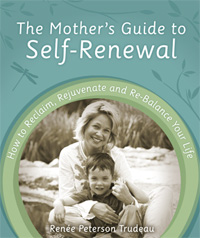
Giveaway! The Mother’s Guide to Self-Renewal

The giveaway is now closed! Elizabeth Baer was the winner. Congratulations!

In 2008, my mother-in-law bought me The Mother’s Guide to Self-Renewal for Christmas. When I got this book, I made a commitment to myself that I was really going to DO the book, instead of just reading it, tossing it aside, and gobbling down the next one on my stack. So, I did. It took me about 4 months or so to work through it in this way, though it is actually laid out in a 12-month format. The subtitle is “How to Reclaim, Rejuvenate, and Re-Balance Your Life,” which is just what I felt like I needed! I found it an inspirational, insight-provoking, and enriching journey. Since this time, I have re-read/re-worked through sections of the book many times, as well as recommended it to many other women as one of my favorite resources for balanced living.
As a funny little side note, when I first started reading the book, I had a lovely little leather bound fancy notebook to do the journaling/reflective exercises in. I discovered I was never doing them—it never felt like the right time. Then, I bought a Pirates of the Caribbean notebook at Wal-Mart featuring a large photo of Orlando Bloom on the cover and lo and behold, I started doing the journaling exercises in it and finished the book right up! I had to laugh at myself—Hark! I have found thee, my muse, and thy name is Orlando Bloom (especially in rakish, unbuttoned-pirate-shirt attire!)

The author of the book, Renée Trudeau, offers several other amazing resources that I regularly enjoy: I participate in a free monthly teleclass based on the book (I love these calls—sometimes I have to work really hard to carve out the life space to attend, but I’ve NEVER regretted making it happen), I subscribe to the e-newsletter, and read her thought-provoking blog. Associated with the teleclass and book, is a nurturing “Live Inside Out” Facebook page.

I’m absolutely delighted to host a giveaway for a copy of the book The Mother’s Guide to Self-Renewal. There are several ways to enter:

1. Leave a comment with your favorite tip for self-renewal.

2. Become new fan of Talk Birth on Facebook (and leave a comment here telling me you did so that I know to count your entry).

3. Become a new fan of Live Inside Out on Facebook (and leave a comment here reporting this).

4. Blog about this giveaway on your blog or post a link to your Facebook page (and let me know about it).

The winner of the giveaway will be drawn next Tuesday at noon via random number generator!

Balanced Living and Saying ‘No’

I fairly regularly experience what I term a “crisis of abundance.” There are SO many great things to do in the world: SO many great causes, so many wonderful organizations, so many beautiful books, and just so many good things to do with my time. I prefer this state to having a crisis of scarcity or lack, but abundance brings its own challenges and saying “no” or “enough” to the requests for my time is one of those. I feel fortunate that I am humming with life purpose (most of the time), but I also have to be mindful that this hum of energy does not lead me to overcommit and to stretch myself too thin.

This past week, I said “no” to two birthwork-related opportunities that were very appealing, but that I know in my heart that I don’t have the time, space, or energy for right now. It was very empowering and actually semi-thrilling to say,”no” and to mean it. I felt smart and that in these situations saying no was taking care of myself (saying no to someone else = saying “yes” to myself” sometimes!). Perhaps not coincidentally, after my “No” experiences, I received an article to share from life-balance expert Renée Trudeau. I really like her “Nine Creative Ways to Say No.” Enjoy!

Four Key Strategies for Balanced Living by Renée Peterson Trudeau, life balance expert/speaker

~Know your top priorities & effectively manage your energy: What in life is most important to you? How good are you at managing your energy? What is draining you? What is fueling you? Are you comfortable saying “no” and not over committing? “Things which matter most should never be at the mercy of things which matter least.” Goethe

~Make your self-renewal a priority: By filling your cup first, you’ll have more to give to clients/family/friends, you’re able to function at your optimum and you’ll be setting an example for healthy, balanced living for those around you. Self-care (on all levels physical/mental/emotional/spiritual) should be part of your every day life. “Self-care is not about self-indulgence, it is about self-preservation.” A. Lorde


~Build a personal support system: What type of and how much professional & personal support do you need to feel emotionally healthy and stress-free? Learn to ask for and receive help. Re-evaluate your support needs every three months; these change based on your current life stage.


~Be more present in all that you do: Stress and overwhelm are often brought on by dwelling on the past or living in the future. By spending more time living in the present and focusing on what is most important in the here and now, the calmer, more effective we become.

Nine Creative Ways to Say “No”

Below you’ll find specific language to support you in saying “no.” Most people find that the more they say “no,” the easier it becomes say “yes” to those things that really matter.

(1) Just No: “Thanks, I’ll have to pass on that.” (Say it, then shut up.)

(2) The Gracious No: “I really appreciate you asking me, but my time is already committed.”

(3) The “I’m Sorry” No: “I wish I could, but it’s just not going to work right now.”

(4) The “It’s Someone Else’s Decision” No: “I promised my coach (therapist, husband, etc.) I wouldn’t take on any more projects right now. I’m working on creating more balance in my life.”

(5) The “My Family is the Reason” No: “Thanks so much for the invite, that’s the day of my son’s soccer game, and I never miss those.”

(6) The “I Know Someone Else” No: “I just don’t have time right now. Let me recommend someone who may be able to help you.”

(7) The “I’m Already Booked” No: “I appreciate you thinking of me, but I’m afraid I’m already booked that day.”

(8) The “Setting Boundaries” No: “Let me tell you what I can do …” Then limit the commitment to what will be comfortable for you.

(9) The “Not No, But Not Yes” No: “Let me think about it, and I’ll get back to you.”

(This list is adapted in part from Work Less, Make More—Stop Working So Hard and Create the Life You Really Want, by Jennifer White.)

Trudeau is a nationally-recognized career/life balance coach, president of Austin-based Career Strategists and the author of The Mother’s Guide to Self-Renewal: How to Reclaim, Rejuvenate and Re-Balance Your Life. Sign up to receive monthly life balance tips, order the book, find out about upcoming retreats/events and  learn more about Trudeau’s coaching groups at www.ReneeTrudeau.com or www.CareerStrategists.net.

DVD Review: Hab It: Pelvic Floor

DVD Review: Hab It: Pelvic Floor

PT Partners, 2008
DVD, 1 hour 42 minutes, $29.95

www.hab-it.com

Reviewed by Molly Remer, MSW, CCCE

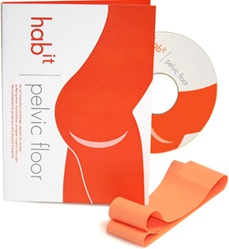
Most women, and certainly all birth professionals, are aware of the importance of the pelvic floor. Less well-known are methods and exercises beyond the basic “Kegel” to strengthen and rehabilitate weakened pelvic floor muscles. Hab It: Pelvic Floor is a physical therapy DVD specifically targeting the pelvic floor. It is designed for women who are experiencing incontinence, prolapse, or pelvic floor pain. It is also a preventative tool for women to avert the development of these distressing issues.

Hab It: Pelvic Floor begins with an anatomy overview and Kegel explanation/instruction and moves into correct postural positioning. The DVD contains four progressive workouts each more than 20 minutes long and also “time efficient” versions of each workout. Each workout is coached by physical therapist Tasha Mulligan while being demonstrated by another woman. All of the information is clearly presented and easy to follow and the instructor is pleasant and earnest. The DVD comes with an exercise band for use during some of the exercises and no other equipment or props are required.

A very thorough and complete resource for any woman of any age, Hab It: Pelvic Floor is a relevant, interesting, and worthwhile addition to the libraries of doulas, childbirth educators, and anyone who cares about women’s health.

Note: The DVD is not designed specifically for use by pregnant women and there are several exercises that are not compatible with pregnancy—it is ideal for pre or post-pregnancy however!

Disclosure: I received a complimentary copy of the DVD for review purposes.

Book Review: Giving Birth with Confidence

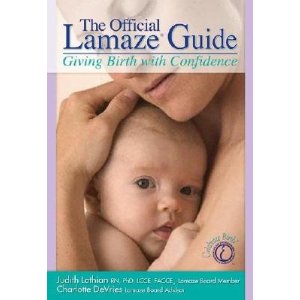
Since I recently wrote a post inspired by a quote from The Official Lamaze Guide: Giving Birth with Confidence, I figured it was high time that I share the review I wrote of the book! The review was originally written in 2007 for CfM News.

The Official Lamaze Guide: Giving Birth with Confidence. By Judith Lothian & Charlotte DeVries. Published in 2005 by Meadowbrook Press (307p), $12.00. ISBN: 088166474X

Reviewed by Molly Remer, MSW, CCCE

Very few pregnancy books deliver the message that we think pregnant women need to hear most: Birth is a normal and natural part of life….We believe deeply that birth is a process you can trust just as millions of women before you have. This belief isn’t sentimental; it’s based on our thorough understanding of the physiologic birth process and research that confirms interfering in that process is harmful unless there is clear evidence that interference provides benefits.

So begins an opening section of the book The Official Lamaze Guide: Giving Birth with Confidence. The degree to which the book accomplishes its simple message can be summarized with a simple review: Excellent! The Lamaze Guide is digestible and reasonable for busy people to manage at less than 300 pages of text and it contains a simple, profound, and elegant message that women in the U.S. desperately need to hear.

The book begins with defining normal birth as “…a normal birth is one that unfolds naturally, free of unnecessary interventions.” It then briefly explains the history of birth and how and why normal birth is not actually the norm in our culture. The authors then clearly address the following areas in one chapter each: early pregnancy; choosing a caregiver and birth site; middle & late pregnancy; preparing for labor and birth; the simple story of birth; keeping birth normal; finding comfort in labor; creating a birth plan and a baby plan; communication and negotiation; greeting your newborn; and early parenting. The authors are clearly very supportive of midwifery and the Midwives Model of Care (though it is not referenced by name) as well as of the benefits of a doula in the birthing room.

The book is framed in the context of Lamaze International’s powerful foundation, the Six Healthy Birth Practices:

The book is also guided by Lamaze’s comprehensive and lovely philosophy of birth:

  • Birth is normal, natural and healthy.
  • The experience of birth profoundly affects women and their families.
  • Women’s inner wisdom guides them through birth.
  • Women’s confidence and ability to give birth is either enhanced or diminished by the care provider and place of birth.
  • Women have the right to give birth free from routine medical interventions.
  • Birth can safely take place in homes, birth centers and hospitals.
  • Childbirth education empowers women to make informed choices in health care, to assume responsibility for their health and to trust their inner wisdom.

After effectively bolstering the confidence of women in birth, The Lamaze Guide concludes with several useful appendices. The first is the excellent tool “Effective Care in Pregnancy & Childbirth: A Synopsis.” Though this information is easily available on the internet (see www.childbirthconnection.org), I find that many parents do not come across it on their own. How powerful to have it included for easy reference of indisputable evidence based practices. The Mother-Friendly Childbirth Initiative is included in another appendix as well as the always excellent text of The Rights of Childbearing Women. I was delighted to see all of these powerful documents in one place—and, in the hands of consumers who need to be aware of them.

This book is a refreshing presence on the shelves of my local bookstore (yes, there is only one retail book shop in my community and The Lamaze Guide is the only “alternative” birth book stocked in the store!). As I read the book, I kept nodding along and wishing it was in the hands of each pregnant woman in my community. Lamaze has a “name recognition” that gives this book the potential to have a wider and broader impact than other alternative birthing books which, though brilliant contributions, may only end up in the hands of “the choir.” The Lamaze Guide is written in such a matter-of-fact and comforting tone that I cannot see it being off putting to the average consumer as having “hippie” language or “extreme” ideas. The blueprint for normal birth that the book lays out is extreme compared to the standard practices at most hospitals, but the way in which the information is presented opens doors of communication, understanding, and exploration as well as providing the evidence basis to back normal birth. I would not hesitate to lend this book out as it will not scare anyone away with “weird” ideas. With the other books in my personal library, I have to carefully consider my audience before choosing which book has the right style and blend of information—not this one! It is good for everyone with its open, simple message. It is a good addition to lending libraries, personal libraries, to give as a gift, or to recommend to others. The Lamaze Guide is straightforward and clearly written with an unabashedly honest and truthful message of what normal birth is and how it can either be supported or undermined.

My only critique of the book is that in contains no real acknowledgment of the several other well known and effective organizations that train and certify birth educators (other than Lamaze International itself). Conspicuously absent from the resources pages are any of these other organizations.

In conclusion, The Lamaze Guide is a source of information that women need to have and a message that women need to hear. I think Giving Birth with Confidence accomplishes its purpose skillfully and has the potential to be a transformative influence. I hope women read it, absorb it, and begin to Celebrate Birth!

Book Review: I Can’t Wait to Meet You

Book Review: I Can’t Wait to Meet You: Understanding In Vitro Fertilization
By Claudia Santorelli-Bates

So No Wonder Publishing, 2010
ISBN 978-061531935-3
30 pages, hardcover, $15.99

www.icantwaittomeetyou.com/

Reviewed by Molly Remer, MSW, CCCE

Written by a mother of three, I Can’t Wait to Meet You is a story book for children designed to explain in vitro fertilization (IVF) in simple terms. The American Society of Reproductive Medicine has an official position that children conceived via IVF have the right to “full disclosure” of their origins. I confess to wondering if by this logic all children have a right to “full disclosure” about their conception story (!), but, regardless, for children conceived via IVF, I Can’t Wait to Meet You makes the origin story easily accessible. (The author of the book has an article available explaining why disclosure is important available here.)

Colorful cartoon illustrations and basic language tell the story of a couple who longs to have a baby and eventually goes to a doctor for help. Eggs are taken from the mother and sperm from the father in hopes that they “like one another and become an embryo.” The illustrations are friendly, appealing, and fanciful (for example, the embryos are shown resting in little beds before being put back into the mother’s tummy).

The book ends with the couple pushing their toddler in a swing at the park and with the lovely affirmation, “you were so wanted and loved long before we met you.”

I Can’t Wait to Meet You would be a nice addition to the personal libraries of families who have struggled with infertility and who would like to share a piece of their journey with their own “little miracles.”

Disclosure: I received a complimentary copy of this book for review purposes.

Practical Ways to Enhance Knowledge for Birth

Related to my previous posts about information vs. knowledge, I want to share a couple of ideas from an article I wrote some time ago for the International Journal of Childbirth Education. Obviously, I don’t have all the answers, but these are some of my ideas/tips about transferring information into knowledge that will be meaningful to parents when their birthing time comes:

  • Use “The Ice Cube Minute” exercise from Family-Centered Education: The Process of Teaching Birth. In this exercise, couples hold an ice cube in one hand for one minute and see what coping measures spontaneously arise for them. I do this exercise fairly early in my class series, before we’ve done a lot of formal talking about coping measures. It is very empowering for couples to discover what tools and resources come from within as they try the ice cube minute.
  • To illustrate the potency of the mind-body contraction, practice two pretend contractions while holding ice. One contraction has an accompanying “stressful” paragraph read with it (“your body fills with tension…it hurts! Oh no!”) and the second contraction has a soothing paragraph read with it (“you greet the wave….it is YOUR power….”). This illustrates the fear-tension-pain cycle viscerally.
  • Use a five minutes series of birthing room yoga poses to begin the class—birth happens in our bodies, not our heads. Practicing the poses opens space to simultaneously discuss and practice: squatting, pelvic rocks, optimal fetal positioning ideas, healthy sitting, pelvic floor exercises, leg cramp prevention, back pain alleviation, and more.
  • Role playing cards-—talk through various scenarios. I’ve found that couples are more receptive to talking through the cards than actually getting into a role and playing it through. The activity that seems to work best for actual role play is the labor simulation series available on the Transition to Parenthood site.
  • Values clarification exercise—participants cut out values from a list and arrange them in a grid to help them figure out if they are in alignment with each other and with their caregivers.
  • Leg stretch exercise to explore the use of vocalizations and other coping mechanisms during labor.
  • Ask plenty of open ended questions that stimulate discussion and ideas, “what have you heard about XYZ?” or “what is your experience with…?”
  • Use birth art processes to “switch” parents from linear, logical, left-brain thinking into the right-brain mode they will also enter in “laborland.”
  • Media portrayals of birth—show two contrasting clips, such as a birth from a popular TV show (I often show Rachel’s birth from the show Friends) paired with an empowering birth from a film like Birth as We Know It and then have students discuss the two. Sometimes this more clearly brings into focus the influence of our culture on birth practices than a simple discussion does. Since I originally wrote this, the film Laboring Under an Illusion was released which does exactly this—contrast media portrayals of birth with how birth can be. It is a great resource for birth classes.

In classes, I also incorporate the idea of mother-baby symbiosis through:

  • The use of affirmations—“my baby and my body work in harmony to make birthing easier.”
  • A discussion of cardinal movements with an emphasis on how the baby moves to help itself navigate the pelvis (thus, helping you have a smoother birth).
  • Visualization exercises that encourage “seeing” and connecting with the baby while in the womb.
  • Belly Mapping” to get a sense of the baby as a person positioned in the uterus. Talking about what baby is like in the womb—when does it kick more, when is it quiet, does it like music, poke you back with you touch it, etc.
  • Impressing upon participants that it is not selfish to want both a good birth and a healthy baby (I actively challenge statements about, “well, in the end, all that matters is that the baby is healthy”). Laboring women have a basic right to humane care, which supports both a happy, satisfied mother and a healthy baby. I use examples during class to show how these are intertwined—for example, a stressed, unhappy, unsupported, tense mother may have a baby with heart decels and accompanying distress.

I try to build a sense of confidence through:

  • Opening each class with a brief series of “birthing room yoga” poses to help couples become comfortable using their bodies and moving from “head space” into “body space.” Birth is a physical process and I am convinced that it is vital to include physical movement during every class to bring that message home. Additionally, the poses I teach can all be used while in labor (thus, building confidence in coping “tools” for labor).
  • Emphasizing active birth—freedom of movement through labor helps baby rotate and descend and helps mother feel more comfortable.
  • Encouraging active birth on all levels: First, the physical level–being active during the actual physical process of birth. Second, the mental level–mentally engaged with labor. Third, a cultural level—a perspective that sees women as active birthgivers, not victims of birth. Birth is something women do, as opposed to something that “gets” them.
  • Giving couples plenty of time for hands on practice of labor support and coping measures. I have a personal motto for classes of, “talk less, learn more.” Practicing support tools in class helps them develop a sense of confidence in having a well-stocked toolbox for labor, instead of being a victim of pain.

Book Review: Breastfeeding Facts for Fathers

Book Review: Breastfeeding Facts for Fathers
Platypus Media, 2009
ISBN 978-1-930775-49-7
40 pages, softcover, $7.95 (perfect bound); $5.95 (saddle-stitched)

www.platypusmedia.com

Reviewed by Molly Remer, MSW, CCCE

Since partner support of a breastfeeding mother is one of the most important factors in breastfeeding success, the short book Breastfeeding Facts for Fathers is a valuable book indeed. Written in a clear, straightforward format, brief one-page sections address topics like, “why you want your baby breastfed,” “is formula really so bad,” “a happier, healthier mom,” “sex and the breastfeeding woman,” and “when breastfeeding is not advised.” There is also a brief segment about safe co-sleeping. These sections are followed by a brief FAQ addressing topics such as how often mom should breastfeed, how to know baby is getting enough milk, how long to breastfeed, nipple piercing, breast implants, alcohol, and breastfeeding in public.

As a quote in the book states, “Having a father is critical to the healthy development of a child. Being a father is critical to the healthy development of a man.” Providing breastfeeding information specific to fathers, Breastfeeding Facts for Fathers supports this healthy development of father, mother, and baby.

A Spanish edition, a low-literacy (abridged) version, an ebook edition, and a hospital edition (co-sleeping information omitted) of Breastfeeding Facts for Fathers are all available at various affordable prices from Platypus Media.

Disclosure: I received a complimentary copy of this book for review purposes.

A Weaning Ritual

The suggestion is often made to have a “weaning party” when a toddler is ready to be weaned. Recently I have been reading the book Seven Times the Sun and she mentions a lovely, simple  little weaning ritual that she did with one of her daughters (18 months). I wanted to share it, because I think a lot of people think about doing something to commemorate weaning, but that it can be hard to find ideas of what exactly to do. Both of my weaning experiences occurred during subsequent pregnancies and I was never quite sure when that “last nursing” would be. Both kids (during the different experiences—I never ended up tandem nursing) gradually cut down on their nursings per day until they were only nursing once a day. I was eager to leave this final nursing behind, because I am someone who finds nursing during pregnancy to be very unpleasant. However, I didn’t want to miss the “last time” and spent weeks remembering to cherish each nursing and fix its every detail in my mind so I would remember it if it turned out to truly be the last—I wanted the last to be emblazoned in my memory. I did successfully manage to note the last nursing for each of them in my journal (and fix some of the details in memory—though not as detailed as I had hoped, because there were so many potentially last nursings!), but we did not have any other sort of weaning party or commemoration.

Okay, on to the ritual idea:

The child is invited to nurse for the final time. Then, offer the child a small round object (like a pebble) and say, “From the time you were a tiny seed inside me, you were fed from my body.” Next, give the child a small baby doll or figure and say, “When you were born into this world as a baby, you were fed from my breasts.” And finally, give the child a silver cup (engraved with their name) and say, “Now I give you this cup, so you may feed yourself.” Then sing a song or blessing and close. The author of the book said their ritual took about 7 minutes, but was a profound memory for the family. I thought it was a delightful idea.

Pain Pie Exercise for Birth Classes

I address the issue of pain in several ways during my classes. I have struggled with doing this—by mentioning pain do I plant the seed that their births will be painful? etc. I’ve eventually come to a place where I feel like it is important to mention pain directly and to look at it head-on. Many people have the perception that birth is THE most painful thing ever and essentially the most painful thing anyone could ever imagine. So, I feel like by not talking about pain in class, I would be ignoring the elephant in the room of THE (cultural) pinnacle of pain. While I have no doubt that birth can be very painful for some women, I deeply feel that our current birth culture and manner of treating birthing women makes birth painful for more of them.

A very useful tool in exploring sources of pain is the “Pain Pie” idea from Teaching Pregnancy & Birth: A Childbirth Educator’s Perspective by Marcy White (published by ICEA).  With this tool, you create a red circle with the word pain on it and a separate set of white wedges (pie pieces) each containing a supportive element, such as “movement” or “relaxation techniques.” Each piece of pie covers up a portion of the red “pain”—as elements of the pie are removed, the pain piece gets bigger and bigger (an alternative presentation is to add pieces, so that the pain gets smaller).

I mention that too often women in our society are left feeling as if they “couldn’t do it” or that their bodies failed them, but in reality their coping pieces of the pie were stripped away from them (sometimes forcibly). I also talk about how sources of distress to the mother during labor: lack of emotional support, disrespect, ignoring of needs, repeatedly offering medications when none are desired, and restriction of movement, often have little to nothing to do with pain, but instead to what is happening around her (environment and caregivers).

Book Review: Mindful Motherhood: Practical Tools for Staying Sane During Pregnancy and Your Child’s First Year

Book Review: Mindful Motherhood: Practical Tools for Staying Sane During Pregnancy and Your Child’s First Year
By Cassandra Vieten, Ph.D.
New Harbinger, 2009
ISBN 978-061531935-3
200 pages, softcover, $16.95
www.mindfulmotherhood.org

Reviewed by Molly Remer, MSW, CCCE

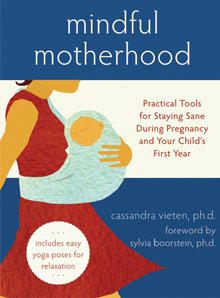
Written for pregnant women and for mothers embroiled in the intense rite of passage that is baby’s first year, Mindful Motherhood is a practical and simple guide to the practice of mindfulness during everyday life. “Mindfulness is moment-to-moment, nonjudgmental awareness of your present-moment experience…so that you can be connected to your baby even in times of distress, be less overwhelmed by distressing emotions and less caught up in negative thought patterns, and enjoy the simple pleasures that suffuse each day of being a mom.”

The book is composed of many small chapters each containing a 5-10 minute exercise readily incorporated into daily life with a baby. It also includes a line-drawing illustrated “mindful motherhood yoga series” of gentle, basic poses, which are an excellent prelude to meditation.

Mindful Motherhood is rooted in attentiveness to needs of the child, present moment awareness—whether comfortable or uncomfortable—and radical self-compassion. “Mindful motherhood, above all, is a way of approaching your experiences during pregnancy and early motherhood with gentleness and friendliness.” The author models this gentle and friendly approach throughout the accessible, supportive, and important guide. What a lovely gift for a woman approaching new motherhood, or for any mother seeking to explore present-moment awareness in everyday life!


Disclosure: I received a complimentary copy of this book for review purposes.