Archives

Tuesday Tidbits: More Women’s Health Thoughts

February 2015 091Can we actually expect humane care in pregnancy and birth? According to a new report, no. Mistreatment in labor is a worldwide issue…

99% of all maternal deaths occur in low-income and middle-income countries, where resources are limited and access to safe, acceptable, good quality sexual and reproductive health care, including maternity care, is not available to many women during their childbearing year. The most common cause of these maternal deaths are postpartum hemorrhage, postpartum infection, obstructed labors and blood pressure issues – all conditions considered very preventable or treatable with access to quality care and trained birth attendants.

Analysis of reports examined in this paper indicate that “many women globally experience poor treatment during childbirth, including abusive, neglectful, or disrespectful care.” This treatment can further complicate the situation downstream, by creating a disincentive for women to seek care from these facilities and providers in future pregnancies.

via Science & Sensibility » Report Finds Widespread Global Mistreatment of Women during Childbirth.

From the original paper:

…The researchers identified 65 (mainly qualitative) studies undertaken in 34 countries that investigated the mistreatment of women during childbirth across all geographical and income-level settings. They analyzed the evidence presented in these studies using thematic analysis, an approach that identifies and organizes patterns (themes) within qualitative data. Based on this analysis, the researchers developed a typology of the mistreatment of women during childbirth consisting of seven domains (categories). These domains were physical abuse (for example, slapping or pinching during delivery); sexual abuse; verbal abuse such as harsh or rude language; stigma and discrimination based on age, ethnicity, socioeconomic status, or medical conditions; failure to meet professional standards of care (for example, neglect during delivery); poor rapport between women and providers, including ineffective communication, lack of supportive care, and loss of autonomy; and health system conditions and constraints such as the lack of the resources needed to provide women with privacy.

via PLOS Medicine: The Mistreatment of Women during Childbirth in Health Facilities Globally: A Mixed-Methods Systematic Review.

I’ve written about violence against women during pregnancy before:

Domestic Violence During Pregnancy | Talk Birth

Companion guest post about abuse of women during labor:

Guest Post: Abuse of pregnant women in the medical setting | Talk Birth.

It was via link trackbacks to these posts, that I read an article about birth control which raises important questions related to men’s health as well:

…Around the planet, advocates for healthier families insist that reproductive rights are human rights. Are they? If so, why is little attention paid to reproductive empowerment of the half of humanity born male? An honest human rights framework would acknowledge that the difference between the top easily reversed family planning method available for women (1 in 2000 annual failure rate) and the top method available for men (1 in 6 annual failure rate) is unjust and unconscionable…

Condoms are So Hundred Years Ago: Why Better Birth Control for Men Would Be Better for Everyone | ValerieTarico.

And, finally, bringing it back to women’s health, I read a horrifying article about young women working in factories using radioactive paint.

…When the women began exploring the possibility that their factory jobs had contributed to their illnesses, university “specialists” requested to examine them. Former factory girl Grace Fryer was declared to be in fine health by two medical experts. It would later be revealed that the two experts who had examined her were not doctors at all but a toxicologist on the US Radium payroll and one of the vice-presidents of US Radium…

The Radium Girls and the Generation that brushed its Teeth with Radioactive Toothpaste | Messy Nessy Chic.

This is why people question GMOs, flouride, vaccines, ultrasounds, artificial sweeteners, etc. Because we cannot always assume benign intent, nor can we assume full and appropriate disclosure, risk assessment, and truth from corporations with a vested interest in claiming no harm.

Super quick post for today! I’ve been busy grading papers and have a class to teach tonight.

Tuesday Tidbits: Women’s Health

February 2015 117There are 70 hours left in the Sweetening the Pill Kickstarter campaign. I’ve been interested in the book since it was published in 2013, so I contributed to the fundraiser and now I’ll finally get to read it! There have been a variety of opposing articles published recently in various online venues, offering critiques of the idea of challenging the pill and its liberating benefits, claiming that such an effort is “anti-woman.” I feel like I can understand both perspectives (few issues genuinely have to be all or nothing, people!). I have conflicted feelings about birth control pills—they have been a tremendously important part of women’s reproductive rights AND there are variety of things about them that are scary too. We can’t assume that hormonal birth control is benign nor is it cool to diminish women’s powerful reproductive experiences as being “enslaved” to biology. At the same time, it is critical that women retain the ability to make their own decisions about their own bodies and family size. One scornful article I read mentioned that critiquing the pill is part of the trajectory of the “natural life” that includes homebirth and extended breastfeeding. For me, that is true and I’m not ashamed to admit it. As I noted in this older post:

…I’ve struggled with the question of birth control for some time. I took the pill for about six years and then after having my first baby in 2003 and going on the minipill, I had the sudden “epiphany” that if I was so committed to natural birth and breastfeeding and natural living and trusting my body, why the heck was I okay with filling said body full of hormones?! (The same epiphany, but including cloth diapers, led me to start using cloth moon pads rather than disposable as well. Never looked back!) We started using natural family planning instead (really, the Billings method) and it has been excellent for nine years—no “accidents” and more babies exactly when we decided we wanted them. And, no side effects, no money, and no hormones. Now that our family size feels complete, I find myself struggling with whether or not NFP will continue be “enough” until natural infertility takes over. NFP was fine when an accidental pregnancy was an acceptable option. At this point, an unexpected pregnancy would still be an acceptable option, however fast-forwarding the clock, I really, really, really, do not want to be someone who ends up having her first unexpected pregnancy at age 45 or something! I also do not want to engage in any permanent body-modification efforts (for either myself or my husband) when my own fertility will be up in the next 15 years or so (but body modification is forever!). So, I feel very optionless at this point…

via Talk Books: Sweetening the Pill | Talk Birth.

After writing this, we did hit our unexpected pregnancy quota (1), and while Tanner is a beautiful treasure that I’m June 2015 087grateful to have, I’m done having babies. Sooooo…what to do now?! I still feel the same sensation of optionlessness that I described two years ago and have been tossing back and forth the ideas of the minipill, a copper IUD, a vasectomy, and around and around.

Speaking of women’s health and our biological experiences, I was interested to read this observation from Veronika Robinson that what we think of as normal physical “suffering” with regard to menstruation may be side effects of modern culture rather than a natural experience:

Those of us on the edge of culture try to bring light to the lives of women who suffer with menstrual ‘conditions’. It’s important to ask ourselves: did Mother Nature really want us to suffer with migraines, cramps, bloating, bad tempers and heavy bleeding? I don’t believe so. In fact, the more we look at the lives of our ancestresses we see that the ‘menstrual’ curse is a recent phenomenon in female history. It is in direct proportion to the degree with which we concur with the modern lifestyle: lack of exercise, poor nutrition (caffeine, sugar, dairy, gluten, alcohol), inadequate sleep, stress, EMRs, pollution, lack of immersion in nature, too much screen time, etc.

via Women and the Moon: reclaiming our menstrual power | Veronika Sophia Robinson.

At the same time, what is “natural” with regard to menstruation can become a logic trap, because technically speaking, it isn’t natural to have a period every month at all. Women of the not-too-recent-past were almost constantly pregnant or nursing, rather than menstruating. Enter…the Pill…and around we go again. 😉 While I embrace natural family living as much as next crunchy mama, I have to laugh at us, when we make arguments like, “humans are the only mammal who…” or, “it isn’t natural to…” because, here we are sitting in houses, most of us with air conditioning, wearing clothes, cooking our food, driving our cars, and typing on our computers. Apparently, we’re mainly only interested in what is natural when it comes to scrutinizing what other women do with their bodies?! I give up!

Recognizing my own logical fallacies, however, doesn’t mean I’m not interested in what it means to be a conscious May 2015 085woman and for me that includes an intimate engagement with the realities of embodiment, rather than an effort to distance myself or pretend that powerful, normal physical experiences to not exist or can be medicated away:

We were at a loss. Would we ever feel like women? Would we want to? What did it mean to be a woman? Looking back, I wish I’d known a wise elder to invite me to a women’s circle but I’m not aware they even existed then – not in our society anyway. I’m so glad that’s changing with the red tent movement and women’s circles.

Women need other women to teach them what it means to be a woman, and to recognise that being a woman is something to welcome rather than resist!

via On Becoming A Woman | Flower Spirit.

In my class last week, we explored the idea that children with ADHD or autism spectrum disorders might simply be people who see the world in “more color” than those without diagnoses. So, I was interested to read several articles this week about Western culture’s narrow idea of mental health and the possibilities that, as a culture, we’re drugging our mystics and shamans:

Our mental health care system is breaking people. We have no room for the sacred, only normal.

The narrow range of accepted behavior expected from us is more oppressive than you might realize. That is, until we experience beyond it, until we get judged, until we don’t fit in, until we need fixing.

In Dr. Somé’s village, the symptoms we commit people for, Dr. Somé’s community recognize as marks of a healer. They respect and nourish the very same patterns that we condemn and drug…

We’re taking people with a completely different perceptual experience and calling it “wrong”.

We’re weeding out our geniuses. We’re killing off our prophets. We’re drugging our messiahs.

Were she alive today, Sylvia Plath would be on anti-depressants. Salvador Dali would be on anti-psychotics. Beethoven would be on Lithium. Newton would likely be committed as well as heavily drugged for his multiple, pervasive mental illness symptoms.

Don’t even get me started on Jesus Christ.

via Rethinking Mental Illness: Are We Drugging Our Prophets and Healers? | High Existence.

After I read the article above, I sought out the article she references by Dr. Somé:

Those who develop so-called mental disorders are those who are sensitive, which is viewed in Western culture as oversensitivity. Indigenous cultures don’t see it that way and, as a result, sensitive people don’t experience themselves as overly sensitive. In the West, “it is the overload of the culture they’re in that is just wrecking them,” observes Dr. Somé. The frenetic pace, the bombardment of the senses, and the violent energy that characterize Western culture can overwhelm sensitive people….

“I was so shocked. That was the first time I was brought face to face with what is done here to people exhibiting the same symptoms I’ve seen in my village.” What struck Dr. Somé was that the attention given to such symptoms was based on pathology, on the idea that the condition is something that needs to stop. This was in complete opposition to the way his culture views such a situation. As he looked around the stark ward at the patients, some in straitjackets, some zoned out on medications, others screaming, he observed to himself, “So this is how the healers who are attempting to be born are treated in this culture. What a loss! What a loss that a person who is finally being aligned with a power from the other world is just being wasted.”

via What a Shaman Sees in A Mental Hospital – Waking Times : Waking Times.

Less related to physical or mental health, but definitely related to emotional health, I enjoyed this article about personal journaling by one of my top favorite authors:

I want to jump up and down, run round the room, yell, “No no no! There are no shoulds! You can use personal writing to serve you however you want!!” But I have learned, imperfectly, that this is not the best way to make a skillful point to another person. So instead, I talk about how my relationship to personal writing has changed and how beautifully it serves me now.

Because writing to and for myself is one of my most essential practices. I could not do what I do or understand my life without personal writing…

via How Journaling Can Change Your Life or Strait-Jacket Your Creativity | Jennifer Louden.

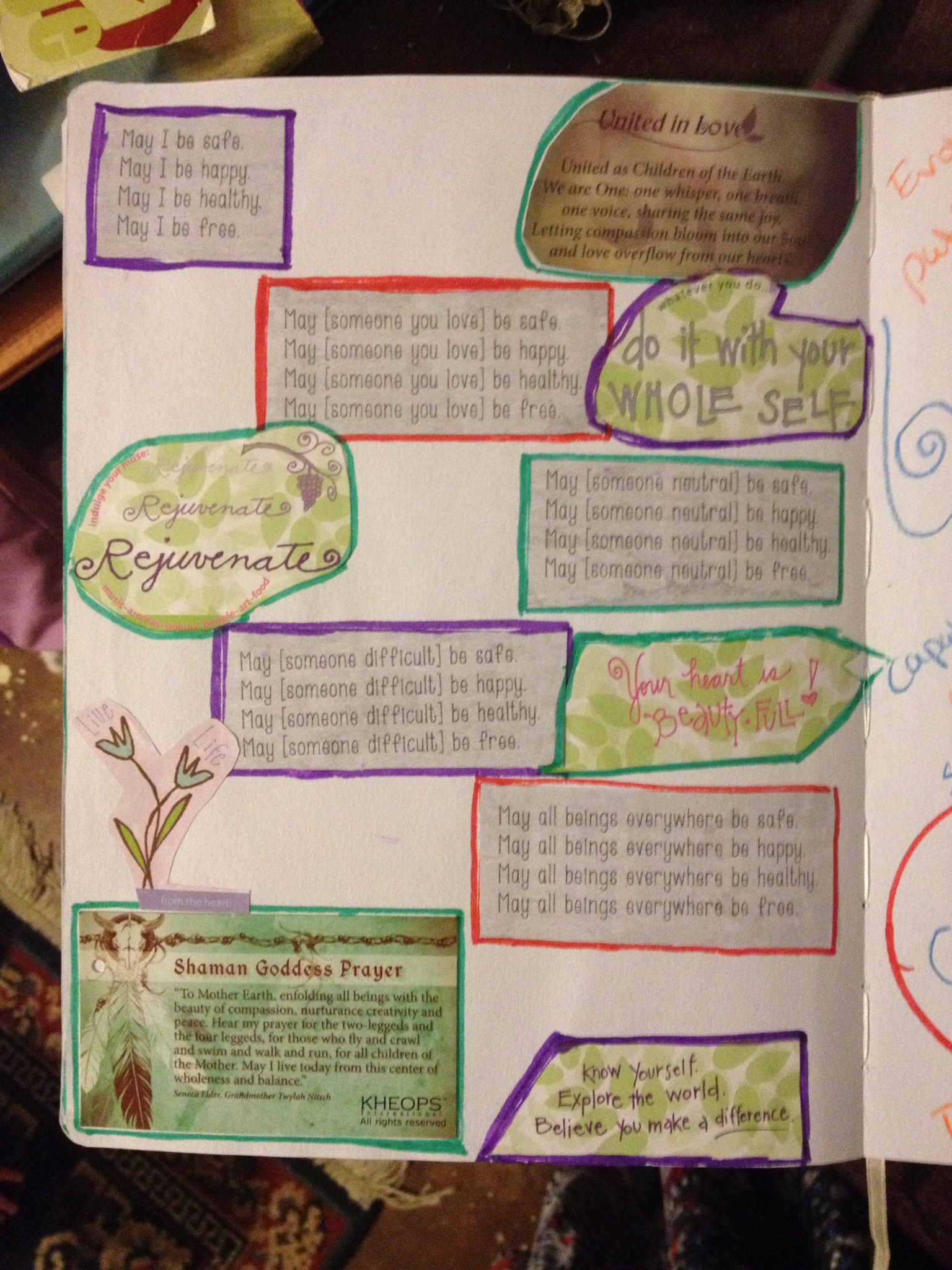
For me, it is art journaling: colored pencils, free form thoughts mostly in the form of single words in non-linear sprinkles around the page, collages, and pictures from my own life cut out and put back together.

May 2015 010I feel I do a lot of my personal writing “out loud” though, in the form of blog posts. Personal writing, writing that some people might say should stay personal and not be splashed all over the internet, can deeply touch others when they need in and in ways that more sanitized and “polished” writing cannot travel. As an example, and bringing it back around to women’s health again, I enjoyed reading this power-FULL, intense, and strong birth story by a friend that I don’t see very often, but that I always feel a special connection to:

…Suddenly baby was in the birth canal and I was undone. All good feelings gone. This wasn’t a baby. At least not a human, possibly an elephant calf. Or, you know, a bag of knives. The stabbing, the shooting, the absolute ripping. My flesh cried; surely I was tearing in two. It just felt wrong, all wrong. I’ve struggled with wondering how to describe my pushing and actual delivery — should I romanticize it? No one is going to want to have a natural birth after reading about my experience. It was traumatizing…do I say that?

Obviously I decided yes; I’m going to say it like it was. Others have had births like this, and others still will, and although my honesty may scare some, I feel it will be a gift to other mamas who have traveled a similar path…”

The Birth of Phoebe Clementine | Peace, Love, & Spit Up.

Simply by sharing this link on my Talk Birth Facebook page, I’ve witnessed how Halley’s “confession” about her own sensation of trauma has given voice to other women who felt denied the permission to express their own feelings. That is the power of telling about it.

And, finally, this health related post of mine has been getting a lot of shares lately, so I might as well re-share it too!

…Next, the clerk starts an IV in your hand because, as she explains, you might get dehydrated while you wait for your fiancé.

“I have my favorite juice here, I’ll drink that instead,” you reply.

“No, no dear. No juice. You could aspirate it and die if you end up needing surgery.”

“SURGERY!” you exclaim, “Why would I need surgery? I’m just getting married!”

The clerk gives you a knowing glance, “Honey, about forty percent of women who get married here need surgery before their marriages are finalized. This is an excellent courthouse! We do everything possible to make sure you have a healthy husband when you leave here. Isn’t that what you want?”

All That Matters is a Healthy Husband (or: why giving birth matters) | Talk Birth.

February 2015 091

Tuesday Tidbits: Self-Care

I spent the past weekend out-of-town at a faculty conference. The whole family went and they brought Tanner to me to nurse on Friday, which was a whole day event (7:45-7:30). He fell asleep in the Ergo after walking around campus and so I took him back into the conference room with me and he snoozed there for about two hours while we talked about assessment measures and course content. It is hard for me to feel grounded and rooted while traveling, particularly in a city. It feels hard on my nerves and even my own sense of self.

After the conference, we spent an extra night at the hotel and then met up with my parents, my sister, and my brother, SIL, and nephew for some Cousin Power and family fun. Each of us only had a roughly two-hour trip to meet in Columbia, instead of traveling all the way to someone’s house. We rented a basement apartment from Airbnb and had a delightful time. It was so much better to visit that way than in a hotel! Very nice! Before our visit we also went to Red Lobster for lunch, Target for dolls, Barnes and Noble, Toys R Us (coincidentally arriving right before they started a free Jurassic World Lego build kit), Shelter Gardens (like a mini botanical garden place), and Hy-Vee (for lunch after the conference ended Saturday morning).

I’ve been working really hard for the last month preparing my Womanrunes Immersion course and I feel a little unbalanced and skewed off-center. I keep telling myself that it is okay to keep working hard, because I’m “almost done,” and sometimes pushing is exactly what is needed. But, I’ve realized as I participate in my own course, that since there is always something else immediately around the corner, that “break” I keep holding out for never comes. I have to create it for myself. The course is going so well and has been really inspiring and magical so far, while also needing a lot of energy from me. I’ve committed to working through the course myself, not just guiding others through it, and I’ve already had to take a deep look at several issues…feeling on the verge of some kind of breakthrough now. From yesterday’s lesson this reminder:

When we lack proper time for the simple pleasures of life, for the enjoyment of eating, drinking, playing, creating, visiting friends, and watching children at play, then we have missed the purpose of life. Not on bread alone do we live, but on all these human and heart-hungry luxuries.
–Ed Hayes (Simple Pleasures)

And, then from another article:

“The more fully we experience life’s beauty, the less regret we have that we didn’t live and love in the ways we most longed to.”

Barefeet, watermelons, and sunburns – it’s summer!

Part of what I’m noticing is that I spend so much time keeping up with tasks online, whether teaching, or maintaining social media, or working on etsy listings, that I feel like I do not have enough time for physical, grounded, embodied, real-life practices that nurture me. I also recognize that part of this is having a baby and that by necessity, some things get pared away. However, I worry I’m letting things of real value get pared away though, while striving to “keep up” with all the rest.

This article makes the point that no matter how much the wellness industry burgeons, it cannot overcome overwork:

No amount of multivitamins, yoga, meditation, sweaty exercise, superfoods or extreme time management, as brilliant as all these things can be, is going to save us from the effects of too much work. This is not something we can adapt to. Not something we need to adjust the rest of our lives around. It is not possible and it’s unethical to pretend otherwise…

via No, it’s not you: why ‘wellness’ isn’t the answer to overwork.

What I’m working on, primarily, is self-created and self-directed, which feels very rewarding in a different way than working for someone else, it is still definitely possible to self-direct into overwork:

“These 24/7 work cultures lock gender inequality in place, because the work-family balance problem is recognized as primarily a woman’s problem,” said Robin Ely, a professor at Harvard Business School who was a co-author of a recent study on the topic. “The very well-intentioned answer is to give women benefits, but it actually derails women’s careers. The culture of overwork affects everybody…”

…Underlying this disparity are deep-seated cultural expectations about how men and women should act. Men are expected to be devoted to their work, and women to their family, as Mary Blair-Loy, a sociologist at University of California, San Diego, has described in her research.

“It’s not really about business; it’s about fundamental identity and masculinity,” Ms. Blair-Loy said. “Men are required by the culture to be these superheroes, to fulfill this devotion and single-minded commitment to work.”

“Women have an out,” she said, “because they have an external definition of morality or leading the good life, which is being devoted to their children.”

via The 24/7 Work Culture’s Toll on Families and Gender

While I initially committed this year to focusing intensely on baby-mama’ing and letting our business grow with its existing products and services, I’ve found myself feeling creatively consumed by new and exciting and yes, fun, projects, that have actually created a lot of new work for myself! (My motto for the year is to follow the inspiration and the inspiration can be so all-encompassing!) While parenting often feels like it directly conflicts with all the creation that is bursting to emerge, I also know that my children unlocked this in me. I would not be the way I am today and offering what I’m offering today, without having been cracked open by my babies!

“Art is mirroring and life became more complicated and richer in my opinion after Scout was born,” explained Harvey. “But the world was also much more terrifying to me.”

Riots and wars in the news— hundreds or thousands of miles away— feel more acute. In the fleeting moments of daily life— a baby’s first tooth or day of school— parents often become hyper-aware of the Sanskrit term kalpa, or the cosmic passage of time. Sarah Sze, mother of two daughters and celebrated sculptor whose work Triple Point was featured at the 2013 Venice Biennale, echoed the sentiment in an interview with The Guardian. Now that she had children, she explained, time was “more significant” and had “more weight.” And ultimately, Harvey believes, this intensity that motherhood brings isn’t a hindrance — it’s “an extraordinary gift for art.”

via Why can’t great artists be mothers? – Women in the World in Association with The New York Times – WITW.

Returning to the feeling of spending too much time online though, I enjoyed both of these articles, with their different messages. The first, on why it is okay to be on an iphone and at the park at the same time:

But you know what else? If you go around insinuating that women are somehow “bad mothers” for devoting some of their precious attention to their phones instead of their precious children, then frankly, I don’t have time for your big bag o’ guilt candy.

via On Parents and Phones at the Playground – Every Other Moment.

And, the second about the dangers of so much distraction:

Social media has created a cornucopia of opportunity for us to curate our experiences and serve them up in an endless buffet of images, phrases, ideas, pithy quotes, filters, and rants…

Without down time to unwind, restore and fill our senses, our bodies and brains sense something alarming and signal the amygdala, the brain’s 911 center, to contact other areas in the brain like the hypothalamus and pituitary gland to release stress hormones like cortisol and adrenaline. The chemistry of stress tells the heart to pump faster, push more blood and oxygen into muscles so we can get ready to run if we have to, and raises blood pressure and inflammation. After all, that’s what the body does when we have a wound of any kind. Stress is the wound we can’t see.

Another reason we’re distracted is that we practice monkey mind. Our thoughts are racing and mocking for position. We can’t “think straight”…

via Redirect your focus before it’s too late.

When I was on the Board at Citizens for Midwifery, I was discouraged by the amount of time we spent on the Outrage Du Jour—what I called “putting out fires” work—rather than on the truer, deeper work and mission. It seems like every day on Facebook there is something new to get worked up over and to write outraged blog posts over and then that “crisis” passes and “everyone” is talking about something else. I try to avoid participating–whether it is birth-related, personal, or celebrity-related–because it just doesn’t have lasting value. So, I appreciated this post on Outrage and Letting Go:

“…Perhaps what we need is a reduced dose of Outrage and a higher dosage of Letting Go. You see, letting go of Outrage is not the same as embracing Apathy—Outrage and Apathy are obverse sides of the same coin. By refusing to be offended by life’s minutia, we refuse to step into Outrage’s blast radius, and thus we refuse to cast judgment arbitrarily. Ultimately, avoiding the Outrage is how we can approach controversial and interesting topics with honest, worthwhile discussions…”

Fake Outrage: Dealing with Criticism – The Minimalists.

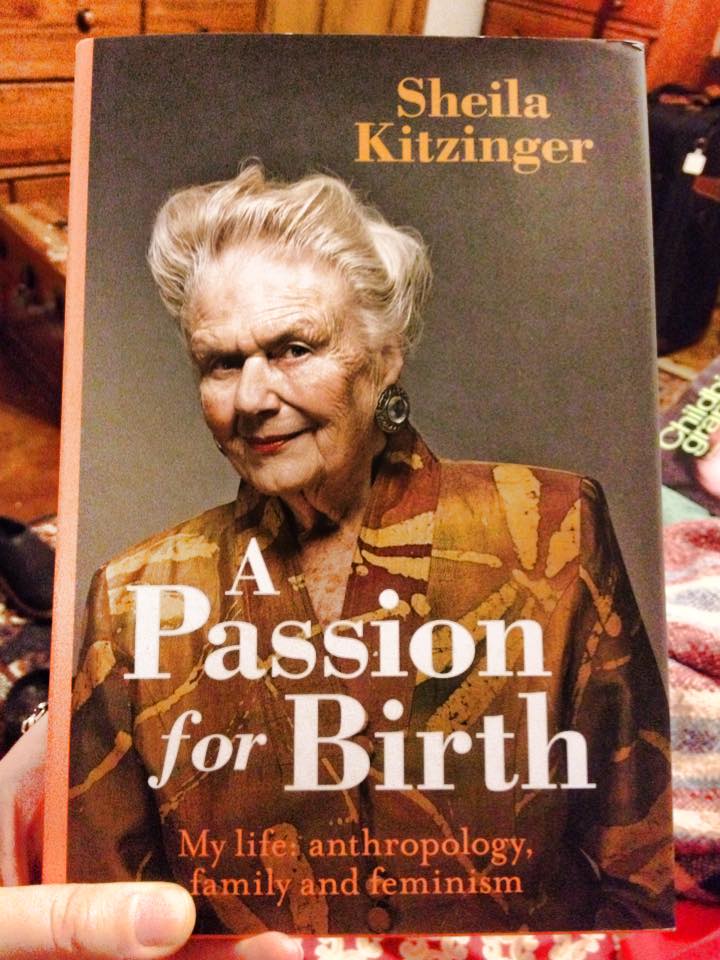
Yesterday, a new book arrived for me to review and I’m really looking forward to it! (It does join a large stack on my desk.)
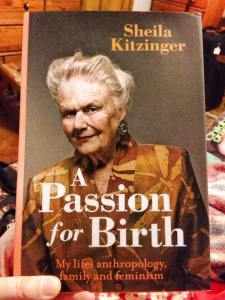
1978706_10155723230680442_8659481311478884417_nThis morning, I read a memorial article about Sheila Kitzinger too:

In writing her own fantasy obituary for a newspaper many years earlier, she imagined dying at the height of her powers: “She died as she would have wished, flat on her back on a table with her legs in the air, in front of a large audience, demonstrating with vigour the dangers of making women lie down, hold their breath till their eyes bulge and strain as if forcing through a coconut to push a baby out. She claimed that treating the second stage of labour as a race to the finishing post … could result in cardiac arrhythmia and even a stroke. She made her point.”

Rather than the melodramatic early death she conjured up here, Sheila died quietly at home surrounded by her family, at the age of 86…

via How to plan for a good death | Life and style | The Guardian.

Yesterday in response to my own Womanrunes prompts, I literally went outside to smell the roses.

11227964_10207110812918713_5387391899479469362_nIt was just what I needed and I need to move these experiences up in priority in my day, instead of being the last things I attend to. I’m also participating in this free offering:

Enchant Your Everyday: 108 Day Pilgrimage to Your Beautiful Life – Vanessa Sage.

This is a beautiful world. Don’t miss it!

Tuesday Tidbits: Birth Privacy

IMG_5598 I’ve been trying to post about this article for a couple of weeks now! It is an interesting look at the biological need for privacy at the end of pregnancy and during birth.

…This ‘time’ at the end of pregnancy was described in a lovely article (The Last Days of Pregnancy: A Place of In-Between- The Mothering website) as Zwischen, a German word for between. At the end of pregnancy the mothering hormones start to cause emotions to run high as the cervix starts to soften, efface and women generally crave the quiet and private places they need to emotionally and mentally travel inwards.

In many traditional cultures around the world, women are known to actively leave their tribes for birthing huts (Inuit Tribe a group of indigenous people residing in the Arctic regions, Kwaio a tribe who live in an Island off the Pacific and many more). The Eipos people in Papa New Guinea are documented (Schnietenhovel) to go into the Wilderness of the Bush shortly before the onset of labour. The tribes above are also protected by various women they already have a relationship with throughout their pregnancy and birth journeys. Midwives and female relatives provide the support to enable confidence in the birthing process and some of the women will go off and give birth alone.

via The biological need for privacy at the end of pregnancy | Calm Yorkshire Birth.

She also writes about how the pervasiveness of social media might impact this need for privacy:

…Don’t be fooled by the facelessness of facebook and other social media. Just because you cannot be physically seen, it doesn’t mean you have privacy. I often hear so much unnecessary stress from women who feel observed on groups within the social media communities. Smart phones leave us open to be contacted by anyone day or night at a time when we just don’t want to be in touch with anyone at all. I wonder what effect social media has on the orchestration of birthing hormones that play such a vital part in undisturbed childbirth.

via The biological need for privacy at the end of pregnancy | Calm Yorkshire Birth.

I felt a strong call to retreat and pull in during all of my pregnancies, maybe because of my introverted personality and craving for solitude, but maybe because of biology too…

Pregnancy—towards the end of pregnancy I feel an inward call. I start wanting to quit things, to be alone, to “nest,” to create art, to journal, and to sink into myself. Nothing sounds better to me in late pregnancy than sitting in the sunlight with my hands on my belly, breathing, and being alone with my baby and my thoughts.

via Introverted Mama | Talk Birth.

For me, this preference for solitude is reflected in my preferred birth environment which involves no talking/noise and as few other people present as possible.

This is not how all women feel, my own mother has expressed that she enjoyed and wanted quite a few people around her while she was giving birth—the help, support, companionship, and affirmation from other women was important to her births. The women giving birth on The Farm, of Ina May Gaskin’s Spiritual Midwifery fame, also seemed to be very social birthers. I remember looking at the pictures in the book and feel a little horrified by the huge gatherings of people present for births! Speaking of The Farm, I enjoyed reading this interview about the birth culture created by the midwives there:

“This is how I had my own babies,” she said. “I knew that if I could do it, pretty much anyone who was healthy and well could do it. So I wanted to help women. Of course, I never thought I’d be in the type of job where I was working mostly with delivering babies, but in the process of helping women, I fell in love with women. Women are brave. We’re absolutely beautiful creatures.”

via “The Farm” in Tennessee is the country’s oldest intentional community. But the real story is how they deliver babies.

I was also reminded of this past post about Birth Witnesses. This remains one of my very favorite guest posts that I’ve hosted here and it gives me food for thought every time I re-read it:

The only way to understand birth is to experience it yourself. The ONLY way? That comment stayed with me, haunted me. I became a doula after my daughter’s birth because I wanted to be able to provide women with support and knowledge that could give them a different experience, a better memory than what I had. I just couldn’t believe that there wasn’t a way to understand birth at all except to experience it firsthand. Certainly there wasn’t always this fear and unknown around birth that we each face today. Not always. I began studying that idea. What about other cultures? What about our culture, historically? What about The Farm? There wasn’t always this myth and mystery about birth! I realized there was a time (and in places, there still is) when women banded together for births. Mothers, sisters, cousins, daughters, aunts, friends. They came together and comforted, guided, soothed, coached, and held the space for one another during birth. These women didn’t go in it alone – they were surrounded by women who had birthed before them. Women who knew what looked and felt right, and what didn’t. Women who could empathize with them and empower them. In addition to that, girls and women were raised in a culture of attending births. Daughters watched mothers, sisters and aunts labor their babies into this world. They saw, heard, and supported these women for the long hours of labor, so when they became mothers themselves, the experience was a new, but very familiar one for them. Birth wasn’t a secretive ritual practiced behind the cold, business-like doors of a hospital. It was a time for bonding, learning, sharing and sisterhood. Girls learned how women become mothers, and mothers helped their sisters bring forth life.

via Birth Witnesses | Talk Birth.

We can’t overemphasize the importance of who is present in the birth space and their influence on how a birth unfolds. Other people’s presence can have a powerful impact, whether positive or negative. One important area is with regard to freedom of choice and self-direction:

…Women can find themselves feeling bullied or coerced into agreeing to procedures they wish to avoid, such as induction or continuous fetal monitoring. They may be told if they don’t follow their doctor’s suggestion their baby’s life will be in danger. Consent is most often given, but it is not informed consent. Many parents in this vulnerable position either don’t know how to advocate for themselves or are under prepared to – practically, emotionally and psychologically.

via When Doctors Don’t Listen: Informed Consent and Birth | BellyBelly.

Choice-based narratives figure heavily into both “alternative” and “mainstream” dialogues about birth. I am emphatic that the companion to informed consent must be informed refusal. Very often, there is no option to refuse, and in this situation, there is no real choice involved at all…

…Women’s lives and their choices are deeply embedded in a complex, multifaceted, practically infinite web of social, political, cultural, socioeconomic, religious, historical, and environmental relationships.

And, I maintain that a choice is not a choice if it is made in a context of fear.

via The Illusion of Choice | Talk Birth.

On a related note, what about pain and birth? Do we accurately remember what birth feels like? I feel as if I do remember, though it is often said that you “forget” as soon as the baby is born. I find instead that it is more of the “halo effect” described here:

The ‘halo effect’ is the term given to describe the positive emotions experienced by the new mother when the baby is placed in her arms for the first time. In that moment, amidst a rush of oxytocin and happiness, the mother is likely to have a more positive view of the birth experience than she did ten minutes earlier. Simply put, the happiness of holding her baby for the first time overpowers any pain or negativity from the birth.

It makes sense that this effect could influence how the pain of birth was remembered. The pain of birth may be remembered as less severe simply because the benefits of having a healthy baby are felt to outweigh the discomfort caused by childbirth.

Women who experience traumatic births and who are unable to hold their babies immediately after the birth may miss out on this ‘halo effect’. Though they will still experience the rush of love and hormones upon holding their baby for the first time, the delay can reduce the impact this has on their overall feelings about and memory of labour and birth.

via Do Women Forget The Pain Of Giving Birth? | BellyBelly.

When you feel amazing about yourself and deeply in love with your baby, the memory of exact sensation fades to the background and the exhilaration and triumph and love moves to the forefront. However, there is also simply the physical component (kind of like when you have the flu, it dominates your mental landscape and you forget ever feeling healthy. Then, you get better and the flu-self becomes distant). I marvel at how women shift through these physical stages. When I am Pregnant Woman, it is totally real and becomes normal. After I give birth and become Nursing Mother again, that is what is vibrant and real and Pregnant Woman, and the thoroughly embodied experience of pregnancy, becomes fainter and more dreamlike. Interesting that I use the word dreamlike, because I also find that it is in dreams that the physical experience returns with crystal clarity. I sometimes dream about being pregnant or giving birth and in those dreams I am 100% confident that I have not forgotten at all what it feels like, my body holds a deeply invested physical memory and “imprint” of my babies and births, it is just hard to call it back as vividly while going about every day life tasks at the same time.

Anyway, once we’ve experience the power of birth, we may become evangelists for birth, at least for a time. I really enjoyed my memories of the enthusiasm and energy I felt as a new birthworker reflected in this post from ProDoula:

It’s magical. It’s moving. It’s more than you ever imagined it would be. And you love it!

You never want it to end. You want to feel the power of these women and you want to talk about birth, ALL DAY LONG! In fact, you never want to talk about anything else again!

At the end of the last day, you “friend” each of these women and you expect to stay in contact with them forever. You are sad that it’s over, but you are a new woman because it happened.

You are replenished. You are fulfilled. You are wiser and you are stronger.

And then, you go home…

via Don’t Puke Birth on the Ones You Love | ProDoula.

What I discovered with time though is that I feel the power of women and this replenishment and strength in other forms besides the birth world. I find it in my priestess work, in my women’s circle, and at the Red Tent too.

IMG_5632

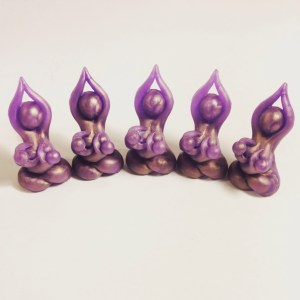
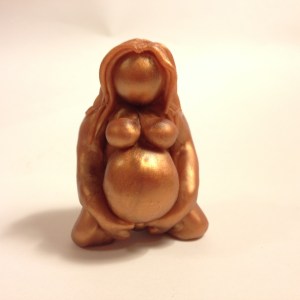
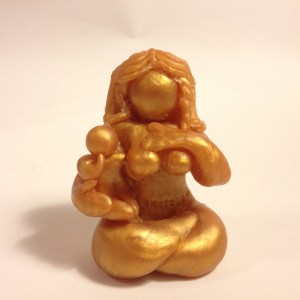
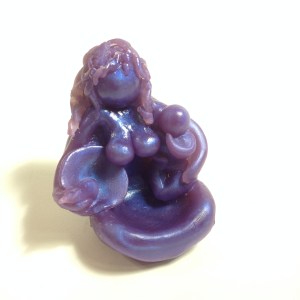
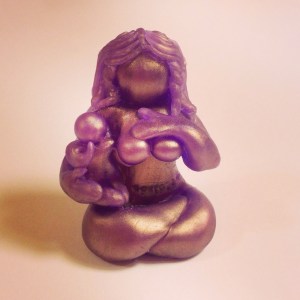
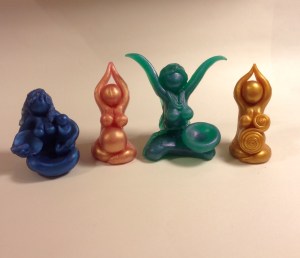
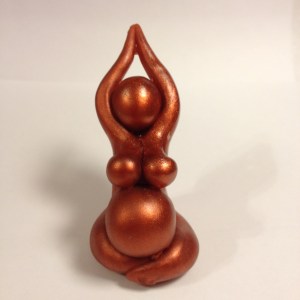
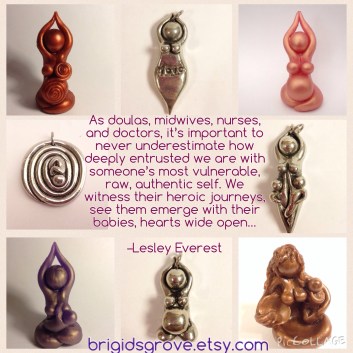
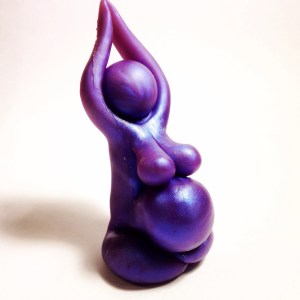
We had a run on twin mama goddess sculptures this week after a happy customer shared a picture of hers with her friends! 🙂


Tuesday Tidbits: Babies!

1911162_10203847275249212_2363364013722788719_o

First pro photo shoot yesterday afternoon!

Almost nine years ago, when Zander was a baby, then-three-year-old Lann would stand next to my chair while I was nursing the baby and say, “Zander you HAVE to drink lots of nonnies so you can grow bigger and PLAY with me.” That set the intention for their brother-friendship and as soon as Zander could sit up, they played together every day. They get up in the morning and sit in the recliner together, covered up with a blanket and watching Minecraft videos on Lann’s iPod. They stay up “too late” every night laughing and talking like every night is a slumber party. I am grateful for this tight bond between them and I hope that somehow Alaina and Tanner might develop something close! There is an almost four year gap between Alaina and Tanner and it has definitely been our most difficult sibling adjustment experience. I’m not sure if it is the age gap, or gender related, or the fact that she doesn’t have a built-in best friend the way my boys do, but she has an incredible need for affirmation that she is still loved and she seems to feel perpetually attention-deprived and extremely needy. I try hard to do special things with her and to be empathetic and available, but the need-level + attention-desperation is emotionally wearing and feels “oppressive” or smothering, in its way (in that it provokes the opposite effect in me–i.e. feel like pushing away vs. drawing close. And, whatever I do, it is never enough for her). I keep waiting for her to adjust more, but in the last month it actually seems to be escalating instead of improving. Tales of encouragement welcome!

Tanner is successfully cross crawling all over the house and pulling up on everything as well as starting to cruise just a little (yes, not seven months old yet! Oh my goodness!). We feel like he is Genius Baby. See…

The cross-crawl milestone, which usually starts at 8-10 months, is not only beneficial in the child’s physical and neurological development; it will serve her or him much later in life.

via Crawling: A Necessary Step Before Walking.

I enjoyed this article recently about the importance of babies’ mental health:

The good news is that nurturing strong mental health in young children is not a specific undertaking in which parents need to engage — as if it were a “job” or task. It is how parents are with their babies that matters — providing comfort when fussy; responding to their child’s efforts to communicate first by facial expressions, sounds and gestures, and later words; engaging them in joyful play and exploration by following their interests and lead; coaching and supporting them to persist with challenges; providing appropriate limits to help children learn to manage when they can’t have everything they want; and most of all delighting in the joy of young children’s daily discoveries, and in the power of the bond they are building together. This kind of responsive care builds babies’ trust and sense of security, and makes them feel adored and loved — the key ingredients for positive mental health.

via Babies’ Mental Health Matters | Matthew Melmed.

(And, speaking of mental health it was good to see that Children May Not Have as Many Mental Health Disorders as Suspected.)

While it seems tacked on as a bit of an afterthought in the Babies’ Mental Health article, I was also glad to see that 11251283_10203845194197187_3676081550923680989_othe author acknowledged the systemic context and how that impacts parents’ ability to offer this needed responsive care to their children:

So, as a society, we are left with a choice. We can support young families as they master that critical dance of development. Or we can wait to address the mental health problems of older children and adults down the road, which is not only draining for them, but also expensive for society. Why not recognize where the foundations of mental health are laid and seize the opportunity to promote a good start?

via Babies’ Mental Health Matters | Matthew Melmed.

Speaking of responsiveness, turns out that fathers are biologically primed to be responsive to their babies:

“Human fathers’ physiology has the capacity to respond to children,” Gettler says. “Our prior research has shown that when men become fathers, their testosterone decreases, sometimes dramatically, and that those who spend the most time in hands-on care — playing with their children, feeding them or reading to them — had lower testosterone. These new results complement the original research by taking it one step further, showing that nighttime closeness or proximity between fathers and their kids has effects on men’s biology, and it appears to be independent of what they are doing during the day.”

Substantial research has been conducted on the sleep and breastfeeding physiology of mother-baby co-sleeping, but this is the first study to examine how father-child sleep proximity may affect men’s physiology, and it is the first to explore the implications of co-sleeping for either mothers’ or fathers’ hormones.

via Fathers biologically attuned to their children when sleeping nearby, research reveals — ScienceDaily.

This could also be related to the fact that dads are men and not idiots…

You’re so lucky your husband is willing to do all that while you’re away!

He did LAUNDRY? What a good man!

He is a good man, a really good man. But not because he tackled a few loads of laundry. He’s a good man because he’s always a good man, taking care of whatever needs doing for his family — whether I’m home or away.

To be honest, I found all the well-intentioned concern confusing. My husband traveled halfway around the world for a couple of weeks and I didn’t receive a fraction of the interest or accolades.

Maybe managing dual pickups or packing lunches aren’t part of his daily to-do, but that doesn’t mean that they can’t be. If parenting in a marriage is indeed a partnership, let’s stop going ga-ga over da-da.

via Dads Are Men, Not Idiots.

But, despite the awesomeness of da-das, it also turns out that babies are primed to say “mama” first:

But there is a word, and only one, spoken the same way in nearly every language known to humankind. That word, of course, is “mama.”

“Mama” is a universal word, describing the woman who gave us the most cherished love in our most vulnerable state. Almost every language boasts a recognizable form of it. While it’s true that most languages vary when it comes to the formal word mother, the intimate mama stays the same in each language.

But “mama” doesn’t spring from love. It happens because of two things: Lazy little baby mouths, and boobs…

…So why do babies gravitate to the “m” sound instead of “p” or “b”? Because of breasts, of course! The “m” sound is the easiest for a baby mouth to make when wrapped around a warm delicious breast. Even as adults, we still associate “mmm” with something being yummy and good. So does your baby.

via Why babies in every country on Earth say ‘mama’.

Yep. The “ma-ma” sound is easier to make while also nursing at the same time! (My babies have all said “mmm, mmm” while nursing and I “mmm, mmm” back to them on the tops of their fuzzy, magical heads.)

Of course, nursing also is a magical way to put babies to sleep and co-sleeping helps:

Do what works for your family and trust yourself to know your baby better than any external authority. You are spending the most time with your baby, and every baby is different. Infants, children, and their parents intersect in all kinds of diverse ways. Indeed, there is no template for any relationship we develop. When it comes to sleeping arrangements, many families develop and exhibit very fluid notions of where their baby “should” sleep. Parents with less rigid ideas about how and where their babies should sleep are generally much happier and far less likely to be disappointed when their children cannot perform the way they are “supposed to” — i.e. sleep through the night…

via My Conversation With Co-Sleeping Expert James McKenna | Arianna Huffington.

The sleep expectations I’ve had to adjust the fourth time around center on naps rather than nighttime. I’ve always had babies I could put down to nap (after they fell asleep). Not true anymore! So, I’ve adjusted to this extended period of “cave time” with my baby, where I retreat to the bed to nurse him for nap and then stay in there together, him right next to me, while I work on my computer. Just before I started this post, I took a picture of his sweet little naptime nursing self. I love having a baby!

19509_10155601113000442_6558383859878718297_nFinal off-topic note, remember that we’ve started a private Brigid’s Grove Facebook group for sneak peeks, special offers, class information and conversation + idea sharing. It is here that we’ll also offer rock bottom deals on sculpture seconds when we have them available. The last batch of ten mildly flawed goddesses were gone within a couple of hours!


Tuesday Tidbits: Birth Transformation

“Women are as nervous and unsure of themselves as ever, and they need to learn to trust their bodies. Birthing is much more that eliminating pain. It is one of life’s peak experiences.” –-Elisabeth Bing

via Thesis Tidbits: Exceptional Human Experiences | Talk Birth.

May 2015 146The mother of the Lamaze childbirth education movement in the U.S., Elisabeth Bing, died this week at age 100. She had a tremendous impact on the birth culture and was a very early activist in promoting the “radical” idea of birth as a transformative, powerful, important experience in a woman’s life.

…For years Ms. Bing led classes in hospitals and in a studio in her apartment building on the Upper West Side of Manhattan, where she kept a collection of pre-Columbian and later Native American fertility figurines.

Ms. Bing preferred the term “prepared childbirth” to “natural childbirth” because, she said, her goal was not to eschew drugs altogether but to empower women to make informed decisions. Her mantra was “Awake and alert,” and she saw such a birth as a transformative event in a woman’s life.

“It’s an experience that never leaves you,” she told The New York Times in 2000. “It needs absolute concentration; it takes up your whole being. And you learn to use your body correctly in a situation of stress.”

via Elisabeth Bing Dies at 100; ‘Mother of Lamaze’ Helped Change Childbirth – NYTimes.com.

Bing was also early to recognize that birth experiences can be traumatic for mothers. This week, I read another May 2015 164 interesting article about mothers’ experiences of birth trauma:

“…far too many women are left in the aftermath of a traumatic experience on the very day she is born as a mother. She is a new woman – amazing, strong and life-giving – ready to face the world. Holding her new baby in her arms and a smile (or not, depending on her acting skills) on the outside, with a broken heart, fractured spirit and shattered self-confidence on the inside. This is the result of traumatic birth…”

The Secret That Many Moms Are Keeping – Mothering.

Can part of the “cause” of traumatic births be the expectation that a “good birth” is a quiet and controlled birth? Nadia Raafat wrote a powerful article at the Huffington Post that touches on this possibility:

Contractions were outed, surges, came in, the un-gratifying word pain was ostracised from the semantics of childbirth and, across the nation, grateful midwives watched in awe as powerful, silent women breathed their way through drug-free labours.

That’s half the story. The other half concerns those who did not experience the blissful or natural birth outcome that hypnobirthing promised them; the many disappointed women whose labours were violent, or which deviated from the normal care pathway, women who found the experience not only painful, but shocking and traumatic – all the more so because they believed it might be painless. I have met many of these women – still processing their birth experience years later, still wondering what they did wrong? Their emotional and physical scars run deep and take many years to heal.

via Denying the Pain of Labour Is Like Denying the Pain of Life | Nadia Raafat.

Raafat goes on to advocate the full spectrum of the semantics of birth and birth experiences:

Childbirth is the most profound experience in a women’s life. It is awesome, challenging, brutal, visceral, joyful, transporting, awful, deeply physical, incredible, powerful, at times, calm and in-flow, at other times all-consuming and over-whelming. Our preparation and our semantics need to acknowledge the whole spectrum of the experience, not just the palatable colours.

via Denying the Pain of Labour Is Like Denying the Pain of Life | Nadia Raafat.

I have a long time interest in words and birth and how we “talk birth” in our culture:

…On the flip side, I’ve also read other writer’s critiques of an overly positive language of birth, labeling and mocking words like “primal” as “euphemisms” for hours of “excruciating” pain. But, that makes me think about the locus of control in the average birth room. It seems like it might more difficult to start an IV in a “triumphant” woman, so lets call her stubborn or even “insisting on being a martyr”? Could you tell someone making “primal” noises to be quiet? Probably not, but you can tell someone who is “screaming” to “stop scaring” others. Asserting that a painful and degrading language of labor and birth is “real” English and that the language of homebirth advocates are “euphemisms” is a way to deny women power and to keep the locus of control with medicine.

via Wordweaving | Talk Birth.

I’ve also thought a lot about the association between a quiet birth and good birth. “Quiet” during labor is often associated with “coping well” and noise is associated with not coping, which may not be the case:

…Occasionally, I hear people telling birth stories and emphasizing not making noise as an indicator, or “proof,” of how well they coped with birthing–“I didn’t make any noise at all,” or “she did really well, she only made noise towards the end…” Women also come to classes looking for ways to stay “in control” and to “relaxed.”

This has caused me to do some thinking. Though relaxation is very important and helpful, to me, the goal of “laboring well” is not necessarily “staying in control” or “staying relaxed” or “not making any noises.”

via What Does Coping Well Mean? | Talk Birth.

And, speaking of how we talk about experiences as well as pulling this post back around to Elisabeth Bing, I quoted some reflections on postpartum care from Bing in a past post:

“The degree of pleasure you take in your mothering is not the same thing as loving the baby or being an effective parent. Keep in mind there is a distinction between mother love and maternal satisfaction. You may love your baby very much but be dissatisfied with your life circumstances.”

via Talk Books: Laughter & Tears: The Emotional Life of New Mothers | Talk Birth.

May 2015 150

Tuesday Tidbits: International Day of the Midwife

IMG_4848Today is International Day of the Midwife and I find myself reflecting on the many midwives I have known and the incredibly diversity and gifts of the women who join this profession. In addition to the midwives I had for prenatal and postpartum care for each of my births, I’ve been privileged to know many midwives on the state and national level through our shared interest in maternity care activism and birth rights. With my first baby, I had prenatal and birth care with a family practice physician and a CPM. The CPM was gray-haired, pretty, soft-spoken and wryly witty and pretty much exactly what you picture a stereotypical midwife looking like! My prenatal care with this team was excellent, birth care so-so (I didn’t need much), but my postpartum care left a lot to be desired and I felt very cast adrift after the birth. I became very embroiled with midwifery activism and birth work after this birth and as a result my experiences with all subsequent midwives has been an interesting blend of collegial + consumer. My first birth was the only one for which I was consumer only. Though I’m not a midwife myself, my subsequent experiences all involved being a sister birthworker AND client, rather than solely a client. This has both benefits and disadvantages.

My midwife with my second baby was amazing. I loved her so much and I have felt a gap in every pregnancy following that I was not able to have her as a midwife again. She was gentle and caring and passionate and inspiring and wonderful. Cute and upbeat, full-figured, and intelligent, she had a soft and reassuring presence and gave wonderful hugs! We became good friends and she was a very important part of my life. My prenatal care and birth care with her was excellent. She was also helpful with postpartum care, but I don’t think I “allowed” her to be as helpful as she could have been because I couldn’t allow myself to be as vulnerable and needy as I actually felt.

When I was pregnant with my third baby, my much-loved midwife had moved away and found myself at a loss for who to choose for pregnancy and birth care. This baby died early in my second trimester and I found myself calling on the sisterhood of midwives for help when I desperately needed it. From the very busy midwife who talked to me kindly and patiently when I was freaking out over a retained placenta, to the Mennonite midwife who helped me from the road as she was driving to another state and connected me to yet another midwife several hours away who drove in to town to meet and help me when I was very scared and alone, it was during this experience that I realized very viscerally how much we need midwives in our lives. When I was pregnant again, I decided to choose the Mennonite midwife for my prenatal care and immediate postpartum care. She is a very capable and determined and intelligent midwife, but I felt an unbridgeable gap between us spiritually speaking and so was never able to fully connect with her emotionally. She embodied the gray-haired, no-nonsense “granny midwife” archetype. She provided great prenatal care and was very respectful of my wish for immediate postpartum care, but an unassisted birth. Postpartum follow-up care was limited due to snowstorms.

With my last baby, I felt a powerful need to feel taken care of again. I really needed to have some set aside time, Mollyblessingway 027space, and energy that was just focused on me and my baby. I knew that I needed a midwife! While I could have used the same midwife as with the baby before, this time it was important to me to develop the emotional connection I had with my second midwife—I needed a midwife with whom I could feel “safe” with all of me, instead of feeling like I had to hide my goddess sculptures when she came over! 😉 It took some work, but I was able to find that. With this experience, I came to accept that the blur between colleague-consumer is my reality and I will never re-capture the feeling of being client only and being completely focused on in that respect, because I’m simply not just a client only. That’s okay. This midwife has long brown hair, wears lots of skirts and had the hippie-ish midwife feel I was craving. She is funny and talkative and connected to the roots of what midwifery is all about. I was safe with her in the way I needed. I really appreciated the midwife’s prenatal care (and the opportunity to focus on my pregnancy and baby), her respect of my wish for immediate postpartum care rather than birth care, and her postpartum follow-up care. I felt like this midwife offered the most complete postpartum care of all of my birth experiences.

I’ve mentioned before that the only vaginal exam I had during six pregnancies was at ten centimeters dilated when I went to the birth center to push out my baby (I also had to have one for a manual clot extraction following his birth and one for help removing the placenta after my miscarriage-birth of my third baby). This is totally cool with me. Somehow I’ve managed to labor and birth four full-term babies without ever knowing how dilated I am in labor! So, I loved reading this article about the pointlessness of vaginal exams in labor and the cultural attachment, even in midwifery circles, to cervix-focused childbirth:

“…There is also reluctance to change hospital policies, underpinned by a need to maintain cultural norms. The Cochrane review on the use of partograms on the one hand states that they cannot be recommended for use during ‘standard labour care’, and on the other hand states: “Given the fact that the partogram is currently in widespread use and generally accepted, it appears reasonable, until stronger evidence is available, that partogram use should be locally determined.” Once again, an intervention implemented without evidence requires ‘strong’ evidence before it is removed. The reality is that we are unlikely to get what is considered ‘strong evidence’ (ie. randomised controlled trials) due to research ethics and the culture of maternity systems. Guidelines for care in labour continue to advocate ‘4 hourly VEs’ and reference each other rather than any actual research to support this (NICE, Queensland Health). Interesting whilst Queensland Health guidelines recommend 4 hourly VEs, their parent information leaflet states: “While a VE can provide information about how a woman has progressed so far in labour, it cannot predict how much longer you will be in labour…” and that there are “…other factors such as the strength, duration and length of contractions as well as a woman’s behaviour and wellbeing that can indicate progress in labour”. Which begs the question ‘why bother doing a VE’?

The cervical-centric discourse is so embedded that it is evident everywhere. Despite telling women to ‘trust themselves’ and ‘listen to their body’, midwives define women’s labours in centimetres “She’s not in labour, she’s only 2cm dilated”. We do this despite having many experiences of cervixes misleading us ie. being only 2cm and suddenly a baby appears, or being 9cm and no baby for hours. Women’s birth stories are often peppered with cervical measurements “I was 8cm by the time I got to the hospital”. Even women choosing birth outside of the mainstream maternity system are not immune to the cervical-centric discourse. Regardless of previous knowledge and beliefs, once in labour women often revert to cultural norms (Machin & Scamell 1997). Women want to know their labour is progressing and there is a deep subconscious belief that the cervix can provide the answer. Most of the VEs I have carried out in recent years have been at the insistence of labouring women – women who know that their cervix is not a good indicator of ‘where they are at’ but still need that number. One woman even said “I know it doesn’t mean anything but I want you to do it”. Of course, her cervix was still fat and obvious (I didn’t estimate dilatation)… her baby was born within an hour…”

Vaginal examinations: a symptom of a cervical-centric birth culture | MidwifeThinking

I also read this article about the now late, great midwife and activist, Sheila Kitzinger and how she connected her birthwork to feminism (as do I). I despise the article’s title, but it is still worth a read!

…In the Seventies, I was viewed as a radical for saying that birth was being depersonalised and treated as if it were a pathological event, rather than a normal life process.

To my surprise, it wasn’t just obstetricians who dismissed what I had to say. I also found myself in conflict with feminists, who saw birth in very simplistic terms.

Why? Because they claimed it was every woman’s right to give birth painlessly.

An article in Spare Rib, the radical campaigning feminist magazine, went further.

Without any evidence, the authors asserted: ‘Undoubtedly, hospitals, with all their faults, are the safest places in which to give birth. For this reason, we think we should press for improvements in hospitals rather than support a move to more home confinements.’

I was appalled at how my sister-feminists could fail to support woman-centred birth. Polly Toynbee, writing in The Guardian, was particularly virulent, dismissing me as a lentil-eating earth goddess…

via Sheila Kitzinger on why feminists HATE natural childbirth and why it’s harmful | Daily Mail Online.

Lentil-eating earth goddesses unite! Unlike Kitzinger’s experiences with the distance between some expressions of feminism and birth-care, I find that many midwives, whether explicitly or implicitly, understand the deep connection between midwifery care, birth activism, and feminism.

“Midwifery work is feminist work. That is to say, midwives recognize that women’s health care has been subordinated to men’s care by a historically male, physician-dominated medical industry. Midwifery values woman-centered care and puts mothers’ needs first. Though not all midwives embrace the word feminism (the term admittedly carries some baggage), I maintain that providing midwifery care is an expression of feminism’s core values (that women are people who have intrinsic rights).

–Jon Lasser, in Diversity & Social Justice in Maternity Care as an Ethical Concern, Midwifery Today, issue 100, Winter 2011/2012

via Midwifery & Feminism | Talk Birth

Perhaps this is because midwives care so deeply about mothers and feminists might actually make the best mothers…

…As a mother who works extensively with other mothers, I appreciated Caron’s acknowledgement that raising children is a feminist act with potential to create change as well. “Another strategy for change is through raising children to be just and caring people. A media image portrays feminists as being against motherhood—but in fact, feminists make the best mothers. They raise children aware of themselves and the world, of options and values, of what justice means and how to work toward it, and how to be self-critical and self-respecting” (p. 203-204). Caron also explains that “in a just society, women would be free to make whatever decisions they needed to, for however long they needed to, in relation to political action in the public and the private sphere. All people would participate in the decision-making, and women would be supported in their decisions rather than, as sometimes happens, made to feel guilty for not doing enough or not valued for what they do.”

via Thesis Tidbits: Feminism, Midwifery, and Motherhood | Talk Birth.

dayofmidwifeHappy International Day of the Midwife! Thank you for bearing witness to our journeys and for holding the space for the continually unfolding spiral of life.

“…As we ready ourselves to accept new life into our hands,
Let us be reminded of our place in the dance of creation.
Let us be protectors of courage.
Let us be observers of beauty.
Let us be guardians of the passage.
Let us be witnesses to the unfolding…”

—Cathy Moore (in Sisters Singing)

via National Midwifery Week! | Talk Birth.

In addition to midwives, we’re also celebrating mothers all week this week! First on our lineup of activities is our gift to you: our first ever coupon code for $5 off purchases over $15. Use code: MOTHER.

We’ve also got a giveaway upcoming, two new product launches, a new Facebook group, and two class announcements! Stay tuned…

April 2015 021

Tuesday Tidbits: Babies, Mothers, and Vocations

IMG_4551

This week I read some powerful cesarean birth memories from my friend Bibi at The Conscious Doer:

Maybe there is something naive about me. I wanted to have that huge superwoman surge at the end. As the days go by, more and more of them make me feel super, but every battle has been hard fought. I was hoping to start out with a boost of confidence after hours of labour, but instead I had to pool all my strength after babyjama’s emergence, because the mother bear in me took some time to emerge herself. There is obviously a happy ending to this tale, but there were some sad parts too, and I’m giving myself permission to feel both the joy and the pain…”

Cesarean Awareness Month: Remembering Where I’ve Been | The Conscious Doer.

(Side note: our Cesarean Awareness Month discount code is still good through the end of April! CAM15 for 15% off any items at Brigid’s Grove.)

I was also touched by the delicate, sensitive, and yet simple genius of a post from Amy Wright Glenn about the spiritual and religious dimension of doula support:

Yet, throughout my work as a doula, I discovered that such an approach was rare. We know that a woman transforms emotionally and physically through the crucible of motherhood. For most women, motherhood also involves spiritual or religious transformation. To support this transformation, I believe it’s important to reflect upon the religious and spiritual dimensions of our work…

I imagine it is much easier to offer religious or spiritual support to birthing women and new mothers as a pluralist or inclusivist. Yet, I know doulas who have an exclusivist approach to truth, and they hold loving space for alternative expressions. This is what matters most. A doula need not participate in religious or spiritual practices that are inauthentic to her worldview. However, it’s essential that the doula is able to create a genuine sense of safety for a birthing woman to access her religious or spiritual strength…

The spiritual and religious dimensions of doula support | PhillyVoice.

Socioculturally speaking, we could benefit from this approach in all domains of our lives, not just birth!

Speaking of culture, I felt myself getting some tears in my eyes while reading this article about employees bringing their babies to work at Cotton Babies in St. Louis. Why tears? Because because it is so simple, obvious, and sensible and yet so rare…

Is it appropriate to have a baby in a work environment?

I wonder if we have to ask this question because our culture has defined “normal” to be something different than reality. Women have babies. Babies need their parents. Cultural norms in the Western world have traditionally confined mothers of young children to home-making. While that is what some women want to do, it isn’t what all of us want to do. As long as mom enjoys doing her job with her baby at her side and it is safe for her baby to be with her while she does her job, I believe that it is perfectly appropriate to have her baby present…

Clients, customers, vendors, employees, guests, and service providers may express discomfort with breastfeeding, question a woman’s commitment to her career, feel uncertain about how to respond to a baby in the workplace, or become annoyed with occasionally hearing a child. My favorite way to respond to those concerns has become, “She’s getting her job done. Her baby is content. Can you help me understand why that makes you uncomfortable?” Cultural expectations of a woman’s place being in the home with her young child don’t necessary reflect what all women want to do. While we support and encourage the moms who choose to stay home, we also love seeing those who stay with us also achieving their career goals…

via Our Employees Bring Babies to Work… and how we make it work | Jennifer Labit.

And, speaking of vocations, I enjoyed this post from Lucy Pearce as well:

My work chooses me. I act as a vessel for it. A crucible for it to come to be through me. I do not sit down and “choose” my work, or plan it. In truth I do not really “create” it. I need to be there, open and trusting and it comes. My job is to put it down. In words, images, colour…

There are a number of problems with this:

1) I do not know where this “work” comes from.

2) I feel very weird and odd talking about it this way. I would find it much easier to say “yes, it’s all mine” and be in control of its content and direction!

3) I am “called” to do “work” which I would not consciously choose.

4) By doing the work, I have to put myself “out there” when really I am much more in my comfort zone being private and small. I am not after ego trips or fame or fortune.

5) I feel my skills are lacking for what I am called to do.

via Are You Living Your Vocation? – Dreaming Aloud.

Here is a sneak peek of two things that have been coming through me recently:

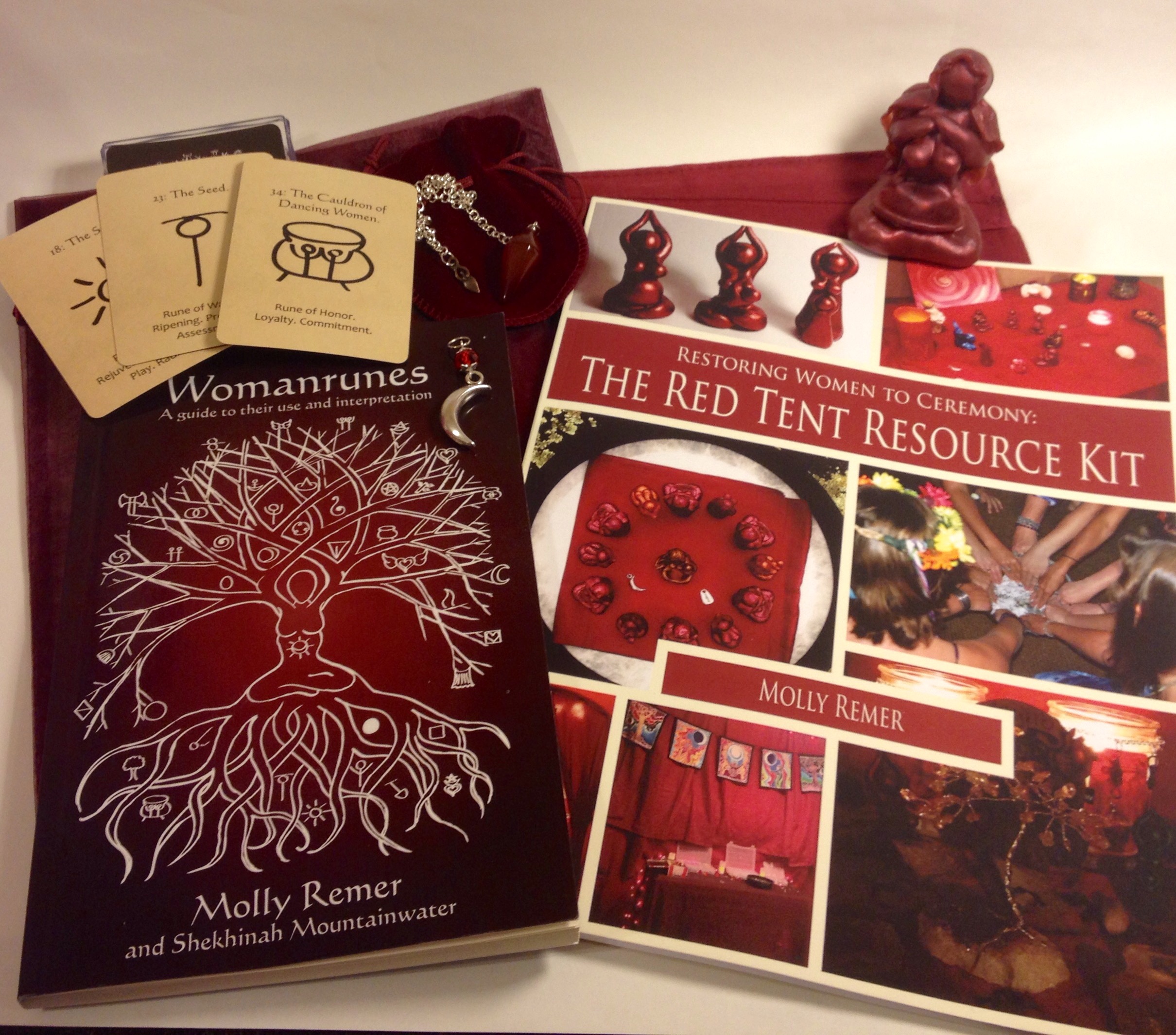
Red Tent kits/books/online class are almost ready to launch…

IMG_4518And, we’re having a fun giveaway of all of these lovelies in May since it is not only Mother’s Day, but also my birthday AND the twentieth anniversary of our first date! 🙂

IMG_4538And, one final tidbit to share for this week, I signed up for this free Red Thread Circle class that is coming up on my birthday: FREE Global Class & Experience.

Tuesday Tidbits: Mothers and Babies

IMG_4269I might look like I’m just sitting on the floor at a Red Tent Circle nursing my baby, but really I’m using the power of my mind-manipulating microbes:

So, when a mother breastfeeds her child, she isn’t just feeding it. She is also building a world inside it and simultaneously manipulating it.

via Could Mothers’ Milk Nourish Mind-Manipulating Microbes? – Phenomena: Not Exactly Rocket Science.

Some thoughts from my Facebook friend Jenny about being done having babies and not feeling sad about it:

Today, my heart is too full of four little people, and the man with whom I created them, to even allow room for an ache. In that tiny corner where an ache might form someday, I’m growing my own dreams, my someday-plans that have nothing to do with raising children, nurturing seeds of myself apart from my role as mother. Truthfully, I kind of love having that corner to myself. I’m not sure I want to share it with a sense of sadness over who or what won’t be, because I’m pretty happy with who and what is as well as with what lies ahead…

via Waiting for The Ache: We’re Done with Babies and I’m Not Sad.

Tanner is such a sweet treasure bonus of a baby and I feel like I’m cherishing him a great deal. And, I hold two realities: a definite sense of “doneness” and readiness to be done with the baby stage of my life, as well as a bittersweet pang at the babyness of his babyness and how swiftly it is passing me by. I want to soak in it and yet the world keeps spinning so rapidly and every day he grows bigger right before my eyes. I want to memorize it. I keep telling Mark, “we only get this year to have THIS BABY!” and it kinds of freaks me the heck out!

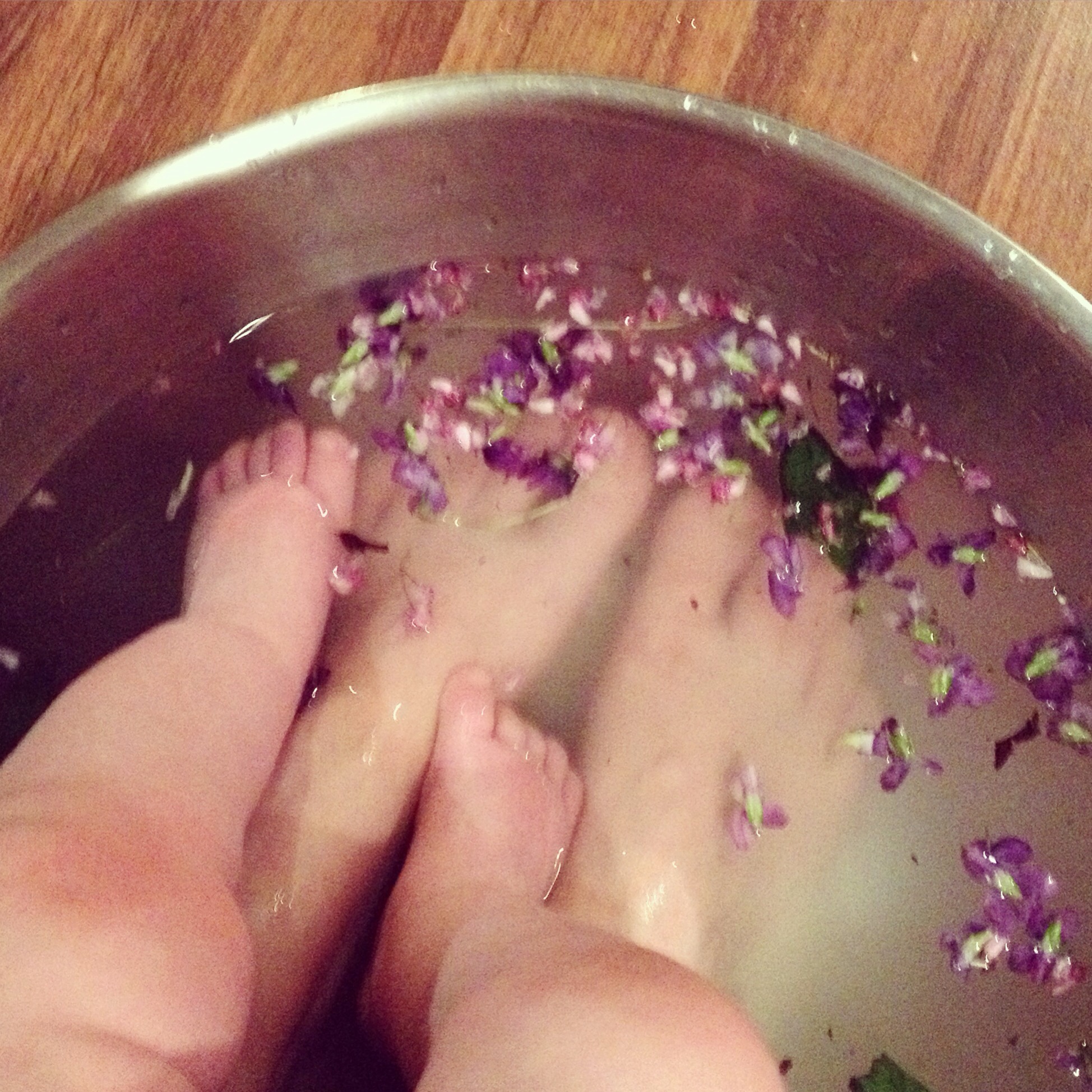
Foot bath together after salt bowl ceremony.

Foot bath together after salt bowl ceremony at April Red Tent Circle.

And some lyrical musings at 39 weeks from my friend Halley as she stands at the edge of another birth/postpartum experience… April 2015 123

I think about what’s coming next,

The beast that is postpartum.

I think about what’s coming next,

The love that is new baby.

My labor will be (I pray) just one day,

One day among thousands

My mothering will go on and on,

And I’ll need to know how strong I am…

via Messy 39 Week Poetry | Peace, Love, & Spit Up.

Her poem made me get a little teary and brought me back to the Standing at the Edge song by Nina Lee that I found so meaningful during labor and postpartum…

Every mother deserves excellent care postpartum, however, the “arrowhead” of American postpartum care does not show us a culture that values mothers, babies, or life transitions. I am fortunate to have had the kind of excellent care that every woman deserves and that few women receive. Part of this was because I actively and consciously worked towards building the kind of care I wanted following birth, but part of it is because I am lucky enough to belong to a “tribe” that does value pregnancy, birth, postpartum, and mothering.

via Ceremonial Bath and Sealing Ceremony | Talk Birth.

My last postpartum experience was actually a really delicious time of nourishment and cocooning. Postpartum with my first baby was the worst and I just kept getting better and better at planning for and getting what I know I need during that time of tender vulnerability.
That said, I still feel like this more often than I’d like!

Like how parenthood totally doesn't change you at all.via This New Mom Chronicled Her Baby’s First Year In Brutally Honest Doodles.

I enjoyed this post by a dad about why mothers don’t want to be touched. My instinct to shrink away or duck under his arm, doesn’t stop at just my husband though, I don’t feel like I have a lot of physical caregiving energy left for my other kids lately either—Tanner uses up a lot of me!

…I felt offended. It made me feel like she didn’t love me. I was her husband of 10 years. She should want to be held by me… right? I wasn’t one of her children, I was her husband.

“I just wanted to hold, you.” I said. “I’m not asking for sex, or anything. I’m too tired for that. I’m getting old, obviously. It’s been just a long day.”

At the mention of being held, Mel cringed a little. Once again, I was offended. I usually am when this happens. And it doesn’t happen all that often, but always more than I’d like. But it was late, and I didn’t want to fight…

via Why a mother doesn’t want to be touched ~ No Idea What I’m Doing: A Daddy Blog.

In last week’s post I just missed including this powerful post about the courage and strength of women who give birth by cesarean:

But in the birth world, I see a certain type of birth held up as ideal, and in my work I capture many that would fit the standard. The fictional “first place trophy of childbirth” always seems to go to the un-medicated, vaginal births where mom and partner are active and unhindered by doctors or nurses. Just last night, I read an amazing birth story where mom, unintentionally, gave birth at home in her bathtub. Her husband caught the baby because no one else was there. They sat at home on their couch and soaked in all the newborn goodness. It was a great birth story…and I’m sure it will get passed around again and again.

I had the honor of photographing this gorgeous cesarean birth – not the plan, (she was hoping for a VBAC) but beautiful, powerful – and redemptive, in its own right.

via Three Truths About C-section Mamas

April 2015 045

Tuesday Tidbits: Birth Conditioning

IMG_3798
Thinking about the raw, emotional complexity and physical intensity of birth, I am reminded of a past post exploring the question of whether an epidural can really be considered an “informed choice” when it is considered in the context of enforced stillness during labor?

…In this case and in so many others around the nation every day, the physiologically normal and fully appropriate need for freedom of movement during labor ran smack into the hospital’s expectation of stillness. And, medication was a consequence of that stillness, not an inability to cope with normal labor–it was an inability to cope with enforced passivity that was directly counter to the natural urges of her birthing body. Where is the ‘opting’ here? When birthing women are literally backed into corners, no wonder epidural analgesia becomes the nationally popular ‘choice’…

Thoughts on epidurals, risk, and decision making | Talk Birth.

Considering movement during labor also brings us to the idea of sound during labor. What about the implied or explicit expectation of quiet during labor?

We decided that there is a major stigma around “quiet” birth. Why is “quiet” birth synonymous with a “good” birth? Why are we praised on our ability to stay “calm” in our birthing time??? This is crazy! Now let me quickly add: A quiet birth CAN be a beautiful birth, it can be the most beautiful kind, but so can the others.We talked to a mother who explained that in her birthing time she was very “calm and quiet” she also said she was suffering so deeply but everyone kept praising her abilities so she kept on going. How many women bite their tongue, how many women feel trauma and how many women were told they were “crazy, wild and loud”? And why are any of those words bad? We are having a baby, we are doing the most instinctual and primal work we will ever do as humans.

via Blog — TerraVie.

I addressed the interesting notion of a “quiet, calm” birth as synonymous with “coping well” in this past post:

“I believe with all my heart that women’s birth noises are often the seat of their power. It’s like a primal birth song, meeting the pain with sound, singing their babies forth. I’ve had my eardrums roared out on occasions, but I love it. Every time. Never let anyone tell you not to make noise in labor. Roar your babies out, Mamas. Roar.” –Louisa Wales

via What Does Coping Well Mean? | Talk Birth.

Our expectations in birth are shaped by the cultural conditioning, contexts, and environments around them whether we are conscious of them or not. In this past compilation of articles about the role of doulas, Michel Odent makes an interesting point:

…We must add that this cultural conditioning is now shared by the world of women and the world of men as well. While traditionally childbirth was ‘women’s business,’ men are now almost always present at births, a phase of history when most women cannot give birth to the baby and to the placenta without medical assistance. A whole generation of men is learning that a woman is not able to give birth. We have reached an extreme in terms of conditioning. The current dominant paradigm has its keywords: helping, guiding, controlling, managing…coaching, supporting…the focus is always on the role of persons other than two obligatory actors (i.e. mothers and baby). Inside this paradigm, we can include medical circles and natural childbirth movements as well…

–Michel Odent (exploring the role of doulas)

Tuesday Tidbits: The Role of Doulas… | Talk Birth.

And, here are some neat resources I’ve encountered this week…

I signed up to participate in this free telesummit on womb wisdom/nourishing the feminine: Womb Wisdom: Nourishing the Roots of the Feminine with Barbara Hanneloré — Womb Wisdom. (Thanks to Mothering Arts for the link!)

I’ve linked to these beautiful coloring books in past posts. I’m just entranced by them!

blissful birth 2


via Blissful Belly Coloring Journal: NOW until April 1st, Buy Both the Blissful Belly and Blissful Birth Coloring Books and Get 25% OFF. Coupon Code is 2blissful. Get it here

And, after participating in a free Spring Equinox event online that was hosted by the Sacred Sister Society (to which I won a year-long membership!), I’ve been enjoying different daily yoga practices using videos from Joy Fisheria from Everyday Chakras. The practice for your core strength is one of my favorites. 🙂

IMG_3783

New taller, mama goddess sculptures for birth altars!