Archives

Tuesday Tidbits: Cesarean Courage

“Her courage is written on her body.” –Molly (Talk Birth)

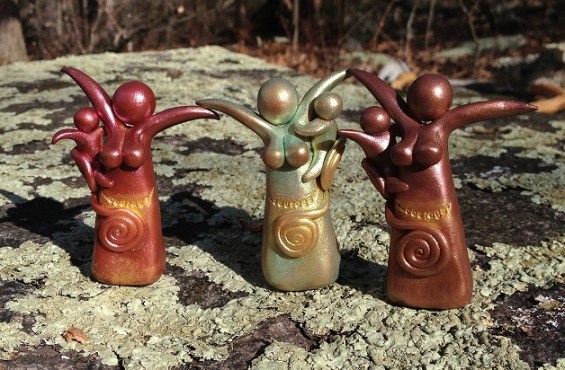
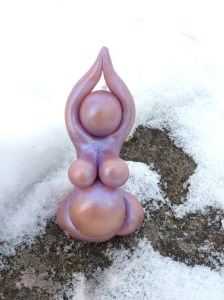
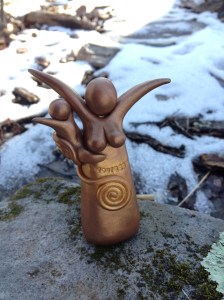
March 2014 009Last year I made several cesarean birth art sculptures by request. It felt like a “risk” of sorts to make them, like I was trying to interpret another woman’s experience artistically, but I did it and they were well-received. I chose to imprint words in the figure’s cesarean scar because I kept thinking about how that mother’s love and hope and courage are all permanently written on her body. Recently, I had a request to make another and so I re-visited my Cesarean Courage idea and made some new figures. She is wearing her baby and her scar with pride and strength. These sculptures are not supposed to send an “at least you have a healthy baby” message, they are communicating that her birth journey with her baby is seen and acknowledged and validated.

“I became a mama goddess, too. I became a wonder of fertility, of softness, of late nights and warm beds; a body capable of unimaginable things. I labored and tore open, too.”

–Amanda King (in Being a C-Section Mama In the Birth Goddess Club)

When I shared the cesarean courage mama picture on Facebook, someone responded: Usually I look at the scar as a forever reminder of my failure. The idea my courage and love is forever written on my body in the marks of a surgeon’s knife is so transforming. I am humbled and amazed and inspired and encouraged by the ways in which birth art “speaks” to other women. It is a powerful experience and I feel so honored to communicate and share in this way. When I stopped teaching birth classes, I worried about no longer being “of service” to birthing women, but through my sculptures, jewelry, and writing, I still am doing this work and I am grateful.

Thinking about it reminded me of this wonderfully powerful photo of a mother-assisted cesarean birth in which the mother (a midwife, IIRC) caught her own baby…

You can read more in the accompanying article.

WHEN a baby is born by caesarean, the hands that lift it from the womb to the world usually belong to an obstetrician. But now, there’s someone else who can help deliver the baby: the mother.

via Delivered safely by caesarean with his mother’s hands – National – theage.com.au.

This picture and article were published several years ago and also covered in a Radical Doula post.

There are lovely photos from an online doula friend at Plenitud of a family-centered cesarean birth as well. And, two more recent posts with family-centered cesarean births here and here.

This week I was also touched to read a mother’s story of homebirth plans turned hospital birth plans turned cesarean birth after the baby developed an atrial flutter and was risked out of homebirth:

This has been a big week, with deep shifts that I’m sure will keep happening as we go through the coming days. March 2014 036Sometime in the next three weeks, I will subdivide into two women — one a mother, and one a fresh newborn infant, each with our own developing story and life path. I will find that I care more deeply about some things than I ever thought possible, and other things that were important markers of my life and identity are no longer significant. I’ll celebrate and I’ll mourn…

via Pregnancy Not-So-Blahs: My Story of Fetal Atrial Flutter | Amanda Aguilar Shank.

I knew I was going to be a mother very soon. I focused on not freaking out, and on enjoying my last moments of being so intertwined with my baby. I sent her telepathic messages of love and reassurance. I knew I wouldn’t be seeing her right after the surgery and that likely she would have to go through some trials before I could be with her again.

The operation itself was not as bad as I expected. One critical piece of my experience was having the accompaniment of a labor and delivery nurse friend, who served as a kind of impromptu doula, helping me to hold my ground when treatments being offered were inappropriate or unnecessary, and to fully embrace with less fear and more trust the life-saving help that hospital staff had to offer…

via From Home Birth to Hospital: My Story of Fetal Atrial Flutter | Amanda Aguilar Shank.

smallMarch 2014 059These mamas have taken powerful birth journeys. They have laid down their bodies for their babies. They hold their experiences, they wear them, their courage, love, and hope, upon their skin. The birth experience is there, loud and clear, and yet new experiences and joys are too. She is whole.


Wednesday Tidbits: Pregnancy and the Sacred

“I see the beautiful curve of a pregnant belly shaped by the soul within.” –Hafiz
(quoted in The Art of Pregnancy) 

IMG_8522Today we’re heading over to my parents’ house to see my brother and his wife for the big “gender reveal” of their baby! They had an ultrasound last week and had the sex of the baby sealed in an envelope (and then baked into cake pops) and are traveling here to share the surprise with their family. While permission has been given for me to talk about their pregnancy in my blog posts, I find myself hesitant somehow—this is their journey and their experience! However, let me just say that I had no idea how excited I’d feel about their baby. I really look forward to having a niece or nephew! My brother is nine years younger than me. I also have two sisters. My brother and I had a conflictual relationship in childhood and our personalities always clashed a lot. I occasionally worried about who he’d end up marrying, because I was pretty certain that he’d choose someone “clashy” and we’d gradually drift apart and rarely see him. However, my brother grew up to be an awesome man (he was actually an awesome kid too, he was just high impact—much like my second child is—and it was hard for me to cope with that energy as a pre-teen/teen/young adult woman) and now he has an awesome wife who is not clashy at all. In fact she pretty much feels just like a sister and I love and appreciate her. JanuaryMollyBarb 005They are planning a homebirth with a midwife and I can’t wait to keep talking birth together! On New Year’s Eve I helped them listen to their baby’s heartbeat for the first time and it was one of the best experiences of my life 🙂 JanuaryMollyBarb 087There is a lot of “everyday sacred” to pay attention to pregnancy as well as in parenting (and life!) and several topics caught my eye this week. The first was this short post on First the Egg:

The person leading the service asked the congregation to think about and support, among other groups, “parents and all those whose primary spiritual practice is caring for children.” And I’m so tired–so tired–because we never get decent sleep and we’re always ‘on,’ and I have so little self left over for creativity or meditation beyond the practice that is parenting (one act of care and then the next and then the next) and the practice that is writing (one word and then the next and then the next). And it felt goofy even at the time, but a wave of gratitude washed through me. I felt recognized in a way that I never, ever do outside my household. I felt like I was sitting amongst a community that could see what parenting is and what children are. Articulating that parenting is an intellectual, emotional, spiritual discipline and practice is both powerful and rare…

via parenting as a spiritual practice.

Reading Molly’s post brought back to mind my own post on breastfeeding and parenting as spiritual practices:

I calculated that so far in my life I’ve put a baby to my breast more than 12,000 times. Even if I only experienced a February 2014 003single moment of mindful awareness or contemplation or transcendence or sacredness during each of those occasions, that is one heck of a potent, dedicated, and holy practice. In the unique symbiosis of the nursing relationship, I recall a quote from the book The Blue Jay’s Dance (1996) by Louise Erdrich about male writers from the nineteenth century and their longing for an experience of oneness and seeking the mystery of an epiphany. She says: “Perhaps we owe some of our most moving literature to men who didn’t understand that they wanted to be women nursing babies.” (p. 148)

via Breastfeeding as a Spiritual Practice | Talk Birth.

I also absolutely loved this blog post on bringing the sacred into a hospital birth:

As a doula, one of the largest roles we take on is the job of environmental modification. In simple terms? Atmosphere.

Many times, we are the weavers of the “bubble”, so to speak, that mother will labor in – be it the physical atmosphere (furniture, objects, beloved items), the sensory atmosphere (sounds, smells, textures), or the emotional atmosphere (tension, ease and calm, excitement, and love).

All of the amazing doulas I have come across use elements of the above principles. Time and time again, I hear stories of “my awesome doula who used a soft voice when I felt frantic” (setting the emotional atmosphere), or “the soothing sound of piano that really grounded me in early labor” (setting the sensory atmosphere). We can be the key builders, setting the tone for the overall experience, utilizing whatever mom has discussed early on as her needs, wants, and wishes…

via How to Bring Sacred to the Hospital Setting — Lauren A. Condron, MOT, OTR/L.

February 2014 014

Wednesday Tidbits: Gifts

Two weeks ago, I received a beautiful batik in the mail from Orgasmic Birth! I won it on a Facebook giveaway. It is so beautiful! I waited to post about it because I wanted to post a picture of it on my birth art wall, but it is large enough that my wall will need some rearranging first! 🙂

1492644_10152560397924852_1025483455_oSeveral weeks ago, I saved this quote posted via Lucy Pearce on her Dreaming Aloud page on Facebook (Lucy is the author of The Rainbow Way, as well as several other delicious books):

Just the other day, talking to a dear friend I realised out loud that my books are my biggest prayers, blessings from my soul to those yet unknown souls who dream the same dreams, worry the same worries. So I loved this quote from best selling author John Green: “Don’t make stuff because you want to make money — it will never make you enough money. And don’t make stuff because you want to get famous — because you will never feel famous enough. Make gifts for people — and work hard on making those gifts in the hope that those people will notice and like the gifts. Maybe they will notice how hard you worked, and maybe they won’t — and if they don’t notice, I know it’s frustrating. But, ultimately, that doesn’t change anything — because your responsibility is not to the people you’re making the gift for, but to the gift itself.”

This is actually how I feel also—that when I create my pieces or when I plan a ritual, I’m offering a gift to others (even though I do still charge for my artwork!). This week on Brigid’s Grove we’re offering one of our Embrace Possibility pendants as a giveaway. Just go to the giveaway page and enter there! :)

February 2014 027I enjoy the gifts offered by other women  as well. Paola at Goddess Spiral Health Coaching has added free virtual Full Moon Gratitude Circles to her existing offerings (New Moon FB event here):

I wanted sisters who were sowing the seeds of their intentions to have a chance share what has come to fruition. I also wanted sisters to be able to focus on the blessings they did have and open up the space for more abundance. With these thoughts in mind, I created the Full Moon Gratitude Circles because I believe that…

..the act of gratitude focuses us on the abundance in our lives—welcoming even more abundance in! Gratitude is a practice that can benefit you at all levels- physically, emotionally and spiritually.

Will you join us experiencing the beauty of following the lunar cycle and acknowledging the power of manifesting the life you love? ♥

via Full Moon Gratitude Circles | Goddess Spiral Health Coaching.

And, I’ve been steadily listening to the worldwide presentations organized by DeAnna L’am and offered as the Red Tent World Summit: DeAnnaLam | Coming of Age Made Easy, Womanhood Made Richer, Red Tent in every neighborhood. I also just signed up for a telesummit on Raising Empowered Girls. And, after enjoying a free call about creating nurturing rites of passage for girls, I bookmarked this video from Maidenspirit on First Moon Rising (a documentary film on rites of passage for girls):

Next year, I would love to offer the Meetings at the Moon girls coming of age series of mother-daughter classes to my friends with pre-teen/early teen daughters. I offered this series when I was pregnant with Alaina and it was really fun. Amazingly, the formerly “little girls” from playgroup are now turning ten and eleven and I’ve been surprising to realize that it is almost time for them to receive a class like this!
I’m at one of those places in which I keep having the urge to sign up for a new training! I want to do the online Sacred Pregnancy retreat training, I want to do the new Tele-Tent Red Tents in every neighborhood training, I want to do Leonie Dawson’s business academy, and I want to do the Chrysalis Woman circle training!

I need to remind myself that in addition to everything else I’m already doing, I’m still working on my thesis project for my M.Div program as well as working on coursework for my D.Min. I do NOT need to add something else to my plate (and thinking about doing so might secretly be a way of procrastinating on this work??). But…they all sound so delicious! Maybe it is because it is almost spring and it is time for new possibilities to blossom…

Photo: I'm at one of those places in which I keep having the urge to sign up for a new training! I want to do the online Sacred Pregnancy retreat training, I want to do the new Tele-Tent Red Tents in every neighborhood training, I want to do Leonie Dawson business academy, and I want to do the Chrysalis Woman circle training! I need to remind myself that I'm working on my thesis project for my M.Div program as well as working on coursework for my D.Min. I do NOT need to add something else to my plate (and thinking about doing so might secretly be a way of procrastinating on this work??). But...they all sound so delicious! Maybe it is because it is almost spring and it is time for new possibilities to blossom...(picture is of another one of our recent new designs. It is blossoming too!)

I also downloaded a book about Birth Trauma that is currently free on Kindle:

As a less enjoyable “gift,” yesterday I received a promo package from a certain industry related to babies/birth. In it, there is a “confidential agreement” to sign that would give me a $50 cash kickback for each parent who enrolls in their service through me. I find this squicky and ethically problematic and I hope most certified CBEs reject this confidential agreement as such. It raises big red flags with me (even though it was sent with the apparent awareness/approval of my certifying organization). While I am happy to review books or products or share information with others than I genuinely find inspiring, encouraging, or otherwise beneficial, I am not interested in being a shill for a company, particularly one that seems to suggest nondisclosure of the fact that they are using birth professionals to market to unsuspecting clients who have placed their trust in them. No thanks.

Tuesday Tidbits: Birth Art, Retreat, and Free-Range Husbands

Photo: “Let us initiate our daughters into the beauty and mystery of being strong and confident women who claim their right to give birth and raise their children with dignity, power, love, and joy.” –Barbara Harper (New post about local activism: https://talkbirth.me/2014/02/05/wednesday-tidbits-activism/)

“Let us initiate our daughters into the beauty and mystery of being strong and confident women who claim their right to give birth and raise their children with dignity, power, love, and joy.” –Barbara Harper

I’ve been getting a lot of requests lately to make more birthing mama sculptures, so I spent some time on Sunday sculpting up a new crew of them!

Photo: It took me a little longer than I thought and my poor mamas look chilly out there in the snow, but I finished taking pictures of my recent sculptures and they are all available on etsy now! :) http://etsy.com/shop/BrigidsGrove

You know how they say that birth art is as real, messy, raw and spontaneous as birth itself? Well, this birth artist doesn’t always gallivant around in the snow with tiny, empowered art pieces. Instead, sometimes I post things like this on Facebook: my toddler has been screaming because she wants to, “make a blue doddess RIGHT NOW” and when the sole cheerful sibling in the house attempted to make one for her she said, “it ball of poop” and squished it in the pasta roller. Ahhh. This is the life…

“Rigid plans work best if you’re building a skyscraper; with something as mysteriously human as giving birth, it’s best, both literally and figuratively, to keep your knees bent.” –Mark Sloan, MD (Birth Day)

via Brought to our knees | Talk Birth.

I recently read an article about spirituality and birth that is going in my dissertation work file:

“She remembers one devout Catholic who birthed holding rosary beads. Propped up on the bed, this mom-to-be rocked and hummed softly during contractions. During her home birth—which lasted only a few hours—she gazed at the three-foot-tall statue of the Virgin Mary in her room. “I felt I was in the palm of the Virgin Mary,” the mother explained to Vincent afterward. “She was protecting me.”

It is not a particular religious denomination that helps women have enjoyable, vaginal, and medication-free childbirths. Rather it is the belief that their bodies are doing what they’ve been made to do and that they are connected to something higher—be that God, the spirit, the universe, or even an awareness of women in the past who have given birth before them…”

Special Delivery | Spirituality & Health Magazine | Page 1.

My first ever miscarriage sculpture when up on etsy this week too. While, I made one like this for myself last year, I’ve never made one for sale until this week. This past week actually marked the fourth anniversary of my second miscarriage. When I took my photo of the new sculpture out in the snow, I reflected that this is how I felt after my second miscarriage–cold and alone. Trying to stand steady and find my ground, even though I felt as if my legs had been kicked out from under me…

Photo: My first ever miscarriage sculpture is also up on etsy today. I made one like this for myself, but I've never made for sale until this week.  This week marks the fourth anniversary of my second miscarriage. I took this photo of the new sculpture out in the snow and reflected that this is also how I felt after my second miscarriage--cold and alone. Trying to stand steady and find my ground, even though I felt as if my legs had been kicked out from under me...

This is part of what I originally wrote about that experience:

I just want to say two things again:

I do NOT want people to feel sorry again for me so soon.

I feel DUMB

I do not feel like I am handling this well or with strength. I just feel numb and dumb and done and done for. I am bottoming out right now. Bottom. Pit. Despair.

It is hard for me to read this again, to type it out, and to remember these feelings. It still feels strange or confusing to me about how Noah’s birth was “easier” for me to cope with emotionally—even as it was the most fundamental and profound grief I’ve ever experienced, it was clean. It felt meaningful. It also had a distinct physical, embodied connection via having given birth to him. The second miscarriage felt like being kicked while I was down and being erased.

via The Amethyst Network February Blog Circle ~ Sharing Our Stories: A Confusing Early Miscarriage Story | Talk Birth.

This time of year, the first week of February, is when I have a personal tradition of taking a week-long computer off retreat. Even though I felt the same call to retreat this year, I didn’t do it. I’m not ruling out the possibility of still getting to do so because February isn’t over yet, but I reached the point where I realized it was stressing me out more to feel like I “should” be planning a retreat than it was not to do it. Since we planned our business launch to start on February 1st, it also just didn’t make practical sense to suddenly disconnect at exactly the same time! What I did do was a family ritual on February 1st and also I did a single-day “email off retreat” that was really amazing. I would like to make that a regular part of my week, perhaps every Wednesday or something.

The merry-go-round of work never stops. There will always be more work than we can handle, more emails than we can ever manage, more projects to juggle. It’s up to us to heed our inner calling, whether that voice is saying, “You’re starving creatively … you can’t keep pushing, your body can’t do this anymore … if you look at one more email, your mind will explode … or, you have got to slow down and rest,” and take action.

via Why I’m taking a sabbatical – Renee Trudeau & Associates.

This reminded me of two past posts about the classic memoir, Gift from the Sea:

“With a new awareness, both painful and humorous, I begin to understand why the saints were rarely married women. I am convinced it has nothing inherently to do, as I once supposed, with chastity or children. It has to do primarily with distractions. The bearing, rearing, feeding and educating of children; the running of a house with its thousand details; human relationships with their myriad pulls–woman’s normal occupations in general run counter to creative life, or contemplative life, or saintly life. The problem is not merely one of Woman and Career, Woman and the Home, Woman and Independence. It is more basically: how to remain whole in the midst of the distractions of life; how to remain balanced, no matter what centrifugal forces tend to pull one off center; how to remain strong, no matter what shocks come in at the periphery and tend to crack the hub of the wheel.”

― Anne Morrow Lindbergh, Gift from the Sea

via The Revolving Wheel (Gift from the Sea) | Talk Birth.

Even though she wrote the book in the 50’s, the sense of fragmentation and balancing that many mothers today experience was her experience as well…

For life today in America is based on the premise of ever-widening circles of contact and communication. It involves not only family demands, but community demands, national demands, international demands on the good citizen, through social and cultural pressures, through newspapers, magazines, radio programs, political drives, charitable appeals, and so on. My mind reels in it, What a circus act we women perform every day of our lives. It puts the trapeze artist to shame. Look at us. We run a tight rope daily, balancing a pile of books on the head. Baby-carriage, parasol, kitchen chair, still under control. Steady now!

This is not the life of simplicity but the life of multiplicity that the wise men warn us of. It leads not to unification but to fragmentation. It does not bring grace, it destroys the soul. And this is not only true of my life. I am forced to conclude, it is the life of millions of women in America. I stress America, because today, the American woman more than any other has the privilege of choosing such a life. ― Anne Morrow Lindbergh

via Tuesday Tidbits: Gift from the Sea (Communication Overwhelm) | Talk Birth.

February 2014 012

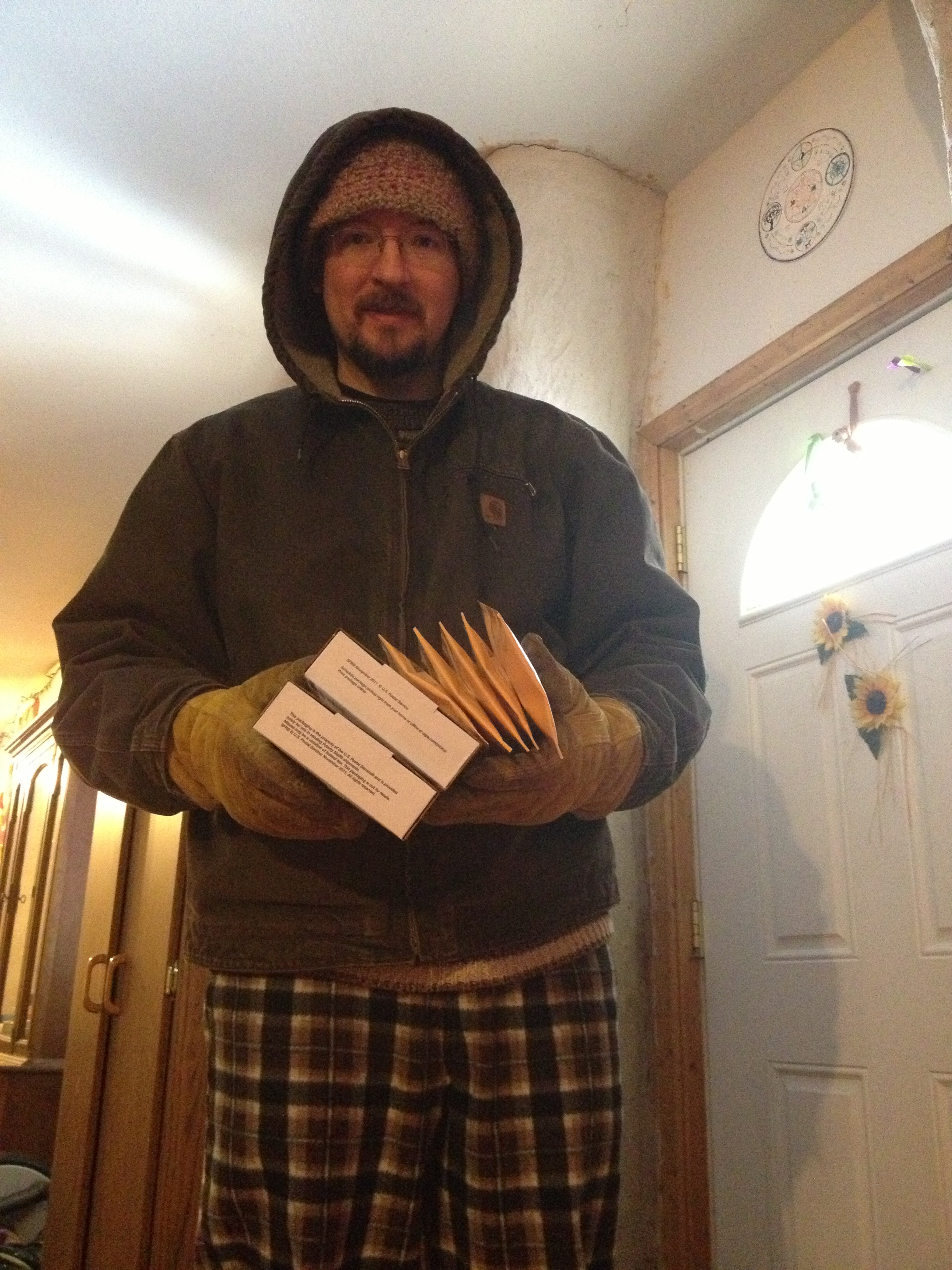
Check out the stack of orders he’s taking to the mailbox! Also, note PJ pants still on at noon, no breakfast (for him, I fixed my own), no shower, but also no need to drive through the current snow and ice to get to work…

I’ve been reflecting a lot recently on the household navigation of being an introvert mama with now having my also-introvert husband home full-time. Turns out that both parents home doesn’t magically extend the hours in a day (actually seems to shorten them) and it means both parents end up feeling pretty maxed out by kids and in need of somewhere quiet to recharge! 😉 I love having a “free-range” husband and I’m blown away by our joint creativity, which is an energy we’ve never experienced before at this level in our 19 year relationship because he was always at work all week and we had to squeeze everything else in around the edges. I also notice these interesting facts about having us both home all of the time: the house is way messier, we consistently stay up “too late” and sleep “too late,” it seems harder than ever to cook/figure out meals, we have less time to spend on homeschooling (!!), we still don’t feel like we have enough time to talk to each other, I seem to have less time to write and focus on writing, I feel like I give my kids less attention than I did when I was the only at-home parent (because I now have Mark to pay attention to too and I really like him), it is perhaps harder than ever to get the TWO HOURS I desperately need, I feel as if I have less time to focus on my teaching work, we argue more over household and parental responsibilities, we laugh way more and have more fun with each other and with our kids and we do more spontaneous, relaxed and fun stuff with our kids. It has been an interesting experience!

Related reads on introvert parenting:

I hate that as a mother, I felt like I had to choose between caring for my child and caring for myself. Because really, I can choose both. I can teach my kids—by example, which is perhaps the most potent way of teaching—that they are worthy of listening to their own needs. To the quiet, sure voice that might tell them they need a break. To lie on a yoga mat and sink deep into their own body and breath. To wander through a cemetery, alone, slowly enough to read the names on the gravestones. To sit down and write about how they’re feeling, or to surrender to sweet sleep for an hour.

via High Needs Mother | Brain, Child Magazine

So, sometimes when I start feeling ragged and can’t put my finger on exactly why, it comes to me: “I WANT MY TWO HOURS!”

via The Ragged Self | Talk Birth and Taking it to the body… Part 2: Embodied mindfulness, introversion, and two hours! | Talk Birth

February 2014 005

More time for spontaneous fun: she set this up yesterday and called me to come, “have ceremony!” and so we did. And, we drummed and sang too. She has a made up song she sings lately: “Oh, I’m her little daughter! Oh, I’m her little daughter!”

Toddlerhood and Beyond—Oh dear, now is when “no time to think” starts to wear on Introverted Mama’s nerves and stamina. I’ve met some awesome mothers of large families who comment on how they, “love the chaos” of home with lots of children. “Our house is wild and crazy and full of noise and I love it,” they may be known to say. Thinking of how desperately I crave silence and solitude, sometimes with an almost physical pain and longing, I feel inadequate in comparison to these declarations. Is this too simply a function of personality? Can these chaos-thriving mamas be extroverts who gain energy from interaction with others? I find that my own dear children, my own flesh and blood and bone and sweat and tears, still feel very much like “company” in terms of the drain on my energy that I experience. Whether it is socializing with a group or friends or spending the day with my energetic, loveable, highly talkative children, I crave time alone to recollect myself and to become whole once more. I once commented to my husband that I feel most like a “real person” when I’m alone. That means that the intensiveness and unyielding commitment of parenting can be really, really hard on me emotionally. Maybe it is okay to “own” that need for quiet, even as a mother, rather than to consider it some type of failure or an indication of not being truly cut out for this motherhood gig. (See more in a past, lengthy, navel-gazing post on why I need my “two hours”.)

How do you experience (and honor) introversion in your life as a parent? Sometimes I feel like being an introvert and being a mother are not very compatible, but as I learn to respect my own needs, to speak up for myself, and to heed that call for silence and solitude, I realize it is compatible after all. My children have two introverted parents and will hopefully grow up feeling confident in the knowing that there is profound power in being quiet, in taking time to think deeply, and to respond to the call of solitude if it comes knocking at the door of their hearts.

via Introverted Mama | Talk Birth.

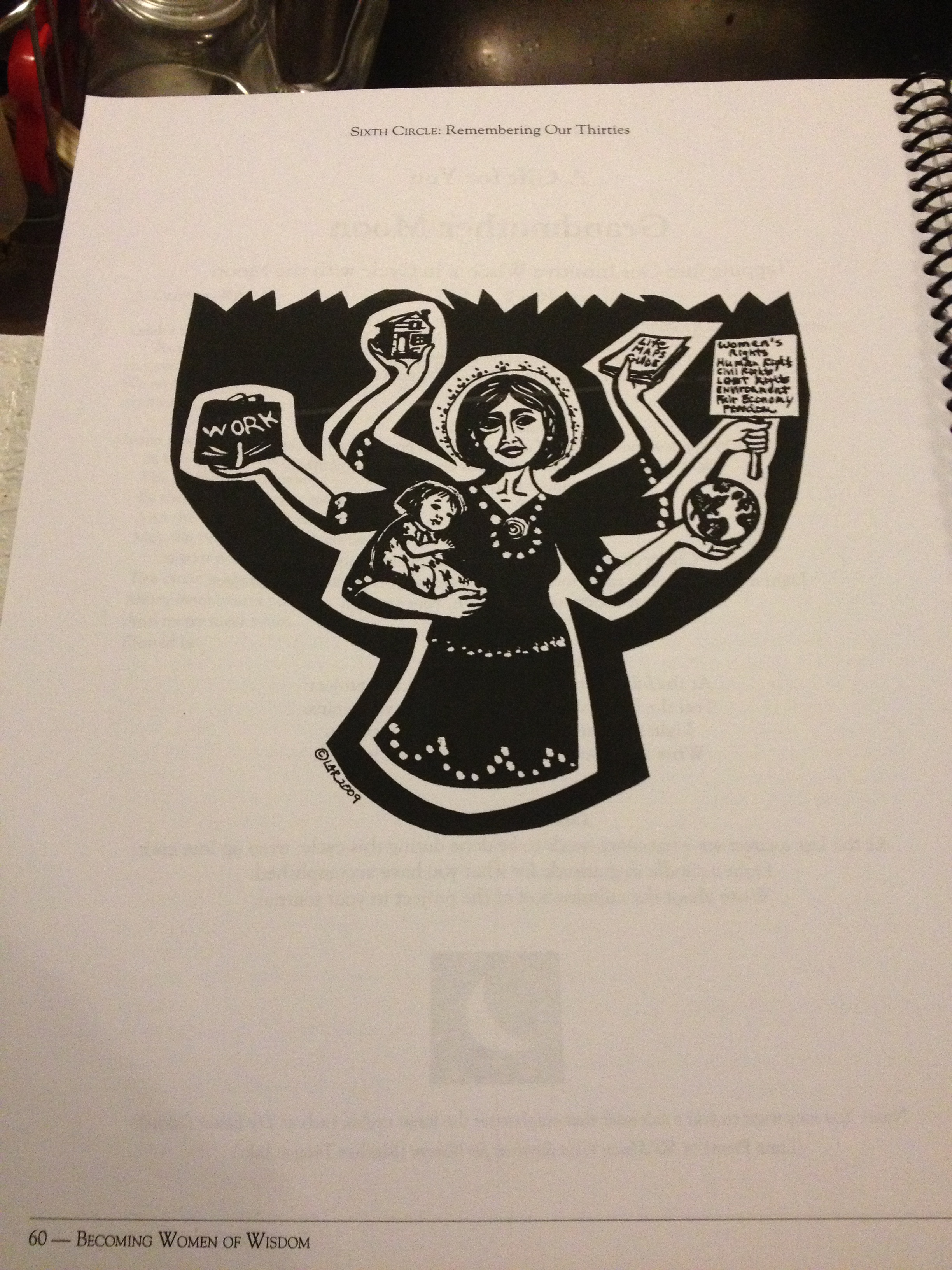
I was looking through a new women’s circle curriculum I bought a couple of months ago that is about “becoming women of wisdom.” It is for older women and it takes your through a journey from your teens through your 60’s and beyond. Each “lesson” is illustrated with a drawing for that life stage. This is the illustration for “Remembering Our Thirties”:

February 2014 068It is so spot-on that it really made me laugh! I was encouraged to see the one that followed for your forties. She looks both chill and sizzling with her own power:

February 2014 069Finally, cycling back around to birth art, next up on our month-long launch-month giveaway agenda is one of our brand new womb labyrinth pendants! To enter, just click on the labyrinth picture below to go to the Facebook contest. As a special bonus, I’m holding a “secret” companion giveaway via this blog! For an entry to win one of our tree of life pendants, go like our new Brigid’s Grove Facebook page and then leave a comment here letting me know you did so. Double chance to win a prize from us this week! 🙂

Also, there is still time to get our free Ritual Recipe Kit! (just sign up for our newsletter).
Wednesday Tidbits: Activism!

vdayutvs_webRolla Birth Network is pleased to be one of the co-sponsors of the upcoming production of The Vagina Monlogues, Eve Ensler’s classic feminist empowerment play.

The local production of The Vagina Monologues will benefit the Russell House, a shelter for battered women and their children. The event is specifically planned as part of V-Day:

“V-Day is a global activist movement to end violence against women and girls. V-Day is a catalyst that promotes creative events to increase awareness, raise money, and revitalize the spirit of existing anti-violence organizations. V-Day generates broader attention for the fight to stop violence against women and girls, including rape, battery, incest, female genital mutilation (FGM), and sex slavery.”

Last year we had a candlelight vigil on Valentine’s Day in honor of One Billion Rising. While that was a wonderful project too, this play production is much more ambitious and is very exciting! Here are some more details:

1506285_10201181030470858_1053739884_o

Local cast members (including my very own talented and awesome doula! 🙂 )

Rolla Area Citizens for Women 2014
Presents a Benefit Production of

Eve Ensler’s
THE VAGINA MONOLOGUES

FEBRUARY 21, 2014 at 7:00 PM

Venue:
Cedar Street Playhouse
701 North Cedar Street
Rolla, Missouri 65401

$5.00 Minimum Donation per person CASH ONLY
Benefits The Russell House

I’m really looking forward to going!

Another Missouri-local opportunity specific to birth advocacy and midwifery activism is the annual Friends of Missouri Midwives Cookie Day at the Capitol coming up next week:

1524390_680284898676217_1590110806_oYes, it is true, Barbara Harper will be there! Isn’t that cool?! I heard her speak at the CAPPA conference in 2010 and very much enjoyed her presence and devotion. I hope the weather cooperates so I can see her grace our Capitol building with her poise and information!

“Let us initiate our daughters into the beauty and mystery of being strong and confident women who claim their right to give birth and raise their children with dignity, power, love, and joy.” –Barbara Harper

One of the opportunities that is also going on this month that is not local, but virtual instead, is DeAnna L’am’s Red Tent Summit. It is free to register and participate. I have not yet carved out the space I need to actually tune in, but the lineup of speakers and wealth of topics is amazing!

Also, while all of these particular events are offered with a wonderfully upbeat spirit of intent and energy, I also feel like sharing an activism-related quote that I’ve had saved in my drafts folder for a long time that acknowledges the important role of anger and activism:

I’m not afraid to say it. Hell, isn’t anger kind of a prerequisite for activism work? As a birth worker I get to watch abuse after abuse, injustice after injustice – over and over again. I mean, really, what spurs the need for activism work if not injustice? And injustice stirs up indignant anger.

We have this huge deficit with the word, “anger.” Somehow, whenever it is said, we cling to this connotation that it – the word, the feeling – is inherently BAD. It took me a lot of years to come to the understanding that there are no “bad” or “good” feelings – that emotions just are. They are states of being which reflect either met or unmet needs.

Anger is usually a catalyst emotion…

via I am an Angry Activist.

I’ve self-identified as an activist since at least 1996 (when I first began working at the same battered women’s shelter for which the Vagina Monologues production is benefiting, actually!) I do find that some anger (or sheer disbelief!) at injustice is part of the fuel that drives my present-day activism. In fact, social justice was at the heart of my response several years ago when asked why I became a childbirth educator:

…the question was posed, “why did you become a childbirth educator?” I responded with the following: because I care deeply about women’s issues, social justice and social change and I feel like women’s choices in childbirth are intimately entwined with this. Because I believe peace on earth begins with birth. Because the births of my own sons were the most powerful and transformative events of my life. And, because I believe every woman should have the opportunity to feel and know her own power and to blossom into motherhood with strength, confidence, and joy. ♥

…On a discussion board once, someone asked the question “what’s at the root of your love of birth?” I was still for a moment and let my intuitive, heart-felt, gut level response come to me and it was this:

Women.

Women’s health, women’s issues, women’s empowerment, women’s rights.

Social justice….

via Why, indeed? | Talk Birth.

I’m currently finishing a book about women’s rituals and this paragraph caught my eye last night in relationship to my own experience of birth activism (and other activist work):

“One of the other problems in areas of small population is the relationship between local and regional leadership. Often, people who are competent local leaders are recruited to work regionally or nationally in their organizations. This policy frequently leaves a vacuum at the local level because leadership is not broadly enough based in those communities.”

I’ve seen this happen with myself, noticing that as I became involved with birth activism on a national level, my time for local birth activism was necessarily reduced. (And, then as my interests and commitments broadened beyond birth, the time for birth activism of any kind reduced.) I also see it happening with digital commitments—basically, the more I do for people on a virtual level over the internet, the less I have to give on a face-to-face local level. I’m still sitting with this realization and wondering what to do with it. The organizers of the One Billion Rising event in Denver this year recently contacted me to ask permission to read one of my poems aloud during their event. I was thrilled to say yes, but then I also thought about my local community and how most people here would not be familiar with my poem at all. So, Denver hears it, but my own local area does not. Interesting. I also found out this week that one of my essays about my grandma was translated into French and published in a French magazine. Cool, yes, but again gave me pause…

January 2014 063Related past posts:

Birth Violence

Tuesday Tidbits: Domestic Violence

Domestic Violence During Pregnancy

Guest Post: Abuse of pregnant women in the medical setting

Business of Being Born: Classroom Edition

Tuesday Tidbits: The Role of Doulas…

Community Organizing

Birth Matters!

Taking it to the Body, Part 4: Women’s Bodies and Self-Authority

Tuesday Tidbits: Breastfeeding and Ecofeminism

“Women united in close circles can awaken the wisdom in each other’s hearts.” ~The 13 Indigenous Grandmothers (via The Girl God)

I agreed to serve as a faculty mentor for a Breastfeeding and Ecofeminism independent study class that started yesterday. Since my husband and I also recently finished our Breastfeeding Mama in pewter, I felt inspired to create this little message…

b3wkwFor the class, my student is reading three books and working on several projects (one of which will be a series of blog posts, so watch for those!). We chose these books:

The Politics of Breastfeeding: When Breasts are Bad for Business by Gabrielle Palmer

Milk, Money, and Madness: The Culture and Politics of Breastfeeding by Naomi Baumslag M.D. and Dia Michels

Reweaving the World: The Emergence of Ecofeminism by Irene Diamond

This is going to be so much fun! How lucky I am to get to do stuff like this! This is the course description we worked on together:

This course explores the cultural, social, and political environment surrounding breastfeeding in the United States through the lens of eco-feminism. We will examine global cultural attitudes compared to the United States, scientific research of the benefits of breast milk, marketing and advertising of artificial milk, and the sociocultural context surrounding infant feeding as a public health issue. This course emphasizes critical and varied perspectives on breast and bottle feeding; as well as the ways in which gender, race, and socioeconomic class affect women’s choices in breastfeeding. The birth-breastfeeding continuum will also be explored. We will study the aspects of ecology, spirituality, and feminism as well as many other perspectives supporting this holistic human experience for the well-being of the planet.

I wrote up some nifty course objectives as well:

  1. Contextualize breastfeeding as a public health issue both within the sociocultural environment in the United States and cross-culturally.
  2. Describe why breastfeeding is an ecofeminist issue—make connections between human treatment of the “world body” and the female body.
  3. Articulate the systemic and structural context in which breastfeeding takes place in the US. (Describe the political and economic influences on infant feeding in the US and frame the issue within a broad cultural context extending beyond the concept of personal choice.)
  4. Address the charge of “essentialism” with regard to breastfeeding in the context of feminist theory.

The student found me because of my past article on this subject…

Breastfeeding is a feminist issue and a fundamental women’s issue. And, it is an issue deeply embedded in a sociocultural context. Attitudes towards breastfeeding are intimately entwined with attitudes toward women, women’s bodies, and who has “ownership” of them. Patriarchy chafes at a woman having the audacity to feed her child with her own body, under her own authority, and without the need for any other. Feminism sometimes chafes at the “control” over the woman’s body exerted by the breastfeeding infant.

Part of the root core of patriarchy is a rejection of the female and of women’s bodies as abnormal OR as enticing or sinful or messy, hormonal, complicated, confusing…. Authentic feminism need not be about denying biological differences between women and men, but instead about defining both as profoundly worthy and capable and of never denying an opportunity to anyone for a sex-based reason. Feminism can be about creating a culture that values what is female as well as what is male, not a culture that tries to erase or hide “messy” evidence of femaleness.

However, precisely because of the patriarchal association of the female with the earthy and the physical, feminists have perhaps wanted to distance themselves from breastfeeding. This intensely embodied biologically mandated physical experience so clearly represents a fundamental difference between men and women that it appears to bolster biological reductionism. Yet in so doing feminism then colludes with patriarchy and itself becomes a tool of the patriarchy in the repression and silencing of women and their leaky ever-changing, endlessly cycling bodies: these bodies that change blood into food and bleed without dying and provide safe passage for new souls upon the earth. Sometimes the issue of a woman’s right not to breastfeed is framed as a feminist “choice.” This is a myth, made in the context of a society that places little value on women, children, and caregiving. It is society that needs to change. Not women and not babies.

via Breastfeeding as an Ecofeminist Issue | Talk Birth.

Last week I read a relevant article from Amy Glenn…

For the first time in human history, the female breast is nearly completely separated from its primary mammalian function. Rather than supporting the healthy development of our limbic lives, breasts are pornographically used to market a multitude of products. Why is the breast’s primary lactating function deemed strangely controversial today?

Despite the efforts of breastfeeding advocates, consider that mainstream news publications and talk shows feature mothers who nurse toddlers as cultural oddities…Our own society’s rupture from the wisdom of ancient ways is the true cultural oddity.

I applaud the efforts of public health advocates seeking to reconnect to the ancient wisdom of our female ancestors. Friends and family need to draw a fierce circle of protection and non-interference around the nursing mother-child dyad…

If it were up to breastfeeding advocates, federal legislation mandating paid maternity leave would exist everywhere. For nothing pressures a new mother to give up nursing more than struggling to meet the financial needs of her family. While teaching in Colombia, my employer was obligated legally to give me three months of paid maternity leave. Yet, if I had been working in the US at the time, it would have been up to my employer to determine the status of my maternity leave. The US stands alone as the only developed country without legally mandated paid maternity leave. This directly connects to our woeful breastfeeding rates…

Glenn read Palmer’s Politics book and it changed her perspectives on the systemic influences surrounding breastfeeding women:

In particular, Palmer’s connections between poverty and breastfeeding moved me. Over the last century, the purposefully deceptive marketing ploys of infant-formula makers have left tragedy in their destructive wake. For example, when promoting artificial milk in the developing world, companies dressed their representatives as medical professionals who claimed that their products were better than breast milk. Poverty stricken and largely uneducated mothers were persuaded to spend a large percentage of their household’s monthly income on the artificial milk powder that was considered best. To prolong its use, they often diluted the powder further reducing any nutritional value. In addition, these mothers lived in areas with poor sanitation and unsafe drinking water. Palmer describes how hundreds of thousands of babies died. At times, I had to put the book down as angry tears washed through me.

Choosing to move beyond the painful disconnections of our culture, I do my best to support the breastfeeding mothers I meet. Our world must move beyond separating baby from mother, self from breath, and bodies from hearts.

via In praise of breast milk.

I also read with interest an interview between Jeanette McCulloch of BirthSwell and Paige Hall Smith, a speaker at the 2013 Breastfeeding and Feminism conference, which makes some additional points about the relationship between income and breastfeeding rates:

PHS: The connection between women’s status and breastfeeding leads to a number of interesting ideas. We know from other research that both education and income are positively associated with breastfeeding outcomes. More research on why this is the case would be useful, particularly given that higher income is also associated with women’s employment. We also learn in this study that in those states where women have greater control of reproductive choices, and those where they are more likely to vote, also have higher breastfeeding rates. Since none of these are indicators that are directly implicated in breastfeeding success, we have to conclude that something interesting is going on in the climate of these states that makes a difference for women.

It makes sense that women who have higher status have more ability to manage their own time and resources (such as adjusting break times at work, taking additional maternity leave, determining the flow and location of their work) which may lead to higher breastfeeding rates. They may also have more authority at home and at work, which translates into greater ability to actualize their own decisions. Breastfeeding, like the ability to control one’s fertility, can be seen as a form of reproductive autonomy.

The relationship between women’s status and breastfeeding remained even when we controlled for available state-level breastfeeding support, such as access to IBCLCs, peer support like La Leche League, and baby friendly hospitals. One possible interpretation for this is that the breastfeeding support measures we have in place are ones that provide more assistance to higher status women than they do to lower status women. We need to think critically how our measures are affecting different populations. In general we found that clinical indicators of breastfeeding support had more impact on breastfeeding than did policy measures. This could have been because currently there insufficient “trickle down” from policy to women’s lives.

via Does Breastfeeding Hold Women Back? | Breastfeeding and Feminism International Conference

On a related-to-breastfeeding note, but moving off the topic of breastfeeding and ecofeminism, Mark and I also have a brand new nursing mama pendant that will be unveiled at the launch of our new collaborative business on February 1st! We’ll have a series of product giveaways, a free digital kit, and a new discount coupon as well. I’m so excited!

Other related posts:

The ‘Of Course’ Response

World Breastfeeding Week post roundup

Taking it to the Body


Thesis Tidbits: Birth as an Initiation

“We owe it both to our children and to the world, to conceive, birth and welcome our children with as much love and prayerfulness as possible.” –Jackie Singer (Birthrites)

“Childbirth is a rite of passage so intense physically, psychologically, emotionally, spiritually, that most other events in a woman’s life pale next to it. In our modern lives, there are few remaining rituals of initiation, few events that challenge a person’s mettle down to the very core. Childbirth remains a primary initiatory rite for a woman.” –from the book MotherMysteries

via Thesis Tidbits: Birth as a Shamanic Experience | Talk Birth.

I recently finished reading a short book called Return to the Great Mother, which is very specifically focused on giving birth as an initiatory event. It includes a variety of birthing women’s voices and experiences with accessing the energy and wisdom of the “great mother,” be it archetype, an inner resource, or one face of the Sacred. The author, Isa Gucciardi, writes:

Giving birth is one of a series of important initiations a woman may experience in her lifetime. Initiations are intimately tied https://www.sacredstream.org/components/com_virtuemart/shop_image/product/b0e92ae33095ca07867acb0a841a9f05.jpgwith change. They bring the initiate from one state of being into a new state of being. Initiations accomplish this task by putting the initiate through a series of experiences that challenge them in a particular way and bring them into new ways of being and of understanding. The initiate must meet these challenges and overcome any obstacles in order for the initiation to succeed in bringing about these changes.

Today, many people going through initiations and many people managing initiations do not have a clear understanding of the nature of the power and vulnerability that is at the heart of initiation. Initiates must render themselves vulnerable to initiatory processes in order for initiations to become complete, and the power in that vulnerability must be managed carefully and thoughtfully. Most importantly, for an initiation to be successful, that power and vulnerability must be safeguarded and dedicated to the initiate.

The process of meeting an obstacle and overcoming it in order to ultimately gain greater insight and power is described by Joseph Campbell as the “hero’s journey.” The “hero’s journey” is an initiatory experience. Every woman takes this journey when she gives birth and it can be the primary initiation a woman undergoes in the course of her life.

Often a woman encounters herself in an entirely new way during the process of giving birth. She may encounter the effect of traumas long buried, or she may encounter fear long denied. She may also discover power deep within herself that she had never imagined.

When the processes of birth are allowed to take their course, a woman with the proper care has the opportunity to come to terms with whatever may arise. In doing so, she may experience a shift into a new way of being or understanding. Yet, when the birth process is interrupted, or not properly held, the power of the initiation is often lost or distorted… (p. 10)

We know that women do not always have full and free choice when it comes to decisions about their birthing bodies and childbearing years…so, how does this impact the initiatory process? Isa writes:

In modern births, the power of the initiation of birth is often co-opted by doctors, pharmaceutical companies, insurance companies, and hospitals. It is also co-opted by the fear of pain and the influence of friends and family. It is difficult for women to hold onto the power of the initiation of birth under these circumstances. The unfortunate implication here is that the subsequent initiations of women interrupted in this way will be affected by their inability to hold onto the power of their birthing process.

Based on the level of interruption of the birth initiation caused by unnecessary interventions in the birthing process today, it seems reasonable to suggest that many women experience incomplete initiations when giving birth…

(Personally, I would clarify that it is not that women are unable to hold onto the power of the birthing process, but rather that it is often systematically stripped from them.)

Each of my children’s birth experience was an initiatory event for me, but in varying ways. With my first, it was the initiation to motherhood, the mystery and anticipation of giving birth. The crucible moment for me with him was actually my journey through the harrowing landscape of postpartum. With my second son, giving birth rapidly and with great intensity and power, the initiation felt like it was in letting go and hanging on for the ride—letting my mind stop and my body go. With my third birth, which was my first miscarriage, the initiation was in the physically grueling and bloody aftermath of his birth and then the broad, deep, unknown, transformative path of grief and change. I still feel as if this was one of the most powerfully initiatory experiences of my life. (And, I did have an encounter with one face of the great mother.) After Alaina’s birthday this week, I was talking to my husband about my memories of this last birth and telling him that I do not review the details of her birth with the same sense of power or initiation as the births of my other children. It doesn’t hold that same “touchstone” energy for me as the births of my boys—experiences that I continued to draw strength from as I went on into other events in my life. I don’t return to her birth for strength or courage the way I remember returning to the births of each of my sons. And, then I said it was because with her, the pregnancy was the initiation. The long, long, path of pregnancy after loss and all the fear and all the hope and all the strain of feeling the feelings and doing it anyway. Her birth itself was the moment of relief. The end of a trial, rather than the triumph or peak experience of the births of my first two babies. So, while of course I still carry powerful and potent memories of her birth as well, it was the journey of pregnancy that holds the talismans of initiation for me.

In her classic book Shakti Woman, Vicki Noble describes giving birth as a central shamanic experience and perhaps the root of all shamanism:

“I believe I underwent an initiation of the most ancient variety, birth as a shamanic experience, the central act of female shamanism—the quintessential act that offers a woman a completed experience of facing and moving through her fears to the other side. It isn’t that birth is the only way for a woman to experience this initiation—many women climb mountains or face other kinds of physical endurance tests and also come through it reborn into their power. But biologically birth is a doorway, a given for most women on the planet. It is fundamental opportunity to become empowered. Most of us giving birth today do not have the full experience, which is co-opted and distorted beyond recognition, changed from an active process into something that is done to us, as if we don’t know how to do it ourselves. Reclaiming the right to birth in our own instinctual way is a shamanic act of courage that has unfortunately become as remote to us as our ability to fly through the night in the form of an owl or heal the sick with the power of the drum. It wouldn’t hurt if we began to think of our birthing and child rearing as central parts of our shamanic work…” (p. 223).

via Thesis Tidbits: Birth as a Shamanic Experience | Talk Birth.

I just finished a new sculpt for a medium sized version of our classic birth goddess pendant and Mark cast and finished some of them last night. I woke up this morning with a phrase from a past piece of poetry floating through my mind over and over:

Soft belly January 2014 088
no longer bearing children
I am pregnant with myself
ripe with potential,
possibility, power
I incubate my dreams
and give birth to my vision…

I also thought about what I hope to communicate to others through my sculptures and when I took the new pendant down to the woods with me, a little song emerged to go with her:

Birth mama
birth goddess

reaching out
to join the circle of mothers

feeling her way
finding her place
in the web of women

Birth mama January 2014 050
birth goddess

hold strong
hold steady

make way for baby
make way for baby

Body opens
heart opens
hands open to receive

Birth mama
birth goddess

she’s finding her way
she’s finding her way…

Disclosure: I received a complimentary digital copy of the book for review purposes.

Thesis Tidbits: Birth Mystery

“Women’s mysteries, the blood mysteries of the body, are not the same as the physical realities of menstruation, lactation, pregnancy, and menopause; for physiology to become mystery, a mystical affiliation must be made between a woman and the archetypal feminine. A woman must sense, know or imagine herself as Woman, as Goddess, as an embodiment of the feminine principle…Under patriarchy this connection has been suppressed; there are no words or rituals that celebrate the connection between a woman’s physiological initiations and spiritual meaning.”

–Jean Shinoda Bolen

“Birth, like love, is an energy and a process, happening within a relationship. Both unfold with their own timing, with a uniqueness that can never be anticipated, with a power that can never be controlled, but with an exquisite mystery to be appreciated.” –Elizabeth Noble

While the phrase “birth is a mystery” may sound illogical on the surface, since birth is a normal, physiological process experienced every day by thousands of women around the world, at an emotional and experiential level it rings very true. No matter how many children we birth or how much we ​know​ logically about birth, each birth unfolds in its own unique way with its own unique timing and its own unique lessons. Most births require the crossing of a threshold of some kind—possibly emotional, usually physical, often spiritual, perhaps all at once. In my reading of Nané Jordan’s thesis Birthdance, Earthdance as I collect my research and thoughts for my own dissertation, I particularly enjoyed this quote about the mystery of birth:

Birth really invites ​mystery​ into our lives if we can, or want to, receive that. Wound up into that ​mystery​ is personal and societal fear of death, which birth, as female shaman Vicki Noble has stand, stands at the doorway of. So much of medical birth practice is about diverting this ​mystery​ into knowable forms with time-tables, charts, clocks and interventions. Yet birth is older and wiser than our clocks and technological tricks. Every birth unfolds in its own way in its own time. Birth inherently asks a ​mystery​ of us, women in particular. This is a true gift of listening to it’s calling, allowing the ​mystery ​to be present and unfold in our lives as the new being emerges into our arms.

Jordan also lyrically describes her own journey deep into the heart of birth and the spiritual connection she found there:

…I was alone in myself with my baby. It was like the water guided me into a deepening trance of ‘open and give over mumma,’ by holding and relaxing me in her substance. I was a babe held in the womb of some Great Goddess, even as I held a babe in the waters of my own womb. And open I did. Instinctively mt hands were working with each sensation, palms up and open, hands out of the water and raised, like a salutation to the Goddess herself, ‘yes I feel your presence Mother as I am Mother now.” These actions were what came to me in the tub as I did what is known as ‘active labour.’ I would more describe it as a multidimensional dance of the universe, a meditation beyond meditations. I found myself hissssss-ing as each sensation built low down and then up along the sides of my womb. There was no mistaking this ssssssnake-like ssssssound that guided my body into birth, my palms stretching into an ancient salutation of forces greater than myself yet no bigger than myself…

I loved this depiction of ​forces greater than yet no bigger than myself​. I experienced this moment in birth as well. It reminds of a quote from an unknown writer: The power and intensity of your contractions cannot be stronger than you, because it is you. As others have written, ​I met myself in childbirth​ . And, I liked her. I’ve continued to learn from, draw upon, and reflect upon these birth experiences throughout my life to date (my oldest child is now ten).

“Birth is one of the most profound teaching experiences life offers. It touches us in the depths of our souls, the most private recesses of who we are. It requires that we respond with more creative energy, more conviction, more trust, than almost anything else we do. Birth requires an intensity that is rarely demanded by other experiences…And through it, we can learn more about ourselves, our strengths, our weaknesses, our relationship patterns, and our needs than through almost any other experience we will face in our life.” ~Nancy Wainer Cohen (Via: Peaceful Birth Project)

Have you met yourself in childbirth? What did you learn? How have you carried this forward into your own life?


Related past post: Birth Mystery | Talk Birth

Crossposted at Pagan Familes.


Thesis Tidbits: Mary Christmas

Mary Goddess with child Paola Suarez sm

Mary and Child painting by blogging friend Paola Suarez

“…When I say painless, please understand, I don’t mean you will not feel anything. What you will feel is a lot of pressure; you will feel the might of creation move through you…”

– Giuditta Tornetta in Painless Childbirth

I am outsider to Catholicism and other branches of Christianity, but I see Mary as an aspect of the sacred feminine that weaves its way through a variety of religious traditions and practices. As a Unitarian Universalist myself, I believe there are many ways to touch the “chord of the sacred” within each of us and that we can find threads of commonality and expression in most religions. Since it is Christmas today, I wanted to share some intriguing excerpts from several different Mary-themed blog posts that touched me this week and that also relate to my dissertation topic of birth as a spiritual experience…

The first is from a birth blogging friend Kelli, who writes with love and tenderness about what the Christmas story can teach us about giving birth:

Another thing that Mary surely understood was that she was specially chosen to bring this new life into the world through the capabilities of her own body alongside that unconstrained power that placed him there in the first place. For birth is about releasing expectations and trusting that you are supported. It is knowing that just by the way your body was designed and grew this life, you are capable of bringing this life forward. In our modern world, what birth is all about hasn’t changed. It isn’t about dreading pain. It isn’t about wondering if “they” will let you do this or that. It isn’t about enduring it until it is over. It isn’t about being afraid and resigning to hope simply for a healthy baby. The child you carry is destined to impact the world. We may not know how, but we can know it is for certain. As the mother of this child, you matter. Mary is revered as holy by many of varying faiths. If giving birth is not sacred work, then what is? Birth, mamas, is about knowing. How this special and amazing child you carry comes into the world matters a great deal. How this child’s mother is revered before, during, and after the process of birth matters a great deal…

via How Can the Christmas Story Teach Us About Birth? – Confluence Mama.

Then, from a pagan blogger from whom I borrowed my post title today, this post about being pregnant with divine potential:

What could be more magical than conceiving, gestating, and giving birth to the embodiment of Christ consciousness?

What could be more magical than birthing the return of light into a darkened world?

What could be more magical than dissolving shame and restoring the brilliant shine to a woman’s life?

For all its shrillness and glitter, the Christmas season offers us images of Mary, big-bellied, pregnant with the Power of Being, however you might name it.

Allowing ourselves to deepen into those images might well dissolve the shame that so often obscures the light imbuing our bodies. Allowing ourselves to resonate with Mary might well unleash the life-celebrating energy already radiating from our bellies, our body’s core…

via Mary Christmas! Being Pregnant with God – PaganSquare.

And, of course, the breastfeeding activist in me thrilled to read this article about Pope Francis supporting public breastfeeding and this juicy, relevant snippet caught my eye about the image of the nursing mother—Mary—as historically symbolic of God’s love:

The cultural shift was so great that even Catholics soon came to regard the breast as an “inappropriate” image for churches. Instead, the sacrifice of the cross – the suffering Jesus – became the dominant motif of Christianity while the Nativity was sanitized into a Hallmark card.

“Ask anybody in the street what’s the primary Christian symbol and they would say the crucifixion,” said Margaret Miles, author of “A Complex Delight: The Secularization of the Breast, 1350-1750,” a book that traces the disappearance of the image of the breast-feeding Mary after the Renaissance.

“It was the takeover of the crucifixion as the major symbol of God’s love for humanity” that supplanted the breast-feeding icon, she said. And that was a decisive shift from the earliest days of Christianity when “the virgin’s nursing breast, the lactating virgin, was the primary symbol of God’s love for humanity…”

via Pope Francis backs public breastfeeding! And that makes him traditional… | Sacred and Profane.

On a related note, I also recently enjoyed seeing a picture on my Facebook feed of one of my birth goddess sculptures standing on shelf next to a Lego Pope and a lovely nativity set.  🙂

Merry (or Mary!) Christmas to you and may we all celebrate the birth of divine potential as we greet the dawning of a new year.

November 2013 041

Thesis Tidbits: Exceptional Human Experiences

December 2013 032“Not every woman experiences unaided, natural childbirth, yet many women hope for it. To strive for birth as a peak experience—to withstand this ‘trial by fire’–a woman must learn what labor pain is and be prepared to accept and work with it. And she must also prepare for the unexpected.” –Karen Fisk

Women are as nervous and unsure of themselves as ever, and they need to learn to trust their bodies. Birthing is much more that eliminating pain. It is one of life’s peak experiences.” –-Elisabeth Bing

From Nane Jordan’s MA thesis, Earthdance, Birthdance, my attention was caught by a reference to Exceptional Human Experiences and whether birth qualifies as such:

I liked the idea of researching what are known as ‘Exceptional Human Experiences’ by Rhea A. White (1998). White does not mention birth in her discussion of what EHEs are, describing the importance of near-death experiences, mystical revelations, psychic and ‘wonderstruck’ sensations. I posit that women can access and experience ‘mystical’ states when giving birth. EHEs contribute to overall human development but in order to contribute they need to be spoken of and integrated as much as painful or traumatic experiences, not suppressed within a person’s life experience. The huge oversight of birth as an EHE speaks to our cultural denial of the revelatory aspects of women’s birth experiences (gestation and birth as perhaps the first ‘mystical’ revelation), and birth’s overall impact within the developmental lives of women…(p. 21-22)

I’ve previously referenced the idea of childbirth as a “flow experience” in this post:

In the textbook Childbirth Education: Practice, Research, & Theory the concept of birth as a peak, or “flow” experience is addressed several times:

The joy and personal growth that can result from successfully meeting challenging experiences has been described as ‘flow experiences’…such experiences are generally better understood in athletics than in childbirth because the public understands athletic events to be character building and an effort or a struggle that requires skill, practice, and concentration and is not without pain. As such, athletic accomplishments are widely recognized for both the product and process…Society focuses the celebration of birth almost totally on the product–the baby–and is rather neutral about the process as long as the mother emerges healthy.

via Childbirth and ‘Flow’ Experiences | Talk Birth.

And, about birth as a peak experience in my own life in this one:

Birth is (or can be) a “peak experience” for women (and families). I want all women to have a chance to experience that. I certainly do not want her to feel diminished, unworthy, inferior or lacking if birth is not a peak experience in her life, but I also want all women to certainly be given a reasonable opportunity to let birth unfold in all its power and be treated respectfully and humanely by those around her—regardless of what is going on or the eventual outcome.

I love birth and cherish my memories of my sons’ births and consider them to be some of the most transformative, empowering, and significant single days in my life—peak experiences, powerful memories—and I also feel that birth matters as a distinct (and relatively rare) occurrence in a woman life. I believe birth has inherent value and worth on its own terms.

via Birth, Motherhood, & Meaning | Talk Birth.

What do you think? Was a birth a peak experience for you? Does birth belong on the list of potential exceptional human experiences? What do you know of birth’s potential to be a mystical experience?