Archives

Tuesday Tidbits: Breastfeeding

“Rules and breastfeeding do not go together well.” –Dr. Jack Newman (LLL of Missouri conference)

Today was our monthly La Leche League meeting and so it feels appropriate to share some of the breastfeeding tidbits I’ve collected recently (or in the past!).   Molly 100I heard Dr. Jack Newman speak at the LLL of Missouri conference and once again enjoyed his refreshingly straightforward and honest style (i.e. “don’t listen to what the health department says, go ahead and let your baby sleep with you!”). I previously heard him speak about Controversies in Breastfeeding at the CAPPA conference in Kansas City:

Colostrum and formula are the same in the following ways: both are liquid.

Breastmilk does not need to supply vitamin D (makes no sense to describe breastmilk as “deficient in” or “lacking” vitamin D).

With regard to the high incidence of reflux being diagnosed in babies—his response to why so high is, “because [most] doctors don’t know anything about breastfeeding.”

We learn one thing when we hear that the mother has been told to feed her baby X number of minutes per side—>the person telling her this does not understand breastfeeding.

There are no such thing as “flat nipples”–women have normal nipples. We live in a bottle feeding culture that makes us assume that if a mother does not have nipples that stick out like a bottle nipple, the nipples are flat (**Molly’s own note–we also live in a culture where 75-90% of women have epidurals during labor which can contribute to edema in the breast and the accompanying appearance of flat nipples).

via Controversies in Breastfeeding | Talk Birth.

And:

Dr. Newman also emphasized the important point that the burden of proof rests upon those who promote an intervention! He was speaking with regard to recommending formula supplementation, but I strongly believe it applies to any birth practice. So simple and yet so profound. One example that he shared that is familiar to birth advocates is that lying down for electronic fetal monitoring is a position of comfort for the care provider, NOT for the mother.

And, he made this excellent point: “All medical interventions, even when necessary, decrease the mother’s sense of control, and increase her sense of her ‘body not being up to the task.” Again, the burden of proof rests on those who promote the intervention, not vice versa.

via The Impact of Birth on Breastfeeding | Talk Birth.

At the recent conference, during his presentation about when babies refuse to latch, Dr. Newman said this:

“Even if a baby doesn’t take to the breast right away, even by 2-3 weeks, almost ALL babies will latch by 4-8 weeks if the mother has an abundant milk production.”

He also reminded us that one cause of latch difficulties is because of the expectation that babies latch on immediately after birth. Many of us are familiar with this and expect all babies to nurse within 20-30 minutes of being born. Dr. Newman says that for some babies, it is normal not to nurse right away and that trying to make them nurse before they are ready is actually a way of creating a real problem with latch. He says that most babies will latch on within 24 hours and that it isn’t necessary to worry about that.

However, speaking of the impact of birth practices on breastfeeding and the potential for babies not to latch immediately after birth:

How could that be, I wondered? If so many mothers have their milk come in after 72 hours, doesn’t it make that pretty normal? Doesn’t this undermine the definition of late onset of mature milk (post 72 hours)?

But then I remembered that many obstetrical practices are associated with late onset of mature milk…

via Booby Traps Series: Obstetrical practices are making late milk-coming-in the new normal. | Best for BabesBest for Babes.

Exactly! This conclusion is supported by data from the recently released Listening to Mothers III Survey, with the following factors known to cause a delay in milk coming in:

Cesarean birth.  The CDC reports that 33% of births in 2010 were by cesarean.

Labor induction and augmentation.  The Listening to Mothers III Survey found that 41% of mothers said that their providers tried to induce their labor, (63% of those inductions involved pitocin), and 31% had their labor augmented with pitocin.

IV fluids.  The Listening to Mothers III Survey found that 61% of women had received fluids by IV (55% of women who birthed vaginally and 77% of women who birthed by cesarean).

Labor pain medication83% of mothers in the Listening to Mothers Survey reported having had labor pain medication.

I’ve also recently complained about my toddler’s relentless night-nursing ways and so I enjoyed this article about the benefits of night-nursing:

…Did anyone ever tell you that… in lactating women, prolactin production (prolactin is the milk-making hormone) follows a circadian rhythm? Studies have shown that breastfeeding women’s prolactin levels are significantly higher at night, particularly in the wee hours of the morning. Babies often want to nurse at night because quite simply, there’s more milk at night! (Source) Aren’t our babies smart??

via 5 Cool Things No One Ever Told You About Nighttime Breastfeeding | Breastfeed Chicago.

And, the notion of specific “maternal fat stores” has reassured many a mother in my LLL group:

…First of all, don’t worry – losing your butt does not mean you are losing your ability to breastfeed. In fact, it means that breastfeeding is working as intended!

The fat around your hips and thighs is called your gluteofemoral fat. This is a very special kind of fat, as it is largely made up of Omega 3 fatty acids.

Omega 3 Fatty Acids breaks down into;

DHA, EPA and ALA…

via Breastfeeding Shrank My Butt! – Rachel Sketch.

Returned to birth-related stuff, the summer edition of the Friends of Missouri Midwives newsletter is finally ready! Check it out and enjoy. The theme for this issue was Movement. The issue also includes a funny, gritty, and inspiring birth story from Halley, who blogs at Peace, Love, and Spit Up.

“It’s not just the making of babies, but the making of mothers that midwives see as the miracle of birth.”

-Barbara Katz Rothman

In other news, my husband had his 36th birthday and I made him a fabulous German chocolate birthday cake with homemade icing (half with fresh coconut and half without coconut, so we were both happy). The recipe uses three sticks of butter and seven eggs!

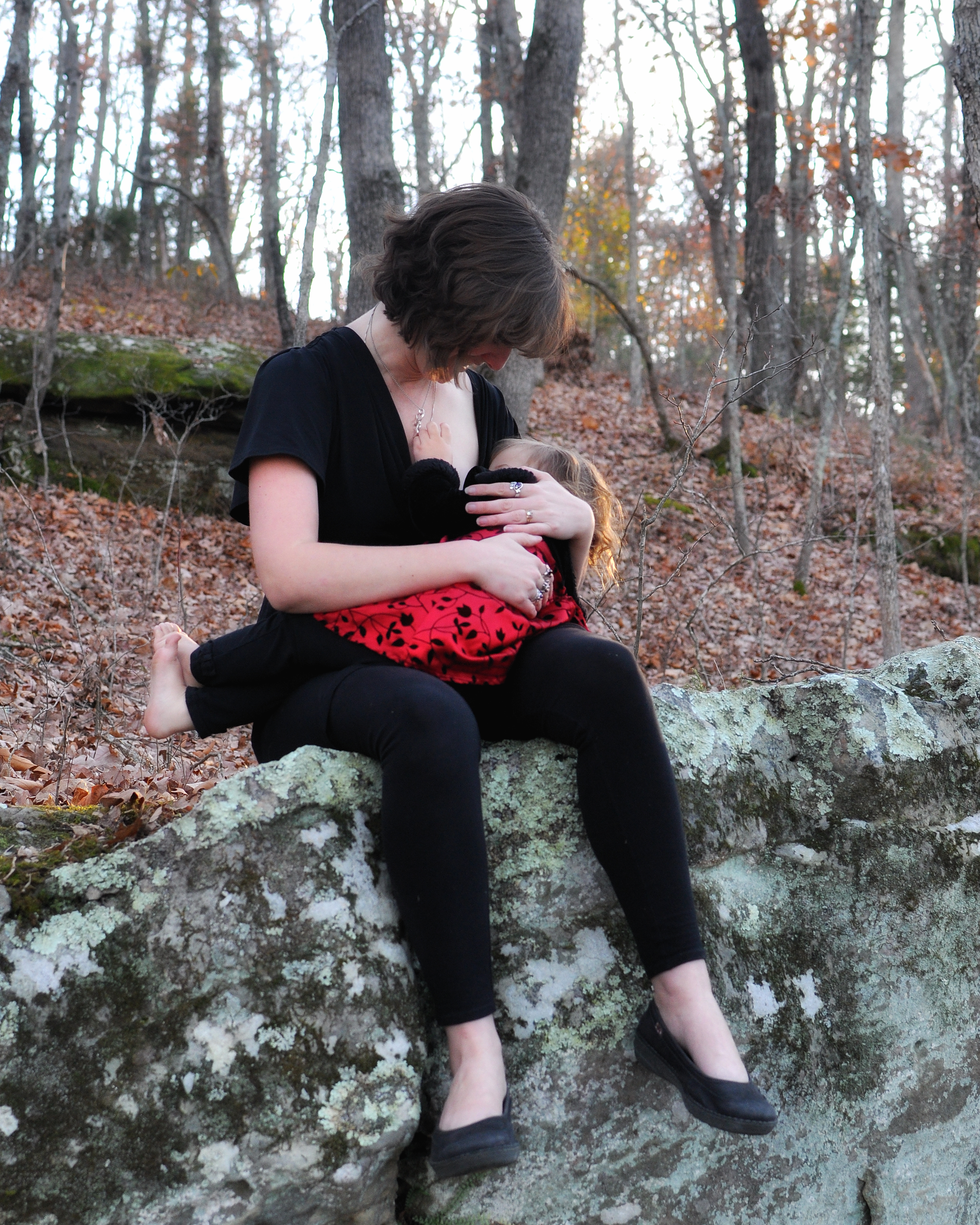
July 2013 006Last week, my photographer friend Karen did a photo shoot for my other friend of Goddess Garb and I helped her model her gorgeous robes!

Goddessgarb 130

Tuesday Tidbits: Moontime Mojo

“I am obsessed with becoming a woman comfortable in her skin.”
— Sandra Cisneros

I know I’ve been focusing on the subject of healthy menstruation a lot lately, but it is has been a persistent interest since my period came back after my last baby. At that time, since we are not planning to have any more children, I realized that I was going to have to redefine my relationship with my cycling body, no longer in the context of planning the next pregnancy. I also had the epiphany of sorts that in not acknowledging or fully experiencing the role of menstruation in my own life as a woman, I have been missing out on an opportunity to connect on a regular basis with one of the core “blood mysteries” of being female—I’ve spent a lot of time on birth and breastfeeding in my life, but my period? Oh, that old thing! I maintain that our attitudes towards our monthly bleeding are reflected in our culture’s attitudes towards birth and breastfeeding—ook! Bloody! Messy! Leaky! Stuff comes out of you! Hide it away! Don’t let anyone see! I shared some of these emerging 2013-06-22 08.59.09discoveries and thoughts during my Moontime session at the La Leche League of Missouri conference this month and many women attending expressed similar feelings—that they’d never actually connected the menstrual cycle fully with their experiences of pregnancy, childbirth, and lactation. As I explained to them, as women involved with LLL or birth advocacy we may be well-versed in listening and responding to our bodies when it comes to childbirth and breastfeeding, but many women overlook or minimize the influence menstruation has on their lives. We easily forget that menstruation also provides us with a regular reminder to listen to our bodies, follow their cues, and honor our own wisdom. I’m still working on it in my own life, but I really believe that women benefit from recognizing moontime as a time for rest, retreat, and renewal—a time to re-gather our scattered energy and resources and to emerge with strength and powerful medicine.

A friend came to me recently to ask for resources for her pre-menstrual daughter and said that she wanted something practical to tell her, not just to go sit in a tent, because that sounds nice, but it isn’t realistic in the modern age. And, I thought, but what if it WAS realistic and practical?! I would go so far as to say that perhaps we wouldn’t have such challenges with birth and breastfeeding in our culture if girls were taught that it was normal to need to rest and listen to their bodies once a month rather than to push forward like they’re exactly the same every single day. If this is how we grew up, wouldn’t it then be easier to accept the swell and flow of the energy of birth, to respect the need for rest and renewal during postpartum, and to listen to our bodies’ messages as we learn to breastfeed our babies and fall into sync with the timelessness of life with a newborn and beyond?

(Side note: when I originally chose the quote to open this post, I totally mis-read it and thought it said, “I am obsessed with women becoming comfortable in her own skin” and that is how I feel, but I guess I’m obsessed with it for myself too?)

I just finished reading the book Honoring Menstruation by Lara Own and it was really good. She says:

Our initiation of girls is superficial…how to put on makeup, buying your first bra, using a tampon for the first time. Many women get married and get pregnant without having any sense of their own capacity for endurance, physically or psychologically. Small wonder then than so many girl-women elect to give birth with the aid of painkillers and a technology that robs them of the experience of their own strength…

And she makes a point that I shared during my conference presentation:

As a culture we value stoicism and the overriding of the body. We have schedules, appointments, and timetables which are based on industrial efficiency rather than the moment-to-moment needs of the body. We wait until the end of the meeting to empty our bladders, until the end of the day to eat our main meal. We go to work when we have colds, when we have menstrual cramps, when we have a headache. ‘Not feeling like it’ is seen as a pretty lame excuse.

This is very useful training for all sorts of situations, but not for everything. And there are certain aspects of being female in which stoicism is exactly the opposite of what is required for successful survival. One of the skills of being a woman lies in being very aware of moment-to-moment bodily needs. Being deeply in touch with her body enables a woman to be able to know, and to say, ‘I need this type of food Now,’ ‘I need to rest Now,’ ‘I need to drink Now…’

I’ve previously used the example of listening to the urge to use the bathroom as a core issue in respecting our bodies and preparing for birth. Very, very few people actually go to the bathroom when they first feel the urge, waiting sometimes hours before finally making the time to run to the restroom. If we cannot listen to this simple, basic request from our bodies on a regular basis, can we honestly expect women to magically know how to “listen to their bodies” and give birth to their babies, particularly when we put them in birthing environments that are in many ways designed around overriding bodily requests? (Eating during labor? Sorry, you can just have ice chips. Moving around. Sorry, we can’t monitor the baby well enough like that.) We’ve been trained for years not to listen.

It is easy in today’s world to forget that our menstrual cycle is all about reproduction. Mostly – young women are given information about cleaning up their cycles from tampons to deodorants. Many are given birth control pills which in some cases stops their monthly bleeding all together. There are not many mothers who teach their daughters about the Rhythms of their Cycles – and instill a sense of true self-care and honoring as opposed to a fear of pregnancy, inconvenience and cleaning up. It is important for us to reconsider our relationship with our cycles – and take the time to not only understand our bodies – but connect with our inner compass.

A woman’s monthly cycle has an emotional and sexual landscape whether we are trying to conceive in that month or not. Instead of walking over these natural patterns – let’s try to understand them.

via Listening to our Menstrual Cycle ~ Wild Women Sisterhood.

I also enjoyed this article about Fertility Awareness, which is intimately tied (obviously) to an understanding of menstruation and body rhythms:

…throughout a natural menstrual cycle, hormonal fluctuation can alter a woman’s facial appearance, body odor, waist-to-hip ratio, vocal pitch, mood, habits of dress, and even language. When ovulating, these changes make women more attractive to men because they indicate fertility; in fact, one scientific study I read about later found that strippers have their peak earnings on the days when they are ovulating. These cycles also affect what type of men a woman finds attractive (women tend to be attracted to high testosterone macho types while ovulating and more nurturing men during the rest of the cycle). In short, a woman’s cycles affect how she thinks, how she feels, and how she behaves. Bly explained that our natural cycles are the full expression of ourselves. When a woman takes a birth control pill, which tricks the body into thinking its already pregnant, she is making a bigger change than she may imagine. Beyond obvious side effects like headaches, irritability, and bloating, Bly says, “The birth control pill emotionally flatlines a woman in a way that supports her ability to participate in the workforce, but does not support the ecstatic or transcendent qualities of masculine and feminine union.”

via The Hidden Wisdom of Fertility Awareness | Spirituality & Health Magazine.

And, I downloaded a free ebook about Rediscovering Your Menstrual Mojo from  Jo Macdonald. She specifically has resources for mothers and daughters. Check her out!

“Menstruation is an initiatory moment. Women can potentially open to a highly charged altered state, giving them access to a singular kind of power – the power of self-awareness, deep feeling, knowingness, intuition. A power that matures over time with each cycle.”

— Alexandra Pope

Finally, on Facebook recently, I saw this handy reminder card:

999013_189701581193314_1476244365_n

Tuesday Tidbits: Wild Woman

Women are the most beautiful embodiment of empowered awakening. We breathe life into the world with the heave of our body, sing the sacred into song with our soul, and heal the deepest of wounds with our boundless heart. Our time has come. Love is calling us all to remember the eternal ecstasy of Being. Now is the time. Now is the place. Love is here pressing itself into the moment. Love calls us to remember the universal creative pulse. Love calls all of humanity to its embrace. Love calls for women to claim their deepest truth, to create their greatest gift, and to rise from the ashes of a yesterday gone, to rise to fulfill authentic self. We women are awakening. We women are empowering. We women are rising. I am a woman rising.

~ Ani Kaspar

wildwoman

via Wild Woman Sisterhood on Facebook

This past weekend was the La Leche League of Missouri conference. I absolutely love these conferences and always learn so much, usually things I can use instantly. At this conference, I gave two presentations. The first was about miscarriage and grief and was sparsely attended, but pretty powerful. The second was about Moontime and it was really crowded! The participants were a diverse crowd and I felt a little unsure of my ability to connect with all of them without being excessively “woo woo.” Though, I expressed that concern in a comment on another woman’s blog post and I got this wonderful remark in return: I was just listening to an online interview with Sonia Choquette where she said that “woo woo” should be “where it’s at,” meaning that when we’re “woo woo,” we’re actually connecting to our authentic self, being in touch with our intuition, etc.

I’m going to remember this in the future—woo woo is where it’s at! 😉

Anyway, one of the things I shared during my talk is that mothers of small children are more likely to have PMS than anyone else—it is partly because our bodies call out to us to rest and be alone and we often can’t be when we have little babies that need us. It really, really does help with all pre-menstrual symptoms to be able to take some time to yourself to rest and rejuvenate rather than staying “on” all the time. Several women emailed me with follow-up questions and so here are the links and resources that I suggested for them:

Check out Miranda Gray’s website, particularly her free handouts. Deanna L’am is another favorite resource and she has resources for pre-moontime daughters as well.  Oh, and Tisha Lin’s Pleasurable Periods is another good resource as well as The Happy Womb from Lucy Pearce which has a free ebook about having a happy, healthy menstrual cycle. I’ve been digging into this subject a lot over the past year—any posts I’ve written are here. I’m also really liking the book I recently got called Honoring Menstruation by Lara Owen.

Bringing it back to the Wild Woman, I also shared a quote previously shared here:

“…Could it be that women who get wild with rage do so because they are deeply deprived of quiet and alone time, in which to recharge and renew themselves?

Isn’t PMS a wise mechanism designed to remind us of the deep need to withdraw from everyday demands to the serenity of our inner wilderness? Wouldn’t it follow, then, that in the absence of quiet, sacred spaces to withdraw to while we bleed — women express their deprivation with wild or raging behaviors?…” –DeAnna L’am via Occupy Menstruation

And, this book project recently caught my eye: Blood Sister, Moon Mama: a Celebration of Womanly Ways – submissions for a new book

Less related, but cool, I also just downloaded The Creative Joy Workbook (free!) from the incomparable Jennifer Louden.

For me, honoring moontime in my own life is very much about taking it to the body and listening to myself in the way in which I learned to do during pregnancy, birth, postpartum, and lactation. So, I loved this quote I spied on Facebook late last night:

Your body is your own.
This may seem obvious.
But to inhabit your physical self fully,
with no apology, is a true act of power.
This sovereignty over your body may need to be cultivated.
Most of us have been colonized; other people’s ideas, desires,
and expectations have taken hold in our flesh. It takes some time
and effort to reclaim our own terrain.

Own yourself. Say no when you need to.
Only then can you say yes…

– Camille Maurine, Meditation Secrets for Women (via TheGypsyPriestess)

I have read this book and actually have used part of the quote on my own before, but it spoke to me again in this different medium last night.

I’ve also written about the thoroughly embodied act of motherhood and likewise enjoyed this snippet via Facebook as well:

Nitty Gritty Motherhood | Theresa Martin

Motherhood came as quite a shock to me. It was just so… physical. It was often messy and gritty. Without motherhood, I probably could have lived my whole life without being truly present for any of it.

But as I reflect, it seems so much of a female’s life is just so physical.

Take menstruation for example, that first initiation into womanhood. It’s holy and sacred, a reorienting of our bodies from girlhood to womanhood, a constant preparation for the possibility of nourishing new life within us.

Menstruation is that time when we are called to change our focus from “doing” and “completing” to just being and reflecting. We are called to rest and to reevaluate our priorities and to ponder how our lives are going. So while this time is special and sacred, the shocking physical reality remains. I think my girlhood reaction to first learning about menstruation sums it up well: “We bleed?! From THERE!!??”

All of motherhood is no different. There’s that act that causes motherhood in the first place. It’s carnal and messy. Then there’s pregnancy. Like menstruation and sex, it occurs inside my body. I have the experience of housing, protecting, and growing my children until they can breathe for themselves. After that comes labor and birth. Once again, messy, gritty, carnal reality.

~ Theresa Martin, excerpt from “Nitty Gritty Motherhood”

Read more! http://www.newfeminismrising.com/2012/07/nitty-gritty-motherhood.html

Katharine Krueger ~ Journey Of Young Women, Consultant and guide, Girls’ Empowerment and Coming of Age http://JoYW.org/

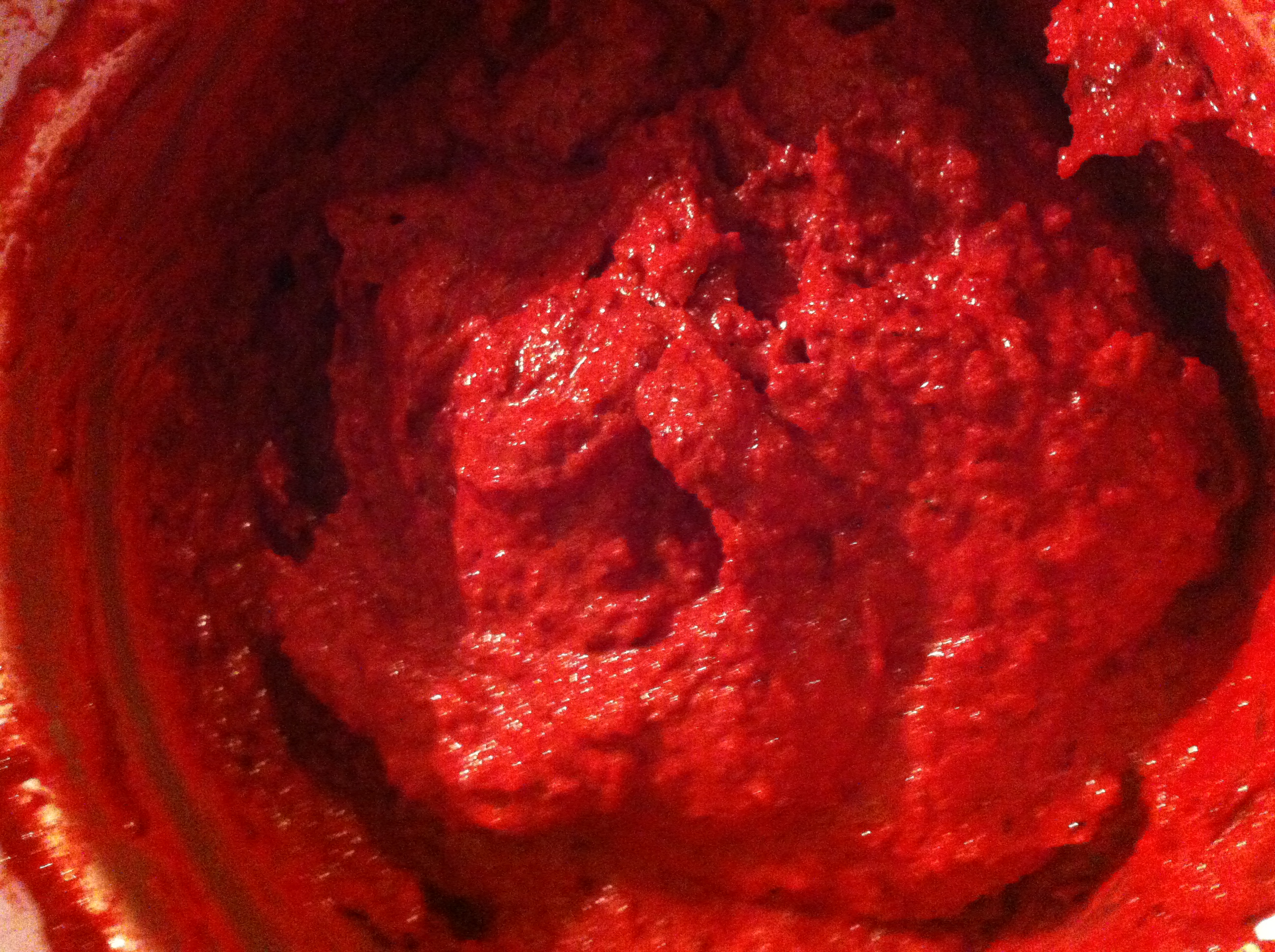
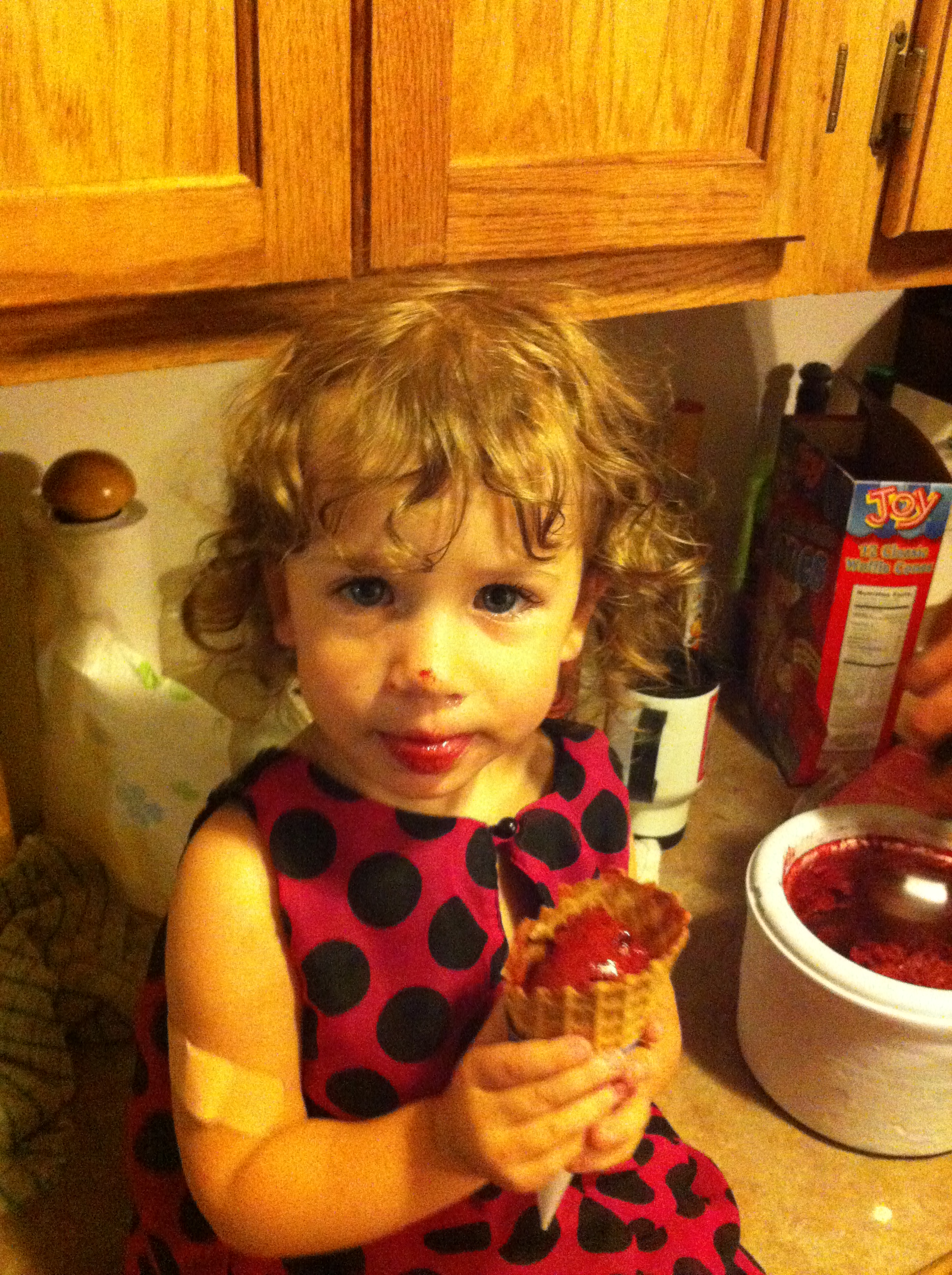
And, yesterday, I went on my own wild woman adventure picking wild raspberries with my kids. I wrote about it on Pagan Families and included a bonus recipe for wild raspberry sorbet:

…may I be reminded June 2013 024
of the courage and love
shown in small, wild adventures.

Wild black raspberries are ripe at my Missouri homestead and this morning I went on an expedition with my three children to gather what we could. As I returned, red-faced, sweating, and after having yelled much more than I should and having said several things I instantly regretted, I was reminded of something that I manage to forget every year: one definition of insanity is picking wild berries with a toddler. In fact, the closest I ever came to spanking one of my kids was during one of these idyllic romps through the brambles when my second son was three. While still involving some suffering, today’s ramble was easier since I have a nine and a half year old now as well as the toddler. This time, my oldest son took my toddler daughter back inside and gave her a bath and put her in new clothes while I was still outside crawling under the deck in an effort to retrieve the shoes and the tiny ceramic bluebird I’ve had since I was ten that my girl tossed over the railing and into the thorns “for mama.”

While under the deck, I successfully fished out the shoes (could not find the tiny bird) and I found one more small handful of June 2013 038raspberries. Since the kids were all safely indoors, I took my sweaty and scratched up and irritable self and ran down to my small, sacred space in the woods. I was thinking about how I was hot, tired, sweaty, sore, scratched, bloody, worn, and stained from what “should” have been a simple, fun little outing with my children and the above prayer came to my lips. I felt inspired by the idea that parenting involves uncountable numbers of small, wild adventures. I was no longer “just” a mom trying to find raspberries with her kids, I was a raspberry warrior. I braved brambles, swallowed irritations, battled bugs, sweated, swore, argued, struggled, crawled into scary spaces and over rough terrain, lost possessions and let go of the need to find them, and served as a rescuer of others. I gave my blood and body over to the task.

When I returned and showered, my oldest begged for me to make homemade raspberry sorbet with our findings. I’ve never made June 2013 063sorbet before and wasn’t sure I should dare try, but then I gathered my resources and said yes to yet another small adventure…

via Small Adventures (sorbet recipe included there!)

I’ve also been enjoying the wild, riotous blooms of summer:

June 2013 041June 2013 049 June 2013 037

Tuesday Tidbits: Parenting and Forgiveness

941838_548636858512641_1531752007_n

Via Art Therapy Without Borders

I’ve written before about being an introverted mama and how that introversion connects to my experiences of pregnancy, birth, and parenting. The challenge to my personality type was most intense with the birth of my first child and I sure wish I’d had access to an article like this one when I was in the early months of motherhood: A Guide to New Motherhood — as an Introvert – The HerStories Project

“…At the end of the day I can be emotionally and physically depleted. I’m simply done. I am often exhausted by the pace of my son’s constant chatter and need for constant verbal and physical engagement. I need to be alone — sometimes for hours — to recharge my emotional batteries. And then I’m back to normal self…”

Yep. And, that alone time is really, really hard to come by as a new mother and also as kids grow!

I also enjoyed an article about praise. Praise has taken its share of knocks from the alternative parenting community and I enjoyed how this article differentiates between casual praise and genuine praise and does advocate for plenty of genuine praise:

“…People in the big wide world can often be pretty short on praise. People in the natural parenting world can get their knickers in a tremendous knot about it. I know how it makes me feel. And sure I should be a big enough person, and it shouldn’t matter, I should just instinctively know how great I am. But truth is I don’t. And it does matter hugely. To me and most people I know. To be honest I don’t enjoy spending time round people who are totally convinced of their own awesomeness with no room for a compliment top-up…”

Good Job… In Praise of Praise!

If you don’t praise kids enough they may never forgive you…just kidding…but, I’m trying to segue into my next topic which is about forgiveness. After my grandma’s memorial services and our time spent with extended family over the last couple of weeks, a couple of articles caught my eye, the first with regard to choosing not to take offense:

282372_517500868286231_483981038_n

And, as always, I have more books I want to read than there are hours in a year. (photo credit not known)

I have been doing much pondering on this subject since. There are so many examples in our community of individuals and groups being offended and shutting down the ability for divinity to be a guiding force in our communications. Individuals see their relationships as in service to self rather than as in service to others. Over time I have witnessed multiple examples of people expressing that it is a positive thing to let go of relationships that no longer “serve them”.

What my recent experience has reinforced in my life is that taking offence in conversations is an expression of personable ego. Those with whom I disagree are valued partners in my journey; that my relationships and friendships are about my service to my friends, associates and community, not their service to me…

via Pagan In Paradise: The Courage To Not Be Offended, Powerful Magic.

And the next, the radical notion that perhaps there is nothing to forgive:

3. Consider that there’s nothing to forgive.

Over the years I’ve thought about the shift that happens when we go from feeling angry and hurt to loving and peaceful.

Are we learning forgiveness or do we simply reach a point where we now see there was nothing to forgive in the first place?

Is forgiveness so tricky because the real “cotton dress running through the fields” feeling we’re after only comes once we realize there’s nothing to forgive??

To help me wrap my head around this I find it helpful to consider the larger picture. As in, outer space large:

I imagine a kinder, wiser and more compassionate version of myself sitting on the moon, perhaps kicking back on a deck chair drinking a margarita with Alice Kramden, looking down and watching, as the earthly me muddles my way through life…

Watching myself hold onto dodgy beliefs and making some epic mistakes.

Watching children around me born into challenging times and how this affects their sense of self-worth and how easily this passes on to others.

Watching us all learning to love ourselves unconditionally—trying, failing, and even succeeding, as we do.

And I figure this wise margarita-drinking self would conclude that everyone in their own unique way was doing their best.

And when you think about it, if everyone’s doing their best, what’s to forgive—doing your best?

Toss around the idea: “Forgiveness is understanding there’s nothing to forgive.” It’s big, but when it sinks in, it really helps.

via 3 Unconventional Tips for Forgiving and Letting Go.

Being a parent has given me compassion for most parents, past, present, and future, and how they are trying their best and that they are just people, no more, no less. We may have experienced our parents as something more powerful and dramatic, but really, they were just like us. Are we perfect? No. That means that it is okay that they weren’t either. Nothing to forgive. Ditto with friendships—if we ourselves are not a perfect friend, and I guarantee we’re not, it is impossible, unrealistic, and even cruel to expect that our friends will never do anything “wrong” and never, ever hurt our feelings. Nothing to forgive.

Tuesday Tidbits: Vacation!

When this post publishes, we’ll be in an airplane on our way home from our vacation to California. Our first purpose in going was for my grandma’s memorial services, but we decided to make a full-scale trip out of it. We went to Disneyland, to Legoland, and to go tourmaline mining. We went to Fresno for my grandma’s committal, which I planned and facilitated, and for her Celebration of Life luncheon, which was beautifully planned by my aunt and had an excellent and touching turn out (260 people when we only planned for 200). Then, we ended with four days at Pismo Beach where my uncle has a condo. Everything went well overall and I will post some trip picture albums soon. For my Tuesday Tidbits this week though, I’m just offering a couple quick shots:

IMG_7498

Lann ended up going on Space Mountain three times! I like this picture because the strangers behind us look so casual and like they should be on an ad for Disneyland.

IMG_7561

Playing at the beach in Carlsbad.

IMG_7568

Waiting for the gate to open at Legoland! We went on Memorial Day, which I was dreading, and it was shockingly deserted!

IMG_7590

Couldn’t resist a pic with Lego Indy because he’s holding a birth goddess! The classic golden “idol” from Raiders is really an Aztec birth goddess figure—for some reason in the big Lego version, there is no baby emerging though. 😦

IMG_7352

Alaina loved the “tea party ride.”

IMG_7359

Had to have one of these iconic pix, taken by friendly passerby!

IMG_7622

Lego Darth Vader!

IMG_7632

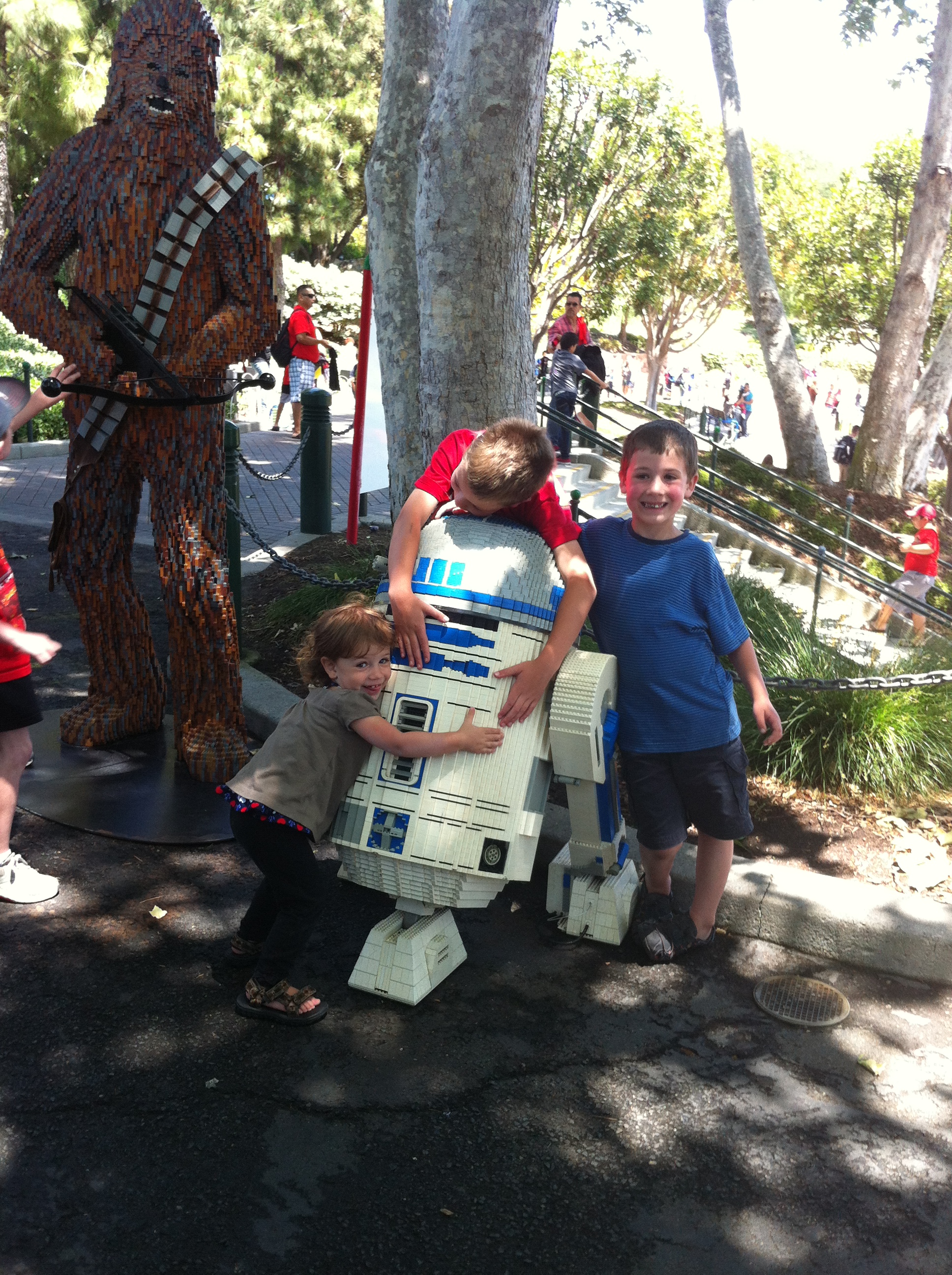
We were dragging by the time we got to Miniland and to Star Wars land, but these guys were so cool!

IMG_7651

IMG_7631

IMG_0273

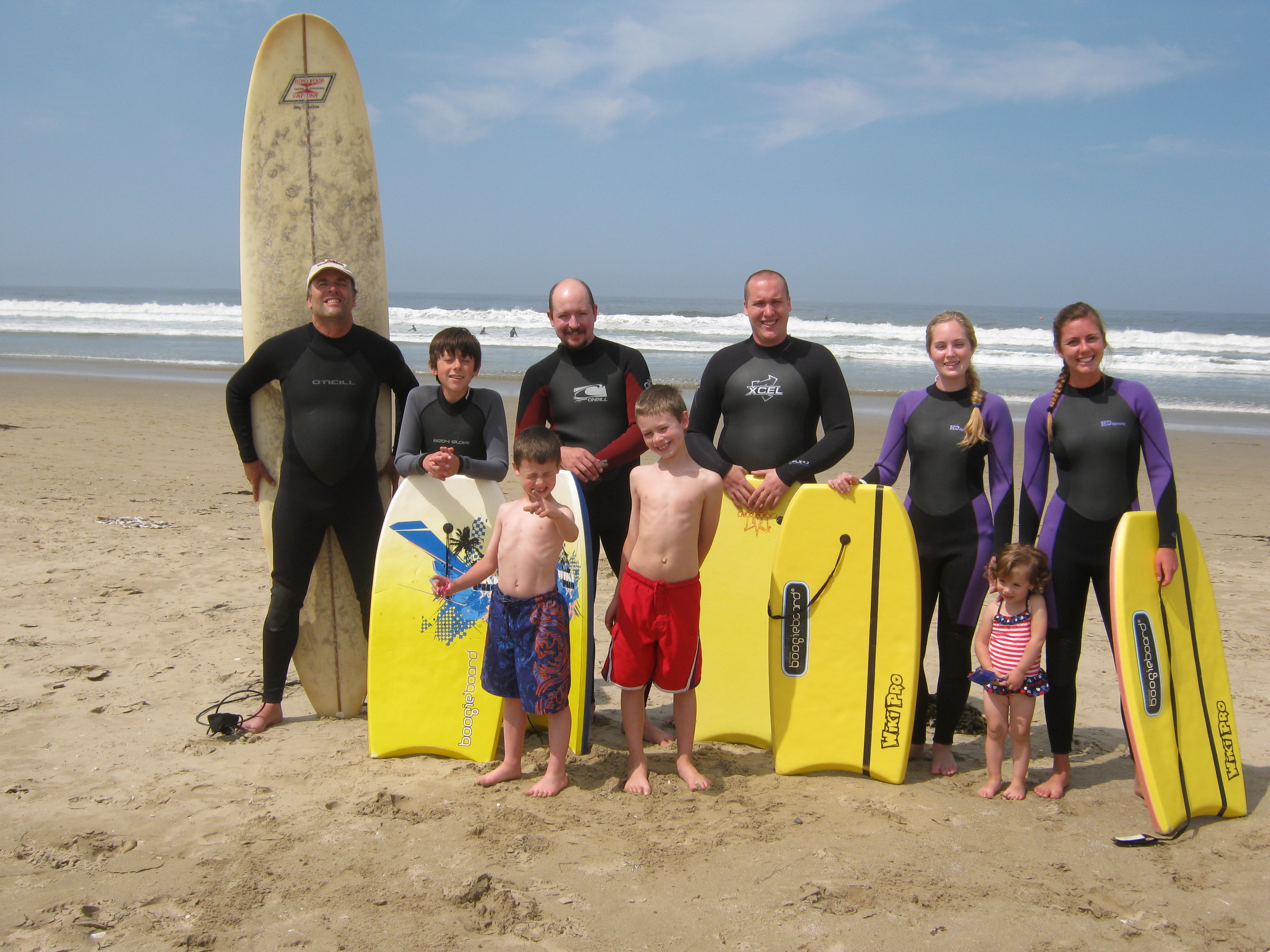
 The crew getting ready to catch some waves. My brother and sister-in-law, plus my uncle and cousins and Mark. (I love Zander in this picture!)
 

My uncle showed us how to take silhouette pictures at sunset at Pismo and I love how they turned out. 972019_10151924432264256_2006971388_n 931168_10151924432394256_435101882_n

Okay, so that was more pictures than I originally thought!

I’ve heard my grandma’s blue hydrangea is blooming at home and I miss my woods and my own house! Homeward bound…

Tuesday Tidbits: Speaking Birth

Someone came to my site recently by searching for: “how to speak birth.” What do you think? How do you “speak birth” in a way that reaches women?

I asked this question on my Facebook page last week and got several responses:

  • With our stories.
  • Every woman is different. You listen to her. Then you respond
  • Speak it forward. Speak everything forward.
  • I speak birth from an awareness stand point, in a non biased stance and of course judgment free and I do A LOT of listening first.

This question also made me think of some of my own past writing about the language of birth and why it is that how we speak birth matters:

Birth Talk

Health Care or Medical Care?

Maternal-Fetal Conflict?

Pain with a Purpose?

Perceptions of Pain

Words for Pain

Consumer Blame

Cut here?? What not to say to pregnant or laboring women…

I also re-read one of my own articles as I worked on a lesson for one of my classes:

“…I also think, though I could be wrong, that it is possible to plan and facilitate women’s rituals that speak to the “womanspirit” in all of us and do not require a specifically shared spiritual framework or belief system in order to gain something special from the connection with other women…”

After sharing the link on Facebook, I got a lovely comment from a midwife sharing that she shares my handouts with her clients in Trinidad and Tobega and I was humbled at how my “talking birth” in this form reaches out across the ocean and around the world. This is why I keep writing, even when I get discouraged and feel like it is an “indulgence” of some kind to write and blog.

While not about birth, but still related to the  overall theme—perhaps how we speak sisterhood—one of my Facebook friends validated my stressed and overwhelmed experiences/feelings of the past month with an “of course” response and I really appreciated it!

“Through the act of controlling birth, we disassociate ourselves with its raw power. Disassociation makes it easier to identify with our ‘civilized’ nature, deny our ‘savage’ roots and connection with indigenous cultures. Birth simultaneously encompasses the three events that civilized societies fear–birth, death, and sexuality.” –Holly Richards

via The Of COURSE response… | Talk Birth.

talkbirth

Tuesday Tidbits: Postpartum Mothering

Some honest, nitty-gritty, lovely, and poignant looks at motherhood today…

Beautiful print of a babyloss mandala by Amy Swagman. My mom surprised me with this for my birthday after thoughtfully contributing to our Amethyst Network fundraiser and receiving the print as a premium.

Beautiful print of a babyloss mandala by Amy Swagman. My mom surprised me with this for my birthday after thoughtfully contributing to our Amethyst Network fundraiser and receiving the print as a premium.

First, I very much enjoyed this article about the painfulness many women experience as they transition into motherhood. This may be re-experienced/re-visited with each baby, or perhaps the initial challenge fades into the background of memory, unless you actively acted to preserve it.

…For me, and for many other women, being a new mother is hard. It can be hard in a million different ways: painful physical recovery from a difficult birth, breast-feeding problems, colic, tensions with your partner, sleep problems. It’s also just hard on its own, on top of and in between all these other challenges. As a friend of mine said, “I knew it would be hard, but I didn’t know what ‘hard’ would feel like.” We thought it would be sitcom-style hard—not necessarily with a feel-good resolution at the end of every episode, but at least punctuated by those frequent moments of uplift indicating that, in spite of everything, life really is beautiful, isn’t it? I’m pretty sure it’s like that for some people, but for many of us, it’s not. For many of us, it’s not good hard, as in a “good hard workout”; it’s bad hard, as in, it sometimes feels like something bad is happening to you…

Before I Forget: What Nobody Remembers About New Motherhood – Jody Peltason – The Atlantic.

I recognize that many mothers do not have difficult transitions in postpartum, but I certainly did, and the period of time following the birth of my first baby remains fixed in my own memory one of the most pivotal, painful, challenging, and transformative times of my life as a woman. Perhaps it is more fixed, because I did write about it and the rawness and the struggle is preserved in those words from the past. This article reminds me of my own past thoughts:

When I had my first baby, I would see women who were pregnant and feel almost a sense of grief for them—like, just wait, you have NO idea what is coming. I also told my husband more than once: “this is both more wonderful and more HORRIBLE than I ever could have imagined.” The fear of being thought a “bad mom” is SO powerful that it keeps us quiet about many things. I’ve felt more than once that my kids were “torturing” or me or literally trying to crush my spirit/soul. It sounds horrible to type it out, but that is how I feel sometimes! I’ve also written about how it interesting to feel both captivated AND captive. Bonded and also bound. I discovered that there was a whole new section of women’s rights I hadn’t even been aware of prekids–mother’s rights. I do think many, many women have written about this, but when you start out you feel like you’re the only one whose “daring” to mention the ugly side [she’d also mentioned, “why doesn’t anyone write about this?” Um, they totally do. A lot]. Start reading “momoirs”—they’re a lifeline! So many good ones out there. I have a big collection of them. Oh, and start reading Brain, Child magazine. The best look at real mothering I’ve ever know.

via What to tell a mother-to-be about the realities of mothering…

See also:

Postpartum Survival Tips

Birthing the Mother-Writer (or: Playing My Music, or: Postpartum Feelings, Part 1)

Postpartum Thoughts/Feelings, Part 2

Postpartum Feelings, Part 3

The time of danger, what needs to be survived, comes at different times for mothers. For me, it came early — during my [child]‘s infancy.” ––From Sleeping Beauty & The Fairy Prince: A Modern Retelling By Cassie Premo Steele

Ever since my first child was born over nine years ago, I’ve been talking about writing an article about the tension between choices and that whatever it is you’re doing, you can be blamed for the outcome later—i.e. “you let me co-sleep, and now I have lifelong sleep problem” OR, “you didn’t co-sleep and now I have lifelong abandonment issues!”

So, I appreciated this humorous look at how you’re doing everything wrong:

Everybody’s always trying to figure out how to do it right.

What’s “best” for my children? What can I do to raise the healthiest, most well-adjusted kids possible?

How can I do it “right?”

Well I think we should reframe this whole discussion into a simple recognition that we’re doing it all wrong.

Everything we do, it’s wrong.

Every decision is the wrong decision. And I have proof. Check this out.

via So basically, you’re doing everything wrong always – renegade mothering.

In a happier tone, I very much enjoyed this sweet post about the end of the breastfeeding relationship:

I’m hoping that buried in the corners of my children’s minds, along with all the other lovely things, there are some memories of breastfeeding that will be there all their lives. As for me, it’s not so much a corner of my mind as an overflowing treasure chest.

via Lonely Scribe: Of milk and memories: how my breastfeeding story ends.

I was very grateful for my own breastfeeding relationship last week when we took Alaina in for her dental work under general anesthesia at an outpatient surgery clinic. After it was over, we nursed and nursed and nursed. It was healing and renewing for us both and it meant I didn’t have to worry about her getting enough to eat or drink after being groggy and having a sore mouth. Interestingly, while she was under, we went ahead and had her upper frenulum clipped (I’ve thought for a long time that she had a upper-lip tie) and it has made such a surprising difference in how comfortable it feels to nurse her. I think I had adapted to a low-level of irritation and discomfort throughout the entire two years that I’ve nursed her.

The day after surgery: showing off new teeth (the previously poorly repaired ones WERE able to be saved!) as well as a new baby chick!

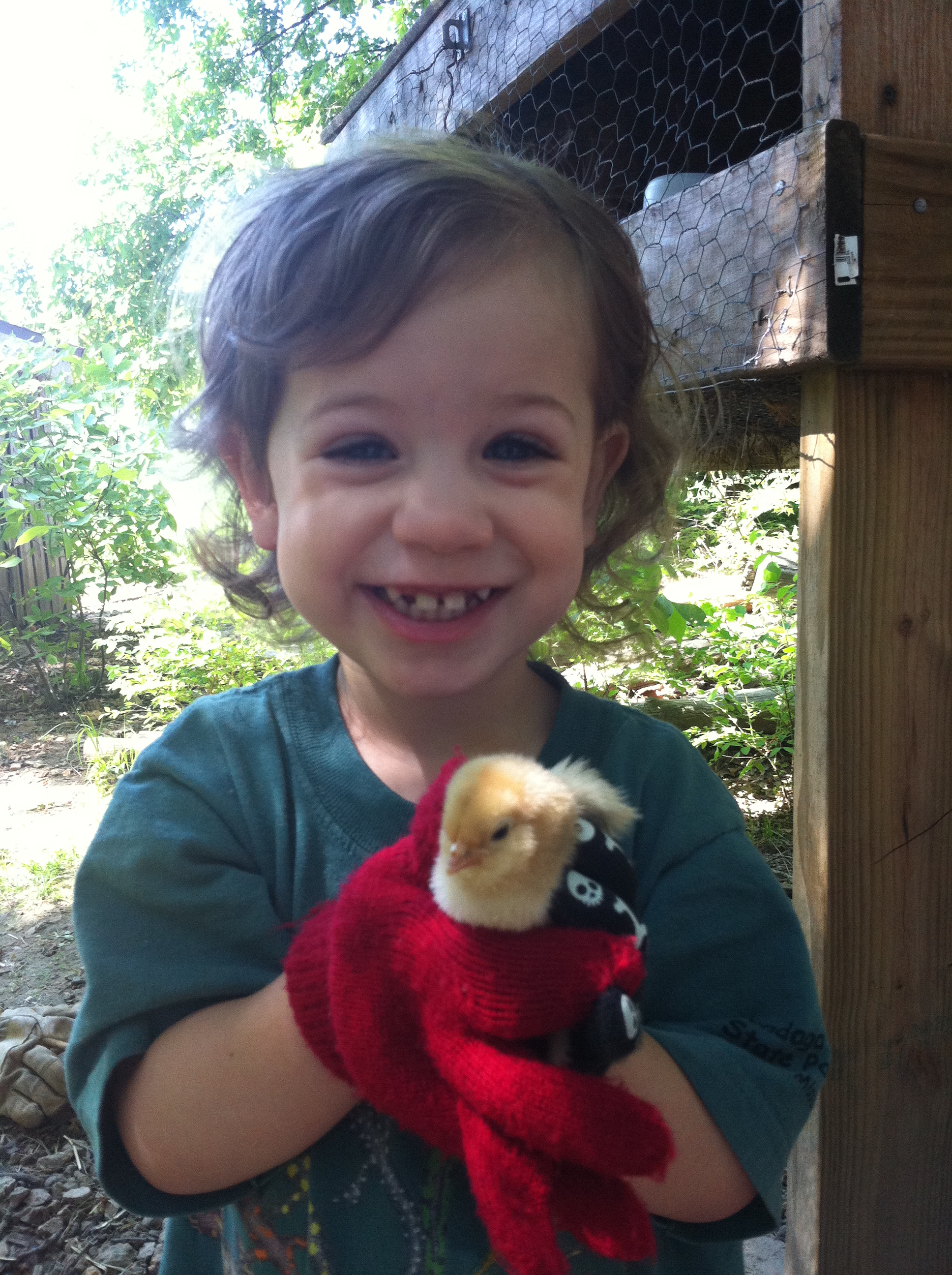
The day after surgery: showing off new teeth (the previously poorly repaired ones WERE able to be repaired and saved! I went in thinking we’d be coming home with a [more] toothless girl) as well as a new baby chick!

Tuesday Tidbits: Breastfeeding

It is almost too late to call today Tuesday, but I’m squeaking this post in anyway! Breastfeeding articles have been catching my eye this week, MollyNov 109specifically this one about the life-saving benefits of human milk for the critically injured:

But one exciting question is still unanswered: can breast milk be used medicinally as treatment in babies –and even older children and adults– who may not have been breastfed? There is a growing body of evidence suggesting all sorts of uses for breastmilk as treatment of adult disease.   Ads may say, “Milk: Does a Body Good” but in all likelihood, human milk can do a body, any body, better.  

Baby Charlotte Rose wasn’t breastfed. Until the age of 11 months, she was a happy, healthy little girl.  All that changed radically when she suffered a traumatic brain injury…

via Miracle Milk® Helps Heal Brain Injured, Formula-Fed Baby | Best for Babes.

And, since the politics of breastfeeding are endlessly fascinating to me, I was curious to read this article by the mother who caused an unanticipated media stir last year with her breastfeeding-in-uniform pictures:

Whoever said a picture can speak a thousand words was right, even when I could speak none. A group of breastfeeding women, including myself, all took part in a photo shoot with the intentions of  letting others know breastfeeding is possible regardless of your situation. My main contribution, or so I thought, was that I happened to have twins. Boy was I wrong. Another woman and I, who both served in the Air National Guard, also took pictures in our uniform to show that even those serving could also breastfeed. We were both prior active duty so we knew the struggles of both being full-time and part-time military. Contrary to popular belief, we did get permission to take the pictures. After the pictures were taken, we were going to consult the law office on base and get permission for the photos and positive quotes to go along with them with the goal of having them put into women’s exam rooms…

via Terran McCabe: The Air Force Breastfeeding Mom Finally Speaks Out – I Am Not the Babysitter.

While some recent breastfeeding research with a very limited sample is making headlines under the misleading title that “supplementing newborns with small quantities of formula may improve long-term breastfeeding rates,” The Academy of Breastfeeding Medicine published a helpful post breaking down the research and drawing more accurate conclusions:

A small study published in Pediatrics suggests that supplementing newborns with small quantities of formula may improve long-term breastfeeding rates. The results challenge both dogma and data linking supplementation with early weaning, call into question the Joint Commission’s exclusive breastfeeding quality metric, and will no doubt inspire intimations of a formula-industry conspiracy. Before we use this study to transform clinical practice, I think it’s worth taking a careful look at what the authors actually found.

First, I think it’s very important to be clear about what the authors meant by “early limited formula.” The authors used 2 teaspoons of hypo-allergenic formula, given via a syringe, as a bridge for mothers whose infants had lost > 5% of their birthweight and mom’s milk had not yet come in. At UNC, we use donor milk in a similar way, offering supplemental breast milk via a syringe as a bridge until mom’s milk production increases.

This is very different from the way that formula supplementation is handled in many US hospitals. We know that in the US overall, 1/4 of breastfed infants are given formula by day 2 of life, and that number reaches as high as 40% in some areas. Typically, when a family member expresses interest in giving the baby some formula, a hospital staff member plunks a 6-pack of 2-oz bottles of ready-to-feed formula in the baby’s bassinet with no instruction about how much to feed. A neonate whose stomach holds one to two teaspoons gets 2 ounces (12 teaspoons) of milk poured into him. The baby then sleeps for the next four to six hours, like someone who’s just over-indulged at a Thanksgiving buffet. In this scenario. Mom doesn’t get any breast stimulation, and family members all express relief that “finally the baby is happy.” When baby finally wants to eat again, there are five more convenient, ready-to-feed, six-hour-nap-inducing bottles sitting in the bassinet. This does not tend to help mothers breastfeed successfully. I worry that the headlines from this study — such as “How Formula Could Increase Breastfeeding Rates (TIME)”  and  ”How Formula Can Complement Breastfeeding (NYT)” —  will translate into “a six pack of formula back in every bassinet!”

via Early, limited data for early, limited formula use | Breastfeeding Medicine.

Note that the benefit of this very specific type of early supplementation can also be achieved via donor milk. The research does not actually “prove” that formula is helpful for breastfeeding, but that for certain mother-baby dyads, supplementation of some kind via syringe is helpful. This is NOT the same thing at all as supplementing with a two ounce bottle of formula!

I was glad to see Dr. Newman chiming in on the comments with his no-nonsense opinion: “I also love it how they say their results may not be applicable elsewhere because they live in a community where women are eager to breastfeed and 98% initiate breastfeeding. So surely they must find ways to give these babies formula…”

Speaking of Dr. Newman, the conference registration form and website are finally available for the upcoming LLL of Missouri conference in June. I learn so much at LLL conferences and I’m very much looking forward to this one as well. Dr. Newman is the special speaker. I heard him speak at the CAPPA conference last year and he is not to be missed! I’m also speaking twice at this conference, but Dr. Newman is much more exciting than me! 😉

Tuesday Tidbits: Writing, Reading, Rituals

There is an open, flexible, compassionate way of relating to everything we experience, including natural disasters and sudden death. It is not so much a process of learning how to ‘get over’ a profound loss, but rather how to allow it to be there, lightly, gently, like a fine thread woven forever into the tapestry of who we are.” –Nancy J. Rigg (previously used in this post)

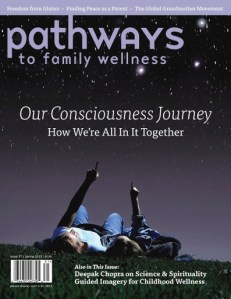
I know it is boring to hear about how busy someone else is, but I’m barely keeping my head above water recently. I’m sad that my blogs are sinking to the bottom of my list, because I do so love to write and I have ideas for new blog posts every single day. And, every single day, no matter how long the to-do list is, I have a secret plan that I’ll work like the wind and finish everything else on my list and then I’ll still have time covershot-37“left over” in which I’ll actually get to write the imagined posts. Just isn’t happening this week though. I haven’t even read any birth articles to share thoughts from! However, past self, who apparently had some more time to spare than current self, did produce some work that has given me fodder for this week’s Tuesday Tidbits post. I was pleased as can be to have my article, Breastfeeding as an Ecofeminist Issue, published in Pathways Magazine this quarter. There are precious few opportunities remaining to be published in a print magazine for natural parents and there is just something extra special about having an article published in a full-color, real magazine 🙂 They sent me a pdf version of the article to distribute on my own website and so I’m doing just that. For the nicely printable pdf version, click here.

We are mammals because as a species we nurse our young. This is a fundamental tie between the women of our time and place and the women of all other times and places as well as between the female members of every mammal species that have ever lived. It is our root tie to the planet, to the cycles of life, and to mammal life on earth. It is precisely this connection to the physical, the earthy, the material, the mundane, the body, that breastfeeding challenges men, feminists, and society.

Breastfeeding is a feminist issue and a fundamental women’s issue. And, it is an issue deeply embedded in a sociocultural context. Attitudes towards breastfeeding are intimately entwined with attitudes toward women, women’s bodies, and who has “ownership” of them. Patriarchy chafes at a woman having the audacity to feed her child with her own body, under her own authority, and without the need for any other. Feminism sometimes chafes at the “control” over the woman’s body exerted by the breastfeeding infant.

via Breastfeeding as an Ecofeminist Issue | Talk Birth.

Then, on my birthday last week, my contribution to a series of guest posts by feminist readers about children’s books appeared on First the Egg:

“Books have always been a huge part of my life, and I have many favorite and noteworthy books from my childhood. When considering the question though, one quartet immediately came to mind since two of my children are in fact named after one of the characters–the same character, no less! The Song of the Lioness quartet by Tamora Pierce is the tale of Alanna, who disguises herself as a boy in order to train as a knight. Alanna is a very kick-ass girl, and though she is small and petite, she learns to be an awesome knight, in fact the very best. She develops close friendships with the other squires while managing to guard her secret from most, even through the changes of puberty, until her final test of knighthood. These books have magic and battles and bullies and evil sorcerers and a talking cat and a Great Mother Goddess who takes a special interest in Alanna.”

via children’s books from feminist readers: the other Molly.

And, as far as reading that I’m supposed to be writing about, I’m really looking forward to finishing my book review of The Midwife’s Tale by Sam Thomas and publishing the author interview I did with him.

I also read a fun treasure of a book called Thea Gallas Always Gets Her Man. It was a mystery about a pregnant-mother-of-three and aspiring lactation consultant who solves a murder mystery in between helping mothers with breastfeeding questions. Review forthcoming, I promise!

I’m also swooning with anticipation about reviewing the new documentary about Ina May Gaskin. My screening copy of Birth Story came in the mail this week and I’m hoping to have a few Birth Network friends over for a movie review night.

I’m wrapping up the session—teaching three classes at once is a LOT for a homeschooling, toddler-breastfeeding, LLL Leader, priestess, student, writer mama—and planning an extensive and complex trip to California for my grandma’s memorial. I’m honored to have been asked to plan and officiate at the ceremony for her committal service and also to give a speech at her celebration of life luncheon. Doing these things is really important to me and I’m pleased to be able to offer them as my gift, but at the same time they’re also tipping me over the edge into reallyreallytoomuchtodoandI’mgoingtofreakoutalittle territory. I spent a long time today crying and looking at pictures of my grandma on her Facebook page when I “should” have been grading. It still doesn’t feel real and I’m still staggered at the magnitude of loss I feel. I miss her. I’ve never landed on California soil without Mamoo living there and waiting to greet us.

200825_1884333220402_1748056_o

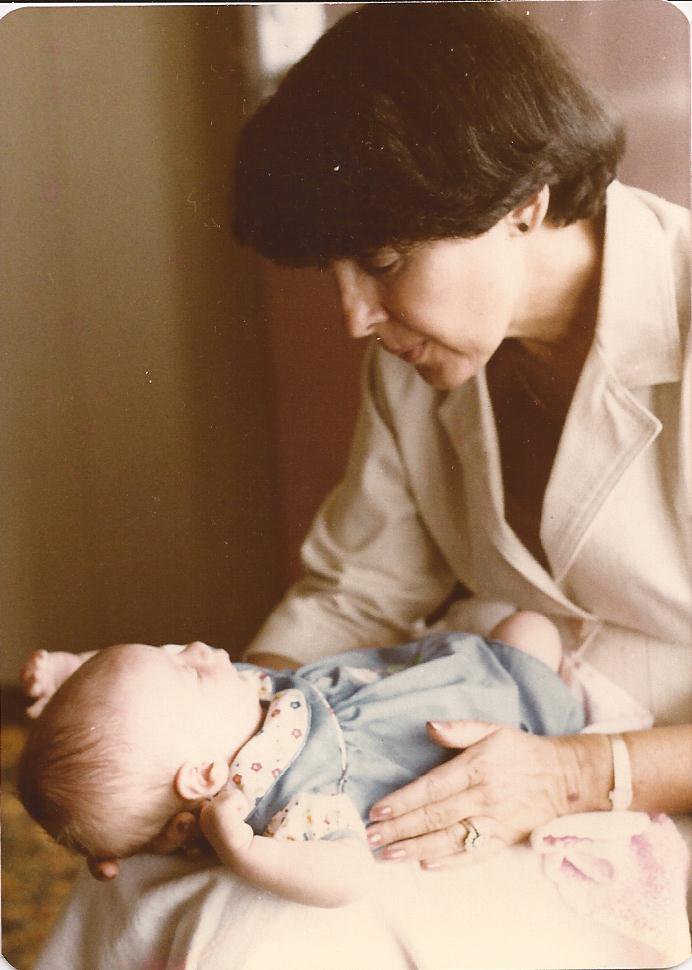
With Mamoo at one month old. Look how our lips are pursed in a matching fashion as we talk to each other!

I’m also finalizing the preparations for our spring women’s retreat at my house this Friday. Again, this is something that I feel very blessed to be able to offer to others, while at the same time I’m also freaking out a little and just not. able. to. rest. and be still, in the way in which I feel I need to do. However, I also feel like I really, really need this retreat. I truly need to do this, for my friends and for myself.

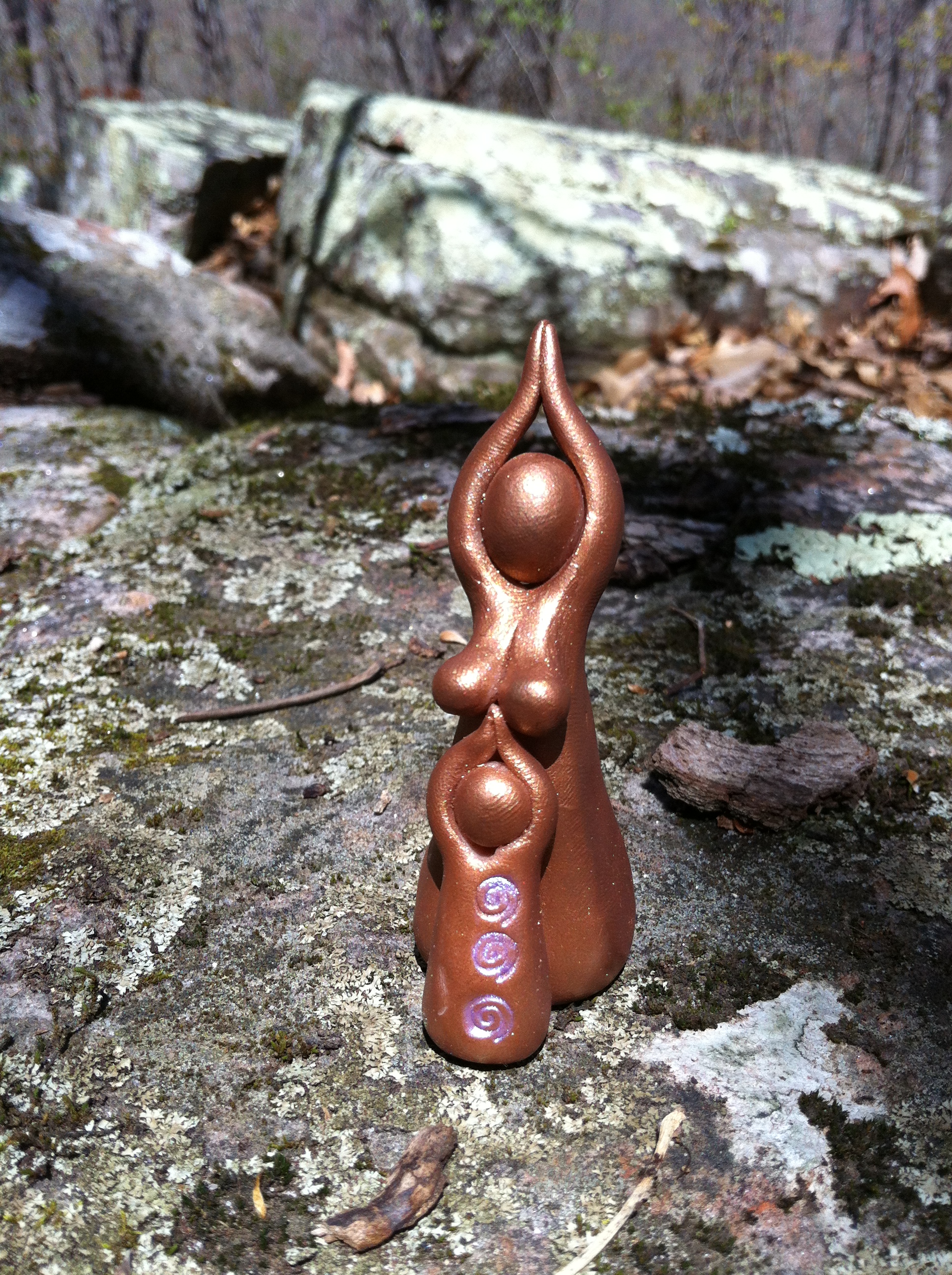
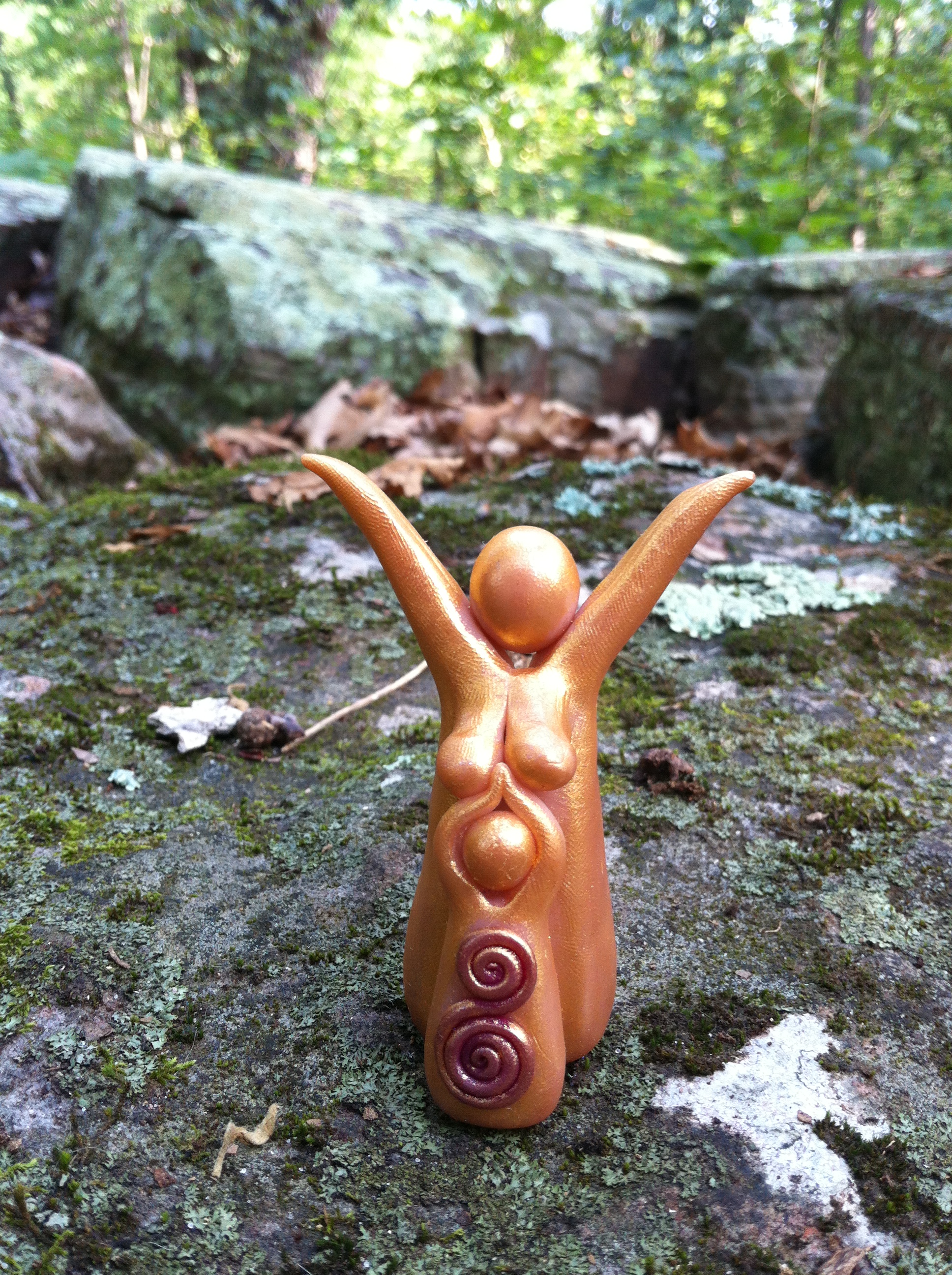
One of the custom VBAC sculptures I made while at Craft Camp made it to its destination and now I’m receiving further requests for them. I keep saying I’m not going to do custom orders because I just don’t really have the time, but these beautiful mamas write to me with their strong stories and their tender hopes and I feel compelled to make the figures they ask for…

April 2013 026 April 2013 028 April 2013 029

Thank goodness for Tuesday Tidbits! It means I’m guaranteed to write at least one post during the week. It gives me the focus, structure, and permission to be brief that I need in order to actually get something published, even if it is hastily organized and sloppily edited!

Tuesday Tidbits: Red Tent

April 2013 019

Dogwoods are blooming here.

“..by honouring the demands of our bleeding, our blood gives us something in return. The crazed bitch from irritation hell recedes. In her place arises a side of ourselves with whom we may not-at first- be comfortable. She is a vulnerable, highly perceptive genius who can ponder a given issue and take her world by storm. When we’re quiet and bleeding, we stumble upon solutions to dilemmas that’ve been bugging us all month. Inspiration hits and moments of epiphany rumba ‘cross de tundra of our senses…”
Inga Muscio

“The great mother whom we call Innana gave a gift to woman that is not known among men, and this is the secret of blood. The flow at the dark of the moon, the healing blood of the moon’s birth – to men, this is flux and distemper, bother and pain. They imagine we suffer and consider themselves lucky…In the red tent, the truth is known. In the red tent, where days pass like a gentle stream, as the gift of Innana courses through us, cleansing the body of last month’s death, preparing the body to receive the new month’s life, women give thanks — for repose and restoration, for the knowledge that life comes from between our legs, and that life costs blood.
Anita Diamant

I have to be quick today—lots going on. I don’t know if anyone else is enjoying my little Tuesday Tidbits post series particularly, but I really love doing it, because it gives me an automatic structure for a post, a sense of focus rather than an open book of endless possibility, and also the ability to put something up quickly even admidst life swirls. And, I find it funny how things collect around a theme without me consciously trying to do so. What collected around me during the past week was Red Tent Resources again…

First, a short video about starting a Red Tent:

Then, this cool Lunation website where you can subscribe to a newsletter and receive a free guided meditation called Connect to the Red Threads.

And, I enjoyed an article called Menstrually Yours – Women Can Map Periods as a Path to Self-Awareness.

This article uses the same “seasons” metaphor for understanding the energy of your cycle that a lot of menstrual empowerment activists are using. This seasons idea has helped me find an enhanced place of understanding about my own ebb and flow of energy, enthusiasm, and creativity.

Winter is the first stage, when we bleed. Characteristically it’s the time of wanting to hibernate (or just hide under a duvet and eat chocolate). We are withdrawn and inward and it’s tough to focus and find a lot of energy, contrary to the images forced on us by the Bodyform adverts.

Spring is the week after when the bleeding has stopped and we suddenly feel more energised and sociable. We want to get on and often we get stuff done quickly and with grace and ease.

Summer is characterised by our really coming into fullness, it’s when we are ovulating and energetically we are fully blooming and really advancing.

Autumn is when we start the decline back into ourselves. Typically now we may experience some PMT, being a bit snappy or less tolerant than we were in spring and summer.

via Claire Snowdon-Darling: Menstrually Yours – Women Can Map Periods as a Path to Self-Awareness.

What I find transformative about this understanding is the acceptance that comes from realizing what season I’m in and knowing that a new season is coming. Rather than get frustrated with myself during “autumn” or winter, thinking it means a permanent state of being, I say, “ah ha! This sense of needing to pull in and retreat. I know this. Time to break out some of those saved guided meditations, say no to things I can say no to, and sit down with a book and some tea.” Just a few months ago, I would have taken this impulse as a sign that my life is too crowded and I MUST. QUIT. SOMETHING. NOW. THINGS. MUST CHANGE. ARGHHHH. NO MORE! Now, I see that it is just a call for right now, for this little season, not a permanent change, just an honoring of body rhythms. Interestingly, I’m actually in the summer stage of my own cycle right now, which is the time I usually wait for and get a bunch of “stuff done” and scheduled to post so that when I feel withdrawn again, my blog can go on on its own. However, with my grandma’s dying process and my mom’s absence while she cares for my grandma in California, I actually feel extremely “autumn” right now and would like nothing better than to just lie down with a book and STOP. My kids and my students all need attention though.

And, I enjoyed this cool website too:

Birthing Art Birthing Heart is a website

that promotes, facilitates and offers examples of art made by woman.

Birthing Art Birthing Heart offers new ways for woman to explore what they are ‘birthing’ at any given moment.

via Birthing Art – Birthing Heart – Home.

Bringing it into the Red Tent theme, they have a current project called Bleeding Art, Bleeding Heart too.

Speaking of art, though it isn’t finished yet, I made a couple of new pieces about my grandma. This is the first one:

April 2013 038

The shells were supposed to be a spiral, not a “6,” but on such a small surface, I couldn’t spiral them any better.

Related past posts:

Red Tent Resources

Book Review: Moon Time

Moontime’s Return…