Archives

Plucking out the heart of mystery

Birth is a great mystery. Yet, we live in a rational, scientific world that doesn’t allow for mystery. ‘In this day and age, there must be a better way to have a baby,’ implies that if you are informed enough, strong enough, you can control it. Any woman who has given birth, who can be honest, will tell you otherwise. There are no guarantees. It is an uncontrollable experience. Taking care of yourself and being informed and empowered are crucial, but so is surrender. Forget about trying to birth perfectly. Forget about trying to please anyone, least of all your doctor or midwife…” –Jennifer Louden (The Pregnant Woman’s Comfort Book)

Twelve Steps to a Compassionate Life Amazon affiliate link included in text/image.

I’m halfway through a year-long class based on the book Twelve Steps to a Compassionate Life. We’re examining and practicing compassion to ourselves and in personal relationships, community relationships, and to non-humans. The subject of our current month is, “making a place for others.” What does this mean? The author explains…

I began to notice how seldom we “make place for the other” in social interaction. All too often people impose their own experience and beliefs on acquaintances and events, making hurtful, inaccurate, and dismissive snap judgments, not only about individuals but about whole cultures. It often becomes clear, when questioned more closely, that their actual knowledge of the topic under discussion could comfortably be contained on a small postcard. Western society is highly opinionated. Our airwaves are clogged with talk shows, phone-ins, and debates in which people are encouraged to express their views on a wide variety of subjects. This freedom of speech is precious, of course, but do we always know what we are talking about?

Armstrong, Karen (2010-12-28). Twelve Steps to a Compassionate Life (Kindle Locations 1476-1481). Random House, Inc.. Kindle Edition.

I wonder about this sometimes in my own compulsion to blog—am I just adding to the digital cacophony out there, etc. and then that reminded me of a previously shared quote:

“A person who believes too earnestly in [her] own convictions can be dangerous to others, for absence of humor signals a failure in basic humanity.” –Thomas Moore (Original Self)

 Armstrong also makes this important observation:

Hindus acknowledge this when they greet each other by bowing with joined hands to honor the sacred mystery they are encountering. Yet most of us fail to express this reverence for others in our daily lives. All too often we claim omniscience about other people, other nations, other cultures, and even those we claim to love, and our views about them are frequently colored by our own needs, fears, ambitions, and desires.

Armstrong, Karen (2010-12-28). Twelve Steps to a Compassionate Life (Kindle Locations 1596-1599). Random House, Inc.. Kindle Edition.

We all do this so often. I find myself very annoyed when other people play “armchair psychologist” and yet still catch myself doing it as well. I also think about “gossip” and its role in human society. I think curiosity about the lives of others is normal and talking about other people’s behavior and experiences with them is also normal. I am most disturbed when those around me claim seemingly infallible understandings of the motives, characters, and psychology of others (in my classes, I remind students to “separate person from problem” and to “describe behavior rather than character”). It is very common for us not to even understand ourselves, so I find it interesting, frustrating, and surprising that we then seem to think we can have direct understanding of the inner workings and thought-processes of another person. “Instead of discoursing confidently on other people’s motives, intentions, and desires, we should recall the essential ‘mystery’ and realize that there is a certain sacrilege in attempting to ‘pluck out’ its heart to serve an agenda of our own.

What does this have to do with birth?

“Birth is life’s central mystery. No one can predict how a birth may manifest…Our dominant culture is anything but ‘natural’ so it is no surprise that childbirth, even with the most natural lifestyle lived by an individual family, sometimes needs intervention and medical assistance. This is not to say that any one mother’s efforts to have a natural childbirth are futile. Just that birth is bigger than one’s personal desires.” –Jeannine Parvati Baker (in The Goddess Celebrates: An Anthology of Women’s Rituals, p. 215)

When women’s choices are restricted in the birthroom or in access to compatible care providers, we’re plucking out the heart of mystery. When December 2012 073doctors or nurses “let” or “don’t let” a birthing woman do something, they’re plucking out the heart of mystery. When birth activists analyze a woman’s birth story for evidence of why things went “wrong,” we’re plucking out the heart of her rite of passage, of her story. When we fail to acknowledge the sociocultural context of breastfeeding OR when we cannot accept that a mother “couldn’t breastfeed,” we’ve plucked the heart of her mystery. When we need to have or know the “right answer,” chances are, we’re plucking the heart. And, we need to remember that…”Women’s surveillance of other women’s childbirth experiences–in this case, natural childbirth–can shape and constrain the individual choices women make in childbirth in much the same way medicalized assumptions about childbirth can.” (Christa Craven, Pushing for Midwives)
Armstrong goes on to explain…

Third, spend some time trying to define exactly what distinguishes you from everybody else. Delve beneath your everyday consciousness: Do you find your true self—what the Upanishads called the atman? Or does this self constantly elude you? Then ask yourself how you think you can possibly talk so knowingly about the self of other people. As part of your practice of mindfulness, notice how often you contradict yourself and act or speak in a manner that surprises you so that you say, “Now why did I do that?” Try to describe the essence of your personality to somebody else. Write down a list of your qualities, good and bad. And then ask yourself whether it really sums you up. Make a serious attempt to pin down precisely what it is that you love about your partner or a close friend. List that person’s qualities: Is that why you love him? Or is there something about her that you cannot describe? During your mindfulness practice, look around your immediate circle: your family, colleagues, and friends. What do you really know about each and every one of them? What are their deepest fears and hopes? What are their most intimate dreams and fantasies? And how well do you think they really know you?…How many people could say to you that you “pluck out the heart of my mystery”? In your mindfulness practice, notice how often, without thinking, you try to manipulate, control, or exploit others—sometimes in tiny and apparently unimportant ways. How often do you belittle other people in your mind to make them fit your worldview? Notice how upsetting it is when you become aware that somebody is trying to manipulate or control you, or when somebody officiously explains your thoughts and actions to you, plucking out the heart of your mystery…

Armstrong, Karen (2010-12-28). Twelve Steps to a Compassionate Life (Kindle Locations 1644-1658). Random House, Inc.. Kindle Edition.

The irony of the fact that I’ve just filled up a bunch of digital air space with my own opinions, instead of practicing this principle, isn’t lost on me. As I move through this month, in all contexts not just in birthwork, I would like to open more to this “heart of mystery” and to not knowing as well as to avoid the tendency to analyze and “understand” other people. I also wish to be mindful of plucking the heart out of anyone’s mystery—may I be a witness to their mystery and may they feel both seen and heard by me…

“Birth is always the same, yet it is always different. Like a sunset, the mystery is also the appeal to those who get up in the middle of the night to attend laboring women. While the sequence of birth is simple, the nature of the experience is complex and unique to each individual. No matter how much any of us may know about birth, we know nothing about a particular labor and birth until it occurs.” (emphasis mine) –Elizabeth Noble in Childbirth with Insight (previously shared here)


Blog Circle: New Beginnings and Most Significant Events

The January Blog Circle at The Amethyst Network has the theme of New Beginnings. This is perfect for me, since my pregnancy-after-loss “rainbow baby” was born in January. The Amethyst Network was named for the infant sister of one of the founders. Her name was Amethyst. We use “Amethyst babies” as a way to identify and label loss stories on the TAN blog and we are using “Garnet babies” to refer to babies born following loss. Garnet is the January birthstone and several of the founders have January rainbow babies. Several of us also have February miscarriages (amethyst is the birthstone for February). While this obviously isn’t a universal experience, this is how we personally make the connection between our choice to use gemstone names and our own experiences. Here’s the info about this month’s blog circle:

The loss of a baby is the end of something but it is also the beginning of something new. It takes time to find that new, to navigate and find your way in this new world you have been thrust into and to navigate and find your way into this new normal.

The New Year is also an opportunity for New beginnings. Many people set Goals and New Years resolutions to focus on for the year. It may be a time of letting go of the old and focusing on the new.

We have chosen the theme “New Beginnings” for our January Blog circle. The decision was based both on the New Year as well as the new beginning for the Amethyst Network. We have been redoing our website, redefining our mission and creating a space of hope and healing and a place of information for those who in the miscarriage/babyloss community.

We would love to have you participate in our January Blog Circle. The theme is New Beginnings. Was your loss a new beginning for you? Your next baby? How do you feel about the New Year? Are you in a place of letting go? Or embracing?

676

A lot of hopes and dreams rested on this little body!

My first loss was, in fact, a new beginning for me in many ways. That miscarriage-birth changed my life forever. It changed my worldview, it changed how I work with women, it changed my understanding of the world, it prompted a spiritual awakening, it changed the trajectory of my work and my focus, and it broadened and deepened the scope of what I’d like to offer in service to others. It was BIG. It was important. It was hard, it was scary, it was emotionally and physically painful, and it lasted a long, long time. It took the birth of my pregnancy-after-loss baby in January of 2011 to really feel “healed” from the scars of loss and so in this way, she was definitely a new beginning as well. I remember thinking during my pregnancy that there was so much riding on her—a lot for a little baby to shoulder—all of our hope, our fears, our very future of a family felt like it rested in her. And, I remember telling her, shortly before her first birthday—you, you healed me. In our conversations among The Amethyst Network board members, I’ve also shared that I didn’t feel completely healed until she reached her first birthday—until we taken one whole turn of the wheel together with her in my arms. And, in that way, I’m also not sure that we ever completely heal from loss—I know that one of the factors behind our decision not to have more children is a still, small, lurking fear of what if it started all over again? That would suggest that a scar on our lives remains (that isn’t necessarily a bad thing. Our scars are part of the landscape of being–of loving, living, risking, losing, learning, and changing).

Considering this topic also brought me an old question, previously posed in response to a midwife’s blog post, in which I ask the following:  What is the most significant event that shaped your life as a woman? As a mother? Are your answers to the two questions different?

My own answers have in fact been different. And, they have changed. Pre-loss, I described my postpartum journey following my first birth as the most significant event shaping my life as a mother. After the miscarriage-birth of my tiny son, the texture of my response and my definition of my life experiences shifted:

When originally writing this post, I was pregnant with my third son. That pregnancy ended very unexpectedly in November, rather than May, when my baby was born after almost 15 weeks of pregnancy. Interestingly, my experience of miscarriage has supplanted the birth of my other two sons as essentially the most powerful/significant and transformative event of my life. (My sense that his birth has “replaced” the birth of my other children as most significant makes sense to me, because though it is classed as miscarriage, it is still my most recent birth experience—all of their births stand out as special, important, and meaningful days and I will remember each with clarity for the rest of my life, but his birth is the freshest and most recent and came with the additional transformative journey of grief. And thus, when I think of giving birth or when I think back to birth memories or birth feelings, his birth is the first one that comes to mind.) Though I still “vote” for postpartum as the most significant event in my life as a mother, I now “vote” for my birth-miscarriage experience as the most significant event in my life as a woman.

Interestingly, my answer has evolved again since writing the post above and I would now include the entire pregnancy-after-loss journey as the most significant event in my life as a mother. It was hard, people. It was day in and day out and never-ending and so, so delicate. So tinged with hope and fear and so laden with meaning. As a woman, though, I’m not sure that my answer has changed. I need to think about it more deeply, but I think that miscarriage-birth is still it. Just as life divides cleaning between before kids and after kids, there is a dramatic, pivotal before miscarriage and after miscarriage that has shaped my female identity and understanding of myself.

567b

Preventing Culturally Induced Lactation Failure

281How often does it happen that women truly are physically unable to breastfeed?

No one actually has a solid answer to this question. The common estimate is a very hazy, “less than 1%.” I’ve said it, very hazily, plenty of times myself. But, what does that really mean? I’ve certainly talked with a lot of struggling mothers over the years—many of whom go on to continue to breastfeed successfully, but who might very well not have done so without encouragement, reinforcement, and practical suggestions. If they never reached out for help, might they have ended up as part of that semi-mythical 1%? How about those mothers that absolutely stagger me with their ability to keep going and keep trying when I would understand completely if they decided to quit and in fact question that I, personally, would have been able to continue if faced with the same obstacles—where do they fit in? Maybe just in the category box labeled amazing.

Yesterday, I read an article on the Breastfeeding Medicine blog that really shook my personal framework up a bit:

…I would argue that there’s a very fine line between “sensationalizing” and “truth in advertising.” Reproductive biology is imperfect — some couples can’t conceive, and some pregnancies end in miscarriage or stillbirth. The silence around these losses and the isolation that women have historically experienced has probably worsened the suffering for many women. On the other hand, emphasizing these risks and creating a culture of fear harms the majority of mothers who will have successful pregnancies and births.

Lactation is probably a few decades behind infertility and pregnancy loss in coming “out into the open” as a generally robust, but not invincible, part of reproductive biology.

via Establishing the Fourth Trimester « Breastfeeding Medicine.

Wow! Brain boggled in reading this. Heart clenched at thinking that I may have treated someone as casually in breastfeeding loss as other mothers have been treated over and over again in pregnancy loss. The author goes on to explain that women used to be blamed for having miscarriages and we just might be doing the same thing to women who physically can’t breastfeed. I have never in my wildest dreams considered adding “lactation failure” to my understandings of the things that can truly go wrong during the childbearing year. I usually consider, “some mothers are physically unable to breastfeed” to essentially be in the same territory as dragons and unicorns. I’ve remained firmly convinced for, like, ever, that it is culture that fails mothers and babies and not women’s bodies that fail. And, I truly wonder if it is ever possible (except for in cases of insufficient glandular tissue, metabolic disorders, breast surgery/removal, and clear physical malformations) to really tease apart whether a mother is actually experiencing lactation failure or sociocultural failure. I remain fairly convinced that in many cases it is impossible to know—but, that a mother (or physician) may certainly experience it as “lactation failure” and thus add that data point to the 1%. I have long maintained that a lot of people forget that breastfeeding occurs in a context and that context doesn’t necessarily support breastfeeding. However, I do also know from years of experience that motherbaby physiology can lead to problems too and we often overlook that in assertions about breastfeeding.

How do we get breastfeeding off to a good start?

At our 2011 Big Latch On event.

At our 2011 Big Latch On event.

How do we make sure that mothers do not experience sociocultural breastfeeding failure? It begins with the birth. Birth and breastfeeding are not discreet events—they exist on a biological continuum. When I attended the La Leche League International conference in 2007, there was an exciting emphasis on “the motherbaby” as a single psychobiological organism. The womb is the baby’s first habitat and following birth the baby’s “habitat” becomes the mother’s chest—otherwise referred to as “the maternal nest.” In short, a normal, healthy, undisturbed birth leads naturally into a normal, healthy, undisturbed breastfeeding relationship. Disturbed birth contributes to disrupted breastfeeding. In a previous article on this topic I wrote:

New mothers, and those who help them, are often left wondering, “Where did breastfeeding go wrong?” All too often the answer is, “during labor and birth.” Interventions during the birthing process are an often overlooked answer to the mystery of how breastfeeding becomes derailed. An example is a mother who has an epidural, which leads to excess fluid retention in her breasts (a common side effect of the IV “bolus” of fluid administered in preparation for an epidural). After birth, the baby can’t latch well to the flattened nipple of the overfull breast, leading to frustration for both mother and baby. This frustration can quickly cascade into formula supplementation and before she knows it, the mother is left saying, “something was wrong with my nipples and the baby just couldn’t breastfeed. I tried really hard, but it just didn’t work out.” Nothing is truly wrong with her nipples or with her baby,

I know that my birth experiences significantly impacted my breastfeeding experiences in that my babies were never separated from me after my peaceful, undisturbed births (one birth center, two homebirth). They went directly from being born to my breast, keeping the physicality and continuity of our relationship unbroken and undisturbed. That is not to say that we never experienced any challenges, I struggled with oversupply with all of them—which reminds me of attending another LLL conference presentation by Diana West in which she stated that she is seeing much fewer “normal course of breastfeeding” issues in her practice and instead of noticing an “epidemic of both low milk supply and oversupply.” She asked the room if we were noticing the same thing and many of us raised our hands. One possible theory is the amount of endocrine disruptors in our food supply. Again, is that actual lactation failure or is that ecological failure?!

Some time ago I wrote an article for the Friends of Missouri Midwives newsletter in which I asked for submissions regarding the topic of how birth experiences impact breastfeeding. A doula wrote to share her experiences:

My births definitely affected my breastfeeding experiences. I prepared extensively for my first child’s birth. I felt fully educated about birth and also breastfeeding. I planned and had a natural birth. Being empowered by that helped me know I could handle and be successful at breastfeeding too. My two unassisted births were “all me”. There was no one telling me what to do. I was confident in that and that also helped build my confidence one again in breastfeeding. I will also go on to say that not only did my natural hospital birth and subsequent home births help in breastfeeding, but also generally as a mother. They empowered me to know that I was capable of a lot more than I could ever imagine! (Which is great on a day with three little ones screaming around the house!)

 And, a local physician also had input about the question:

Gosh, my own experience–how can I know how my birthing influenced my breastfeeding?  Since the nursing part was so easy, and I birthed at home (thank heavens), well, how would I know if it would have been different if we had done it differently?  But I know this:  it is SO much easier being a breastfeeding supportive physician to home born babies than it was trying to support breastfeeding when the birth was distorted.  In my experience, the only other thing that makes that much difference is La Leche League attendance.  I think mothers and babies are designed to experience labor and birth and then breastfeed.  When things go differently–like when labor is started early for some reason, or when mothers don’t get to experience their labors and births because of epidurals or other drugs or cesarean  sections, then the breastfeeding is more likely to be challenged.

Babies are programmed to learn to nurse in that first hour after birth.  They need to be in contact with their mothers for that time to do that.  It doesn’t take much intervention to undermine that.  Our babies are working so hard, learning to live on the outside of the womb–changing everything, including their breathing, their circulation, their digestion, elimination, integrating new and overwhelming sensations–and also learning the complex skill of finding the nipple, grasping the nipple, holding the nipple, milking the nipple (and don’t forget to swallow and breathe!).  We should leave them alone and not ask them to do one more thing–like meet Grandma, or deal with the nurse, or warm back up from a bath.

So here’s my advice:  If you want to breastfeed and do it effortlessly:

1.  Get great prenatal care from the best midwife you can find

2.   Plan and achieve a home birth

3. Go to La Leche League regularly during pregnancy and nursing.

This doctor then wrote back to me again with some additional comments about breastfeeding and La Leche League:

La Leche League makes a BIG difference.  In my experience, mothers who are members have far fewer reasons to call me for advice (of any kind, really).  And when they do, they tend to be focused, easy-to-answer questions or requests.  So, instead of “my nipples hurt,” it is, “I’ve been reading/talking to/consulting with various sources and I think that I have nipple thrush.  The things I have tried haven’t worked and I am not ready to try Nystatin.  Can you prescribe this for me?”  LLL ladies ROCK!

I am convinced that a thousand little adjustments get made in the wise nursing circles–a comment made, a slight modification of a nursing  position, an encouraging word, a question asked, a behavior modeled.  With these gentle, under-the-radar moves, nursing just gets easier or stays easy.  The woman and her circle never consider that a “nursing problem” existed.  No big intervention needs to happen.

Without these “interventions” nursing problems DO develop, and then the rescue team gets called in–people have big feelings, do big or little interventions, they help or they don’t and people feel like heroes or failures and “breastfeeding problems” get into the story-telling.  But what gets lost is how easily these things are “prevented”.

Midwifery is like this.  Parenting is like this.  Life is like this.

I really appreciate her closing observations here about wise nursing circles. I believe it can be in these circles that we find the women who know and we can certainly give each woman who we come into contact with the best chance at preventing or overcoming culturally induced lactation failure.

Honoring Moontime

“The revolution must have dancing; women know this. The music will light our hearts with fire,
The stories will bathe our dreams in honey and fill our bellies with stars…”

–Nina Simons in We’Moon 2012

“A woman’s best medicine is quite simply herself, the powerful resources of her own deep consciousness, giving her deep awareness of her own physiology as it changes from day to day.”

–Veronica Butler and Melanie Brown

While lots of TV ads would have you assume that it is physical symptoms that “interfere” with a woman’s life during menstruation (i.e. cramps, bloating, whatever), I find it is the reverse—that normal life interferes with my body’s call. As I’ve tuned in more fully to my body’s moontime rhythms this year, I’ve realized that aside from the killer headache that heralds moontime’s approach about two days prior, I don’t really feel bad, sick, or particularly uck, during menstruation. It isn’t at all that I don’t feel well, it is that I feel like being alone, turning inward and away, withdrawing, and being creative. I feel like cocooning and feel easily disturbed/disrupted from that needed cocoon. It reminds me of postpartum and I’ve tried to explain to my husband that taking some time off from my regular roles to rest and be during moontime, truly makes as much sense as doing so during postpartum. I’ve also noticed emotional vulnerability to any criticism, increased irritability and impatience, and usually a monthly “breakdown” of some kind in which I generally decree that something MUST change ™, usually precipitating big life-revisions plans (maybe including charts/diagrams), long discussions, flawed self-analysis, harsh assessments, and endless ruminating along with self-recrimination. This is usually followed with an invigorating surge of energy, enthusiasm, and creativity on the actual first day of bleeding.

“When a woman begins her monthly bleeding, she has a very special vibration. The blood flow is cleansing as the old uterine lining is sloughed off, one monthly reproductive cycle ended. At menstruation, women have the chance to rid themselves of all old thoughts, habits, and desires, and be receptive to new visions and inspirations for the next cycle…

If a woman continues her normal routine at menstruation, then she loses a uniquely female opportunity for introspection. She also finds she gets more tired, irritable, and upset because her physical rhythm has slowed down. She needs rest, more time for meditation, and less time doing housework, cooking, working in the outside world, and taking care of children.” –Marcia Starck, Women’s Medicine Ways

After thinking these thoughts and reading the above paragraph, my attention was caught by all this totally relevant and interesting stuff on Facebook:

“…Could it be that women who get wild with rage do so because they are deeply deprived of quiet and alone time, in which to recharge and renew themselves?

Isn’t PMS a wise mechanism designed to remind us of the deep need to withdraw from everyday demands to the serenity of our inner wilderness? Wouldn’t it follow, then, that in the absence of quiet, sacred spaces to withdraw to while we bleed — women express their deprivation with wild or raging behaviors?…” —DeAnna L’am via Occupy Menstruation

And:

There is magic inherent in the menstrual cycle. Each cycle provides a woman with the opportunity to understand and read the messages her body gives her for any specific healing she needs. Each cycle creates the opportunity for as much spiritual growth and personal development that she could want. All a woman has to do to connect with that potential is simply to be with what is, her cycle, happening over and over.

~ Jane Hardwicke Collings, “The Spiritual Practice of Menstruation” Check out her fabulous work at MoonSong and at htttp://www.moonsong.com.au

via Occupy Menstruation

And, then this great idea. I’m working on this one! I really think for me it is also actually in the two days prior to bleeding that I really need to most withdraw and be alone…

HONORING OUR MOONTIME WITH EASE

You have to remove yourselves from duties! In our modern age, much of the honor for the female and her cycles has been lost… and it won’t be retrieved by members of the opposite sex!

We cannot rely on others to begin respecting us and our cycles, we must learn to respect ourselves enough to set our boundaries and realize our limitations AND our power!

DON’T work when you’re on your menses! Even if you still go to work, treat yourself with the care of one carrying a child. YOU are carrying yourself during this time!

Be your own mother and know when enough is enough.

CREATE your PERFECT existence.

~ Renæ Sunspirit, commenting on an earlier Moon Lodge post via Occupy Menstruation

More about solitude:

“The psyches and souls of women have their own cycles and seasons of doing and solitude, running and staying, being involved and being removed, questing and resting, creating and incubating, being of the world and returning to the soul-place…”

“In order to converse with the wild feminine, a woman must temporarily leave the world and inhabit a state of aloneness in the oldest sense of the word. Long ago the word alone was treated as two words, all one. To be all one, meant to be wholly one, to be in oneness, either essentially or temporarily. That is precisely the goal of solitude, to be all one. It is the cure for the frazzled state so common to modern women…”

Clarissa Pinkola Estés via TheGypsyPriestess

Via Wild Free Beautiful You

Via Wild Free Beautiful You

Wild Free Beautiful You

More about Moon Lodges:

The Moon Lodge is the place of women, where women gather during their menstrual time to be at-one with each other and the changes occurring in their bodies. Long ago, during this special time of moon cycles, women were removed from duties of family and allowed to retreat to the Moon Lodge to enjoy the company of their Sisters.

Traditionally, the Moontime is the sacred time of woman when she is honored as a Mother of the Creative Force. During this time she is allowed to release the old energy her body has carried and prepare for reconnection to the Earth Mother’s fertility that she will carry in the next Moon or month. Our Ancestors understood the importance of allowing each woman to have her Sacred Space during this time of reconnection, because women were the carriers of abundance and fertility.

As Grandmother Moon is the weaver of tides (the water or blood of our Earth Mother) so a woman’s cycles follow the rhythm of that weaving. When women live together in a common space, their bodies begin to regulate their menses and all will eventually have their Moontime concurrently. This natural rhythm is one of the bonds of Sisterhood.

Women honor their sacred path when they acknowledge the intuitive knowing inherent in their receptive nature. In trusting the cycles of their bodies and allowing the feelings to emerge within them, women have been Seers and Oracles for their tribes for centuries.

via moonsurfing.com via Occupy Menstruation

Why pay attention to this stuff anyway? Because of this…

“A woman who becomes aware of her cycle and inherent connection to the whole, also learns to perceive a level of life that goes beyond the visible; she maintains an intuitive link with the energies of life, birth and death, and feels the divinity within the Earth and herself. From this recognition woman deals not only with the visible and the earthly but with the invisible and spiritual aspects of her existence. It was through this altered state of consciousness that was taking place every month than the shamans/healers and priestesses, contributed to the world and to their own community its power, clarity and connection with the divine.”

Miranda Gray via Mujer Arbol

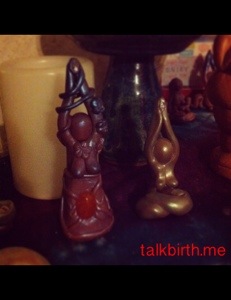
20121230-220625.jpg

New moontime goddess sculpture hanging out with “moontime’s return” sculpture from earlier this year.

I am a Story Woman

“The greatest gift we can give one another is rapt attention to one another’s existence.” –Sue Ellen quoted in Sacred Circles

“Human connections are deeply nurtured in the field of shared story.” –Jean Houston

I am a strong woman, I am a story woman…

I’m busy preparing for a New Year’s Eve ritual on Monday, the first ritual like this for which we will include all family members instead of just women. As I was getting our “family fireside circle” song sheet ready, my husband asked a question about one of the lines in one of the chants…I am a strong woman, I am a story woman…

“I’m not sure about this,” he said, “what is a story woman anyway?” I wasn’t able to give him a solid answer at that moment, but guess what, I am one.

In fact, didn’t I just write earlier this week that story holds the key to the reclamation of power for women? How and why does this work?

Because of these two things:

“The one who tells the stories rules the world.” –Hopi Indian Proverb

“We feel nameless and empty when we forget our stories, leave our heroes unsung, and ignore the rites of our passage from one stage of life to another.” –Sam Keen and Anne Valley-Fox

We need to hear women’s stories. We need to hear each other into speech. We need to witness and be witnessed. We need to be heard. We need to shift the dialogue of birth and, indeed, most aspects of women’s lives into powerfully positive “what if’s” and courageous explorations of our “negative” stories. When we hear the experiences of other women, of other people, sometimes it lights something in us and we are able to go forward in a way in which we would not have done without that story…

“Once the imagination has been kindled, we begin to see choices that we had never even seen before…but just seeing that we have different options and choices rarely gives us the strength we need to exercise these options. For this we need more than imagination. We need the courage to reach beyond ourselves, extending our hands to one another…” –Robin Deen Carnes and Sally Craig

And, then, this afternoon we had an ugly, sad, overtired, family-wide meltdown about homeschooling. I don’t really want to bother reliving the agony by typing up everything that happened, because we’re all back to normal now, but it was really the same old story. Parent suddenly gets bee in bonnet that kids (who are perfectly happy at the time pursuing their own interests and living robust lives) “should” be doing something different. Kid doesn’t live up to expectations and is, in fact, so unable to perform a very simple, basic task, that questions arise in parents’ minds about kid’s mental capacities. Parents feel personally responsible and like homeschooling parent failures as well as annoyed with kid who should know this already. Brief ranting and raving ensues along with hurt feelings. Sweeping pronouncements are made about what needs to happen to transform all of our lives into properly performing homeschooling bliss.

During this time, I abruptly decided this was IT, I HAVE TO STOP BLOGGING. I cried and cried. I don’t want to quit, but, if I can’t do homeschooling properly I certainly don’t deserve to be a blogger. And, then I remembered these quotes about stories and I especially remembered this one:

“As long as women are isolated one from the other, not allowed to offer other women the most personal accounts of their lives, they will not be part of any narratives of their own…women will be staving off destiny and not inviting or inventing or controlling it.” –Carolyn Heilbrun quoted in Sacred Circles

mollyatparkAnd, also this one:

Telling our stories is one way we become more aware of just what ‘the river’ of our lives is. Listening to ourselves speak, without interruption, correction, or even flattering comments, we may truly hear, perhaps for the first time, some new meaning in a once painful, confusing situation. We may, quite suddenly, see how this even or relationship we are in relates to many others in our past. We may receive a flash of insight, a lesson long unlearned, a glimpse of understanding. And, as the quiet, focused compassion for us pervades the room, perhaps our own hearts open, even slightly, towards ourselves.

–Robin Deen Carnes & Sally Craig in Sacred Circles

And, just last night, I got a beautiful thank you note for the Mindful Mama essay that I wrote in 2008 and that was updated/published in 2011. My stories, my words, were serving as “medicine” for another woman while I was cooking dinner last night, even though I actually wrote them several years before. That is story power. I am a story woman.

Last month, I had an email chat with a friend about why we write in the first place. She’d written a blog post about her family and as I read it I was reminded of how glad I am I blog and why I don’t want to give it up. Her post was a post like that—one that will bring back a whole collection of memories that have slipped from conscious memory. At the time of our exchange, I’d been looking back at some of my own old posts and found the ones I wrote about Pinterest day and it was so much fun to re-read them, because I’d already forgotten some of the recipes we’d tried. And…that was only after like six months have passed. It will be even more fun in a couple of years 🙂 I can remember having this fear (or whatever) of forgetting even since I was a girl. I write to remember. In fact, I’d actually left a comment on a Literary Mama blog post on the subject:

I write to remember. I write to share. I write to preserve. I write to collect. I write to store. I write for myself. I write for my children. I write for others. I write for perspective. I write to play my life’s music. I write because I just can’t help it. I write to pay attention and to tell about it.

I do feel like I have to have a balance between personal memory stuff and other information/education/advocacy on this blog because I don’t want to overdose readers on the picture of my kids and make people bored. I also have probably 100 ideas for posts before I actually get to write one. If I was only blogging for myself (and my future memory) I’d make more of the shorter, personal, picture-type posts, but I start to worry “who cares” and so I put up something educational! (BUT, as it turns out, the pictures/personal/kids stuff is NOT boring to me in other people’s blogs or in going back to my own.)

As another example, a couple of weeks ago, I came across the post I’d written based on a journal entry about Alaina when she was a one month old (Memories of a One Month Old…). This is exactly why I do it and why I’m not going to stop. Because reading what I wrote that day in my journal brought that one month old treasure of a baby girl back into my arms for a few moments in vivid clarity, rather than just as a hazy, distant recollection. It isn’t that you truly forget without having written it down, but that in the reading of your old story, a powerful, stored, storied memory that you had forgotten how to access fully is reactivated.

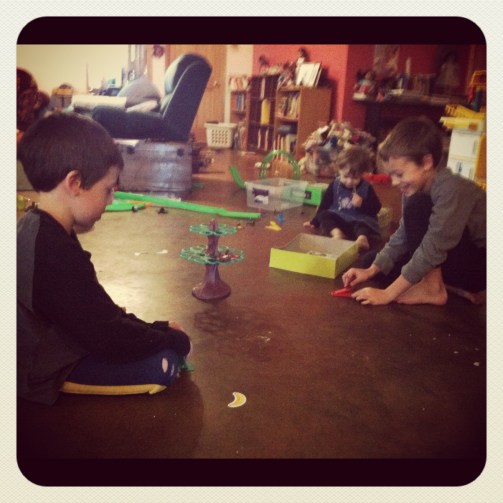
Also a couple of weeks ago, I got a little tear in my eye when Alaina came to get me in the bedroom showing me her handful of monkeys from the “monkey jump game.” When Lann was about her age if you asked him if he was a big boy, he would answer: “I not bigger yet, I can’t reach the monkey jump game!” Well, guess what, he reached it for them that day and they were all in the living room playing while I was getting dressed…

November 2012 243

I am a story woman.

And, I’m not quitting.

Other posts about Story:

Story Power

A Blessing…and more…

The Value of Sharing Story

The Of COURSE response…

Musings on Story, Experience, & Choice…

Taking it to the Body, Part 4: Women’s Bodies and Self-Authority

Taking it to the Body, Part 4: Women’s Bodies and Self-Authority

This is a somewhat shortened version of a prior post. I revised it to be a part of my taking it to the bodyDecember 2012 001 series.

I believe a potent source of female power lies in the female body and that body wisdom has been suppressed and denied over the course of many years as a means of oppression and control. One of the root issues of patriarchy is who “owns” women’s bodies—is it men, is it the government, is the medical system, or is it the woman herself? (you know my pick!).

Body wisdom and sources of power

Considering power, sources of power, and body wisdom, I appreciated reading Barbara Starrett’s essay The Metaphors of Power in the book The Politics of Women’s Spirituality. While she uses a different example, I have modified and paraphrased her thoughts to make the idea about birth. Starrett originally states, “We can create power centers both within and outside ourselves…Power is where power is perceived. Power resides in the mind. We can give or withhold power through our beliefs, our felt thoughts.” Medical professionals can make decisions about a woman’s body and birth choices effectively only as long as women believe that the professionals have the right to do this. When women reclaim the power to decide for themselves about birth, the doctors proclaim in a vacuum. Their power depends on the transference of our power, through our belief that this is right…Power is where power is perceived. This also means that in any given in-the-world situation, we can intentionally set up our own power centers. If we believe that power resides in those centers, it will. We will act successfully on this belief. Women’s organizations, unions, birth coalitions, etc., will never work unless we regard them, “as the legitimate centers of power…We must grant our own power to ourselves” (p. 191).

While this comes a little too close for comfort to me with the idea that “we create our own reality” (which I cannot fully embrace due to the logical extension into blaming the victim that it creates), I connect deeply with the idea that we must treat women’s organizations and work as legitimate power sources. I think of books/movements like Our Bodies, Ourselves, for example. To me, this is a definitive women’s health resource—by women, for women and separated from the medical establishment that often dehumanizes women. If we continue to believe our “alternative” structures are just that, “alternative,” then the dominant model is still the norm and still accepted, even by us, as “normal.”

Starrett continues her essay by sharing that “It is necessary for some women to risk total reclamation, to risk the direct and intentional use of power, in bold, even outrageous ways. It takes only a minority of women to alter present reality, to create new reality, because our efforts are more completely focused, more total.” (p. 193) This is the risk that the creators of Our Bodies, Ourselves took. It is the risk birth activists and women’s health activists continue to take.

Consult your health care provider?

In my own life, I am frustrated by the ubiquitous phrase, “Consult your health care provider.” No, thanks. I prefer consulting myself, my books, google, my own research, and my friends. Last time I checked, my doctor did not own my body nor did she have divine revelation as to what I need in my life. I am a breastfeeding counselor providing phone and email support to women who have breastfeeding questions. Women frequently receive very poor breastfeeding “advice” from their doctors—to the extent that I honestly think they’d receive better information by polling random strangers at Wal-Mart with their questions (and, yes, I will actually tell women this). One caller once used the phrase, “but, I don’t want to disobey my doctor” and I found this extraordinarily telling as well as depressing. I recognize that doctors have special training and can be life-saving, however, what does that say about mothering in our culture that a woman would not act on behalf of her own baby and herself because of fear of being disobedient to a professional that she has hired? She is a consumer of a service, not the subject of a ruler!

This brings me to a thought by Dr. Michelle Harrison, author of the book A Woman in Residence:

I used to have fantasies…about women in a state of revolution. I saw them getting up out of their beds and refusing the knife, refusing to be tied down, refusing to submit…Women’s health care will not improve until women reject the present system and begin instead to develop less destructive means of creating and maintaining a state of wellness.”

Indeed! And, in an essay by Sally Gearhart’s about womanpower, she notes: “…there’s no forcing any other woman into a full trot or a gallop; she will move at her own pace, but at her own pace we can be sure she will move. At this point I always remind myself that the patriarchal use of crash programs is antithetical to organic movement; in a crash program the theory goes that if you can get nine women pregnant you can have a baby in one month; it takes women, I suppose, to understand that it doesn’t work that way.” (p. 202-203)

Reclaiming power

So, how do women reclaim power? I think story holds a key to power reclamation in this context. As I’ve referenced before, Carol Christ describes it thusly, “When one woman puts her experiences into words, another woman who has kept silent, afraid of what others will think, can find validation. And when the second woman says aloud, ‘yes, that was my experience too,’ the first woman loses some of her fear.” As I touch on above, for me it is to see myself and my body as a source of wisdom and to refuse to participate in structures that do not honor my power and personal agency. It involves more often turning to my peers, to other women, for advice and comfort and support, rather than to experts.

I’ve written many times before that I am a systems thinker. Women’s choices about their bodies and about birth are not made in personal isolation, but in a complexly interwoven network of social, political, medical, religious, and cultural systems. As Gearhart notes, “There may be no ‘enemy’ except a system. How do we deal with ‘the enemy’? As seldom as possible but when necessary by opening the way for [their] transformation into not-the-enemy. What weapons do we use? Our healing, our self-protection, our health, our fantasies, our collective care…” (p. 203).

20121218-134856.jpg

Guest Post: Mothers Matter–Creating a Postpartum Plan

I connected with today’s guest post author, Rachel Van Buren, via Facebook. Rachel has a passion for postpartum support and so do I. When she mentioned that she was teaching a postpartum planning workshop, I asked if she’d consider writing up her notes into a post to share and she did!

IMG_5598“Mothers matter” – Creating a postpartum birth plan
by Rachel Van Buren

The Neighborhood Doula

I feel compelled to state the obvious: Society fails to meet the needs of the laboring, birthing, postpartum woman. Because these women lack the support that seems obvious for those around them to give, they assume their feelings are not normal. I am here after having birthed 4 children over the last 13 years to reassure you that your needs are normal. So normal, that I can read ten thousand threads in one afternoon of women who are crying out for support during the postpartum months. Why is it that we dismiss our feelings, and label ourselves as “ungrateful, needy, or weak” because we read one perfect looking blog, or Facebook post? Don’t misunderstand…the 4th trimester is beautiful. It really truly is. But it’s also life changing. Have you ever experienced a life change without experiencing anxiety? Of course not.

My message here is this: Women need to plan for the postpartum time period. It is essential. We get so wrapped up with birth, we forget about what happens when we bring baby home.

There are 3 areas of importance to explore before you bring baby home: Dealing with friends and relatives, how to delegate without guilt, and the importance of self-care.

Let’s explore these topics together.

How to deal with relatives and visitors during those first few weeks:

  • Have a clear vision of what your postpartum time will look like. If you aren’t sure, have that discussion with your partner now. Do not wait.
  • Set clear boundaries: Everyone does better when they know what to expect.
  • Set phones to go directly to voicemail.
  • Change your outgoing voicemail greeting. For example: “You have reached the _______ family, we are sorry we can’t take your call right now, as we are busy enjoying some quiet time together as a family. We are all doing well, and really appreciate your thoughtfulness in calling. We will return your call when we have the opportunity to talk, or are ready to expect company. So good to hear from you, and have a great day!”
  • Stay in bed.
  • Stay in pajamas.
  • Do not offer beverages. Visitors will be less likely to overstay if you are not in the entertaining mode.
  • Have partner or Postpartum doula mediate and advocate to well-intentioned but pushy friends or family. A BFF, parent, or close relative shouldn’t serve in this capacity. Prepare with them an “elevator speech” regarding visitors “Their Doctor/Midwife has encouraged the family to take a postpartum “Baby Moon” and they are really taking that advice to heart.”
  • If mom is breastfeeding: A gentle reminders to others, that she is nursing the baby about every hour(maybe even more) and are spending lots of time skin to skin, so visitors are just not practical right now.
  • Use social media to the fullest…
092b3a174b95cf52f6cbca69837daa08

Update your Facebook status as a way of giving a “heads up“.

Delegating without the guilt: I find it interesting to meet a lot of women that perceive themselves as feminists; they have no problem advocating for a natural/intervention free birth, defending their right to an elective Ceserean, or advocating for their future right to nurse in public. However many of these women come home after birth, and suddenly find themselves struggling to find their inner voice. Suddenly things become sticky because we’re now dealing with people that we have relationships with on a personal level. Boundaries can be tough to establish and maintain because our desire is really to our loved ones. Here’s when guilt creeps in. Perhaps guilt over losing exclusive relationships (first child, partner, or even self). Guilt of not living up to our mother’s example, our friend’s example, or the “perfect” mother on Pinterest who is sewing her own postpartum maxi pads and cloth diapers.

I’m a believer in learning to delegate. It decreases levels of guilt from not being able to be Mrs Cleaver. It lightens our load. Whether it’s with our partner, or our children, we need to do it. The days are gone where we can “do it all”.

Here are some simple steps to practice in order to delegate without feeling guilty:

  • Set your ego aside: There is more than one right way of doing things. Yours is not the only way. Invite the possibility that they might even do the task better or faster than you.
  • Stop waiting for people to volunteer: It is your job to communicate your needs. Partners are not mind readers. Just because they don’t offer, does not mean your needs aren’t normal.
  • Ask and you shall receive: Get to the root as to why you struggle with asking for help (shame? guilt?). Learn a different way. Learn to ask for help.
  • Delegate the objective – NOT the procedure: Dignify the person helping you by allowing them to do it as they choose, but make clear what your desired end result is. This will stop you from being the ever annoying micro-manager. After all, you are not training a robot, but a human being who can adapt and improve.
  • Be patient: The person you delegate will make mistakes, it is part of the learning process. Work consciously to keep a positive and realistic attitude.
  • Recognize your helper: Make sure they hear you brag about them to your friends or family. Everyone loves praise, and when they are appreciated they will be more apt to tune into your needs and want to help. Say THANK YOU! Let partner know that it makes you feel so special that they are working so hard to meet your needs.
  • Avoid controlling partner’s feelings. It doesn’t build up the relationship, and only adds resentment. (“I won’t ask partner to load the dishwasher because I don’t want to hear complaints. I’ll just do it myself to avoid the argument”) Partner has feelings, and is entitled to them, whether you perceive them as “good or bad”. Feelings are not facts. They are interpretations of the facts.
  • It’s OK to feel guilty. NO ONE has ever died from guilt!! (excellent mantra during particular moments of delegating)
  • Avoid saying “yes” when you really mean “no”.
  • Change your “normal”. Embrace the fact that the next 3 months are truly a time to expect the unexpected.

Self care:

Postpartum self-care is an absolute necessity. Get in the habit now of taking care of yourself. I firmly believe that how we take care of ourselves is learned behavior. Surround yourself with women who value their physical and mental health. Watch them, and copy them.

Here is a list of self-care ideas for your physical postpartum recovery: Alaina064

  • Ice packs for perineum
  • Postpartum massage
  • Belly binding
  • C-scar massage
  • Herbal bath (with baby too!)
  • Lots of sleep
  • Ask for help
  • Eat nutritious living food
  • Stay hydrated
  • Listen to your favorite music.
  • Avoid any negative television.
  • If you are already caring for a child with special needs, make sure that support is already in place to continue caring for them during those first few months until you are back into somewhat of a routine.
  • Create a network. Women want intimacy. Do not isolate. Isolation breeds anxiety.
  • Stick to your spiritual routine (whatever that looks like) Feed your soul daily.
  • Avoid stress triggers (if overbearing mother in law is coming by, let partner and baby spend time with her. Go take a shower, or get some rest)
  • Hug your partner. A lot
  • Avoid alcohol and caffeine. These both will be very tempting, and can be OK depending on your circumstances. If you are feeling blue, or have a history of depression, I recommend avoiding during the 4th trimester.

And most of all, listen to your instincts. Don’t compare yourself to others. Believe in yourself. Postpartum is a special time in which we evolve, allow yourself to be transformed.

Be empowered: create a postpartum plan today!

Rachel Van Buren is a birth and postpartum doula living in Charlotte, NC with her husband and four children. Visit her online at The Neighborhood Doula.

Originally posted at The Neighborhood Doula,
Dec 6, 2012

You can read past Talk Birth posts about postpartum here:

Planning for Postpartum

Taking it to the body, part 3: Moontime

“…imagine what our lives would be like, what the world would be like if every womoon could bleed and birth inside a sacred circle…”

67676_10152320586165511_1996745276_n

(Art by Mariela Dela Paz)

Blessing to our menstrual blood!

Blessing for our birthing blood!

Blessing to our female body

Blessing to our spirit

Blessing for our connection with other women

Blessing for our self-love and love of each other

Blessing to the world that holds us sacred.

–Antiga in The Goddess Celebrates, p. 168

Continuing my taking it to the body theme, I have some more observations to make about Moontime in a woman’s life. Ever since moontime’s return for me earlier this year, I’ve tried to remind mindful of the ebb and flow of my cycle and associated emotions, feelings, and inclinations. Just as I wouldn’t expect myself to “do it all” during postpartum, I find it logical that I shouldn’t expect myself to “do it all” during menstruation either. But, that is easier said than done! Kids still need to do to playgroup and taekwondo and, and, and…

It is also very, very easy for me to forget that many of the common mental patterns I experience with needing to retreat and wanting to quit and wanting to rest are very cyclical in nature as well. But, I also hate that, because I never want, “must be hormones!” to be an excuse. I honestly think it isn’t an excuse, but is instead is often a wake-up call. So, taking it to the body…it surprises me how, even though I track my cycle using a handy phone app, I still overlook that the “I’m so fat and ugly!” thoughts and the “how come I suddenly have zits on my chin?” and “I want to QUIT THE WORLD” and, “people are so annoying and SO LOUD and never STOP TALKING!!!!!” and, “WHY do people WANT things from me ALL THE TIME!!!!” feelings, also recur on a cyclical basis. And, then moontime comes, and suddenly life takes a turn for the better and things look up. I start feeling energetic and productive and excited about things. Instead of wanting to quit, I have tons of new ideas and feel enthusiastic and optimistic about completing them. I feel creative and inspired. You’d think I’d remember and say, “oh yeah, this. This sensation of wanting to hide…I remember this.” BUT…and this is the ticket…I need to then DO IT. Go ahead and hide for a minute. Things will go on without me. It is when I override my own inclinations and body messages and needs that “Dragon Lady” wishes to come out and roar for her rights.

“Each time we deny our female functions, each time we deviate from our bodies’ natural path, we move father away from out feminine roots. Our female bodies need us now more than ever, and we too need the wisdom, the wildness, the passion, the joy, the vitality and the authenticity that we can gain through this most intimate of reconciliations.” –Sarah J Buckley, M.D.

I recently enjoyed listening to a recording from Indigo Bacal called Womb Magic ~ 3 Things EVERY Cycling Woman Needs to Know.

The three things are:

1. track your cycle

2. create a moon tent and spend time in it alone.

3. moontime is a powerful opportunity for renewal

One of the things she also said is that if your family and the people around you can allow you the space to retreat into your “moon tent,” you will return with powerful medicine for them every month, because of this powerful time for renewal. It is the blocked call for quiet time to rest and renew that causes a variety of premenstrual tension, strain, and stress…

I also enjoyed reading an interesting article about being a Highly Sensitive Person (I have already read the book by the same name):

I learned that life is easier than I think it is. Thinking about life is hard. But, life already is. It’s already happening. That’s easy.

I discovered that highly sensitive people seem to develop backwards compared to traditional theories. Maslow’s Hierarchy of Needs states that in order to develop as people, we must meet certain needs in a certain order, starting with physiological needs.

Well, I find that HSPs actually start at the top with transcendence needs and work down to the physiological needs last.

You really can trust yourself; your body knows more than you think. Your nervous system is getting a lot. Trust it. Trust is a practice. It’s a work out. Start where you are and take a step in the direction of trusting your body and what it is telling you.

That is how you strengthen the connection with your body. The present is here for you to unwrap in each surprising moment…

20121208-104116.jpg

New sculptures! This time from pottery clay and my mom glazed and fired them. They’re cool! 🙂

Book Review: Moon Time

Taking it to the body… (part 1)

The following is excerpted from one of my lessons in my recently finished Ecofeminism course.

20121203-150406.jpgIn Mara Keller’s essay in the ecofeminist anthology Reweaving the World, she explains that in our cells remember an ancient era of mother-centered life. As I observe in my own children’s relationship to me as their mother, this seems extremely logical to me. Keller writes: “The renewal I long for is a return of a reverence for Mother Earth and her abundant forces of creations; an affirmation of the sacredness of sexuality and enduring human love; and the belief in the inevitability of death and the immortality of the soul” (p. 51). Mother Earth is abundant and fertile and awe-inspiring, she can also be wild and unpredictable and dangerous and is deserving of reverence and respect.

Chellis Glendinning in The Politics of Women’s Spirituality sums up the consequences of patriarchy perfectly:

“When women are faced each day with enforced cesarean deliveries, birth control that maims and kills them, and doctors who think them dirty, when we encounter rape, violence in the streets, job discrimination, sexual slavery around the world, pollution and nuclear madness, we realize that reclaiming the integrative ways of our ancestors must involve our healing powers on all fronts—from the medical to the social to the environmental to the political to the psychological to the spiritual. Healing the divisions that were imposed during the patriarchal era is the survival issue of our time and our planet. A world that systematically sickens its women cannot survive.” [emphasis mine]

Returning to Reweaving the World, in a similar line of thought, Paula Allen states that “a society based on body hate destroys itself and causes harm to all of Grandmother’s grandchildren” (p. 53). I honestly think that many, many children enter the world in an atmosphere of body hate (this can be true regardless of birthing environment). I read an article recently by the famous French obstetrician Michel Odent who explains that the human species may actually be losing the capacity to give birth on its own. Odent sums up the sobering conclusion of current research with this chilling observation: “after just 3 or 4 generations of highly technological childbirth, it seems very possible that our human oxytocin system is weakening. In other words, our capacity to give birth is weakening…” What will it mean for society if our human women can no longer successfully carry and bear new members of the species without significant technological assistance?!

So, planetary healing may actually rest in body respect and love. Allen explains that rejoicing in our bodies is how we show our respect to the planet. We can heal our bodies…”our own dear body, our own dear flesh. For the body is not the dwelling place of the spirit, it is the spirit. It is not a tomb, it is life itself” (p. 56). Allen asks the reader to consider how often we deny the urgings of our bodies. I ask this of women also—how often do you respond to the first cue from your body to use the bathroom? Usually, we resist several times—sometimes even hours—before finally going. If this basic, daily function we each experience multiple times a day is a time in which to deny and ignore our bodies’ messages, how do we expect women to then speak up for themselves in birth? To ask for what they need and to follow the instinctive dance of their birthing bodies? These same questions can be expanded to other areas of our lives as well of course…

Allen also has a refreshing perspective that now is not the time for tranquility. So often in New Age writings and Western-adapted Buddhist and Zen types of thought we see admonishments towards calmness, serenity, peace, and so forth and in the non-attachment and “I create my own reality” and “there is no reality but the present moment.” I appreciate this call for action and for passion, rather than a stilling of the emotions.

And, finally, returning to the body theme, during a recent women’s retreat one of the guests brought us each a card that reads: “Trust yourself. Take it to the body. She always knows.” I loved this and will explain more in part 2

As dear as breathing…

20121126-151448.jpg

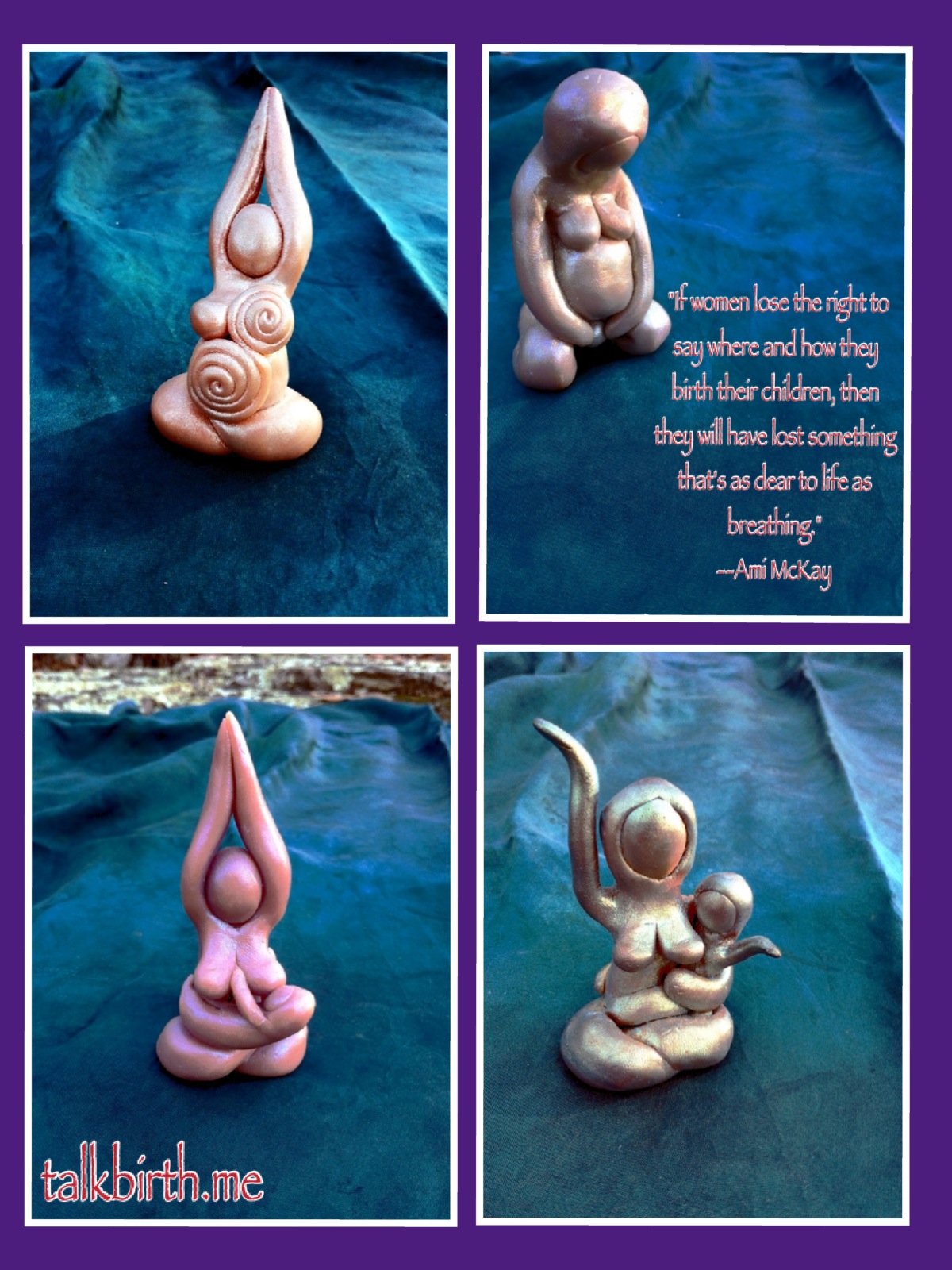
“If women lose the right to say where and how they birth their children, then they will have lost something that is as dear to life as breathing.” –Ami McKay

“Mothers need to know that their care and their choices won’t be compromised by birth politics.” – Jennifer Rosenberg

Birth politics have been on my mind this week as I’ve come across various debates from within the birth profession about the regulation of midwives and the question of licensure, and then also the seemingly ever-present critiques of homebirth from outside the homebirth community. I don’t feel as if I have time lately to fully follow all the issues, but Citizens for Midwifery’s recent response to ACOG’s newest homebirth and maternal rights smackdown contains some important thoughts:

AJOG editorial rejects the ethic that autonomy is a fundamental human right

This article represents a serious attack on home birth and on patient centered care in the United States. The attack is based on poor research and runs roughshod over established rights to bodily integrity…

…not only does the article attack home birth, it also represents an attempt to “export” to the rest of the world a position that the obstetric profession, not mothers, should have the final decision on birth, at a time when that isn’t even legally defensible here in the United States…

…One contradiction stands out as the authors call for “safe, respectful, and compassionate” hospital delivery. No hospital birth can be truly respectful if the birth is happening in the hospital because the physician disrespects the woman’s right to an alternative and has rigged the system to eliminate access to all legal alternatives…

via Citizens for Midwifery

Related thoughts:

Maternal-Fetal Conflict?

The Illusion of Choice

“Woman-to-woman help through the rites of passage that are important in every birth has significance not only for the individuals directly involved, but for the whole community. The task in which the women are engaged is political. It forms the warp and weft of society.” –Sheila Kitzinger