Archives

Book Review: Sacred Pregnancy

Sacred Pregnancy
by Anni Daulter, MSW
Paperback: 360 pages
Publisher: North Atlantic Books; 1 edition (May 1, 2012)
ISBN-13: 978-1583944448

http://www.sacredpregnancy.com/

Reviewed by Molly Remer, Talk Birth

Sacred Pregnancy is absolutely gorgeous! Seriously, it is one of the most appealing books I’ve encountered in a long time. The photography is breathtaking, the layout is lovely, and the colors are beautiful. It is a very visually nourishing book to hold and encounter. A combination week-by-week guide to pregnancy and personal journal, Sacred Pregnancy covers a lot of ground from basic pregnancy information and fetal development to making a special birth necklace. There are sections on exercise, nutrition, blessingways, forgiveness, nesting, sisterhood, naming ceremonies, and much, much more.

Two of my favorite points from the book, the first from Ina May’s foreword:

“In discussions in which the sacred nature of pregnancy and birth is brought up, the answer often presumes that anything that would revalue the sanctity of birth would automatically put babies in danger. Nothing could actually be farther from the truth.”

And the second from the author, Anni Daulter:

“Women are born gifted! They can birth babies for heaven’s sake. This is a magical and joyous event and something that, even though the medical community can tell us how it works, is incredible in so many ways. The fact that you can create a human life, carry it in your body, and birth it into existence is just so unbelievably miraculous that there are hardly words for it” (p. 129).

Sacred Pregnancy would make a delicious, nurturing gift for any pregnant woman wishing to dive deep into the experience of her pregnancy and into conscious birth preparation. Just beautiful!

Disclosure: I received a complimentary copy of this book for review purposes.

Strong Women

“The vulva is at its most beautiful when transformed by a crowning baby who slides out into her mother’s hands. Women are strong. Women are powerful. Women were made to birth their babies—in their own time, in their own way and with their own innate wisdom. The natural birth community is full of the strongest, most fearless women on the planet—women supporting women.”
–Care Messer (in Midwifery Today, Spring 2012)

20120526-193012.jpg

My 6-year-old son took this picture of part of one of my textbook’s covers as I was typing this post and I thought it seems oddly suited to it!

Sharing Stories

Mother-to-mother birthtelling is easy at blessingways!

In an excellent article by Rachel Reed in the Autumn 2011 issue of Midwifery Today, Sharing Stories, Reclaiming Birth Knowledge, she makes this important point: “Women not only learn practical information about pregnancy, birth, and motherhood through exchanging stories, but also gain emotional and social support…Through sharing stories, women created a sense of connection to other mothers and to the ‘universal nature of birthing’ …”

Despite the everyday miracle of birth and potent role in women’s lives and self-identity, “women’s birth stories are largely ignored in mainstream childbirth education programs. Instead, the approach consists of an ‘expert’ transmitting standardized information sanctioned by the maternity system. This approach does not adequately meet the needs of mothers, nor reinforce mothers’ expertise and knowledge. Building childbirth education around mother-to-mother story sharing would reinforce mothers as the experts in birth.”

What do you know about birth that other people don’t know?

As I read this article, I thought of several experiences in my own childbearing experiences that varied from “standardized information sanctioned by the maternity system” and that includes the alternative care system of which I was a part. Things that, for me, were not available from those systems around me—books, professionals, or media, but that nevertheless came through and are part of my own stories:

  • Being able to feel my babies practice breathing in the last 8-10 weeks of my pregnancies.
  • “Skipping” transition–no “freaking out” required to have a baby after all.
  • Tearing “up” into the labia/clitoral area instead of the more common or expected perineal tearing
  • Experiencing a spontaneous birth reflex
  • No bloody show/mucus/fluid until shortly before pushing
  • Long “strings” of post-birth mucus. So tough and sinuous that they are almost like membrane.
  • Experiencing a second trimester miscarriage clearly and potently as a birth event.

I’m curious to know what other women have experienced like this. What happened to you that you had never heard about before? What is a part of your story that isn’t a part of birth books? What do you know about birth that other people don’t know? How does your story enhance the collective culture of women?

The role of story in midwifery education

Reed goes on to explore the role of story in midwifery care and the education of midwives, explaining, “It is time for midwives, informed by being ‘with woman’ and experiencing birth in all its complexities, to reclaim their own unique birth knowledge. Sharing birth stories represents a rich source of knowledge and develops the ‘collective culture of women.’ Mothers are already doing this well, and childbirth education should reinforce this mother-to-mother expertise. Midwifery education also needs to embrace the power of storytelling as a means of developing woman-centered knowledge and practice.”

One of the most valuable elements of La Leche League for breastfeeding mothers is the mother-to-mother support and information sharing. This is irreplaceable. We need a means of providing this type of mother-to-mother support for birth as well. Not in swapping horror stories or “enlightening” others, but in authentic connection based on our own unique birth wisdom.

Birthtellers

In another article in the same issue of Midwifery Today KaRa Ananda shares the following gem in her article about Birthtellers: “…the stories women tell to each other privately–shape cultures, beliefs, choices and lives. Women used to learn about birth and motherhood through the stories of their mothers, sisters, grandmothers, midwives and friends. Today, that knowledge is transmitted primary through television, movies, peers and the internet. Now is the time for the Birthtellers to arise and once again share our inspirational birth stories–both within our communities and globally through new media technology.”

One of the midwife-authors that makes my heart sing with her lyrical, magical writing, is Sister MorningStar (author of Power of Women). She shared her daughter’s birth story in the autumn 2011 edition of Midwifery Today and it is just beautiful.

My own article on the value of sharing story also appeared in the same issue of Midwifery Today.

Strong Mothers (& Birth Network Resources)

“Birth is not only about making babies. Birth is about making mothers – strong, competent, capable mothers who trust themselves and know their inner strength.” –Barbara Katz Rothman

This classic quote from Barbara Katz Rothman sums up the potent impact of the birth experience on women’s lives and it seemed like  perfect quote to kick off the website of the Rolla Birth Network that I founded with my birth advocate friends and colleagues. We believe that strong, healthy babies, vibrant families and resourceful communities begin with strong mothers. We chose Strong Mothers, Strong Babies, and Strong Community as our tagline because we believe that when women dig deep into their inner strength, everything else follows. We also chose this as our tagline because it reflects the conviction that women have already got it. They have the inner wisdom and the strength they need. While outside professionals and resources can be tremendously helpful, she’s already got what it takes within her, we may just be a part of helping her to access the strength she already possesses.

We agree with doula and birth educator Heather McCue who said: “The whole point of woman-centered birth is the knowledge that a woman is the birth power source. She may need, and deserve, help, but in essence, she always had, currently has, and will have the power.”

On a related note, Holly Kennedy raises this question in her guest editorial in the spring 2011 issue of The Journal of Perinatal Education:

What “matters” in birth is complex, extremely hard to quantify, and will vary from one person to the next…I found myself contemplating what matted most in my ability to support women in birth so they could emerge from the process as strong, healthy mothers. I believe we have collectively lost our way over time about this outcome—the strong mother. The mother’s experience of childbearing, which will affect her forever, can directly influence her future as a mother. How do we address this as a discipline?

Yes, the strong mother. This is what is about. The strong mother who feels capable and competent in the mothering of her newborn and of her infant as it grows.

Another favorite quote about the strength of women:

“Women are strong, strong, terribly strong. We don’t know how strong until we are pushing out our babies. We are too often treated like babies having babies when we should be in training, like acolytes, novices to high priestesshood, like serious applicants for the space program.”

Louise Erdrich, The Blue Jay’s Dance

It is also important to note that we believe that strength is found in all kinds of birth experiences from the triumphantly empowered to the extraordinarily taxing and even traumatic. (Previous post about Birth Strength and the quote above.)

So, speaking of birth networks. One of the things that I’ve been excited about working on now that I am not actively teaching birth classes is on projects for our local Birth Network. I’ve wanted to do something like this for ages, feeling excited about the potential and momentum created by bringing multiple people together to collaborate on projects that make a difference in our community. We have some great ideas planned and I feel rejuvenated and enthusiastic after every meeting.

Here are some resources on forming a birth network in your own community:

Tools, Tips and Resources for Birth Networks

Birth Network National Resources

Programs from Athens Birth Circle

Some time ago a follower of this page, Nora from Happy Within, posted to let me know that she hosts a virtual birth circle for mothers. She describes it thusly: “the birthcircle is a virtual community which is a sacred women´s circle about conscious pregnancy and birth and its free. You can get details here: http://happywithin.wordpress.com/your-birthcircle/.” You can also keep up with her work on Facebook.

I am a Midwife Campaign

MANA has a great educational campaign going on right now called I am a Midwife. The campaign involves a series of short videos released once a week about a variety of topics. More than just a general education campaign, each video includes a variety of different women–midwives, mothers, public health activists, maternity care activists, authors—speaking out on important topics in maternity care. Each woman also identifies, “I am a Midwife.” This week’s video is about health disparities in maternity care, which is a very important and too-often ignored topic. It raises the concern that African American women and their babies are more likely to die than their Caucasian counterparts even when other variables are equalized (i.e. same socioeconomic status, same education, etc.) and moves into wider discussions about racism and the treatment of minority group members. It then focuses on the value and role of midwifery care in addressing these concerns.

As MANA states in relationship to this campaign: “For midwives, sharing is daring. We dare to challenge the status quo. We dare to speak up for women’s innate wisdom in pregnancy and birth. We dare to assert that there is a better way for our babies to be born. And we dare to insist that birth belongs to families.

Absolutely! The I am a Midwife public education campaign is extremely powerful. I have to confess that when it originally launched, I didn’t personally make time to watch the videos right away, somehow assuming that they were “generic” videos with a “rah, midwives!” type of message. Don’t make the same mistake I did. These are quality videos with important messages, powerful voices, and essential education and information. You will definitely learn something from watching them!

The videos aren’t only of use to birth professionals, when I teach community organizing at the college level I show videos like this as examples of activism strategies. In fact, for the final exam in that course I show the Crisis in the Crib video about infant mortality and disparities from the Office of Minority Health’s A Healthy Baby Begins With You campaign. This MANA video could be an interesting follow-up addition to the video I already use. As a related side note, during this class I also show footage from The Doula Story, a project by the Georgia Campaign for Adolescent Teen Pregnancy Prevention (whose program director I heard speak at the CAPPA conference in NC in 2010—she was amazing!). So, people do not leave my class without having heard of doulas and midwives and their relationship to community health. Go me and my mad birth activist skills! ;-D

Book Review: Moon Time

Book Review:  Moon Time: a guide to celebrating your menstrual cycle
by Lucy H. Pearce
Paperback, 145 pages, 2012
ISBN13 9781468056716
http://thehappywomb.com/

Reviewed by Molly Remer, Talk Birth

When I wrote my blog post about moontime’s return in April, I was delighted to get a comment from writer and womancraft wisewoman, Lucy Pearce the author of the book Moon Time. Lucy offered to send me a copy of her book and I received it last week and instantly devoured it. Subtitled “a guide to celebrating your menstrual cycle,” Moon Time is written in a friendly, conversational tone and is a quick read with a lot of insight into the texture and tone of our relationships with menstruation.

The book contains information about charting cycles and about the relationship to the phases of the  moon. I especially enjoyed the excellent section on  “Instant PMT [PMS] Busters” and planning time to nurture and nourish yourself during your monthly moon time. The book also includes planning information for Red Tents/Moon Lodges and for menarche rituals and it ends with an absolutely phenomenal list of resources—suggested reading and websites.

Towards the beginning of the book Lucy observes, “We live in a culture which demands that we are ‘turned on’ all the time. Always bright and happy. Always available for intercourse–both sexual and otherwise with people. Psychologist Peter Suedfeld observes that  we are all ‘chronically stimulated, socially and physically and we are probably operating at a stimulation level higher than that for which our species evolved.’ It is up to us to value rest and fallow time. We must demand it for ourselves to ensure our health “(p. 53). She also comments on something I’ve observed in my own life and have previously discussed with my friends:  “I strongly believe that a large amount of the anger and tearfulness we experience pre-menstrually, is our body’s way of expressing the deep truths which we try to stifle” (p. 56)

Since early spring, as I anticipated moontime’s return in my own life, I’ve been reflecting on how I have been such a devoted proponent of taking good care of yourself physically and emotionally during pregnancy, birth, and especially postpartum, so why have I not applied the same care during moontime? Why haven’t I included this monthly experience of being female as an experience worth respecting and as a sacred opportunity to treat my body and my emotions with loving care and self-renewal? Moon Time includes this great reminder with regard to creating retreat space, taking time out for self-care, and creating ritual each month: “Do what you can with what you have, where you are.” You don’t have create something extensive or elaborate or wait for the “perfect time,” but you can still do something with what you have and where you are. (This is a good reminder for many things in life, actually.)

I highly recommend Moon Time as an empowering resource for cycling women! It would also be a great resource for girls who are approaching menarche or for mothers seeking ways to honor their daughters’ entrance into the cycles of a woman’s life.

If you’d like to pick up a copy of Moon Time yourself, Lucy made this offer to my readers: “Would be delighted to offer your readers a discount on the paperback version of MoonTime: a guide to celebrating your menstrual cycle – they just need to enter MBLP20 at the checkout.”

Disclosure: I received a complimentary copy of this book.

Changing Visions

I’ve been moving in this direction for quite some time— really probably since my miscarriage-birth experience in late 2009—but I’ve decided that it is officially time for me to take a break from actively teaching birth classes. When I first started teaching in 2005, I envisioned having classes with 5-6 couples at a time. I quickly realized that the area didn’t really support that client volume–at least not with clients with similar due dates and similar interests in natural birth. I never intended to teach general/generic childbirth education, but focused on designing my classes for women planning for physiological, low-intervention (“natural” or unmedicated) births. I never apologized for that emphasis and my focus is what distinguished me from the locally available hospital-based classes that were free of charge. It became clear to me that my niche was in personalized, private, one-on-one birth education and I spent years delighting in the close relationships formed by working privately with couples rather than in a group. During these years I did teach some group classes as the opportunity and occasion arose and they were not as fulfilling or enriching for me as the one-on-one sessions. I think the pregnant women really benefit from the camaraderie of interacting with other pregnant women, but my relationship with the fathers-to-be and with the couple as a unit is nothing like it is when the couple is on their own with me.

Losing my spark

I also realized that I felt most satisfied and like I was making a genuine contribution/difference if I had clients during every month of the year. I set this intention for myself in 2007 and was able to meet my goal for the subsequent years. After I started teaching college classes, however, I found that I used up a lot of my teaching energy in the college classroom and that birth classes started to feel like more of a drain on my resources than a joy. I also realized that they were not very economically sensible and I became frustrated with having to pack up all my supplies and haul them to town with me each time I needed to teach. Having a new baby fanned the flames of my spirit for birth education again and I found that the spark that had been wavering since Noah died had re-ignited somewhat. However, the damage as it were, was done, in that teaching privately no longer made sense to me from a financial standpoint nor did it make sense from a maternal standpoint—I didn’t want to leave my baby behind to go teach class and I also found that in taking her with me, my attention was splintered and my clients didn’t necessarily get the best from me. Now that she is big enough to leave with my husband while I teach, I find myself “maxed out” with my college teaching schedule (which is only one night a week—who knows how I’d feel if it was more!) and other interests and the thought of trying to work in a series of private birth classes seems like a hurdle that I do not wish to struggle with. I coped for a while by trying to host the classes in my home (which is out-of-town), but that presents its own set of challenges. And, when I am home, I want to be home, not preparing birth class handouts or trying to shuffle the kids off to my parents’ house so that clients can come in for class. I love to be at home. I love where I live. As I wrote on Facebook recently, it is my soul place here.

Give points

As I am wont to do, I once again find myself looking around my life and schedule trying to find “give points” that allow me the life-work-passion-rest balance that best nourishes me, my family, my spirit, and my home life. This time, I find the give point is teaching face-to-face classes. It is hard to let go. I’ve worked on building this for years. I love the work. I have fear that what if someone else “takes over.” I have fear that I’ve “wasted” all of this training and effort. I have fear that I won’t be able to start again if I quit. However, as I’ve noted before, I’m very black-and-white when it comes to my responsibilities. I can either do something or STOP doing something. It doesn’t work for me to wait for things or “come back to it later” or “take a break for now.” I’m either doing it or I’m quitting. And, I always feel the need to “officially” decree this—I can’t just let things slide, or neglect them, I need to officially make the break or split from the task or responsibility. I have accepted that this is how I work and how I feel about tasks and while it is not true of everyone it IS true of me and I need to work with what I know of myself in this way. So, as of today, I am not planning to accept any new clients for the remainder of the year and I’m updating my business side of this site accordingly. I find it so interesting that the blog side of my site is where I have really developed a following and created relationships, and reach women’s lives around the world, even though I originally started it just to provide information for my few little clients here in rural Missouri. Birth writing is my other niche, the one that I feel like continuing to develop. As I’ve written before, I realized several years ago that writing this blog and my other articles is a legitimate form of “doing” childbirth education as well and perhaps actually has more impact than in-person classes (though, in-person classes are not replaceable in terms of the relational aspect).

New directions

Since 2009, I’ve also felt “called” to develop my other birth interests such as birth art facilitation, prenatal yoga, prenatal fitness, childbirth educator trainings, writing books, and pregnancy/birth retreats as well as my interest in women’s spirituality, women’s retreats, and women’s rituals in general. I feel like my interests in helping other women are deepening, maturing, and evolving from these roots in birth work. I think making this official break with my former means of birth education opens up the space in my life and my heart to develop those other areas of my interest and perhaps what I return to offer will be “bigger” and of more value to women and to my community.

When I applied to my doctoral program I had to write an extensive application letter responding to a variety of questions about my interest in the program. To me, applying to (and now participating in) this program represents an integration of something I feel with my mind, heart, and spirit. My whole being. As I wrote in my application, in women’s spirituality I glimpse the multifaceted totality of women’s lives and I long to reach out and serve the whole woman.I wish to extend my range of passion to include the full woman’s life cycle, rather than focus on the maternal aspect of the wheel of life as I have done for some time. I want to create rituals that nourish, to plan ceremonies that honor, to facilitate workshops that uncover, to write articles that inform, and to teach classes that inspire the women in my personal life, my community, and the world.

I also responded to this question:

Who/what inspires you?

I long to speak out the intense inspiration that comes to me from the lives of strong women.” –Ruth Benedict

I believe that these circles of women around us weave invisible nets of love that carry us when we’re weak and sing with us when we’re strong.” –SARK, Succulent Wild Woman

I am most inspired by the everyday women surrounding me in this world. Brave, strong, vibrant, wild, intelligent, complicated women. Women who are also sometimes frightened, depressed, discouraged, hurt, angry, petty, or jealous. Real, multifaceted, dynamic women. Women who keep putting one foot in the front of the other and continue picking themselves back up again when the need arises.

I am also inspired by women from the past who worked for social justice and women’s rights—women who lived consciously and deliberately and with devoted intention to making the world a better place. Jane Addams, Susan B. Anthony, Clara Barton. Women who have studied and written about feminist spirituality—such as Carol Christ, Hallie Ingleheart, Patricia Mongahan, and Barbara Ardinger–are also a source of inspiration. As a mother, I find additional inspiration in the self-care encouraging writings of Jennifer Louden and Renée Trudeau.

My children have provided a powerful source of inspiration and motivation. I wish to model for them a life lived as a complete, fully developed human being. After birthing three sons, I gave birth to a daughter in January, 2011. I always envisioned having daughters and felt well-prepared to raise a “kick-ass” girl. Having sons first presented me with a different type of inspiration (and, to me, a deeper challenge)—to raise healthy men. Men who treat women well and who are balanced, confident, loving, compassionate people. I came to think of myself as a mother of sons exclusively and was very surprised to actually have a girl as my last child. When I found out she was a girl, my sense of “like carries like/like creates like” was very potent and my current need to participate in the creation of a world in which she can bloom to her fullest is very strong.

My own inner fire inspires me—my drive to make a difference and to live well and wisely my one wild and precious life. Good conversations, time alone with my journal, time alone outdoors sitting on a big rock, and simple time in the shower provides additional fuel for this inner fire.

I have both a scholar’s heart and a heart for service. I wish to live so that my life becomes a living, embodied prayer for social change and to do work that is both spiritually based and woman affirming.

It is time for me to move forward with this expanded vision for what I’d like to offer to the world…

Book Review: This Mother’s Life

This Mother’s Life
by Nina Mohadjer
Paperback, 178 pages, $12.95
Infinity Publishing, 2011
ISBN-13: 978-0741467102
http://www.ninamohadjer.com/This-Mother-s-Life.html

Reviewed by Molly Remer, Talk Birth

This Mother’s Life is a novel in diary format about a woman, the mother of two teenage girls,  who is going through a separation from her husband as well as through job changes. We follow her experiences with dating some other men and seeking a new job as well as her musings about motherhood, marriage, women’s rights, and life caught between two cultures (she and her husband are originally from Iran).

There is a higher than average number of minor errors in word choice and writing mechanics in the book and I stumbled over things such as a continued use of the word “loosing” instead of “losing.” The overall tone of the book is lightweight, casual, and surface, while at the same time feeling somewhat depressing. The narrator’s voice is often extremely plaintive.

This Mother’s Life is also bitingly funny in places–a favorite section, with regard to her mother-in-law’s questions: “Amir’s mom asks me constantly whether I take care of her son! I mean, hello, I should be responsible for my girls and not for wrapping your son’s penis in blue silk, right? Did I get a lifetime companion or a forty-year-old baby?”

Women looking for a quick read that touches lightly on some of the challenges of modern motherhood, will probably recognize something of themselves and their own struggles in This Mother’s Life.

Disclosure: I received a complimentary copy of this book for review purposes.

Virtual Mother Blessing, Part 2

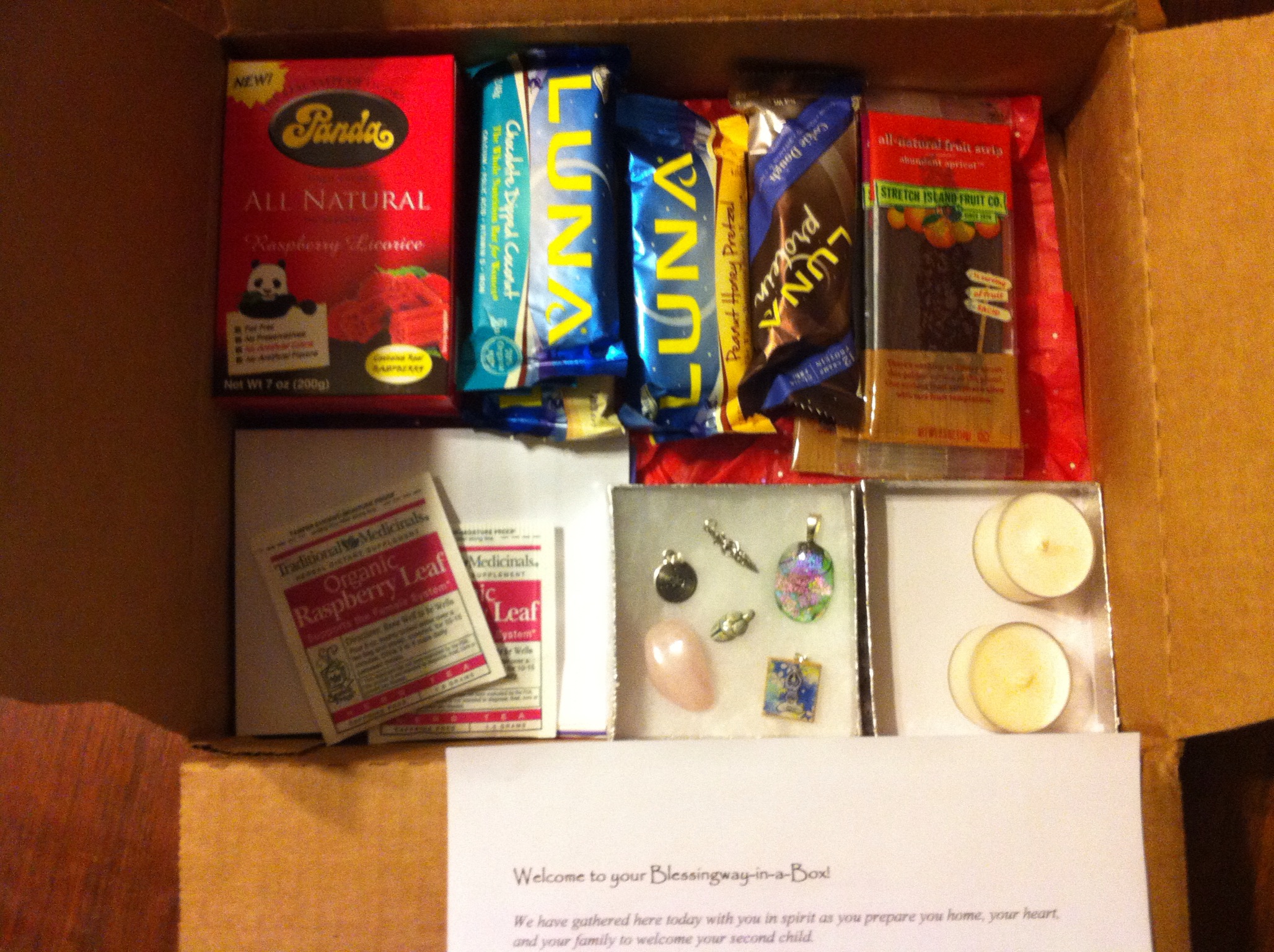
Last week I posted about a virtual mother blessing for Molly Westerman of the blog First the Egg. Tuesday, I emailed her a “blessingway in your inbox” containing the words of birth energy, thoughts, and encouragement emailed by her friends and family as well as a recording of the blessingway chant, “Woman Am I,” that my friends and I sing at all of our ceremonies. This inbox version was also accompanied by some mailed items (a blessingway in a regular box).

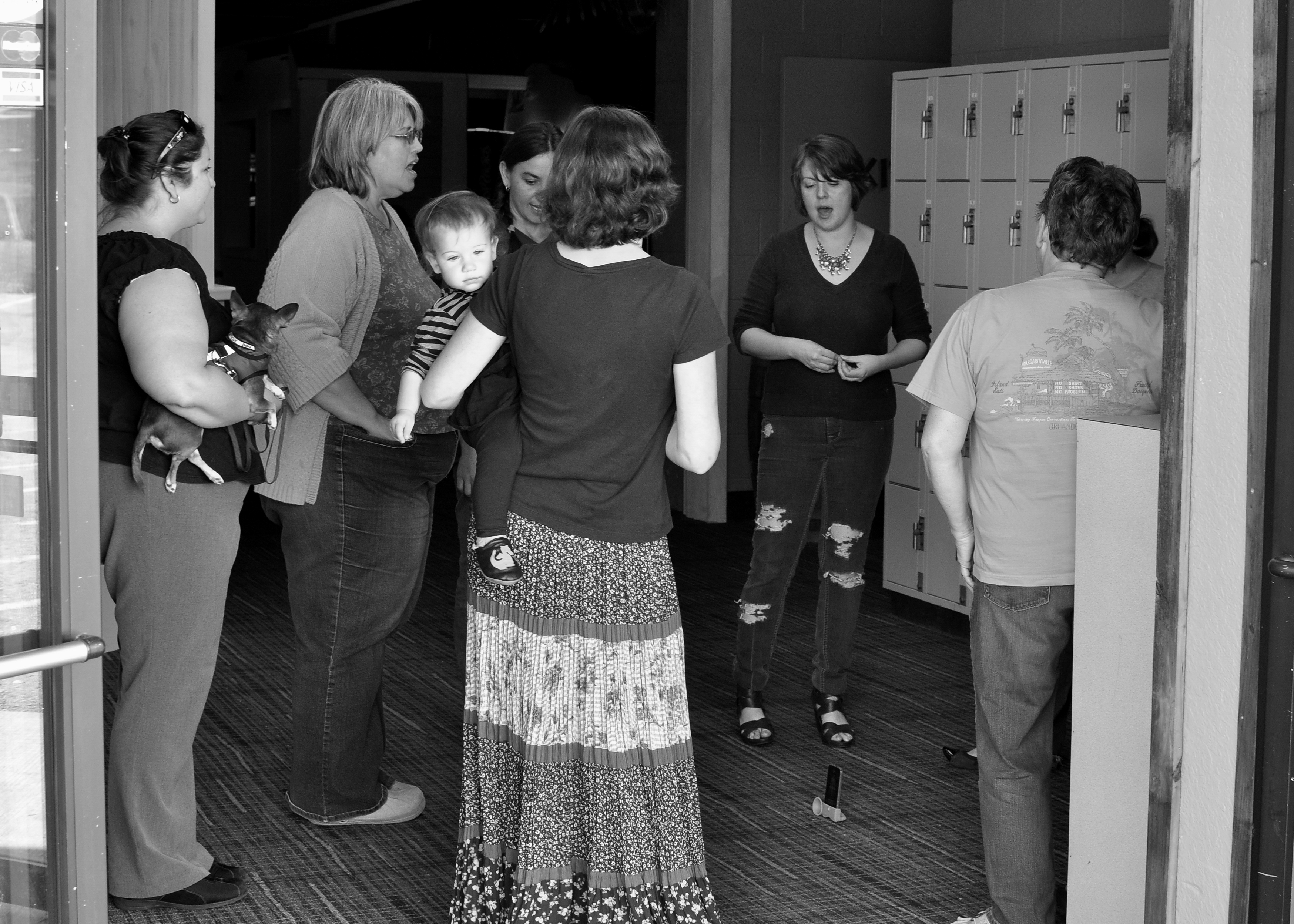
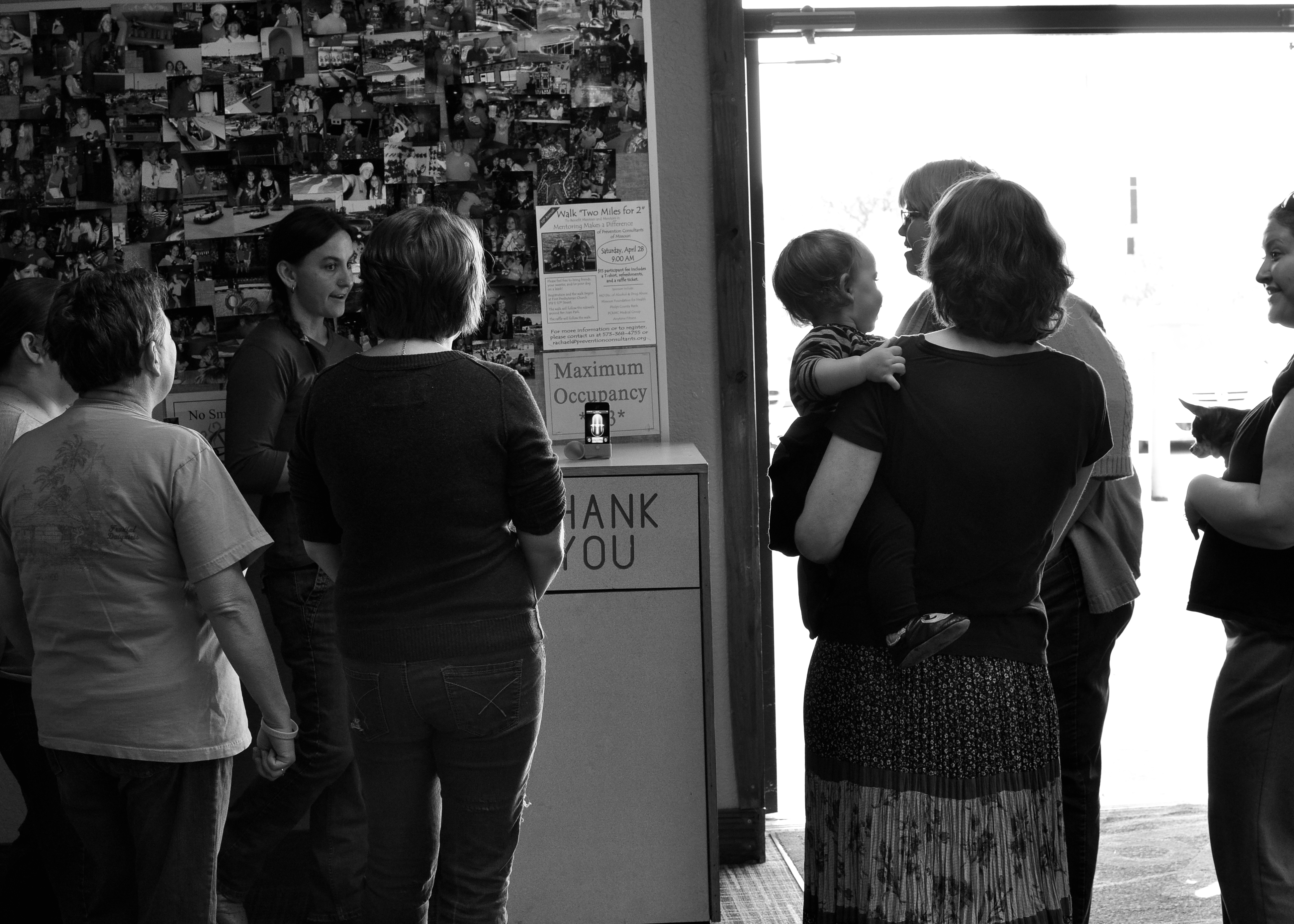
I enlisted the aid of my friends last week at playgroup at the skating rink to sing a rendition of “Woman Am I” using the voice memo feature on my iPhone. I feel really lucky to have a group of friends who will stand in the skating rink lobby with me and sing heartily for a woman they’ve never met. Seriously, not everyone is this lucky. My friends rock! The recording is available via soundcloud here for anyone else’s benefit. 🙂

Take 1. iPhone on floor of skating rink lobby.

Take 2. Phone on top of trash can in skating rink lobby.

Woman am I, Spirit am I, I am the Infinite within my soul...

Blessingway in a box!

Some goodies for a blessing bracelet/necklace.

You can read about the mother blessing from Molly’s perspective in her post here.

3-D Journaling

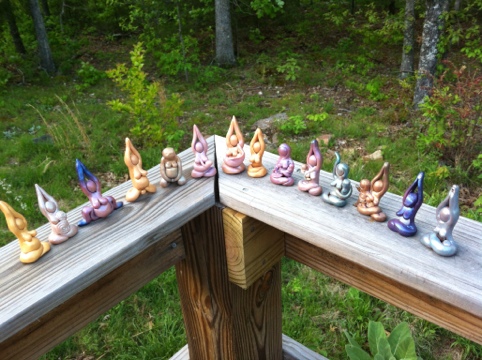
After writing my recent post about the resuming of my cycle post-baby, I felt the urge to add a new figure to my ongoing birth art series of polymer clay goddess sculptures. I am the only person I know of who has done a series of sculptures like this and it feels like it is essentially a 3-D art “journal” representing different points in my life. I wonder if I will continue to feel like adding to it in future years. I could end up with quite a crowd! My new figure has an appropriately dark red stone in her belly and a clear stone in her hands—this represents the womb-moon connection. I colored her with silver and blue pigments also as representative of the moon.

20120414-221050.jpg

The stone I set in her belly is kind of small and thus hard to see from this angle.

20120414-231232.jpg

I then took an updated photo of the whole series in order. Other pictures of the whole series are in this post.

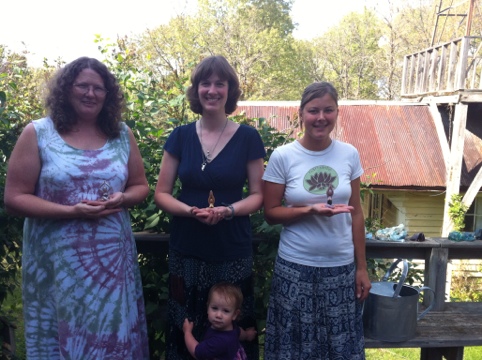
As a further evolution in the series and of my own process, at their request, I showed two friends how to make polymer clay goddess sculptures today and we each made a figure.

20120414-220950.jpg

This has been a very personal process for me and it was interesting and challenging in some ways to share it with others. The gold figure is mine and the other two were my friends' first forays into polymer clay goddess-making!

And, here we are holding our sculptures! 🙂

20120414-231250.jpg
Maybe next time I should try making a little step-by-step photo tutorial or video and further share this process of polymer clay goddess life/art journalling with others!