Archives

The Blessingway Connection

Last weekend, I attended a mother blessing/blessingway* ceremony for a dear friend. I have mentioned her here before, because she is on a pregnancy-after-loss (PAL) journey after having given birth to a tiny boy after 16 weeks of pregnancy last July (my own Noah was born at 15 weeks in Nov., 2009). My friend’s baby had been due in January, the same time my own “rainbow baby” was born. So, I’ve spent the last year being a couple of months “ahead” of her on the very complicated and emotional path of pregnancy after loss.  And, now she is preparing to give birth to her own new baby girl any day now. It felt very, very good to come together with friends to celebrate this strong mama, her journey, and her babies. I so clearly remember the feelings of “feeling the fear and doing it anyway” when it came to things like doing a belly cast, having pregnancy pictures taken, and, yes, having a blessingway—each of these commemorative events was tinged with a fear of possibly being a sad memory instead of a happy one. I remember worrying, “what if I look back at my blessingway and have to think, ‘but I was so happy.'” These thoughts aren’t necessarily rational or logical, but they featured prominently in my PAL experience. And, while I truly loved being pregnant and I was happy much of the time, I was so glad for it to be over and for PAL to be behind me. This is the feeling I had for my friend during her ceremony as well—pretty soon PAL will be over and you will be so glad to leave it behind and snuggle your new baby girl (I’m also very familiar with the companion fear of, “but what if my PAL journey ends with another loss? I’m not holding my new baby yet…”)

For many mother blessings, I pick out a quote or a poem or a reading to give to the mother.  Considering how much writing I do in my life, it is kind of surprising to me that I usually choose to give women other people’s words rather than creating something new for them (I do say original things aloud to them during the gifting time, in which we each take turns kneeling before the mother and telling her what she means to us). After some looking for perfect quotes, I knew that for this friend,  I needed to write something to her from my heart and not from someone else. So, on one of my womb labyrinth postcards, I wrote the following:

Nine months ago you entered into the long, challenging labyrinth of pregnancy after loss. You have walked with courage, strength, and grace. You have been SO BRAVE. And now you prepare to take the final step on the path—to greet the power and intensity of your birthing time. All of your love and hope and fear will become concentrated on the task of opening your body to welcome your precious new daughter into your arms and your life. She is coming. She is okay. And, sweet mama, so are you. This is a time of openness and surrender–in body, mind, heart, and soul. May you give birth with confidence, strength, bravery, vulnerability, and wild sweet joy and relief.

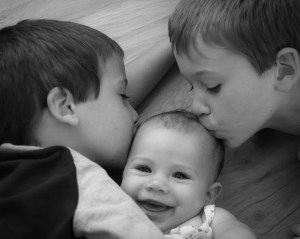
(c) Sincerely Yours Photography

One of the special things about blessingways is the sense of connection with other women. The ritual space creates an opportunity to speak and share with each other with a depth that is often not reached during day to day interactions (and definitely not usually at baby showers!). This winter, my friends and I started having quarterly women’s retreats. One of my reasons for wanting to do so was to bring some of that sense of celebration and power from our Mother Blessing ceremonies more fully into our lives and to celebrate the fullness and completeness of women-in-themselves, not just of value while pregnant. For these same reasons, I decided to pursue a doctoral degree in women’s spirituality—while birth work is still important to me, I feel very “called” to celebrate, work with, acknowledge, and respect the full cycle of a woman’s life.

“We are mothers, sisters, family wrapped in different cloth,
standing under the same wide sky
and we’ve come to the very end of our silence
together we’ve found our voice
and it is loud
and it is beautiful
and it sings a love song for our children”
Mothers Acting Up

(c) Sincerely Yours Photography

——-

*For a general description and explanation of mother blessings as well as musings on “connection,” see my friend Hope’s post.

*Out of respect for Native traditions, I continue to try to refer to these ceremonies as “mother blessings.” However, my local circle of women has been holding these ceremonies for each other for about 30 years and they have “historically” been referred to as “blessingways.” Blessingway remains the term that feels most right to me—most genuine, authentic, and, truly, is part of my own life’s “traditions,” so a lot of the time, I feel like it is okay for me to continue using the word, rather than trying to force myself to use mother blessing instead.

“You’ll Miss This…”

We’ve all seen or heard it happen.  A mother voices a complaint about something she is not enjoying about the mothering experience and someone else returns with a comment that disguises itself as “words of wisdom,” but is perhaps actually a thinly veiled criticism of the other mother: “well, you know, they grow so fast and you’ll miss them when they’re older!” I am curious if anyone actually finds this a helpful remark or thinks it is an original sentiment. While probably originally born from good intent, “you’ll miss this” based comments have become trite and cliche. While perhaps voiced in a good-intentioned way and theoretically used to bring perspective, to bring a proper sense of gratitude, and as an honest reminder to count your blessings (which are many and true), I think the shadow side and darker purpose of this “bringing perspective” is to silence, to muffle, to dismiss, to deny, and to shame. How often do we use this phrase against ourselves in exactly this manner? Perhaps we are nursing the baby and longing for it to fall into a deep enough sleep so that we can sneak away and “get things done.” And then, pop! there it is, “You shouldn’t be trying to get up, you’ll miss this when they’re older.”

Well, guess what, there are plenty of things I’m confident I won’t miss when they’re older. I know that I will miss breastfeeding. It is one of the deepest and richest joys of my life. The breastfeeding relationship is an intimate, interdependent, and profound connection that is irreplaceable. However, I also know in my heart that I will never miss having a toddler twiddle, pinch, stretch, and pick at the other nipple while nursing (and, frankly, I seriously doubt that any woman on earth has spent her twilight years wishing someone was stretching her nipple out to superhuman lengths). I’ll miss the sounds of little boys as they spin elaborate imaginary scenarios out in their play. I will not miss having to shout to be heard over this play while trying to carry on a reasonable, adult conversation with my husband. I’ll miss having warm little bodies snuggling with me. I won’t miss having someone sit on my back and chew on my hair while I try to type an article (yes, this has happened more than once!). I could go on, but you get the drift. There are pieces of parenting that are profoundly disagreeable and it is okay to name them, rather than shame yourself or others in the name of imaginary future regret. Additionally, the subtext that women with grown children spend their days pining for earlier years rankles with me. Personally, I really hope my own mother doesn’t waste a lot of her time wishing I was still a baby. I like to think she enjoys my company now!

Children grow and change. It is what they do. And, we want them to, really, and we want to continue to grow and develop ourselves as well, not to remain stagnated in memories of an earlier day or paralyzed by concerns about future regrets. A good friend once said something that has had a profound impact on me: “I parent the child in front of me.” Not the future adult, or, the memory of the baby or the toddler.

Here are some scenarios carrying a genuinely meaningful message: My older son is then three. He takes off his shirt at an event and a playgroup friend with adult children stops and her breath catches a little. She says, “Oh, Molly, make sure you take a picture of that little boy belly.” That night, I make sure to take one. Watching my sons playing in a wading pool one year, my mom says, “just look at  the back of his neck and his powerful [tiny, narrow] shoulders.” I take another picture, not just with my camera, but with my heart. I visit my friend with a newborn baby. Even though I have my own treasure of a 5 month old with me, I ask my friend if I can touch the back of her newborn’s head. When I touch him, tears fill my eyes. All of these are genuine expressions of the original heart of the “you’ll miss this” message—pay attention and remember to look. We don’t need a trite platitude that summarily dismisses the potent intensity of mothering small children day to day, we need to see other mothers in the act of remembering. Those moments with our babies and our children that bring a sweet, deep ache to our hearts in the moment, those are our clues that we are savoring and cherishing their lives as they unfold.  The tears that may spring unbidden to our eyes in the future when another mother’s child makes us remember this potency of early childhood, the very fact that we look back with such a pang, means that we did a very, very good job with the savoring—if we hadn’t savored, we wouldn’t know how to feel so deeply later.

Here's what I'm savoring 🙂

“It’s not only children who grow. Parents do too. As much as we watch to see what our children do with their lives, they are watching us to see what we do with ours. I can’t tell my children to reach for the sun. All I can do is reach for it myself.”

–Joyce Maynard

Our Bodies, Ourselves: New Edition Cover

In April, I responded to a call for readers’ photos for the cover of the newest edition of the women’s health classic, Our Bodies, Ourselves. I sent in a profile picture that my friend Karen took of me at a river a couple of summers ago (same Karen who took my pregnancy pictures and then recently, Alaina’s pictures). I was completely shocked to find out this month that my picture was selected to be one of the 52 women on the cover. I could hardly believe it! OBOS is such a classic women’s health book and so devoted to women’s empowerment that I’m just as pleased as pleased can be to be a tiny little part of that herstory now 🙂 (And, a very tiny piece it is, as I appear in the lower left corner and part of my head is cut off 😉 I don’t care though, I still think it is cool to be on it!)

My original little story and picture is here:

“When I think of OBOS, I think, Empowerment! OBOS means knowing your body, your personal power, and taking control of your health care and your reproductive rights. OBOS is an essential voice for women.”

Haumea: The Divine Midwife


“Haumea, a Polynesian Goddess, was credited with teaching women how to give birth by pushing their babies out from between their legs. Before this, folklore claims that children were cut from their wombs, extracted by knife like a pit from ripe fruit. Thanks to Haumea, women were able to forgo this dangerous passage.” –Kris Waldherr, Goddess Inspiration Cards

Reading this, I felt like women need to “meet” Haumea again. Perhaps modern midwives, doulas, and birth educators are Haumeas on earth, reminding women that they have the inherent power and capacity to push their own babies out from between their legs, rather than having major surgery.

After reading about Haumea and thinking about my own births, I felt inspired to make yet another figure in my birth art series. I’m experimenting with new types of figures lately and made this catching-your-own image:


You will safely give birth to something powerful.

Asking the right questions…

A couple of weeks ago a list of sexual assault prevention tips made the rounds on Facebook. Containing reminders such as, “When you see someone walking by themselves, leave them alone” and “Carry a whistle! If you are worried you might assault someone ‘on accident’ you can hand it to the person you are with, so they can blow it if you do,” these tips are absolutely perfect and so very appropriate. I spent several years working in domestic violence shelters answering the hotline. The number one question/comment I used to get from people about this work was, “why doesn’t she just leave?” And, we always used to reply that that is the wrong question, “the question isn’t, ‘why does she stay?’ but ‘Why does HE do it?!'” And, why, as a society, do we accept it? The same website that created the SA Prevention Tips poster, also noted this:

When we talk about rape as something that happens to 1 in 6 women, it is something that happens to women. Oh no, women! You have a problem! A women’s problem! That has to do with women! What are women going to do to solve this problem? Perhaps if we rephrased that as ‘one in…however many…men will commit rape in his lifetime,’ the problem might start to look a little different to certain people.

The wrong questions

Quite a while before this, an article made the rounds about women in another country ironing their pubescent daughters’ breasts flat to try to make them less appealing as rape targets. Many comments on the article were to the effect of, “ugh! What horrible mothers.” Again, entirely the wrong lens with which to be looking. Why is it okay to rape little girls?! Ditto for the news reports of a reporter being sexually harassed by the football team when she went to  interview them—people responded with things like, “she should try dressing professionally.” Um, excuse me? How about the football players—adult, capable men—try acting like professionals? Wrong questions, wrong lens, wrong direction to point the fingers. And, it is because I respect men as people that I give them more credit than this—I believe men are rational and fully capable people who are responsible for their own behavior, not out of control pigs who women are responsible for “taming” and/or not “provoking” (sexually or otherwise). Men are smart, let’s treat them like it by remembering to ask the right questions and to give the right sets of tips.

Of cannibalism & implied social acceptance

These topics remind me of an example I use in the college classes I teach and the questions I encourage my students to ask about all kinds of social services: If we respond to the presence of disturbing social conditions by working primarily to soften the pain they cause, does this imply tolerance for their existence? Our actions do help, but we need to be sensitive to the fact that our limited actions indicate endorsement of, or at least acquiescence to, these conditions that call for all our hurry and scramble. Under the guise of caring we may have reached a point of acceptance of conditions that produce the pain we try to ease…Why are we accepting that children go hungry, that people are homeless, and that women are beaten and raped? Are these conditions that you find acceptable? Are these things just part of the “normal” course of life? I then ask my students to consider cannibalism—what would it be like if rape was as unheard of in our culture as cannibalism? We don’t have “cannibalism survivors support groups” and cannibal hotlines and shelters, because as a whole, our culture does NOT accept cannibalism as a remotely acceptable activity. All of our “services” for sexual assault and domestic violence tell a different story—while these things are “too bad” and “shouldn’t happen,” we’ve accepted that they do and in a way tolerate their existence. I believe we can and should create a world where DV and SA are as unheard of as cannibalism! Usually this example gives students pause. We need to ask bigger social questions that go beyond the individual cases right in front of us.

But what about pregnancy and birth, anyway?

Okay, what does any of this have to do with pregnancy or birth?! Well, in the most recent issue of Brain, Child magazine, I was reading an essay called “Play Parallels” by Dorothy Fortenberry, exploring parallels between her play, Good Egg, and reading What to Expect during her own pregnancy. In it, she makes this fabulous observation:

“I also left my obstetrician. The more I saw him, the less I wanted to talk to him—and if you don’t like chatting with someone, I’ve usually found you also don’t want to have his face in your crotch.”

And how! She then comments on reading an article about how the environment in the womb sets the stage for the baby’s entire life and that mothers are responsible for making this environment as pure as possible–it is in your hands! She also is thinking about the dangers of eating coldcuts during pregnancy, frequently warned about in popular pregnancy books and media: “Hold on, I thought, deep breath. Stop hating yourself and start asking questions. Like: Where was an article about why cities have air pollution in the first place? What about an article about what to do if you want to leave your ob/gyn? Or the headline I would have written: ‘Pregnant Women Routinely Denied Health Insurance, Perhaps a Bigger Deal for Babies Than Tuna‘?…I’d be damned if I paid someone else to make me feel bad about myself. The next time I started to panic, I vowed to put my time and money to helping women with real challenges in pregnancy, and more worrisome things on their plate than sliced turkey.” [emphases mine]

Finally, she describes the book as, “a long, depressing catalogue of all the ways I had already failed my baby” and then concludes, “I saw it as one more way our society puts all of the blame and credit on individual mothers, casually omitting any larger forces like politics, or fate.”

Motherblame

I truly think this is a chronic social issue—motherblame. We MUST look at the larger system when we ask our questions. The fact that we even have to teach birth classes and to help women learn how to navigate the hospital system and to assert their rights to evidence-based care, indicates serious issues that go way beyond the individual. When we say things about women making informed choices or make statements like, “well, it’s her birth” or “it’s not my birth, it’s not my birth,” or wonder why she went to “that doctor” or “that hospital,” we are becoming blind to the sociocultural context in which those birth “choices” are embedded. When we teach women to ask their doctors about maintaining freedom of movement in labor or when we tell them to stay home as long as possible, we are, in a very real sense, endorsing, or at least acquiescing to these conditions in the first place. This isn’t changing the world for women, it is only softening the impact of a broken and oftentimes abusive system.

Birthing the Mother-Writer (or: Playing My Music, or: Postpartum Feelings, Part 1)

A friend and colleague of mine recently wrote some very touching and honest posts about her recent postpartum experiences. It is amazing how powerful the written word can be at clarifying and explaining one’s feelings.

I wrote the following article about my own postpartum feelings several years ago and have submitted to various publications, but it has always been rejected. So, I decided to finally “publish” it here. I plan to then do a follow-up post about my postpartum experiences with my other children.

Birthing the Mother-Writer* (or: Playing My Music)

By Molly Remer

After my first son was born in 2003 I felt silenced. Stifled. Shut down. Squelched. Denied. Invisible. Dissolved. Muted. I felt suffocated, chewed up and my bones spit out, erased, deconstructed, worthless, and useless. (In hindsight, I see the PPD-ish glint behind these feelings, though some of these feelings also featured in my pre-motherhood neuroses.) Postpartum was the most vivid and painful transition point of my life.

I felt slapped in the face by postpartum. I was triumphant and empowered in birth, but diminished, insecure, and wounded postpartum. I had a difficult physical recovery due to unusual labial tearing that was not repaired. I hypothesize that perhaps this contributed to my difficult adjustment to early motherhood. I’ve long tried to analyze the difficulty, concluding that it is not uncommon in the least, but wondering why/how others survive without mentioning this pain. How is anyone doing this? I would wonder, concluding that I must not be “cut out for this” and that I was the only one feeling alone, stifled, shut down, and unheard. As a consistently overachieving type, it was humbling as well as psychologically painful to not “get an A” on this new “assignment,” my baby. Each time he cried, I felt it was evidence of failure, failure, failure. I would see women and couples without children and think, “it isn’t too late for you” and, “if only you knew.” When I would see women who were pregnant I would feel a sense of grief for them, “Just wait. You have NO idea what is coming.”

I felt a duality in motherhood for which I was completely unprepared. How is it possible to feel simultaneously so captivated and yet also so captive, I would wonder. Bonded and also bound.

Maybe these feelings mean I’m egocentric, selfish, or immature (I certainly lectured and berated myself about that!), but they were my reality at the time. The experience was so scarring to me that for about 18 months after my first baby was born I considered not having any more children;  not because I couldn’t handle pregnancy, birth, or even the mothering of a baby and toddler, but because I could not stand the idea of experiencing postpartum again. I came to realize that my only regret about these days of early motherhood was not in how I related to my baby, or in how I took care of him, or loved him, or appreciated him, or marveled at him. My regret is that I was so very mean to myself the whole time I did those things—in reality, I was actually fairly skillfully learning how to mother. I was responsive, nurturing, kind, and loving and I took delight in my baby, but I was cruel to myself almost the entire time and failed to appreciate or notice any worth I had as a person or to accept and have patience for my birth as a mother.

When my first son was almost one, I wrote in my journal:

I feel like I have no one to talk to. I feel like no one understands me. I feel like I cannot express what I really feel inside. I feel like no one believes me. I do not feel accepted. I feel like my needs are not being met. I feel burned out. I feel drained. I feel angry. I feel sad. I feel desperately unhappy. I feel guilty. I feel wrong. I feel alone. I feel unworthy. I feel like I am not good. I feel invisible. I feel ignored. I feel small. I feel bad. I feel like I cannot say what I mean and actually be heard. I feel like I can’t explain my “bad” feelings. I feel trapped. I feel suffocated. I feel stressed. I feel overloaded. I feel like snapping. I feel mean. I feel unfair. I feel selfish. I feel disconnected.

I miss Mark. I miss our relationship. I miss feeling right in our marriage. I miss being alone together.

I feel like I am not enjoying motherhood the way I am “supposed” to. I feel confused. I feel conflicted. I feel torn. I feel low. I feel resentful. I feel worried about the future. I feel anxious about being good enough. I feel stretched. I feel taut. I feel like changing.

What helped me a great deal during this time were the voices of other women. Not women face-to-face, though I had begun building a network of wonderful female friends, it seemed too painful or dark to broach the question with them—-“Do you hate this sometimes too?” And I couldn’t really bear to voice my feelings to my own mother, also a tremendous source of support for me, because to risk hearing her say, “Yes, sometimes I did feel tortured by YOU” was not really what I needed. She also has a well-meaning, but frustrating tendency to meet genuine expressions of despair with comments that imply I should put on a happy face. Instead, it was the voices of women reaching off the printed page that met my hunger for contact. For truth. For rawness and a look at the “ugly.” I gobbled up books about motherhood and women’s experiences of mothering and have a permanent place in my heart for the “momoir.”

A quote from Wayne Dyer that serves a recurrent guidepost (or almost obsession) in my life is, “Don’t die with your music still in you.” During my abovementioned painful transition to motherhood I couldn’t shake the feeling that I wasn’t letting my “music” out. Then, following the birth of my second son in 2006, sort of accidentally, I began writing again and in earnest this time (articles, essays, blog posts, journals) and later realized that I no longer have any fear about dying with my music still in me. And, I also don’t feel depressed, invisible, worthless, or muted anymore. During my original fretting over this phrase, I felt like it was another type of “music” that I needed to let out (mainly that of the social service work that I had been groomed for in graduate school), not words necessarily. However, I’ve finally realized that maybe it was literally my words dying in me that gave me that feeling and that fretfulness. They needed to get out. I’ve spent a lifetime writing various essays in my head, nearly every day, but those words always “died” in me before they ever got out onto paper. After spending a full three years letting other women’s voices reach me through books and essays, and then six more years birthing the mother-writer within, I continue to feel an almost physical sense of relief and release whenever I sit down to write and to let my own voice be heard.

—–

Molly Remer, MSW, CCCE is a certified birth educator, activist, and writer who lives in a straw bale house in central Missouri with her husband, two young sons, and infant daughter. She blogs about birth at https://talkbirth.wordpress.com.

*title inspired by Literary Mama.

Book Review: Arms Wide Open: A Midwife’s Journey

Book Review: Arms Wide Open: A Midwife’s Journey
By Patricia Harman
Beacon Press, 2011
ISBN: 978-0807001387
324 pages, paperback, $16.47 (Amazon)
http://www.beacon.org

Reviewed by Molly Remer, MSW, ICCE, CCCE
https://talkbirth.wordpress.com

I very much enjoyed Patricia Harman’s first book, The Blue Cotton Gown, and was delighted to learn about her new memoir, Arms Wide Open which is, in a sense, both a prequel and sequel to her first memoir.  The first half of Arms Wide Open chronicles Patsy’s experiences with homesteading and communal living as a young hippie mother in the 1970’s. It also explores her thoughts and experiences with peace activism and her passion for an eco-friendly life. During this time, she attends her first birth and dives into her midwifery journey and eventually becomes a CNM practicing with her hippie-farmer-turned-OB/GYN husband in West Virginia. Her experiences with their years in a joint women’s health practice are described in The Blue Cotton Gown. Readers who, like me, wondered what happened where The Blue Cotton Gown left off, can find out in the second half of Arms Wide Open, which is a narrative of Patsy’s ongoing work with women through 2009 and includes her emotional painful moments in her marriage, as her husband struggles with fears of another lawsuit as well as with chronic pelvic pain patients who abuse his trust (chronic pelvic pain is a specialty of their practice).

I did feel as if there was a large chunk of story missing as the book somewhat abruptly skips from 1978 to 2008. We miss learning about any of Patsy’s experiences in nurse-midwifery school, nor do we learn much about her practice when she was a CNM attending births. The book transitions from her years as a self-taught midwife considering going to school to become a CNM, straight to her present-day years as a CNM in a private women’s health practice.

Harman’s writing style is lyrical and engaging as well as candid. The book is based on personal journals and reading it feels like eavesdropping on someone’s very private thoughts and feelings. The book is much more of a look at a woman’s feelings about her life, than it is a “manifesto” about birth or about the practice of midwifery. In this manner, I feel like you receive a much more complete picture of a midwife’s life and journey, rather than reading a sequence of birth stories. Patsy has a lot of life in addition to birth. While definitely not a “feel good” book, Arms Wide Open is a deeply touching and very honest exploration of one woman’s personal journey in life, love, motherhood, and midwifery.

Disclosure: I received a complimentary copy of this book for review purposes.

Review: A Book for Midwives

Review: A Book for Midwives
Hesperian Foundation
CD-Rom, 2011
544 page pdf book in English and Spanish
by Susan Klein, Suellen Miller, and Fiona Thomson
ISBN13: 978-0942364-24-8, $16.00
www.hesperian.org

Reviewed by Molly Remer, MSW, ICCE
https://talkbirth.wordpress.com

As a child, I was fascinated by my father’s copy of the book, Where There is No Doctor. Fast forward twenty or so years and imagine my glee when as a birth activist adult, I then discovered A Book for Midwives, also published by the Hesperian Foundation. Hesperian’s goal “is to promote health and self-determination in poor communities throughout the world by making health information accessible. [They] work toward that goal by producing books and other educational resources for community-based health.” In keeping with this goal, A Book for Midwives is available for FREE download on the Hesperian site. (Personally, I appreciate the professionally printed version of the book I purchased, because I think it would cost more same in ink to print it myself, but without the nice cover!).

A Book for Midwives is excellent; a true community resource. It is also a very sobering look at the reality of women’s health and health care in other countries. It contains reminders such as “do not hit or slap a woman in labor,” and other things that can make you cringe. A Book for Midwives is basically a textbook for midwives, health care workers, or educators working in developing countries and/or with very limited resources. I appreciate how it makes information available that is sometimes “hidden” in other books–i.e. explicitly technical content and “how to’s” that are normally reserved only for “professional” people. It is simply written and extremely blunt. There is no fluff and nothing romanticized about pregnancy, labor, and birth. In a way, it was hard to read a book that makes it so very clear how very, very difficult things are for midwives and women in impoverished areas (living in the US, I am used to the “normal, healthy pregnant women” approach to midwifery care). The book covers a wide range of information from preventing infection, treating obstetrical emergencies, doing pelvic exams, and breastfeeding to HIV/AIDS, testing for STDs and cervical cancer, and IUD insertion. There is also a section in the back of the book about medications, medication administration, giving injections, and other topics. It is an extremely comprehensive resource. (Just a side note, in the section on contraceptives, the book is heavily in favor of hormonal methods such as pills as well as very positive about IUDs and sterilization.)

Recently, Hesperian made A Book for Midwives available for purchase on CD. The CD includes the 544 page book as a pdf file in both English and Spanish. Both high resolution and low resolution versions of the book (in both languages) are included on the disk. This format makes it easy for the book to travel with you via laptop for trainings or presentations. I was particularly excited to convert it for my Kindle, making it readily available for travel and reference.


Disclosure: I received a complimentary copy of the CD for review purposes.

Updating My Birth Quotes!

(c) K Orozco

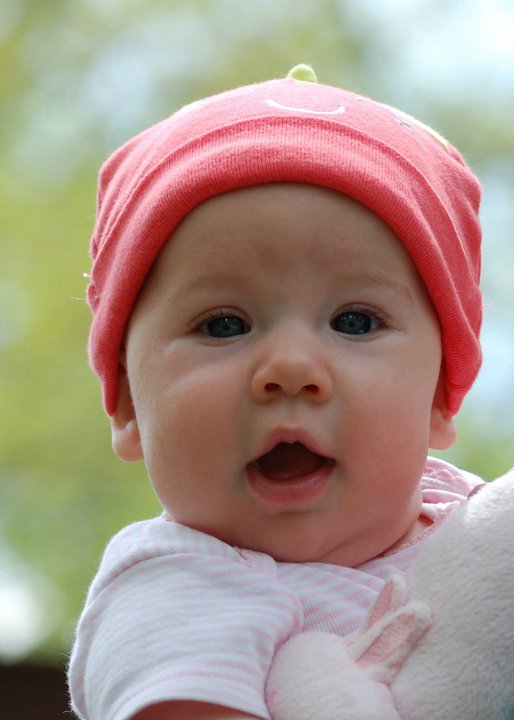
Baby Alaina, 3.5 months, taken at the park by my friend Karen 🙂

“Blessed be all the mothers of mothers.
Blessed be all the daughters of daughters.
Blessed be all the daughters of mothers.
Blessed be all the mothers of daughters.
Now and forever, wherever we are.” –Diann L. Neu

“I have almost given up on the government and the country but I have not given up on birth. I believe rabidly. It is not enough to hold the space for one woman at a time. Peace on earth begins with birth.” –Arielle Greenberg/Rachel Zucker (in Home/Birth: A Poemic)

“In giving birth my attention was pulled inside forcibly by something naturally wild, hot, raw and primitive—something so powerful that my only choice was to surrender.” –Kristin Luce

“Now I see the secret of making the best person: it is to grow in the open air and to eat and sleep with the earth.” ~ Walt Whitman

“A new baby is like the beginning of all things–wonder, hope, a dream of possibilities.” ~ Eda J. Le Shan

“Birth isn’t something we suffer, but something we actively do and exult in.” –Sheila Kitzinger (from promo for new One World Birth film)

“Many women have described their experiences of childbirth as being associated with a spiritual uplifting, the power of which they have never previously been aware … To such a woman childbirth is a monument of joy within her memory. She turns to it in thought to seek again an ecstasy which passed too soon.” ~ Grantly Dick-Read (Childbirth Without Fear)

“Childbirth isn’t something that is done to you, or for you; it is something you do yourself. Women give birth. Doctors, hospitals and nurses don’t.” ~ Lester Dessez Hazell

“Whether she chooses to birth at home, a hospital or a birth center, it is the right–in fact, the responsibility–of every woman to plan her own baby’s birth with the information, honor and freedom to which she is entitled.” –Cynthia Overgard (in Pathways to Family Wellness Magazine)

Life, love, and laughter – what priceless gifts to give our children. — Phylis Campbell Dryden

“A mother’s joy begins when new life is stirring inside… when a tiny heartbeat is heard for the very first time, and a playful kick reminds her that she is never alone.” ~Author Unknown

“Growing, bearing, mothering, or fathering, supporting, and at last letting go…are powerful and mundane creative acts that rapturously suck up whole chunks of life.” –Louise Erdrich

“Perhaps we owe some of our most moving literature to men who didn’t understand that they wanted to be women nursing babies.” –Louise Erdrich

“Labor is about finding your threshold and learning you can go beyond it.” –Rose St. John

“…the labor with which we give birth is simply a rehearsal for something we mothers must do over and over: turn ourselves inside out, and then let go.” –Susan Piver (Joyful Birth)

“The minute my child was born, I was reborn as a feminist. It’s so incredible what women can do…Birthing naturally, as most women do around the globe, is a superhuman act. You leave behind the comforts of being human and plunge back into being an animal…” –Ani DiFranco

“The health of mothers, infants, and children is of critical importance, both as a reflection of the current health status of a large segment of the U.S. population and as a predictor of the health of the next generation.” –Healthy People, 2010

“The miraculous nature inherent in the unfolding of a flower is the very same that moves through a woman as she gives life to the world. We can neither control nor improve upon it, only trust it.” -Robin Sale

“Loving, knowing, and respecting our bodies is a powerful and invincible act of rebellion in this society.” –Inga Muscio

“A new baby’s fresh milk smell causes the mother’s heart to spill over.” -Melanie Lofland Gendron

“…childbirth is much like a marathon…marathon runners know how to breathe, to run, and to complete their race according to their own body signals. Similarly, women know how to breathe, to birth, and to complete the [birth] according to their own body signals. Marathon runners who are true champions are free to stop the fast pace, and even quit the race without loss of integrity.” –Claudia Panuthos

“Birth, like love, is an energy and a process, happening within a relationship. Both unfold with their own timing, with a uniqueness that can never be anticipated, with a power that can never be controlled, but with an exquisite mystery to be appreciated.” –Elizabeth Noble

“…all those tasks and interactions of motherhood, a day full of which might make you feel you’ve ‘gotten nothing done’ because you’ve been in the cycle of care, are the heart and soul of the best brain building possible.” –Lauren Lindsey Porter (Attachment Theory in Everyday Life, in Mothering magazine, 2009)

“The lure of the distant and the difficult is deceptive. The great opportunity is where you are. Do not despise your own place and hour. Every place is under the stars, every place is the center of the world.” –John Burroughs

“Motherhood has a very humanizing effect. Everything gets reduced to essentials.” ~ Meryl Streep (via Midwifery Today)

“It is not ‘ladylike’ to give birth. The strength and power of labor is not demure.” –Rhonda (midwife quoted in Gayle Peterson’s An Easier Childbirth Book)

What we have once enjoyed we can never lose. All that we love deeply becomes a part of us.” —Helen Keller

“The greatest teachers we have are the women we serve.” –Jan Tritten

“…undisturbed (not neglected or abandoned) birth is a powerful initiation into motherhood, not only in a physical and physiological sense, but also in an emotional and spiritual sense.” –Christina Hurst-Prager (in (ICEA) International Childbirth Education Association‘s journal)

“Never hire a midwife who is afraid your birth will go wrong.” –Arielle Greenberg/Rachel Zucker, Home/Birth: A Poemic

“It is dangerous to be right on a subject on which the established authorities are wrong.” –Bumper sticker quoted in the book Home/Birth: A Poemic

“Women today not only possess genetic memory of birth from a thousand generations of women, but they are also assailed from every direction by information and misinformation about birth.” ~ Valerie El Halta

“I see generations of women bearing a flame. It has been hidden, buried deep within, yet they hand it down from generation to generation still burning. It is a gift of fire, transported from a remote and distant world, yet never extinguished.” –Kim Chernin

“Birth is as vast and voluminous, as unfathomable and inevitable as the rising and setting of the sun. And true to the inexorable power and rhythm of their life-giving bodies, women will continue to birth with dignity, grace and courage.” –Mandala Mom

“I pity the folks at ACOG who think they can make protocols, rules and guidelines that will cover all births in all situations. A better goal would be to have clinicians who can think for themselves, distinguish complications from normal birth, relax when things are taking a while, and marvel over the consistently fascinating process of human birth” -Gloria Lemay in Pathways to Family Wellness Magazine

“A pair of substantial mammary glands have the advantage over the two hemispheres of the most learned professor’s brain in the art of compounding a nutritive fluid for infants.” ~Chief Justice Oliver Wendell Holmes (1809-1894)

“The energy that can rise in real connection is the stuff of revolution.” –Carol Lee Flinders

“A woman meets herself in childbirth” –Cynthia Caillagh

“I believe that these circles of women around us weave invisible nets of love that carry us when we’re weak and sing with us when we’re strong.” –SARK, Succulent Wild Woman

“Don’t ask what the world needs. Ask what makes you come alive, and go do it. Because what the world needs is people who have come alive.” –Howard Thurman

“If ever the world sees a time when women shall come together purely and simply for the benefit of humanity it will be a power such as the world has never known.” –Matthew Arnold

“Authority without wisdom is like a heavy ax without an edge: fitter to bruise than polish.” ~ Anne Bradstreet (Feeling frustrated with anti-midwifery legislators in Missouri and then this quote came along from Midwifery Today’s e-news and I thought it was quite fitting)

The midwife teacher’s first concern is to preserve the students fragile unborn thoughts, to see that they are born with their truths intact, that these truths do not turn into acceptable lies” — from the book Women’s Ways of Knowing (shared by a participant in the Birth Workers and Beyond group)

“…we do not have humanized birth in many places today…Why? Because fish can’t see the water they swim in. Birth attendants, be they doctors, midwives or nurses, who have experienced only hospital based…medicalised birth cannot see the profound effect their interventions are having on the birth. [They] have no idea what a birth looks like without all the interventions, a birth which is not dehumanized.” –Marsden Wagner

Childbirth is a rite of passage so intense physically, psychologically, emotionally, spiritually, that most other events in a woman’s life pale next to it. In our modern lives, there are few remaining rituals of initiation, few events that challenge a person’s mettle down to the very core. Childbirth remains a primary initiatory rite for a woman.” –from the book MotherMysteries

“The holistic model holds that birth is a normal, woman-centered process in which mind and body are one and that, in the vast majority of cases, nature is sufficient to create a healthy pregnancy and birth. The midwife is seen as a nurturer.” –Penfield Chester (midwife)

“Birth, like love, is an energy and a process, happening within a relationship. Both unfold with their own timing, with a uniqueness that can never be anticipated, with a power that can never be controlled, but with an exquisite mystery to be appreciated.” –Elizabeth Noble

“If there is ever a part of human anatomy that resembles the image of God it is the uterus.” –Reverend Darren Cushman-Wood

(I hesitated to share this quote because I thought it could be viewed as disrespectful [or even sacrilegious!] by some. But, it caught my eye in an article called Pharaohs and Kentuckians in a 1997 issue of Mothering magazine. Written by a pastor of a Methodist church about homebirth and spirituality 🙂

Modern culture often teaches us to be ‘tight’…trim, taut, & terrific…We understand the need to stay ‘fit’…but we would also like to encourage you to soften yourself, in preparation for mothering & nurturing your baby. Soften your viewpoint, soften your body, surrender to this awe-inspiring event…in this way, you will be preparing yourself not only for labour, but for the days & years afterward…” -The Pink Kit Method For Birthing Better®

“Love is such a powerful force. It’s there for everyone to embrace—that kind of unconditional love for all of humankind. That is the kind of love that impels people to go into the community and try to change conditions for others, to take risks for what they believe in.” —Coretta Scott King

Nurturing is not a genetically feminine attribute. Tears and laughter are not the province of women only. The last time I looked, men had tear ducts. They had arms for holding babies. They cared about their children. And they cried at births…let the shared experience of childbirth reclaim the human soul.” –Ariska Razak (midwife and healer)

“When my kids become wild and unruly, I use a nice, safe playpen. When they’re finished, I climb out.” ~Erma Bombeck (via Moby® Wrap)

The “Almost Died…” Remark

?

Anyone who has planned a homebirth has probably heard the, “If I’d had my baby at home, I would have died” remark more times than they can count. It seems to be almost a default response to mentions of homebirth. I used to have a pet peeve about this, because I was almost certain that most of time the people saying it had been nowhere close to death! It seemed like an overly dramatic, overreaction to a normal life process, etc., etc. And, also that we’ve been so brainwashed by the media into thinking birth is this life or death emergency that that filter then artificially colors our perceptions of events and dramatically affects our social lexicon of birth. (However, I also have the companion thought that in many countries, birth does remain a life or death experience for women and babies. Maternal and infant mortality are significant issues and are not subjects to be taken lightly. And, mothers and babies in the U.S. do, in fact, die sometimes. It isn’t just a third-world country thing!) Another statement that used to confuse me was when birth writers say things about giving birth bringing you to the, “edge between life and death.” This didn’t match my own to-that-date birth experiences, which had not ever involved feeling like dying.

So, these things said, it has been very, very difficult for me to write about my own feelings of being close to death following the miscarriage-birth of my third son in November 2009. I really, truly felt like I might be going to die after he was born. I have never felt that close before, but I reached that “edge” after him, and I had the visceral experience of the veil between life and death being very, very thin. And, the feeling did not occur in a scary way, but in a resigned, “oh, so this is how it is going to end, too bad I still had so much I want to do with my life!” kind of way. I felt okay with it actually. A type of acceptance that my time was over. Since everything turned out okay in the end, I haven’t had much reason to process that feeling, but it was very, very intense. And, actually it was also life-changing in several areas of my life, including in terms of my spirituality (I semi-joke that my miscarriage-birth was a “religious experience” for me, but truly, in a way it was). However, I can hardly manage to write about it. And, looking back, I remain amazed that it was humanly possible to bleed as much as I did, especially because at that point early in a second trimester pregnancy I didn’t have the whole 50% increase in blood volume that you have by full-term!

I think I don’t talk much about my own “almost died” experience because obviously, in hindsight, I wasn’t almost dying (since I didn’t), I just felt like I was going to. But, this is the key…the fact that I wasn’t truly dying doesn’t mean that I didn’t truly feel as if I was—and, genuinely so, not in just an irrational fear-planted-by-the-media way. This has given me new insight into the “almost died” remark that seems dished out so casually. I used to think it was primarily a risk-based/skewed/brainwashed attitude, rather than an emotional thing, but I have an understanding now that it more often probably represents how she felt (or perceived the situation) and that her feeling really matters. It was real. And, I now hear and honor that feeling (rather than secretly thinking “yeah, right!”), because the feeling was real. And, that means, to her, she really did “almost die.”

I’ve also come to realize that despite the many amazing and wonderful, profound and magical things about birth, the experience of giving birth is very likely to take some kind of toll on a woman—whether her body, mind, or emotions. There is usually some type of “price” to be paid for each and every birth and sometimes the price is very high. This is, I guess, what qualifies, birth as such an intense, initiatory rite for women. It is most definitely a transformative event and transformation does not usually come without some degree of challenge. Sometimes to be triumphed over or overcome, but something that also leaves permanent marks. Sometimes those marks are literal and sometimes they are emotional and sometimes they are truly beautiful, but we all earn some of them, somewhere along the line. And, I also think that by glossing over the marks, the figurative or literal scars birth can leave on us, and talking about only the “sunny side” we can deny or hide the full impact of our journeys.

During Pam England’s presentation about birth stories at the ICAN conference, she said that the place “where you were the most wounded—the place where the meat was chewed off your bones, becomes the seat of your most powerful medicine and the place where you can reach someone where no one else can.