Giveaway! The Mother’s Guide to Self-Renewal

The giveaway is now closed! Elizabeth Baer was the winner. Congratulations!

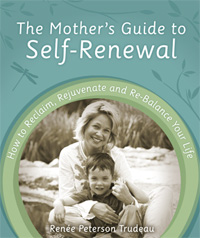
In 2008, my mother-in-law bought me The Mother’s Guide to Self-Renewal for Christmas. When I got this book, I made a commitment to myself that I was really going to DO the book, instead of just reading it, tossing it aside, and gobbling down the next one on my stack. So, I did. It took me about 4 months or so to work through it in this way, though it is actually laid out in a 12-month format. The subtitle is “How to Reclaim, Rejuvenate, and Re-Balance Your Life,” which is just what I felt like I needed! I found it an inspirational, insight-provoking, and enriching journey. Since this time, I have re-read/re-worked through sections of the book many times, as well as recommended it to many other women as one of my favorite resources for balanced living.
As a funny little side note, when I first started reading the book, I had a lovely little leather bound fancy notebook to do the journaling/reflective exercises in. I discovered I was never doing them—it never felt like the right time. Then, I bought a Pirates of the Caribbean notebook at Wal-Mart featuring a large photo of Orlando Bloom on the cover and lo and behold, I started doing the journaling exercises in it and finished the book right up! I had to laugh at myself—Hark! I have found thee, my muse, and thy name is Orlando Bloom (especially in rakish, unbuttoned-pirate-shirt attire!)

The author of the book, Renée Trudeau, offers several other amazing resources that I regularly enjoy: I participate in a free monthly teleclass based on the book (I love these calls—sometimes I have to work really hard to carve out the life space to attend, but I’ve NEVER regretted making it happen), I subscribe to the e-newsletter, and read her thought-provoking blog. Associated with the teleclass and book, is a nurturing “Live Inside Out” Facebook page.

I’m absolutely delighted to host a giveaway for a copy of the book The Mother’s Guide to Self-Renewal. There are several ways to enter:

1. Leave a comment with your favorite tip for self-renewal.

2. Become new fan of Talk Birth on Facebook (and leave a comment here telling me you did so that I know to count your entry).

3. Become a new fan of Live Inside Out on Facebook (and leave a comment here reporting this).

4. Blog about this giveaway on your blog or post a link to your Facebook page (and let me know about it).

The winner of the giveaway will be drawn next Tuesday at noon via random number generator!
Birth & Control

Labor is a microcosm of life. It brings pain and pleasure, sadness and joy. Labor will put you in touch with both your strength and your dependency and offer you an opportunity to learn more about yourself. Sometimes we are happy with ourselves, other times we are not. Labor is not a time to judge ourselves but a period for reflecting on our movement through life at a given moment. It is not possible to control labor, it is only possible to follow the process and to meet whatever it may offer. Labor is also teamwork. It is a mother and baby learning together how to push and how to be born, how to yield and separate from the union of pregnancy. You are not in control nor are you out of control during labor. The best way to approach labor is with an attitude of learning rather than controlling –Gayle Peterson, An Easier Childbirth

One of the things I explore in birth classes is feelings about wanting to be “in control” or “staying in control” during birth. I ask couples to consider what “losing control” would mean to them and what the benefits of “losing control” might be.

I really enjoy this section from Childbirth with Insight by Elizabeth Noble about control and birth:

[with regard to prepared childbirth films and classes] …are instructive rather than enlightening. They confirm a particular teaching method by advocating roles and techniques. Such films obscure the fundamental holistic experience of birth. Couples are not aware that the power of giving birth involves individual surrender to its uncontrollable nature. It is understandable that expectant parents become anxious about their abilities to maintain the kind of control that is expected of them, given that no such control of natural forces is possible–or desirable.

The actual experience of contractions, like other intense bodily sensations, is extremely difficult to describe…The more completely an expectant mother can experience labor as a unit of body and mind, the more easily she can flow with the process of birth…the more a woman tries to be in control, the more she fears the inevitable loss of control…

Women will sometimes mention “fighting” the contractions or struggling with them. Or, sometimes trying to “escape” the contractions. Both of these approaches are efforts to stay “in control.” It is very difficult—if not impossible—to describe in birth classes what labor is “really like.” Birth is a lived experience, not a rehearsed one! (Though, I really believe that practicing different skills and doing some labor rehearsals in class are really valuable at building confidence, which in turn hopefully leads to a confident, adaptable birth experience.) I struggle with wanting to give people in my couples plenty of “tools” they can use in labor, while also communicating the vitalness of “surrendering” and “flowing” with birth. There is no “right way” to give birth and I find that couples sometimes want to learn definitives from me—right ways—while really the best advice I can give them is to go with the flow and respond to their instincts and inherent body wisdom. (Of course, for this, they need to be in a birth environment that is conducive to the freedom necessary to do so…)

Here is another quote I enjoy about the value of surrender in birth:

“I am starting to see that a woman’s strength in birth is also in the letting go and allowing herself to tumble fearlessly with the current, never losing sight of the belief that, when the energy of the tide is through, she will find herself upright again on the shore.” –Maria (at the blog A Mom is Born)

While I have never labored or birthed in water, or been a particular fan of swimming or being in water, water metaphors about birth always feel really right to me from my own lived experience.

And here is another post I wrote called “fears about birth and losing control

Balanced Living and Saying ‘No’

I fairly regularly experience what I term a “crisis of abundance.” There are SO many great things to do in the world: SO many great causes, so many wonderful organizations, so many beautiful books, and just so many good things to do with my time. I prefer this state to having a crisis of scarcity or lack, but abundance brings its own challenges and saying “no” or “enough” to the requests for my time is one of those. I feel fortunate that I am humming with life purpose (most of the time), but I also have to be mindful that this hum of energy does not lead me to overcommit and to stretch myself too thin.

This past week, I said “no” to two birthwork-related opportunities that were very appealing, but that I know in my heart that I don’t have the time, space, or energy for right now. It was very empowering and actually semi-thrilling to say,”no” and to mean it. I felt smart and that in these situations saying no was taking care of myself (saying no to someone else = saying “yes” to myself” sometimes!). Perhaps not coincidentally, after my “No” experiences, I received an article to share from life-balance expert Renée Trudeau. I really like her “Nine Creative Ways to Say No.” Enjoy!

Four Key Strategies for Balanced Living by Renée Peterson Trudeau, life balance expert/speaker

~Know your top priorities & effectively manage your energy: What in life is most important to you? How good are you at managing your energy? What is draining you? What is fueling you? Are you comfortable saying “no” and not over committing? “Things which matter most should never be at the mercy of things which matter least.” Goethe

~Make your self-renewal a priority: By filling your cup first, you’ll have more to give to clients/family/friends, you’re able to function at your optimum and you’ll be setting an example for healthy, balanced living for those around you. Self-care (on all levels physical/mental/emotional/spiritual) should be part of your every day life. “Self-care is not about self-indulgence, it is about self-preservation.” A. Lorde


~Build a personal support system: What type of and how much professional & personal support do you need to feel emotionally healthy and stress-free? Learn to ask for and receive help. Re-evaluate your support needs every three months; these change based on your current life stage.


~Be more present in all that you do: Stress and overwhelm are often brought on by dwelling on the past or living in the future. By spending more time living in the present and focusing on what is most important in the here and now, the calmer, more effective we become.

Nine Creative Ways to Say “No”

Below you’ll find specific language to support you in saying “no.” Most people find that the more they say “no,” the easier it becomes say “yes” to those things that really matter.

(1) Just No: “Thanks, I’ll have to pass on that.” (Say it, then shut up.)

(2) The Gracious No: “I really appreciate you asking me, but my time is already committed.”

(3) The “I’m Sorry” No: “I wish I could, but it’s just not going to work right now.”

(4) The “It’s Someone Else’s Decision” No: “I promised my coach (therapist, husband, etc.) I wouldn’t take on any more projects right now. I’m working on creating more balance in my life.”

(5) The “My Family is the Reason” No: “Thanks so much for the invite, that’s the day of my son’s soccer game, and I never miss those.”

(6) The “I Know Someone Else” No: “I just don’t have time right now. Let me recommend someone who may be able to help you.”

(7) The “I’m Already Booked” No: “I appreciate you thinking of me, but I’m afraid I’m already booked that day.”

(8) The “Setting Boundaries” No: “Let me tell you what I can do …” Then limit the commitment to what will be comfortable for you.

(9) The “Not No, But Not Yes” No: “Let me think about it, and I’ll get back to you.”

(This list is adapted in part from Work Less, Make More—Stop Working So Hard and Create the Life You Really Want, by Jennifer White.)

Trudeau is a nationally-recognized career/life balance coach, president of Austin-based Career Strategists and the author of The Mother’s Guide to Self-Renewal: How to Reclaim, Rejuvenate and Re-Balance Your Life. Sign up to receive monthly life balance tips, order the book, find out about upcoming retreats/events and  learn more about Trudeau’s coaching groups at www.ReneeTrudeau.com or www.CareerStrategists.net.

Poem: Thoughts on Risk

Two years ago, I read Sheila Kitzinger’s book Homebirth. In doing so, I was struck anew how much I love her writing (I quote her often!). It is so lyrical and vibrant and really gets to the heart. I also deeply identify with it. I want to share a poem (not by her) that was in the book in the section about assessing risk and statistics and homebirth and is it really safe, etc. I feel like sharing it today (something that is difficult for me about pregnancy after loss is feeling more “at risk” about pregnancy than I have ever felt before—you know the quote, “birth is as safe as life gets” often said so blithely, has a different impact when you’ve been part of the statistics instead of “escaping” them. I still think the quote is true, but it is NOT a “light” quote!) :

Thoughts on “risk”
by Judith Dickson Luce (in Homebirth by Sheila Kitzinger)

word so small
born a verb
an “action word”

as I learned in 4th grade
I risk
you risk
she risks
even a noun something
I take
you take
she takes

in philosophy a description of what life is
with its own rewards:
I love and risk loss and pain
I try and risk failure
I trust and risk betrayal
I live and risk death
but we’ve moved so far beyond philosophy
to insurance–for anything and everything
to machines
to technology and control
(no daring)

and computers spit out the risk we are “at”
before we breathe
before we take a first step
that might lead us to fall
and the computers and the statisticians tell us
it is healthier and safer
and wiser not to take risks
since we are “at risk”
and they can reduce risk
and with it our capacity
for living
and touching
and caring
it’s safer that way
neater and more efficient
and definitely more sterile
and what more can we ask of life?
—–
Commentary by Tom Luce: “It’s very risky to be born since very few people who are born avoid dying (though many avoid living). If you are born there is a high statistical risk you might die.” 😉

DVD Review: Hab It: Pelvic Floor

DVD Review: Hab It: Pelvic Floor

PT Partners, 2008
DVD, 1 hour 42 minutes, $29.95

www.hab-it.com

Reviewed by Molly Remer, MSW, CCCE

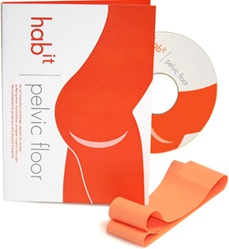
Most women, and certainly all birth professionals, are aware of the importance of the pelvic floor. Less well-known are methods and exercises beyond the basic “Kegel” to strengthen and rehabilitate weakened pelvic floor muscles. Hab It: Pelvic Floor is a physical therapy DVD specifically targeting the pelvic floor. It is designed for women who are experiencing incontinence, prolapse, or pelvic floor pain. It is also a preventative tool for women to avert the development of these distressing issues.

Hab It: Pelvic Floor begins with an anatomy overview and Kegel explanation/instruction and moves into correct postural positioning. The DVD contains four progressive workouts each more than 20 minutes long and also “time efficient” versions of each workout. Each workout is coached by physical therapist Tasha Mulligan while being demonstrated by another woman. All of the information is clearly presented and easy to follow and the instructor is pleasant and earnest. The DVD comes with an exercise band for use during some of the exercises and no other equipment or props are required.

A very thorough and complete resource for any woman of any age, Hab It: Pelvic Floor is a relevant, interesting, and worthwhile addition to the libraries of doulas, childbirth educators, and anyone who cares about women’s health.

Note: The DVD is not designed specifically for use by pregnant women and there are several exercises that are not compatible with pregnancy—it is ideal for pre or post-pregnancy however!

Disclosure: I received a complimentary copy of the DVD for review purposes.

Wordless Wednesday: Wallowing in Books

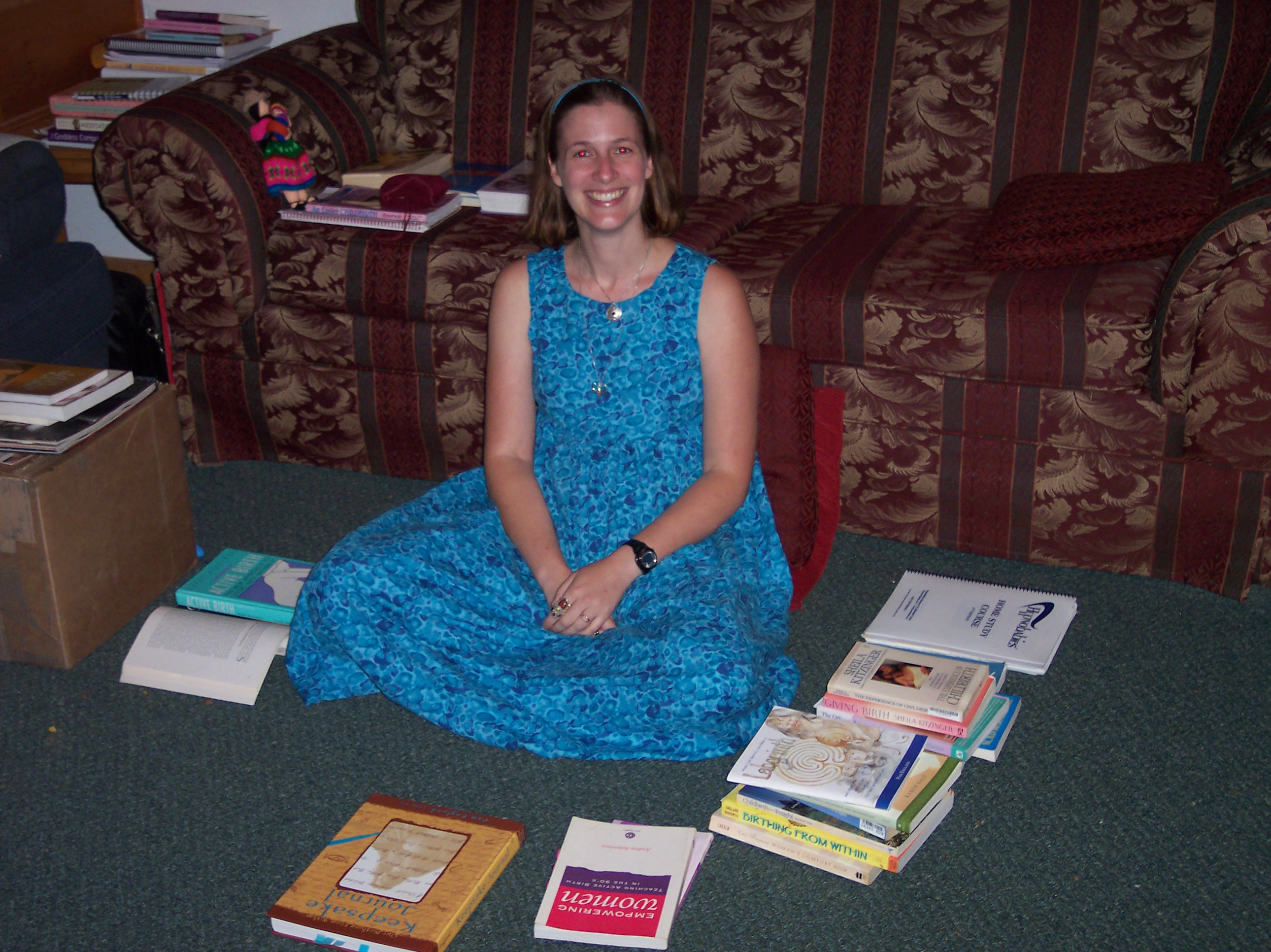
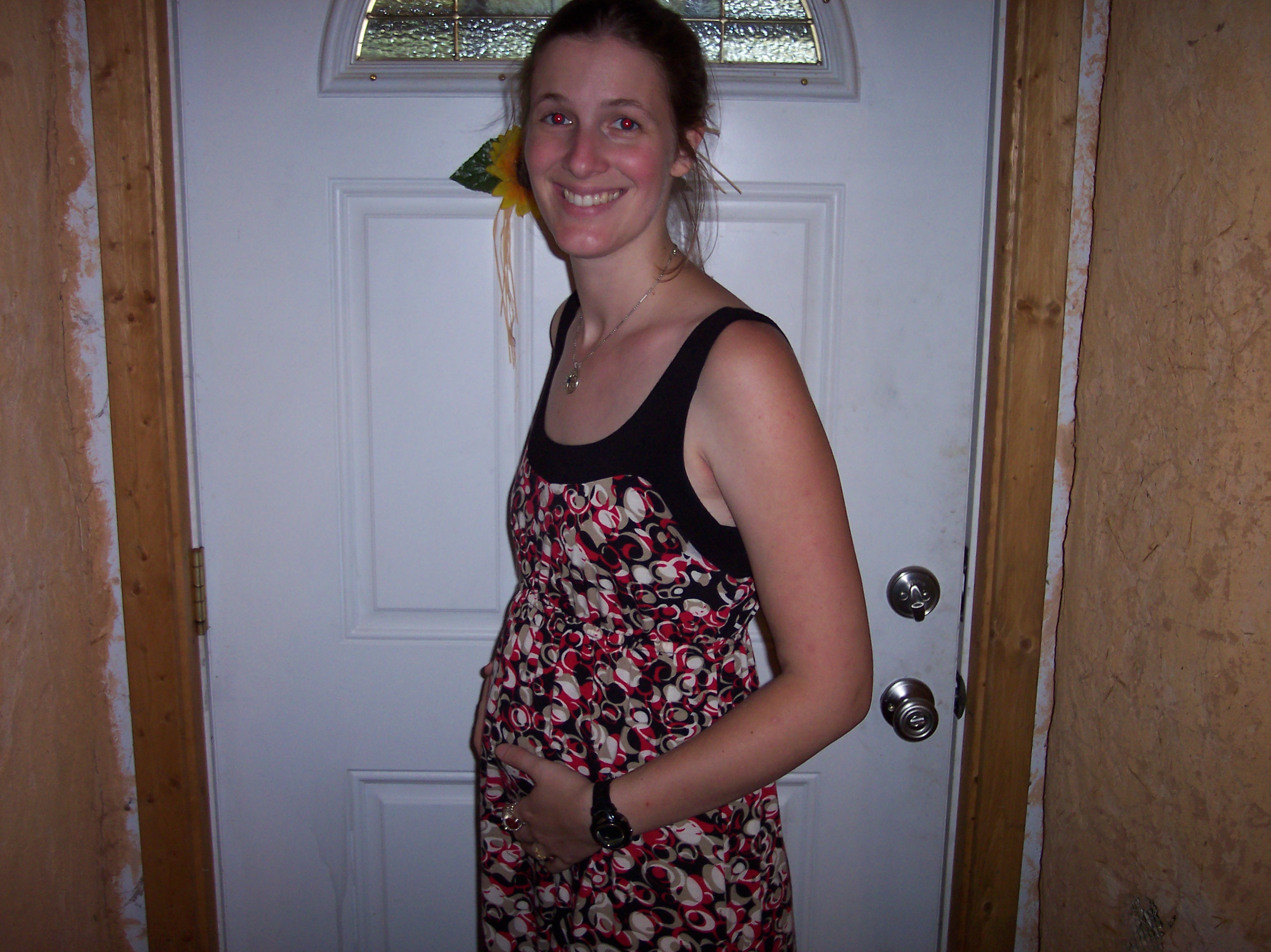
Anyone who knows me in person knows how much I love books! I joke with my husband about feeling like I need some time just to “wallow” in all my books. This past weekend, I finally did exactly that—got out all the birth and childbirth education books that are my favorites or that I’ve been wanting to look through again, spread them all around me and just enjoyed 🙂 (while I love being a book reviewer, one drawback is that I spend so much time reading NEW good books that I don’t have a chance to re-read old favorites!) Notice there are also books on the couch behind me AND in a big stack on the end table next to the couch—these are not books I got out for wallowing purposes, but are currently in-process/being used books! And, yes, that large box next to me is full of books and also has books on top (these are kids’ books mailed to us recently though, not birth books). I also feel like pointing out that this is not a very figure-flattering dress I’m wearing and though, yes, I am pregnant, I am not really as big as I look in the picture.

So much for Wordless!

Book Review: Giving Birth with Confidence

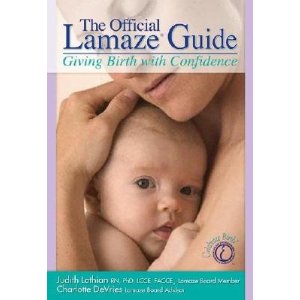
Since I recently wrote a post inspired by a quote from The Official Lamaze Guide: Giving Birth with Confidence, I figured it was high time that I share the review I wrote of the book! The review was originally written in 2007 for CfM News.

The Official Lamaze Guide: Giving Birth with Confidence. By Judith Lothian & Charlotte DeVries. Published in 2005 by Meadowbrook Press (307p), $12.00. ISBN: 088166474X

Reviewed by Molly Remer, MSW, CCCE

Very few pregnancy books deliver the message that we think pregnant women need to hear most: Birth is a normal and natural part of life….We believe deeply that birth is a process you can trust just as millions of women before you have. This belief isn’t sentimental; it’s based on our thorough understanding of the physiologic birth process and research that confirms interfering in that process is harmful unless there is clear evidence that interference provides benefits.

So begins an opening section of the book The Official Lamaze Guide: Giving Birth with Confidence. The degree to which the book accomplishes its simple message can be summarized with a simple review: Excellent! The Lamaze Guide is digestible and reasonable for busy people to manage at less than 300 pages of text and it contains a simple, profound, and elegant message that women in the U.S. desperately need to hear.

The book begins with defining normal birth as “…a normal birth is one that unfolds naturally, free of unnecessary interventions.” It then briefly explains the history of birth and how and why normal birth is not actually the norm in our culture. The authors then clearly address the following areas in one chapter each: early pregnancy; choosing a caregiver and birth site; middle & late pregnancy; preparing for labor and birth; the simple story of birth; keeping birth normal; finding comfort in labor; creating a birth plan and a baby plan; communication and negotiation; greeting your newborn; and early parenting. The authors are clearly very supportive of midwifery and the Midwives Model of Care (though it is not referenced by name) as well as of the benefits of a doula in the birthing room.

The book is framed in the context of Lamaze International’s powerful foundation, the Six Healthy Birth Practices:

The book is also guided by Lamaze’s comprehensive and lovely philosophy of birth:

  • Birth is normal, natural and healthy.
  • The experience of birth profoundly affects women and their families.
  • Women’s inner wisdom guides them through birth.
  • Women’s confidence and ability to give birth is either enhanced or diminished by the care provider and place of birth.
  • Women have the right to give birth free from routine medical interventions.
  • Birth can safely take place in homes, birth centers and hospitals.
  • Childbirth education empowers women to make informed choices in health care, to assume responsibility for their health and to trust their inner wisdom.

After effectively bolstering the confidence of women in birth, The Lamaze Guide concludes with several useful appendices. The first is the excellent tool “Effective Care in Pregnancy & Childbirth: A Synopsis.” Though this information is easily available on the internet (see www.childbirthconnection.org), I find that many parents do not come across it on their own. How powerful to have it included for easy reference of indisputable evidence based practices. The Mother-Friendly Childbirth Initiative is included in another appendix as well as the always excellent text of The Rights of Childbearing Women. I was delighted to see all of these powerful documents in one place—and, in the hands of consumers who need to be aware of them.

This book is a refreshing presence on the shelves of my local bookstore (yes, there is only one retail book shop in my community and The Lamaze Guide is the only “alternative” birth book stocked in the store!). As I read the book, I kept nodding along and wishing it was in the hands of each pregnant woman in my community. Lamaze has a “name recognition” that gives this book the potential to have a wider and broader impact than other alternative birthing books which, though brilliant contributions, may only end up in the hands of “the choir.” The Lamaze Guide is written in such a matter-of-fact and comforting tone that I cannot see it being off putting to the average consumer as having “hippie” language or “extreme” ideas. The blueprint for normal birth that the book lays out is extreme compared to the standard practices at most hospitals, but the way in which the information is presented opens doors of communication, understanding, and exploration as well as providing the evidence basis to back normal birth. I would not hesitate to lend this book out as it will not scare anyone away with “weird” ideas. With the other books in my personal library, I have to carefully consider my audience before choosing which book has the right style and blend of information—not this one! It is good for everyone with its open, simple message. It is a good addition to lending libraries, personal libraries, to give as a gift, or to recommend to others. The Lamaze Guide is straightforward and clearly written with an unabashedly honest and truthful message of what normal birth is and how it can either be supported or undermined.

My only critique of the book is that in contains no real acknowledgment of the several other well known and effective organizations that train and certify birth educators (other than Lamaze International itself). Conspicuously absent from the resources pages are any of these other organizations.

In conclusion, The Lamaze Guide is a source of information that women need to have and a message that women need to hear. I think Giving Birth with Confidence accomplishes its purpose skillfully and has the potential to be a transformative influence. I hope women read it, absorb it, and begin to Celebrate Birth!

Birth Feelings

Those who push themselves to climb the last hill, cross the finish line, or conquer a challenging dance routine often report feelings of euphoria and increased self-esteem…women who experience natural birth often describe similar feelings of exaltation and increased self-esteem. These feelings of accomplishment, confidence, and strength have the potential to transform women’s lives. In many cultures, the runner who completes the long race is admired, but it is not acknowledged that the laboring woman may experience the same life-altering feelings… —Giving Birth with Confidence (by Lamaze International)

This is so true and so often overlooked or diminished in our modern birth culture. Comments such as, “you don’t need to be a martyr” or, “would you get a tooth pulled without medication?” or, “there are no medals for natural childbirth,” or, “in the end, all that matters is a healthy baby!” fail to acknowledge the transformative power birth holds in women’s lives. I think these comments (and the many others like them) often come from one of two places: the first being a place where birth did NOT hold transformative power in that speaker’s life (and, this is something I have to acknowlege as real—birth can be transformative, but it isn’t always, AND it can be a powerful influence in a negative sense as well [i.e. a woman who really did suffer during birth and/or was abused and/or experienced any variety of traumatic things, whether or not we, the listener, “know” that some of those things could have been avoided with different choices, etc., etc.]).

The second place, I believe is one that many medical care providers come from in that they do not want to look at the reality of the importance of birth because then they would have to confront the reality of how they may have interfered with or “ruined” birth for so many women. Perhaps that isn’t true or is a “bad attitude” or judgment on my part coming through, but that is how it looks to me from the outside. It is easier to dismiss natural birth advocates as “zealots” and mothers who wish to birth unmedicated as “martyrs” than to critically examine the institution’s birth practices and policies.

Related to the initial quote, here is a previous post about Birth and marathons

As a side note, I really like the book I quoted—Giving Birth with Confidence—as a good “basic” birth book for pregnant women. I’m glad it is usually available in “conventional” bookstores as many other birth book treasures are not!

A Fantasy

Several years ago, I requested permission to reprint an essay from La Leche League International’s book Learning a Loving Way of Life. The essay is a birth/breastfeeding parody and I realized I’d never shared it here (please do not reprint without permission!).

A Fantasy

By Melanie Axel-Lute

Time: The not-too-distant future.

Scene: A Doctor’s office.

Doctor: Yes, Judy, the test is positive—you are going to have a baby. Now I’ll just give your instructions for the artificial womb.

Judy: Well, doctor, I have been planning to be pregnant.

Doctor: (surprised) Oh! I do have a few patients who say they’d like to try that. It’s very difficult nowadays, though, so many pressures on the modern woman. Of course, I’m all for it. It is the best thing for the fetus, though the new artificial wombs are very good. Now—have you done any preparatory exercises?

Judy: I didn’t think about that.

Doctor: You’ll find it very hard then, especially at first. I usually have my patients do several months of sit-ups and leg-lifts.

Many women say they’d like to try being pregnant, but they have to give it up in a few weeks. They have morning sickness and are very tired. I always recommend that anyone with nausea switch to the artificial womb.

Being pregnant takes a lot out of a woman. You’ll need your strength for the baby. And you don’t seem very big through the pelvis. You may not be big enough to be pregnant. I’ll have to test your amniotic fluid to see if it’s adequate.

It’s very hard to judge the weight of the fetus when it’s in a human womb, too. Some women worry whether it’s gaining enough weight. I always like to start intrauterine feedings at about two months.

Now, how long had you planned to be pregnant?

Judy: I planned on letting the baby be born naturally.

Doctor: (shocked) Oh, my! That’s really not necessary, you know. Most of my patients go for about three months—that’s the critical period—although a few stick it out for six. More than that is definitely unnecessary.

Have you thought about what people will say? Most people don’t mind seeing a woman pregnant with a tiny fetus, but when it gets to be more than six months—well! It’s just very unusual.

Besides, have you thought about how tied down you’ll be? You’ll have to take that fetus everywhere. Women really need to get out alone once in a while, you know. I feel that most women who prolong pregnancy like that do so for very selfish reasons.

Judy: I want to go ahead with it anyway.

Doctor: (patronizing) Well, I guess I just have to let you try it for a while and see how it goes…

This essay was reprinted with permission from the book Learning a Loving Way of Life, published by La Leche League in 1987. The essay reprinted was originally written in 1978. LLLI is the world’s foremost authority on breastfeeding. For a wealth of breastfeeding information, support, resources, or to purchase a copy of the book referenced, visit: www.llli.org.