Archive | 2010

Book Review: Giving Birth with Confidence

Since I recently wrote a post inspired by a quote from The Official Lamaze Guide: Giving Birth with Confidence, I figured it was high time that I share the review I wrote of the book! The review was originally written in 2007 for CfM News.
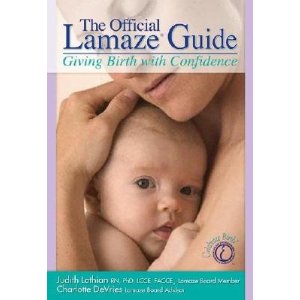
The Official Lamaze Guide: Giving Birth with Confidence. By Judith Lothian & Charlotte DeVries. Published in 2005 by Meadowbrook Press (307p), $12.00. ISBN: 088166474X

Reviewed by Molly Remer, MSW, CCCE

Very few pregnancy books deliver the message that we think pregnant women need to hear most: Birth is a normal and natural part of life….We believe deeply that birth is a process you can trust just as millions of women before you have. This belief isn’t sentimental; it’s based on our thorough understanding of the physiologic birth process and research that confirms interfering in that process is harmful unless there is clear evidence that interference provides benefits.

So begins an opening section of the book The Official Lamaze Guide: Giving Birth with Confidence. The degree to which the book accomplishes its simple message can be summarized with a simple review: Excellent! The Lamaze Guide is digestible and reasonable for busy people to manage at less than 300 pages of text and it contains a simple, profound, and elegant message that women in the U.S. desperately need to hear.

The book begins with defining normal birth as “…a normal birth is one that unfolds naturally, free of unnecessary interventions.” It then briefly explains the history of birth and how and why normal birth is not actually the norm in our culture. The authors then clearly address the following areas in one chapter each: early pregnancy; choosing a caregiver and birth site; middle & late pregnancy; preparing for labor and birth; the simple story of birth; keeping birth normal; finding comfort in labor; creating a birth plan and a baby plan; communication and negotiation; greeting your newborn; and early parenting. The authors are clearly very supportive of midwifery and the Midwives Model of Care (though it is not referenced by name) as well as of the benefits of a doula in the birthing room.

The book is framed in the context of Lamaze International’s powerful foundation, the Six Healthy Birth Practices:

The book is also guided by Lamaze’s comprehensive and lovely philosophy of birth:

  • Birth is normal, natural and healthy.
  • The experience of birth profoundly affects women and their families.
  • Women’s inner wisdom guides them through birth.
  • Women’s confidence and ability to give birth is either enhanced or diminished by the care provider and place of birth.
  • Women have the right to give birth free from routine medical interventions.
  • Birth can safely take place in homes, birth centers and hospitals.
  • Childbirth education empowers women to make informed choices in health care, to assume responsibility for their health and to trust their inner wisdom.

After effectively bolstering the confidence of women in birth, The Lamaze Guide concludes with several useful appendices. The first is the excellent tool “Effective Care in Pregnancy & Childbirth: A Synopsis.” Though this information is easily available on the internet (see www.childbirthconnection.org), I find that many parents do not come across it on their own. How powerful to have it included for easy reference of indisputable evidence based practices. The Mother-Friendly Childbirth Initiative is included in another appendix as well as the always excellent text of The Rights of Childbearing Women. I was delighted to see all of these powerful documents in one place—and, in the hands of consumers who need to be aware of them.

This book is a refreshing presence on the shelves of my local bookstore (yes, there is only one retail book shop in my community and The Lamaze Guide is the only “alternative” birth book stocked in the store!). As I read the book, I kept nodding along and wishing it was in the hands of each pregnant woman in my community. Lamaze has a “name recognition” that gives this book the potential to have a wider and broader impact than other alternative birthing books which, though brilliant contributions, may only end up in the hands of “the choir.” The Lamaze Guide is written in such a matter-of-fact and comforting tone that I cannot see it being off putting to the average consumer as having “hippie” language or “extreme” ideas. The blueprint for normal birth that the book lays out is extreme compared to the standard practices at most hospitals, but the way in which the information is presented opens doors of communication, understanding, and exploration as well as providing the evidence basis to back normal birth. I would not hesitate to lend this book out as it will not scare anyone away with “weird” ideas. With the other books in my personal library, I have to carefully consider my audience before choosing which book has the right style and blend of information—not this one! It is good for everyone with its open, simple message. It is a good addition to lending libraries, personal libraries, to give as a gift, or to recommend to others. The Lamaze Guide is straightforward and clearly written with an unabashedly honest and truthful message of what normal birth is and how it can either be supported or undermined.

My only critique of the book is that in contains no real acknowledgment of the several other well known and effective organizations that train and certify birth educators (other than Lamaze International itself). Conspicuously absent from the resources pages are any of these other organizations.

In conclusion, The Lamaze Guide is a source of information that women need to have and a message that women need to hear. I think Giving Birth with Confidence accomplishes its purpose skillfully and has the potential to be a transformative influence. I hope women read it, absorb it, and begin to Celebrate Birth!

Birth Feelings

Those who push themselves to climb the last hill, cross the finish line, or conquer a challenging dance routine often report feelings of euphoria and increased self-esteem…women who experience natural birth often describe similar feelings of exaltation and increased self-esteem. These feelings of accomplishment, confidence, and strength have the potential to transform women’s lives. In many cultures, the runner who completes the long race is admired, but it is not acknowledged that the laboring woman may experience the same life-altering feelings… —Giving Birth with Confidence (by Lamaze International)

This is so true and so often overlooked or diminished in our modern birth culture. Comments such as, “you don’t need to be a martyr” or, “would you get a tooth pulled without medication?” or, “there are no medals for natural childbirth,” or, “in the end, all that matters is a healthy baby!” fail to acknowledge the transformative power birth holds in women’s lives. I think these comments (and the many others like them) often come from one of two places: the first being a place where birth did NOT hold transformative power in that speaker’s life (and, this is something I have to acknowlege as real—birth can be transformative, but it isn’t always, AND it can be a powerful influence in a negative sense as well [i.e. a woman who really did suffer during birth and/or was abused and/or experienced any variety of traumatic things, whether or not we, the listener, “know” that some of those things could have been avoided with different choices, etc., etc.]).

The second place, I believe is one that many medical care providers come from in that they do not want to look at the reality of the importance of birth because then they would have to confront the reality of how they may have interfered with or “ruined” birth for so many women. Perhaps that isn’t true or is a “bad attitude” or judgment on my part coming through, but that is how it looks to me from the outside. It is easier to dismiss natural birth advocates as “zealots” and mothers who wish to birth unmedicated as “martyrs” than to critically examine the institution’s birth practices and policies.

Related to the initial quote, here is a previous post about Birth and marathons

As a side note, I really like the book I quoted—Giving Birth with Confidence—as a good “basic” birth book for pregnant women. I’m glad it is usually available in “conventional” bookstores as many other birth book treasures are not!

A Fantasy

Several years ago, I requested permission to reprint an essay from La Leche League International’s book Learning a Loving Way of Life. The essay is a birth/breastfeeding parody and I realized I’d never shared it here (please do not reprint without permission!).

A Fantasy

By Melanie Axel-Lute

Time: The not-too-distant future.

Scene: A Doctor’s office.

Doctor: Yes, Judy, the test is positive—you are going to have a baby. Now I’ll just give your instructions for the artificial womb.

Judy: Well, doctor, I have been planning to be pregnant.

Doctor: (surprised) Oh! I do have a few patients who say they’d like to try that. It’s very difficult nowadays, though, so many pressures on the modern woman. Of course, I’m all for it. It is the best thing for the fetus, though the new artificial wombs are very good. Now—have you done any preparatory exercises?

Judy: I didn’t think about that.

Doctor: You’ll find it very hard then, especially at first. I usually have my patients do several months of sit-ups and leg-lifts.

Many women say they’d like to try being pregnant, but they have to give it up in a few weeks. They have morning sickness and are very tired. I always recommend that anyone with nausea switch to the artificial womb.

Being pregnant takes a lot out of a woman. You’ll need your strength for the baby. And you don’t seem very big through the pelvis. You may not be big enough to be pregnant. I’ll have to test your amniotic fluid to see if it’s adequate.

It’s very hard to judge the weight of the fetus when it’s in a human womb, too. Some women worry whether it’s gaining enough weight. I always like to start intrauterine feedings at about two months.

Now, how long had you planned to be pregnant?

Judy: I planned on letting the baby be born naturally.

Doctor: (shocked) Oh, my! That’s really not necessary, you know. Most of my patients go for about three months—that’s the critical period—although a few stick it out for six. More than that is definitely unnecessary.

Have you thought about what people will say? Most people don’t mind seeing a woman pregnant with a tiny fetus, but when it gets to be more than six months—well! It’s just very unusual.

Besides, have you thought about how tied down you’ll be? You’ll have to take that fetus everywhere. Women really need to get out alone once in a while, you know. I feel that most women who prolong pregnancy like that do so for very selfish reasons.

Judy: I want to go ahead with it anyway.

Doctor: (patronizing) Well, I guess I just have to let you try it for a while and see how it goes…

This essay was reprinted with permission from the book Learning a Loving Way of Life, published by La Leche League in 1987. The essay reprinted was originally written in 1978. LLLI is the world’s foremost authority on breastfeeding. For a wealth of breastfeeding information, support, resources, or to purchase a copy of the book referenced, visit: www.llli.org.

Wordless Wednesday: Playmobil Babies

Playmobil Mamas & Babies

(I know this is supposed to be Wordless, but yes, this is my personal collection of Playmobil mothers and babies. And, yes, I do actually have several others that are not pictured, such as a baby Jesus from the Playmobil nativity scene. And, no, I do not usually let my kids play with them—these are MY toy babies!)

Manual Clot Extraction Following Birth (Sequestered Clots)

There is a new blogger at Science and Sensibility—a science writer (and pediatrician) named Tricia who is going to be writing about patient safety and other interesting topics. She wrote an article for the online medical journal Pulse about her traumatic post-birth experience that involved (among other things) a large number of clots and a painful manual extraction.

What an intense story it was. I had a manual clot extraction following my first son’s birth and my uterus literally HURT while reading her story and remembering that experience. However, unlike Tricia, I was at a birth center and had a very gentle, caring doctor who was wincing as she did the extraction saying, “I’m sorry, I’m sorry. I know this is hurting you.” Even so, it was an excruciatingly painful experience—the most painful physical experience I’ve ever had. Uteruses are simply not MEANT to have hands in them. And, birth is about things coming out, not going in! I was left with lingering questions about why the doctor did a manual extraction instead of having me squat to see if the clots would come out on their own. Perhaps it was a more serious situation that I realized at the time and she was just playing it cool. I can find almost no information online about this type of an experience, just a small mention in one of my midwifery texts about “sequestered clots,” which is I guess what I experienced.

Reading about this other blogger’s experiences really brought back this painful experience for me. I have noticed a tendency amongst childbirth educators and doulas to sometimes only focus on the good and empowering parts of births and to overlook or not mention the “traumatic” parts. Personally, I felt so good OVERALL about my birth experiences, that it seemed like a “betrayal” of sorts to talk too much about the parts that were not as good. While I experience giving birth as the most powerful, transcendent, empowering, and just super awesome cool, experience of my life, when I take a couple of steps back into memory I also realize that each of my births involved a certain element that was significantly traumatic as well. With my first it was the manual extraction and then my postpartum recovery from what I feel like was a very mis-diagnosed/poorly treated labial tear. With my second, it was recovery from a very similar tear right next to the old one (but with the visually traumatic addition of bruises). I really felt like I had “failed” in some way to have not protected myself from tearing again in such an unusual and very awful way. Someday I would like to write a blog post or article about this—I find that labial/clitoral tears are a significantly overlooked subject in the birth and midwifery literature. Indeed, I hadn’t even it was possible to have a non-perineal tear. If they are mentioned, it is in some dismissive way about “skid marks” or “labial split” or “a little burning when you urinate,” not in terms of the fairly significant genital mutilation I experienced.

I also had an intense amount of clots following my third birth (second trimester miscarriage at home)–-“only” the size of grapefruits though, not “frying pans” as in Tricia’s story-–and when I finally went into the ER about it they acted like I was making a big deal out of nothing (“people have miscarriages all the time. They’re very common.”) They were not “sequestered” though, they were coming out (and coming out, and coming out). Despite these experiences, I was never classified as “hemorrhaging”—the ER doctor even said (with a shake of her head like I was an idiot), “you’re not hemorrhaging.” And, indeed, I did not have any postpartum symptoms of hemorrhage—no anemia or anything like that (though yes, loud heart-pounding-in-my-ears after this third birth). In addition to the more obvious trauma of having my baby die, the experience of very truly feeling close to death—of no longer being able to distinguish whether I was fainting or dying—is the thing I can barely talk about from this birth experience.

Sheila Kitzinger on a Woman’s Right to Her Own Experience

I have written before that every woman has the right to define her own experience—a phrase I first remember hearing when used by an ICAN volunteer. I was cleaning out a pile of stuff by my computer this weekend and found I’d marked a related quote in Education and Counseling for Childbirth by Sheila Kitzinger, so it obviously caught my eye before hearing it from ICAN, but hearing it is what fixed it into my own personal philosophy of birthwork. With regard to what good childbirth educators need to know/how they should approach teaching:

…nothing can replace the experience of having joyfully born one’s own babies in full awareness and of having had to face and cope with some of the psychological and social problems which confront most women in childbearing and child rearing. But simply having given birth happily oneself is inadequate as a basis for good teaching. Too often then a woman has a very one-sided picture of labour, and merely superimposes on other women ideals of how labour ought to be.

Labour is a highly personal experience, and every woman has a right to her own experience and to be honest about the emotions she feels. Joy tends to be catching, and when a teacher has enjoyed her own births this is valuable because she infuses her own sense of wonder and keen pleasure into her relations with those she teachers. But she must go on from there, learn how difficult labour can be for some women, and develop an understanding of all the stresses that may be involved.

I’ve noticed that women come into birthwork for a variety of different reasons (okay, that is a very obvious statement!) and two of the big ones seem to be either that she had a wonderful birth herself and wants to “share the light” or, she had a disappointing birth herself and wants to help prevent other women from having the same experience. I came from the first camp—my first birth experience was tremendously empowering and I couldn’t wait to share the joy with others. My second was even more triumphant and powerful and really lit my fire to finish my certification process and to start teaching in earnest. I feel like I have always been compassionate to that fact that not all women DO feel a sense of triumph and joy in birth, even if they do everything “right,” and I read plenty of books and articles on “unexpected outcomes” and about birth trauma. Additionally, as I’ve noted before, I also feel like my birth-miscarriage experience with my third baby more fully opened the complete range of experiences of the childbearing year to me and gave me a deeper sense of compassion and heart for all women.

Book Review: I Can’t Wait to Meet You

Book Review: I Can’t Wait to Meet You: Understanding In Vitro Fertilization
By Claudia Santorelli-Bates

So No Wonder Publishing, 2010
ISBN 978-061531935-3
30 pages, hardcover, $15.99

www.icantwaittomeetyou.com/

Reviewed by Molly Remer, MSW, CCCE

Written by a mother of three, I Can’t Wait to Meet You is a story book for children designed to explain in vitro fertilization (IVF) in simple terms. The American Society of Reproductive Medicine has an official position that children conceived via IVF have the right to “full disclosure” of their origins. I confess to wondering if by this logic all children have a right to “full disclosure” about their conception story (!), but, regardless, for children conceived via IVF, I Can’t Wait to Meet You makes the origin story easily accessible. (The author of the book has an article available explaining why disclosure is important available here.)

Colorful cartoon illustrations and basic language tell the story of a couple who longs to have a baby and eventually goes to a doctor for help. Eggs are taken from the mother and sperm from the father in hopes that they “like one another and become an embryo.” The illustrations are friendly, appealing, and fanciful (for example, the embryos are shown resting in little beds before being put back into the mother’s tummy).

The book ends with the couple pushing their toddler in a swing at the park and with the lovely affirmation, “you were so wanted and loved long before we met you.”

I Can’t Wait to Meet You would be a nice addition to the personal libraries of families who have struggled with infertility and who would like to share a piece of their journey with their own “little miracles.”

Disclosure: I received a complimentary copy of this book for review purposes.

Birth Dreams

I’ve always been interested in the birth dreams that women have. During my first pregnancy, I only had a couple of birth/baby dreams and they were very odd/unrealistic (because I didn’t know physically what giving birth was actually like). I did have one very vivid and scary miscarriage dream. Between that birth and my pregnancy with my second son, I had TONS of birth dreams. A common theme was that I gave birth to a baby boy and would say to my husband “now we have three sons!” (even though we only had one son at the time and I wasn’t even pregnant). I also dreamed I had twins, dreamed I had a very premature baby at about 20 weeks who then died, and several others. These dreams were very vivid and real-seeming and have stuck with me as meaningful for a long time.

Then, during my second pregnancy, I had seven dreams in which I gave birth to a boy and thus I was convinced I was having a boy (I did). Some of these dreams were exceedingly realistic, down to length of labor and time of birth. Seven of them revealed/confirmed that he was a boy (in the only girl dream I had during that pregnancy, my husband was the one giving birth to the baby, so both genders were “switched”). One of them was extremely vivid and was that he was born on a specific date and time. I was in the living room on my hands and knees. The birth took four hours and when he was born I said, “I KNEW he was a boy, I KNEW it would be a fast labor, and I KNEW he would be born on a weekend.” As it was, he was not born on that day (two weeks later) and he was born at a different time (within a few hours of the dream time). He was a boy and it was a fast labor (two hours, not four). He was born at 2:45 a.m. on Memorial Day morning, so it was actually a Monday, but it WAS a holiday weekend. He was born in the living room by the green chair on my hands and knees, just like in the dream.

During my third pregnancy, I didn’t really have any birth dreams, and then had one vivid miscarriage dream the night we found out the baby had died. I did have one ultrasound dream in which he was a girl (he wasn’t). After he was born, I had a vivid placenta dream and then I only have had one other dream about him since he was born—I halfway expected to have several birth dreams or “still pregnant” dreams as a way to kind of “psychically” close out his pregnancy, but I didn’t (which in a way was comforting—like my subconscious has “processed” the loss completely). That single dream I did have post-loss was kind of a miscarriage re-do dream in which the birth proceeded exactly as it really had, but instead of all the blood following the baby, I was able to spend a LONG time looking at him and making hand and footprints.

As I mentioned, one of my vivid birth dreams after my first pregnancy, but before any others, was about giving birth to a premature baby (one of the aforementioned “third sons”) and trying to nurse him at least once before he died as well as remembering to smell his head so I would never forget his own unique baby smell. In that dream, I named the baby Noah, which is what in fact we did name our third son when he died early in my second trimester.

After my second baby was born, but before I was pregnant with my third, I had many, many vivid birth dreams about a specific birth position to give birth (half kneel/half squat) in to avoid tearing as well as the idea of making a “birth nest” for myself to have the baby in, rather than having it in the living room and then having to get up to go lie down somewhere else. I feel like the position dream is a strong message from my subconscious about how I should plan to give birth—something I’ve been working over in my unconscious or something and I’m giving myself a “tip.” As it turned out, that baby was born much earlier than expected and I ended up giving birth standing. I did, in fact, make myself a “birth nest” as my dreams had suggested and would do the same again.

During my fourth pregnancy I had two brief miscarriage dreams and since the pregnancy ended quickly, there was no time really to have any other dreams. However, the whole reason I knew I was pregnant in the first place was because I dreamed that I took a pregnancy test and it was positive. When I woke up from that dream, I took one and it was positive. During my fifth pregnancy (so far), I’ve had quite a few “bleeding” dreams and one miscarriage dream.

Then, this week, I had the first birth dream that I’ve had in AGES!

I was in a birth pool in our the living room and the baby was born in the water. The focus of the dream was on the placenta really, not the baby—though I think it was a boy. Placenta was perfectly heart shaped (and small) and had strange “bands” of tissue on it, which I decided meant it was a “circumvallate placenta” (a term I had just heard referenced for the first time the day before in a blog post). The experience of pushing the placenta out was VIVID. It is weird how the body remembers the feeling so clearly and can reproduce it in a dream, when my brain cannot conjure up a daytime memory of how exactly it feels to have the placenta bloop out—and then there was quite a bit of blood with the placenta that diffused/clouded through the water, just like it really would. It was very clear.

So, do birth dreams predict anything? Basically, I feel like my dreams, while not exactly “predictive,” do have some signs/intuitive information within them. I also think dreams often have symbolic (rather than literal) meaning. And, obviously some dreams are simply related to day-to-day happenings (or fears, like with the bleeding dreams) and do not have “deep” meaning at all. With that second baby, I really felt strongly that he was “telling” me he was a boy. My first child was a boy and I felt like the second baby wanted me to never even entertain the notion of “wanting a girl.” I knew I was having a boy and so THAT was the baby I wanted 🙂

When I say vivid, I mean really vivid—the feeling of pushing the baby out is JUST what it really feels like, the sensation of holding the new, slippery baby, etc. I think it is a “body memory” thing and the whole feeling of giving birth comes back vividly during dreams in a way that it doesn’t in just plain memory. While, the memories of my actual sons’ births ARE extremely vivid and I DO feel like I remember what it feels like to birth (I know some people say “you forget how it feels, that is why you can do it again,” but I do not feel like that is true for me), that visceral body-feeling isn’t really there in memory (for me), the way it is in dreams.

Another logical reason for all my birth dreams is that I’m a childbirth educator and writer and read/write about birth constantly. Makes sense that that is what I dream about! 😉

Practical Ways to Enhance Knowledge for Birth

Related to my previous posts about information vs. knowledge, I want to share a couple of ideas from an article I wrote some time ago for the International Journal of Childbirth Education. Obviously, I don’t have all the answers, but these are some of my ideas/tips about transferring information into knowledge that will be meaningful to parents when their birthing time comes:

  • Use “The Ice Cube Minute” exercise from Family-Centered Education: The Process of Teaching Birth. In this exercise, couples hold an ice cube in one hand for one minute and see what coping measures spontaneously arise for them. I do this exercise fairly early in my class series, before we’ve done a lot of formal talking about coping measures. It is very empowering for couples to discover what tools and resources come from within as they try the ice cube minute.
  • To illustrate the potency of the mind-body contraction, practice two pretend contractions while holding ice. One contraction has an accompanying “stressful” paragraph read with it (“your body fills with tension…it hurts! Oh no!”) and the second contraction has a soothing paragraph read with it (“you greet the wave….it is YOUR power….”). This illustrates the fear-tension-pain cycle viscerally.
  • Use a five minutes series of birthing room yoga poses to begin the class—birth happens in our bodies, not our heads. Practicing the poses opens space to simultaneously discuss and practice: squatting, pelvic rocks, optimal fetal positioning ideas, healthy sitting, pelvic floor exercises, leg cramp prevention, back pain alleviation, and more.
  • Role playing cards-—talk through various scenarios. I’ve found that couples are more receptive to talking through the cards than actually getting into a role and playing it through. The activity that seems to work best for actual role play is the labor simulation series available on the Transition to Parenthood site.
  • Values clarification exercise—participants cut out values from a list and arrange them in a grid to help them figure out if they are in alignment with each other and with their caregivers.
  • Leg stretch exercise to explore the use of vocalizations and other coping mechanisms during labor.
  • Ask plenty of open ended questions that stimulate discussion and ideas, “what have you heard about XYZ?” or “what is your experience with…?”
  • Use birth art processes to “switch” parents from linear, logical, left-brain thinking into the right-brain mode they will also enter in “laborland.”
  • Media portrayals of birth—show two contrasting clips, such as a birth from a popular TV show (I often show Rachel’s birth from the show Friends) paired with an empowering birth from a film like Birth as We Know It and then have students discuss the two. Sometimes this more clearly brings into focus the influence of our culture on birth practices than a simple discussion does. Since I originally wrote this, the film Laboring Under an Illusion was released which does exactly this—contrast media portrayals of birth with how birth can be. It is a great resource for birth classes.

In classes, I also incorporate the idea of mother-baby symbiosis through:

  • The use of affirmations—“my baby and my body work in harmony to make birthing easier.”
  • A discussion of cardinal movements with an emphasis on how the baby moves to help itself navigate the pelvis (thus, helping you have a smoother birth).
  • Visualization exercises that encourage “seeing” and connecting with the baby while in the womb.
  • Belly Mapping” to get a sense of the baby as a person positioned in the uterus. Talking about what baby is like in the womb—when does it kick more, when is it quiet, does it like music, poke you back with you touch it, etc.
  • Impressing upon participants that it is not selfish to want both a good birth and a healthy baby (I actively challenge statements about, “well, in the end, all that matters is that the baby is healthy”). Laboring women have a basic right to humane care, which supports both a happy, satisfied mother and a healthy baby. I use examples during class to show how these are intertwined—for example, a stressed, unhappy, unsupported, tense mother may have a baby with heart decels and accompanying distress.

I try to build a sense of confidence through:

  • Opening each class with a brief series of “birthing room yoga” poses to help couples become comfortable using their bodies and moving from “head space” into “body space.” Birth is a physical process and I am convinced that it is vital to include physical movement during every class to bring that message home. Additionally, the poses I teach can all be used while in labor (thus, building confidence in coping “tools” for labor).
  • Emphasizing active birth—freedom of movement through labor helps baby rotate and descend and helps mother feel more comfortable.
  • Encouraging active birth on all levels: First, the physical level–being active during the actual physical process of birth. Second, the mental level–mentally engaged with labor. Third, a cultural level—a perspective that sees women as active birthgivers, not victims of birth. Birth is something women do, as opposed to something that “gets” them.
  • Giving couples plenty of time for hands on practice of labor support and coping measures. I have a personal motto for classes of, “talk less, learn more.” Practicing support tools in class helps them develop a sense of confidence in having a well-stocked toolbox for labor, instead of being a victim of pain.

Recommendation: Luna Protein Bar

So, I’m a big one for recommending books, but not usually so big on recommending other products. I am also very careful about what samples/product information I give out during my classes. There are ethical issues with distributing just any old sample that someone sends you because you are a childbirth educator. However, I do have a snack recommendation for today! I regularly get samples of mini Luna bars to give away during my classes. I like putting them into my client packets—they make them look exciting and “goody”-ish :)—and, I also like putting a little pile of them on the table for people to snack on during class. (I also bring them to my various mother’s group meetings for the same purpose.) Some time ago, Luna Bar sent me a single full-size sample of their new Luna Protein bar. It was really quite good and since then I have bought them at the store when I’m grocery shopping and start casting my eye towards the candy bar aisle. The Luna Protein bar actually has a candy-bar-ish appeal (kind of “nougat” in the center and chocolate on the outside), but is made from mostly organic ingredients and things with actual nutritional value and is good for you as well as pretty tasty. So, I was VERY excited today to see UPS arrive with my regular shipment of mini Luna Bars AND, surprise!, a big box of full-size Luna Protein bars for my classes! They included three different varieties (cookie dough, chocolate peanut butter, and chocolate cherry). <happy dance> 🙂