Archive | February 2011

The Waters are Breaking…

I recently bought a very discounted copy of Penny Simkin’s Comfort Measures for Childbirth video. In the explanatory booklet that comes with it, she mentions the following: “You may also notice the woman’s bag of waters break during a bearing-down effort. This is normal, though quite rare, as the bag of waters is usually broken before this time…” She doesn’t specify whether it is quite rare because the bag of waters is artificially broken before that time for many women, or whether it is just quite rare, period. Regardless, I found it an interesting comment because my personal experiences have all been of this same “rare” type—my water breaks right as I’m pushing out my babies. With my first son, I arrived at the birth center ten centimeters dilated and was told I could push whenever I felt the urge. After about 30 minutes or so, I began pushing sort of experimentally. My water exploded across the room after a few of these mini-pushes. He was then born about an hour after that. With my second son, I was on my hands and knees on the floor feeling the first intense pushes and on the second push, my water broke with a soft, warm gush and ran down my leg. He was born about 5 minutes after that. After these two experiences, my conclusion was that it was kind of a nice benefit to have my water intact until pushing—it created sort of cushion for the baby’s head and (I felt) perhaps lessened the intensity of contractions (I have yet to experience a “freaking out,” identifiable transition stage in any of my births).

Waves breaking at Montana De Oro on CA trip, July 2009.

When my daughter was born last month, it was a slightly different story. As usual, the water stayed intact, but as I began to feel the pressure of her approaching head, I felt like my water really needed to break and wasn’t. It felt distinctly in the way and it was really bothering me. I felt like I could feel it in my “birth path” and it felt like an obstruction rather than a cushion and I was completely annoyed by it. I got on hands and knees on the futon and could feel her head moving down and almost crowning, when the water finally broke and a small trickle of it came out before she did (approximately 12 seconds before!). As I’ve written before, I moved up into a kneeling position then and my entire baby was born all at once along with…a big sploosh of water. Most of it came out after the baby—she was particularly nice and clean after birth too. My sons were very bloody. My daughter had a couple of tiny spots of blood on her head, but the rest of her was pink and vernixy.

I titled my post as I did because during this last pregnancy, I often listened to a CD of chants. One of the songs on the CD has sort of a wailing refrain of, “the waters are breaaaaaaking…all over the world….the waters are breaking!” and I could NOT listen to that song while pregnant (even though it has nothing to do with pregnancy—I’m not sure exactly what it is supposed to mean, but I surmise it is about change in the world). I always ran to skip over it, feeling like to listen to it would be to send some kind of message to my body/baby that I wanted my water to break, when really, I definitely didn’t want it to break early! I wish I would have thought to turn the song on during labor though 😉

Transformation Through Birth

One of my favorite birth books is Transformation Through Birth. Written in 1984 by Claudia Panuthos, who also wrote the excellent book Ended Beginnings (about miscarriage, stillbirth, neonatal death, and healing all sorts of childbearing losses), it is one of the books I recommend as “going beyond” typical pregnancy/birth book material. I enjoy books that are designed to help women with the emotional work of pregnancy instead of just the physical work, with a quick dabble into the psyche. I find they are few and far between.

Some quotes and ideas from this book that I particular like:

“In some sense, childbirth is much like a marathon. Once given some general guidelines, marathon runners know how to breathe, to run, and to complete their race according to their own body signals. Similarly, women know how to breathe, to birth, and to complete the delivery according to their own body signals. Marathon runners who are true champions are free to stop the fast pace, and even quit the race without loss of integrity.”

She then makes the point that birth is really more like a “Zen marathon” in that “the focus is to become centered and one with the body, to remain on purpose and directed toward a single goal and to act from the witness or higher mind within” and goes on to say, “Because we view marathon running as an expression of ultimate physical health, a similar attitude toward childbearing may greatly aid in the altering of present attitudes that respond to childbearing as an abnormal condition requiring medical treatment.”

I use the marathon example in my birth classes usually—particularly when talking about “pain” and what birth feels like. I use the marathon analogy to illustrate how the sensations of birth are not like the sensations of accident, illness, or injury, which send us pain signals indicating something is wrong. There is nothing wrong with birth! (well, usually) The sensations of birthing are more similar to the feeling of healthy muscles working hard and working for a long time, but doing something of which they are fully capable.

I’ve posted about this before, but the marathon talk reminds me of something one of the doctors in the Business of Being Born film said that made me really outraged. He said something to the effect of: “in three months you’re just going to be pushing a baby in a stroller, so what difference does it make how you gave birth?” What difference does it make?! Would anyone even THINK to say something like that to a marathon runner or Olympian—“in three months, you’ll just be pushing a baby in a stroller, who cares that you won a gold medal?” (analogy side note, feeling good that you won a gold medal [gave birth in a triumphant and empowering way] does not invalidate or cause guilt in those who did not run the marathon, or had to quit early, or needed help finishing. There is no shame in not running, but there is also rightful PRIDE and “glory” in finishing the “race” you set out on.

Okay, back to the actual book! Another good quote, but one I have a mixed reaction to:

“Women who birth joyfully do so because of who they are, what they believe, and how they live.”

While I like the sentiment, there is an unintended subtext of—if you did NOT birth joyfully, it must be because you have a sucky life in general and does not take into consideration the millions of factors that go into any one birth (it isn’t JUST about what the individual believes and how she lives, it is also about what those around her believe and how they live, and also what our culture believes about birth).

That said, the book is very compassionate with regard to cesarean birth experiences, stating:

“For the woman who delivered surgically, her task is to see that she was attempting to save her baby’s life through an act of personal courage.”

I love this re-framing—it isn’t a failure to have a cesarean birth, it is often an act of personal courage.

The final element I love from Transformation Through Birth is the author’s concept of encouraging and preparing for postpartum EXPRESSION instead of postpartum depression (the theory being that stuffed down, unexpressed feelings, moods, conflicts, emotions contribute to depression by repression of expression. That’s my own bit of alliteration there–I’m so catchy! 😉

Pushed Thoughts

If you are looking to get fired up about about birth activism, I recommend reading the book Pushed by Jennifer Block. This book is seriously GOOD! Lots of weighty, meaty information, scathing critiques, astute observations, and clever commentary. She has plenty of scientific backup for her claims and the book is written in an engaging, fast paced style that skillfully weaves facts into descriptive commentary and personal, illuminating interviews. I originally checked this book out of the library, but after seeing all of the data contained within—she pulls together vast quantities of data about effectiveness of “routine” practices, etc. and makes it accessible to the average reader—I quickly ended up acquiring two copies (one hardback and one soft cover, both autographed from when Jennifer was our featured speaker at FoMM‘s annual Cookie Day event!).

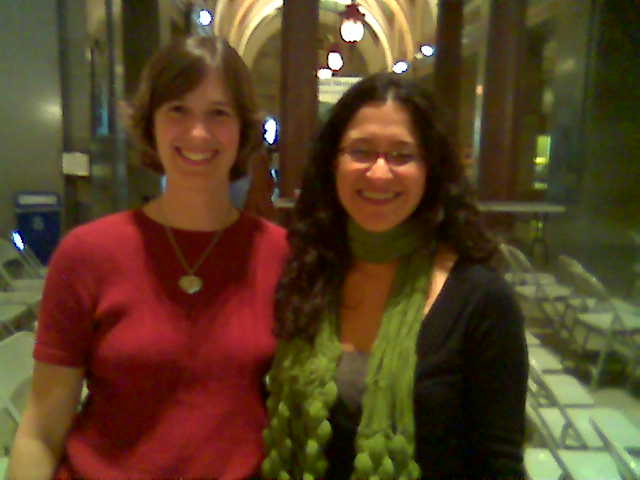
Yes, I was a geeky fangirl in the Capitol rotunda in 2009 when Jennifer Block spoke at the annual Friends of Missouri Midwives Cookie Day event.

Pushed is a thorough critique of obstetrics as an industry and how women and babies are being HURT by the systems ostensibly in place to “protect” them. Especially thought provoking is Block’s descriptive exploration of the cesarean epidemic. She points out on one occasion when discussing the whole uterine rupture straw man used to deny women VBACs, that people must prefer “controlled uterine rupture” (i.e. cesarean) than the small chance of natural uterine rupture. Later, in a separate section regarding blood loss during birth, she mentions that average loss is 300-500 mil and over 500 is considered a hemorrhage. She then notes that during a cesarean the average loss is 1000 mil. Reading that, I thought so essentially with a cesarean you have a 100% chance of a uterine rupture AND a 100% chance of a hemorrhage.  ::sob:: 😦

The information about blood loss wasn’t new to me, but I did learn something I hadn’t known at the time–300-500 mil of blood is approximately 8-9 menstrual periods worth. Isn’t the female body thoroughly awesome?!

Some assorted random thoughts and quotes from Pushed:

Re: EFM (external fetal monitoring): “For the natural childbirth movement, the emergence of the monitor was unfortunate timing. Just as activists were urging women to get up and birth, hospitals reined them back down in bed and strapped them, both physically & psychologically, to a machine that falsely promised a safe birth.”

While my feelings about unassisted birth have been “refined” and tempered somewhat since first reading Pushed in 2008, I did find the sections about UC to be frustrating and annoying. Quoting a midwife re: unassisted birth: “‘That’s not why you’re hiring a midwife. You’re hiring a midwife because you want her there for complications’ Some of Linda’s clients are such believers in birth that they toy with the idea of going unassisted. To this, Linda is fond of telling the story of a birth she attended where the baby had its umbilical cord wrapped around its neck three times and need resuscitation. ‘You never know when you’re going to have a problem,’ she says. ‘It’s like playing Russian roulette.'”

This makes me frustrated because those kinds of scare-tactic comments and implied “you must not really love your baby” subtext is EXACTLY the same as the conventional medical system’s attitude toward homebirth. The midwife quoted seemed totally oblivious that her remarks are virtually identical to the things OBs say say about homebirth and, regardless of any other personal opinions, I think they are just as demeaning and restrictive to women as the anti-homebirth sentiments are.

Okay, brief rant aside for another quote, this one while the author was observing a home water birth:

“It is at this point that I begin to fathom what supporting normal birth really entails. Linda is on her knees, sleeves pushed up, gloved hand in a soiled kiddy pool up to her bare elbow, gleaning diarrhea wisps with a spaghetti strainer by flashlight. I try to imagine a doctor doing this work and have great difficulty. This is not medicine. This is birth. It is messy, backbreaking, humble work.” [emphasis mine]

During the conclusion of the book after a discussion about the NAPW and whether childbirth is a reproductive right or not:

To her [a doctor who thinks it is not], it is a medical issue, one that may need reform, but one that belongs under the purview of physicians. ‘To my mind, I’m all for people having a pleasant and safe birth experience,’ she says. ‘But my highest priority would be for them to have a safe birth experience.’ But what’s considered safe is political. What’s safe changes. Thirty years ago obstetricians said VBAC was dangerous. Then they said it was safe. Now they’ve gone back to saying it’s dangerous. ACOG says out-of-hospital birth isn’t safe, but the research has consistently suggested that for women with normal, uncomplicated pregnancies it is not just safe, but safer, because those women are far more likely to have a normal, spontaneous vaginal birth and far less likely to experience harmful, unnecessary interventions….”

“…The goal is to have a healthy baby. ‘This phrase is used over and over and over to shut down women’s requests,’ she [Erica Lyon] says. ‘The context needs to be that the goal is a healthy mom. Because mothers never make decisions without thinking about that healthy baby. And to suggest otherwise is insulting and degrading and disrespectful’…What’s best for women is best for babies. and what’s best for women and babies is minimally invasive births that are physically, emotionally, and socially supported. This is not the kind of experience that most women have. In the age of evidence based medicine, women need to know that standard American maternity care is not primarily driven by their health and well-being or by the health and well-being of their babies. Care is constrained and determined by liability and financial considerations, by a provider’s licensing regulations and malpractice insurer. The evidence often has nothing to do with it.

This the TRUTH and I hope women hear it.

The only critique I have of this book is one I echo from several other reviews. The book fires you up and has a lot of passion and energy, but provides no outlet or ideas for where to channel that energy. There is no “resources” section, no suggestion to join Citizens for Midwifery or your state midwifery advocates, no list of birth-positive organizations who are working diligently for birth change in our culture, etc.

For some ideas that address the above, read my small-stone birth activism article 🙂

OBs and Normal

I’ve been looking through posts on my old book blog, because I shared lots of birth-related thoughts/quotes there that are now lost in the shuffle and would be more relevant transferred over to this blog. From the book The Mother Knot by Jane Lazarre, written in the 70’s she shares an anecdote about her OB that I think carries a huge ring of truth still today:

My obstetrician had whispered a secret to me on a sunny afternoon. I had come to the office prepared with my written list of questions. Why was I feeling nauseated, I asked, and what was all this pain in my thighs? And he had answered wearily, ‘If you want answers to questions, have a miscarriage, or toxemia, or let something else go wrong with your pregnancy. We don’t know anything about normal births.’ So much for technological know-how. [emphasis mine]

This is a perfect example of the differences in approach to caring for women present in the midwives model of care and the modern obstetrics model of care. Another good example of some differences is in the Snow Baby story I put on the CfM blog on Friday.

Time Round

I connect to the circle now

and see my life and death

in the child before me–

the glorious whole that spins so fast

it seems not to move

as the sun stands still in the heavens

until we glance again at dusk.

Where did it go and when

did we forget to look?


No matter, just turn.

The circle: our map

The heart: our book.

–Karen Engelmann

I copied this poem onto the first page of my journal when my second son was a newborn. I’m not totally sure what the meaning is intended to be, but I take it as a reminder to slow down and remember to look 🙂 My new baby is already one month old (tomorrow). How is that possible? I still look at her with surprise and amazement almost daily—sort of a, “where did you come from?!” feeling. There is something magic about her.

I have surprised myself by not having much urge to write in the last couple of weeks—usually I am consumed with blog post and article ideas. Something switched this week and the topics are flooding in again, as well as the sense of frustration of not having “enough time” to write them all. It may be because of Mark going back to work and now I feel like I am no longer “off” either and have to get caught back up with real life again. So, I remembered that poem and got it back out again. I also want to remember that my conditions of enoughness for the foreseeable future are:

1. take care of my baby.

2. take care of the boys–including doing some school every day.

3. eat enough food.

3. teach my online class.

That’s it. Write scintillating blog posts is not on the list. Nor is write books, which has suddenly popped back into my consciousness as a “want to do RIGHT NOW!” Nor is laundry really, though it has been haunting me this week. Even birth activism efforts are not really on my list, though there is a lot going on right now that I could/should contribute to. I’ve had a familiar sort of pressure this week to get back to “normal” and to prove to myself that I can handle everything I need to handle (without help).

But look…

This is where my heart is right now.

Fatherbaby

“Nurturing is not a genetically feminine attribute. Tears and laughter are not the province of women only. The last time I looked, men had tear ducts. They had arms for holding babies. They cared about their children. And they cried at births…let the shared experience of childbirth reclaim the human soul.” –-Ariska Razak (midwife and healer)

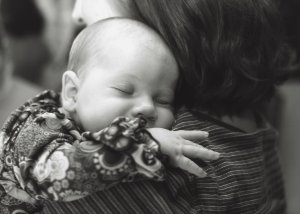
Daddy and his two week old baby girl!

Yesterday, my husband went back to work for the first time since our new baby was born last month. He was off for slightly under 4 weeks. I strongly encourage all of the fathers who take my classes to take off as much time as possible after their babies are born. Many of them seem surprised by the suggestion, a few of them seem disinterested (like, “but isn’t that her job?”), but most of them express sadness and regret at their workplaces’ unsupportive attitude towards (or flat-out refusal to grant) paternity leave. Many of them are only able (or only feel able) to take the day of the birth off and perhaps one to two more days. I meet many who will only be able to be at home with their new families if the birth straddles a weekend. I could almost cry at the social attitudes this reflects—a complete devaluation of the father’s role, his birth as a father, and his baby and family’s need for his presence. Fathers as well as mothers absolutely need this time to “cocoon” with their new babies. To absorb the magnitude of the changes in their lives, to have time to consider the meaning of their new roles, and to re-integrate into the “normal” rhythms of home life after having experienced the rite of passage and labyrinth of birth.

When our first baby was born in 2003, my husband took one week off and then followed it with a week of half days. He was crushed to leave us—describing it as feeling like we were his “wolf pack” and he was having to leave his pack when he really belonged with us. When our second son was born in 2006, we’d wised up somewhat and he took off 4 weeks. It still didn’t feel like enough for any of us, but it seemed to be viewed by his workplace/co-workers as an unusually long length of time to take off. This time he again took 4 weeks and it hasn’t felt like enough for any of us. I’m interested by how his time off seems to be viewed by most as him needing to be home in order to “help” me, not as a time with inherent value to him. While I certainly do need his “help” while postpartum, I view our relationship as a partnership and our family as just that, our family, not as an exclusive maternal domain with occasional visits from the “daddysitter.” No thanks. Is spending time with his new baby, taking care of his other children, and taking care of household tasks in the home we share, “helping” me, or is it being a complete part of our real lives?! A part that is completely ignored/denied by the modern workplace culture and social attitudes. Spending time with Alaina is of value and importance to both of them, as people who will have a lifelong relationship with each other. Also, somewhat ironically, I am the one who took no time off this time around. I teach online and I had no leave from doing so—it was my own choice to sign a contract for this session and the online staff doesn’t even know I was pregnant or that I had a baby. I took 5 hours off and then posted in my class again. I obviously wouldn’t be doing it if it wasn’t compatible with having a newborn—it is excellently compatible—and I prepared those around me for weeks before her birth that the only things I planned to be responsible for for the first two months or so, were my baby and my class (and, obviously, taking care of my other kids too—but, not even them in the early days postpartum!).

We have discussed how each of our babies has been a catalyst for big changes in our home situation. Our first baby was the catalyst we needed to move away from our by-the-highway-no-yard townhouse in a city and onto our own land in the country near my parents. Our second baby was the catalyst we needed to finish building our real house and to move out of our temporary house and into our permanent home. So, we are now wondering what kind of catalyst our baby girl will be? We have spent our entire married life (13 years!) saying that we want to live a “home based life.” I truly do not think it is (biologically) normal, desirable, or healthy for anyone to spend 40+ hours a week out of their home, regardless of whether or not they have children or who the primary caregiver is. I don’t think fathers belong at work that much time, I don’t think mothers do either, and I don’t think children belong at school every day. The home-based life idea came to us long before we had kids and it came from all the reading and thinking I did about the simple living movement. So, I wonder—and hope—that maybe our new baby will be the catalyst we need to finally face the fear of possible failure (and/or no money!) that accompanies jettisoning his full-time job and building our other “multiple streams of income.” Maybe we will, maybe we’ll keep talking ourselves out of it, but that is what our baby girl makes us feel like doing!

So, here’s to Papatoto! May the fatherbaby unit be recognized as having inherent worth and value.

“When he becomes a father, a man leaves behind his life as a single individual and expands into a more inclusive role. He becomes a link in an unbroken chain. And in doing so, he himself undergoes a birth process–the birth of himself as a father.” –John Franklin (FatherBirth)

”The absolute miracle of a birth and the emergence of a new human being into the world catapults both mother and father into the realm of awe and wonder. They are flooded with non-ordinary feelings and energies that support a deep connection not only with the newborn and each other, but also with the mystery and power of life itself.” –John & Cher Franklin


Birth Quotes Update

“Remember that most of the people who really need your work are not hanging out in the oversaturated twitterverse, but in places where what you do isn’t common. Get out of the crowded room and go where there’s a dearth of and a thirst for what you do. Don’t try to shout over lots of shouting.” –Tara Sophia Mohr

(Not specifically birth-related, but an excellent reminder from this post. I’ve often felt with blogging and writing for birth publications that maybe I’m just clamoring to …be heard in a cacophony of other voices (that also have good things to say–am I contributing anything unique?!)

“When my kids become wild and unruly, I use a nice, safe playpen. When they’re finished, I climb out.” ~Erma Bombeck (via Moby® Wrap)

“The miraculous nature inherent in the unfolding of a flower is the very same that moves through a woman as she gives life to the world. We can neither control nor improve upon it, only trust it.” -Robin Sale

…the stories I see of birth in the media don’t reflect the intense emotions, the physical power, or the immense impact of the experience itself. Women screaming, fathers fumbling about, doctors doing most of the heroic work–these images don’t do justice to my experience. I felt empowered, strong, heroic in my efforts to bring my daughter into the world yet, I am painfully aware how little others see the heroism in my birth experience.”  –Amy Hudock (essay in Literary Mama)

“It’s not only children who grow. Parents do too. As much as we watch to see what our children do with their lives, they are watching us to see what we do with ours. I can’t tell my children to reach for the sun. All I can do is reach for it, myself.” – Joyce Maynard (via Literary Mama)

Giving birth, certainly, should rank among the pivotal heroic adventures celebrated in our culture. Certainly it is more heroic than catching a football or acting in front of a camera, and perhaps even more heroic than going off to war. Men return from the battlefield with victory, but women return from the birthing room with life…” –Amy Hudock (in Literary Mama)

“...if you want to know where a woman’s true power lies, look to those primal experiences we’ve been taught to fear…the very same experiences the culture has taught us to distance ourselves from as much as possible, often by medicalizing them so that we are barely conscious of them anymore. Labor and birth rank right up there as experiences that put women in touch with their feminine power…” –Christiane Northrup

The intrinsic intelligence of women’s bodies can be sabotaged when they’re put into clinical settings, surrounded by strangers, and attached to machines that limit their freedom to move. They then risk falling victim to the powerful forces of fear, loneliness, doubt , and distrust, all of which increase pain. Their hopes for a normal birth disappear as quickly as the fluid in an IV bottle.” ~Peggy Vincent

So many words commonly used to describe childbirth–support, patient, management, delivered by, coached, helped, guided–suggest that a woman does not have the power to give birth without being dependent on somebody else. This isn’t the case at all.” –Michel Odent

(This reminds me of that Odent quote about not actively supporting a woman in birth that stirred me up a couple of months ago. That one I had some objections to, the one above, I can definitely get behind, even though I think he is actually …saying the same thing in both quotes!)

I believe that natural childbirth is a right and a privilege…Our country needs to step up to the plate in educating women about the benefits of natural birth, and we need to help women actually do it – not just hear about it.” –Mayim Bialik (via ToLabor Doulas Dallas)

In the moments of labor and birth, all the forces of the universe are flowing through a woman’s body.” – Sister MorningStar (The Power of Women)