Archive | July 2011

I just want to grind my corn!

If you know me in real life (or if you are my husband), you’ve probably heard me use the phrase, “I just want to grind my corn.” I’ve been meaning to write a blog post about this idea for quite some time and when I posted my essay about “playing my music,” I received a comment from a friend saying, “I worry I’m not accomplishing what I’m capable of doing, but I know that ditching my kids and simply pursuing my ‘own thing’ would not be fulfilling.” When I read that, I knew that the time for my corn grinding post had come. When I use the phrase, I’m envisioning some kind of ancient tribe in which the mothers are working together grinding corn, while their babies are tied to their backs, and the older children play nearby. While I do not literally want to live in primitive times (those corn grinding mothers also probably had a lifespan of 35 years!), I feel as if mothering is “meant” to be a communal activity rather than a solitary one and I feel like babies and children are meant to coexist alongside their mothers as they go about their daily work. Rather than intensive, child-focused, total-reality mothering, I think babies are happy watching their mothers work and participating in the daily rhythms of the home and world with no need for the mother to be “rolling around on the floor in the glitter in her sweatpants” (see the book Perfect Madness) while serving as a one woman entertainment committee. This age of individual mothers caring for individual children in isolation from the larger “tribe,” is a social and cultural anomaly when we look at the wide scope of human history. Likewise, meeting for playdates isn’t what I mean either—I mean more task-oriented, corn grinding work, than that.

In the book Perfect Madness, the author articulates what I mean when I say I want to grind my corn—the need for something in between staying at home and working full time (basically, that working and mothering simultaneously is the most natural and fulfilling approach, but our society does not make that combination often feasible or comfortable):

Which means that ‘natural’ motherhood today should know no conflict between providing for our children (i.e. ‘working’) and nurturing them (i.e. ‘being a mom’). Both are part of our evolutionary heritage; both are equally ‘child-centered’ imperatives. What’s ‘unnatural’ about motherhood today, if you follow Hrdy’s line of thinking, is not that mothers work but rather that their ‘striving for status’ and their ‘maternal emotions’ have been compartmentalized. By putting the two in conflict–by insisting on the incompatibility of work and motherhood–our culture does violence to mothers, splitting them, unnaturally, within themselves…For they show that the so-called ‘choices’ most of us face in America–between more-than-full-time work or 24/7 on-duty motherhood–are, quite simply, unnatural. They amount to a kind of psychological castration: excessive work severs a mother from her need to be physically present in caring for her child, and excessive ‘full-time’ motherhood of the total-reality variety severs a mother not only from her ability to financially provide for her family but also from her adult sense of agency…

This is what I’m talking about. There needs to be a third, realistic option (and not just for women. For men too. For families!). I have often expressed the desire to find a balance between mothering and “personing.” I’m seeking a seamless integration of work and family life for both Mark and myself. An integration that makes true co-parenting possible, while still meeting the potent biological need of a baby for her mother and a mother’s biological compulsion to be present with her baby. Why is the work world designed to ignore the existence of families?

So, returning to my friend’s remark, I truly feel as if there is another option between “not accomplishing” and “ditching my kids.” And, I feel like after a LOT of work and trying, I’ve found somewhat of a balance in my own life between “personing” and “mothering.” It is possible to mother well AND also do some other things that feed your soul. It doesn’t have to be an either/or arrangement. And, we don’t do our kids any favors by not pursuing some of our own passions when they can watch and observe us being vibrant, active, complex, complete human beings (not saying that it isn’t “complete” to be a SAHM, but that if you DO want to pursue some other non-kid projects, kids learn good things from watching that happen!) I used to feel like I was going to die–-metaphorically speaking…like my soul was getting squashed—if I wasn’t able to pursue some of my personal goals. I don’t feel that way anymore (and I still spend roughly 90% of every week with my kids and 99% of my waking and sleeping hours with my baby!).

At one point when my first son was a baby, I was trying to explain my “trapped” or bound feelings to my mother and she said something like, “well what would you rather be doing instead?” And, that was exactly it. I DIDN’T want to be doing something instead, I wanted to be doing something AND. I wanted to grind my corn with my baby. Before he was born I had work that I loved very much and that, to me, felt deeply important to the world. Motherhood required a radically re-defining of my sense of my self, my purpose on earth, and my reason for being. While I had been told I could bring my baby with me while continuing to teach volunteer trainings, I quickly found that it was incompatible for me—I felt like I was doing neither job well while bringing my baby with me and I had to “vote” for my baby and quit my work. While I felt like this was the right choice for my family, it felt like a tremendous personal sacrifice and I felt very restricted and “denied” in having to make it. With my first baby, I had to give up just about everything of my “old life” and it was a difficult and painful transition. When my second baby was born, it was much easier because I was already in “kid mode.” I’d already re-defined my identity to include motherhood and while I still chafed sometimes at the bonds of being bonded, they were now familiar to me.

I become fully certified as a childbirth educator in that year after my second son’s birth (provisionally certified in 2005 and he was born in 2006) and another feeling I struggled with was the sensation that I had all of this change-the-world birth energy that was being stagnated or blocked somehow. I felt like I had become a birth educator in order to change the birth world, to transform the birth culture in the US, and in my own small corner of the world I could not make the kind of impact I envisioned making. That is when I started writing and found satisfaction in reaching out to the wider world in that manner (I explored how that benefited me in the music post already).

Now, with Alaina, while I do feel overloaded or overbooked at times, in general I feel like I have found a better balance than with any of my other children. I continue to teach college classes in person (a total of 10 hours a week) and online and while it is tricky at times, so far it is working pretty well and we’re all happy (thanks in no small part to my mom who has been willing to come to class with me to take care of her in between my breaks, so that we experience only small amounts of separation once a week). As she gets bigger and more energetic (read: sleeps less), I’m definitely finding that I will probably have to let something else in my life go in order to continue to be available to her, to my boys, and to my own need for “down time” in the manner in which I wish to be without hurting myself (by staying up too late, not eating well, having stressed out “freak out” moments, etc.). Sadly, I think it is going to be my birth classes that I put on hold and possibly this blog as well (more about this later) .

Speaking of the difference between parenting and personing—I also do not view being a mother as my job. Mothering is a relationship to me and not a job that I perform. Just as it is unhealthy for me to be defined by work responsibilities, it is also unhealthy for me to be defined by relationships. I would never describe my job as being “Mark’s wife” or “Barbara’s daughter,” that gives them too much responsibility for my identity. We are in relationship to each other, but that is not a duty I perform. And, just being in relation to them is not enough for the full expression of my personhood, I need other aspects and elements to my identity. Why am I surprised that I feel the same way about parenting? I want to be with my children, but I wish to be engaged in my own pursuits at the same time. When our lives feel happiest and most harmonious is when exactly this is occurring—when we are all together, but each working on our own projects and “doing our own thing.” I envision a life of seamless integration, where there need not even be a notion of “life/work” balance, because it is all just life and living. A life in which children are welcome in workplaces and in which work can be accomplished while in childspaces. A life in which I can grind my corn with my children nearby and not feel I need apologize for doing so or explain myself to anyone.

—————————

Continuing my birth art and life theme, I made two new sculptures a couple of weeks ago to express my corn grinding spirit. The first one is a corn goddess sculpture:
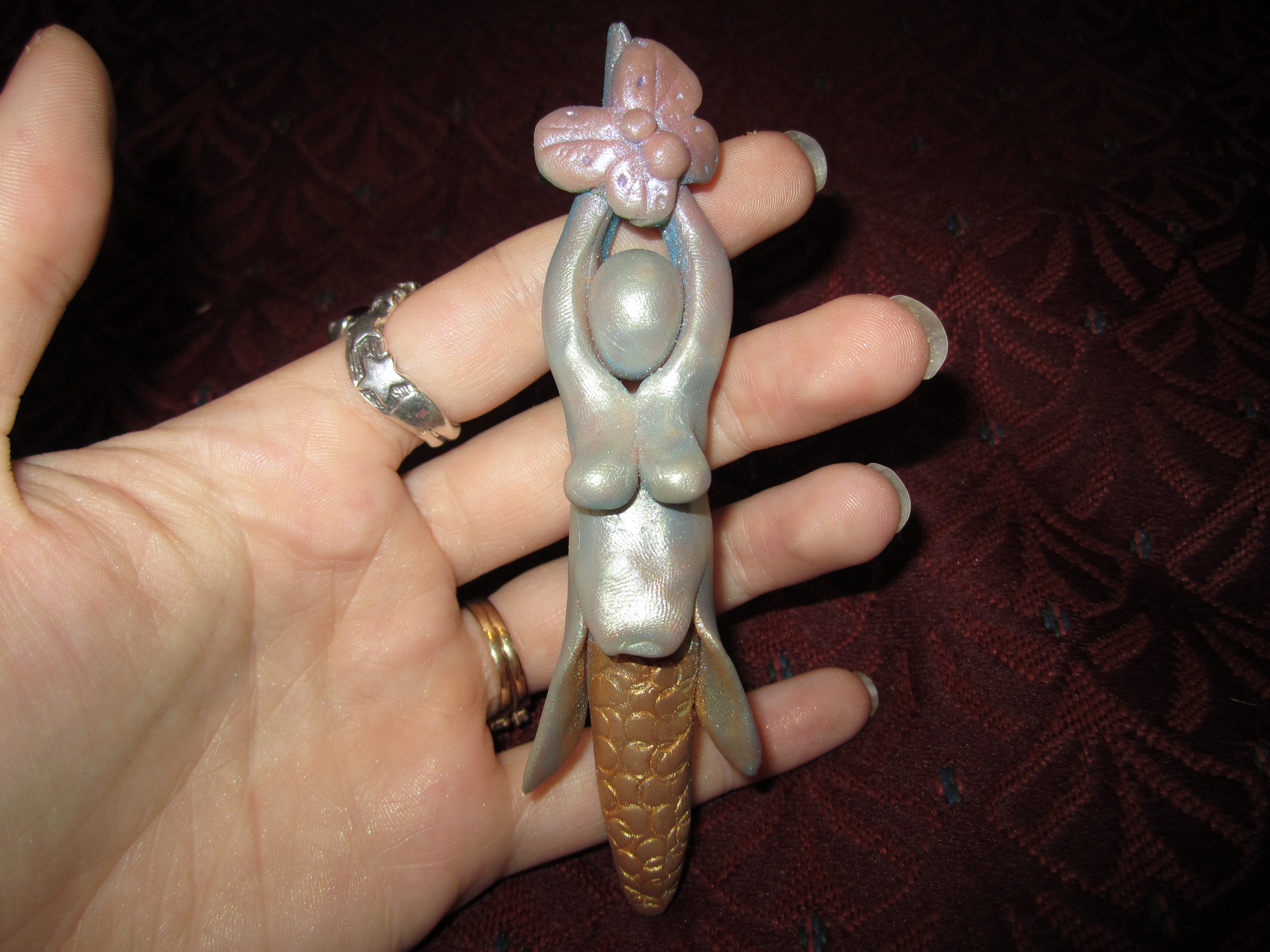
The second is a mama literally grinding her corn and holding her baby 🙂
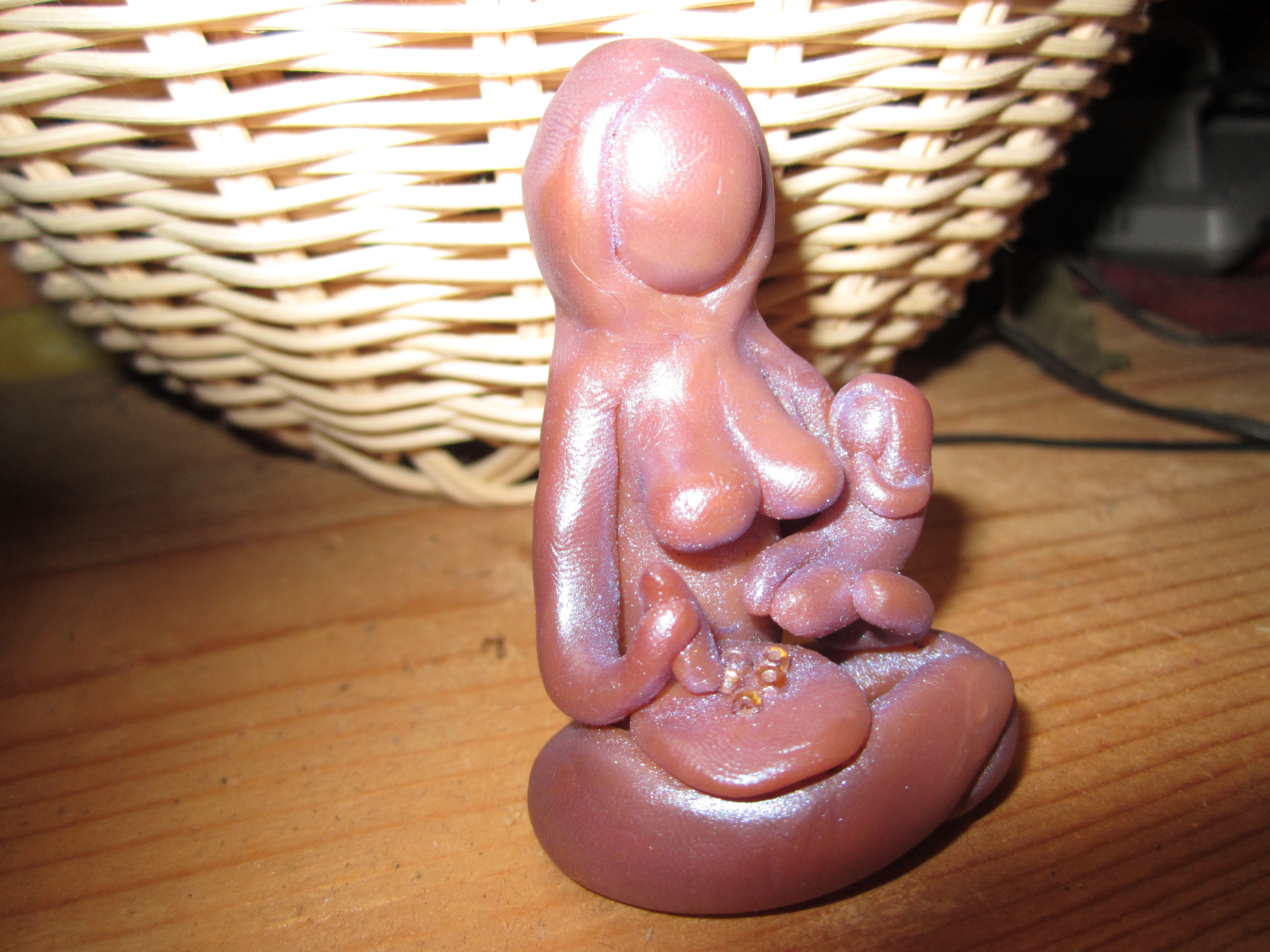
They both make me happy when I look at them and I added them to my living room side table altar/sacred space.

Footnote: I started this post on June 17 and am now finishing it over a month later. Simultaneous corn-grinding and mothering can be very sloooooow…..;)

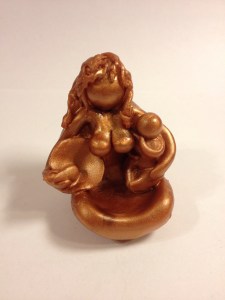
Footnote 2015: I’ve added a whole new baby since I first wrote this in 2011! I also created a whole new sculpture about the experience:
IMG_3732

Book Review: In Search of the Perfect Birth

Book Review: In Search of the Perfect Birth
By Elizabeth McKeown, 2011
186 pages,  paperback.
ISBN-13: 978-0615481708
http://www.theperfectbirth.com/

Reviewed by Molly Remer

Written by a mother of three, In Search of the Perfect Birth is an unassisted childbirth manifesto. It chronicles the author’s journey through the births of her children—the first born in the hospital, the second a planned homebirth ending in hospital transport, and the third an unassisted birth. Elizabeth is strongly convicted that unassisted birth is the right choice for most women, though I feel she is also fairly respectful that other women’s experiences may or may not lead them to the same conclusion. This book is not a do-it-yourself guide to UC, but is an exploration of one woman’s experiences in healing from birth trauma and taking full responsibility for the birth of her next child. I was fascinated by her conclusions that her own birth trauma wasn’t healed through unassisted birth itself, but through the decision to take charge of her own birth care.

The book is pretty rough around the edges and could use some more editing and polishing. There is a stream-of-consciousness feel to the writing style that can be a little confusing and disjointed.

The author makes some excellent points with regard to the restrictions that can be placed on women’s birth freedoms by midwives also, noting wryly that if you choose the “middle ground” you may well end up with all the downsides of being told what to do with your own body, but “without the opiates that make it bearable!” Elizabeth’s homebirth turned hospital transport experience was pretty horrific and it was difficult to read about. She also writes with candor about the degree and intensity of pain she experienced during all of her births (including the UC).

In Search of the Perfect Birth will be of particular interest to women who already support unassisted birth and to women who have experienced birth trauma and are seeking resolution in future natural childbirths. It is an honest and heartfelt story.

Disclosure: I received a complimentary copy of this book for review purposes.

Separation Anxiety?

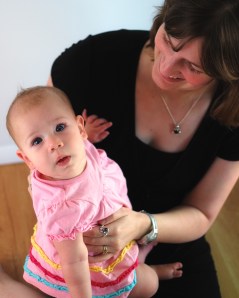
Who is that looking at me?

I’m starting to notice some signs of what is traditionally called “separation anxiety” with Alaina—she starts to call/complain if she can’t see me, turns away from other people if she doesn’t want someone else to hold her, flops around at night until her hand is touching me, that kind of thing. Anyway, it made me think of the following quote that I had saved to post about it. From an article by the same name by Naomi Aldort in the May/June 2011 issue of Natural Life:

“By nature, there is no such thing as ‘separation anxiety.’ Instead, there is a healthy need of a child to be with her mother. Only a deprivation of a need creates anxiety. If we honor the need for as long as their child needs it, no anxiety develops. The concept ‘separation anxiety’ is the invention of a society that denies a baby and child’s need for uninterrupted connection. In this vein, we can deprive a child of food and describe her reaction as ‘hunger anxiety,’ or we can let her be cold and call her cries ‘temperature anxiety.'”

I loved this. What a strange society we have that defines a baby’s normal and wholly biologically appropriate need to be with its mother, as “anxiety.” I always call a baby that wants to be with its mother a smart baby, not a baby that has “separation anxiety.” 🙂

Book Review: Doulas’ Guide to Birthing Your Way

Book Review: Doulas’ Guide to Birthing Your Way
Authors: Jan Mallak & Teresa Bailey, 2010.
ISBN: 978-0-9823379-7-4
$15.37 – $21.95, 188 pages, softcover
Hale Publishing: http://www.ibreastfeeding.com/

Reviewed by Molly Remer

Geared towards pregnant women, Doulas’ Guide to Birthing Your Way is written in a simplistic manner using short, direct sentences. While in some ways this approach makes the information readily accessible, it can also feel unsophisticated in places. However, while the writing style is basic, the content is not. The Doulas’ Guide is a book that really “goes beyond” the information traditionally offered in birth preparation books, covering topics many parents typically may not have considered prenatally such as natural birth vs. birthing naturally, physical comfort preference styles, visualization, being a savvy consumer, blessingways, and taking pictures of the placenta. The information is refreshingly practical and hands-on. Chapters cover the critical importance of the human environment, “five arms of doula support,” birth preparation, one chapter for each stage of labor including separate chapter for immediate postpartum, a section about cesarean birth and VBAC, and a breastfeeding chapter.  There is an excellent section on postpartum care including a PPD symptoms chart. I was a little taken aback by a blithe comment, “Just think of it as an alternate birth route!” regarding cesareans.

Doulas’ Guide contains good, helpful snapshots throughout the text. Dads will like the plethora of labor support skills and ideas and the accompanying photographs. The book advocates preparation of a “birth vision” and includes examples at the end of the book (including cesarean birth options).

The variety of checklists, key questions, tables with reference information, bullet points, and pictures keep the pace of Doulas’ Guide to Birthing Your Way snappy and digestible. This book covers lots of ground and packs a lot of information into under 200 pages!

—–

Disclosure: I received a complimentary copy of this book for review purposes.

Rainy Wedding

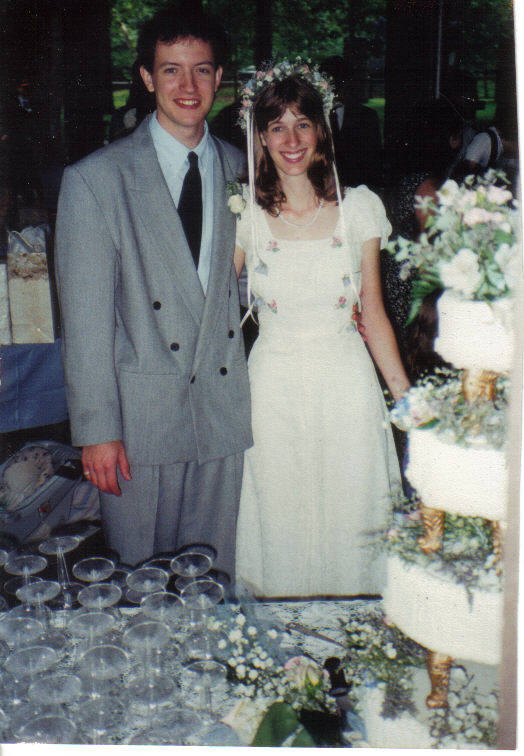
Wedding Day, 1998. Cake is a homemade cheesecake also made by Lynn 🙂

Today is our thirteenth wedding anniversary. We planned a lovely outdoor ceremony at Meramec Spring Park and this time thirteen years ago, it was pouring down rain. While we still got married outside (in the dirty old pavilion rather than by the Iron Works as we had imagined), our wedding site was actually evacuated later in the afternoon!

When we returned from our honeymoon in August, there was a copy of a newspaper article in our mailbox. Our family friend, Lynn, had a newspaper column at the time and she’d written this beautiful poem about our wedding day:

Rainy Wedding

by Lynn Saults

We cannot know what will bring perfection.
They had supposed that it would be a day
of exalted blue heights,
a tree-columned cathedral day
in the loftiest, most elegant
sapphire domed summer.

Sun blessing stone,
birds blessing sky
and in the gentle benevolence of that day
the bride and her ribboned maidens
would drift, pale and clear as flowers
toward the welcoming arms of her groom.

To wed in the blue and white
softness of a summer morning
would be perfection.

But the day hung like an iron bell
tolling rain, rain, rain
all down the metalled sky.
The stones stood dark and forbidding
as thunder upon the earth,
and all our tinseled plans
for a bright and delicate day
were washed away in gray cascades
above and below us.

Yet, there was another kind of beauty there:
Small boys slid like silver minnows
in that heavy green light between the trees.
Garlanded little girls yearned
toward the coming of the bride,
tugged at their mothers’ hands,
pulled at their mothers’ hearts
with the brevity of their innocence.
Family and friends gathered
and sheltering, made a chapel
of their bodies and faces and wishes.

There, in the unplanned darkness,
was unlooked for wonder,
joy beyond ornament,
song beyond instruments.

At last the bride came and like a white flame
blazed among her maidens,
in brilliance more stern and starlike
and vastly more magnificent
than the ribbons and confections
we had planned for that day.

She blessed us as she passed,
toward her waiting bridegroom
in the unadorned steadfastness of her love,
and in the wake of that radiance
we turned to one another,
a silent hymn of faces
now wet with more than rain,
having glimpsed in that lambent bride
the flaming sun heart of human love.
Small, fallible, mortal,
we could not have dreamt or designed such a day.

It was Perfection.

——-
I read this poem every year on our anniversary and it makes me cry every time! Before we got married, people would say things in semi-ominous tones like, “just wait. After you get married, everything changes.” We still laugh about this—nothing changed except for that it felt really fun to be married instead of just dating 🙂

I occasionally read articles that say things like, “marriage is lots of hard work” or, “parenting and marriage are both very, very tough.” I’ve truly never felt like our marriage was hard work. And, while I daily feel that parenting is tough and emotionally very complicated, I would never describe my relationship with my husband as “tough” or difficult in any way. I actually feel like he is my oasis of calm, peace, and love in what sometimes feels like lots of chaos. He is steady and even and I always feel as if I can be completely and totally real with him—there is no feeling or thought or experience that is too awful to share with him. He has seen the places where the “meat has been chewed off my bones” and he still says I’m the greatest person in the world. So, while it is fully possibly that being married to ME is tough—I’m pretty intense—being married to him is not. It is gentle and sweet and whole.

After the ceremony and before the rain re-started, we were able to get some pictures in front of the Iron Works after all.

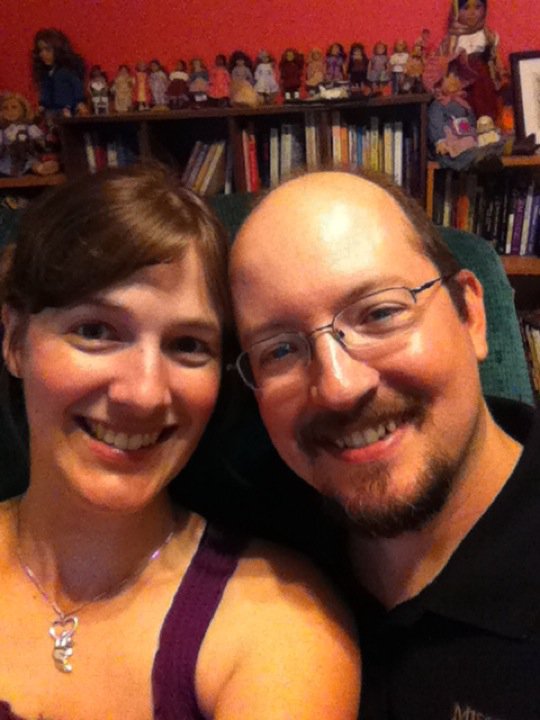
Self-portrait taken on his birthday this year.

Book Review: Ben Behind His Voices

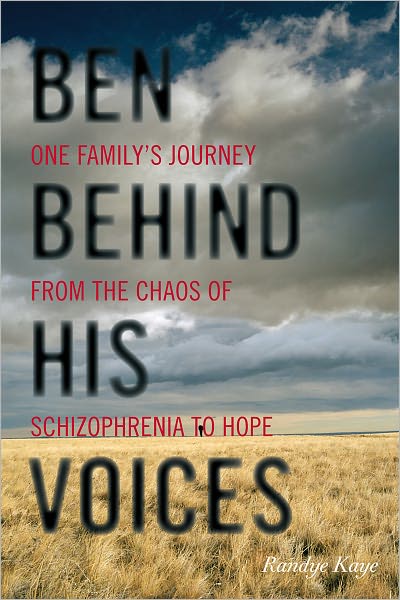
Review: Ben Behind His Voices: One Family’s Journey From the Chaos of Schizophrenia to Hope
By Randye Kaye
ISBN: 978-1442210899

Rowman and Littlefield Publishers

Hardcover, 320 pages, $26.95; Kindle, $9.99
http://benbehindhisvoices.com/

Reviewed by Molly Remer

Ben Behind His Voices is a mother’s poignant memoir of her young adult son’s struggle with paranoid schizophrenia. It was instantly engaging and kept my attention throughout. The author, Randye Kaye, is a radio personality and voice actress and the mother of two children. When her oldest child, Ben, is 17 he begins exhibiting increasingly strange, confusing, and disturbing symptoms. After being shuttled through a variety of diagnoses and treatment providers while steadily becoming worse, he is diagnosed at age 21 with schizophrenia. Randye is obviously a devoted parent to Ben and a committed advocate for her son and the book chronicles a roller coaster of experiences with psychiatric hospitalizations, medication challenges, bright spots of hope, relapses, group home placements, and readjustments of expectations. Perhaps most touching are her struggles to accept the “new normal” of her family’s life and to let go of her old expectations and hopes for her son, while still celebrating the caring and worthwhile person he is, albeit one who is coping with a formidable disability.

A particularly nice feature of this book are the textboxes inset throughout containing facts and information for family members of those with mental illnesses. Much of this information is based on Family-to-Family peer support materials from the National Alliance on Mental Illness (Randye becomes a trainer for this program).

Though written about very emotional events, there is a dispassionate quality to the writing that kept me from feeling fully connected to the narrator.

A fascinating character study as well as an exploration of family adaptation and coping skills, Ben Behind His Voices would be a particularly interesting read for students in psychology, social work, or human services as well as anyone who has a family member with a mental illness. As a mother of young sons, Ben Behind His Voices was a difficult book to read—Randye’s thoughts and reflections about her own son as a young boy, made me look at my own little guys with a pang of “what if.”

——-

Disclosure: I received a complimentary copy of this book for review purposes.

Telling About It…

Instructions for living a life:
Pay attention.
Be astonished.
Tell about it.

-Mary Oliver

I saw this quote on another mother’s blog yesterday and loved it. To me, it sums up the reason why I continue to write this blog. I have so many things going on in my life and I often wonder why I bother to continue writing blog posts. Does it matter at all? Aren’t I just adding to the general cacophony of voices and wild, information overloaded chaos of the internet (and even of the birth activist sphere in general). I feel almost compelled to do so though. And, really, the reason why is to tell about it. There is a lot to be astonished by in one’s everyday life. While I can get distracted and frantic and lose my present moment orientation, I do pay attention a lot. To a lot of things. A friend told me at my blessingway that I live my life with more intention than most people she knows. I considered that to be a great compliment—and, I also think I live my life with a lot of attention. Sometimes that attention may seem like excessive navel-gazing and very often it is excessively self-critical (and, isn’t that being self-centered, she says critically and self-evaluatively?), but I feel like I am a generally observant person, paying attention to my place in the world and the manner in which I walk through my day. And, the paying attention is intimately involved with then wanting to tell about it—here, on my blog 🙂

Here’s what feels astonishing about my life today. Six months ago today I gave birth to a little treasure. I feel like every day for the past six months I’ve experienced astonishment that she’s here—where did you come from, I ask her. She’s magic. I can hardly believe it has been six months already and yet, it also feels like she’s been here forever. And, guess what? My friend who has been waiting for her rainbow baby to be born, gave birth to her own precious daughter this morning. So, now our journeys share one more point of connection.

I really, really wanted to write an effusive blog post about my baby today in honor of her sixmonthabirthday. However, the end of the summer session is wrapping up and I had many papers to grade instead. I spent naptime working on them with the plan to reward myself with a blog post after finishing my grades (though, since I planned to grade 22 papers and 11 exams, you can see that something was awry in my calculations!). She woke up of course, after my only having graded 11 papers, and needed me to hold her rather than to write about her and so now I am here at almost midnight, needing to go to bed rather than to gush. Anyway, my happy, BIG, smiley, adorable, friendly, charming, unflappable, cooperative, sitting-up-and-working-on-craw​ling-and-pulling-up girl is six months old today. Her head smells like apricots and flowers. She loves watching her big brothers. She loves watching chickens and cats. She loves watching me. While I’ve written a lot about what an easy baby she is, she also likes to be held and toted along pretty much everywhere I go—maybe some people would define that as “high need” (i.e. “I can never put her down!”). I, however, think that is biologically appropriate baby genius. She is very grabby and reachy lately. My mom described holding her like “holding a bag of snakes,” because she is constantly on the lookout for something to snag. She has begun pushing up on surfaces so that her legs are standing (but her hands are still on the surface—so, not pulling up exactly, but pre-pulling up). She LOVES to find and eat paper and tear up catalogs. She laughs like crazy if I make monster noises on her belly. We tried to give her some solid food, but she gags and spits it out, even though she appears captivated by other people eating food. We still do EC (elimination communication) and she sleeps all night with a dry diaper. She always wakes up with a smile. She thinks Zander is hilarious, but isn’t very comfortable with him holding her. When Lann holds her, she snuggles down on him with total trust (even though he staggers under her weight—she weighs almost 18 pounds now and he weighs under 50). I love having a baby while also have a 7.5 year old. He carries her to the car for me. He watches her while I take a shower. He can hold her while I cut up vegetables or do something food-prep related that needs two hands. It is awesome.

Despite grabbiness, she strokes and pats faces very gently. It is very sweet. She likes to ride in a pouch on my hip checking out the action. She likes to nurse best while lying down in bed—she tucks her feet up on my legs and puts her hands on either side of my chest. She has beautiful skin and beautiful eyelashes and her eyes sparkle with the delight of life. She is chubby and not petite. She is my most relaxed, settled baby—she rarely gets scared, hurt, or upset by things. She’s tough! When something makes a loud noise, she jumps, but then looks at me (to gauge possible severity) and then gives a big grin (the boys would both cry). If she tips and bumps her head or gets bonked or scratched by something, she usually doesn’t cry about it—my older son would have screamed and my younger son would have had a fit of rage. Her temperament is very steady and even. She has started to get more displeased if you take something away from her that she wants though—sometimes that provokes a protest. She also growls to herself while she plays with toys lately—she loves to empty a basket of toys and will sit on the floor working on this task for about 30 minutes. We think the growling sound is from listening to the boys play. I cannot believe how fast she is growing and changing. I try to take mental snapshots every day—her soft hair, her round cheeks, her little neck when her head is bent looking at something, her dark watchful pools of eyes, her careful and still clumsy hand movements and swiping grabs, her big gumbly smiles, her eyes fluttering closed at the breast. I pay attention. I am astonished. And, I tell about it.

Telling you all about it...

Book Review: Healthy Eating During Pregnancy


Review: Healthy Eating During Pregnancy
By Erika Lenkert with Brooke Alpert
ISBN: 978-1-906868-41-3
Softcover, 144 pages, $16.95
http://www.healthywomen.org

Reviewed by Molly Remer

Co-written by a cookbook author/food writer and a nutritionist (both of whom are mothers), Healthy Eating During Pregnancy offers 100 recipes with the nutritional needs of pregnant women in mind. The first part of the book contains specific nutrition information for pregnant women, including a short section on coping with morning sickness, as well as good information about the micronutrients and macronutrients that are essential for growing a healthy baby. The remaining two thirds of the book is a collection of tasty recipes, organized into categories beginning with breakfast and concluding with desserts. The book is very colorful and contains many appetizing photos.

Though marketed specifically for pregnant women, the recipes have appeal to anyone. My family enjoyed the zucchini and parmesan frittata and the “totally tasty breakfast muffins” and we look forward to trying more of the recipes in the future.

This book would be well-placed in the lending libraries of midwives, doulas, or childbirth educators. Anyone in need of healthy recipe ideas during pregnancy will enjoy exploring the new book Healthy Eating During Pregnancy!

——-

Disclosure: I received a complimentary copy of this book for review purposes.

Women and Knowing

I read an interesting article by anthropologist and birth activist, Robbie Davis-Floyd, in the summer issue of Pathways Magazine. It was an excerpt from a longer article that appeared in Anthropology News, titled “Anthropology and Birth Activism: What Do We Know?” In the conclusion, Davis-Floyd states the following:

“Doctors ‘know’ they are giving women ‘the best care,’ and ‘what they really want.’ Birth activists…know that this ‘best care’ is too often a travesty of what birth can be. And yet on that existential brink, I tremble at the birth activist’s coding of women as ‘not knowing.’ So, here’s to women educating themselves on healthy, safe birth practices–to women knowing what is best for themselves and their babies, and to women rising above everything else.” –Robbie Davis-Floyd

I believe that every woman who has given birth knows something about birth that other people don’t know. I also believe that women know what is right for their bodies and that mothers know what is right for their babies. I’m also pretty certain that these “knowings” are often crowded out or obliterated or rendered useless by the large sociocultural context in which women live their lives, birth their babies, and mother their young. So, how do we celebrate and honor the knowings and help women tease out and identify what they know compared to what they may believe or accept to be true while still respecting their autonomy and not denigrating them by characterizing them as “not knowing” or as needing to “be educated”?

Additionally, with regard to education as a strategy for change, I’m brought back to a point I raise in my community organizing class: People often suggest “education” as a change strategy with the assumption that education is all that is needed. But, truly, do we want people to know more or do we want them to act differently? There is a LOT of education available to women about birth choices and healthy birth options. What we really want is not actually more education, we want them to act, or to choose, differently. Education in and of itself is not sufficient, it must be complemented by other methods that motivate people to act. As the textbook I use in class states, “a simple lack of information is rarely the major stumbling block.” You have to show them why it matters and the steps they can take to get there…

She knows

Mother Blessing Quotes

For the mother blessing ceremony I wrote about recently, I also went through my birth quotes collection (which is becoming quite extensive!) and picked out some special quotes that reminded me of things I wanted to share with the birthing mama-to-be.

“For each of us as women, there is a deep place within, where hidden and growing our true spirit rises…Within these deep places, each one holds an incredible reserve of creativity and power, of unexamined and unrecorded emotion and feeling. The woman’s place of power within each of us…it is dark, it is ancient, and it is deep.” –Audre Lorde

While some people have said they don’t like the use of the word “dark” in this quote, I think it is perfect. In the darkness is where wonderful seeds take root and grow.

“It is so easy to close down to risk, to protect ourselves against change and growth. But no baby bird emerges without first destroying the perfect egg sheltering it. We must risk being raw and fresh and awkward. For without such openness, life will not penetrate us anew. Unless we are open, we will not be filled.” –Patricia Monaghan

Since, as I mentioned, this recent ceremony was for a PAL-mama, I included the above quote. While I don’t really like the image of the egg being destroyed (if I relate the quote to birth), I feel like this is a good quote to describe the bravery involved with consciously undertaking the pregnancy after loss journey.

I also included my top two favorite quotes about birth and pain. The first:

“When I say painless, please understand, I don’t mean you will not feel anything. What you will feel is a lot of pressure; you will feel the might of creation move through you. Pain, however, is associated with something gone wrong. Childbirth is a lot of hard work, and the sensations that accompany it are very strong, but there is nothing wrong with labor.” –Giuditta Tornetta

I love the part about the might of creation. How is that for a bold summation of the potency and power of birth. While some people object to the inclusion of the word “painless” in it, to me the takeaway message of the quote is that birth is too big for the word “pain” to adequately contain or describe it. We need more and better language for it! And, that brings me to the second quote:

“So the question remains. Is childbirth painful? Yes. It can be, along with a thousand amazing sensations for which we have yet to find adequate language. Every Birth is different, and every woman’s experience and telling of her story will be unique.” –Marcie Macari

From the same author, two more quotes, this time describing the transformative power of birth:

“Birth is an opportunity to transcend. To rise above what we are accustomed to, reach deeper inside ourselves than we are familiar with, and to see not only what we are truly made of, but the strength we can access in and through Birth.” –Marcie Macari

“A woman in Birth is at once her most powerful, and most vulnerable. But any woman who has birthed unhindered understands that we are stronger than we know.” –Marcie Macari

And, then, a helpful reminder, that birth is our gateway to conscious, active, full-on parenting for the rest of our lives!

“The natural process of birth sets the stage for parenting. Birth and parenting mirror each other. While it takes courage and strength to cope with labor and birth, it also takes courage and strength to parent a child.” –Marcy White

And, finally, I shared the quote that to me was a touchstone describing my feelings about Alaina’s entrance into my world. She did this for me.

“A baby, a baby, she will come to remind us of the sweetness in this world, what ripe, fragile, sturdy beauty exists when you allow yourself the air, the sunshine, the reverence for what nature provides…” – Sarah Werthan Buttenwieser (in Literary Mama)

Speaking of that sweet baby of mine, here she is at my friend’s mother blessing ceremony. I’m so glad she’s here! And, my heart is full for my friend as she is soclose to her own fresh baby girl. I’m glad my daughter is going to grow up within a circle of strong, empowered, healthy women and girls and I love taking her to blessingways with me, knowing that I am socializing her into a model of womanhood and life that values the feminine 🙂 (and, yes, that is a bindi on her forehead).

(c) Sincerely Yours Photography