Archive | July 2011

The Blessingway Connection

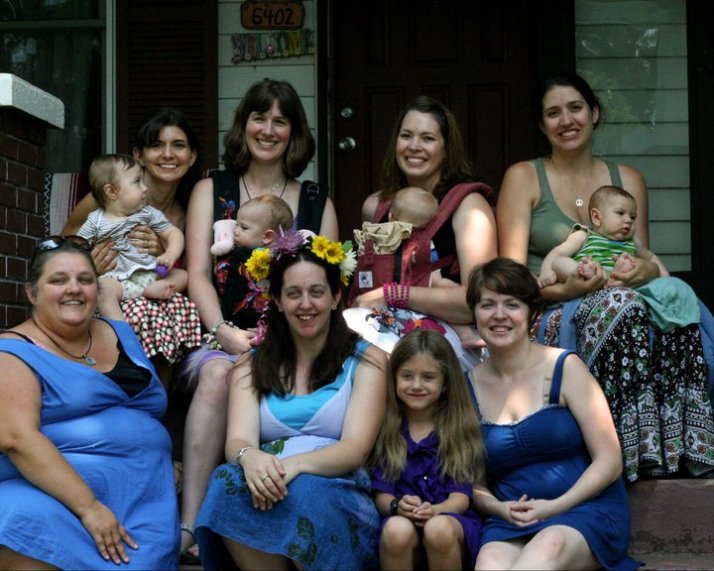
Last weekend, I attended a mother blessing/blessingway* ceremony for a dear friend. I have mentioned her here before, because she is on a pregnancy-after-loss (PAL) journey after having given birth to a tiny boy after 16 weeks of pregnancy last July (my own Noah was born at 15 weeks in Nov., 2009). My friend’s baby had been due in January, the same time my own “rainbow baby” was born. So, I’ve spent the last year being a couple of months “ahead” of her on the very complicated and emotional path of pregnancy after loss.  And, now she is preparing to give birth to her own new baby girl any day now. It felt very, very good to come together with friends to celebrate this strong mama, her journey, and her babies. I so clearly remember the feelings of “feeling the fear and doing it anyway” when it came to things like doing a belly cast, having pregnancy pictures taken, and, yes, having a blessingway—each of these commemorative events was tinged with a fear of possibly being a sad memory instead of a happy one. I remember worrying, “what if I look back at my blessingway and have to think, ‘but I was so happy.'” These thoughts aren’t necessarily rational or logical, but they featured prominently in my PAL experience. And, while I truly loved being pregnant and I was happy much of the time, I was so glad for it to be over and for PAL to be behind me. This is the feeling I had for my friend during her ceremony as well—pretty soon PAL will be over and you will be so glad to leave it behind and snuggle your new baby girl (I’m also very familiar with the companion fear of, “but what if my PAL journey ends with another loss? I’m not holding my new baby yet…”)

For many mother blessings, I pick out a quote or a poem or a reading to give to the mother.  Considering how much writing I do in my life, it is kind of surprising to me that I usually choose to give women other people’s words rather than creating something new for them (I do say original things aloud to them during the gifting time, in which we each take turns kneeling before the mother and telling her what she means to us). After some looking for perfect quotes, I knew that for this friend,  I needed to write something to her from my heart and not from someone else. So, on one of my womb labyrinth postcards, I wrote the following:

Nine months ago you entered into the long, challenging labyrinth of pregnancy after loss. You have walked with courage, strength, and grace. You have been SO BRAVE. And now you prepare to take the final step on the path—to greet the power and intensity of your birthing time. All of your love and hope and fear will become concentrated on the task of opening your body to welcome your precious new daughter into your arms and your life. She is coming. She is okay. And, sweet mama, so are you. This is a time of openness and surrender–in body, mind, heart, and soul. May you give birth with confidence, strength, bravery, vulnerability, and wild sweet joy and relief.

(c) Sincerely Yours Photography

One of the special things about blessingways is the sense of connection with other women. The ritual space creates an opportunity to speak and share with each other with a depth that is often not reached during day to day interactions (and definitely not usually at baby showers!). This winter, my friends and I started having quarterly women’s retreats. One of my reasons for wanting to do so was to bring some of that sense of celebration and power from our Mother Blessing ceremonies more fully into our lives and to celebrate the fullness and completeness of women-in-themselves, not just of value while pregnant. For these same reasons, I decided to pursue a doctoral degree in women’s spirituality—while birth work is still important to me, I feel very “called” to celebrate, work with, acknowledge, and respect the full cycle of a woman’s life.

“We are mothers, sisters, family wrapped in different cloth,
standing under the same wide sky
and we’ve come to the very end of our silence
together we’ve found our voice
and it is loud
and it is beautiful
and it sings a love song for our children”
Mothers Acting Up

(c) Sincerely Yours Photography

——-

*For a general description and explanation of mother blessings as well as musings on “connection,” see my friend Hope’s post.

*Out of respect for Native traditions, I continue to try to refer to these ceremonies as “mother blessings.” However, my local circle of women has been holding these ceremonies for each other for about 30 years and they have “historically” been referred to as “blessingways.” Blessingway remains the term that feels most right to me—most genuine, authentic, and, truly, is part of my own life’s “traditions,” so a lot of the time, I feel like it is okay for me to continue using the word, rather than trying to force myself to use mother blessing instead.
“You’ll Miss This…”

We’ve all seen or heard it happen.  A mother voices a complaint about something she is not enjoying about the mothering experience and someone else returns with a comment that disguises itself as “words of wisdom,” but is perhaps actually a thinly veiled criticism of the other mother: “well, you know, they grow so fast and you’ll miss them when they’re older!” I am curious if anyone actually finds this a helpful remark or thinks it is an original sentiment. While probably originally born from good intent, “you’ll miss this” based comments have become trite and cliche. While perhaps voiced in a good-intentioned way and theoretically used to bring perspective, to bring a proper sense of gratitude, and as an honest reminder to count your blessings (which are many and true), I think the shadow side and darker purpose of this “bringing perspective” is to silence, to muffle, to dismiss, to deny, and to shame. How often do we use this phrase against ourselves in exactly this manner? Perhaps we are nursing the baby and longing for it to fall into a deep enough sleep so that we can sneak away and “get things done.” And then, pop! there it is, “You shouldn’t be trying to get up, you’ll miss this when they’re older.”

Well, guess what, there are plenty of things I’m confident I won’t miss when they’re older. I know that I will miss breastfeeding. It is one of the deepest and richest joys of my life. The breastfeeding relationship is an intimate, interdependent, and profound connection that is irreplaceable. However, I also know in my heart that I will never miss having a toddler twiddle, pinch, stretch, and pick at the other nipple while nursing (and, frankly, I seriously doubt that any woman on earth has spent her twilight years wishing someone was stretching her nipple out to superhuman lengths). I’ll miss the sounds of little boys as they spin elaborate imaginary scenarios out in their play. I will not miss having to shout to be heard over this play while trying to carry on a reasonable, adult conversation with my husband. I’ll miss having warm little bodies snuggling with me. I won’t miss having someone sit on my back and chew on my hair while I try to type an article (yes, this has happened more than once!). I could go on, but you get the drift. There are pieces of parenting that are profoundly disagreeable and it is okay to name them, rather than shame yourself or others in the name of imaginary future regret. Additionally, the subtext that women with grown children spend their days pining for earlier years rankles with me. Personally, I really hope my own mother doesn’t waste a lot of her time wishing I was still a baby. I like to think she enjoys my company now!

Children grow and change. It is what they do. And, we want them to, really, and we want to continue to grow and develop ourselves as well, not to remain stagnated in memories of an earlier day or paralyzed by concerns about future regrets. A good friend once said something that has had a profound impact on me: “I parent the child in front of me.” Not the future adult, or, the memory of the baby or the toddler.

Here are some scenarios carrying a genuinely meaningful message: My older son is then three. He takes off his shirt at an event and a playgroup friend with adult children stops and her breath catches a little. She says, “Oh, Molly, make sure you take a picture of that little boy belly.” That night, I make sure to take one. Watching my sons playing in a wading pool one year, my mom says, “just look at  the back of his neck and his powerful [tiny, narrow] shoulders.” I take another picture, not just with my camera, but with my heart. I visit my friend with a newborn baby. Even though I have my own treasure of a 5 month old with me, I ask my friend if I can touch the back of her newborn’s head. When I touch him, tears fill my eyes. All of these are genuine expressions of the original heart of the “you’ll miss this” message—pay attention and remember to look. We don’t need a trite platitude that summarily dismisses the potent intensity of mothering small children day to day, we need to see other mothers in the act of remembering. Those moments with our babies and our children that bring a sweet, deep ache to our hearts in the moment, those are our clues that we are savoring and cherishing their lives as they unfold.  The tears that may spring unbidden to our eyes in the future when another mother’s child makes us remember this potency of early childhood, the very fact that we look back with such a pang, means that we did a very, very good job with the savoring—if we hadn’t savored, we wouldn’t know how to feel so deeply later.

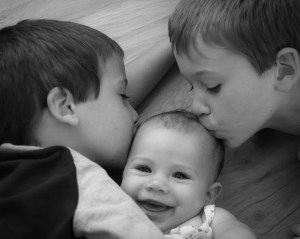
Here's what I'm savoring 🙂

“It’s not only children who grow. Parents do too. As much as we watch to see what our children do with their lives, they are watching us to see what we do with ours. I can’t tell my children to reach for the sun. All I can do is reach for it myself.”

–Joyce Maynard

Our Bodies, Ourselves: New Edition Cover

In April, I responded to a call for readers’ photos for the cover of the newest edition of the women’s health classic, Our Bodies, Ourselves. I sent in a profile picture that my friend Karen took of me at a river a couple of summers ago (same Karen who took my pregnancy pictures and then recently, Alaina’s pictures). I was completely shocked to find out this month that my picture was selected to be one of the 52 women on the cover. I could hardly believe it! OBOS is such a classic women’s health book and so devoted to women’s empowerment that I’m just as pleased as pleased can be to be a tiny little part of that herstory now 🙂 (And, a very tiny piece it is, as I appear in the lower left corner and part of my head is cut off 😉 I don’t care though, I still think it is cool to be on it!)

My original little story and picture is here:

“When I think of OBOS, I think, Empowerment! OBOS means knowing your body, your personal power, and taking control of your health care and your reproductive rights. OBOS is an essential voice for women.”

Guest Post: Overcoming Stigma: A Film Story of Stillbirth, Miscarriage

This post is republished from the blog of the Bill & Melinda Gates Foundation:

Overcoming Stigma: A Film Story of Stillbirth, Miscarriage

by Jhene Erwin

In 2007, with one two and half-year-old child, my husband and I decided it was time to have another baby. My first miscarriage occurred at six weeks. My second was at almost eleven weeks. The grief was alarming but I did what many women do – my best to quietly “carry on.”

Simple tasks became challenging. I’d stand in the cereal aisle frozen by the choice between honey-nut and plain. The question, “Paper or plastic?” should not make a person cry. Maintaining this external “everything-is-ok” façade was agonizing.

It was the tension – between façade and grief – which inspired my short film about miscarriage, stillbirth and early infant loss. “The House I Keep” is a story of transformation during one woman’s struggle to come to terms with the loss of her child.

My hope is that this film frees people to talk more openly about what remains stubbornly taboo. When people hear about my film total strangers let loose regardless of location: be it the gym or in a grocery store. Their stories are always deeply moving and I am honored by their candor.

What do they say?

They tell me there is no appropriate place to mourn this loss. While family and community are powerful sources of comfort, the silence on this subject prevents women from accessing that healing power. Consequently, the mental health of not only mothers but also their children suffers.

Consider this stigma magnified around the globe. In some developing countries, superstitious beliefs lead women to be blamed for a stillbirth or miscarriage. Some communities feel more people will die if the bereaved mother is in contact with other women and children. Subsequently, access to the healing power of family and community becomes greatly restricted. As we move forward with the important work of improving global maternal and newborn health, the long term effects of stigma on the mental health of women and their surviving children cannot be over looked or marginalized.

Talking heals. Women want to feel reassured that their child’s too-short life had a place in the world and that the world is different because of that child’s absence. You can help mark that life by just being willing to talk and listen. The landmark Lancet Stillbirth Series released in April is already impacting the worldwide perception of stillbirth.

In my own community of Seattle, Washington, in the United States, nonprofits that counsel women postpartum will be using my film as a starting place for open discussions. The ripple effect of community efforts, combined with the work of organizations including PATH, UNICEF, Save the Children, and the Bill & Melinda Gates Foundation, will undoubtedly lessen the stigma of a tragedy for which no woman should ever be held accountable.

By letting women talk openly, and by listening, our communities around the world can help women – including me – begin to heal.

More to Explore

Jhene Erwin is an actor and filmmaker. She lives in Seattle, Washington with her husband and six year old daughter.
—-
The Bill & Melinda Gates Foundation works to help all people lead healthy, productive lives. Safeguarding the health of mothers and young children is one of the world’s most urgent priorities and a core focus of the foundation’s work; especially in the developing world.

Listening to my baby…even when we disagreed!

I have a lot of breastfeeding-related posts I’d like to share soon. Here’s hoping I have time to make that come true! The following is an essay I wrote about my experiences nursing my first baby. It was originally published in LLL‘s New Beginnings in 2006.

Listening to my baby…

Taking a break from nursing to peek at the camera!

By Molly Remer

Before my son Lann was born, I felt prepared for frequent nursing, comfort nursing, and for experiences nursing in public. I started attending LLL meetings when I was 26 weeks pregnant and was also involved with the local Breastfeeding Coalition. I fondly imagined cuddling my baby as he nursed away. I also imagined proudly nursing in public wherever necessary—doing my part to increasing public perception of nursing being a normal part of everyday life, not secret or shameful.

After newborn Lann’s first growth spurt had passed, I was surprised to learn that he had other ideas about what our breastfeeding relationship would be like. Lann did not like to comfort nurse—he nursed when hungry and stopped when full. He would become upset and cry loudly if the breast was offered and after the first few sucks he would get milk that he wasn’t looking for. He also vastly preferred nursing lying down in our own bed. In public, he would refuse to nurse at all or would nurse a bit, choke on a mouthful, and become upset and not continue. He would often choke while nursing in any setting (though less frequently while lying down at home) and become very distraught and turn away from the breast—sometimes even pushing at me with his hands. These experiences were very difficult for me. I felt embarrassed to go to LLL meetings with a baby who cried and fought the breast, despite clearly appearing hungry, but then would nurse happily in the car! I did not have the cozy, peaceful nursling I imagined (though I was comforted by the fact that at home, lying down, when he was hungry, he certainly loved to nurse!).

These challenges continued for three and a half months, before I finally accepted that listening to my baby’s needs applied to these situations as well! Even though Lann didn’t breastfeed the way I had imagined or in the way I thought he needed to breastfeed, I still needed to listen to what he was telling me. Things became much less stressful when I finally realized this. If we were in a public place, I went to the car to nurse him and generally averted the crying, gagging/choking on milk episodes. At friends’ houses, I would ask to go lie down in another room. I made sure to “tank him up” before we left our house and planned to be home again within approximately three hours so we could nurse in our comfortable surroundings. I stopped being embarrassed that my baby wouldn’t nurse the “right” way and accepted that his style was different than what I had anticipated. After Lann went through a very challenging nursing strike at 5 months old due to a cold, I also learned that it often worked to nurse him standing up and moving around and I successfully employed this strategy in other settings after the nursing strike had passed. I also learned that if I let him unlatch to look around frequently while nursing in public (something I had never expected to “allow” before he was born), we could usually manage to complete a nursing session without struggling.

Interestingly, Lann’s disinterest in comfort nursing and his preference for private nursing both faded away when he was about 10 months old. He began to enjoy nursing “just because” or for comfort when distressed. He started to nurse around other people and in public places with ease and continued to nurse happily and frequently until he was two and half and weaned during my pregnancy with his brother, Zander.

I loved the feeling of being able to meet multiple needs in one interaction with Lann. Even during our early “conflict” over where and how to nurse, I loved the experience of feeling both of our bodies suffused with peace as we lay down together to nurse. I also deeply cherished the times we eventually spent comfort nursing. I felt so sad to be missing out on those times when he was younger, that every time toddler Lann asked to comfort nurse, I felt like it was a true gift.

—-

(Hindsight lets me know that I was struggling with oversupply/overactive letdown with Lann, an issue that has re-arisen with each baby, but one that I’ve managed much better each time!)

Haumea: The Divine Midwife


“Haumea, a Polynesian Goddess, was credited with teaching women how to give birth by pushing their babies out from between their legs. Before this, folklore claims that children were cut from their wombs, extracted by knife like a pit from ripe fruit. Thanks to Haumea, women were able to forgo this dangerous passage.” –Kris Waldherr, Goddess Inspiration Cards

Reading this, I felt like women need to “meet” Haumea again. Perhaps modern midwives, doulas, and birth educators are Haumeas on earth, reminding women that they have the inherent power and capacity to push their own babies out from between their legs, rather than having major surgery.

After reading about Haumea and thinking about my own births, I felt inspired to make yet another figure in my birth art series. I’m experimenting with new types of figures lately and made this catching-your-own image:


You will safely give birth to something powerful.

Inseparable

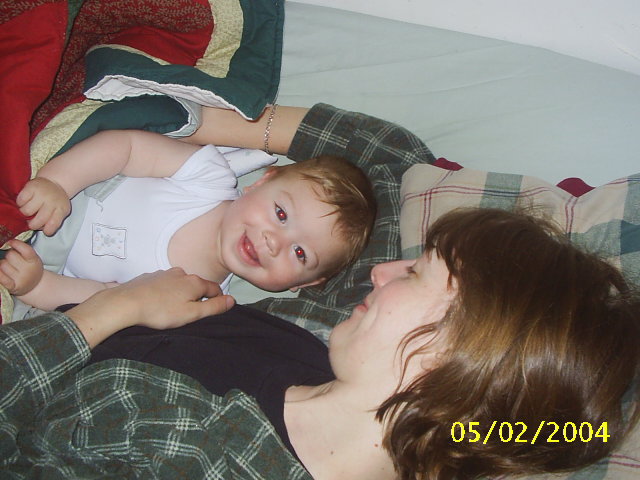
Notice how she is holding my finger?

The cutting of the umbilical cord tends to herald the arrival of a new and unique life. Though this tiny being began its existence many months before, growing nestled and protected within the womb, the just-born infant is seen as an individual apart from his or her mother. There is, however, a significant error in this thinking, for baby and mother are one, so to speak, and severing this unit denies an empirical truth. Birth should not be a celebration of separation, but rather a reuniting of mother and baby, who joins her for an external connection. –Barbara Latterner, in the book New Lives [emphasis mine]

I felt like this was a completely relevant quote for our Independence Day weekend. A baby has no concept of the notion of independence. Even though we live in a culture that pushes for independence at young ages, all babies are born hard-wired for connection. For dependence. It is completely biologically appropriate and is the baby’s first and most potent instinct. I remind mothers that after birth your chest literally becomes your new baby’s habitat. Mother’s body is baby’s home—the maternal nest. If the baby cries when you put her down, that means you have a smart baby! Not a “dependent” or “manipulative” one. People are fond of making comments about babies being “spoiled” if they are held often. It is impossible to spoil a baby by responding to her needs (why do people have such an issue with other people holding babies anyway?). I am 100% certain that it is impossible to “spoil” any baby under the age of one by answering her when she cries and giving her what she needs (which at this point is food, warmth, safety, love, and physical closeness). One of LLL’s  pearls of wisdom is, “a baby’s wants are a baby’s needs”—-there is no difference between them at this age. A baby is not “manipulating” you by crying for you to come to her and then stopping when you pick her up—-that is a perfect example of skillful mother-baby communication (if someone says, “she is only crying to get you to pick her up” the answer is “yes! She is! Isn’t she smart!”) .

New Lives is a compilation of essays by NICU nurses and it is no surprise to me that the essay from which the above quote comes was written by a former LLL Leader 🙂

Speaking of LLL, at the last international conference in 2007 I was fortunate enough to hear Dr. Nils Bergman speak about skin-to-skin contact, breastfeeding, and perinatal neuroscience. In super short summary: babies NEED to be with their mothers following birth in order to develop proper neural connections and ensure healthy brain development and proper brain “organization”; Mother’s chest is baby’s natural post-birth “habitat” and is of vital developmental and survival significance; Breastfeeding = Brain wiring.

And, as long as I’m reminiscing about the conference and Dr. Bergman, in fact I actually ended up “performing” on stage with him in a mimed play put on immediately prior to his presentation! He is a dynamic and engaging speaker (with a great accent!) and has so much of value to share. I will never forget hearing his duet with an LLL Leader of the song, “Anything Tech Can Do, Mum Can Do Better.”

Yes she can, yes she can, yes she CAAAANNNNNN!!

Today, let’s celebrate being in dependence with our babies 🙂

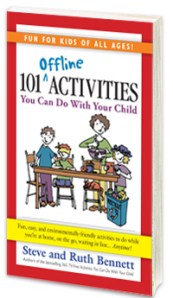
Book Review: 101 Offline Activities You Can Do With Your Child

101 Offline Activities You Can Do With Your Child
Steve Bennett,  Ruth Bennett
Paperback: 134 pages
Publisher: BPT Press (June 14, 2011)
ISBN-13: 978-0984228522

Reviewed by Molly Remer

Just in time for summer amusement comes the new book 101 Offline Activities You Can Do With Your Child. Written by the authors of the classic 365 TV-Free Activities You Can Do With Your Child (a book I’ve used a resource for about 6 years), this concise little book offers a wide variety of fun activities. Coded at the bottom of the page with a sketch, the activities are either designed to be used at home, on the road, in the kitchen, or anytime, anyplace. A nice feature is the picture index for kids who are not yet reading to choose their own activities.

Single page explanations/descriptions mean all of the activities are fairly simple to implement and enjoy—offering a brief time-out for anytime fun. Many of the craft ideas seem most appropriate for children under age 10 and plenty of the other games and other activities are enjoyable for any age group.

My kids have come up with quite a few of the suggested ideas using their own imaginations and some of the ideas are classic car games (or variations thereof), but there is enough fresh, unique content to make this book a worthwhile resource for our family.

Disclosure: I received a complimentary copy of this book for review purposes.