Archives

Talk Books: A Passion for Birth

Sheila

“We are only now beginning to discover the long term destructive effects on human beings and families of treated women as if they were containers to be opened and relieved of their contents.”

–Sheila Kitzinger

Sheila Kitzinger’s new autobiography, A Passion for Birth, is an absolute treasure. One of the most long-term and pivotal influences in the world of birth activism, I have quoted her work more times than I can count. In fact, I judge the quality of a book by the number of pages I dog-ear to return to. I turned down the corners of so many pages in A Passion for Birth, that it will take me a year’s worth of blog posts to share all the provocative quotes that caught my attention! While Sheila always included a personal flavor in her other books, this book is truly about her, her life, her passions, her family, her activism, her work. Interwoven throughout is the social justice oriented thread of her absolutely devoted dedication to women, feminism, and childbirth activism. Her book is very real, relatable, and readable as well as often charming. She doesn’t hold back from treading into controversial waters, however, and she is straightforward and unapologetic even when writing about topics that can be divisive in the birth world.

I was pleasantly surprised to discover the full-color series of photos in the center insert to the book, they range from Kitzinger’s childhood, a homebirth picture of the birth of one of her daughters, and ending with a poignant photo of Sheila’s casket, decorated by her family, resting easily on some chairs in the dining room of home she so loved.

An internationally recognized author and expert, Kitzinger was an anthropologist and one of the first professional people to acknowledge that women’s birth wisdom, stories, and experiences are worthy of study and attention. Spanning an impressive career of more than fifty years, Kitzinger’s anthropological and activist work was undertaken at a global level and her clear and unwavering commitment to social justice work and activism is a thread running strongly throughout her entire autobiography. The book takes us from Sheila writing and studying while sitting in a playpen in her yard (an effort to have a work area undisturbed by her five children!) to traveling with her family to Jamaica to study the birth customs and stories of the women there. Her identity as an anthropologist is clearly reflected in the cross-cultural birth experiences she surveys and describes and the autobiography includes lots of travel! It also includes homey touches like favorite recipes and descriptions of family traditions as well as stories of her own four homebirths, including that of twin daughters. I found myself wanting more content about her life with children, her life as a mother, which, while acknowledged and integrated through the text, was curiously absent from much of the narrative’s exploration. I was also curious to know more about the accident and serious brain injury experienced by her daughter Polly, which was mentioned somewhat incidentally (though it clearly had a significant impact on the family), as was the passing mention in a photo caption referencing her husband Uwe’s eye removal surgery.

Highly recommended to anyone with an interest in birth work, birth activism, feminist studies, women’s health, or anthropology, A Passion for Birth was compelling, inspirational, funny, straightforward, assertive, honest, candid, wry and dedicated.

“The way we give birth is an expression of culture. It can be spontaneous and instinctual, but it is still patterned by the society in which we live.”

–Sheila Kitzinger

Stay tuned for an ongoing series of themed posts based on additional content and thought-provoking quotes!

In a pioneering career spanning more than 50 years she campaigned for and oversaw a radical change in maternity care, placing women’s rights and choices at the very heart of childbirth. Her passion, research and knowledge of childbirth have had enormous impact on millions of women worldwide.

A Passion for Birth | Sheila Kitzinger | Pinter & Martin Publishers.

Publishing and purchasing details: 

Author: Sheila KitzingerSheila
Published: 7 May 2015
Binding: hardback
Format: 240 x 160 mm
Pages: 384
Illustrations: colour and b/w photographs
Pinter & Martin edition available: worldwide
Translation rights: Pinter & Martin

Also available from: Amazon.co.uk | Wordery | The Hive | Waterstones | Foyles | Mail Bookshop | Amazon.com

Disclosure: I received a complimentary copy of this book for review purposes.

Sign up for the Brigid’s Grove Newsletter for resources, monthly freebies, + art and workshop announcements.
Celebrating World Breastfeeding Week!

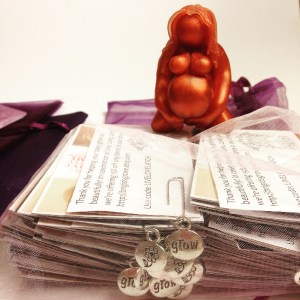
August 2015 043It is World Breastfeeding Week and we’ve been busy supporting celebratory events around the country. We donated nursing mama sculptures to the World Breastfeeding Week picnic in Springfield, MO and to two LLL Leader workshops, one in NY and one in Tennessee. Today, we donated a birth sculpture and 4o goodie packets to the upcoming Women in the Wild photo shoot in Kansas City and we also mailed a spiral mama sculpture and 20 goodie packets to a Live, Love, Latch event in Portland, TN.

August 2015 068Is there a Live, Love, Latch event near you? Check it out here: Events – Live, Love, Latch!

On August 22, we’ll be giving away some goodies at MamaFest in Rolla, which is also registered as a Live, Love, Latch event.

What is MamaFest?

 It’s a celebration! A celebration of women, of community organizations that serve women, of women-owned/women-oriented businesses. We want you to come visit the vendors, have some refreshments, visit with your friends on the couch, and take home awareness of what your community has to offer YOU.

(Men and children are welcome to attend!)

via MamaFest 2015.

I’m particularly excited about the Women in the Wild event. This article about the effort really brings home why it matters:

…The women behind this photo would like to shift the paradigm, to change the narrative of shame that is inflicted upon mothers. They would like to celebrate the bodies of mothers, with all of their glorious imperfections, because they are strong, and beautiful. Mother of one, Jacklyn Kosakowski, shared: ”When the opportunity came up to take this photo, I honestly wasn’t doing it for others. I did it for myself. My changing body during pregnancy was difficult for me, and especially afterwards was hard. I’m at a good place with myself and I have just recently began to appreciate my stretch marks and mommy belly. This body carried and nourished my baby for nine months and pushed for four hours just to meet her, so I should be proud of this body. To just be out in the open, half naked, with other beautiful mothers was such an amazing feeling. There was no judgement, we all looked beautiful.”

via The Shame Game » Erin White Photography.

You can also visit Erin White Photography on Facebook for more information and beautiful, inspiring photos.

The theme of the 2015 World Breastfeeding Week is: “Let’s Make it Work” and it focuses on mothers combining breastfeeding and employment.

The WBW 2015 theme on working women and breastfeeding revisits the 1993 WBW campaign on the Mother-Friendly Workplace Initiative. Much has been achieved in 22 years of global action supporting women in combining breastfeeding and work, particularly the adoption of the revised ILO Convention 183 on Maternity Protection with much stronger maternity entitlements, and more country actions on improving national laws and practices. At the workplace level, we have also seen more actions taken to set up breastfeeding or mother-friendly workplaces including awards for breastfeeding-friendly employers, as well as greater mass awareness on working women’s rights to breastfeed.

via World Breastfeeding Week 2015.

WHO_BreastfeedingWeek2015_EN4Images for the 2015 theme of “Let’s Make it Work” are available here: WHO | World Breastfeeding Week.

Why does the support of employers matter to breastfeeding women? It matters immensely. Women and their babies don’t exist in isolation, they are nestled within larger systems that can either help make or break the breastfeeding relationship:

“Governments and commercial companies will ‘invest’ billions in expensive new technology: roads, bridges, airports, dams or power generation plants, ‘for the good of society’. They may even ‘invest’ in schools and hospitals, but the crucial primary investment in the emotional, physical and mental health of all humans, which breastfeeding and mothering provide, is invisible.”

—Gabrielle Palmer (The Politics of Breastfeeding, p. 333)

via Breastfeeding as an Ecofeminist Issue: Collage Project | Talk Birth.

Seriously. This is why World Breastfeeding Week matters. It isn’t just about breastfeeding memes and platitudes, it is about systemic change in the US and around the world.

I was interested by this story about an Argentinian politician and her baby breastfeeding at work:

…We’re having a moment here when it comes to the cultural conversation surround public breastfeeding. When we talk about women balancing work and childcare, part of what we’re talking about is women living in a world that makes it difficult to care for their children while simultaneously managing the rest of their lives. It’s not that it’s physically impossible to care for a baby while going about one’s day, it’s that we live in a world in which women are shamed for things like breastfeeding in public.

via Why it’s important that this Argentinian politician was breastfeeding her baby on the job – Page 2 of 2.

August 2015 060…We are mammals because as a species we nurse our young. This is a fundamental tie between the women of our time and place and the women of all other times and places as well as between the female members of every mammal species that have ever lived. It is our root tie to the planet, to the cycles of life, and to mammal life on earth. It is precisely this connection to the physical, the earthy, the material, the mundane, the body, that breastfeeding challenges men, feminists, and society.

Breastfeeding is a feminist issue and a fundamental women’s issue. And, it is an issue deeply embedded in a sociocultural context. Attitudes towards breastfeeding are intimately entwined with attitudes toward women, women’s bodies, and who has “ownership” of them. Patriarchy chafes at a woman having the audacity to feed her child with her own body, under her own authority, and without the need for any other. Feminism sometimes chafes at the “control” over the woman’s body exerted by the breastfeeding infant…

via Breastfeeding as an Ecofeminist Issue | Talk Birth.

Past World Breastfeeding Week posts:

 Sign up for the Brigid’s Grove Newsletter for resources, monthly freebies, + art and workshop announcements.

And, as is our tradition, in honor of WBW and National Breastfeeding Month, you can get 10% off items in our shop throughout August: WBW10OFF.

Tuesday Tidbits: Does Giving Birth Have to Be Terrible?

July 2015 116“To nurture life is to . . . embody the intelligent Love that is the ground of all being.”

— Carol Christ

Does giving birth have to be a terrible experience involving screaming, swearing, and pooping on the sterile “delivery” table? Anyone who has followed my blog for a while, already knows what my answer to this question is (no!), but here are some additional resources that caught my eye this week. First, erase the idea of maternal-fetal conflict, reinforced insidiously all across the internet and the media, and keep your expectations high:

Birth doesn’t have to suck. Keep your expectations high and do the work to have those expectations met. Don’t let anybody convince you that you need to step aside for your baby. You need to step up for your baby.

via Dear Friend, Birth Doesn’t Have to Suck | ImprovingBirth.

Next, choose your care provider very carefully. Remember, this baby only gets to be born once! Don’t wait for “next time,” to find a respectful provider and the birth setting your heart desires.

But, I have a doula, surely she’ll protect me from my less-than-ideal doctor!

No, again. Protection from other care providers is not a doula’s job. This is a multilayered issue, but here is a good post with some reasons why:

“My own doula and I have had more than one conversation about why she didn’t warn me about my own provider—someone who I now know has a reputation for not following through on promises to patients. “But I asked you!” I’ve said to her. “Why didn’t you tell me?” She has explained patiently, each time, that she gave me the information I needed to make my own decision. What I wanted from her—to say, “Oh, Cristen, you need to switch providers right now!”—is not something she would ever say to a client. Instead, she gave me specific questions to ask. She encouraged me to talk to my provider about my wishes and pay attention to the conversation, to trust my instincts, and to be honest with myself about whether or not I thought my provider was really going to follow through with what she’d promised.”

via Birth Monopoly | Three Things Your Doula Can’t Tell You.

I know you want your doula or childbirth educator to be able to tell you these things straightforwardly. I wish they could. I’ve had birth class clients ask me the, “why didn’t you tell me” question too and it is a very fine balance for birth professionals. I often longed for the freedom to take the Dr. Pig-Face approach, described by Nancy Wainer Cohen in her class birth activism book from the 1980’s, Open Season:

“If childbirth classes really ‘worked,’ more women would be having babies without interference. More women would be recognizing the complete naturalness of birth and would remain at home, delivering their infants with feelings of confidence and trust. More and more, midwives would be demanded. The names of those hospitals and doctors who treated women and babies with anything less than absolute respect would be public knowledge, and childbirth classes would be the first place these names would be discussed. ‘You’re seeing What’s-His-Face? He’s a pig! In my opinion, of course,’ I tell people who come to my classes. I then proceed to give them the names of people who have used Pig-face. They can always ask Dr. P. for the names of people who have used him and been satisfied with their births, for balance.”

–Nancy Wainer Cohen, Open Season

via Honesty in Birth Preparation | Talk Birth.

In addition to high expectations and careful assembly of the birth team, you may also want to keep secret the Mollyblessingway 027sensations of early labor. I followed this advice with all of my babies and have no regrets.

When you begin to have sensations, do your best to ignore them as long as you possibly can. You may want to consider keeping these feelings to yourself and having a “secret sensation time” with your unborn baby. Get in as dark a space as you can. Minimize what is happening with your husband, family and the birth attendants. You have control over your body and a say in your hormone activity. Help your pituitary gland secrete oxytocin to open your cervix by staying relax in a dark, quiet room with your eyes closed.”

via Words of Wisdom: Keep the “Sensations” of Early Labor a “Secret” | NüRoo.

Another way to prepare for a wonderful birth is through connecting with your body. One way to do this is through prenatal yoga. The movements and sensations of prenatal yoga sink into you and become a part of your body memory, guiding you through birthing:

“…Anyone involved with educating adult learners (in any context) is likely to be familiar with the concept that people are most likely to retain information that they have actually practiced (versus reading about, hearing about or seeing demonstrated). I have found that incorporating a few simple yoga poses into each class session is a beautiful way of illustrating and applying many important elements of childbirth preparation. In approximately 10 minutes of movement, important points can be underscored without having to actually say anything or “lecture” to clients. The hope is that as we move together through a carefully chosen series of poses, subtle emotional development and trust in birth occurs—again, in a more effective manner than by the childbirth educator saying during class: ‘Trust birth!'”

via Incorporating Prenatal Yoga into Childbirth Education Classes | Talk Birth.

Also, prepare yourself for a nurturing postpartum. Your baby will arrive primed for connection rather than separation. The more you are cared for by those around you during this vulnerable and magical time, the more embracing you can be of the delicate, fierce, and encompassing neediness of your dependent newborn:

“The cutting of the umbilical cord tends to herald the arrival of a new and unique life. Though this tiny being began its existence many months before, growing nestled and protected within the womb, the just-born infant is seen as an individual apart from his or her mother. There is, however, a significant error in this thinking, for baby and mother are one, so to speak, and severing this unit denies an empirical truth. Birth should not be a celebration of separation, but rather a reuniting of mother and baby, who joins her for an external connection.”

–Barbara Latterner, in the book New Lives

via Inseparable | Talk Birth.

I’ve spent a lot of time exclaiming: I JUST want to transform the birth culture in the U.S.! Now, you have a chance  to share your opinions and experiences in this new survey: Transforming Birth Culture in the United States Survey.

molly37weeks 071Other tidbits this week:

  • Lann has a new YouTube channel for his Minecraft and other gaming videos. You can check out Zall Craft here.
  • I finally took the leap and signed up for Leonie Dawson’s Shining Year Academy. I’ve been buying her annual workbooks for four years, but it is time to grow! We’ve been working through the Double Your Biz Intensive and it has already been worth the price! (*links are affiliate links)
  • I updated the links/print layout for my three e-booklets. These were all written prior to my birth work. Hope you might find them helpful! Free e-Booklets | Talk Birth

Tuesday Tidbits: More Women’s Health Thoughts

February 2015 091Can we actually expect humane care in pregnancy and birth? According to a new report, no. Mistreatment in labor is a worldwide issue…

99% of all maternal deaths occur in low-income and middle-income countries, where resources are limited and access to safe, acceptable, good quality sexual and reproductive health care, including maternity care, is not available to many women during their childbearing year. The most common cause of these maternal deaths are postpartum hemorrhage, postpartum infection, obstructed labors and blood pressure issues – all conditions considered very preventable or treatable with access to quality care and trained birth attendants.

Analysis of reports examined in this paper indicate that “many women globally experience poor treatment during childbirth, including abusive, neglectful, or disrespectful care.” This treatment can further complicate the situation downstream, by creating a disincentive for women to seek care from these facilities and providers in future pregnancies.

via Science & Sensibility » Report Finds Widespread Global Mistreatment of Women during Childbirth.

From the original paper:

…The researchers identified 65 (mainly qualitative) studies undertaken in 34 countries that investigated the mistreatment of women during childbirth across all geographical and income-level settings. They analyzed the evidence presented in these studies using thematic analysis, an approach that identifies and organizes patterns (themes) within qualitative data. Based on this analysis, the researchers developed a typology of the mistreatment of women during childbirth consisting of seven domains (categories). These domains were physical abuse (for example, slapping or pinching during delivery); sexual abuse; verbal abuse such as harsh or rude language; stigma and discrimination based on age, ethnicity, socioeconomic status, or medical conditions; failure to meet professional standards of care (for example, neglect during delivery); poor rapport between women and providers, including ineffective communication, lack of supportive care, and loss of autonomy; and health system conditions and constraints such as the lack of the resources needed to provide women with privacy.

via PLOS Medicine: The Mistreatment of Women during Childbirth in Health Facilities Globally: A Mixed-Methods Systematic Review.

I’ve written about violence against women during pregnancy before:

Domestic Violence During Pregnancy | Talk Birth

Companion guest post about abuse of women during labor:

Guest Post: Abuse of pregnant women in the medical setting | Talk Birth.

It was via link trackbacks to these posts, that I read an article about birth control which raises important questions related to men’s health as well:

…Around the planet, advocates for healthier families insist that reproductive rights are human rights. Are they? If so, why is little attention paid to reproductive empowerment of the half of humanity born male? An honest human rights framework would acknowledge that the difference between the top easily reversed family planning method available for women (1 in 2000 annual failure rate) and the top method available for men (1 in 6 annual failure rate) is unjust and unconscionable…

Condoms are So Hundred Years Ago: Why Better Birth Control for Men Would Be Better for Everyone | ValerieTarico.

And, finally, bringing it back to women’s health, I read a horrifying article about young women working in factories using radioactive paint.

…When the women began exploring the possibility that their factory jobs had contributed to their illnesses, university “specialists” requested to examine them. Former factory girl Grace Fryer was declared to be in fine health by two medical experts. It would later be revealed that the two experts who had examined her were not doctors at all but a toxicologist on the US Radium payroll and one of the vice-presidents of US Radium…

The Radium Girls and the Generation that brushed its Teeth with Radioactive Toothpaste | Messy Nessy Chic.

This is why people question GMOs, flouride, vaccines, ultrasounds, artificial sweeteners, etc. Because we cannot always assume benign intent, nor can we assume full and appropriate disclosure, risk assessment, and truth from corporations with a vested interest in claiming no harm.

Super quick post for today! I’ve been busy grading papers and have a class to teach tonight.

Tuesday Tidbits: Birth Transformation

“Women are as nervous and unsure of themselves as ever, and they need to learn to trust their bodies. Birthing is much more that eliminating pain. It is one of life’s peak experiences.” –-Elisabeth Bing

via Thesis Tidbits: Exceptional Human Experiences | Talk Birth.

May 2015 146The mother of the Lamaze childbirth education movement in the U.S., Elisabeth Bing, died this week at age 100. She had a tremendous impact on the birth culture and was a very early activist in promoting the “radical” idea of birth as a transformative, powerful, important experience in a woman’s life.

…For years Ms. Bing led classes in hospitals and in a studio in her apartment building on the Upper West Side of Manhattan, where she kept a collection of pre-Columbian and later Native American fertility figurines.

Ms. Bing preferred the term “prepared childbirth” to “natural childbirth” because, she said, her goal was not to eschew drugs altogether but to empower women to make informed decisions. Her mantra was “Awake and alert,” and she saw such a birth as a transformative event in a woman’s life.

“It’s an experience that never leaves you,” she told The New York Times in 2000. “It needs absolute concentration; it takes up your whole being. And you learn to use your body correctly in a situation of stress.”

via Elisabeth Bing Dies at 100; ‘Mother of Lamaze’ Helped Change Childbirth – NYTimes.com.

Bing was also early to recognize that birth experiences can be traumatic for mothers. This week, I read another May 2015 164 interesting article about mothers’ experiences of birth trauma:

“…far too many women are left in the aftermath of a traumatic experience on the very day she is born as a mother. She is a new woman – amazing, strong and life-giving – ready to face the world. Holding her new baby in her arms and a smile (or not, depending on her acting skills) on the outside, with a broken heart, fractured spirit and shattered self-confidence on the inside. This is the result of traumatic birth…”

The Secret That Many Moms Are Keeping – Mothering.

Can part of the “cause” of traumatic births be the expectation that a “good birth” is a quiet and controlled birth? Nadia Raafat wrote a powerful article at the Huffington Post that touches on this possibility:

Contractions were outed, surges, came in, the un-gratifying word pain was ostracised from the semantics of childbirth and, across the nation, grateful midwives watched in awe as powerful, silent women breathed their way through drug-free labours.

That’s half the story. The other half concerns those who did not experience the blissful or natural birth outcome that hypnobirthing promised them; the many disappointed women whose labours were violent, or which deviated from the normal care pathway, women who found the experience not only painful, but shocking and traumatic – all the more so because they believed it might be painless. I have met many of these women – still processing their birth experience years later, still wondering what they did wrong? Their emotional and physical scars run deep and take many years to heal.

via Denying the Pain of Labour Is Like Denying the Pain of Life | Nadia Raafat.

Raafat goes on to advocate the full spectrum of the semantics of birth and birth experiences:

Childbirth is the most profound experience in a women’s life. It is awesome, challenging, brutal, visceral, joyful, transporting, awful, deeply physical, incredible, powerful, at times, calm and in-flow, at other times all-consuming and over-whelming. Our preparation and our semantics need to acknowledge the whole spectrum of the experience, not just the palatable colours.

via Denying the Pain of Labour Is Like Denying the Pain of Life | Nadia Raafat.

I have a long time interest in words and birth and how we “talk birth” in our culture:

…On the flip side, I’ve also read other writer’s critiques of an overly positive language of birth, labeling and mocking words like “primal” as “euphemisms” for hours of “excruciating” pain. But, that makes me think about the locus of control in the average birth room. It seems like it might more difficult to start an IV in a “triumphant” woman, so lets call her stubborn or even “insisting on being a martyr”? Could you tell someone making “primal” noises to be quiet? Probably not, but you can tell someone who is “screaming” to “stop scaring” others. Asserting that a painful and degrading language of labor and birth is “real” English and that the language of homebirth advocates are “euphemisms” is a way to deny women power and to keep the locus of control with medicine.

via Wordweaving | Talk Birth.

I’ve also thought a lot about the association between a quiet birth and good birth. “Quiet” during labor is often associated with “coping well” and noise is associated with not coping, which may not be the case:

…Occasionally, I hear people telling birth stories and emphasizing not making noise as an indicator, or “proof,” of how well they coped with birthing–“I didn’t make any noise at all,” or “she did really well, she only made noise towards the end…” Women also come to classes looking for ways to stay “in control” and to “relaxed.”

This has caused me to do some thinking. Though relaxation is very important and helpful, to me, the goal of “laboring well” is not necessarily “staying in control” or “staying relaxed” or “not making any noises.”

via What Does Coping Well Mean? | Talk Birth.

And, speaking of how we talk about experiences as well as pulling this post back around to Elisabeth Bing, I quoted some reflections on postpartum care from Bing in a past post:

“The degree of pleasure you take in your mothering is not the same thing as loving the baby or being an effective parent. Keep in mind there is a distinction between mother love and maternal satisfaction. You may love your baby very much but be dissatisfied with your life circumstances.”

via Talk Books: Laughter & Tears: The Emotional Life of New Mothers | Talk Birth.

May 2015 150

Tuesday Tidbits: International Day of the Midwife

IMG_4848Today is International Day of the Midwife and I find myself reflecting on the many midwives I have known and the incredibly diversity and gifts of the women who join this profession. In addition to the midwives I had for prenatal and postpartum care for each of my births, I’ve been privileged to know many midwives on the state and national level through our shared interest in maternity care activism and birth rights. With my first baby, I had prenatal and birth care with a family practice physician and a CPM. The CPM was gray-haired, pretty, soft-spoken and wryly witty and pretty much exactly what you picture a stereotypical midwife looking like! My prenatal care with this team was excellent, birth care so-so (I didn’t need much), but my postpartum care left a lot to be desired and I felt very cast adrift after the birth. I became very embroiled with midwifery activism and birth work after this birth and as a result my experiences with all subsequent midwives has been an interesting blend of collegial + consumer. My first birth was the only one for which I was consumer only. Though I’m not a midwife myself, my subsequent experiences all involved being a sister birthworker AND client, rather than solely a client. This has both benefits and disadvantages.

My midwife with my second baby was amazing. I loved her so much and I have felt a gap in every pregnancy following that I was not able to have her as a midwife again. She was gentle and caring and passionate and inspiring and wonderful. Cute and upbeat, full-figured, and intelligent, she had a soft and reassuring presence and gave wonderful hugs! We became good friends and she was a very important part of my life. My prenatal care and birth care with her was excellent. She was also helpful with postpartum care, but I don’t think I “allowed” her to be as helpful as she could have been because I couldn’t allow myself to be as vulnerable and needy as I actually felt.

When I was pregnant with my third baby, my much-loved midwife had moved away and found myself at a loss for who to choose for pregnancy and birth care. This baby died early in my second trimester and I found myself calling on the sisterhood of midwives for help when I desperately needed it. From the very busy midwife who talked to me kindly and patiently when I was freaking out over a retained placenta, to the Mennonite midwife who helped me from the road as she was driving to another state and connected me to yet another midwife several hours away who drove in to town to meet and help me when I was very scared and alone, it was during this experience that I realized very viscerally how much we need midwives in our lives. When I was pregnant again, I decided to choose the Mennonite midwife for my prenatal care and immediate postpartum care. She is a very capable and determined and intelligent midwife, but I felt an unbridgeable gap between us spiritually speaking and so was never able to fully connect with her emotionally. She embodied the gray-haired, no-nonsense “granny midwife” archetype. She provided great prenatal care and was very respectful of my wish for immediate postpartum care, but an unassisted birth. Postpartum follow-up care was limited due to snowstorms.

With my last baby, I felt a powerful need to feel taken care of again. I really needed to have some set aside time, Mollyblessingway 027space, and energy that was just focused on me and my baby. I knew that I needed a midwife! While I could have used the same midwife as with the baby before, this time it was important to me to develop the emotional connection I had with my second midwife—I needed a midwife with whom I could feel “safe” with all of me, instead of feeling like I had to hide my goddess sculptures when she came over! 😉 It took some work, but I was able to find that. With this experience, I came to accept that the blur between colleague-consumer is my reality and I will never re-capture the feeling of being client only and being completely focused on in that respect, because I’m simply not just a client only. That’s okay. This midwife has long brown hair, wears lots of skirts and had the hippie-ish midwife feel I was craving. She is funny and talkative and connected to the roots of what midwifery is all about. I was safe with her in the way I needed. I really appreciated the midwife’s prenatal care (and the opportunity to focus on my pregnancy and baby), her respect of my wish for immediate postpartum care rather than birth care, and her postpartum follow-up care. I felt like this midwife offered the most complete postpartum care of all of my birth experiences.

I’ve mentioned before that the only vaginal exam I had during six pregnancies was at ten centimeters dilated when I went to the birth center to push out my baby (I also had to have one for a manual clot extraction following his birth and one for help removing the placenta after my miscarriage-birth of my third baby). This is totally cool with me. Somehow I’ve managed to labor and birth four full-term babies without ever knowing how dilated I am in labor! So, I loved reading this article about the pointlessness of vaginal exams in labor and the cultural attachment, even in midwifery circles, to cervix-focused childbirth:

“…There is also reluctance to change hospital policies, underpinned by a need to maintain cultural norms. The Cochrane review on the use of partograms on the one hand states that they cannot be recommended for use during ‘standard labour care’, and on the other hand states: “Given the fact that the partogram is currently in widespread use and generally accepted, it appears reasonable, until stronger evidence is available, that partogram use should be locally determined.” Once again, an intervention implemented without evidence requires ‘strong’ evidence before it is removed. The reality is that we are unlikely to get what is considered ‘strong evidence’ (ie. randomised controlled trials) due to research ethics and the culture of maternity systems. Guidelines for care in labour continue to advocate ‘4 hourly VEs’ and reference each other rather than any actual research to support this (NICE, Queensland Health). Interesting whilst Queensland Health guidelines recommend 4 hourly VEs, their parent information leaflet states: “While a VE can provide information about how a woman has progressed so far in labour, it cannot predict how much longer you will be in labour…” and that there are “…other factors such as the strength, duration and length of contractions as well as a woman’s behaviour and wellbeing that can indicate progress in labour”. Which begs the question ‘why bother doing a VE’?

The cervical-centric discourse is so embedded that it is evident everywhere. Despite telling women to ‘trust themselves’ and ‘listen to their body’, midwives define women’s labours in centimetres “She’s not in labour, she’s only 2cm dilated”. We do this despite having many experiences of cervixes misleading us ie. being only 2cm and suddenly a baby appears, or being 9cm and no baby for hours. Women’s birth stories are often peppered with cervical measurements “I was 8cm by the time I got to the hospital”. Even women choosing birth outside of the mainstream maternity system are not immune to the cervical-centric discourse. Regardless of previous knowledge and beliefs, once in labour women often revert to cultural norms (Machin & Scamell 1997). Women want to know their labour is progressing and there is a deep subconscious belief that the cervix can provide the answer. Most of the VEs I have carried out in recent years have been at the insistence of labouring women – women who know that their cervix is not a good indicator of ‘where they are at’ but still need that number. One woman even said “I know it doesn’t mean anything but I want you to do it”. Of course, her cervix was still fat and obvious (I didn’t estimate dilatation)… her baby was born within an hour…”

Vaginal examinations: a symptom of a cervical-centric birth culture | MidwifeThinking

I also read this article about the now late, great midwife and activist, Sheila Kitzinger and how she connected her birthwork to feminism (as do I). I despise the article’s title, but it is still worth a read!

…In the Seventies, I was viewed as a radical for saying that birth was being depersonalised and treated as if it were a pathological event, rather than a normal life process.

To my surprise, it wasn’t just obstetricians who dismissed what I had to say. I also found myself in conflict with feminists, who saw birth in very simplistic terms.

Why? Because they claimed it was every woman’s right to give birth painlessly.

An article in Spare Rib, the radical campaigning feminist magazine, went further.

Without any evidence, the authors asserted: ‘Undoubtedly, hospitals, with all their faults, are the safest places in which to give birth. For this reason, we think we should press for improvements in hospitals rather than support a move to more home confinements.’

I was appalled at how my sister-feminists could fail to support woman-centred birth. Polly Toynbee, writing in The Guardian, was particularly virulent, dismissing me as a lentil-eating earth goddess…

via Sheila Kitzinger on why feminists HATE natural childbirth and why it’s harmful | Daily Mail Online.

Lentil-eating earth goddesses unite! Unlike Kitzinger’s experiences with the distance between some expressions of feminism and birth-care, I find that many midwives, whether explicitly or implicitly, understand the deep connection between midwifery care, birth activism, and feminism.

“Midwifery work is feminist work. That is to say, midwives recognize that women’s health care has been subordinated to men’s care by a historically male, physician-dominated medical industry. Midwifery values woman-centered care and puts mothers’ needs first. Though not all midwives embrace the word feminism (the term admittedly carries some baggage), I maintain that providing midwifery care is an expression of feminism’s core values (that women are people who have intrinsic rights).

–Jon Lasser, in Diversity & Social Justice in Maternity Care as an Ethical Concern, Midwifery Today, issue 100, Winter 2011/2012

via Midwifery & Feminism | Talk Birth

Perhaps this is because midwives care so deeply about mothers and feminists might actually make the best mothers…

…As a mother who works extensively with other mothers, I appreciated Caron’s acknowledgement that raising children is a feminist act with potential to create change as well. “Another strategy for change is through raising children to be just and caring people. A media image portrays feminists as being against motherhood—but in fact, feminists make the best mothers. They raise children aware of themselves and the world, of options and values, of what justice means and how to work toward it, and how to be self-critical and self-respecting” (p. 203-204). Caron also explains that “in a just society, women would be free to make whatever decisions they needed to, for however long they needed to, in relation to political action in the public and the private sphere. All people would participate in the decision-making, and women would be supported in their decisions rather than, as sometimes happens, made to feel guilty for not doing enough or not valued for what they do.”

via Thesis Tidbits: Feminism, Midwifery, and Motherhood | Talk Birth.

dayofmidwifeHappy International Day of the Midwife! Thank you for bearing witness to our journeys and for holding the space for the continually unfolding spiral of life.

“…As we ready ourselves to accept new life into our hands,
Let us be reminded of our place in the dance of creation.
Let us be protectors of courage.
Let us be observers of beauty.
Let us be guardians of the passage.
Let us be witnesses to the unfolding…”

—Cathy Moore (in Sisters Singing)

via National Midwifery Week! | Talk Birth.

In addition to midwives, we’re also celebrating mothers all week this week! First on our lineup of activities is our gift to you: our first ever coupon code for $5 off purchases over $15. Use code: MOTHER.

We’ve also got a giveaway upcoming, two new product launches, a new Facebook group, and two class announcements! Stay tuned…

April 2015 021

Tuesday Tidbits: Cesarean Awareness Month

11148668_1614543705424512_3613965156253725168_nIt is Cesarean Awareness Month! We finished several new mama goddess designs this month and have a CAM-themed April newsletter ready to go out (subscriber freebie in this newsletter is a new birth education handout: “Can I really expect to have a great birth?” Sign up for the newsletter at Brigid’s Grove!)

Some Cesarean Awareness Month themed posts for this week. First, a meditation for before a cesarean:

You say you honor choices. 11108844_1614067252138824_1518757261202060615_n
Can you really honor mine?
I will always honor the process which
brought forth flesh of my flesh.
I honor your births too.
Can you ever honor my experience, or will I
forever be a part of your statistics on
the way things shouldn’t be?

via Birthrites: Meditation Before a Cesarean | Talk Birth.

And, some past thoughts on helping a woman give birth…what is the balance between birth interference and birth neglect?

There can be a specific element of “smugness” within the natural birth community that has been gnawing at me for quite some time. A self-satisfied assumption that if you make all the “right choices” everything will go the “right way” and women who have disappointing or traumatic births must have somehow contributed to those outcomes. For example, I’m just now reading a book about natural mothering in which the author states regarding birth: “Just remember that you will never be given more than you can handle.” Oh, really? Perhaps this is an excellent reminder for some women, and indeed, at its very core it is the truth—basically coming out alive from any situation technically means you “handled it,” I suppose. But, the implicit or felt meaning of a statement like this is: have the right attitude and be confident and everything will work out dandily. Subtext: if you don’t get what you want/don’t feel like you “handled it” the way you could or “should” have, it is your own damn fault. How does a phrase like that feel to a woman who has made all the “right choices” and tried valiantly to “handle” what was being thrown at her by a challenging birth and still ended up crushed and scarred? Yes, she’s still here. She “handled it.” But, remarks like that seem hopelessly naive and even insulting to a woman whose spirit, or heart, has been broken. By birth. Not by some evil, medical patriarchy holding her down, but by her own body and her own lived experience of trying to give birth vaginally to her child.

via Helping a Woman Give Birth? | Talk Birth.

An educational video and some cesarean infographics from Lamaze: Lamaze for Parents : Blogs : How to Avoid a Cesarean: Are You Asking the Right Questions?

And a VBAC Primer from Peggy O’Mara: VBAC Primer | Peggy O’Mara

Some thoughts on the flawed assumption of maternal-fetal conflict and how that impacts the climate of birth today:

I think it is fitting to remember that mother and baby dyads are NOT independent of each other. With a mamatoto—or, motherbaby—mother and baby are a single psychobiological organism whose needs are in harmony (what’s good for one is good for the other).

As Willa concluded in her CfM News article, “…we must reject the language that portrays a mother as hostile to her baby, just because she disagrees with her doctor.”

via Maternal-Fetal Conflict? | Talk Birth.

And some past thoughts on Birth Strength:

“Women are strong, strong, terribly strong. We don’t know how strong until we are pushing out our babies. We are too often treated like babies having babies when we should be in training, like acolytes, novices to high priestesshood, like serious applicants for the space program.” –Louise Erdrich, The Blue Jay’s Dance

via Birth Strength | Talk Birth.

(I would revise this slightly to say “until we have birthed our babies,” since strength is found in many different birth, postpartum, breastfeeding, and mothering experiences, not only in pushing out our babies. I still love the quote though!)

11150546_1614074768804739_5920468981887497904_n

Sheila Kitzinger

‘Sheila taught me, from an early age, that the personal was political – not just by what she said but by what she did. As I was growing up I learnt from her campaigns for freedom and choice in childbirth that passionate and committed individuals can create social change. She never hesitated to speak truth to power. –Prof. Celia Kitzinger, Sheila’s oldest daughter

via Sheila Kitzinger 1929-2015 | Pinter & Martin Publishers.

Yesterday morning, I learned that childbirth education trailblazer, maternity activist, and phenomenally influential author, Sheila Kitzinger has died. By the end of the evening, her name was coming up as “trending” on Facebook, which is the first time I’ve ever noticed anything flagged for me as trending that wasn’t mainstream celebrity-related, holiday, sporting-event, OR horrible tragedy, disaster, or scandal related. So, Sheila continues to break new ground in maternity care activism!

My own work with birth and my philosophy of birth education and activism has been deeply shaped by this marvelous woman. She is one of my all-time favorite childbirth authors and may be the most quoted person on my blog! In fact, as I was scrolling through old posts to find some to share in memorial, I had to quit looking after the fourth page of search results because there were simply too many. Here are some of the ones I did find:

I agree with anthropologist Sheila Kitzinger who said that, “In any society, the way a woman gives birth and the kind of care given to her and the baby points as sharply as an arrowhead to the key values of the culture.” Our current birth culture does not value women and children. Though my focus is usually on the women, it also doesn’t much value men or fathers either. I also agree with Kitzinger’s assessment that, “Woman-to-woman help through the rites of passage that are important in every birth has significance not only for the individuals directly involved, but for the whole community. The task in which the women are engaged is political. It forms the warp and weft of society.”

via A Blessing…and more… | Talk Birth.

Same quotes used in two other posts:

These concepts—and the lack of a similar one in American culture—reminds me of a quote from Sheila Kitzinger that I use when talking about postpartum: “In any society, the way a woman gives birth and the kind of care given to her and the baby points as sharply as an arrowhead to the key values of the culture.”

via Some reminders for postpartum mamas & those who love them | Talk Birth.

And, Rites of Passage… Celebrating Real Women’s Wisdom | Talk Birth.

Touching on the political aspects of birth culture:

“In acknowledging woman-to-woman help it is important to recognize that power, within the family and elsewhere, can be used vindictively, and that it is not only powerful men who abuse women; women with power may also abuse other women.” –Sheila Kitzinger

via Birth Quotes of the Week | Talk Birth.

Personally influential to my own labors:

During my first labor, I experienced what Sheila Kitzinger calls the “rest and be thankful stage” after reaching full dilation and before I pushed out my baby. The “rest and be thankful stage” is the lull in labor that some women experience after full dilation and before feeling the physiological urge to push. While commonly described in Kitzinger’s writings and in some other sources, mention of this stage is absent from many birth resources and many women have not heard of it.

via The Rest and Be Thankful Stage | Talk Birth.

And, my own personal postpartum care: Ceremonial Bath and Sealing Ceremony | Talk Birth.

Her books shaped birth HERstory:

Women’s (Birth) History Month | Talk Birth.

And, my own birth education philosophy (as well as my core value in working with women):

Labour is a highly personal experience, and every woman has a right to her own experience and to be honest about the emotions she feels. Joy tends to be catching, and when a teacher has enjoyed her own births this is valuable because she infuses her own sense of wonder and keen pleasure into her relations with those she teachers. But she must go on from there, learn how difficult labour can be for some women, and develop an understanding of all the stresses that may be involved.

via Sheila Kitzinger on a Woman’s Right to Her Own Experience | Talk Birth.

And, she celebrated birth:

I hope all of the women I know who are giving birth in the upcoming season discover that, as Sheila Kitzinger said, “Birth isn’t something we suffer, but something we actively do and exult in.” (from promo for One World Birth)

via Invisible Nets | Talk Birth.

Thanks for everything, Sheila! You’re amazing!

“Childbirth takes place at the intersection of time; in all cultures it links past, present and future. In traditional cultures birth unites the world of ‘now’ with the world of the ancestors, and is part of the great tree of life extending in time and eternity.” –Sheila Kitzinger

via Tuesday Tidbits: Tree Mother | Talk Birth.

IMG_3783

Pap Smears I Have Known

Mollyblessingway 027

Photo by Karen Orozco, Portraits and Paws Photography

Your body is your own. This may seem obvious. But to inhabit your physical self fully, with no apology, is a true act of power.”

–Camille Maurine (Meditation Secrets for Women)

“I used to have fantasies…about women in a state of revolution. I saw them getting up out of their beds and refusing the knife, refusing to be tied down, refusing to submit…Women’s health care will not improve until women reject the present system and begin instead to develop less destructive means of creating and maintaining a state of wellness.”

Dr. Michelle Harrison (A Woman in Residence)

One afternoon at the skating rink for homeschool playgroup, a few of my friends sit in a hard plastic booth and the conversation turns to pap smears and pelvic exams. Later, I read Michele Freyhauf’s post about her hysterectomy experience and the skating rink pap smear stories come back to me with vivid clarity.  Being a woman is such an embodied experience and we have so many stories to tell through and of our bodies. During my conversation with my friends, I warn them: watch for my new one-woman show…Pap Smears I Have Known. At the time, several other friends are preparing for a local production of the Vagina Monologues and I have a vision: The Pap Smear Diaries. But, really, how often do we have a chance to tell our Pap smear stories, our pelvic exam stories? Where are they in our culture and do they matter?

Three experiences come to mind as I talk with my friends…

1999. I am married, twenty years old, and a graduate student. I go to the student health center for my annual exam. As I walk up to the door and place my hand on the handle, I feel this intense, visceral reaction in my body of wanting to run away. For a few moments, I can’t open the door, instead I think only of fleeing. The thought comes to me: I’m going in here to volunteer to be assaulted. Having to undergo a routine pelvic exam and pap smear as a condition of having access to birth control pills feels like a routine humiliation, like a ritual of physical invasion and “punishment” designed to shame young women who dare to have sex.

This is MY BODY.

2003. In my Type-A way, I head to a doctor for a “preconception visit” before my husband and I begin to try to conceive our first baby. This appointment is at a birth center in which you wear flowery housegowns instead of paper dresses. When the doctor touches me (she asks permission first), I flinch and recoil slightly. She looks at me with surprise: “haven’t you ever had a pap smear before?” I am intensely embarrassed because I know what she is thinking: she is thinking I must have been sexually abused and she is probably writing that on my chart right now. I haven’t been sexually abused, though I’ve spent my formative late teens and early twenties working in domestic violence and sexual assault centers. I’m not sure why this feels so embarrassing to me, and I also still wonder, isn’t it actually more normal to flinch when a stranger pushes their hand into your body than to be totally cool with it? Later at this birth center, I give birth to my first son. In what will eventually be six pregnancies, I only experience a single pelvic exam ever while pregnant, during his birth immediately before pushing. This is good. I prefer hands kept outside my body. After his birth, clots form in my uterus and prevent it from clamping down properly. The doctor does a manual exploration of my uterus to remove the clots. I scream out at first with the pain of this invasion and then hum my Woman Am I blessingway chant in order to cope.

This is MY UTERUS. March 2014 082

2009. My third baby has died unexpectedly during my second trimester. I give birth to him at home alone with just my husband. The baby’s birth is surprisingly peaceful and empowering, but then the clots come, eventually the size of grapefruits. When I become unable to distinguish whether I am fainting from the unbelievable sight of so much blood or dying from the loss of it, I ask to go to the emergency room. The ER doctor tries to examine me to see if I am hemorrhaging, but she only has a child-sized speculum. She is unable to get her hand inside me because of the clots in the way. She puts the miniature speculum in over and over and it keeps flopping out because it is too small for me. I have never been so miserable. “This wouldn’t hurt so much if you’d stop moving around so much,” she says in an irritated voice. When she leaves the room, she leaves bloody handprints streaked along the sides of the bed and my blood in a puddle on the floor.

This is MY BLOOD. 

“…no woman is powerful, no woman has ‘come a long way baby’ when she’s made into medical mincemeat when giving birth. No woman is powerful when she lies on her back and flops her knees open for stranger’s fingers and casual observation.”

Leilah McCracken, Resexualizing Childbirth, quoted in Birthdance, Earthdance, master’s thesis by Nané Jordan (p. 58)

This February, I attend the local production of The Vagina Monologues performed by several of my friends before an encouragingly full theater in our small Midwestern town. One of them delivers a powerful portrayal of “My Angry Vagina.”  She is amazing and intense and angry as she stomps across the stage:

“…why the steel stirrups, the mean cold duck lips they shove inside you? What’s that? My vagina’s angry about those visits…Don’t you hate that? ‘Scoot down. Relax your vagina.’ Why? So you can shove mean cold duck lips inside it. I don’t think so.  Why can’t they find some nice delicious purple velvet and wrap it around me, lay me down on some feathery cotton spread, put on some nice friendly pink or blue gloves, and rest my feet in some fur covered stirrups?”

During my pregnancy with my daughter three years ago, I buy urinalysis strips on the internet and keep track of the protein, sugar, and leukocytes level in my urine. I monitor my blood pressure in the pharmacy section of the grocery store. I buy a Doppler and check her heartbeat myself. When I find myself continually worried about what I will do if she is not breathing at birth, I travel to a city several hours away and become certified in neonatal resuscitation. I buy a neonatal resuscitation bag and show my husband and mother how to use it. After she is March 2014 116born, breathing well, in wild, sweet relief into my own hands in my living room, I drink liquid chlorophyll to rebuild my blood supply and I ingest my own placenta dehydrated in little capsules prepared by my doula.

An acquaintance comes to me complaining that her insurance company does not cover her prenatal visits and she is tired of paying more than $100 for a five minute visit while they check her urine and the baby’s heartbeat. I feel a little nervous about it, but I pass her my Doppler and my leftover urinalysis test strips on the front porch of my little UU church. Later, she tells me how empowering it is to take care of these responsibilities herself, rather than going to the doctor for something she is perfectly capable of doing. Another friend borrows my Doppler several times to check heartbeats for other friends—sometimes with good news and sometimes with bad news—and in January of this year I have the honor and privilege of finding my brother and sister-in-law’s first baby’s heartbeat for the first time.

My friend asks to borrow my neonatal resuscitation equipment in case she needs it for a birth she is attending (it has already been to several other friends’ houses during their births). I tell her, “I love black-market health care,” and pass it to her furtively at the bowling alley.

Later, I reflect that it isn’t black-market healthcare that I love, it is women taking care of each other and themselves. I love empowered self-care. I love feminist healthcare, though it has yet to exist on a systemic level in this country, and I love the possibility and potential found in taking the care of our bodies into our own hands whenever we can.

I have yet to invest in any speculums, but maybe I should. And, purple velvet.

This post was previously published on Feminism and Religion.

National Midwifery Week!

“…As we ready ourselves to accept new life into our hands,
Let us be reminded of our place in the dance of creation.
Let us be protectors of courage.
Let us be observers of beauty.
Let us be guardians of the passage.
Let us be witnesses to the unfolding…”
Cathy Moore (in Sisters Singing)

New Etsy Pictures 332

Lots of events in October! I just found out that National Midwifery Week is October 5-11 (same as Babywearing Week). It is finals week for me (I teach on an 8 week session schedule) and so I don’t have time for a lot of things other than grading, but I did pluck some delicious quotes out of past blog posts…

“It’s hard to describe if you’ve never been there, but to watch a woman access her full power as a woman to give birth is awe-inspiring, and I never get tired of being witness to it. It’s an honor to watch that transformation take place.”

~ Julie Bates, CNM

“There is no ‘normal’ birth–each is individual and nonconforming. Childbirth opens an extraordinary spectrum of physical, emotional, and spiritual growth opportunities that is  nothing less than extraordinary, which women should be supported in freely exploring. The Midwife must guard parameters of safety, yes, but she should also encourage women to play their edges, experience deep currents of emotion, discover their own ways of transformation, and chart new creative territory.”

–Elizabeth Davis

“Midwifery asks us to truly become at home with ourselves, with nature, and with women. Birth takes us out of our external experiences, our linear timing of progress, and our everyday rituals. In contrast, birth time is measured in a circular movement like the seasons. There are rhythms and patterns. If we let birth unfold with spontaneity and attuned to nature, we will end up appreciating the nature of our souls as well.”

–Mary Sommers (More than a Midwife)

To me, midwife means: loves women. I wrote about this idea in a past post:

I know the traditional root of the word midwife is “with woman” some sources say “wise woman”, but I’d like to offer another. When I was pregnant with my second son, I had a wonderful midwife and we spent many hours together talking about birth and midwifery. During one conversation she said to me, “you can’t be a midwife unless you love women.” This struck me profoundly—a midwife must love women

via Midwife means “loves women”… | Talk Birth.


To acknowledge midwifery week and the profound gift of service offered by midwives to so many women, we also set up a special discount code in our etsy shop. It is our best one ever: 20% off a purchase of $12 or more (expires October 12). This could be the perfect opportunity to find a special gift for your midwife! To receive the discount use midwifeweek2014 for the 20% on $12+ (Remember, this week only we also have one for International Babywearing Week: babywearing2014 for 15% off any purchase.)

New Etsy Pictures 348

We’ve been working on improving our colors for our birth art sculptures recently and are finally getting some really nice results! We also have new pigments ordered so we can do even more colors soon.

New Etsy Pictures 474