Archives

Book Review: The Doula Guide to Birth

Book Review: The Doula Guide to Birth

The Doula Guide to Birth: Secrets Every Pregnant Woman Should Know
By Ananda Lowe & Rachel Zimmerman
Bantam Books, 2009
Softcover, 270 pages
ISBN: 978-0-553-38526-7
www.thedoulaguide.com

Reviewed by Talk Birth

The Doula Guide to Birth is written for pregnant women, though the title may suggest that it is for doulas. It also has a chapter and sections specific to birth partners. However, doulas will also find the book to be a friendly, enjoyable read and may pick up some fresh perspectives for their work with birthing women.

The book also includes (short) sections for often-ignored or marginalized segments of the birthing population such as same-sex partners, parents using a surrogate mother, and women planning for adoption.

The first five chapters of The Doula Guide to Birth cover benefits of doulas, the role of fathers/partners and the complementary nature of the doula role to other support people, general overview of labor, childbirth education options and medications, and finding a doula.

The later seven chapters delve deeper into less typical subjects such as doulas and medical providers, when should you really go to the hospital, labor techniques, unexpected interventions, birth plans/birth essays, and what really happens postpartum.

Though not a criticism per se, I did feel like the first half of the book reads very much like an extended “commercial” for doulas. The second half of the book really shines. My favorite chapter was “labor is not about dilation”: “Although there is currently a heavy emphasis on dilation, vaginal exams, and timelines for giving birth, labor is not about dilation. Your body knows how to give birth whether or not you ever have a pelvic exam during labor. Birthing women need encouragement to trust their bodies, and to be the stars of their own labors. Doulas help provide this encouragement. And the confidence a woman discovers in labor can help carry her through the demands of parenting and future challenges in life.” (emphasis mine).

The Doula Guide to Birth is supportive of the midwifery model in philosophy, but only includes very brief mentions of midwives, the assumption being that most births will be in the hospital.

The book has extensive endnotes and an appendix with a birth evaluation form.

Disclaimer: I received a complimentary copy of this book for review purposes.

Review previously published on Citizens for Midwifery

Birth Matters!

“A well taken care of and rested mama almost always translates into a well taken care of and rested baby. Respecting mothers is an act of social change.” —Mother Health International

“The way a society views a pregnant and birthing woman, reflects how that society views women as a whole. If women are considered weak in their most powerful moments, what does that mean?” –Marcie Macari (She Births)

“…it is not easy for women to lay claim to our life-giving power. How are we to reclaim that which has been declared fearful, polluting and yet unimportant? How are women to name as sacred the actual physical birth, which comes with no sacred ritual…?” –Elizabeth Dodson Gray

Birth matters. It truly does. The impact is often ignored or minimized, but giving birth remains one of life’s most profound, pivotal, liminal, and initiatory events. Bizarrely, this is overlooked by much of modern culture. We spent many thousands of dollars on weddings each year as well as months of planning and preparation for “just one day,” and yet in pregnancy and birth are willing to let insurance companies dictate access to care providers and let care providers dictate access to evidence-based care. Some time ago I expanded the wedding analogy into a satirical look at why birth matters:

You stop sharing your feelings, but you can’t shake the memories. What you expected to be a beautiful day filled with love and celebration was not and you feel a real sense of grief at the loss of your dreams. You know you shouldn’t feel this way. You know that what really matters is your healthy, happy husband, but you keep wondering if your wedding really had to be that way. Yes, you love your husband and you are so happy that he is healthy, but you also wonder if that really is all that matters. Don’t you matter too? Doesn’t your relationship matter? What about respect, dignity, love, and self-worth? Don’t those matter too? Wasn’t this a special life transition for your family? Wasn’t it the beginning of a special relationship together and couldn’t that relationship have been celebrated, honored, and treated as worthy of care and respect?

via All That Matters is a Healthy Husband (or: why giving birth matters)

And, in a different post I made a list of why I care about birth, concluding with the following:

Because I know in my heart that birth matters for women, for babies, for families, for culture, for society, and for the world.

via Why Do I Care About Birth?

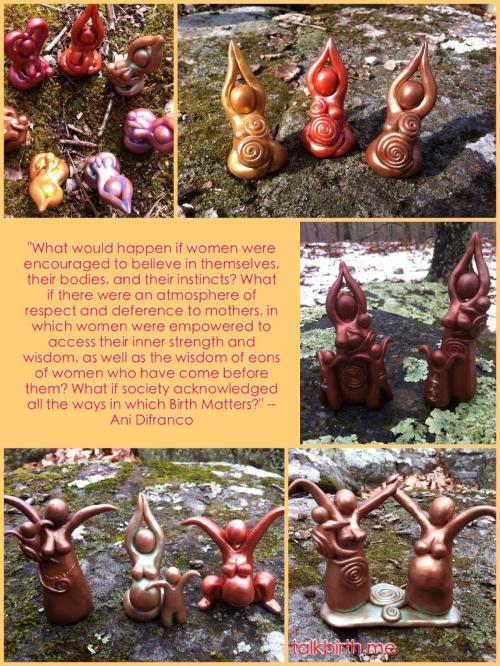
So, I particularly loved this quote from Ani DiFranco and I had to turn it into a picture! 🙂

902248_10152670748305442_735801331_o

Women of Color Can Push for Better Outcomes: What Every Mother-to-Be Should Know About Birth

Guest post by Tara Owens-ShulerImage

As an African American Lamaze Certified Childbirth Educator, I have observed over my 18 years of teaching that childbirth education class participants are less likely to be women of color. My desire for more women of color to attend childbirth education classes is rooted deeper than just their presence in a classroom – it is rooted in my desire for more women of color to understand the disparities that exist in maternal and birth outcomes.

In a recent Science and Sensibility blog post by Christine Morton on maternal health disparities, she reviewed the work of several well-known public health researchers – Dr. Eugene Declercq, Dr. Mary Barger and Dr. Judith Weiss. Their findings point to the fact that African American women have higher rates of cesarean births at nearly every age group and across every level of education.

In addition, the U.S. Department of Health and Human Services reports that one of every five non-Hispanic,black births are pre-term, African American mothers experience an infant mortality rate twice that of non-Hispanic, white mothers, and breastfeeding rates among African American mothers are 16 percent lower than white mothers.

Given the disparities that exist in maternal and birth outcomes for women of color, I think April as Minority Health Awareness Month is a great opportunity to talk about a few other factors that minority moms or mothers-to-be can control or influence. It’s a hard reality that mothers face real challenges in getting the childbirth care they want and deserve. Even though medical evidence may tell us certain practices are good for mothers and babies, the “system” is not always geared to deliver that care. Health care providers are rushed, spread thin, or incentivized for practices that are not most beneficial to the mother.

Let’s go back to the fact that African American women have higher rates of cesarean births than non-Hispanic,white women. Is it because African American women are sicker and need to have a cesarean birth? Researchers report that this is untrue. They conclude that higher rates of cesarean births among African American women are a result of a shift in obstetric practices to focus more heavily on use of childbirth interventions. And, when we bring in an induction to the equation, there is a correlation between the increased rates of induction to the increased rates of cesarean births!

Research shows that babies pay a steep price for these early births caused by inductions or a failed induction, which led to a cesarean. Babies have greater difficulties breathing, breastfeeding, and maintaining their temperature, which usually means being separated from moms and spending time in the Intensive Care Unit. While an increasing number of hospitals and health care professionals are shying away from unnecessary cesarean birth and induction, it’s one of many care practices that just aren’t supported by good medical evidence.

So how can women of color push for better care?

  • Become an active partner with your care provider. While doctors or midwives have professional knowledge and skills, they may not know everything about your personal background and preferences. Finding a provider who will also act as your partner can help you push for the care that’s best for you and your baby.
  • Ask questions – lots of them! Labor and birth in particular can be unpredictable. That’s why it’s a smart idea to prepare a list of rolling questions throughout your pregnancy to help you determine if the right care is being recommended during labor, birth and after birth.
  • Do your research. Understand your available care options before, during and after labor at the hospital or birth center. If you know that during labor you’d like the ability to walk around, eat and drink – choose a birth facility that will be more aligned with your birth preferences or wishes.
  • Participate in a childbirth education class. Taking a Lamaze class will help you understand maternity care best practices and be better prepared to navigate your labor and birth. A childbirth educator will help you identify the right questions to ask when making decisions about your care.

I encourage all women – particularly African American women – to learn more about getting the right care in pregnancy and childbirth by attending a childbirth education class. Skipping out on childbirth education is a lost opportunity to stack the deck in your favor and become a well-informed consumer of evidence-based practices! As a consumer, it is your right to be a partner in your health care decisions.

Tara Owens Shuler, MEd, LCCE, FACCE is the president of Lamaze International. She has practiced as a childbirth educator since 1995. In 2005, she became the Director of the Duke AHEC Lamaze Childbirth Educator Program. In addition to training individuals to become childbirth educators and preparing expectant women and their partners for a safe and healthy birth experience, Tara provides labor support services. Along with coordinating the Lamaze program in the Duke AHEC office, Tara works with her statewide AHEC partners in developing continuing education programs and/or resources for healthcare providers in North Carolina and assists with the Duke AHEC PATHWAYS Health Careers program for K-12 students. When not working, Tara and her husband enjoy playing with their dog, Gramps, and traveling.

Visit Lamaze International for great resources to help mothers and mothers-to-be learn their options.

Tuesday Tidbits: Birth Research

“Women around the world and throughout time have known how to take care of each other in birth. They’ve shown each other the best positions for comfort in labor, they’ve used nurturing touch and repeated soothing words, and they’ve literally held each other up when it’s needed the most…”

–The Doula Guide to Birth

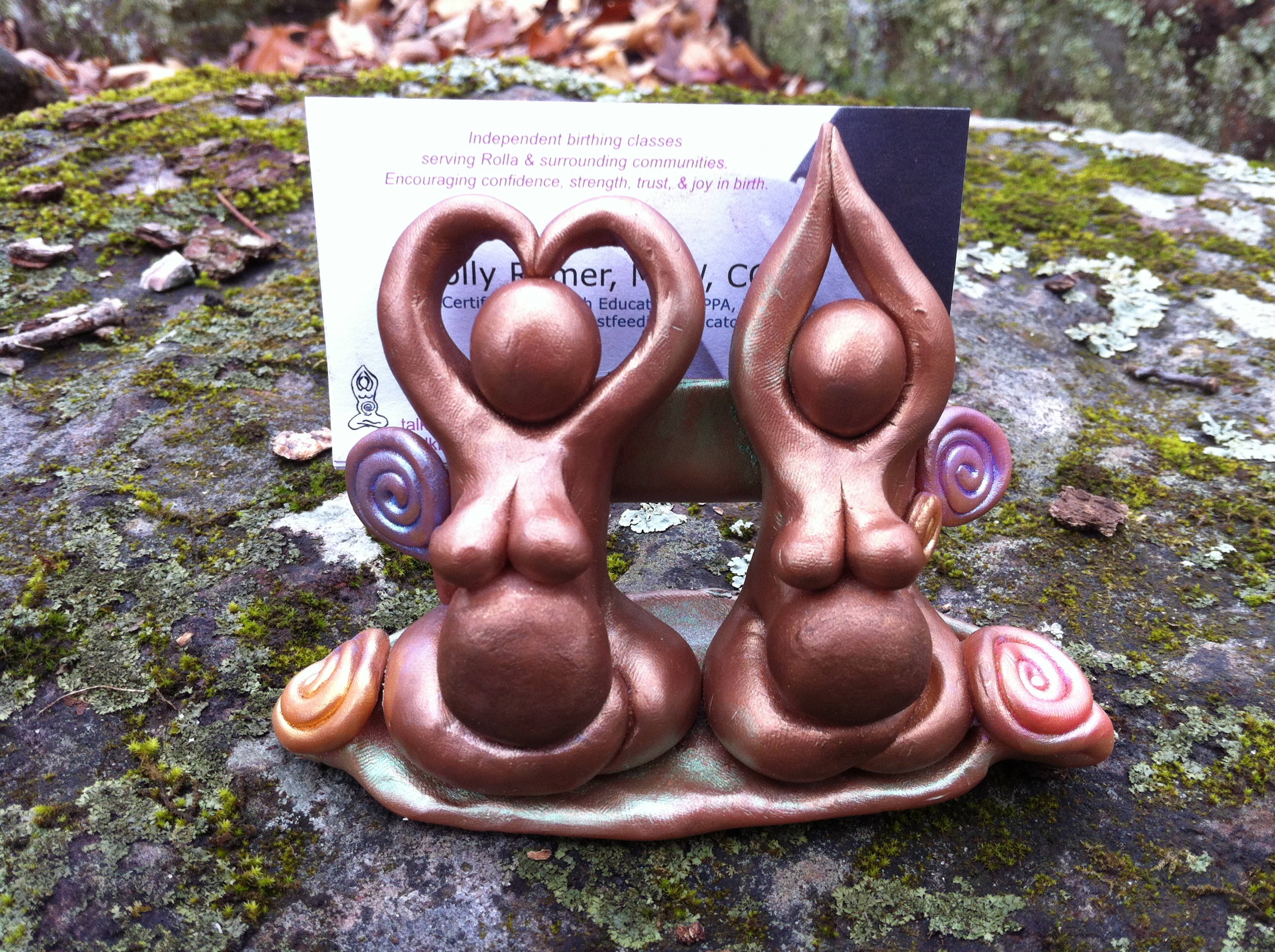
New experiment with a business card holder!

New experiment with a business card holder!

A lot of things caught my eye to share this week. A Faceboook friend is conducting research about birth professionals for her master’s thesis for Sociology:

Ahmie Yeung is working on her Master’s thesis in Sociology at Cleveland State University, under the guidance of Dr. Linda Francis. Ms. Yeung’s thesis research is looking at the attitudes of professionals in the United States who provide care for women and infants during pregnancy, birth, and the newborn period – also known as “perinatal care providers.” This can be anyone who is normally paid for the services they are providing during that time period. Examples of kinds of professionals we want to hear from are: doulas, midwives, OB/Gyns, Family Practicioners, and Pediatricians. This research will hopefully provide some insight into differences between types of providers that may be of use to future families seeking maternity and newborn care. Please ask those who are or have provided care for you to take the brief survey at http://tinyurl.com/perinatalcaresurvey and forward this request on to any other expecting/new parents or perinatal care professionals you may know.

And via Citizens for Midwifery:

Researchers are developing a new tool to educate pregnant mothers about their birth options. They need your help to learn what matters most to pregnant mothers. Pregnant or planning another birth? Please share!

Childbirth Preferences Study

The Spring issue of the Friends of Missouri Midwives newsletter is finished and available online! The theme of this issue was Siblings and we’ve got a variety of articles about including siblings at births 🙂

I got a little crazy with my ScoopIt page and went through over 100 articles of possible things to “curate.” And, I found some good stuff!

Which included this gem:

“To paraphrase Simon, everybody loves mothers, as long as they restrict their fertility to the outlines demarked by the social and moral norms of the age they find themselves in, and don’t have the audacity to give birth too young, or too old, or too regularly, or at too great a cost to the state, or to a child that they share with another parent of the wrong race or gender…”

And, an interesting article debunking the idea that women “forget” the feelings of childbirth. Memories are affected by the “halo effect” of the euphoria following birth, but the feelings are not actually forgotten:

I also thought of a couple of older posts of my own:

Talk to Your Baby

“Babies are primed to hear their mothers’ voices after birth. They expect to be snuggled into the maternal nest. Mammal babies expect to receive a warm breast and to hear comforting words in their own language…”

Birth as a Rite of Passage & ‘Digging Deeper’

“All cultures believe that women become better and more generous through the process of giving birth. That is why some cultures use words such as ‘sacrifice,’ ‘suffering’ and ‘labour.’ These terms can seem overwhelming and to be avoided’ however, seen from a different viewpoint, childbirth helps us to become strong, resourceful and determined…”

Birth & Culture & Pregnant Feelings

“Giving birth is not an isolated event in a person’s life. A woman births with both her mind and her body and participates in the attitudes toward childbearing of her culture and her family…”

Where are the women who know?

“…the most important thing is to never bring fear into the room of a laboring woman. ‘A woman must be completely open to birth a child,’ she says, ‘and so she is unable to defend herself from the thoughts of those around her…’”

And, a funny story from a couple of weeks ago:

“Visiting kid working on costume: “why do you have all this red fabric?” Me: “I think I planned to make placentas out of it.” Later, same kid: “this is an interesting color of yarn.” Me: “I got that to knit uteruses.” Kid: “maybe I should dress up like a scary doula.” 😉

Women’s (Birth) History Month

…we  need to grasp an honest understanding of birthing history – one that tells HERstory not HIStory.  Because birth is about Women.  It is a woman’s story. And we need to also understand why and how this herstory compels women to make the choices they make surrounding birth in the present day.

People become the product of the culture that feeds them.

It takes an immense amount of work to deconstruct cultural lies. Especially ones as insidious as the ones that we, as birthing women, have been fed for more than a century. We need to stop blaming women for their place in this System. Women are victims and by-products (not accomplices) of medicalized birth.

via That Joke Never Gets Old. Or Good

March 2013 039In honor of Women’s History Month, I’ve been considering the women in (recent) history who have changed the climate surrounding pregnancy and birth. While I’m sure Ina May Gaskin’s name would probably spring to the lips of most birth activists considering the theme, I felt like taking a quick look at the many other classic authors who have had a profound influence on my own ideas about birth. This thought, coupled with the fact that for some time I’ve wanted to write a post about “older birth books” that are still excellent reads today, has brought me to the present moment: a list of my favorite “old” birth books and the lovely women who wrote them. When I first started out in birthwork, I wanted to read “new” stuff—stuff that was “up to date” and “current.” After I read almost all of the “new” books, I started to cast my eye around for more and guess what I discovered? No surprise to many of you, but many of those “out of date” books with the retro-looking covers are still just as good and just as relevant as they were 20-30 years ago. Since medical information and science/evidence changes fairly rapidly and a pregnancy and childbirth 101 type book from 30 years IS more often than not completely inappropriate today, I had made the mistake of thinking ALL “old” birth books would be similarly irrelevant. Instead, many have a power and passion that is not easy to come by in any decade and that rouses the activism spirit, or stirs the heart, or challenges the psyche just as effectively today. Here are some of my recommendations (and of course, Spiritual Midwifery remains a good choice too, I just want to add some less usual recommendations!):

  • Transformation through Birth by Claudia Panuthos (also known for writing another great resource: Ended Beginnings: Healing Childbearing Losses). Written in 1984, this book “goes beyond” the scope of traditional birth books and really gets into some deep topics and insightful ideas. Previously written about here.
  • Special Delivery by Rahima Baldwin (another good, less well-known one from her is Pregnant Feelings, explored in depth in this post). Revised in 1986, this book is one of my favorite homebirth resource books. Though some segments are in fact, “outdated,” I still find this to be one of the very best (“old” or new!) resource books for women planning to give birth at home.
  • Open Season by Nancy Wainer (Cohen) in 1991 (how can 1991 be called “old”? Well, it is over 20 years ago and considering that many women giving birth today were born after that date, it IS old!). Nancy has a lot of FIRE and I love it. Some people have been known to call her “angry” or “bitter.” I call her…amazing. Her writing lights you up and calls you to action. She has incredible passion, fire, brightness, drive, and enthusiasm. One of her articles in Midwifery Today that is available online is also well worth the read: VBAC and Choice. And, I use some of her quotes in this post.
  • Birth Book by Raven Lang. This is the original counterculture birth book written in 1972 at the launch of what would become the modern movement to return birth to the hands of women.
  • Childbirth with Insight written in 1983 by Elizabeth Noble, is another one of the birth books that I say “goes beyond.” As a childbirth education, I especially benefited from her exploration of some of the failings of traditional approaches to childbirth education.
  • Lots of older books from Sheila Kitzinger are very good also. I particularly enjoy The Experience of Childbirth and Giving Birth: How it Really Feels.
  • My last recommendation for the moment is Mothering the New Mother by Sally Placksin (revised in 2000, which again sounds reasonably recent, but in reality is thirteen years ago–how is that possible?). It is classic must-read for doulas as well as any other birth companions. It is wonderful and I wish I would have read it before my own first child was born.

There are many more excellent books out there, both modern and “herstorical,” but I’ll leave you with these treasures for now. I’m grateful for each of these birth activists whose words and spirits helped deepen and refine my own passion for birth.

I long to speak out the intense inspiration that comes to me from the lives of strong women.” –Ruth Benedict


(Adapted from a post originally made at CfM several years ago.)

Book list: Preparing Children for Homebirth

MR_024The theme of our spring issue of the Friends of Missouri Midwives newsletter was Siblings. Happily, I got a lot of great content for this issue without having to write everything myself (sometimes I prepare issues that should be called “The Molly Issue”). Other than the letter from the editor, the only piece I contributed this time around was a short list of homebirth resources for children. If you have other good resources to add, I’ll gladly accept your contributions and update the list accordingly.

Here’s my list:

(Amazon affiliate link included)

  • Runa’s Birth by Uwe Spillmann and Inga Kamieth– my all-time favorite children’s homebirth book. The illustrations in this book are amazing; I love the tiny details like little shells/rocks on the windowsill and phone messages on the bulletin board.
  • Welcome with Love by Jenni Overend and Julie Vivas (also published as Hello Baby). It has nice, softly drawn pictures that glow with excitement and I really enjoy reading it to my kids.
  • Birth Day DVD by Naoli Vinaver—this one is great because the whole family is involved and older brothers join mom in the birth pool.
  • We’re Having a Homebirth by Kelly Mochel. This book is inexpensive, cute, and informative.
  • Being Born: The Doula’s Role by Jewel Hernandez and R. Michael Mithuna–really nice, detailed illustrations. Focus is on doulas and their job and the wide range of settings in which mothers give birth.
  • Mama Midwife: A Birth Adventure by Christa Tyner— this new children’s book about homebirth and midwifery is available to read for free online. It is cute, though kind of trippy. (I would have preferred it to be just people though, rather than a somewhat incongruous collection of animals.) LOVE the “birth song” at the end.
  • My Mommy’s Midwife by Trish Payne CNM—this one has children’s drawings as the illustrations. It isn’t about homebirth, but instead explains the role of the midwife and that she might come to a birth center, a hospital, or a home birth.

Books that I’ve not read, but would like to check out include:

  • Our Water Baby by Amy Maclean and Jan Nesbitt (water birth specific)
  • Mama, Talk About When Max Was Born by Toni Olson (home waterbirth)
  • Mama, Talk About Our New Baby by Toni Olson (companion book to the above about integrating new baby into the home)

MR_034

Tuesday Tidbits: Hemorrhage & Postpartum Care

March 2013 068“A bright red ribbon of blood weaves women together. We are blood sisters. We bleed and bleed, and we do not die. Usually.” –Susun Weed

These Tuesday Tidbits all come from the current issue of Midwifery Today. It is an excellent issue with tons of great information. As I referenced before, however, it is literally making my uterus ache and contract to read it since the theme is Hemorrhage. I’ve had to read it in small doses—5-10 pages at a time—and then come back to it later because the contractions/crampiness in my uterus and lower back get too intense for me to continue. I’ve always known that I have an intense response to blood, but this is the first time that I’ve really tuned in to the body memory my pelvic bowl still holds with regard to excessive postpartum blood loss. That blood loss is one of the things I don’t blog about, but today I’m writing about hemorrhage anyway (even though my back/uterus is starting up again as I type this). I guess you could call it “psychosomatic,” but I call it uterine memory.

Robin Lim’s article about postpartum hemorrhage in Bali includes a nice list of preventing and managing hemorrhage, one of the most significant being to minimize prenatal “scare” as much as possible. She writes about good prenatal nutrition and nurturing prenatal care and she also recommends this essential:

Build layers of support and trust for the mother in pregnancy and labor to help her cope with any social, psychological or spiritual challenges that she might be carrying…

Lim also says that laboring women use “qi” while laboring and birthing, which is our life force, our energy. She says that if women run out of “qi,” they have to dip into their “jin,” which is, “one’s God-given lifespan”:

“If a mother uses all of her qi to bring her baby out, then she has none left to bring her baby out and to close her uterus properly…As birth-keepers it is our job to maintain the qi of pregnant, laboring, birthing and breastfeeding mothers. The mother who maintains her qi and does not use up her jin can still be glowing and full of energy after having five children…the mother who has dipped too deeply into her jin, due to having depleted her qi, can be dangerously run down after having just one baby…”

While one might interpret this as being a little too esoteric for the practical mind and perhaps a tad too close to the victim-blaming “you create your own reality” thought processes that grate on my nerves, I really appreciated the idea of the responsibility of birth-keepers to guard mothers’ life-force energy and to act to preserve mother’s natural resources and reserves of strength.

On a midwifery education note, I love the writing of Sister MorningStar and I loved reading her thoughts on midwifery education, especially her observation that

…I’m dreaming of a way and time when women are as healthy as deer and mothers birth in the night before professionals arrive. Don’t misunderstand, I want and am willing to talk at any roundtable about midwifery education. We need everyone who cares about birth at such a table, including mothers. We need a global table with a global voice, passion and wisdom. I am not saying that birth and midwives are not made better with midwifery education, but I am saying that I have many questions about modern midwifery education and its effect on the experience of birth.

And, moving on to postpartum care, loved this quote from Darla Burns in an article by Allie Chee:

As Americans, we are under the impression that new moms are ‘Superwomen’ & can return to life as it was before baby. We must remember to celebrate this new mother and emulate the other cultures that honor new mothers by caring for them, supporting them, & placing value on the magnificent transformation she is going through. This is the greatest gift we can give to new mothers & newborns…

I appreciated that Chee included information about postpartum recovery from miscarriage and stillbirth as well, rather than assuming that postpartum care is a need only following a live birth. Consistent with my own experiences and observations she notes that, “in the case of miscarriage and stillbirth, a woman is usually sent home with no postpartum care instructions other than perhaps a list of negative signs to watch for that may indicate further complications with her health. In these instances, many friends and family members, often not knowing how to respond, leave the mother to grieve alone and to recover physically by herself.” Other interesting notes with regard to postpartum recovery after miscarriage or stillbirth include these two:

  • The depression and anxiety experienced by many women after a miscarriage can continue for years, even after the birth of a healthy child….
  • [with regard to postpartum recovery/”lying in” time in other cultures]…Amy Wong, an internationally acclaimed author and expert on postpartum writes, “Natural delivery requires at least 30 days of rest, while cesarean delivery, miscarriage and abortion require at least 40 days…”

Of course, this made me reflect on my own experiences. I feel fortunate that I was cared for with a lot of love and tenderness in my own miscarriage postpartum, with my mom bringing us food and providing child care and support, and my doula organizing and delivering meals from friends as well as offering a loving and supportive listening ear. That said, I was back in front of the classroom two weeks postpartum and felt like perhaps I was taking “too long” to get back to “normal.”

Definitely make sure to check out the complete issue! Midwifery Today is my favorite birth publication and is a treasure trove of information as well as personal experiences and reflection.

March 2013 040

Book Review: Fathers at Birth

(Amazon affiliate link included)

Fathers at Birth

by Rose St. John
Ringing Bell Press, 2009
Softcover, 255 pages
www.fathersatbirth.com

Reviewed by Molly, Talk Birth

Research has indicated that men at birth take on one of three roles: that of “coach” (20%), “teammate” (20%), or “witness” (60%). I’ve observed both in person and in birth films that this seems accurate. Many men seem to be likely to fall into an “observer” (witness) type of role during birth, instead of a more hands-on one. This can be disappointing to women, or to the men themselves, who pictured a more active role in the birthing process. Particularly in filmed births, I note the father of the baby sitting by a woman’s bedside and holding her hand, or patting her back at most.

Enter the book Fathers at Birth by Rose St. John. This book greatly expands the role of the father at birth to that of “mountain” and “warrior.” The mountain is strong, stable, calm, still, and supportive. The warrior is alert, responsive, focused, and protective of the birth space and laboring woman. He is there to serve.

In the opening chapter of the book, the author says, “If families are to remain strong, men and their roles as partners, husbands, protectors, and fathers cannot be considered dispensable or superfluous. both partners are diminished when the value of a man’s contribution is marginalized, minimized, or not acknowledged. When the man’s vital role during labor and birth is understood, both men and women are empowered.”

I greatly enjoyed reading a book that explores and expands the role of men at birth. In addition to serving as a helpful resource for men who wish to be active partners in the birth process, doulas will find helpful tips and tricks in the book, and childbirth educators will find language and ideas for reaching out to and better connecting with the men in their classes. It is a nice addition to any birth professional’s lending library.

Disclosure: I received a complimentary copy of this book for review purposes.

Review originally published at Citizens for Midwifery.

Tuesday Tidbits: Birth Pause

BirthontheLabyrinthPath_300x250-ad_1Last year I wrote about the birth pause, that timeless moment of inhaling after birth and exhaling into motherhood:

This moment when mother meets baby, earthside. Malloy notes that for many women, the moment of meeting is “hurried” by the immediate placement of the baby on mother’s chest. Many women are in a brief, transitional state almost like “birthshock” at this moment—it is the moment before the classic euphoria and “I did it!” hits. Mother often has her eyes closed and needs a second to breathe and re-focus on the world outside her deeply inner focus…

So, of course, when one of my Facebook friends posted the following thoughts last week, I asked her if I could quote her on my blog!

One moment that EVERY MOTHER remembers is the moment she first laid eyes on her baby. I am asking every woman to consider what that moment means to you and how she pictures it to be? Will it be in your home with dim lights and scented candles, and the loving arms of your partner embracing you both physically and emotionally at the moment of emergence? Or will it be in a brightly lit hospital room lying on your back while 6-10 strangers yell for you to push and stare at your vagina while you lay there feeling a bit helpless being strapped with cords to a half dozen medical devices?

Will your baby be touched first by your hands and brought up to your bare breasts as he fills his lungs for the very first time? Or will your baby be caught with a cold latex glove, lifted mid-air with glaring lights and strange sounds all around him? Will his oxygen supply and blood be stolen from his body with a quickly cut cord as he is swept away and rubbed by unfamiliar hands. Will he be swaddled so tight he cannot feel his mother’s warm skin when she holds him at her breast?

Think these are details that do not matter in the grand scheme of things? Think again… PLEASE! Because… BIRTH REALLY DOES MATTER. Know where and with whom you desire to give birth. Do the necessary research to make that happen! You DO have options, so do NOT let ANYONE tell you that you don’t. Birth matters. Make your decisions wisely. You WILL remember that moment! –Pamela Brott, Beginning at Home

And, then I read a great little post from Rebecca Wright about being a birthkeeper rather than “catching” babies:

As a birth keeper it’s not my place to catch babies. It’s my place to hold space. It’s my place to support the mama-baby dyad so that they birth in power and remain undisturbed as far as possible in this process.

One of my friends wrote an article some time ago about catching your own baby. She called it “squatter’s rights” and concluded with something to the effect of, “and then I reach down and catch what’s mine.” It gave me chills. Alaina is the only baby that I caught myself and it was the most potent moment of any birth. Sometimes I still can’t believe I did it.

And, on a related note, I also shared these two articles via ScoopIt:

Active birth positions for the hospital–Effective Birthing Positions | Taking Charge of Your Health

Some musings about mental comfort zones and birth–Planning a Childbirth: Is there a Comfort Zone and Should You get out of it…

BirthontheLabyrinthPath_300x250-ad_2

Timeless Days: More Postpartum Planning

“Understand that the tremendous energy going through you during birth is the same sort of power as the force of ocean waves moving towards shore. Know that just as a bird knows how to build its nest, and when to lay its eggs, you too will build your birthing nest…” –Janice Marsh-Prelesnik (The Roots of Natural Mothering)

So, after writing about postpartum survival tips and about what to share with mothers-to-be about the realities of motherhood, I found some more postpartum notes saved in my always overflowing drafts folder from the sidebar to Time in a Bottle by Beth Bailey Barbeau in Spring 2011 issue of Midwifery Today (p. 44).

  • Encourage realistic contact between mothers-to-be and new mothers to help them shape more realistic expectations of postpartum life.” Yes! This is why I strongly encourage mothers to come to LLL meetings before they have their babies.
  • “Use language that shares your expectations and gives parents a vocabulary to articulate the demanding needs of their new infant.” Like Barbeau, I find it helpful to bring in the concept of the fourth trimester. The first three months are the “fourth trimester” during which baby pretty much wants to live on mom’s chest and replicate the womb (i.e. almost constant feeding–like the umbilical cord–constant holding and lots of motion, like being in the uterus, as well as being able to hear your heartbeat). After the fourth trimester passes, babies “wake up” even more and start really interacting with the world. I explain in a light-hearted way that even if you hold your baby for 12 solid hours a day following birth, that is a 50% reduction in what she is used to. And, I let them know that while the adult’s brain thinks, “how can this baby be hungry, I just fed him 30 minutes ago?!” The baby’s brain thinks, “it is has been 30 minutes since I’ve EATEN ANYTHING!!!!!” I also reinforce the idea that a baby that wants to be held and snuggled and nursed is a smart baby, not a manipulative one. And, of course, I also describe mother’s body as baby’s natural habitat after birth.
My husband and first baby during the first tender postpartum days.

My husband and first baby during the first tender postpartum days.

  • Remind new parents that most cultures around the world have some sort of ‘lying in’ period, typically lasting 30-60 days or more.” Truly the things that support both a healthy birth and healthy postpartum are contrary to the expectations and habits of mainstream society. See Kathleen Kendall-Tackett’s handout on how other cultures prevent postpartum depression.
  • “Matter-of-factly inform the family, especially the extended family (if you have your client’s permission), that mama is going to be encouraged to stay in bed for a while after the birth and that she’s not ‘being lazy.'” Mothers can have a lot of difficulty giving themselves this permission and it can help to have the acknowledgement and encouragement to family members coming from an outside source.
  • “Remind them that a true six-week postpartum window allows for the placenta site to fully heal and supports minimized bleeding and stronger recovery.” An excellent tip for educators and doulas from Barbeau is to illustrate size of placental site healing area with hands like small dinner plate—if this was outside the body, how would you care for yourself
  • “Encourage preparation for postpartum success!” I write about the idea of postpartum expression instead of postpartum depression. See ample past articles about postpartum planning and a nice specific story about creating a nest here.

“Although pregnancy and birth is a richly intuitive and instinctive process, a woman will prepare her ‘nest’ and birth according to the style of her culture, in the same way that a particular species of bird will build its nest with whatever is available.”

–Pam England

Let’s help make sure her nest is rich, resourceful, blessed, and beautiful!