Archives

Young Moms: Making Childbirth Education Relevant to Them

This guest post is part of my blog break festival. The festival continues throughout December, so please check it out and consider submitting a post! Also, don’t forget to enter my birth jewelry giveaway. This guest post is about making childbirth education relevant to young mothers. I have a previous post about the classes I taught for a local Young Parents program (some handouts are included): Young Parents Program Prenatal Classes. Another related post, though not specific to childbirth education, is this one about Rites of Passage Resources for Daughters & Sons. If you’re interested in providing birth education specifically for young parents, you might also enjoy checking out CAPPA’s Teen Educator certification program.

Young Moms: Making Childbirth Education Relevant to ThemLoriblessingway 117a

by Keri Samuelson

In this day and age, encountering young mothers is common. With so many of our daughters fitting into this category, updating the ways we educate these expectant mothers should be a top priority. Young people may think they can handle everything on their own, but the truth is that they may still need to learn the basics when it comes to childbirth. They need to know what to expect and how to react. Here’s my take on how to tackle the experience:

Update The Imagery
We have many tools at our fingertips, but some of them require a bit of updating. For instance, it’s imperative to revamp the video and online databases that we frequently employ in hospitals, high school classrooms and the like. Young people today simply do not relate to the characters depicted in movies from the 80s or 90s. They want to see people they can relate to experiencing what they themselves are about to. Do yourself a favor – avoid these outdated resources, and make suggestions to libraries or clinics that still use them.

The Whole Truth
Tell girls the truth – this will need to encompass more than just some action shots of women giving birth. If you are for instance sponsoring a program for expectant mothers, invite women who have recently given birth, and have them detail everything from the beginning to the end of the laboring process. This way, mothers-to-be will have fewer surprises in tow. Also, make sure there is time for questions, and be sure to allow questions to be asked confidentially (on slips of paper, for instance, that you collect and read without announcing the asker), so that the session is truly as relevant as possible.

Technology
Show them that birth is unlikely to be like the shows they watch on television or the movies that they have seen. It sometimes can take many, many hours. It can be exhausting and might be very painful, but it is also very normal and usually safe.

Celebrity Guest Spots
Information is a wonderful tool, but the presenter of this information is what can make or break its effectiveness. In this day and age, celebrities are given the floor more than medical professionals, and so it can be a wise decision to have celebrity mothers give their own testimonies of and their experience. Obviously, not everyone has access to a celebrity, so perform simple Google searches for celebrities you know of that your clients might identify with, and see what they have to say about motherhood on their website, or in interviews. If this still doesn’t work, look for local superstars whom you know have given birth – athletes, state officials, teachers, etc. that you know your young clients will look up to and listen to.

These are, of course, just a few ideas for making childbirth education a little more relatable to youth that are expecting a child. It begins with accurate information, presented by someone who they feel they can trust, and delivered in a manner that doesn’t sugar coat the process either.

Keri Samuelson writes about health promotion, motherhood and helping young people find the best accelerated nursing programs.

Guest Post: Nine Reasons to Choose Independent Birth Eduation

This guest post is part of my blog break festival. The festival continues through December, so please check it out and consider submitting a post! Also, don’t forget to enter my birth jewelry giveaway.

I’ve been an independent childbirth educator since 2005. For many years, I’ve taught one-on-one classes to local couples and it has been wonderful to connect on a personal level with such individualized classes. Now, I’m teaching Birth Skills Workshops in collaboration with Rolla Birth Network. I’m still an independent educator—one not employed by any other organization or hospital—but now, rather than exclusively one-on-one, small groups of couples come together to practice hands-on skills for birth in a private, comfortable setting. I previously explored my own take on why choose independent birth education and here are some additional reasons!

Nine Reasons You Should Choose Independent Birth Education

by Jan Haley

Whether you still have a few months to go before the birth of your baby or the due date is right around the corner, it’s not too late to look into some independent birth education. Why are these educators an excellent decision? Read on to find out!

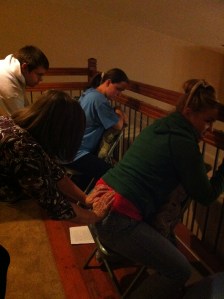
At a recent workshop.

At a recent workshop.

Personalized Attention
In a class, everyone has to work on the same components at the same time. However, with independent birth education, the program is tailored to your own needs. If you already know the answer to a particular question, you need not spend countless minutes listening to a lecture on the subject matter.

Personalized Questions
In addition to not hearing information of which you are already well aware, independent birth education allows you to ask the questions that pertain to your specific situation. Whether it’s about the birthing process or how to handle your baby immediately after birth, the concern will be addressed.

Personal Information
Let’s face it: when it comes to giving birth, you need to be comfortable revealing some personal information about yourself. However, that doesn’t mean it must be done in a room full of strangers. Working one on one with someone allows you to still maintain a level of privacy.

Generalities
In a hospital program, the educators might have to answer questions in a very diplomatic way, because that is what their work policy requirements. When it comes to independent education though, no such requirements exist, unless the person is attached to a hospital or other type of program.

A Customized Plan
Many mothers write out a birth plan, but some of them may feel forced into certain decisions. An independent birth educator will know a lot of information and will be able to offer many details and ideas for structuring a birth plan. A good independent educator will also remind you that a birth plan is not a substitute for good communication with your health care provider!

Partners
Some women choose to give birth at home. Doing so can feel like a lot of pressure on dads, so it’s common to ask independent birth educators for referrals for doulas to be present and support the process (some independent educators are also doulas and may be available to attend births). Birth partners can also feel totally comfortable asking questions in a private setting and they will also learn many useful comfort measures to add to their own labor support “toolbox.”

For Single Moms

Speaking of going it alone, it’s important to address single mothers when it comes to independent birth education. Being pregnant alone can be a really lonely road, and these educators provide not only an instructor, but a friend to such individuals.

Formal Instruction
Some educators are certified. Therefore, they are not only providing their personal experience as mothers, but also information that was garnered from a reputable course or program, so you’re really gaining the best of both worlds.

Confidence

It’s easy to feel embarrassed about giving birth or anxious about everything that is going to happen after the baby is born. Fortunately, independent birth educators are able to give women the boosts of confidence that they need, because as they get to know you, they can help you figure out what works best for you.No matter what plan you ultimately wind up choosing for your birth, be sure to at least consider independent birth education to have a method that is tailored to you. I tried this track, and I never looked back.

Jan Haley writes about motherhood, health and more. A home nurse, she enjoys writing about the profession and helping aspiring nurses find the best RN-to-BSN Programs for them.

As dear as breathing…

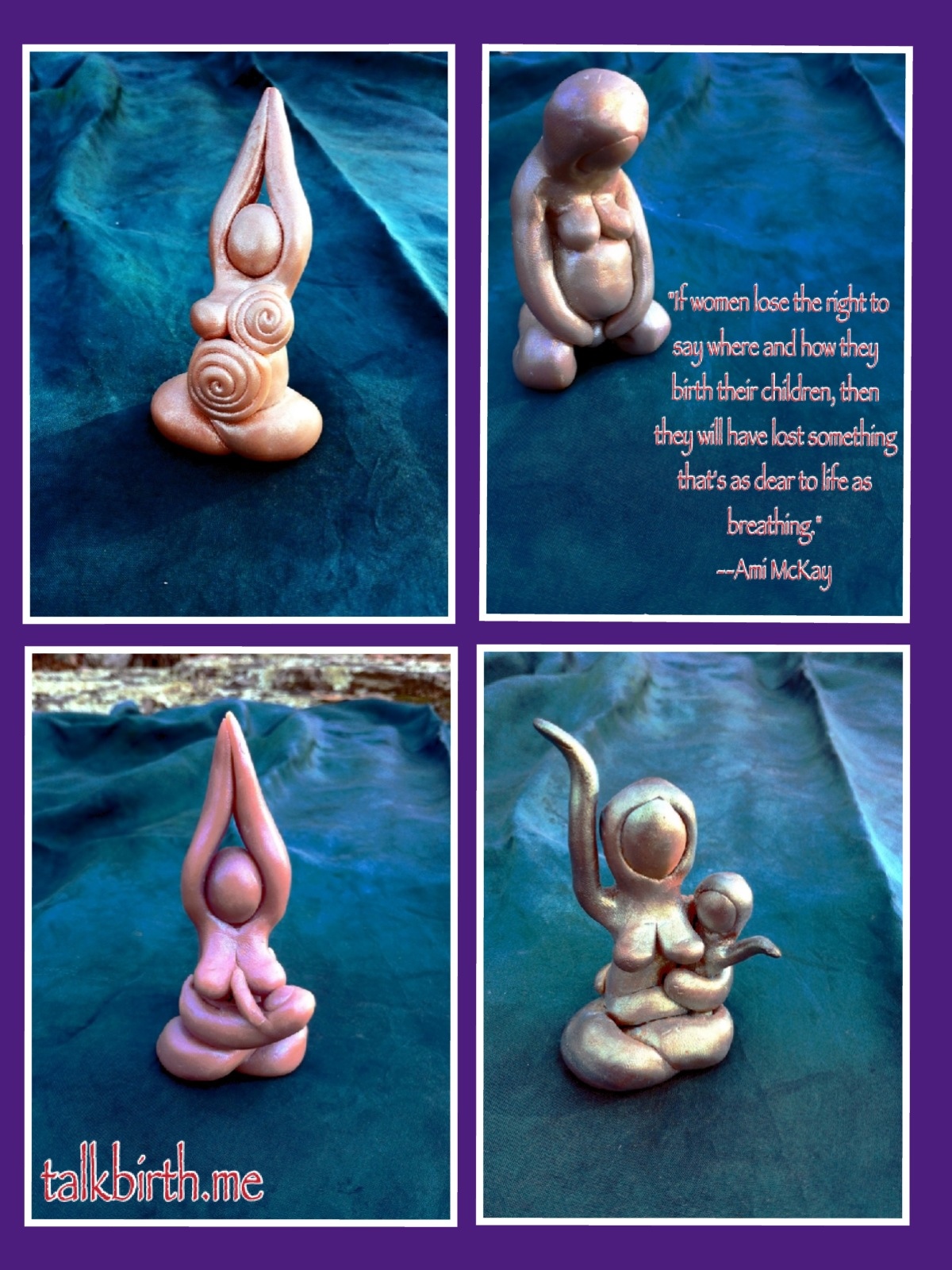
20121126-151448.jpg

“If women lose the right to say where and how they birth their children, then they will have lost something that is as dear to life as breathing.” –Ami McKay

“Mothers need to know that their care and their choices won’t be compromised by birth politics.” – Jennifer Rosenberg

Birth politics have been on my mind this week as I’ve come across various debates from within the birth profession about the regulation of midwives and the question of licensure, and then also the seemingly ever-present critiques of homebirth from outside the homebirth community. I don’t feel as if I have time lately to fully follow all the issues, but Citizens for Midwifery’s recent response to ACOG’s newest homebirth and maternal rights smackdown contains some important thoughts:

AJOG editorial rejects the ethic that autonomy is a fundamental human right

This article represents a serious attack on home birth and on patient centered care in the United States. The attack is based on poor research and runs roughshod over established rights to bodily integrity…

…not only does the article attack home birth, it also represents an attempt to “export” to the rest of the world a position that the obstetric profession, not mothers, should have the final decision on birth, at a time when that isn’t even legally defensible here in the United States…

…One contradiction stands out as the authors call for “safe, respectful, and compassionate” hospital delivery. No hospital birth can be truly respectful if the birth is happening in the hospital because the physician disrespects the woman’s right to an alternative and has rigged the system to eliminate access to all legal alternatives…

via Citizens for Midwifery

Related thoughts:

Maternal-Fetal Conflict?

The Illusion of Choice

“Woman-to-woman help through the rites of passage that are important in every birth has significance not only for the individuals directly involved, but for the whole community. The task in which the women are engaged is political. It forms the warp and weft of society.” –Sheila Kitzinger

Continuing Birth Education (Free Webinar Round Up)

I have a good friend who has become very interested in training as a doula. I love sharing information and resources with excited women new to the birth work field! It is rejuvenating and reminds me my own enthusiasm for women and birth. When I shared this same sentiment on Facebook a fan commented with this lovely observation: “Birth is an ever-evolving subject, and there are as many different ways to do it as there are fingerprints!! How could anyone get bored in the birth work field?? I love it!! It keeps me in the Presence of Now and reminds me of the Sacredness of Life…” 🙂

Anyway, I’ve been collecting books like crazy to lend to my friend (just a word: never ask me for a book about anything unless you are ready to be overwhelmed with options!) and doing so reminded me of some free webinars that have crossed my desk(top) recently as well as some other, older continuing education resources for birth professionals or aspiring birth professionals. I always go to books first and to written information. Love it. Can’t get enough words! But…many people learn better through other mediums. Here are some non-book, free possibilities for self-education in birth work:

Edited to add another free webinar from ICEA (with paid contact hour option) that I just learned about:

Prenatal Fitness Webinar
 Join us online 
 Thursday, December 13, from 9-10 pm EST for this new educational offering
worth 1.0 ICEA Continuing Education Credit!!
 
This offering is free for all participants to audit.
The continuing education credit may be purchased after viewing the webinar for $35.00 by clicking here!
Once the credit hour is purchased, print out your receipt for confirmation of your hour earned!

A reader also commented to share that she is enrolled in a free Coursera course on contraception (she also took one that looks great about community change in public health!). There are a variety of interesting looking courses available from well-known institutions in the Coursera offerings under Health & Society and Medical Ethics.

And, for those who do well with auditory learning, I have some podcast recommendations that are available on an ongoing basis:

La Leche League International offers a series of free podcasts, my favorites being:

And, the Motherlove blog has some awesome resources too, including:

And, finally there are some great free classes and certificate programs available from Global Health eLearning Center. Many are designed for global audiences and are not specifically geared toward doulas (or even midwives, but more of health workers in general). I particularly enjoyed this class: Healthy Timing and Spacing of Pregnancy

Enjoy! And, if you have favorite recommendations to add, please let me know! (free, please)

Due to reader request, a book recommendation post will soon follow! Past book recommendations can be seen in this post, as well as a postpartum list, and also in my book reviews section.

Holistic Women’s Health Emissary Training

See on Scoop.itTalk Birth

Calling all Inspired Women, Life Coaches, Nutritionists, Bodyworkers, Massage Therapists, Dance Teachers, Yoga Instructors, Health Educators, Birthworkers, Holistic Health Professionals, Women’s…

“The Holistic Women’s Health Emissary Training Curriculum Includes:
Part 1: Ecstatic Women’s Cycles

Conscious Anatomy and Geometry for Women’s Health
The Power of a Women’s Womb for Manifestation & Abundance
The Spirit of Our Womb Health for Sensuality & HealthWomb Breathing and Meditation for Healing and AbundanceFertility Awareness & Natural Menstrual Health
The Womb’s Important Role in the Wisdom Years
Our Blood Mysteries as Rites of Passage for the Ecstatic Feminine…”

See on www.karamariaananda.com

I’m really intrigued by this training program and I’m toying with the idea of signing up for it! I have a tendency to be somewhat of a training addict though. My first training/certification was as a breastfeeding educator. I followed that with postpartum doula training, LLL Leadership, childbirth educator certification (first with ALACE and then later I also certified with ICEA and CAPPA), and birth doula training. I’m certified as a prenatal fitness educator and trained as a prenatal yoga teacher. I’ve also trained as a birth art facilitator with Birthing from Within. How many of these things am I actually doing?! Ah yes, good point…

BUT! I don’t think education is ever “wasted” and I am informed in my life and writing by all of my past trainings (and, as I re-read my list above I see that in some form or another, I actually AM still doing almost all of these things currently). Also, as I’ve mentioned before, I’m kind of transitioning away from exclusively doing birth work and into “whole women’s life cycle” work and have been for a while now. I still haven’t written a blog post about it, but I became ordained as a priestess in July and I’m focusing a lot of energy on that work now—on women’s rites of passage and on ritual and ceremony planning/facilitation. I feel like this holistic women’s health program may be a bridge between the two…

That said, this is actually just a total experiment in making a blog post via ScoopIt. Did it work?!

The Of COURSE response…

“As long as women are isolated one from the other, not allowed to offer other women the most personal accounts of their lives, they will not be part of any narratives of their own…women will be staving off destiny and not inviting or inventing or controlling it.” –Carolyn Heilbrun quoted in Sacred Circles

I recently finished taking a class in Ecofeminism, which makes connections between the exploitation and domination of women and the exploitation and domination of the planet. Naturally, as I also did with breastfeeding as an ecofeminist issue, I made many connections between the theme of the class and birth rights for women. The author of the book Ecofeminist Philosophy, Elizabeth Warren explains that when you are part of an unhealthy social system, you are likely to experience predictable, even “normal” consequences of living in that system: “This element of predictability explains the appropriateness of what I call the ‘Of course’ response: ‘Of course, you feel crazy when men say it’s your fault that you were raped, or that you could have prevented it.’ ‘Of course, your life has become unmanageable…'” we live in a culture that expects women to do it all and to always love parenting. If we look at our mainstream culture of birth as an unhealthy social system, I find the same response is appropriate. You really wanted to have a natural birth and then your doctor scared you into having an induction and you ended up with an epidural, of course you feel like you ‘failed.’ You feel healthy and beautiful, but now your doctor tells you that you’ve “failed” the GTT and are now “high risk,” of course, you feel stressed out and…like a high risk “patient.” You tried really hard to labor without medications, but you were “strapped down” with IV’s and continuous monitoring, of course, you felt like a trapped animal and like you had no other choices but medications. Of course, you feel upset and discouraged that your baby is ‘rejecting’ you and your breast after having been supplemented with bottles in the nursery. Of course, you are crying all the time and wondering if you are really cut out to be a mother, when your husband had to return to work after two days off and you are expected to be back at your job in five more weeks. And, so on and so forth.

“The ‘Of Course’ response affirms that those who feel crazy, powerless, alone, confused, or frustrated within unhealthy systems such as patriarchy are experiencing just what one would expect of them.” What the model of medical birth as an unhealthy social system reveals is that “no matter where one starts on the circle…one eventually comes round to one’s starting point. The circle operates as an insulated, closed system that, unchecked and unchallenged, continues uninterrupted…” How does one break free of an unhealthy system? “Getting the right beliefs by rearranging one’s thinking is an important part of the process, but it is not enough.” [emphasis mine. Here, Warren goes on to explore the issue of rape, but I have adjusted her words to be about birth instead] One can have the “right beliefs” about the prevalence of unnecessary cesareans, one’s rights as a childbearing woman, and the institutional nature of birth in our country and still experience an unwanted and unnecessary cesarean section. One can understand connections among faulty belief systems, language that devalues women, women’s bodies, and the birth process, and patriarchal behaviors of control and domination and still witness the catastrophic impact of this domination. “So, even if one must start with oneself and one’s belief system, one cannot end there. Since the problem is systemic, the system itself must be intervened upon and changed—by political, economic, social, and other means.” –Karen Warren in Ecofeminist Philosophy, p. 211. (emphasis mine)

Sometimes I honestly feel like I am one of the few people who really notices or labels the powerful systemic context in which women give birth in America. A lot of pregnancy and birth books and pregnancy and birth bloggers focus on individual responsibility and “education.” If women are always expected to “stand up for themselves” in the birth room and “get educated” so that they, personally, can prevent themselves from having unwanted interventions, of course our rates of unwanted interventions continue to rise.

“Through the act of controlling birth, we disassociate ourselves with its raw power. Disassociation makes it easier to identify with our ‘civilized’ nature, deny our ‘savage’ roots and connection with indigenous cultures. Birth simultaneously encompasses the three events that civilized societies fear–birth, death, and sexuality.” –Holly Richards (In Cultural Messages of Childbirth: The Perpetration of Fear,” ICEA Journal, 1993)

20121112-141422.jpg

Call for your experiences – the impact of birth trauma and beyond | Rebecca A. Wright

An online friend and sister birth professional, Rebecca Wright, emailed me recently to share some information about an important new project that she is launching:

I’m planning to write a book on birth trauma that will centre on women’s voices and experiences. It’s not going to be so much dwelling on birth trauma (though there will be an element of that as I want people to understand that whether an experience was ‘objectively’ traumatic or not, it can have an enormous impact – and I think a lot of women say to themselves, ‘my experience wasn’t as bad as some others I hear about’ and so don’t feel able to validate their own feelings and experience). What I really want to focus on is a) the impact of birth trauma (or of ‘difficult’ birth experiences) on mothers, babies, partners, families; b) the many individual paths to healing from birth trauma that people have walked; c) rediscovering your power in birth and motherhood following a difficult or traumatic experience.

She’d like to reach out to mothers, but also their partners, and doulas (midwives, nurses, doctors, etc.) and she’s also interested in hearing from practitioners of whatever sort who work with women and families around these issues.

Full details are available on her blog:

I want this book to be made of women’s voices (and men’s as well). I want it to be a place where the unspoken is spoken clearly and openly. I want it to be a book that honours the sacredness of each birth journey, and each path to healing. I want it to be a book that opens doorways for those who are feeling lost or alone so that they can find hope and a way forward that is suitable for them personally. Most of all, I want it to be a book that shows that it is possible to reclaim your personal power in birth and mothering following a difficult or traumatic experience in birth.

via Call for your experiences – the impact of birth trauma and beyond | Rebecca A. Wright.

Make sure to check out her project and see if you can lend your voice to what sounds like a beautifully healing book!

And, speaking of birth trauma, a while ago, I also received a question via Facebook asking for recommended resources for healing from traumatic birth. Check out the series on Giving Birth with Confidence about traumatic birth prevention and recovery. Or, look into Solace for Mothers.

Miscarriage and Birth

Last month a fellow birth professional asked a question about whether it was possible to have postpartum depression after miscarriage. My response was as follows:

I think it is crucial to remember that miscarriage is a birth event—sometimes a very, very, very early birth event, but reproductively speaking that is what it is! Since we don’t have a better vocabulary for pregnancy loss in our culture, socioculturally speaking we tend to class it as “something else,” but in most ways it isn’t. A soul (or fertilized egg) touches down in a woman’s womb. Her hormones and all other physiological systems are impacted and feel its presence. The embryo/fetus/baby stays for a time and when it leaves her body, the uterus must contract and the cervix must open and the woman’s body must open to allow its passage. Her body, mind, emotions, and spirit are all affected (to varying degrees). In this way, miscarriage and full-term birth simply exist on a continuum of possible birth outcomes and are all birth events whether the pregnancy lasts five weeks or forty-two weeks.

Miscarriage as a birth event is one of my “pet” subtopics within the wide range of reading about miscarriage and quotes that respect the birth-miscarriage relationship always catch my attention. After the birth-miscarriage of my own third baby three years ago today, I found the following quote in a back issue of Midwifery Today:

“Miscarriages are labor, miscarriages are birth. To consider them less dishonors the woman whose womb has held life, however briefly.” –Kathryn Miller Ridiman

It meant so much to me and I returned to it again and again. I believe I was also responsible for introducing the quote to the internet, because since I first typed it up, I’ve now seen it floating around on many other websites and blog posts. And, in a full circle moment, my own miscarriage-birth story was published in Midwifery Today in 2011. I also latched on to a quote from the book Wild Feminine saying, “though it is not always recognized as such, miscarriage is a birth event.”

20121107-013453.jpgChristine Moulder in the book Miscarriage: Women’s Experiences and Needs quoted another mother: “Although I had a miscarriage technically, I don’t feel this. I went through labour. It was incredibly painful but my husband was with me and it was almost a happy occasion.” I agree, with my own birth experience feeling just as “legitimate” as either of my prior labors or my subsequent birth. I And, actually even more so in that Noah’s birth became possibly the most defining moment of my womanhood. I would also describe it as a spiritual experience or “awakening” of sorts in a way that has profoundly influenced me, shaping my future work with women and my life goals. I return to this experience again and again and continue to draw both strength and insight from it.

Returning to Moulder’s book, later in that section, the author says:

With the exception of women who have a late missed [miscarriage] there will be a baby that has to be born. The baby may or may not have died prior to the miscarriage. As with full-term birth, the waters must break, there will be pains and contractions and the cervix must dilate for the baby to leave the womb. Of course the baby will be smaller, in some cases much smaller, but it is essentially the same process and this comes as a great shock to many women.”

And this is absolutely true, but also not something that is mentioned in very many miscarriage books. This shock of experiencing miscarriage so clearly as a labor and birth rather than as “something else” is what led me to describe my wish for miscarriage doulas on my now-complete miscarriage blog:

On a pregnancy loss message board that I read, a mother posted asking if she was the only one who experience her miscarriage as painful (because no one mentioned it being painful in the stories she had read and she was very shocked by the pain involved). I had a couple of thoughts in response to this question. I also shared my “favorite” miscarriage-birth quote: “Miscarriages are labor, miscarriages are birth. To consider them less dishonors the woman whose womb has held life, however briefly.” (Kathryn Miller Ridiman).

I do think the amount of physical pain probably depends in part on where you are in the pregnancy. Since a lot of women experience very early miscarriages (less than 6 weeks), I think that is perhaps why you don’t hear them talk as much about pain because the baby is still so small. OR, because a lot of women end up having D & C’s and thus do not go through the “natural miscarriage” experience, perhaps that is why pain doesn’t figure heavily into narrative. Or, maybe because there is so much emotional pain involved as well, the physical pain gets overshadowed? That said, my 6-week miscarriage was not physically painful at all (not that it couldn’t be for some women, of course). However, my miscarriage at nearly 15 weeks was indistinguishable from a full-term labor. It was just the same, except with the addition of MASSIVE blood clots following the baby. I value his birth as another birth experience in my life, but at the same time I am SHOCKED that miscarriage is so often overlooked as a birth event that requires tenderness and support (where are the miscarriage doulas and midwives?! While in a way, I feel proud of myself for have an “unassisted” birth-miscarriage, I could have used the care of a knowledgeable, caring woman rather than to just be left on my own trying to gauge how much blood loss is normal, etc.)

So, what about “miscarriage doulas” as an idea? I have seriously thought about becoming one. I am trained as a birth doula, but have no interest in actually working as one, but being a m/c doula does interest me a lot. I feel like adding a section to my business website (I’m a childbirth educator) that says, “having a miscarriage? Call me and I’ll come over and rub your back and bring you things to drink…”

I decided two things shortly after my first miscarriage: one, that I was going to write a book specifically about how to deal (i.e. “what to expect when you’re having a miscarriage”), because I felt very betrayed by having this huge wealth of pregnancy, birth, and midwifery books all around me and NONE of them had the information I was looking; And, two, that if anyone was ever to tell me she was in the process of miscarrying I would go to her right away (unfortunately, it seems like people feel like they have to tough it out alone or don’t want to “bother” anyone and so only tell after the fact). Well, if she wanted me to go, obviously, not against her will. And, that would include going to the hospital with her if she needed a m/c doula there, not just for “home miscarriage.” –Originally posted as Miscarriage Doulas…on June 29, 2010

This interest and post led to the co-founding of the organization The Amethyst Network, originally intended to train the miscarriage doulas I’d longed for during my own experiences. TAN took some time getting off the ground and in the meantime the thoroughly amazing organization Stillbirthday independently arose in vibrant support of women and is now skillfully fulfilling the mission of training loss doulas.

Thankfully, I had already read a long message board thread about, “what exactly do you see with a miscarriage” long before I ever had a miscarriage experience of my own, so I did know to expect mine to be somewhat “like labor” and not to be a “heavy period” (OMG, I wanted to scream when I saw miscarriages described like that in books over, and over, and over again! Though, then when I had my second miscarriage and it WAS, in fact, like the mythical “heavy period,” and so then I understood a little better why that was a prevalent descriptor.)

On Pregnancy and Infant Loss Remembrance Day this October I was out-of-town, but I shared past blog musings on jagged peace, acknowledging that the legacy of miscarriage is profound. I also linked to a friend’s story: Mormon Monkey Mama: A Few Thoughts on Miscarriage and to my own birth-miscarriage story: Noah’s Birth Story (Warning: Miscarriage/Baby Loss).

And, I updated my Facebook status with the following:

Today is Pregnancy and Infant Loss Remembrance Day. Babyloss is part of the spectrum of the childbearing year, and miscarriage is one type of birth experience that a large number of women experience. I appreciate the opportunity to recognize this, rather than to keep a lid on our “negative” stories of grief, loss, and a multitude of complicated emotions. Today I think of my own lost baby N and also my lost babystart. I also think of all the women who do not conceive and birth the rainbow babies they so long for. I also think of a friend whose baby died last month. And, I think about and appreciate my friend/doula from Peaceful Beginnings Doula Services who helped me so much to heal from loss and who has her own babystart to remember today as well.

There are many helpful babyloss organizations and one that was particularly helpful to me was Angel Whispers in Canada. They mailed me a birth certificate for my baby (with an official looking gold seal). It meant a lot to me because it acknowledged that he had lived and was born. It hangs in our hallway and it is amazing to me how meaningful a simple, small act of kindness from strangers can be.

Today we recognize the third anniversary of the birth-miscarriage of our little son Noah. I post not for “sympathy” or condolences, but because memories are important, and because even though he only stayed with us for a couple of months, he shaped our lives and in a very real sense is responsible for the life of Alaina. 20121107-013748.jpgI share because his birth and the long, slow journey of grief was a pivotal, transformative point in my life as a mother/woman and because he helped change my destiny. And, I share because there are SO many loss mamas out there with stories of their own to tell and I hold them all in my heart and wish them all the love, caring, and wisdom that I was lucky enough to receive, both three years ago and ongoing today! ♥

There is a sacredness in tears. They are messengers of overwhelming grief…and unspeakable love.” –Washington Irving

“Remember our heritage is our power; we can know ourselves and our capacities by seeing that other women have been strong.” – Judy Chicago

“Change, when it comes, cracks everything open.” ~Dorothy Allison

“She’s turning her life into something sacred: Each breath a new birth. Each moment, a new chance. She bows her head, gathers her dreams from a pure, deep stream and stretches her arms toward the sky.” –from a journal cover

—-
Related posts:

My memories of this time in 2011: Sand Tray Therapy
From 2010: Pregnancy Update
And memories of the anniversary of the second worst day of my life
And, some past thoughts about Honoring Miscarriage

Blogaversary birth jewelry giveaway!

***This giveaway is now closed. Sarah is the lucky winner!***

This month I not only hit 300,000 hits on my blog, but it is also my blogaversary! Five years ago, on October 29 I started this website with my first post. I had no idea where it would go from there! I know there are many other more popular bloggers with lots more hits than I have (especially in FIVE years!), but I feel very happy and comfortable with my level of traffic here and the contribution I am able to make. And, interestingly enough, over 150,000 of those hits were during this year alone. And, during just this month I had more hits than in my entire first year of blogging! That slow and steady progress and consistent presence makes me feel really good about my work here. So, to thank my readers for reading and to celebrate my blogaversary and the 300, 000 hits mark, I’m going to offer a giveaway of a beautiful Birth Dancer pendant by Wellstone Jewelry!

20121019-011719.jpg

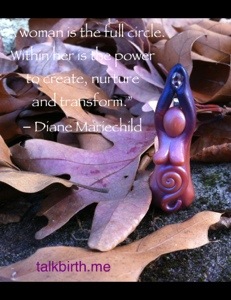
“The sterling silver dancing goddess, nurturing her baby, preparing for birth.”

This is not a donated item—I bought it to resell, but decided I’d like to offer a happy giveaway instead!

There are lots of ways to enter to win this lovely pendant and the giveaway is going to last for a long time—basically through the duration of my ongoing blog festival, which will last until December 15. To enter, do any or all for the following:

  • Leave a happy-blogaversary comment on this post 🙂
  • Become a fan of Talk Birth on Facebook
  • Follow Talk Birth on Twitter
  • Tweet about the giveaway (and comment to tell me!)
  • Share the giveaway on Facebook (and comment to tell me!)
  • Suggest Talk Birth on Facebook to your friends.
  • Share self-care/self-renewal tips with me that I can pass along to my readers!
  • Comment and share your favorite post from Talk Birth (double entry for this one!)
  • Contribute to my ongoing blog festival and you will earn FIVE bonus entries (I’ve received some great contributions so far and will start publishing them next week. If you’ve already contributed, you will be automatically entered in the giveaway. But, seven weeks is a long time, so I could really use some more contributions! Remember that you can send me previously published posts that are your own personal favorites. This could be good exposure for your own writing/blogging! I do not want any pregnancy/birth 101 type of posts, but otherwise I’ll happily accept good quality posts on a variety of subjects).

I added an archive drop-down to the sidebar recently in honor of my blogaversary, so if you want to take a walk down Talk Birth memory lane, make sure to check it out on the right hand sidebar, halfway down —>

And, again, thank you. Thank you for reading, thank you for your comments, thank you for feedback and support, thank you for sharing my posts on Facebook and Twitter. Thank you for sharing yourselves with me. Thank you for letting me share myself with you. Thank you for caring. Thank you for participating. Thank you for providing me with the opportunity to share my voice and my thoughts and to be heard in the larger, virtual community, in addition to in my own small, in-person community. When I began writing here, I felt frustrated and uncertain about my ability to make a contribution to the birth world. I desperately wanted to transform the birth culture in the US. I felt blocked and denied in my access to the people I wished to reach. I felt frustrated and “held down” by the needs of my small children. Writing here offered me freedom and reach and enabled me to be a birth educator and activist in the wider world beyond my own rural home, as well as contributing to my local community. It has allowed me to make a (small) difference in many lives in many parts of the world—I have regular readers from Australia and Kenya and Serbia, for example. I could never have made those connections without my writing and I feel blessed to have found an avenue for my voice and ideas.

Thanks for your support!

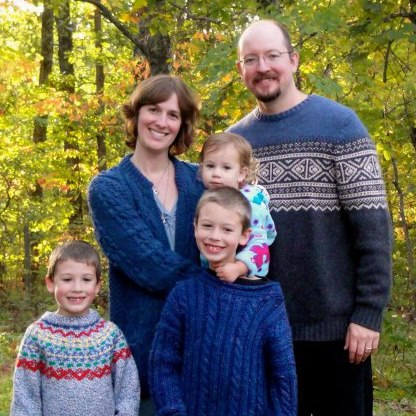
After my brother’s wedding earlier this month.

What If…She’s Stronger than She Knows…

“When I dare to be powerful–to use my strength in the service of my vision–then it becomes less and less important whether I am afraid.”

Audre Lorde

As I was writing about shifting the “what if” dialogue of birth to “positive” anticipation rather than fear, another spin on the relationship between pregnancy, birth, womanhood, and what ifs began to emerge for me. I thought about the what ifs that crawl out of our dark places and lodge in our hearts. The what ifs that snake around the edges of our consciousness in the early hours of the morning. The what ifs we try to push down, down, down and away. The what ifs that stalk us. The what ifs so very awful that we fear in giving voice to them, we might give life to them as well.

We may feel guilty, ashamed, negative, and apologetic about our deepest “what ifs.” We worry that if we speak of them, they might come true. We worry that in voicing them, we might make homebirth or midwifery or whatever look bad. We don’t want to add any fuel to the fire of terror that already dominates the “mainstream” birth climate. And, we don’t want to lose “crunchy points.” We want to be blissfully empowered, confident, and courageous. And, guess what? We are. Sometimes that courage comes from looking the “what ifs” right in the eye. Sometimes it comes from living through them. My most powerful gift from my pregnancy with my daughter, my pregnancy-after-loss baby, was to watch myself feel the fear and do it anyway. I was brave. And, it changed me to learn that.

What if we can learn more from our shadows than we ever thought possible? There is power in thinking what if I can’t do this and then discovering that you CAN.

“It is so easy to close down to risk, to protect ourselves against change and growth. But no baby bird emerges without first destroying the perfect egg sheltering it. We must risk being raw and fresh and awkward. For without such openness, life will not penetrate us anew. Unless we are open, we will not be filled.”
–Patricia Monaghan

I also thought about an experience I had recently at a gathering of midwifery supporters. It was an interesting and insightful presentation about language and the impact on birth. The woman speaking urged us to talk in “positive” ways about birth, to use “positive” words and to avoid “negative” stories. As I listened to her, I thought of my own loss story and knew that my experience in giving birth to my little dead baby would likely have ranked way up there as a “negative” story. And, that bothered me. Giving birth via miscarriage to my third son was the most transformative, formative, and powerful experience of my life. He gave me many gifts, he taught me many lessons, and I am a better person than I was without that experience. So, what does it mean for women when we hide away the “negative” stories? What might we be missing by making sure we never hear about a bad outcome? I wondered what if by avoiding “negative stories,” we also miss out on powerful stories of courage, growth, and transformation…

What if she suffered and survived?
What if she danced with death and she’s still here?
What if she faced fear and held on?
What if she was scarred and broken, but she healed?
What if she hasn’t healed, but she’s working on it?
What if she grieved deeply and came out the other side?
What if she felt fear and did it anyway?
What if she was so scared and felt so weak and so helpless and yet she persevered?
What if she sacrificed her body for her baby?
What if she couldn’t keep going…and then she did?
What if she is stronger in her broken places?

In another woman’s strength, may we see our own. In another woman’s fear, our own becomes acceptable.

I have two personal experiences to share with the healing power of other women’s scars and fears. When I was in the middle of my first miscarriage and I was thinking, “how will I do this?!” the faces of other women I knew who had experienced babyloss came floating through my mind. I saw them all and I knew that if they could do it, so could I. After my own baby’s miscarriage-birth, I then made a list of these women. There were 27 names on the list. As I shared my experience and came to know other women’s stories and as multiple friends then experienced losses during that same year, the list grew to at least 40 names (personal connections, not “online only” friends).

The second story is an amalgamation of multiple encounters with in-person acquaintances. After I shared Alaina’s birth story online, in which, as part of the narrative, I mentioned various fears that went through my mind as I was in labor and then concluded with, I was still worried she was going to die until the moment I held her, I spoke with multiple women who thanked me deeply for having shared those “bad” thoughts.

When I read your story and I saw that Molly, Molly, who lives, breathes, and sleeps birth every day, still worried about those things, it healed something in me. I have been carrying around guilt about my own birth experiences. Feeling like I didn’t ‘trust birth’ enough, like I didn’t ‘believe’ strongly enough in homebirth. Reading your story helped me know that my thoughts and worries were okay after all and that I wasn’t a ‘bad mom’ for having fear…

What if I’d been careful to keep anything “negative” out of my story?

“When one woman puts her experiences into words, another woman who has kept silent, afraid of what others will think, can find validation. And when the second woman says aloud, ‘yes, that was my experience too,’ the first woman loses some of her fear.”

–Carol Christ

I first came across the phrase “worry is the work of pregnancy” in my most favorite of birthing books, Birthing from Within by Pam England. I’ve noticed that women often feel like they shouldn’t have worries during pregnancy and that talking about their fears is somehow “dangerous” (like it will make the fear come true). Bringing fear out into the open and “looking at it” instead of keeping it tucked away and bothering you is actually one of the best ways to work with it. Another common concern is that your worries are “silly” or unfounded. It is okay to have worries, even “silly” ones. The strategy Pam suggest for exploring your worries is as follows:

Explore each worry with questions:

° What would you do if this worry /fear actually came true?

° What do you imagine your partner and/or birth attendant would do/say?

° What would it mean about you as a mother if this happened?

° How have you faced crises in the past?

° What, if anything, can you do to prepare for, or even prevent, what you are worrying about? What is keeping you from doing it?

° If there is nothing you can do to prevent it, how would you like to handle the situation?

(For more see: Tracking your Tigers: Effects of Fear on Labor)

During my pregnancy with Alaina, I actually took some time one night to let myself mentally walk through the worst-possible-outcome scenario. I let myself see/feel it all. I’d become tired of stuffing it down and blocking it out and decided to get it out and look it right in the eye. It was amazing how letting the fear wash through me completely, lessened its power and influence.

As I’ve previously written, I’ve also come to realize that despite the many amazing and wonderful, profound and magical things about birth, the experience of giving birth is very likely to take some kind of toll on a woman—whether her body, mind, or emotions. There is usually some type of “price” to be paid for each and every birth and sometimes the price is very high. This is, I guess, what qualifies, birth as such an intense, initiatory rite for women. It is most definitely a transformative event and transformation does not usually come without some degree of challenge. Something to be triumphed over or overcome, but something that also leaves permanent marks. Sometimes those marks are literal and sometimes they are emotional and sometimes they are truly beautiful, but we all earn some of them, somewhere along the line. And, I also think that by glossing over the marks, the figurative or literal scars birth can leave on us, and talking about only the positive side we can deny or hide the full impact of our journeys. What if it was okay to share our scars with each other? Not in a fear-mongering or “horror story” manner, but in honesty, depth, and truth—what if we let other women see the full range of our courage?

And, also as previously shared, during Pam England’s presentation about birth stories at the ICAN conference, she said that the place “where you were the most wounded—the place where the meat was chewed off your bones, becomes the seat of your most powerful medicine and the place where you can reach someone where no one else can.”

What if we withhold our most powerful medicine?

“The purpose of life is not to maintain personal comfort; it’s to grow the soul.”

–Christina Baldwin

“The emerging woman..will be strong-minded, strong-hearted, strong-souled, and strong-bodied…strength and beauty must go together.”

~Louisa May Alcott

What if…she’s stronger than she knows?