Archives

Happy Birthday, Baby Girl!

“Our lives can sometimes feel like passages through harsh landscapes that shake us to our core. Yet these difficult passages bring us to our most profound transformations. In the midst of heartache and greatest need, we find that grace descends. And at the end of it all, we often discover that we have become someone new, stronger and more alive…the tender moments of heartache, illness and inner strangeness that we all experience at times. They illuminate the path of healing–when awe, self-love and grace touch our very being, leave us breathless, make us whole.” –Carolyn Brigit Flynn (Sisters Singing)

I have hands big enough to save the world, and small enough to rock a child to sleep.” –Zelda Brown

(I wrote this second quote on the first page of the baby record journal I kept of her first year)

I’ve spent multiple days trying to gather some minutes together to work on a happy birthday reflective post. While sometimes I hesitate to write posts that are “too personal”— thinking things like “who really cares anyway?” and “why do I feel so compelled to share my life online?”—I’m so glad I’ve written regular updates about this first year of life with my baby girl. Even if no one else does really care to read about it–I care and I’m glad to have a “permanent record” of her infancy in this manner. The main thought that comes to mind when I reflect on her first year of life is, but it has all been SO REAL. I’ve expressed that same sentiment previously and maybe it doesn’t make sense to anyone else, but that it is the feeling I return to. This life, this past year has just been so real. By that I mean so vivid, so present, so conscious, so physical, so embodied, so here and now, that I can hardly believe it has now passed. I am likely to never have another crawling, drooly, grabbing, fuzzy headed baby of my own in my house again–and, even if I do. It won’t be this baby. This little walking, minimally talking, amazed, and amazing, energetic and enthusiastic, baby girl. I paid attention, I told about it, I remembered to look, listen, feel, and to embed precious moments and memories as deeply into my soul as I possibly could. I’ve struggled with life balance, come in and out of various states of equilibrium/disequilibrium. I’ve laughed, I’ve cried, I’ve marveled, and I’ve been ragged. And, we’re here. We did it. We’ve taken our first trip around the sun together. After having walked the labyrinth of pregnancy after loss in 2010, in January of 2011 I greeted the labyrinth of birth with wild joy and sweet relief, and now we’ve been on our “return” journey–step by step and in my arms, Alaina and I have now completed our postpartum return labyrinth together (though, I think it might actually last three years…).

Just this time last year I was wondering aloud if the full moon would bring me my baby and sure enough, my labor began that night and she was born at 11:15 a.m. on January 19 (full birth story in case anyone missed it). For me, the first birthday is really as much about memories for the mom as it is about the baby! Some favorite early pictures:

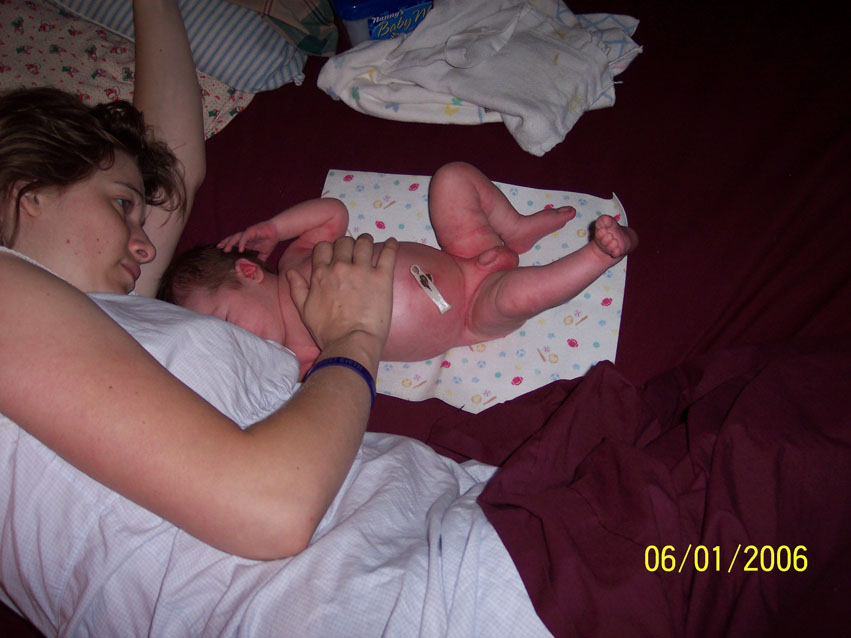
Moments after birth. I tried editing the contrast to make the picture actually visible for this post. I'd just caught her myself. The tenderness and majesty of this moment makes me cry!

On my due date demonstrating how she could still fit!
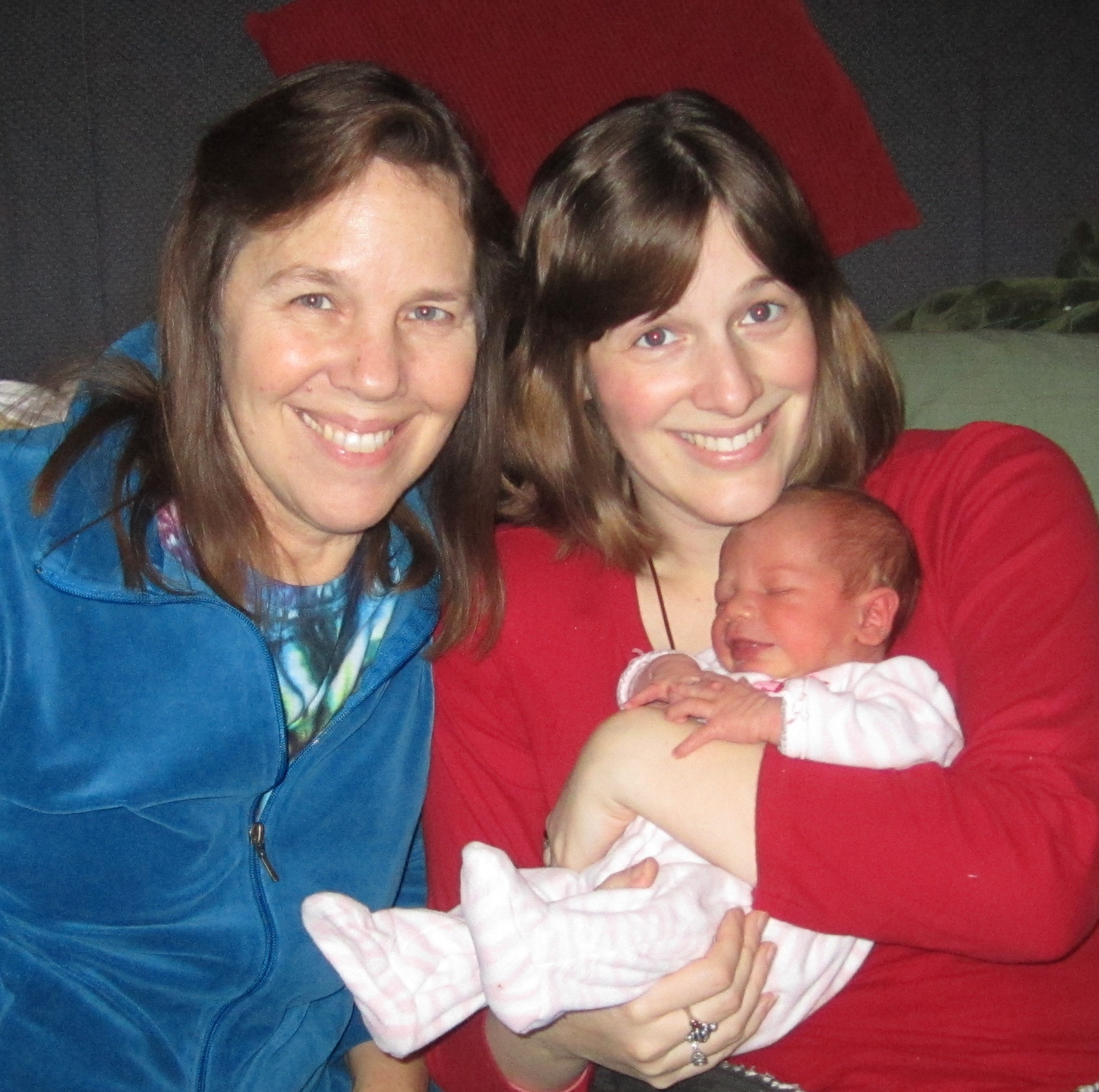
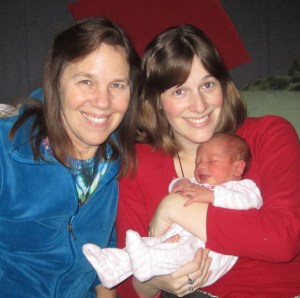
First three generations picture. Look how excited I am!

Here is a video we took for family when she was a couple of days old. I love my voice in this video—in you can hear how marvelous I think she is—and how my fingers tenderly touch and explore her as I talk.

And now, fast forward a year and we’ve got some early steps:

And, then more real walking at Baba’s house:

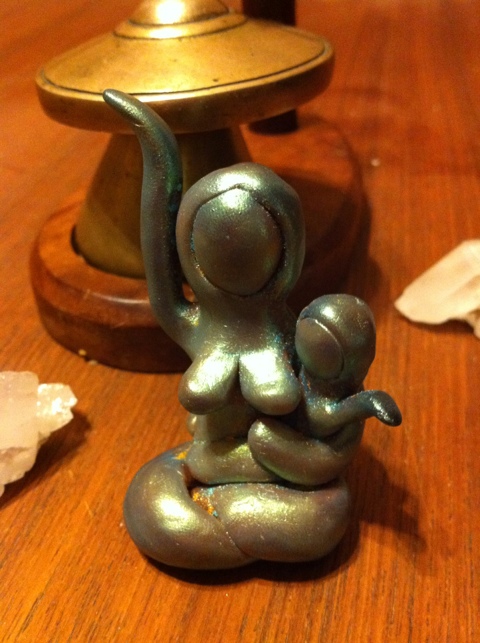
And, of course I had to make some more polymer clay birth art goddesses to commemorate the big birthday! This mama has her baby on her hip, which is still Alaina’s most preferred mode of transport:
20120118-085130.jpg

This baby is stepping out a little, but still intimately connected with mama. Double spiral symbolizes our interlocking labyrinth path, forever joined, but now able to separate too:

20120118-085149.jpg

The whole birth art series!

20120118-085216.jpg!

It is a total coincidence that I ended up making 12 figures--I didn't plan it that way and I didn't make one during every month or anything (though, that would have been cool. I wish I'd done that!)

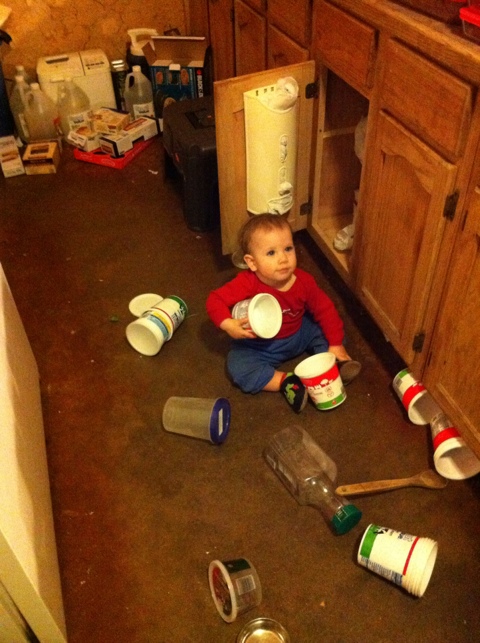
Okay, time for  twelve month update too! After many months of posting about the best baby ever, I am here to report that Miss A has taken a turn for the wild. If anyone has been secretly annoyed by my “perfect baby” and wishing to crow with delight, now is your chance! Oh my goodness. I don’t even know where to start. How about with this picture?!
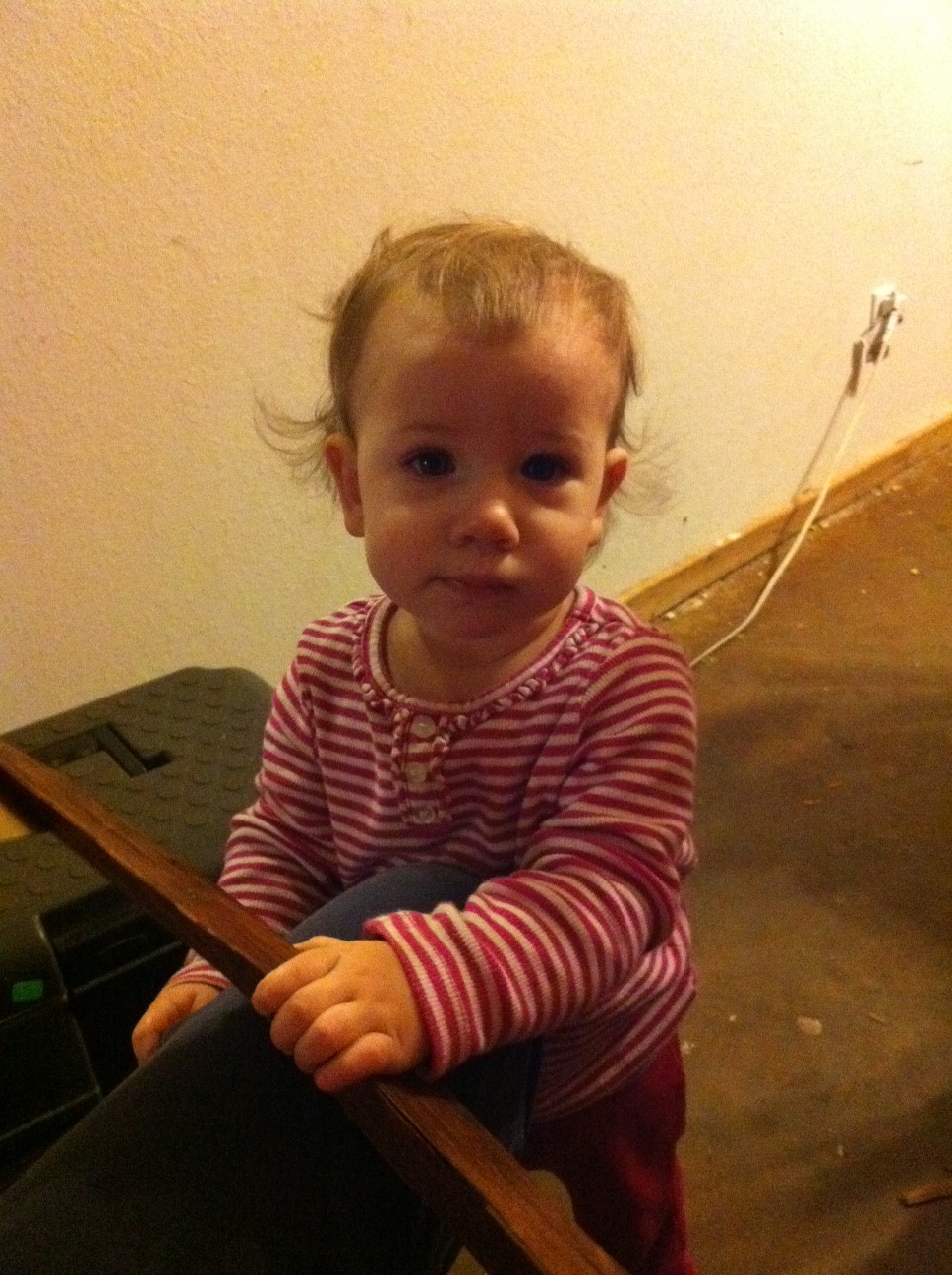
Yes. That would be some of the wood from the back of the kitchen chair. Peeled off by a baby. And, the set of her mouth is because she’s also eating it. The slightly wild, manic-clown-type hair also sums it up. This girl is on the move. She’s into everything. Wants it all. Is constantly making one of two sounds to indicate her many wants–a cute little question-intonation “huh?” sound, or a grating,  “aaaaaaaah!” sound that makes you want to yell, JUST STOP. She is incredibly grabby and shockingly destructive. Nurses very roughly (this isn’t new) and uses my skin as a handhold or toehold often enough that my upper arms are covered with little fingertip sized bruises. My thighs near my knees are also covered with small toe-sized bruises from being kick-walked on during lying down nursing. BUT, lying down nursing is pretty rare, since she pretty much will only nurse while standing up in the Ergo. And, that is how she goes down for nap every day (down to only one nap per day now). Nurses lying down during night. Potty strike is finally pretty over, but sitting down to pee just takes too much time. I still mean to write an EC post, a common refrain in which will be, and then I got peed on.

She loves to get into cabinets and also to take lids off of stuff.
20120118-085403.jpg

Again with that hair and face of mischief-making!

20120118-085235.jpg

What a sweet face too!

She weighs about 24 pounds and I need to measure her height. Has 8 teeth. Thought recent personality shift might have to do with more teeth or the developmental milestone of walking or the fact that she had a yucky cold, but it seems to be her new way of being. Markedly less verbal than she was last month—I know that is supposed to be a worrisome sign, but I think in this case it is related to the brain being able to concentrate on one significant developmental leap at a time. Right now, walking is primary and language has taken a backseat. I remember the boys doing this too. She often seems disgruntled lately–like whatever we are doing, she wants something different. Wants to get on top of table, counters, and stove. LOVES to be outside and asks all day long to go out (even when it is 10 degrees–then she complains and wants us to make it magically warmer). Has thrown several fits about this (and other things too). Is constantly aggravating the boys by getting into their games and wrecking their stuff.

She is very tough and brave and surprises me still with her unflappability in the face of change or drama. A couple of days ago I accidentally scraped her face with a tree branch when going out to open the chickens and didn’t notice what had happened. She made a small sound and had a turned down lip and I said, “oh, what’s wrong?” Upon getting inside I then noticed the two inch long bloody scratch down the side of her head and face!

Spends a lot of time in-arms still. Really enjoys mama and wishes to be mainly with me, though she does like visiting my parents and playing with daddy too. So far she still prefers to crawl to get things, but on two occasions this week, she has chosen to walk toward something rather than crawling. Crawling will soon be history! I swear, sometimes it feels like my heart is breaking when I think about the little baby of one year ago and how she is growing so fast, but at the same time of course I’m just so happy to see her developing and changing and being amazing. It has been a beautiful year.

Happy Birth Day to both of us!

A Year of Talk Birth–Free ebook (rough copy)

Earlier this year I mentioned that I’d used BlogBlooker to convert my blog into a book so that I could copy the text into a year-end Wordle. Anyway, I decided I might as well make the finished blogbook available for download here as an ebook of sorts. It is pretty rough, since it includes comment text as well as “footnotes” of any websites I linked to. And, the formatting of pictures and other elements is a little funky, plus it includes any reviews or giveaways or quotes posts that I did during 2011. But, for anyone who wants it, here is a year of Talk Birth in pdf ebook format. I sent it to myself to read on my iPad and it was really pretty fun! It is a long document—410 page pdf. Enjoy!

Health Clubs, Heart Health, & Birth

One of the things I enjoy about the book Mother’s Intention: How Belief Shapes Birth, by Kim Wildner is how straightforward, matter-of-fact and unapologetic the author is when exploring concepts, realities, facts, and beliefs about birth. In a section addressing perceived risk and birth, she shares an effective analogy about health clubs and heart disease paralleling the accident-waiting-to-happen mentality of modern obstetrics:

A multitude of things CAN go wrong with any system in the body, but seldom DO. Take the heart/circulatory system for example. Heart disease is the leading cause of death in the US. 873 per 100,000 die of heart disease (CDC). (Remember, natural birth is between 6 and 14 per 100,000 in the US, depending on the population.) Some have arteries on the verge of clogging. Some have heart defects they are unaware of. Some have damage they don’t know about. Something could go wrong at any minute and immediately available surgery can undoubtedly save lives.

Using the logic of obstetrics, all health clubs should be in hospitals and all fitness trainers should be cardiac surgeons. Any independent health club with ‘lay’ trainers would be ‘practicing medicine without a license,’ subject to prosecution. It’s for your own good.

In fact, in order to know if a problem is developing, close monitoring and ‘management’ is required. We will need to place straps on the muscles to measure the intensity of the workout. of course, it will be restrictive, but we need to know how hard the muscles are working to know if the heart can take it. We’ll need to monitor heart rate, blood pressure, fluid output. We’ll need to give an IV because with sweat excreted, you could dehydrate, and of course, we simply can’t take the risk of letting you drink anything lest you need emergency surgery….

Later in the book, the author employs another helpful analogy, again using cardiology as an example to make a point about inappropriately applied maternity care interventions:

What if…

You went to the doctor complaining of chest pain…not bad pain, but bothersome. To rule out a heart problem, the caregiver listens to your heart. He scowls, then excuses himself to make a phone call. He comes back in and tells you that you need to be admitted to the hospital for a test that requires the use of a drug. The drug has a low risk of serious complications, which is why you must be in the hospital, but he feels confident in taking that risk.

You go, and within minutes of having the drug administered, you have a heart attack. You are rushed into emergency open-heart surgery. Complications arise, but they are dealt with. You nearly bleed to death, but with a blood replacement you recover.

The repair doesn’t go well, which may mean you will need further surgery later…maybe even a heart transplant. You definitely will need to change your previously active lifestyle.

Later, you discover the call your care provider places wasn’t to a specialist, but an HMO lawyer who advised him not to let you walk out the door, just in case the routine examination missed a serious problem. You also learn there were less dangerous ways to determine if there could be a minor problem.

It turns out, you really did have a minor case of heartburn. All you have been through was avoidable, but “As long as everyone’s ok now…that’s all that matters”…right?

A comment like that, to a mother who has suffered unnecessarily, when she would have–or could have had–the result of a live, healthy baby without such sacrifice, disregards her feelings of loss.

Parents should be expecting more!

In Open Season, by Nancy Wainer, she refers to OBGYN care is referred to as “gynogadgetry.”

In The Doula Guide to Birth, I marked another quote that feels very relevant to the others above: [a March 2006 study in the American Journal of Obstetrics & Gynecology] “reviewed all fifty-five of ACOG’s current practice bulletins, calling these articles ‘perhaps the most influential publications for clinicians involved with obstetric and gynecological care.’ The study concluded that ‘among the 438 recommendations made by ACOG, less than one third [23 percent] are based on good and consistent scientific evidence.'”

Enough said.

The Illusion of Choice

A choice is not a choice if it is made in the context of fear.

Informed choice is a popular phrase with birth professionals and healthy birth activists. I’ve read impassioned blog posts from doulas and birth activists claiming that if we support women’s right to homebirth, we must also support her “choice” to have an elective cesarean. But, I believe we have constructed a collaborative mythos within the birth activist community that an informed choice is possible for most women. The statistics tell us a different story. I do not believe that women with full ability to exercise their choices would choose many of the things that are typically on the “menu” for birth in mainstream culture.

What’s on the menu?

Women give their blanket “informed consent” to all manner of hospital procedures without the corollary of informed refusal–is a choice a choice when you don’t have the option of saying no?

In many hospitals, women are STILL not allowed to eat during labor despite ample evidence that this practice is harmful–is a choice a real choice if made in the context of hospital “policies” that are not evidence-based?

Women are told that their babies are “too big” and then “choose” a cesarean. Is a choice a choice when it is made in the context of coercion and deception?

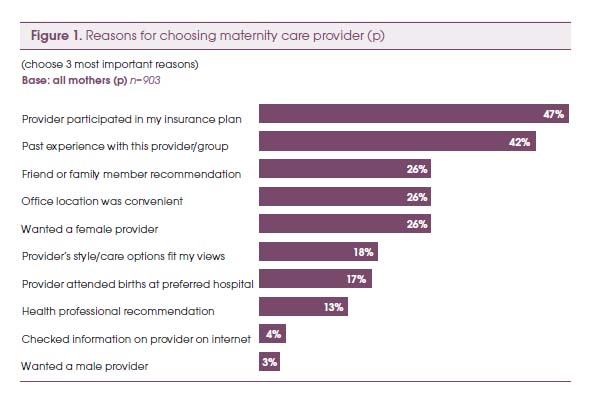
Women choose hospitals and obstetricians that are covered by their insurance companies. Is a choice a real choice when it is made by your HMO?

Women choose hospital birth because they cannot find a local midwife. Is a choice a real choice when it is made in the context of restrictive laws and hostile political climates?

Women often state they are seeking “balanced” birth classes that aren’t “biased” towards natural birth (or towards hospital birth), but is a choice a choice when it is made in the context of misrepresented information? Because, as Kim Wildner notes, balance means “to make two parts equal”–what if the two parts aren’t equal? What is the value of information that appears balanced, but is not factually accurate? Pointing out inequalities and giving evidence-based information does not make an educator “biased” or judgmental–it makes her honest! (though honesty can be “heard” as judgment when it does not reflect one’s own opinions or experiences).

On a somewhat related note, recently, the subject of “quiverfull” families came up amongst my friends and comments were made about feminists needing to support those women’s “choice” to have so many children. However, I worry about women who are making reproductive “choices” in the context of what can be a very repressive religious tradition. Women’s choices about their lives are not always made with free agency. And, that is where some feminist critiques of other women’s choices come from–a critique of the larger context (patriarchy) rather than the woman herself. Is a choice a choice when it is made in the context of oppression?

Where do women get information to make their choices?

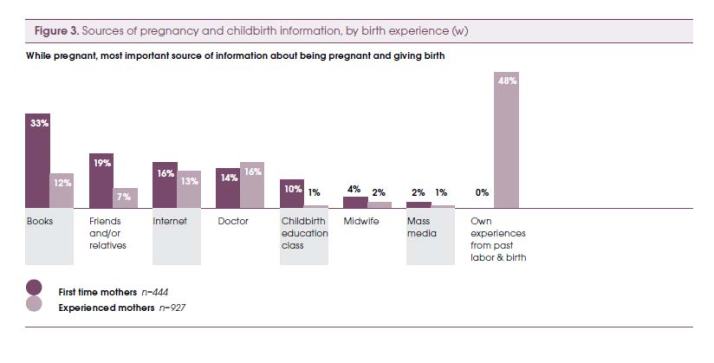
In his 2010 presentation, Birthing Ethics: What You Should Know About the Ethics of Childbirth, Raymond DeVries uses data from the Listening to Mother’s studies to help us understand where women are getting their information about birth—this is the context in which their “informed choices” are being made and this is the context we need to consider.

Our choices in birth and life are profoundly influenced by the systems in which we participate…

Some choices shaped by the system


Women learn from books and experiences of others (and self):

The number one book women learn from is What to Expect When You’re Expecting, which has been number four on NY Times Bestsellers list for over 500 weeks and counting.

According to De Vries, via the Listening to Mothers data, this is what women tell us about how they learn, what they learn, and upon what their choices are based:

Television explains birth
Pain is not your friend
But technology is
Mothers are listening to doctors (and nurses)
Medicalized birth allows mothers to feel capable and confident
Interfering with birth is mostly okay
Our health system works (mostly)
We like choice
We want to be “informed”

He also explains polarization: “We seek information to confirm our opinion. Contrary information does not convince, it polarizes.” How do we share information so that women can make truly informed choices without polarizing?

As advocates, I think we sometimes fall back on the phrase “informed choice” as an excuse not to be outraged, not to despair, and not to give up, because it promises that change is possible if only women change and most of us have access to change at that level.

Birthing room ethics

In another presentation, U.S. Maternity Care: Understanding the Exception That Proves the Rule, DeVries explores the ethical issues surrounding choices in birth, noting that “choice is central at all levels – but can choice do all the moral work?” We wish to respect parental choice, but information does not equal knowledge and we often err on the side of treating them as one and the same. In maternity care, often there is no choice. Tests become routine or practices become policy, and “information [is] given with no effort to understand parental values (the ritual of informed consent).”

Is choice possible while in active labor?
De Vries also raises a really critical question with no clear answers—is choice really possible during active labor? He also asks, “should a healthy pregnant woman be allowed to choose a surgical birth? But is it safe? The problem with data…Interestingly, those who think it should be allowed find it safe, and those who oppose it, find it to be unsafe.” When considering where this “choice” of surgical birth comes from, he identifies the following factors:

The desires of women
• Preserve sexual function
• Preserve ideal body
• The need to fit birth into employment
• Options offered by health care system

The desires of physicians
• Manage an unpredictable process
• The limits of obstetric education

Why should we care, anyway?

Another popular phrase is, “it’s not my birth.” I agree with the opinion of Desirre Andrews on this one:

“I do not believe in the saying ‘Not my birth.’ Women are connected together through the fabric of daily life including birth. What occurs in birth influences local culture, reshapes beliefs, weaves into how we see ourselves as wives, mothers, sisters, & women in our community. Your birth is my birth. My birth is your birth. This is why no matter my age or the age of my children it matters to me.”

Victims of circumstance?

While it may sound as if I am saying women are powerlessly buffeted about by circumstance and environment, I’m not. Theoretically, we always have the power to choose for ourselves, but by ignoring, denying, or minimizing the multiplicity of contexts in which women make “informed choices” about their births and their lives, we oversimplify the issue and turn it into a hollow catchphrase rather than a meaningful concept.

Women’s lives and their choices are deeply embedded in a complex, multifaceted, practically infinite web of social, political, cultural, socioeconomic, religious, historical, and environmental relationships.

And, I maintain that a choice is not a choice if it is made in a context of fear.

But, what do we know?

I read an interesting article by anthropologist and birth activist, Robbie Davis-Floyd, in the summer issue of Pathways Magazine. It was an excerpt from a longer article that appeared in Anthropology News, titled “Anthropology and Birth Activism: What Do We Know?” In the conclusion, Davis-Floyd states the following:

“Doctors ‘know’ they are giving women ‘the best care,’ and ‘what they really want.’ Birth activists…know that this ‘best care’ is too often a travesty of what birth can be. And yet on that existential brink, I tremble at the birth activist’s coding of women as ‘not knowing.’ So, here’s to women educating themselves on healthy, safe birth practices–to women knowing what is best for themselves and their babies, and to women rising above everything else.”

I believe that every woman who has given birth knows something about birth that other people don’t know. I also believe that women know what is right for their bodies and that mothers know what is right for their babies. I’m also pretty certain that these “knowings” are often crowded out or obliterated or rendered useless by the large sociocultural context in which women live their lives, birth their babies, and mother their young. So, how do we celebrate and honor the knowings and help women tease out and identify what they know compared to what they may believe or accept to be true while still respecting their autonomy and not denigrating them by characterizing them as “not knowing” or as needing to “be educated”? As I’ve written previously, with regard to education as a strategy for change: People often suggest “education” as a change strategy with the assumption that education is all that is needed. But, truly, do we want people to know more or do we want them to act differently? There is a LOT of information available to women about birth choices and healthy birth options. What we really want is not actually more education, we want them to act, or to choose, differently. Education in and of itself is not sufficient, it must be complemented by other methods that motivate people to act. As the textbook I use in class states, “a simple lack of information is rarely the major stumbling block.” You have to show them why it matters and the steps they can take to get there…

And, as the wise Pam England points out: “A knowledgeable childbirth teacher can inform mothers about birth, physiology, hospital policies and technology. But that kind of information doesn’t touch what a mother actually experiences IN labor, or what she needs to know as a mother (not a patient) in this rite of passage.”

The systemic context…

We MUST look at the larger system when we ask our questions and when we consider women’s choices. The fact that we even have to teach birth classes and to help women learn how to navigate the hospital system and to assert their rights to evidence-based care, indicates serious issues that go way beyond the individual. When we talk about women making informed choices or make statements like, “well, it’s her birth” or “it’s not my birth, it’s not my birth,” or wonder why she went to “that doctor” or “that hospital,” we are becoming blind to the sociocultural context in which those birth “choices” are embedded. When we teach women to ask their doctors about maintaining freedom of movement in labor or when we tell them to stay home as long as possible, we are, in a very real sense, endorsing, or at least acquiescing to these conditions in the first place. This isn’t changing the world for women, it is only softening the impact of a broken and oftentimes abusive system.

And, then I read an amazing story like this grandmother’s story of supporting her non-breastfeeding daughter-in-law and I don’t know WHAT to do in the end. Can we just trust that women will find their own right ways, define their own experiences, and access their own knowings in the context of all the impediments to free choice that I’ve already explored? What if she says, “why didn’t you TELL me?” But, if we share our information we risk polarization. If we keep silent and just offer neutral “support,” regardless of the choice made, then doesn’t it eventually become that the only voice available for her as she strives to make her own best choices is the voice of What to Expect and of hospital policy?

“Our lives are lived in story. When the stories offered us are limited, our lives are limited as well. Few have the courage, drive and imagination to invent life-narratives drastically different from those they’ve been told are possible. And unfortunately, some self-invented narratives are really just reversals of the limiting stereotype…” –Patricia Monaghan (New Book of Goddesses and Heroines, p. xii)

—-
Related posts:

What to Expect When You Go to the Hospital for a Natural Childbirth
Birth & Culture & Pregnant Feelings
Asking the right questions…
Active Birth in the Hospital
Why do I care?

References:

De Vries, Raymond. May 20, 2010. Birthing Ethics: What You Should Know About the Ethics of Childbirth, Webinar presented by Lamaze International.

De Vries, Raymond. Feb. 26-27. U.S. Maternity Care: Understanding the Exception That Proves the Rule. Coalition for Improving Maternity Services (CIMS). 2010 Mother-Friendly Childbirth Forum

Blessingway Poem: A Prayer for One Who Comes to Choose This Life

A Prayer for One Who Comes to Choose This Life

By Danelia Wild

May she know the welcome

of open arms and hearts

May she know she is loved

by many and by one

May she know the circle of friendship that gives

and receives love in all its forms

May she know and be known

in the heart of another

May she know the heart

that is this earth

reach for the stars and

call it home

And in the end

may she find everything

in her heart

and her heart

in everything

Last week I attended a blessingway for a friend who moved away last year. We didn’t know each other very well when she lived here, but thanks to Facebook, we’ve kept in touch and have bonded this year due to some personal experiences and commonalities. The poem above from the book Sisters Singing felt perfect to me to share with her. She has waited with such hope and love to meet her new daughter.

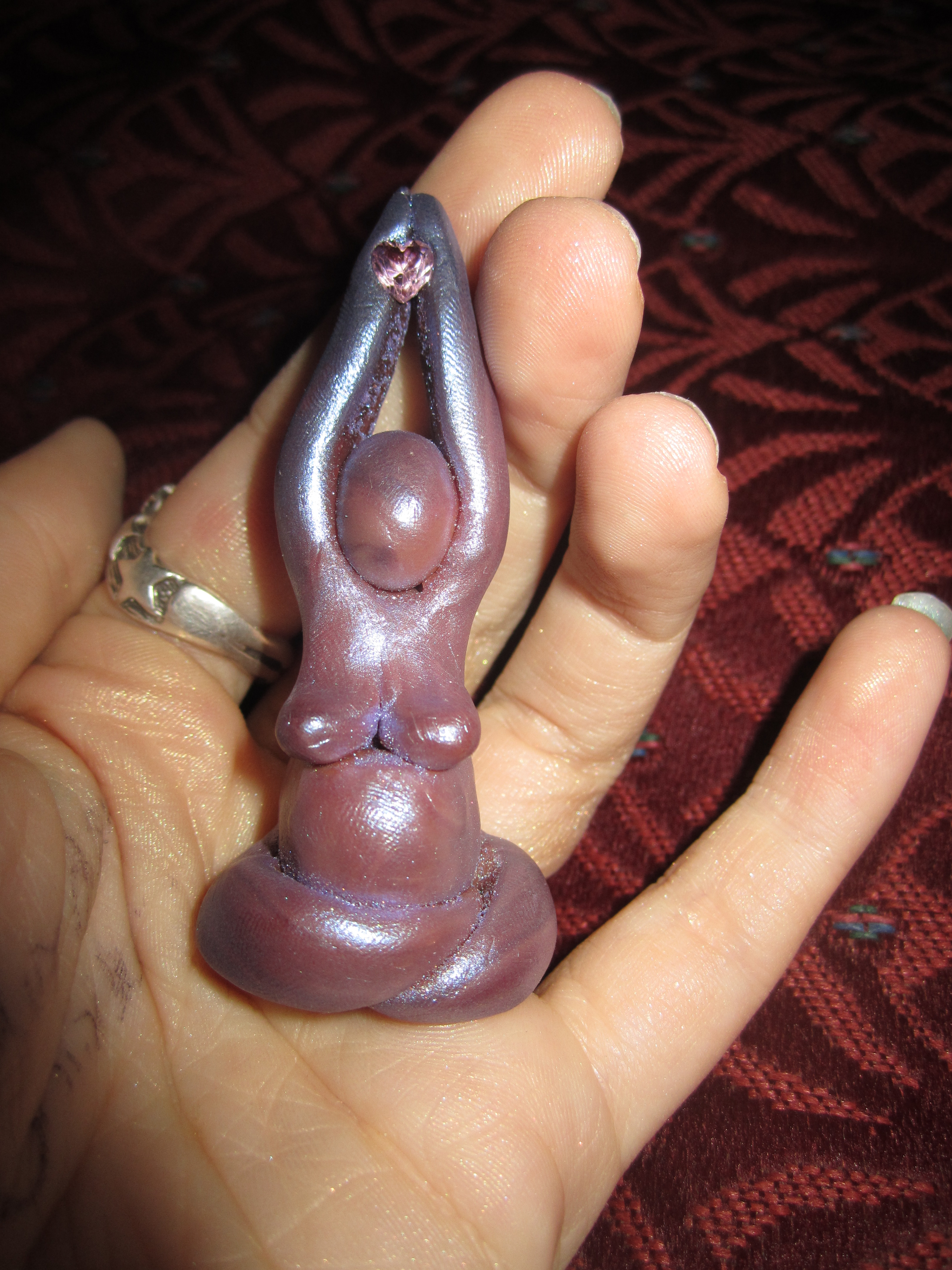
I also made her one of my polymer clay birth goddess sculptures. I purposely overbaked it to make the pigment more deeply colored. This goddess is holding a heart-shaped gem for love.

Birth Quotes of the Month

As always, while these quotes are obviously not my own words, I do appreciate a link back to my site if you re-post them because I have a significant amount of legwork invested in finding and typing the quotes. Most are not recycled from other pages (I give credit if they are), but are typed up when they catch my eye in the books/magazines/journals I’m reading.

“The first few months after a baby comes can be a lot like floating in a jar of honey—very sweet and golden, but very sticky too.” –American College of Nurse-Midwives

“Your children love you. Be the trampoline for their rocketing and the cupped palms for their returning.” –Shae Savoy (in We’Moon 2011 datebook)

“There is nobody, out the other side of that sort of strong birth, who is not better prepared to meet the absolutely remarkable challenges of parenthood. When the power and trust is transferred to the mother, when she delivers her child, rather than ‘is delivered’ when she chooses, rather than ‘is allowed’, no matter what sort of technical birth she has, she is stronger, fiercer, and better. After a trip like that, you would kill for that child, and you know you can.” —The Yarn Harlot

Why do birth work? “I do it, because nothing else… nothing else, compares to watching a woman move mountains with her own self, to watching her rise to a challenge and meet the moment with all she has, and that experience is only enhanced when she is supported by those who care for her, respect her, and want her to be empowered by the journey.” –The Yarn Harlot

“We must act to keep the knowledge and the powers of women alive.” – Lynn Andrews

“Birth Freedom is inevitable. The natural progression is for people to move from tyranny to liberty. The agents of the status quo, however, rarely yield power without a fight.” –Senator John Loudon (ret.) in Midwifery Today e-news

“If I didn’t define myself for myself, I would be crunched into other people’s fantasies for me and eaten alive.” – Audre Lorde

“We have barely tapped the power that is ours. We are more than we know.” –Charlene Spretnak

“Woman is a glorious possibility; the future of the world is hers.” – Matilda Gage

“In everyone’s life, at some time, our inner fire goes out. It is then burst into flame by an encounter with another human being. We should all be thankful for those people who rekindle the inner spirit.” ~Albert Schweitzer

“There is a sacredness in tears. They are messengers of overwhelming grief…and unspeakable love.” –Washington Irving

“Don’t you dare, for one more second, surround yourself with people who are not aware of the greatness that you are.” (Roots of She by Amanda Oaks, via @ROAR! Empowering Women to Give Voice to Their Truth)

“We all start out knowing magic. We are born with whirlwinds, forest fires, and comets inside us. We are born able to sing to birds and read the clouds and see our destiny in grains of sand. But then we get the magic educated right out of our souls.” -Robert R. McGammon

“It’s hard to describe if you’ve never been there, but to watch a woman access her full power as a woman to give birth is awe-inspiring, and I never get tired of being witness to it. It’s an honor to watch that transformation take place.” ~ Julie Bates, CNM

“The emerging woman..will be strong-minded, strong-hearted, strong-souled, and strong-bodied…strength and beauty must go together.” ~Louisa May Alcott

“We must relearn to trust the feminine, to trust women and their bodies as authoritative regarding the children they carry and the way they must birth them.” –Elizabeth Davis, CPM

“The women in labor must have NO STRESS placed upon her. She must be free to move about, walk, rock, go to the bathroom by herself, lie on her side or back, squat or kneel, or anything she finds comfortable, without fear of being scolded or embarrassed. Nor is there any need for her to be either ‘quiet’ or ‘good.’ What is a ‘good’ patient? One who does whatever she is told—who masks all the stresses she is feeling? Why can she not cry, or laugh, or complain?” –Grantly Dick Read, Childbirth without Fear

“The purpose of life is not to maintain personal comfort; it’s to grow the soul.” –Christina Baldwin

“Everyone who interacts with a pregnant woman is, in some way, her ‘teacher.’ Telling birth stories, sharing resources, imparting obstetrical information, giving advice or warnings—these are all direct or indirect ways of teaching about birth and parenting. Whether you currently identify yourself as a ‘childbirth teacher,’ or you are a midwife, doctor, doula, yoga teacher, nurse, therapist, breastfeeding counselor, or you are simply a woman or man who cares about the power of the childbearing year, you already hold the power of mentoring within you.” –Pam England

“The purpose of our lives is to give birth to the best which is within us.” –Marianne Williamson

“There is no single formula for motherhood and writing that suits us all. Instead, there are many paths on this literary journey, all leading to the same destination, each equally valuable.” – Elif Shafak

“Remember our heritage is our power; we can know ourselves and our capacities by seeing that other women have been strong.” – Judy Chicago

“Scientific medicine has never been shy to dismiss if not denigrate any perceived threat to its values or power.” –from the book Breakthrough: How the 10 Greatest Discoveries in Medicine Saved Millions and Saved the World

“Midwives often forget that our beliefs in [mom’s] abilities can alter her accomplishments. It is important to check our hearts and push through any lack of belief that may inhibit her strengths. This may sound silly or ethereal, but I guarantee it can make a difference for a laboring mom and family.” ~ Carol Gautschi (Midwifery Today)

“Hormones have a kind of crazy rhythm that you can trust. Behind them is internal intelligence; try listening instead of controlling. When hormones are ‘raging,’ they exaggerate what’s already going on internally as a signal for us to pay attention and learn from it.” –Camille Maurine (Meditation Secrets for Women)

“Since the release of adrenaline is highly contagious, the main preoccupation of an authentic midwife, after the paradigm shift, will be to maintain her own level of adrenaline as low as possible when she is close to a labouring woman. Midwives of the future will also need to train themselves to remain silent, since language is the most powerful stimulant of the neocortex. The silent knitting session will be a necessary step towards an understanding of what authentic midwifery is. We present it as the symbol of a vital new phase in the history of childbirth and midwifery.” –Michel Odent (in Midwifery Today)

“Sons branch out, but one woman leads to another.” –Margaret Atwood (quoted in Sacred Circles)

“We can no longer sit back and debate whether maternity care is evidence-based. We have seen that over and over again, in most cases, it is not…” –Connie Livingston

“If the first woman God ever made was strong enough to turn the world upside down all alone, together women ought to be able to turn it rightside up again.” –Sojourner Truth

“The intrinsic intelligence of women’s bodies can be sabotaged when they’re put into clinical settings, surrounded by strangers, and attached to machines that limit their freedom to move. They then risk falling victim to the powerful forces of fear, loneliness, doubt , and distrust, all of which increase pain. Their hopes for a normal birth disappear as quickly as the fluid in an IV bottle.” ~Peggy Vincent

“The problem is not that obstetricians are surgeons. They are. The problem is that society has invested surgeons with control over normal childbirth.” –Michael Klein, MD (in The Journal of Perinatal Education)

“Perhaps the greatest gift that women can give their daughters is to take precious care of their own lives—to develop their natural talents and to honor the opportunities that come their way. By so doing, they become vital models for their children as well as full women in their own right.” ~ Evelyn Bassoff

“When one woman puts her experiences into words, another woman who has kept silent, afraid of what others will think, can find validation. And when the second woman says aloud, ‘yes, that was my experience too,’ the first woman loses some of her fear.” –Carol Christ

“Befriend fear, embrace struggle, trust nature, the process, and a baby’s wisdom.” –WYSH (Wear Your Spirit for Humanity see also https://talkbirth.wordpress.com/2011/05/25/birth-altar-wisdom/)

“Thousands of women today have had their babies born under modern humanitarian conditions–they are the first to disclaim any knowledge of the beauties of childbirth…” –Grantly Dick Read, Childbirth without Fear

“I am not free while any woman is unfree, even when her shackles are very different from my own.” –Audre Lorde

“Not only do I trust my body, I am in awe of all it can do. I don’t know if I will ever be able to accomplish anything as marvelous as birthing and nursing two babies. That is more amazing to me than running a marathon or climbing a mountain. I have created and nurtured life; nothing tops that. ” ~ Corbin Lewars (via Midwifery Today)

“Humanizing birth means understanding that the woman giving birth is a human being, not a machine and not just a container for making babies. Showing women—half of all people—that they are inferior and inadequate by taking away their power to give birth is a tragedy for all society.” –Marsden Wagner

“I am sure that if the mothers of various nations could meet, there would be no more wars.” – E. M. Forster

“The strength that is displayed in labor and birth is something that no one can EVER take from you in your life. Elixir of courage.” –Desirre Andrews

Birth and the Women’s Health Agenda

Ready to be on the agenda, dangit!

In the Fall issue of The Journal of Perinatal Education (Lamaze), there was a guest editorial by perinatologist Michael Klein called “Many Women and Providers are Unprepared for an Evidence-Based Conversation About Birth.” In it he notes:

Childbirth is not on the women’s health agenda in most Western countries…It never has been. Osteoporosis is. Breast health is; violence against women is. Why not childbirth? Because women, understandably, do not want to be judged only by their reproductive capacities. Women are multipotential people. Among many potentialities, they can rise to the top of the academic and corporate world. Giving birth is just one of many things women can do. But now is the time to add childbirth to the women’s health agenda; it is because of the lack of informed decision making that birth should be added to that agenda, lack of information, misinformation, and even disinformation. The time is now.

…What really matters is attitudes and beliefs, which are much more difficult to change than putting away the scissors and hanging some plants. These are systemic issues. (emphasis mine) It is all about anxiety and fear. The doctors are afraid…The women are afraid…Society is afraid and averse to risk.

So how can you make a revolution when so few individuals are unhappy with current maternity care practices? The most unhappy and well-informed women select midwives, if available. The most fearful women select obstetricians. Providers are not going to initiate the revolution to make childbirth a normal rather than high-risk, industrialized activity…Women are going to have to take the lead…

The problem is not that obstetricians are surgeons. They are. The problem is that society has invested surgeons with control over normal childbirth.

I keep wanting to write an article called, “is evidence-based care enough?” because we see this phrase used so often in birth advocacy work. It is kind of the companion phrase to the, “women just need to educate themselves” line of thought, that, quite frankly, is also just not enough. And, I think the reason it isn’t enough—all of our education, all of our books, and all of our evidence—is because it isn’t information itself that really needs to change, it is women’s feelings and beliefs about birth (and the medical system’s feelings and beliefs about it too, in addition to their practices) and changing those sometimes feel like an insurmountable task. As I’ve written before, much of the time it isn’t that we actually want women to know more, we want them to act differently. And, a choice made in a context of fear is not an informed choice at all.

Giveaway! More Business of Being Born!

This giveaway is now closed: Kelli, Stephanie Lee, Luta, and Jessica (jessiegirl) were the four winners!

Today the long-awaited sequel to the Business of Being Born is released! I should have a review of the film to share with you soon and I’m so excited about this film. But, even better than a review, I am hosting a giveaway in honor of the film’s release today! More Business of Being Born consists of four approximately one hour films centering on different themes (see summaries below). We will have four lucky winners of this giveaway—one per film. Each winner will receive a code to watch one of the films for free. To enter, simply leave a comment below letting me know which of the four you’d most like to see! I will draw the winners via random.org next Monday.

Here is a little bit more about More Business of Being Born:

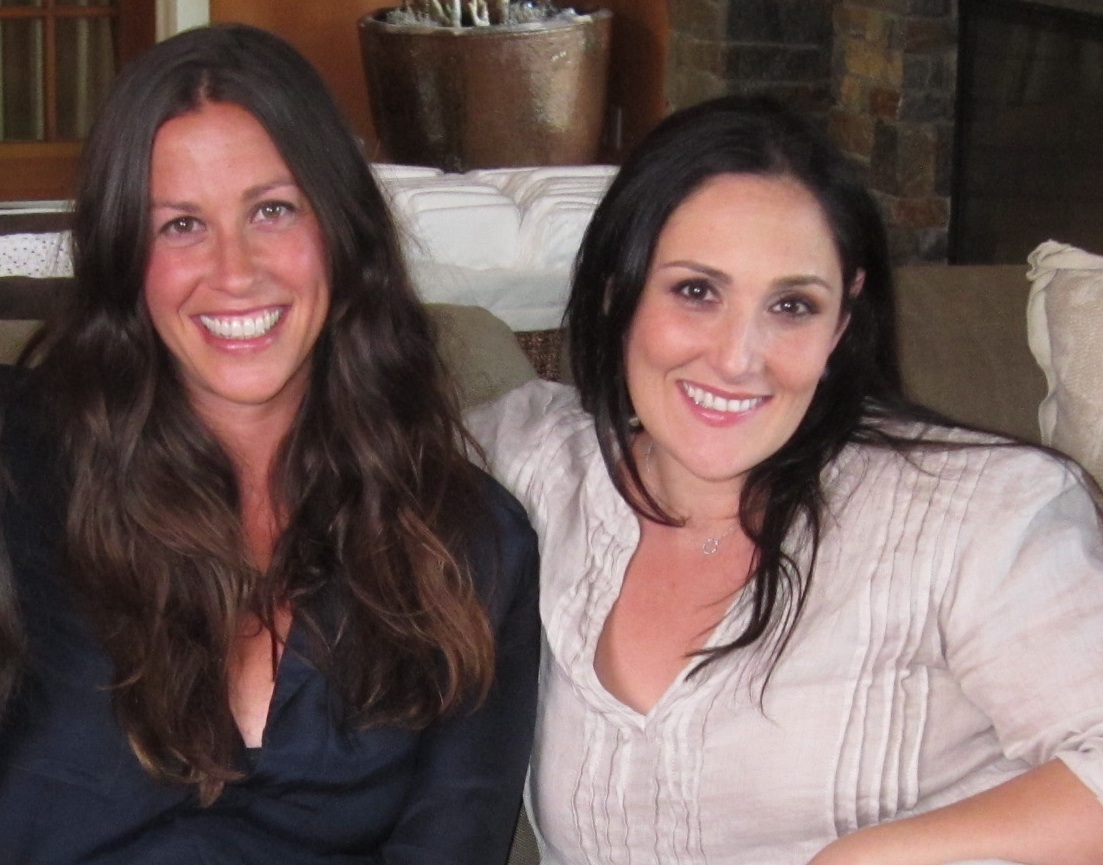
Ricki & Alanis

This release follows their landmark documentary, The Business of Being Born, with a four part DVD series that continues their provocative and entertaining exploration of the modern maternity care system. More Business of Being Born, available November 8th, offers a practical look at birthing options as well as poignant celebrity birth stories from stars including Alanis Morissette, Gisele Bundchen, Christy Turlington-Burns, Cindy Crawford, Molly Ringwald, Laila Ali, Kimberly Williams-Paisley and Melissa Joan Hart.

And, you can check out the trailer here too:

Film summaries:

DVD #1

Down on The Farm: Conversations with Legendary Midwife Ina May Gaskin

Follow Executive Producer Ricki Lake and Director Abby Epstein to The Farm Community in Summertown, Tennessee, where pioneer midwife Ina May Gaskin talks candidly about the latest birth trends and the art of midwifery. Gaskin, who was featured in the original The Business of Being Born, sparked Lake’s initial interest in natural birth and has continued to inspire the filmmaking duo’s advocacy efforts. Also on the journey is pregnant actress Kimberly Williams-Paisley, who has enlisted a midwife to attend the birth of her second child and joins the filmmakers in meeting The Farm’s famous midwives and touring the picturesque birth cabins in the woods. In the poignant final sequence, Gaskin exhibits her Safe Motherhood Quilt and calls for a deeper examination into the rising maternal mortality rate in the US. (Running Time: 55 min)

DVD #2

Special Deliveries: Celebrity Mothers Talk Straight on Birth

Featuring celebrity moms Laila Ali, Gisele Bundchen, Cindy Crawford, Alyson Hannigan, Melissa Joan Hart, Kellie Martin, Alanis Morissette, Christy Turlington-Burns and Kimberly Williams-Paisley, Special Deliveries is a collection of intimate birth stories from a diverse group of mothers. Whether they chose to deliver at a hospital, home or birthing center, these heartfelt and humorous testimonies speak to the lasting power of the birth experience. True inspiration for any mother-to-be, this group of women trusted their bodies and intuitions, taking responsibility for their birth decisions even when things didn’t go according to plan. None of these courageous women has ever spoken on the record in such compelling detail, and, on this DVD, the filmmakers weave together their passionate narratives as a celebration of the journey to motherhood that will leave viewers with a renewed sense of amazement about the power of women.
(Running Time: 74 min)

DVD # 3

Explore Your Options: Doulas, Birth Centers & C-Sections

The most comprehensive and educational DVD in the series, Explore Your Options offers birth-planning guidance around key topics such as the role of doulas (labor support specialists,) the advantages of birth centers and the alarming escalation of cesarean sections in the United States and Brazil. Epstein and Lake talk to doulas about why their profession is currently booming and uncover why having a good doula can make-or-break the entire birth experience. They look at the ever-growing rates of inductions and c-sections, which have reached 50% in many US hospitals and more than 99% in some private hospitals in Brazil. How “safe” are these cesarean surgeries, and what are the health implications for the mothers and babies? Explore Your Options examines the pros and cons of birth centers, described as a perfect middle ground between home and hospital. Special features include Alanis Morissette and Alyson Hannigan on the advantages of doulas, Christy Turlington Burns on her unexpected complications at a birth center, Molly Ringwald on how she avoided a cesarean birth with her twins and Gisele Bundchen and Michelle Alves on the cesarean epidemic in their native Brazil. (Running Time: 102 min)

DVD #4

The VBAC Dilemma: What Your Options Really Are

The VBAC (Vaginal Birth After Cesarean) has become a hot-button issue in the modern maternity care system, as one in three new mothers will give birth via cesarean section. Are all of these mothers then forced to undergo a repeat cesarean the next time around? Epstein and Lake posed that question to dozens of experts, determining the surprising truth about VBACs. They also follow several women’s stories – both those who succeed and fail at attempting a VBAC – including that of filmmaker Abby Epstein, whose first c-section delivery was depicted in the dramatic, final moments of The Business of Being Born.
(Running Time: 51 min)

Birth Fear

“…if you want to know where a woman’s true power lies, look to those primal experiences we’ve been taught to fear…the very same experiences the culture has taught us to distance ourselves from as much as possible, often by medicalizing them so that we are barely conscious of them anymore. Labor and birth rank right up there as experiences that put women in touch with their feminine power…” -Christiane Northrup

Since it was just Halloween, I wanted to re-post some things about fear and birth that I shared on another blog a couple of years ago. I encounter a lot of women who are very scared of birth, particularly of the pain of birth. Grantly Dick-Read’s Fear-Tension-Pain cycle has influenced the teachings of most natural birth educators and most people readily connect to the idea that fear leads to elevated tension in body which leads to increased pain (more about fear-tension-pain in a linked post below).

One of my favorite birth books, Birthing from Within, has several sections about coping with fear. The author’s idea is that by naming fears and looking them in the eye rather than denying they exist, you shift your thinking from frozen, fear-based, thoughts to more fluid, adaptable coping-mechanisms. There is a useful handout based on her ideas available at the Transition to Parenthood site.

I also think of this quote from Jennifer Block:

Why is it that the very things that cause birth related morbidity rates to rise are seen as the ‘safe’ way to go? Why aren’t women and their doctors terrified of the chemicals that are dripped into their spines and veins—the same substances that have been shown to lead to more c-sections? Why aren’t they worried about the harm these drugs might be doing to the future health of their children, as some studies are indicating might be the case? Why aren’t they afraid of picking up drug-resistant staphylococcus infections in the hospital? And why, of all things, aren’t women terrified of being cut open?

I actually was afraid of these things, which is part of why I didn’t go to a hospital to have my babies!

I hope some day all women will be able to greet birth with confidence and joy, instead of fear and anxiety. This does NOT mean denying the possibility of interventions or that cesareans can save lives. And, it also doesn’t mean just encouraging women to “trust birth.” Indeed, I  read a relevant quote in the textbook Childbirth Education: Research, Practice, & Theory: “…if women trust their ability to give birth, cesarean birth is not viewed as a failure but as a sophisticated intervention in response to their bodies’ protection of the baby.”

Here are some more good quotes from Childbirth without Fear:

A well–prepared woman, not ignorant of the processes of birth, is still subject to all the common interventions of the hospital environment, much of which places her under unnecessary stress and disrupts the neuromuscular harmony of her labor.

It is for this reason that thousands of women across the country are staying home to give birth…Women are choosing midwives as attendants, and choosing birth centers and birthing rooms, in order to regain the peaceful freedom to ‘flow with’ their own labors without the stress of disruption and intervention. Pictures on the wall and drapes on the window do not mask the fact that a woman is less free to be completely herself in the hospital environment, even in a birthing room. The possibility of her being disturbed is still there.

The women in labor must have NO STRESS placed upon her. She must be free to move about, walk, rock, go to the bathroom by herself, lie on her side or back, squat or kneel, or anything she finds comfortable, without fear of being scolded or embarrassed. Nor is there any need for her to be either ‘quiet’ or ‘good.’ What is a ‘good’ patient? One who does whatever she is told—who masks all the stresses she is feeling? Why can she not cry, or laugh, or complain?

When a woman in labor knows that she will not be disturbed, that her questions will be answered honestly and every consideration given her, then she will be better able to relax and give birth with her body’s neuromuscular perfection intact. The presence of her loving husband and/or a supportive attendant will add to her feelings of security and peace, so she can center upon the task at hand.

Childbirth without Fear was originally written in the 1940′s. The quotes above are just as relevant and true today.

Related posts:
Fear & Birth
Fears about birth and losing control

Fathers, Fear, and Birth
Fear-Tension-Pain or Excitement-Power-Progress?
Cesarean Birth in a Culture of Fear Handout
Worry is the Work of Pregnancy

Placenta Encapsulation—Three Days Postpartum Comparison…

I’ve been wanting to write a quick post about placenta encapsulation for ages. I had it done after Alaina was born and I’m a total convert. A month or so ago, the topic came up on a breastfeeding email list I belong to, with concern raised by several IBCLCs about the possibility of hormonal disruption of milk supply with placenta ingestion. Several women stated that they would not be comfortable doing it until there is some real evidence to support it. All I had to offer to the conversation was my own personal experience (and, I’m well aware that the plural of anecdote is NOT “data”) and also the observation that it is common practice for mammals to ingest the placenta. Of course, mammals eat it all at once and don’t powder it up into little capsules first, but then again, mammals also don’t wear socks or read stories to their kids or drive cars or sleep in beds in warm comfy houses either. I only found minimal evidence online via these two articles (which I think cite the same sources): Research Studies supporting Placenta Encapsulation and Scientific Research (from Placenta Benefits which certifies placenta encapsulators). Edited to add: there is a literature review now available at this site.

Anyway, this is what I shared with the list about my own experience:

I had it done with my last baby (born in January) and I’m a total convert. I have never felt better during postpartum. I joked that I was “placenta powered.” I felt and looked great—good color in my face, etc. Tons of energy. Total opposite of my other postpartum experiences in which I felt completely depleted and run over by a truck. I didn’t even ever feel like taking naps during the early weeks—you know how new mothers are often all strung out and exhausted. I was vibrant, cheerful, and alert. (I also swallowed a small piece of it raw, immediately pp.) I do not think there is any real research on milk supply and I had/have the same questions as you—if it is putting those “discarded” hormones back into the body, couldn’t it have a milk supply reducing effect? My guess is that the amount you take is so small (one placenta makes around 100 capsules), that it does not have a significant impact on supply one way or the other. I only have anecdotal evidence to offer in favor of it. In addition to various long-distance friends, three in-person friends have also done it during the last six months. Three of the four of us have had oversupply—one of which had not had oversupply with her other three children (my other friend and I had oversupply with previous children who we did not do placenta encapsulation with), though she is tandem nursing, so I suspect that as the cause more than placenta (she also has had mastitis with the current nursling).

I had less trouble with oversupply this time around than with previous children—my first baby and I struggled with it for 10 months, my second baby and I did 12 hour block feedings to get it under control. With my new baby, I started block feeding her from birth (I know this isn’t an officially recommended strategy, but I truly think it made a very positive difference for us). While we still had some issues with it, including several days of 12 hour blocks and one day with 24 hours on one side only (her choice, not mine!), it was much less stressful than my previous experiences. (And, BTW, I did have a couple of plugged duct incidents that quickly resolved with ginger tea compresses.)

Anyway, IMHO, placenta encapsulation= awesome. I really support it!

Oh, and one side effect I did experience was bad headaches when I started “weaning” off the placenta pills. I’ve always been sensitive to hormone changes provoking headaches (get one with ovulation and then again with menstruation, etc.).

As I was typing and thinking about my experiences, some pictures came to mind and so in this post I want to do a photographic comparison of how I looked at 3 days postpartum with each baby. (I left out Noah’s post birth pictures, because how I look in those is complicated by grief as well as blood loss.)

First baby–pretty happy and pretty tired. Note the eyes, pale skin, and the semi-exhausted tilt of head.

Second baby. Could NOT find another 3 days pp that was any better than this. Again, note pale skin and kind of distant, tired eyes.

Second baby again, but now one week postpartum. I’ve perked up! Still see tired eyes and pale-ish skin.

Last baby–note pink cheeks and happy, sparkling, semi-manic, placenta-powered eyes!

Of course, when this picture was taken I had actually hardly ingested any of the placenta, but for me, it visually sums up the vastly different physical recovery experience of this most recent postpartum time. I also think part of the difference is also in my emotional relief at her live birth!