Archives

Birth and the Women’s Health Agenda

Ready to be on the agenda, dangit!

In the Fall issue of The Journal of Perinatal Education (Lamaze), there was a guest editorial by perinatologist Michael Klein called “Many Women and Providers are Unprepared for an Evidence-Based Conversation About Birth.” In it he notes:

Childbirth is not on the women’s health agenda in most Western countries…It never has been. Osteoporosis is. Breast health is; violence against women is. Why not childbirth? Because women, understandably, do not want to be judged only by their reproductive capacities. Women are multipotential people. Among many potentialities, they can rise to the top of the academic and corporate world. Giving birth is just one of many things women can do. But now is the time to add childbirth to the women’s health agenda; it is because of the lack of informed decision making that birth should be added to that agenda, lack of information, misinformation, and even disinformation. The time is now.

…What really matters is attitudes and beliefs, which are much more difficult to change than putting away the scissors and hanging some plants. These are systemic issues. (emphasis mine) It is all about anxiety and fear. The doctors are afraid…The women are afraid…Society is afraid and averse to risk.

So how can you make a revolution when so few individuals are unhappy with current maternity care practices? The most unhappy and well-informed women select midwives, if available. The most fearful women select obstetricians. Providers are not going to initiate the revolution to make childbirth a normal rather than high-risk, industrialized activity…Women are going to have to take the lead…

The problem is not that obstetricians are surgeons. They are. The problem is that society has invested surgeons with control over normal childbirth.

I keep wanting to write an article called, “is evidence-based care enough?” because we see this phrase used so often in birth advocacy work. It is kind of the companion phrase to the, “women just need to educate themselves” line of thought, that, quite frankly, is also just not enough. And, I think the reason it isn’t enough—all of our education, all of our books, and all of our evidence—is because it isn’t information itself that really needs to change, it is women’s feelings and beliefs about birth (and the medical system’s feelings and beliefs about it too, in addition to their practices) and changing those sometimes feel like an insurmountable task. As I’ve written before, much of the time it isn’t that we actually want women to know more, we want them to act differently. And, a choice made in a context of fear is not an informed choice at all.

Guest Post: More Business of Being Born Mini-Review

In conjunction with the More Business of Being Born giveaway I’m currently hosting, I’m also pleased to share this mini-review of the first installment (Down on the Farm) guest posted by my friend and colleague, doula Summer:

More Business of Being Born

Down on the Farm: Conversations with Legendary Midwife Ina May

Reviewed by Summer Thorp-Lancaster

http://peacefulbeginnings.wordpress.com
http://summerdoula.wordpress.com

The first installation of More Business of Being Born, Down on the Farm: Conversations with Legendary Midwife Ina May, is infused with loving scenes of midwifery care, loads of vital information and even a few jokes (such as a gift referencing Ina May’s infamous “sphincter law”).  We are given an up close view of the well-known Farm in Tennessee, whose Midwives boast an exemplary track record of Midwife attended, out-of-hospital births. This record includes a less than 2% cesarean section rate in over 2500 births. Throughout the interviews, Ina May’s (and the other Midwives featured) reverence and respect for the Midwifery Model of Care is ever-present. Her passion for the safety and overall well-being of the motherbaby is palpable and stirring.

It would be impossible to cover the many aspects of birth, or even just Midwife attended out-of-hospital birth, in a full length film, let alone an episode, but this piece successfully touches on many topics and will (hopefully) lead to further discussion amongst viewers. As an activist, I found myself left with a renewed sense of action or purpose, a desire to do more and help more so that all mamas and babies have the opportunity to experience birth as the positive, loving and intimate experience it was meant to be as well as a deeper understanding of the crisis surrounding our medical model of birth. I would recommend this film to everyone, as the state of maternity care affects us all.

Sand Tray Therapy

I hoped to finish Noah’s book before his birthday today, but I didn’t quite make it. I’m still editing the last half, adding resources to the appendix, and waiting for my husband to design the cover for me. Hopefully I will publish it by the end of the year! Instead, I wanted to share some pictures and thoughts from a sand tray therapy exercise that I did during a session at the ICAN conference in St. Louis in April. I’ve been meaning to post about it since then and haven’t found the opportunity, so in honor of his birthday seems very fitting and appropriate. The session was intentionally kept small for personal sharing and when we walked in the therapist, Maria Carella, asked if we were there to celebrate a birth or to grieve one. I said I was there for both (I had Alaina with me and she slept in the Ergo during the session). Each of us had a tray of sand and there were long tables at the front of the room full of objects and materials (like shells, feathers, and so forth). We were paired up and after arranging our items on our sand, we were asked to share our tray with the person next to us as well as the message, lesson, reflection, or insight we received from the process of making the tray. While some people used the sand in various creative ways—mounding it up, etc.—I just smoothed mine out and put stuff on top of it. The experience of sharing with my tablemate was very moving and profound. We had a lot of surprising similarities in our feelings about our births, though our stories were very different. And, our closing thoughts or insights about our trays were almost identical.

While it might be hard to see everything, I chose the bridge to symbolize my feeling of having crossed the bridge to the “other side”—meaning first the fact that after Noah and my second miscarriage, I felt separated from women who had not experienced loss by a bridge and as if I’d crossed over into new territory and left my old, happy, naive pregnant self behind (along with the other non-loss mamas. A little more about this bridge here). AND, that I also felt like with Alaina’s birth that I crossed a bridge into the  unknown and to the end of the pregnancy-after-loss journey. Her birth represented the “other side” of PAL. So, at the end of the bridge I drew a question mark in the sand, representing all the questions I had to get past and over in order to get to my new baby. The little baby on the side of the bridge represents how I still had Noah with me. He didn’t get “left behind” on the other side of the bridge, but was next to me on my journey. The spiral on the other side represents the continuous, unfolding spiral of life. Sitting by the question mark is a sort of Kachina-type figure holding many babies. To me she represents all of the babyloss mamas and also reminds me of the jizos who protect lost babies. There is also a coffin on the other side of the question mark, summing up how the fear of the death was everpresent for me and I had to pass over that fear as well to get to my new baby—my light, the candle on the other side of death. The little sparkling gems also represent my joy at her birth and what a treasure she is to me. The bone on the side of the candle represents the places where the “meat was chewed off my bones” by all my births, including Noah’s (I had just attended Pam England’s birth story sharing session prior to this sand tray session). I placed the Goddess of Willendorf figure, that I had immediately snatched off the table as soon as I spotted her, at the top to represent how my sense of spirituality had surrounded and enfolded both my experiences—She is “holding” it all. And, I explained to my tablemate how the roundness of the tray to me also represented the full circle—how Alaina’s story and Noah’s are entwined and how her birth was the “end” (of sorts) of his story, but that they are part of one whole.

View from the top

Happy birthday, tiny third son. We remember you. Thank you for opening my heart and my life for your sister to enter.

Birth Fear

“…if you want to know where a woman’s true power lies, look to those primal experiences we’ve been taught to fear…the very same experiences the culture has taught us to distance ourselves from as much as possible, often by medicalizing them so that we are barely conscious of them anymore. Labor and birth rank right up there as experiences that put women in touch with their feminine power…” -Christiane Northrup

Since it was just Halloween, I wanted to re-post some things about fear and birth that I shared on another blog a couple of years ago. I encounter a lot of women who are very scared of birth, particularly of the pain of birth. Grantly Dick-Read’s Fear-Tension-Pain cycle has influenced the teachings of most natural birth educators and most people readily connect to the idea that fear leads to elevated tension in body which leads to increased pain (more about fear-tension-pain in a linked post below).

One of my favorite birth books, Birthing from Within, has several sections about coping with fear. The author’s idea is that by naming fears and looking them in the eye rather than denying they exist, you shift your thinking from frozen, fear-based, thoughts to more fluid, adaptable coping-mechanisms. There is a useful handout based on her ideas available at the Transition to Parenthood site.

I also think of this quote from Jennifer Block:

Why is it that the very things that cause birth related morbidity rates to rise are seen as the ‘safe’ way to go? Why aren’t women and their doctors terrified of the chemicals that are dripped into their spines and veins—the same substances that have been shown to lead to more c-sections? Why aren’t they worried about the harm these drugs might be doing to the future health of their children, as some studies are indicating might be the case? Why aren’t they afraid of picking up drug-resistant staphylococcus infections in the hospital? And why, of all things, aren’t women terrified of being cut open?

I actually was afraid of these things, which is part of why I didn’t go to a hospital to have my babies!

I hope some day all women will be able to greet birth with confidence and joy, instead of fear and anxiety. This does NOT mean denying the possibility of interventions or that cesareans can save lives. And, it also doesn’t mean just encouraging women to “trust birth.” Indeed, I  read a relevant quote in the textbook Childbirth Education: Research, Practice, & Theory: “…if women trust their ability to give birth, cesarean birth is not viewed as a failure but as a sophisticated intervention in response to their bodies’ protection of the baby.”

Here are some more good quotes from Childbirth without Fear:

A well–prepared woman, not ignorant of the processes of birth, is still subject to all the common interventions of the hospital environment, much of which places her under unnecessary stress and disrupts the neuromuscular harmony of her labor.

It is for this reason that thousands of women across the country are staying home to give birth…Women are choosing midwives as attendants, and choosing birth centers and birthing rooms, in order to regain the peaceful freedom to ‘flow with’ their own labors without the stress of disruption and intervention. Pictures on the wall and drapes on the window do not mask the fact that a woman is less free to be completely herself in the hospital environment, even in a birthing room. The possibility of her being disturbed is still there.

The women in labor must have NO STRESS placed upon her. She must be free to move about, walk, rock, go to the bathroom by herself, lie on her side or back, squat or kneel, or anything she finds comfortable, without fear of being scolded or embarrassed. Nor is there any need for her to be either ‘quiet’ or ‘good.’ What is a ‘good’ patient? One who does whatever she is told—who masks all the stresses she is feeling? Why can she not cry, or laugh, or complain?

When a woman in labor knows that she will not be disturbed, that her questions will be answered honestly and every consideration given her, then she will be better able to relax and give birth with her body’s neuromuscular perfection intact. The presence of her loving husband and/or a supportive attendant will add to her feelings of security and peace, so she can center upon the task at hand.

Childbirth without Fear was originally written in the 1940′s. The quotes above are just as relevant and true today.

Related posts:
Fear & Birth
Fears about birth and losing control

Fathers, Fear, and Birth
Fear-Tension-Pain or Excitement-Power-Progress?
Cesarean Birth in a Culture of Fear Handout
Worry is the Work of Pregnancy

The Value of Sharing Story

“..no matter what her experience in birth was, every mother knows something other people don’t know.”—Pam England


“Stories are medicine…They have such power; they do not require that we do, be, act anything—we need only listen. The remedies for repair or reclamation of any lost psychic drive are contained in stories.” –Clarissa Pinkola Estes


Every woman who has given birth knows something about birth that other people don’t know. She has something unique and powerful to offer.

As birth professionals, we are often cautioned against sharing our personal stories. We must remember that it is her birth and her story, not ours. In doula and childbirth educator trainings, trainees are taught to keep their own stories to themselves and to present evidence-based information so that women can make their own informed choices. As a breastfeeding counselor too, I must remind myself to keep my own personal experiences out of the helping relationship. My formal education is in clinical social work and in that field as well we are indoctrinated to guard against inappropriate self-disclosure in a client-helper setting. In each environment, we are taught how to be good listeners without clouding the exchange with our own “baggage.” The messages are powerful—keep your own stories out of it. Recently, I have been wondering how this caution might impact our real-life connections with women?

Nine months after I experienced a powerful miscarriage at home at 15 weeks, a good friend found out at 13 weeks that her baby died. As I had, she decided to let nature take its course and to let her body let go of the pregnancy on its own timetable, rather than a medical timetable. When she emailed me for support, it was extremely difficult to separate our experiences. I kept sharing bits and pieces of my own loss experiences and then apologizing and feeling guilty for having violated the “no stories” rule. I kept telling her, “I know this isn’t about me, but I felt this way…” I told her about choosing to take pictures of the baby and to have a ceremony for him at home. That I wished I had gotten his footprints and handprints. The kinds of personal sharing that may have been frowned upon in my varied collection of professional trainings. After several apologies of this sort, I began to reflect and remembered that what I hungered for most in the aftermath of my own miscarriage was other women’s voices and stories. Real stories. The nitty gritty, how-much-blood-is-normal and did-you-feel-like-you-were-going-to-die, type of stories. Just as many women enjoy and benefit from reading other women’s birth stories, I craved real, deep, miscarriage-birth stories. These stories told me the most about what I needed to know and more than organization websites or “coping with loss” books ever could.

I had a similar realization the following month when considering the effectiveness of childbirth classes and trying to pin down what truly had reached me as a first time mother. The question I was trying to answer as I considered my own childbirth education practice was how do women really learn about birth? What did I, personally, retain and carry with me into my own birth journey? The answer, for me, was again, story.

On this blog, I have a narrative about my experiences during my first pregnancy with being able to feel my baby practicing breathing while in-utero. More than any other post on the site, this post receives more comments on an ongoing basis from women saying, “thank you for sharing”–that the story has validated their own current experience. In this example, rather than getting what they need from books, experts, or classes, women have found what they needed from story and, indeed, most of them reference that it was the only place they were able to find the information they were seeking.

And finally, as breastfeeding counselor, during monthly support meetings, I cannot count the number of times I’ve seen mothers’ faces fill with relief when another mother validates her story with a similar one.

So, what is special about story as a medium and what can it offer to women that traditional forms of education cannot? Stories are validating. They can communicate that you are not alone, not crazy, and not weird. Stories are instructive without being directive or prescriptive. It is very easy to take what works from stories and leave the rest because stories communicate personal experiences and lessons learned, rather than expert direction, recommendations, or advice. Stories can also provide a point of identification and clarification as a way of sharing information that is open to possibility, rather than advice-giving.

Cautions in sharing stories while also listening to another’s experience include:

  • Are you so busy in your own story that you can’t see the person in front of you?
  • Does the story contain bad, inaccurate, or misleading information?
  • Is the story so long and involved that it is distracting from the other person’s point?
  • Does the story communicate that you are the only right person and that everyone else should do things exactly like you?
  • Is the story really advice or a “to do” disguised as a story?
  • Does the story redirect attention to you and away from the person in need of help/listening?
  • Does the story keep the focus in the past and not in the here and now present moment?
  • Is there a subtext of, “you should…”?

Several of these self-awareness questions are much bigger concerns during a person-to-person direct dialogue rather than in written form such as blog. In reading stories, the reader has the power to engage or disengage with the story, while in person there is a possibility of becoming stuck in an unwelcome story. Some things to keep in mind while sharing stories in person are:

  • Sensitivity to whether your story is welcome, helpful, or contributing to the other person’s process.
  • Being mindful of personal motives—are you telling a story to bolster your own self-image, as a means of pointing out others’ flaws and failings, or to secretly give advice?
  • Asking yourself whether the story is one that will move us forward (returning to the here and now question above).

While my training and professional background might suggest otherwise, my personal lived experience is that stories have had more power in my own childbearing life than most other single influences. The sharing of story in an appropriate way is, indeed, intimately intertwined with good listening and warm connection. As the authors of the book, Sacred Circles, remind us “…in listening you become an opening for that other person…Indeed, nothing comes close to an evening spent spellbound by the stories of women’s inner lives.”

Molly Remer, MSW, ICCE, CCCE is a certified birth educator, writer, and activist who lives in central Missouri with her husband and children. She is an LLL Leader, a professor of Human Services, and the editor of the Friends of Missouri Midwives newsletter. She blogs about birth, women, and motherhood at https://talkbirth.wordpress.com.

This is a preprint of The Value of Sharing Story, an article by Molly Remer, MSW, ICCE, published in Midwifery Today, Issue 99, Autumn 2011. Copyright © 2011 Midwifery Today. Midwifery Today’s website is located at: http://www.midwiferytoday.com/

Have you met Pachamama?

I have a friend who was taking a mythology class in college this session. She sent me an email titled, “have you met Pachamama?” and included this great little picture:

I just love her! Love her serene little face and the yin-yang type of background.

“Pachamama is a goddess revered by the indigenous people of the Andes. Pachamama is usually translated as Mother Earth, but a more literal translation would be “Mother world” (in Aymara and Quechua mama = mother / pacha = world or land; and later widened in a modern meaning as the cosmos or the universe).[1] Pachamama and Inti are the most benevolent deities; they are worshiped in parts of the Andean mountain ranges, also known as Tawantinsuyu (the former Inca Empire) (stretching from present day Ecuador to Chile and northern Argentina being present day Peru the center of the empire with its capital city in Cuzco).”

http://en.wikipedia.org/wiki/Pachamama

Rebirth: What We Don’t Say

A new self did emerge. This is what women do not tell each other. I want to say it here: You will die when you become a mother and it will hurt and it will be confusing and you will be someone you never imagined and then, you will be reborn. Truthfully, I have never wanted to be the woman I was before I had children. I loved that woman and I loved that life but I don’t want it again. My daughters have made me more daring, more human, more compassionate. Their births have brought me closer to the earth and they have helped me pare my life down to its essentials. Writing, quick prayers, good food, a few close friends, many deep breaths, love, plants, dancing, music, teaching-these are the ingredients of my/this new self. I waited for this new self in the dark, in the bittersweet water of letting go, in the heavy heartbeat of learning to be a mother, against the isolation, I grew and emerged laughing and crying and here I am, sisters and brothers. Rebirth: What We Don’t Say | The Sage Mama.

One of my favorite songs to listen to after my miscarriage experiences had a refrain of, “it is dark, dark, dark inside.” While previously not connecting to “darkness” as a place of growth or healing, during these experiences I learned that it is in the darkness that new things take root and grow.

As I’ve shared before, one of my favorite quotes about postpartum comes from Naomi Wolf, A mother is not born when a baby is born; a mother is forged, made. The quote I shared above from this “Rebirth” article touches that place in me—that motherhood results in a total life overhaul and a new, enriched identity. (This article also made me think of first postpartum journey which I wrote about here.)

In a previous post, I wrote the following about the idea that giving birth and mothering leaves permanent marks:

I’ve also come to realize that despite the many amazing and wonderful, profound and magical things about birth, the experience of giving birth is very likely to take some kind of toll on a woman—whether her body, mind, or emotions. There is usually some type of “price” to be paid for each and every birth and sometimes the price is very high. This is, I guess, what qualifies, birth as such an intense, initiatory rite for women. It is most definitely a transformative event and transformation does not usually come without some degree of challenge. Sometimes to be triumphed over or overcome, but something that also leaves permanent marks. Sometimes those marks are literal and sometimes they are emotional and sometimes they are truly beautiful, but we all earn some of them, somewhere along the line. And, I also think that by glossing over the marks, the figurative or literal scars birth can leave on us, and talking about only the “sunny side” we can deny or hide the full impact of our journeys.

During Pam England’s presentation about birth stories at the ICAN conference, she said that the place “where you were the most wounded—the place where the meat was chewed off your bones, becomes the seat of your most powerful medicine and the place where you can reach someone where no one else can.

(I’m experimenting with PressThis for this short post)

Affordable Fetal Model

Two things to know about me:

1. I love dolls.

2. I love bargains.

For quite a while, I’ve wanted a realistic baby model to use in my birth classes. My ideal model could be used both for demonstrations of fetal positioning in the pelvis and also for demo’ing newborn care and possibly breastfeeding. Most fetal models sold by CBE supply companies range from $60-150. I usually use a Bitty Baby doll to demo newborn care and breastfeeding (a third thing to know about me is that my love of bargains makes an exception when it comes to American Girl dolls. I have an embarrassing number of AG dolls and vast quantities of accessories. I’ve had this Bitty Baby for over 10 years, I didn’t buy her to use in class). In my knitted uterus, resides a cute little baby doll I bought at Target for $5. Neither of these dolls works at all for fetal positioning or with my demonstration pelvis.

Look at this cute baby!

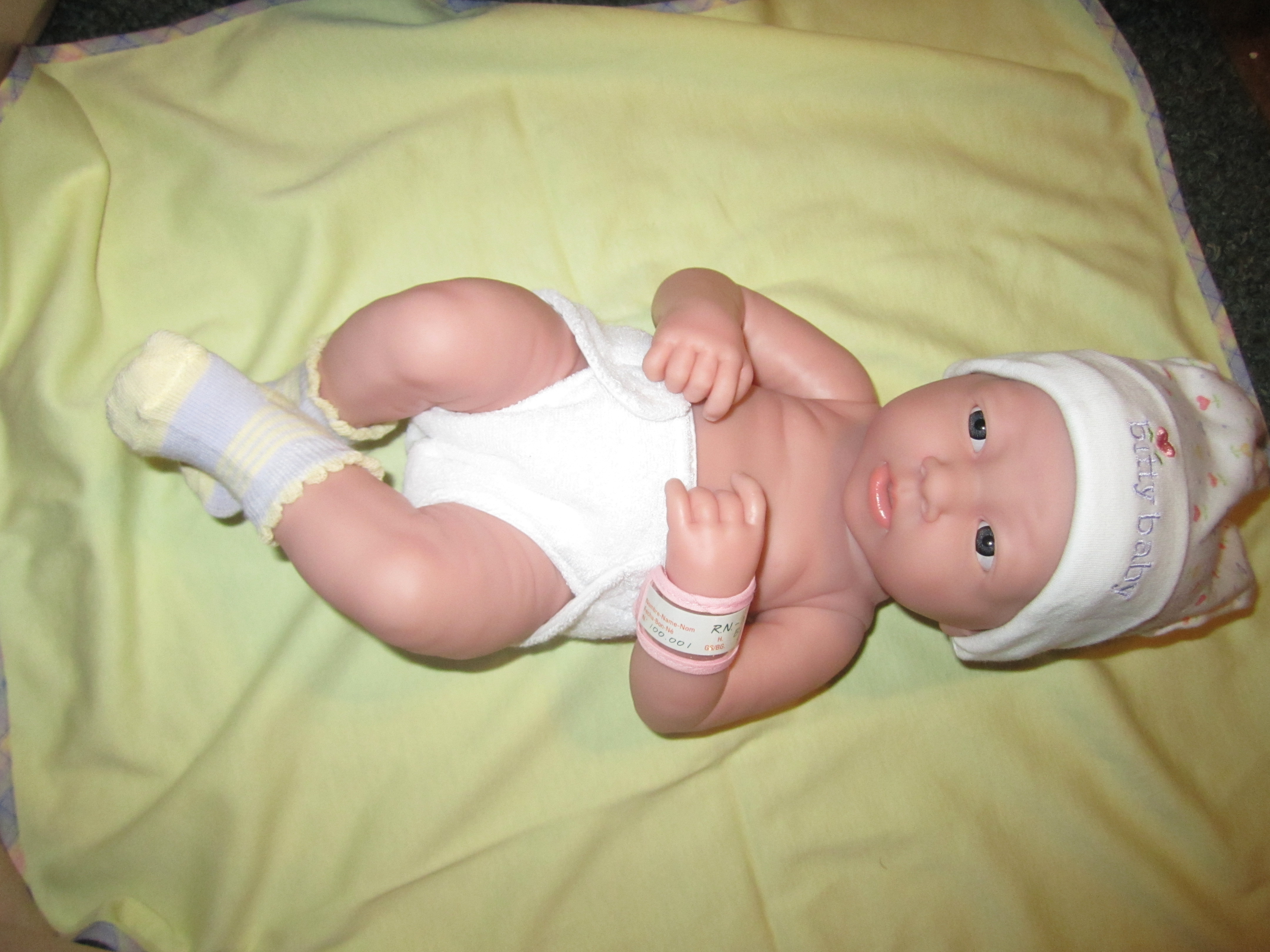
So, imagine my delight when I found a nearly perfect model newborn at Kmart yesterday while my son was picking out his birthday presents. I named her Sasha AND, get this, she was $20. In a bonus twist, unlike 99.9% of the dolls in the store, she did not come with a bottle! (There is a bottle pictured with a different doll on the back of the box.) She did come with a little cloth diaper, a onesie, a band to cover her cord stump (yes, she seems to have one, but it could just be a dramatic “outie”!), a little outfit, a hat, and socks. Called La Newborn (nursery doll), she is made by Berenguer.

Legs and arms straightened out a little

The only drawback is she is not very flexible and so would be hard to use comfortably for things like practicing putting on diapers. Her fairly flexed permanent body position does make her absolutely ideal for use for fetal positioning and even for swaddling or babywearing practice. I originally planned to take her arms and legs off to fill with plastic pellets to add weight, but I’d don’t think I’m going to bother. While nothing near the weight of a real baby, she is made from good quality vinyl.

After looking these dolls up various places online, I’m now thinking I should have bought the remaining one or two that they had at K-Mart. They don’t seem to be widely available for the $20 price.

This morning, my older son helped me take all kinds of pictures of my new toy—I mean, teaching aid!—today (yet another of the many benefits of having an 8 year old in the house!). So, this is a photo-heavy post!

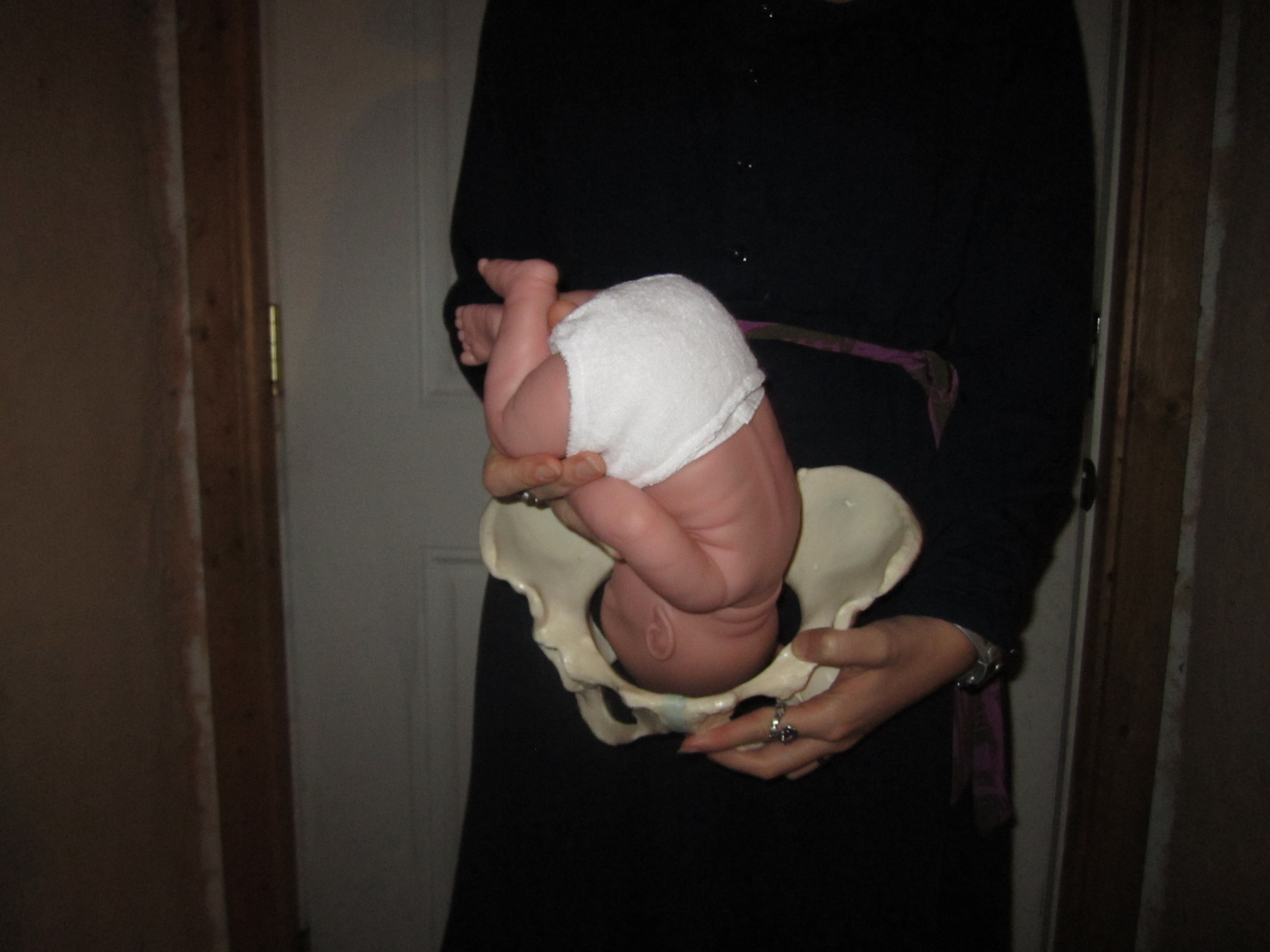
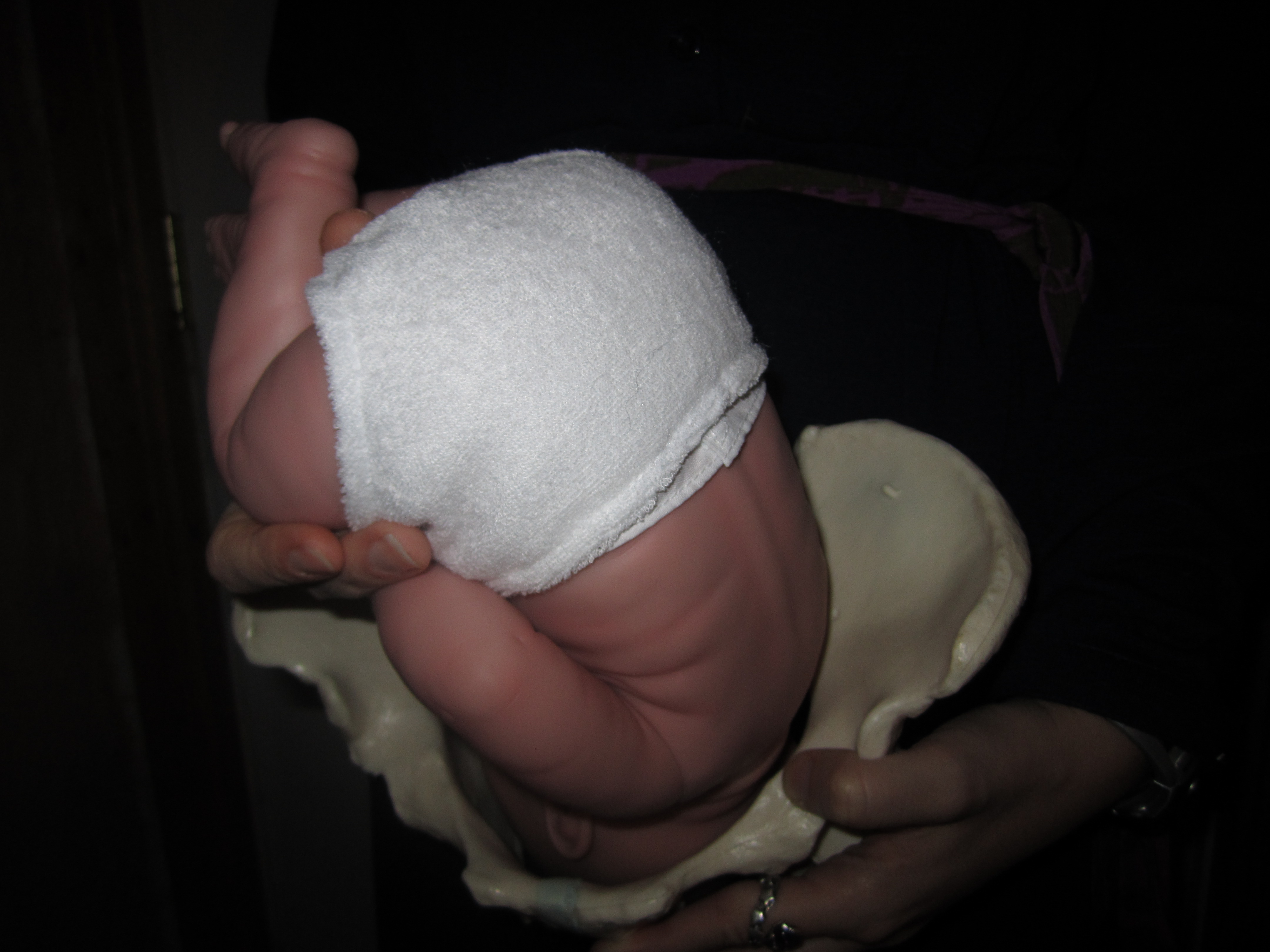
See what I mean about well flexed for fetal positioning information?!

And now my Christmas pelvis gets in on the demo…

If the demo pelvis had a coccyx joint, the baby would fit perfect through. As it is, her head does get stuck on it (good teaching moment about the importance of active positions for birthing!)

Bitty Baby Noelle and Target Baby are less than impressed with this interloper…

Alaina helps take care of baby Sasha…

For sizing purposes—while I think she appears to be the perfect, realistic size when held up to my belly as a fetal model for positioning, when held in arms, she is more the size of a preemie baby (maybe a 31 weeker or so). She is about 15 inches.

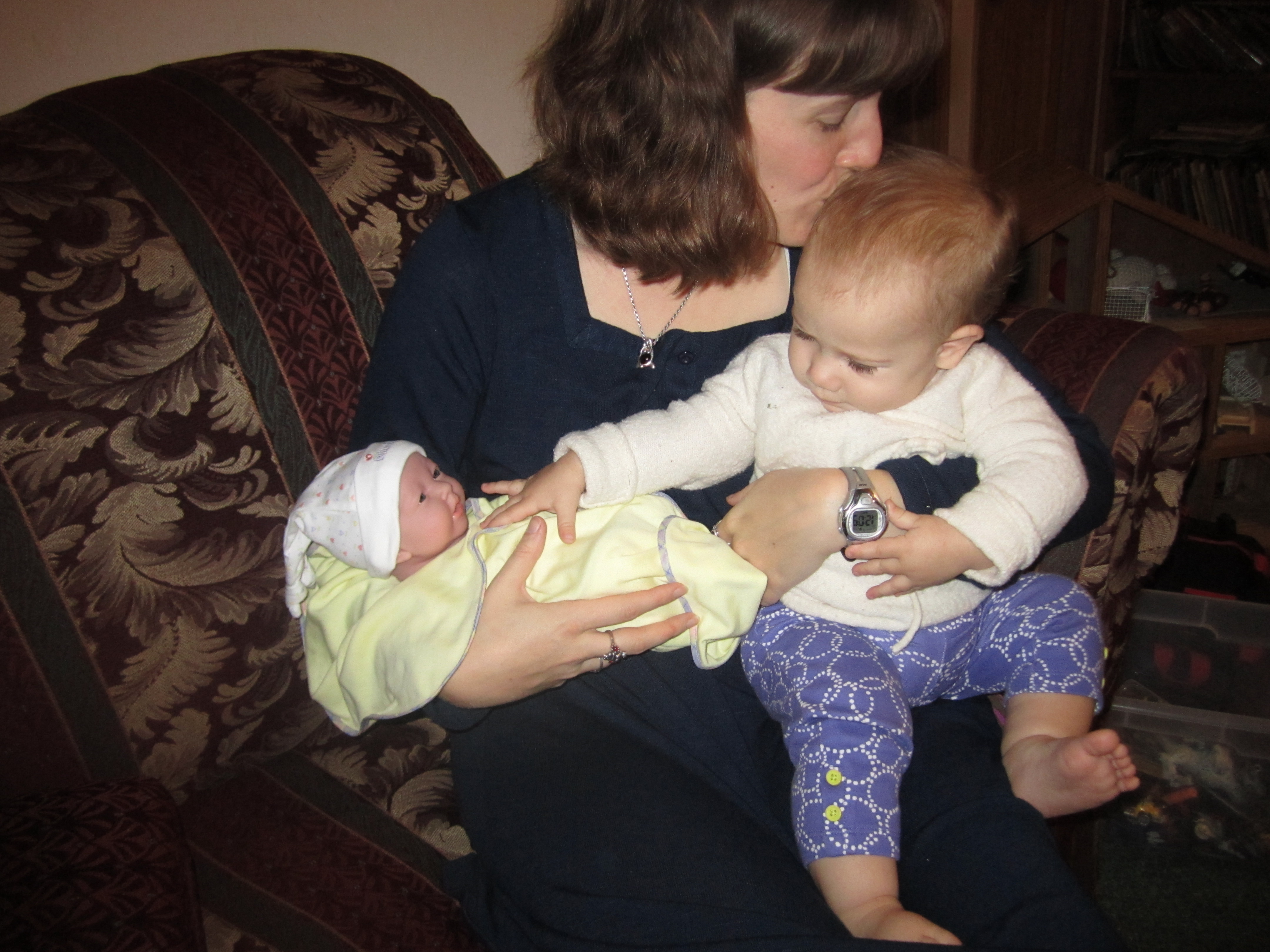
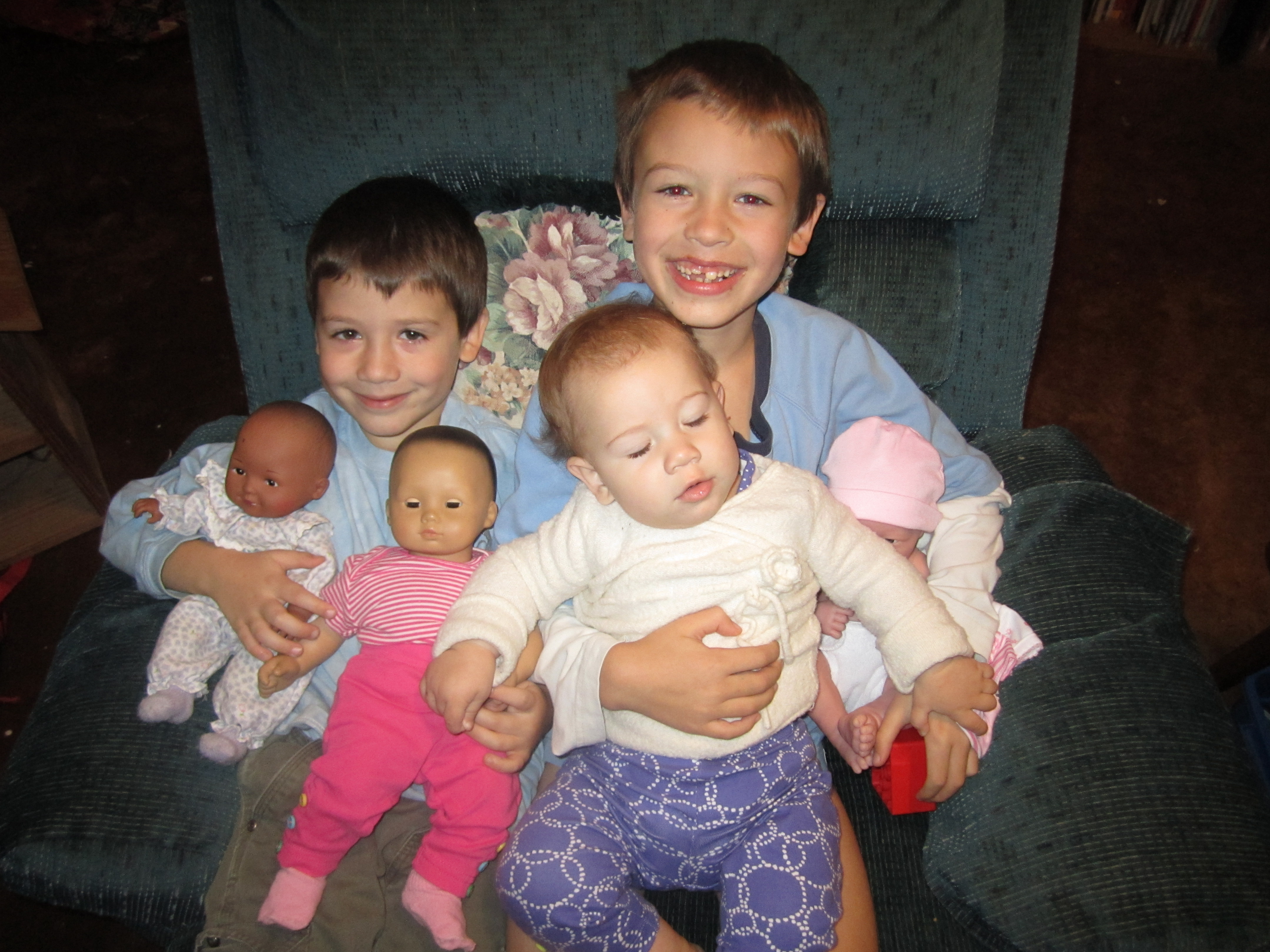
Lann wanted me to take this one—“make them guess who’s the real baby!!!”—conveniently, Alaina closed her eyes for this picture, making identification of the real baby even trickier…


Edited to add, Baby Sasha later experienced an unfortunate accident and had to be replaced. See Fetal Model Update post for pictures.

New Quotes About Birth, Motherhood, Activism, and Women

I have a LOT of new quotes to add to my collection! I’ve got to start updating more frequently. As I’ve mentioned before that while these quotes are obviously not my own words, I do appreciate a linkback to my site if you re-post them because I have a significant amount of legwork invested in finding and typing the quotes. Most are not recycled from other pages (I give credit if they are), but are typed up when they catch my eye in the books/magazines/journals I’m reading.

‎”Women experience pain differently; some feel strong overwhelming pain, some may feel a deep discomfort during birth, and still others may feel no pain at all. The experience of pain during childbirth facilitates an unfolding of inner power and resources we never imagined we possessed, similar to enduring the pain of completing a marathon at the finish line.” –Barbara Nicholson and Lysa Parker, API founders

(I do wish the analogy was flipped culturally–ie running a marathon is like giving birth, rather than vice versa. We’ll get there!)

“For months I just looked at you. I wondered about all the mothers before me–if they looked at their babies the way I looked at you. In an instant I knew what moved humankind from continent to continent, Against all odds.” –Michelle Singer (in We’Moon 2011 datebook)

“I use the word midwife to refer to all birth practitioners. Whether you are a mother, doula, educator, or understanding doctor or nurse you are doing midwifery when you care for motherbaby.” –Midwifery Today editorial by Jan Tritten

“Change, when it comes, cracks everything open.” ~Dorothy Allison

“I invite people to examine their lives, knowing that it’s scary, but that not doing it is even scarier.” – Barbara De Angelis

‎”There isn’t a lot you actually *need* to do to birth, but there is a lot you can do to get in the *way* of birth…” –Elizabeth McKeown

‎”Mother love is the fuel that enables a normal human being to do the impossible.” –Marion C. Garretty

‎”In western society, the baby gets attention while the mother is given lectures. Pregnancy is considered an illness; once the ‘illness’ is over, interest in her wanes. Mothers in ‘civilized’ countries often have no or very little help with a new baby. Women tend to be home alone to fend for themselves and the children. They are typically isolated socially & expected to complete their usual chores…while being the sole person to care for the infant…” –Milk, Money, & Madness

 “I have discovered nothing more stunning, nothing more emotionally stirring, nothing more intriguing than a woman as she creates life.” –Patrick Stull

‎”My first delivery was a traumatic experience, physically and psychologically almost destroying me. My second, with a midwife, allowed me to regain my womanhood and experience my biological imperative. And yet, I would do them both over again to have what I created.” –mother quoted in the book Evolve, by Patrick Stull

‎”Too often in modern busy obstetric practice, we doctors forget this meaningfulness of childbirth. In our anxiety and impatience, or in our sincere, but misguided efforts to relieve suffering (and childbirth is not without it), we relieve a woman not only of this suffering, but also of her ‘birth right.'” ~John Miller, MD, Childbirth via Citizens for Midwifery

‎”Too often in modern busy obstetric practice, we doctors forget this meaningfulness of childbirth. In our anxiety and impatience, or in our sincere, but misguided efforts to relieve suffering (and childbirth is not without it), we relieve a woman not only of this suffering, but also of her ‘birth right.'” ~John Miller, MD, Childbirth

 “A woman’s confidence and ability to give birth and to care for her baby are enhanced or diminished by every person who gives her care, and by the environment in which she gives birth…Every women should have the opportunity to give birth as she wishes in an environment in which she feels nurtured and secure, and her emotional well-being, privacy, and personal preferences are respected.” –Coalition for Improving Maternity Services (CIMS)

‎”Aside from new babies, new mothers must be the most beautiful creatures on earth.” ~Terri Guillemets

‎”It’s a good day not to judge anything – not myself, not others, not the world. Let us just be.” ~ Sonia Choquette

‎”We’re volcanoes. When we women offer our experience as our truth, as human truth, all the maps change. New mountains form” – Ursula Le Guin

‎”Be wild; that is how to clear the river.” –Clarissa Pinkola Estes

‎”I believe global transformation hangs on the empowerment of women.” –Vajra Ma

‎”Grace reveals to you a great mothering love that you can step into, that’s been here before you and will be here after you. Grace will be with you as you open your arms, as you release your children and send them out into the world. If you listen carefully, you can hear grace whispering its thanks to you for being a mother to these souls.” –Denise Roy (Momfulness)

‎”No one has yet realized the wealth of sympathy, the kindness and generosity hidden in the soul of a child. The effort of every true education should be to unlock that treasure.” – Emma Goldman

‎”A person who believes too earnestly in [her] own convictions can be dangerous to others, for absence of humor signals a failure in basic humanity.” –Thomas Moore (Original Self)

 “There is a sacredness in tears. They are messengers of overwhelming grief…and unspeakable love.” –Washington Irving

‎”It is easier to build strong children than to repair broken men.” – Frederick Douglass

‎”No mammal on this planet separates the newborn from its mother at birth except the human animal. No mammal on this planet denies the breast of the newborn except the human.” –James Prescott (neuropsychologist quoted in The Art of Conscious Parenting)

‎”Every society practices the birthing ceremonies that best mirror its values, norms, and philosophy.” –Gregory Bateson (quoted in The Art of Conscious Parenting)

‎”The world can only value mothering to the extent that women everywhere stand and declare that it must be so.” –Oprah

‎”Motherhood focused my early political consciousness. It helped me understand how the choices I make in my personal life are linked to those I make on a larger scale.” –Wendy Priesnitz

‎”There is a wild tiger in every woman’s heart. Its hot and holy breath quietly, relentlessly feeding her.” – Chameli Ardagh

 “The state of the world today demands that women become less modest and dream/plan/act/risk on a larger scale.” – Charlotte Bunch

‎”Prenatal care of the future will be guided by a [this rule]: “Eat sardines, be happy…and sing!” –Michel Odent

‎”If you are going to generalize about women, you’ll find yourself up to here in exceptions.” – Dolores Hitchens

‎”If we can mobilize the mothering instinct in all of us, we could save the planet. It is inappropriate to be dispassionate right now.” –Helen Caldicott (1981) in Momfulness

‎”There’s something contagious about demanding freedom.” – Robin Morgan

‎”Remember our heritage is our power; we can know ourselves and our capacities by seeing that other women have been strong.” – Judy Chicago

“For months I just looked at you. I wondered about all the mothers before me–if they looked at their babies the way I looked at you. In an instant I knew what moved humankind from continent to continent, Against all odds.” –Michelle Singer (in We’Moon 2011 datebook)

‎”I use the word midwife to refer to all birth practitioners. Whether you are a mother, doula, educator, or understanding doctor or nurse you are doing midwifery when you care for motherbaby.” –Midwifery Today editorial by Jan Tritten

“Change, when it comes, cracks everything open.” – Dorothy Allison

“I invite people to examine their lives, knowing that it’s scary, but that not doing it is even scarier.” – Barbara De Angelis”There isn’t a lot you actually *need* to do to birth, but there is a lot you can do to get in the *way* of birth…” –Elizabeth McKeown

‎”Mother love is the fuel that enables a normal human being to do the impossible.” –Marion C. Garretty

‎”As a woman, you are powerful. Birth is of course only one of many amazing pieces of being female, but it is unique in some very key ways…it is a time in a woman’s life that requires physical, spiritual, and emotional strength. It tests the foundation of who we believe we are as women, and challenges our beliefs about our own power.” –Marcie Macari (She Births)

‎”And I say the sacred hoop of my people was one of the many hoops that made one circle, wide as daylight and as starlight, and in the center grew one mighty flowering tree to shelter all the children of one mother and one father.” – Black Elk (via Literary Mama)

‎”We must act to keep the knowledge and the powers of women alive.” – Lynn Andrews

‎”Doctors ‘know’ they are giving women ‘the best care’…Birth activists…know that this ‘best care’ is too often a travesty of what birth can be. And yet on that existential brink, I tremble at the birth activist’s coding of women as ‘not knowing.’ So, here’s to women…to women knowing what is best for themselves and their babies, and to women rising above everything else.” -Robbie Davis-Floyd

 “The natural process of birth sets the stage for parenting. Birth and parenting mirror each other. While it takes courage and strength to cope with labor and birth, it also takes courage and strength to parent a child.” –Marcy White

“For each of us as women, there is a deep place within, where hidden and growing our true spirit rises…Within these deep places, each one holds an incredible reserve of creativity and power, of unexamined and unrecorded emotion and feeling. The woman’s place of power within each of us…it is dark, it is ancient, and it is deep.” –Audre Lorde

‎”Time stands still best in moments that look suspiciously like ordinary life.” –Brian Andreas (quoted in Momfulness)

‎”Your children love you. Be the trampoline for their rocketing and the cupped palms for their returning.” –Shae Savoy (in We’Moon 2011 datebook)

‎”Birth should not be a celebration of separation, but rather a reuniting of mother and baby, who joins her for an external connection.” –Barbara Latterner, in New Lives

‎”When you bring consciousness to anything, things begin to shift.”–Eve Ensler

‎”Birth is a time we need to believe in – and need those around us to trust and encourage – our bodies, our power.” –Choices in Childbirth blog

‎”Scientific medicine has never been shy to dismiss if not denigrate any perceived threat to its values or power.” –from the book Breakthrough: How the 10 Greatest Discoveries in Medicine Saved Millions and Saved the World

‎”Fatherhood challenges us, but it also enlarges us and reshapes our perception of what is important in the world around us. As we take stock of this new world, we find that doing our job as a dad is inherently honorable and respectful, and brings to us the dignity that goes with the territory. Far from being emasculating, being a dad makes us men in the finest sense of the term.” –Dads Adventure

‎”Where you give birth is not nearly as important as who is there. The *human environment*–the people who surround you and your relationships with them–is what sets the tone for the birth, directly affecting its safety and success, as well as your own satisfaction.” –Jan Mallak/Teresa Bailey, Doula’s Guide to Birthing Your Way

‎”Drugs, machinery, and medical personnel are not match for a woman’s own intellect and intuition. Birth is sexual and spiritual, magical and miraculous–but not when it is managed, controlled, and manipulated by the medical establishment, or hindered by the mother’s own mind.” –Laura Shanley quoted in book Home/Birth: A Poemic

I am compelled by some deep hunger of the soul, driven by a desire that will not leave me alone, to live life to the fullest. And I know this does not mean working endlessly, accomplishing the most, or consuming the greatest amount & variety of things and experiences. It means tasting each mouthful, feeling each breath, listening to each song, being awake & aware of each moment as it unfolds. ~ Oriah Mountain Dreamer

‎”The expectant mother is an image of strength, power, and creativity. She is able to carry twenty to thirty or more extra pounds and still continue her daily activities. And more wonderful, she is able to bring forth a new life.” – Carl Jones

‎”Make the most of yourself by fanning the tiny, inner sparks of possibility into flames of achievement.” -Golda Meir

‎”Every birth is holy. I think a midwife must be religious because the energy she’s dealing with is holy. She needs to know that other people’s energy is sacred…By religious, I mean that compassion must be a way of life for her. Her religion has to come forth in her practice…it cannot be just theory. Truly caring for people cannot be a part-time job.” Ina May Gaskin, from The Spiritual Midwife, Mothering #8, 1978

‎”We have barely tapped the power that is ours. We are more than we know.” –Charlene Spretnak

‎”Birth always alters you. It’s a learning experience…no matter how many classes you go to, how much you practice relaxation, how many books you read, or how many prayers you put out into the universe, childbirth is beyond your control, a force of nature, like a tornado, a blizzard, or an earthquake.” –Patrician Harman (Arms Wide Open: A Midwife’s Memoir)

“Becoming a mother makes you the mother of all children. From now on each wounded, abandoned, frightened child is yours. You live in the suffering mothers of every race and creed and weep with them. You long to comfort all who are desolate.” — Charlotte Gray (via Giving Birth with Confidence)

‎”It is not female biology that has betrayed the female…it is the stories and myths we have come to believe about ourselves.” –Glenys Livingstone

‎”In western society, the baby gets attention while the mother is given lectures. Pregnancy is considered an illness; once the ‘illness’ is over, interest in her wanes. Mothers in ‘civilized’ countries often have no or very little help with a new baby. Women tend to be home alone to fend for themselves and the children. They are typically isolated socially & expected to complete their usual chores…while being the sole person to care for the infant…” –Milk, Money, & Madness

“Women experience pain differently; some feel strong overwhelming pain, some may feel a deep discomfort during birth, and still others may feel no pain at all. The experience of pain during childbirth facilitates an unfolding of inner power and resources we never imagined we possessed, similar to enduring the pain of completing a marathon at the finish line.” –Barbara Nicholson and Lysa Parker, API founders

“Nourish beginnings, let us nourish beginnings. Not all things are blest, but the seeds of all things are blest.The blessing is in the seed.” –Muriel Rukeyser

 “One of the most important things I have learned about birthing babies is that the process is more of an unfolding marvel than a routine progression of events.” –Tori Kropp

“There is no telling how many miles you will have to run while chasing a dream.” ~Author Unknown

“Aside from new babies, new mothers must be the most beautiful creatures on earth.” ~Terri Guillemets (via Brio Birth)

‎”There’s nothing that can help you understand your beliefs more than trying to explain them to an inquisitive child.” – Frank A. Clark

“Grace reveals to you a great mothering love that you can step into, that’s been here before you and will be here after you. Grace will be with you as you open your arms, as you release your children and send them out into the world. If you listen carefully, you can hear grace whispering its thanks to you for being a mother to these souls.” –Denise Roy (Momfulness)

“I believe global transformation hangs on the empowerment of women.” –Vajra Ma

“Learning too soon our limitations, we never learn our powers. We will learn them now.” – Mignon McLaughlin

‎”No one has yet realized the wealth of sympathy, the kindness and generosity hidden in the soul of a child. The effort of every true education should be to unlock that treasure.” – Emma Goldman

“A person who believes too earnestly in [her] own convictions can be dangerous to others, for absence of humor signals a failure in basic humanity.” –Thomas Moore (Original Self)

“No mammal on this planet separates the newborn from its mother at birth except the human animal. No mammal on this planet denies the breast of the newborn except the human.” –James Prescott (neuropsychologist quoted in The Art of Conscious Parenting)

(While I like this quote, the snarky part of me wants to say, no other mammal wears clothes, sleeps in a bed, drives a car, etc., etc.)

“If we can mobilize the mothering instinct in all of us, we could save the planet. It is inappropriate to be dispassionate right now.” –Helen Caldicott (1981) in Momfulness

“Parenting is a mirror in which we get to see the best of ourselves, and the worst; the richest moments of living, and the most frightening.” –Myla & Jon Kabat-Zinn quoted in Momfulness

“Remember our heritage is our power; we can know ourselves and our capacities by seeing that other women have been strong.” – Judy Chicago

‎”I hear the singing of the lives of women. The clear mystery, the offering, and the pride.” – Muriel Rukeyser

“She’s turning her life into something sacred: Each breath a new birth. Each moment, a new chance. She bows her head, gathers her dreams from a pure, deep stream and stretches her arms toward the sky.” –from the journal offered for giveaway on Mamahhh

“Birthing is the most profound initiation to Spirituality a woman can have.” –Robin Lim (in She Births)

“As a woman, you are powerful. Birth is of course only one of many amazing pieces of being female, but it is unique in some very key ways…it is a time in a woman’s life that requires physical, spiritual, and emotional strength. It tests the foundation of who we believe we are as women, and challenges our beliefs about our own power.” –Marcie Macari (She Births)

“There is something wonderfully bold and liberating about saying yes to our entire imperfect and messy life.” –Tara Brach (in Momfulness)

“We cannot withhold facts for fear of offending because the importance of the information outweighs people’s right to not be challenged in their beliefs.” ~Maddy Reid

“Courage is what it takes to stand up and speak; Courage is also what it takes to sit down and listen.” –Winston Churchill

“A ‘no’ uttered from the deepest conviction is better and greater than a ‘yes’ merely uttered to please, or what is worse, to avoid trouble.” ~ Mahatma Gandhi

“Let’s declare a permanent truce with our bodies for the sake of our daughters. Imagine with me being at home, at ease, and at peace with our bodies.” –Patricia Lynn Reilly

 “I believe that natural childbirth is a right and a privilege…Our country needs to step up to the plate in educating women about the benefits of natural birth, and we need to help women actually do it – not just hear about it.” –Mayim Bialik

“I dream of giving birth to a child who will ask, ‘Mother, what was war?'” – Eve Merriam

“…undisturbed (not neglected or abandoned) birth is a powerful initiation into motherhood, not only in a physical and physiological sense, but also in an emotional and spiritual sense.” –Christina Hurst-Prager (in (ICEA) International Childbirth Education Association’s journal)
Active Birth in the Hospital

One of the inspiring images in ICAN of Atlanta's "Laboring on the Monitors" slideshow.

The vast majority of my birth class clients are women desiring a natural birth in a hospital setting. My classes are based on active birth and include a lot of resources for using your body during labor and working with gravity to help birth your baby. Sometimes I feel like active birth and hospital birth are incompatible—i.e. the woman’s need for activity runs smack dab into the hospital’s need for passivity (i.e. “lie still and be monitored”). So, I was delighted to discover this awesome series of photos from ICAN of Atlanta of VBAC mothers laboring on the monitors. It IS possible to remain active and upright, even while experiencing continuous fetal monitoring.

In my own classes, we talk about how to use a hospital bed without lying down—the idea that a hospital bed can become a tool you can use while actively birthing your baby. Here is a pdf handout on the subject:How to Use a Hospital Bed without Lying Down. In this handout, I offer these tips for using the bed as an active assistant, rather than a place to be “tied down”:

While being monitored and/or receiving IV fluids that limit mobility, try:

  • Sitting on a birth ball and leaning on bed
  • Sitting on bed
  • Sitting on bed and lean over ball (also on bed)
  • Kneeling on bed
  • Hands and knees on bed
  • Standing up and leaning on bed
  • Leaning back of bed up and resting against it on your knees
  • Bringing a beanbag chair, putting it on the bed and draping over it (can also make “nest” with pillows)
  • Partner sitting on bed and woman leaning on him/supported squats with him
  • Partner sitting behind woman on bed (with back leaned up as far as it will go)

While giving birth, try:

  • Hands and knees on bed
  • Kneeling with one leg up (on bed like a platform or “stage”)
  • Holding onto raised back of bed and squatting or kneeling
  • Squatting using squat bar

While most of the above tips can be used during monitoring, additional ideas for coping with a simultaneous need for monitoring AND activity include:

  • Kneel on bed and rotate hips
  • Sit on edge of bed and rock or rotate hips
  • Sit on ball or chair right next to bed (partner can hold monitor in place if need be)

If something truly requires being motionless, it can be helpful to have some breath awareness techniques available in your “bag of tricks.” One of my favorites is: Centering for Birth

Some time ago, a blog reader posed the question, can I really expect to have a great birth in a hospital setting? I definitely think it is possible! I also think there is a lot you can do in preparation for that great hospital birth! When planning a natural birth in the hospital, it is important to consider becoming an informed birth consumer. I always tell my clients that an excellent foundation for a simple, effective, evidence-based birth plan is to base it on Lamaze’s Six Healthy Birth Practices. My own pdf handout summarizing the practices is also available: Six Healthy Birth Practices. Don’t forget there is also a great video series of the birth practices in action! You might also want to get a copy of the book Homebirth in the Hospital. And, check out this post from Giving Birth with Confidence: Six Tips for Gentle but Effective Hospital Negotiations.

Before you go in to the hospital to birth your baby, make sure you have some ideas about this very popular question, how do I know if I’m really in labor?

And, finally, be prepared for the hospital routines you may encounter by reading my post: What to Expect When You Go to the Hospital for a Natural Childbirth.

For some other general ideas about active birth, read my post about Moving During Labor (written for a blog carnival in 2009).

Best wishes for a beautiful, healthy, active hospital birth! You can do it!