Archives

Bits of the month

I’m trying something new—a weekly (or monthly) wrap-up sort of post where I share bits and pieces that don’t warrant full posts and that allow me to share personal type things about homeschooling and so forth as well as just random thoughts and ideas and material for my personal memory archives. I’m inspired to do this by Molly Westerman’s always interesting links for thoughts posts and by a blog I stumbled across recently called The Holistic Homeschooler(she does a weekly “homeschool mother’s journal” post).

So…here goes…

What I’ve been up to

Me = grading papers and final exams. The last day of the session is today

What boys have been up to

They both enjoy playing Minecraft to an almost obsessive degree. This week they’ve been working on plans for programming mods for the game and setting up sort of mock worlds with things they’d like their mods to have. Lann worked on a Batman themed mod and Zander’s is about “hunchback zombies” (many of whom are holding cakes).

New dog Dagger!

They’ve been making movies for the last several months in a very dedicated manner that I’ve really enjoyed observing. Over 300 video clips have been filmed since this new project began. And, then, this week, the perhaps inevitable happened—they dropped and broke my camera. It was around $300, but I quickly realized that I didn’t have any grounds to be mad at them (despite the fact that they’d been carefully instructed to always keep the strap around their wrist and to be careful). When you give 8 and 5 year old’s free reign with a camera, breakage is definitely a possible side effect. I also try very hard to remember the people before things mantra. So, now their extensively movie making projects are on hold until we figure out a replacement. I’m thinking a low cost kid-friendly, video-capable camera and an adult camera might be the most logical plan.

They buzz with ideas constantly. Lann’s big project idea this week was for a virtual reality helmet. Mark and I both struggle with the balance between expressing interest in his ideas and offering reality checks. It can be extraordinarily exhausting, truly. The other thing they came up with is a cartoon strip about “Poo Log Dog.” This is based on their intense dislike of our new little dog, Dagger, who showed up skinny and starving last month and is now part of the family. I like him, which is a real shocker, because dogs are not my favorite. The boys are less enraptured.

We’re back to our no artificial colors experiment which seems to have a drastic impact on Z’s rage fits, Lann’s teasing, and their cooperation with each other. We’ve had days and days of happy playing, bright energetic faces and ideas, and very little discord or meltdowns.
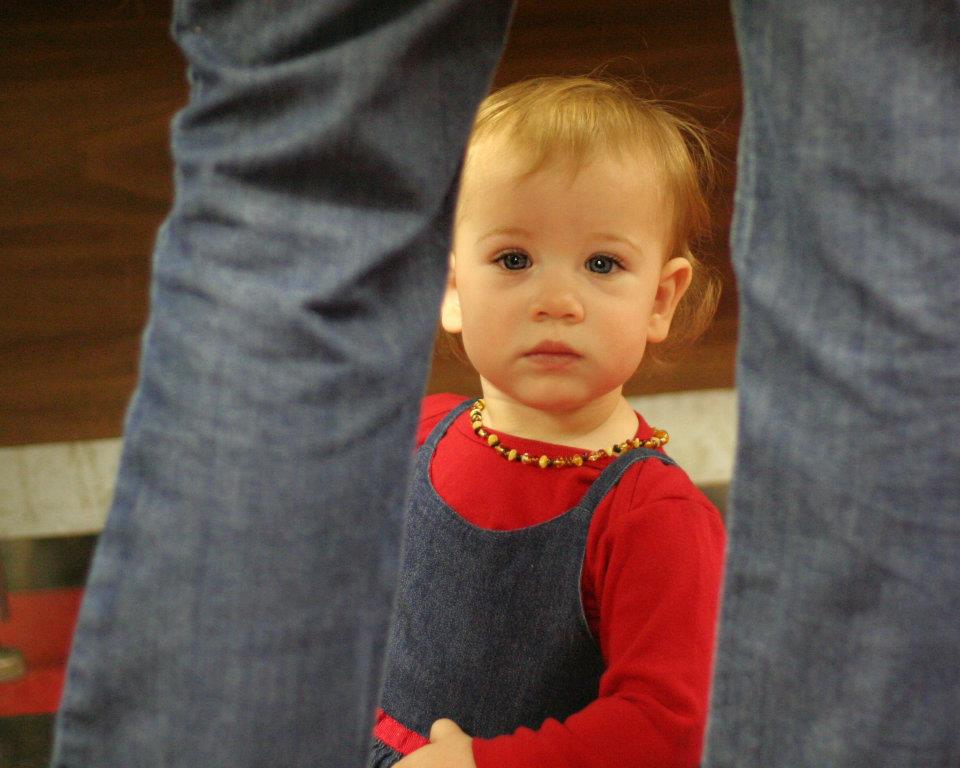
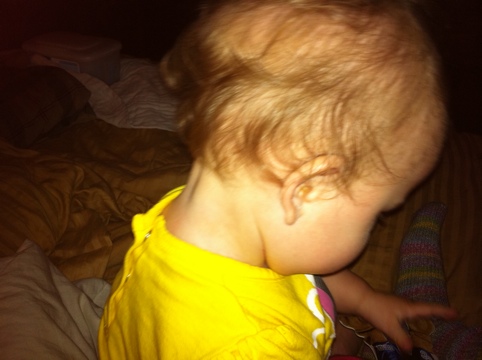
I love this baby's eye view picture taken by my friend at the playgroup Valentine party last month.

What baby has been up to

Walking more and more—I think we’ve almost seen the last of the crawling baby and the funny little one foot on ground, one leg down scoot-drag-crawl.

Climbs up on couch and onto stepstool in bathroom

Walks unsupported outside

Loves outside—loves so very much.

Likes to do mischievous stuff on purpose and stare at person til they notice and then squeal/yell while staring in their eyes.

Makes addle, addle, addle sound with tongue. Still uses adorable, “hmmm?” question-intonation sound to ask for or about things. Says Dagger, dog, Daddy, dragon, and quite a few other things. Refuses to perform any of them on command.

Loves to spin! In hammock swing outside, on Sit n Spin toy, dancing with brother. (A long time ago, pre-kids, I went to a workshop on play therapy. One of the speakers maintained that you should never bounce or rock or jiggle a baby, because it predisposes them to become addicts later in life—i.e. they start to like the feeling of having a “scrambled brain” and seek out that stimulation. It is amazing how certain, seemingly small experiences can leave a powerful legacy that cast a shadow on happy moments!)

What Mark has been up to

The man is quite focused on his plans for an aquaponics system. Is drawing plans for the greenhouse and figuring out supplies to buy. Planning to take a week off soon to focus on building it. We’ve also been doing our work party with a group of four friends. We take turns working on each other’s homesteads on alternate weekends. It has been a really good, community-building experience.

Homeschooling report

I finally did a Cartesian diver experiment (about buoyancy and air pressure) with the boys and it worked perfectly. While we did so, Alaina mashed her breakfast and a fruit leather into a cup of water.

I also signed them up for Studyladder. Jury is still out on whether this was a good plan. The graphics and style seem “primitive” in a way, like they were programmed in the late 90’s. However, I like it because they have math and science and counting in other languages, as well as reading. It seems much more comprehensive and full scale. Lann has also been wanting to work on his Click N Read Phonics lately and Zander has been doing Reading Eggs (still our favorite) and occasionally Starfall (we pay for the “more” version). Jumpstart we’ve let go, because even though it has really cool graphics and features, we can rarely get it to start up without crashing/freezing/or being generally frustrating.

I’ve been trying to find a good new book to read aloud to them. We keep reading the first chapter of various (free Kindle) books and then deciding we want something different.

This week (month) in blog news

I hit the 200,000 hit mark! That is pretty good for something that started out only intended for a local audience. I checked my annual stats too and noticed that in 2008 (my first full year of blogging), I had 8,000 hits during the entire year. Just this past week, my All that Matters is a Healthy Husband post had 8,000 hits by itself. ;-D Another new post that had a lot of shares and views was the Spontaneous Birth Reflex. I was happy to finally write it and also its related companion piece about the Rest and Be Thankful Stage of labor. My Honoring Miscarriage discussion and giveaway are still open too.

What’s on my mind

I am nearly speechless and also horrified about the current political obsession with contraception. This isn’t about birth control it is about woman control. I can’t stand it! And, I do not consider contraception to be a “women’s issue,” it is a human issue. Last time I checked, men participated in sex too. And, they too, desire a size of family that is compatible with their other needs (financial, personal, whatever). Likewise, many, many happily married, monogamous couples choose to use birth control and ; enjoy being able to have sex without procreating. It would be bizarre to characterize a man’s desire to be responsible for his own fertility as, “being paid to have sex all day.” It is equally bizarre to apply this claim to women.

In my work for my doctoral classes, I focus extensively on body politics, reproductive rights/politics, feminism, women’s rights, and personal autonomy as well as the historical and sociopolitical context of these issues. Since I live in a conservative area and have a “public” reputation to maintain, I shy away from addressing any of these subjects in depth here (I’m very googleable by students and prospective clients—heck, this blog was originally intended exclusively as a business tool for my local clients). However, in an ironic twist, that is exactly the kind of social control/inhibition/silencing/oppression of women that I am so passionate about addressing in my doctoral work. In fact, my dissertation is going to be about a thealogy of the body and how women’s bodies are the very terrain upon which patriarchal religious structures are built and maintained.

What I’m reading

I just finished reading The Hunger Games for book club—gobbled it up in a couple of hours—and I’m in the middle of the second one. I also finished reading Sisters Singing which is anthology of women’s prayers, blessings, songs, and readings. I read it over the course of several months in short segments during my daily meditation/altar time. I also finished reading Daughter of the Forest (also for book club) and Nobody Girl (don’t bother) and I am Woman by Rite: A Book of Women’s Rituals. I’m currently reading Peggy O’Mara’s Way Back Home collection of essays. The boys and I are listening to the sixth Harry Potter book on tape while in the car. I really love doing this! I less love realizing that by the time we finish we will have spent a minimum of 19 hours in the car. Whew. When I’m on my own I’m listening to Trickster’s Choice by Tamora Pierce, one of my favorite childhood authors who wrote The Song of the Lioness Quartet, which is where I got Alaina’s name (I guess when I was approximately 12). I recently finished re-listening to Two for the Dough and Three to Get Deadly by Janet Evanovich.

Articles I’ve enjoyed

Breastfeeding support: less is not more

What an awesome logo for the upcoming LLL of Illinois conference!

“I feel saddened by the alarming regularity at which women give up their desire to breastfeed because breastfeeding is not the ‘best’ way to feed babies. It’s the normal way. The idea that breastfeeding is somehow extraordinary persists because we live in a culture where very limited paternity leave is normal, where an expectation to continue cooking and cleaning and exercising and socialising in the post partum weeks and months is normal, and where a perception that unpaid work (especially if it is physical and monotonous) is pointless drudgery is normal.”

Breastfeeding – Does Science Mislead Parents & Professionals?

A clear majority of public opinion in the United States supports the view that ‘breastfeeding is healthier for babies’, yet substantially more than half of the surveyed population disagree that ‘feeding a baby formula instead of breastmilk increases the chances the baby will get sick’.

If exclusive breastfeeding was the norm against which other methods are measured, breastfeeding would not be ‘protective’ and breastfed infants would not enjoy ‘lower risks of ill health’; they would instead be referred to as ‘normal’, while formula fed infants are in fact ‘exposed’ to increased risk of poor health and development.

Also enjoyed this post from The Minimalists about turning off the internet at home. Since we live out of town and I work from home teaching online AND since it is super important to me to have a home based life, it wouldn’t make any sense for me to shut off the internet at home and drive into town to use it, but for a while after reading this article I fantasized about it.

And, this inspirational short post from Roots of She.

And, some pictures:
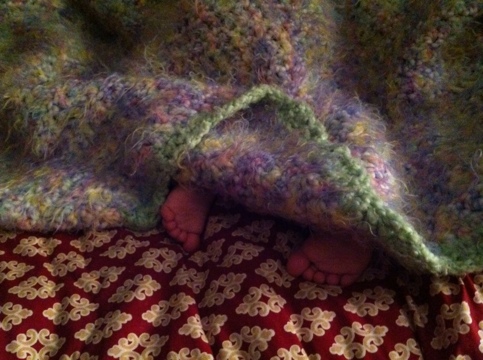
20120229-181538.jpg

This heart-meltingly adorable sight met my eyes as I sneaked away from Alaina's napping self this week.


20120229-181550.jpg

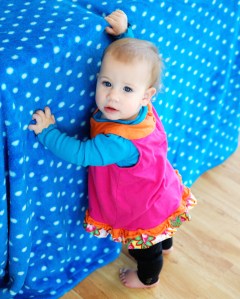
Tiny, independent nature girl!


20120229-181640.jpg

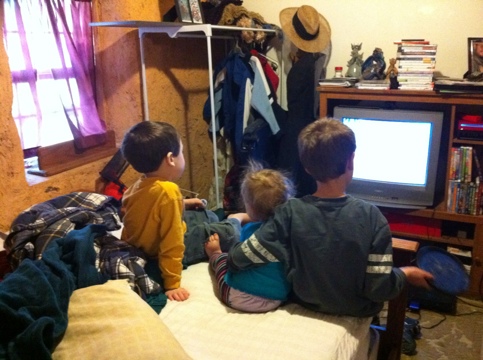
Sweet sibling moment even though I lose crunchy points because they're watching a movie (it is Kipper though)


20120229-181708.jpg

Yes, we have a michief-maker in the house!

I have about 14 others things I was going to include, but forgot about, such as the fact that we had our first local birth network meeting in February and I feel really good about it. But, now this post is terribly long and cumbersome anyway. I’m too wordy to do a bits and pieces type post, I guess! I thought it was going to be short and simple—instead it took several hours over the course of multiple days to get ready to post. Sheesh!
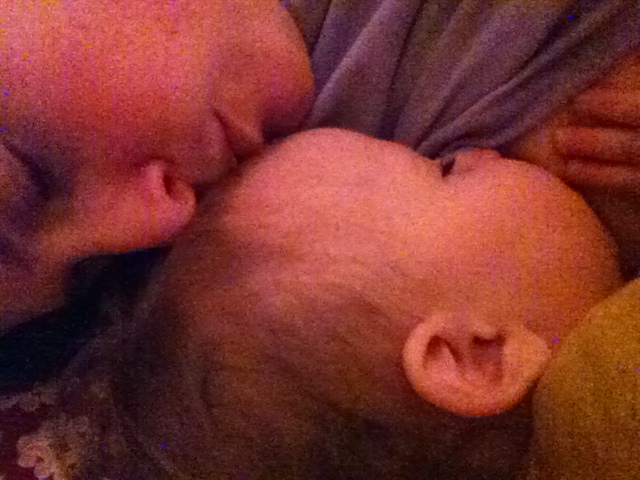
Ode to my nursling

“Every single human being was drummed into this world by a woman, having listened to the heart rhythms of their mother.”

-Connie Sauer

We nestle together, lives and hearts entwined. Bodies imprinted at a cellular level.

Greeting 2012 at midnight on January 1.

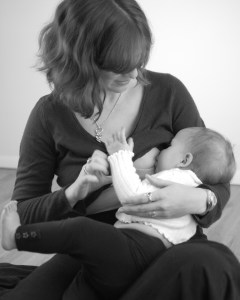
This is a fully embodied and multisensory experience. My lips on the top of her head, my nose in her hair. Breathing in her smell, feeling her fuzzy hair. Feeling her steady, vulnerable pulse in her skull against my lips. Sometimes I murmur or hum, mmm, so that my lips vibrate at the top of her head, and she answers me, “mmm, mmm, mmm.”

One hand cups the underside of my breast, the other sometimes holds my hand or grips my shirt or necklace, or randomly roams, patting my chest, stroking my belly, or pinching or scratching my skin. It often finds a place of rest near my heart.

I kiss her head. Nuzzle her with my nose and lips. Breathe her in. Breastfeeding is the real deal. The day in and day out fluid of connection and physical relationship. Body based. First habitat. First environment. First relationship—this is how she learns about relating to another, through my body. Through warm connection and synchronized rhythms.

Her head near my shoulder, on my upper arm. Her body in full contact with mine. Legs curl into me, resting on my thighs, or with a foot poked between my legs near my knees, keeping warm. Sometimes I pet her hair or smooth her eyebrows. I touch her cheek, hold her hand or foot or ankle.

We nurse.

Explanatory note: last month when I was nursing Alaina to sleep at bedtime, I was thinking about how I never wanted to forget what it felt like to have this breastfeeding relationship with a baby. So, I paid close attention to our physical alignment, etc. and when I got up, I jotted down what my heart had memorized during that time.

Book Review: Passionate Journey: My Unexpected Life

Passionate Journey: My Unexpected LifePassionate Journey: My Unexpected Life
By Marian Leonard Tompson, Melissa Clark Vickers
Paperback, 176 pages
Published June 19th 2011 by Hale Publishing

Reviewed by Molly Remer

Passionate Journey by La Leche League International co-founder Marian Tompson is the story of a young mother who became known worldwide and was even referred to as “The High Priestess of Breastfeeding Mothers.” Written in a light and casual tone, many of Marian’s stories are familiar if you’ve read The LLL Love Story, Seven Voices, One Dream, or The Revolutionaries Wore Pearls. While theoretically a personal memoir from one Founder, rather than a history of LLL, because Marian’s personal history is intimately entwined with the organization’s history, the end result is very similar to existing books about LLLI.

The writing style is simplistic and ironically often fairly dispassionate in tone, perhaps due to having a co-writer for a first person memoir. Chronology jumps are occasionally confusing.

Several anecdotes made me laugh aloud and read them to my husband–such as a medical intern rushing to the physician after witnessing one of Marian’s three natural hospital births and exclaiming, “oh, doctor! How did you do it?” As a birth activist and feminist, I’m fascinated by the radical courage required at the time to support and promote home birth and breastfeeding. While LLLI has always been a “single purpose” organization, it has also always recognized something that seems to escape the notice of many professionals and consumers: that normal, undisturbed breastfeeding begins with normal, undisturbed birth. Tompson notes: “…having a baby at home is at least as safe as a hospital birth, and in most situations home birth is safer. New sciences and new research are helping us understand why giving birth in your own bed, surrounded by people who care for you, where you feel supported and can celebrate the birth, rather than just endure it, changes both the experience and the outcome.” Tompson had her first home birth in 1955 and went on to have three more children at home. Her daughters carried on her legacy, one of them returning to the family home to give birth to her own daughter. The Tompson family home was also the site of multiple family weddings as well as the almost unheard of home funeral for husband Tom in 1981. In a nice touch, reflective paragraphs from each of Marian’s seven children close the book.

An inspirational story of the twists and turns of an ordinary life with an extraordinary global impact, Passionate Journey reminded me of the deep importance and transformative influence of providing support and encouragement to women who wish to breastfeed.

via Goodreads | Passionate Journey: My Unexpected Life by Marian Leonard Tompson – Reviews, Discussion, Bookclubs, Lists.

Guest Post: Alcohol and Breastmilk

Just in time for the holiday season, a note to clarify the issue of nursing moms drinking alcohol. (c) Karen Orozco

Your milk alcohol level will be exactly the same as your blood alcohol level. So if you’ve had a couple of drinks and hit the legal limit, your milk has about the same alcohol content as fresh fruit juice or a non-alcoholic beer–.08%ish. Alcohol does not concentrate in the milk, and as your liver clears it from your blood, the milk alcohol level will also drop. There is no need to pump and dump for a healthy baby! If you are concerned about even very minimal amounts of alcohol in the baby’s system, nurse before you go out, and time your drinking so that you give your liver time to metabolize it before the baby would want to nurse again.

The takeaway message: Long before you have enough alcohol in your milk for your baby to even notice, you would be so hammered that you would hardly remember you even had a baby. The concern for occasional drinkers is not really alcohol being passed to the baby, but mom and dad remaining sober enough to care for the baby–and that’s a really big deal where co-sleeping is concerned! Safely sleeping with a baby means being stone cold sober. Period.

Merry Christmas, Happy Holidays, and a great New Year to everyone!

Please note that I’m really only talking about moms who have a drink now and then, not habitual heavy drinkers. We just don’t know what effect continuous long-term exposure to alcohol might have on a baby.

Lynn Carter is an IBCLC in Kirksville, Missouri.

Top Ten Things I Love About Having a Baby

The winter holiday season remains linked with pregnancy loss for me. This time last year, I was entering the final stretch of my pregnancy-after-loss journey and feeling so hopeful that I would have a happy ending to my loss story. This time two years ago, I was reeling from Noah’s birth and it was so very difficult to experience the holidays without being pregnant after all. I feel like this whole first year with Alaina has represented another “circuit” in the labyrinth of pregnancy loss, pregnancy-after-loss, and then new baby. I feel like I have to make another complete “round” of the year, passing through all of those significant dates and milestones that I experienced first as a post-loss mama and as a PAL mama, but getting to take another lap, this time holding my new baby. Each time I pass another date, I feel almost like waving—here we gotogether!

So, in this time of thanksgiving, I want to share the

Top Ten Things I Love About Having a Baby

20111122-164224.jpg

Should have had Karen take a picture of the back of A's neck for me--as it is, this is the best I could do!

  1. Morning lounge-nursing
  2. The bent back of her neck as she seriously examines something.
  3. The way she rides on my hip and snuggles her head in on my shoulder.
  4. Being a little person’s one and only–the most loved and most desired companion. (To be fair, this is one of the hard parts too. It can be exhausting to be needed most of the day and night.)
  5. How curious she is and how quickly she notices something new–and how closely and seriously she studies and examines and explores it.
  6. Babywearing.
  7. Her fuzzy hair. Smelling her head.
  8. How she meets my eyes across the room, or while nursing, or in any instance when she is surprised or startled, or even just noticing something—she checks it out with her home base. It is an honor to be so trusted.
  9. Experiencing the thrill of discovery through her eyes.
  10. Having a baby! Being one of the babymamas. Being a mamatoto. It just feels really right to have a baby on my hip and at my breast.

Trusting gaze

Big girl! (but checking in to see if all is well--she's looking at me in this picture).

Happy Thanksgiving!

The Beauty of a Nursing Mother

“The beauty of a nursing mother can never be explained by a little oxytocin around the milk glands.” 

The Wisdom of the Body

(in a section discussing the biology and physiology of milk production and delivery)

I’ve mentioned before how very much I enjoy the Diane Wiessinger’s conference presentations. In 2007, I attended her amazing session called “Watch Your Language” that was about how we talk about breastfeeding. An example of a problem word when it comes to breastfeeding–using the word “special” to describe breastfeeding: a “special bond” a “special nursing corner” etc. and also using the word “perfect” (which communicates something that isn’t reasonable or that “real” people can’t do or live up to). She encouraged us not to “glorify breastfeeding” like this. Breastfeeding ISN’T special, it is NORMAL. A breastfed baby has a “normal bond” with its mother! Human milk isn’t the perfect food for babies, it is the NORMAL food for babies.

A long time ago I also marked the following quote to share from K.C. Compton in an article in Utne about baby boomers:

We discovered firsthand the radical nature of simple acts: Sit in the front of the bus, ask that your husband be present during his son’s birth, decide to feed your infant with your own breasts, refuse the nuclear power plant being built just up the road. We also learned how much more effective those acts can be when compounded by the hundreds and thousands, their feet on the street…

And, then this reminds me of a powerful editorial by Peggy O’Mara, urging women to see their mothering as a political act:

See your mothering as a political act. The way you talk to your child becomes his or her inner voice. The way you model acceptance of your own body becomes the way your daughter learns to accept hers. The way you model the distribution of chores in the household provides a blueprint for your children’s marriages. Bringing consciousness and awareness to the small acts of your life with your family can change the world. Your mothering is enough.

…As mothers, we think that our concerns are the concerns of the many. We have to make sure that they are. As mothers, we hope that our children are protected by society. We have to act when they are not. As mothers, we have authoritative knowledge about our own experience, an experience we have in common with millions of women. We can build a more just society on the ground of this common experience.


Integrated Mama

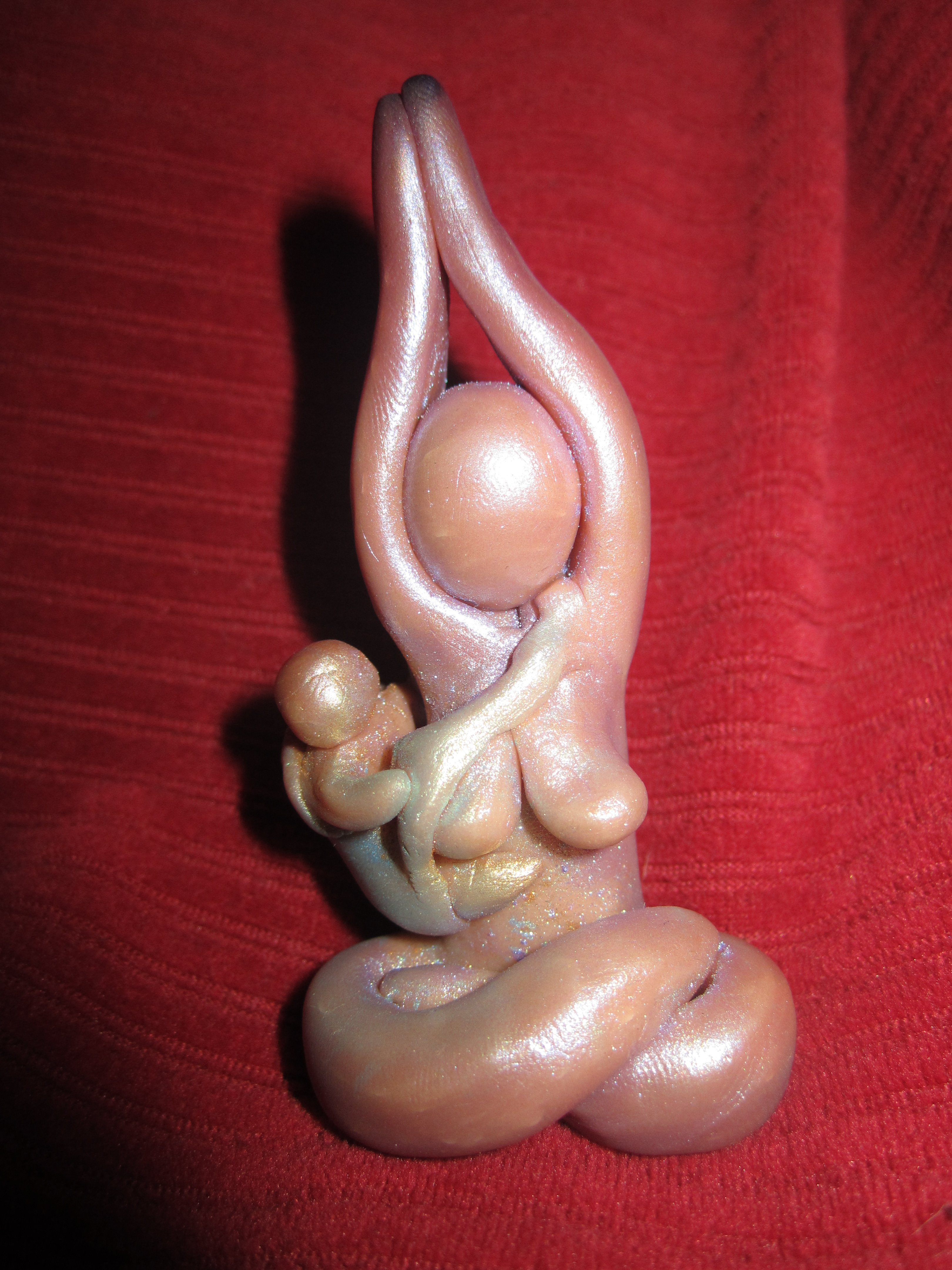
Alaina turned nine months old this week and I again found myself wishing to make a new polymer clay goddess sculpture to capture this new phase in our life cycle. I’m interested by how I began this series during my pregnancy with her and how I continue to feel “moved” to add to it as she grows and changes. While she is on the move a lot, she also spends a great deal of time riding on my hip in a pouch carrier. So, it felt àpropos to make another slingin’ mama figure, this time with the baby on her hip. While, as always, it isn’t perfect, I do like how my new sculpture turned out:

Slingin' mama goddess!

Healthy Baby Fair Booth--just popped out of baby carrier for photo op

I’ve written several times before about my desire to live an integrated life and I honestly think that babywearing makes it (semi) possible. She most wants to be with me, but often she doesn’t want direct play, she wants to ride along and see what interesting things I’m going to do. I think this is part of baby’s biology and part of how the motherbaby relationship is socially and biologically meant to be at this point—mother goes about her business (grinding corn, perhaps), with baby very close and watching. Unfortunately, this doesn’t include typing things on the computer, which is what much of my work actually entails. So, I save household work to do while she’s awake and riding along and I do computer-based work while she sleeps. That way, we (usually) both get our biologically appropriate needs met within our cultural context. Recently, I had a LLL table at the local Healthy Baby fair and several people came up to my friend and me to comment on how we were wearing our babies and how they were just riding along so content to look at what was going on. I tried to explain to one booth visitor who was expressing concern about the changes babies bring to life how I believe that babies can go along with mothers as they go about their tasks/days—it is possible to integrate the baby into the rest of your responsibilities.

Looking at the wavy lake from safe harbor of mama's body (in Ergo)

I was thinking about this again over the last couple of days that I spent with my family on a mini-vacation to Silver Dollar City (theme park in Branson, Missouri). As long as Alaina was riding with me in the pouch or Ergo she was totally happy. We spent hours outside on Wednesday in pretty bitter cold and she rode and looked and nursed and snoozed. On Thursday we took a lunch “cruise” on a Showboat (didn’t actually cruise due to wind) and again, she rode and checked out the world. Then, on Friday, we were back in the park where she got to go on her first rides ever like a big girl—the carousel (out of pouch) and on the Flooded Mine ride (where the whole family rode in a boat—she rode in the Ergo in the boat with me).

Big girl going for a ride!

Several years ago at an LLL conference, a sleep “expert” spoke during the lunch session. She was of the opinion (which is not shared by LLL as a whole), that nursing a baby to sleep is a “habit” that you don’t want to get into and advocates detaching them when they get sleepy so that they learn how to fall asleep without relying on nursing to get them there. She gave examples of babies and sleep associations and then said, “but if a baby is used to being nursed to sleep, they could fall asleep in the middle of Times Square while the ball was dropping on New Year’s Eve as long as mama was there too and nursing them.” And, I thought, EXACTLY! The problem with that is….?! That is one of the very best things about breastfeeding to me—home is where the mama is. So, this week as Alaina snoozed peacefully when she was sleepy while roller coasters sped around and bluegrass played and fiddlers fiddled and cold winds blew and people swarmed all over, I was thankful that I’ve never tried to get my baby to develop a different sleep association! Breastfeeding is magic like this to me, not an inconvenience or a habit to be restructured.

She is nursing in this picture

Of course, integration of parenting with work can also be a pretty significant challenge, as I touch on in my recent interview in the working/parenting series at Molly Westerman’s blog First the Egg. (I typed my responses to her interview questions on my phone while lying on my side in bed nursing Alaina to sleep.)

My whole series of sculptures

American Girl & Nursing

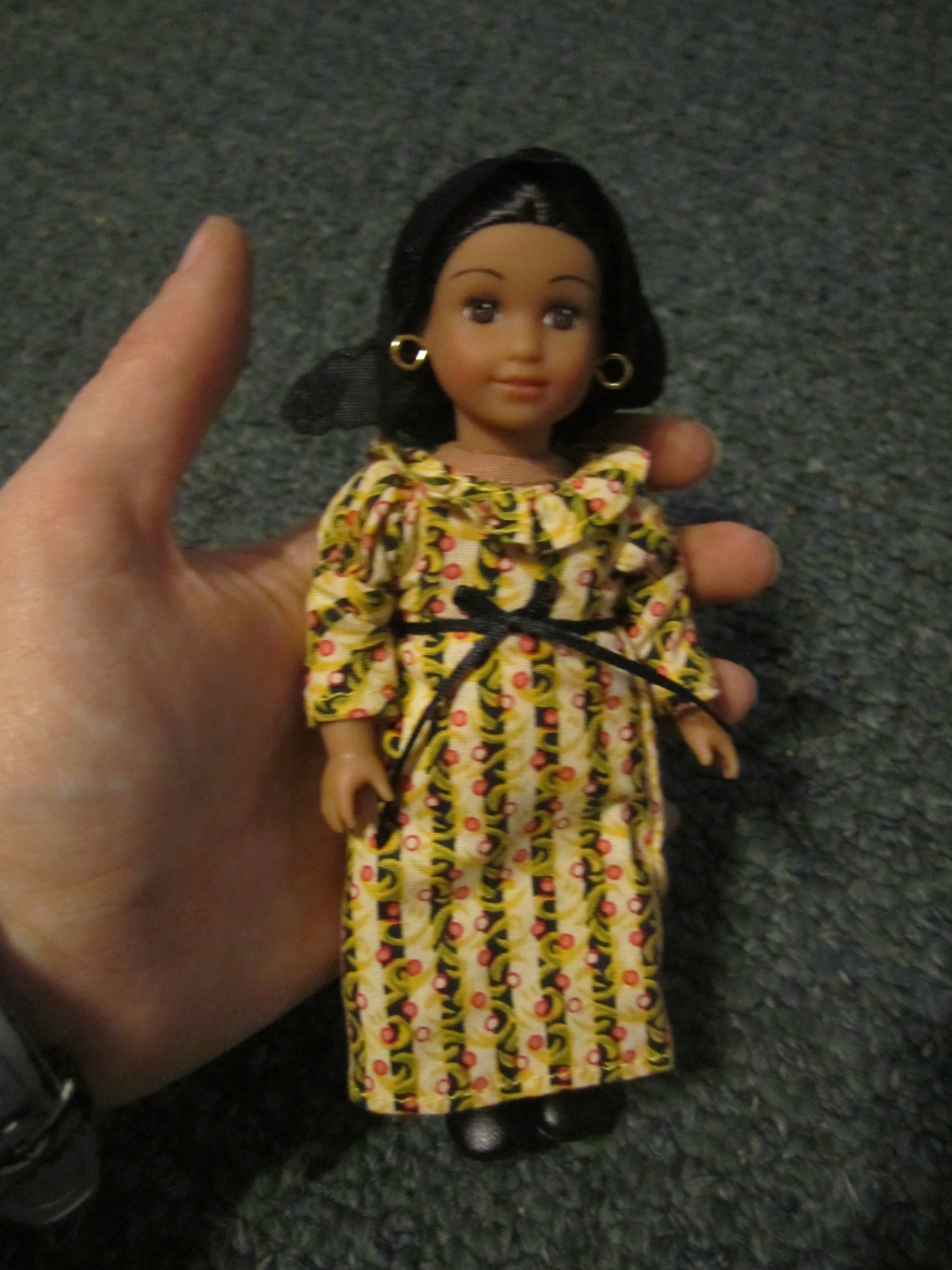
I’ve long loved American Girl dolls. While I’ve decided to finally decree “enough” on the full-size dolls, I continue to want to add to my collection of the mini dolls. This year in honor of the 25th anniversary, the company has special edition mini dolls in their holiday dresses. I went back and forth about whether or not I should buy them and finally decided to order a couple as my “reward” for juggling so much this session and making it through to the end! I opened up mini Josefina when my Monday night class ended and when my online class ends tonight, mini Kit will join her 🙂

To relate this post to my overall themes of this blog, I thought I’d mention an experience in the past when reading an American Girl book. In their “history mystery,” Riddle of the Prairie Bride, widowed father of 12 year old Ida Kate sends for a mail order bride. She arrives with her one year old baby and it soon becomes clear that something is amiss. She does not meet her description from her letters, gives inconsistent answers and so forth. Ida Kate investigates, mystery is solved, and true love reigns on the prairie. What’s the connection you may ask? Because, I always keep an eye out for “breastfeeding as normal” content in kids books and I loved that in this mystery the first clue that the prairie bride is not who she says she is is that she didn’t nurse her baby! (And, a one-year-old baby at that! Wow!) The book states, “She feeds him milk from a cup rather than nursing him as mothers do…” (Ida Kate notices the baby patting on the front of the mystery woman’s dress and instead of nursing him, she gets a cup of milk for him). I also liked the use of the word “nurse” instead of “breastfeed.” Cozy, familiar, desirable, and NORMAL. (With the emphasis on the process and not the product as Diane Wiessinger would say.) Of the top of my head, I also remember that in one of the AG short stories–Josefina’s Reward I think—her older sister has to hurry back from what she is doing to “nurse the baby” (who is also over one year old and walks and talks in the book).

(These breastfeeding bits don’t really make up for the bottles sold for Bitty Baby, but anyway.)

Mini Josefina in holiday finery

Holiday mini Kit is still in her box waiting to reward--luckily I have two regular mini Kits (plus one big Kit) to keep me company 😉

Writing and Nursing

Today, I came across an old quote I had saved from the book The Writer’s Life. Essentially a collection of quotes from the diaries of famous writers like John Steinbeck, Elizabeth Barrett Browning, George Eliot, Mark Twain, etc., the compilers of the book went through authors’ diaries and put together a new book—it is organized in to chronological sections starting with excerpts written in youth and then thoughts about the writing process, fame, ambition, and so forth, and then concludes with thoughts about death, life’s work, and immortality.

From Rosellen Brown, this quote felt particularly relevant to me:

“I know that for me, writing has something in common with nursing the baby. I can’t do it if I don’t do it all the time. Put it aside to build up strength, the flow will dwindle and finally disappear. When the baby was at my breast ten times a day, I had a rare secret feeling that we were violating a law of nature, defying a form of entropy…One cannot hoard some things. The more I gave the baby, the more I had to give her, and had I tried to conserve myself, I would have found that I conserved nothing.”

I once read somewhere else that after you have been writing a blog for some time, you will discover that you have generated a significant body of work. I love that. I can think about blogging as “wasting time” or as something to do only when I have a few extra minutes, or, I can look at it as an opportunity to contribute to my body of work in the world. This is my 469th blog post here! Anyway, this is why I decided not to completely quit blogging, but instead to set aside some dedicated time on Wednesdays to write a post (even if it is a short one). I do find that I need the “proper” time to write, or the flow just isn’t there and can’t be forced. That isn’t true of nursing—I can do that anywhere, anytime! (Well, though it, too, can’t be forced!).

I’ve had emails from several readers wanting to read more about homeschooling and how I “structure my day.” I told my husband that and he asked, “did you say, ‘I’d like to know that too?'” ;-D I’ve also had a request to write about elimination communication. I plan to write about both these topics soon. My nursling will be 8 months tomorrow and my biggest boy will turn eight years old on the 21st, so I’d like to write about both of those occasions before tackling homeschooling and ECing.

This SO isn’t an exciting or earth-shaking post, but here it is anyway…!

Milk, Money, & Madness

In early August, I received a press email from Evenflo about their “in-law feeding frenzy” video. While I recognized they were attempting to be playful and funny, I chose not to share the video with my readers because I found several elements of it problematic. Rather than recognize the opportunity to create an internet stir over the video, I just wrote back to the company and told them, “I try not to encourage the notion of other people having a chance to feed the baby, so I do not plan to use the video myself—I would have been more pleased with it if somehow mom stood her ground and helped in-laws see that there are other ways to be involved with the baby other than by feeding it expressed milk. I don’t promote the idea that mothers need to pump, ‘just because.’” Considering what a controversy has now boiled up this week over Evenflo’s “funny” breastfeeding video, I confess I sort of feel like I missed my opportunity for a major wave of blog traffic by exposing the ad and expositing on the problems therein when I received it in August! 😉  However, when considering the controversy, I thought of some wonderful quotes I’d saved to share from the book Milk, Money, & Madness and so I’m sharing them instead.

Dia Michels is one of the co-authors of Milk, Money, and Madness and I’ve actually heard her speak twice—once in 2003 when I was pregnant with L and then in 2007 at the LLL of MO conference. I’m surprised at how thoroughly riveting a book about the “culture and politics of breastfeeding” can be and I highly recommend it to breastfeeding and women’s health activists.

In perfect response to the Evenflo video, we have this quote:

“Babies need holding, stroking, dressing, bathing, comforting, burping, and, within a short time, feeding solids. Dad can do every one of these. The desire to participate should not be confused with the need to give the baby the best of what each partner has to offer.”

I hear from people SO often that they want Daddy to be able to participate in baby care by giving the baby a bottle. There are LOTS of things that fathers can do for their babies, other than feeding—bathing, snuggling skin-to-skin, diaper changes, playing, babywearing, and just plain walking around holding the baby while mom takes care of her own needs.

And, here is an excellent quote with regard to public breastfeeding/breasts as sexual objects:

“When the attitude is taken that a woman’s breasts belong to her and no job is more important than caring for one’s young, the confusion between breastfeeding and obscenity goes away.”

And, then considering the argument that bottle feeding “liberates” women from the tyranny/restrictiveness of breastfeeding:

The liberation women need is to breastfeed free of social, medical, and employer constraints. Instead, they have been presented with the notion that liberation comes with being able to abandon breastfeeding without guilt. This ‘liberation,’ though, is an illusion representing a distorted view of what breastfeeding is, what breastfeeding does, and what both mothers and babies need after birth. [emphasis mine]

I’ve noted before that I am a systems thinker and I think this way about breastfeeding as well as many other experiences—breastfeeding occurs in a context, a context that involves a variety of “circles of support” or lack thereof. Women don’t “fail” at breastfeeding because of personal flaws, society fails breastfeeding women and their babies every day through things like minimal maternity leave, no pumping rooms in workplaces, formula advertising and “gifts” in hospitals, formula company sponsorship of research and materials for doctors, the sexualization of breasts and objectification of women’s bodies, and so on and so forth. According to the book, “…infant formula sales comprise up to 50% of the total profits of Abbott Labs, an enormous pharmaceutical concern.” And the U.S. government is the largest buyer of formula, providing it for something like 37% of babies. (I should have written that quote down too!)

I have a special interest in how women are treated postpartum and Milk, Money, and Madness has some gems to share about postpartum care as well:

An entirely different situation exists in societies where technology is emphasized. The birth process is seen from a clinical viewpoint, with obstetricians emphasizing technology. A battery of defensive practices are employed, some of which are totally irrelevant to the health of either mother or infant. Skilled technicians spend their time and the family’s money on identifying the baby’s gender and performing various stress tests. All the focus is geared toward the actual birth. After the birth, mother and baby become medically separated. The infant is relegated to the care of the pediatrician, the uterus to the obstetrician, the breast abscess to the surgeon. While the various anatomical parts are given the required care, the person who is the new mother is often left to fend for herself…All the tender loving care goes flows to the infant; the mother becomes an unpaid nursemaid. [emphasis mine]

When I do breastfeeding help with mothers, I always make sure I address the whole woman and do not  focus only on the mechanics of breastfeeding. Recently a mother told me, “I don’t know if it was your breastfeeding advice or just the encouragement that helped most, probably both.” Women need both—“technical assistance” and emotional support. Sometimes, all they need is the emotional support and they can figure out the rest with some undisturbed time with their babies. The pendulum in breastfeeding support is shifting from active, “education” based strategies, to the recognition that often the best we can do for mothers is give them time to get to know their babies. Rather than offering positioning “advice” and “breastfeeding management suggestions,” we need to give her space, stand aside, and offer encouragement as she discovers her baby and the biological dance they are hardwired to engage in. The Milk quote continues with:

This may appear to be a harsh evaluation, but it is realistic. In western society, the baby gets attention while the mother is given lectures. Pregnancy is considered an illness; once the ‘illness’ is over, interest in her wanes. Mothers in ‘civilized’ countries often have no or very little help with a new baby. Women tend to be home alone to fend for themselves and the children. They are typically isolated socially and expected to complete their usual chores, including keeping the house clean and doing the cooking and shopping, while being the sole person to care for the infant… (emphasis mine)

According to the U.S. rules and regulations governing the federal worker, the pregnancy and postdelivery period is referred to as ‘the period of incapacitation.’ This reflects the reality of the a situation that should be called ‘the period of joy.’ Historically, mothering was a group process shared by the available adults. This provided not only needed relief but also readily available advice and experience. Of the ‘traditional’ and ‘modern’ child-rearing situations, it is the modern isolated western mom who is much more likely to find herself experiencing lactation failure.

I think these quotes are important because I think there is a tendency for women to look inward and blame themselves for “failing” at breastfeeding. There is also an unfortunate tendency for other mothers to also blame the mother for “failing”—she was “too lazy” or “just made an excuse,” etc. We live in a bottle feeding culture; the cards are stacked against breastfeeding from many angles–economically, socially, medically. When I hear women discussing why they couldn’t breastfeed, I don’t hear “excuses,” I hear “broken systems of support” (whether it be the epidural in the hospital that caused fluid retention and the accompanying flat nipples, the employer who won’t provide a pumping location, the husband who doesn’t want to share “his breasts,” the mother-in-law who thinks breastfeeding is perverted, or the video that promotes expressing milk so other people can feed the baby). Of course, there can actually be true “excuses” and “bad reasons” and women theoretically always have the power to choose for themselves rather than be swayed by those around them, but there is a whole lot that goes into not-breastfeeding, besides the quickest answer or what is initially apparent on the surface. As I said above, breastfeeding occurs in a context and that context is often one that DOES NOT reinforce a breastfeeding relationship. In my six years in breastfeeding support, with well over 600 helping contacts, I’ve more often thought it is a miracle that a mother manages to breastfeed, than I have wondered why she doesn’t.

For more about the relationship between birth and breastfeeding, check out my previous post: The Birth-Breastfeeding Continuum.

Check out those exclusively breastfed thighs!