Archives

Kids & Plans

My kids have always had fairly high touch needs and since they’ve been sick recently that been even more clingy/touchy than usual. Their preferred state would be to hang out like this for much of the day:
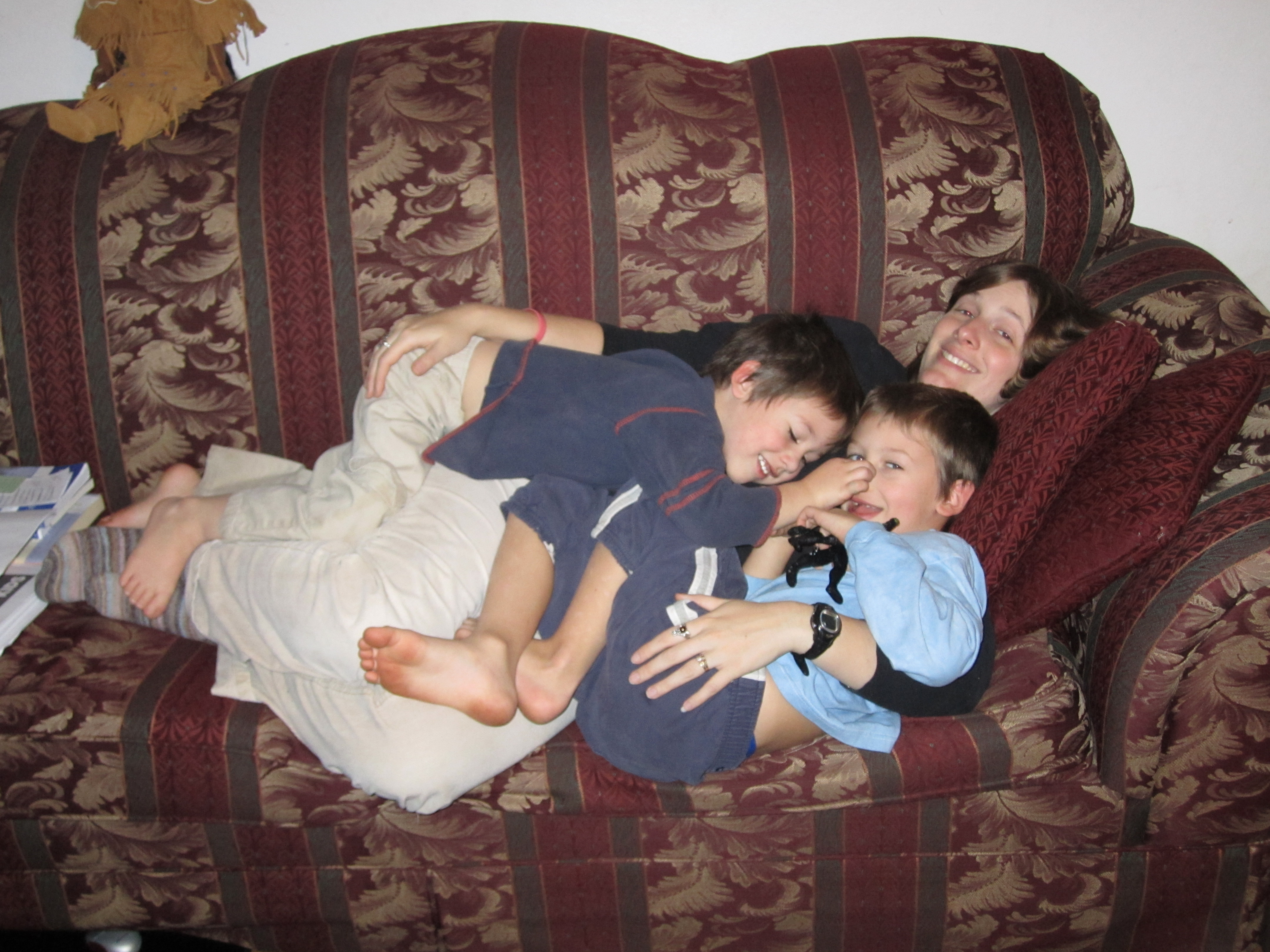
They of course wiggle and pinch each other’s noses, etc. and do not lie there quietly, but their preferred location is still actually to be ON my body…

This has been kind of exhausting lately as well as almost literally suffocating. I enjoy snuggling with my kids, but they often manage to do it in the least nurturing way possible! I’ve been getting a little stressed thinking about the addition of someone else’s attention needs to the family—this is a good thing though, really. Before, I used to not really be sure I was actually going to have a living baby at the end of this pregnancy, so I didn’t give a huge amount of thought to integrating her into our lives (it was the “if” thing). The pendulum has been shifting for some time from “if” to WHEN, and now that I’ve hit 30 weeks, I feel even more confident every day that someone new will indeed be joining our family in January. Thus, the time for getting realistic and practical and planning ahead for the changes she will bring is NOW…

So, I had a semi-neurotic freak-out this evening about how I will possibly manage to split my attention any further, etc., etc. It was a long, tiring day in general and my mood-odometer was on “depleted.” After some talking with my husband, I regained much of my equilibrium and we made some plans for making some more changes around the house (like his putting the kids to bed more often—things like that). I am still having “can’t say no” issues and spent more time today thinking about/doing something I should have said no to as well as NOT doing things that I “really want to do…” Same old, same old. Do I really need to write another post about it?! 😉 No.

So, back to the “plans” part of my subject today, I’ve collected quite an assortment of certifications in my 5.5 years in birth work and you would think I would not need another (I don’t think I ever even mentioned that I finished my ICEA Prenatal Fitness Educator certification two months ago!). I occasionally toy with the notion of sitting for the IBCLC exam—the criteria keep changing and each year I think that maybe I should do it. But, then I realize that I’m not really interested in professional LC work. I’ll stick to my mother-to-mother support and don’t need to go further. I have also briefly wondered if I’ve heard a “call” to midwifery (it seems like many doulas and CBE’s have “midwife” as the eventual destination in their birthwork path), but then quickly remembered that I have serious “blood” issues and doubt I could actually handle the nitty-gritty of midwifery. So, I’ve concluded that birth educator really is the right place for me. However, I’ve been feeling dissatisfied with over a year with my outlet for this work—something has been missing for me and I can’t quite put my finger on what it is, but I think (as I have previously written) it is to go deeper. When I read information about Birthing from Within trainings or re-read the book (6 times so far) or read Pam’s blog, I know somewhere deep in my heart that I am meant for Birthing from Within. And, some day, I am actually going to manage to attend a training. I’ve had it in my heart since I was pregnant with Lann in 2003, but so many things always made more “sense” or were more “convenient,” so I always did those instead. It will probably take another three years or so before I can actually do it, but I’m really going to do it eventually. Just felt like making note of that commitment to myself in a public way!

And, continuing with my sort of rambling, not that on-topic way, Mark got his faceting machine recently and faceted one of the quartz crystals that we collected on our recent trip to AR:
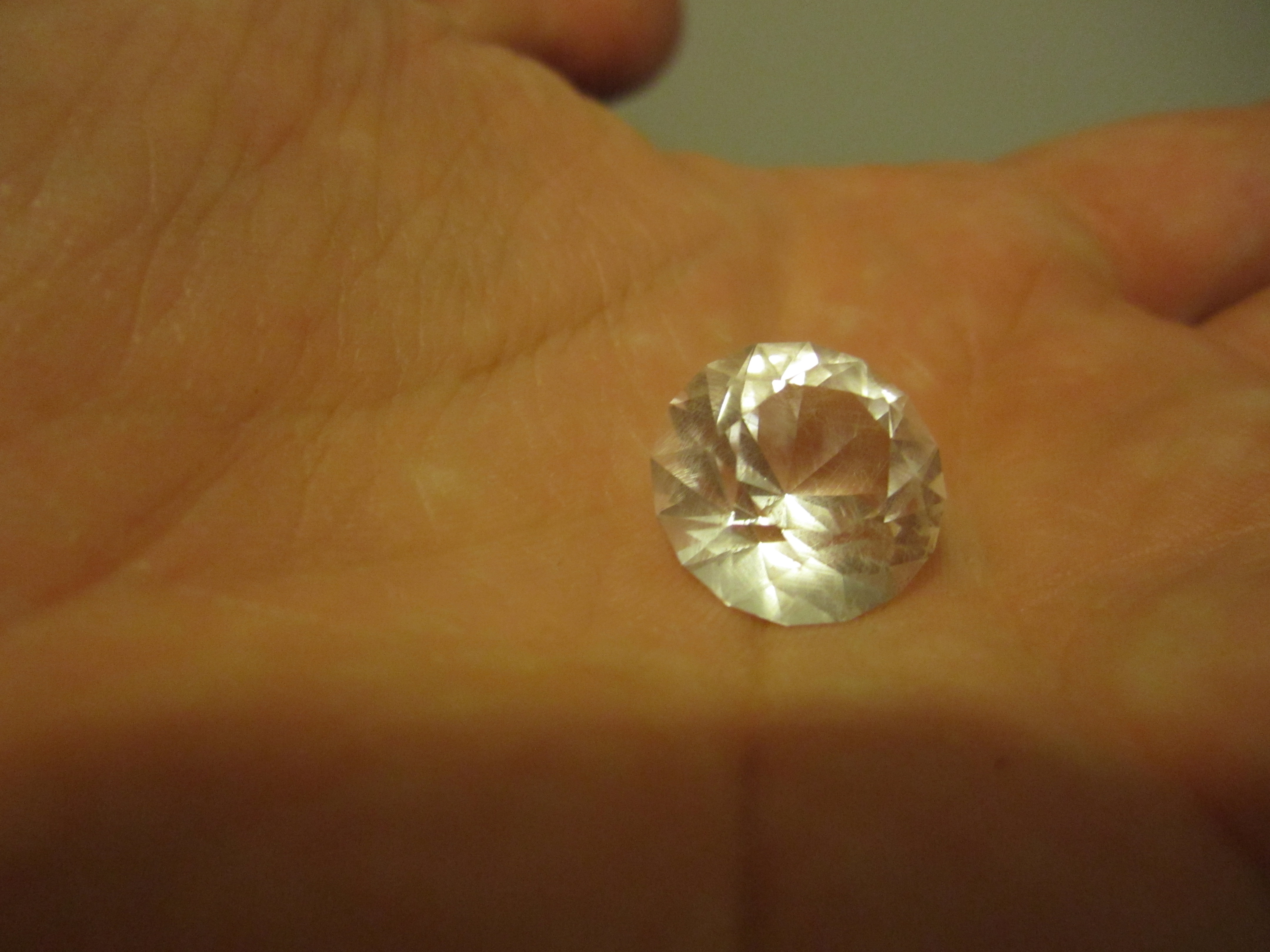
I was pretty impressed! He is really good at saying, “I think I’d like to try that” and then reading about it, getting some equipment and doing it (whatever it is) with pretty pro results 🙂

Book Review: Secrets of Confident Childbirth

Book Review: Secrets of Confident Childbirth
By Vanessa Turner, Jackie Fletcher, Janay Alexander
HotHive Books, 2009
ISBN 978-1-906316-34-1
160 pages, paperback, ÂŁ24.99
http://www.thebirthspecialists.com/book.html

Reviewed by Molly Remer, MSW, ICCE, CCCE
https://talkbirth.wordpress.com

“Your body is a complex work of art that functions perfectly” –The Birth Specialists

In an era when much pregnancy and birth literature seems to written in a “climate of doubt,” books like Secrets of Confident Childbirth offer a welcome and affirming alternate perspective—that of celebration and anticipation.

Accented with many beautiful, artistic photos of pregnant women, babies, and couples, Secrets of Confident Childbirth was written by a team of childbirth educators–“The Birth Specialists”–in the UK.  The book emphasizes mind-body preparation for birth, with a special emphasis on hypnosis for childbirth as well as other methods of using the mind in a positive way to achieve healthy birth outcomes. The book includes information about the benefits of natural childbirth, prenatal bonding with your baby, the powerful impact of words and language on the birth experience, the role of hormones and the impact of fear, visualization, relaxation, pain management, labor positions, massage, and more. It also includes a brief section on birth planning and evidence-based care.

I do have a slight concern that the emphasis on “focus on what you want and you will achieve it” can possibly lead to self-blame or to “blaming the victim” if a woman’s birth does not work out the way she hopes and dreams.  My observation about approaching birth with only “positive thinking” is that it can discount or undervalue the very critical role that the birth environment and the attitudes and fears of the others within that environment can have on the birthing woman’s experience and outcome. That said,  I truly love the confident approach, affirming language, and positive attitude towards pregnancy and birth expressed in Secrets of Confident Childbirth. This book is a tremendous gift to the birth world!

Disclosure: I received a complimentary copy of this book for review purposes.

Why, indeed?

On the ICEA Facebook page today, the question was posed, “why did you become a childbirth educator?” I responded with the following: because I care deeply about women’s issues, social justice and social change and I feel like women’s choices in childbirth are intimately entwined with this. Because I believe peace on earth begins with birth. Because the births of my own sons were the most powerful and transformative events of my life. And, because I believe every woman should have the opportunity to feel and know her own power and to blossom into motherhood with strength, confidence, and joy. ♄

Some time ago, I wrote a short essay on why I became a childbirth educator that was one of the winners in a contest held by Passion for Birth. I realized as I was thinking about the ICEA question that I’ve never shared that post on this blog! (where it quite naturally belongs!) Here it is:

On a discussion board once, someone asked the question “what’s at the root of your love of birth?” I was still for a moment and let my intuitive, heart-felt, gut level response come to me and it was this:

Women.
Women’s health, women’s issues, women’s empowerment, women’s rights.

Social justice.

And, that feeling. The “birth power” feeling–-that laughing/crying, euphoric, climbed-the-mountain, glowing, rapture
feeling. The transformative, empowering, triumphant, powerful, I DID IT, feeling.

I want each woman to have the chance to experience that transforming power, that sense of personal accomplishment, the increased self-esteem, and the euphoria of knowing “I did it!” I climbed my mountain, I ran my marathon
I gave birth to MY BABY! I want all women to have the chance to experience that and this is why I became a childbirth educator.

I have a long time interest in women’s health and women’s issues. In 2001, two years before the birth of my first baby, I started reading avidly about pregnancy and birth and became instantly captivated by natural childbirth as powerful experience for women and also fascinated by the erosion of women’s rights in the birthplace. I first sent for information

My oldest son at 2.5 and my 37-weeks-pregnant-with-second-baby belly 🙂

about becoming a childbirth educator that year, but decided that I should wait to become one until I had a baby of my own (seemed like the most important first “credential” to me). My son’s birth is 2003 was a triumphant and empowering experience for me and lit my fire to become certified—I wanted to share the transformative potential of birth with other women. I became provisionally certified in 2005 and fully certified in 2006. The birth of my second son at home in 2006 further solidified my commitment to healthy birth education. I continue to teach because of the root reasons cited above as well as for the tremendous satisfaction I feel when a mother tells me that her confidence in giving birth has dramatically improved and that “I’m actually looking forward to it now—like an adventure!” I believe that a confident, normal birth sets the stage for confident, empowered parenting. The sense of accomplishment and satisfaction women experience in birth starts them out on the “right foot” on the lifelong journey of motherhood.

I view my birthwork almost like a tree, with women as the roots, pregnancy as the trunk, (the journey) and then blossoming beautifully in that birth-power feeling.

Prior why I care post and a why I do what I do post.

Fathers, Fear, and Birth

“I told my dads that they were their partner’s lover and that their most important role at the birth was one they did everyday without classes, books or practice: Loving the mom. You could literally see the dads relax as this thought sunk in and took root.”

~ Lois Wilson, CPM

My husband supports me during my birthing time with our second baby

I don’t use these exact words, but I share something similar with the dads in my classes—your most important job is just to love her the way you love her, not to try to be anything different or more “special” than you already are…

I recently shared my review of The Father’s Home Birth Handbook by Leah Hazard and also wanted to share this excerpt from an article in Midwifery Today:

~~~~~~~~~~~~~~~~~~~~~~~~~~~~~~~~~~

Helping Men Enjoy the Birth Experience, by Leah Hazard

~~~~~~~~~~~~~~~~~~~~~~~~~~~~~~~~~~

Nearly 70 years ago, Grantly Dick-Read wrote in Childbirth without Fear that laboring women often experience a cycle of: Fear > Tension > Pain. This is a cycle with which many of us are familiar, and we’ve developed a myriad of ways to break the cycle since Dick-Read first published his seminal work in 1942. However, less attention has been focused on the emotional roller-coaster fathers experience throughout pregnancy and birth, and it’s this area that I’d like to explore in greater depth.

Although a man cannot feel the same pain as a laboring woman, I believe that many men experience a similar cycle of emotions in the birthing space to that which Dick-Read described, with a slightly different end product, namely: Fear > Tension > Panic. A man who is not confident in his partner’s birthing abilities, who is poorly informed, and/or who is poorly supported, becomes increasingly tense; and if this tension is not eased, then he spirals into an irreversible state of panic. This panic manifests differently in different men: some men become paralyzed by their fear (the familiar specter of the terrified dad sitting stock-still at the foot of the bed), while others spring into hyperactivity, bringing endless cups of water or becoming obsessively concerned with the temperature of the birth pool.

The root of this panic is fear, and it’s a fear which often begins to grow long before the first contraction is felt. As such, we need to think about ways that we can address and minimize this fear in the days and months preceding birth…

[Please read the rest of this article excerpt in the full online version of E-News: http://www.midwiferytoday.com/enews/enews1221.asp ]

Excerpted from “Beyond Fear, Tension and Panic: Helping Men Enjoy the Birth Experience,” Midwifery Today, Issue 95 Author Leah Hazard is the author of The Father’s Home Birth Handbook. For more information, visit www.homebirthbook.com .

——

I really think the fear-tension-panic cycle makes a great deal of sense and it brought me to this quote:

“Fear is completely intertwined with what we experience as labor pain
And it is the fear in our physicians and nurses as much as the fear within ourselves.” –Suzanne Arms (Immaculate Deception II)

I think sometimes women underestimate the power the attitudes of other people in the birthplace hold over outcome (the nocebo effect, possibly)—while being prepared, confident, fearless, etc. as a birthing woman is excellent and she can sometimes manage to triumph over the fear of the others around her, I more often see the fear of others overriding the preparation and confidence a mother has tried to develop in herself. I think it is important that we actively cultivate coping skills and resources within fathers-to-be as well, so that they are less likely to get into the fear-tension-panic cycle and are better able to be present for the birthing woman (fear-tension-panic within doctors and nurses is a subject for another post!). Here are some other posts I’ve written specifically for fathers:

Ideas for supporting your partner in labor

No Right Way

Resources for Fathers to Be

Birth Affirmations for Fathers

For Labor Support Remember TLC or BLT

Comfort Measures & Labor Support Strategies

Helping yourself while helping your wife or partner in labor

(P.S. Yesterday this was a much more developed post and WordPress erased it accidentally and to my great dismay 😩 )

Centering for Birth

I have a strong commitment to active birth—the use of movements, position changes, and most of all laboring out of bed. As a result, in my classes I tend to emphasize movement-based coping strategies for labor. However, I have also come to realize that coping measures employing relaxation and breath awareness are extremely valuable. These tools cannot be stripped away from the birthing woman. Whatever happens during birth, whatever unforeseen circumstances that arise, or if her need for activity runs smack into the hospital’s need for passivity, the breath—and breath based tools—cannot be taken from her. I do not teach patterned breathing techniques in my classes, but I do teach various breath awareness skills.

Centering is a breath awareness strategy that I’ve adapted for use in birth classes based on the ten second centering process described in the short book Ten Zen Seconds. Using the breath as a “container” for a thought or affirmation is the basis of centering. A meditative technique, the purpose is to “center” and to become mindful of the present moment. The container is a 10 second long breath—a five second in-breath and a five second out-breath—that holds a thought. You think the first half of the phrase on the in breath and the second half on the out breath (Maisel, 2007). Use this technique once or twice to “greet” the contraction and then continue breathing with awareness throughout the remainder of the contraction.

Some suggestions of centering thoughts to use during birthing include:

(I am open) (to birth)

(I am ready) (for my baby)

(I welcome) (my labor)

(I am confident) (and strong)

(Right here) (right now)

(I am equal) (to this challenge)

(I embrace) (this moment)

A pdf handout describing this technique (for use in birth classes), is now available here: Centering.

Another phrase I find useful in daily life, as well as applicable to birth is (I expect) (nothing). While this may initially appear pessimistic, it is a very useful reminder of the idea that most emotional suffering in life is a result of attachment to how something “should” be (i.e. “labor should only be taking 12 hours) (Dyer, 2002).

I frequently remind my birth class participants that coping techniques work best when they are incorporated into daily life rather than “dusted off” for use only during labor. Centering is a skill that is readily incorporated into real life. Indeed, when I first learned the technique, I quickly realized that it was a skill that I will use for the rest of my life. I let my class participants know that I regard this as a life skill, that happens to also be useful for birthing. It is essentially a tiny meditation technique that can be more readily incorporated into one’s daily life (especially a life that includes small children) than traditional, dedicated, more elaborate meditation techniques.

—–

Molly Remer, MSW, CCCE is a certified birth educator, writer, activist, and mother of two young sons. She is an LLL Leader and editor of the Friends of Missouri Midwives newsletter. She blogs about birth at http://talkbirth.me, midwifery at http://cfmidwifery.blogspot.com, and miscarriage at http://tinyfootprintsonmyheart.wordpress.com

References:

Dyer, Wayne. Ten Secrets for Success and Inner Peace, Hay House. March 2002.

Maisel, Eric. Ten Zen Seconds, Sourcebooks, Inc. March 2007.

—-

This article is modified from one that originally appeared in The International Journal of Childbirth Education, July 2009 (page 20)

Celebrate the Woman Pregnant

Celebrate the Woman Pregnant

By Ani Tuzman

A woman pregnant,

I long to be seen

belly protruding,

life invisibly visible

churning inside

I want to be seen

honored, revered,

Exalted

not as my person,

but as the Miracle itself

of life begetting life

of human birth

Celebrate the woman

pregnant

don’t set her aside

nor cast her off as disabled,

or ever less woman;

Revel with her

feeling her firmness

knowing her softness

Carve her rare beauty

in smooth white marble

Look upon her.

Celebrate the woman pregnant

Hers is to know

the creative moment

of Life incarnating

——–

This poem came in the pregnancy newsletter I get from Mothering.com and it reminded me of the “magic” of being pregnant. I love that feeling (I’ve written about it before in the “the pregnant glow“). After this new baby is born, we do not plan to have any more children (though I have said to my husband, “what if she’s just so awesome we want to have one more?”) and I’m trying to take special time to savor and enjoy that magic feeling of being pregnant, since I will likely not experience it again personally. I told a friend recently that I feel like maybe I’m not savoring as much as I “should” be and realized that I think when I think of savoring, I think I’m picturing sitting around for hours rubbing my belly—possibly making multiple belly casts and drawing some fabulous art as well. Oh, and making some sculptures. And, then sitting and rubbing some more—preferably in the sunshine 😉 I have been making a very conscious effort to downscale my commitments to allow for more of this. I’m also taking a leave from teaching birth classes—I feel like I want to focus on my own pregnancy, rather than on other people’s. I feel a real inward-draw and not so much like being “of service” to others (I’ve been feeling this inner call since Noah was born last year, actually, but it has taken a while to actually get to the downscaling part). I also find that teaching college classes “uses up” most of my available teaching energy and I don’t have as much to give to birth classes—I am not expecting this to be a permanent leave, birthwork is too important to me for that, but I want to heed my inward call. I’ll have to stick with “virtual” birth education via this blog for a while!

I’ve had a post pending for a while that I guess will never get posted, about life balance and feeling like I’ve not been living up to a good guiding quote—“the things that matter most should never be at the mercy of the things that matter least.” Instead, the things that had been getting cut from my schedule were things like hanging out with my friends, sitting in the sunshine, writing in my journal, rubbing my belly, snuggling with my husband, reading books to my kids, chatting with my mom—HELLO! Not a good idea. So, I’ve done some cutting, some saying no, and also just some mental readjusting about how I think about things (like my to-do list). I’ve also been doing a “conditions of enoughness” thing that I learned from Jen Louden, wherein you set some conditions of enoughness for the day—not, just keep burning until the day is used up, not, “I can probably do this one more thing” and likewise not a “bare minimum” approach, but what is enough on a given day. Usually, this does not mean accomplishing everything on one’s to-do list, and it leaves some time leftover in the day for self-care—which is the piece I’ve been missing too. While everything is not perfect, obviously, I feel better about my life balance in recent weeks. My main reason for this downshifting is actually in preparation to enjoy my new baby when she gets here—I want to be all “cleared out” to enjoy a nice babymoon as well as to be free to take good care of myself as well as my baby.

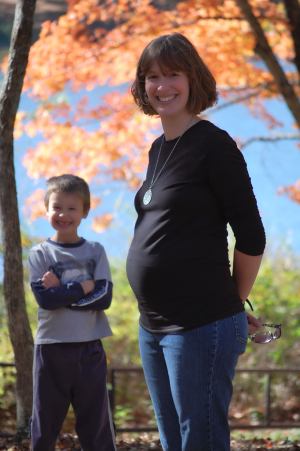
The picture above was taken by my friend Karen at the park last week. She has launched a new photography business recently and if you click the picture, it will take you to her Facebook fan page. She is going to do both pregnancy photography and birth photography and I hope to have some more pictures in another month or so 🙂

And, I actually have been doing a lot of drawing during this pregnancy. Here is one I did when I was starting to re-incorporate the pregnant identity into my life again, as well as to feel some of the joy of pregnancy rather than just anxiety:

I’ve done others as well and then after finding out she is a girl, I drew this one:


Pain with a Purpose?

“The desire to help is so great, even from well-meaning, beautiful midwives, that they use intervention. We want to help. But what’s missing in our culture is that there is pain with a purpose, and that helping is sometimes interfering.” –Augustine Colebrook, CPM (quoted in “Do-it-Yourself Birth” article in Mothering mag)

When I shared this quote on the CfM Facebook page, a reader added: “Dr. Bradley wrote about ‘pain with a purpose’…Problem is, in our society, we don’t value the process of childbirth. Therefore, whatever it is you have to do to get thru it… Hence epidurals & nubain, and on and on. Please know I’m not dismissing your experiences if you went that route. But that phrase alone resonated with me when I was giving birth and helped me. I wish it would do so with more women.”

I’ve written a lot about birth having inherent value in its own right. Process AND “product” (i.e. healthy mom, healthy baby) are both important. A de-emphasis on the birth process and its significance in a woman’s life only serves to disempower, silence, invalidate, and violate women.

That said, I do also value the work of organizations like Hypnobabies that questions the very notion of pain as being an inherent part of birth.

So, what about pain?

I find that couples who come to my classes often have pain and managing pain (or witnessing pain) as their top issue of concern. For this reason, I spend time addressing the subject straight out and yes, I have been known to use the dreaded “pain with a purpose” phrase. Some would say that the word “pain” has no place in birth classes—that it sets women up for just that experience—however, as I noted, my clients come with “pain” on their minds and I find I need to use the p-word and sort of clear the air/get past that hurdle, before we do the rest of our work together. Also, as one of my clients once noted, “it wasn’t you who planted that seed [of pain being possible]. It was planted deeply a long time ago!”

And, what would be the purpose of pain in labor?

It is actually part of a beautiful hormonal symphony of labor—the sensations of labor signal our brains to release more endorphins, more endorphins leads to more oxytocin, and more oxytocin leads to increased intensity, which leads to more endorphins, etc., etc. When the pain to brain feedback loop is interrupted with medications, so too, are the oxytocin and endorphin messages that we need to get our babies born—and more interventions to “augment” labor are then likely to follow. As Preparing For Birth notes: “It is true that naturally occurring labor can feel larger and greater than the woman birthing. This is not so as she creates from within the very hormones that increase the strength, power, and frequency of her work of labor. That is the good news, it is from her, for her, by her.”

But, all these things said, I simply think the word “pain” is woefully inadequate to describe the feelings of labor. I like this description from Stephanie Soderblom better:

“VITA MUTARI – the literal translation from Latin to English is ‘Life Transformation.’ That is the closest thing I could think of the feeling of labor/birth
what you are feeling isn’t pain, it’s life transformation. Is it dramatic? You bet! I think it should be!”

I also love the description from Painless Childbirth:

“When I say painless, please understand, I don’t mean you will not feel anything. What you will feel is a lot of pressure; you will feel the might of creation move through you. Pain, however, is associated with something gone wrong. Childbirth is a lot of hard work, and the sensations that accompany it are very strong, but there is nothing wrong with labor.”

Now that’s what I’m talking about, might of creation moving through you. The word “pain” is way too puny to hold that!

I always explain to my clients that the sensations of labor are more similar to the exertion of intense physical effort more than the pain associated with accident, illness, or injury—both the effort AND the exhilaration are similar to doing good, hard, challenging, limit-testing, but doable work (though even bigger and more important). We need a bigger and broader vocabulary for completely describing the breadth, range, intensity, and beauty of birth experiences! What if we had more choices other than “painful” and “painless” to describe the experiences of birthing our babies? Though I wouldn’t say my births were “painless,” when I describe my own birth experiences, “pain” is simply not the word that rises to the top as the most appropriate descriptor.

“So the question remains. Is childbirth painful? Yes. It can be, along with a thousand amazing sensations for which we have yet to find adequate language. Every Birth is different, and every woman’s experience and telling of her story will be unique.” –Marcie Macari

We end up limited when we use only “pain” based language that fails to embrace the broadness and complexity and enormity of the experience.

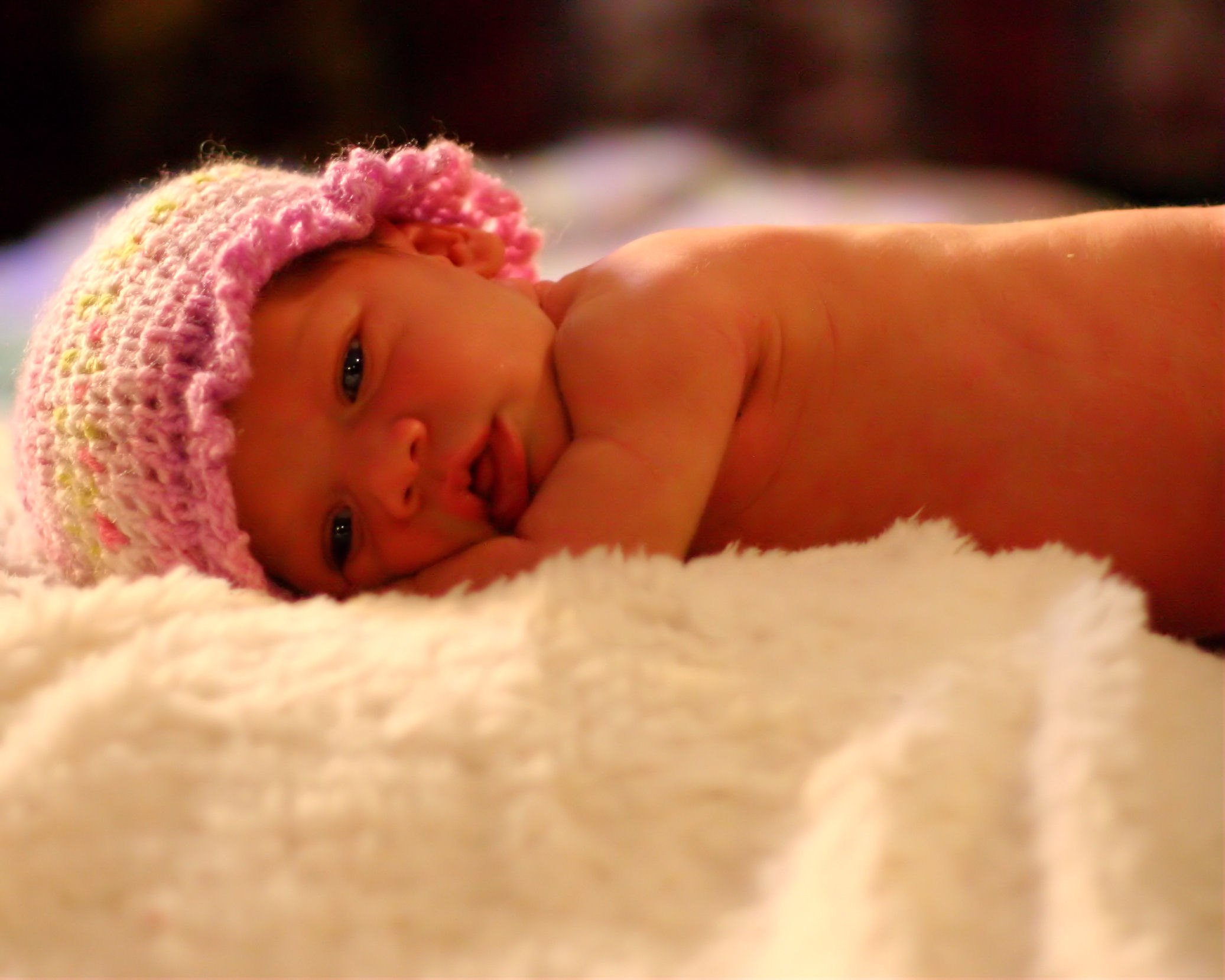
Newborn Alaina, January 2011

Arkansas Traveler Baby

This past weekend we took a family trip to go quartz mining in Arkansas. On our way, we stopped at Ultrasona of the Ozarks and had one final ultrasound (not going to get into my cognitive dissonance about over-using ultrasound during this pregnancy in this post, but hope to write about it someday). We found out that baby is definitely a girl! It was very obvious—we both could tell before the tech said anything.


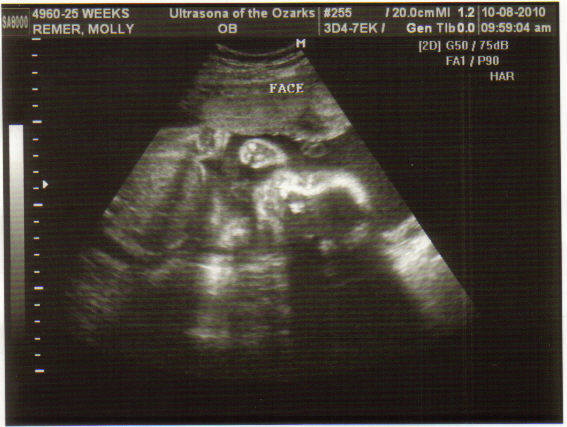
Baby's face


Here is the picture of her little face. I know u/s pictures all look the same, but I think she is cute! And, we saw her yawn 🙂

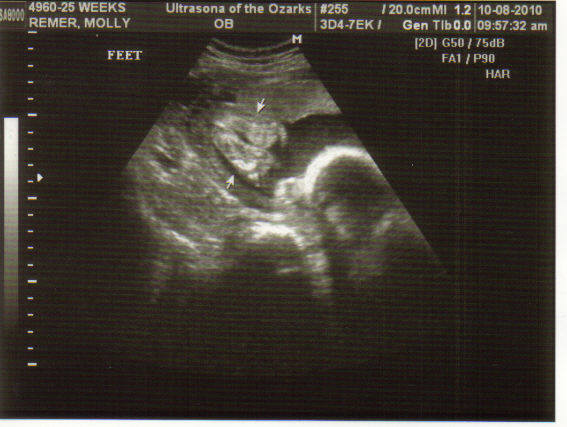
Here are two cute pix of her little feet. The blob nearby is her HEAD, because she is all squished up with her feet by her head.

I’ve been going for “alive” as my primary goal during this whole pregnancy, but having a girl baby is a fun bonus 🙂 It is really important to me to be able to name her and bond with her as fully as possibly while pregnant (which I know is fully possible without ultrasounds, but for me, it has been “humanizing” to see her and think of her as a real baby and not just think, “don’t die” thoughts and “IF I have a baby” thoughts).

We stopped and took some pix overlooking the Buffalo River Gorge (Arkansas Grand Canyon):

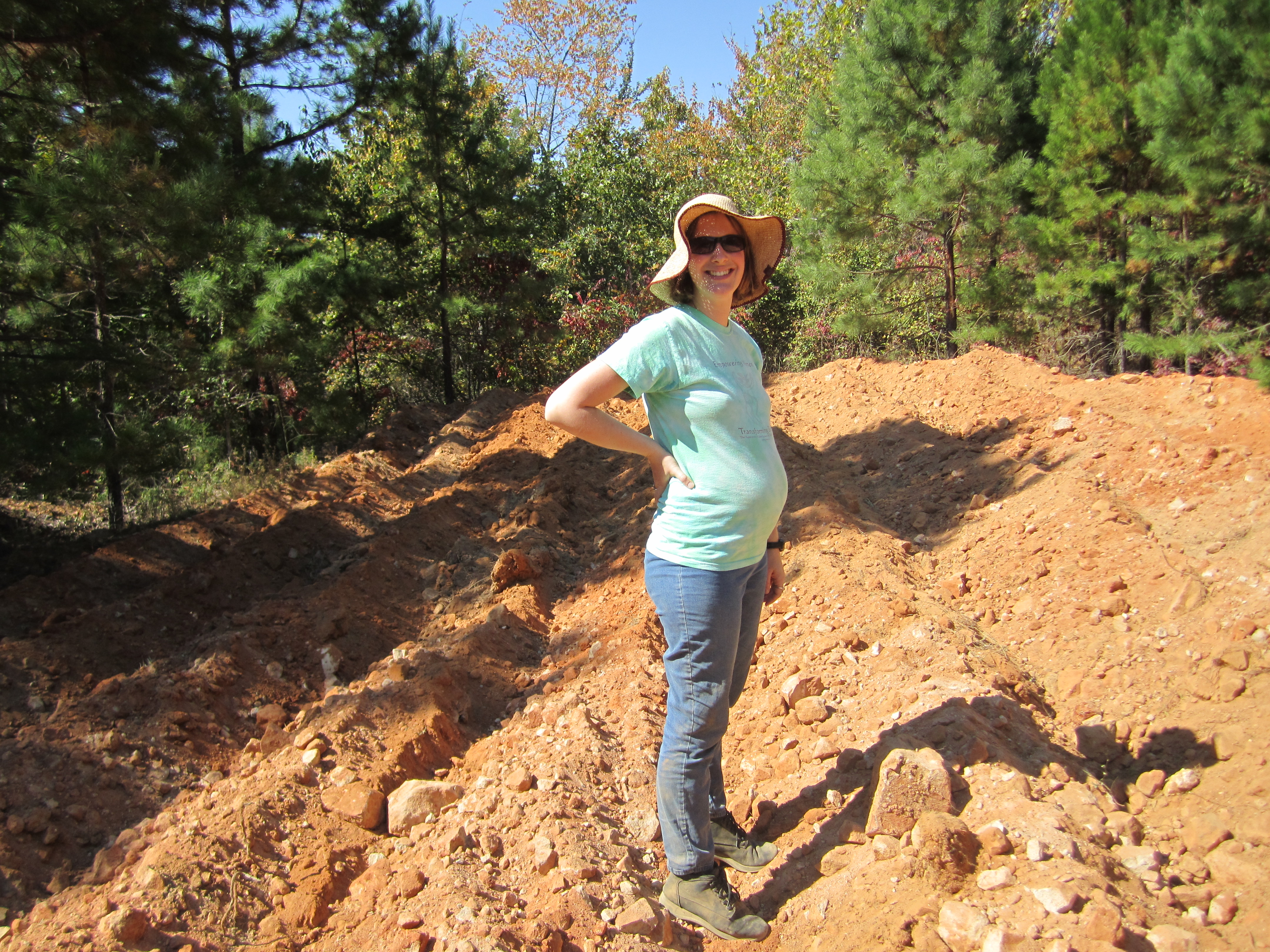
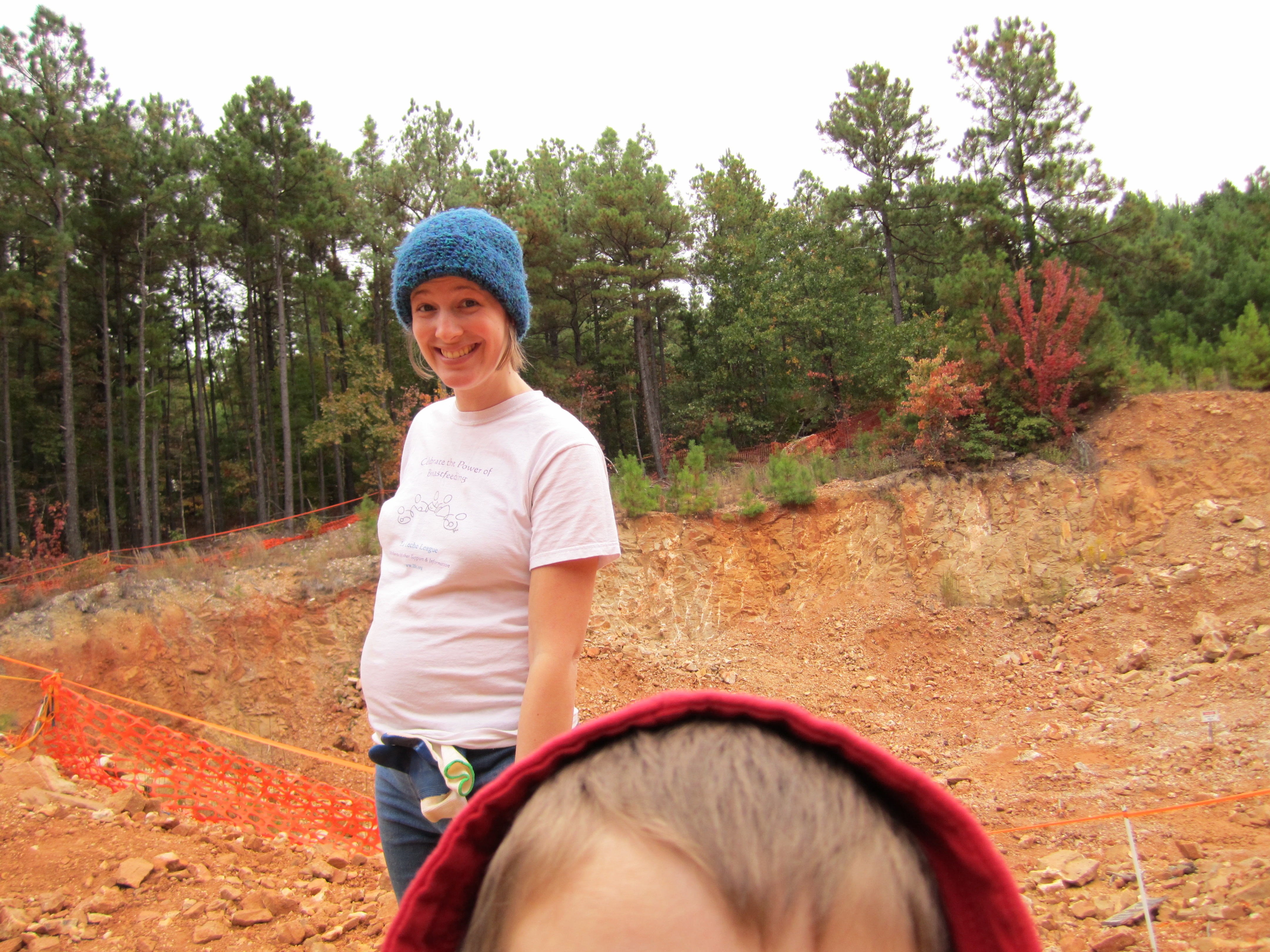
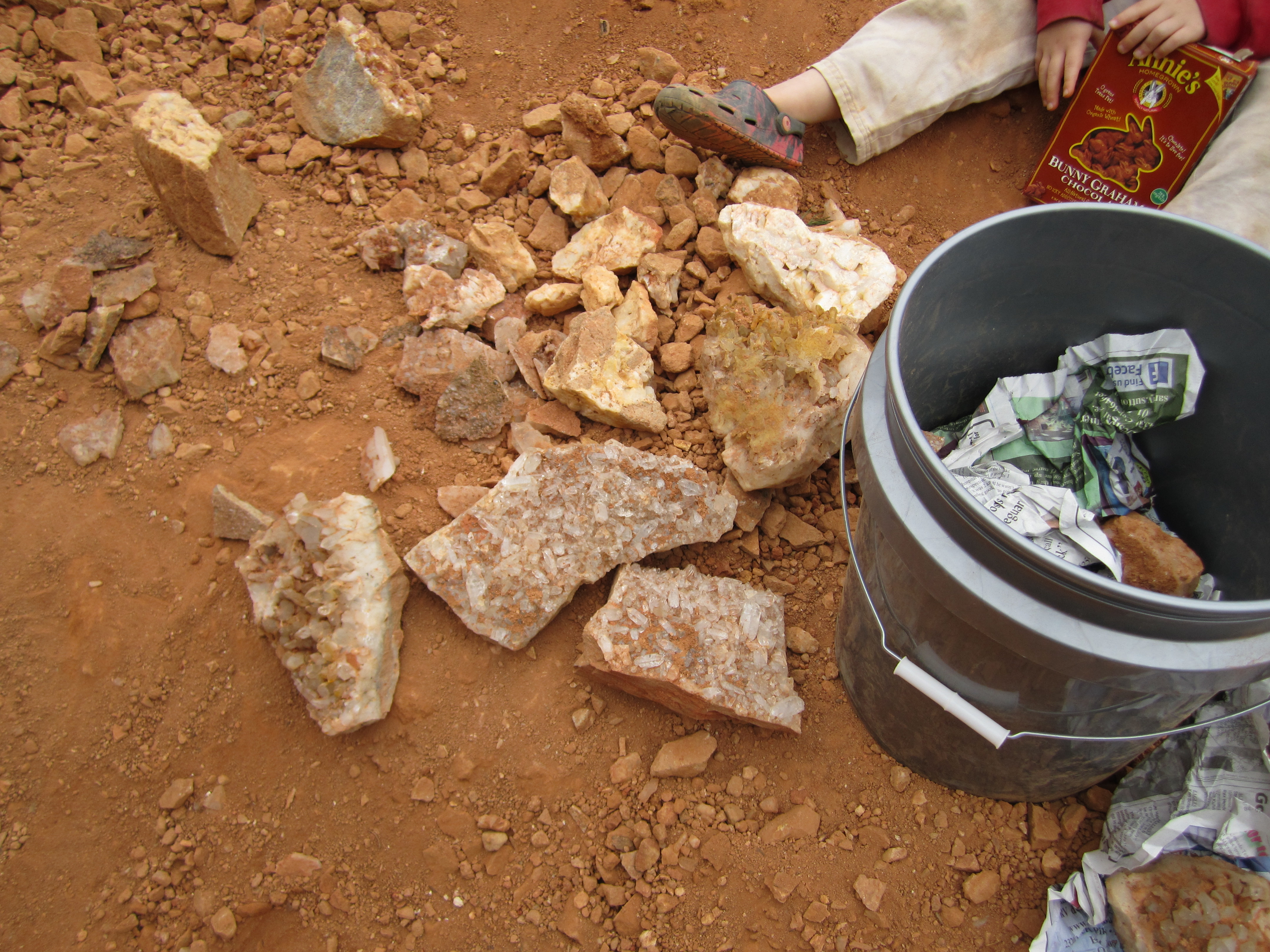
We then went on to Mount Ida, AR and to a gem and crystal show/event that was being held (coincidentally) that weekend. The following day, we went to Wegner Crystal Mine. We packed into the back of a pickup and were bounced and jounced up to the top of a mountain where we then dug for quartz. Quartz is mined above ground. These mines are all on National Forest land and while it looks like a somewhat horrible scar/blight on the landscape, they are heavily monitored/restricted, so the actual mine can only cover so much ground, etc. We had a fabulous time and left with two buckets of quartz.


Youngest crystal miner ever 🙂


On Sunday, we took a day trip to Crater of Diamonds State Park in Murfreesboro, AR. I burned out there very quickly and do not recommend diamond mining to anyone who is pregnant! Partially it was the futility—I knew we weren’t going to find any diamonds!—and it was really hot and there was no shade so sun was just blasting down on my head and I felt ill/off. My husband did take home two buckets of jasper and agate, which was his main reason for visiting this park, more than possibly finding any diamonds.


Showing off ALL the diamonds we found...


When I woke up on Monday morning, I had some totally unexpected and unexplained mystery spotting that almost sent us home without going to the final mine. I’ve written on my other blog about my tenuous sense of security and trust during this pregnancy and how I feel like there is no “safe” point anymore. It is really sad to me how very, very quickly my equilibrium can be thrown off and how quickly I sink into negative/depressing thoughts. As soon as I saw the blood, I thought that I was probably going to go into premature labor at a quartz mine and have to be rushed to some Arkansas hospital with a tiny baby struggling for life in an NICU. While I do still have trust in my body’s inherent wisdom, etc., etc. I do not have the same strong sense of my body as an ally anymore—I used to trust it implicitly to take care of and protect my babies. Now, I don’t know if it really knows how to do that, or not. Most of the time, I think it probably does and that it was  also body wisdom (not failure) that caused my losses, but then the tiniest thing can happen and then I see that something else is lurking very close under the surface—a lack of confidence that I do know what I’m doing and that my body will look out for and protect my baby girl with its inherent wisdom and comptent design. 😩 Wah. It was a bummer. I cried and was all upset and then realized I’d probably just physiologically taxed myself at the #%&*% diamond mine the day before and this was just a little, “hey! Take care of yourself!” reminder signal, not an indicator of immediate doom. Nothing else happened the rest  of the day (or since), just that confidence-shaking morning incident (I’ve NEVER had bleeding/spotting this late in a pregnancy before and have had none at all during this pregnancy).

Anyway, we finished our trip by going to Arrowhead Crystal Mine—this one we drove to ourselves and the road was hideous, but we made it to the top!

And, we found lots of good stuff:

And on the way home, I crocheted a little hat :):


Think it will fit?


I’m starting to spend a little more time thinking about the actual birth and what I’d like and what I’d like to make sure I do to savor and enjoy and celebrate this pregnancy and this baby before she is born. I also have been doing a LOT of thinking of what I will change/let go of after she is born and what I would like for a babymoon as well as making arrangments to take some breaks from some of my commitments so that I can fully enjoy the newborn stage and make sure I am taking really good care of myself. I was offered a class for the January session at the college where I teach—by pure coincidence I hadn’t been on the Jan. schedule at either local campus and I was glad not to have to turn them down (because I really want to do this and by “rejecting” a class offering, I don’t want that to be perceived as a lack of interest from me)—but, then I got offered one after all and then I did have to say, “no.” It is a class I’ve taught before and that I LOVE teaching—it is my favorite one—and saying no to it was hard, but duh, I couldn’t say yes (and, btw, they said that was fine and I could teach it in March instead. So, was that so hard?!). I think I will be teaching an online class during the Jan. session, but that I can handle—I will just make sure to do NOTHING else in addition to that and taking care of the new baby.

Still can’t really believe there’s a baby girl in there. I was just telling a friend about how it is difficult to field comments from others about, “hoping for a girl this time” or, “you finally got your girl” kinds of things—it makes me not want to act too excited about having a girl, because I don’t want anyone to think that I feel that way. I love my boys and wouldn’t have my family any other way—and, I would have been perfectly happy to have another boy (I thought I was going to for sure!). So, acting happy about a girl, makes me feel like I’m saying that I’m not happy with my boys. But, I’m happy about both! I’ve never, ever wished Z was a girl instead—I love having a pair of boys. It’s great.  If Noah was here with us as the third member of our band of brothers I would have been pleased as pleased can be. (see my fair warning post on my other blog.) I think it’s too bad we feel like we have to clarify/specify that! And, I hope I remember forever to not ever say those kinds of things to anyone either! So, anyway. A GIRL! I’m excited 🙂

Effectiveness of Childbirth Education?

Some time ago a study was picked up by the media as proving that childbirth education “doesn’t work”. This BJOG study compared two groups of women—one group had 8 hours of childbirth classes that also included information about natural childbirth. The other group had classes that did not include natural childbirth information. The epidural rates for the two groups were the same and the couples’ satisfaction levels with their births was also the same. After this media attention, several birth bloggers addressed the study in-depth. The Science and Sensibility blog in a post titled Do Breathing Exercises Work? and The Family Way Publications in Natural Childbirth Class Not Useful?

What stood out to me in the article was the emphasis on breathing techniques. There is a lot more to childbirth education than “the breathing” and if that is all the “natural birth” classes had to offer, no wonder the results were what they were! As was noted in one of the blogs cited above, it is also significant that the women were randomly assigned to either group, indicating that they did not have a strong interest in natural birth (if they did, why risk being assigned to the non-natural birth classes!), so that perhaps the personal investment element was missing. A woman has to want to experience natural childbirth in order to do so!

Another birth educator commenting on The Family Way’s blog post, made an excellent observation that I think really got to the true heart of the issue. She said, ” Until childbirth educators emphasize this key component of CONGRUENCY in their classes women will continue to seek ‘care’ from professionals and institutions incompatible with their professed desire for natural birth. (emphasis mine) All this study proved to my mind it that both types of classes offered were ineffectual in promoting the with-women model of care in labor and birth… Both types of classes failed to address the real crux of the matter
are you receiving care from a provider/institution compatible with the kind of birth you want?” I explain to people in my classes that in the hospital women’s coping mechanisms are often stripped away from them-–sometimes by force, sometimes by misinformation, sometimes by excuses. I tell them over and over again to “ask questions before their chile is roasted” (Pam England). People tell me they can fight for what they want or that their husbands are good at “standing up for me” and I remind them that birth is not a time in a woman’s life when she should have to fight for anything! The time to get good care is NOW, not while “fighting” during labor and not during the “next birth” either (see more thoughts about “the next birth” here).

So, does childbirth education matter or not? Is the birthing woman’s environment of greater influence? I don’t think we have a full answer to this question. I do feel in my heart that childbirth education has important things to offer (otherwise, I wouldn’t be in the field!), but I also know in my heart that an unsupportive birth environment can steamroller right over most of the benefits. Birth is a lived experience and as such is greatly impacted by going on in the “here and now,” rather than past learning or ideas. Recently, I shared this quote from Suzanne Arms on my Talk Birth Facebook page:

“The knowledge of how to give birth without outside interventions lies deep within each woman. Successful childbirth depends on the acceptance of the process.”

In the comments, I noted: also helpful is to birth in an environment that shares that acceptance!

In July, I attended the annual CAPPA conference and enjoyed hearing Polly Perez speak about the benefits of childbirth education. She shared the following evidence-based benefits:

  • Knowledge
  • Less fear
  • Student more able to take responsibility for their own health care
  • Less need for medications/anesthesia
  • More satisfaction with birth experience
  • Life skills!

I definitely have been witness to the reduced fear as well as to the development of life skills that will continue to serve parents on the parenting journey. My own personal observations of additional benefits would be:

  • Increased confidence in their bodies, the birth process, and their own capacities
  • Enhanced father participation
  • Increased prenatal bonding/connection with baby and positive feelings towards baby
  • Reframing of birth from something to fear/greet with anxiety to something to embrace and greet with anticipation and enthusiasm.

It is hard for me to identify if these benefits carry over from my actual classes into the birth room, however, and this is an issue and question that I continue to ponder.

On a related note, here is a handout from Mother’s Advocate on choosing a childbirth class.

Book Review: Survivor Moms


Book Review: Survivor Moms: Women’s Stories of Birthing, Mothering and Healing after Sexual Abuse

By Mickey Sperlich & Julia Seng
Motherbaby Press, 2008
ISBN 978-1-89-044641-3
245 pages, softcover
http://www.midwiferytoday.com

Reviewed by Molly Remer, MSW, CCCE

Past sexual abuse is an unfortunately common experience for women. Anyone who works with women of childbearing age should be mindful and informed of the effects of an abuse history on the woman’s experience of pregnancy, birthing, and mothering. Indeed, I consider this awareness to be a fundamental professional responsibility. Enter Survivor Moms, published by Motherbaby Press. This book is an incredibly in-depth look at the experiences and need of survivors of sexual abuse during the childbearing year.

One of the best and most unique features of the book is the “tab” format used for much of the clinical, research-based, or fact-based content in the book. Rather than lengthy chapters reviewing research and analyzing the phenomenon, textboxes containing quick facts and reference material are printed in the margins of many of the pages. The bulk of the narrative information in the main body of the text is then in the voices of mothers themselves, interspersed with commentary by the authors linking concepts, explaining ideas, and clarifying essentials. This is a powerful format that makes information readily and quickly available for reference as well as making the overall book very readable and approachable.

As someone with no personal abuse history who is currently pregnant, I did find the book to be a very emotionally difficult, intense, and almost overwhelming read at times. This is not a criticism in any way—sexual abuse is not a light or cheerful topic and it can be one that many people prefer to avoid. This is all the more reason for birth professionals to make a specific effort to be educated and informed.

Written both for mothers themselves and for the professionals who work with them, Survivor Moms is an essential part of any birth professional’s library. As noted in the book’s introduction, “We need to understand the impact of childhood abuse on birthing and mothering deeply, from hearing women’s stories. We also need to understand it broadly—from looking at the impact on samples and populations, on the body and on the culture.” Survivor Moms offers an accessible way of hearing those critically important stories and developing the necessary understanding to care compassionately for birthing women.


Disclosure: I received a complimentary copy of this book for review purposes.