Archives

Talk Books: Laughter & Tears: The Emotional Life of New Mothers

Laughter and Tears: The Emotional Life of New MothersBecause books are my first and longest-lasting love, I began my blogging career with a book blog. I eventually gave it up when I felt I no longer had time for it and turned my attention of other blog work. However, I occasionally mine the old blog for content here and I’ve realized that rather than doing traditional reviews, I really, really like doing my somewhat-new “talk books” posts on this blog. I’ve mentioned before that one of my reasons for blogging is simply to store information in one place that I want to remember or come back to later. If I’ve typed up everything I like from a book, I don’t really need to hang onto the book and the “essence” of many books (or at least what I got from them) is all compiled in one place. So, what follows is one of those mined posts (though at the end, I got caught up in the topic and went off into some related thoughts).

Laughter and Tears: The Emotional Life of New Mothers was written in 1997 by Lamaze co-founder Elisabeth Bing. I found myself with a dearth of postpartum resource books after giving birth to my first child and desperately hungered for them. I went on a dogged mission to locate them, finding them somewhat difficult to unearth, and eventually I think I read basically every book ever written on the postpartum period.  I started out enjoying Laughter and Tears, but found it less and less engaging as it went on. I think there is such a great need for books about postpartum out there—ideally, for women to read before their babies are born. I wish I would have had one already on my shelf when my first baby was born, instead of having to discover the niche later. However, part of why the book was not engaging by the time I actually read it was simply because it is geared toward women in the immediate postpartum (and also first time mothers primarily)—when I read it, I was no longer there and so my interest in the book waned fairly quickly. I also found a the heavy emphasis on “reclaiming your body” off-putting—there was even a comment like, “now that your baby is a robust two month old, you can begin to reclaim your body by reducing or eliminating feedings at night.” Excuse me? “Robust” TWO MONTH OLD? That is practically still a fetus as far as I’m concerned!

Several quotes I marked to share:

“Our society is profoundly ambivalent about children. On one hand, we praise family values, but on the other, we emphasize individual liberty and the rights of women to have as many freedoms as men. We encourage mothers to desire to have it all, but do not guarantee maternity leave, health insurance, or day care. We use babies to sell products, from laundry detergent to automobile tires, but we don’t want a mother with a toddler in the seat next to us on an airplane. We question the legality of abortion but threaten to withdraw welfare benefits from disadvantaged children. We celebrate children and praise parents for having them, but we do not provide structures or systems to help nurture them.”

And, one I still find extremely relevant:

“The degree of pleasure you take in your mothering is not the same thing as loving the baby or being an effective parent. Keep in mind there is a distinction between mother love and maternal satisfaction. You may love your baby very much but be dissatisfied with your life circumstances.”

There was also a quote that I find a new relevance in today now that our household structure has changed to both parents being home nearly full-time. I’ve been confronted over and over again in the last several months with how many “keys” to the household and family life that I’ve held over my ten years as the primary parent in the home and that, at some level, there is a power in being the one who knows (even if it just where the mustard is, for example) and that switching over to sharing those household details doesn’t actually come easily for either parent, no matter how we’ve said we wish to share them. I’m also noticing how very, very many details of the somewhat invisible work of parenting are still very much my responsibility—such as planning birthday parties or taking kids to playgroup or making dentist appointments or making sure Christmas presents are purchased and equal—and apparently, I do not know how to let those go or start transferring some of the responsibility without feeling put-upon, annoyed, demanding or like, I’ll just do it myself, since I’m the expert anyway. And, as this quote below references, I also have enjoyed being the primary emotional parent as well and still hold on to that terrain—essentially, what I want to share is the cooking and towel-folding responsibilities, while still getting to be the one run to for security and snuggles.

“Men are challenged by their attempts to be more involved and more nuturant than the ‘traditional’ father. Women are challenged not only by developing an identity in the world outside the home, but also by opening up and truly incorporating men into the intimate life of the family. You may have a concept of what a more involved father should be like, but if you are honest with yourself, is your image truly about sharing the love and nurturance? Or is it actually about wanting your partner to help with domestic chores? Are you really imagining a co-parent, or are you thinking of something more like a regular baby-sitter and handyman?”

Whatever it’s shortcomings, this book again reminded me of how vital postpartum support is for families in our society and reminded me of why I originally wanted to be a postpartum doula and how called I felt to that work. In 2004, I trained with DONA as a postpartum doula and felt 100% certain that I had found where I belonged (indeed, I still get Christmas cards and updates from one of my first postpartum doula clients—I was good at the work and they liked me a lot!). I stopped working as a postpartum doula in 2006 though. My biggest reason for discontinuing postpartum work was because at this point in my life I couldn’t reconcile taking care of someone else’s family while my own needed me so much. There I would be washing my client’s dishes and thinking that I have a huge pile unwashed at my own house (that my husband then did at night when he got home) and/or folding their laundry and thinking of the two full baskets at my own house in my own living room as yet not put away. Also, I recognized that I felt more comfortable with and am temperamentally more suited for educational/”academic” types of support  rather than the “intimate” hands-on support that postpartum or labor support requires. For a time after quitting, I really felt embarrassed about it because I was SO sure it was my “calling” and because I spent so much money on training, books, supplies, certification packet, etc. (Luckily, I totaled it up when I was preparing to quit and I made enough money from my clients to at least more than pay myself back for the training!)

I feel fervently that women/families need postpartum doula support (sometimes desperately) and I felt depressed to realize that I wasn’t the person for the role after all. I didn’t understand at the time, but I quickly figured out why the majority of the women in the postpartum doula training with me were middle-aged. They had the energy to “mother-the-mother” and “nurture the family” at that season in their lives, whereas I am still in a season in which I need to nurture my own family before I have the energy to spare to nurture someone else’s. There were also a handful of women in the training, like me, who had very young children. There were no in-betweeners, like where I am right now. I’ve begun to notice this in birth activism work (and to a lesser, but still noticeable extent, in breastfeeding support work) as well—passionate mothers-of-infants or toddlers and gray-haired sage-women are the ones who come together for the bulk of the birth activist workload in various organizations.

I’m also reminded again, however, of why breastfeeding support holds such a lasting pull for me and that is because postpartum is where it is at, that is where we are so very, very deeply needed as support people. Birth is amazing and exhilarating and women most definitely need us there too, but in the nitty-gritty, day-to-day, unglamorous, nipples and breast infections, teething, crying, dirty-haired, exhausted, wrung-out maternal web of daily being is a very tender and delicate beauty that becomes visible only when we’re willing to spend months and months, or even years, serving as a listening ear, a medication lookup, and someone to trust with both her laughter and her tears.
December 2013 018Additional resource: Non-Advice Books for Mothers

Guest Post: Infertility Doula

Infertility Doula:  Infertility and the Natural Birth Community

by Kristen Hurst

Okay, so you’ve wanted to have kids since you emerged from the womb. You had your dolls enact your birth plan before you could write it down. At some point, you adopted the title birth junkie, no shame attached. You studied to become a midwife or a doula. You finally get to the age at which you could conceivably conceive…and then you can’t. November 2013 019

For some women suffering from infertility, waiting the year before they can have access to IVF and other medical interventions isn’t the answer. It’s not that they don’t want to wait that long, it’s just that some women don’t feel comfortable with pumping your body full of hormones in order to conceive when you have made an effort to rid your home of hormone-altering plastics and chemicals. Yet when it comes to natural “solutions” it can be just as frustrating to be handed a garden full of herbs and told to wait. You’ve been waiting your whole life—the wait was supposed to be over.

In my experience, natural birth communities tend to do an excellent job supporting mothers who have experienced miscarriages, but are less certain about the role of would-be mothers who can’t conceive. It’s not that we don’t welcome them, especially if they are midwives and doulas, but we assume that they have another place to go: there are a significant number of infertility support groups in the world that even have their own lingo! Nevertheless, midwives and doulas that have experienced infertility are an integral part of our community, and their needs—and perspectives— shouldn’t be ignored.

For women who have only recently discovered their infertility, we can support them through natural treatments and even more conventional fertility treatments. We can offer acupuncture, fertility massage, and a variety of herbs and dietary changes.  We can accompany these women to difficult appointments. We can offer to be an infertility doula, a concept that, as far as I can tell, was coined by Ebru B. Halper to describe the profession she created as a result of her struggles with infertility. Halper guides women through the overwhelming maze of fertility treatments, providing whatever kind of support they may need. I’m not sure why this concept hasn’t caught on, but I think it’s a helpful frame for how we can approach infertility in our communities.

Since training to become a doula, I’ve often thought about how we can be doulas for the women in our communities no matter what they’re experiencing. I often feel as though I am a doula to my children, helping them birth their best selves. But that process has to extend beyond the treatment process into whatever grief or celebration might follow. Ultimately, there is no one “right” thing to say to a birth worker who cannot have her own babies. What we need to do is to listen and be present because we know that birth is a gift. I can’t know what it feels like to be denied that gift, but there are many women who can share their perspective.

The point of this conversation isn’t to make me feel grateful for the fact that I have been able to give birth—it is to celebrate grief as an end in itself. “Grief is neither a disorder nor a healing process: it is a sign of health itself, a whole and natural gesture of love,” says Dr. Gerald May. He continues, “[n]or must we see grief as a step towards something better. No matter how much it hurts–and it may be the greatest pain in life–grief can be an end in itself, a pure expression of love–“  As a birthing community, we must bear witness to this painful love rather than assure the woman that it’s “meant to be.” We can’t stop being infertility doulas once the treatment is over. Making space for both the love within birth and the love within grief can only make our lives richer.

Kristen Hurst is a mother, a writer, a yogi, and a doula. She received her bachelor’s degree in fashion marketing, and writes often about pregnancy and maternity fashion for Seraphine Maternity.   When she’s not trying to juggle the lives of  her sons, she enjoys painting and catching up with a great Jane Austen novel.

Birth Mystery

“Whether a woman knows it or not, she is a vessel of great magnitude born capable of reshaping humanities destiny if she only knew the true depths of her innate gifts. Be prepared now to see the fierce face of the feminine rock as her inner geographies of volcanic strength erupt from a love she has held in her belly for life all of her days. This is not a gasp of her last breath. It is her birthing cry into her wise leadership on our planet.” –ALisa Starkweather

“Birth, like love, is an energy and a process, happening within a relationship. Both unfold with their own timing, with a uniqueness that can never be anticipated, with a power that can never be controlled, but with an exquisite mystery to be appreciated.” –Elizabeth Noble

“Birth is not a cerebral event; it is a visceral-holistic process which requires all of your self–body, heart, emotion, mind, spirit.” –Baraka Bethany Elihu (Birthing Ourselves into Being)

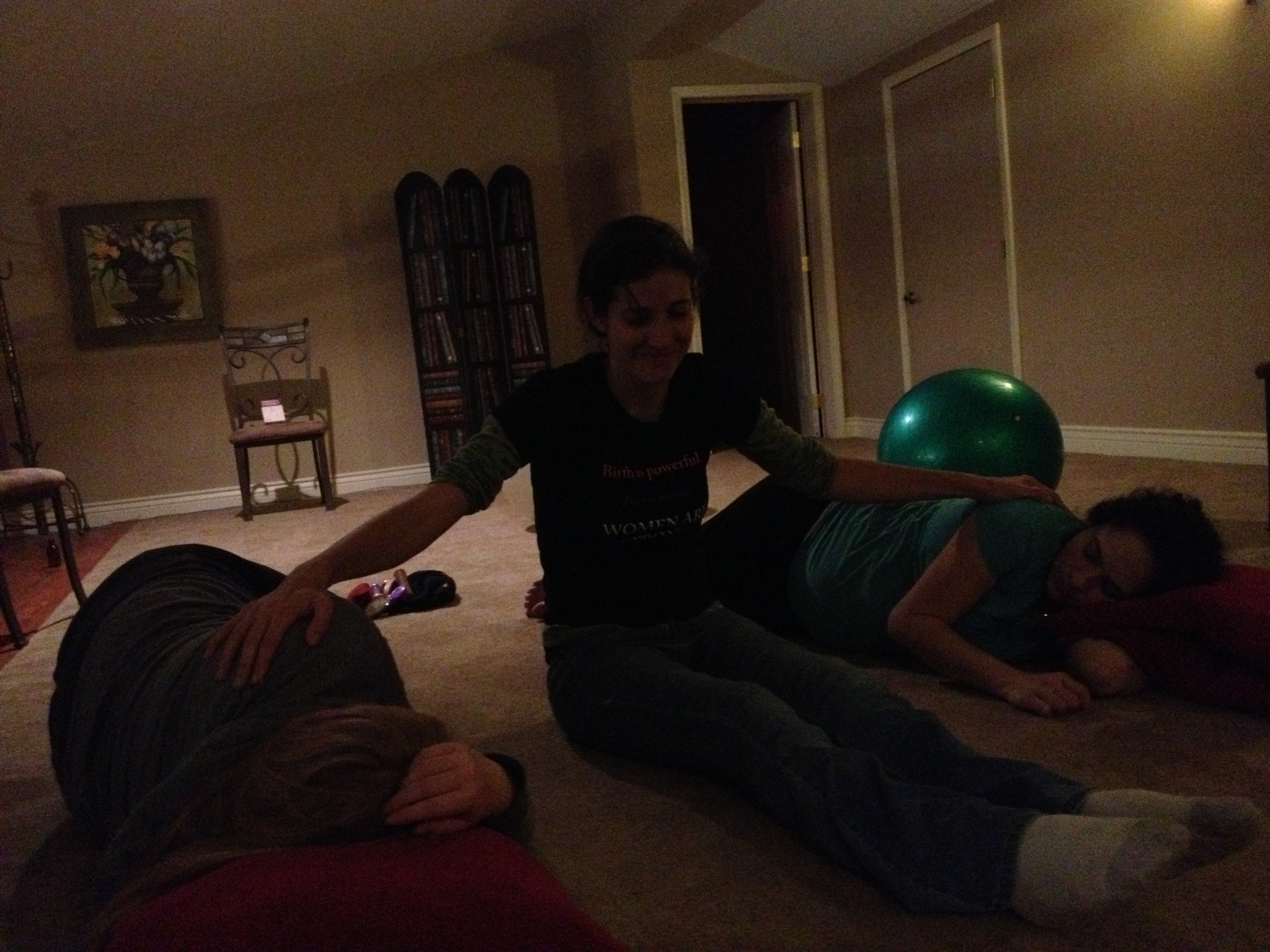
Last weekend, I taught our final Birth Skills Workshop of the year. While I know I have been writing about my sense of separation from birth work or the phase of “moving on,” in which I find myself, this workshop was an excellent experience. The women were so beautiful and interested and anticipatory. The couple working together was so loving. My doula co-presenter was so present and grounding. I came home feeling really positive and enthused and I also found myself considering new birthwork-related ideas and new possibilities, including something that I’m really excited about, but don’t feel like I can share publicly just yet. This work is in my blood, my roots, my heart and my soul, regardless of how direct the services are that I offer or the primacy/priority of face-to-face birthwork in my life. I will never not care about birthing women. They’re too amazing. They’re too important. And, my own sense of being, my spirituality, my thealogy, is too intimately entwined with my own embodied experience of gestating, birthing, lactating, and mothering, to ever make a full separation from it. After I got home and looked at my few pictures from the evening, I realized that in eight years of teaching birth classes, I have exactly zero pictures of me doing so! But, here is one of some of the mamas were enjoying a much deserved relaxation session after a lot of active birth practice. 🙂

October 2013 036This photo reminds me of the amazing benefits of co-teaching a workshop with another birth professional. SO much better than teaching alone ever was! Doula Summer of Peaceful Beginnings Doula Services and I have been friends for a long time (we also co-founded Rolla Birth Network). She has helped me when I’ve needed help and I’ve helped her when she’s needed help, but our helping skills/abilities rest in different areas, which is why we work extremely well together with a workshop like this one. I provide the information and structure, Summer provides the gentle presence and soothing hand. A good workshop needs both!

I also re-discovered how I do enjoy putting together a nice information packet! 🙂

October 2013 023

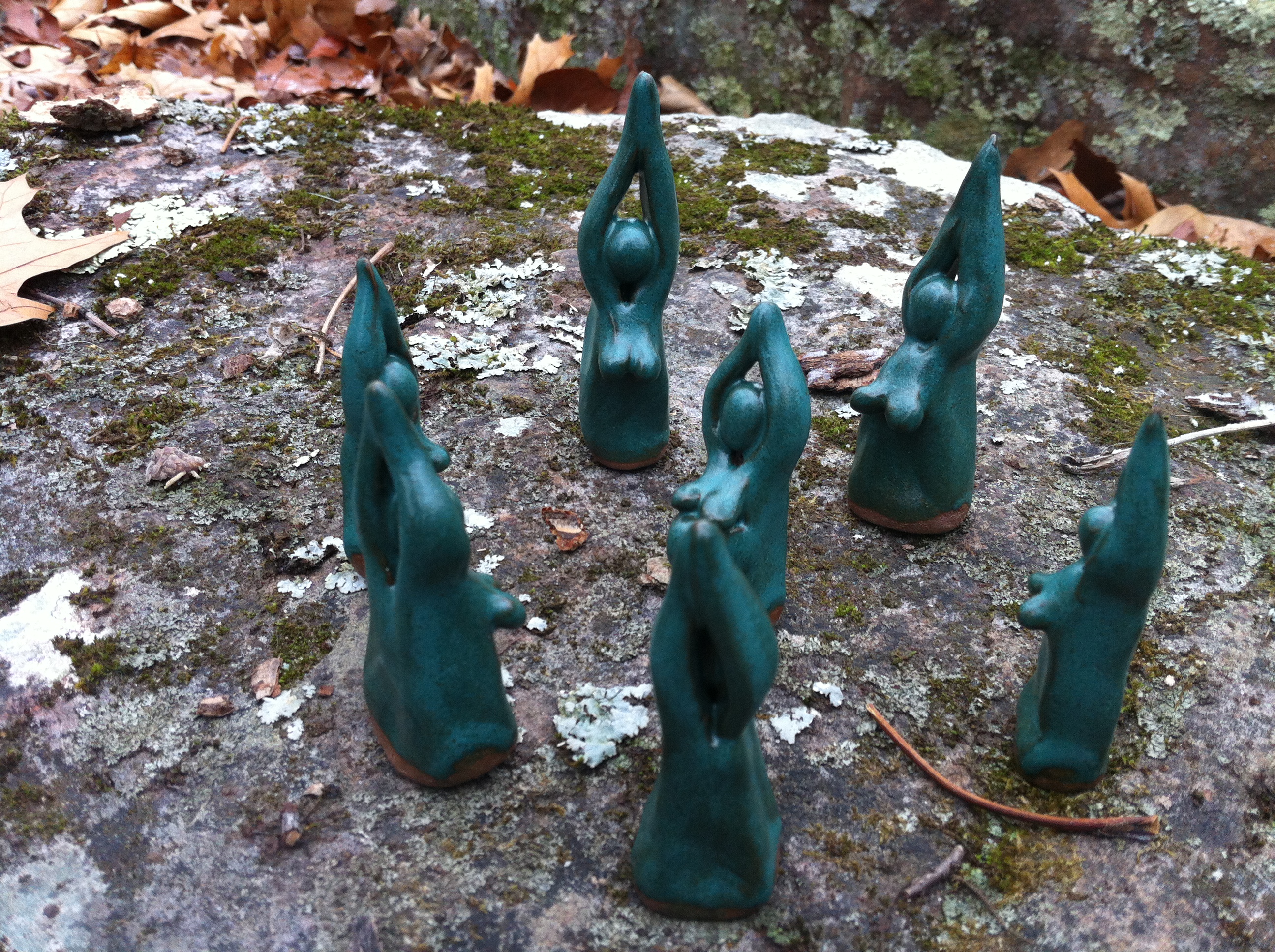
In addition to my workshop-related epiphany, I had a lightbulb moment with regard to my M.Div thesis. It suddenly seemed clear to me that rather than create a scholarly, academic discourse proving a theory about birth as a spiritual experience, I need to integrate my theories with my birth art sculptures. I need to frame my work within this sculptural context, this personal experience, this lived reality of the might of creation. I have 234 pages of possible content for said thesis, all saved in an intimidating word document waiting to be sorted through and added to. It is overwhelming to even open. With my new idea of framing my thesis through my own art, I feel a pathway emerging through the information, a pathway that integrates the academic and the personal and that results in something uniquely my own…

October 2013 011

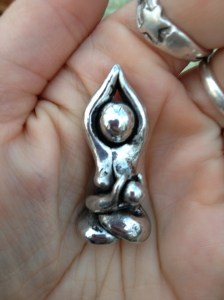
Some of my sculptures-turned-pewter-jewelry.

“Be soft. Think of [labor] as a fine silvery stream, not a raging waterfall. Follow the stream, have faith in its course. It will go its own way, meandering here, trickling there. It will find the grooves, the cracks, the crevices. Just follow it. Never let it out of your sight. It will take you.” -Sheng-yen

“We vibrate to that primordial rhythm even before we have ears to hear…We vibrate to the rhythms of our mother’s blood before she herself is born. And this pulse is the thread of blood that runs all the way back through the grandmothers to the first mother.” – Layne Redmond (August 19, 1952 – October 28, 2013): Drummer/Composer, Author and much more (via The Girl God)

“Within the womb of every woman glows the consciousness of Mother Earth.” –Roslyne Sophia Breillat (via The Girl God)

Talk Books: Birth, Breath, & Death

I just finished reading a lovely little book by Amy Wright Glenn. Lyrical, gentle, contemplative, and touching, Birth, Breath, and Death explores Amy’s meditations on life as a doula, mother, and hospital chaplain. birthbreathanddeath-amywrightglenn

Amy Wright Glenn was raised as a Mormon and eventually found her way onto a different faith path, Unitarian Universalism. Her reasons for connecting with the UU church actually closely mirror my own. Amy mentions that she first finds the UU church through her interest in poetry, which I found interesting. She then explains, “I was drawn to the way that Unitarian Universalist (UU) ministers attempt to evoke wonder and exploration in the minds and hearts of their congregants” (p. 10). This attempt to engage with the “transcendent sense of mystery and wonder” is exactly what attracted me to the UU’s, as well as the respect for the interdependent web of life of which we are all a part, the affirmation of the dignity and worth of each human being, and the commitment to social justice.

Amy writes, “I had been raised to acknowledge only one entrance to God’s energy. In fact, one need not use the term ‘God’ at all. Such a term is another doorway into the mysterious heart unifying all existence. However, humans need language to direct the attention to the ineffable. There are many names for this mystery. The doorways were holy too” (p. 13).

She continues with a very UU perspective (I’ve heard of it describes as “the light shines through many windows. We respect all windows and welcome everyone, except for those who think they should throw rocks through everyone else’s window!”):

“Spiritual surface structures open human beings to encounters with the ineffable…I have no doubt when my father bows his head in a small Utah town, and when I meditate in quiet sublime stillness, we touch the same source. At their best, religious traditions affirm the wonder at the heart of existence and provide meaningful contexts for its experience. This mystery allows us to breathe, dream, love, and dimly perceive so,etching beyond time even while we live in time…The moon is simply the moon, a miracle enough” (p 16).

I connect to this sense of wonder, with no need for explanation or interpretation—isn’t it is enough, to just marvel at what is? On my other blog, I once wrote:

I also have a favorite passage from Susan Griffin about the earth in which she exclaims, “We are stunned by this beauty.” That is exactly how I feel. This relationship to the planet is what used to make me feel that a conception of deity was unnecessary—isn’t it enough to just marvel at what is, right here in front of us? The majesty and the miracle of the natural world. I am stunned by this beauty. I am stunned by the realization that we are all suspended in space, spinning timelessly through the universe on this beautiful planet, so small in the vastness of all that surrounds us, and yet so big that it is literally our whole world. Sometimes when I have a bad day or feel overwhelmed by the swirl of daily tasks I remember that old saying about, “sometimes I go about pitying myself when all the while I am being carried by a great wind across the sky.” If we really stopped to think about this—to sense how we are carried by the great wind, I think the whole world would change, how people relate to each other and to the environment would be transformed. Stop, look, listen, breathe, and feel how we spin. Together.

Moving into birth, Glenn addresses the potent, transformative aspects of birth in describing attending her sister’s birth, the birth that led her into doula work (before the birth of her own son): “Birth brings powerful and painful sensations to the most intimate spaces of the female body…I stood transfixed by the life-giving strength found in her feminine power.”

She also explains:

“All forms of birth–physical, intellectual, spiritual, or emotional–bring one to the depths. The power to give birth originates in the creative life spirit birthing all, the seen and the unseen. According to Joseph Campbell, the source of life is beyond gender and the duality of male and female. However, when symbolizing the power that creates, Campbell argues the representation is ‘properly female.’ I agree. From this universal goddess energy emanates the seasons, the mountains, the rivers, and the galaxies. Writ large, human birth embodied the process of manifesting dreams, working diligently through our labors, and bringing vital energies to life. On this level, all human give birth. All humans participate in life’s creative energy…

On this level, we all need the renewing powers of ‘rhythm, ritual, and rest.’ This phrase reminds doulas of three helpful labor techniques outlined by legendary doula trainer, Penny Simkin. Rhythm, ritual, and rest not only aid birthing women, but they support all of us to move skillfully through our life’s labors. The power of rhythm restores vibrancy through dance, music, and motion. The power of ritual opens the way to direct encounter with the mysterious wonder of life. Rest renews and restores the very cells of our often tired and over-stimulated bodies and minds.” (p. 28-29).

And, she makes some poignant observations about breastfeeding, one that almost made me cry: “…only a child knows what his mother’s heartbeat sounds like from the inside” (p. 67) and one that made me cheer: “Family and friends need to draw a fierce circle of protection and non-interference around the nursing mother-child dyad.

In giving birth to her own son, Amy’s awareness and understanding are further deepened and expanded and she explains that:

“For me, birthing was a crucible moment, a dying, a deepening, and a healing. The light of birth transformed me into a mother. The light of birth is love. Looking back I see this clearly. Love was the pain and joy. Love restored me as I rested and held me up when I transformed into a wild eyed Kali. Love chanted with me in the birthing tub and love was certainly the epidural. Love pushed my baby out and gazed at me through Taber’s eyes. Love sustains me now as I watch his sweet small mouth suckle…” (p. 68)

Towards the end of this sweet, thoughtful book, she also used a great analogy that I’m going to borrow for my human services classes. She posits the scenario in which you are passing by a pond on the way to work and notice a small child drowning. You are wearing an expensive pair of new shoes and rushing into the water will ruin them. Do you rush in? The answer is YES. No one should choose their shoes over the life of the child and almost no one would respond to this scenario by saying that they would not save the child, yet, if the pond is world poverty, we do in fact, choose the shoes every day…we just aren’t looking those children in the eyes at the time…

Disclosure: I received a complimentary copy of this book for review purposes.

Tuesday Tidbits: The Role of Doulas…

“So many of us are already working towards this aim – mamas (and groups) like LLL for sure, and doulas, women-centred midwives and July 2013 038doctors, and so many others…but really we need more. And there is no time or space for petty jealousies or in-fighting (and no judgments here, because it happens! I know the pain of this kind of sh*t, I’ve written a little about it before – and I may again – but it’s urgent we move beyond this if at all possible…) because we are already losing it – losing this capacity to give birth without intervention, to feed our babies from our own bodies, to experience love and connection in the fulness of which we are intended to be capable…” -Rebecca Wright (see more on why all of us are needed)

In “The Doula Phenomenon and Authentic Midwifery: Protection as a Keyword,” Michel Odent, writing in Midwifery Today issue 104, Winter 2012 describes the cultural conditioning of birth to think that women can’t do it on their own:

In this age of videos, photos and television, one cannot ignore that our current cultural conditioning is mostly determined by visual messages. Let us mention the powerful effects of the recent epidemics of videos and photos of so-called ‘natural childbirth.’ Almost always, several people surround the labouring woman. Young generations familiar with these pictures understand that the basic need of a labouring woman is to be accompanied by several persons. The effects of these visual messages are reinforced by the modern vocabulary, for example, to give birth women need a ‘coach’ (bringing her expertise) and support persons (bringing their energy). More than ever the message is that a woman has not the power to give birth by herself.

We must add that this cultural conditioning is now shared by the world of women and the world of men as well. While traditionally childbirth was ‘women’s business,’ men are now almost always present at births, a phase of history when most women cannot give birth to the baby and to the placenta without medical assistance. A whole generation of men is learning that a woman is not able to give birth. We have reached an extreme in terms of conditioning. The current dominant paradigm has its keywords: helping, guiding, controlling, managing…coaching, supporting…the focus is always on the role of persons other than two obligatory actors (i.e. mothers and baby). Inside this paradigm, we can include medical circles and natural childbirth movements as well.

Odent then goes on to explain that while the word doula comes from ancient Greek, actual modern-day Greek people advise him to use the word “paramana” instead, meaning literally, “with the mother.” He concludes his article with these important thoughts:

The doula phenomenon must be interpreted in the context of a period of transition. When the doula is understood as the mother figure a young woman can rely on before, during and after the birth, the doula phenomenon can be presented in a positive way as an aspect of the rediscovery of authentic midwifery. When, on the other hand, the doula is still another person introduced into the birthing place in addition to the midwife, the doctor and the father, her presence is counterproductive. If the focus is on the training of the doula rather than on her way of being and her personality, the doula phenomenon will be a missed opportunity. [emphasis mine]

I am concerned when I see rivalry between doula training organizations, because I think they are doing just this: focusing on the training of the doula rather than her way of being and her personality.

A long time ago I saved these two relevant, if somewhat opposing, quotes about doulas, culture, and advocacy:

First about doulas and collusion with patriarchy…

“I hate to say that the rise in popularity of doulas has done absolutely nothing to alter the status quo of hospital birth, but this seems to me to be true. In the past 10 or so years, the popularity of doulas has risen dramatically. And so has the rate of C-section and interventions in general. Am I suggesting correlation or causation? Absolutely not. Do I think that doulas are well-meaning, amazingly hard-working women who are truly passionate about women and birth and are trying to make a positive difference? Yes yes yes. But sadly, I don’t think they’re going to get anywhere. Because hospital birth is the collision of female power and patriarchy, and we aren’t going to change anything by behaving ourselves or adopting the approach of our oppressors. (No, this isn’t hyperbole. I really believe it).”

Doubts About Doulas (and patriarchy and stuff)

And, second about not bringing “politics” into the birth room…

“Now I understand there is a type of doula for everyone. Some women benefit from doulas with a more no nonsense attitude, the ones that don’t sugar coat things or come off more “militant”. Other women prefer a lighter touch or a more “middle of the road” doula. I respect the differences and the need for them. However, I believe there should be a separation of doula and advocate. Politics, in particular your own personal politics, have no business at the birth of your client. Once a client is in labor, any personal agendas should be checked at the door. There is a more appropriate time and venue to try and change faulty birth practices.

I think the same thing goes for the myth that we empower women through these actions at her birth. A woman’s power to advocate for herself and birth in the way she wants isn’t ours to give. It’s her birth and it has to be her job to find the power and be empowered. We can help, we can guide, we can even lead, but we can give that to anyone. Sadly though, through our actions, just like the hospital staff, we can take it away…”

Doulas and Advocacy: Are they mutually exclusive?

July 2013 036And, then, some more thoughts about the difference between activism and advocacy:

Activism, advocacy and support. As a birthworker I am always using one of these three tools. Sometimes I am using two at once, but never all three. And here is why: Support and advocacy can overlap. Advocacy and activism can overlap. But if you try to overlap activism and support you are going to be either ineffective, alienating, or both…

Activism, Advocacy and Support – To Brave Birth

We definitely need advocacy though and this is why:

Horrific abuse in childbirth happens every day in developing nations where women and their babies are often denied access to life-saving obstetric care.

Freedom for Birth – Can Anyone Argue Against Respecting Women’s Rights in Childbirth?

And, regardless of where or with whom or in which country women give birth, they deserve access to evidence-based care: What is Evidence Based Birth and Why Should I Care? — Giving Birth with Confidence

Birth is also a creative process:

“I believe that this is one of the important things about preparation for childbirth–that it should not simply superimpose a series of techniques, conditioned responses to stimuli, on the labouring woman, but that it can be a truly creative act in which she spontaneously expresses herself and the sort of person she is. Education for birth consists not, as some would have it, of ‘conditioning,’ but aims at giving a woman the means by which she can express her own personality creatively in childbirth.” –Sheila Kitzinger via More Thoughts on Birth as a Creative Process | Talk Birth.

And, birth matters a lot. It isn’t “just one day.”

“Homebirth cesarean mothers do not complete their births the way they planned, worked for, meditated on, and dreamed of. As a result, their births as mothers are left unfinished. As I told my therapist when my son was six months old, “His birth was finished but my birth, into being a mother, that’s been left hanging.” –via Homebirth Cesarean: “I was still an authentic mother.” – Momma Trauma.

In non-specifically-doula, but birth-related news, I finished some new sculptures and updated my etsy shop! And, one of my breastfeeding mama sculptures was featured in a neat Etsy treasury called Supporting Breastfeeding.

Yesterday, I finished downloading the The Business of Being Born classroom edition kit, which I’ll be reviewing here and hopefully using in my community development class in August. And, I’m also looking forward to finally watching/reviewing Birth Story: Ina May Gaskin and The Farm Midwives on Thursday with my Rolla Birth Network friends! Speaking of Rolla Birth Network, plans are underway for the second annual footprintscharmMamafest event in Rolla, MO on August 10th. This is a pretty epic event given our smallish town and associated resources. It really was great last year and I expect nothing less this year! I went a little crazy online and bought all kinds of supplies so we can make our own bindis at my booth at Mamafest. I also bought a lot of new charms for several purposes and I’m going to donate my favorite footprints-on-my-heart charms   to the Rainbow babyloss support group to make miscarriage memorial charms at their Mamafest booth.

And, finally, as I shared on Facebook earlier this week: I love it when my two-year-old points at my belly casts on the wall and says, GODDESS! And, I’m like, yes, yes that’s me… 😉

Book Review: The Doula Guide to Birth

Book Review: The Doula Guide to Birth

The Doula Guide to Birth: Secrets Every Pregnant Woman Should Know
By Ananda Lowe & Rachel Zimmerman
Bantam Books, 2009
Softcover, 270 pages
ISBN: 978-0-553-38526-7
www.thedoulaguide.com

Reviewed by Talk Birth

The Doula Guide to Birth is written for pregnant women, though the title may suggest that it is for doulas. It also has a chapter and sections specific to birth partners. However, doulas will also find the book to be a friendly, enjoyable read and may pick up some fresh perspectives for their work with birthing women.

The book also includes (short) sections for often-ignored or marginalized segments of the birthing population such as same-sex partners, parents using a surrogate mother, and women planning for adoption.

The first five chapters of The Doula Guide to Birth cover benefits of doulas, the role of fathers/partners and the complementary nature of the doula role to other support people, general overview of labor, childbirth education options and medications, and finding a doula.

The later seven chapters delve deeper into less typical subjects such as doulas and medical providers, when should you really go to the hospital, labor techniques, unexpected interventions, birth plans/birth essays, and what really happens postpartum.

Though not a criticism per se, I did feel like the first half of the book reads very much like an extended “commercial” for doulas. The second half of the book really shines. My favorite chapter was “labor is not about dilation”: “Although there is currently a heavy emphasis on dilation, vaginal exams, and timelines for giving birth, labor is not about dilation. Your body knows how to give birth whether or not you ever have a pelvic exam during labor. Birthing women need encouragement to trust their bodies, and to be the stars of their own labors. Doulas help provide this encouragement. And the confidence a woman discovers in labor can help carry her through the demands of parenting and future challenges in life.” (emphasis mine).

The Doula Guide to Birth is supportive of the midwifery model in philosophy, but only includes very brief mentions of midwives, the assumption being that most births will be in the hospital.

The book has extensive endnotes and an appendix with a birth evaluation form.

Disclaimer: I received a complimentary copy of this book for review purposes.

Review previously published on Citizens for Midwifery

Timeless Days: More Postpartum Planning

“Understand that the tremendous energy going through you during birth is the same sort of power as the force of ocean waves moving towards shore. Know that just as a bird knows how to build its nest, and when to lay its eggs, you too will build your birthing nest…” –Janice Marsh-Prelesnik (The Roots of Natural Mothering)

So, after writing about postpartum survival tips and about what to share with mothers-to-be about the realities of motherhood, I found some more postpartum notes saved in my always overflowing drafts folder from the sidebar to Time in a Bottle by Beth Bailey Barbeau in Spring 2011 issue of Midwifery Today (p. 44).

  • Encourage realistic contact between mothers-to-be and new mothers to help them shape more realistic expectations of postpartum life.” Yes! This is why I strongly encourage mothers to come to LLL meetings before they have their babies.
  • “Use language that shares your expectations and gives parents a vocabulary to articulate the demanding needs of their new infant.” Like Barbeau, I find it helpful to bring in the concept of the fourth trimester. The first three months are the “fourth trimester” during which baby pretty much wants to live on mom’s chest and replicate the womb (i.e. almost constant feeding–like the umbilical cord–constant holding and lots of motion, like being in the uterus, as well as being able to hear your heartbeat). After the fourth trimester passes, babies “wake up” even more and start really interacting with the world. I explain in a light-hearted way that even if you hold your baby for 12 solid hours a day following birth, that is a 50% reduction in what she is used to. And, I let them know that while the adult’s brain thinks, “how can this baby be hungry, I just fed him 30 minutes ago?!” The baby’s brain thinks, “it is has been 30 minutes since I’ve EATEN ANYTHING!!!!!” I also reinforce the idea that a baby that wants to be held and snuggled and nursed is a smart baby, not a manipulative one. And, of course, I also describe mother’s body as baby’s natural habitat after birth.
My husband and first baby during the first tender postpartum days.

My husband and first baby during the first tender postpartum days.

  • Remind new parents that most cultures around the world have some sort of ‘lying in’ period, typically lasting 30-60 days or more.” Truly the things that support both a healthy birth and healthy postpartum are contrary to the expectations and habits of mainstream society. See Kathleen Kendall-Tackett’s handout on how other cultures prevent postpartum depression.
  • “Matter-of-factly inform the family, especially the extended family (if you have your client’s permission), that mama is going to be encouraged to stay in bed for a while after the birth and that she’s not ‘being lazy.'” Mothers can have a lot of difficulty giving themselves this permission and it can help to have the acknowledgement and encouragement to family members coming from an outside source.
  • “Remind them that a true six-week postpartum window allows for the placenta site to fully heal and supports minimized bleeding and stronger recovery.” An excellent tip for educators and doulas from Barbeau is to illustrate size of placental site healing area with hands like small dinner plate—if this was outside the body, how would you care for yourself
  • “Encourage preparation for postpartum success!” I write about the idea of postpartum expression instead of postpartum depression. See ample past articles about postpartum planning and a nice specific story about creating a nest here.

“Although pregnancy and birth is a richly intuitive and instinctive process, a woman will prepare her ‘nest’ and birth according to the style of her culture, in the same way that a particular species of bird will build its nest with whatever is available.”

–Pam England

Let’s help make sure her nest is rich, resourceful, blessed, and beautiful!

Postpartum Survival Tips

“In western society, the baby gets attention while the mother is given lectures. Pregnancy is considered an illness; once the ‘illness’ is over, interest in her wanes. Mothers in ‘civilized’ countries often have no or very little help with a new baby. Women tend to be home alone to fend for themselves and the children. They are typically isolated socially & expected to complete their usual chores…while being the sole person to care for the infant…” –Milk, Money, & Madness

324I recently shared this quote on my Facebook page and a reader responded expressing her fear at preparing to face this exact situation. I responded that it is an unfortunately realistic fear and suggested she check out some resources for postpartum planning that might help work through the fear as well as plan for a nurturing postpartum instead of a stressful one. She then responded that she has a very minimal local support system and that got me thinking about postpartum survival tips for when one’s local support system is limited…

My ideas:

  •  Suggest to your out-of-town friends and family that they contribute to a “babymoon” for you and all pitch in to hire a postpartum doula.
  • Tactfully remind people that even if they’re too far away to bring you a meal, they can certainly call up a local restaurant and order a delivery for you! I think a lot of us forget that is an option for a long distance family member (that we would bring food to if they were local). In my experience, getting enough food is a huge issue postpartum! I remember long distance friends having babies a variety of times and wishing I was close enough to bring them dinner. Duh. Many restaurants do, in fact, deliver food!
  • Be your own “best friend” by preparing and freezing meals and snacks now. I know I sound obsessed with food, but it is totally one the hardest things to take care of postpartum, but so important!
  • Put together a mama survival kit for yourself that you can then open up when you need it. Some ideas here and more ideas of variable quality here.
  • If you don’t have a sense of community work, actively work on building one—go to La Leche League meetings, Holistic Moms Network, Mothers of Preschoolers, Attachment Parenting International, or other mothers’ groups. Go BEFORE you have your baby if you can.

Other ideas for helpers:

  • In addition to my idea of ordering delivery for a postpartum family as a way of bringing them dinner long distance, is to order a dinner through the mail via the business Spoonful of Comfort. They will send fresh chicken soup, rolls, cookies, and a baby present via Priority Mail (packed with freezer packs). I send it with a note saying, “this is me, bringing you dinner!” Friendly tip from unfortunate personal experience: if you are doing this for a friend make SURE you enter THEIR address as the shipping address and not your OWN address, or you will then be forced to enjoy their postpartum meal and feel like a total idiot at the same time.
  • Don’t forget about other meals—breakfast = awesome. Muffins = awesome.
  • Pay it forward–I think sometimes people feel like they don’t know someone well enough to bring them food, or maybe they even do a mental “tally” and think, “well, she won’t be bringing me food ever, so why should I take time to bring it to her” or, “she didn’t make anything for me when I had my last baby, so I’m off the hook on this one.” When I had Alaina, a mother who had literally JUST moved to town and that I had not yet met, sent a hot breakfast casserole to me (that my lovely doula delivered to my lovely mother at the snowy end of my gravel road).  I think of that generosity when I bring a postpartum meal to a mama from whom I will never end up getting a reciprocal meal. Who cares. She needs it. You can do it!
  • Another doula commented on my post: “Do you know a mom that is about to have a baby? Or maybe a momma who just gave birth recently? Don’t even ‘offer’ just show up with a bucket of cleaning supplies, a bag of healthy food, and maybe something nice for her. Go tuck her in bed with baby, and get to work on her home.. When she wakes, she has nothing to do but nurse that baby. (If she has other kids, delegate chores with them, if to young, call mutual friends to sit for them! Our Mom’s need this, up through 6-9weeks pp, Mom’s need help, even longer for some. There is a reason the US has the highest postpartum depression issues in the developed world… Create your community! DO IT!” I would add that if you do not know mom well, do not plan to engage in a deep cleaning project and stay for a long time doing such project.

I also posted to the Citizens for Midwifery Facebook page asking for contributions for postpartum survival tips when your local support system is limited. What beautiful, helpful women we have on that page! While I didn’t get many suggestions specifically for minimal local support systems, I did get a nice collection of survival tip ideas:

  • Trust your own instincts. Many women have great advice but if your heart is telling you something else, go with it.
  • Craniosacral therapy… one session for you and one for the baby.
  • In addition to lots of suggestions to hire a postpartum doula, there were lots and lots and lots of shout-outs for placenta encapsulation. I echo it myself.
  • Get out of the house alone! For me, it’s been crucial to my sanity to leave my home, by myself, even if only for an hour or two between nursings. Just a Target run was therapeutic!
  • Kangaroo care for high needs babies.
  • Lots of mentions of it being okay to accept help and okay to ask for help.
  • A lot of new moms get really overwhelmed by family and friends coming by to see baby, and it’s important for them to remember that they can always put out a sign that says “mom and baby sleeping!” (even if they aren’t) anytime they need a break.
  • Watch only positive stuff without violence on TV (cooking shows, home improvement) as regular TV is really violent for new mamas and she may be watching more with all the nursing/healing.
  • Have homemade high protein frozen meals (and snacks) in the freezer before birth so anyone can warm them up for the household after birth. If breastfeeding, get much more rest than you think you need from day one to ensure an abundant milk supply (*note from Molly: it is true that prolactin receptors are “laid down” during the first days of breastfeeding. Breastfeeding “early and often” makes sure that there are an ample supply of receptors in your brain.)
  • Have a sign up sheet for family and friends to choose which chores to help with, gift certificates to a cleaning service, stocking up on disposable plates and dinnerware…
  • A new mommy group can be a life saver. Just knowing that other mommies are going through the same thing help
  • Food registries such as mealtrain and mealbaby. Not enough families know about these amazing and free services. (*note from Molly: we often use Care Calendar locally.)
  • Plan ahead and freeze several of your favorite freeze-able meals. Let the clothes be a little wrinkled. Use paper and plastic ware instead of worrying over dishes. Stay laying down first 3 days postpartum (preferably naked: it gives a certain message and is better for baby anyway) and the first week stay in pajamas. Enjoy frequent rest times, even if you can’t sleep.
  • Baby wearing….lots of time in bed, sleeping cuddling and feeding babe skin to skin…brest friend nursing pillow
  • Send a subliminal message to the limited visitors you’ll have (set limits early with partner) by wearing your robe for several weeks
  • Eat well, accept all offers of help and food, get out of the house alone!
  • I loved getting meals brought by friends, but I didn’t always want to socialize. So, someone to run interference, or maybe a drop-off location for leaving food. (*note from Molly: my doula was the perfect person for this job.)
  • Ask for help! No one will know what you need if you don’t speak up.
  • Don’t go without showering for more than four or five days. Brush your teeth once a day no matter what, even if it ends up being at a weird time. Take your vitamins/ herbal supplements/tea. HYDRATE! Nap with baby if you need to, arrange childcare for older siblings sometimes, but also listen to your instincts—one of my worst baby blues moments was with my third when my older two were gone and I wanted them home!
  • LOVE yourself, nap when you can , Yes you are doing it right, No it’s no ones business (breastfeeding/cosleeping/pumping etc.) allow opinions and advice to slide off, drink lots of water , eat small snacks/meals, love your baby look into their beautiful eyes and connect, skin to skin whenever even with dad or siblings (safely) cherish these moments they don’t last forever, the laundry will get done, the dishes will be get cleaned …
  • Take a “babymoon”. Put on a robe when someone comes to the door–even if you have real clothes underneath. Sleep when the baby sleeps. Don’t answer the phone. Remember, self-care is essential for you to be able to care for your baby.
  • I loved having herbal soaked pad (frozen) to wear afterwards, felt soooo good. Have easy one-handed snacks available and a BIG water bottle.
  • In those last few months of pregnancy I prepare meals to freeze (I start about month 5 or 6). I make up 6 weeks worth of dinners (they always last longer since we have a great church family and friends that bring us meals). After baby is born I can put 2-3 dinners in the refrigerator (to thaw) a few days before I need them. Then all I have to do is pop one in the oven and BAM….dinner’s ready. I love “Don’t Panic, Dinner’s In The Freezer” I & II. The recipes are amazing and all freeze well. Hope that helps!
  • Skin-to-skin in bed for as long as possible; 40 days of rest, recuperation, establishing breastfeeding, bonding, limited visitors, and limited activity; drink when the baby nurses; sleep when the baby sleeps; nurse on demand; learn to wear your baby; and use a peri bottle when peeing! A postpartum herb bath and massage are nice, too.
  • Hot water bottle for afterpains
  • Placenta encapsulation and WishGarden Herbs ReBalance tincture!
  • Chiropractic adjustments, ASAP
  • Call in your mom. My mom’s job after my second was born was to keep me fed and to spend some quality time with my older child.
  • Drag oneself outside and BREATHE! 🙂
  • Water…..hot tub, shower, steam, pool, raindrops, snow, sauna, bath, river, stream, ocean, lake! If you can, immerse yourself, if you cannot, imagine yourself floating 🙂
  • Lots of water, lots of protein and healthy fats, placenta encapsulation and low expectations of anything other than bonding time with baby.
  • Don’t try to impress others with how quickly you can get up and going, even if you can, just take it easy!!!!
  • It’s not in the asking for help; its in the accepting…
Surround her with support!

Surround her with support!

Check out these previous posts:

Mothers Matter–Creating a Postpartum Plan

Planning for Postpartum

Some reminders for postpartum mamas & those who love them

and a great one for helpers written by my own doula:

The Incredible Importance of Postpartum Support

And, remember…

“The first few months after a baby comes can be a lot like floating in a jar of honey—very sweet and golden, but very sticky too.”

–American College of Nurse-Midwives

This article is crossposted at Citizens for Midwifery.

Guest Post: Mothers Matter–Creating a Postpartum Plan

I connected with today’s guest post author, Rachel Van Buren, via Facebook. Rachel has a passion for postpartum support and so do I. When she mentioned that she was teaching a postpartum planning workshop, I asked if she’d consider writing up her notes into a post to share and she did!

IMG_5598“Mothers matter” – Creating a postpartum birth plan
by Rachel Van Buren

The Neighborhood Doula

I feel compelled to state the obvious: Society fails to meet the needs of the laboring, birthing, postpartum woman. Because these women lack the support that seems obvious for those around them to give, they assume their feelings are not normal. I am here after having birthed 4 children over the last 13 years to reassure you that your needs are normal. So normal, that I can read ten thousand threads in one afternoon of women who are crying out for support during the postpartum months. Why is it that we dismiss our feelings, and label ourselves as “ungrateful, needy, or weak” because we read one perfect looking blog, or Facebook post? Don’t misunderstand…the 4th trimester is beautiful. It really truly is. But it’s also life changing. Have you ever experienced a life change without experiencing anxiety? Of course not.

My message here is this: Women need to plan for the postpartum time period. It is essential. We get so wrapped up with birth, we forget about what happens when we bring baby home.

There are 3 areas of importance to explore before you bring baby home: Dealing with friends and relatives, how to delegate without guilt, and the importance of self-care.

Let’s explore these topics together.

How to deal with relatives and visitors during those first few weeks:

  • Have a clear vision of what your postpartum time will look like. If you aren’t sure, have that discussion with your partner now. Do not wait.
  • Set clear boundaries: Everyone does better when they know what to expect.
  • Set phones to go directly to voicemail.
  • Change your outgoing voicemail greeting. For example: “You have reached the _______ family, we are sorry we can’t take your call right now, as we are busy enjoying some quiet time together as a family. We are all doing well, and really appreciate your thoughtfulness in calling. We will return your call when we have the opportunity to talk, or are ready to expect company. So good to hear from you, and have a great day!”
  • Stay in bed.
  • Stay in pajamas.
  • Do not offer beverages. Visitors will be less likely to overstay if you are not in the entertaining mode.
  • Have partner or Postpartum doula mediate and advocate to well-intentioned but pushy friends or family. A BFF, parent, or close relative shouldn’t serve in this capacity. Prepare with them an “elevator speech” regarding visitors “Their Doctor/Midwife has encouraged the family to take a postpartum “Baby Moon” and they are really taking that advice to heart.”
  • If mom is breastfeeding: A gentle reminders to others, that she is nursing the baby about every hour(maybe even more) and are spending lots of time skin to skin, so visitors are just not practical right now.
  • Use social media to the fullest…
092b3a174b95cf52f6cbca69837daa08

Update your Facebook status as a way of giving a “heads up“.

Delegating without the guilt: I find it interesting to meet a lot of women that perceive themselves as feminists; they have no problem advocating for a natural/intervention free birth, defending their right to an elective Ceserean, or advocating for their future right to nurse in public. However many of these women come home after birth, and suddenly find themselves struggling to find their inner voice. Suddenly things become sticky because we’re now dealing with people that we have relationships with on a personal level. Boundaries can be tough to establish and maintain because our desire is really to our loved ones. Here’s when guilt creeps in. Perhaps guilt over losing exclusive relationships (first child, partner, or even self). Guilt of not living up to our mother’s example, our friend’s example, or the “perfect” mother on Pinterest who is sewing her own postpartum maxi pads and cloth diapers.

I’m a believer in learning to delegate. It decreases levels of guilt from not being able to be Mrs Cleaver. It lightens our load. Whether it’s with our partner, or our children, we need to do it. The days are gone where we can “do it all”.

Here are some simple steps to practice in order to delegate without feeling guilty:

  • Set your ego aside: There is more than one right way of doing things. Yours is not the only way. Invite the possibility that they might even do the task better or faster than you.
  • Stop waiting for people to volunteer: It is your job to communicate your needs. Partners are not mind readers. Just because they don’t offer, does not mean your needs aren’t normal.
  • Ask and you shall receive: Get to the root as to why you struggle with asking for help (shame? guilt?). Learn a different way. Learn to ask for help.
  • Delegate the objective – NOT the procedure: Dignify the person helping you by allowing them to do it as they choose, but make clear what your desired end result is. This will stop you from being the ever annoying micro-manager. After all, you are not training a robot, but a human being who can adapt and improve.
  • Be patient: The person you delegate will make mistakes, it is part of the learning process. Work consciously to keep a positive and realistic attitude.
  • Recognize your helper: Make sure they hear you brag about them to your friends or family. Everyone loves praise, and when they are appreciated they will be more apt to tune into your needs and want to help. Say THANK YOU! Let partner know that it makes you feel so special that they are working so hard to meet your needs.
  • Avoid controlling partner’s feelings. It doesn’t build up the relationship, and only adds resentment. (“I won’t ask partner to load the dishwasher because I don’t want to hear complaints. I’ll just do it myself to avoid the argument”) Partner has feelings, and is entitled to them, whether you perceive them as “good or bad”. Feelings are not facts. They are interpretations of the facts.
  • It’s OK to feel guilty. NO ONE has ever died from guilt!! (excellent mantra during particular moments of delegating)
  • Avoid saying “yes” when you really mean “no”.
  • Change your “normal”. Embrace the fact that the next 3 months are truly a time to expect the unexpected.

Self care:

Postpartum self-care is an absolute necessity. Get in the habit now of taking care of yourself. I firmly believe that how we take care of ourselves is learned behavior. Surround yourself with women who value their physical and mental health. Watch them, and copy them.

Here is a list of self-care ideas for your physical postpartum recovery: Alaina064

  • Ice packs for perineum
  • Postpartum massage
  • Belly binding
  • C-scar massage
  • Herbal bath (with baby too!)
  • Lots of sleep
  • Ask for help
  • Eat nutritious living food
  • Stay hydrated
  • Listen to your favorite music.
  • Avoid any negative television.
  • If you are already caring for a child with special needs, make sure that support is already in place to continue caring for them during those first few months until you are back into somewhat of a routine.
  • Create a network. Women want intimacy. Do not isolate. Isolation breeds anxiety.
  • Stick to your spiritual routine (whatever that looks like) Feed your soul daily.
  • Avoid stress triggers (if overbearing mother in law is coming by, let partner and baby spend time with her. Go take a shower, or get some rest)
  • Hug your partner. A lot
  • Avoid alcohol and caffeine. These both will be very tempting, and can be OK depending on your circumstances. If you are feeling blue, or have a history of depression, I recommend avoiding during the 4th trimester.

And most of all, listen to your instincts. Don’t compare yourself to others. Believe in yourself. Postpartum is a special time in which we evolve, allow yourself to be transformed.

Be empowered: create a postpartum plan today!

Rachel Van Buren is a birth and postpartum doula living in Charlotte, NC with her husband and four children. Visit her online at The Neighborhood Doula.

Originally posted at The Neighborhood Doula,
Dec 6, 2012

You can read past Talk Birth posts about postpartum here:

Planning for Postpartum

Continuing Birth Education (Free Webinar Round Up)

I have a good friend who has become very interested in training as a doula. I love sharing information and resources with excited women new to the birth work field! It is rejuvenating and reminds me my own enthusiasm for women and birth. When I shared this same sentiment on Facebook a fan commented with this lovely observation: “Birth is an ever-evolving subject, and there are as many different ways to do it as there are fingerprints!! How could anyone get bored in the birth work field?? I love it!! It keeps me in the Presence of Now and reminds me of the Sacredness of Life…” 🙂

Anyway, I’ve been collecting books like crazy to lend to my friend (just a word: never ask me for a book about anything unless you are ready to be overwhelmed with options!) and doing so reminded me of some free webinars that have crossed my desk(top) recently as well as some other, older continuing education resources for birth professionals or aspiring birth professionals. I always go to books first and to written information. Love it. Can’t get enough words! But…many people learn better through other mediums. Here are some non-book, free possibilities for self-education in birth work:

Edited to add another free webinar from ICEA (with paid contact hour option) that I just learned about:

Prenatal Fitness Webinar
 Join us online 
 Thursday, December 13, from 9-10 pm EST for this new educational offering
worth 1.0 ICEA Continuing Education Credit!!
 
This offering is free for all participants to audit.
The continuing education credit may be purchased after viewing the webinar for $35.00 by clicking here!
Once the credit hour is purchased, print out your receipt for confirmation of your hour earned!

A reader also commented to share that she is enrolled in a free Coursera course on contraception (she also took one that looks great about community change in public health!). There are a variety of interesting looking courses available from well-known institutions in the Coursera offerings under Health & Society and Medical Ethics.

And, for those who do well with auditory learning, I have some podcast recommendations that are available on an ongoing basis:

La Leche League International offers a series of free podcasts, my favorites being:

And, the Motherlove blog has some awesome resources too, including:

And, finally there are some great free classes and certificate programs available from Global Health eLearning Center. Many are designed for global audiences and are not specifically geared toward doulas (or even midwives, but more of health workers in general). I particularly enjoyed this class: Healthy Timing and Spacing of Pregnancy

Enjoy! And, if you have favorite recommendations to add, please let me know! (free, please)

Due to reader request, a book recommendation post will soon follow! Past book recommendations can be seen in this post, as well as a postpartum list, and also in my book reviews section.