Archives

A Bias Toward Breastfeeding?

During World Breastfeeding Week, Lamaze’s Science and Sensibility blog published an interesting and thought-provoking guest post called “Instructor Has A Clear Bias Toward Breastfeeding!” The post explores a birth educator’s experience with teaching breastfeeding classes and receiving the title phrase on one of her evaluations. She is very disturbed by the evaluation and offers this profound and potent reminder: “We must not leave mothers less than whole.”

While I very much appreciate this observation and reminder, we also absolutely need to remember that biased means to exhibit “unfair prejudice”–it simply IS NOT “biased” to support breastfeeding as the biological norm and most appropriate food for babies. I was very concerned to read the comments on the post from other educators talking about their own “biases” toward physiologic birth or breastfeeding and how carefully they guard against exhibiting any such bias in their classes. Hold on! Remember that the burden of proof rests on those who promote an intervention—birth educators and breastfeeding educators should not be in a position of having to “prove” or “justify” the biological norm of unmedicated births or breastfed babies. I hate to see birth instructors being cautioned to avoid being “biased” in teaching about breastfeeding or birth, because in avoiding the appearance of bias they’d be lying to mothers. You can’t “balance” two things that are NOT equal and it is irresponsible to try out of a misplaced intention not to appeared biased. So, while I appreciate some of this educator’s points, I do think she’s off the mark in her fear/guilt and her acceptance of the word “bias.” The very fact that making a statement that someone has a bias toward breastfeeding can be accepted as a reasonable critique is indicative of how very deeply the problem goes and how systemic of an issue it is. If I say that drinking plenty of water is a good idea and is healthier for your body than drinking other liquids, no one ever accuses me of having a “bias towards water.” Breastfeeding should be no different. But, as we all know, breastfeeding occurs in a social, cultural, political, and economic context, one that all too often does not value, support, or understand the process.

This reminds me of an excellent section in the book Mother’s Intention: How Belief Shapes Birth about judgment and bias. The author also address how the word “balanced” is misused in childbirth education–as in, “I’m taking a class at the hospital because it will be more balanced.” Balance means “to make two parts equal”–-what if the two parts aren’t equal though? What is the value of information that appears balanced, but is not factually accurate? Pointing out inequalities and giving evidence-based information does not make an educator “biased” or judgmental-–it makes her honest! (though honesty can be “heard” as judgment when it does not reflect one’s own opinions or experiences).  (formerly quoted in this post. And, see this post for some thoughts about pleonasms.)

I do value the reminder that pregnant and postpartum mothers are vulnerable and how we speak to them really matters. I know that. I also worry that too much “tender” speech regarding breastfeeding as a “choice,” a “personal decision” and “we support you no matter what”—leaves the door wide open for continued systemic support of a bottle feeding culture that treats formula feeding and breastfeeding as similar or interchangeable. I’m not sure what the answer is. Maternal wholeness matters, so does breastfeeding!

Epigentics, Breastfeeding + Diet, and Prenatal Stress

This post is part one of my CAPPA Re-Cap series.

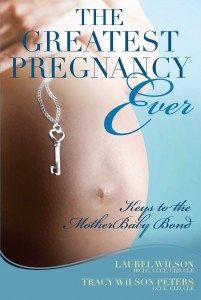
CAPPA linchpins Laurel Wilson and Tracy Wilson Peters are co-authors of a new book, The Greatest Pregnancy Ever, that focuses on the depth, intensity, and value of the MotherBaby bond. As I noted, I listened to Laurel talk about Bridging the Nutrition Gap and to Tracy speak about the “accidental parent.” In both, they addressed the biological wisdom that mothers possess and of the deeply interconnected nature of the maternal relationship.

Laurel reminded us that there is a brain in our gut, essentially. This brain literally tells us how we should be feeling our emotions, based on the nutrition that we’re putting into our bodies. She discussed epigenetics–a term meaning literally “above the gene”—explaining that this is the “translator that ‘reads’ the book of instructions from our genome.” The translator tells the body to turn on or off the genes we’ve inherited from our parents. Epigenetics is essentially the environment–those things in our environment that influence our biology. Laurel pointed out enthusiastically that we want to create an excellent “translator” for our children. She also emphasized repeatedly that one important job of the placenta is to “train” the baby for the environment it will be experiencing. This is why prenatal diet matters, it is helping to prepare the baby to thrive in the environment into which it will be born. So, chronic stress leads to a stressful womb environment, which leads to a baby that is biologically primed to be born into a stressful postnatal environment. Mother’s body primes baby’s body for success in that environment. As I listened to her speak and discuss the things we’ve learned from science about genetics and how our bodies function, I kept thinking: science can do a lot, it can do wonderful things. Mother’s body can do even moreAnd, isn’t that just cool?!

So, what’s going on in the maternal habitat?

One important point Laurel made about prenatal diets was that prenatal diets high in hydrogenated oils predispose mamas to postpartum moods disorders. She said this is because hydrogenated oils essentially “leach” EFA’s out of the mother’s system.

She also noted that mice up to three generations are affected with PCOS by BPA and phthalates (in food packaging. Our food is literally making us sick). These influence change the endocrine system and are connected with reduced sociality and community engagement.

Laurel explained too that no artificial sweeteners are considered safe for pregnant women and that stevia too is linked to epigentic damage. She suggested using honey and molasses as sweeteners if needed.

One tip that I found funny, basic, but so true with regard to choosing healthy foods is to make sure to choose to eat foods that will rot!

In Tracy’s talk she passionately affirmed that we have to eliminate chronic stress from pregnant women’s lives because she is laying an emotional and physical foundation for another person’s life. This matters! Babies are feeling before they are thinking and we are designed to live in the environment we are being born into.

Also remember, babies don’t need to be in nurseries–they need to be with their mothers. This MATTERS!

Birth Plan Item #1: Leave My Cervix Inside My Body!

Some time ago I read several articles in Midwifery Today about birth in the Ukraine. Apparently, it is a routine practice immediately postpartum to use two “shoe horn” shaped devices to pull the cervix out of the woman’s body to examine. Yes, I think that warrants repeating–manually pulling out the cervix to look at! (no pain medications). This is so patently horrible and unnecessary that I had a visceral response to reading about it–my uterus hurt.

U.S. maternity care routines

However, as I reflected on my reaction, I began to wonder if the practice is any more strange or disturbing that some U.S. maternity care routines? I still feel like cervix-pulling-out ranks pretty high on the horrible factor, but I also recognize that it is filtered through my cultural lens of what I’m used to—“normal” (i.e. culturally acceptable) birth practices in the U.S. (such as Pitocin injection immediately following most normal births regardless of indication and so on and so forth). We have any number of questionable medical care practices in this country too, but because I’m used to them they register as “normal.” Of course, this doesn’t mean I approve of them or fail to notice that they are not evidence-based, but I accept them as possible occurrences and I’m certainly not surprised to read about them over and over again, or shocked when my clients experience them during their births.

One of the articles was about birth in a Ukrainian “birth house” and the other was a composite of observations about birth in the Ukraine in general. Sometimes there is a tendency amongst midwifery supporters to romanticize birth and midwifery care in other countries and to vilify the U.S.—if you are a Ukrainian woman, this is clearly misplaced!

My first thought when reading the essays was, “Wow! The U.S. system isn’t so terrible after all!” But then, I tried to imagine the U.S. birth culture seen through completely fresh eyes, as I had just viewed the cervix-pulling technique. How would facets of hospital birth care in the U.S. appear to me if I was just hearing about them for the first time? As gross human rights violations?

Though I cannot make it have the same raw emotional and physical shock to me as cervix-pulling-out, I can only imagine how an episiotomy might sound to my imaginary fresh eyes: “then the doctor took some scissors and cut through the skin and muscles at the base of the woman’s vagina.” Or, the same with the not uncommon addition of, “as she begged ‘please don’t cut me! No!'”

I also read with sadness and dismay about the emotional maltreatment of Ukrainian women in labor and how (in hospitals) they are frequently denied the companionship of their husbands. Is this really more awful than women being coerced into unnecessary cesareans or even more basic, being denied food and drink throughout their labors? No, not really, just less familiar.

What do all women deserve?

While it is nice to recognize that there are things that women birthing in U.S. hospitals can be very grateful for, there is not an official continuum or hierarchy of “better” bad things to happen to birthing women regardless of country of residence. Humanized care is humanized care. Women worldwide deserve a safe environment, a respectful caregiver, continuous emotional support, physically responsive care, evidence-based medicine, and to have their cervixes and uteruses left inside their bodies.

(P.S. In case anyone is interested, “cervices” or “cervixes” and “uteri” or “uteruses” are both acceptable plurals)

Health Clubs, Heart Health, & Birth

One of the things I enjoy about the book Mother’s Intention: How Belief Shapes Birth, by Kim Wildner is how straightforward, matter-of-fact and unapologetic the author is when exploring concepts, realities, facts, and beliefs about birth. In a section addressing perceived risk and birth, she shares an effective analogy about health clubs and heart disease paralleling the accident-waiting-to-happen mentality of modern obstetrics:

A multitude of things CAN go wrong with any system in the body, but seldom DO. Take the heart/circulatory system for example. Heart disease is the leading cause of death in the US. 873 per 100,000 die of heart disease (CDC). (Remember, natural birth is between 6 and 14 per 100,000 in the US, depending on the population.) Some have arteries on the verge of clogging. Some have heart defects they are unaware of. Some have damage they don’t know about. Something could go wrong at any minute and immediately available surgery can undoubtedly save lives.

Using the logic of obstetrics, all health clubs should be in hospitals and all fitness trainers should be cardiac surgeons. Any independent health club with ‘lay’ trainers would be ‘practicing medicine without a license,’ subject to prosecution. It’s for your own good.

In fact, in order to know if a problem is developing, close monitoring and ‘management’ is required. We will need to place straps on the muscles to measure the intensity of the workout. of course, it will be restrictive, but we need to know how hard the muscles are working to know if the heart can take it. We’ll need to monitor heart rate, blood pressure, fluid output. We’ll need to give an IV because with sweat excreted, you could dehydrate, and of course, we simply can’t take the risk of letting you drink anything lest you need emergency surgery….

Later in the book, the author employs another helpful analogy, again using cardiology as an example to make a point about inappropriately applied maternity care interventions:

What if…

You went to the doctor complaining of chest pain…not bad pain, but bothersome. To rule out a heart problem, the caregiver listens to your heart. He scowls, then excuses himself to make a phone call. He comes back in and tells you that you need to be admitted to the hospital for a test that requires the use of a drug. The drug has a low risk of serious complications, which is why you must be in the hospital, but he feels confident in taking that risk.

You go, and within minutes of having the drug administered, you have a heart attack. You are rushed into emergency open-heart surgery. Complications arise, but they are dealt with. You nearly bleed to death, but with a blood replacement you recover.

The repair doesn’t go well, which may mean you will need further surgery later…maybe even a heart transplant. You definitely will need to change your previously active lifestyle.

Later, you discover the call your care provider places wasn’t to a specialist, but an HMO lawyer who advised him not to let you walk out the door, just in case the routine examination missed a serious problem. You also learn there were less dangerous ways to determine if there could be a minor problem.

It turns out, you really did have a minor case of heartburn. All you have been through was avoidable, but “As long as everyone’s ok now…that’s all that matters”…right?

A comment like that, to a mother who has suffered unnecessarily, when she would have–or could have had–the result of a live, healthy baby without such sacrifice, disregards her feelings of loss.

Parents should be expecting more!

In Open Season, by Nancy Wainer, she refers to OBGYN care is referred to as “gynogadgetry.”

In The Doula Guide to Birth, I marked another quote that feels very relevant to the others above: [a March 2006 study in the American Journal of Obstetrics & Gynecology] “reviewed all fifty-five of ACOG’s current practice bulletins, calling these articles ‘perhaps the most influential publications for clinicians involved with obstetric and gynecological care.’ The study concluded that ‘among the 438 recommendations made by ACOG, less than one third [23 percent] are based on good and consistent scientific evidence.'”

Enough said.

The Illusion of Choice

A choice is not a choice if it is made in the context of fear.

Informed choice is a popular phrase with birth professionals and healthy birth activists. I’ve read impassioned blog posts from doulas and birth activists claiming that if we support women’s right to homebirth, we must also support her “choice” to have an elective cesarean. But, I believe we have constructed a collaborative mythos within the birth activist community that an informed choice is possible for most women. The statistics tell us a different story. I do not believe that women with full ability to exercise their choices would choose many of the things that are typically on the “menu” for birth in mainstream culture.

What’s on the menu?

Women give their blanket “informed consent” to all manner of hospital procedures without the corollary of informed refusal–is a choice a choice when you don’t have the option of saying no?

In many hospitals, women are STILL not allowed to eat during labor despite ample evidence that this practice is harmful–is a choice a real choice if made in the context of hospital “policies” that are not evidence-based?

Women are told that their babies are “too big” and then “choose” a cesarean. Is a choice a choice when it is made in the context of coercion and deception?

Women choose hospitals and obstetricians that are covered by their insurance companies. Is a choice a real choice when it is made by your HMO?

Women choose hospital birth because they cannot find a local midwife. Is a choice a real choice when it is made in the context of restrictive laws and hostile political climates?

Women often state they are seeking “balanced” birth classes that aren’t “biased” towards natural birth (or towards hospital birth), but is a choice a choice when it is made in the context of misrepresented information? Because, as Kim Wildner notes, balance means “to make two parts equal”–what if the two parts aren’t equal? What is the value of information that appears balanced, but is not factually accurate? Pointing out inequalities and giving evidence-based information does not make an educator “biased” or judgmental–it makes her honest! (though honesty can be “heard” as judgment when it does not reflect one’s own opinions or experiences).

On a somewhat related note, recently, the subject of “quiverfull” families came up amongst my friends and comments were made about feminists needing to support those women’s “choice” to have so many children. However, I worry about women who are making reproductive “choices” in the context of what can be a very repressive religious tradition. Women’s choices about their lives are not always made with free agency. And, that is where some feminist critiques of other women’s choices come from–a critique of the larger context (patriarchy) rather than the woman herself. Is a choice a choice when it is made in the context of oppression?

Where do women get information to make their choices?

In his 2010 presentation, Birthing Ethics: What You Should Know About the Ethics of Childbirth, Raymond DeVries uses data from the Listening to Mother’s studies to help us understand where women are getting their information about birth—this is the context in which their “informed choices” are being made and this is the context we need to consider.

Our choices in birth and life are profoundly influenced by the systems in which we participate…

Some choices shaped by the system
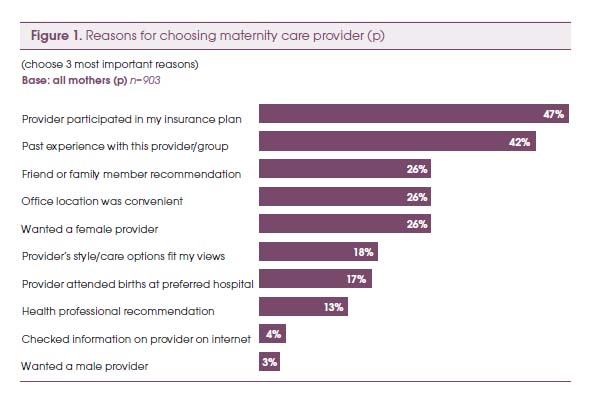

Women learn from books and experiences of others (and self):
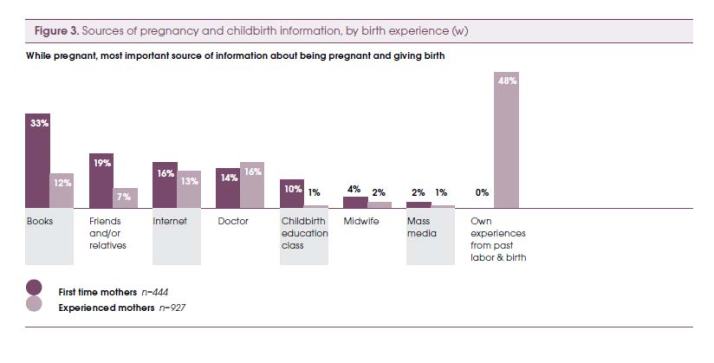
The number one book women learn from is What to Expect When You’re Expecting, which has been number four on NY Times Bestsellers list for over 500 weeks and counting.

According to De Vries, via the Listening to Mothers data, this is what women tell us about how they learn, what they learn, and upon what their choices are based:

Television explains birth
Pain is not your friend
But technology is
Mothers are listening to doctors (and nurses)
Medicalized birth allows mothers to feel capable and confident
Interfering with birth is mostly okay
Our health system works (mostly)
We like choice
We want to be “informed”

He also explains polarization: “We seek information to confirm our opinion. Contrary information does not convince, it polarizes.” How do we share information so that women can make truly informed choices without polarizing?

As advocates, I think we sometimes fall back on the phrase “informed choice” as an excuse not to be outraged, not to despair, and not to give up, because it promises that change is possible if only women change and most of us have access to change at that level.

Birthing room ethics

In another presentation, U.S. Maternity Care: Understanding the Exception That Proves the Rule, DeVries explores the ethical issues surrounding choices in birth, noting that “choice is central at all levels – but can choice do all the moral work?” We wish to respect parental choice, but information does not equal knowledge and we often err on the side of treating them as one and the same. In maternity care, often there is no choice. Tests become routine or practices become policy, and “information [is] given with no effort to understand parental values (the ritual of informed consent).”

Is choice possible while in active labor?
De Vries also raises a really critical question with no clear answers—is choice really possible during active labor? He also asks, “should a healthy pregnant woman be allowed to choose a surgical birth? But is it safe? The problem with data…Interestingly, those who think it should be allowed find it safe, and those who oppose it, find it to be unsafe.” When considering where this “choice” of surgical birth comes from, he identifies the following factors:

The desires of women
• Preserve sexual function
• Preserve ideal body
• The need to fit birth into employment
• Options offered by health care system

The desires of physicians
• Manage an unpredictable process
• The limits of obstetric education

Why should we care, anyway?

Another popular phrase is, “it’s not my birth.” I agree with the opinion of Desirre Andrews on this one:

“I do not believe in the saying ‘Not my birth.’ Women are connected together through the fabric of daily life including birth. What occurs in birth influences local culture, reshapes beliefs, weaves into how we see ourselves as wives, mothers, sisters, & women in our community. Your birth is my birth. My birth is your birth. This is why no matter my age or the age of my children it matters to me.”

Victims of circumstance?

While it may sound as if I am saying women are powerlessly buffeted about by circumstance and environment, I’m not. Theoretically, we always have the power to choose for ourselves, but by ignoring, denying, or minimizing the multiplicity of contexts in which women make “informed choices” about their births and their lives, we oversimplify the issue and turn it into a hollow catchphrase rather than a meaningful concept.

Women’s lives and their choices are deeply embedded in a complex, multifaceted, practically infinite web of social, political, cultural, socioeconomic, religious, historical, and environmental relationships.

And, I maintain that a choice is not a choice if it is made in a context of fear.

But, what do we know?

I read an interesting article by anthropologist and birth activist, Robbie Davis-Floyd, in the summer issue of Pathways Magazine. It was an excerpt from a longer article that appeared in Anthropology News, titled “Anthropology and Birth Activism: What Do We Know?” In the conclusion, Davis-Floyd states the following:

“Doctors ‘know’ they are giving women ‘the best care,’ and ‘what they really want.’ Birth activists…know that this ‘best care’ is too often a travesty of what birth can be. And yet on that existential brink, I tremble at the birth activist’s coding of women as ‘not knowing.’ So, here’s to women educating themselves on healthy, safe birth practices–to women knowing what is best for themselves and their babies, and to women rising above everything else.”

I believe that every woman who has given birth knows something about birth that other people don’t know. I also believe that women know what is right for their bodies and that mothers know what is right for their babies. I’m also pretty certain that these “knowings” are often crowded out or obliterated or rendered useless by the large sociocultural context in which women live their lives, birth their babies, and mother their young. So, how do we celebrate and honor the knowings and help women tease out and identify what they know compared to what they may believe or accept to be true while still respecting their autonomy and not denigrating them by characterizing them as “not knowing” or as needing to “be educated”? As I’ve written previously, with regard to education as a strategy for change: People often suggest “education” as a change strategy with the assumption that education is all that is needed. But, truly, do we want people to know more or do we want them to act differently? There is a LOT of information available to women about birth choices and healthy birth options. What we really want is not actually more education, we want them to act, or to choose, differently. Education in and of itself is not sufficient, it must be complemented by other methods that motivate people to act. As the textbook I use in class states, “a simple lack of information is rarely the major stumbling block.” You have to show them why it matters and the steps they can take to get there…

And, as the wise Pam England points out: “A knowledgeable childbirth teacher can inform mothers about birth, physiology, hospital policies and technology. But that kind of information doesn’t touch what a mother actually experiences IN labor, or what she needs to know as a mother (not a patient) in this rite of passage.”

The systemic context…

We MUST look at the larger system when we ask our questions and when we consider women’s choices. The fact that we even have to teach birth classes and to help women learn how to navigate the hospital system and to assert their rights to evidence-based care, indicates serious issues that go way beyond the individual. When we talk about women making informed choices or make statements like, “well, it’s her birth” or “it’s not my birth, it’s not my birth,” or wonder why she went to “that doctor” or “that hospital,” we are becoming blind to the sociocultural context in which those birth “choices” are embedded. When we teach women to ask their doctors about maintaining freedom of movement in labor or when we tell them to stay home as long as possible, we are, in a very real sense, endorsing, or at least acquiescing to these conditions in the first place. This isn’t changing the world for women, it is only softening the impact of a broken and oftentimes abusive system.

And, then I read an amazing story like this grandmother’s story of supporting her non-breastfeeding daughter-in-law and I don’t know WHAT to do in the end. Can we just trust that women will find their own right ways, define their own experiences, and access their own knowings in the context of all the impediments to free choice that I’ve already explored? What if she says, “why didn’t you TELL me?” But, if we share our information we risk polarization. If we keep silent and just offer neutral “support,” regardless of the choice made, then doesn’t it eventually become that the only voice available for her as she strives to make her own best choices is the voice of What to Expect and of hospital policy?

“Our lives are lived in story. When the stories offered us are limited, our lives are limited as well. Few have the courage, drive and imagination to invent life-narratives drastically different from those they’ve been told are possible. And unfortunately, some self-invented narratives are really just reversals of the limiting stereotype…” –Patricia Monaghan (New Book of Goddesses and Heroines, p. xii)

—-
Related posts:

What to Expect When You Go to the Hospital for a Natural Childbirth
Birth & Culture & Pregnant Feelings
Asking the right questions…
Active Birth in the Hospital
Why do I care?

References:

De Vries, Raymond. May 20, 2010. Birthing Ethics: What You Should Know About the Ethics of Childbirth, Webinar presented by Lamaze International.

De Vries, Raymond. Feb. 26-27. U.S. Maternity Care: Understanding the Exception That Proves the Rule. Coalition for Improving Maternity Services (CIMS). 2010 Mother-Friendly Childbirth Forum

Birth and the Women’s Health Agenda

Ready to be on the agenda, dangit!

In the Fall issue of The Journal of Perinatal Education (Lamaze), there was a guest editorial by perinatologist Michael Klein called “Many Women and Providers are Unprepared for an Evidence-Based Conversation About Birth.” In it he notes:

Childbirth is not on the women’s health agenda in most Western countries…It never has been. Osteoporosis is. Breast health is; violence against women is. Why not childbirth? Because women, understandably, do not want to be judged only by their reproductive capacities. Women are multipotential people. Among many potentialities, they can rise to the top of the academic and corporate world. Giving birth is just one of many things women can do. But now is the time to add childbirth to the women’s health agenda; it is because of the lack of informed decision making that birth should be added to that agenda, lack of information, misinformation, and even disinformation. The time is now.

…What really matters is attitudes and beliefs, which are much more difficult to change than putting away the scissors and hanging some plants. These are systemic issues. (emphasis mine) It is all about anxiety and fear. The doctors are afraid…The women are afraid…Society is afraid and averse to risk.

So how can you make a revolution when so few individuals are unhappy with current maternity care practices? The most unhappy and well-informed women select midwives, if available. The most fearful women select obstetricians. Providers are not going to initiate the revolution to make childbirth a normal rather than high-risk, industrialized activity…Women are going to have to take the lead…

The problem is not that obstetricians are surgeons. They are. The problem is that society has invested surgeons with control over normal childbirth.

I keep wanting to write an article called, “is evidence-based care enough?” because we see this phrase used so often in birth advocacy work. It is kind of the companion phrase to the, “women just need to educate themselves” line of thought, that, quite frankly, is also just not enough. And, I think the reason it isn’t enough—all of our education, all of our books, and all of our evidence—is because it isn’t information itself that really needs to change, it is women’s feelings and beliefs about birth (and the medical system’s feelings and beliefs about it too, in addition to their practices) and changing those sometimes feel like an insurmountable task. As I’ve written before, much of the time it isn’t that we actually want women to know more, we want them to act differently. And, a choice made in a context of fear is not an informed choice at all.

Book Review: Homebirth in the Hospital

Homebirth in the Hospital
by Stacey Marie Kerr, MD
Sentient Publications, 2008
Softcover, 212 pages
ISBN: 978-1-59181-077-3
www.homebirthinthehospital.com

Reviewed by Molly Remer, MSW, ICCE, https://talkbirth.wordpress.com

I would venture to say that most midwifery activists and birth professionals have said at some point, “what she wants is a homebirth in the hospital…” This comment is accompanied with a knowing look, a bit of head shaking, and an unspoken continuation of the thought, “…and we all know that’s not going to happen.”

Well, what if it is possible? A new book by Dr. Stacey Kerr, Homebirth in the Hospital, asserts that it is. She was originally trained at The Farm in TN (home of legendary midwife Ina May Gaskin) and after going to medical school realized that she, “…needed to balance my new knowledge with my old priorities. I missed the feeling of normal birth, the trust that the birthing process would occur without technology, and the time-tested techniques that help women birth naturally. And so it was that I went back to midwives to find the balance.”
If you are a dedicated homebirth advocate, I recommend reading Homebirth in the Hospital with an open mind—clear out any cobwebs and assumptions about doctors, hospitals, and birth and read the book for what it is: an attempt to create a new model of hospital birth. What Dr. Kerr proposes in her book is a model of “integrative childbirth”—the emotional care and support of home, while nestled into the technology of a hospital.

The opening chapter explores the concept of integrative childbirth and “the 5 C’s” of a successful integrative birth: choices, communication, continuity of care, confidence, and control of protocols (“protocols are the most disempowering aspect of modern maternity care…”).

This section is followed by fifteen different birth stories, beginning with the author’s own (at a Missouri birthing center—my own first baby was born in a birth center in Missouri, so I felt a kinship there).

The births are not all happy and “perfect,” not all intervention-free, and most are quite a bit more “managed” and interfered with than a lot of homebirthers prefer (one is a cesarean, several involve epidurals or medications). I, personally, would never freely choose a “homebirth in a hospital” (I also confess to retaining a deep-seated opinion that this phrase is an oxymoron!). However, that is not the point. Over 90% of women do give birth in a hospital attended by a physician and I appreciate the exploration of a new model within the constraints and philosophy of the hospital.

The book closes with a chapter called “how to be an integrative childbirth provider.” The book has no resources section and no index.

I certainly hope that doctors read this book. I am also glad it is available for women who feel like homebirth is not an option or not available and would like to explore an integrative approach. Even though my opinion is that none of the births are really “homebirths in the hospital” as most bear little resemblance to the homebirths I know and love, unlike the content of the standard hospital birth story, they are deeply respectful births in the hospital and that’s the issue truly at the heart of this book.

—-

Disclosure: I received a complimentary copy of this book for review purposes.

Abusive or Honest?

I recently finished reading the book, Breakthrough: How the 10 Greatest Discoveries in Medicine Saved Millions and Saved the World, which I got for free on my Kindle. The section about germ theory talked about Ignaz Semmelweis, of course, and his conviction that it was an “invisible particle” carried by physician to woman that was causing “childbed fever” to be a rampant problem in hospitals. (I appreciated that the book noted that mortality rates for women attended by midwives or giving birth in their own homes were very low compared to hospital-based physicians.) During the latter part of his life, Semmelweis became very agitated by the failure of his colleagues to recognize the validity of his theory of the cause of childbed fever and began sending them, “vicious letters.” An example included in the book was the following:

Your teaching, Herr Hofrath, is based on the dead bodies of women slaughtered through ignorance…If, sir, you continue to teach your students and midwives that puerperal fever is an ordinary disease, I proclaim you before God and the world to be an assassin…

The author goes on to explain that Semmelweis later died in a mental institution and that, “Ironically, some contend that Semmelweis’ final vitriolic attacks against his colleagues constituted a third key milestone: His abusive letters may have helped raise awareness years later, as other evidence for germ theory began to accumulate.”

I find it fascinating that his frustration and anger towards his colleagues is described as “abusive” and “vitriolic,” when Semmelweis wrote a book, presented papers, and spoke with other professionals at length about the issue and was dismissed and even mocked for his ideas. When his (correct!) theory continued to be ignored and women continued to die, isn’t he a little entitled to be angry and express that?! I think he was being honest in his letters, not abusive. It made me think of how women are dismissed as being “drama queens” for being upset about unnecessary cesareans and that the terms “birthrape” or “birth trauma” are viewed by some as too “extreme” and how the medical profession all too often continues to NOT practice evidence based maternity care with regard to a variety of issues from restrictions on freedom of movement, to continuous fetal monitoring without indication, to risky induction of labor procedures, to cesareans for “failure to progress.” In the future, these experiences and women’s and birth advocates’ “vitriolic” reactions to them may be viewed through the same lens in which I view Semmelweis’ attempts to share his findings—they were trying to tell people something really important after all.

In another section of the book, the author says, “Scientific medicine has never been shy to dismiss if not denigrate any perceived threat to its values or power.” We continue to regularly see this in maternity care today!

Book Review: Understanding the Dangers of Cesarean Birth

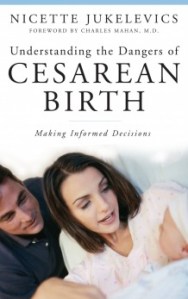
Book Review: Understanding the Dangers of Cesarean Birth: Making Informed Decisions
By Nicette Jukelevics
Praeger Publishers, 2008
ISBN 978-0-275-99906-3
264 pages, hardback, $49.95 (or $40.96 via http://www.icea.org)
http://www.dangersofcesareanbirth.com

Reviewed by Molly Remer, MSW, ICCE, CCCE
https://talkbirth.wordpress.com

Intended to be a comprehensive resource for both consumers and birth professionals, Understanding the Dangers of Cesarean Birth is an in-depth look at the incidence and impact of cesarean birth on mothers, babies, families, and society as well as an overview of prevention strategies. The final section of the book is about “why normal birth matters” and addresses changing the status quo. The Midwives Model of Care is reflected and promoted during the book and doulas also receive strong support.

I have two primary opinions of the book: The first is that I truly believe that Understanding the Dangers of Cesarean Birth should become the “go to” book for current, evidence-based, thorough information about cesarean birth in the U.S. It is a treasure trove of information and any birth professional would be well advised to have a copy on their bookshelf. The second opinion is that the “heavy” subject, extremely in-depth information, academic writing style, and relatively high price, will likely keep this book out of the hands out of its primary intended audience—the consumer. The person who most needs to read this book is the first-time pregnant woman. However, the entire time I was reading it, I kept thinking that there was only a slim likelihood of the average first-time mother being attracted to, or actually picking up this book, to read.

Mothers planning VBACs or seeking to understand their own cesarean birth experiences will probably find Understanding the Dangers of Cesarean Birth to be a valuable resource. Birth activists will find clearly articulated and important information that they will wish to shout to the rooftops and I think that this is how the content in Understanding the Dangers of Cesarean Birth has the best chance of truly reaching the women who need to hear its message.

Disclosure: I received a complimentary copy of this book for review purposes.

Book Review: Optimal Birth: What, Why & How

Book Review: Optimal Birth: What, Why & How
By Sylvie Donna
Fresh Heart, 2010
ISBN 9781906619138
670 pages, paperback, £24.99
http://www.freshheartpublishing.com

Reviewed by Molly Remer, MSW, ICCE, CCCE
https://talkbirth.wordpress.com

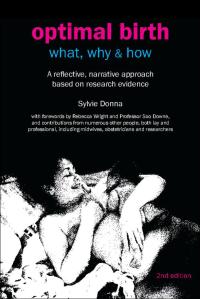
Written in an energetic and confident tone, Optimal Birth is written for midwives and other birth care providers and emphasizes undisturbed, natural birth. Throughout the text, a unique “birthframe” format is used to share birth wisdom in women’s own words. Donna is heavily influenced by the work of Michel Odent (he attended several of her births) and references him frequently. The author writes in a very straightforward manner and has extremely strong opinions as to what constitutes “undisturbed birth,” but these opinions are backed up with ample evidence-based information. The exquisite sensitivity of a birthing woman to her environment is of primary importance in the book and caregivers are strongly urged to take an extremely hands-off approach to care.

A lengthy volume, Optimal Birth is difficult to describe adequately in summary form—it contains extensive sections about physiological birth, birth interventions, the emotional impact of women’s experiences, prenatal care, and postpartum care. It also includes a week-by-week guide to pregnancy. There are a large number of black and white pictures and each section of the book contains a series of insightful questions designed to provoke self-discovery about physiological birth and the appropriate care of birthing women.

Readers unaccustomed to the midwives model of care or to the principles of undisturbed, physiological birth may find the book’s emphasis on non-intervention heavy-handed or one-sided. Considering that many manuals for care providers focus extensively on labor and birth “management,” personally I find the non-disturbance approach advised by Optimal Birth to be inspirational and encouraging as well as appropriate. As the author notes, “the processes of birth are so delicate that many things can disturb a laboring woman and consequently make her labor slower and more dangerous.”

An encouraging and informative companion book containing much of the same information but from a consumer perspective titled Preparing for a Healthy Birth is also available.

Disclosure: I received a complimentary copy of this book for review purposes.