Archives

Top 10 Kid Gadgets for Holiday Road Trips

We recently returned from a train trip to the Chicago area. While it took a long time to travel by train (mostly due to having to get to the station early, etc.), I really appreciated this mode of travel with a baby! Check out some pictures:

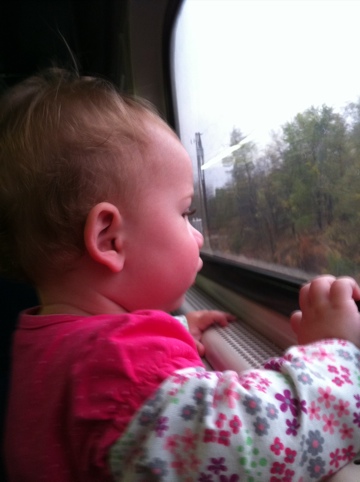
20111115-082336.jpg

Alaina watching the world go by!

20111115-082550.jpg

Watching a movie on Daddy's laptop on the way--Amtrak has two outlets for each set of seats, which is awesome!

20111115-082401.jpg

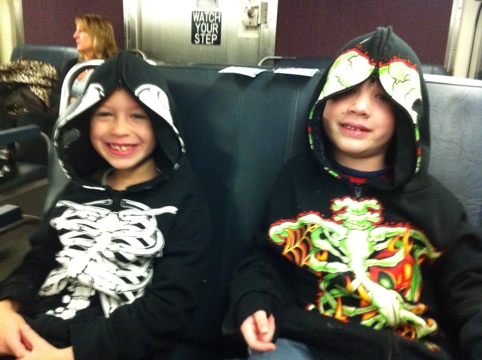
The boys on the commuter train on the way home--they both got a little bit of a fever/cold and ended up sleeping on much of the return journey. It was actually kind of "convenient"!

20111115-082502.jpg

Conked out on the commuter train back into Chicago (see how she holds my necklace 🙂

One of the greatest benefits of train travel to me is the ability to hold and nurse the baby while traveling. I’ve said so many times how I wish I could invent a baby carrier that you could legally wear in a car. Traveling on the train allowed me to experience that imagining. It was great! She rode, she nursed, she snoozed, she checked things out.

20111115-082531.jpg

Now THIS is how I like to travel with a baby!

When I got home, I coincidentally received the following guest post about keeping kids entertained on holiday road trips. For our own train trip, the most useful thing we had was the laptop. (I also had mine with me and actually managed to edit 81 pages of my miscarriage book on the trip home!) While we were at my in-laws, I also bought some fun little “blind bag” Playmobil and Lego figures and gave them to the kids to play with on the way home.

Guest Post: Top 10 Kid Gadgets for Holiday Road Trips

by Ashley Grimaldo
Talking on a cell phone while driving is dangerous. But a mid-transit chat pales in comparison to the distraction of driving with one (or two!) children wailing in the backseat. Nothing increases adrenaline and quick recall of four-letter words quite like crying kids.

As parents, we can mentally cope with crying kids to and from the grocery store. But long-distance trips need more finesse. Careful preparation and a few necessities can prevent a few glitches and keep your travel going smoothly. As you prepare for holiday travels, make the most of your trip with these handy gadgets.

1. Snack Container
A signature trademark of a kid-friendly car is a Hansel and Gretel-worthy crumb collection on every surface. If you can overlook this completely annoying parenthood perk, I applaud you; otherwise invest in some creative cups. Munchkin offers an ingenious design with handles and no spill rubber top–two for under $7. Sporting a similar design but with an attachable rope (and additional solid top) is the Spill-Proof Snack Buddy Cup from One Step Ahead.

2. Window Shade
Getting on the road is tough enough; stopping to shade a sunset shouldn’t be on your list of priorities. Grab a light-cutting window shade to curb the brightness. Measure your windows and buy the widest shade possible, making sure you have enough visibility in your back and rear passenger windows. Check out your options at Great Baby Products for window shade reviews.

3. Lacing Toys
Kids above age 3 (who don’t suffer from motion sickness) will work on lacing boards for hours. Growing Tree Toys has a fantastic range of simple lacing activities, like necklaces and ABCs, to complex connect-a-dot boards. Bring a bucket to set in your child’s lap so that she can contain the blocks without dropping them on the floor.

4. Finger Puppets
For the dramatic types in your crew, a set of finger puppets can be a space-saving lifesaver. My favorite are high-quality puppets that tell a familiar story, like Thumbelina or the Frog Prince from puppet master Folkmanis, but folks on a budget can definitely afford IKEA’s popular set of circus characters or animals for just $4.99.

5. Favorite Music
Not your favorite music, mind you. Junior may not appreciate the vocal stylings of Rihanna for hours on end (and, honestly, you shouldn’t either). Enjoy some traditional Disney favorites and throw in some award-winning movement songs from Hap Palmer and Joe Scruggs to keep the mood kid-friendly. Bring on talk radio when it’s time for a snooze.

6. Bubbles
So what if you have to clean up the residue later! Bubbles are total fun for all ages, especially when the road seems never-ending. Unless you have an older child, mom or dad needs to commandeer the liquid and blow them toward the back. The best bubbles on the market, hands down, come from Gymboree. These bubbles float forever and the solution never dries out.

7. Barf Bag
Close to 30% of people are susceptible to motion sickness, and kids are no exception. The barfies can strike at any time–there’s no guarantee that your child will or won’t get sick on a road trip. Prepare for the worst by investing in a few leak-proof barf bags with fun pictures printed on the outside and show your child how to “cough” into it if his tummy starts to hurt. And bring an extra couple of towels just in case.

8. Neck Pillow
This is a tricky one. Your younger child may or may not like the feeling of something so close to her neck. Try it on short stroller trips ahead of time to practice. If your kiddo will wear it, she’ll be far more comfortable during naps. Pillow companions like the Dora neck pillow attach to the straps of your car seat or stroller, making it a bit more accessible.

9. Small Baking Sheets
This ingenious idea from Family Fun keeps the ever-present I-dropped-it-on-the-floor wail at bay. Use a conventional (but smaller) lipped baking sheet as a drawing, magnetic and keep-it-all-in-one place surface. Glue one or two layers of foam shelf paper on the bottom to make it less likely to fall and affix white contact paper to the top for the drawing surface. Turn it into multiple activities by attaching magnets to buttons for checkers or bingo games. Older travelers might prefer a more sophisticated travel kit like this one from Martha Stewart.

10. iPad
No, I’m not a fan of hours of screen time for little eyes, but during a road trip this godsend is a total catchall. From apps for all ages to music and movies, the iPad is the perfect device for tiny travelers. Purchasing gift cards at a discount from sites like GiftCardGranny can help you pay for the pricey device at such retailers as Target and Walmart, who are currently offering deals on iPad 2 bundles. Then, let your kiddos learn letters with Starfall or everything nursery-rhyme cooky from Duck Duck Moose. When all else fails, strap it to the seat and watch a movie.

###

Ashley Grimaldo comes from a long line of penny pinchers and enjoys blogging on money-saving tips and advice for frugal-minded parents. She lives with her husband and three children in Bryan, Texas. Ashley has been featured among such media outlets as Redbook, The Chicago Tribune, Time.com, and CBS News-Houston.

For all media inquiries, please contact Ashley Grimaldo at ashley@kinoliinc.com.

Full Moon Calendar Mandala

I drew this full moon calendar mandala as part of an assignment for one of the classes I’m taking (we are working on our “wheel of the year” and holidays, etc.). While it was not specifically part of the assignment to do so, I found that drawing this mandala image helped me to explore and express my ideas. It contains the dates of all the full moons in 2012, as well as representations of the waxing and waning moons for the entire year. I initially set this to post as private, so it wouldn’t be visible to my blog readers and would only be available to my class, but then I reconsidered and thought other people might be interested in seeing it as well:

Full Moon Calendar Mandala

New Pictures!

I took Alaina for a 9 month photo shoot with my friend Karen (of Portraits and Paws Photography) who also took my pregnancy photos. I really have fun getting high quality pictures that capture what our lives are like. She is able to catch expression, details, and feeling in a way that I can’t usually do with snapshots. So, even though we were thoroughly exhausted from having just returned from my sister-in-law’s wedding near Chicago), I’m really glad we did another photo shoot!

Here are a couple of my favorites from the day, including one of each of my boys (lest you think I only get pictures taken of the baby!):

(c) Karen Orozco

This one might be my favorite--I see this little face all the time, but have never really preserved it in a picture (she always looks away, it is blurry, whatever).

(c) Karen Orozco

Became very obsessed with this candy cane

What a cutie! (note, still has some candy cane)

My biggest boy!

My little Z! (He's got some pretty amazing eyelashes/eyes too!)

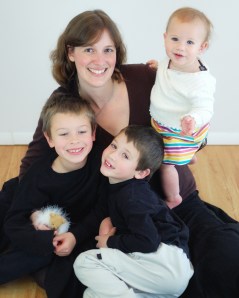
We're going to try to get some better family shots another day. This was at the end of the shoot and all were tired. I like it anyway though. I also think it somehow looks like a lot of kids and only one mom!

I thought this one was a cute one of me--A looks done with pictures though (and, still has some candy cane)

Motherhood as Meditation

I sometimes use my blog as a way to “store” things that I’ve read and want to remember later–or, come back to and re-discover later. I’m slowly making my way through a book called Meditation Secrets for Women and this morning I read the following:

…a mother is naturally drawn into simplicity meditations when she has small children. A hundred times a day you are forced to surrender, to slow down and pay attention…A mother must continually let go, not only of rigid scheduling but in the deepest movement of her heart. The maternal bond is a powerful primordial instinct…Each day is a little death and a challenge to live in trust. When a mother learns to accept this process and allows herself to be changed by it, her heart is softened and stretched. This demonstrates again how women’s awareness of the preciousness of life leads us into a natural spirituality that does not have to be manufactured or enforced.

I was just thinking on Friday about just how many things I let go of every day. It is still painful to do–I’m not softened and stretched enough yet, I guess–but I also feel impressed with my own ability to accommodate and enfold. Knowing how many letting gos are required daily also doesn’t stop me from starting out the next day with just as many plans as the day before though.

I’m experimenting with making this post using my phone…did it work?!

Related posts:
Surrender?
Book Review: Mindful Motherhood
Book Review: 10 Steps to Joy and Inner Peace for Mothers
Breastfeeding Toward Enlightenment
How to meditate with a baby

20111030-124905.jpg
My baby zen master 🙂

Happy Halloween!

This time last year I was entering the third trimester of my pregnancy. It feels almost surprising to me to look back at my pictures and posts from that time. I love having it be my past experience now—it feels great. And, in some ways it seems so far away that it is hard to believe that it was just last year. I’ve reposted several links from old posts to my Talk Birth Facebook page recently because of that feelings—I’m like, remember just LAST YEAR you were PREGNANT??!!

Today was our playgroup Halloween party again and here we are (Lann took the picture so isn’t in this one):

Yes, I have three troll pins on 🙂

When my first son was three, my friend sent him a skeleton sweatshirt that glows in the dark. He wore it for about three years! Now, it has passed on to my younger son and he has been wearing it for a year. So, imagine the delight when we found these cool sweatshirts at KMart this week. I got one for each of them (these glow in the dark too) and I couldn’t resist getting a smaller skeleton sweatshirt for Alaina as well. (Hers doesn’t have the cool hood-mask though.)

Three little skeletons!

Integrated Mama

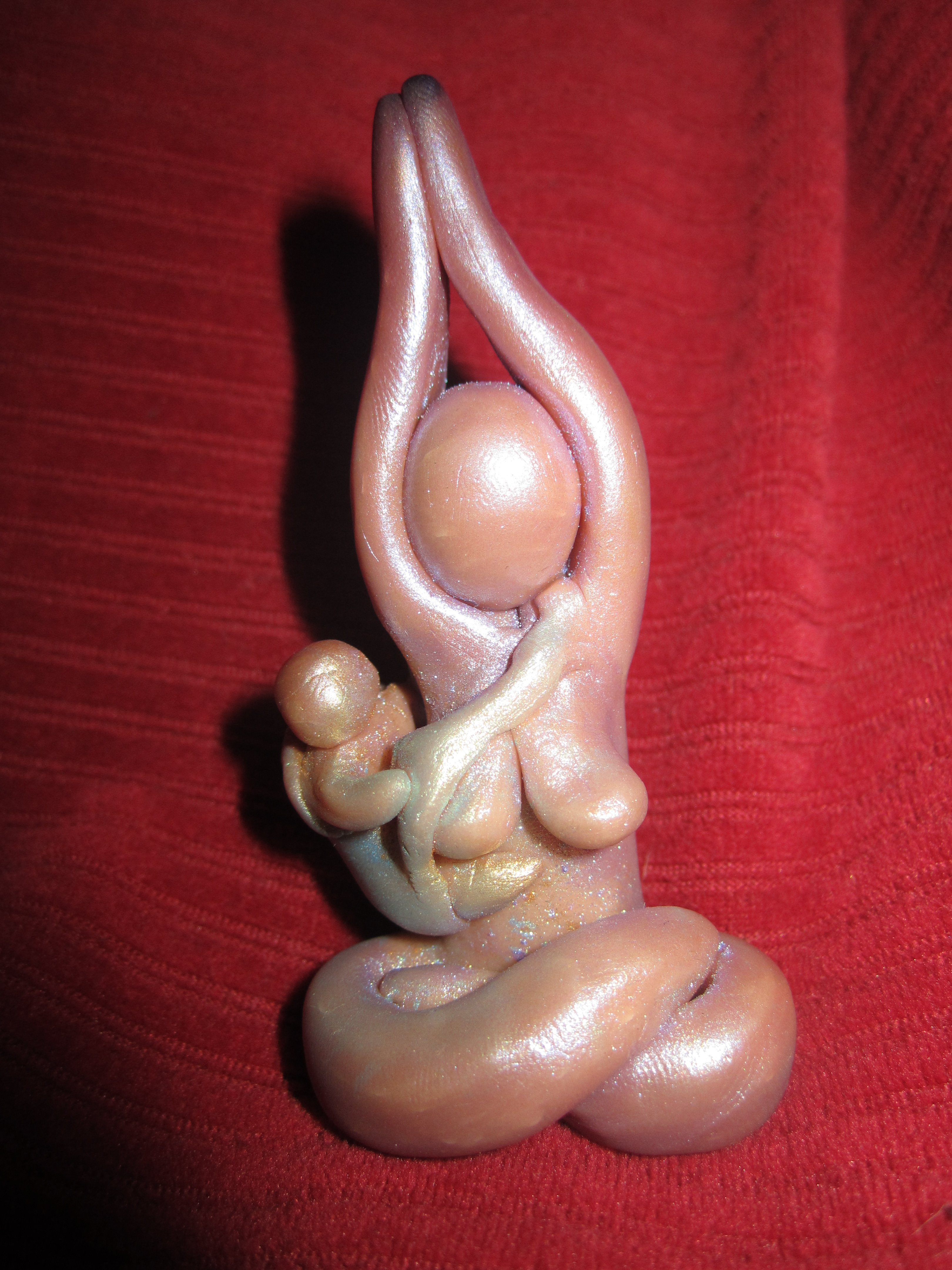
Alaina turned nine months old this week and I again found myself wishing to make a new polymer clay goddess sculpture to capture this new phase in our life cycle. I’m interested by how I began this series during my pregnancy with her and how I continue to feel “moved” to add to it as she grows and changes. While she is on the move a lot, she also spends a great deal of time riding on my hip in a pouch carrier. So, it felt àpropos to make another slingin’ mama figure, this time with the baby on her hip. While, as always, it isn’t perfect, I do like how my new sculpture turned out:

Slingin' mama goddess!

Healthy Baby Fair Booth--just popped out of baby carrier for photo op

I’ve written several times before about my desire to live an integrated life and I honestly think that babywearing makes it (semi) possible. She most wants to be with me, but often she doesn’t want direct play, she wants to ride along and see what interesting things I’m going to do. I think this is part of baby’s biology and part of how the motherbaby relationship is socially and biologically meant to be at this point—mother goes about her business (grinding corn, perhaps), with baby very close and watching. Unfortunately, this doesn’t include typing things on the computer, which is what much of my work actually entails. So, I save household work to do while she’s awake and riding along and I do computer-based work while she sleeps. That way, we (usually) both get our biologically appropriate needs met within our cultural context. Recently, I had a LLL table at the local Healthy Baby fair and several people came up to my friend and me to comment on how we were wearing our babies and how they were just riding along so content to look at what was going on. I tried to explain to one booth visitor who was expressing concern about the changes babies bring to life how I believe that babies can go along with mothers as they go about their tasks/days—it is possible to integrate the baby into the rest of your responsibilities.

Looking at the wavy lake from safe harbor of mama's body (in Ergo)

I was thinking about this again over the last couple of days that I spent with my family on a mini-vacation to Silver Dollar City (theme park in Branson, Missouri). As long as Alaina was riding with me in the pouch or Ergo she was totally happy. We spent hours outside on Wednesday in pretty bitter cold and she rode and looked and nursed and snoozed. On Thursday we took a lunch “cruise” on a Showboat (didn’t actually cruise due to wind) and again, she rode and checked out the world. Then, on Friday, we were back in the park where she got to go on her first rides ever like a big girl—the carousel (out of pouch) and on the Flooded Mine ride (where the whole family rode in a boat—she rode in the Ergo in the boat with me).

Big girl going for a ride!

Several years ago at an LLL conference, a sleep “expert” spoke during the lunch session. She was of the opinion (which is not shared by LLL as a whole), that nursing a baby to sleep is a “habit” that you don’t want to get into and advocates detaching them when they get sleepy so that they learn how to fall asleep without relying on nursing to get them there. She gave examples of babies and sleep associations and then said, “but if a baby is used to being nursed to sleep, they could fall asleep in the middle of Times Square while the ball was dropping on New Year’s Eve as long as mama was there too and nursing them.” And, I thought, EXACTLY! The problem with that is….?! That is one of the very best things about breastfeeding to me—home is where the mama is. So, this week as Alaina snoozed peacefully when she was sleepy while roller coasters sped around and bluegrass played and fiddlers fiddled and cold winds blew and people swarmed all over, I was thankful that I’ve never tried to get my baby to develop a different sleep association! Breastfeeding is magic like this to me, not an inconvenience or a habit to be restructured.

She is nursing in this picture

Of course, integration of parenting with work can also be a pretty significant challenge, as I touch on in my recent interview in the working/parenting series at Molly Westerman’s blog First the Egg. (I typed my responses to her interview questions on my phone while lying on my side in bed nursing Alaina to sleep.)

My whole series of sculptures

Glass Half Full

Written by Katy Read, the article “Glass Half Full” in the fall issue of Brain, Child magazine, explores the questions: “Have mothers complained too much, already … or not enough?” In it, she references a book I hadn’t yet heard of by Bryan Caplan, Selfish Reasons to Have More Kids: Why Being a Great Parent Is Less Work and More Fun Than You’d Think

…Caplan argues that parents make their own job unnecessarily difficult. If they’d cut themselves some slack, he insists, raising kids would be more enjoyable—so much so that couples should consider having more children than they’d planned.

At the same time, however, other observers contend that it’s still rare and socially risky for mothers to admit any discontent…

So which are we: A culture in which mothers hesitate to voice misgivings for fear of social reprisal? Or one so inundated with maternal kvetching that onlookers are understandably tired of it?…

Glass Half Full in Brain, Child magazine.

She later returns to Caplan’s ideas about nature vs. nurture (i.e. that nurture carries less weight than we often assume):

Why do moms “self-flagellate”? Because they’ve been taught that kids pay a long-term price for their parents’ ordinary mistakes. They don’t. Because they think they’re to blame for their children’s flaws. They aren’t.

But guess what. Admitting you can’t control phenomena that nevertheless significantly color your emotional well-being and day-to-day life is not necessarily a ticket to relaxation. Even armed with twins studies and mortality stats, I have not experienced parenting as the carefree romp that Caplan promises.

Sure, much of it has been wonderful. However, not to get all whiny mother on you, raising children remains an often complicated, frustrating, and stress-inducing enterprise, involving many kinds of challenges.

The best part of this article in my opinion, however, was the author’s postscript:

If I were the conspiracy-theory type, I might imagine a sinister plot behind efforts to keep mothers from complaining. After all, mothers perform the lion’s share of unpaid housework and child care—and pay a steep economic price for doing so, on average making less money than fathers or childless people and suffering from a higher rate of poverty. What better way to keep mothers from rebelling against those circumstances than to discourage them from voicing any objections? It’s ingenious: convince women through cultural conditioning that mothers are blissfully content—or ought to be, anyway—and penalize those who contradict that image by lashing back with criticism dripping with contempt.

Luckily, I’m not a conspiracy nut. So of course I don’t seriously think that the writers and publications I quoted in this piece, whom I respect, are in cahoots with opponents of reforms that would make mothers’ lives more manageable (universal health insurance that would make part-time work more feasible, for example). Still, it’s worth asking why the reaction is so swift and harsh—why the outrage? where’s the threat? what deep, dark fears are being tapped?—when a mother dares to mention the empty half of the glass. Glass Half Full in Brain, Child magazine.

As a side note, the same issue contains another interesting article called Inappropriate. This article includes a nude photo of a woman with a double mastectomy and notes that no print publication has ever published the photos, taken by photographer/artist David Jay in a project called SCAR (“Surviving Cancer. Absolute Reality.”). So, it was cool to extrapolate from that that Brain, Child was the first publication to have the guts to publish his work in a print magazine!

Natural Learners

As long as I have homeschooling on the brain lately, I want to quickly share some things I had saved in my drafts folder. This will most likely be my last homeschooling post for a while and I’ll return to my usual topics!

Quite some time ago (pre-children), I wrote the following in response to a 2001 Time magazine article about homeschooling that bemoaned both that homeschooled children were “not allowed to have a childhood”  (forced to be miniature adults and grow up too soon) and that they somehow also “miss out on learning ‘real world’ skills” (in school) such as conflict resolution that will benefit them in adulthood. In the article, a strong statement was made that I’ve never forgotten that riding the school bus is a valuable and important part of growing up and imparts irreplaceable life lessons summarily denied to poor, deprived homeschoolers. (Luckily for my social and personal development as a complete human being, I did get to ride a school bus to our local Vacation Bible School each year for a number of years.)

Truly, is there anything inherently valuable about things like riding the school bus? I lived my childhood and it was rich and full in a way that is impossible to create when you spend 8-9 hours per day institutionalized. Why is sitting at a desk, artificially grouped with children all your own age, being spoonfed information, and restricted from developing your own personality and preferences (i.e. everyone must learn algebra), what childhood “should” be? Why do so many adults go through crises as adults that involve having to “find themselves” and develop their “true selves”? I would hypothesize that is because they never got to explore themselves and their identities in childhood, which is actually the ideal time for such growth and development. Government schooling is somehow seen as the better way for children to spend childhood instead of letting children develop, grow, and learn in the actual world in which they will live as adults.

I also had saved a quote about natural learners from the book, Providence, by Daniel Quinn. Quinn is the author best known for his philosophical novel Ishmael, which I read as a young teenager. I remember considering it to be a life changing and fascinating read, but it has been a LONG time since I read it—my primary memory of it is how he challenges the very human conception that we are the “end” result of evolution. That’s it, evolution has finished, we’re here now. Anyway, Providence was less illuminating/interesting. It was primarily an autobiography with an emphasis on how the author developed Ishmael (which went through more than 6 versions over a period of like 13 years) as well as an exploration of his religious development (which includes some time spent in a monastery and ends with animism).

While he was writing his book, he worked in educational publishing and I appreciated his remarks about education:

One of the great, persistent myths of education in our culture is that children become reluctant learners as they grow older. In fact, what they become reluctant about it going to school, where they’re bullied, regimented, bored silly, and very effectively prevented from learning…We know what works for children up to the age where we ship them off to school: Let them be around you, pay attention to them, talk to them, give them access to as much as you can, let them try things, and that’s it. They take care of the rest. You don’t have to strap small children down and teach them to speak, all you have to do is talk to them. You don’t have to give them crawling lessons or walking lessons or running lessons. You don’t have to spend an hour a day showing them how to bang two pots together; they’ll figure that out all by themselves–if you give them access to the pots. Nothing magical happens at the age of five to render this process obsolete or invalid.

Homeschooling Today (Part 2 of 2)

So, after my extremely long “ghosts of homeschooling past” post, it is time for my follow-up post about what homeschooling looks like for me today. My boys are only 8 and 5 and if there is one thing that I know for sure, it is that how our daily lives look will change many times. I truly believe that children’s play is children’s “work” and the best thing we can do for them is allow them ample space and opportunity for play. I believe in life learning and playful learning and that we are learning all the time, not just when “doing school.” I also believe that most people are “meant” to live home-based lives, spending a good deal of time in the company of their personal “tribe” and in their own homes (or those of people close to them), rather than in institutional settings (whether that setting be a schoolplace or workplace—as a companion to this thought though, I also feel like adults are also “meant” to spend time each day on “work” that is not parenting, whether it be grinding corn, or something else).

So right now, our daily “structure” looks like this:

  • 8:00, wake up—day feels bright and full of promise!
  • Boys play Minecraft on computer or play with toys in living room or draw. A favorite is these amazingly awesome complex map-type drawings using newsprint paper on a roll (see pictures below). They also draw comic books and write stories.
  • I do yoga
  • I fix breakfast and we all eat
  • Boys continue playing whether on Minecraft or outside or with toys, or draw or play sort of acted-out-video-game-adventure-type-storylines
  • I work on my online class or grades papers/homework or prepares materials for the week’s classes—sometimes with “bonus time” (if Alaina keeps sleeping), writes blog post or works on lessons from own doctoral program.
  • Around 11:00ish, Alaina wakes up. Boys run to play with her. She is wiggly and smiling and “look, world! I’m BAAACK!”
  • Do things like listen to radio and dance together (today, it was Madonna, which the boys said was “laser tag music!” so we then danced/listened and played laser tag. Alaina was in pouch and I held the target and ran around with it to add an extra level of challenge while boys battled it out and attempted to also shoot the target).
  • Do some household chores with Alaina in pouch.
  • Go outside to let out chickens, play, swing on swings. When weather is nice in fall, go into the woods by big rocks to play and explore.
  • Make lunch and eat. (Boys draw or play while I fix it. Alaina rides in pouch and supervises or plays on floor with boys.) Today I also made four loaves of pumpkin bread for our work co-op this weekend with Zander stirring/measuring and Alaina supervising, while Lann drew plans for “jet shoes” he would like to invent.
  • Do school with boys. This consists of a combination of options from:
  1. Reading Eggs
  2. Starfall (we pay for the “more” version)
  3. Jumpstart
  4. Leapster K and First Grade
  5. ClicknRead Phonics
  6. Videos from Harry Kindergarten
  7. In the past, we have also used Dreambox & Time4Learning
  8. I also have approximately 499 educational bookmarks on my computer that we do an assortment of things with.
  9. I get the Clickschooling daily email which often has something good to check out.

Recently, we’ve been doing reading and math worksheets from their Comprehensive Curriculum of Basic Skills workbooks every day. We stop as soon as they say they are bored and don’t want to do anymore, because I don’t believe in setting up an atmosphere where “learning” equals bad. Every day, they also each read me one new Bob Book for reading practice. Z reads the early reading ones and L is into the first grade series. I am crossing my fingers hopefully that Z will learn to read more quickly than L has learned. Just this year, reading has finally clicked for L, but he still isn’t exactly proficient or fluent in reading skill. Since I, personally, learned to read so early, this is really hard for me to deal with.

  • Sometimes we don’t make it to school before Alaina goes down for nap at about 1:30. So, sometimes we do that after I get back up from lying down with her. Sometimes they watch an episode of something they are interested in on Netflix while I’m putting her down for nap.
  • At about 2:30, boys go to visit my parents at their house. While there, they—surprise!—play some more.
  • If the stars are well aligned, Alaina naps while boys I gone and I frantically work on all tasks I imagined doing in the morning, while also feeling guilty about trying to finish my blog post rather than visit with my mom when she comes to get the boys.
  • Once a week we go to homeschool playgroup and we do other homeschool events as they arise like bowling, skating, plays/shows at the university, occasional field trips, pumpkin patch, etc.
  • Alaina wakes from nap and we snuggle and nurse and play and I marvel at her fundamental awesomeness.
  • Boys return and I start trying to work on dinner (usually with Alaina in pouch). Sometimes while visiting with my mom (who plays with Alaina while I cook).
  • Mark gets home from work at close to 6:00.
  • I lament briefly about all the tasks I thought I would complete that I didn’t get finished.
  • Berate self for complaining and for whining at Mark when he has just gotten home, rather than be delightful company.
  • Finish dinner and eat. While eating, we usually do “high-low” of the day—each take turn saying our “low point” and “high point” from the day.
  • Clean up dinner and go outside for our evening walk. Boys ride bikes and are extremely loud and Mark and I try to talk over them.
  • Boys shower, brush teeth and I read to them from our current book and then snuggle them until they go to sleep (Mark gets Alaina in her PJs, pottied, and teeth brushed, and sometimes a bath).
  • Lament a little more about what I still haven’t gotten done.
  • Watch Netflix with Mark in bed while nursing Alaina to sleep.
  • Feel dismayed at pile of laundry still needing to be put away.
  • Imagine hopping up and whirling through the house in a blaze of productivity, but decide going to sleep makes more sense.
  • Review things I expected myself to get done—such as working on books, completing massive projects, writing dozens of blog posts, doing dozens of school assignments, etc. Feel vague sense of failure about the day—never having “caught up” or gotten “finished.” Feel guilty about times I snapped or said, “just a MINUTE!” or didn’t stop what I was doing to look.
  • Wonder why I forget to include, “sustaining life of small, wonderful person” on my list of “accomplishments” for the day.
  • Berate self for not being nicer to self. Berate self for berating self for not being nicer to self.
  • Vow that tomorrow will be a “better day.” Vow to be more patient, more responsive, more mindful, more spiritual, more attentive, more cheerful, more delightful, more zen-like, more inner-peace-full, more better. Berate self for always making same vow. Briefly berate self for self-beratement.
  • Feel bad for not spending more rose-smelling time or time snuggling with my husband or visiting with my mom. Remind self to be generous with self. Retain secret sense of certainty that it is possible to get everything done tomorrow.
  • Read my current book (or books) until I’m almost falling asleep (around midnight).
  • Nurse baby much of night.
  • Wake up full of awesome and ready to do it again!

Things I envision our daily life including, but that rarely manifest:

  • Drumming and musical instrument fun
  • Handwork
  • Family games
  • Making small animals out of moldable beeswax
  • Meditation and other peaceful, contemplative spiritually-oriented practices in perfect harmony with all children participating
  • Wool and wood toycrafting
  • Nifty Waldorfish or paganish seasonal cycles of learning coolness of all kinds
  • Relaxing on back deck porch swing with cup of tea

My friend, Hope, has a great blog post about what homeschoolers “do” every day, which seems to be the number one question of mothers who are thinking about homeschooling their own children.

Here are some pictures of what our lives look like during the day:

Drawing!

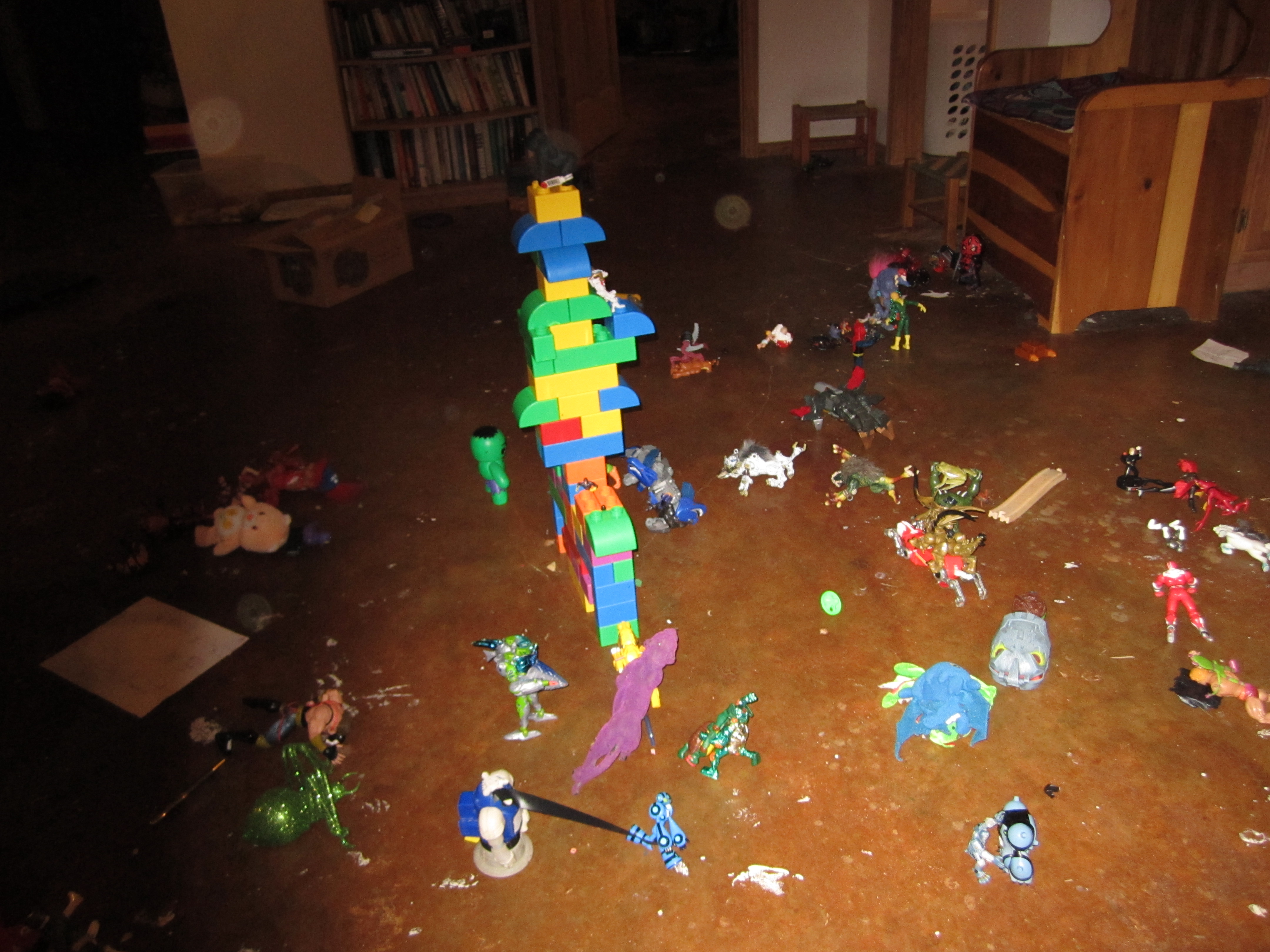
Toys set up for adventure...

Tricky moves

Playgroup at park!

Baby with laundry backdrop...

Harry Potter Quidditch Match "trick" photography...

More "trick" photography (note large drawings in progress on floor )

Big drawing/map...

This is the kind of energy that flows through our house every day!

Lann took this picture--notice Mark, A, and I in background at stove

Worn out and time for bed!

My awesome is a little tarnished by this time of night, but I'm still here!

I’m really, really, really grateful that I have two boys who are such good friends for each other!

My Homeschooling Life Story (Part 1 of 2)

I remind my students that in order to effectively help others, it is important to "know your story" and that felt relevant for this post about my homeschooling story

As I mentioned several posts ago, I’ve received some requests to write more about homeschooling. I realized I’m a little stumped on the direction to take, realizing that I used a lot of my “homeschool philosophy” type of energy up writing papers on the subject in college and that I also don’t feel like I have any “how to” advice to give about homeschooling either. Nor can I really figure out how to write a “how we structure our day” type post either, because our days frequently look very different and change based on the needs of the day and the people. These things said, I also don’t mean to suggest in any way that I’ve got it all figured out, I just don’t spend a lot of time thinking about homeschooling. I mentioned it to my mom and she suggested that people might just be interested in my own experiences, both from my childhood and then currently, with my own kids. So, that’s what I’ve decided to offer in this series of two posts. No philosophy, theories, or advice, just my own narrative about being a homeschooled kid who grew up to homeschool her own kids.

My own homeschooling story/saga is such an integrated part of my past, or my life story, that it has barely occurred to me that people might be interested to hear it. Maybe they will be, maybe they won’t be. This is LONG post and who knows if anyone will even make it until the end! I do think I am in a fairly unique position as an adult former homeschooler. I know almost no one else who was homeschooled throughout the childhood and teenage years, never setting foot in a formal school until entering college. Did I mention its long? Be warned!

Childhood

I have three younger siblings and my mom homeschooled all of us. At the time, we considered ourselves “unschoolers” but I feel like that label has evolved to encompass a more developed philosophy and set of beliefs than it did when I was a kid. To my mom it meant that we homeschooled without curriculum and that learning in the house was primarily child-led/child-directed, with Mom’s primary purpose to make quality resources available to us and to answer questions. My mom has a degree in early childhood education, which always gave her a little additional credibility in the eyes of casual questioners or people wondering if you were “allowed” to homeschool. As a kid, I truly felt like my mom homeschooled because she enjoyed our company so much that she couldn’t stand to have us away from her all day at school. It wasn’t until adulthood that I fully realized that she probably could have used the “break” school would have provided, but she homeschooled us because of her own convictions that it was in our best interest and that the public school system was a “broken” one to which she was philosophically opposed. As a teenager, I did catch on to some of these convictions and would passionately advocate for homeschooling when encountering those who would express skepticism or doubt (this is what I mean about having “used up” this energy already).

My dominant memories of my childhood years consist mainly of playing with my sister, reading, and having my mom make things for us. My youngest siblings are 9 and 11 years younger than I am and do not feature prominently in my childhood memories. My other sister is 22 months younger than I am and our lives together are so inextricably linked that I rarely speak about my childhood without using the pronoun “we.” We spent so much time playing. It was the bulk of our day really, just playing with each other. We were each other’s best friend. We played outside, we played with toys, we made toys, and played some more. We had neighbors (loosely speaking—within five miles from us) who were also homeschoolers and we saw and played with them frequently as well (and, grew up to be bridesmaids in each other’s weddings). With our friends, we often played house, restaurant and yes, school. We made all kinds of worksheets for our dolls and I was always the teacher. At home, we sometimes did worksheets with mom. Almost every year she bought “Super Workbooks” for us (i.e. “My Third Grade Super Workbook”) and we’d start off with a bang with her saying that this was the year when we were really going to buckle down and do school every day. This usually lasted a couple of weeks and we’d be back to our freeform, playing days with occasional bursts of workbooks as we expressed interest in them. We had old-fashioned readers like Dick & Jane that were always fun to read, as well as lots of other schoolbooks in addition to the Super Workbooks. These were always available to us on the bookshelf if we wanted them.  I learned to read when I was three and have been a voracious reader ever since. We would go to the library once a week and I would check out every new book they had.

Because of my tendency to read until my eyes glazed over, my mom eventually limited me to reading two books a day (full-length “chapter books” such as Trixie Belden—favorites of mine when I was about 6). I literally read every single book in the children and youth sections at both local libraries. A lot of my learning truly came from fiction. I still feel like my most long-lasting lessons about history came from American Girl books! We also used to get all kinds of educational magazines. Mom also read to us every night until we were in our early teens, usually book series like Narnia. We were in 4-H for many years and did all kinds of projects through 4-H, went to summer camp, and eventually participated in their many leadership-opportunity programs. I’ve never forgotten the mock trial of the ethically and morally complicated case of Nancy Cruzan we participated in at the state Capitol building through the 4-H civic leadership program I took part in. We belonged to the local homeschool support group and regularly went to homeschool bowling, skating, and other events. My mom also did a “craft club” for girls and we would get together and make craft projects every week. We also had lots of sleepovers.

Unlike many other homeschoolers of the time, we did not homeschool for religious reasons and in fact were not religious at all. I felt a barrier throughout my childhood in relating authentically to other people because I was not religious—it felt like something I needed to play close to the chest and keep “secret.” Many of my friends were fundamentalist Christians, which was not compatible with my own burgeoning sense of social justice and women’s rights. My own self-identification as a feminist was my first taste of activism and my first involvement with a “cause” (other than homeschooling). I had many experiences with my homeschooled peers that left a very bad taste in my mouth towards religion, primarily religious attitudes toward women, to the extent that I maintained a knee-jerk almost anti-religious response to any discussion of religious or spiritual issues until I was close to 30. As a child and teenager, I came to feel like being religious and being feminist were fundamentally incompatible and I chose feminism. I truly did not know that someone could be religious or Christian without being frighteningly fundamentalist about it. It wasn’t until much, much later that I discovered that are a lot of “normal Christians” in the world (including “normal homeschooling Christians”).

I grew up in an off-the-grid log cabin in the woods. We did not have a TV until I was 12 when we got a TV/VCR combo unit—it did not get any TV channels, but after that point we watched one movie per night.

High School

When I approached age 14, my parents gave me the choice of continuing to be homeschooled or to start high school. Several of my homeschooling friends started high school at this point and homeschooled boys in particular were hard to come by, many having been lured to public high school from desire to play organized sports. Those of us who remained actually organized our own homeschool basketball “team,” playing basketball together in local parks at least once a week. I opted to begin a homeschool correspondence program, American School, a (supposedly) college-prep high school program that offered an accredited diploma at the end. Any naysayers were quickly silenced to learn that the same accrediting body that accredited the local high school, also accredited the correspondence high school I attended.

During my early teenage years, I also remained very involved with 4-H, serving as president of my club, etc. I also joined an Explorers post, the co-ed, young adult version of Boy Scouts and this is where I ended up meeting the boy who would eventually become my husband. Through dating his public-schooled self, I ended up participating in all of those things that people express concern about homeschoolers “missing out on,” such as the prom. I cannot count the number of time people have asked, “but what about prom?!” when they hear that someone is homeschooled. After going to prom myself, I felt deeply sad that this experience was what some people apparently considered the pinnacle of their lives! My homeschooled-til-high-school friends were in band and another friend’s brother played football, so I went to many high school football and basketball games to watch them play, thus again not missing out on a classic high school experience. (I’m glad I didn’t need to spend 12 years in public school in order to earn these fabulous honors!)

I quickly discovered that I could complete my high school classes very quickly, sometimes completing an entire high school course during one weekend (of intensive work). My only challenging area was math and sometimes my mom and I both ended up crying over it as I struggled through algebra and geometry at the kitchen table. I started to toy with the notion of possibly completing high school in three years. As classes passed, I realized I could finish even more quickly than that, and in 1994, I received my high school diploma at age 15—14 months after having started the correspondence classes. Yes, I completed 4 years worth of high school work in slightly over a year! This really solidified for me that high school was likely a “waste of time” for everyone. After starting college, I was interviewed by the local paper and was asked if I felt like I had “missed anything” by not going to school like everyone else, I responded that I had missed out on “having been institutionalized.” I was dating my future husband at this time and his friends were extremely annoyed at my “snotty” attitude in this quote stating that I couldn’t know what high school was like, having never been there. They also said, “it isn’t an institution! It has windows and the lockers are painted different colors.” I rested my case.

While my parents and I debated about whether it made sense or not for me to start college so young, I really felt like I might as well be spending my time in college as in high school—if I could do it, why not start. So, at 15 1/2 I enrolled in a branch college to “get my feet wet.” My primary motivation for starting at this school rather than at the local university, was because the branch college did not require an ACT score to be admitted and I really, really did not want to take the ACT. I eventually took the GRE to get into graduate school and that remains the only standardized test I’ve ever taken.

College

I spent almost two years taking classes at the branch college until I had enough credit hours to transfer to the local university without an ACT score. I took College Algebra with trepidation, never having felt fully competent in math. I did successfully get an A in the class, but it involved literally hours of self-imposed practice problem solving at home sitting by the wood stove. I was a very enthusiastic and hard-working student, theorizing that I had so much energy for college because I hadn’t previously been “burned out” by high school. I earned all A’s at the branch school and continued to earn all A’s at the university to which I transferred, eventually graduating summa cum laude with a 4.0 GPA. I was also the youngest graduate in the university’s history, finishing my bachelor’s degree at age 19 years and 13 days. I kept my age very private throughout college, only revealing my true age to a tiny handful of other students and then to a couple of my favorite professors in the two weeks before graduation. One classic moment was when a friend asked me to go to a bar after class to continue working on our group project. I said I couldn’t and he said, “why not? You’re 21, aren’t you?” I just said no, and he said, “22?” which I continue to find very amusing 😉 For all of those who worry about the “socialization” of homeschoolers, no one ever seemed to be able to identify me as a homeschooler or as overly young.

After it became clear that driving into town every day for classes and work no longer made a lot of sense, I lived in the dorm for one semester in my junior year and then moved into a small efficiency apartment when I was almost 18. I worked at the branch college I originally attended, which was a perfect job for me, allowing me to do all my homework and paper writing while at work. (I am now a professor at this same college!)

I was extremely obsessive about my grades, becoming almost panic-stricken at the thought of not getting an A in a class. Astronomy was my most horrible subject and I remember crying—wailing almost—certain that it was going to be the undoing of my 4.0. As it was, I calculated the exact score I needed to get on the final to manage a 90% in the class and I still remember the tension in my chest in going to look at the final grades on the professor’s door and seeing that, yes, I had received exactly that score on the final, not a single point over! I continued to date my only boyfriend throughout college and in July after I graduated we got married (we’ve been married for 13 years now). Immediately following college, I went on to graduate school and finished my master’s degree there at age 21, also with a perfect 4.0 GPA (though I’d been told by many people, including professors, that I’d have to lower my expectations of myself once I went to graduate school and that it would be a “bigger pond,” that didn’t end up being true). Again, I only revealed my age to a handful of people. At one point after being pushed into saying how old I was, my friend said, “wow! I would never have guessed. If someone had asked me, ‘is Molly 19 or 30,’ I would have said, ‘well, she looks young for 30.'” Even at the time, this struck me as mildly sad, like I had been “fast forwarded” through my adolescence.

Adult Reflections

My experienced as a homeschooled, now-adult taught me many things about education and about homeschooling. Primarily, I know from experience that it is not necessary to sit in desk all day. I also know that it is not necessary homeschool with a “school at home” mentality. Basically, children do pick up everything they need to know to be functional, socialized adults with access and opportunities. I always say I learned about the “real world” by living in it, rather than being closed up all day in an artificially age-segregated environment expressly modeled to serve the purposes of the Industrial Revolution, not human needs.

I do retain some sense of having been “fast forwarded,” in my life, but that isn’t really a bad thing (for example, now a 32, I have over 15 years of experience in my chosen field, rather than still “just starting out” as it seems to me like many thirty-something year olds are!). If I was starting all over again, I wouldn’t necessarily recommend going to college that young, but nor would I recommend trying to prolong something that could be completed in less than four years.

My brother and sisters all did the same high school correspondence program, but paced themselves intentionally to finish later. They also all went to college and finished their bachelor’s degrees. I share this personal story for those of you who have wondering if homeschooling “works” and whether your kids will, indeed, grow into functional adult humans 🙂

I find it somewhat amusing that I’ve ended up in education as a career. I feel like my outlook was profoundly shaped by my homeschooled childhood and my students frequently express that I expect them to think in ways they’ve never thought before and that my assignments are not like anything they’ve experienced before, “I mean, you actually expect us to think.” (direct quote)

I have joked before, but am half-serious, that being unschooled “ruined” me for full-time employment. It did in the sense that I don’t think it is healthy for anyone—male, female, child, adult—to spend all day, every day doing the same thing at the same place. That is not how life is meant to be lived! I also feel like my childhood spent essentially doing what I wanted to do when I wanted to do it, did have an impact on my experience of motherhood now, which not infrequently does not allow me to do what I want to do when I want to do it, and I chafe a little at those restrictions on my autonomy and all of my billions of ideas.

I also find it somewhat amusing that my life has taken a religious turn now, in that I am currently working on my doctoral degree (D.Min) in women’s spirituality. I also am the vice president of my very small UU church. I find myself very passionate about and absorbed in study of the divine feminine, the sacred feminine, women’s spirituality, feminist spirituality, and the Goddess. It took me a long time and some childhood religious “scars” to realize that there is a vast world out there beyond the dominant, patriarchal, Judeo-Christian lens and to discover that I connect to the women’s spirituality movement on a very deep and meaningful level.

Homeschooling My Own Kids

As I previously noted, homeschooling my own kids was a foregone conclusion for me. I literally cannot fathom the idea of sending them to public school. Please see Part 2 of this homeschooling post for more about what homeschooling looks like for us right now!