Archives

Addressing Unexpected Outcomes in Birth Classes

“Birth brings powerful and painful sensations to the most intimate spaces of the female body…I stood transfixed by the life-giving strength found in her feminine power.” –Amy Wright Glenn writing about attending her sister’s birth (Birth, Breath, & Death)

What About Unexpected Outcomes?

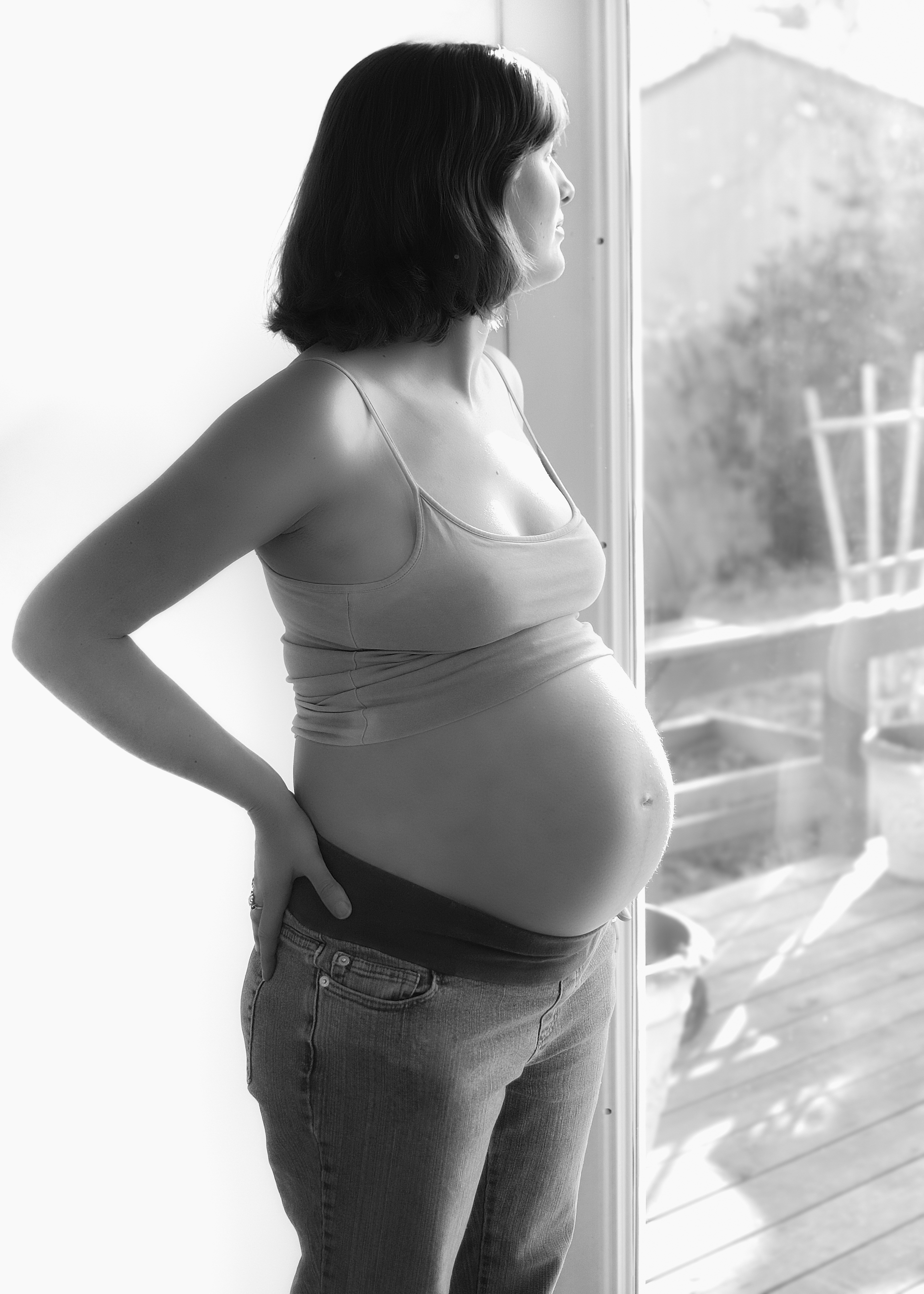
If one factor contributing significantly to a woman’s satisfaction with her birth experience is having better than expected outcomes, how then can birth educators prepare women for unexpected outcomes? As Pam England notes, “Many women are conditioned to believe that if they have lots of information, then they will ‘pass the test’ or be able to control their birth outcome” (England, 2007). molly37weeks 018

Is it possible to truly prepare couples for unexpected outcomes? Though others may disagree with me, I have to wonder if the answer is “no.” (I confess to also wondering the same thing about truly preparing for giving birth!) I used to spend a whole class session on complications/unexpected outcomes, but suddenly awoke to the realization that most people’s whole lives have been a “class” in “birth complications.” Do they really need to hear it from me too or am I undermining the very confidence I seek to build? Undoing the new messages and competencies I’ve tried to instill?

Instead of a whole class on complications, I switched to spending a short section of class asking couples what they were worried about or if they had fears about specific complications. (Since I usually taught classes one-to-one, there was a certain sense of security with sharing vulnerable emotions that may not be present with larger class settings.) Bringing fears out into the open to “look at” helps shift the perspective from “frozen” fears to coping strategies. After they share their concerns, I usually mention maternal or fetal death because I believe it is important to acknowledge this most scary of fears. I also encourage them to include options for unexpected events during labor or with mother or baby on their birth plans (based on the birth planning worksheet in the book Pregnancy, Childbirth, and the Newborn by Penny Simkin). I share that most births—if not all—involve some element of surprise, the unexpected, loss, or grief. It could be as “small” as disappointment with the baby’s appearance or a sense of loss/grief of the specialness of being pregnant or as a big of a surprise as a baby in the NICU or even death of the newborn. It is normal and okay to experience feelings of grief and loss whether the unexpected event is “big” or “small.” It is helpful to have an understanding of the possibility of the unexpected and the emotions that follow.

I believe this acknowledgment and recognition as well as asking for their personal fears is more helpful as reviewing each and every complication of birth (which is how many CBE programs train their educators!), especially given the widely stated observation that couples dismiss and forget information shared during class that feels—consciously or unconsciously—irrelevant to them (this often includes complications or even postpartum and newborn care). I believe that a generally stated recognition of loss in all its forms is more likely to “stick” because it brings it into the couple’s personal sphere instead of being a more academic exploration.

For possible questions for exploring worries see: Worry is the Work of Pregnancy | Talk Birth.

This post is modified from a sidebar originally published in the International Journal of Childbirth Education accompanying my article about Satisfaction with Birth. I re-post it now in anticipation of a planned post about rituals for coping with unexpected outcomes…

Tuesday Tidbits: The Role of Doulas…

“So many of us are already working towards this aim – mamas (and groups) like LLL for sure, and doulas, women-centred midwives and July 2013 038doctors, and so many others…but really we need more. And there is no time or space for petty jealousies or in-fighting (and no judgments here, because it happens! I know the pain of this kind of sh*t, I’ve written a little about it before – and I may again – but it’s urgent we move beyond this if at all possible…) because we are already losing it – losing this capacity to give birth without intervention, to feed our babies from our own bodies, to experience love and connection in the fulness of which we are intended to be capable…” -Rebecca Wright (see more on why all of us are needed)

In “The Doula Phenomenon and Authentic Midwifery: Protection as a Keyword,” Michel Odent, writing in Midwifery Today issue 104, Winter 2012 describes the cultural conditioning of birth to think that women can’t do it on their own:

In this age of videos, photos and television, one cannot ignore that our current cultural conditioning is mostly determined by visual messages. Let us mention the powerful effects of the recent epidemics of videos and photos of so-called ‘natural childbirth.’ Almost always, several people surround the labouring woman. Young generations familiar with these pictures understand that the basic need of a labouring woman is to be accompanied by several persons. The effects of these visual messages are reinforced by the modern vocabulary, for example, to give birth women need a ‘coach’ (bringing her expertise) and support persons (bringing their energy). More than ever the message is that a woman has not the power to give birth by herself.

We must add that this cultural conditioning is now shared by the world of women and the world of men as well. While traditionally childbirth was ‘women’s business,’ men are now almost always present at births, a phase of history when most women cannot give birth to the baby and to the placenta without medical assistance. A whole generation of men is learning that a woman is not able to give birth. We have reached an extreme in terms of conditioning. The current dominant paradigm has its keywords: helping, guiding, controlling, managing…coaching, supporting…the focus is always on the role of persons other than two obligatory actors (i.e. mothers and baby). Inside this paradigm, we can include medical circles and natural childbirth movements as well.

Odent then goes on to explain that while the word doula comes from ancient Greek, actual modern-day Greek people advise him to use the word “paramana” instead, meaning literally, “with the mother.” He concludes his article with these important thoughts:

The doula phenomenon must be interpreted in the context of a period of transition. When the doula is understood as the mother figure a young woman can rely on before, during and after the birth, the doula phenomenon can be presented in a positive way as an aspect of the rediscovery of authentic midwifery. When, on the other hand, the doula is still another person introduced into the birthing place in addition to the midwife, the doctor and the father, her presence is counterproductive. If the focus is on the training of the doula rather than on her way of being and her personality, the doula phenomenon will be a missed opportunity. [emphasis mine]

I am concerned when I see rivalry between doula training organizations, because I think they are doing just this: focusing on the training of the doula rather than her way of being and her personality.

A long time ago I saved these two relevant, if somewhat opposing, quotes about doulas, culture, and advocacy:

First about doulas and collusion with patriarchy…

“I hate to say that the rise in popularity of doulas has done absolutely nothing to alter the status quo of hospital birth, but this seems to me to be true. In the past 10 or so years, the popularity of doulas has risen dramatically. And so has the rate of C-section and interventions in general. Am I suggesting correlation or causation? Absolutely not. Do I think that doulas are well-meaning, amazingly hard-working women who are truly passionate about women and birth and are trying to make a positive difference? Yes yes yes. But sadly, I don’t think they’re going to get anywhere. Because hospital birth is the collision of female power and patriarchy, and we aren’t going to change anything by behaving ourselves or adopting the approach of our oppressors. (No, this isn’t hyperbole. I really believe it).”

Doubts About Doulas (and patriarchy and stuff)

And, second about not bringing “politics” into the birth room…

“Now I understand there is a type of doula for everyone. Some women benefit from doulas with a more no nonsense attitude, the ones that don’t sugar coat things or come off more “militant”. Other women prefer a lighter touch or a more “middle of the road” doula. I respect the differences and the need for them. However, I believe there should be a separation of doula and advocate. Politics, in particular your own personal politics, have no business at the birth of your client. Once a client is in labor, any personal agendas should be checked at the door. There is a more appropriate time and venue to try and change faulty birth practices.

I think the same thing goes for the myth that we empower women through these actions at her birth. A woman’s power to advocate for herself and birth in the way she wants isn’t ours to give. It’s her birth and it has to be her job to find the power and be empowered. We can help, we can guide, we can even lead, but we can give that to anyone. Sadly though, through our actions, just like the hospital staff, we can take it away…”

Doulas and Advocacy: Are they mutually exclusive?

July 2013 036And, then, some more thoughts about the difference between activism and advocacy:

Activism, advocacy and support. As a birthworker I am always using one of these three tools. Sometimes I am using two at once, but never all three. And here is why: Support and advocacy can overlap. Advocacy and activism can overlap. But if you try to overlap activism and support you are going to be either ineffective, alienating, or both…

Activism, Advocacy and Support – To Brave Birth

We definitely need advocacy though and this is why:

Horrific abuse in childbirth happens every day in developing nations where women and their babies are often denied access to life-saving obstetric care.

Freedom for Birth – Can Anyone Argue Against Respecting Women’s Rights in Childbirth?

And, regardless of where or with whom or in which country women give birth, they deserve access to evidence-based care: What is Evidence Based Birth and Why Should I Care? — Giving Birth with Confidence

Birth is also a creative process:

“I believe that this is one of the important things about preparation for childbirth–that it should not simply superimpose a series of techniques, conditioned responses to stimuli, on the labouring woman, but that it can be a truly creative act in which she spontaneously expresses herself and the sort of person she is. Education for birth consists not, as some would have it, of ‘conditioning,’ but aims at giving a woman the means by which she can express her own personality creatively in childbirth.” –Sheila Kitzinger via More Thoughts on Birth as a Creative Process | Talk Birth.

And, birth matters a lot. It isn’t “just one day.”

“Homebirth cesarean mothers do not complete their births the way they planned, worked for, meditated on, and dreamed of. As a result, their births as mothers are left unfinished. As I told my therapist when my son was six months old, “His birth was finished but my birth, into being a mother, that’s been left hanging.” –via Homebirth Cesarean: “I was still an authentic mother.” – Momma Trauma.

In non-specifically-doula, but birth-related news, I finished some new sculptures and updated my etsy shop! And, one of my breastfeeding mama sculptures was featured in a neat Etsy treasury called Supporting Breastfeeding.

Yesterday, I finished downloading the The Business of Being Born classroom edition kit, which I’ll be reviewing here and hopefully using in my community development class in August. And, I’m also looking forward to finally watching/reviewing Birth Story: Ina May Gaskin and The Farm Midwives on Thursday with my Rolla Birth Network friends! Speaking of Rolla Birth Network, plans are underway for the second annual footprintscharmMamafest event in Rolla, MO on August 10th. This is a pretty epic event given our smallish town and associated resources. It really was great last year and I expect nothing less this year! I went a little crazy online and bought all kinds of supplies so we can make our own bindis at my booth at Mamafest. I also bought a lot of new charms for several purposes and I’m going to donate my favorite footprints-on-my-heart charms   to the Rainbow babyloss support group to make miscarriage memorial charms at their Mamafest booth.

And, finally, as I shared on Facebook earlier this week: I love it when my two-year-old points at my belly casts on the wall and says, GODDESS! And, I’m like, yes, yes that’s me… 😉

The Midwife’s Tale: Author Interview and Brief Review

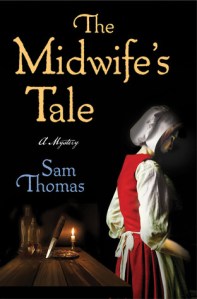
As I’ve written before, I can think of few things better than historical fiction about a midwife! Recently, I enjoyed reading The Midwife’s Tale midwifestaleby Sam Thomas, a historian and writer with an interest in midwives. The Midwife’s Tale is a mystery about seventeenth century English midwife Bridget Hodgson who, along with an assistant with secrets of her own, sets out to discover the answers to a murder, a newborn death, and the political machinations of the local government. The book is well-written, nicely paced, and intriguing. Do be aware that there is a fair amount of infant death, violence against women, and threats of rape, as well as general misogynistic treatment of women authentic to the time period in which in the book takes place. As Bridget notes: “As a midwife, I helped women when I could and comforted them when I could not.” Part of me kept wanting Bridget to stand up even more for women and to rise up in protest against the confines of her time and place and the treatment of women therein, but I found the depiction historically accurate, if also depressing. The following quote touches both on this tension between care and participation in oppression as well as on another element, I found interesting, which is in regard to the economic realities for women of this age:

“But as surely as the women needed me, I needed them. Without my work, who would I be? A wealthy widow and nothing more…The thought of such an uneventful and powerless existence filled me dread, for my work as a midwife mattered in a way that mere housewifery never could. I ensured that men who fathered bastards had to pay for their children and that the women who bore them were whipped. If a maiden was raped, who but a midwife would stand with her against her assailant? Who better than a midwife could recognize the signs of bewitchment and find the witch’s mark? Without midwives, lust would reign, and order would turn to chaos…” (p. 230)

I was fortunate to do an interview with author Sam Thomas as well and here it is!

How did you become interested in writing about midwives from a historical perspective?

It was pure chance, or perhaps fate. I was working on my Ph.D. (about religious persecution and toleration in England), when I stumbled across the will of an incredible midwife. (I posted a transcript of the will on my website.) I then discovered that historians were in the midst of some great new research on midwives, and I was eager to join in the fun.

The more work I did, the more fascinated I became with the subject, and I wound up writing a couple of articles and planning a full-length book. In the end I left the ivory tower, but could not bring myself to leave midwives behind.

Do you follow present day midwifery politics? If so, any thoughts on how this connects to the historical issues raised in the book?

I do, to some extent. We lived in Huntsville, Alabama not far from Ina May Gaskin’s place in Tennessee. And I was surprised to learn that midwife-attended births are illegal in Alabama. As a result some women – including a good friend – “happen” to go to birth in Tennessee so they can be delivered there. (Hi, Celeste!)

Things are rather friendlier in Ohio where we now live, and I’ve had a number of midwives and other childbirth workers come to presentations. We’ve had some wonderful conversations!

Did you find it difficult to balance writing accurately about the misogyny of the time with portraying a strong, female character? (Still within the confines of her time and space)

Great question! In fact this is part of the reason I love writing about midwives and about women more broadly. To be sure, my characters inhabit a misogynistic world, but it is one in which women have at least some room to maneuver. (Men from southern Europe were horrified by how much freedom English women enjoyed. Everything is relative!)

Midwives, of course, wielded more power than most women and in certain circumstances, more power than some men. They were the only women who took a public oath, and the only ones whose work required a license. They also played an important role in the criminal justice system (to use an anachronistic term). Despite being women, midwives had a lot of the rights and responsibilities of men, at least in the context of their practice.

Part of what I’m doing in The Midwife’s Tale – and in future books – is charting Bridget’s gradual realization that despite her wealth and status, she is subject to the same oppression as other women. It really throws her for a loop.

Will we see Bridget return in any further mysteries?

Happily, yes! I have finished The Harlot’s Tale, which will be released in January, 2014, and just completed a second draft of The Witch-Hunter’s Tale, the third in the series. Minotaur-St. Martin’s has bought a fourth in the series, so the pressure’s on!

Oh, I’m also writing a few short stories about different characters’ backstories. One will be about how Bridget got into midwifery, and the other will be focused on Rebecca Hooke and how she became such a nasty piece of work.

If your readers want to keep up to date on future releases (and maybe win a copy!) they can sign up for my quarterly newsletter, The Midwife Mailer. No spam, I promise!

Tuesday Tidbits: Breastfeeding

It is almost too late to call today Tuesday, but I’m squeaking this post in anyway! Breastfeeding articles have been catching my eye this week, MollyNov 109specifically this one about the life-saving benefits of human milk for the critically injured:

But one exciting question is still unanswered: can breast milk be used medicinally as treatment in babies –and even older children and adults– who may not have been breastfed? There is a growing body of evidence suggesting all sorts of uses for breastmilk as treatment of adult disease.   Ads may say, “Milk: Does a Body Good” but in all likelihood, human milk can do a body, any body, better.  

Baby Charlotte Rose wasn’t breastfed. Until the age of 11 months, she was a happy, healthy little girl.  All that changed radically when she suffered a traumatic brain injury…

via Miracle Milk® Helps Heal Brain Injured, Formula-Fed Baby | Best for Babes.

And, since the politics of breastfeeding are endlessly fascinating to me, I was curious to read this article by the mother who caused an unanticipated media stir last year with her breastfeeding-in-uniform pictures:

Whoever said a picture can speak a thousand words was right, even when I could speak none. A group of breastfeeding women, including myself, all took part in a photo shoot with the intentions of  letting others know breastfeeding is possible regardless of your situation. My main contribution, or so I thought, was that I happened to have twins. Boy was I wrong. Another woman and I, who both served in the Air National Guard, also took pictures in our uniform to show that even those serving could also breastfeed. We were both prior active duty so we knew the struggles of both being full-time and part-time military. Contrary to popular belief, we did get permission to take the pictures. After the pictures were taken, we were going to consult the law office on base and get permission for the photos and positive quotes to go along with them with the goal of having them put into women’s exam rooms…

via Terran McCabe: The Air Force Breastfeeding Mom Finally Speaks Out – I Am Not the Babysitter.

While some recent breastfeeding research with a very limited sample is making headlines under the misleading title that “supplementing newborns with small quantities of formula may improve long-term breastfeeding rates,” The Academy of Breastfeeding Medicine published a helpful post breaking down the research and drawing more accurate conclusions:

A small study published in Pediatrics suggests that supplementing newborns with small quantities of formula may improve long-term breastfeeding rates. The results challenge both dogma and data linking supplementation with early weaning, call into question the Joint Commission’s exclusive breastfeeding quality metric, and will no doubt inspire intimations of a formula-industry conspiracy. Before we use this study to transform clinical practice, I think it’s worth taking a careful look at what the authors actually found.

First, I think it’s very important to be clear about what the authors meant by “early limited formula.” The authors used 2 teaspoons of hypo-allergenic formula, given via a syringe, as a bridge for mothers whose infants had lost > 5% of their birthweight and mom’s milk had not yet come in. At UNC, we use donor milk in a similar way, offering supplemental breast milk via a syringe as a bridge until mom’s milk production increases.

This is very different from the way that formula supplementation is handled in many US hospitals. We know that in the US overall, 1/4 of breastfed infants are given formula by day 2 of life, and that number reaches as high as 40% in some areas. Typically, when a family member expresses interest in giving the baby some formula, a hospital staff member plunks a 6-pack of 2-oz bottles of ready-to-feed formula in the baby’s bassinet with no instruction about how much to feed. A neonate whose stomach holds one to two teaspoons gets 2 ounces (12 teaspoons) of milk poured into him. The baby then sleeps for the next four to six hours, like someone who’s just over-indulged at a Thanksgiving buffet. In this scenario. Mom doesn’t get any breast stimulation, and family members all express relief that “finally the baby is happy.” When baby finally wants to eat again, there are five more convenient, ready-to-feed, six-hour-nap-inducing bottles sitting in the bassinet. This does not tend to help mothers breastfeed successfully. I worry that the headlines from this study — such as “How Formula Could Increase Breastfeeding Rates (TIME)”  and  ”How Formula Can Complement Breastfeeding (NYT)” —  will translate into “a six pack of formula back in every bassinet!”

via Early, limited data for early, limited formula use | Breastfeeding Medicine.

Note that the benefit of this very specific type of early supplementation can also be achieved via donor milk. The research does not actually “prove” that formula is helpful for breastfeeding, but that for certain mother-baby dyads, supplementation of some kind via syringe is helpful. This is NOT the same thing at all as supplementing with a two ounce bottle of formula!

I was glad to see Dr. Newman chiming in on the comments with his no-nonsense opinion: “I also love it how they say their results may not be applicable elsewhere because they live in a community where women are eager to breastfeed and 98% initiate breastfeeding. So surely they must find ways to give these babies formula…”

Speaking of Dr. Newman, the conference registration form and website are finally available for the upcoming LLL of Missouri conference in June. I learn so much at LLL conferences and I’m very much looking forward to this one as well. Dr. Newman is the special speaker. I heard him speak at the CAPPA conference last year and he is not to be missed! I’m also speaking twice at this conference, but Dr. Newman is much more exciting than me! 😉

Happy Mother’s Day!

“Blessed be all the mothers of mothers.
Blessed be all the daughters of daughters.
Blessed be all the daughters of mothers.
Blessed be all the mothers of daughters.
Now and forever, wherever we are.” –Diann L. Neu

In Uganda there is a special word that means “mother of a newborn”–nakawere. According to the book Mothering the New Mother, “this word and the special treatment that goes with it apply to a woman following every birth, not only the first one. The massages, the foods, the care, ‘they have to take care of you in a special way for about a month.'”

There is a special word in Korea as well. Referring to the “mother of a newborn child,” san mo describes “a woman every time she has had a baby. Extended family and neighbors who act as family care for older children and for the new mother. ‘This lasts about twenty-one days…they take special care of you.'”

These concepts–and the lack of a similar one in American culture–remind me of a quote from Sheila Kitzinger that I use when talking about postpartum: “In any society, the way a woman gives birth and the kind of care given to her and the baby points as sharply as an arrowhead to the key values of the culture.” Another quote I use is an Asian proverb paraphrased in the book Fathers at Birth: “The way a woman cares for herself postpartum determines how long she will live.

Dana Raphael, the author of Breastfeeding: The Tender Gift, who is best known for coining the word “doula” as it is presently used, also coined another valuable term: matrescense. “Nothing changes life as dramatically as having a child. And there was no word to describe that. So we invented the word–matrescence–becoming a mother.”

Happy Mother’s Day to mothers around the world!

Mother's Day

Want to find out what mothers really want? Check out the newest Listening to Mothers survey results: Listening to Mothers III: Report of the Third National U.S. Survey of Women’s Childbearing Experiences

Other Mother’s Day reads:

Womenergy (Womanergy)

Prayer for Mothers

What If…She’s Stronger than She Knows…

This is a modified repost of a previous post for Citizens for Midwifery. It is being crossposted today at CfM, Talk Birth, and Pagan Families.

Motherhood and Embodiment

“Loving, knowing, and respecting our bodies is a powerful and invincible act of rebellion in this society.” –Inga Muscio

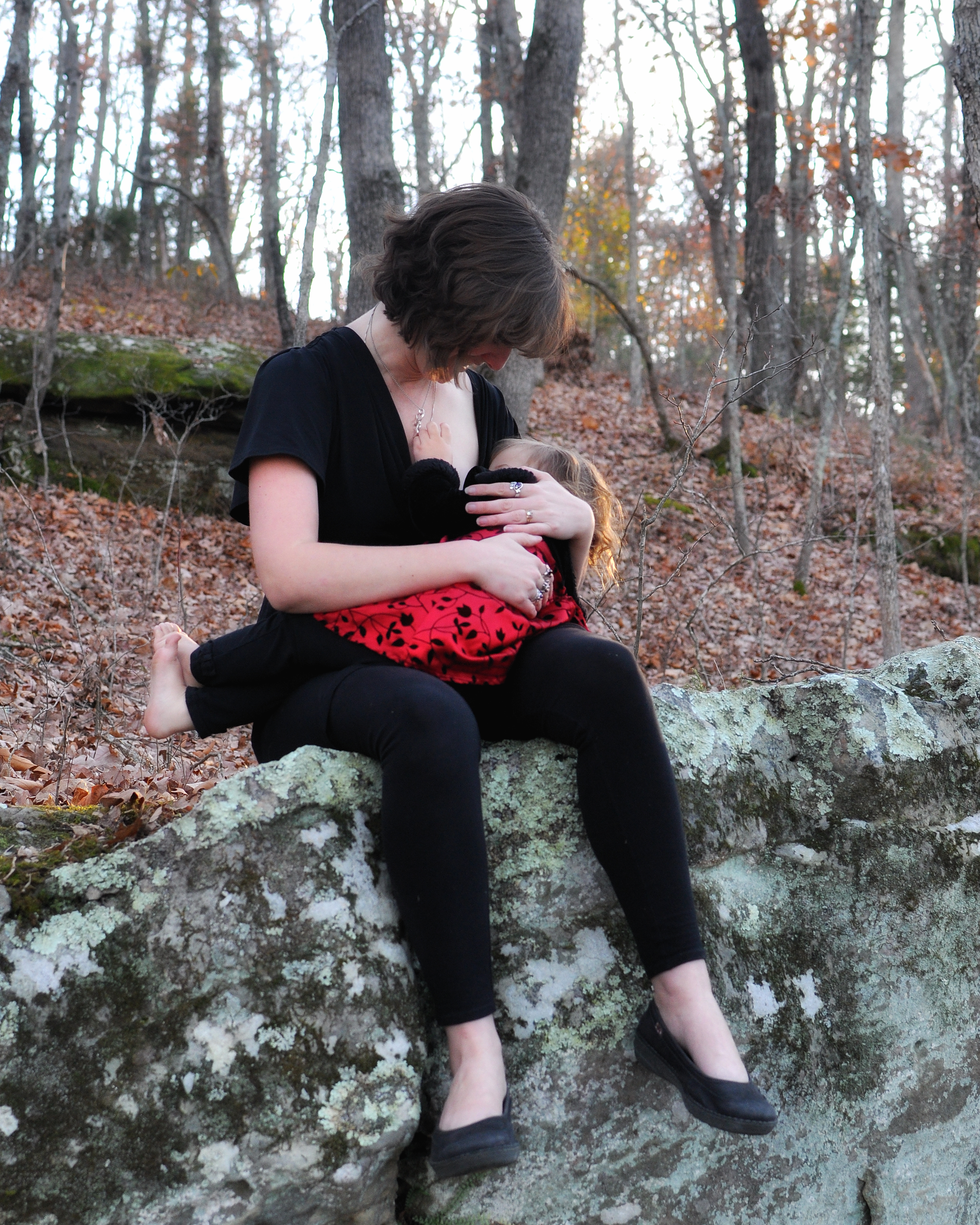
As I’ve written before, pregnancy, birth, and breastfeeding are incredibly embodied experiences—motherhood in general feels very much a molly37weeks 016physical commitment. Our relationship with our children begins in the body, it is through the maternal body that a baby learns to interpret and engage with the world, and to the maternal body a breastfeeding toddler returns for connection, sustenance, and renewal.

Why might birth be considered an ecofeminist issue though? Because mother’s body is our first habitat. We all entered the world through the body of a woman and that initial habitat has profound and long-lasting effects on us, whether we recognize them or not. Midwife Arisika Razak explains, “the maternal womb is their first environment. The cultural paradigm of birthing is the first institution that receives our children…Each of these elements—womb, birth culture, and family—has a profound effect upon the new human bring. Each deserves our best thinking and analysis. What would it be like if we envisioned a society in which positive, lifelong nurturing support—from old to young, and young to old—were the dominant theme of human interaction?” (p. 167).

What would it be like if we treated birthing women and their babies like they mattered?

Our first and deepest impulse is connection. Before Descartes could articulate his thoughts on philosophy, he reached out his hand for his mother. I have learned a lot about the fundamental truth of relatedness through my own experiences as a mother. Relationship is our first and deepest urge and is vital to survival. The infant’s first instinct is to connect with others. Before an infant can verbalize or mobilize, she reaches out to her mother. Mothering is a profoundly physical experience. The mother’s body is the baby’s “habitat” in pregnancy and for many months following birth. Through the mother’s body, the baby learns to interpret and to relate to the rest of the world and it is to the mother’s body that she returns for safety, nurturance, and peace. Birth and breastfeeding exist on a continuum, with mother’s chest becoming baby’s new “home” after having lived in her body for nine months. These thoroughly embodied experiences of the act of giving life and in creating someone else’s life and relationship to the world are profoundly meaningful experiences and the transition from internal connection to external connection, must be vigorously protected and deeply respected.

via Talk to Your Baby | Talk Birth and Breastfeeding as a Spiritual Practice

I have a particular interest in embodiment and my dissertation topic is related to a thealogy of embodiment (basically the Goddess and the body) and so my attention was caught by some great sections about birth, bodies, and family in the book The Art of Family:

AS WE MOVE THROUGH BODILY stages together, there are some special stages that are worth thinking of in advance. Pregnancy is one, of course, and babies. Nothing is more inescapably BODY than birth. For the mother, both through her pregnancy and the labor and delivery of the baby. In birth, the body gets to drive the soul for a change and one’s soul is on for the wild ride, whatever happens. What does she deliver, after all, but a body, this little lamblike creature packaged in a now wholly-other body? What does she deliver but a body—and what do she and Daddy count but a body’s toes, a body’s fingers? In these small ways we acknowledge our wholeness, our physical sacredness.

Gina Bria (2011-11-28). The Art of Family : Rituals, Imagination, and Everyday Spirituality (Kindle Locations 1693-1700). iUniverse. Kindle Edition.

(Amazon affiliate link included)

And, I appreciate that Bria then moves into a consideration of how men experience pregnancy and birth…

YES, BIRTH IS THE BODY, and for women it is manifestly given. But one should note that the world over, there is a complementary effort by men to try to counterbalance the impressive power of women who have even the potential of birth, whether it is actualized or not. Men, too, have moments of making special use of their bodies. Men make quests, and perform feats of extraordinary effort, to put their bodies on the line in some attempt to match birth.

…For modern men, pregnancy means two things, not one integral, unfolding experience, as for women. First, they must cope with a partner undergoing tremendous physical change. In essence, they are no longer dealing with the same body. It’s a stressful experience, and many men fear they will never see their old partner again, quite literally. They listen to their wives agonize about weight gain and swollen ankles, and secretly grieve the loss, all the while maintaining a show of faith, for their wives, for themselves, that it will come to a happy ending. And on top of that, they must then forge a new relationship with the party responsible for this, someone they can neither see, nor touch, indeed, can hardly believe exists! Women at least get touched by their in-utero babies, even if it’s a swift kick from the inside. “Hey, it’s Daddy,’’ my husband said rather sheepishly into my belly one night. This seemed to me quite amusing, as if the baby needed an introduction to one half of his own genetic material. Then suddenly it struck me that I had never considered introducing myself to the baby, announcer like over an intercom—“This is your mother speaking’’—because I felt the bodily connection so inexorably. I knew I was well known to the baby, but my husband had no such advantage. He had to make connections in other physical ways, in this case using his voice. Making a family where men touch, speak, and care for children is a vital way to connect them to their own progeny; one way that many cultures, including our own, can often deny men. Perhaps you have been stopped in your tracks, as I have, over the recent spate of advertisements of bare-chested men holding tiny babies. Do advertisers, more than Freud, know what women want? Yes! We want to see our handsome men holding babies, snoozing with them, schmoozing with them in chest-to-chest communion. As Jane Austen asks, “What attaches us to life?’’ Anyone who lays on hands gets attached to life.

These thoughts really struck me in a profound way. During each of my own pregnancies, I remember marveling and feeling impressed, as well as a little sad, that my husband had to somehow forge this bond with a newcomer without the same benefit of the embodied, constant experience of pregnancy—pregnancy from the inside is different than pregnancy from the outside. I shared the author’s amusement in picturing how it would have been to “announce” my own presence to my babies. I’ve tried, but cannot fully imagine the process and psychological task involved with the paternal experience, of in a sense, “suddenly” having a baby to hold and care for and “instantly” love, though I’m sure I have the capacity within me somewhere (and, yes, I know that not all mothers feel an instant love either and may have the same sense of suddenness in their own lives—it was certainly true for me that the inner experience of a womb-dwelling baby was pretty different from the external experience of having a physically visible baby to tote around). As a pregnant woman though, the baby is basically inescapably present and part of me in an interconnected, interwoven, symbiosis of being. There is the transition at birth to an “outer” relationship, but that intense embodied interconnection continues immediately with the breastfeeding relationship. It is somewhat impressive or staggering to me almost, that men have to form their own connection born out of different “stuff” that the biology of gestation and lactation that weaves the motherbaby together.

Bria also addresses the loving of a baby’s body that isn’t going to survive:

WE ARE NEVER MORE CRUSHED than when there is trouble at birth. No sadness holds for us the power of an incomplete body, a broken body. We grieve and turn heart stricken at this time like no other. In moments like these we can only comfort ourselves, with love, that love would allow us to care for this child when many would not be able to do so. We hope to find ourselves the kind of people who could, in such circumstances, make a life for a whole person, with an incomplete body. When our son was born with a leaking heart, an old-fashioned “blue baby,’’ and destined to die without surgical repair, we learned quickly that all we could give him, all he could receive as a newborn, was the small, inconsequential daily care of the body, gentle changing, warm nursings, our breath upon his face. Perhaps, we thought, it would be all he would ever get. In that season of attention, we really learned the significance of loving a body. A body, however small, records every trace of touch; it is never unconscious; unlike the mind, a body is never without sensing, even in sleep. A body will always remember.

I liked the description of a body always remembering. We do carry deep, physical memories of our pregnancies, births, and babies. I find the physicality actually comes back most clearly in dreams for me, when I can again feel with a sharp potency the sensation of a baby’s body slipping swiftly from my own body. I also like reading research that indicates that mother’s body carries fetal cells within her forever. I like thinking that physical evidence of the embodied, relational experience of pregnancy remains written into my very cellular structure (well, and on my bones and skin too, I suppose!). I found this a comfort after my little Noah’s birth, thinking that in a very real way, I would truly always remain a “little bit pregnant” with him and that perhaps some of his unique genetic material lives on in my body.

After birth, we continue to relate to our babies on a very physical, body-oriented level. There is nothing like a baby to bring things back to the body, to use your body and their own in a complete, intensive, totalness.

BABIES’ BODIES AND CHILDREN’S BODIES   LIKE PLAY, LOOKING AT THE body of an infant returns us to childhood. Babies’ bodies are a special form of being human, and they elicit in us essential, elemental emotions. They infect us with longing for the integration, the wholeness, they have. As new parents, we experience again all the helpless and exuberant feelings of children, the unfeigned marveling over everything manifested by a baby, a physical miracle. We cannot contain our awe, expressing it to everyone within earshot. New parents on the street can always be identified by their aura of vulnerability; they’ve shed the social cloth that keeps us all appropriately attired to go about our work. Instead, just like the baby, they are naked to everything good. They blink and look around, bemused, tired, and delighted. You will notice they always smile at you at the crosswalk—it is a secret, initiated smile. They assume you either know what they are smiling about or wish that you did. What is it they know? Their babies made them once again aware of the pleasures of physical delight. To care for an infant is a test of our humanness, a trial by fire and love.

What is good about caring for infants is that they never let us forget how essential the body is. They snuffle, bawl, and demand attendance. “Feed me, change me, hold me,’’ for an eternity of right-nows. And when they sleep, it’s as if they have cast themselves on a thin but safe shelf of floating wholeness, complete integration. They show us what we once were, without guile, delightedly in love with our own body. When infants turn into toddlers, the body is still in front, still demanding, but in a bigger world. Now protection from bodily harm becomes a concern of everyday physical life together. We aren’t as impressed by the bodily transmogrification that takes place in front of us, because we’ve learned to live with it happening every day, day to day. It’s impossible for the same miracle to impress us the same way over and over again. Thus begins the very fading away of the lesson we most need from our children—that there is intense pleasure in the active human body. Right under our noses they play. They play and play and we watch and nod as if this itself isn’t a further miracle. What do infants do when they get control of themselves, but move, explore, experience exhilarated delight in their bodies and what they can do. Their essence is to enjoy themselves as bodies, all over…Through physical life with our children, through care of them and play with them, the hands-on of it, we again acquire our innocent selves, a delight in each other and the world around us. We discover all over the potentialities of the senses. This is the heart of being with young children.

Gina Bria (2011-11-28). The Art of Family : Rituals, Imagination, and Everyday Spirituality (Kindle Locations 1729-1760). iUniverse. Kindle Edition.

As they age, this physical, body-based relationality and experiences may wane, and yet still holds important value:

As our children age we must struggle to keep this alive for ourselves, for them, in one form or another, as the world begins its intrusion into our family lives. This may be as simple as pointing out that a flower is beautiful, that rain smells divine, that a hand held feels warm and comfortingly sweet, that nothing satisfies like cool water. Once children hit the walking stage and beyond, we spend more time explaining compared with the time we spent holding. Yet there are still many miniature ways of communicating with one’s body. Its active use—a nod, a wink, a hug—are all fleeting acts of committing one’s body, however momentarily, to another. Looks, touches, squeezes, physical smiles, a physical vocabulary—aren’t they what children long for? Indeed, isn’t that exactly what we thrill to in a romance—those little signals that you belong to each other—and isn’t that what we end up complaining of missing when our marriages seem stale? It isn’t just for romance that these things work, though it is there that we most seem to notice them. All of family life can capitalize on a richer life with each other’s bodies.

And, bringing it back to birth and the care of birthing bodies, I really liked this image via Facebook:

treatment

Happy Earth Day!

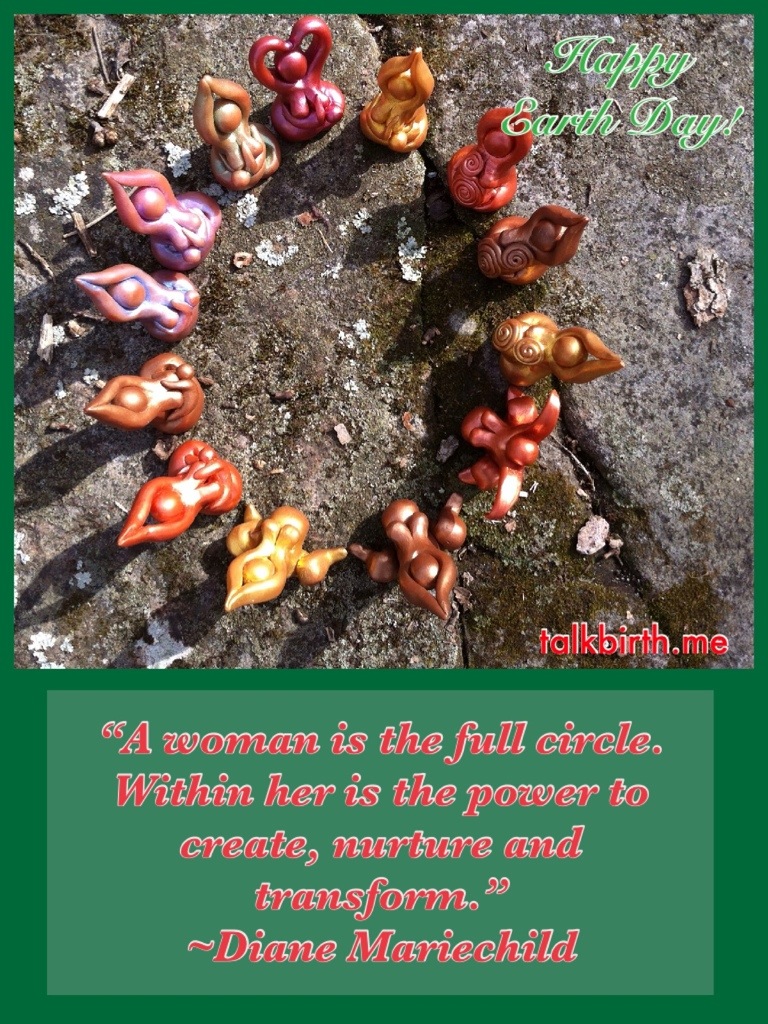
20130422-140554.jpgWhy this phrase? Two reasons:

Womb ecology reflects world ecology. World ecology reflects womb ecology.

And this (already used in several past posts):

When women are faced each day with enforced cesarean deliveries, birth control that maims and kills them, and doctors who think them dirty, when we encounter rape, violence in the streets, job discrimination, sexual slavery around the world, pollution and nuclear madness, we realize that reclaiming the integrative ways of our ancestors must involve our healing powers on all fronts—from the medical to the social to the environmental to the political to the psychological to the spiritual. Healing the divisions that were imposed during the patriarchal era is the survival issue of our time and our planet. A world that systematically sickens its women cannot survive. [emphasis mine]

Chellis Glendinning in Politics of Women’s Spirituality

20130422-140545.jpg

Wordweaving

“Giving birth to a new life is about so much more than just the moment itself. The power of finding your strength as a woman through birth resonates for the rest of your life. It shapes you as a person, and as a parent.” ~ Gina Sewell

“Childbirth is a time when a woman’s power and strength emerge full force, but it is also a vulnerable time, and a time of many changes presenting opportunities for personal growth.” ~ Annemarie Van Oploo

So, this is kind of weird little post, but I had some fun things to share. I’ve been playing around with Tagxedo and made a Talk Birth image!
talkbirthAnd, I learned that this year is the 70th anniversary of the classic Myers-Briggs Type Inventory. I have my online students take this test every session and we compare our results and the overall class dynamic. In celebration of the MBTI birthday, they have cool little wordcloud heads available with your type. Here’s mine!

infj-head

I like that “intense” is up there at the top of the head. Feels fitting 😉 And, here’s my husband’s!
intj-headI also used Tagxedo to make a “strong elephant” for my elephant-collecting mom to take with her on her visit to my grandma!

strongelephant

Bringing it around back to birth though, I also read an article about the potent impact of the language of birth.

So maternity care workers. Words do matter. To you and to all in earshot of you.

via Childbirth and the language we use: does it really matter?

I’ve had an interest for a long time in what I call the “lexicon” of birth. As I’ve referenced before, that is what puts the “Talk” in my Talk Birth name! Language is powerful. Language shapes our lives and experiences. Much of the language surrounding birth and women’s bodies is negative or degrading. Think, “trial of labor,” “inadequate pelvis,” “failure to progress,” “incompetent cervix,” “irritable uterus,” “habitual aborter” (yes, that is the name for women who experience multiple miscarriages).

On the flip side, I’ve also read other writer’s critiques of an overly positive language of birth, labeling and mocking words like “primal” as “euphemisms” for hours of “excruciating” pain. But, that makes me think about the locus of control in the average birth room. It seems like it might more difficult to start an IV in a “triumphant” woman, so lets call her stubborn or even “insisting on being a martyr”? Could you tell someone making “primal” noises to be quiet? Probably not, but you can tell someone who is “screaming” to “stop scaring” others. Asserting that a painful and degrading language of labor and birth is “real” English and that the language of homebirth advocates are “euphemisms” is a way to deny women power and to keep the locus of control with medicine. This language is often that which dehumanizes and denies the personhood of the birthing women. And, not only is the language disempowering and also incomplete—I honestly never felt “agonized” or “screamed” during any of my births, so why would I use inadequate words like that in place of my more accurate “euphemisms”?

Some other past posts about language and birth:

Birth Talk

Health Care or Medical Care?

Maternal-Fetal Conflict?

Pain with a Purpose?

Perceptions of Pain

Words for Pain

Consumer Blame

Cut here?? What not to say to pregnant or laboring women…

Tuesday Tidbits: Cesarean Awareness Month Round-Up

motherbaby

April is Cesarean Awareness Month and a lot of great resources have been catching my eye! First, there is a free webinar about the “Natural Cesarean” coming up on April 11th.

If you’re a first-time parent, make sure to check out 10 Tips for Avoiding a First-Time Cesarean from Giving Birth with Confidence. This blog also has a response to the question of Are “Big Babies” Cause for Cesarean? 

And, of course, also check out ICAN’s blog for an ongoing collection of Cesarean Awareness Month related posts as well as helpful cesarean awareness information on a year-round basis.

Science & Sensibility offers a great round-up of resources for clients and classes with regard to cesarean births, cesarean rates, and cesarean prevention: April is Cesarean Awareness Month! Resources for You and Your Classes

One a related note, Science and Sensibility also has a two-part series of posts analyzing the role of doulas in reducing cesareans for mothers using Medicaid:

Medicaid Coverage for Doula Care: Re-Examining the Arguments through a Reproductive Justice Lens, Part One

More fundamentally, however, we argue that doula benefits cannot be captured solely through an economic model.  Neither should doulas be promoted as a primary means to reduce cesarean rates.  Both strategies (economic benefits and cesarean reduction) for promoting doulas have significant barrier.

Medicaid Coverage for Doula Care: Re-Examining the Arguments through a Reproductive Justice Lens, Part Two

However, greater attention needs to be paid to issues of privilege and oppression within the doula community at large.  Advocates need to consider how the prioritization of the cesarean rate as a primary research or policy issue reflects a certain level of unexamined privilege. For those facing spotty access to health care, cultural and linguistic incompetence in care settings, the detrimental effects of the prison industrial complex and the child welfare system on families, and the effects of poverty, racism, and/or homophobia in general, there are other, perhaps equally pressing concerns surrounding childbirth than over-medicalization. Certainly, unnecessary cesareans and over-medicalization are detrimental to everyone, but we need to understand how the effects of these problems play out differently for differently situated people and not limit advocacy to these issues.

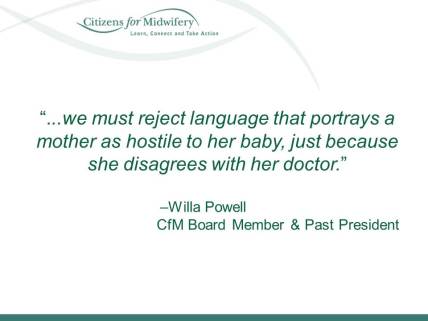
When I consider coercion into unneeded cesareans, I think of my own post addressing the flawed notion of Maternal-Fetal Conflict and from these earlier thoughts, I created the little graphic for Citizens for Midwifery seen above.

I think it is fitting to remember that mother and baby dyads are NOT independent of each other. With a mamatoto—or, motherbaby—mother and baby are a single psychobiological organism whose needs are in harmony (what’s good for one is good for the other).

As Willa concluded in her CfM News article, “…we must reject the language that portrays a mother as hostile to her baby, just because she disagrees with her doctor.”

via Maternal-Fetal Conflict? | Talk Birth.

I was honored recently to make a series of sculptures for mom recovering from a traumatic cesarean and hoping for a VBAC in the future. I hope to make a more detailed post in the future describing these figures and what they’re trying to communicate!

March 2013 070

I dug into the archives and found some older posts either about cesareans or relating to cesarean prevention:

Book Review: Understanding the Dangers of Cesarean Birth

Cesarean Awareness Month

Cesarean Trivia

Cesarean Birth in a Culture of Fear Handout

Guest Post: Abuse of pregnant women in the medical setting

Becoming an Informed Birth Consumer (updated edition)

The Illusion of Choice

ICAN Conference Thoughts

Helping a Woman Give Birth?

Community Organizing

Alone, you can fight,
you can refuse, you can
take what revenge you can
but they roll over you.molly37weeks 071

But two people fighting
back to back can cut through
a mob, a snake-dancing file
can break a cordon, an army
can meet an army.

Two people can keep each other
sane, can give support, conviction,
love, massage, hope, sex.
Three people are a delegation,
a committee, a wedge. With four
you can play bridge and start
an organization. With six
you can rent a whole house,
eat pie for dinner with no
seconds, and hold a fund raising party.

A dozen make a demonstration.
A hundred fill a hall.
A thousand have solidarity and your own newsletter;
ten thousand, power and your own paper;
a hundred thousand, your own media;
ten million, your own country.

It goes on one at a time,
it starts when you care
to act, it starts when you do
it again after they said no,
it starts when you say We
and know who you mean, and each
day you mean one more.

–Marge Piercy (in Life Prayers, p. 143)

I’m teaching community organizing again this session and the above is a poem I saved to share with my class when we talk about community organizing, creating change, and mobilizing power. I love it, because it starts small, which is where we all have to start. And, of course, it makes me think of birth change efforts as well. In a previous post about creating birth change, I used my community organizing class to explain the difference between education and action…

Additionally, with regard to education as a strategy for change, I’m brought back to a point I raise in my community organizing class: People often suggest “education” as a change strategy with the assumption that education is all that is needed. But, truly, do we want people to know more or do we want them to act differently? There is a LOT of education available to women about birth choices and healthy birth options. What we really want is not actually more education, we want them to act, or to choose, differently. Education in and of itself is not sufficient, it must be complemented by other methods that motivate people to act. As the textbook I use in class states, “a simple lack of information is rarely the major stumbling block.” You have to show them why it matters and the steps they can take to get there…

via Women and Knowing